I was born and grew up in Dublin. I spend a lot of time travelling through Dublin and its environs. I live nearby, in the town of Bray just 20km down the coast. I have regularly posted on my Dublin adventures. Of late, I have noted some good posts from overseas travellers and locals alike (World in Your Eyes and Finding Your Feet). So I thought I might join in and post a few Dublin memories. Something of a greatest hits perhaps, or top ten tips type of thing.
5 Top Sights
The Liffey
Christchurch Cathedral
St Stephen’s Green
Phoenix Park
Grand Canal Docks
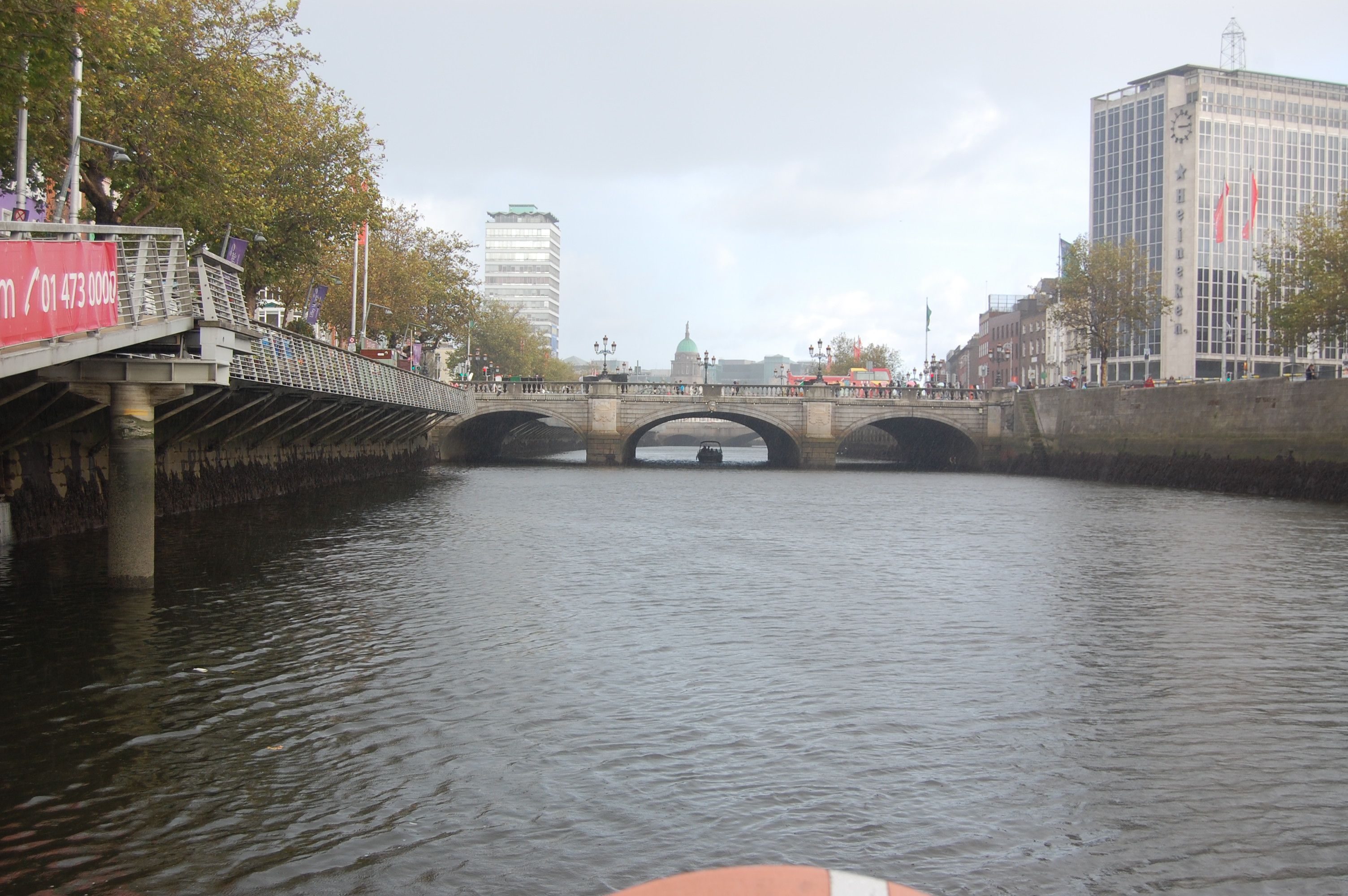
Dublin is a great city to walk round. Literally. My series Dublin’s Circular Roads describes a particular route. Another circle is provided by the two canals, the Royal to the North and the Grand on the south. Within their radius the city centre is divided into north and south sides by the River Liffey. It is the river that makes the city. Each bank is lined with quaysides from the estuary in Dublin Bay upriver to the western rail terminus, Heuston Station. The main buildngs to see are the Custom House and the Four Courts, both by Gandon and on the North Quays. The Ha’penny Bridge, a cast iron pedestran bridge spanning the river between Liffey St and Temple Bar is one of Dublin’s most iconic sights.
Christchurch is the more ancient of Dublin’s two cathedral’s. King Sitric Silkenbeard, overtaken with piety in his later years, established it in 1028. The Synod House to the west is joined to the Cathedral by an arched brdge, making it look like the main road passes through the ancient church. Wonderful.
Dublin can be heaven
With coffee at eleven
And a stroll in Stephen’s Green
(Dublin Saunter by Leo Maguire and sung by Noel Pucell)
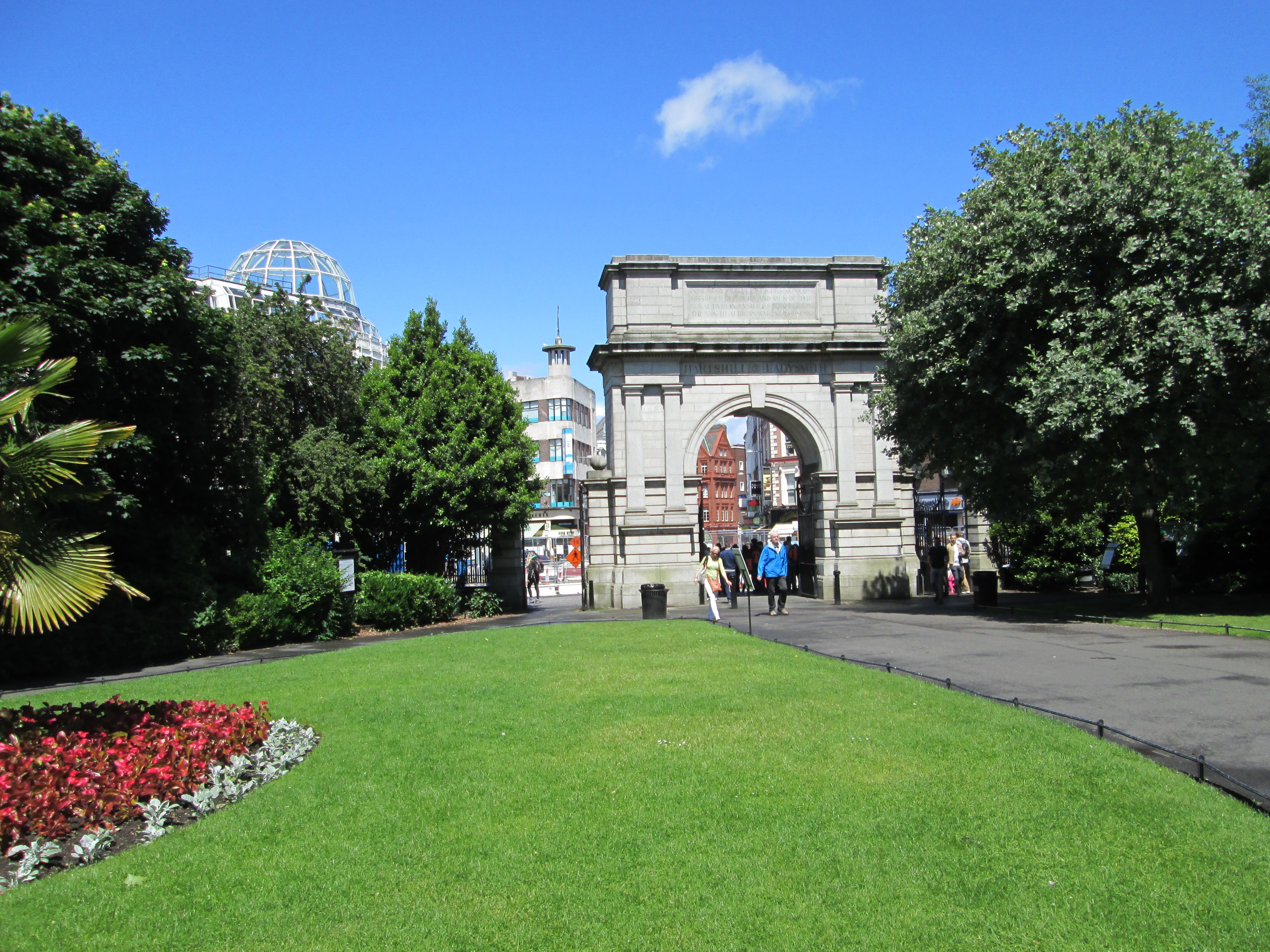
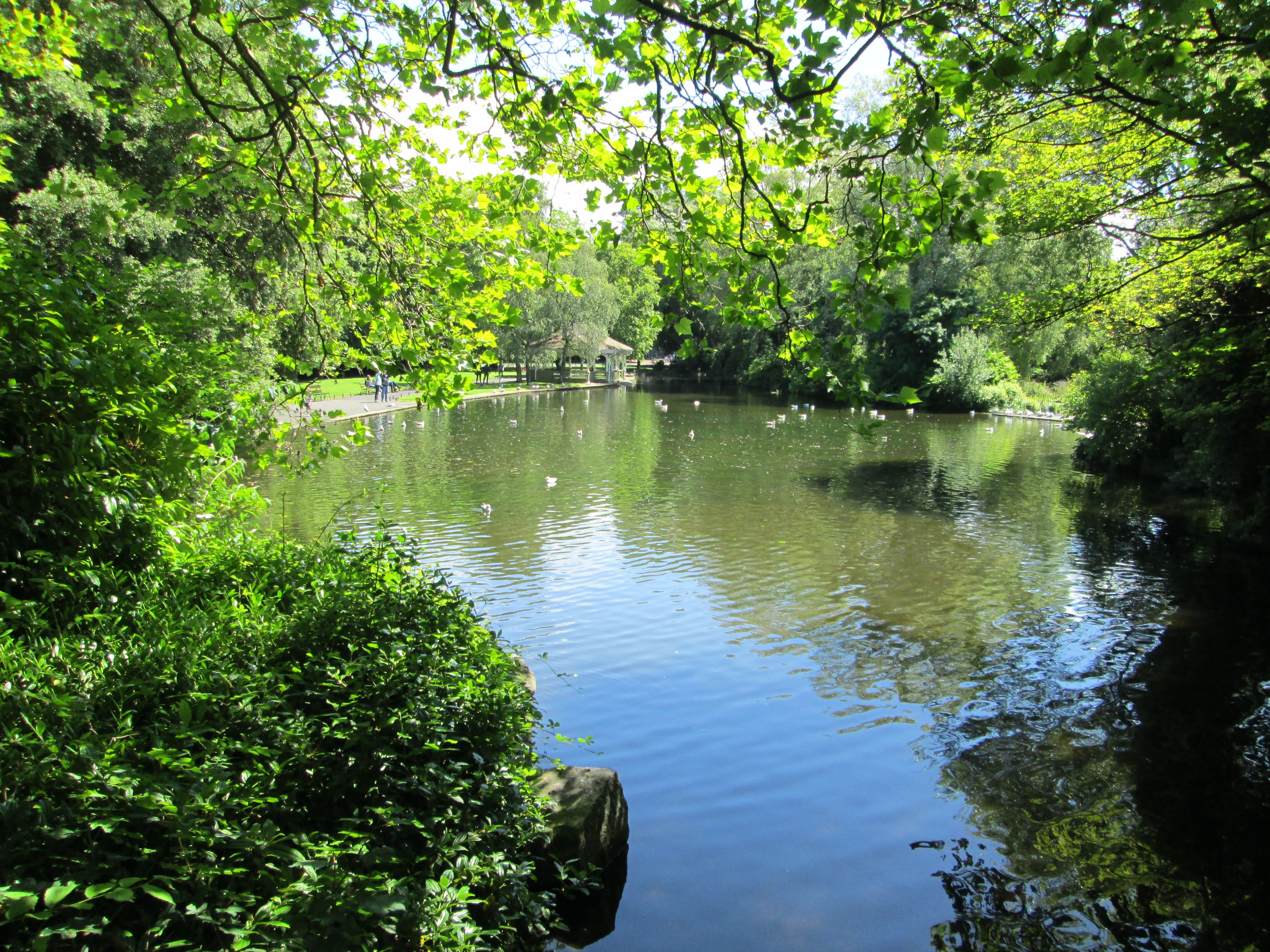
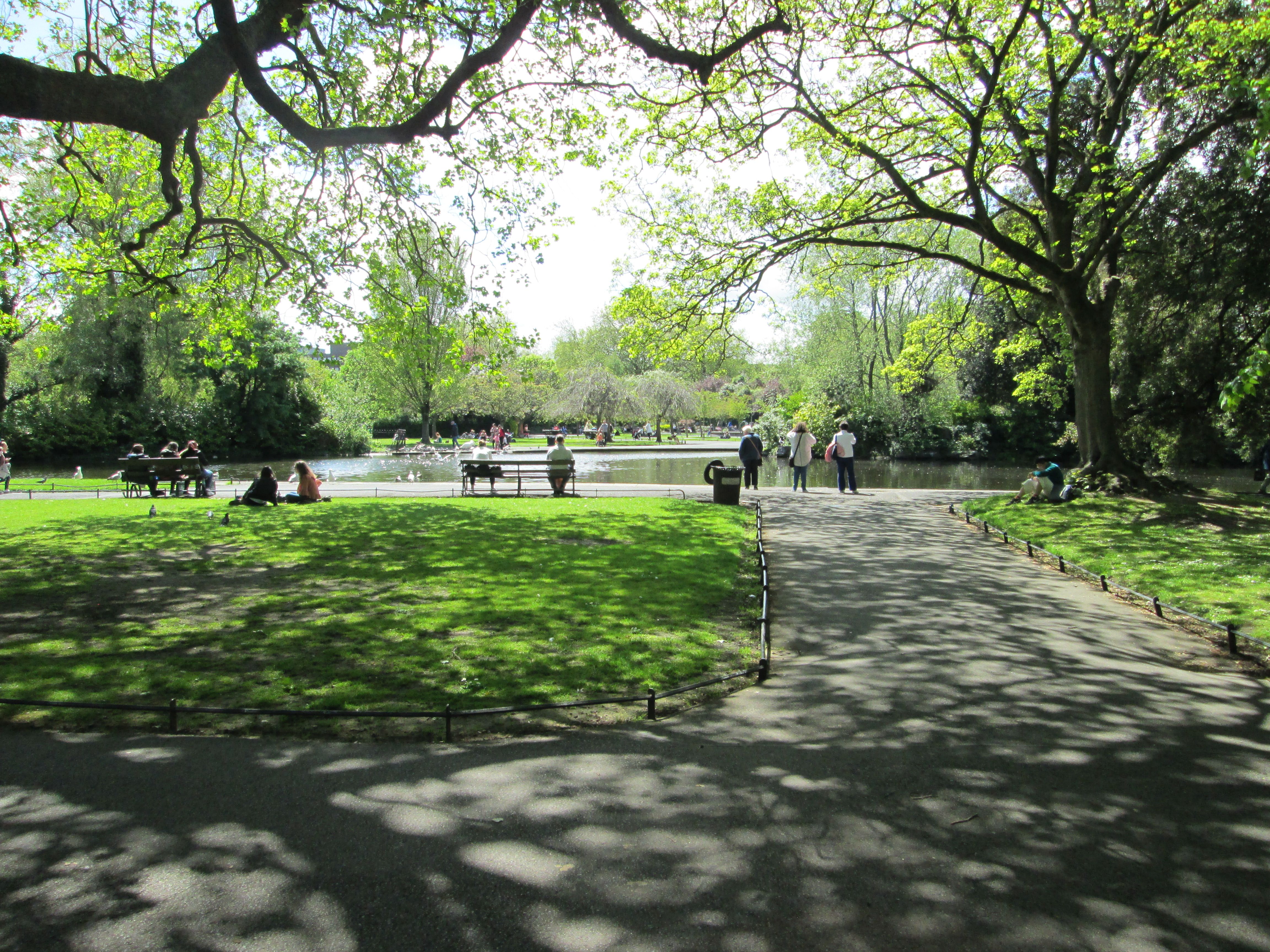
St Stephen’s Green waits at the top of Grafton Street. In the seventeenth century it was a commonage on the outskirts of the city. It was walled in 1664 with access restricted to owners of adjacent properties until 1877 when Sir A E Guinness, Lord Ardilaun, put the park into public ownership. Entering through Fusiliers’ Arch, pathways flow around the ornamental lake. Young Dubliners and visitors lounge on the grass, taking time out from the big smoke. Meanwhile, on the western end of the city (just past Heuston) the Phoenix Park is a vast walled park housing the Zoo, the President and a herd of deer.
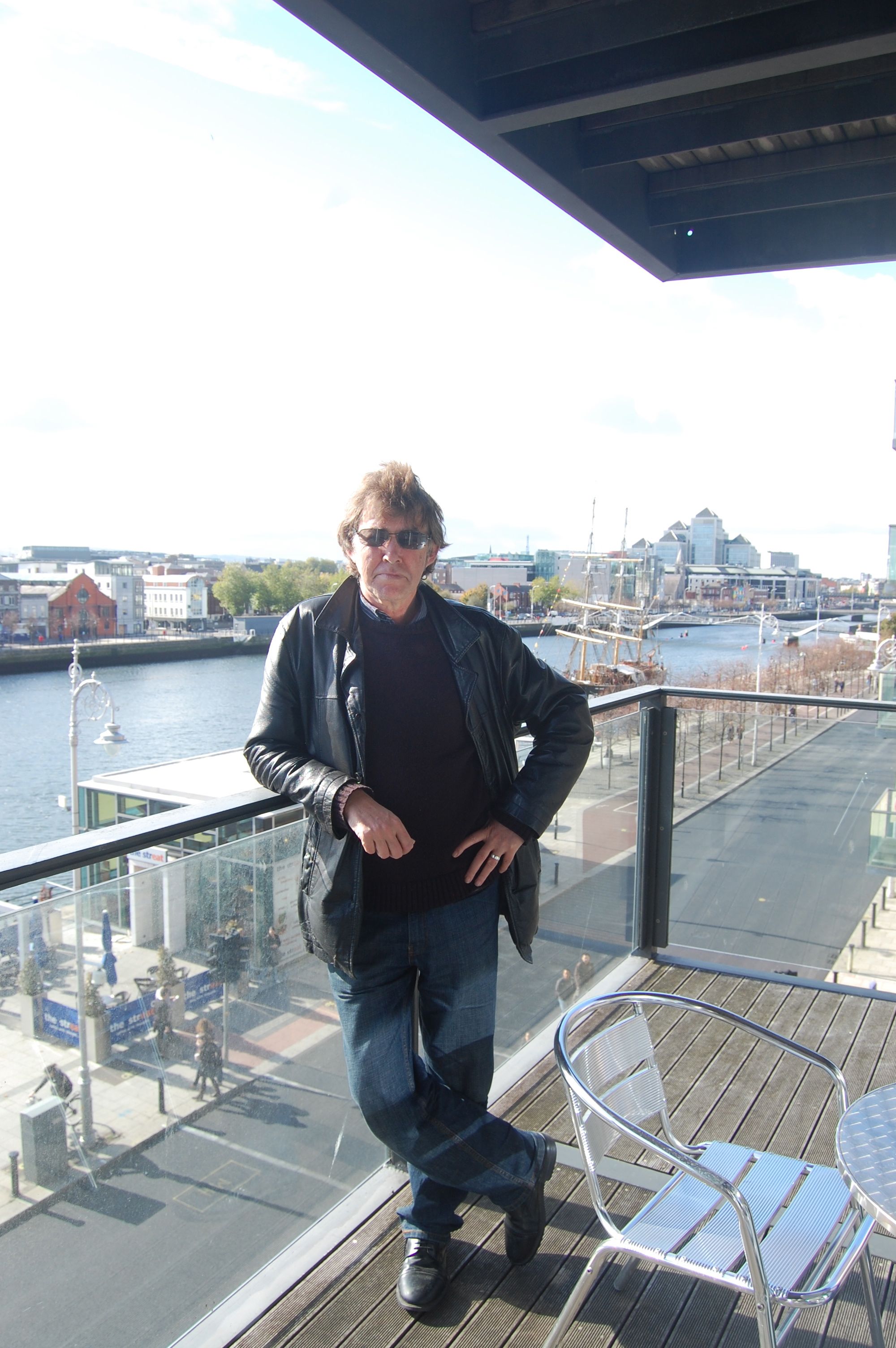
The Grand Canal inscribes a sublime arc around Dublin’s south inner cty. It reaches the estuary at Grand Canal Docks where the modern highrise of Google Docks clashes appropriately with nineteenth century docklands. This area provides a fitting finale for my Dublin’s Circular Roads series.
5 Top Visits
Dublin Castle
Trinity College
National Gallery
Hugh Lane Gallery
Guinness Hopstore
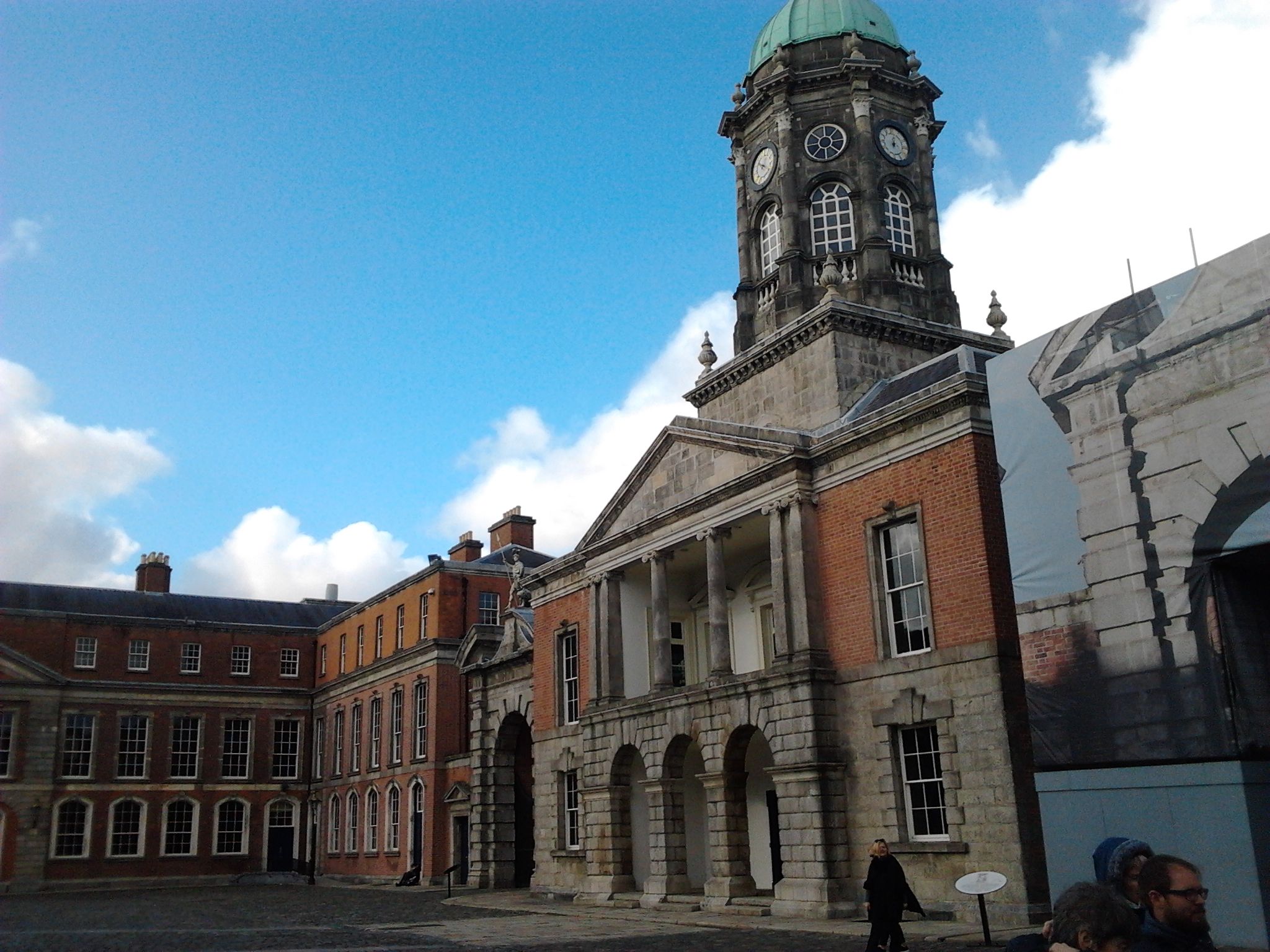
Dublin Castle stands on the spot where Dublin began. In the ninth century Viking raiders landed at the confluence of the Liffey with its tributary the Poddle. On the shore of this dark pool they established the Danish settlement, taking its name from the Gaelic for the pool: Dubh Linn. The Norman invasion three centuries later led to the building of Dublin Castle by order of King John in 1202. For eight hundred years it was the centre of foreign power. After Independence the Castle was used for state occasions and became a major tourist attraction. There’s a garden on the site of the old Dubh Linn, near the Chester Beatty Library which holds a priceless treasure of Oriental manuscripts, art and artifacts.
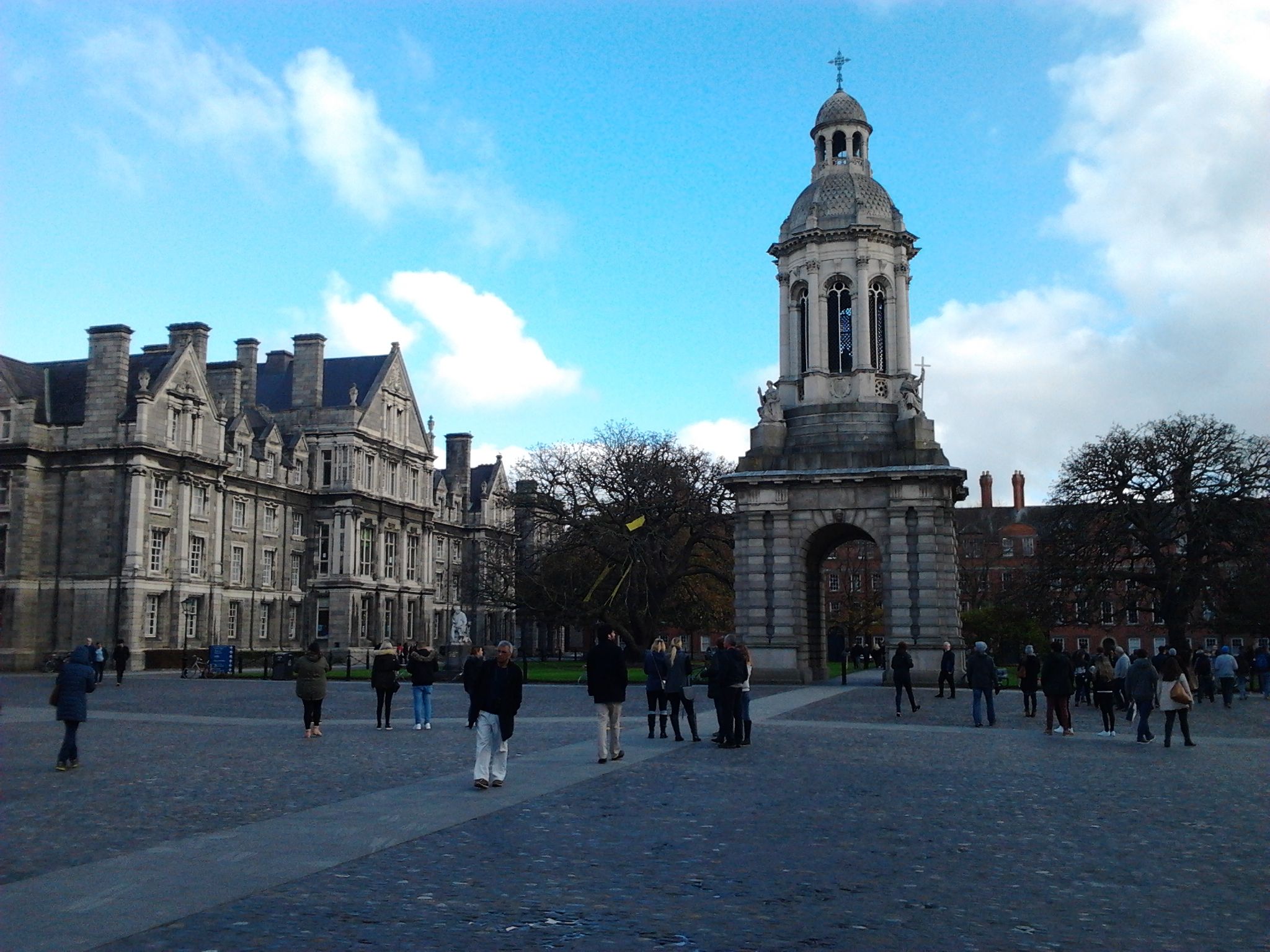
Trinity College campus is an oasis in the swirling centre of the city. Founded in the reign of Elzabeth at the end of the 16th Century it has become one of the most prestigous colleges in the Enlish speaking world. It houses the Book of Kells and its Library by right holds every book published in Ireland and Britain.
The National Gallery is one of a quartet of public buildings flanking Leinster House, Ireland’s Dail (Parliament). The National Museum and Library face Kildare St, while the Gallery and the Natural History Museum (or Dead Zoo) face Merrion Square. The Gallery came from the Great Exhibition of 1847 on Leinster Lawns, proposed by Railway developer, William Dargan. The collection features the best of Irish art including Lavery, Yeats, Burton, Orpen, and international greats including Vermeer, Turner, Caravaggio and Monet. An extensive portrait gallery features contemporary and period art.
The Hugh Lane Gallery on Parnell Square was founded as Dublin’s Metropolitan Gallery. It is named for Hugh Lane, a young collector who amassed a fine collection of Impressionst art. He died on the Lustania in 1915, not quite forty.
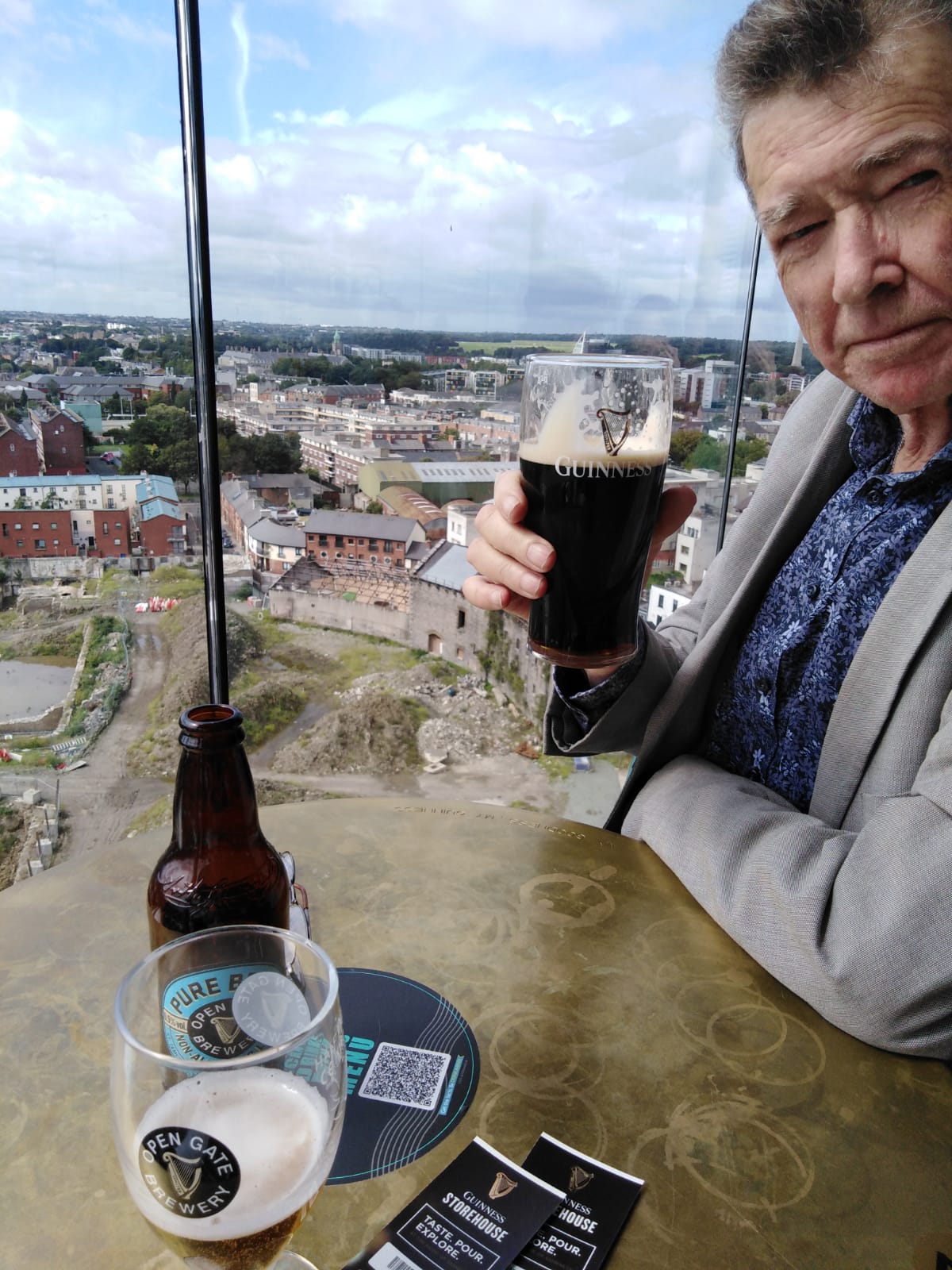
Arthur Guinness established his brewery in 1759. The clocks of Dublin have been stuck at a minute to six ever since. In our heads, at least. The St. James’s Gate Brewery lies in the Liberties to the southwest of the city. A visit to the Hopstore will give you the full story, followed by a creamy pint in the elevated splendour of the tenth story Gravity Bar.
Or, you could go to one of Dublin’s many pubs.
5 Top Pubs
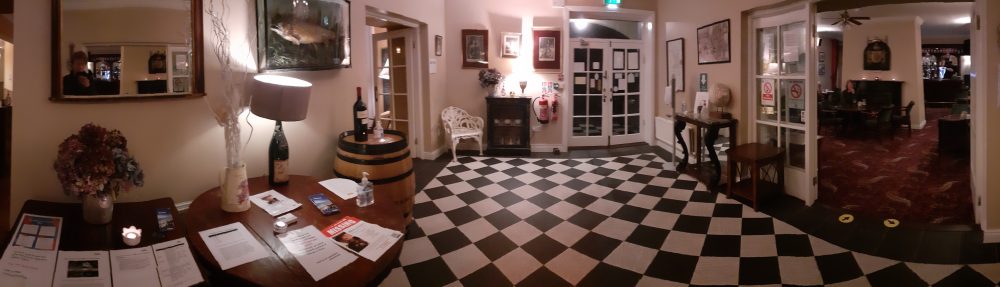
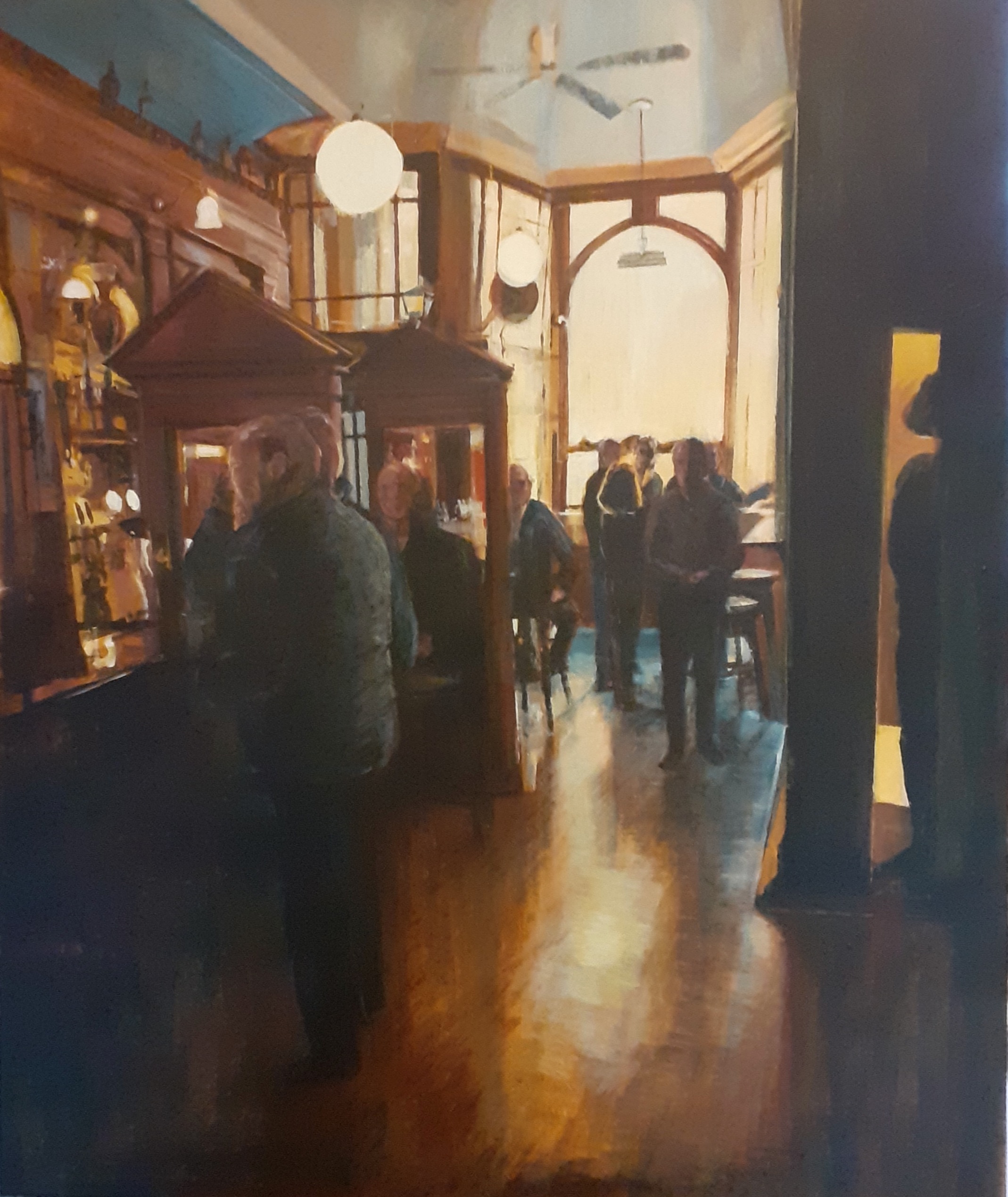
Dublin is packed with great pubs. There is no definitive syle, they come in all shapes and sizes. The Victorian and late Edwardian are perhaps most typical. Many’s the blog and pubication that has given the top ten or twenty. It all depends. For what it’s worth, my favourite five are:
1. O’Donoghue’s of Merrion Row, 2. Toner’s of Baggot Street, 3. The Palace in Fleet Street, 4. Grogan’s Castle Inn on Sth William St, 5. The Stag’s Head at Dame Court.
That’s maybe enough for one pub crawl, but there are many more. James Joyce’s Ulysses posed the riddle of the impossibility of crossing Dublin without passing a pub. It is easily solved, of course. Don’t pass any, just go in. If indeed you do pass the Stag’s Head, and you shouldn’t, it’s near enough the definitive old style Dublin pub.
With all that drink, the only people to remain upstanding in Dubln are its statues. Dublin’s statues immortalise figures from fact and fiction
5 Top Statues
1. Molly Malone on Suffolk Street, 2. Phiil Lynott on Harry Street, 3. Oscar Wlde at Merrion Square, 4. James Joyce, 5. Patrick Kavanagh.
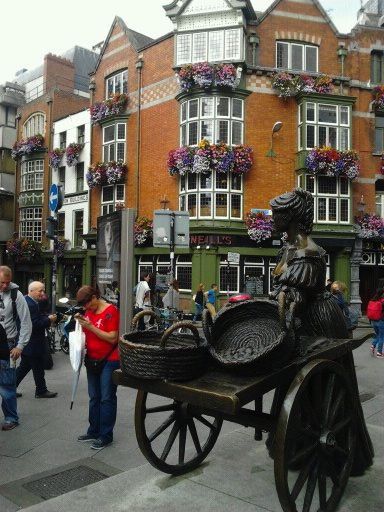
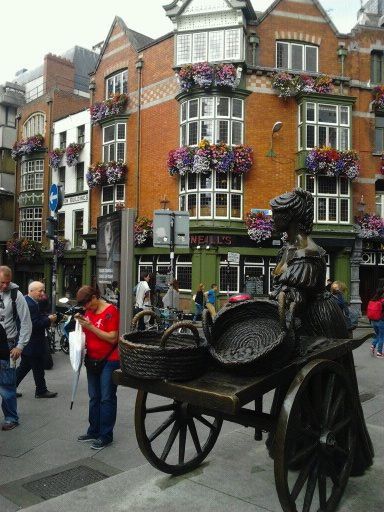
The statue of Molly Malone by Jeanne Rynhart dates from Dublin’s millennium celebrations in 1988. Molly steps from the air of a song to become flesh, or bronze at least.
In Dublin’s Fair City
Where the girls are so pretty
I first set my eyes on sweet Molly Malone.
As she wheeled her wheelbarrow
Through streets broad and narrow
Crying cockles and mussels,
Alive, alive-oh!
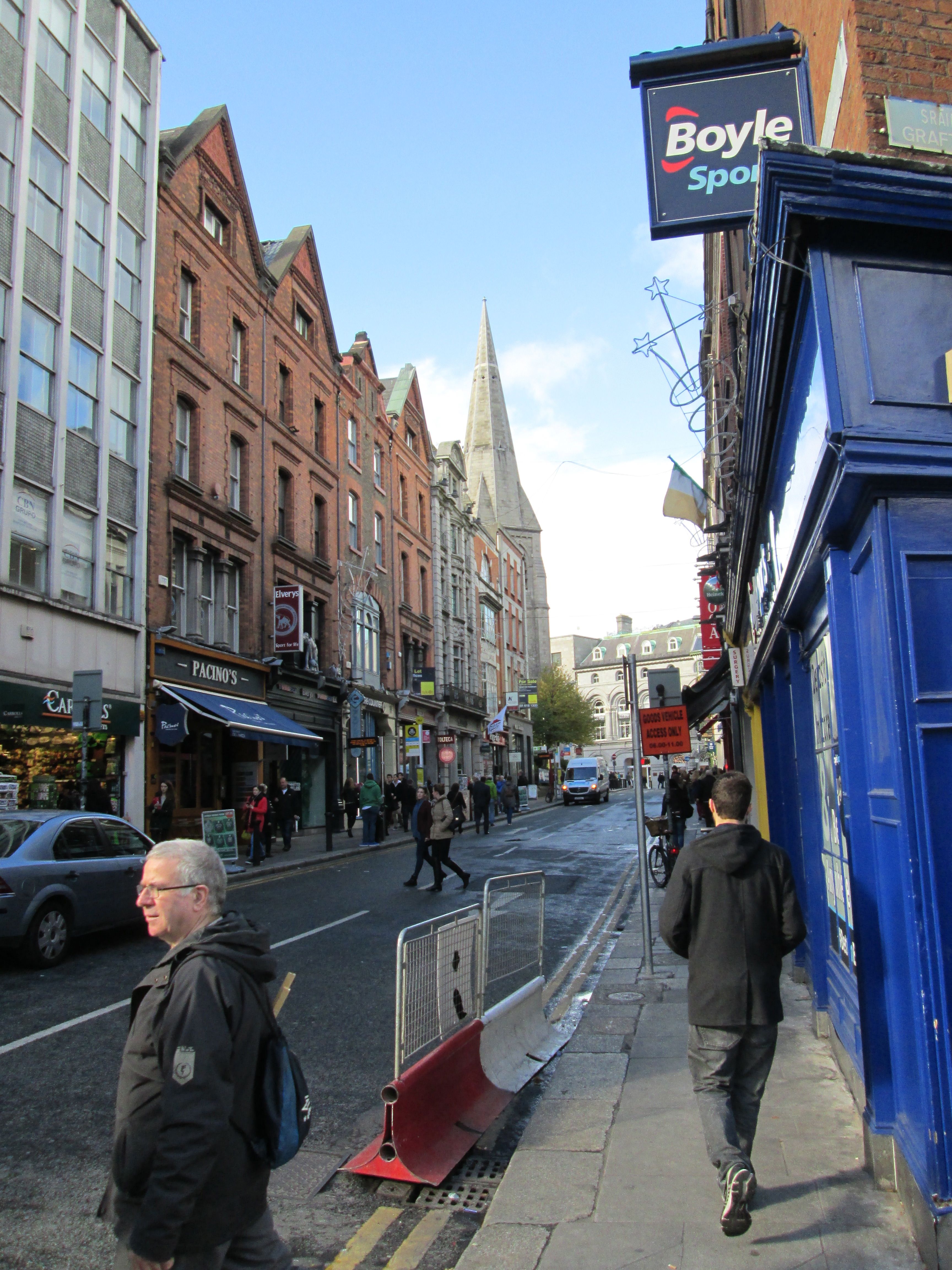
The song is of obscure provenance. A music-hall ballad of the 1880s it was attributed to Scottish songsmith, James Yorkston. It has become the anthem for the capital city. She can certainly wheel her wheelbarrow. First time I saw it ‘twas at the bottom of Grafton Street, now it stands outside Saint Andrew’s Church on Suffolk Street.
Molly was a seventeenth century barrowgirl who earned a bit on the side plying the oldest profession. The song certainly alludes to sex. Cockles and mussels has salacious connotations. Young lovers and visitors to the Fair City have taken the photo opportunity the statue offers. It is traditional to fondle one or both of Molly’s breasts, giving them a sunburst emphasis.
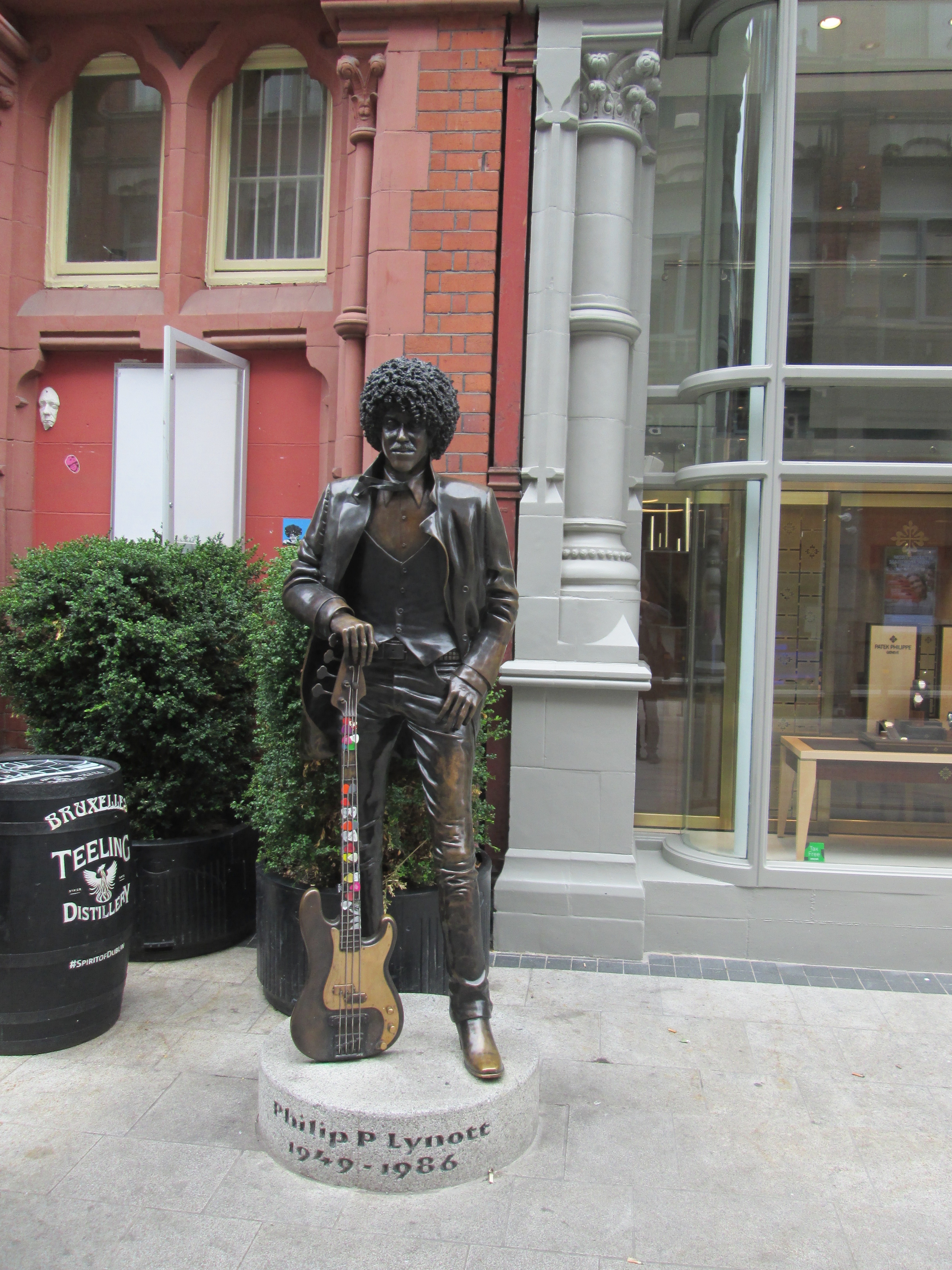
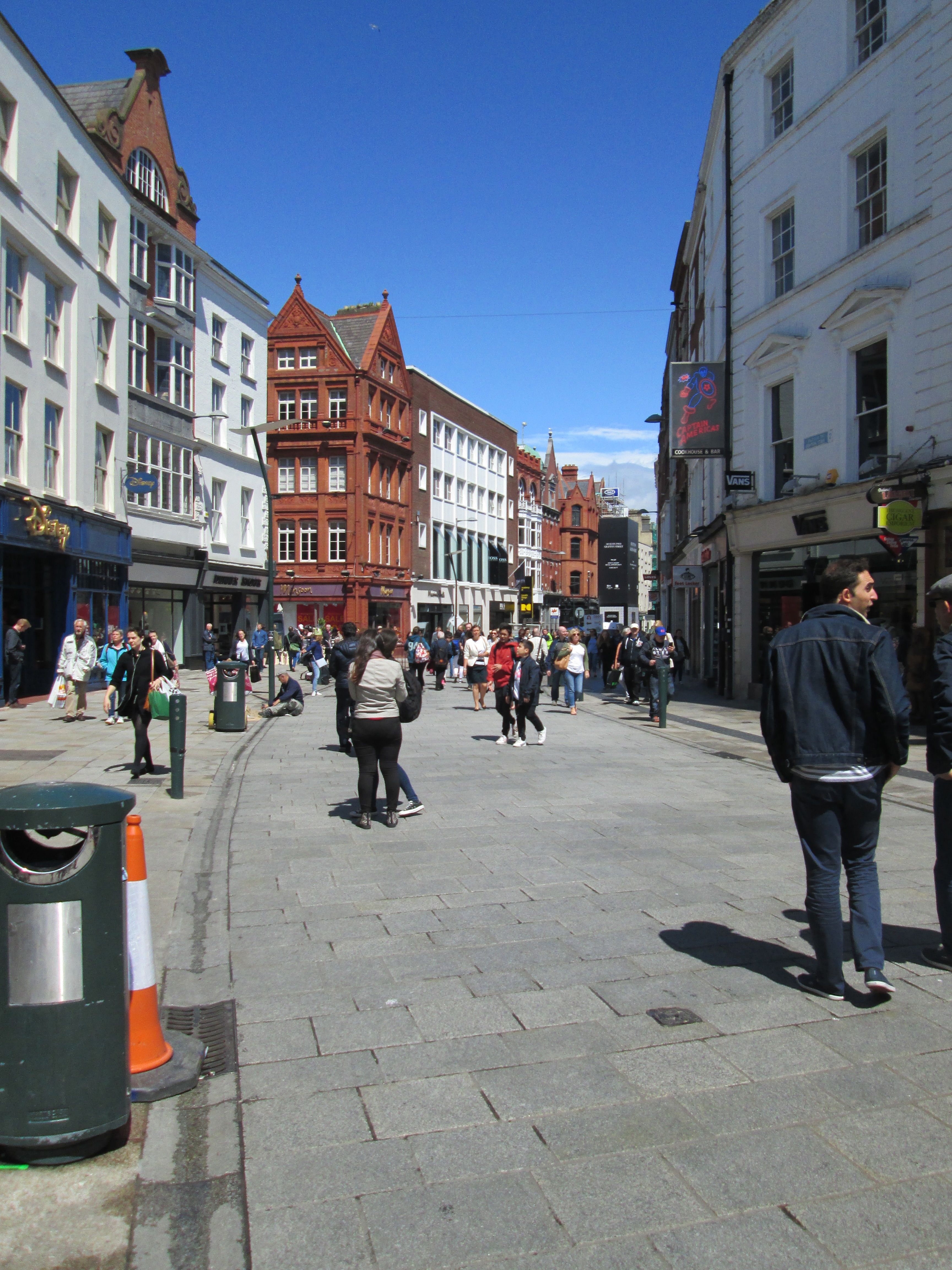
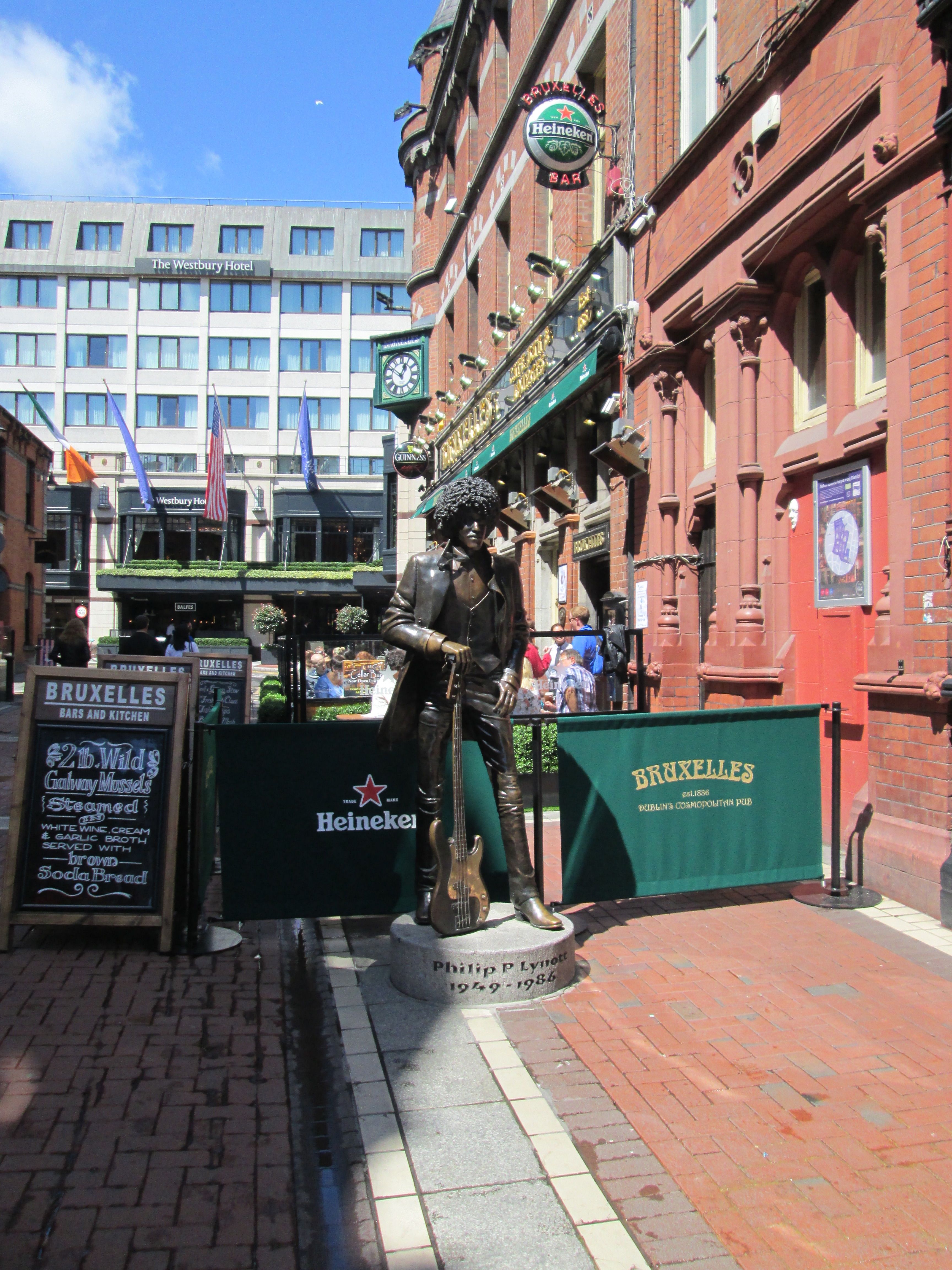
At Bruxelles Pub near the top of Grafton Street, another lifesize statue vies with Molly for popularity. Phil Lynott was black and Irish as Guinness and leader of Thin Lizzy, kings of the Dublin Rock scene. They took a rocked up version of Irish trad balled, Whiskey in the Jar, to the British charts. The ballad records the misadventures of a seventeenth century highwayman whose lover in Lynott’s version is called Molly. So no accident that they’re still close.
But me I like sleeping
Especially in my Molly’s chamber
But here I am in prison
Here I am with a ball and chain.
(Whiskey in the Jar)
Lynott died in 1985, aged just thirty six. The video for his solo hit, Old Town, features him swanning about Grafton Street, Ringsend and the Long Hall pub on George’s Street.
Oscar Wilde reclines sedately at the northwestern corner of Merrion Square. James Joyce saunters down North Earl Street across from the GPO. Another writer, poet Patrick Kavanagh, reclines on a bench on the Grand Canal at Baggot Street Bridge.
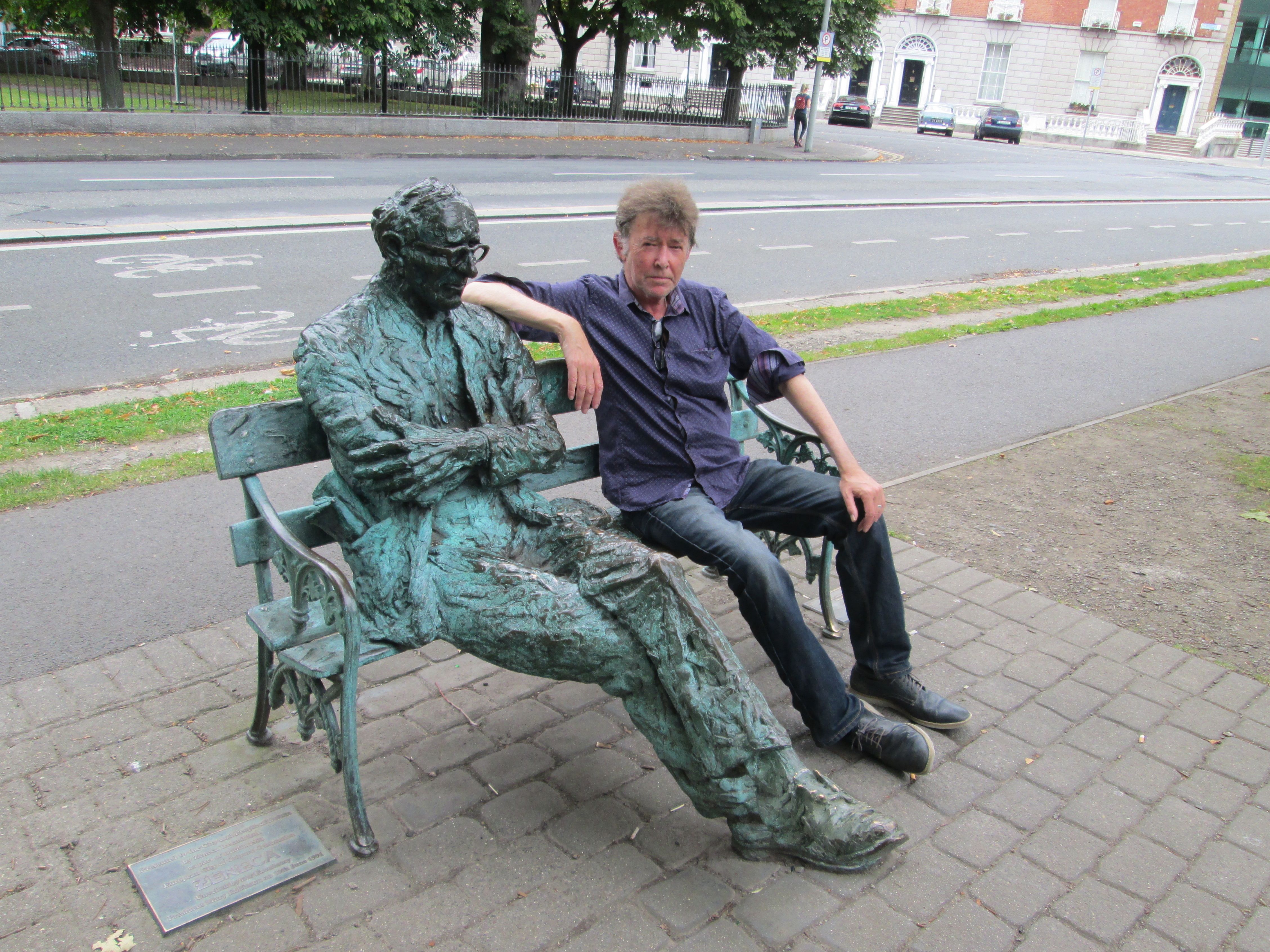
On Pembroke Road look out for my ghost
Dishevelled with shoes untied
Playing through the railings with little children
Whose children have long since died