Dublin Highlights

I was born and grew up in Dublin. I spend a lot of time travelling through Dublin and its environs. I live nearby, in the town of Bray just 20km down the coast. I have regularly posted on my Dublin adventures. Of late, I have noted some good posts from overseas travellers and locals alike (World in Your Eyes and Finding Your Feet). So I thought I might join in and post a few Dublin memories. Something of a greatest hits perhaps, or top ten tips type of thing.

5 Top Sights

The Liffey

Christchurch Cathedral

St Stephen’s Green

Phoenix Park

Grand Canal Docks
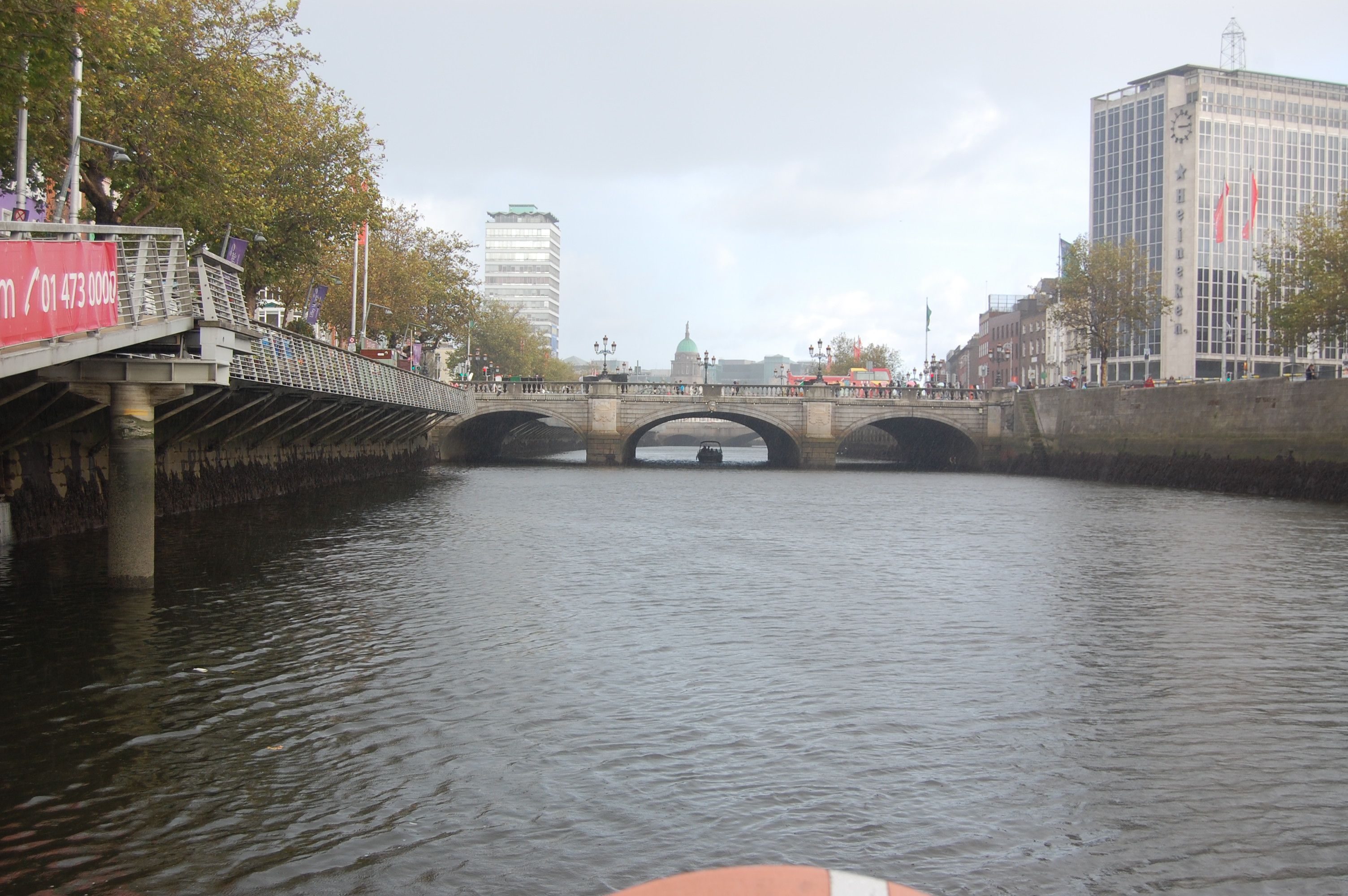
Dublin is a great city to walk round. Literally. My series Dublin’s Circular Roads describes a particular route. Another circle is provided by the two canals, the Royal to the North and the Grand on the south. Within their radius the city centre is divided into north and south sides by the River Liffey. It is the river that makes the city. Each bank is lined with quaysides from the estuary in Dublin Bay upriver to the western rail terminus, Heuston Station. The main buildngs to see are the Custom House and the Four Courts, both by Gandon and on the North Quays. The Ha’penny Bridge, a cast iron pedestran bridge spanning the river between Liffey St and Temple Bar is one of Dublin’s most iconic sights.

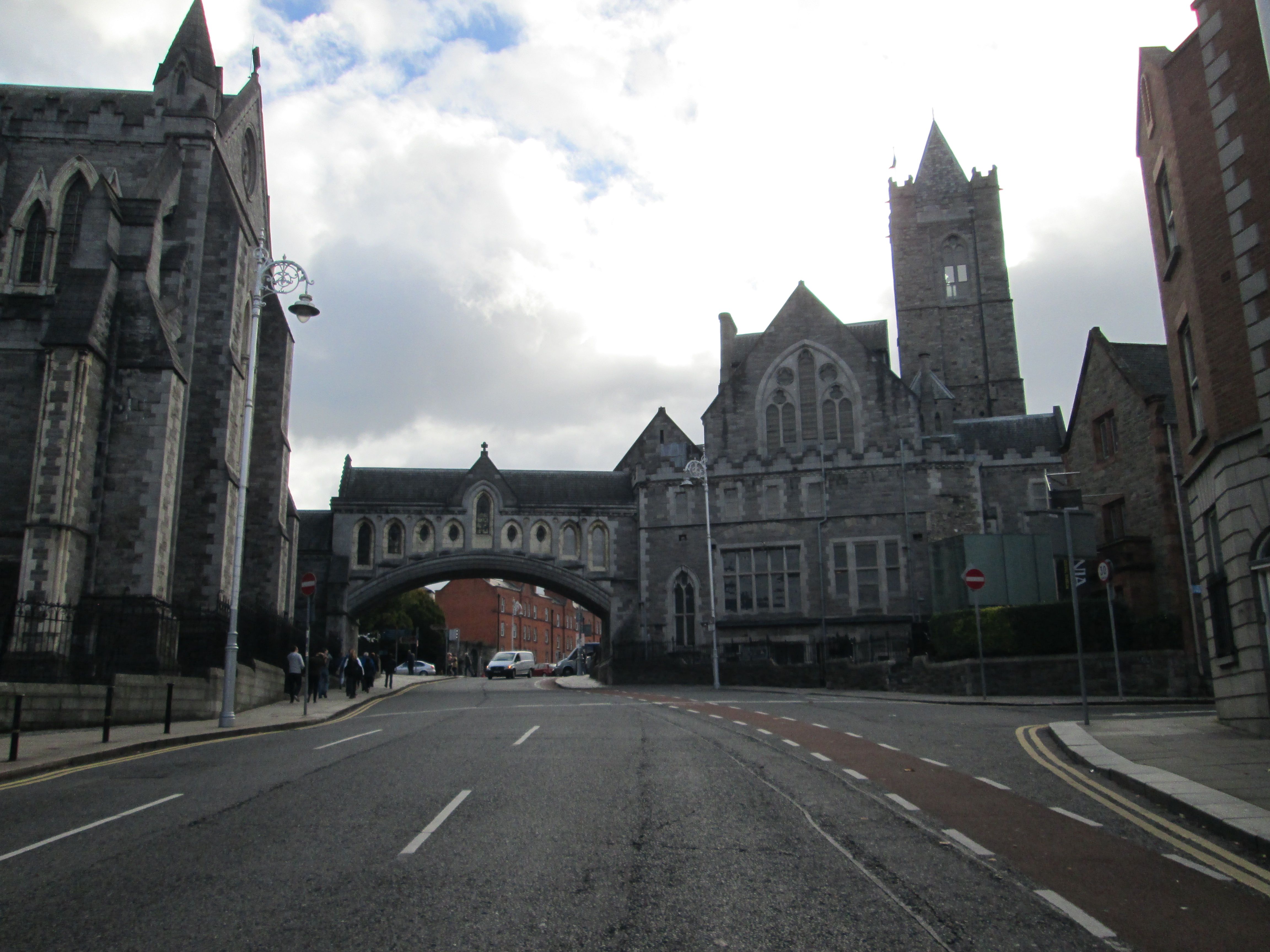
Christchurch is the more ancient of Dublin’s two cathedral’s. King Sitric Silkenbeard, overtaken with piety in his later years, established it in 1028. The Synod House to the west is joined to the Cathedral by an arched brdge, making it look like the main road passes through the ancient church. Wonderful.
Dublin can be heaven

With coffee at eleven

And a stroll in Stephen’s Green

(Dublin Saunter by Leo Maguire and sung by Noel Pucell)

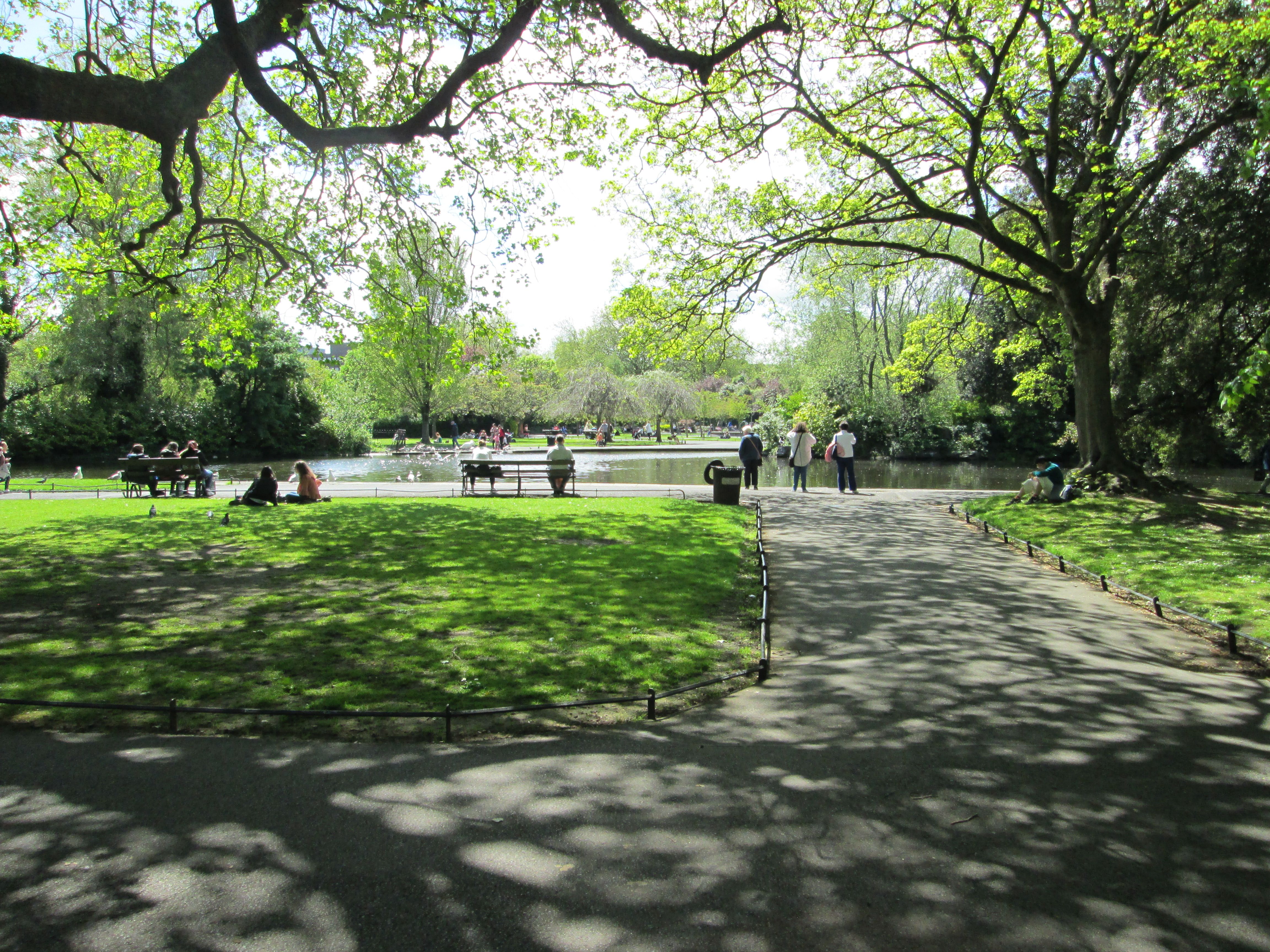
St Stephen’s Green waits at the top of Grafton Street. In the seventeenth century it was a commonage on the outskirts of the city. It was walled in 1664 with access restricted to owners of adjacent properties until 1877 when Sir A E Guinness, Lord Ardilaun, put the park into public ownership. Entering through Fusiliers’ Arch, pathways flow around the ornamental lake. Young Dubliners and visitors lounge on the grass, taking time out from the big smoke. Meanwhile, on the western end of the city (just past Heuston) the Phoenix Park is a vast walled park housing the Zoo, the President and a herd of deer. 

The Grand Canal inscribes a sublime arc around Dublin’s south inner cty. It reaches the estuary at Grand Canal Docks where the modern highrise of Google Docks clashes appropriately with nineteenth century docklands. This area provides a fitting finale for my Dublin’s Circular Roads series.
5 Top Visits

Dublin Castle

Trinity College

National Gallery

Hugh Lane Gallery

Guinness Hopstore

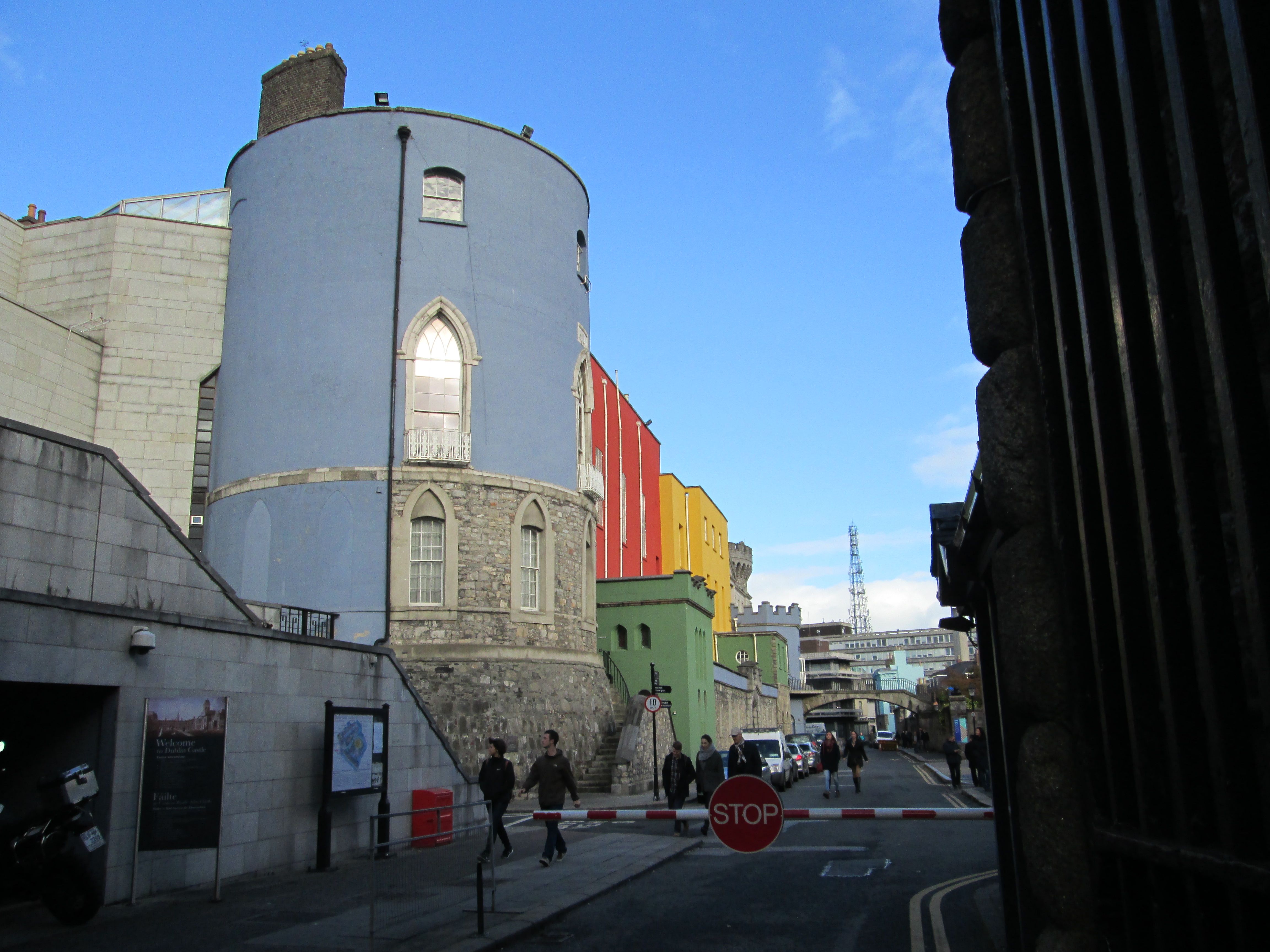
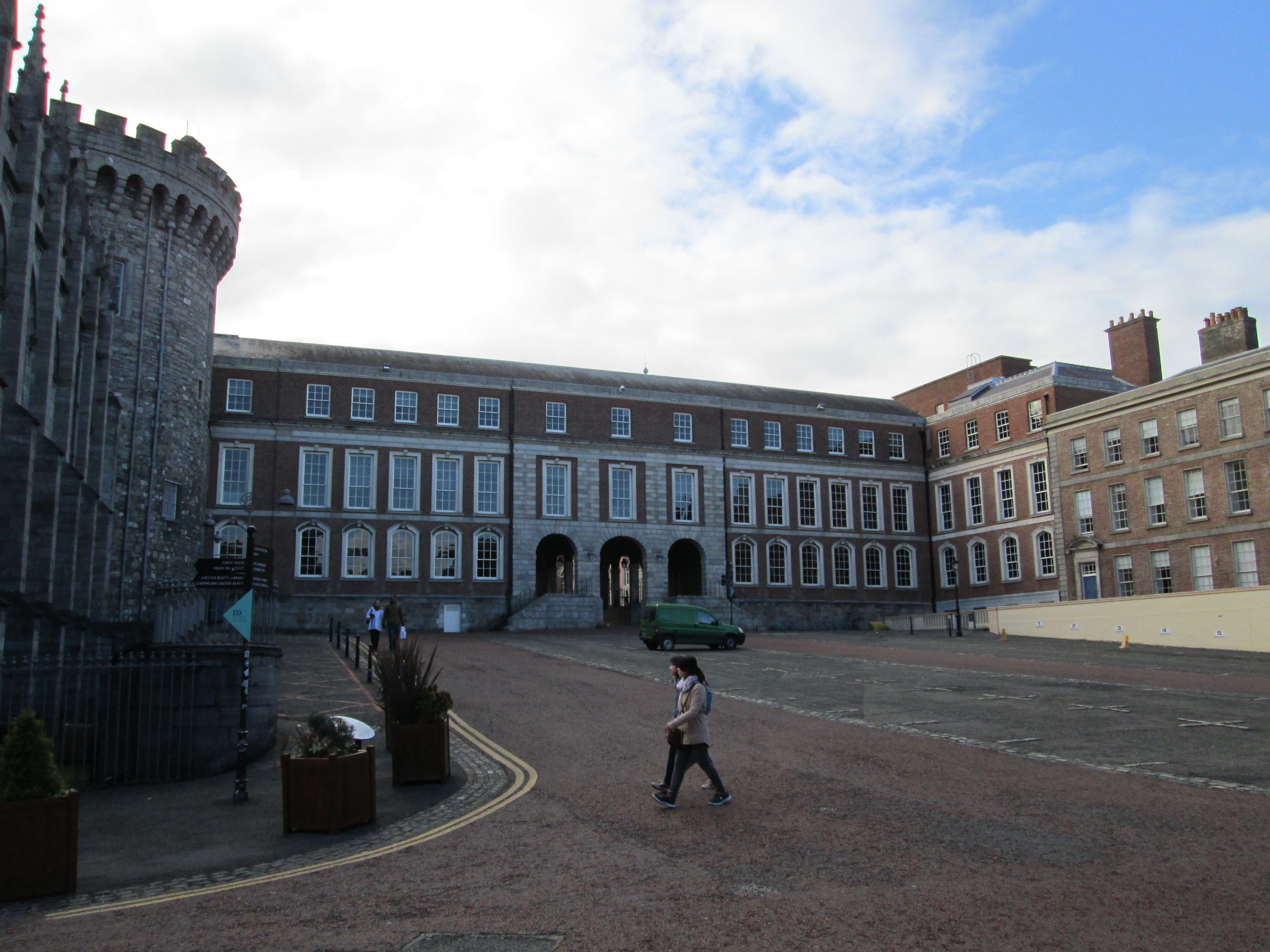
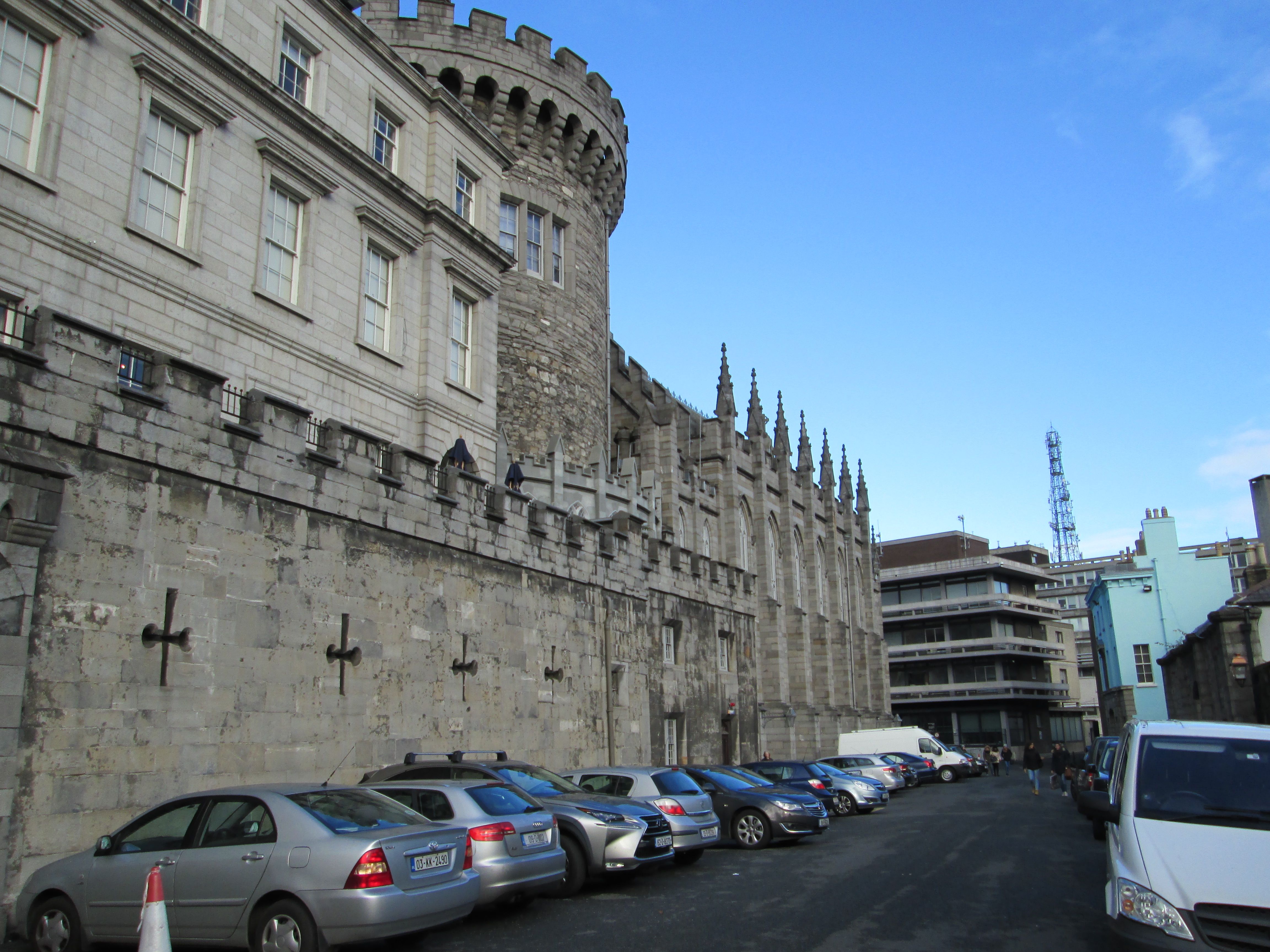
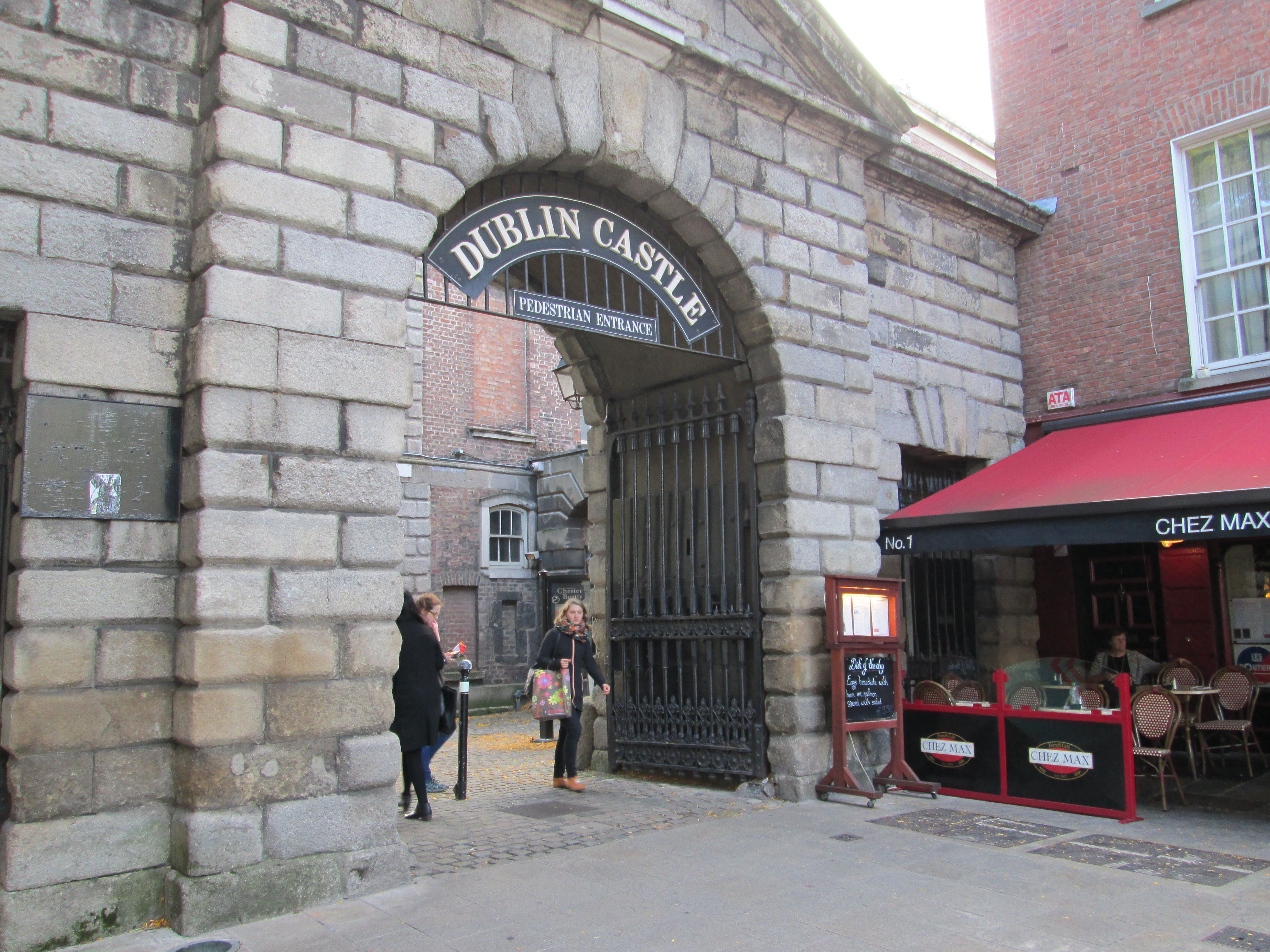
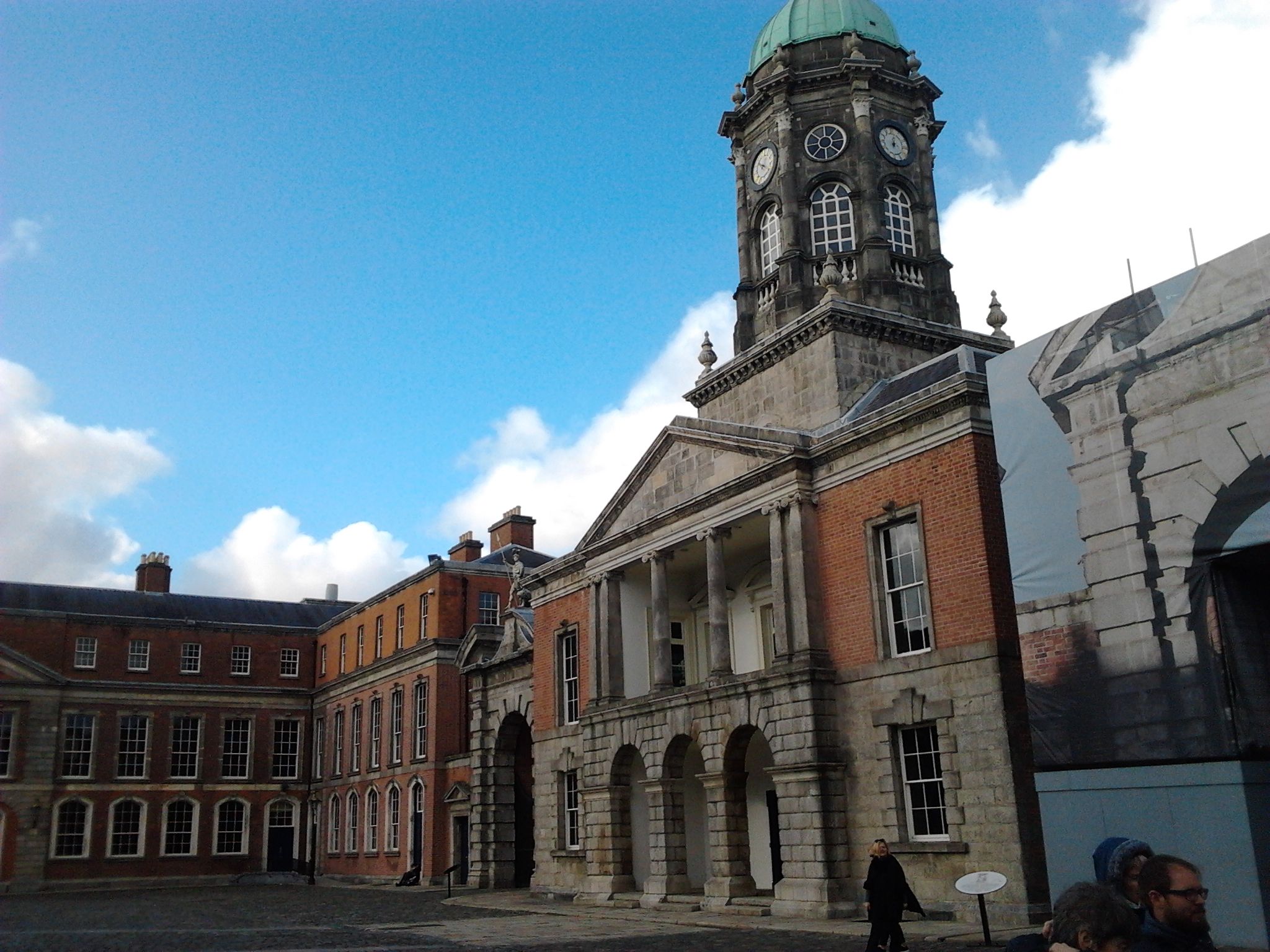
Dublin Castle stands on the spot where Dublin began. In the ninth century Viking raiders landed at the confluence of the Liffey with its tributary the Poddle. On the shore of this dark pool they established the Danish settlement, taking its name from the Gaelic for the pool: Dubh Linn. The Norman invasion three centuries later led to the building of Dublin Castle by order of King John in 1202. For eight hundred years it was the centre of foreign power. After Independence the Castle was used for state occasions and became a major tourist attraction. There’s a garden on the site of the old Dubh Linn, near the Chester Beatty Library which holds a priceless treasure of Oriental manuscripts, art and artifacts.
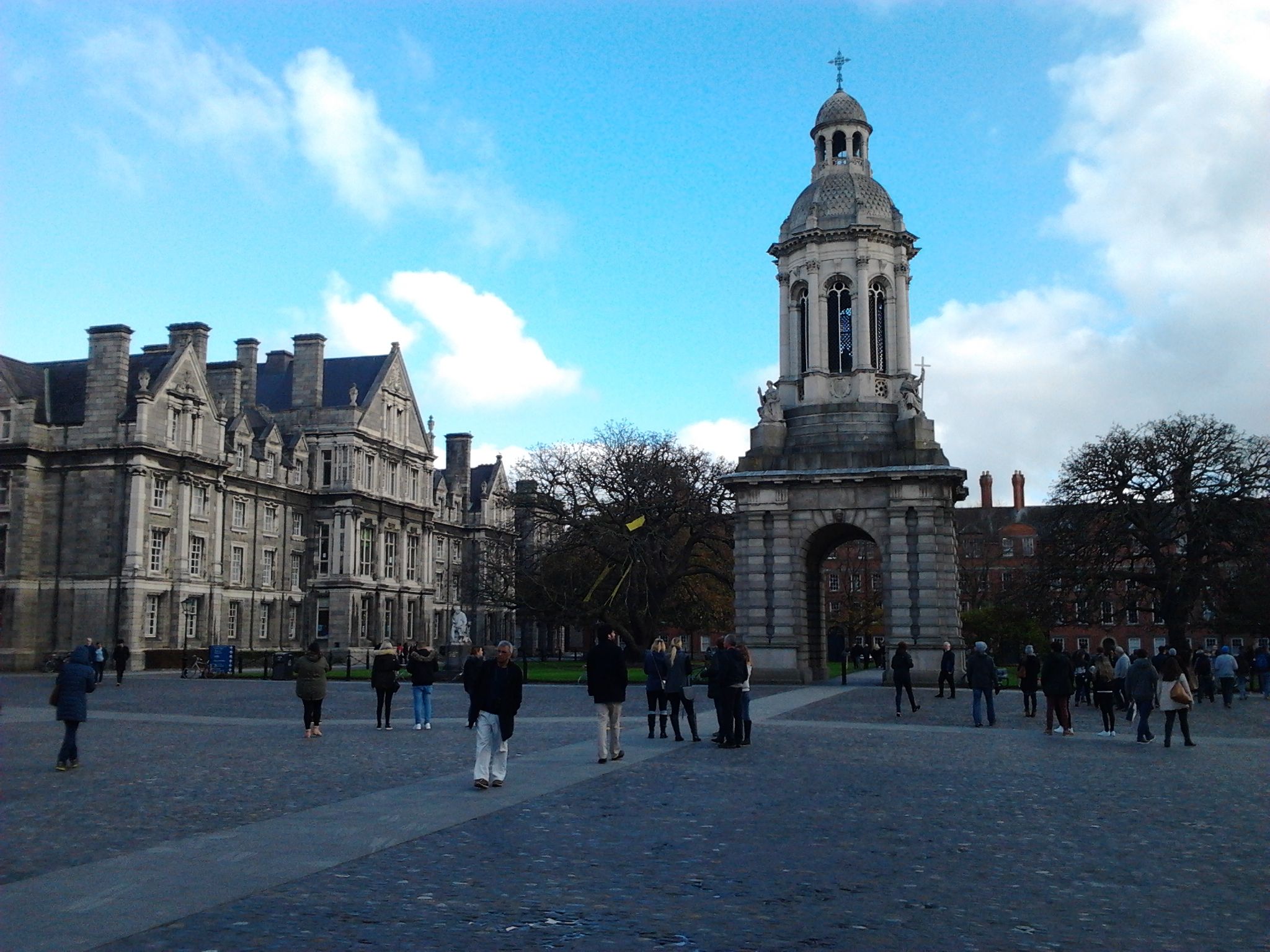
Trinity College campus is an oasis in the swirling centre of the city. Founded in the reign of Elzabeth at the end of the 16th Century it has become one of the most prestigous colleges in the Enlish speaking world. It houses the Book of Kells and its Library by right holds every book published in Ireland and Britain. 

The National Gallery is one of a quartet of public buildings flanking Leinster House, Ireland’s Dail (Parliament). The National Museum and Library face Kildare St, while the Gallery and the Natural History Museum (or Dead Zoo) face Merrion Square. The Gallery came from the Great Exhibition of 1847 on Leinster Lawns, proposed by Railway developer, William Dargan. The collection features the best of Irish art including Lavery, Yeats, Burton, Orpen, and international greats including Vermeer, Turner, Caravaggio and Monet. An extensive portrait gallery features contemporary and period art. 

The Hugh Lane Gallery on Parnell Square was founded as Dublin’s Metropolitan Gallery. It is named for Hugh Lane, a young collector who amassed a fine collection of Impressionst art. He died on the Lustania in 1915, not quite forty.
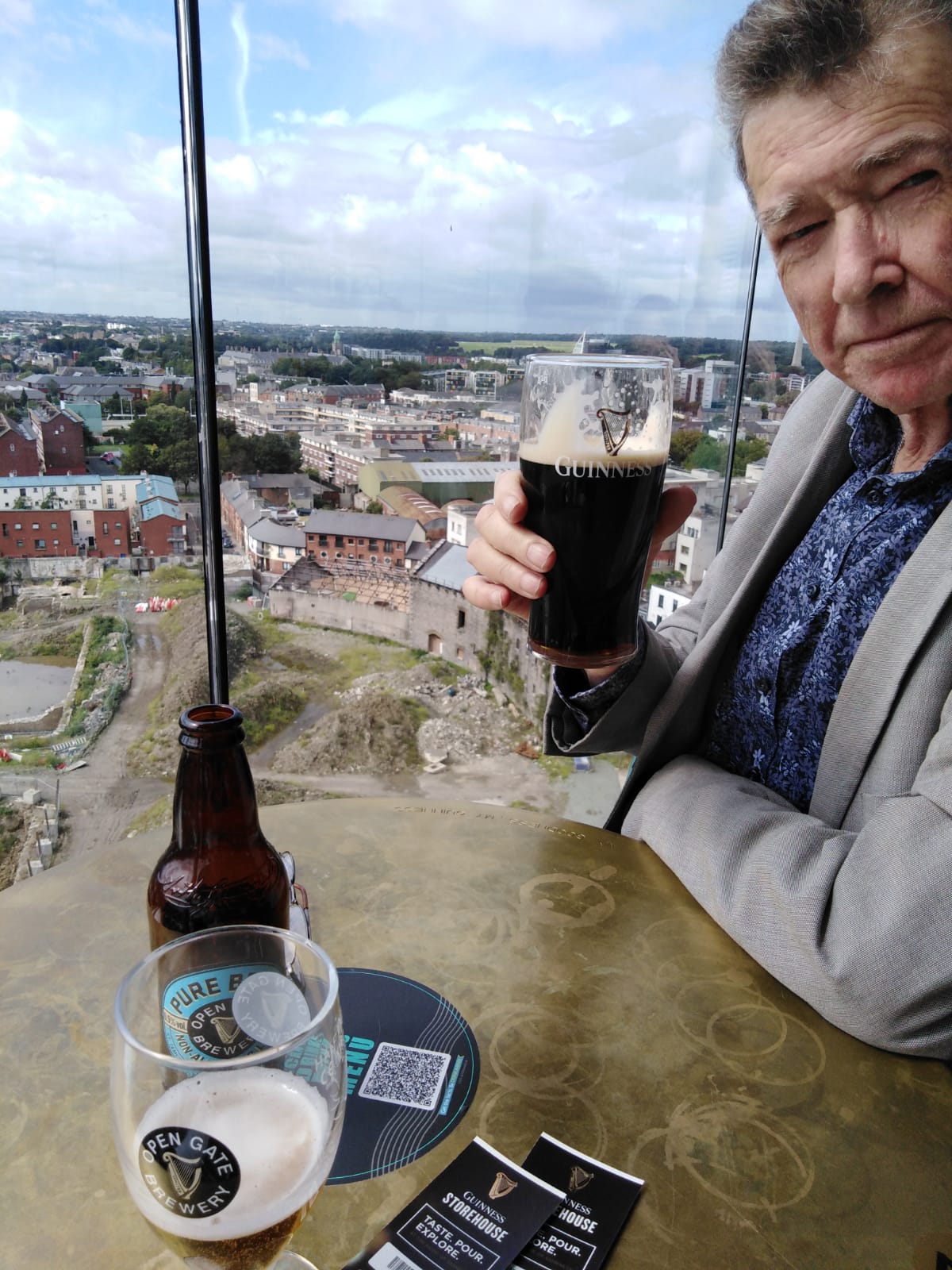
Arthur Guinness established his brewery in 1759. The clocks of Dublin have been stuck at a minute to six ever since. In our heads, at least. The St. James’s Gate Brewery lies in the Liberties to the southwest of the city. A visit to the Hopstore will give you the full story, followed by a creamy pint in the elevated splendour of the tenth story Gravity Bar.

Or, you could go to one of Dublin’s many pubs.
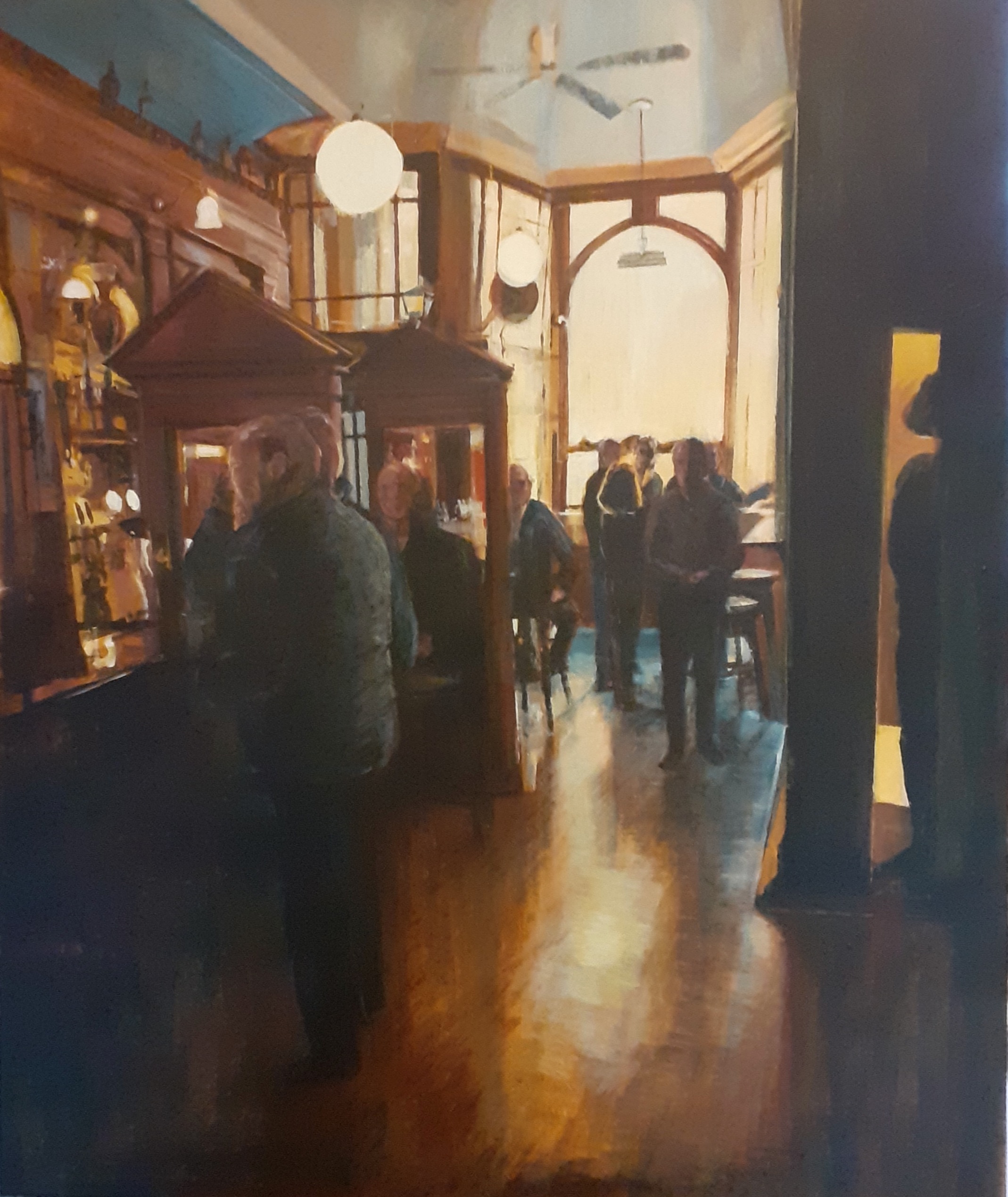
5 Top Pubs

Dublin is packed with great pubs. There is no definitive syle, they come in all shapes and sizes. The Victorian and late Edwardian are perhaps most typical. Many’s the blog and pubication that has given the top ten or twenty. It all depends. For what it’s worth, my favourite five are:

1. O’Donoghue’s of Merrion Row, 2. Toner’s of Baggot Street, 3. The Palace in Fleet Street, 4. Grogan’s Castle Inn on Sth William St, 5. The Stag’s Head at Dame Court.

That’s maybe enough for one pub crawl, but there are many more. James Joyce’s Ulysses posed the riddle of the impossibility of crossing Dublin without passing a pub. It is easily solved, of course. Don’t pass any, just go in. If indeed you do pass the Stag’s Head, and you shouldn’t, it’s near enough the definitive old style Dublin pub. 

With all that drink, the only people to remain upstanding in Dubln are its statues. Dublin’s statues immortalise figures from fact and fiction

5 Top Statues

1. Molly Malone on Suffolk Street, 2. Phiil Lynott on Harry Street, 3. Oscar Wlde at Merrion Square, 4. James Joyce, 5. Patrick Kavanagh.
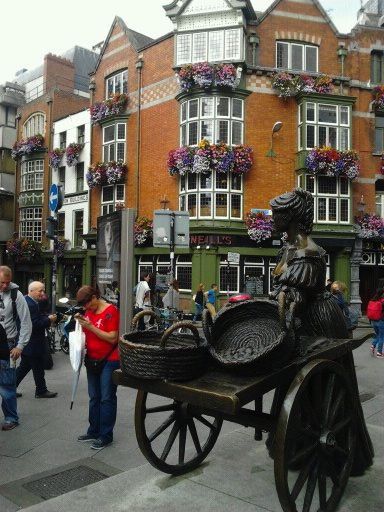
The statue of Molly Malone by Jeanne Rynhart dates from Dublin’s millennium celebrations in 1988. Molly steps from the air of a song to become flesh, or bronze at least.

In Dublin’s Fair City

Where the girls are so pretty

I first set my eyes on sweet Molly Malone.

As she wheeled her wheelbarrow

Through streets broad and narrow

Crying cockles and mussels, 

Alive, alive-oh!

The song is of obscure provenance. A music-hall ballad of the 1880s it was attributed to Scottish songsmith, James Yorkston. It has become the anthem for the capital city. She can certainly wheel her wheelbarrow. First time I saw it ‘twas at the bottom of Grafton Street, now it stands outside Saint Andrew’s Church on Suffolk Street.

Molly was a seventeenth century barrowgirl who earned a bit on the side plying the oldest profession. The song certainly alludes to sex. Cockles and mussels has salacious connotations. Young lovers and visitors to the Fair City have taken the photo opportunity the statue offers. It is traditional to fondle one or both of Molly’s breasts, giving them a sunburst emphasis.
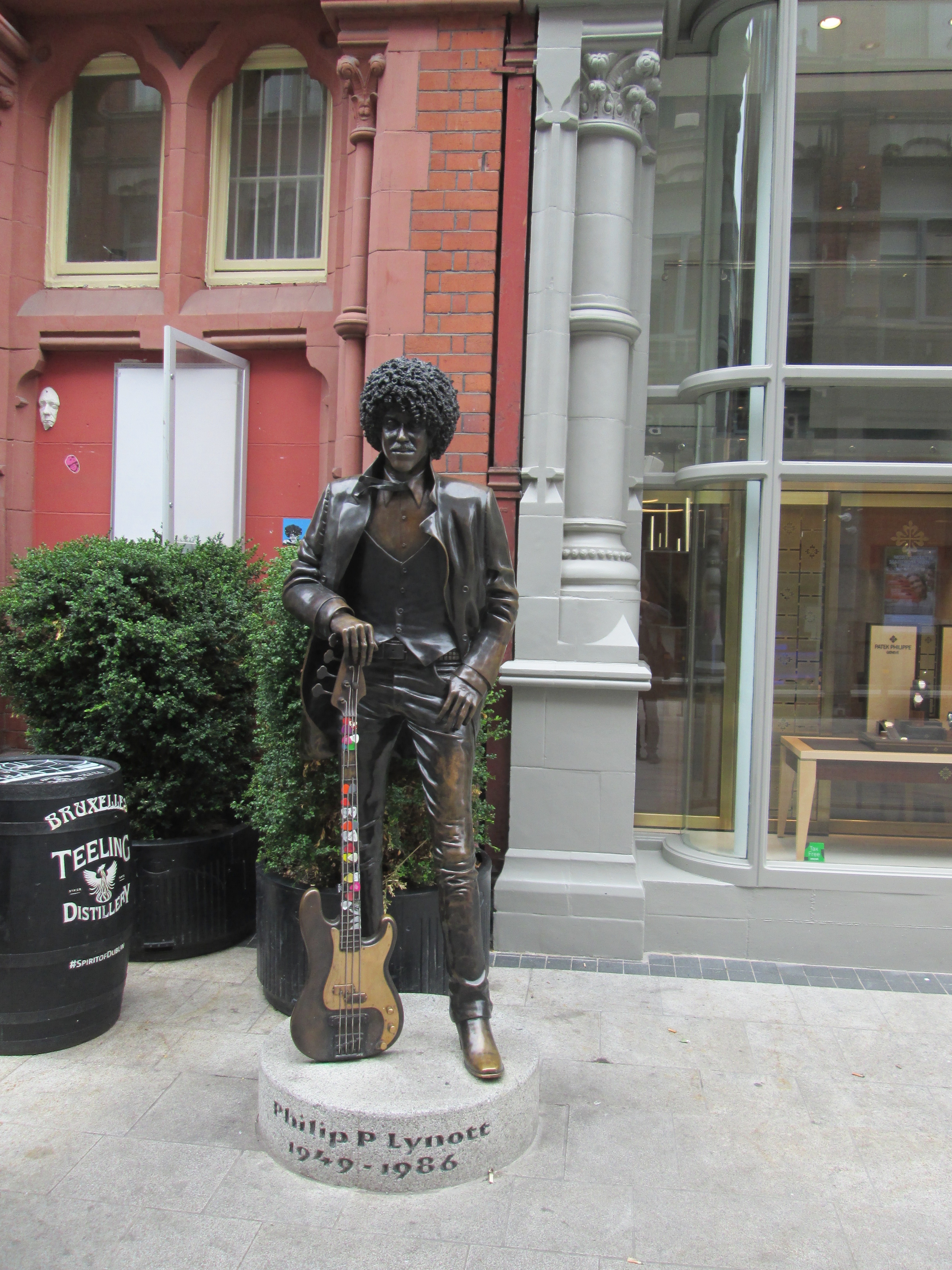
At Bruxelles Pub near the top of Grafton Street, another lifesize statue vies with Molly for popularity. Phil Lynott was black and Irish as Guinness and leader of Thin Lizzy, kings of the Dublin Rock scene. They took a rocked up version of Irish trad balled, Whiskey in the Jar, to the British charts. The ballad records the misadventures of a seventeenth century highwayman whose lover in Lynott’s version is called Molly. So no accident that they’re still close. 

But me I like sleeping

Especially in my Molly’s chamber

But here I am in prison

Here I am with a ball and chain.

(Whiskey in the Jar)

Lynott died in 1985, aged just thirty six. The video for his solo hit, Old Town, features him swanning about Grafton Street, Ringsend and the Long Hall pub on George’s Street.

Oscar Wilde reclines sedately at the northwestern corner of Merrion Square. James Joyce saunters down North Earl Street across from the GPO. Another writer, poet Patrick Kavanagh, reclines on a bench on the Grand Canal at Baggot Street Bridge.
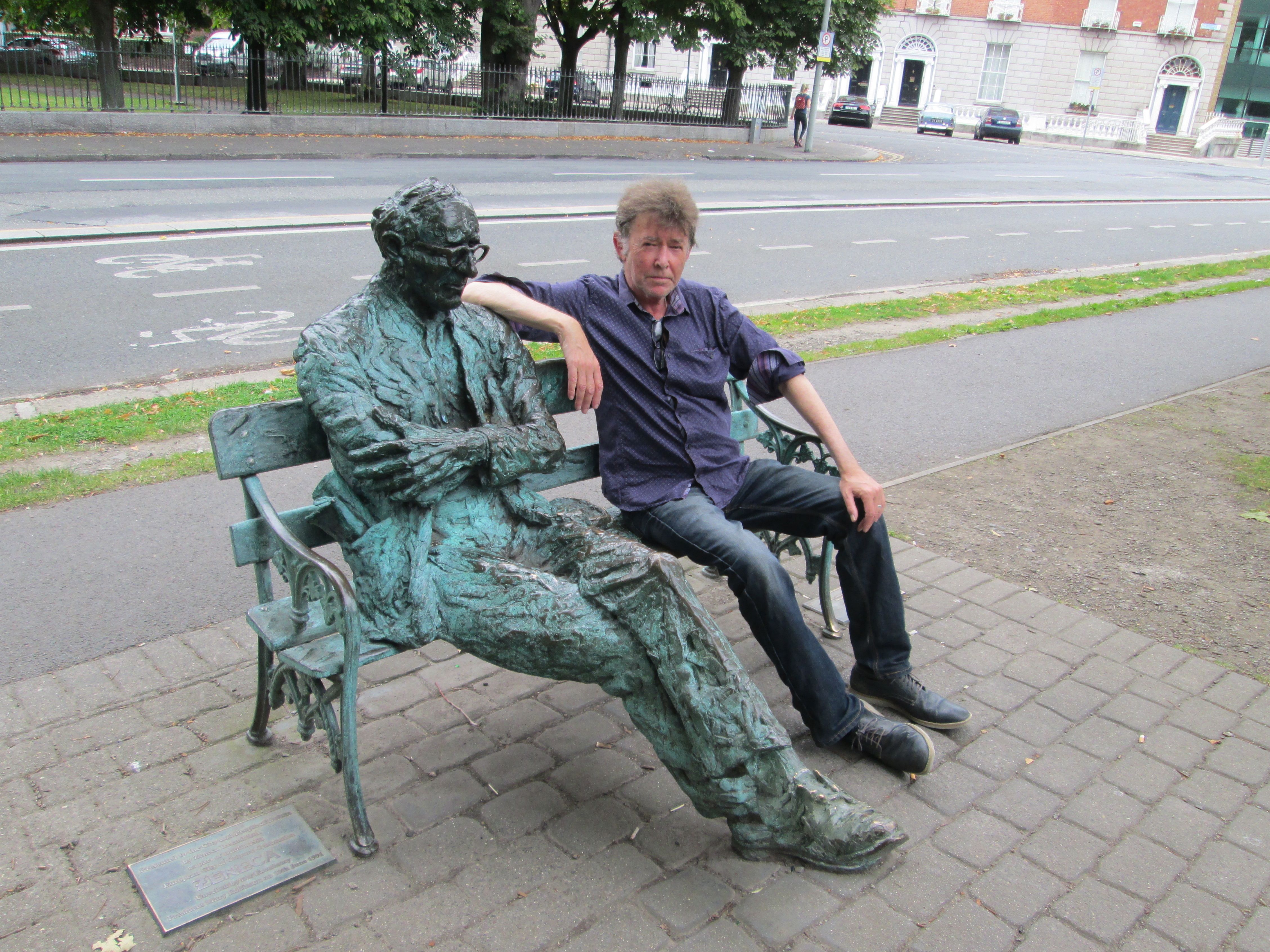
On Pembroke Road look out for my ghost

Dishevelled with shoes untied

Playing through the railings with little children

Whose children have long since died
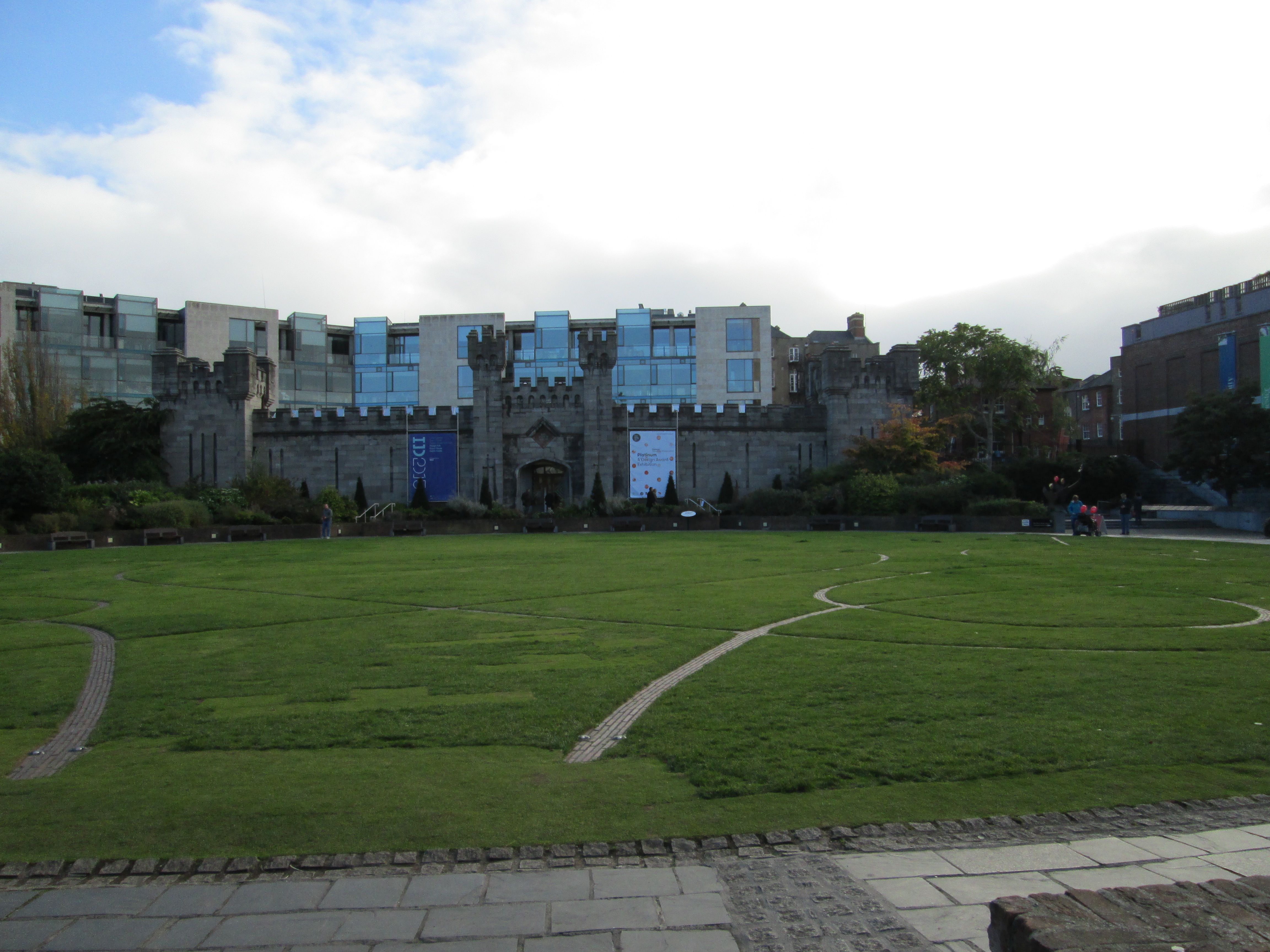
Dublin Castle

Dublin Castle stands on the spot where it all began. Towards the middle of the ninth century, a longboat of Viking raiders found the confluence of the Liffey with its tributary the Poddle, sailed up that to beach their boat on the shore of a large, dark pool. A low ridge extended to the west and here was established the Danish settlement, taking its name from the Gaelic for the pool, Dubh Linn. There had been other settlements hereabout, of course. St. Patrick establishing a church where his designated cathedral now stands. Greek geographer, Claudius Ptolemy, noted the importance of Eblana in the first century, though its size and exact location are disputed. For the Danes, and possibly their Celtic predecessors, the area now occupied by Dublin Castle seemed a logical spot, hard by the tidal harbour of the Pool, the higher aspect of the south bank affording dominance over the surrounding landscape.

Looking south over Dubh Linn

Looking south over Dubh Linn

The Danes were to dominate the East and South coast for a century and a half. We read at school that Brian Boru ‘drove the Danes into the sea’ at the Battle of Clontarf. This is true of the forces on the day, a day of carnage; but the Danish leader, Sitric Silkenbeard, survived, Brian did not. The Danes were not expelled and survived another century and a half before the Norman invasion. It was Sitric, overtaken with piety in his later years, who established Christchurch Cathedral at the height of the ridge in 1028. The Danish city was already walled.

To the Norman though, goes the credit for establishing Dublin as a city of stone. The Castle was constructed by order of King John in 1202 at the south east corner of the city wall. The Pool lay to the south while the Poddle was harnessed to form a moat to the north and west. This rejoined the river at the north east corner of the Castle’s Lower Yard, flowing north into the Liffey near where the Clarence Hotel now stands. The Normans reconstructed the walls enclosing the growing city as far as the Liffey and westwards to St Audeon’s at Cornmarket. The extent of this walled enclosure was little amended over the centuries, until they were dismantled in the eighteenth century.

The Castle remains, itself greatly amended in the eighteenth century. For eight hundred years it was the centre and symbol of foreign power, first Norman, then English. It has never aspired to the romantic or picturesque. From the outset is was a functional, rectilinear structure comprising four stubby towers linked by curtain walls. There was no decoration, unless one counts the grisly occasions when rebel princes had their heads mounted on spikes at the gate. My own namesake, Shane O’Neill was to suffer this fate.

Bermingham Tower

Bermingham Tower

Unpopular with host and guest alike, detested by the Irish, the Castle nevertheless fulfilled its function. Edward the Bruce’s invasion of 1315 failed to rattle it. Silken Thomas’s revolt in 1534 went close, but no cigar. His first attack from within the City Walls got no further than punching a hole in the wall. The citizens expelled the attackers who attempted two more attacks. In a last, audacious onslaught the attackers gutted the buildings on Thomas Street to use as a covered ramp to breach the defenses. The garrison, facing the real prospect of defeat, made a great show of pretending that reinforcements had arrived and, rushing to meet the attackers head on, managed to see them off.

Robert Emmet’s fiasco came to naught, degenerating into a bloody riot on Thomas Street. In 1916 there was an attempt by rebels to seize it and the adjacent City Hall. Their forces weren’t up to it. They were responsible for the first death of the Rising when they shot the policeman guarding the gates. The Rebels briefly held the Upper Yard but were driven back by the garrison, though the battle raged about the Castle precincts for the rest of the day. The most significant breach of the fortress occurred during the War of Independence in the early twenties. Michael Collins, Ireland’s most wanted man, strolled into the Castle and pilfered details of Britain’s undercover network, with desperate ramifications for them. With the greatest guile and intelligence Collins effected revolution where centuries of armed assault had failed. In January 1922, Collins accepted the surrender of the Castle to the new Irish Nation.

The Lower Yard

The Lower Yard

The Castle today is quite different to the original thirteenth century structure. That had fallen into ruin by the middle of the seventeenth century. Within the walls at that time was the Irish parliament building, decaying and further degraded by Cromwell’s marauding troops. When a fire broke out in 1684, the Lord Deputy, the Earl of Allen, took extreme measures to prevent its spreading to the more valuable towers, by blowing up connecting buildings. A blessing in disguise, Allen having described the place as the ‘worst castle in Christendom’.

Rebuilding started immediately and the south-eastern building was completed within four years. The colonnaded ground floor indicates the architectural style of the Jacobean period. The remainder of the refurbished Castle is in the Georgian style, typical of the explosion in development in Dublin throughout the eighteenth century. The main entrance is overlooked by the Bedford Tower. Built in 1761, this elegant neoclassical tower is the most imposing in the Castle complex. To each side are identical portals, it’s the easternmost that acts as the main gate. Atop this is a statue of Justice, pointedly turning her back on the city outside.

Records Tower

Records Tower

At the southeast corner of the yard stands the only remaining visible structure from Medieval times, the Records Tower. This was the main prison of the Castle up to the nineteenth century, and it is from here that the young Red Hugh O’Donnell escaped in Elizabethan times. The battlements were added in the nineteenth century at the same time the Chapel Royal, now the Church of the Most Holy Trinity, was built in the Lower Yard. The Church is built in the neo-Gothic style, then replacing the Georgian in the affections of Dublin.

Shortly after surrender, the Castle was occupied by the Civic Guard, later the Garda Siochana, the national police force. So, much of its original function as the focus of law and order persists. For a time the Castle was also used ad hoc for emergent government departments of the new state. The Revenue Commissioners remain on its eastern side, Bord Telecom on the Ship Street side. As a young man in the 70s, my first fulltime job was with the P&T, the telephone company, and I was posted here for training. With my urban hippy chique, all hair and patchouli oil, I was not best clad for a trip past the Drug Squad HQ every morning. The Castle felt like an old, forgotten outpost then. The satellites were sodden pubs, the rained-on cobbles of an empty Temple Bar.

Older now it may be, but the Castle itself has been rejuvenated as a venue for civil and state occasions and a major tourist attraction. The State Apartments along the south wall have been lavishly refurbished. There’s a garden on the site of the old Dubh Linn, overlooked by the Chester Beatty Library. Rehoused here at the turn of the century, this holds the collection of the American mining millionaire, a priceless treasure of Oriental manuscripts, art and artifacts.

IMG_0708

Standing at the entrance beneath the Bedford Tower, you stand very much at the crossroads of Dublin. The ancient settlement is a palimpsest here, overwritten by Norman Gothic, Jacobean, Georgian, Victorian and Modern, it is still a story contiguous with scattered settlements of Celts and Danes by a dark pool. Looking north, Parliament Street makes a straight line with Capel Street to disappear into the distance. This is the axis that bisects Dublin, the dividing line between the old, downmarket westside, and the new, more salubrious eastside. The divide is evident still

Dublin City Walls

Image

Entering Crampton Court

Entering Crampton Court

I’ve been spending my money in the Old Town,
It’s not the same, Honey, since you’re not around.

Dublin’s Old Town was delineated by its walls. Mostly vanished now, some fragments remain, and vestiges of the ancient street plan allow us to follow an imaginary walk around the ancient city. The Dane’s settled here in the ninth century, dropping anchor at a tidal pool just off the Liffey, fed by the River Poddle. Their settlement was known by its Gaelic designation, Dubh Linn, meaning Dark Pool. The Poddle, now just a stream, flows underground, while the footprint of the pool remains as an ornamental garden, along the southern walls of Dublin Castle.
At the Lower Castle Yard, you can see that the ground is low enough to accommodate a natural moat. To head downstream towards the Liffey, leave the Yard and cross Dame Street. A narrow covered laneway passes to the side of Brogan’s Bar, leading into Crampton Court, to the rear of the Olympia Theatre. Dilapidated now, and a bit dodgy, this was a bustling centre of commerce in Early Modern days. Dublin’s first coffee houses sprang up here, popular meeting houses for traders and merchants before the building of the Royal Exchange.

Leaving the Court, a narrow covered alley leads out to Essex Street, by the Dublin Theatre Festival Office. The old Custom House once stood opposite, before Gandon’s Georgian masterpiece was built further east around 1800. The site is now occupied by U2’s Clarence Hotel. After the eerie silence of Crampton Court, it’s into the rattle and hum of Temple Bar. Close by to the right, the Project Arts Centre was an early manifestation of arts and entertainment a decade before the Temple Bar scene bloomed. Here in the Seventies, prog rock and punk jostled for attention with art and drama. Jim Sheridan cut his teeth here with the likes of the prescient Inner City Outer Space.

Parliament Street

Parliament Street

Heading west, Parliament Street marks the extremity of Temple Bar. Standing here one night recently, waiting for a friend, I experienced the tangible beat surging through the district. Back to the river, I took in that iconic Dublin view of the City Hall, even more dramatic when illuminated at night. One of the finest Georgian buildings in the city, it was originally the Royal Exchange. We had a drink and Fish n Chips in the Porterhouse. This was the first branch of the pub chain beyond its Bray home, now Porterhouses can be found in London and New York. Some things change, while others remain the same. Read’s Cutlers is Dubli’s oldest shop, dating back three hundred years. The Turks Head Chop House across the street harks back to ancient times, the Czech Inn, more recent.
That night, we headed towards Vicar Street for the Waterboys gig. Retracing old and ancient footsteps. This was often our route home after a gig at the Project or Zeros. Those days it was deserted around here, now nightlife and daylife are colonising the area too. We pass Cow Lane with it’s restaurants rising in terraces up towards Lord Edward Street. We join Fishamble Street as it curves uphill. This was Dublin’s original fish market, as the name suggests. This was also where Handel’s Messiah first rang out. At the Great Music Hall in 1743, seven hundred people enjoyed the first performance. Anticipating the large crowd, men were requested not to wear swords, women to refrain from wearing hoops.
IMG_0687

Christchurch Cathedral occupies the highest ground of the Old Town. Just below the cathedral, which dates back to the 12th century, are the Civic Offices. Sam Stephenson’s ‘bunkers‘ at Wood Quay, site of the original Viking town, excited great opposition. Twenty thousand marched through Dublin in 1978, but ultimately the campaign failed to halt them. Screened by more postmodern structures now, the four brutalist towers are less ominous than they originally appeared. Winetavern Street appears to pass through the heart of Christchurch. An elegant Neo-Gothic bridge spans the road to join the cathedral with the former Synod Hall which now houses Dublinia, an extensive exhibition of Viking and Medieval Dublin.

IMG_0690

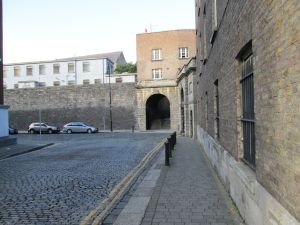
St Audeon’s Gate  on Cook St.


Further west, along Cook Street, is the only good segment of wall remaining. Well restored, it gives some idea of what it would be like approaching Dublin in medieval times. The segment incorporates Saint Audeon’s gate, the only remaining city gate. St. Audeon’s Church is just above the gate, a modest structure established in early Norman times, it has witnessed great urban expansion over the centuries. Bridge Street descends to the Liffey, for a long time this spot was Dublin’s main fording point. In the twelfth century, a tavern was established here and the Brazen Head lays claim to being Ireland’s oldest public house. Dean Swift is said to have lowered a few here, probably en route to or from Celbridge and his trysts with Vanessa. Across the road, O’Shea’s is one of Dublin’s most renowned trad and ballad boozers.

Back to the top of the ridge, there are actually two St Audeon’s churches. The Catholic church is housed in a more imposing neo-classical structure. It is the designated church for Dublin’s Polish community. Passing outside both is Cornmarket, though there is nothing bucolic about it these days. The over-widened thoroughfare sends a constant stream of traffic west towards Thomas Street. Crossing the street, shades of Eddie Murphy in Bowfinger, Lamb Alley has a small fragment of wall. We are near the westernmost point of the walled town. From here, the walls sloped downward and eastward, cutting across Patrick Street where the Iveagh Trust Buildings now stand.

IMG_0697

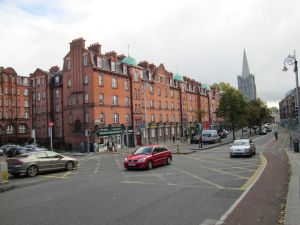
Iveagh Buildings on Patrick St.


These were built in 1904, a housing development for the poor of the Liberties. The surrounding area had become a slum by the nineteenth century. The first Lord Iveagh, Edward Guinness, great grandson of Arthur, had established the Trust to provide housing in Dublin and London. The massive five storey blocks stretch all down Patrick’s Street to Saint Patrick’s Cathedral. In red brick with mansard roofs and gabled fronts, they are a distinctive and unified feature of Dublin’s streetscape. The complex also included public baths and a men’s hostel. On Bull Alley Street a ‘People’s Palace’ was built in a more ornate, grander style. This provided recreational and canteen facilities for the young of the area. It came to be known as The Bayno, an essential part of growing up in the Liberties. Closed in the 70s, it is now the Liberties College. Iveagh also developed the park opposite, it offers a great view of the St. Patrick’s Cathedral, the largest church in Ireland. Swift, Dean of the cathedral in the eighteenth century, was himself a passionate advocate for the poor of Dublin. Drapier’s Letters, A Modest Proposal and, arguably, Gulliver’s Travels, cocked a snook at English colonial misrule.
At Werburgh Street we are nearing the precincts of the Castle again. St Werburgh’s Church once had a soaring spire, but unfortunately it overlooked the Castle yard and was soon demolished. Nearby is Leo Burdock’s fish and chipper, Dublin’s most famous. Local resident Leo established it in 1913. Derby Square was also nearby. This obscure enclave features in Phil Lynott’s evocative ballad ‘Dublin’.

At sea with flowing hair I’d think of Dublin,
Of Grafton Street and Derby Square and those for whom I really care,
And you, in Dublin.

IMG_0700

Ship St

Ship Street seems far inland for such a name. But it leads down to the location of the original Dark Pool. This is now an ornamental garden along the south wall of the Castle. The Chester Beatty Library was moved here at the Millenium. The American mining magnate had established an unrivalled collection of oriental arts and crafts. There is a good cafe in the entrance atrium. Gaze up at the Castle from the grassy surface of the old pool. It has taken a thousand years to get here, the walk itself took just over half an hour.
Follow the course of the ancient river back to where we began. The circle is closed, twelve centuries spanned. Cobbled streets are peopled by ghosts, of Viking, Norman, English and Gael, the ghosts of merchants, vicars, peelers and poets, where musicians have played and sang through time. Philo’s words come back to haunt me…

I’ve been spending my time in the Old Town,
I sure miss you, Honey, now you’re not around,
You’re not around this Old Town.
IMG_0708