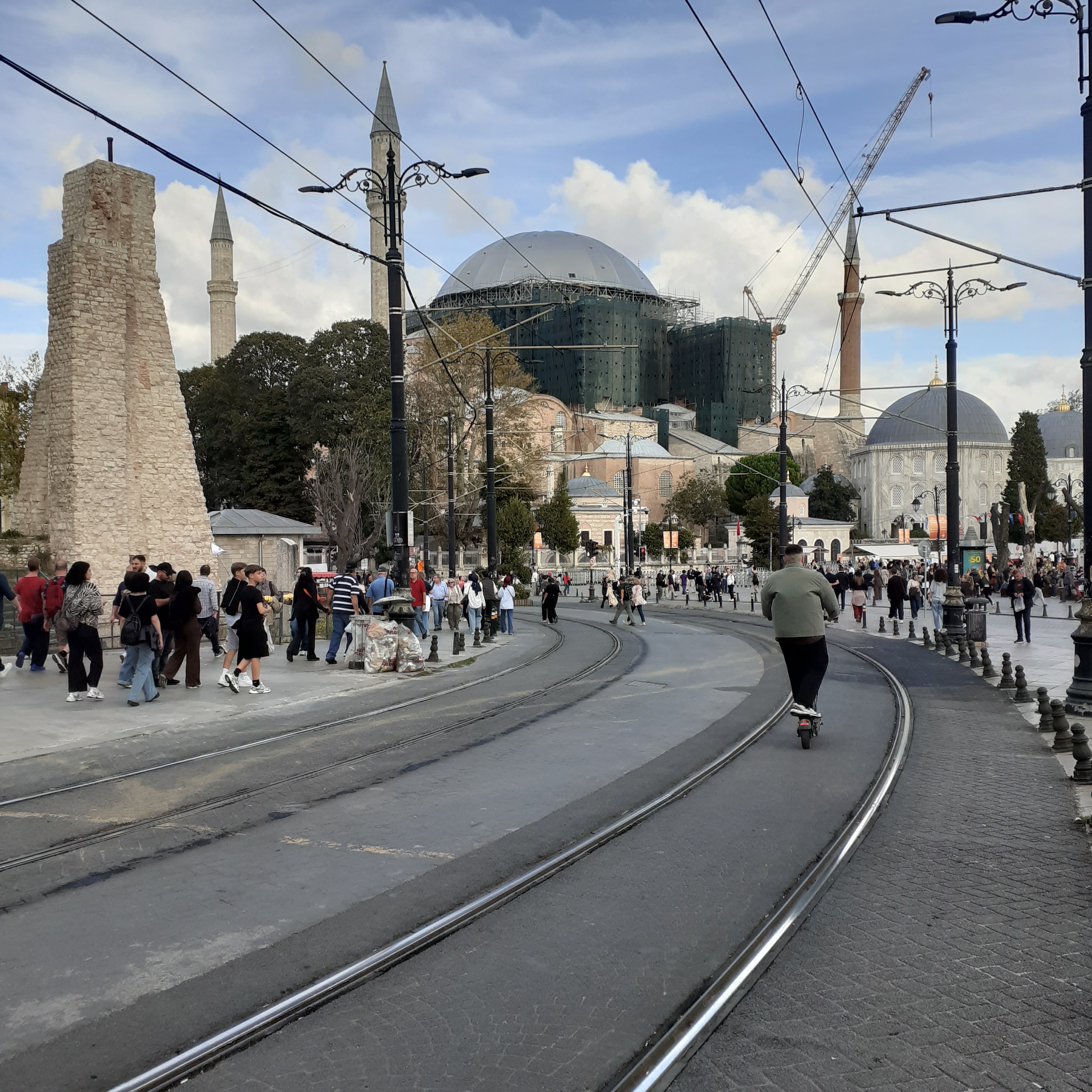
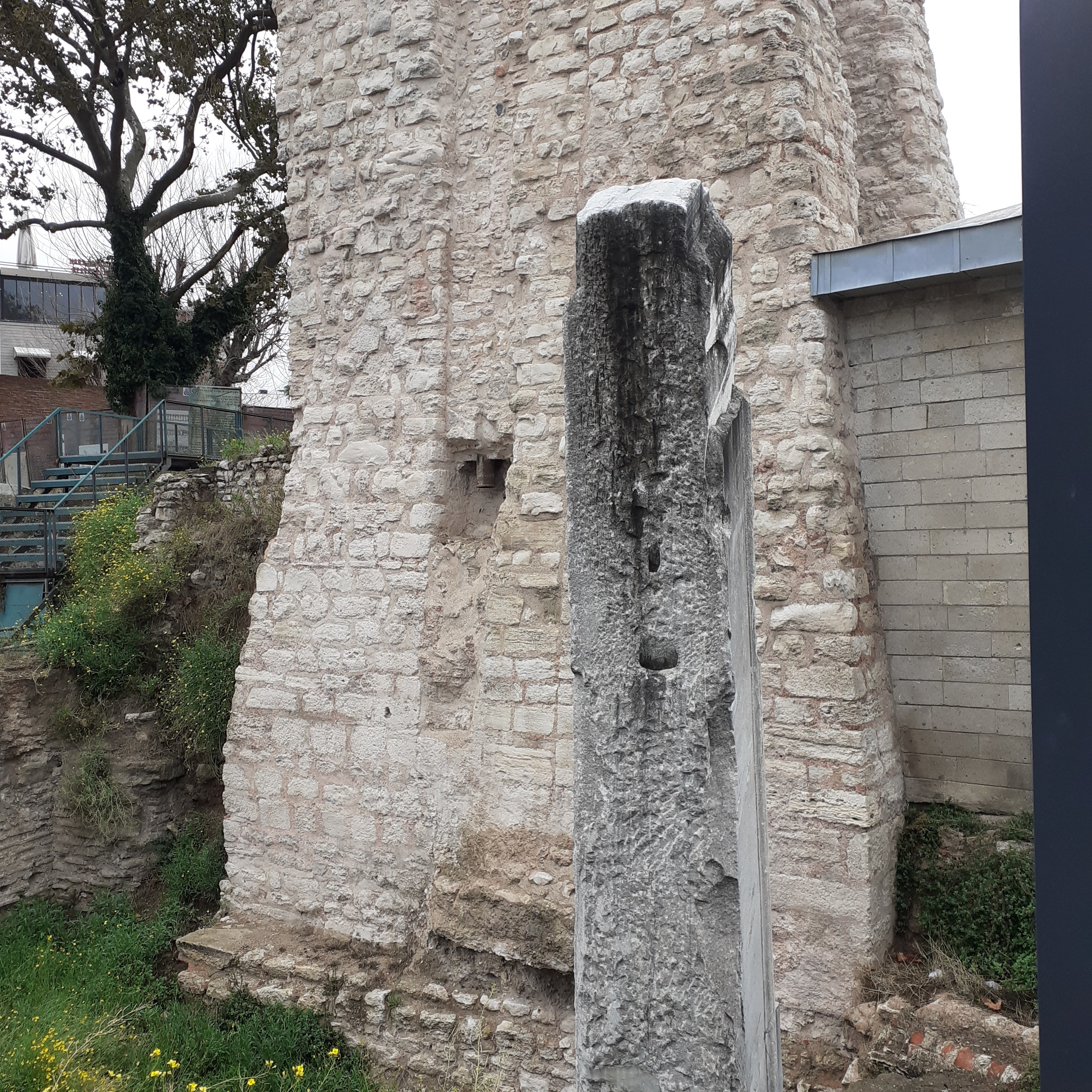
Istanbul’s Main Street, I suppose, is Divanyolu Caddesi. It points in an east west axis along the ridge of Seraglio Point. More or less the same route carved out by ancient Mese Street, meaning Centre Street, in Byzantine times. At Mese’s eastern end the Milion Stone marked the centre of Empire. All Roman roads werer measured from this point. It’s a fond fad of tourist offices globally to plonk a signpost in their city centre with a direction signs pointing to New York, Sydney and Termonfeckin, or whatever. Well, this is the daddy of them all. The Milion Stone was the zero marker. First erected by Emperor Severus in the third century AD, it was further enhanced by Constantine in 330 for his eponymous city, henceforward deemed the Capital of the Eastern Empire. It was an imposing arched gateway with a statue of Constantine and his mother, Helena, holding a cross. What remains today is a found fragment planted as a pillar.
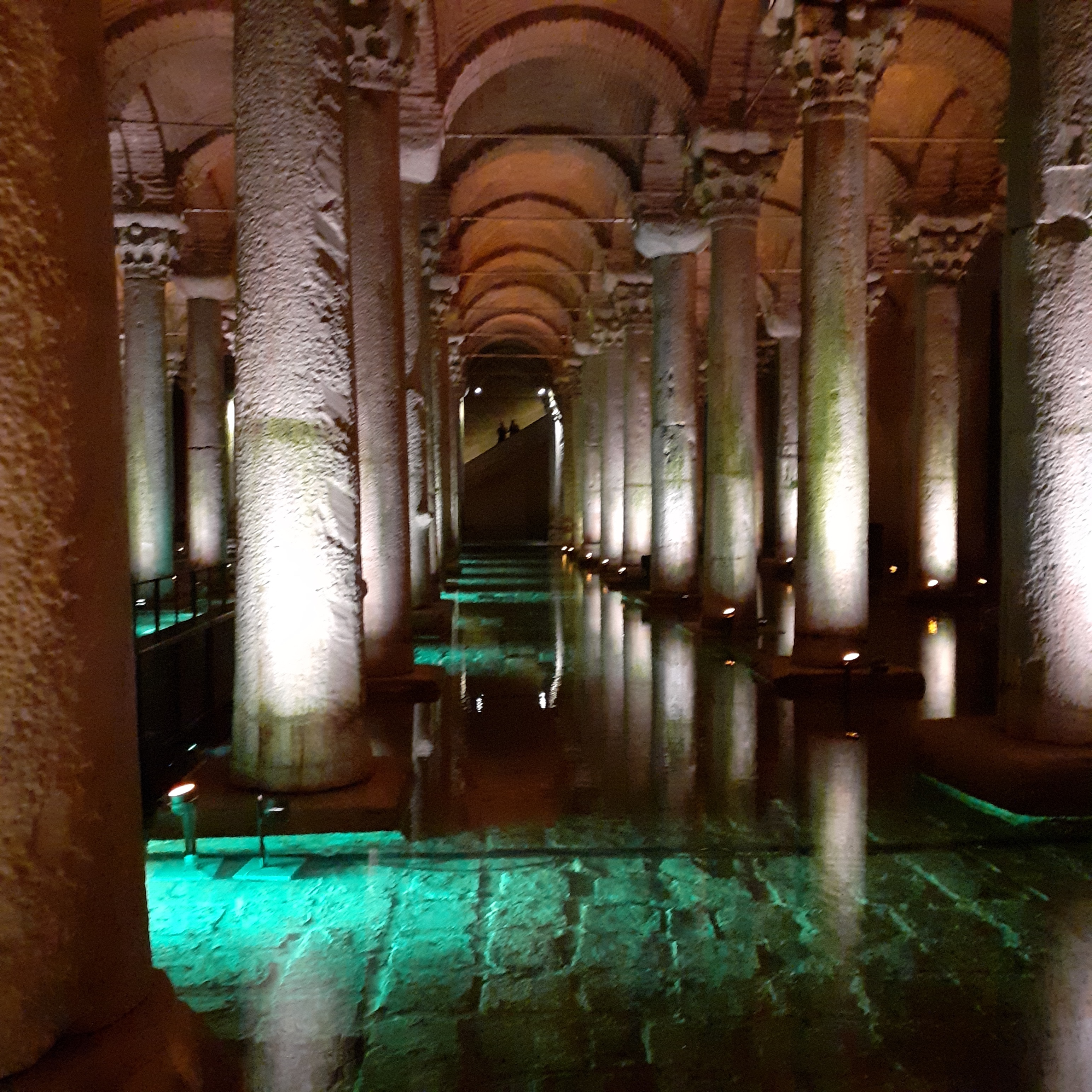
Near the Milion Stone is the Basilica Cistern. The Cistern provided the city’s water supply from the sixth century. We visit early, as we previously noted queues lengthened throughout the day. The underground cavern was almost ten thousand square metres in extent back in the day. About two thirds survive. We pay with card and descend to walk through a forest of columns, over three hundred of them each eight metres tall. The walkways virtually float on a placid pond. Subtle lights and music enhance the experience. Eerie, uplifting, time stands stilll yet carries us back over fifteen centuries. The Basilica’s guards are helpful and glad to engage with visitors questions. With Google translate we all speak the one language. We complete our circle and climb up into unexpected sunshine.
Across the road, Haghia Sophia sits, a huge and ancient hulk. Founded in 360 it was prone to cataclysm. The current structure, the Temple of God’s Holy Wisdom, was the third church to occupy the site. Begun under Justinian I in 532, it became the Cathedral of Byzantium until 1453. After the Fall of Constantinople, it became the Grand Mosque until 1616.
Large scale renovations are ongoing. Longterm, I would imagine. On our visit the building is clad almost entirely with scaffolding, and major construction supports within. In its time Haghia Sophia was an architectural marvel, providing the largest interior space of any building in the world. Its enormous dome seemed to float like magic above the body of the church.
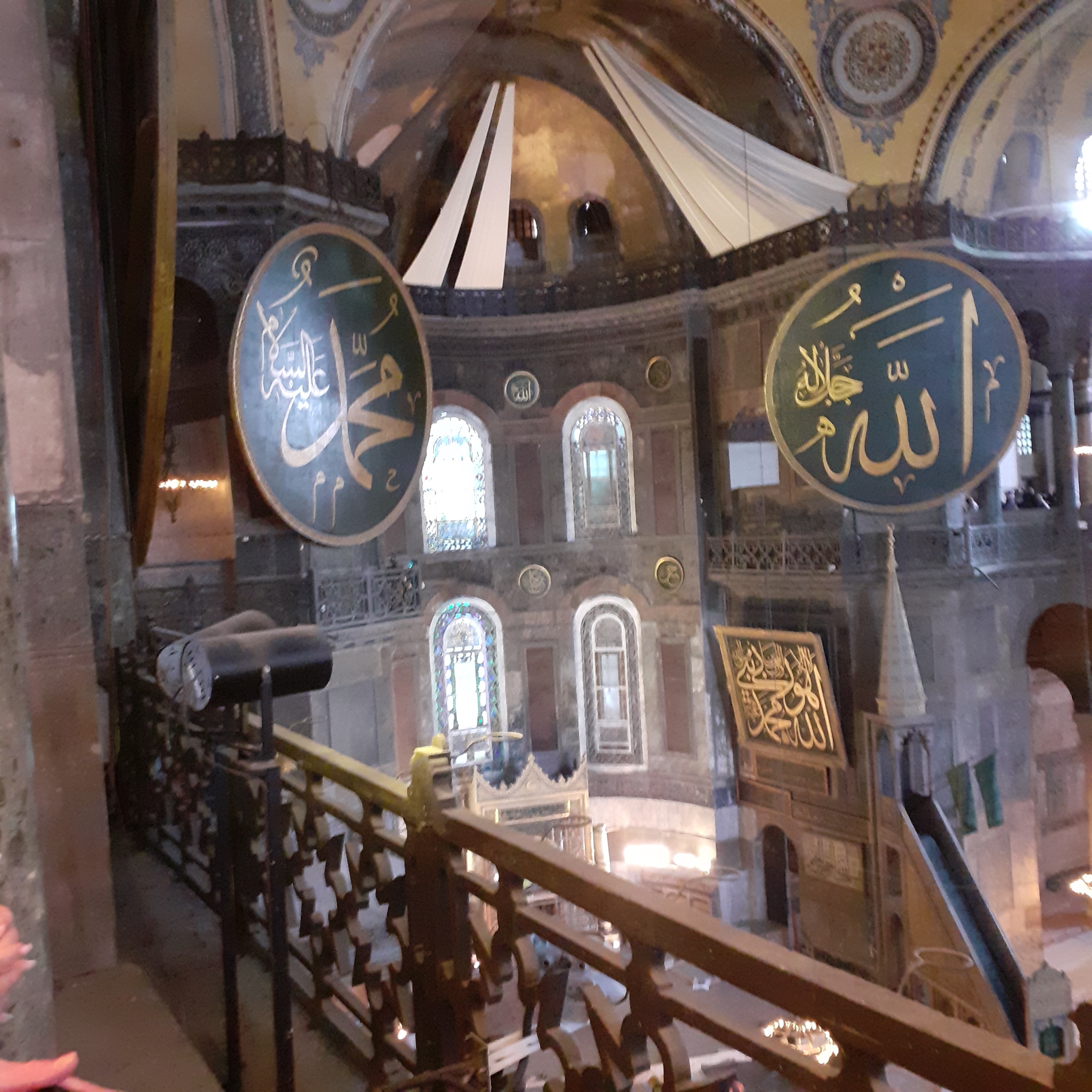
After the fall of the Ottomans, Hagia Sophia became a museum in secular Turkey. However, it was reinstated as a mosque in 2020. Visitors must therefore observe Islamic protocol, with women obliged to wear head covering and relatively modest clothing. M provoked rebuke in allowing her veil to slip slightly and I was required by a zealous guard to delete a halfdozen offending photographs. Photo opportunities abound, however. Along the upper galleries, there are many surviving examples of mosaics from the Christian Era. Crowds swell and carry us along. But the biggest pull is the past, and in thinking on that is where we are transported.
Hagia Sophia and the Blue Mosque are positioned at each end of Sultanahmet Square. This open area was occupied by the Hippodrome in Byzantine Times. The Hippodrome was the centre for sports, the arts and social gathering. Chariot races were a regular feature and there were terraced stands to accommodate large crowds. The huge oblong plaza angles away from Divanyolu and remains a place of congregation for residents and tourists. Scenic tour buses start from here and it was our local stop for the tram. We got our Istanbul Pass here on day one from a friendly lady at the ticket kiosk. The card allows travel on trams and Bosphorus ferries. It can be topped up as you go. You can’t do without it.
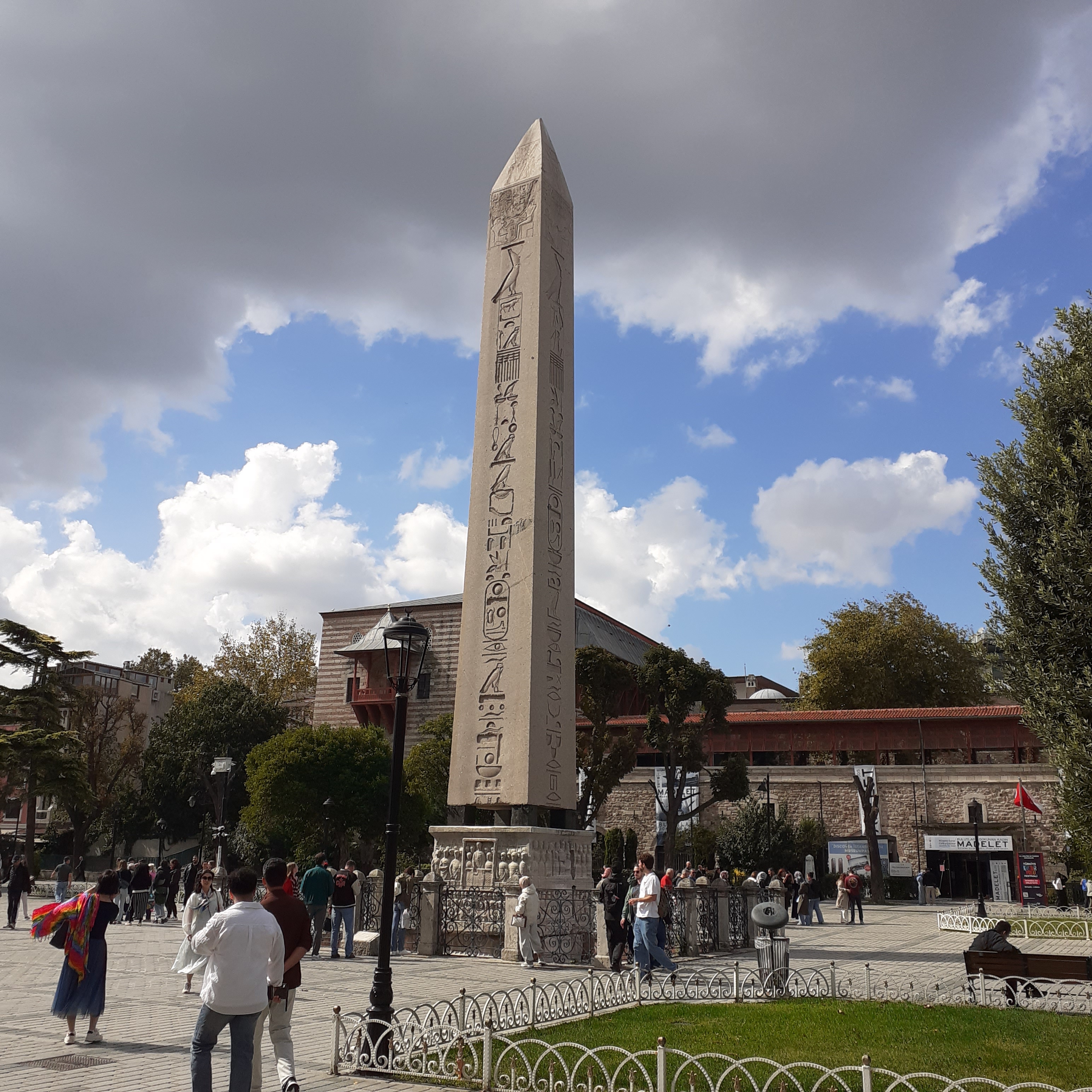
Some remnants of the Hippodrome structure have been excavated. There are also a couple of ancient markers surviving. The Obelisk of Theodosius, brought from Luxor in Egypt by Theo in 390 AD, was then almost two thousand years old. Only the top third survives; a marker for 3,500 years of history. Nearby stands the Walled Obelisk, erected in the tenth century and clad with bronze plaques which were subsequently looted by Crusaders. The surviving core gives the name. The German Fountain in front of the Blue Mosque is a modern addition, dating from the 1898 visit of Kaiser Wilhelm, sixteen years before all hell broke loose.
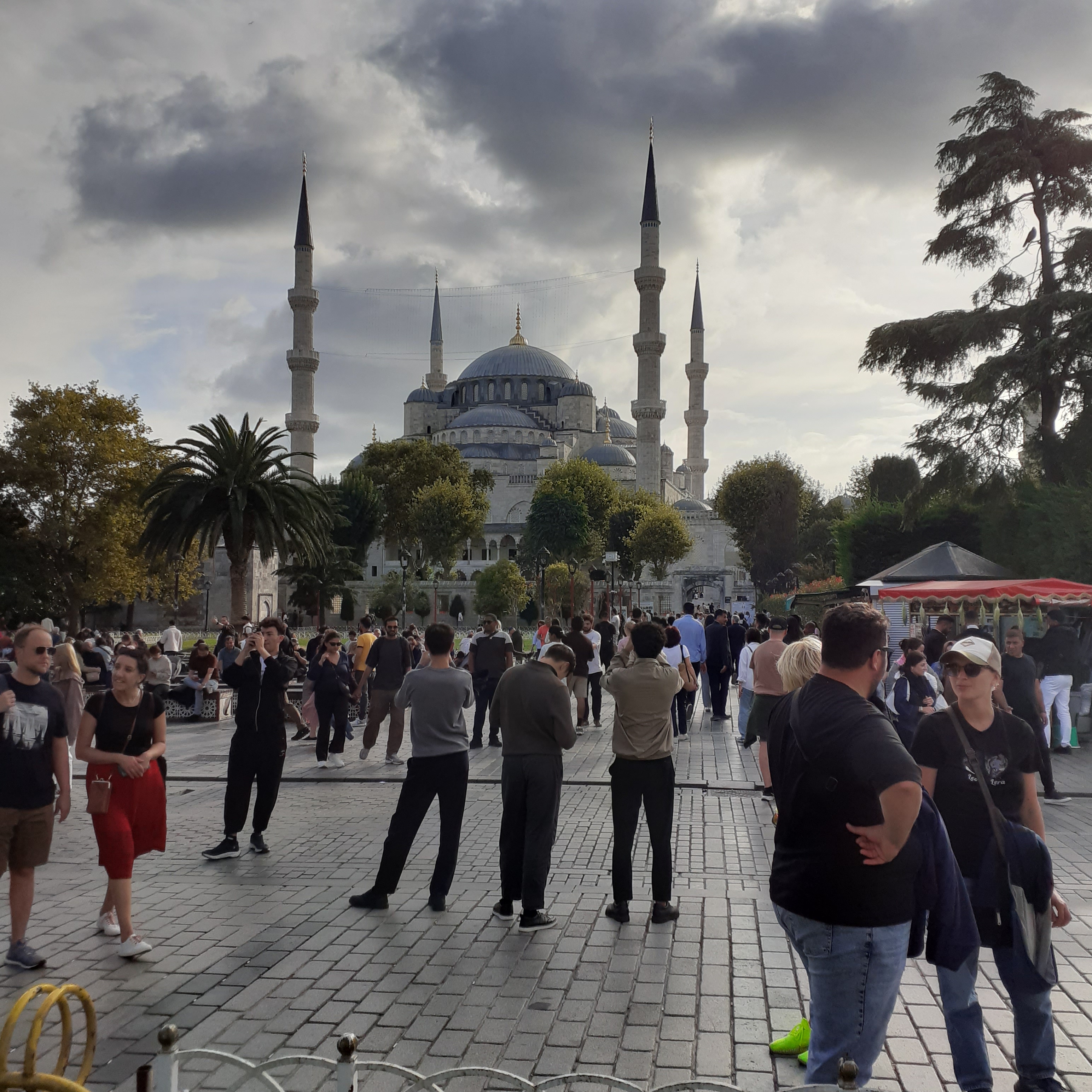
The Blue Mosque, with its six minarettes, is Istanbul’s picture postcard landmark. Officially the Sultan Ahmet Mosque, it was built in the early eigteenth century. Mimar Mehmet Aga was the designer. A Christian from the Balkans, as a young man he was taken by the Ottomans to be raised in Islam. A cadet in the Janissary Corps, the Sultan’s guard, he went on to study music, then jewellery and later architecture. He was assistant to Istanbul’s leading architect, Mimar Sinan, also of Christian birth. Becoming Chief Architect (Mimar) to the Ottoman Court in 1606, he worked until his death ten years later on his masterpiece.
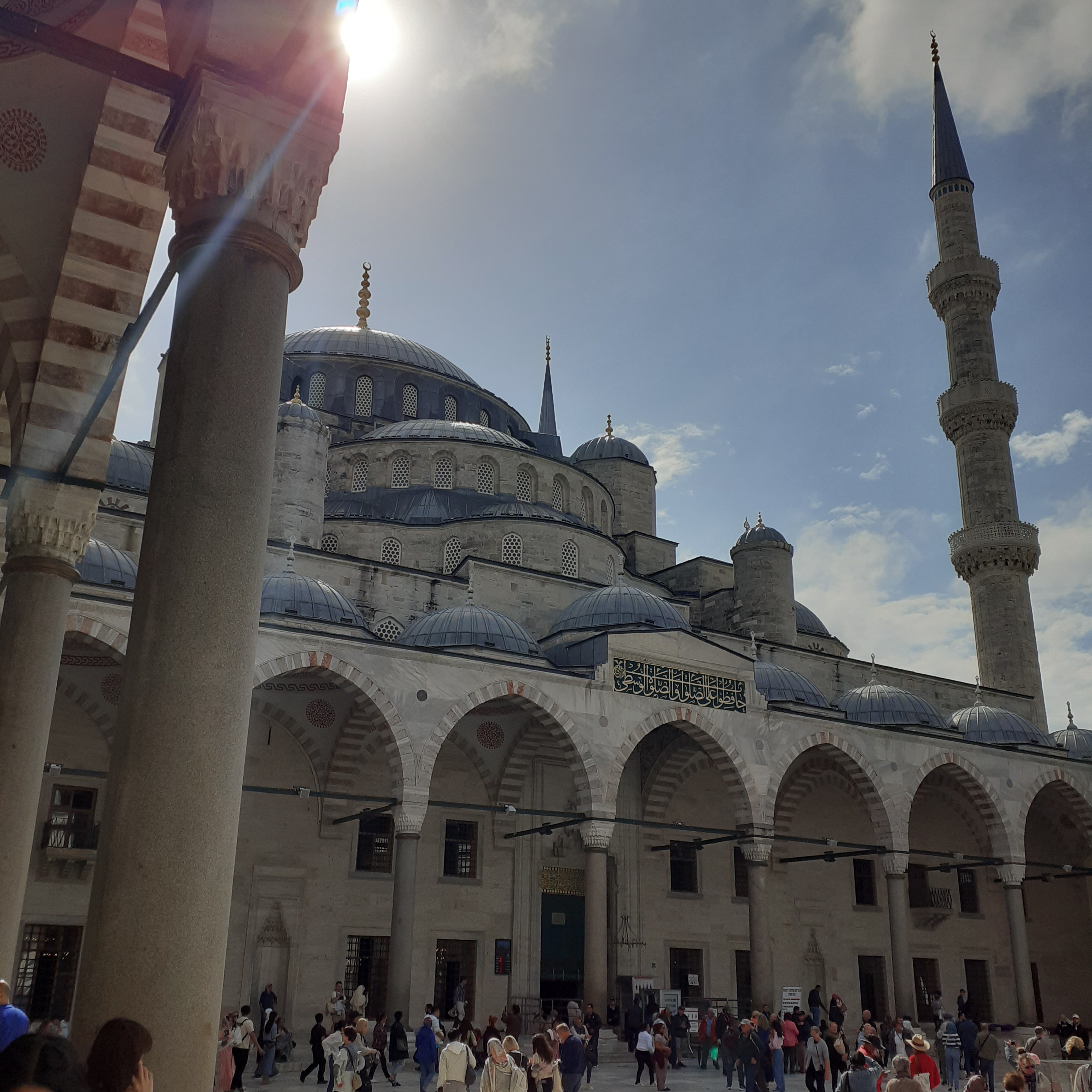
The Blue Mosque is symmetrically formed about a soaring central dome, buttressed by four semi domes. Each of these is flanked by three smaller semi domes, and all are suspended somehow above the prayer hall. Entrance for prayer is through the colonnaded front courtyard. Here there are concise accounts of the nature of Islam. Public entry is free, a bonus in a city where prices are steep for tourist attractions. Prayer time is for the faithful. For tourists, Islamic dress protocol must be followed. The interior, though crowded, was suitably calm. There is a man chanting prayer amongst us whilst taking a selfie. The beauty and scale of the hall is a prayer in itself. Our eyes are drawn up to the faraway domes and sunlight flooding through high windows. The walls are covered in Iznik tiles from the early sixteenth century. Above the tiles are painted arabesques. Again blue is the colour, giving the mosque its popular name.
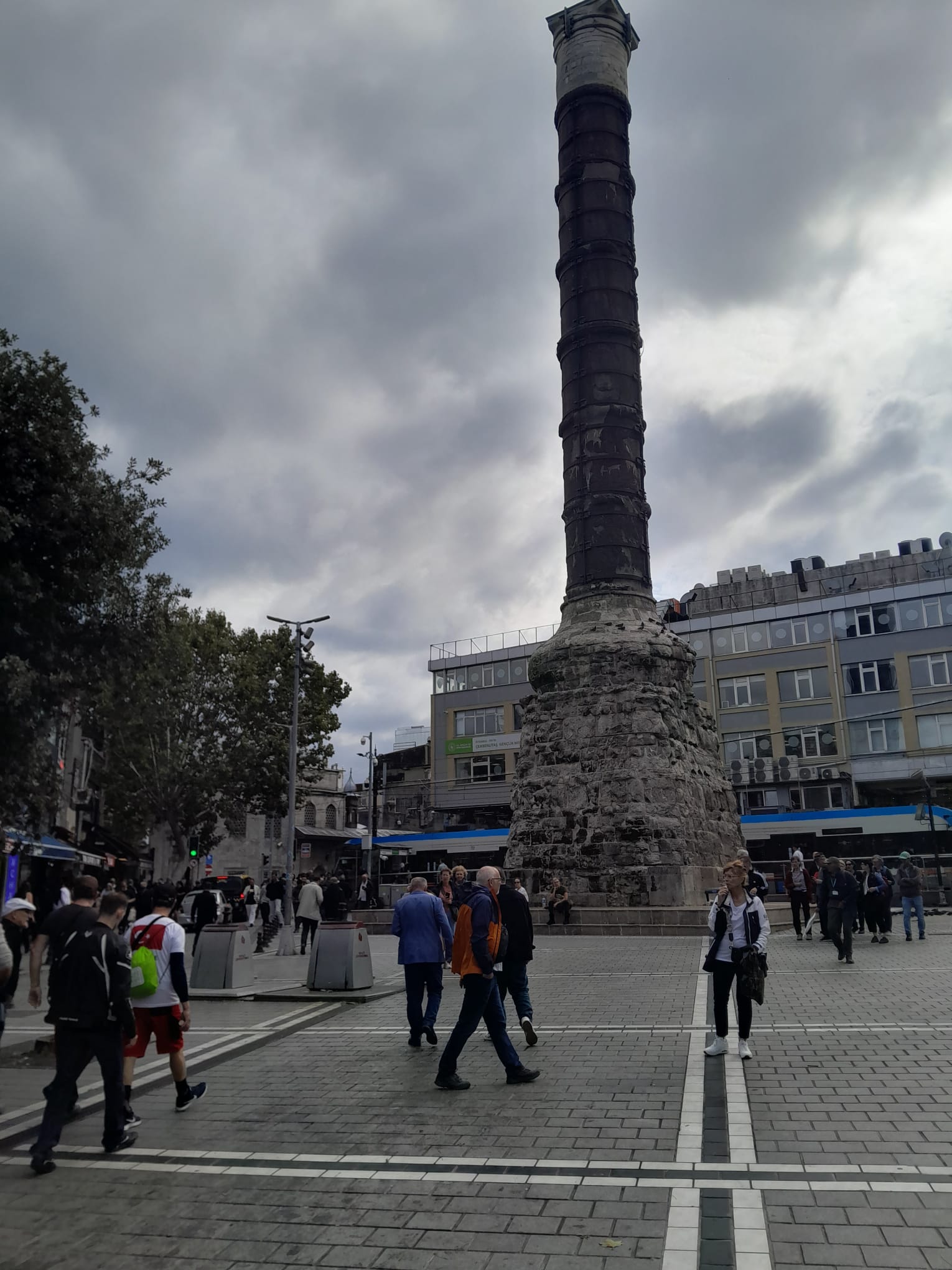
There remains a spectacular monument of Constantine further along where Divanyolu merges with Yeniceriler Caddesi, Janissary Street. Constantine’s column dates from 330AD and is constructed of drums of porphyry, the purple stone much valued by the Emperors. It rose to fifty metres with a statue of Constantine atop, posing, in the nip, as Apollo. Hardy man. The statue is long gone.
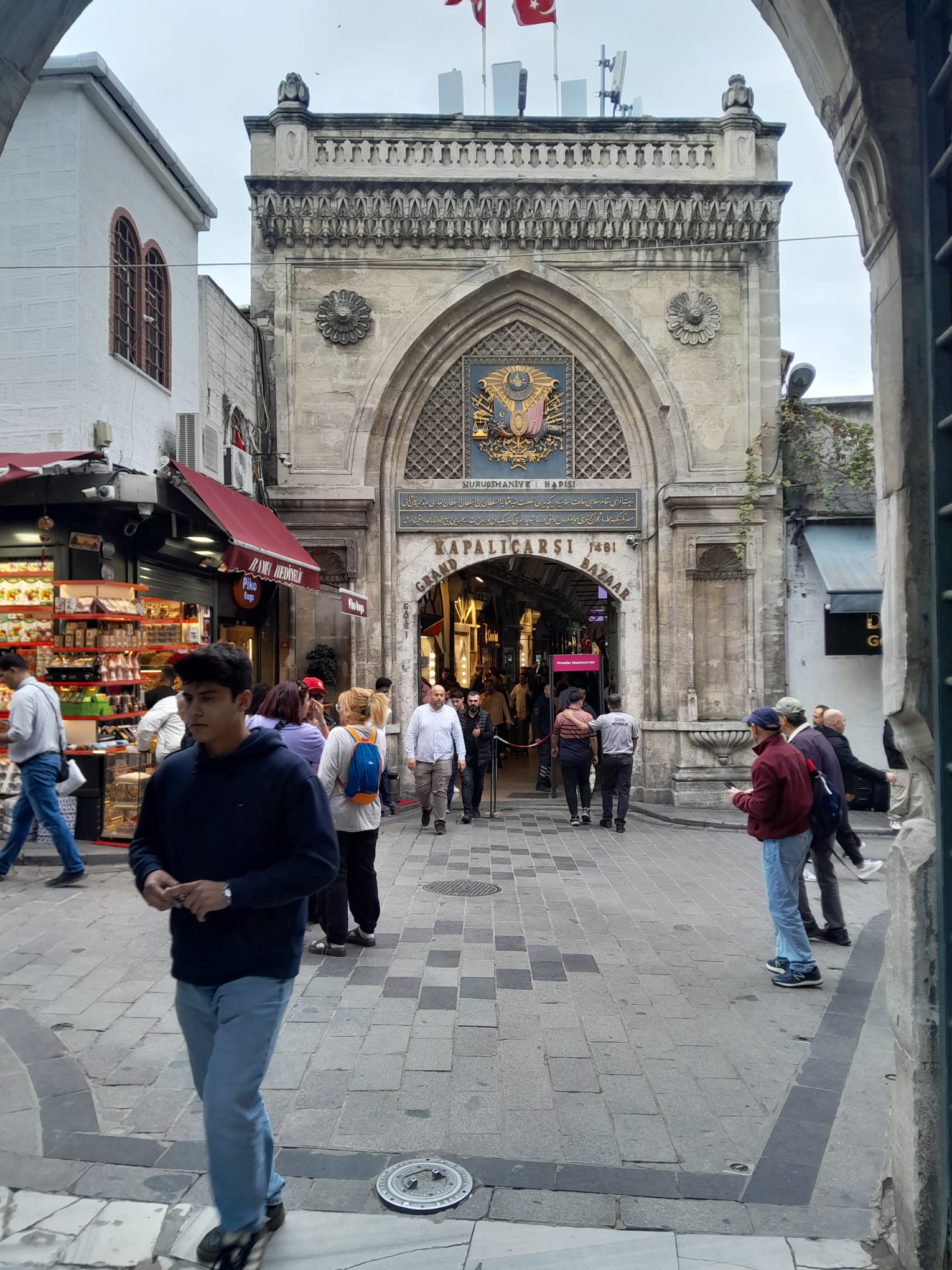
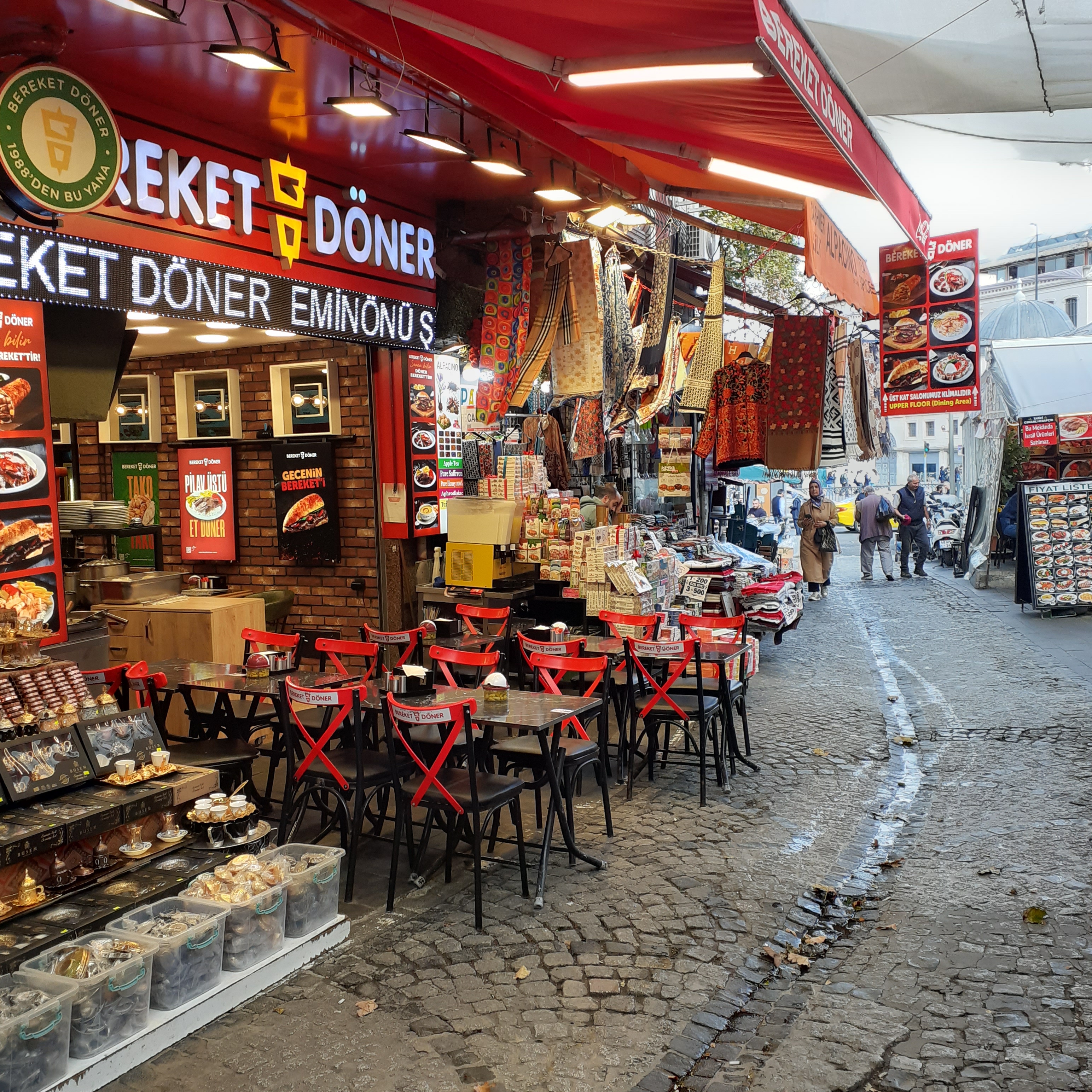
The column casts its shadow across Camberlitas Square which slopes down to our right towards the vast complex of the Grand Bazaar. This was established by Mehmet the Conqueror after the Fall of Constantinople. It is a covered shopping area with over a thousand shops selling everything from jewellery to upholstery, clothing, antiques and household goods. Cafes and restaurants are scattered throughout offering refreshment and downtime for busy shoppers and stallholders. It is easy, and a pleasure, to get lost in the Bazaar’s embrace. But simple enough to find your way out, or onward.
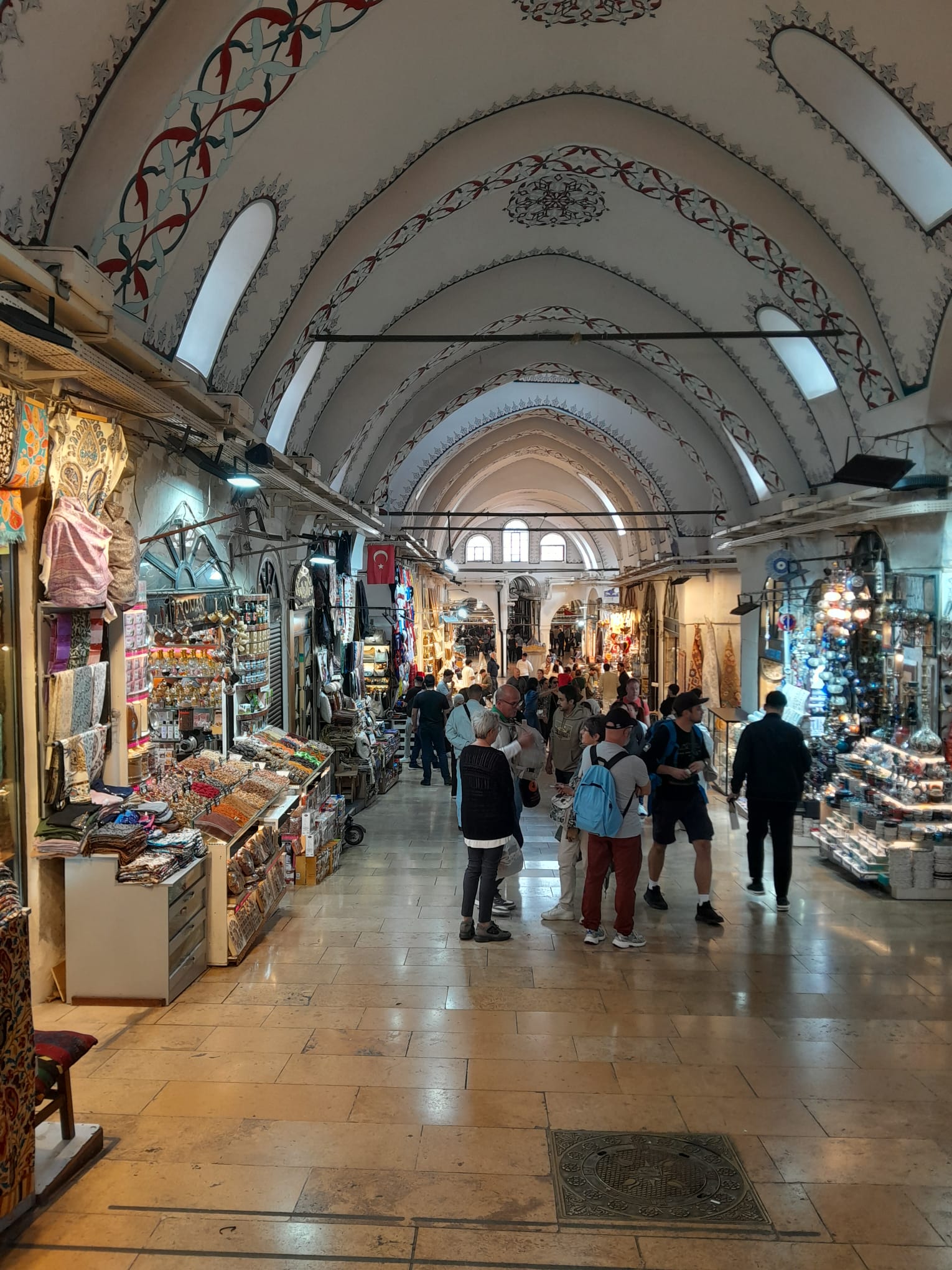
Escape is not an option. The touting never rests. We find ourselves in the area where leather is a speciality. We pick on a. shop before it picks on us, and I try on a few jackets with an insistent haggling soundtrack. M knocks it down to three quarters the price, which we pay in Euro notes. We toast our puchase with the vendor who provides small glasses of brew.
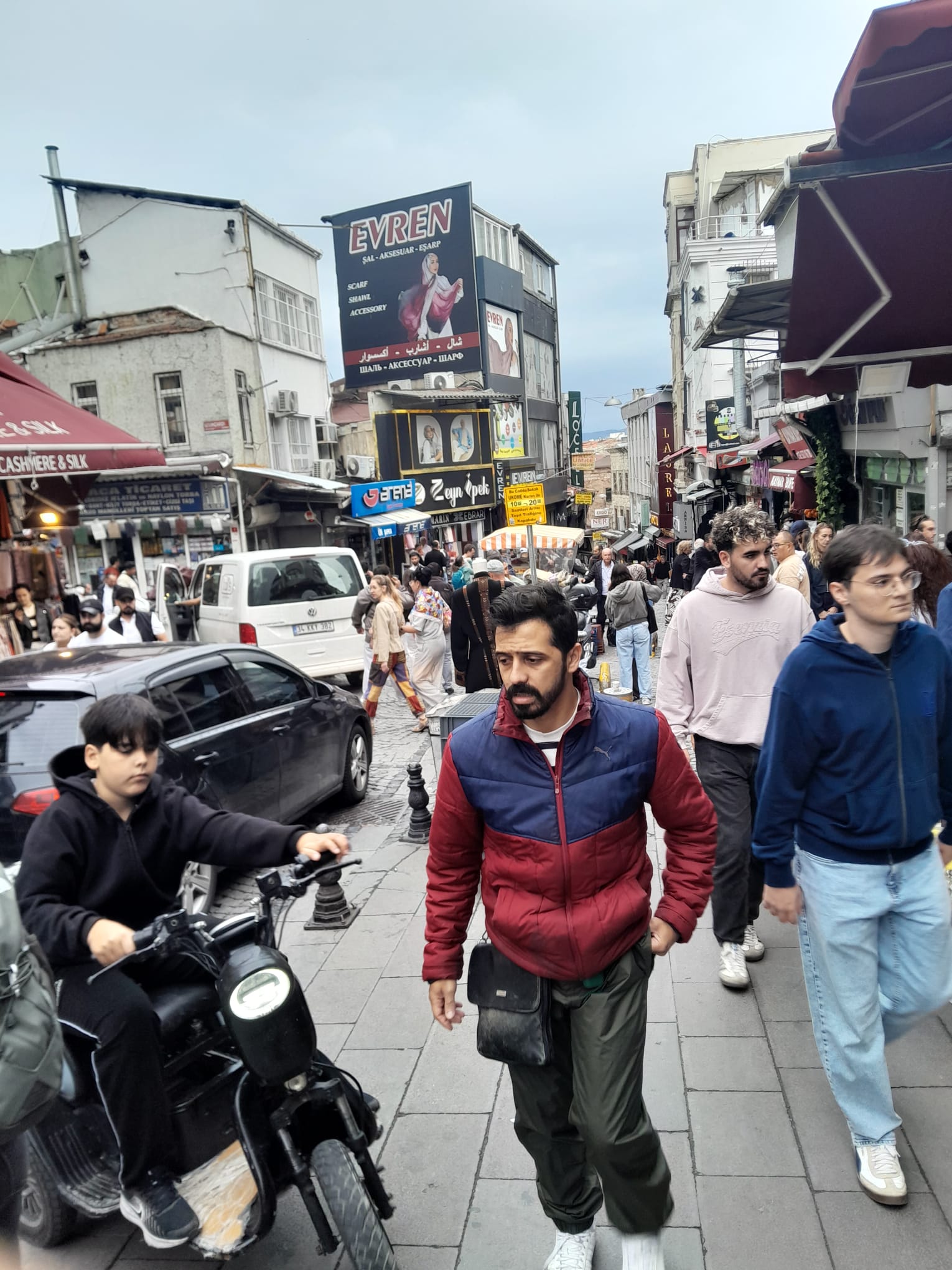
A swirl of market streets brackets the Grand Bazaar, winding and falling downhill towards Eminonu. We figure we can skirt the edge of the Bazaar and find the Suleymaniye Mosque. Surely it will be obvious. But no; the lanes form a narrow, confusing maze, now and then offering glimpses of the Bosphorus below.
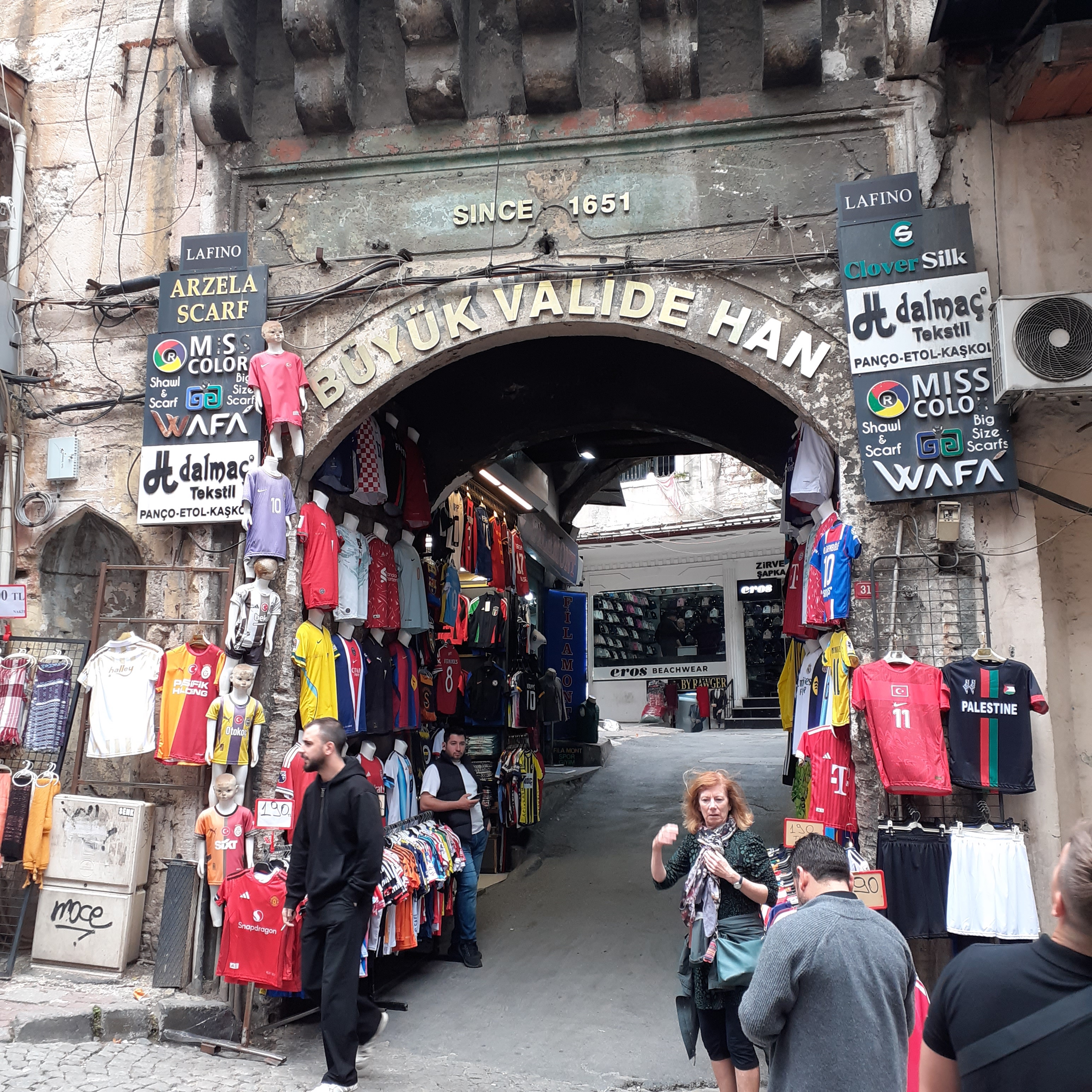
Off bustling Cakmakcilar Yokusu (Lighters Hill) we spy an impressive portal leading into a crowded shabby courtyard. I am still confident of an exit from here to Sulemaniye Mosque, and am also completely lost. We have found Valide Han. A han was a form of caravanserai, an inn for travellers and their pack animals with a building around a courtyard with one entrance gate. It was often part of a mosque complex. In modern times a han is where craftwork in metal, wood and weaving, and other goods are made and sold. Valide Han is the largest in Istandbul. It was founded in 1650 by Kosem Sultan. wife of Sultan Ahmet. As mother of his successors, she became the most powerul woman in the Ottoman Empire, the Valide. Born in Greece and taken into slavery in her early teens, effectively she became ruler of the Empire.
An old man points us to a stairway leading up. We pause at the top with a view over the Han’s quiet chaos. Beside us the door opens to a dark, carpeted hallway of faded sumptuousness but doubtul egress. A young lady in a short skirt skims by with a pleasant greeting and a smile. So we follow. The hallway is lined with showrooms and craftshops, upbeat and downbeat, if you know what I mean. The lady disappears, as does M, and I am left looking at a faded poster for the fabled Rooftop Cafe.
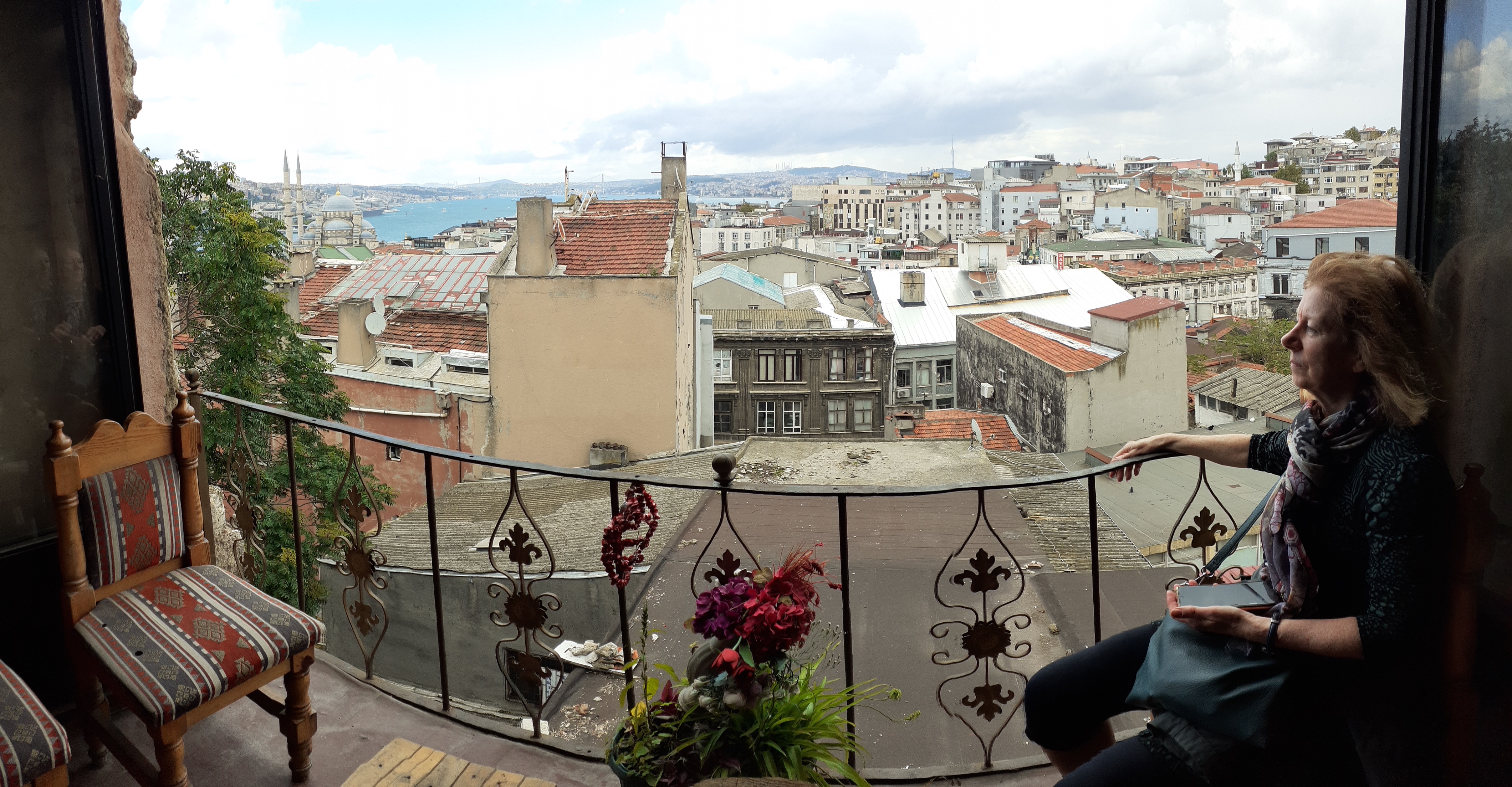
A man appears by my side. Ssepulchral but discretely suave, he talks about the cafe, says he wants to take me higher. M returns, and he leads us up more stairs to the cafe. And what do they offer? Two things, coffee and water. The water is free. A lady in emerald green gives us her seat by the panoramic French window. This is a very generous gesture to visitors, one that makes us feel somehow at home. Conversation, or description, would minimise the view. Literally breathtaking. While M has opted for water I am keen or Turkish coffee. It is strong enough to trot the proverbial camel. After it, my vision is more four dimensional. Oh, to come here every morning. Our host escorts us to the exit, explains how we may escape Valide Han, if we must, and visit the Sleymaniye Mosque. Which he insists we must, enthusing that its architect is truly the best.
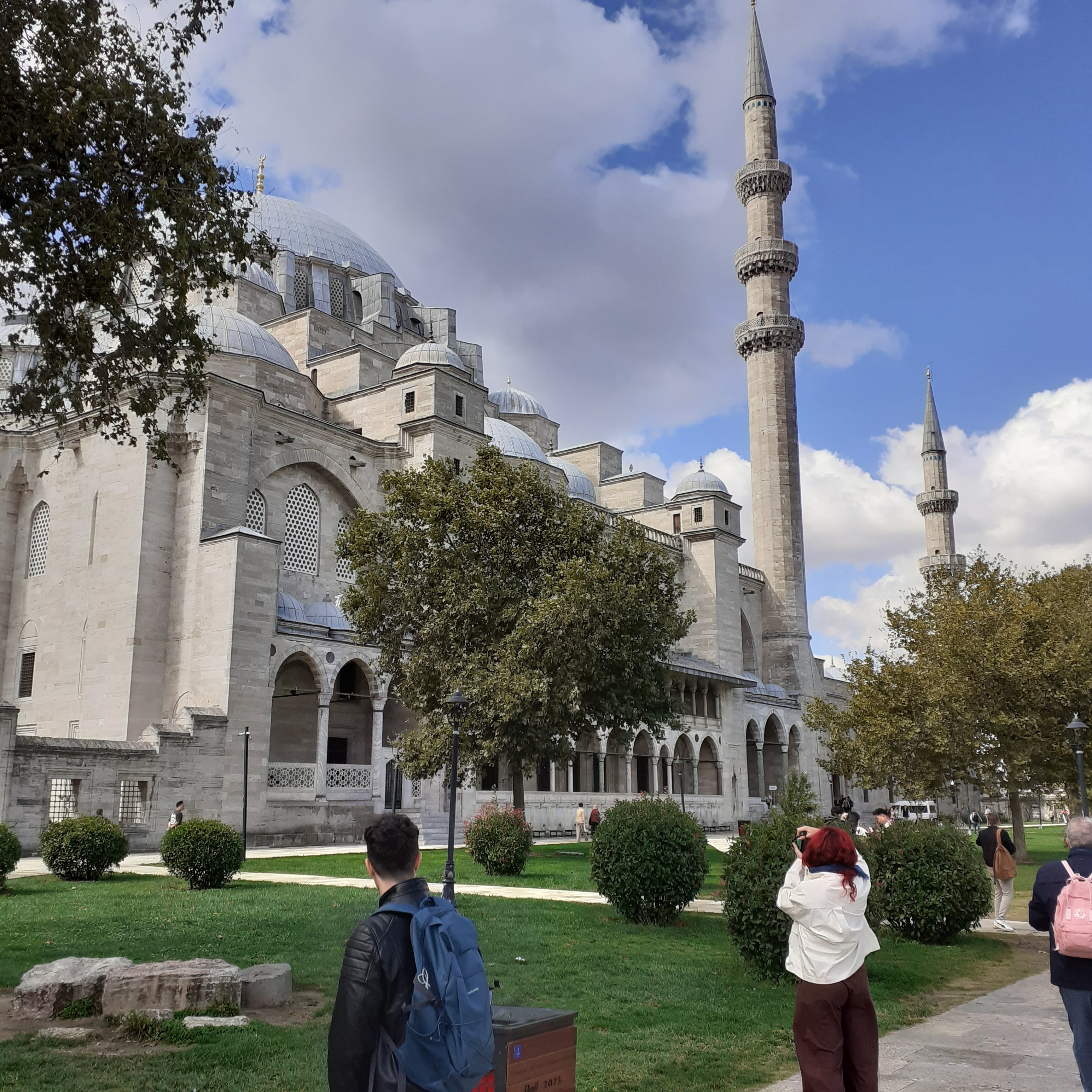
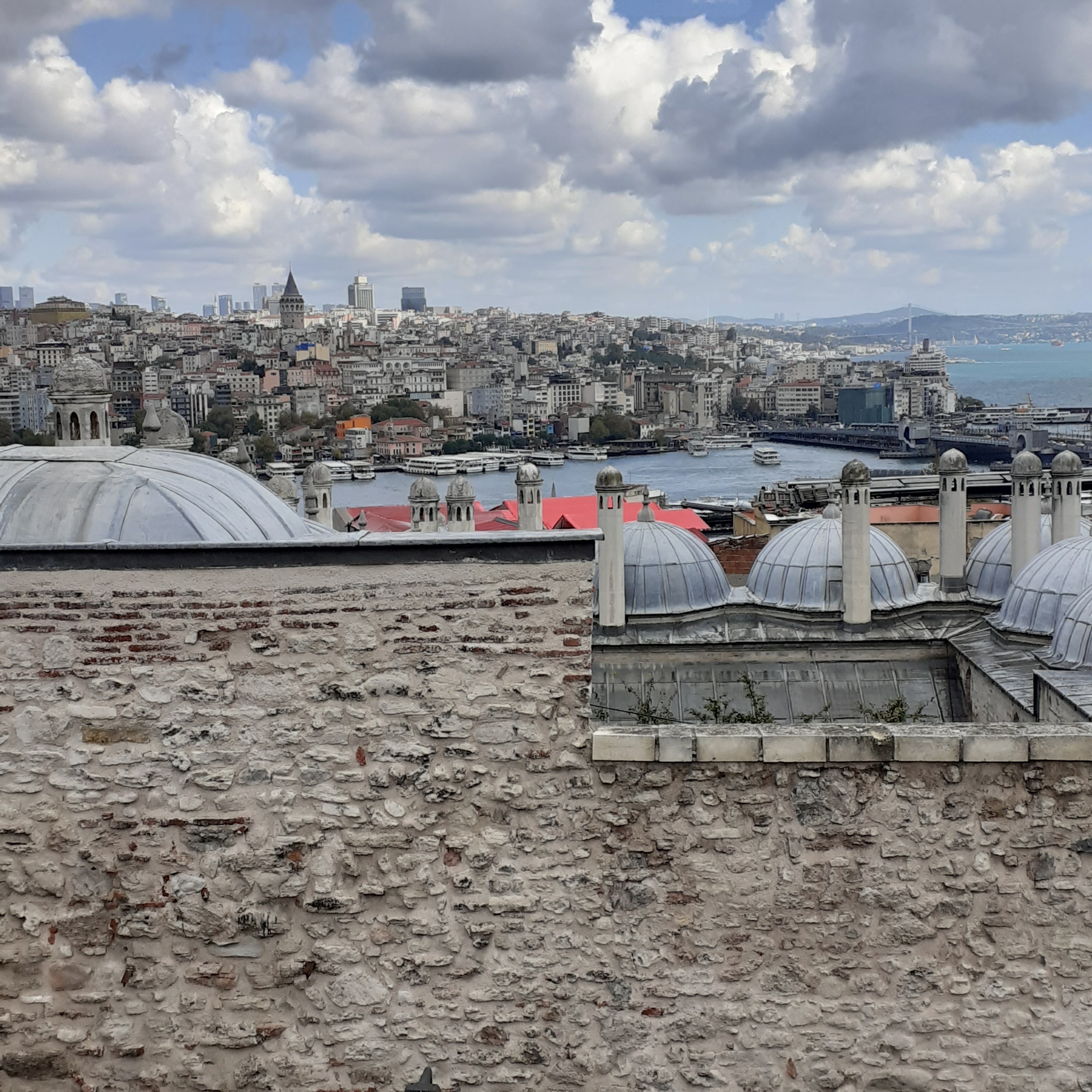
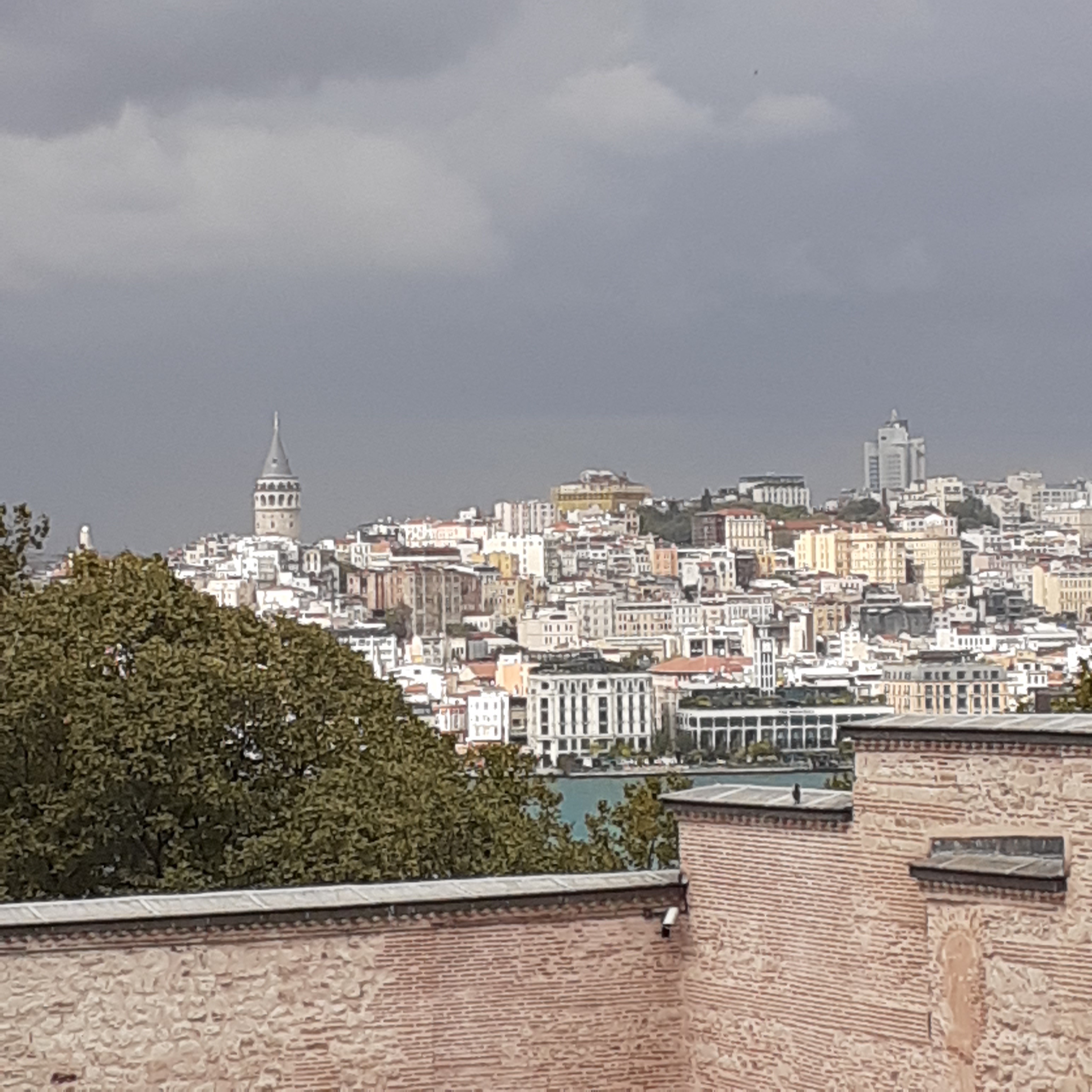
The Suleymaniye Mosque and complex sits in its own serene oasis above the city. A grand and majestic example of the leading architect of the Renaissance in the Ottoman Empire, Mimar Sinan. It was built for Suleyman the Magniicent in the mid sixteenth century. The centralised composition culminates in the massive central dome. Impressive on the outside, intentionally awe inspiring within. The surrounding park is dotted with other significant buildings, including the tomb of Suleyman himself. The view from the parapet at the north side of the site is jawdropping. Golden Horn and Bosphorus are blue and serene beneath the seven hills of Istanbul.
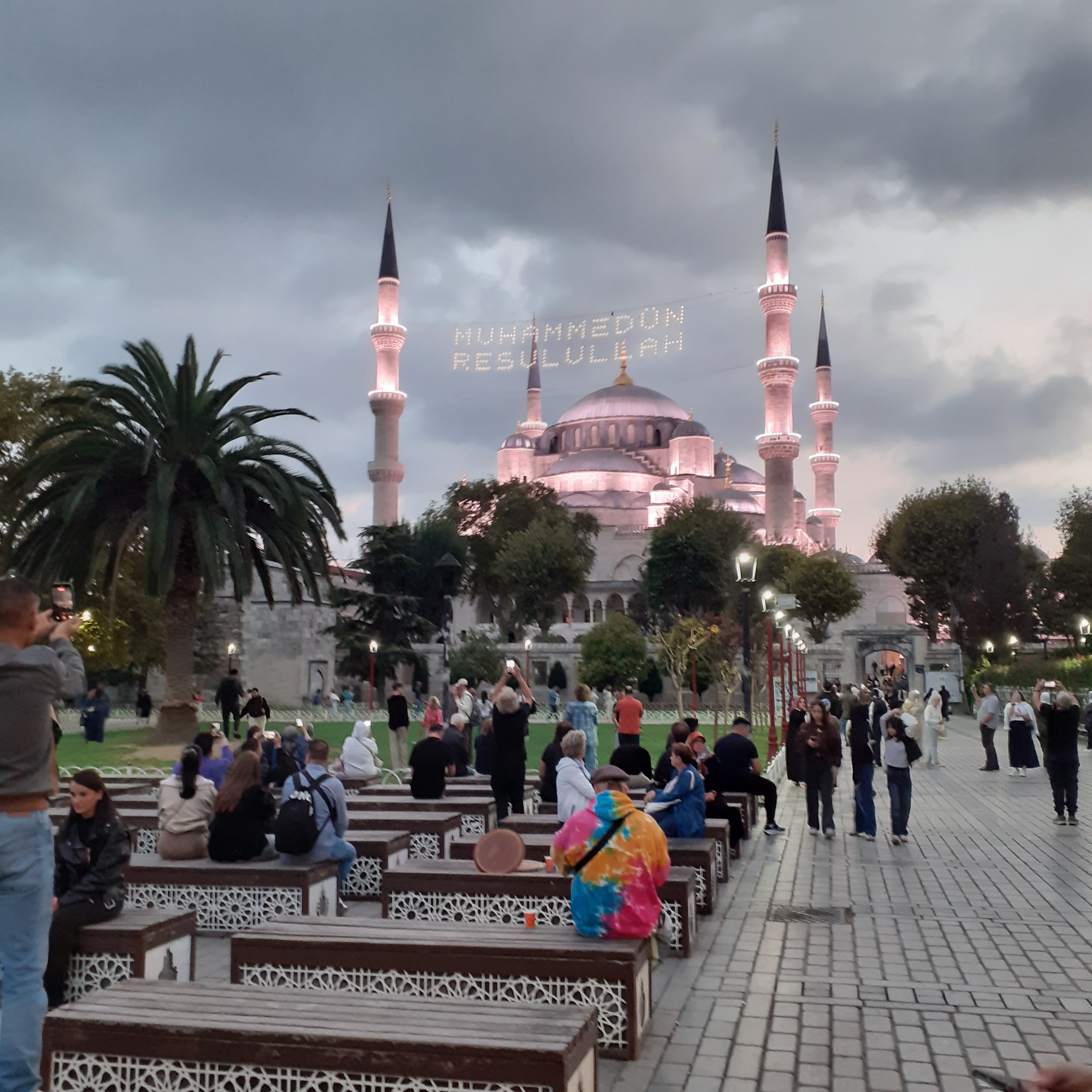
As evening falls the call to prayer rises. Muezzins chant their songs from the forest of minarets throughout Istanbul. The lights of the city commence to glow in the twilight rush. All around Sultanahmed, crowds are hurrying home, or heading out for the evening. It’s a contagious surge of expectation, exaltation even.
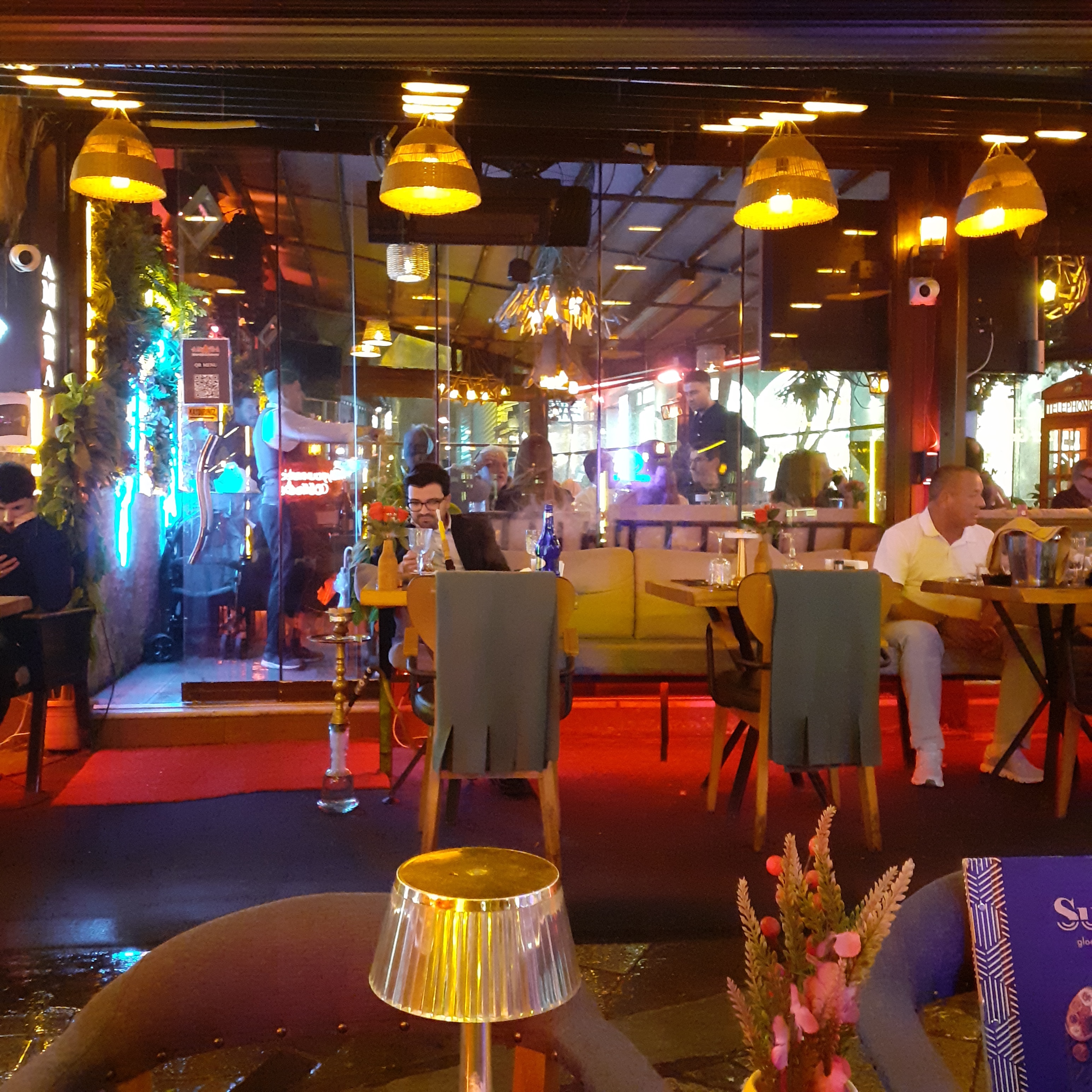
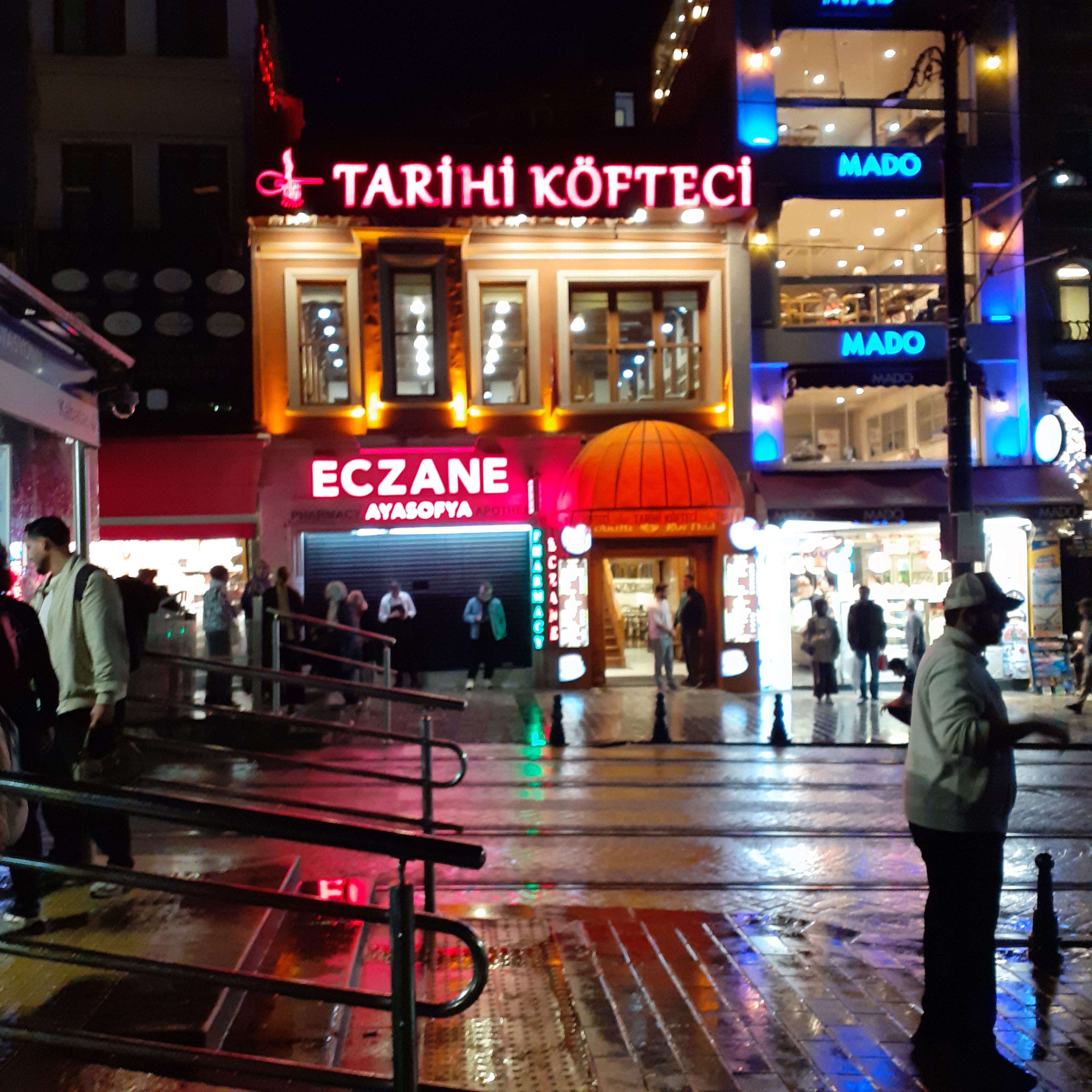
The Cagaloglu area is alive, the bars and restaurants alight and looking for business. Suad is an ideal spot for drinking and dining pleasure. Stylish neon lighting and outdoor heating give a wonderful lush atmosphere. Rounders Irish Bar is handy for our hotel off Mimar Mehmet Aga and was one of our favoured stops for a pre-dinner drink. There’s so much to choose from, and, of course, they will all choose you. Arm in arm we join the throng. We are all Romans with our eyes aflame, in the neon heart of Byzantium.
Though I am old with wandering through hollow lands and hilly lands,
I will find out where she has gone and kiss her lips and take her hands,
And walk among long dappled grass and pluck till time and times are done,
The silver apples of the moon, the golden apples of the sun.
WB Yeats wrote this in 1897 under the title A Mad Song. It was published as The Song of Wandering Aonghus in his 1899 anthology The Wind Among the Reeds.