If you like mountains, and I do, Switzerland is the place to go. The country is a small package, sixteen thosand square miles, half the size of Ireland, but goes up and up. The Alps range across South and Central Switzerland, reaching heights of more than 4,000 metres, or 13,000 feet. I visited the south of the country forty years ago when staying in Cluses, France, in the vicinity of Mount Blanc, the highest peak in the Alps. We drove through Valais and visited the spectacular Grande Dixence Dam. The famed Matterhorn is also in that region. This time I aimed to stay in Lucerne, in Central Switzerland, flying in to Zurich, the country’s largest city.
Switzerland has a population of nine million and was founded n 1291. The country has a strong national identity and has been determinedly neutral for centuries. It is linguistically and culturally diverse, the Swiss speaking, variously, German, Italian and French. A fourth official language is Romanche spoken by 50,000 people in the east of the country. It remains outside of the EU.
Such diversity and detachment makes concise definition difficult. In the 1949 film, The Third Man, the Swiss are disparaged by Orson Welles’s character, Harry Lime. Atop the famous ferris wheel in postwar Vienna, Lime justifies his self serving criminality to erstwhile friend Holly Martins (Joseph Cotten). Comparing the achievements of Renaissance Italy under the corrupt Borgias with Switzerland: “.. five hundred years of democracy and peace and what did they produce? The cuckoo clock.” The line is not in Graham Greene’s screenplay. Welles ad libbed from a similar quote by James MacNeil Whistler. In truth the cuckoo clock dates back to the eighteenth century Black Forest, with the Swiss chiming in a century later.
The Swiss were quite warlike in Renaissance days, but have mellowed, and made many contributions in technology and culture. The modern zipper (Martin Winterhalter 1925), Velcro (George De Mestral 1941), milk chocolate (Daniel Peter 1875) and LSD (Albert Hofman) are amongst Swiss inventions we regularly use. Though perhaps not the LSD so much. which was accidental. Yeah, right. The International Red Cross was founded by Henry Dunant in Geneva,1863. Dunant became the first recipient of the Nobel Peace Prize in 1901. The Swiss flag, a white cross on a red field, is the inverse of the red cross. Helvetica, designed by Max Miedinger in 1956 in Basel, is the most popular sans serif font. Its name afirmed the importance of the Swiss in graphic design and typography in the 50 and derives from the Celtic tribe that ruled here in the first millennium BC and into Roman times.
Where would we be without the Swiss? From Zurich airport there’s a rail station connecting to Zurich city centre, and other regional towns and cities. I’ve booked a train to Lucerne, a journey of about thirty miles which takes just under an hour, via Zurich Hauptbanhof. The train takes us through Zug, on the shores of Lake Zug, with views of the majestic Bernese Alps. Lucerne is a few minutes further on. The name is said to denote the city of light, from lucerna, the Latin for lantern. It certainly lit the path towards Swiss independence. The city formed a confederacy with surrounding regions and defeated the Hapsburgs in 1386. It had been built where the Reuss River flows out of Lake Lucerne. The river is the focal point of tourist sites, with the picturesque old town nestling along its north bank. From a settlement then of about five thousand people it has grown to host a population of 85,000 today.
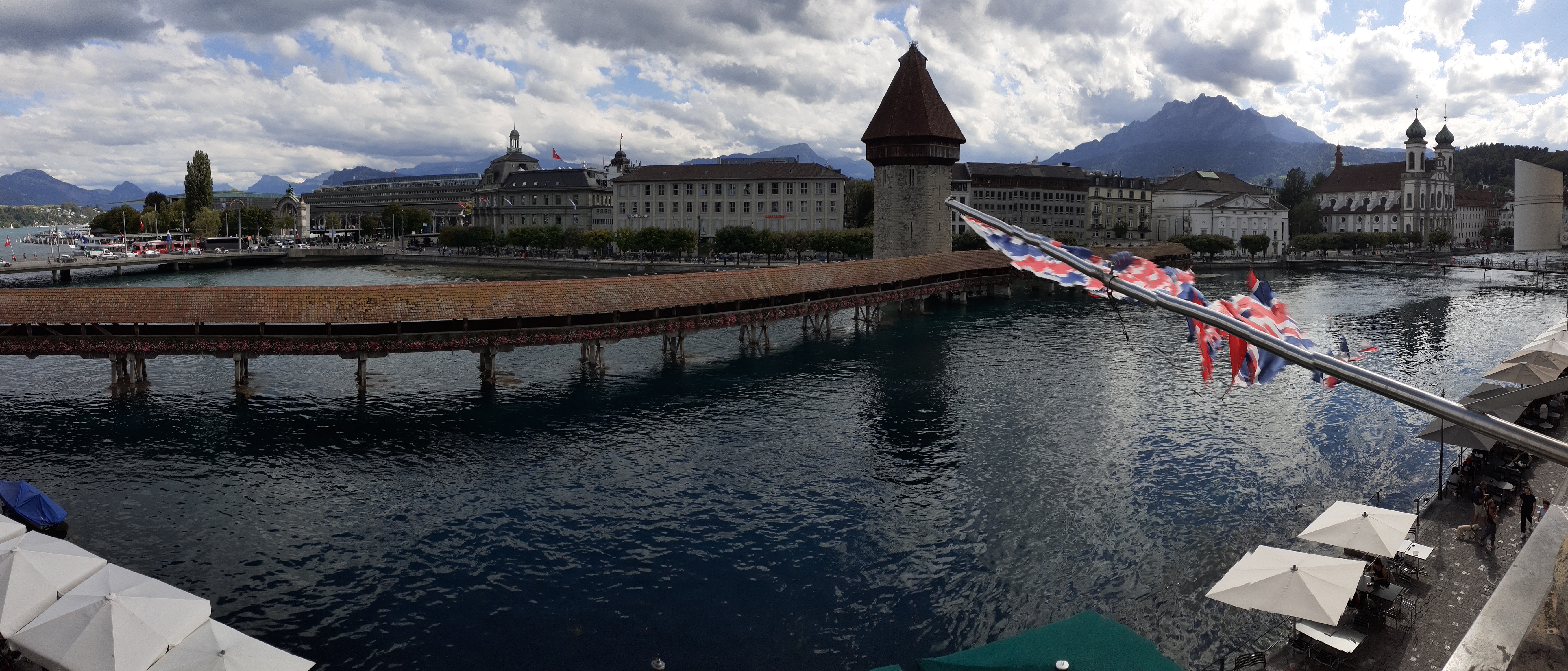
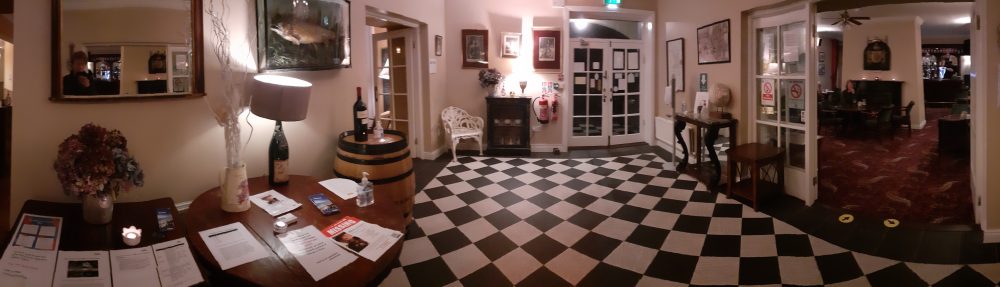
I am staying at the Hotel Pickwick and Pub,across the famous Chapel Bridge on the north bank. The hotel and bar have an English theme, and is clearly marked by a large Union Jack. The Irish tricolour and St Andrew’s saltire make me feel more at home. The theme checks Charles Dickens who stayed in Lucerne in 1846. The Luzerner Theater across the river hosts an annual production of the Christmas Carol. His first novel, the Pickwick Papers was published a decade earlier, featuring the adventures of the peripatetic Mr Samuel Pickwick. Mr Pickwick presides in spirit over the hotel bar, which is moulded to the English and Irish traditional bar. Meanwhile the hotel’s boast of a ‘room with a view’ is borne out. There really is a spectacular view from my balcony. Mount Pilatus rises sheer above the city on the far bank, the Chapel bridge just below, and to my left the lake is framed by Alpine peaks.
Mount Pilatus is Lucerne’s defining backdrop. At a height of two thousand one hundred metres. it is more than twice the height of Ireland’s highest peak Carrauntoohill. The summit is reachable by boat, cogwheel railway and cable car excursion from Lucerne. Legend has it that the name derives from Pontius Pilate, and that he was buried there. More likely it derives from the Latin for capped, being requently cloud topped.
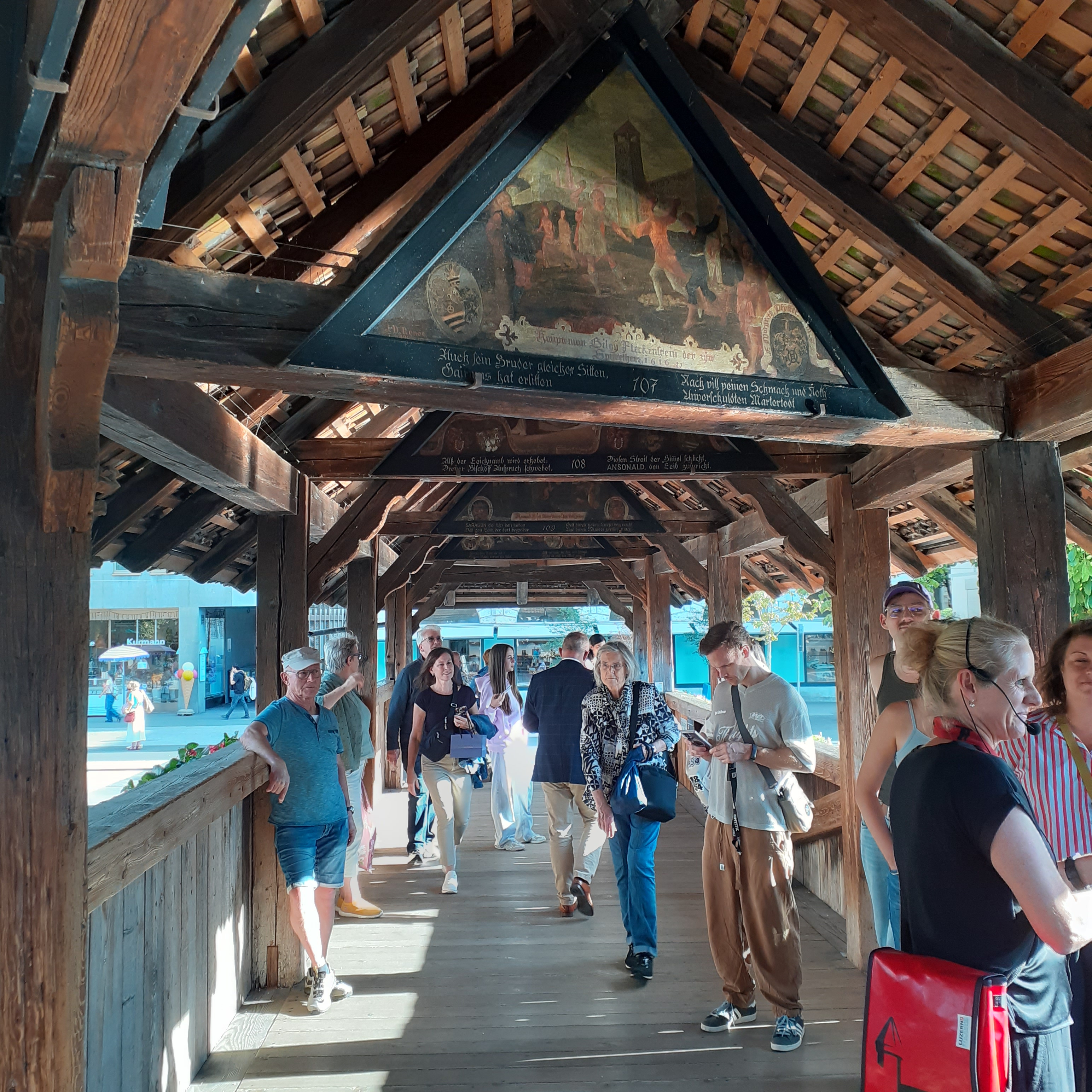
However, Lucerne’s most iconic site is the Chapel Bridge. This is an ornate, zig zag structure spanning the river with a large fortified tower to one side. Built in the fourteenth century it formed part of the city’s defenses. The thatched roof is decorated wth triangular painted panels illustrating the history of the Swiss Confederation and the lives of the city’s patron saints, Saint Leger and Saint Maurice. Hans Heinrich Wagmann was the principal artist from the start in 1611. One hundred and forty panels were completed. A disastrous fire in August 1993 destroyed two thirds of the paintings. Fortunately, all had been photographically archived. Crossing the bridge is a magical experience. Crowded, yes; but the pervasive atmosphere is joyous and serene. You need to cross several times to take in the views to each side and the bridge itself.
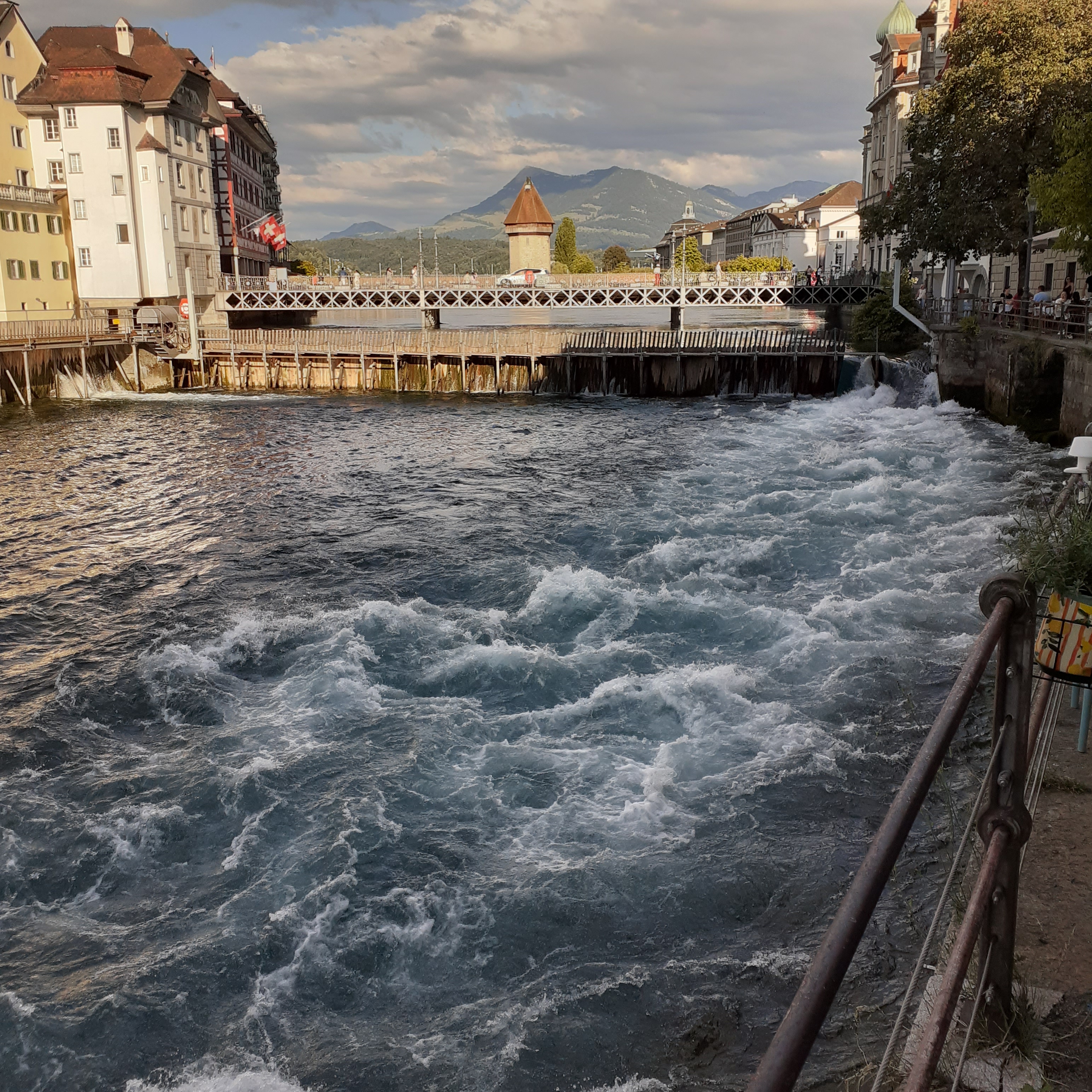
On the south bank, it’s a short walk down the quayside to another old covered bridge. Spreuer Bridge was built a little after Chapel Bridge. It means Chaff Bridge, as people were allowed to dump their chaff in the river here. The roof of this is also illustrated. Completed around 1637 forty five paintings remain from an original seventydepicting the Dance of Death. Nearby the river bank features an old flood control system, the Needle Dam. This was installed in 1861. Designed by Charles Poiree it’s an ingenious device using wooden slats to control the water level. It is still, partly, operated by hand.
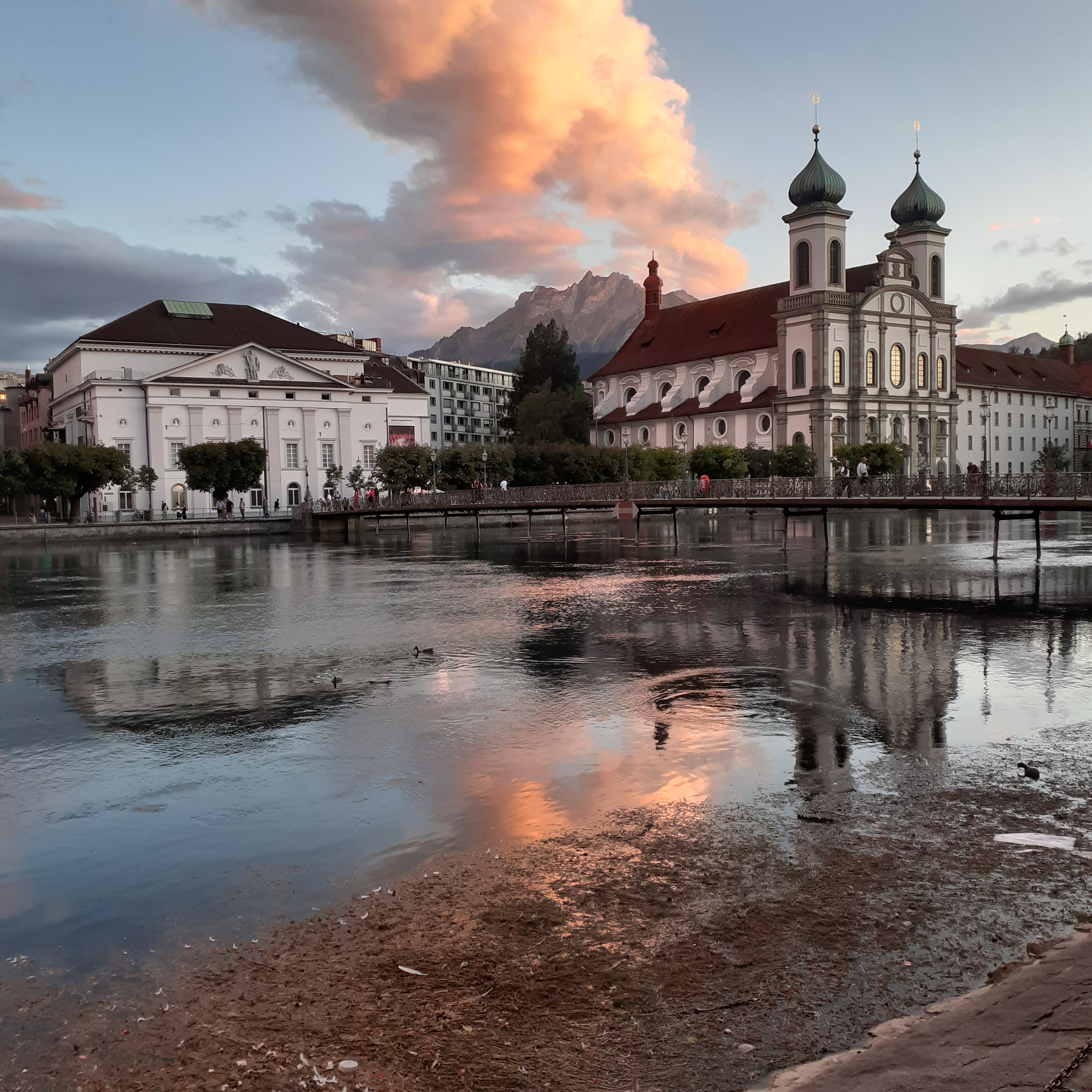
The beautiful Baroque church overlooking the south quays is the Jesuit Church. The Jesuits came to Lucerne during the Reformation at the request of the city fathers of Catholic Lucerne to counteract the zealous Protestantism of Calvin and Zwingli in Zurich and Geneva. The church was begun in the late 17th century. The onion toppoed towers were only added in 1893.
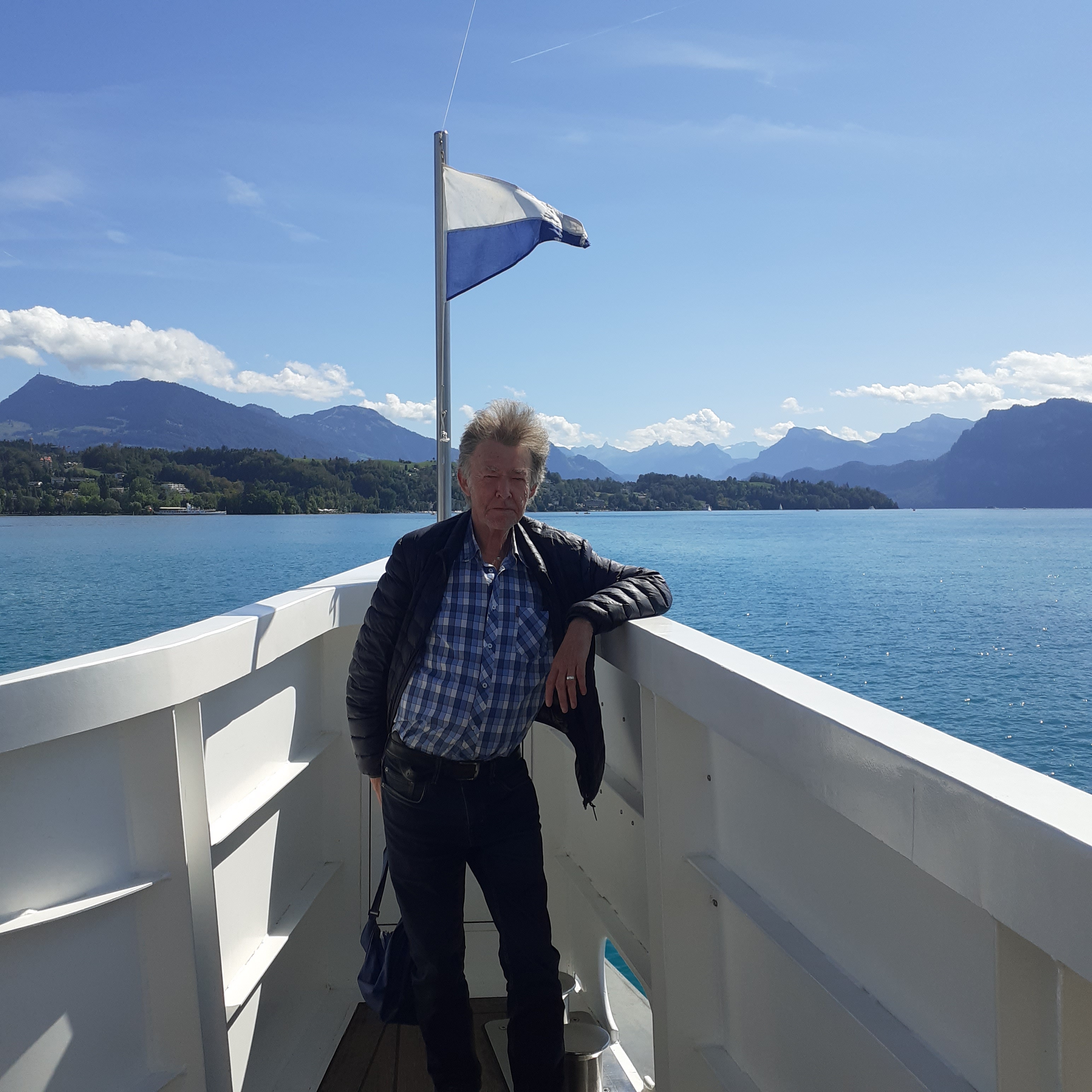
Lucerne is, of course, surrounded by majestic scenery. You are never out of sight of it, but it’s worthwhile getting out in it. The trip up Mount Pilatus is very popular. I ran into two happy travellers from Caliornia, Cindy and Britney, who were looking forward to it the next morning. The roundtrip takes about five hours. I had opted for the one hour boat trip. The same company also does longer dining cruises. There are regular ferries to other lakeside towns for even more independent explorers.
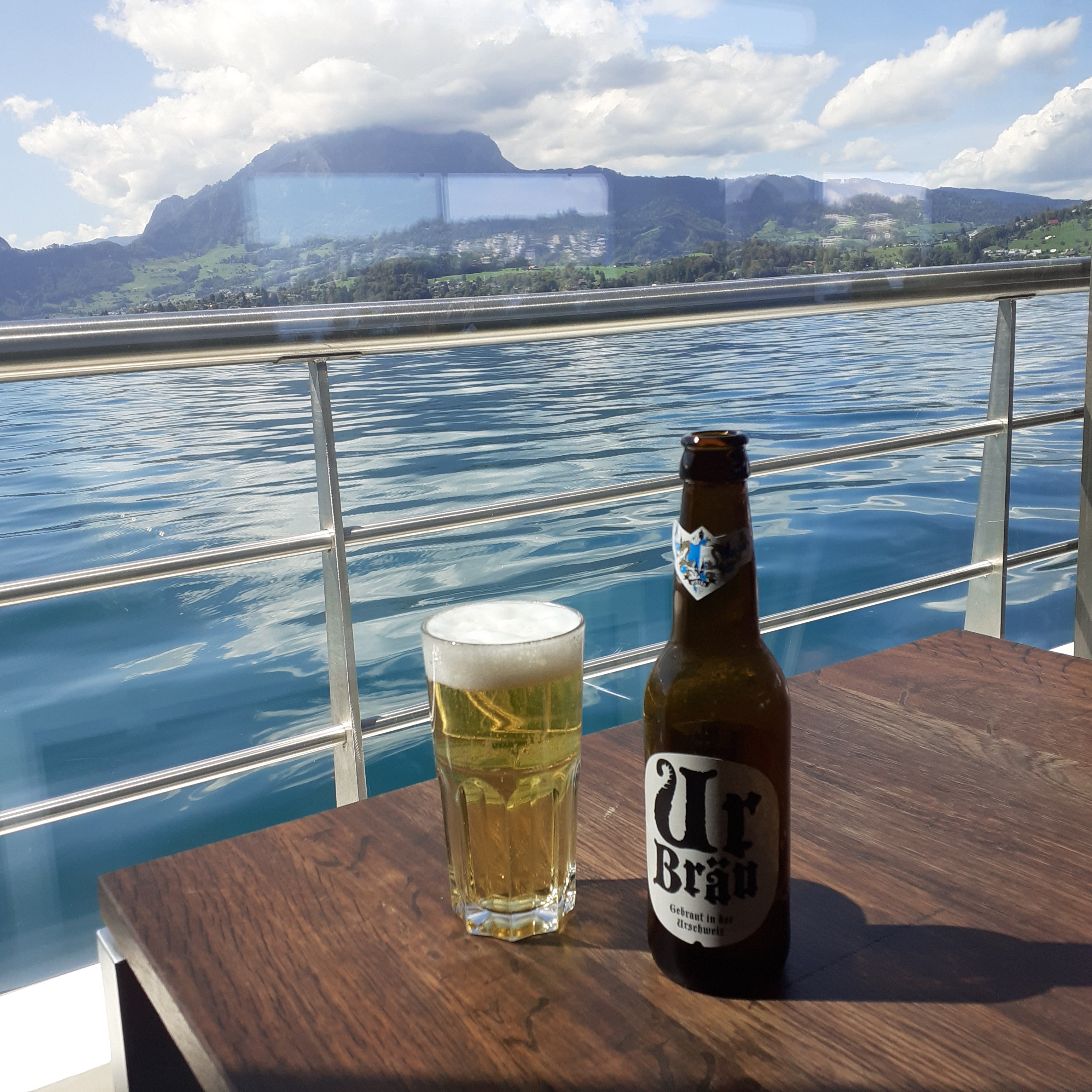
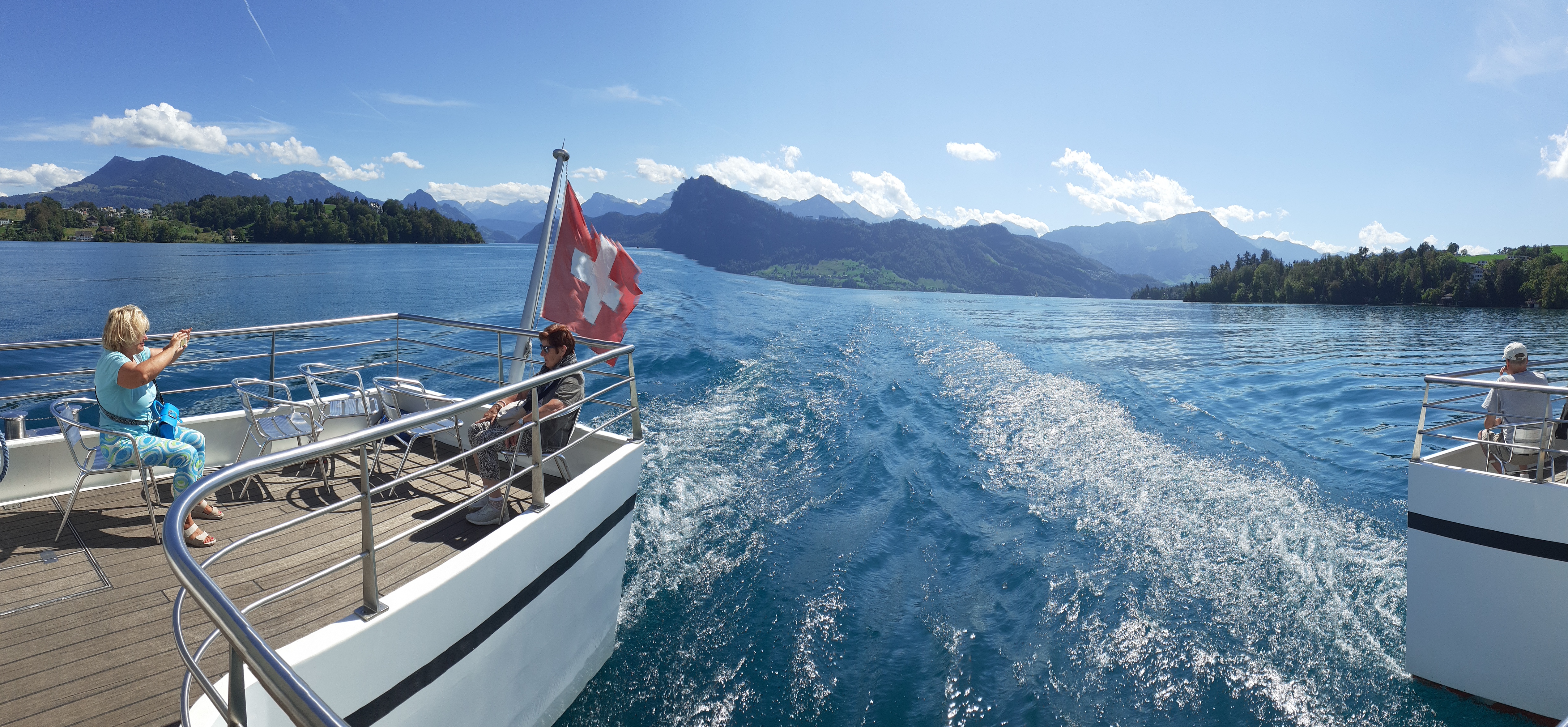
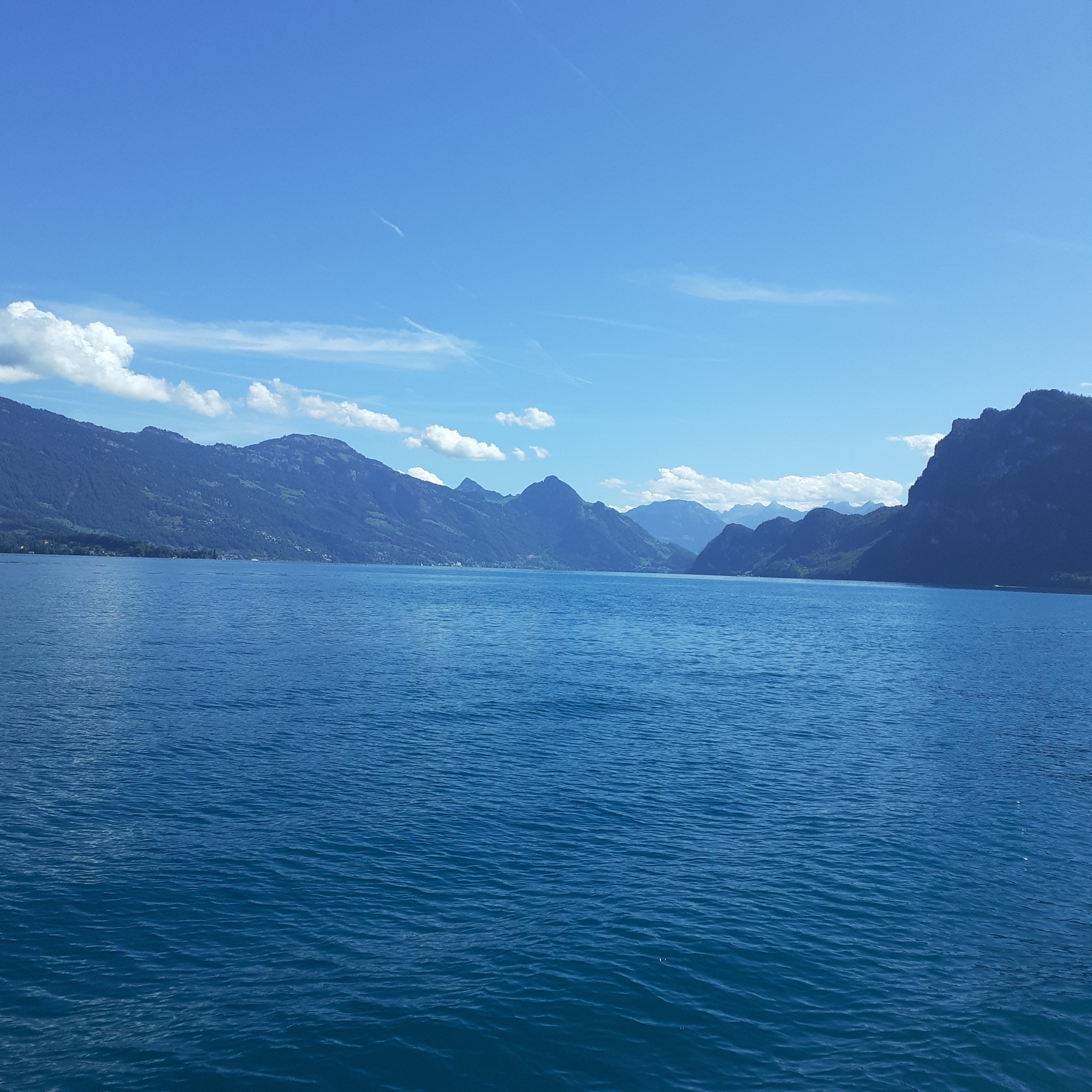
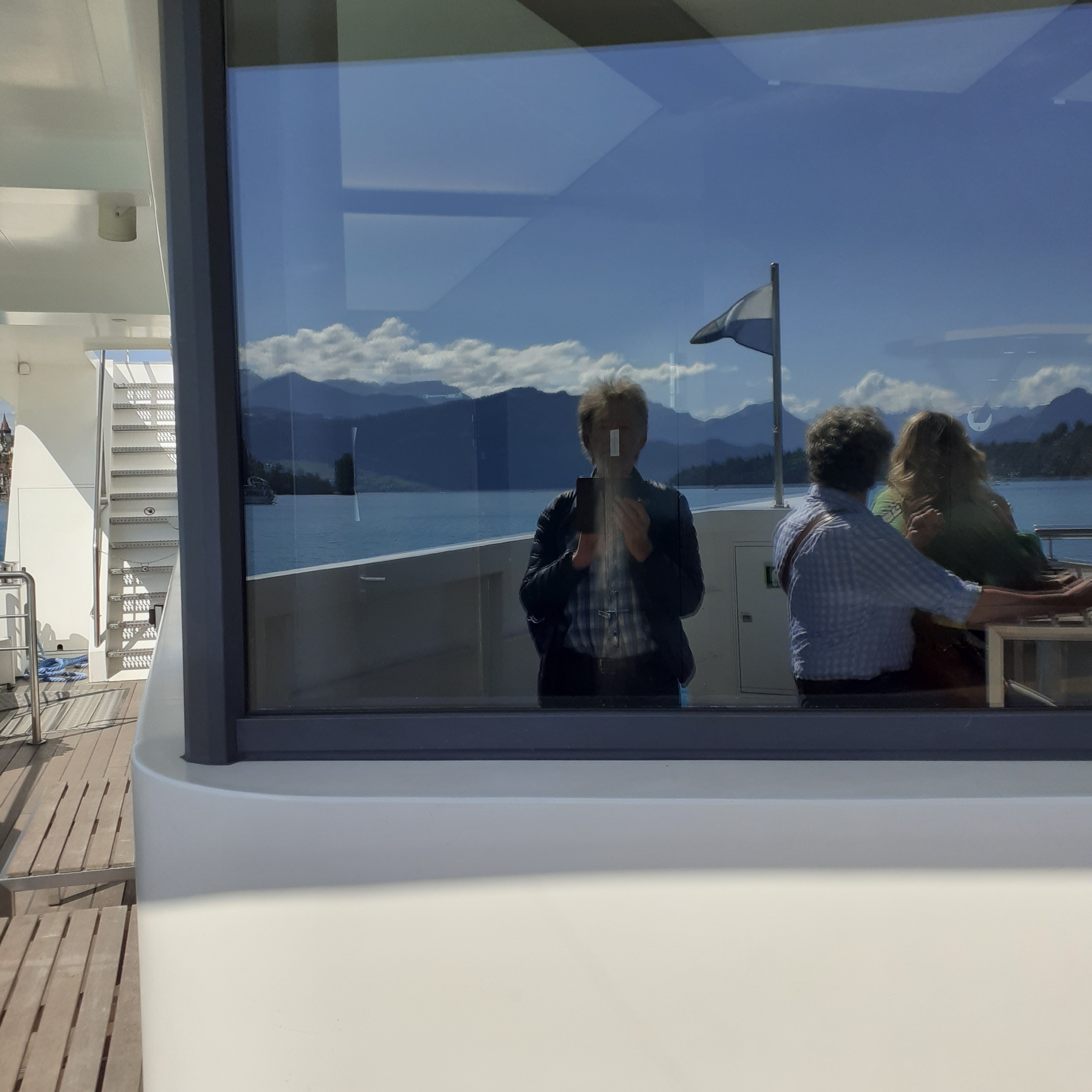
I took off in the sleek catamaran at noon in glorious sunshine. The craft was quiet, none too crowded, with snacks and drinks available. Sitting with a bottle of suds I was catapulted into paradise. Lake Lucerne sweeps southward before us into the jagged blue maw of the Alps. We circle back as the lake branches west and south. I moved astern for the return leg and let the majestic vista recede. If only time could stand still.
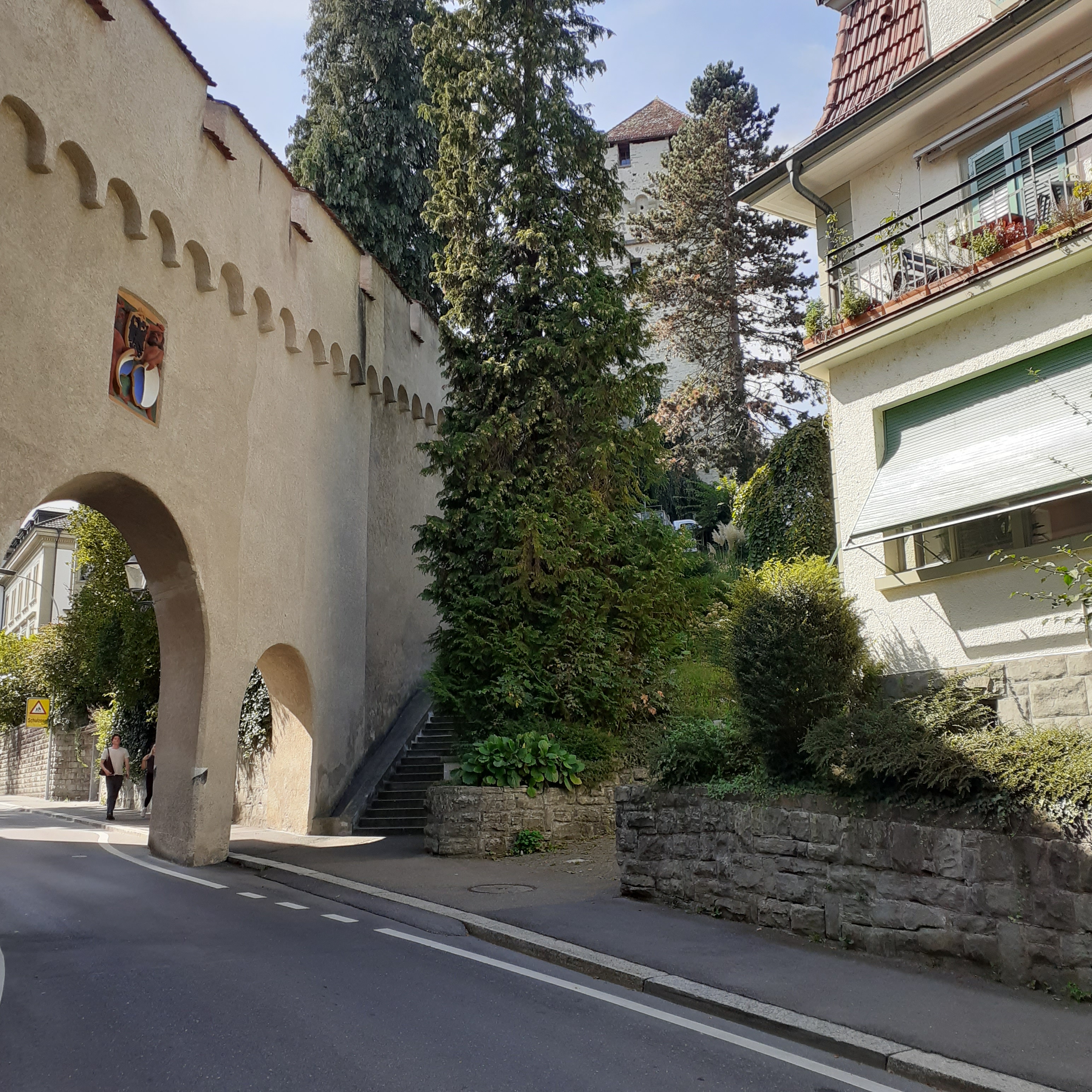
Back on terra firma, there’s plenty of exploring still to do in Lucerne. The Musegg Wall with its nine towers was built at the end of the fourteenth century along the steep rise south of the Old Town. It’s a steepish walk from the lakeside quays, steeper still by way of narrow laneways connecting with the lower Old Town.
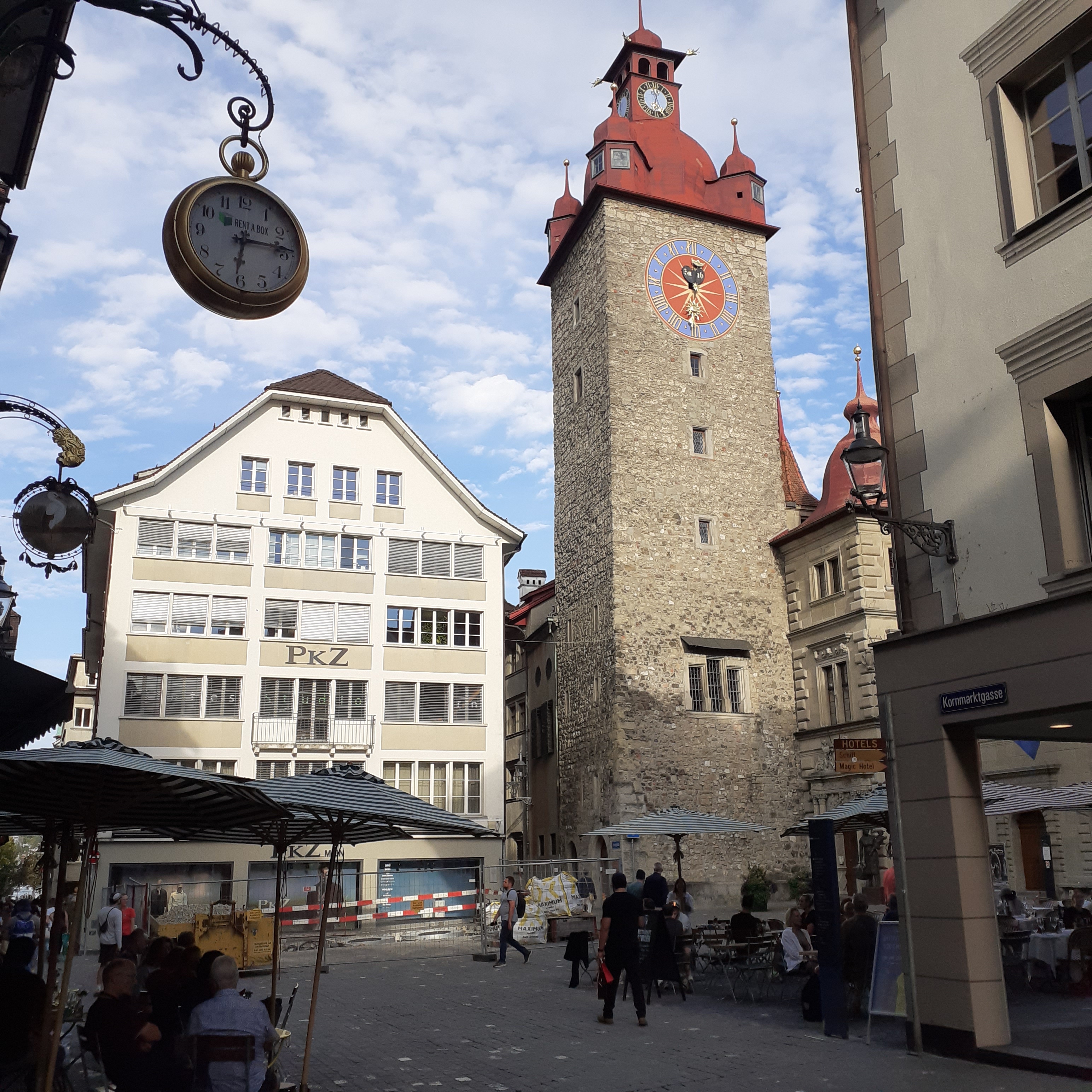
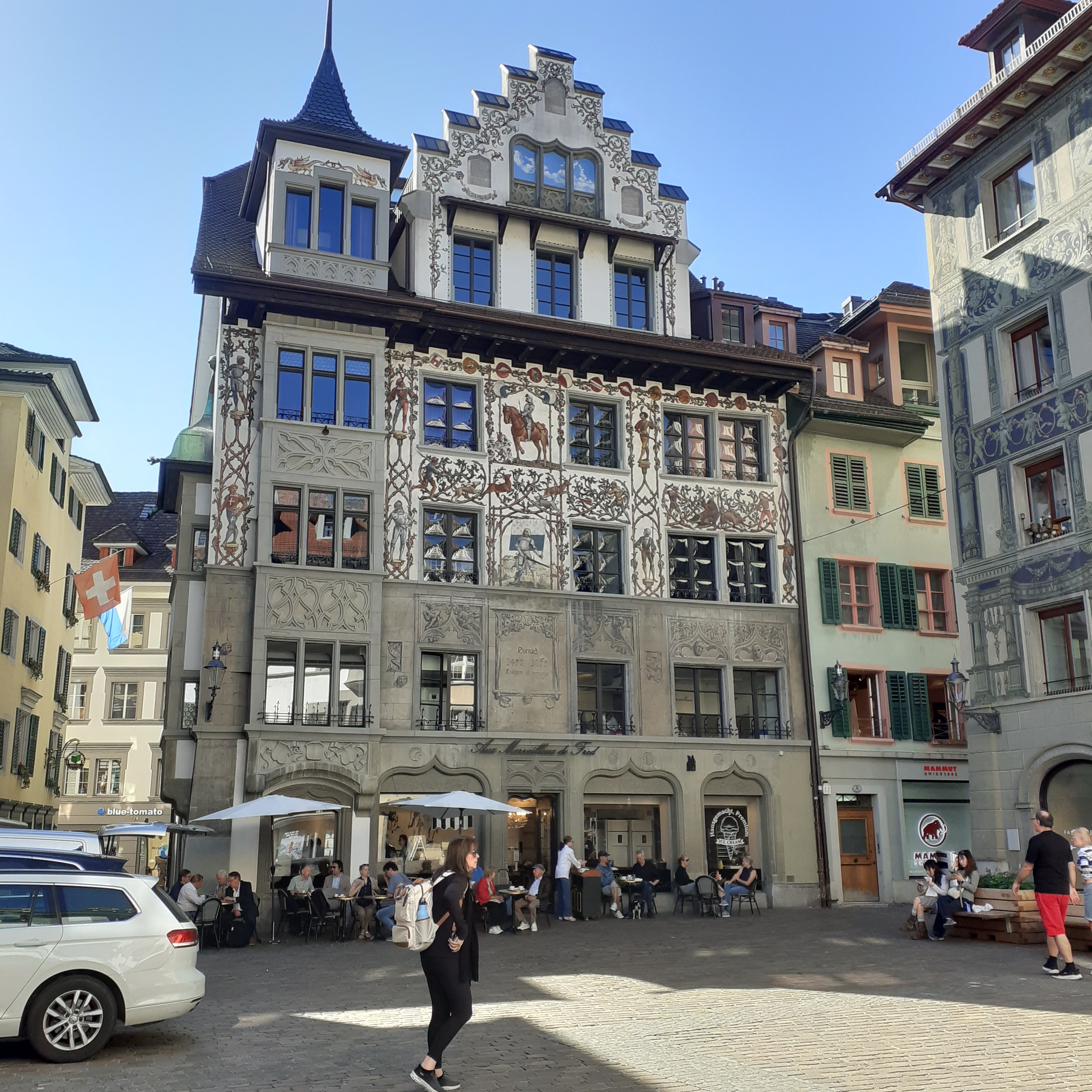
The Old Town meanders through pedestrianised streets from the Chapel Square at the lake end to Muhlen Platz and on to the Spreuer bridge. It’s a bustling strip of shops and hostelries widening randomly into small squares. Fine buildings are adorned with frescoes. At Kornmarket the Rathaus, or Town Hall, towers above. This was built around 1600 with the tower dating back to the 14th Century. The building backs onto the Reuss with a bistro beneath its collonades. The Weinmarket is adjacent and slopes towards the river quayside, Unter der Egg.
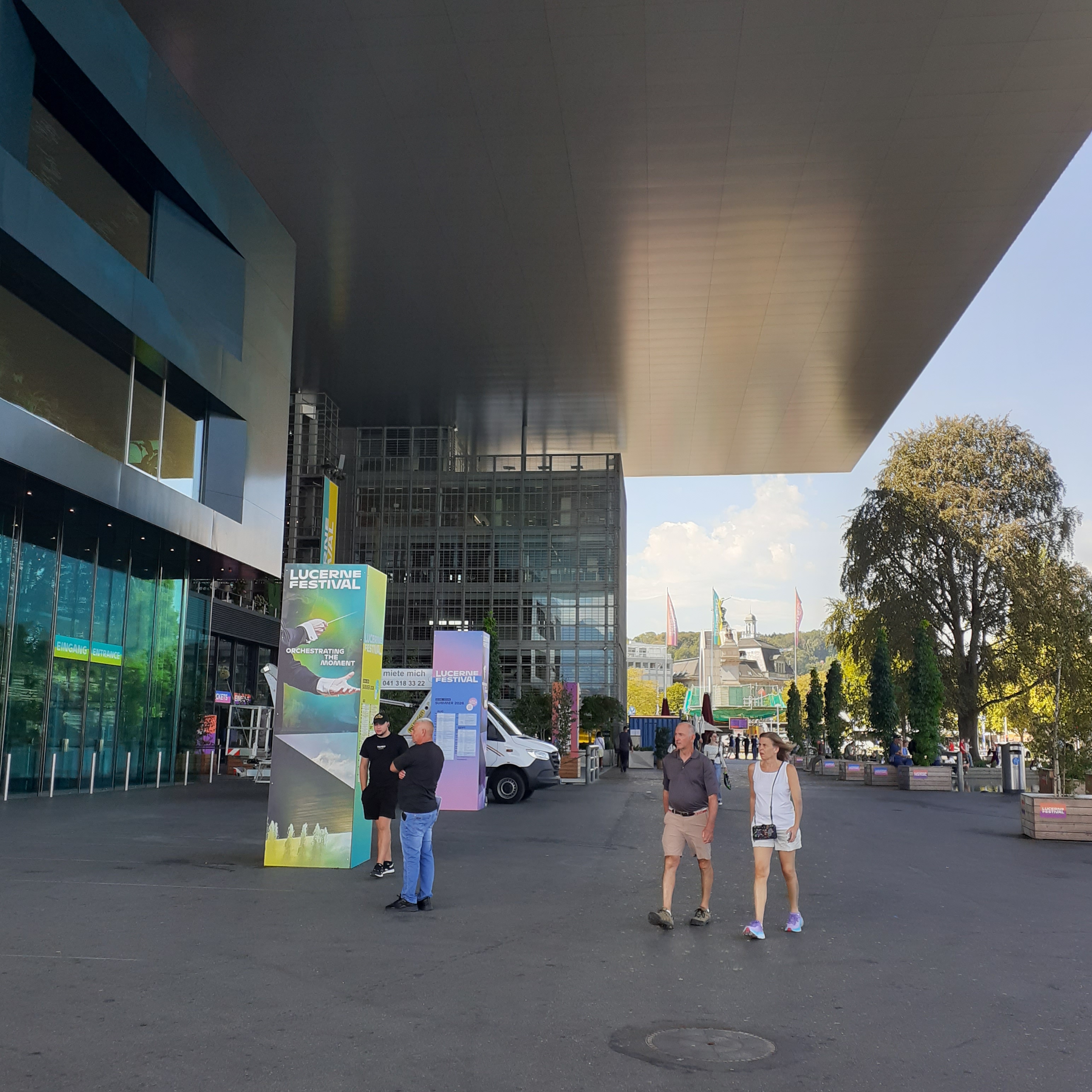
From the ancient to the modern on the south bank. Seebrucke is a very busy thoroughfare crossing the river. The Hauptbanhof lies just beyond the Torbogen Arch with its Zeitgeist sculpture atop. Across the Plaza towards the lake is the KKL (Kultur und Kongresszentrum Luzern). A large modernist glass and steel structure leaning over the lake It includes a conference centre and a concert hall. It was designed by French architect Jean Nouvel and opened in 1998. The concert hall holds 1,800 people and the Lucerne Festival of Music is a major annual event. The Museum of Modern Art hosts contemporary exhibitions on the top floor. Local artist, Shirana Shahbazi’s exhibition All at Once – an Interplay with Light, is a lustrous show with music and video installations besides painting and photography. Extremely varied, being a collaborative exhibition, but peaceful too, a consolation for my addled brain. I particularly liked the lifeform under water photographs.
Another important Art Museum is the Rosengart Collection on Pilatus Strasse, back past the railway station. The Rosengart hosts an extensive collection of Picasso on the ground floor and Paul Klee in the basement. Upstairs there’s an extensive display of modernist art from the late nineteenth and early twentieth centuries including work by Impressionists Monet, Renoir, Cezanne and others. Post Impressionist Georges Seurat contributes a sketch of his major painting, and one of my favourites, A Sunday Afternoon on the Isle de la Grande Jatte. Another room shows a video of the building’s conversion to the present museum.
Pilatus Strasse is a wide straight-ish thoroughfare running west from Seebrucke, the lakeside bridge, and the railway station. It marks the start of the modern city and is lined with commercial shopping, offices and plenty of bars, cafes and restaurants. Roadworks too. Ah, city life. Still, I liked a morning outside a cafe here amidst all the movement and noise. The DB Bar was another good spot, fast and friendly. Yo Flo! Farther down, I was fond of the restaurant La Vie en Rose for breakfast and evening meal. Edith Piaf also pops up at a bistro beside the KKL, Le Piaf. I don’t know of Lucerne’s particular connection with the famed French songbird, but I can imagine.
Quand il me prend dans ses bras
Il me parle tout bas
Je vois la vie en rose
Qu’il me dit des mots d’amour
Des mots de tous les jours
Et ça me fait quelque chose
The song from 1947 sings of seeing the world through the rose tinted glasses of love. It evokes beauty and romance, very much in tune with the lovely city of Lucerne. The lyrics were written by Piaf and the melody by Louiguy (Louis Guglielmi)
By night the city centre is lively but relaxed. The quayside is lined with tables of various hostelries and packed with promenaders. For liquid refreshment, the Pickwick and the collonaded terrace beneath the Rathaus were amongst my favourite spots. Heading into the Old Town, the Boar’s Head off the Weinmarket has a brown cafe vibe. With a country rock soundtrack, it’s a cool place to relax of an evening, the floor to ceiling mirrors giving a disconcerting feel of parallel universes. Wow, what was in that orange juice?
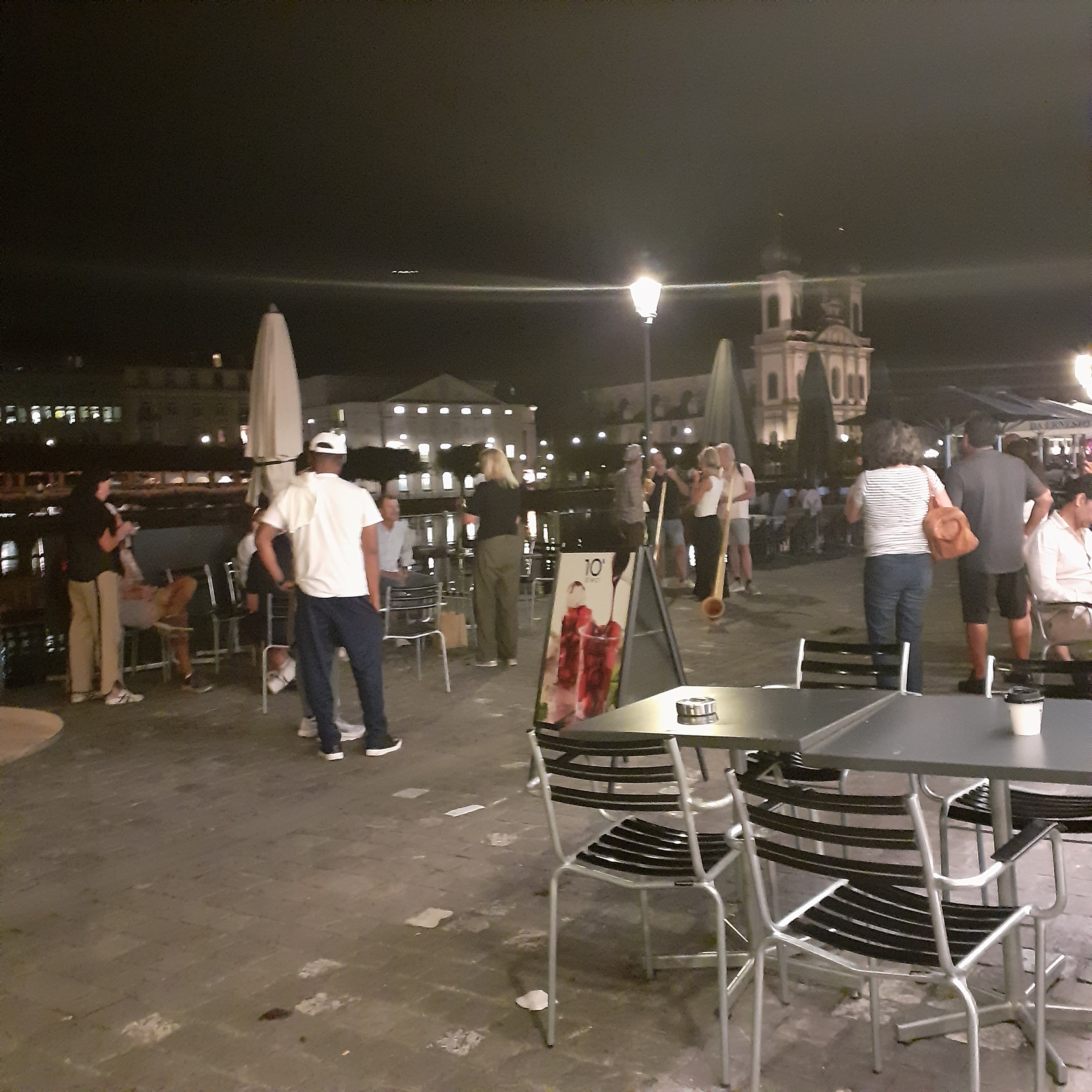
A fitting farewell on my last night. As I relax on the riverside outside the Pickwick with a well earned pint or two, we are serenaded by a couple of musicians with alpenhorns. The alphorn is a traditional instrument of the Alps. The wooden stem, honed from a single pine shaft, is up to four metres long. Like whalesong at altitude, it was a form of communication amongst isolated mountain communities. As the lights and stars come on over the city of light, the sonorous bass of the horns trembles upwards to the darkening summit of Mount Pilatus. Heaven indeed.
 xxharrison