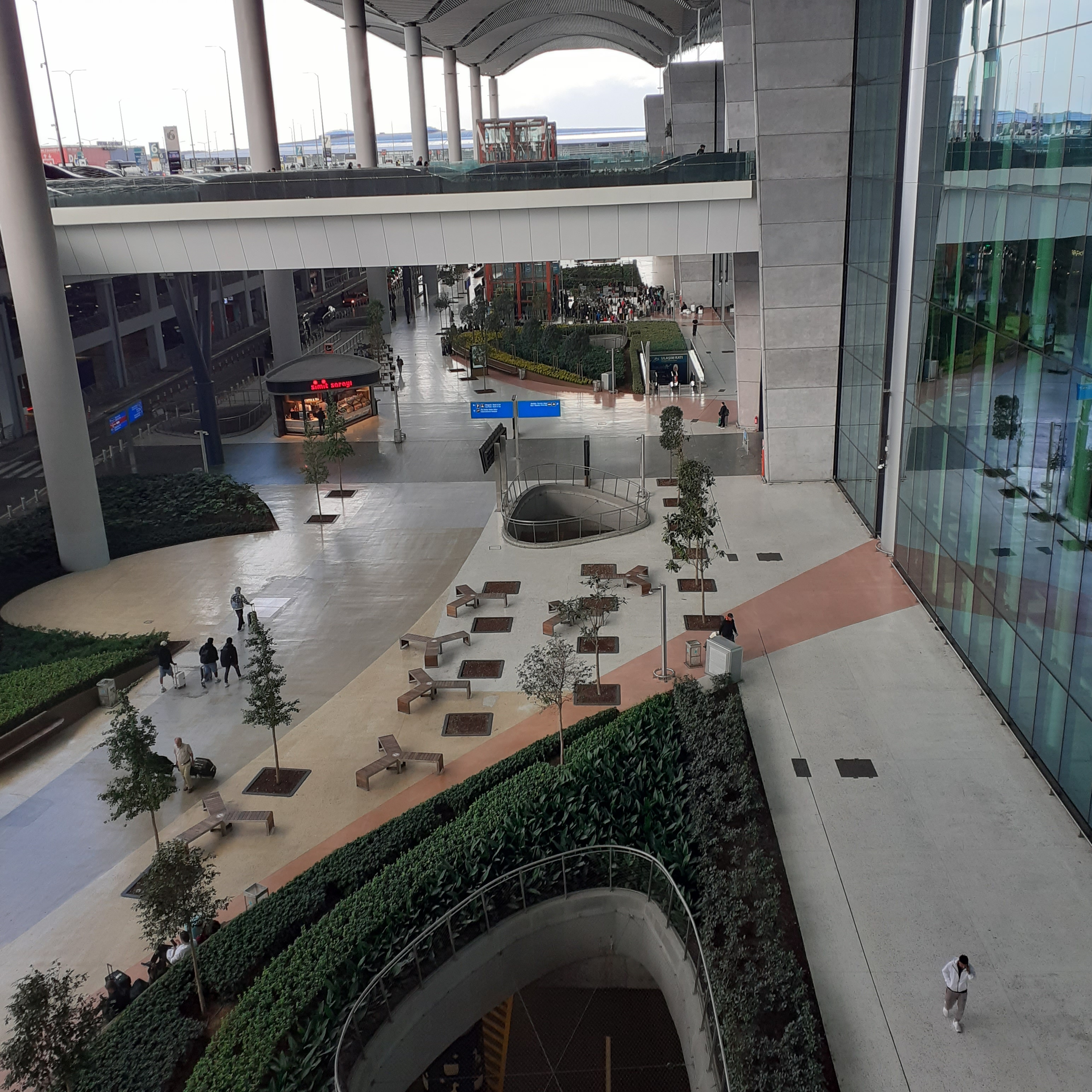
Istanbul Airport is a major hub of international travel. Istanbul, through all its incarnations, has ever been thus. By land, sea and now air the city has remained an eternal focus of world travel. If you’re thinking exotic, think the famous Orient Express. From 1883 the most salubrious service ferried passengers across Europe for a century. Now finally departed, we took Turkish Airways which is faster, more frequent and there. Istanbul Airport opened in 2018, a vast, modern high end complex replacing Kemel Ataturk Airport nearer the city.
A fifty minute drive takes us into Istanbul. The first half through a featureless landscape, then suddenly embraced by a highrise metropolis. Traffic is hectic in the city centre. We cross the Golden Horn onto Seraglio Point. Istanbul’s defining promintory juts out into the confluence of the Bosphorus and the Sea of Marmara. We’re on Europe’s eastern headland, with Asia one step beyond.
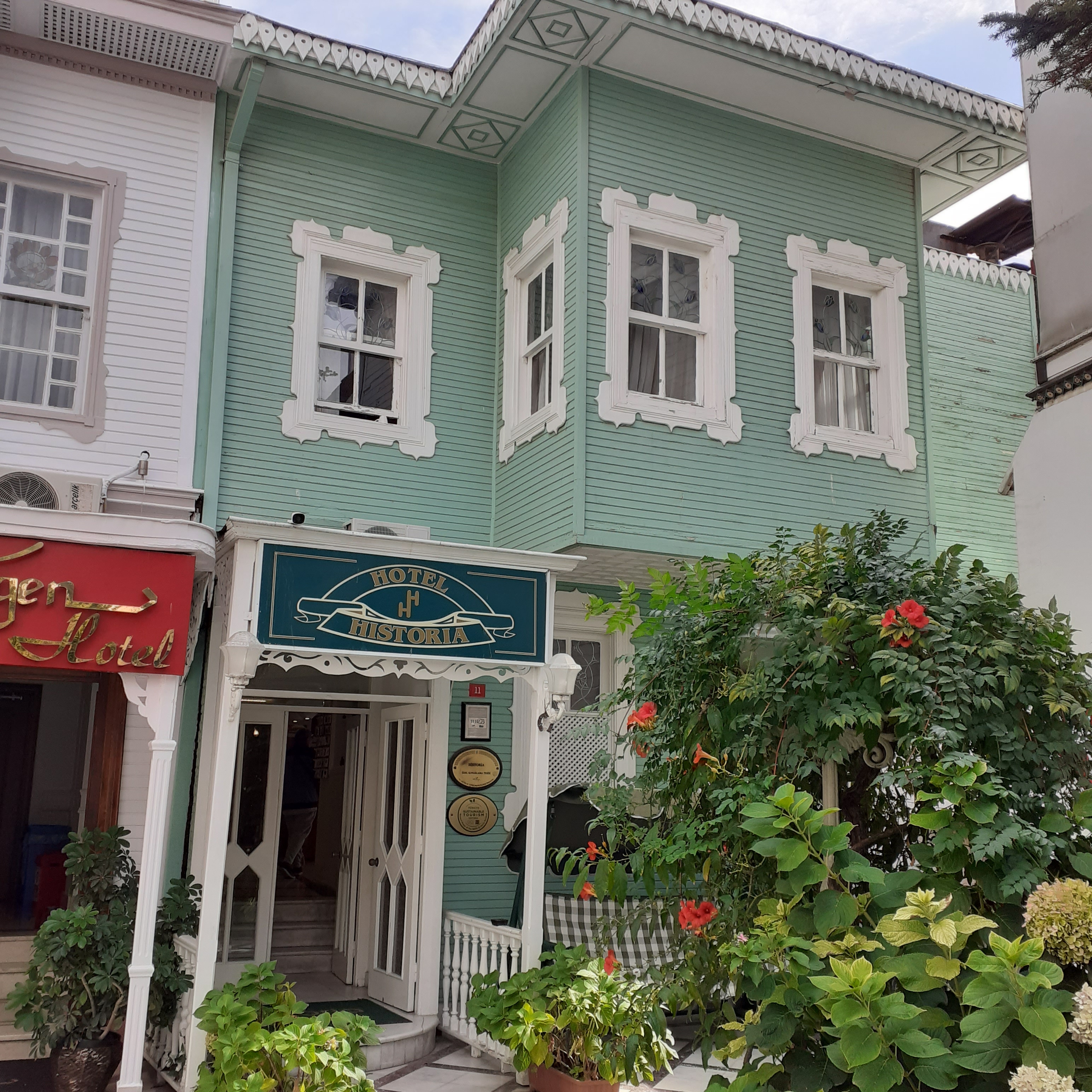
Our hotel lies over the hill on the Marmara side. The hilltop hosts a spectacular display, lined with an array of iconic structures: Topkapi Palace, Hagia Sophia and the Blue Mosque. Hotel Historia is only a hundred metres or so beyond, a modest timber framed period building in its own calm oasis. with seaviews from our balcony.
It was a four hour flight from Dublin, heading into the dawn. It’s been a long time on the road, but the concept of this visit has always been epic. The journey east is truly a voyage through time and space, a voyage of discovery into the birth of the world we know, or think we know.
And therefore I have sailed the seas and come
To the holy city of Byzantium
Istanbul exerts its pull through all these centuries, and rare is the curious traveller who is not drawn to visit and sail the fabled strait dividing two continents. A hundred years ago, William Butler Yeats set his mind on aspects of that desire. Sailing to Byzantium was first published in October Blast, appropriate given the time of our own visit, and later in The Tower, 1928. Yeats was sixty at the time, rather younger than myself, and conscious of his age.
An aged man is but a paltry thing
A tattered coat upon a stick
He was born in 1865 in Dublin. A central figure of Irish and International writing, his poetry explores a wealth of themes; personal, spiritual and political. His mastery of styles gives even greater range to his words, Yeats’s coinages have entered the language and enhanced it. In Sailing to Byzantium, Yeats’s journey is more internal than actual. His is journeying through the knowledge he has gleaned of art and civilisation, forming it into an embodiment of paradise. Byzantium is a logical focus of this notion, in contrast to a more materialistic and sensual modern world. It is the idea of Byzantium, everything it has been in mind and memory.
That is no country for old men
the young in one another’s arms
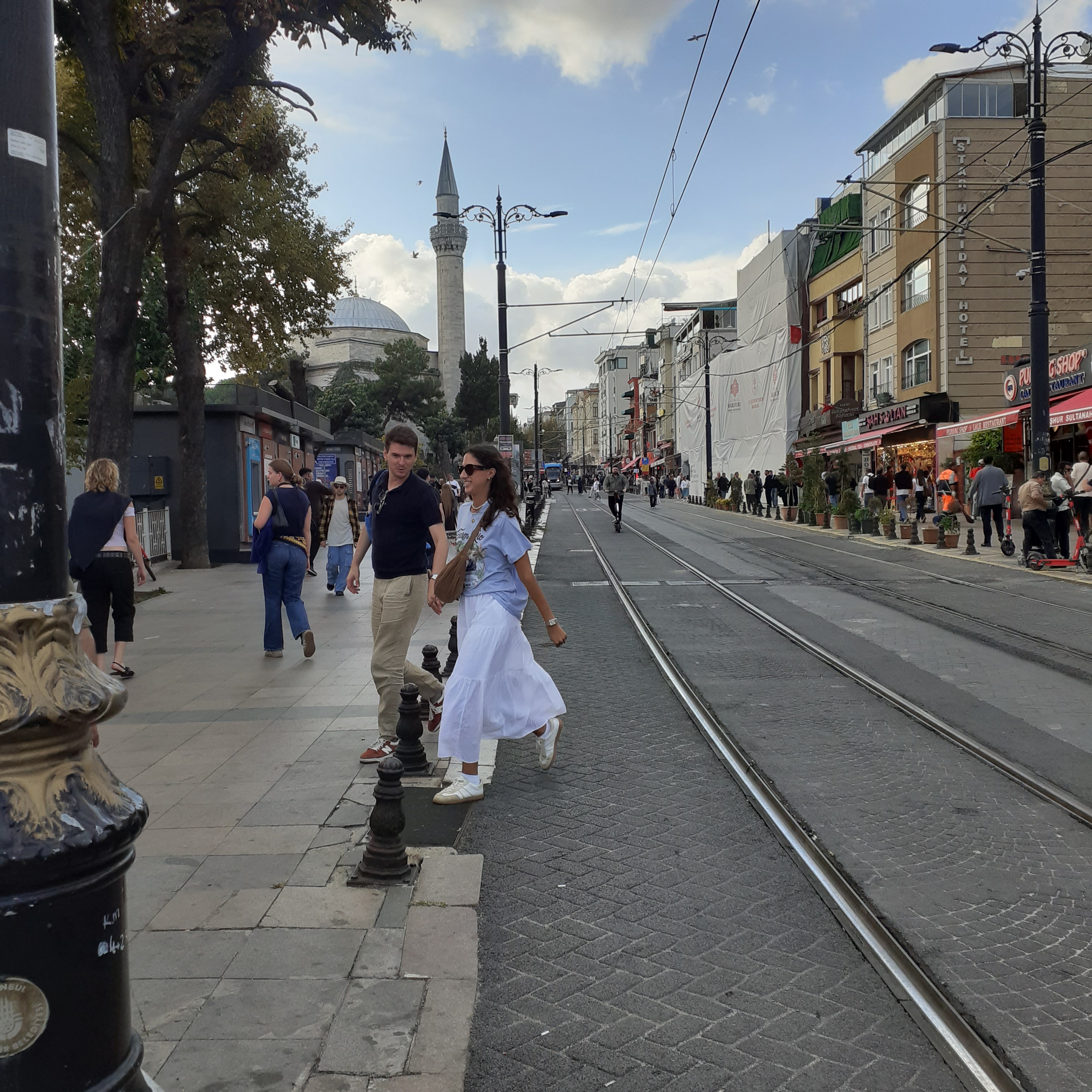
Turkey is a collage of continents. The bulk of the country is in Asia Minor with a foothold in Europe just a step across the Bosphorus. Thrace, the European portion of Turkey, though small, holds more than ten per cent of the countries population. Istanbul is the urban link. Turkey’s largest city is home to fifteen million people and has an ancient and compelling history, as much a landmark for our civilisation as the Eternal City of Rome. Maybe New York’s so good they named it twice, but Istanbul goes one better. Starting out as Byzantium, then Constantinople for Constantine’s establishment of Empire, and at last Istanbul.
Originally founded by the Greeks in the 7th century BC. It was named, perhaps, for its first king, Byzas. The name means he-goat. It can be a term of endearment or of darker connotations. Goat mythology is prevalent throughout Europe. The god Pan, and the celtic god Puck are also derived from the Goat. Embodiying sexual and fertility, it had a strong identity amongst pre-Christian and pastoralist societies
Byzantium’s location made it as an important place in the development of Greek civilization. Roman Emperor Constantine established it as the centre of the Roman Empire in 324AD. The city took the Emperor’s name, Constantinople. After the fall of Rome and the Western Empire, the surviving Easter Empire was referred to as the Byzantine Empire.
The Ottomans conquered Constantinople in May, 1453, the final fall of the Roman Empire a thousand years after Rome itself. Very much a watershed in World history, a point when Europeans looked west in earnest. Within forty years, Columbus had reached America marking the end of the Middle Ages and the dawn of the Renaissance. Mehmet the Conqueror was their leader. The city name changed to Istanbul, though that only officially became the name in the 1930s. Te Ottoman Empire collapsed at the end of the Great War in 1918. Turkey’s new nationalist government under Kemel Ataturk insisted on the name Istanbul.This is derived from ancient Greek, meaning simply, to the city. However, some say it’s a corruption of Constantinople, taking the second and last syllables.
There’s a thrill in leaving Europe every so often. Great variety as there is packed into its compact patchwork, there’s a great big world beyond. I’ve only gone beyond those borders a half dozen times and never to Asia. Not that I turned into Marco Polo.
The salmon falls, the mackerel crowded seas,
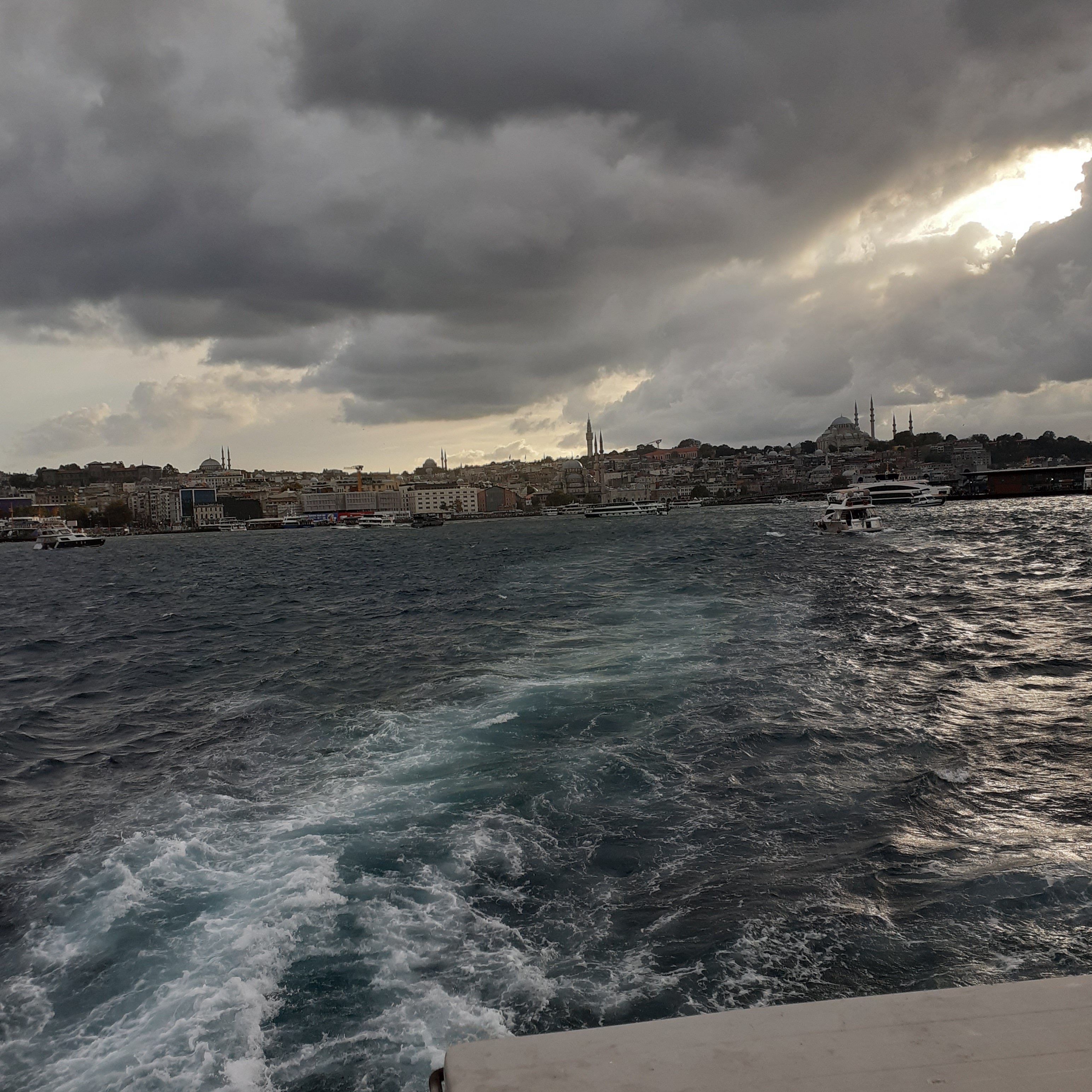
From the busy quayside of Eminonu there are plenty of opportunities to take a boat around the Bosphorus or the Golden Horn. Tourist cruises offer a range of options from a basic one hour cruise to more elaborate affairs including dining and dance performance. Some offer Asian stopovers and food. There are also commuter ferries.
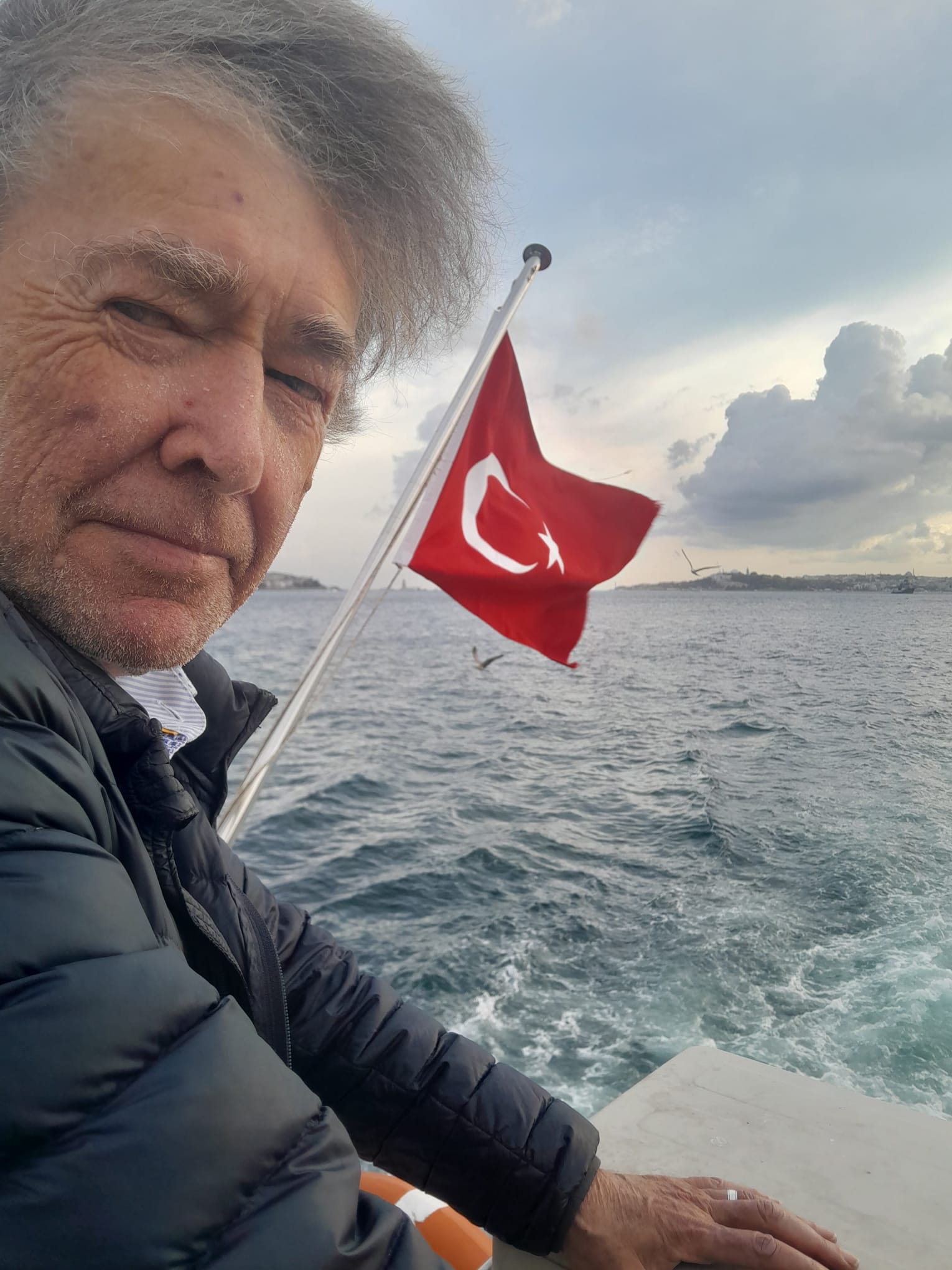
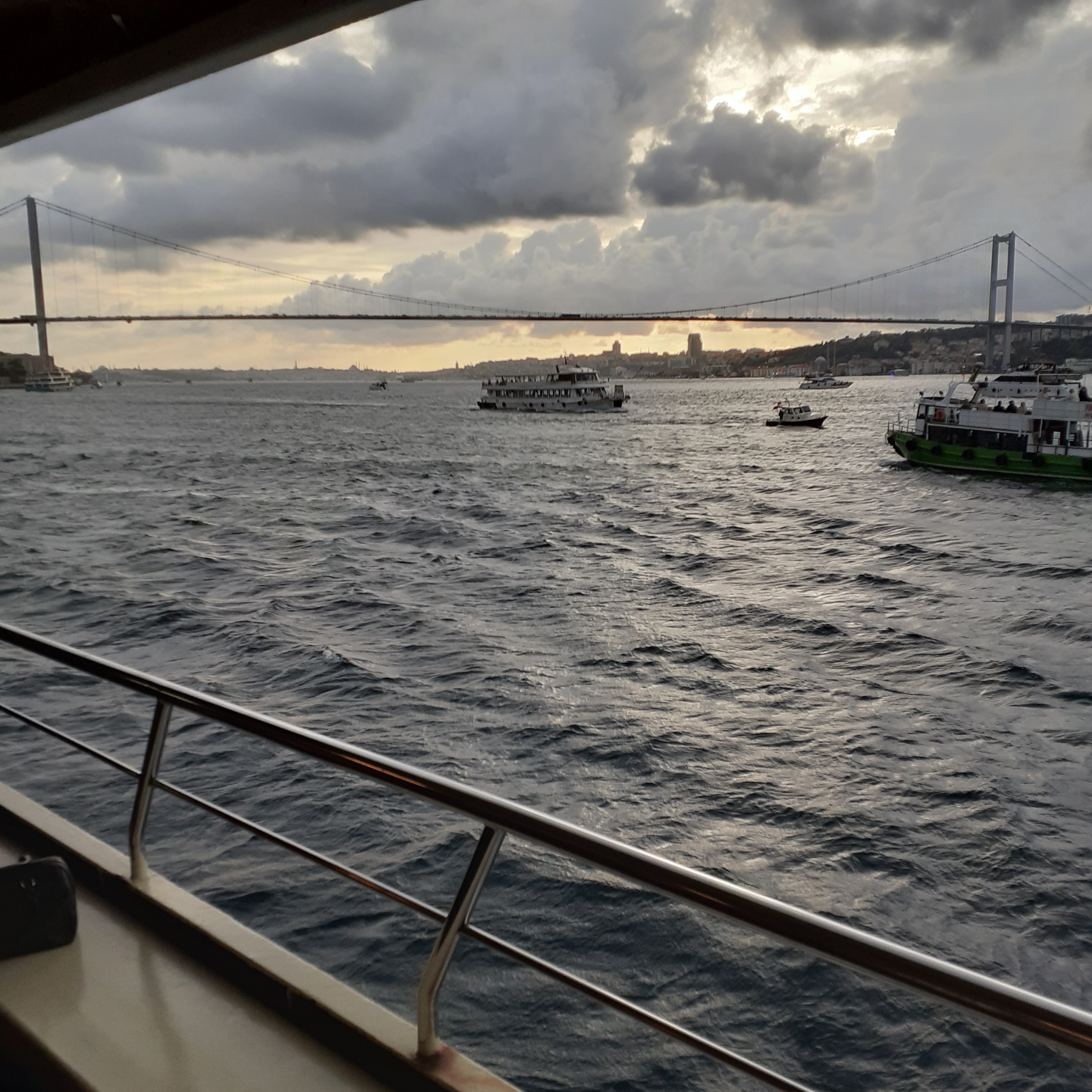
First off, we took a basic hour cruise paying cash to a gent guarding the gangplank. Our fellow travellers are mostly local, I reckon, and we mill about upstairs and below, looking for the best view and shelter from the rain. There’s a commentary in Turkish, Russian and English. We set out early evening onto the hectic waterway, almost a motorway for a buzzing array of craft of all sizes and shapes. The outward leg is along the European bank. We sail by towering cruise ships parked past Karikoy and on to the small ferry port of Kabatas. Next is the the notoriously extravagant Dolmabahce Palace which fairly broke the bank in the 19th century. The Ortakoy Mosque juts out from the bank as we head beneath the spectacular Bosphorus Bridge. This was the first bridge to span the strait. Completed in 1973. It was one of the largest bridges in the world at the time with a central span of 1km. Still a majestic bridge across the sky, there are now a couple of other crossings further on and a tunnel too. The bridge was renamed the 15 July Martyr’s Bridge in 2016 when an attempted coup was thwarted after an incident here.
We return along the Asian bank to where Uskudar sits at the end of the headland. Just off shore Maiden’s Tower is perched on a small island. It is also known as Leander’s Tower. This dates back to ancient times, in legend at least. The story of Hero and Leander is sometimes placed here. Hero being the maid in the tower, Leander the determined lover who would swim out to her every night. The title Maiden was no longer applied. Leander would meet his end when swept out to sea in a storm and Hero, in despair, threw herself from the Tower. In the middle Ages it functioned as a lighthouse. The current structure was built in 1760.
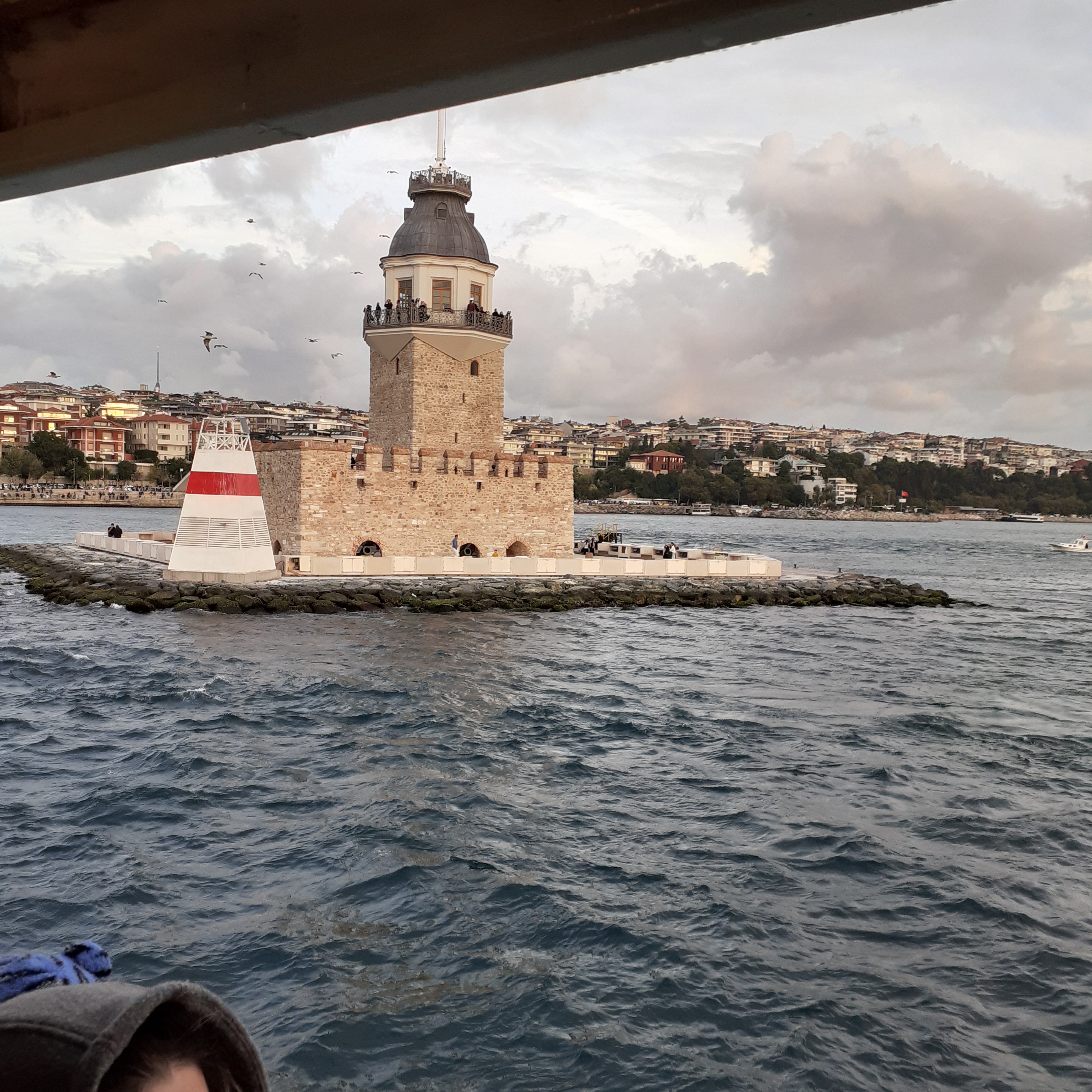
We head onto choppy seas at the confluence of the Bosporus, the Golden Horn and the sea. Across the water, Istanbul awaits, basking in sunset and rain.
The Bosphorus is 31km long and over 3km wide at its maximum. It’s a little under 3km in the city vicinity. Of course, there’s a legend attached to its naming. Io was a river nymph and mistress of Zeus. He turned her into a cow to deceive his missus. Which didn’t work, of course, and poor Io was condemned to roam the earth until she crossed the Bosporus, or whatever they called it back then. Bosphorus translates as Oxford, or Ath na Mbo if you’re Gaelic. Io came ashore at Chrisopolis, now Uskudar, and regained her human form. She married Zeus, and they lived happily ever after and never ran out of milk.
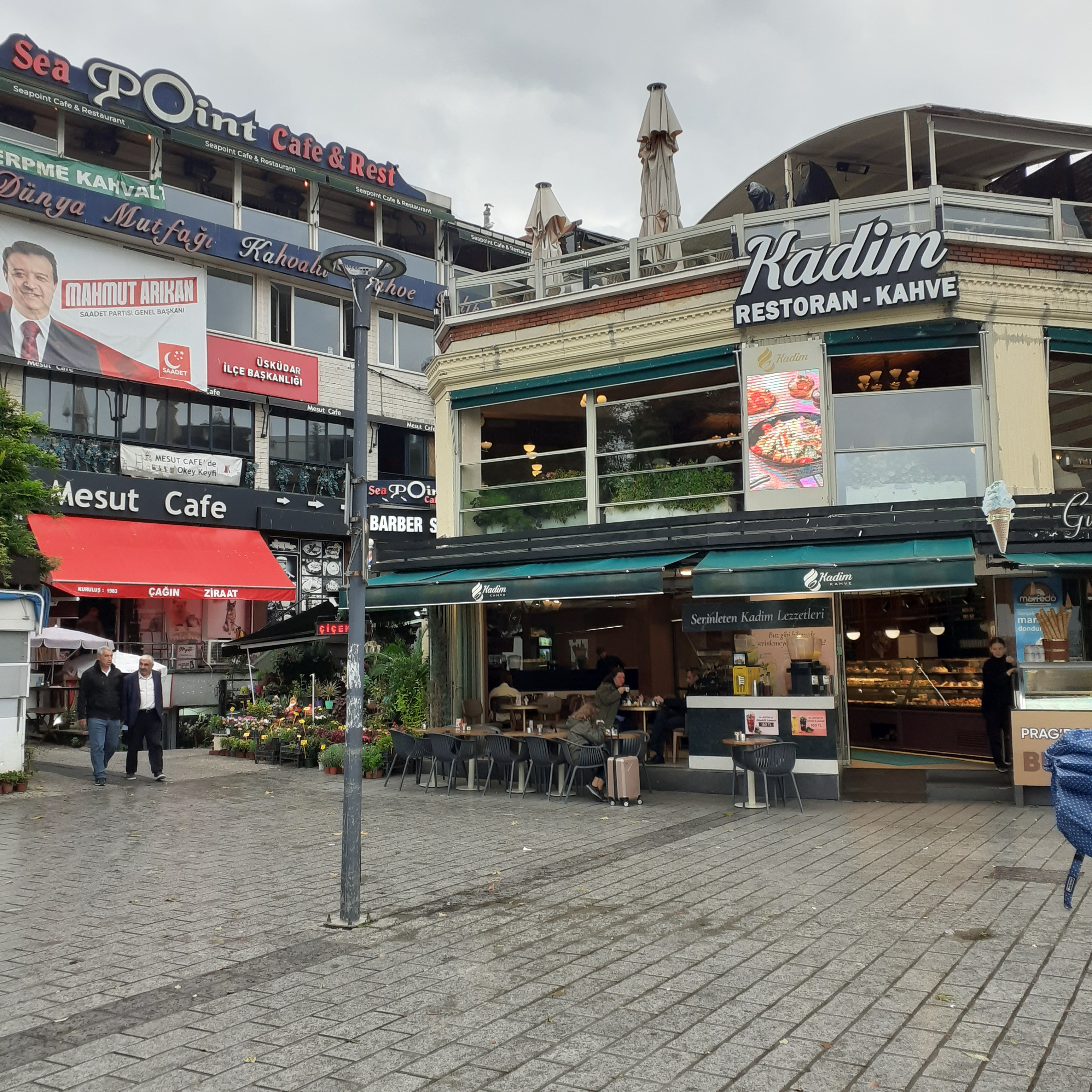
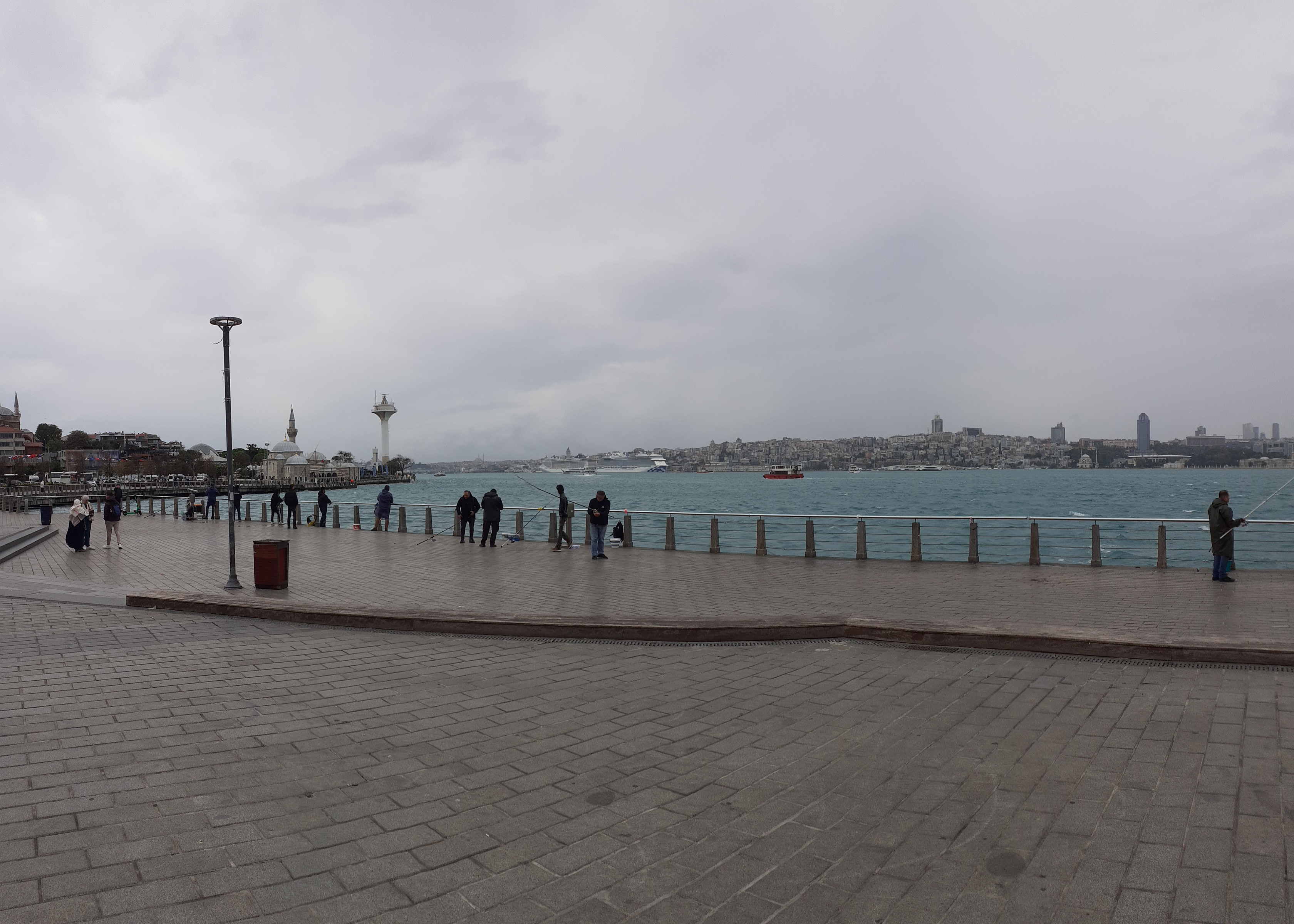
On another day, a simple regular ferry ride with the Istanbul card, takes us to Uskudar. This is Asia Minor. At last we can put our four feet in another continent. We wander around a bit and stop for coffee near the fish market. It’s brisk along the seafront where an expansive quayside sweeps around the headland with lighthouse and Leander’s Tower just offshore.The muezzins are calling the faithul to prayer, echoing from the minarets across the choppy waters of the continental divide. It’s hard to take it all in as we await the return of our ferry.
To keep a drowsy Emperor awake
Or set upon a golden bough to sing
To lords and ladies of Byzantium
Of what is past, or passing, or to come
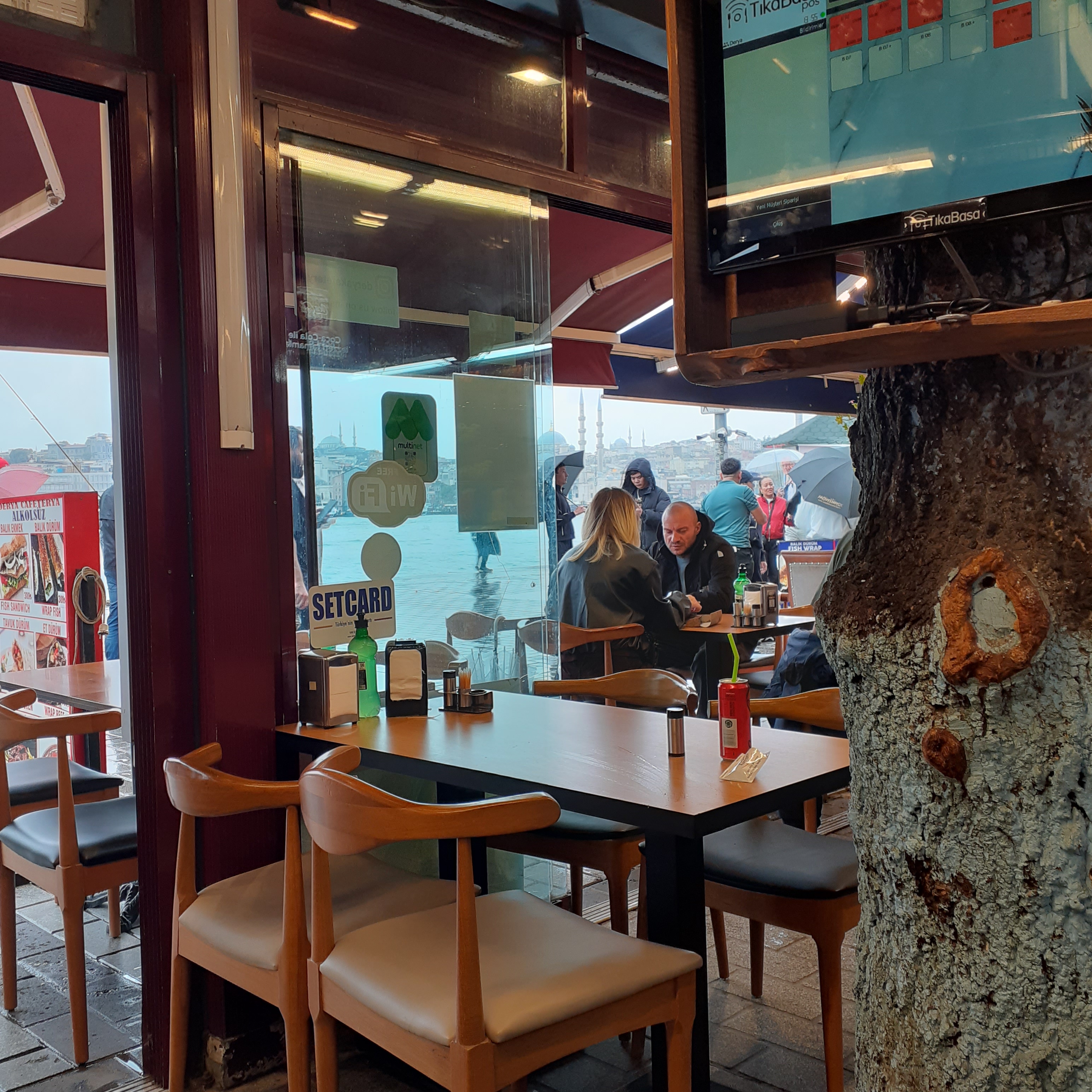
The ferry back is crowded and we sit inside to shelter from the wind and rain. The boat puts in to Karikoy, on the opposite side of the Galata Bridge from Eminonu. but a woman kindly assures us it will continue on to Eminonu. We decide, in the spirit of adventure, to disembark at Karikoy and return across the bridge later. It’s raining, but the quayside buzzes with activity. It’s late lunchtime and we put into a quayside cafe. Prices are good in the more downmarket unlicensed restaurants. Bright, friendly and efficient too. Fame has spread of the fish sandwiches on the Istanbul quays. We’ll have a couple of them so. And we do. Balik Ekmek’s your only man. I’ll drink to that. Soon, I hope.