Visions of Scotland 4 – Inverness

img_1261

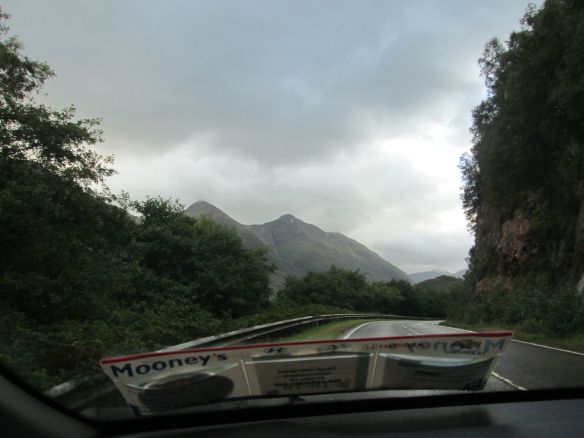
East out of Kyle we retrace the road to Invergarry where we pick up the rift valley route. As in Ireland, the east of the country is more gently scenic than the wild west. This is the Highlands still, though. Inverness, our destination, is the capital of the region.  Along the shores of Lough Ness, we are unmolested by the mythical beastie. In truth, there is no chance of dinosaurs surviving anywhere, let alone a busy narrow waterway. They were here once, as Dughal Ros told us yesterday, but only their fossils remain. Still, it’s good to have fantasy.

  Inverness has grown to city status with a population of fifty thousand. It’s centered on a low rise above the eastern bank of the Ness river where it flows into the Moray Firth, heading towards the North Sea. We stay at Carrig Eden on the western approach. The area is attractive, typically Caledonian in characteristic honey coloured stone with gable fronts. Our genial hosts, Caroline and Donald, have polished their home to a welcoming jewel. We are warned of two things. One, Daniel O’Donnell is playing that night in the Eden Court theatre nearby. Two, there is a bagpipes festival in town. Looks like it’s the bagpipes so.
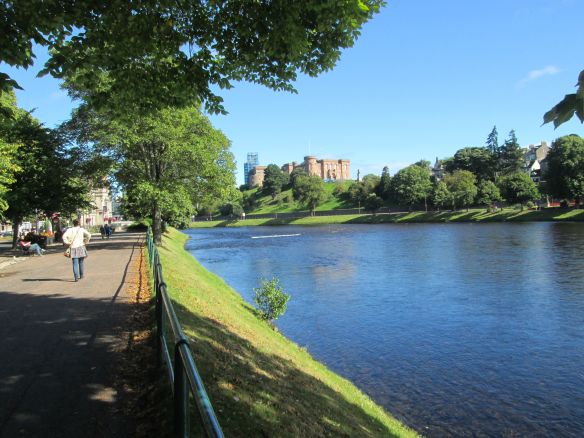
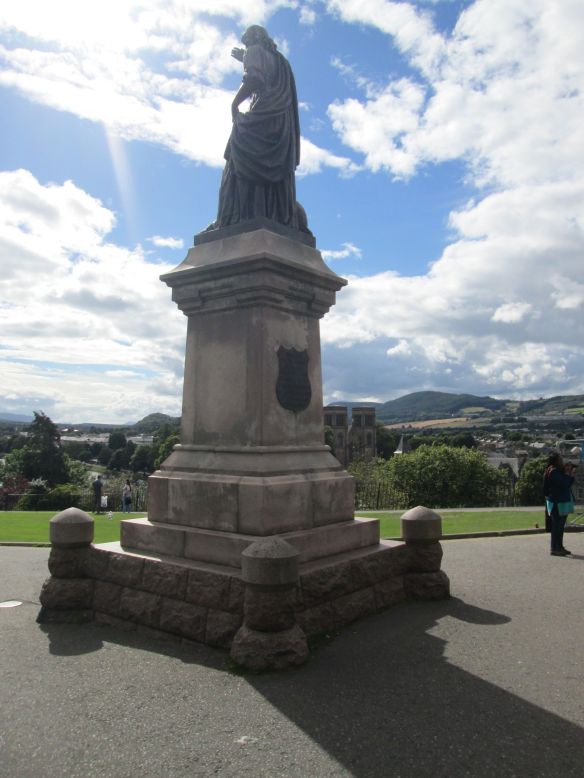
img_1267   The Eden Court is a modern complex by the banks of the river. From the banks we catch our first glimpse of the city. Inverness Castle is the dominant feature. Built in red sandstone it tops a steep escarpment rising from the Ness. It is not, strictly speaking, a castle. The present structure dates from 1836. It  functions as a courthouse. The first castle to stand on the site was destroyed by Robert the Bruce in 1307. The next castle stood here until sacked by the Jacobites in the rebellion of 1746. A statue of Flora MacDonald stands at the entrance park, shielding her eyes to gaze meaningfully westward. Having aided the escape of Bonnie Prince Charlie, and doing time for it, she headed out west herself, living in America before returning to die on the isle of Skye.

  Both sides of the river are pleasant. We pass the nineteenth century gothic Cathedral on the west bank before stopping for coffee in an Italian place with outdoor seating. We are entertained by a young woman making a major production number tying up her bike. Man, you must have to mind your bike real careful in these parts.
 shane3

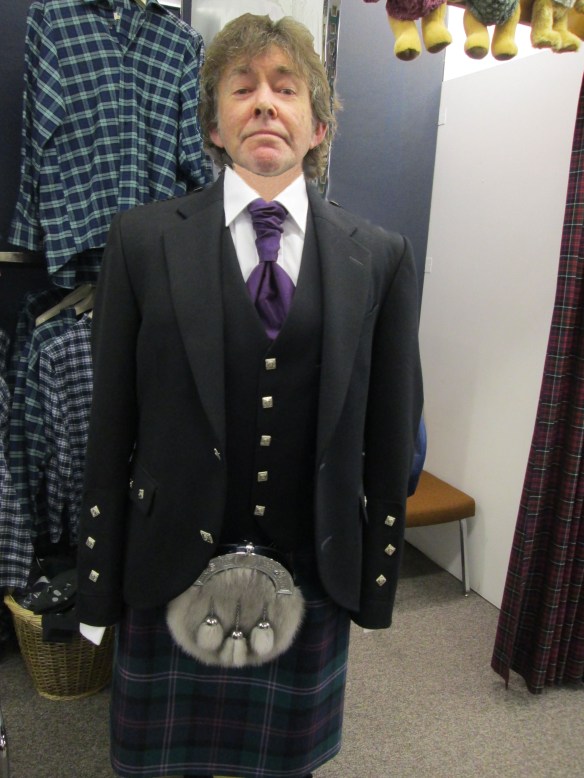
The strains of the pipes beckon us east across the bridge. Before that, we take a look at the House of Fraser. I reckon I’ll need to kit up, the whole nine yards, on the off-chance of running into Claire from Outlander (as portrayed by Caitriona Balfe) somewhere about town. A convincing impersonation of Jamie is quickly conjured. You can go for a variety of rental of traditional outfits here. Full dress for that formal night, half-dress for the more casual, a dashing Jacobite attire for the full blooded Scot.

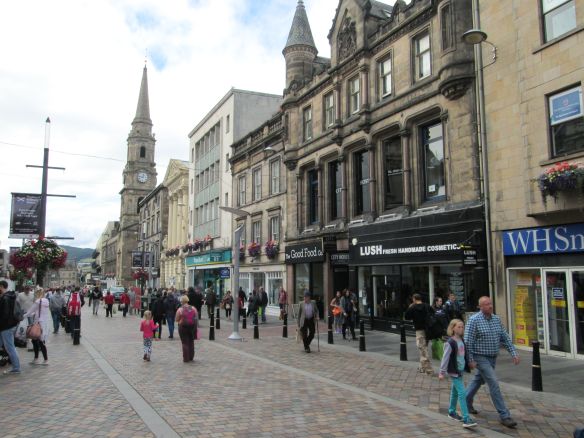
  High Street slopes uphill from the bridge. It’s busy and sporadically loud with the great yarp of the bagpipes. Something stirring about them, to be sure, if not quite the first music for the car stereo. Here, in this special place, I’d opt for the Waterboys. The attractive main street jolts to an unlovely close at the harshly modern Eastgate Centre. Still, probably better to have it in town rather than dragging people out to the periphery.
img_1277 

After extensive shopping, time for a quick snack. Hoping to sidestep the inertia that can pass for service in the Highlands, we opt for McDonald’s – an ominously local name now that I think of it. Inverness McDonald’s is the worst McDonald’s ever. The till is abandoned just as we reach the head of the queue. After a couple of minutes we call the attendant from the next till. He says he’ll get the manager, who is standing conveniently nearby with other staff leaning on the furniture, chatting. She informs us, cheerfully enough, that the attendant will return soon, and rejoins her discussion group. A few more minutes and we give up.
  img_1298

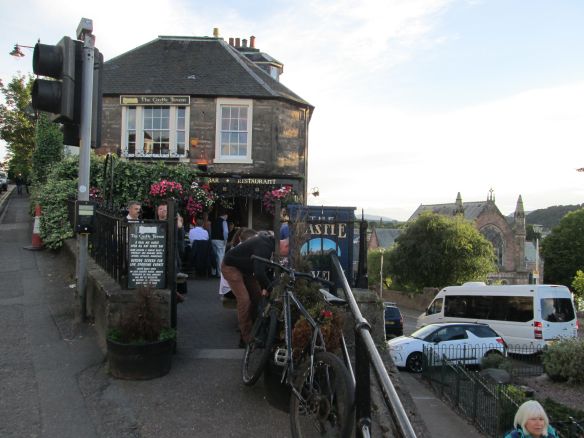
We attempt a trip down memory lane to find the lost hostel of our youth. Still lost to us, sadly. Having followed the signs through winding residential roads we eventually lose the trail. But it’s a pleasant walk in glorious sunshine. We’ve booked dinner at the Castle Inn and, hungry and thirsty, head for it early. Nicely situated, clinging to the cliff overlooking the river, the Castle visible to the north. Rustically traditional, the place is crammed, as any good place should be. We take our drinking and dining pleasures al fresco. Good food, service and company, perfectly passing the sunny afternoon into early evening.
img_1287 

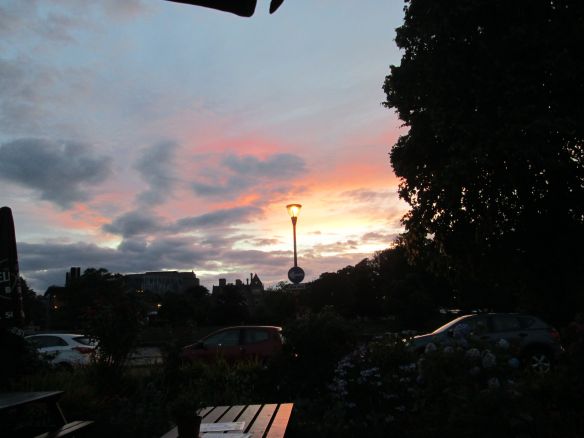
Afterwards, we potter around the Castle grounds. The place itself is not open to visitors but there are plans to remedy that. We follow Flora’s gaze up towards Loch Ness, back to the wild, wild west. We head down to the nearby bank as evening falls. This is a pedestrianised river walk leading to a footbridge that will take us back to Eden Court. There’s plenty of time to stop for drinks on the lawns of the Waterside Rest, busy now as the city nightlfe clicks into gear. The sky seeps slowly to velvet blue as the first stars peep out. A stillness settles in the air. We could sit here forever, relaxing by the riverside in the chill of the endless Highland evening.img_1307
Visions of Scotland 3 – Skye

Skye 1

Kyle’s main purpose is its link with the Isle of Skye. The mainland railhead here connected by ferry with the island. This was superseded by the creation of the Skye bridge, an impressive arch just north of the town. Early morning we’re across, ready to spend the day in exploration.

Skye 2

It’s a large island and we’ve picked the northern portion, including the main town of Portree. Crossing the bridge is itself akin to flying, but without the anticlimax of landing. In Skye the heart soars with each vista, heaven reflected in its lakes and mountains, God’s breath in its firmament. From Kyleakin on, the scenery never dips, each corner anticipated to trump what’s gone before.

Portree

Portree

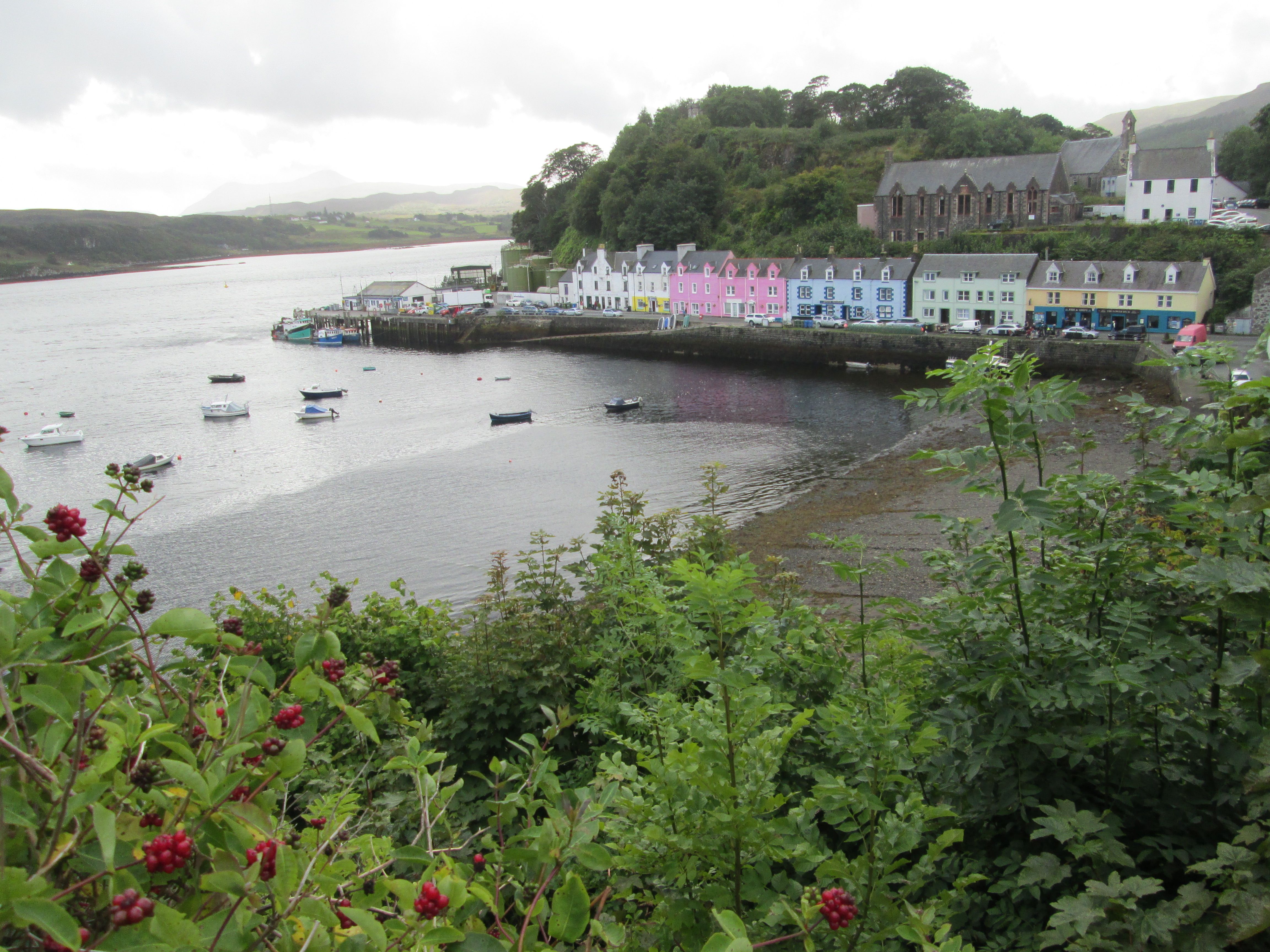
Portree is pleasant to potter around. Coming in from the empty hinterland, there’s plenty of life and commerce. The high town has a square and a couple of lively streets. There is, inevitably, a Bank Street. Plenty of shops, too, and a few decent pubs. There’s a drop down to a colourful dockside. The town curves around the bay, the housing arrayed attractively in terraces above. I’d reckon this is a good haven for sketching, although we don’t have time to indulge.

It’s a sunny day and we stop for attempted refreshments in the square where a coffee shop, or so it says, has outside seating. Sadly, we must endure another bout of Scottish service. Try to place the order inside and are told we’ll be attended on. But as regards waiting, we’re the ones doing it. Repeat process and finally give up. What is that all about? I bring money which presumably pays the wages of employees. Yet too often in Scotland there’s little interest in this transaction. Shades of Yugoslavia. Though at least the Scots are pleasant.

Old Man of Storr

Old Man of Storr

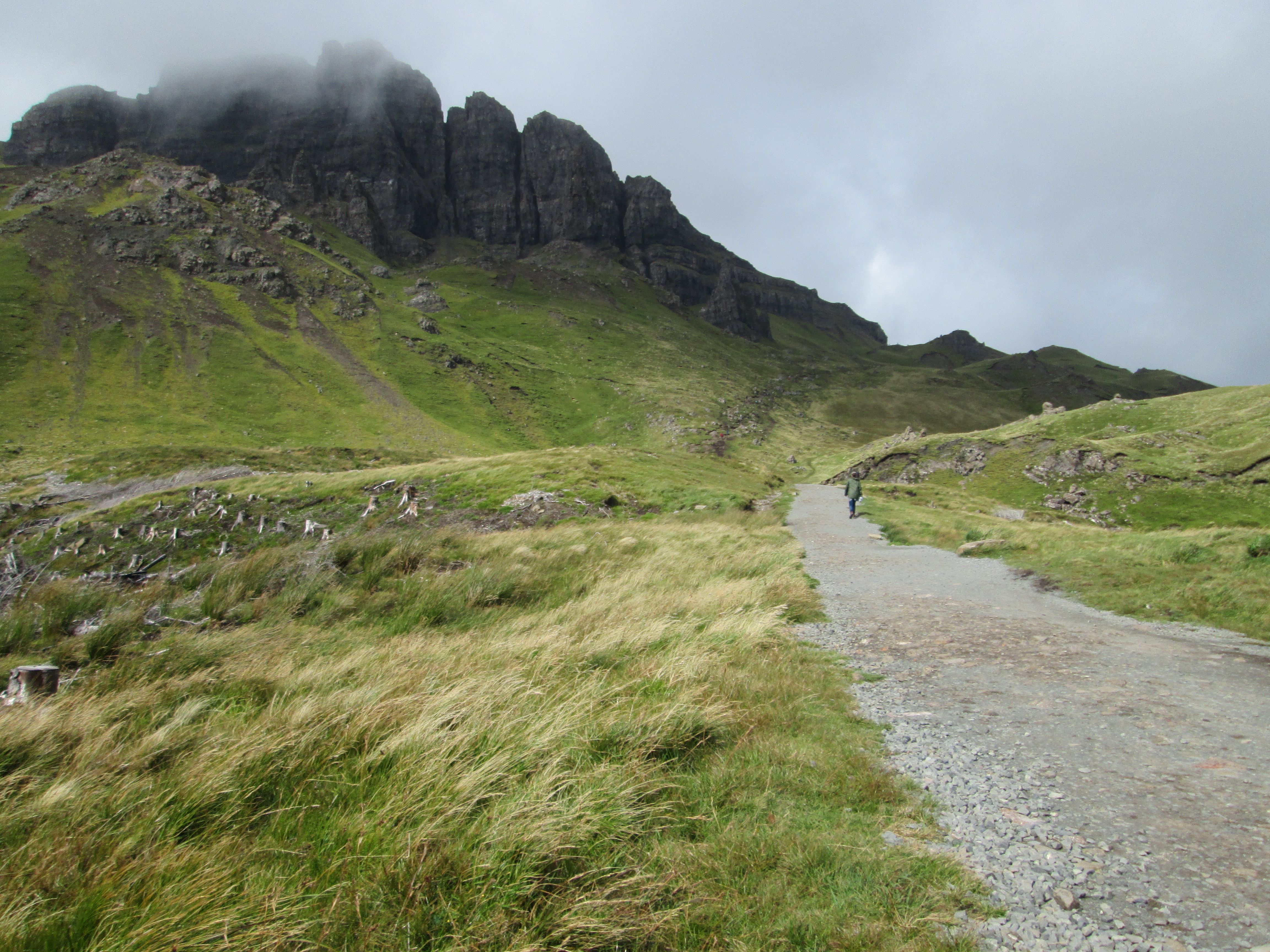
We head up the coast to the Old Man of Storr. This is a startling formation, not unlike a raised and weathered Giant’s Causeway. The geological formation is similar, being made of basalt, resulting from the rapid cooling of ancient submarine lava. There’s a well worn path snaking upwards. The destination is a bit further than we’d bargained so thirty minutes in we get to a good vantage point about halfway up and enjoy the view. Much debate on the exact configuration of the Old Man himself, but while we differ on details, I figure it’s pretty convincing.

Jurassic Park

Jurassic Park

There was a time when Dinosaurs strode the land about here. Staffin is Scotland’s Jurassic park. The name is Viking for Land of the Pillars, as evident in the alternatively descriptive Kilt Cliff. Where Mealt waterfall plunges over nearby cliffs into the sea there’s a graphic giving more details concerning the terrible lizards. Talking to a fellow traveller, we’re directed to a crofter’s cottage which local scientist, Dughall Ros has turned into a museum. You can buy ancient artifacts, large and small here. Dughall was bitten by the dino bug when just a kid and devotes his career to mining the benefits of the area. Even more precious, he’s willing and able to pass on his knowledge to the interested traveller. Time well spent talking to him, purchasing some interesting goods while we’re at it.

Further on, there’s a slightly more successful coffee stop. Strangely though, the proprietor greets us with “we’re closing in half an hour.” It’s only three o’clock! Oh well, who wants to eat anyway? Perhaps the hitchers who depart hungry and perplexed. We do manage to wolf down a tasty slice of cake.

img_1247

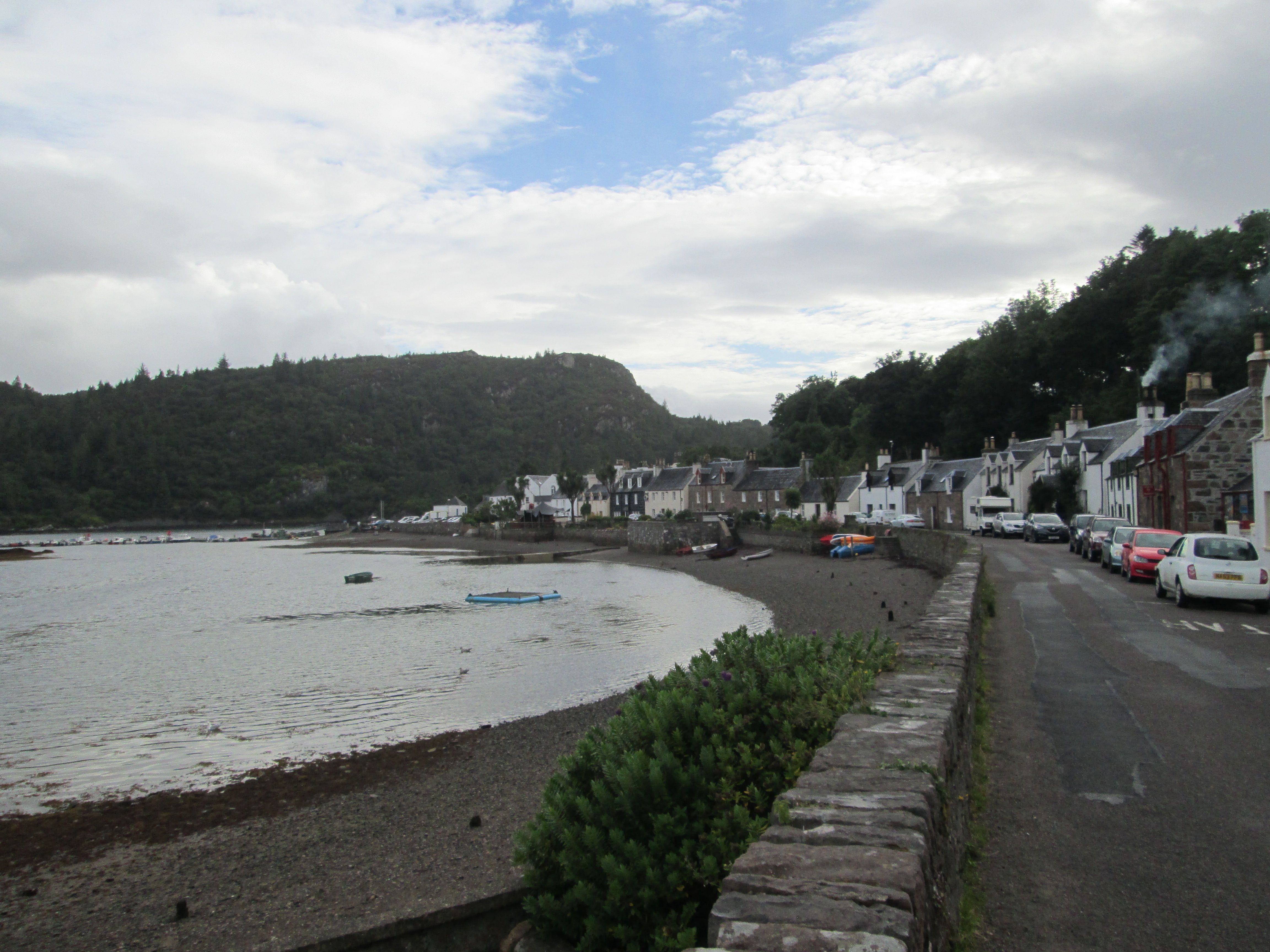
We continue on through the majestic and desolate landscape of Quirang at the top of the island. Returning to the mainland we continue past Kyle to Plockton, which a fellow guest has recommended for its drinking and dining pleasures. This was more how I imagined Hamish MacBeth’s stomping ground. Picturesquely situated around a secluded, wooded loch there are a number of attractive eateries. Plockton Hotel has a cozy bar in deeply gleaming wood and brass. I have an excellent local brew which may be called Schiehallion – try saying that after a few! The restaurant’s popular and we find out why. Good food and friendly service. Worth waiting for. If I ever get back to these parts, and I hope to, I think I’ll stay here.

Plockton

Plockton

Visions of Scotland – 2

Fort William to Kyle of Localsh


Glen Nevis

Glen Nevis

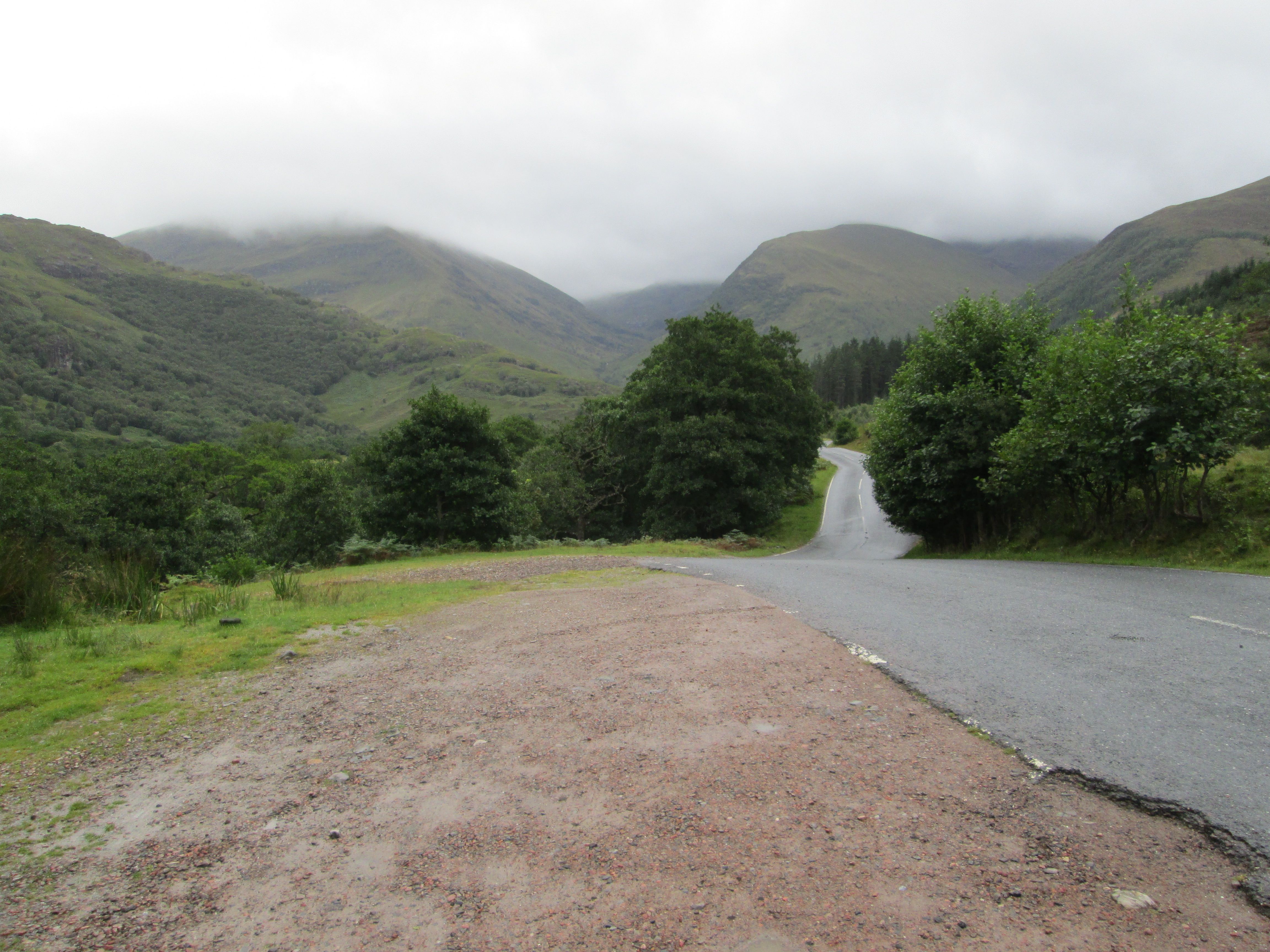
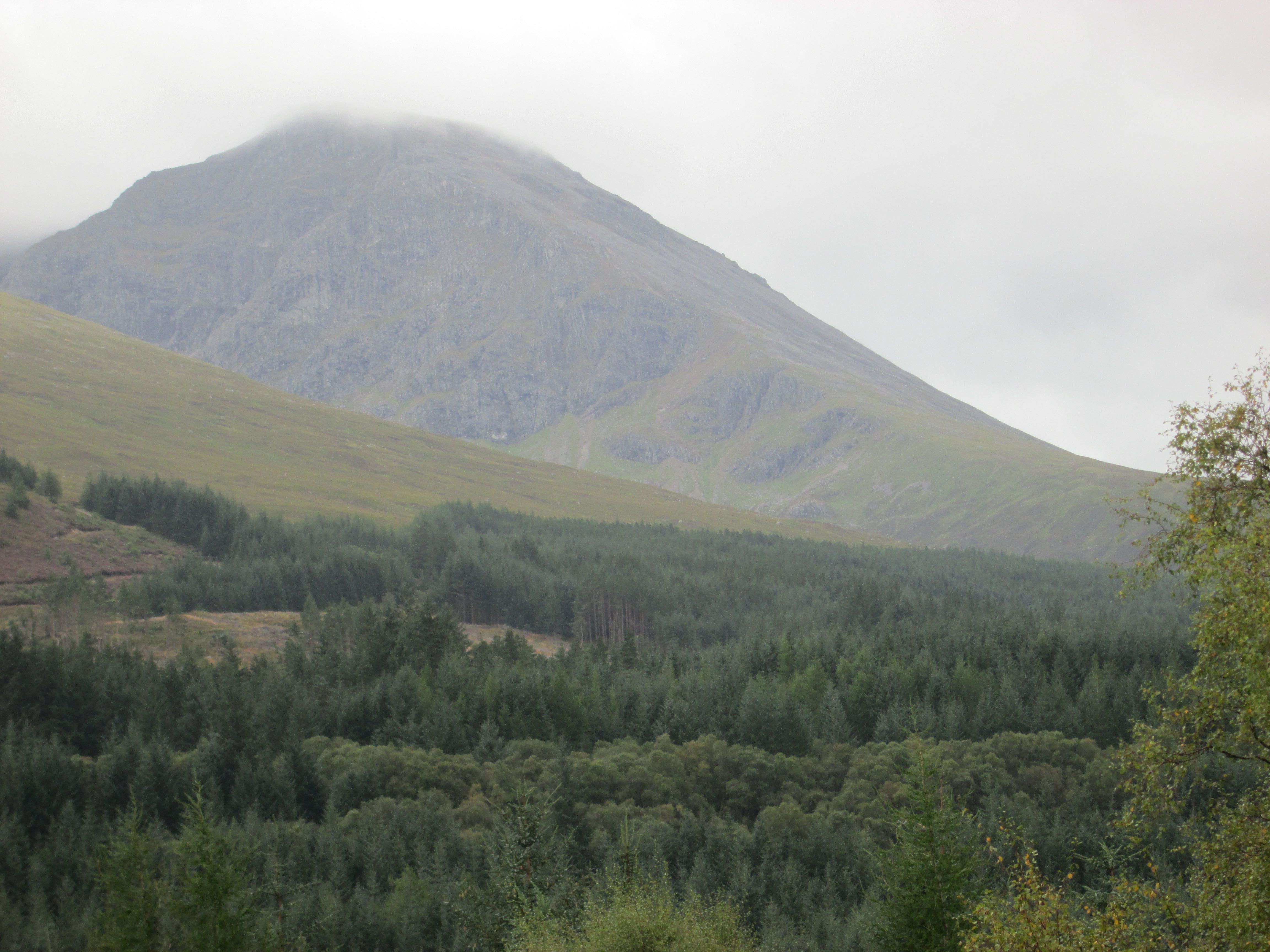
Before leaving Fort William, we must first set foot on Ben Nevis, mightiest mountain in the Celtic Isles. The mountains are obscured by clouds, but that’s just Scotland’s version of the dance of seven veils; the veils being various forms of mist and rain and translucent light. Glen Nevis is only yards from the town, but plunges immediately into giddy wilderness. We could be singing ‘I saw the rain-dirty valley, you saw Brigadoon’, indeed we probably did.

Climbing Ben Nevis

Climbing Ben Nevis

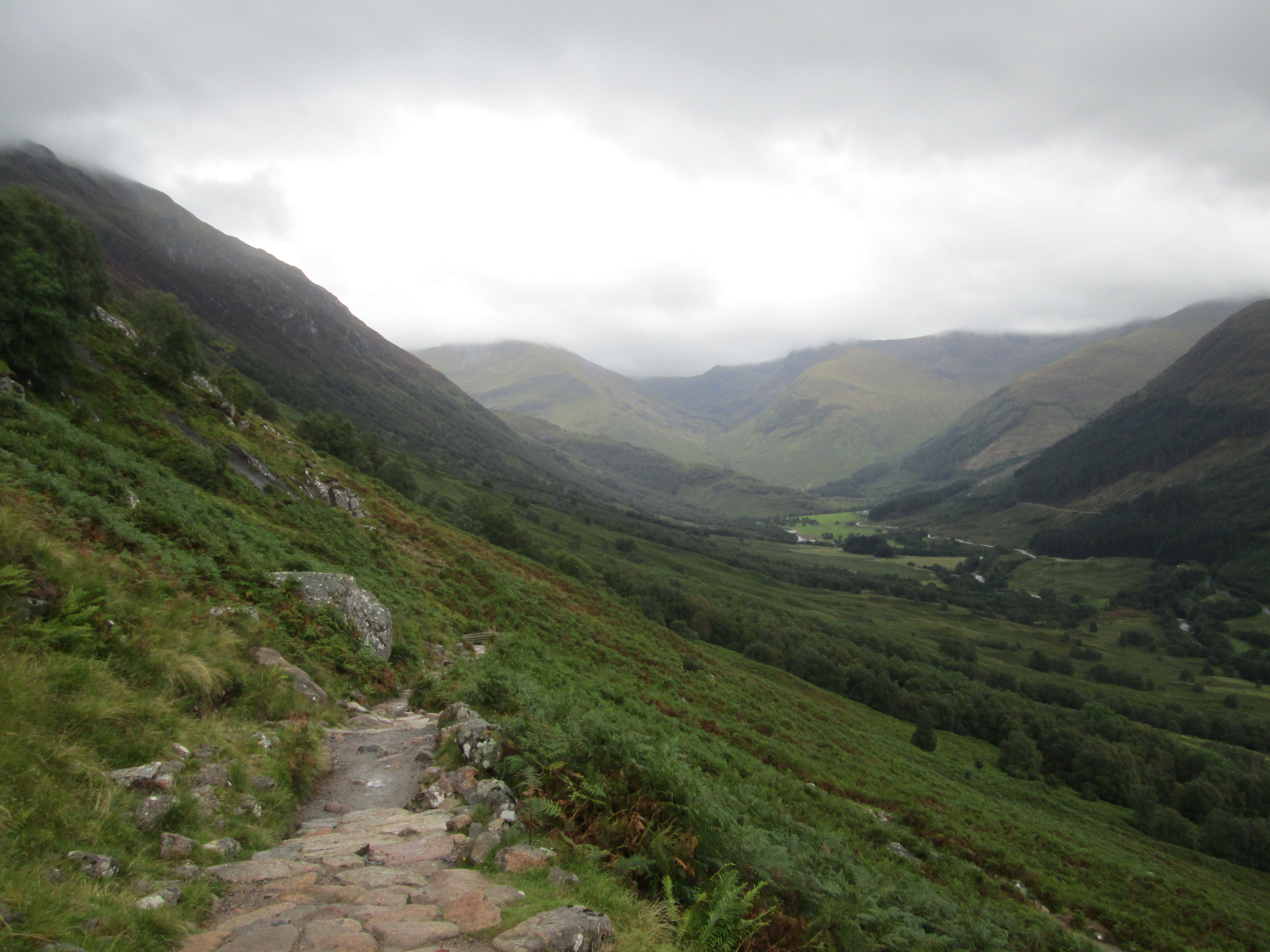
We make an assault from base camp, knowing that we lack the time to summit. Estimates of four hours up and a little less down are probably a tad conservative. Our calculations put us half way there in ninety minutes, reaching two thousand feet where a wooden bridge spans spectacular falls. And we were dawdling. Another time we’ll make it to the top. It’s a pleasant, well worn path with plenty of friendly banter from fellow travellers. The zig-zag climb is moderate, the views, slowly revealed in the waxing day, uplifting, heartstopping.

Big Ben himself

Big Ben himself

At last we hit the road, travelling up the rift valley parallel to the Caledonian Canal. At Invergarry we turn into the Highlands proper. Habitation recedes into heathland and scattered forest. We find a roadhouse at Cluanie. As we pull in, a convoy of trucks passes us uphill, each bearing a windmill propellor. What an odd juxtaposition out here! The roadhouse is sufficient for coffee and chowder, the service sporadic and homely.

Eiiean Donan

Eilean Donan

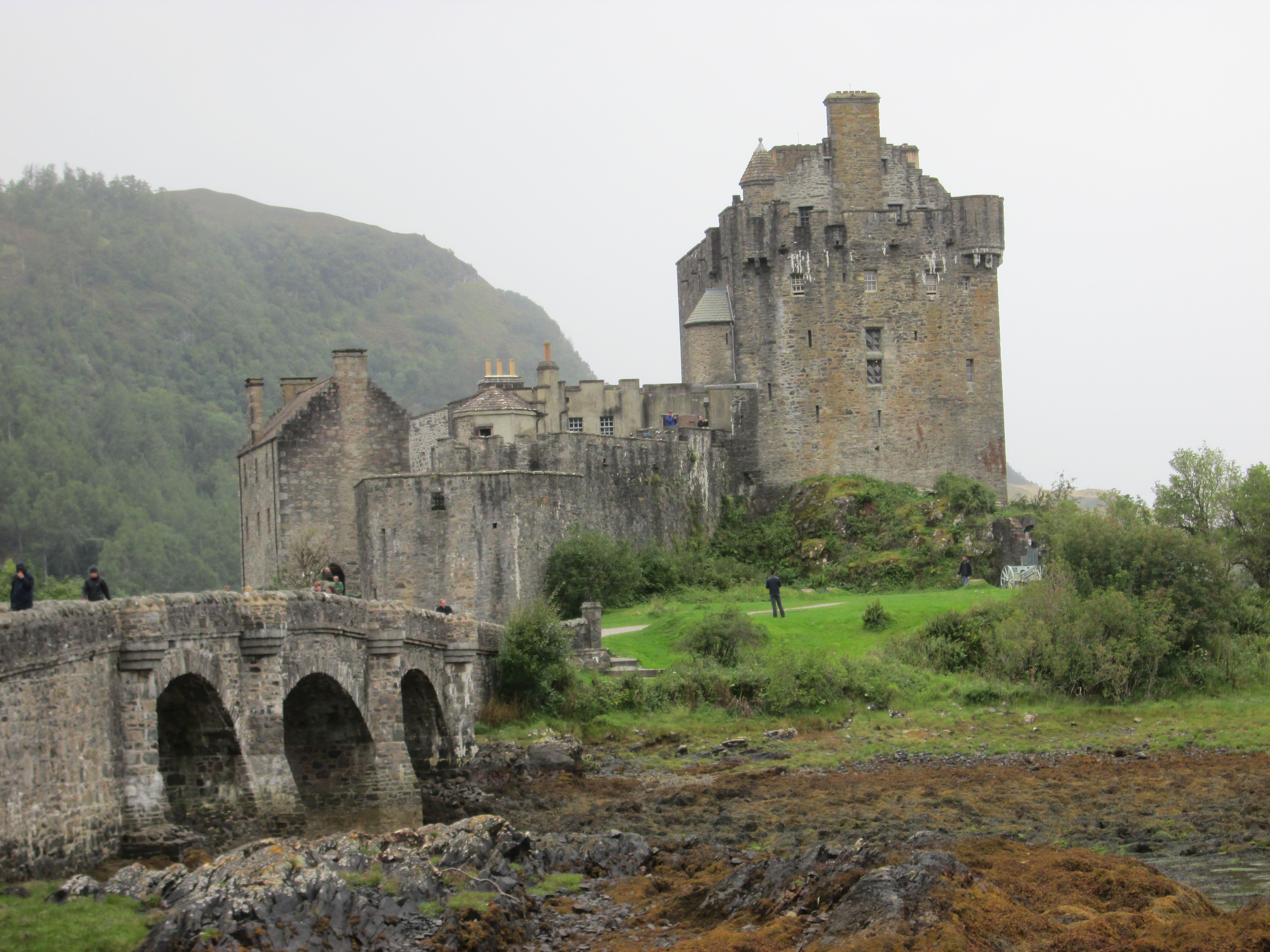
Evening approaches as we descend Glen Shiel. The castle at Oilean Donan stands proud at a craggy confluence of lochs. It’s crowded but worth the visit. The castle is well preserved and fitted, still functioning as a residence. Displays include lifesize tableaus from history creating an illusion of all time seeping through these walls. Real life folk are dotted around too, willing to converse on all aspects of the castle’s past and present. A whiskey fragrant guide in full highland garb leans casually on a waxen laird as he imparts words of wisdom. Good luck to him, he’s jovial and true. Scotland’s history is beginning to seep into me too. Half familiar but in a way that’s more storied, and sung, than factually held. So close to us also, it’s surprising it’s not more familiar back home. Only a visit can put that right. Places themselves are the living book.

Nightlife in Kyle

Nightlife in Kyle

Our destination, Kyle of Lochalsh is a couple of miles further on. I’d picked it without reference to Google Earth. I’d remembered the series, Hamish MacBeth which I thought was set here. Memory deceives, I’m afraid. Kyle’s a bit of a dump, a main road bisecting a scattered settlement, a rail terminal and a functional dockside. The Main Street is mundane, dominated by two banks with our hotel the most pleasant point at its summit. Something of a stereotype to report that while Irish main streets are lined with pubs, Scottish main streets are lined with banks. Perhaps here, men are really born to pray and save.

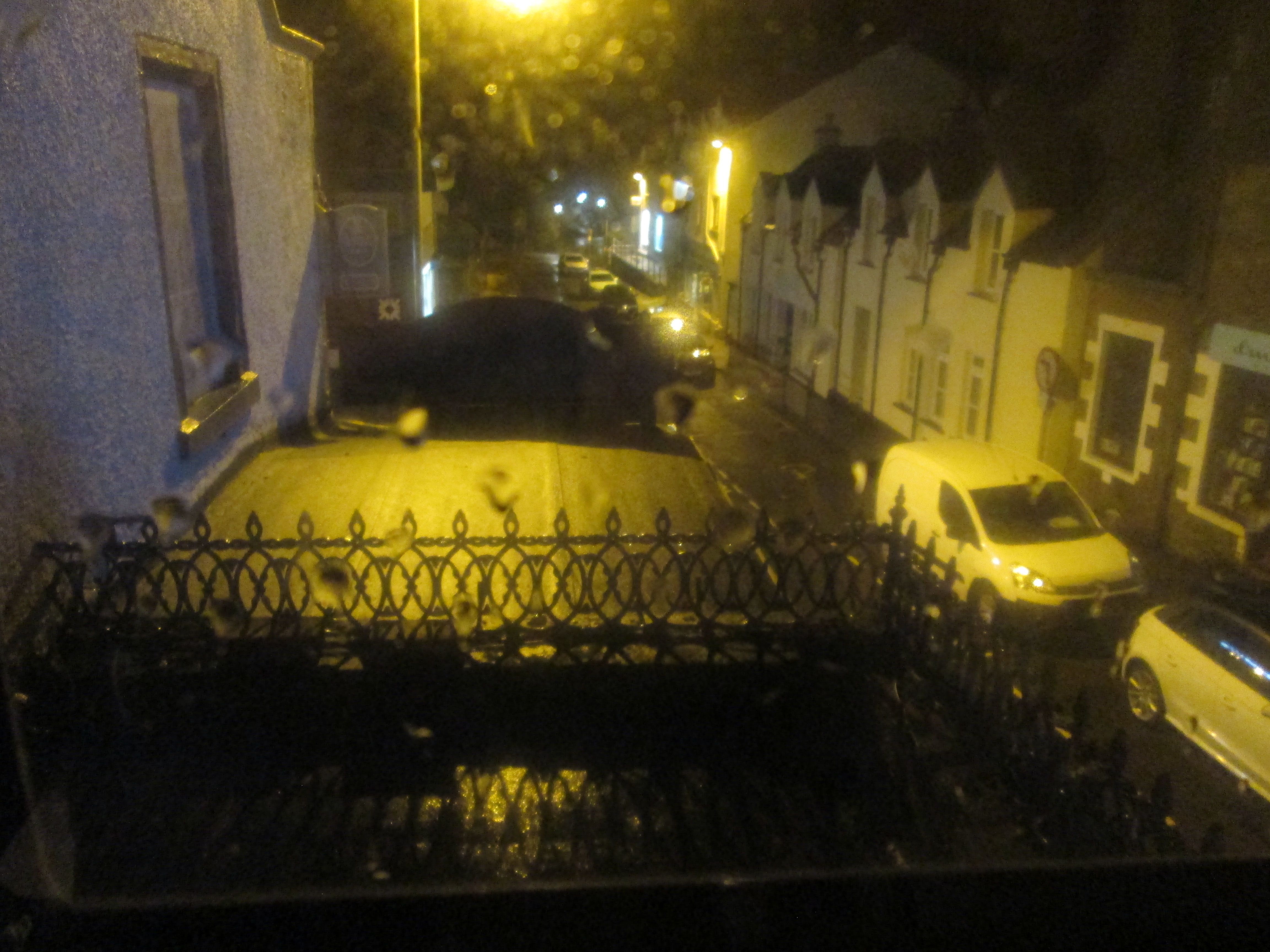
Still, the hotel is fine and we wave a decent meal of fish and chips in the bar. Our room is cosy old style, with a view down Main Street to the water. Raindrops mottle the window pane as the streetlights come on. Tomorrow, it’s on to Skye which is visible just across the water. We will discover too that nearby Plockton was the village I had imagined, a picture book perfect collage of mountain, woodland and water with atmospheric eateries and hotels. Look forward to telling you more.

Plockton

Plockton

Visions of Scotland

img_1135

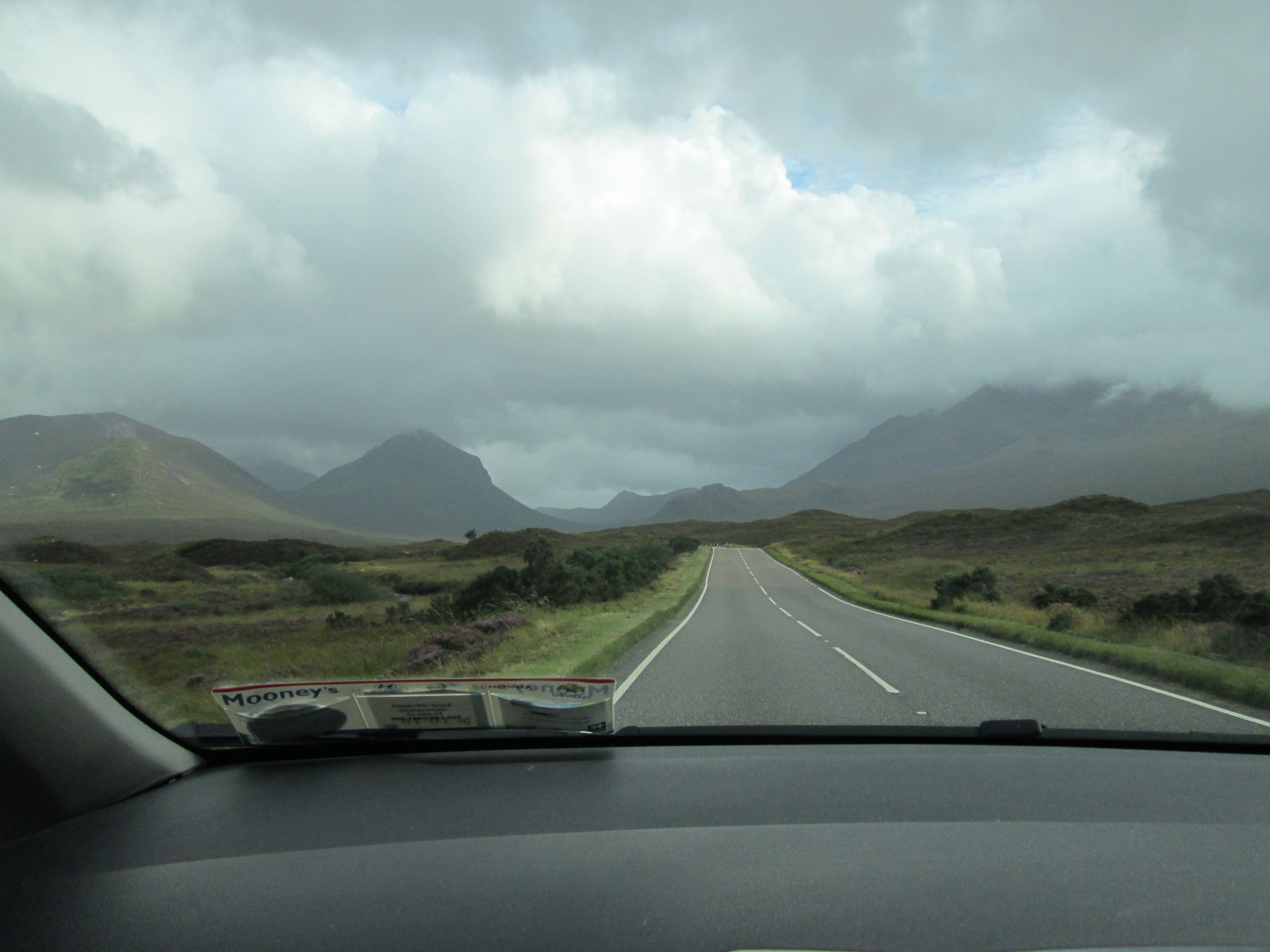
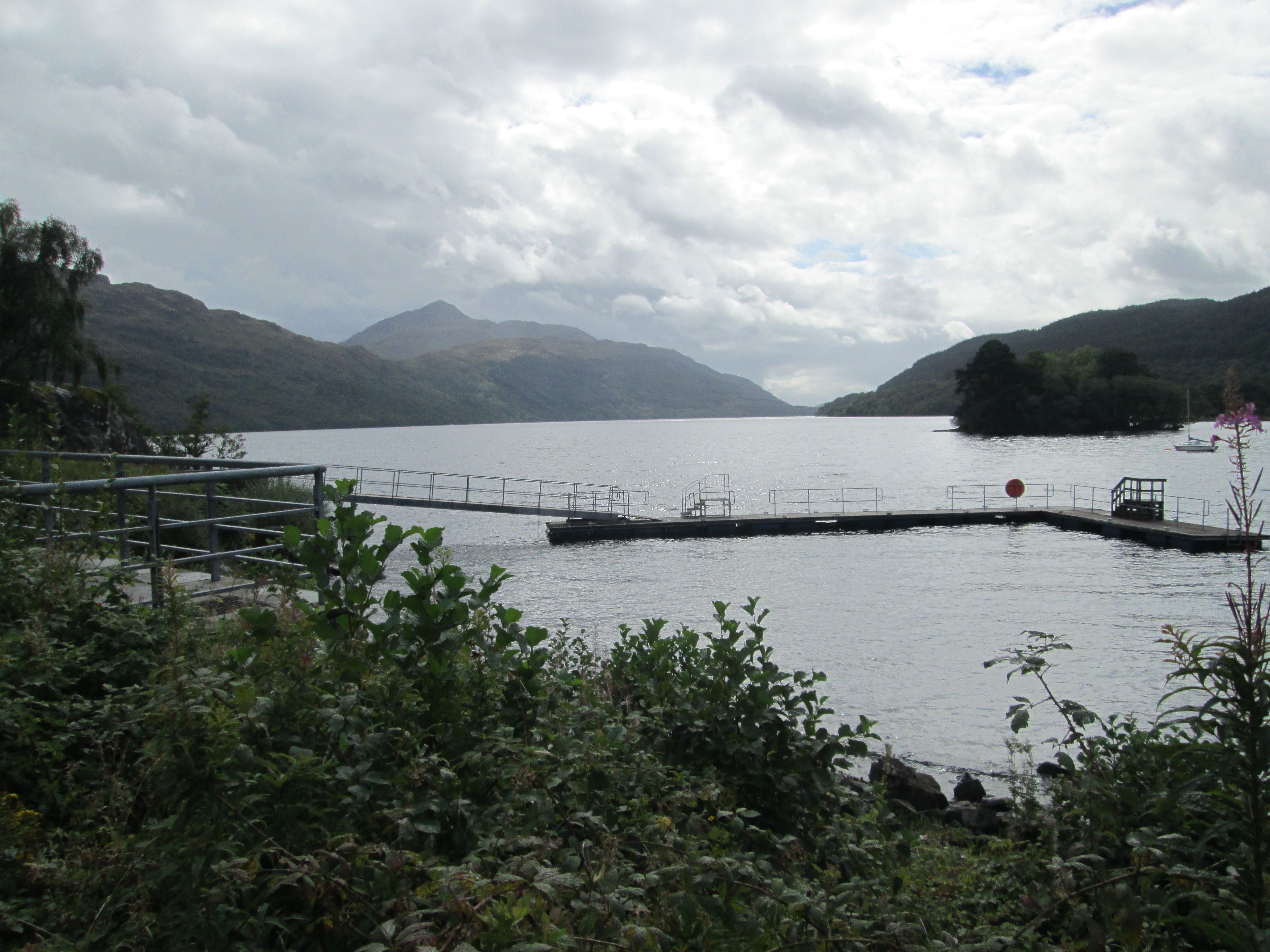
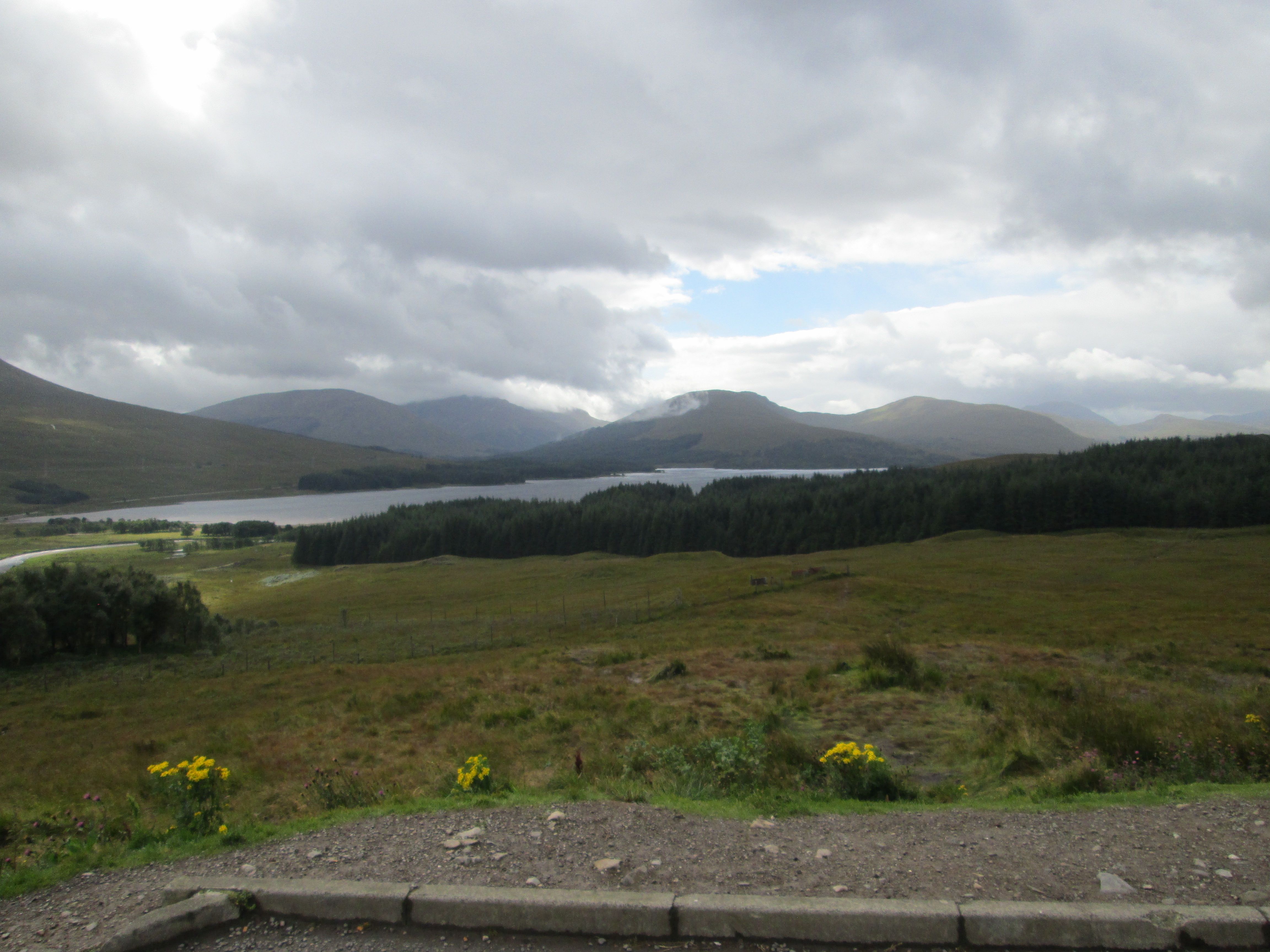
When we did manage to extricate ourselves from Glasgow, we were plunged immediately into the Scottish wilderness of mountains, lakeland and forest. Intermittent downpours mean the scenery is revealed in installments, all the more fascinating for it. These are the bonny, bonny banks of Loch Lomond. All sorts of other music is implied. In and around the lake, mountains come out of the sky, and they stand there. Obscured by clouds springs to mind.

img_1139

At the head of the lake, we break into open heathland. Welcome to the highlands, the sign says, in Gaelic. It’s a rollercoaster ride into Glencoe through heaven’s own mountains. This is a land of death and everlasting life, starred setting for Scotland’s savage history. Perfection, obscured by clouds, enhanced by the occlusion.

img_1144

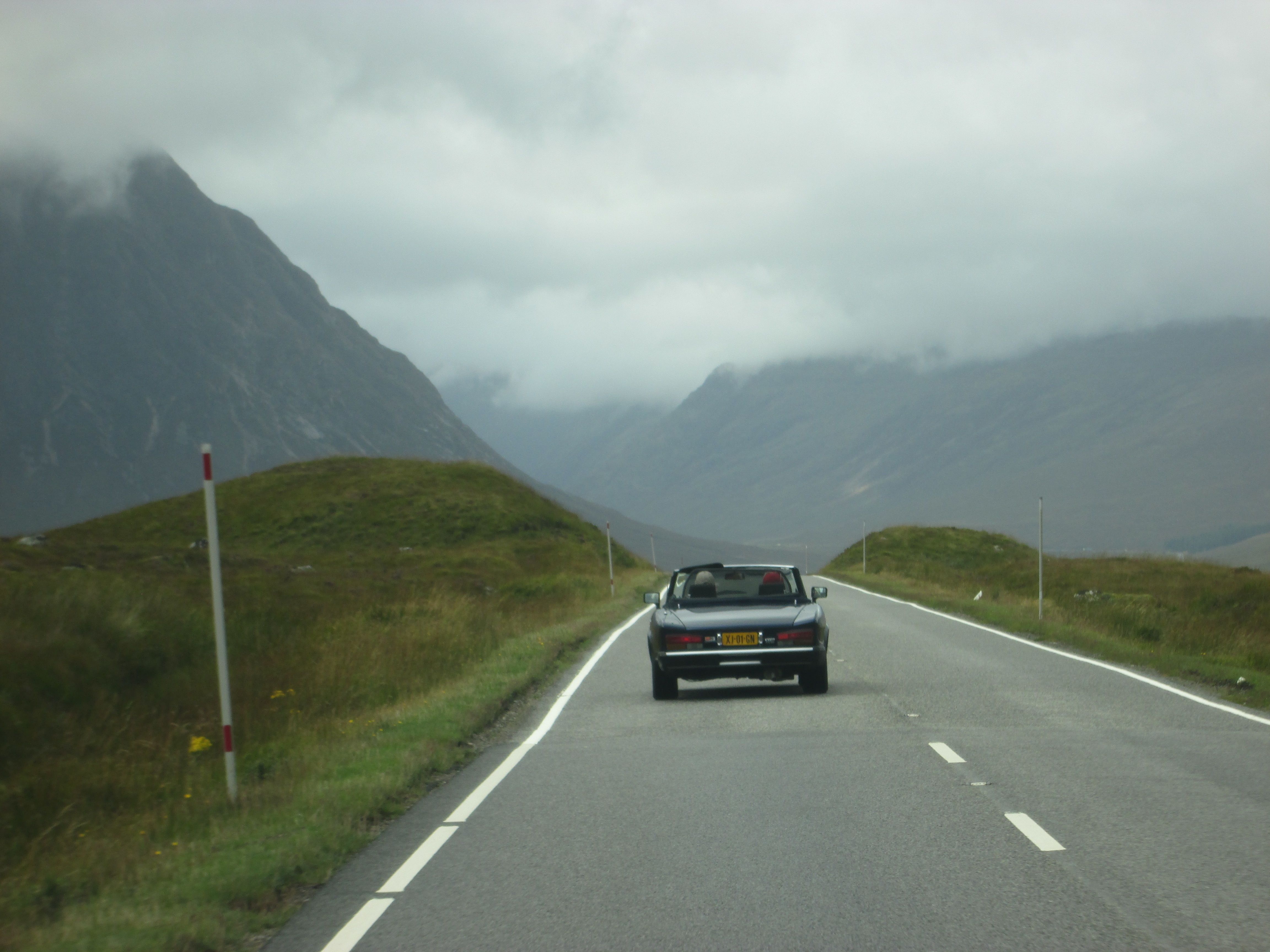
A sporty old couple in a convertible float amongst the vales and hills, their top rolled down oblivious to the rain showers. A bit of overtaking is called for as I briefly mimic the typical lunatic highland driver. They have roadsigns up here chastising you to get out of the way of speeding drivers. Despite the remoteness and the scenery, this is life in the fast lane. Downstream there’s is a roadside place where we stop for a wee haddock and chips. Our first taste of idiosyncratic Scottish service, but good food nevertheless.

img_1149

Finally to Fort William and the Clan McDuff Hotel. Our room is fitted with balcony to overlook the lake. Fort William is busy, the long pedestrianised Main Street well kitted with shops to cater for visitors. A good selection of drinking and dining options too, although we rely on the hotel which has a good restaurant with scenic view. A walk on the lakefront leaves us a bit isolated. Man, that road is hard to cross. We retrace our steps and head back to base camp for the evening. Ben Nevis is lurking up there in the clouds. It can wait till tomorrow.
img_1158

Dublin City Walls

Image

Entering Crampton Court

Entering Crampton Court

I’ve been spending my money in the Old Town,
It’s not the same, Honey, since you’re not around.

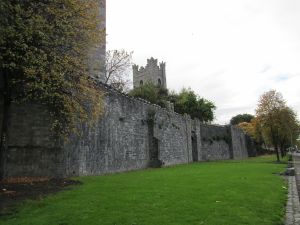
Dublin’s Old Town was delineated by its walls. Mostly vanished now, some fragments remain, and vestiges of the ancient street plan allow us to follow an imaginary walk around the ancient city. The Dane’s settled here in the ninth century, dropping anchor at a tidal pool just off the Liffey, fed by the River Poddle. Their settlement was known by its Gaelic designation, Dubh Linn, meaning Dark Pool. The Poddle, now just a stream, flows underground, while the footprint of the pool remains as an ornamental garden, along the southern walls of Dublin Castle.
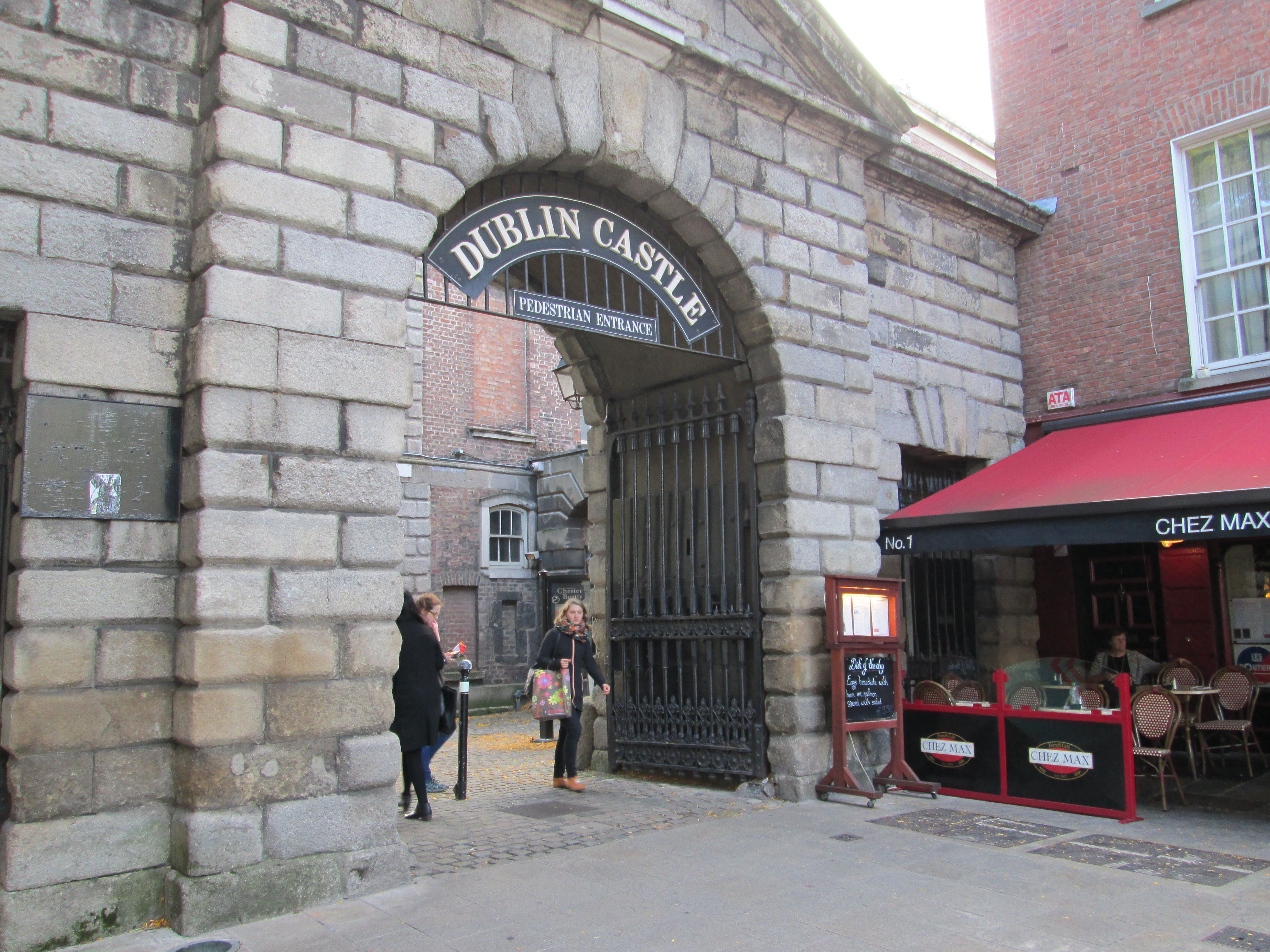
At the Lower Castle Yard, you can see that the ground is low enough to accommodate a natural moat. To head downstream towards the Liffey, leave the Yard and cross Dame Street. A narrow covered laneway passes to the side of Brogan’s Bar, leading into Crampton Court, to the rear of the Olympia Theatre. Dilapidated now, and a bit dodgy, this was a bustling centre of commerce in Early Modern days. Dublin’s first coffee houses sprang up here, popular meeting houses for traders and merchants before the building of the Royal Exchange.

Leaving the Court, a narrow covered alley leads out to Essex Street, by the Dublin Theatre Festival Office. The old Custom House once stood opposite, before Gandon’s Georgian masterpiece was built further east around 1800. The site is now occupied by U2’s Clarence Hotel. After the eerie silence of Crampton Court, it’s into the rattle and hum of Temple Bar. Close by to the right, the Project Arts Centre was an early manifestation of arts and entertainment a decade before the Temple Bar scene bloomed. Here in the Seventies, prog rock and punk jostled for attention with art and drama. Jim Sheridan cut his teeth here with the likes of the prescient Inner City Outer Space.

Parliament Street

Parliament Street

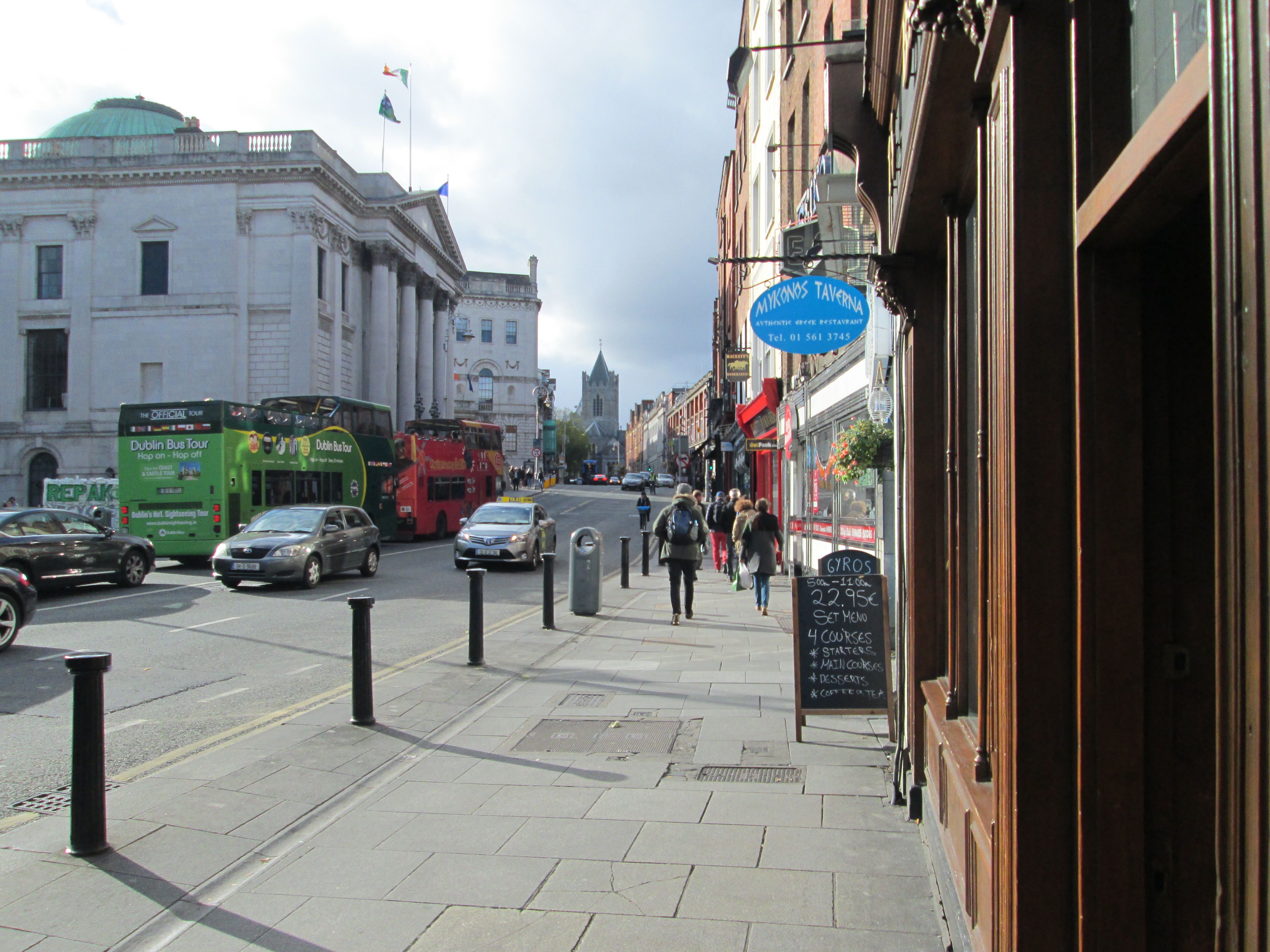
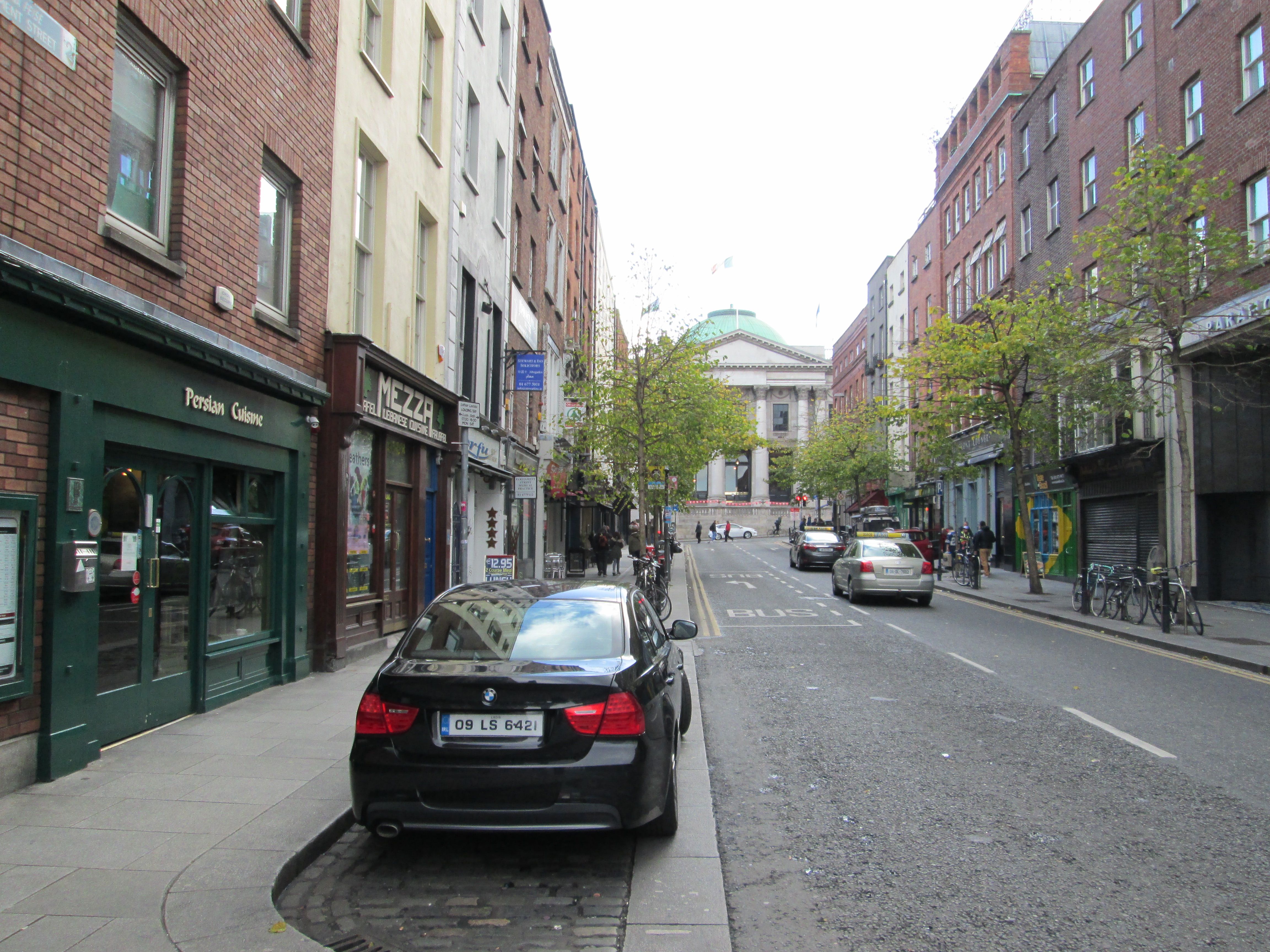
Heading west, Parliament Street marks the extremity of Temple Bar. Standing here one night recently, waiting for a friend, I experienced the tangible beat surging through the district. Back to the river, I took in that iconic Dublin view of the City Hall, even more dramatic when illuminated at night. One of the finest Georgian buildings in the city, it was originally the Royal Exchange. We had a drink and Fish n Chips in the Porterhouse. This was the first branch of the pub chain beyond its Bray home, now Porterhouses can be found in London and New York. Some things change, while others remain the same. Read’s Cutlers is Dubli’s oldest shop, dating back three hundred years. The Turks Head Chop House across the street harks back to ancient times, the Czech Inn, more recent.
That night, we headed towards Vicar Street for the Waterboys gig. Retracing old and ancient footsteps. This was often our route home after a gig at the Project or Zeros. Those days it was deserted around here, now nightlife and daylife are colonising the area too. We pass Cow Lane with it’s restaurants rising in terraces up towards Lord Edward Street. We join Fishamble Street as it curves uphill. This was Dublin’s original fish market, as the name suggests. This was also where Handel’s Messiah first rang out. At the Great Music Hall in 1743, seven hundred people enjoyed the first performance. Anticipating the large crowd, men were requested not to wear swords, women to refrain from wearing hoops.
IMG_0687

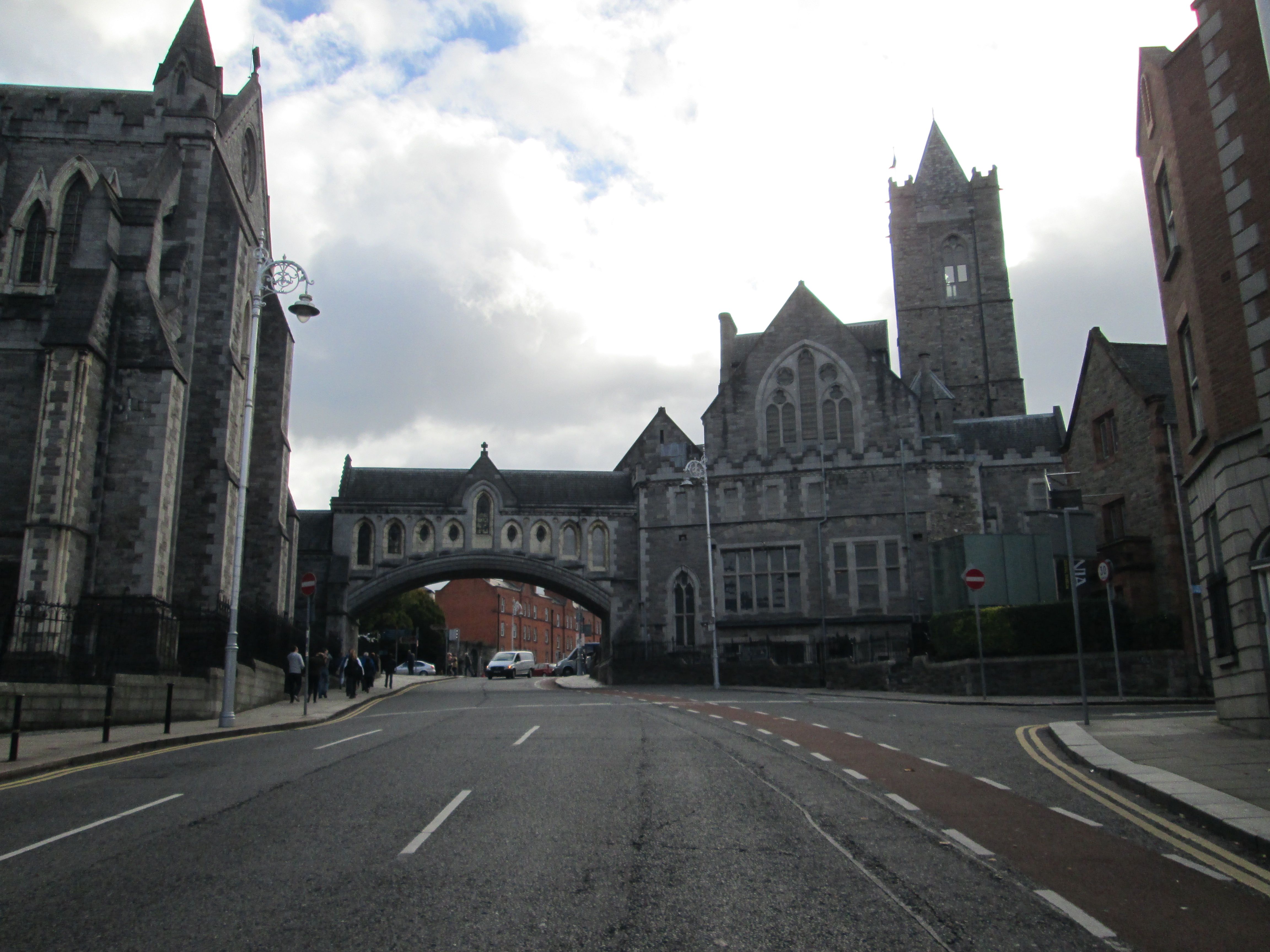
Christchurch Cathedral occupies the highest ground of the Old Town. Just below the cathedral, which dates back to the 12th century, are the Civic Offices. Sam Stephenson’s ‘bunkers‘ at Wood Quay, site of the original Viking town, excited great opposition. Twenty thousand marched through Dublin in 1978, but ultimately the campaign failed to halt them. Screened by more postmodern structures now, the four brutalist towers are less ominous than they originally appeared. Winetavern Street appears to pass through the heart of Christchurch. An elegant Neo-Gothic bridge spans the road to join the cathedral with the former Synod Hall which now houses Dublinia, an extensive exhibition of Viking and Medieval Dublin.

IMG_0690

St Audeon’s Gate  on Cook St.


Further west, along Cook Street, is the only good segment of wall remaining. Well restored, it gives some idea of what it would be like approaching Dublin in medieval times. The segment incorporates Saint Audeon’s gate, the only remaining city gate. St. Audeon’s Church is just above the gate, a modest structure established in early Norman times, it has witnessed great urban expansion over the centuries. Bridge Street descends to the Liffey, for a long time this spot was Dublin’s main fording point. In the twelfth century, a tavern was established here and the Brazen Head lays claim to being Ireland’s oldest public house. Dean Swift is said to have lowered a few here, probably en route to or from Celbridge and his trysts with Vanessa. Across the road, O’Shea’s is one of Dublin’s most renowned trad and ballad boozers.

Back to the top of the ridge, there are actually two St Audeon’s churches. The Catholic church is housed in a more imposing neo-classical structure. It is the designated church for Dublin’s Polish community. Passing outside both is Cornmarket, though there is nothing bucolic about it these days. The over-widened thoroughfare sends a constant stream of traffic west towards Thomas Street. Crossing the street, shades of Eddie Murphy in Bowfinger, Lamb Alley has a small fragment of wall. We are near the westernmost point of the walled town. From here, the walls sloped downward and eastward, cutting across Patrick Street where the Iveagh Trust Buildings now stand.

IMG_0697

Iveagh Buildings on Patrick St.


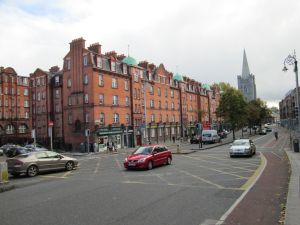
These were built in 1904, a housing development for the poor of the Liberties. The surrounding area had become a slum by the nineteenth century. The first Lord Iveagh, Edward Guinness, great grandson of Arthur, had established the Trust to provide housing in Dublin and London. The massive five storey blocks stretch all down Patrick’s Street to Saint Patrick’s Cathedral. In red brick with mansard roofs and gabled fronts, they are a distinctive and unified feature of Dublin’s streetscape. The complex also included public baths and a men’s hostel. On Bull Alley Street a ‘People’s Palace’ was built in a more ornate, grander style. This provided recreational and canteen facilities for the young of the area. It came to be known as The Bayno, an essential part of growing up in the Liberties. Closed in the 70s, it is now the Liberties College. Iveagh also developed the park opposite, it offers a great view of the St. Patrick’s Cathedral, the largest church in Ireland. Swift, Dean of the cathedral in the eighteenth century, was himself a passionate advocate for the poor of Dublin. Drapier’s Letters, A Modest Proposal and, arguably, Gulliver’s Travels, cocked a snook at English colonial misrule.
At Werburgh Street we are nearing the precincts of the Castle again. St Werburgh’s Church once had a soaring spire, but unfortunately it overlooked the Castle yard and was soon demolished. Nearby is Leo Burdock’s fish and chipper, Dublin’s most famous. Local resident Leo established it in 1913. Derby Square was also nearby. This obscure enclave features in Phil Lynott’s evocative ballad ‘Dublin’.

At sea with flowing hair I’d think of Dublin,
Of Grafton Street and Derby Square and those for whom I really care,
And you, in Dublin.

IMG_0700

Ship St

Ship Street seems far inland for such a name. But it leads down to the location of the original Dark Pool. This is now an ornamental garden along the south wall of the Castle. The Chester Beatty Library was moved here at the Millenium. The American mining magnate had established an unrivalled collection of oriental arts and crafts. There is a good cafe in the entrance atrium. Gaze up at the Castle from the grassy surface of the old pool. It has taken a thousand years to get here, the walk itself took just over half an hour.
Follow the course of the ancient river back to where we began. The circle is closed, twelve centuries spanned. Cobbled streets are peopled by ghosts, of Viking, Norman, English and Gael, the ghosts of merchants, vicars, peelers and poets, where musicians have played and sang through time. Philo’s words come back to haunt me…

I’ve been spending my time in the Old Town,
I sure miss you, Honey, now you’re not around,
You’re not around this Old Town.
IMG_0708

Casablanca

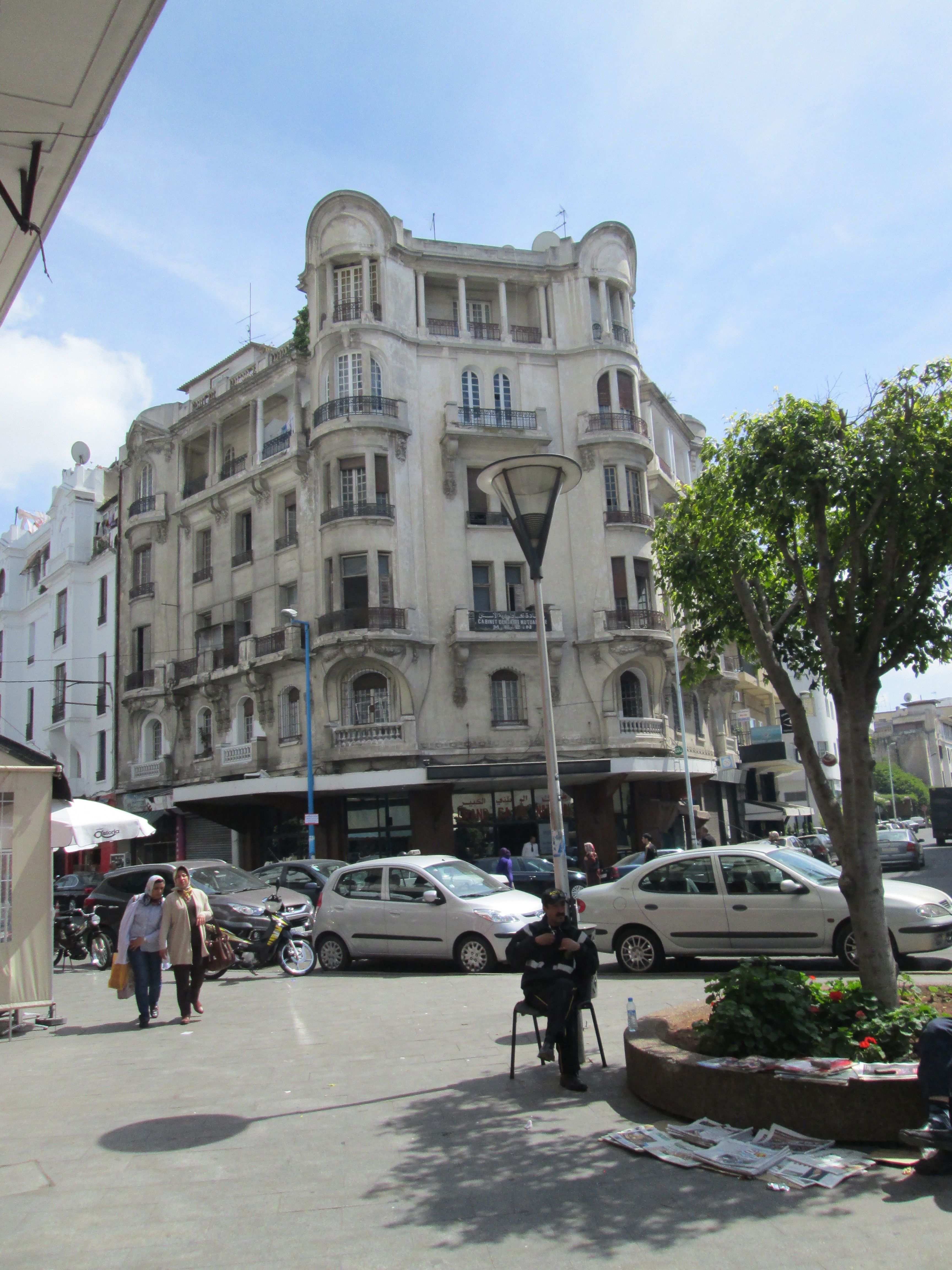
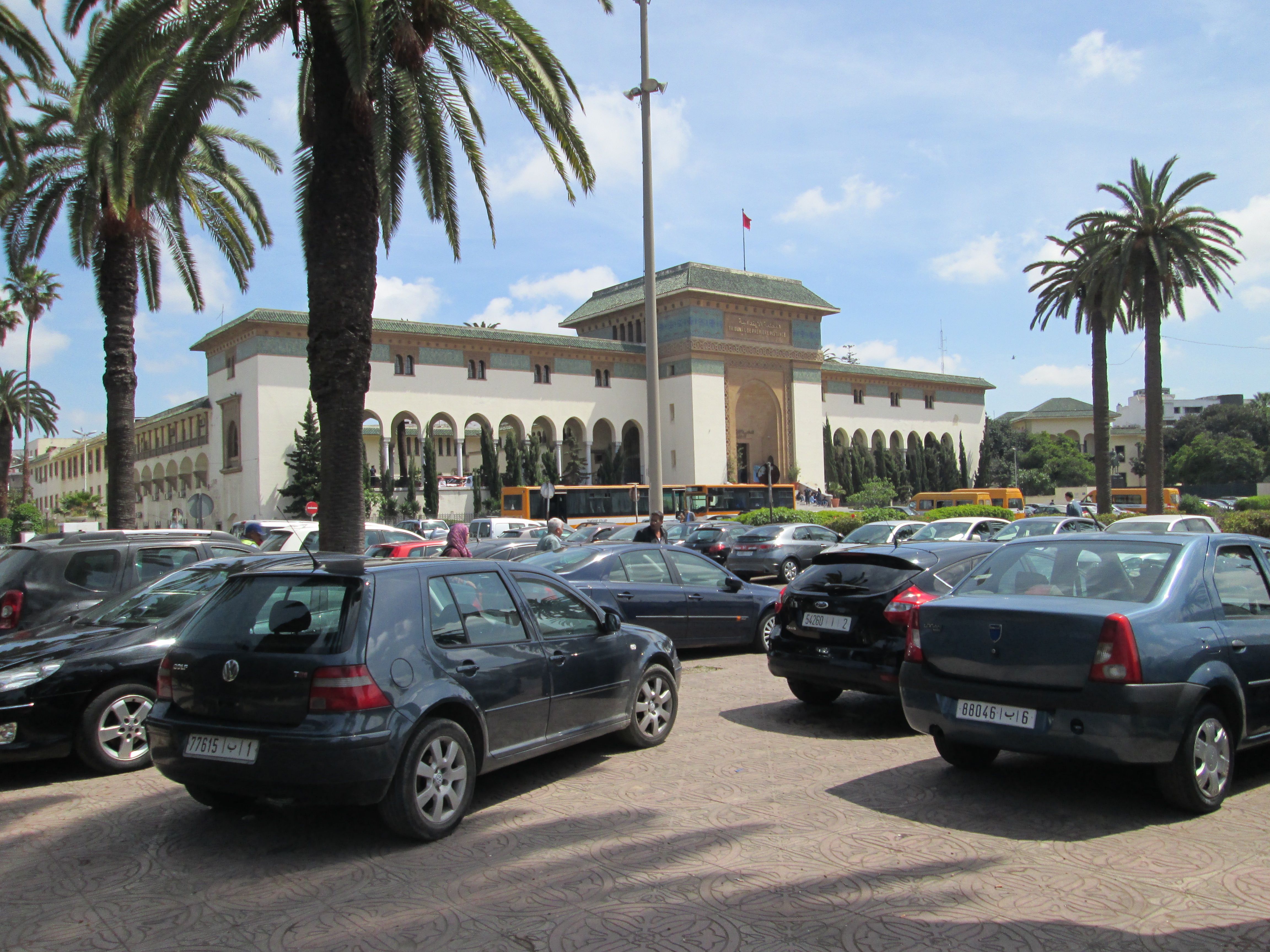
A hundred years ago, Casablanca was little more than a small coastal town, struggling to come to grips with its deepwater Atlantic harbour. The walled area delineating the Medina is still there, while greater Casablanca has grown into a vast city of three million people. The French colonial system established the modern city in the inter-war years. Wide boulevards are lined with white-stone buildings with ornate iron balconies. Fine civic buildings of the nineteen thirties preside over public green spaces beneath towering palm trees. The effect was to lend the centre an elegant air, while re-echoing the original designation ‘white house’.

CasablancaIMG_0377

Sadly overcome by time, dereliction and a societal aversion to commerce and its attendant boon of social celebration, Casablanca today can seem more grey than white. Individual and collective poverty have eroded the civic fabric, dirt and dilapidation have taken root. Men perch like gloomy crows at pavement cafes, a glum parody of gaiety Parisienne. Unattended by female company, they sip thick coffee and watch the world, or this part of it, shuffle by. Not often in a city do I wonder what it is I should be doing.

Alienation has its compensations. Chaotic shoots of commerce, the creative individualism of traffic, warp the elegant street plan, push against the homogenous conformity. There’s life in the street-hawking, the hustling for work and pay, as back street operations infiltrate Main Street. Occasionally the plan prevails in a positive sense, as surprising green spaces open up an oasis of calm, an opportunity of rest. The ancient city still prevails, a medieval way of life endures.

Inside the Medina

Inside the Medina

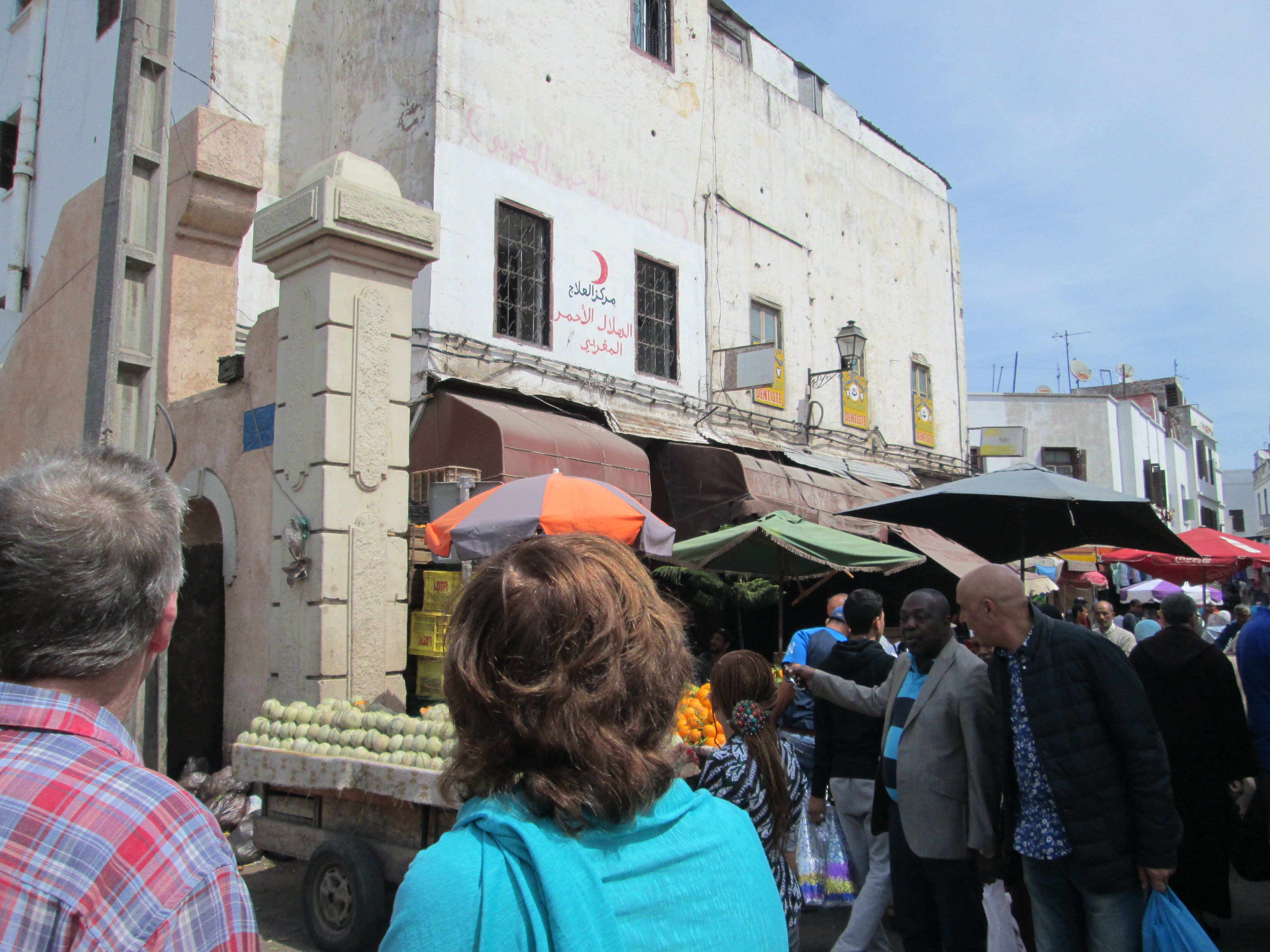
If the Medina is not widely renowned for its charm, it does at least display plenty of spirit. At the gateway we are knocked off course by some aggressive hustling. We turn, by way of evasion, into a localised web of backstreets that becomes a bewildering maze. The river of humanity surges around us. This is where locals buy and sell; fruit, meat, vegetables and all the goods of life. Repair shops, two seater cafes, bric-a-brac stalls jostle for business. Live chickens are exchanged, weighed, haggled over and strangled in hectic bouts of shouts, gestures and desperate clucking. Mopeds, impossibly weighted with food and booty, weave through pedestrians with casual abandon.

Our companions have taken off like scalded cats and it is a struggle to maintain contact. I wonder if this is the proper place to be festooned with a Canon. Not through any fear of theft, or even the wrong kind of attention – the locals are indifferent to our presence, although some children are greatly amused. No, this is a place to be experienced, not itemised. Anyway, it is rude to point.

Hassan II Mosque

Hassan II Mosque

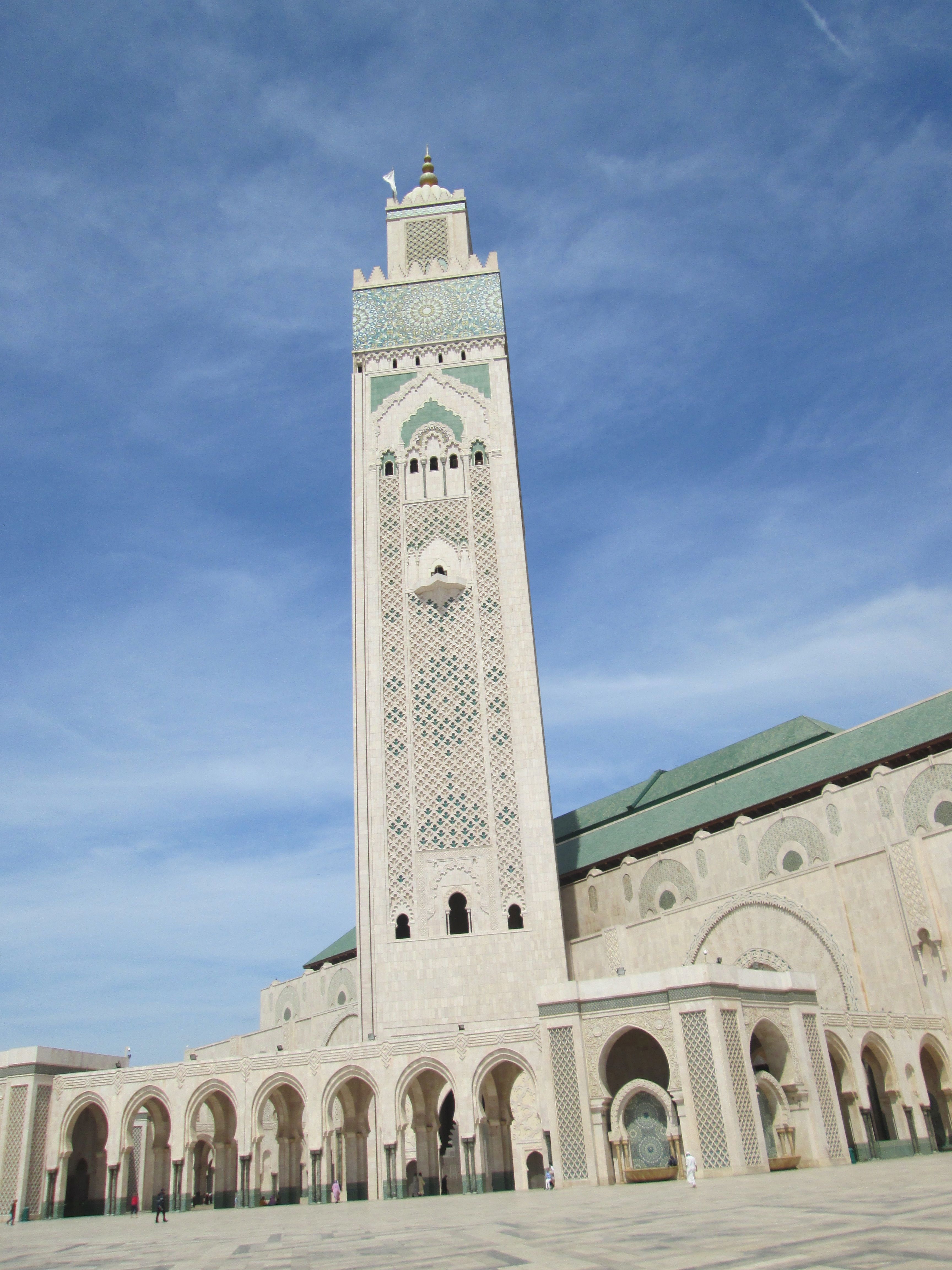
Our journey takes us to the Hassan II Mosque. This towers above the city, its two hundred metre minaret being the tallest in the world. The massive complex is isolated on a plinth of blazing blue sea and sky. The king was keen to give Casablanca an iconic sight. This is it. People flock here, drawn like filings towards a giant magnet, drawn to its prospects of prayer and peace. If Morocco is dubious of the benefits of mammon, it can at least feel itself close to God. As we rest by the giant plaza, some local schoolchildren decide to wrestle nearby. A guard, whip poised, is not amused. There are always imperatives for behaviour, even for the very young. The children depart, but still in good humour. Where there’s life there’s hope. Where there’s laughter too.

Away from the spiritual island, some seeds of economic advancement have sprouted. Along the coast road, new apartment blocks gleam. Aloof from the crumbling city nearby, they are the future, perhaps. Where we re-enter the Medina, there is a small park, its trees promising shadow where children play, the older folk sitting and talking. This quieter, residential precinct, has a more comfortable ambience. A village of thousands, where life can find its own pace.

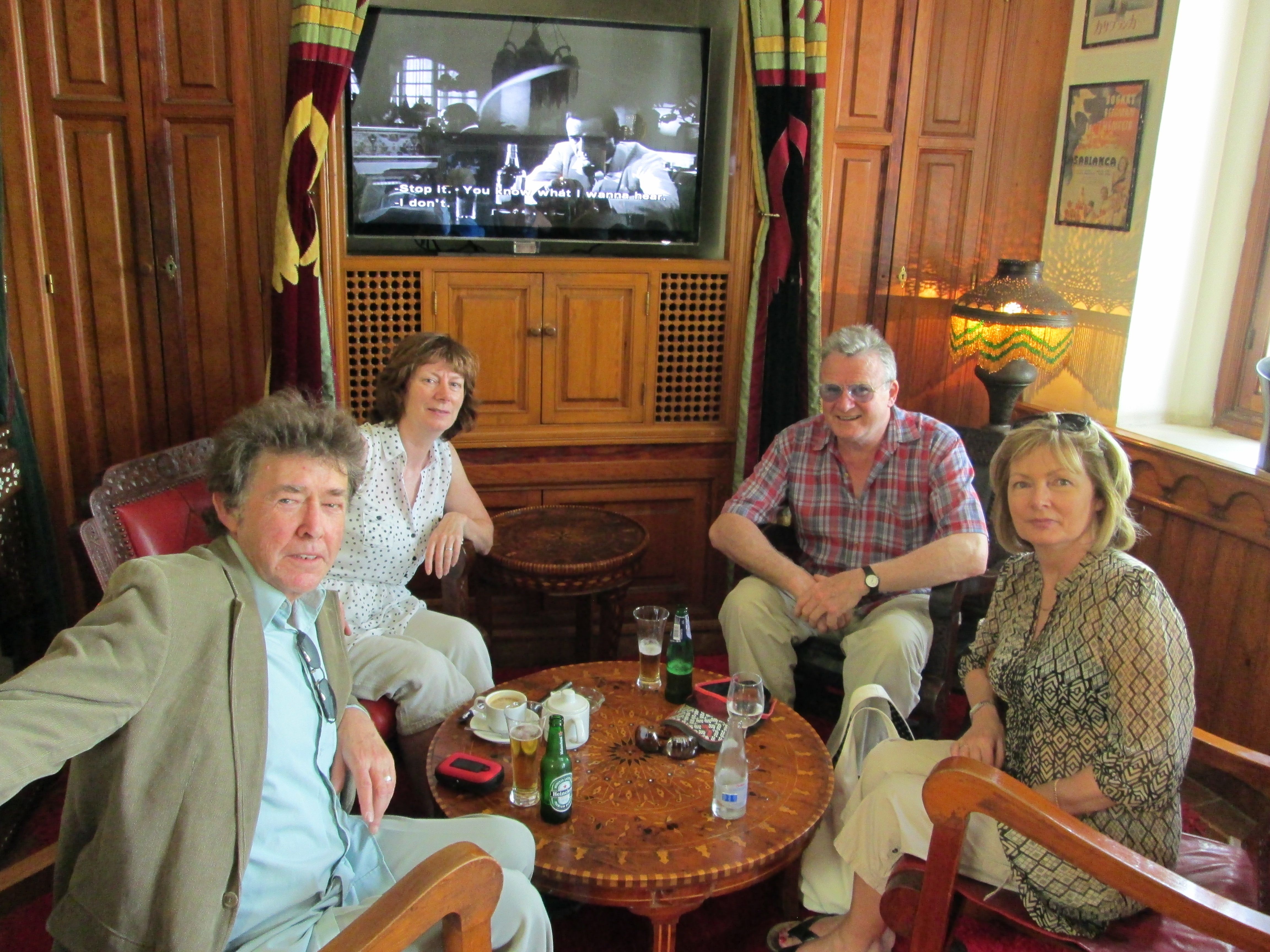
Rick’s American Bar is to the seaward side. Established some years back in homage to the Curtiz film, where Bogart and Bergman conjured everlasting love and eternal art from monochrome light. There never was a Rick’s Bar, of course, it is all smoke and mirrors, anther Hollywood trick. What better place to explore the universe than inside your head, in the dark beneath splaying beams of magic light? So, Rick’s Bar is made flesh and from the unpromising stone of Casablanca weaves its own form of magic. We enter the sedate and seductive world imagined by the movie. White walls, tiled floor setting off the heavy, ornate furniture. Light ambushes the cool interior. It is much more welcoming, intimate than we had anticipated. No crass Americana here. We order drinks, something which might have been possible elsewhere, just neither obvious nor desirable. This is something you do behind closed doors here.

The grime and crush of the city dissipates. On the wall behind us, a good sized screen shows the movie. We dip in and out, it is silent and subtitled. We ask the waiter to take a photograph and he obliges. Only later do I notice the frame he has captured behind us sets in motion that most magical movie moment, where Rick addresses Sam: “Stop it. You know what I want to hear….”

Everyone goes to Rick's

Everyone goes to Rick’s

Later, we find the market end of the Medina. There’s plenty on offer here, especially leather and jewelry. I get an excellent jacket from a friendly and diligent stall-holder. The most difficult requests are met with hurried phone calls and the arrival outside of a speeding moped and the requested article. That’s what I call service. Commerce and society are alive here, but struggling. Hopefully, it will all come good someday. After all, the heavenly realm and its rules notwithstanding:

You must remember this / A kiss is just a kiss, a sigh is just a sigh / The fundamental things apply / As Time goes by…

Los Angeles

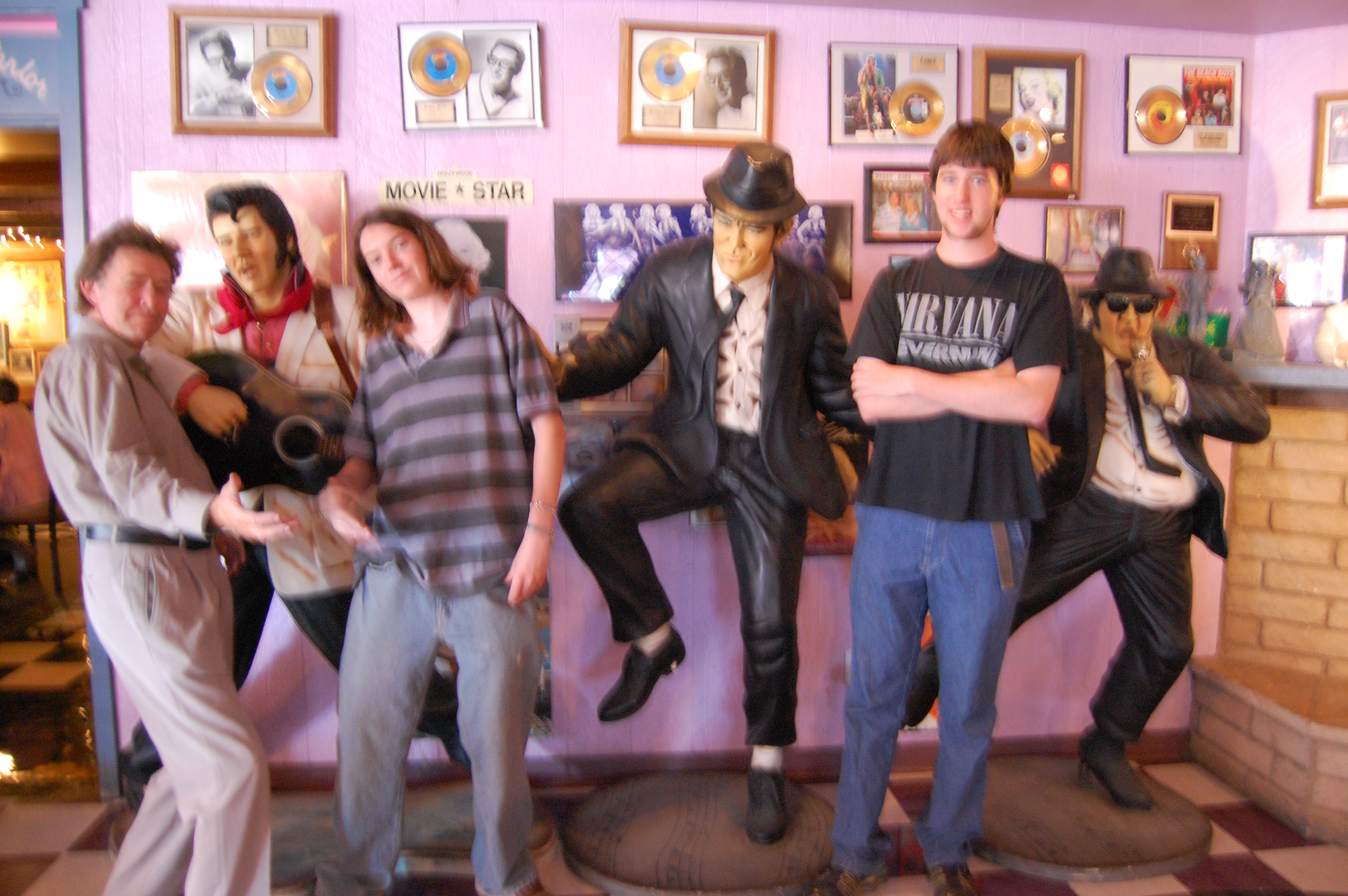
We’re up early and heading into the Californian desert. The scenery falls to the coast, the heat stirring from its slumber over unremarkable, parched terrain. Casino camps float by until the Californian border where the traffic picks up with the heat as the altitude drops. Barstow is a halfway house which we’ve earmarked for brunch. Off Route 66 we stop in Peggy Sue’s Diner. It’s like we’ve stepped sideways in space and time. A weary, hirsute traveller dozes by the door, as impervious as an old dog to the passing customers. This place is more than just a diner, it’s a museum to the road, the black river of rock and roll. There are leathery oldtimers at the bar, a pink pizzeria at the back and lifesize Blues Brothers petrified inside a gyration. The traveller still dozes as we step back out into real time and head for LA.

Blues Brothers, with Da

Blues Brothers, with Da

Streaming into the LA freeway system is like falling into a video game, a Grand Theft Auto or the like. But these are real people, in real life, real fast, cars and trucks. Our navigators are wired up and we hop and weave with the best. The freeways are a vast intestinal system for the city, while my own are getting a bit knotted with the stress of it all. Downtown LA passes away to our right, its towers a pinpoint on the map of the sprawling city. I sense the boys’ anticipation of what must be, to anyone born late in the century, part of the modern world’s cultural axis. Movies, the motor car, television and rock and roll are all written in two giant neon letters, but we’re never going to see an awful lot of this place.

Santa Monica is at the end of the trail and the tangy, moist sense of the Pacific hangs heavy in the air. The Doubletree Apartments are the far side of the freeway, a pleasant though anonymous modern block around an atrium. There’s a rooftop pool to unwind and already there’s a slight ocean chill in the air.

Santa Monica’s main axis is the 4th street mall, paved, pedestrianised and lined with musicians and street performers. Route 66 still has a couple of blocks to go from here along Santa Monica Boulevard, on down to Santa Monica pier where at last it finds the ocean. The promenade above the beach is a nonstop swirl of joggers, skateboarders, cyclists and rollerbladers. The relentless cheerfulness of Californians may be the subject of some jeering but it certainly seems to work for them. A smiling skater (hey, everybody’s smiling) pushes her baby in a buggy and volunteers to stop and take our photograph. ‘Handsome family’ she says and, I suppose, means it.

Further south we merge with Venice Beach where there’s a subtle shift in ambience. This is more savoury than sweet, with even a hint of the unsavoury here and there. It’s a Dandelion Green on the seafront, where the stallholders haggle, smokers skin up and slackers and panhandlers mark out their turf. Somebody shouts ‘hey, David Bowie’ after me, so even the slagging is positive. The boys are off studying graffiti and fending off offers of soft drugs. We eat at a crowded beachside cafe and Davin gets his temporary tattoo. We get ice cream from a former Austrian international footballer who’s minding the stall for a friend. We chat about the dingy basement days of sixties football. He seems happy now in this heady mix of health fiends and hedonists. On the pier the big wheel is turning and the light is dying. There’s a nighttime gig with The Ventures, all gnarled oldguy fame and rock n’ roll memories. This is an appropriate end for Route 66.

Although the hotel staff wants to point us onto the freeway, I ain’t going there again if I can help it. A more stately, more interesting, route sees us shimmy up Santa Monica Boulevard, through Bel Air and intersecting with Hollywood Boulevard. There’s a short slalom uphill before we reach the Universal lot with a long walk to the park entrance. The queues are quick though it takes some time to get our bearings in the throng. The bottom level is for the fun rides, upstairs is food and special effects. A friendly steward recommends we get good and wet to begin with and I will take the Jurassic park ride with Davin not once, but twice – with baleful results. First we take the tour of the film lot which is probably the highlight of the day. A witty and entertaining trawl through some great movies with King Kong, Jaws and a Jumbo jet crash.

The Jurassic Park ride is good but the second soaking is followed by a chilling visit to an effects lot and I don’t think I’m the best for it afterwards. Perhaps the metamorphosis is showing early as one host greets me as the Wolfman, and Oran as Son of Wolfman. Just wait for the full moon, pal.

The Wolfman and Sons

The Wolfman and Sons

Last stop is Waterworld, a spectacular stunt routine which includes more soakings, inevitably, but which is a lot more enjoyable than the film. It’s a fitting finale although there’s a nice little coda before we leave Universal with a Blues Brothers show and a foursome of showbiz dames in a pink Pontiac. Ah, but can they hold a candle to our crew in the cream Cadillac?

Leaving the studios we avoid the freeway, just about, and also get ourselves lost for the first time. I favour the explorer’s approach, to head for the hills and see what happens but Marian insists on a more ordered retreat. We manage to pick up Santa Monica Boulevard after a brief digression through a supermarket carpark and a modest traffic jam by the Hollywood Bowl. I should have detoured down Hollywood Boulevard but the sun is setting now so it’s best to harmonise with Sherryl Crow.

The 4th Street mall is fairly hopping at night as men with guitars trade riffs and bars, there’s flamenco, latino and blues while the boys are caught up in a street performance. They have actually volunteered as participants by the time we’re called to our table at a restaurant up the street and I have to do the dad thing and pull them in.

At the restaurant I notice that the menu cautions tourists against tipping too little. Fifteen per cent, my standard tip, is dismissed disdainfully as the lowest possible. Twenty is suggested as reasonable but we’re encouraged to go higher. Hell, why not ask the waitress to join us for the night? Those days are gone, I suppose, and present company is good. I give Davin ten dollars to buy a cd from the flamenco guitarist who has regaled us during our meal. Vadim’s music becomes a regular soundtrack for the rest of our stay, it remains a favourite.

The next morning I dip my toe in the Pacific Ocean and feel at last that I’ve made it half way around the globe. The pier is people watcher paradise, good for sketching and fishing too. I watch a couple of games of volleyball but the better they get at it, the more uptight they are. Friendships are fragile in one tetchy doubles match, but there’s an uplifting rally of great mirth amongst a sextet of amateurs. Between the coast and 4th Street there’s a lively market. Back again on the mall there’s plenty of earnest men, young and old, trading guitar riffs and tall tales on benches and sidewalk cafes. I have a coffee outside a fast food then, shortly after rejoining the swarm of people, bump into herself and Oran crossing Route 66. Small world.

Las Vegas

It’s a long drive from the Grand Canyon to Las Vegas, from the wilderness world to the land of fabrication. We’re up early and heading south to pick up Route 66 again, then turn to head west through Seligman and Kingman. At Seligman, birthplace of the Mother Road, there’s a long and lonely train strung along the horizon, and a cowboy in a pickup turning on to the range by a gateway. We stick to the freeway while the old route bumps off to our right. There’s a camper van parked in isolation with two waifs, Thelma and Louise, in halter tops and shorts posed on the roof staring off into the shimmering distance.

Kingman is off the highway but doesn’t originally reveal the tacky charm I had anticipated. We’re lost in the fast food outskirts before finding a Burger King off what could be the Naas Road Industrial estate where we pore over the maps again. This is always a good way to attract an American. A man folds up his mobile phone mid sentence to come, unbidden, to our assistance. With his help we’re back on Route 66, cruising by the amazing pink motels of ‘historic’ Kingman before picking up the highway again towards Las Vegas.

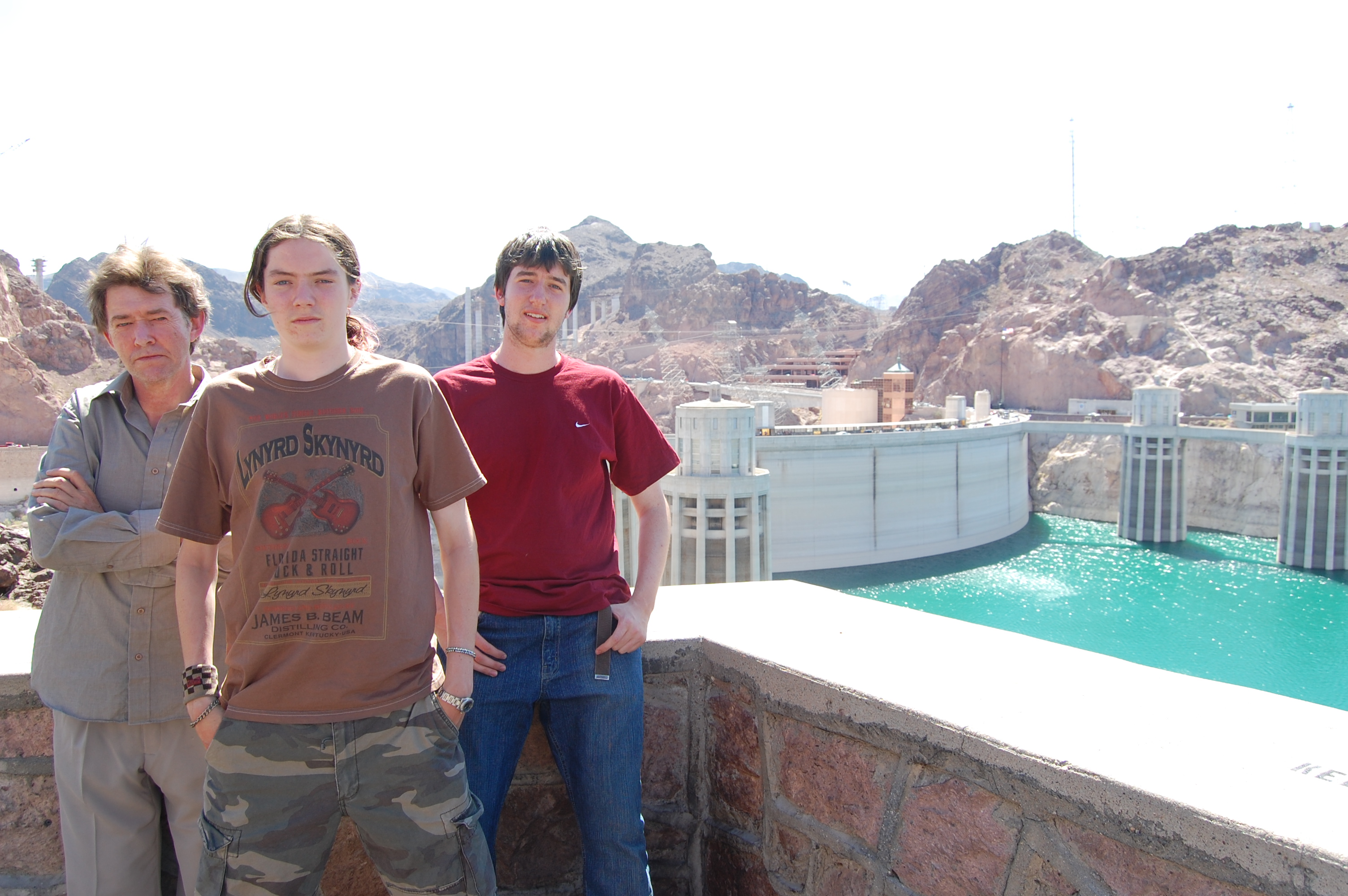
We head north on 93 with dust devils dancing off the road to the sounds of Sheryl Crow and Michelle Shocked on the stereo. Isolated trailers and shacks pin down handkerchief plots of minor cultivation in the arid landscape. We rise and rise until we come to the cooling variety of a maze of black rock hills. The troopers welcome us to Nevada and when we come to the edge of the plateau, there’s Lake Mead in its impossible cool blue, a fake lake held in the heat by the miracle of the Hoover Dam. Constructed during the Great Depression of the 1930s, it is surely one of the engineering marvels of the world, transforming the desert beyond into an Eden, of sorts.

DSC_0395


The car is now recording one hundred and ten degrees and outside the souvenir store the heat blasts at us as from an open oven. A wiry old-timer plays lock-hard in the narrow car park. British or Australian, he loves the heat but for us it’s life in the oven with the thermostat flipped. A meaty black family from New York must be shedding pounds passing over the dam from Arizona into Nevada, but they’re permanently happy with it all. Golden rest rooms offer brief respite from the heat before we head off into the desert.

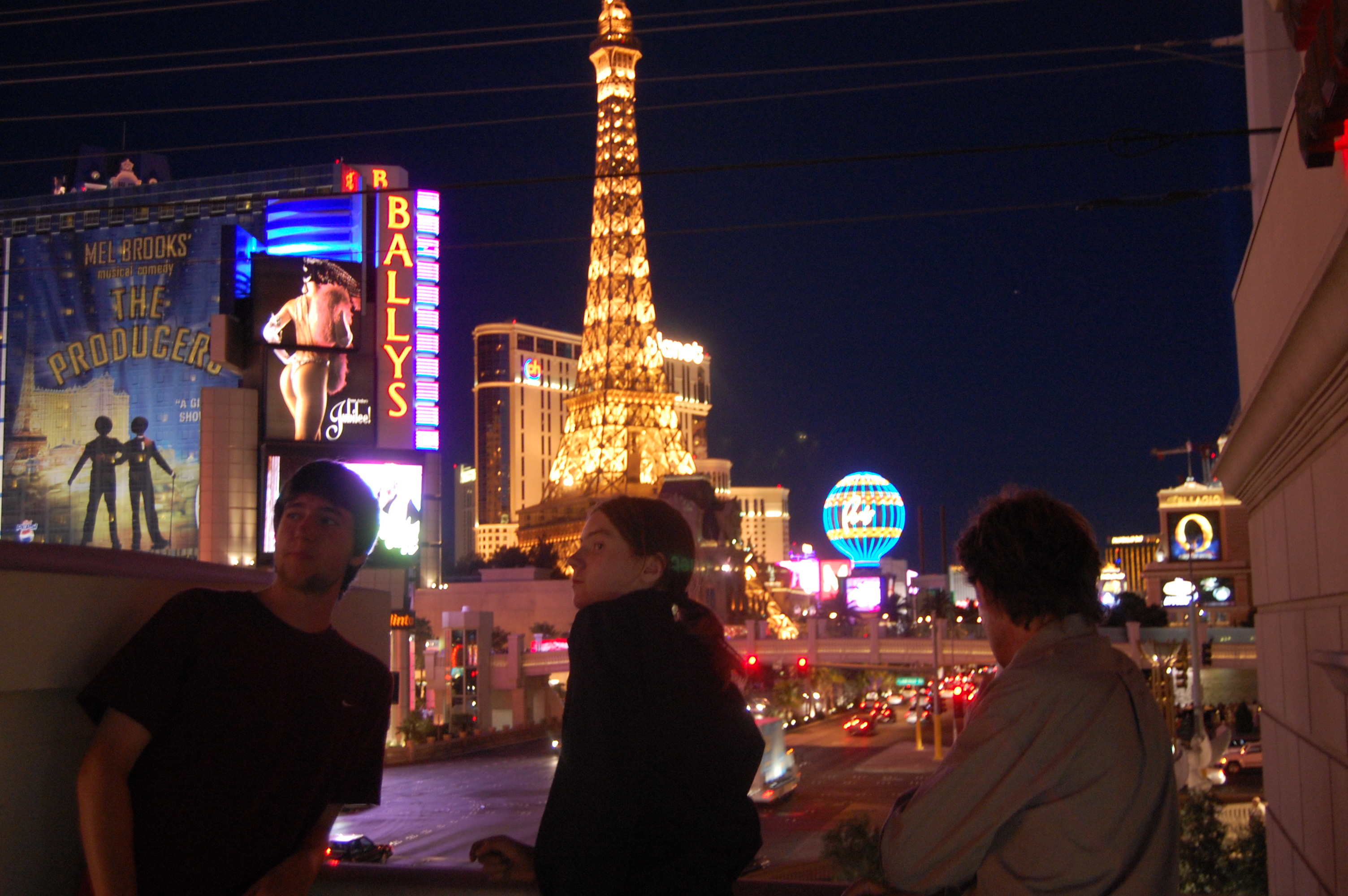
There are glimpses of Lake Mead against the desiccated landscape, then there’s a sudden pulse in the traffic and we’re flying into the Las Vegas freeways. Oran navigates us well through some tense moments and dizzy junctions but pretty soon we’re heading in city traffic towards the strip. We do an impressive swerve in the empty forecourt of Caesar’s Palace before finding the right route to the multi story. Then we’re bound for the gilded lobby of the hotel. Our room is very impressive with jacuzzi in the bathroom and telephone in the toilet. We can see the Eiffel Tower from our window and more of the unreliable skyline of Las Vegas.

Time for a swim to take off the desert heat. I could get to like the pool at Caesar’s Palace. You lounge there and call a barely clad waitress to bring you an overpriced, but well chilled and welcome, beer. Mind you, the prat at the next lounger has decided to try out his chat-up lines on her which she attempts to fend off with chillingly white, but all too polite smiles. My beer is warming.

Out on the street it’s hotter than you expect out-on-the-street to be. The heat brings a peculiar stillness to the air and with the banks of neon it feels like walking through a vast arcade. There are fine water sprays on the street to give some humidity to the desert air, but already my Mick Jagger lips are in need of a remould. Further on up and we’re on the Rialto bridge, with gondolas waiting expectantly. We stroll up the strip in the evening to see the pirate pantomime at the Treasure Island. I thought the desert heat dissipated at night but if anything it’s hotter and heavier in the milling crowds.

DSC_0406

Las Vegas is not a place you either love or loathe – you can do both. It is terribly fake. The sights of the world, the Eiffel Tower, Venice, New York, ring hollow as hardboard and will be gone again in a few seasons; but it’s fun. There is beauty in imitation and glitz has its own romance. The Belaggio and Cesar’s Palace provide their own version of grandeur and perfection at a reasonable price and, for a night or two, you can maybe feel like a high-roller or an elegant courtier.

We take the monorail on the second day and sit beside a Colorado couple who are regulars here. They are from Grand Junction – before I die, I gotta see that town- and they recommend the original strip but it’s a bit far for us. Historical Las Vegas! We walk back through baking sunshine with occasional detours into the various casinos. Circus is tacky and weird, and it echoes some childhood feeling of Fossett’s, or Bray in the fifties. And besides, herself can attempt to catapult rubber chickens into a pot. Another casino with a western theme, vaguely nineteen seventy-ish is getting ready to shut down. We eat at a chrome diner and try to cool down a little.

The pool beckons again, a better place to while away the hours than in the relentless ching ching of the interior. We splash out on the Caesar’s Palace buffet tonight and this really is a meal you can shake hands with in the dark. I dream of it still but to describe it is probably too close to food porn – eat your heart out Homer Simpson!

The Boss and Davin continue on down to Luxor tonight, but Oran and I double back at New York. I’ve seen as much of the world as I can possibly take in forty eight hours. Hispanic men flick cards with sexual services all along the strip, while families and couples gawp at the Belagio fountains and the neon show goes on and on into the night.

Later, I make my own way through Caesar’s Palace casino into the wee small hours. The arcade shops are all closed, more like a mall now than the surreal, almost Italian city it has been impersonating. Some still gather at the Trevi fountain but more are pulled towards the blackjack and roulette tables. If I wanted to be distracted I could take my place at a table where lingerie clad croupiers would take my chips and maybe spin a wheel or two, or I could just play it quietly from the bar, where it’s quiet and almost empty.

Grand Canyon

We head through the Painted Desert towards Flagstaff. The doom laden chords of The Doors seep out into the emptiness, leading on into Riders on the Storm. Ponderosa pines sprout from the arid hills and the city limits loom out of a mirage. The Cadillac heads downtown and touches tyres on Route 66. We’re on America’s main street, we’re on the Mother Road.

The town centre ranges along the railway where impossibly long trains regularly thunder through. There’s a bar and restaurant across the tracks which does a special free cocktail when the train is passing, if the waiters can hear you, I suppose. Our motel is a half mile out of town, just the right side of seedy but with a good pool and Route 66 visible from the window. There’s a Barnes and Noble next door where we spend some time reading and drinking buckets of coffee. Walking back into town the neighbourhood is a homely patchwork of residential, bohemian bars and diners, with a colourful smattering of churches, from Protestant sects to a determinedly Catholic Our Lady of Guadaloupe.

Davin spends a lot of the afternoon in a music shop with Oran and buys an effects box for his guitar. The car is filling up with stuff, but what better place than Route 66 to buy your wah-wah pedal? We relax over a beer at a shaded sidewalk bar. This is the only time I have ever seen a waitress accompanied by an intern – they’re very thorough here.

Flagstaff is a lively spot, its redbrick streets typical of the American west but with a more sophisticated, bigtown feel than Durango. At the town centre square there’s hot southern rock with a country twang playing throughout the day and into the evening. A large screen shows Happy Feet and there is indeed a happy feeling pervading the town.
After sundown, the nearby Lowell Observatory has set up a few telescopes for public amusement and edification in the square. We take our turn and talk to the astronomer who, as it turns out, is from Dublin. Small world, big universe, same sky all over. After an evening meal at the railway track, we take the windy road to the hills where the Lowell Observatory perches above the town. It’s a picture book observatory, a serene and surreal dotting of buildings set in the forest. There’s a great display of stars above us while beneath the diamond lights of Flagstaff spread out along Route 66. Again, astronomers have set out their stalls and we queue for a peek at the planets.

Percival Lowell obsessed over the sky, and there’s plenty of sky over Flagstaff. It was Lowell who put canals on Mars but also put a planet out beyond Neptune. Not long after he died this last planet was finally discovered, appropriately at Flagstaff. Pluto’s first two letters a tribute to the astronomer.

The Grand Canyon is due north of Flagstaff. We set off early through the San Francisco Peaks. The Ponderosa forest passes changelessly by. These trees are peculiarly regular. Neither dense nor inspiringly huge, they conspire to a misleading ordinariness, though the overall effect is unsettlingly vast. The Canyon is easy to find. Keep going till you hit the hole in the ground. It takes some time to locate our accommodation, the Maswik Lodge, inside the park. We’re too early to check in and a bit hot and bothered by it all. I’m anxious to see the canyon as though it will somehow close or diminish if allowed to stay unobserved for another hour or two.

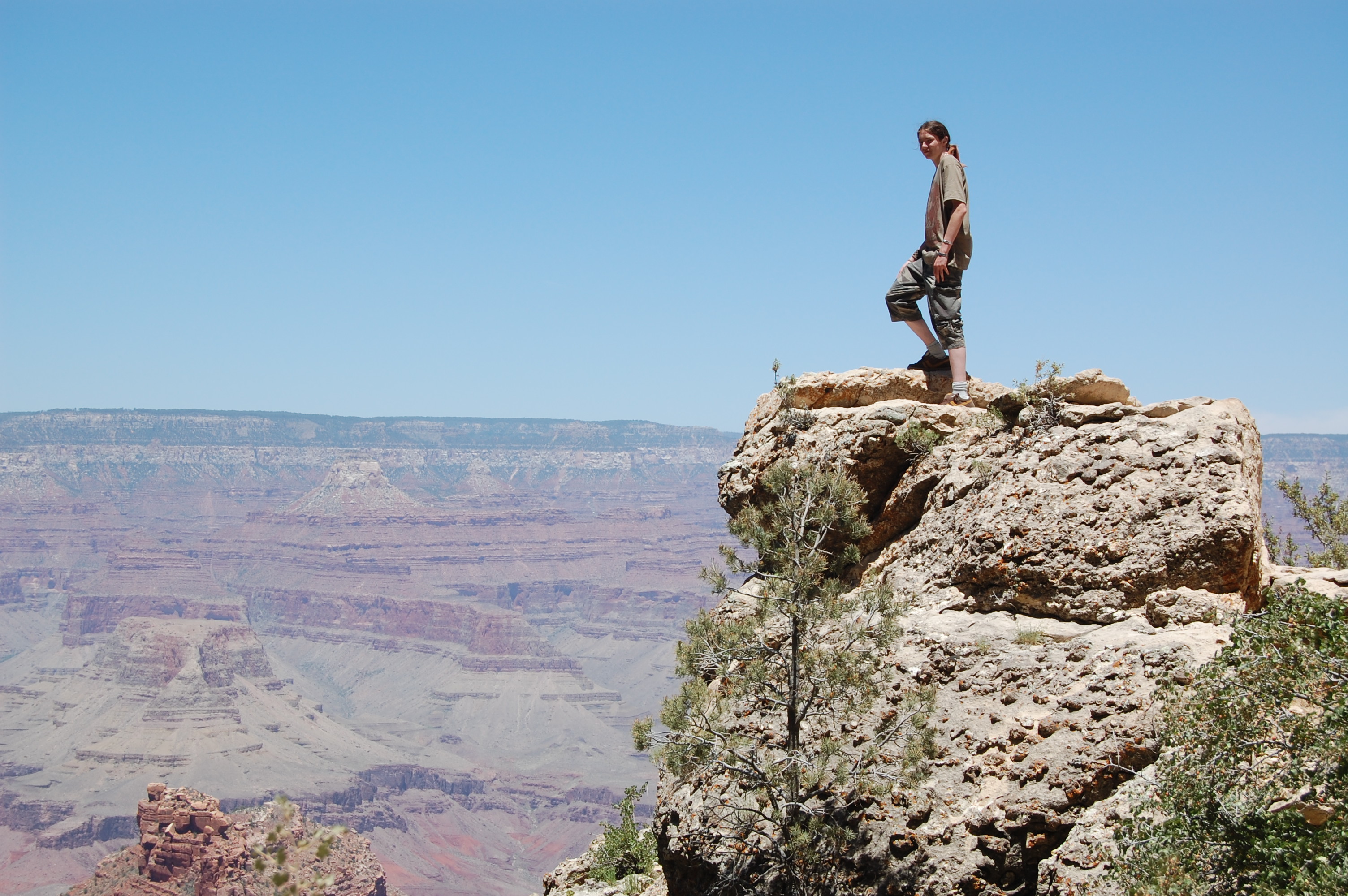
Eventually we trudge down to the rim. The initial view is perplexing. Like much of America it triggers a sensation of deja vu, but such deja vu is based on the image and the reality itself is so enormous that it becomes difficult to recognise. At the canyon’s most popular viewing point the whole thing is flattened to hues of blue and magenta, presenting a tableau that is impossible to assimilate at once. It’s when we move around in the landscape an appreciation of its immensity and beauty begins to seep in. We venture just below the rim on the first day and teeter over the abyss on unprotected trails. A friendly squirrel pulls Davin’s hair and poses for the camera.

Image

The park at the south rim is spread over several miles. A free shuttle service links the various vantage points. This is just as well. At one point we decide to walk between two stops but away from the shade of the pines it is very hot. The walk along the rim is a joy. There are a number of lodges teetering on the brink dealing in arts, crafts and souvenirs. Park rangers wait politely to help tourists with enquiries and to share their knowledge of the park’s wildlife and history. Californian condors wheel far below, tiny even through the binoculars, and they are big birds. We take our first dip below the rim and the heat gathers ever closer. The boys are particularly taken with capturing all this on camera and pose appropriately above yawning chasms, all this without a safety net, or even a railings.

Sunset at the canyon is worth the price of admission. This spectacle has been specially adopted by the God crew. Our original perch was pleasantly quiet, I thought, but herself moves us two hundred yards further on to where a battalion of Jesus fans are praising the Lord with the encouragement of their pep-talking leader. Well, they do have a point. If this is God’s light show it’s the best goddamned lightshow on the planet. A resident of the park also gives strangers turns at his telescope and answers any questions. This is a thing that Americans like to do. Courtesy is by way of duty but not in any weary sense, they’re proud of this place and like showing it off.

The next morning we brave the chill of dawn to catch the sun coming up. We head westward to get a good vantage point, practically sprinting up the path so that we’re winded by the time we get to a good spot. Already we can spot hikers making for the bottom of the canyon. It is reckoned as next to impossible to get up and down in a day, and even to get down requires an early start. It looks a great adventure, setting off with a small pack, the odd lonely light shining from lodges on the rim.

Later, we take a shuttle east for a brief adventure below the rim. Myself and the boys plunge towards the towering desert. At seven thousand feet there is no sense of coolness, falling a few hundred feet in the next half hour is parching. Herself, meanwhile, relaxes by reading horror stories helpfully posted by the park authorities, telling how hikers have managed to do themselves to death by underestimating the power of the landscape. Things aren’t helped by a family foursome, whom we passed as they ascended, clearly noting our casual footwear and the boys’ black teeshirts. They ponder loudly at the top on whether they should call the rescue services given that such an ill-equipped a party as us couldn’t hope to make it out alive. We do, of course, the boys bounding up to the rim while I manage to plod home by myself.

We stop for drinks at El Tovar – the hotel for the top brass which successfully mingles elegance with rustic wilderness charm. The waiter from West Virginia cheerfully tells me I’m like Mick Jagger, but without the wrinkles. I laugh, causing more wrinkles, and get myself upgraded to Pierce Brosnan. “Why Pierce was here just last month, sitting right over there at the bar.” Small world. We return for our evening meal, although there’s a long queue. But it’s worth it to upgrade from the Maswik canteen to a proper restaurant within sight of the rim. A restaurant on the edge of the universe – in a way.