York

York was once the dominant city of the north of England. Founded by the Romans as Eboracum and becoming, about a thousand years ago, seat of the Danish kings. They lorded it over the natives, if we could apply that term to the Anglo-Saxons of the age. Its influence extended as far as Ireland. The Dublin Danes were inextricably linked with York, Jorvik as it was then known. The great Sitric Silkenbeard retired here to die in the middle of the eleventh century, leaving Dublin with the legacy of Christchurch cathedral. York’s own cathedral, York Minster, would have been in an earlier, smaller incarnation then. Both Dane and Norman would conspire to destroy, and rebuild it, before the present Gothic masterpiece arose in the thirteenth century. One of the largest cathedrals in northern Europe, its majesty underlines the importance York enjoyed into the late middle ages. York
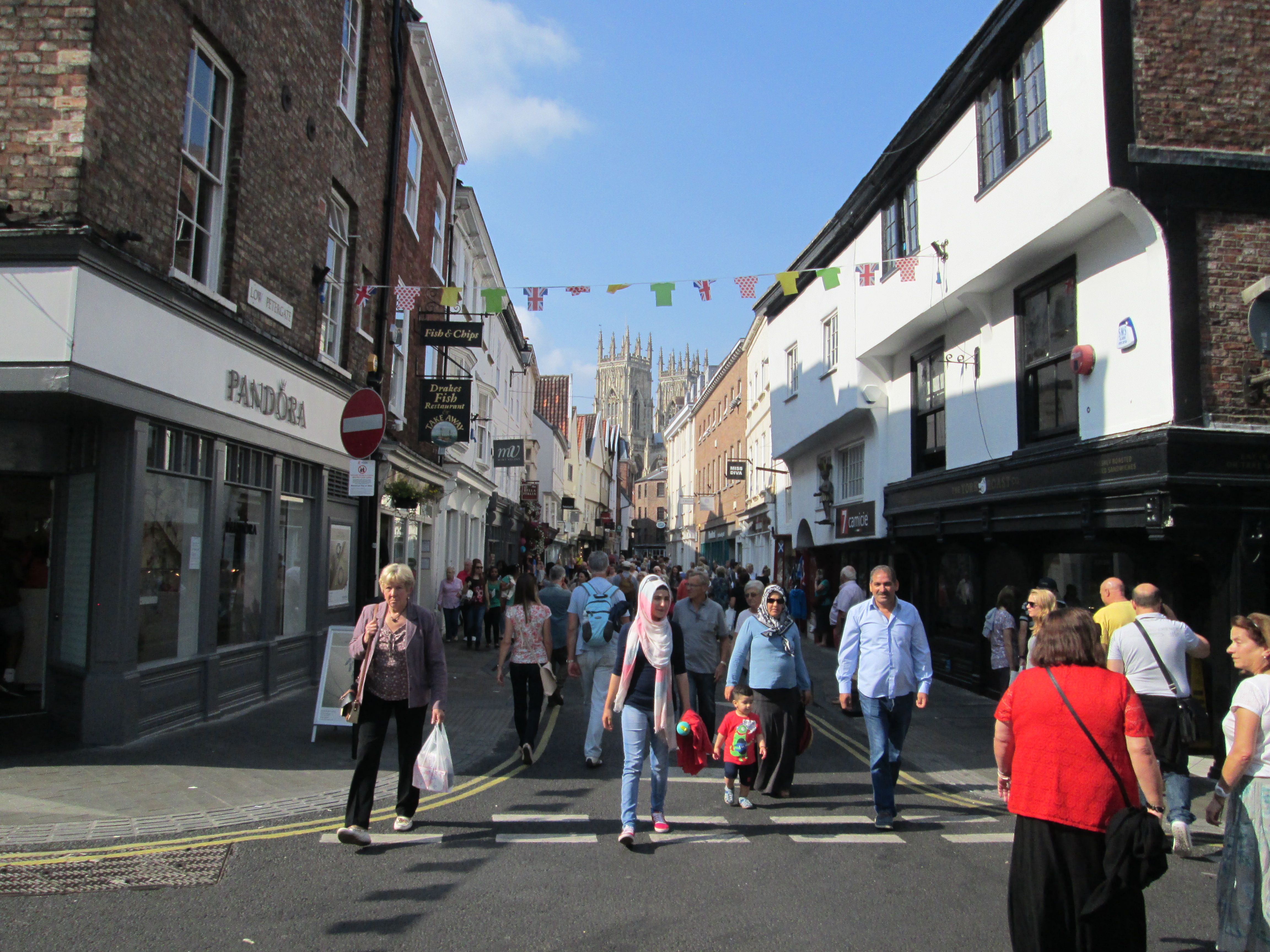
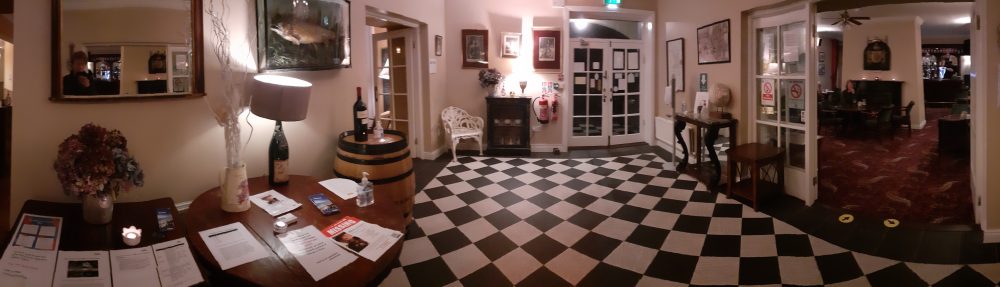
York’s influence on contemporary Britain may have waned somewhat, but the city has nurtured its original grandeur. Few places that I have seen have attained such a harmony between ancient and modern. The great cathedral still crowns the hill, a hymn to the power and endurance of medieval church architecture. Meanwhile the ancient walls are virtually unbreached, enclosing a sizeable city and straddling the mighty River Ouze. Having walked the walls of the early-modern city of Derry, and very impressive they are too, it’s another treat to walk these older, more extensive walls, two and a half miles in circumference. We reach York in bright sunshine, the bricks and trees of the suburbs alive in the charged northern air. We circle about the walls to find our hotel hard by the railway station. It’s a grand, nineteenth century pile, from the halcyon days of Victorian industry, when railway hotels were the acme of wealth and elegance; this was the place to be! There are extensive formal gardens to the front, with the picture-perfect city hung above us, tantalisingly close. To complete the harmonic transition of the ages, the hotel is thronged by a science fiction convention. There’s a great buzz with eager groups huddling in frantic, and often hilarious, discussion. There is a higher than usual percentage of hirsute geeks, aging goths and, unexpectedly, lesbians. After the mayhem of reception, it’s time for a grander entrance at the most impressive of hotel staircases.

Walking along the city walls

Walking along the city walls

The city walls are there to be walked, taking us an hour into the slow sunset. They encircle a large urban area of about two hundred and sixty acres. Although earlier defensive ramparts have been unearthed, it was the Normans who established the extensive fortifications. York Castle was the centre of the defenses, this complex surveying the only unwalled section, where the River Fosse forms a natural defensive moat. The walls also helped generated wealth through establishing a secure customs point on the major river, The Ouze. Everyone who was anyone passed through here. The Romans, the Danes and the Normans all left their mark. Richard III looms large; the last king of the House of York he is held in higher regard here than elsewhere. Richard, still stooped under Shakespeare’s caricature, is receiving some rehabilitation since the recent discovery of his remains in a Leicester carpark. York has a museum dedicated to him, housed in the largest of the four city gates, Monk Gate, with a functioning portcullis to boot.
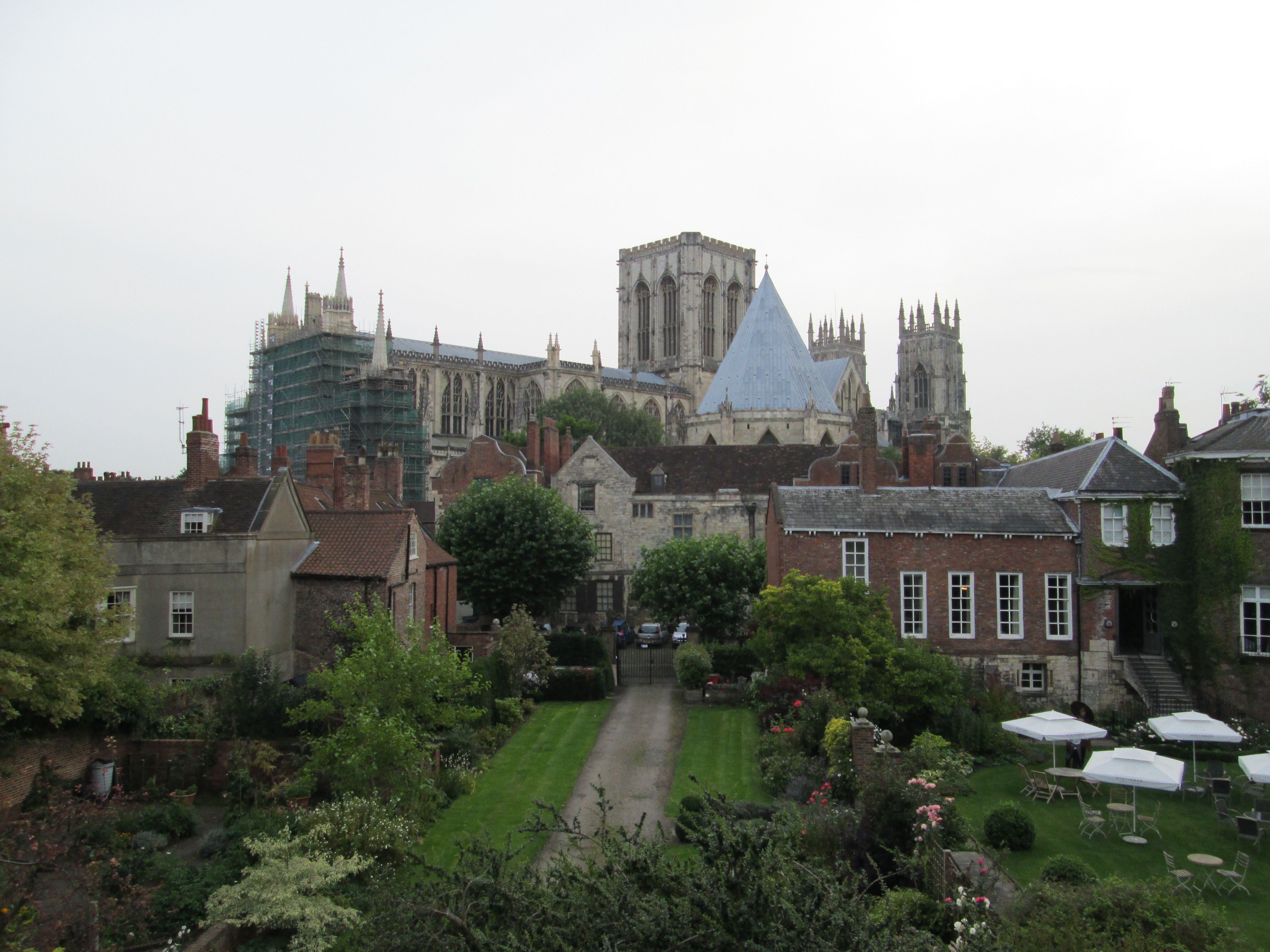
York Monster from the city walls

York Monster from the city walls

We step off at the cathedral. The illusion of passing through a gate in time is strong here. York Minster dwarfs the surrounding medieval city. The old town tunnels further into history.The Shambles, its most famous and ancient street, becomes literally a tunnel of wood-framed leaning buildings, stooping across the narrow passageway to hinder the sky. The shambles were the shopfront counters of butchers, primarily, and other selling their wares. Back then, you stayed on the street to do your shopping, the vendor displaying their goods on the shambles, conducting transactions through the ground floor window of the shopfront. Medieval wood and stone still survives, worn smooth through centuries of use.
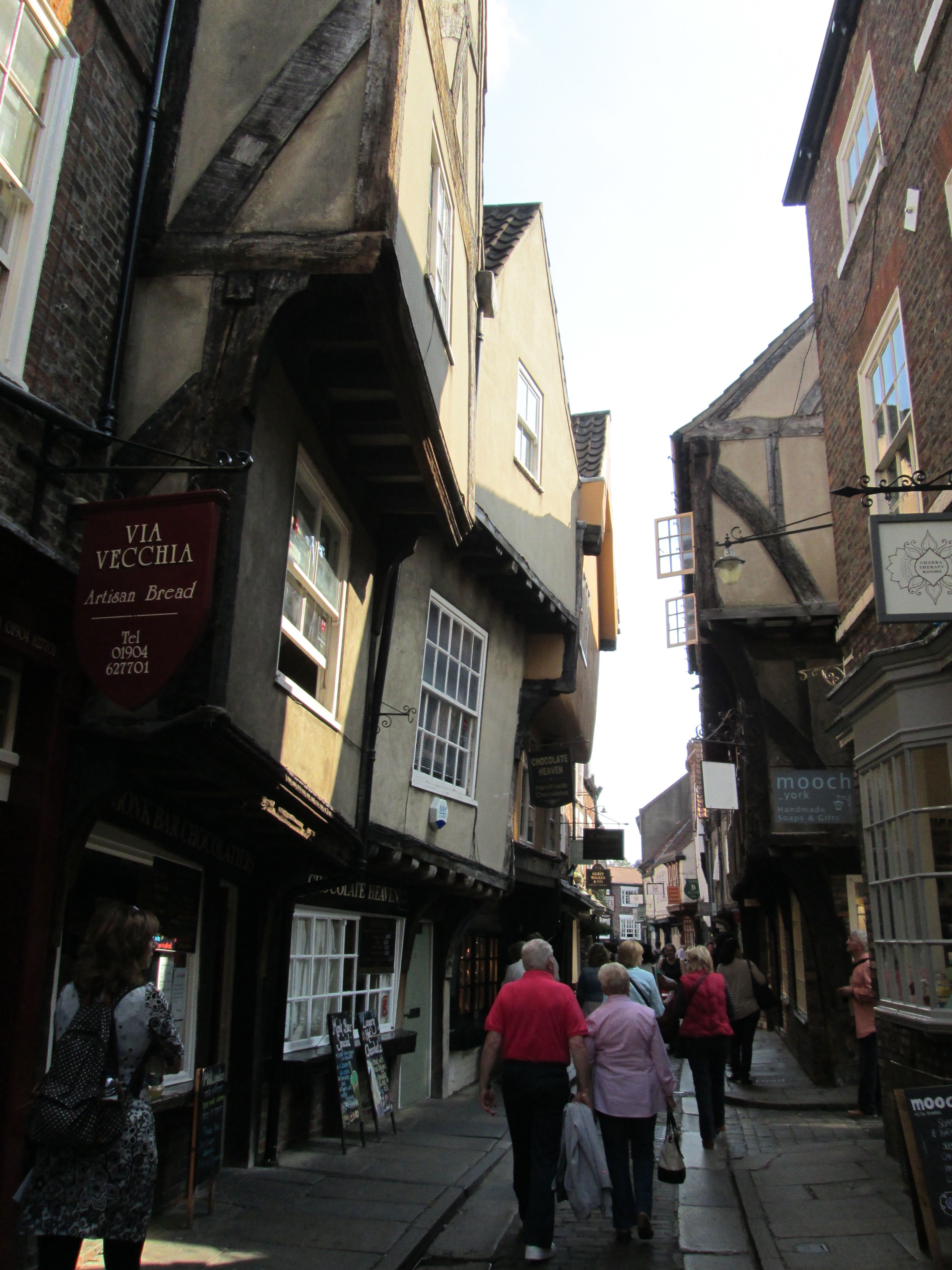
The Shambles

The Shambles

The tiny streets weave and flow, thronged with shoppers, tourists and the blooming party scene of early evening. There are plenty of old traditional bars. The Olde Starre Inn, is York’s oldest. Dating from 1664, its foundation coincided with the birth of Kronenberg, a happy coincidence indeed which must be honoured. The Judge’s Lodgings has a pleasant raised patio where we soak up the evening sun, sampling the ale while the ‘girls’ gather for the night. Wilde’s of Grape Lane is, for some reason, dedicated to our own great Oscar. An eclectic mix of Edwardian frippery, contemporary music and brown cafe ambience, it’s just right for drinking and dining pleasure. Burritos and Kronenberg, if you must ask, and very good too. On another day, more basic delights are catered for with a stop at a vernacular cafe near the markets for pie and chips washed down with a bottle of local ale. Ah yes, Black Sheep Ale, how wonderfully named. With the weekend on top of us, hens, clad in minis and sashes, teeter on stilettos over centuries old cobbles. Meanwhile, stags in their civvies are starting to rut, so we must weave our way home, as you can imagine. Betty’s Tea Shop is another Yorkshire institution. Founded in 1919 by a Swiss baker, Francis Belmont, it strives for a traditional ambience,elegant and deferential. On the last morning, as the Boss seeks out the White Stuff (it’s a shop, honestly!), I take coffee at Betty’s on Stonegate. Its upstairs tea room forms an oasis of sorts, bustling but somehow calm in its certainty of caffeine and spices. It’s a perfect pick-me-up for our morning departure. Back at the hotel the SF gig is winding down. People are getting ready to rejoin the real world. The throng meanders along the swirling corridor from some classic movie, then winds down the massive staircase to reception. A couple of starry trekkers prepares to check out, or as one says knowingly, to no-one in particular: “to boldly go.” I suppose we must. But look forward to going back, when time and space allows.
Bray – a Short History.

Bray – History.

Bray is a direct translation from the Irish ‘Bré’, meaning a hill. For some time, however, the Irish version was given as Brí Chualainn whose meaning is disputed. In general it is taken to derive from Ui Bhriain Chualainn, the land of the O’Byrne’s of Cuala. The O’Byrnes, usually styled Byrne, are a significant Wicklow name, along with Cullen, O’Toole and Kavanagh. These clans disputed coastal Wicklow with the Danes and subsequently the Normans.

St Sarain's Cross at Fairyhill

St Sarain’s Cross at Fairyhill

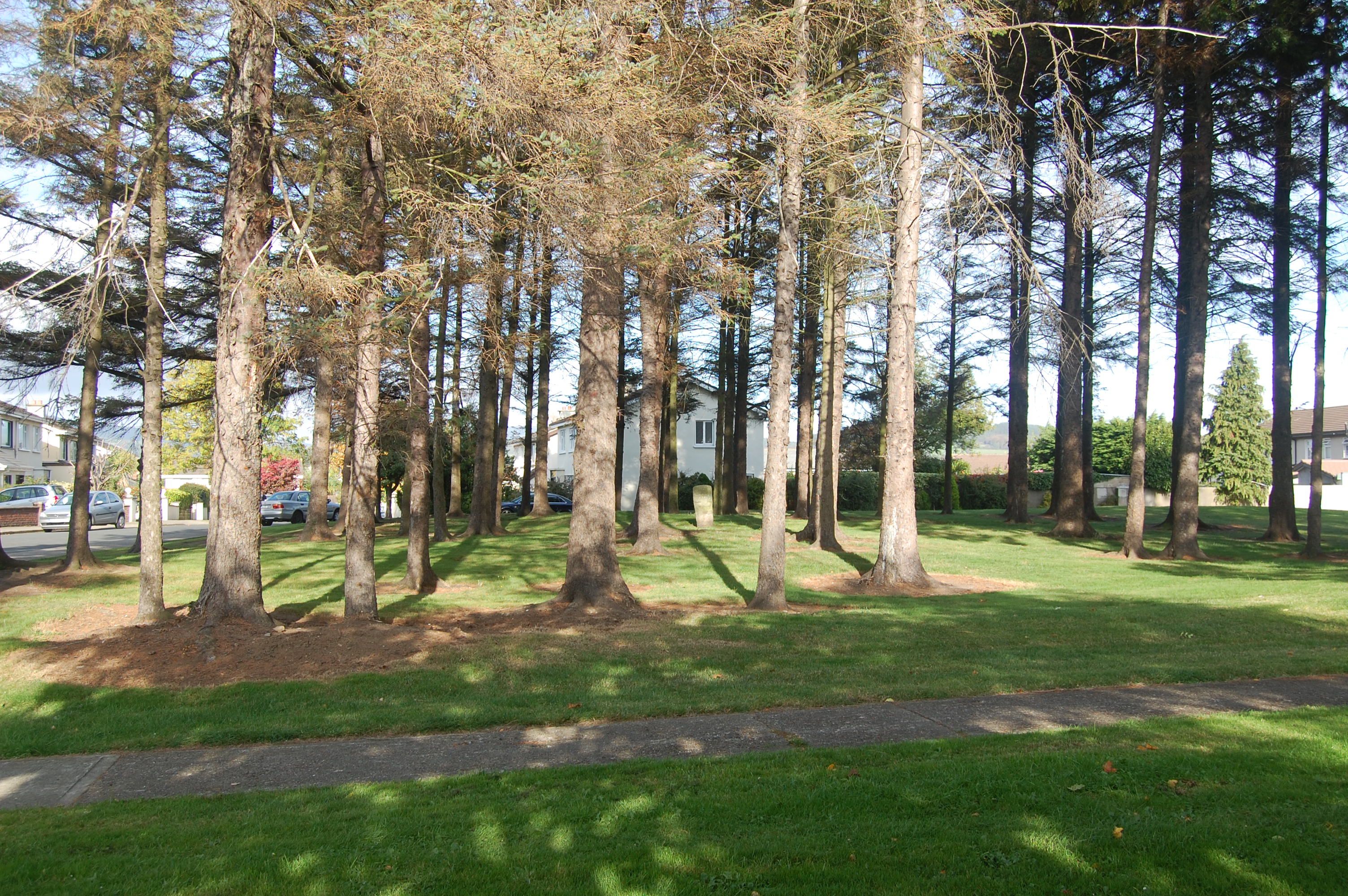
There are some remnants from the early Christian era, dating from the fifth century onwards. The ruins of Raheen a Chluig, the Little Church of the Bell, are on the lower, northern slopes of Bray Head. Two well-weathered early Christian crosses survive, at Fassaroe to the north, and Fairyhill to the south. This latter cross, situated in a hilltop stand of fir trees at the entrance to a modern estate, is attributed to Saint Saran. The saint is further commemorated in the name of nearby Killarney Road, the southwestern approach road to the town.

Bray, as a definite location was established by the Normans under Richard de Clare (Strongbow), at the fording point of the River Dargle near where the town bridge now stands. The location was of importance since it marked the southern extent of the Pale, the area of Norman influence around Dublin. As such, Bray was a frontier fortress, sporadically attacked by native clans from the south. The castle was built just west of where St Peter’s church stands. Other castles, or tower houses, were established at Castle Street north of the Dargle, and Oldcourt further south. Only the ruins of Oldcourt Castle remain.

The lands south of Bray were granted to Walter de Riddlesford, one of Strongbow’s loyal adventurers in the invasion of 1169. This led to the establishment a large demesne centred on Kilruddery, the Church of the Knight. The route between this estate and Bray Castle established the line of Main Street. Thus, Bray grew as a typical manor town of the era. Agricultural produce, milling, brewing and a freshwater fisheries maintained the economy of the town over the next few centuries.

Kilruddery

Kilruddery House and Gardens

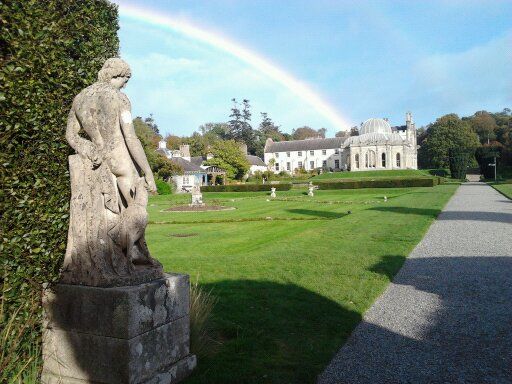
The Brabazon family had come into ownership of the estate in the early 16th century through William Brabazon, Lord Justice of Ireland. Brabazon gained favour through his zealous support for Henry VIII as King and head of the Irish church. The title Earl of Meath was granted to his great-grandson William in 1623. Kilruddery House had to be rebuilt following destruction in the Cromwellian wars of the mid century. The current building is largely an 1820s reconstruction in the gothic Tudor revival style. The original gardens remain, designed by the French gardener Bonet, they are a unique example in Ireland of eighteenth century design. An eerie, placid beauty attaches to them, the most notable vista is presented by the parallel canals running south of the house. Adjacent to this gothic realm, classically inspired additions were added in the eighteenth and nineteenth centuries.

By the end of the eighteenth century, Bray’s development as a resort had begun. The Romantic movement inspired people to regard the sea as beneficial to health, of body and of spirit. Contemplation of beautiful scenery and engagement with nature was also encouraged. Bray was ideally situated, close to these benefits and also convenient to Dublin. Novara House, an early beach lodge, lying at the southern end of Novara Avenue, dates from this time, though it has been extensively modernised. Originally known as Bay View, it is sited a half mile inland from the seafront itself. The early nineteenth century saw the building of three Martello Towers to guard against the Napoleonic threat. One of these survives on the crag overlooking the harbour at the north end of the seafront. In the 1980s this became, for a time, the residence of that other wee general, Bono of U2. The harbour itself would not be constructed until the second half of the century, such sea traffic as there was unloading at a small dock at the mouth of the Dargle opposite the Harbour Bar. This popular, atmospheric pub from the 1840s is one of the few buildings on the seafront to predate the coming of the railway.

The railway transformed Bray. The Dublin-Kingstown (now Dun Laoghaire) was opened in 1834, however, twenty years passed before it was extended to Bray. Railway engineer and developer William Dargan, was instrumental both in bringing the railway to Bray and in developing the town into a major attraction for visitors and new residents. The area between Main Street and the seafront was developed with straight, tree-lined avenues lined with elegant Victorian terraces. Dargan had an exotic Turkish Baths constructed in the Moorish style on Quinsboro Road. It was a startling addition to Bray’s streetscape for over a century before its sad demise in the 1970s. Another of Dargan’s initiatives was the National Gallery of Ireland facing Merrion Square in Dublin. A statue of the indefatigable entrepreneur and patron stands in its forecourt. In Bray, he is commemorated in the name of a terrace on Quinsborro Road, and in a mural at Bray Dart station.

Bray Town Hall, completed in 1881

Bray Town Hall, completed in 1881

Major hotels were established to cater for the influx of tourists and day-trippers. Quin’s Hotel, overlooking the Dargle at the north end of Main Street was transformed from a small town inn. It is now the Royal Hotel and Leisure Centre. Other hotels sprang up on the seafront and adjacent to the railway station. The International Hotel, facing the station’s west frontage, was the largest hotel in Ireland on its completion in the 1860s. The development of the Esplanade with its seawall Promenade, and the Harbour came soon after. Bray, once the small manorial village, was transformed into a thriving resort for the quality, and dubbed the Brighton of Ireland. By the end of the century, the town’s population approached the ten thousand mark, whereas most Irish towns, in the aftermath of the Famine, showed declining populations. During the Edwardian era, Bray continued to epitomise the stylish resort.

The Cross on Bray Head

The Cross on Bray Head

After Irish independence, it began to drift downmarket. Fashions change, and holiday resorts now catered for a more egalatarian population. Amusement arcades mushroomed, an increasingly raucous brand of fun was demanded. Big band music, cinema, donkey rides were all part of summer at the seaside. Blackpool of Ireland, might have been more appropriate as a nickname. After the hiatus of World War Two, British holidaymakers returned in the fifties. Bray Head acquired its crowning stone cross in the Holy Year of 1950. This has become an iconic image of the east coast. A chair lift brought people to the summit. It’s long gone, though the cross remains. Top Irish showbands such as the Royal and Miami played the Arcadia ballroom on Adelaide Road in the late fifties and throughout the sixties.

Ardmore Studios were opened in the early sixties, bringing a touch of silver screen glamour to Bray. The studios, on Herbert Road, hosted major American and British productions, the industry grew to provide television and advertising facilities. While Wicklow’s lovely scenery was a big draw for producers, Bray’s versatility also came into play. Over the years, the town has stood in for smalltown Vermont, a typical Irish western town or the heart of the English Home Counties on the large and small screens. Neil Jordan painted the seafront pink for The Miracle, he also used it for Dublin in the film Michael Collins, the Carlisle Grounds standing in for Croke Park during the War of Independence.

Changing fashions saw the postwar tourist boom fade too. Foreign destinations became a bigger attraction for summer holidays. Tourism was further eroded by the oil crisis and recession of the seventies. Bray experienced an unfortunate depredation of many of its attractions and landmarks. The Internatinal Hotel was destroyed by fire in 1974. The vacant lot festered for a decade or more, eventually taken by a bowling alley. The Arcadia became a cash and carry. In 1980, the Turkish Baths were demolished in the crass, shortsighted civic vandalism that prevailed.

There was light at the end of the tunnel, and it was an oncoming train. The electrification of the suburban rail system initiated the Dartline in 1982. Bray Daly station was once more a key focus of the town. In the 1990s, a project sponsored by Bray Community Arts Group, commissioned a painted mural on the eastern platform. The mural depicted the history of the town and the railway decade by decade from the 1950s to the present day. Brunel, Dargan, Oscar Wilde and James Joyce are all featured. Wilde’s father had property in Bray and the writer was to suffer an early, unfortunate trial at the Courthouse. James Joyce has a stronger association. He lived at Martello Terrace, hard by the waves pounding the Promenade. The house features in Portrait of the Artist, while the phrase, “snot-green, scrotum-tightening sea” may owe something to the location. The mural has been badly weathered by the briny air,  so original artists, Triskill Design, have undertaken a replacement project using tile mosaics.

The rejuvenation of the railway brought a population boom to Bray. By the end of the century the population had doubled to over thirty thousand people. The new residents were housed, for the most part, in suburban estates south of the town. New schools and industry followed. The protection of the sylvan setting has helped soften the impact of such an extensive building development. Still it grows, and new estates and roads now crowd to the edge of the lands of the Kilruddery estate.

Hail, rain or snow, crowds gather for the annual New Year Swim

Hail, rain or snow, crowds gather for the annual New Year Swim

If the amusement arcades have waned, the seafront remains a magnet for all those seeking rest and recreation. Bars and restaurants now cater to the fashion of al fresco drinking and dining throughout the summer. The annual festival has hugely expanded its carnival attractions, drawing thousands over the St Patrick’s day festival and the Summer Festival throughout July and August. The Fireworks display and the Air-show have seen crowds approaching a hundred thousand throng the length of the Esplanade. Returning Olympic hero, boxing gold medallist Katie Taylor, drew a massive crowd of wellwishers to the Esplanade in 2012. For fitness fiends and boulevardiers, the amenity of the seafront Promenade and Bray Head is popular year round. The National Sealife Centre, north of the Bandstand, is one of Ireland’s most popular visitor attractions. An unimpressive pile at its inception, it has developed into a sleek modernist building, with restaurant, ice-cream parlours and cafes, augmenting the wet zoo at its core.

The Civic Centre at St Cronin’s, off Main Street, was a major project of the late century. This included the Civic Offices and the Mermaid Arts Centre, incorporating a gallery, theatre and workshop space for several arts disciplines. The Mermaid brought to fruition a long campaign to establish a designated arts centre from artists and groups including Signal Arts and the Bray Arts Group. The Centre is an important focus for the arts in Bray, however the arts scene thrives at several venues around the town, with music, theatre and literature particularly strong. The Bray Jazz Festival in early May is in its fourteenth year, bringing top national and international musicians to a dozen or so stages from Main Street to the Seafront.

Storm clouds gather over the Prom

Storm clouds gather over the Prom

The financial collapse of 2008 stymied commercial growth in the town centre. Proposed shopping centres, north and south of the bridge, failed to materialise. Town centre businesses in Bray, as elsewhere throughout Ireland, are on the retreat as out of town retail parks and on-line shopping erode their customer base. Bray also lost its town council, it being subsumed into Wicklow County Council. Whether this will prove unsympathetic to Bray’s future needs remains to be seen.

Rostock

Rostock and Wehrnemunde

DSC_0543

Tall Ships on the Warnow River


Sailing from Copenhagen, our first port of call is Wehrnemunde in Germany. Part seaside resort, part port, its situation at the mouth of the Warnow river makes it convenient for the main municipal centre of Rostock seven miles to the south. The more ambitious take the train to Berlin, just two hours further on. The quayside is bustling with the Tall Ships race. Thousands have come to experience the poetry of sailing ships, to see blue skies punctuated by towering masts. Ferries scurry across the estuary, trains trundle in and out, pedestrians swarm amongst the stalls and rigged ships. There is a regular parade of white sails along the channnel to and from Rostock. The estuary is a startling panorama of towering skies, modern industry and ancient maritime elegance. Somehow serenity pervades over chaos, the German devotion to form emerges ultimate victor. Yet charm is nurtured by bright sunshine, smiles break out everywhere.

We take a morning train into Rostock, while the region’s population, I reckon, is taking the opposite direction out towards the Tall Ships. Some soccer game is also drawing rowdy supporters through the transport system, their bark worse than their bight, I daresay. Rostock itself is quiet in the noonday sun. It is a small medieval jewel, large portions of the original city walls and turreted gatehouses surviving time and war, while the gothic cathedral of Saint Marian casts its extravagant shape over all. From the airy expanse of the New Market Square with its ancient Town Hall we flow along winding pedestrianised streets, the maritime theme echoed in galleon fronted houses and the occasional glimpses of blue water dotted with an endless variety of craft. Shopping and tourism are beginning to bustle and we find some respite in the thirteenth century Convent of St. Catherine, its contemplative gardens melting green in the shadow of the crumbling city walls.

Zest for Life fountain

Zest for Life fountain

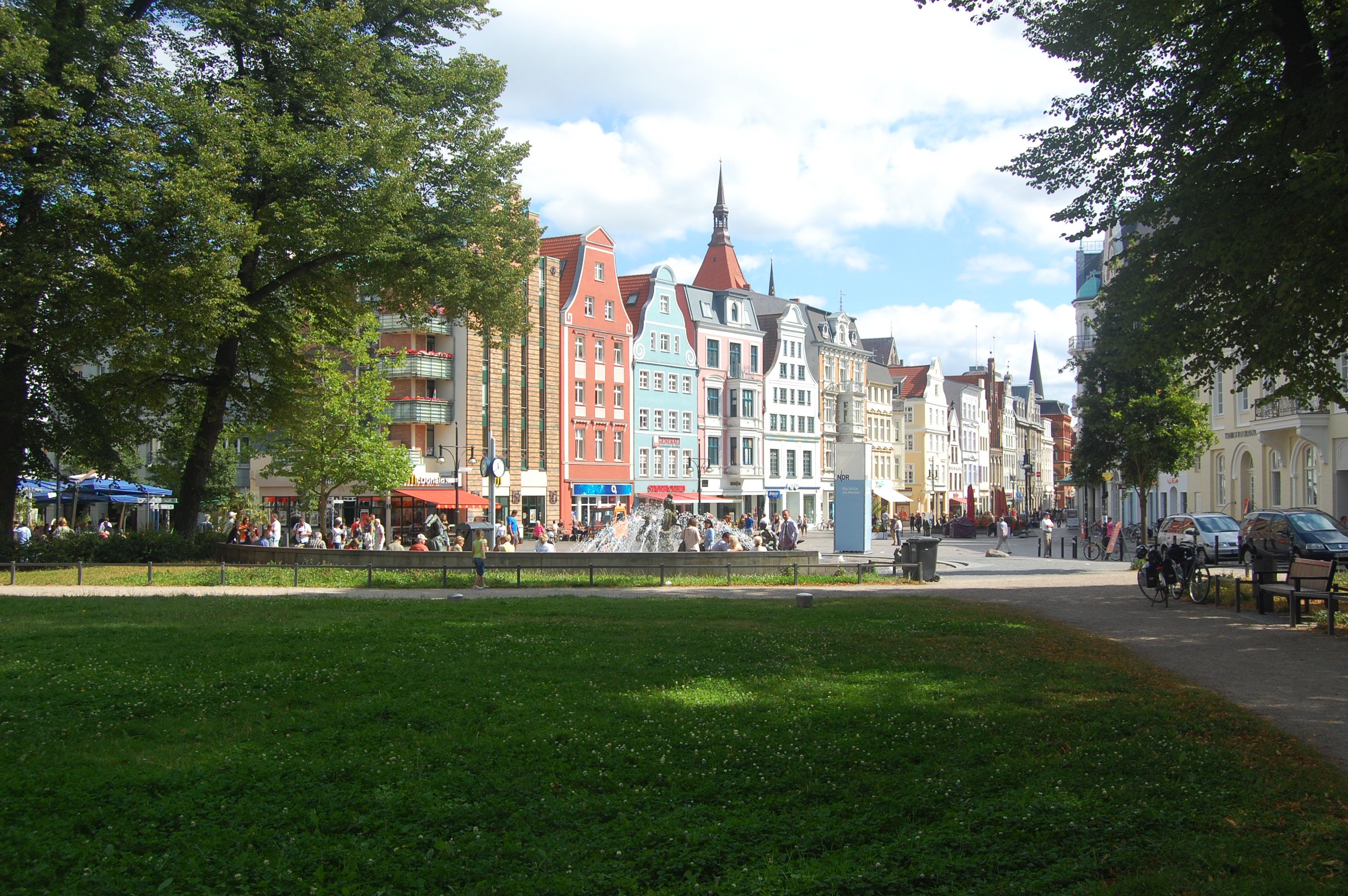
Rostock University is one of the oldest in the world. Founded in 1419, the main buildings now quietly survey the town centre, where Kropeliner Strasse widens into a casual plaza. Here an amusing focal point is provided by a fountain called Zest for Life. Amongst the university’s alumni is Tycho Brahe, the Danish astronomer who studied and lost his nose there. It was replaced, apparently, by a prosthetic made of gold. The astronomer’s observational powers were harnessed by Kepler, helping him to the ultimate model of the solar system.

Something of this endeavour is echoed on the seafront back in Warnemunde. A scale model of the sun and planets is spread out along the seafront promenade. Not that we can find it on our return. With all the madding crowds, I can only find the sun, which is easy enough, parked obviously as it is at the Teapot centre. This modernist commercial unit is somewhat at odds with the older, more picturesque urban architecture of the town. It is thought to resemble a teapot. I doubt the Germans drink much tea. A celtic rock band plays nearby, a peculiarly appropriate blend of the Gaelic and Germanic. We feel we’re blending right in.

There’s plenty of craft and souvenir shopping along chintzy streets lined with timber cottages. There’s all the fun of the seaside, sticky confections, fizzy drinks and wasps. You can rent out curious beach furniture, giant wicker hybrids of an easy chair and a beach hut. These are scattered on the sands like some surreal visitation. Wehrnemunde is still throbbing in sunshine and festivities. Parallel with the quayside there is a picturesque canal which serves much of the pleasure cruise trade. It is lined with bars and restaurants, filling now as we slip into the Baltic evening. We take a pew, our very own cushion clad, wicker two-seater. Here we sip our frothy beer, sit and watch the world go by, for ever and ever.

San Francisco

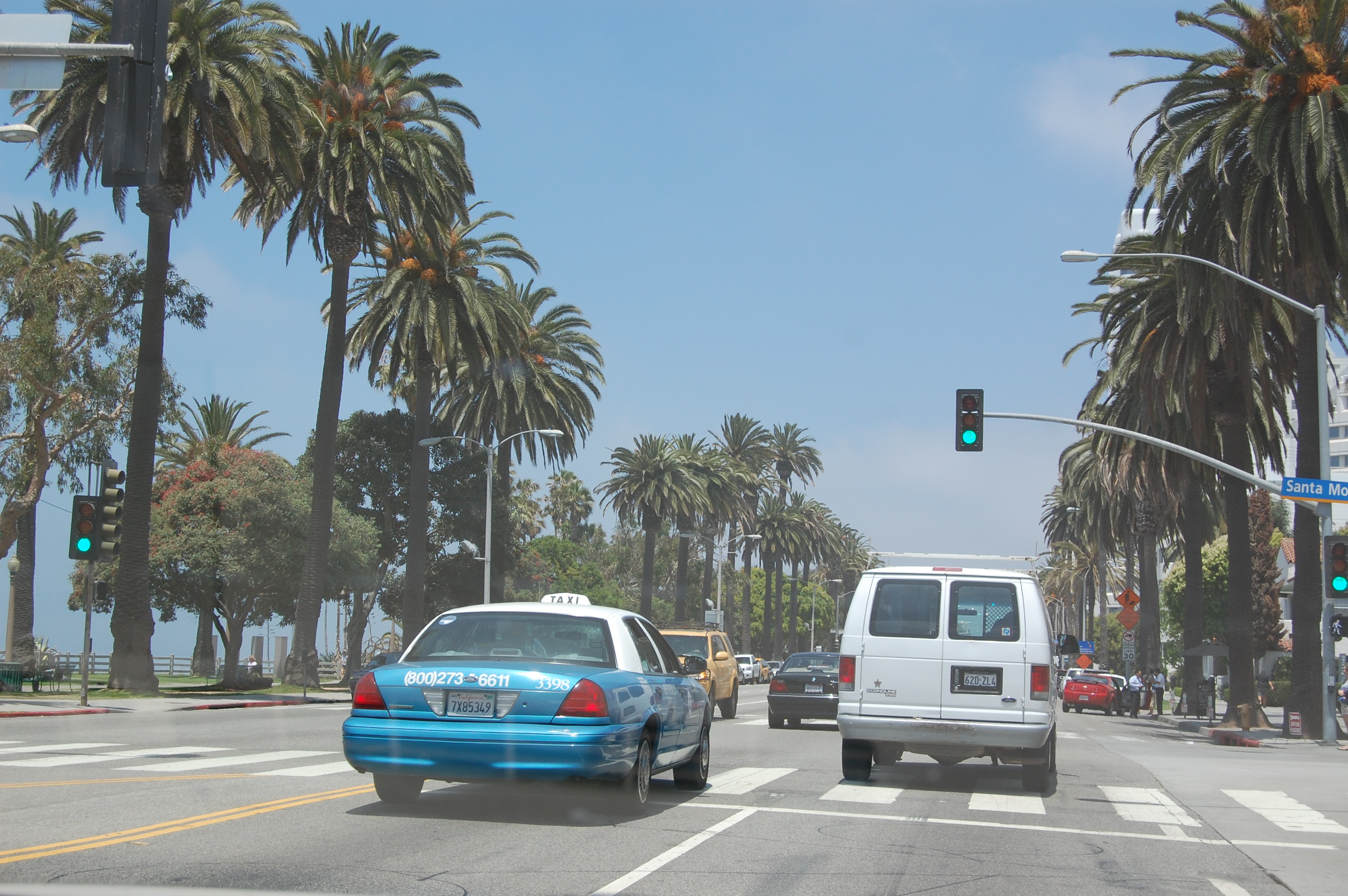
We head out of Santa Monica along the coast and I feel I’m struggling beneath forces more pervasive than the damp Pacific air. The highway is hectic past Malibu where we become snared in our first major traffic jam as we cut in from the coast. It takes a long time snaking past Pasadena and eventually we stop on the outskirts of Santa Barbara at an empty, rustic restaurant.

Leaving LA

Leaving LA

There’s pleasant rolling countryside all the way to San Luis Obispo. The atmosphere of Steinbeck Country is suggested in sun-drenched farmland strung between the coastal hills. We leave the main road for Morro Bay to find the dingy Motel 6 just south of the town.The view is a strange combination of industrial and scenic – El Capitan, the giant rock dome in the bay is visible and we’re also in the lea of an impressive power station with its phalanx of chimneys. The route to town bisects an unpromising wilderness where we surprise a courting couple (oops), before finding ourselves at Morro Bay’s Embarcadero. This really is Californian coastal quaint, the wooden buildings on the wharf housing plenty of restaurants, cafes and bars with live music. I’m not feeling too well and I go back to collect the car while the others go for food. The walk back along the coast is not so straightforward as I had imagined but the falling sun lifts the spirits before sinking into darkness.

The night is bad and herself handles the driving chores for the run up to Monterrey. We wind along the bulky coast with the temperature skimming the low sixties. There are few cars on the road and very little by way of houses or pitstops off it. By midday we reach Monterrey and the motel looks good with a curvy Hockneyesque swimming pool. The Missus goes in search of a chemist while I bed down. She is met with sympathy as the chemist girl wonders if the holiday has been spoiled. It’s not really like that. It is unfair to be struck down on a journey I had been looking forward to but that’s the way it goes – better near the end than at the start.

After medication time (don’t ask) it’s down to Fisherman’s Wharf for a slice of Monterrey. There’s loads happening here and, if a bit touristic, it’s bright and cheerful. We spend some time with a man displaying his colourful menagerie of parrots and macaws. Most places offer the local delicacy of seafood chowder served in a bread bowl. Later we wander on towards Cannery Row although we don’t have time to investigate the Steinbeck connection further. There are pelicans aplenty in the cove, very much the pet bird of the town. At the harbour too is the site where the Americans first came ashore to claim California in the 1840s. Monterrey was the regional capital then but by 1849 all eyes turned to San Francisco.

I attempt driving but can’t get back into it so herself takes us into San Francisco. There’s a rollercoaster entry into the city from off the freeway as the centre lane goes airbound before hooking up to the grid. The grid itself never took account of the hills of the peninsula so the rollercoaster continues through the streets heading downtown. Leaving the boys and the baggage off at the Hilton, I take the Cadillac the last few blocks to the drop off. Fun, in a mildly terrifying way, as streets disappear into the sky and the skyline plunges up and down over the bonnet like a wave. I follow a cable car – a no-no, apparently – before getting blasted for sawing across two lanes in my last on-street manoeuvre. The garage hands are impressed with the car but as nonplused as we by the plastic thingies which have taken up space in the boot since Denver. We say our fond goodbyes to 300 OXT.

The cable car terminus on Market street is only a couple of blocks away and after life on the road it’s a pleasure to take public transport. The boys are on the runner board as we take the trip over to Fisherman’s Wharf. This proves to be our main centre of exploration for the duration, with boat trips and bikes for hire while shops, restaurants and panhandlers abound. Regarding the latter, it’s best to keep eyes averted or purposefully focussed to avoid parting with your cash to the many needy, and probably not-so-needy, beggars that infest the city. At the cable car terminus the couple ahead of us in the queue asked directions from a passerby and found themselves charged for the privilege. At the Wharf a beggar basks in the honesty of his pitch with a sign asking for money but admitting that he’ll probably blow it all on booze.

Oran is briefly snared by a panhandler with the line – ten bucks says I can tell you where you got your shoes. Oran knows he’s got them on his feet – “You’re the guy who got money off my Uncle Brendan last year,” he says. Your man still wants payment but we think he should invest in a new line.

We eat at a Rainforest where the waitress is keen to regale us with details of her workbreaks. “Hi, I’m Debbie, I’ll be your waitress this evening;” but then again – “Hi, this is Brenda, she’ll be standing in for me while I take my break;” and then – “Hi, I’m back from my break….” This is all very well, but any chance we might get a break, some food, even?

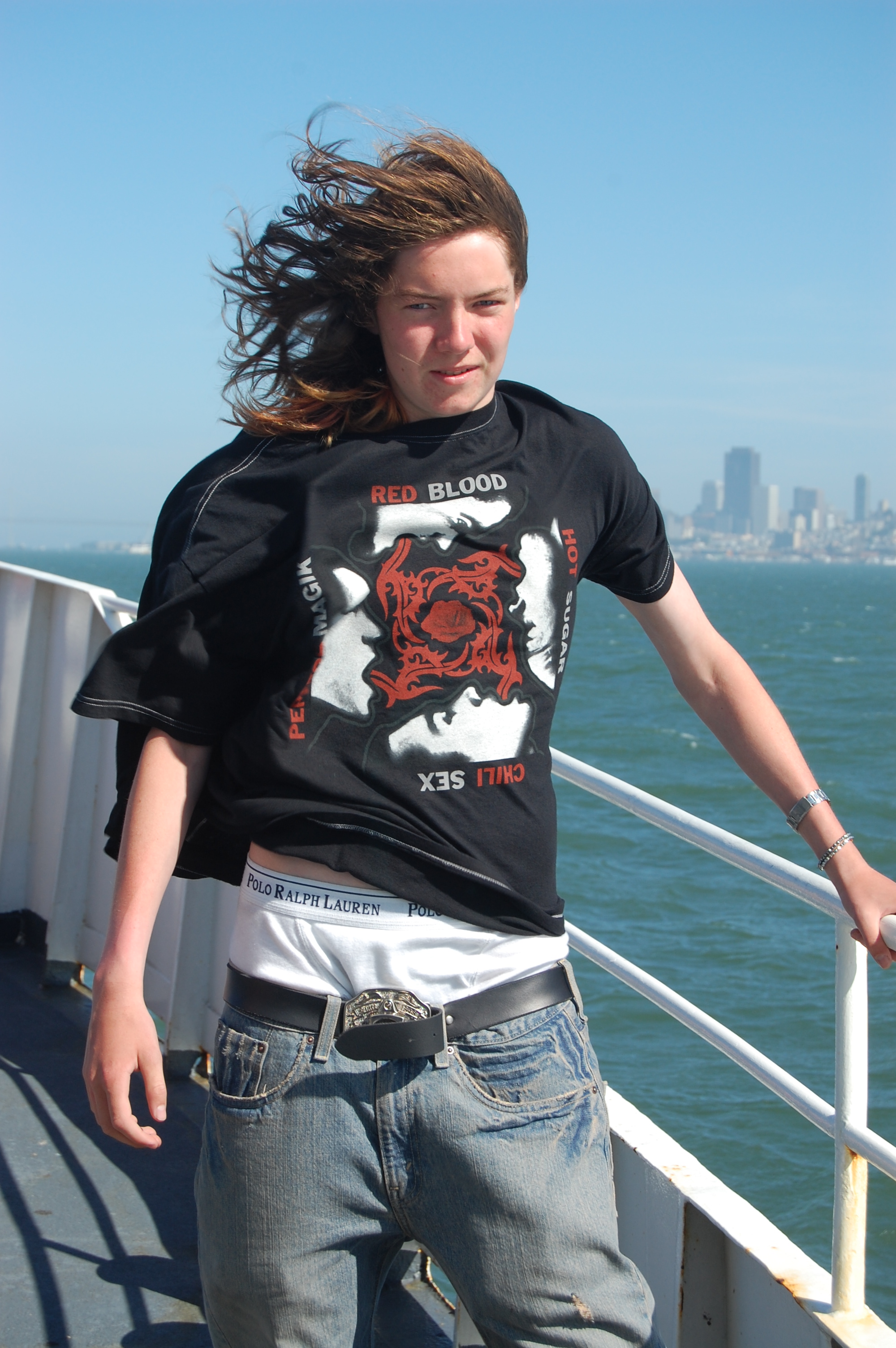
The lads discover a sudden yen to see Alcatraz, the mothership is, I suppose, calling them home. We get tickets for three from a laconic Hispanic in a sidewalk stall who enthuses about Frisco’s chill and fog. It’s part of the city’s charm, he says. In fact the only time we see the notorious fog is picturesquely from the comfort of our hotel room. It is spectacular, rolling in and rolling away, taking bits of the city with it, illuminating other parts against its soft backdrop. I am happy not to be caught in it – I have improved but still feel a bit foggy myself.

Next morning we hike up through Union Square, Chinatown, North Beach and on down to Fisherman’s Wharf for the boat. Chinatown is everything you would expect, bustling and bright and entirely Chinese. The financial district forms a jagged, incongruously modern backdrop to the area which was the original settlement of Yerba Buena, holding its old world soul within the ethnic brashness. As is often the way, Chinatown segues into little Italy (viz New York, Bray etc.). North Beach takes the top of the rise before falling away to the coast by way of Columbus Avenue. There’s a pleasant collection of Italian restaurants near Washington Square where we eat later.

Bad boys at Alcatraz

Bad boys at Alcatraz

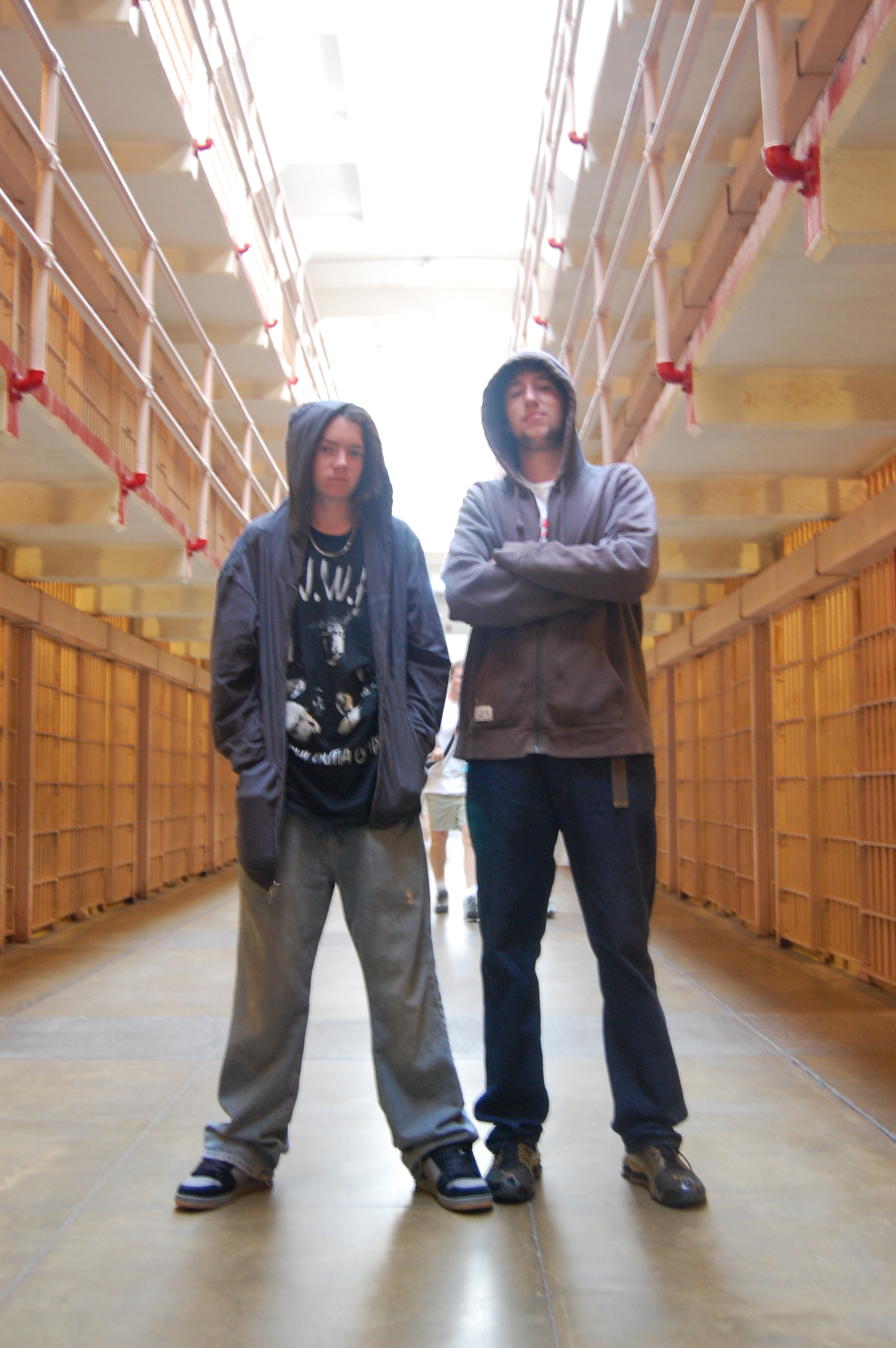
Meanwhile it’s time for the trip to the island. Alcatraz is the city’s big tourist attraction and tickets are at a premium in high season. It’s worth it. The bay is blustery and the fortress forebodingly dramatic, its haunting familiarity due to Hollywood’s pervasive heritage. Oran and Davin get into some serious posing here as we follow in the footsteps of the Bird Man and other badguy heroes refracted from reality through the silver screen. But this was a real place with real stories stained into its walls and fittings. It’s eerie and moving. Strange that, on this of all islands, a sense of freedom prevails.

We return to North Beech and a sleekly traditional Italian restaurant, Volare, where we eat excellent pasta by an open window. That’s not necessarily the best idea in San Francisco as Davin is manhandled by a passing tramp, albeit in a reasonably goodspirited way. The event breaks the social ice with our dining neighbours and we fall into conversation with them for the evening. Joe Donohue and his wife were here before back in the halcyon sixties and they’ve returned from their home in Farmington, New Mexico, to touch base with those good old times. They’ve been coast to coast in the US throughout their lives and he travels extensively worldwide too. He tells me he does business with David Hay of Celtic and Chelsea fame. He is ‘Irish’, you can tell, and I had seen them giving us the eye before we fell into conversation.

On the last day of our summer vacation we rent bikes and cycle across the Golden Gate bridge to Sausalito. The cycle route is well delineated and mostly flat. It passes through the Praesidio, an extensive parkland along the north of the peninsula. The place is packed as this is the 4th of July and all of Frisco, his wife and kids are out lounging, playing ball and barbecuing. There’s a sweaty climb up to the bridge and the cycle track is too hectic with that serious breed of cyclist who make car drivers seem comparatively relaxed.

San Francisco Bay

San Francisco Bay

The signage disappears on the far side of the bridge causing a bit of speculative exploration through a village in the cove before a policeman points us on the rocky road to Sausalito. This is a pretty but packed seaside town and we just manage to get a table on the cramped veranda of a snack bar overlooking the water. We take the ferry back which is a welcome relief from pumping pedals. It’s pleasantly cool and blustery on the bay after the exertions of a hot afternoon. You can’t get a trolley bus back from the wharf with all the holiday crowds so we hail a cab and get another switchback tour of the streets of San Francisco. The driver senses our tourist desires and takes us to the base of Lombard Street before the breathtaking plunge back to O’Farrell Street and the Hilton.

Tonight we have decided to go out in style, dining at the Hilton’s rooftop restaurant on the fortieth floor. We’re dizzy up here in the spires of the city and the fourth of July fireworks are all set to go off by dessert. A group of Americans nearby is getting emotional. As the sun goes down and fireballs burst out over the skyline they launch into a ragged version of God Bless America.

DSCF1549

Las Vegas

It’s a long drive from the Grand Canyon to Las Vegas, from the wilderness world to the land of fabrication. We’re up early and heading south to pick up Route 66 again, then turn to head west through Seligman and Kingman. At Seligman, birthplace of the Mother Road, there’s a long and lonely train strung along the horizon, and a cowboy in a pickup turning on to the range by a gateway. We stick to the freeway while the old route bumps off to our right. There’s a camper van parked in isolation with two waifs, Thelma and Louise, in halter tops and shorts posed on the roof staring off into the shimmering distance.

Kingman is off the highway but doesn’t originally reveal the tacky charm I had anticipated. We’re lost in the fast food outskirts before finding a Burger King off what could be the Naas Road Industrial estate where we pore over the maps again. This is always a good way to attract an American. A man folds up his mobile phone mid sentence to come, unbidden, to our assistance. With his help we’re back on Route 66, cruising by the amazing pink motels of ‘historic’ Kingman before picking up the highway again towards Las Vegas.

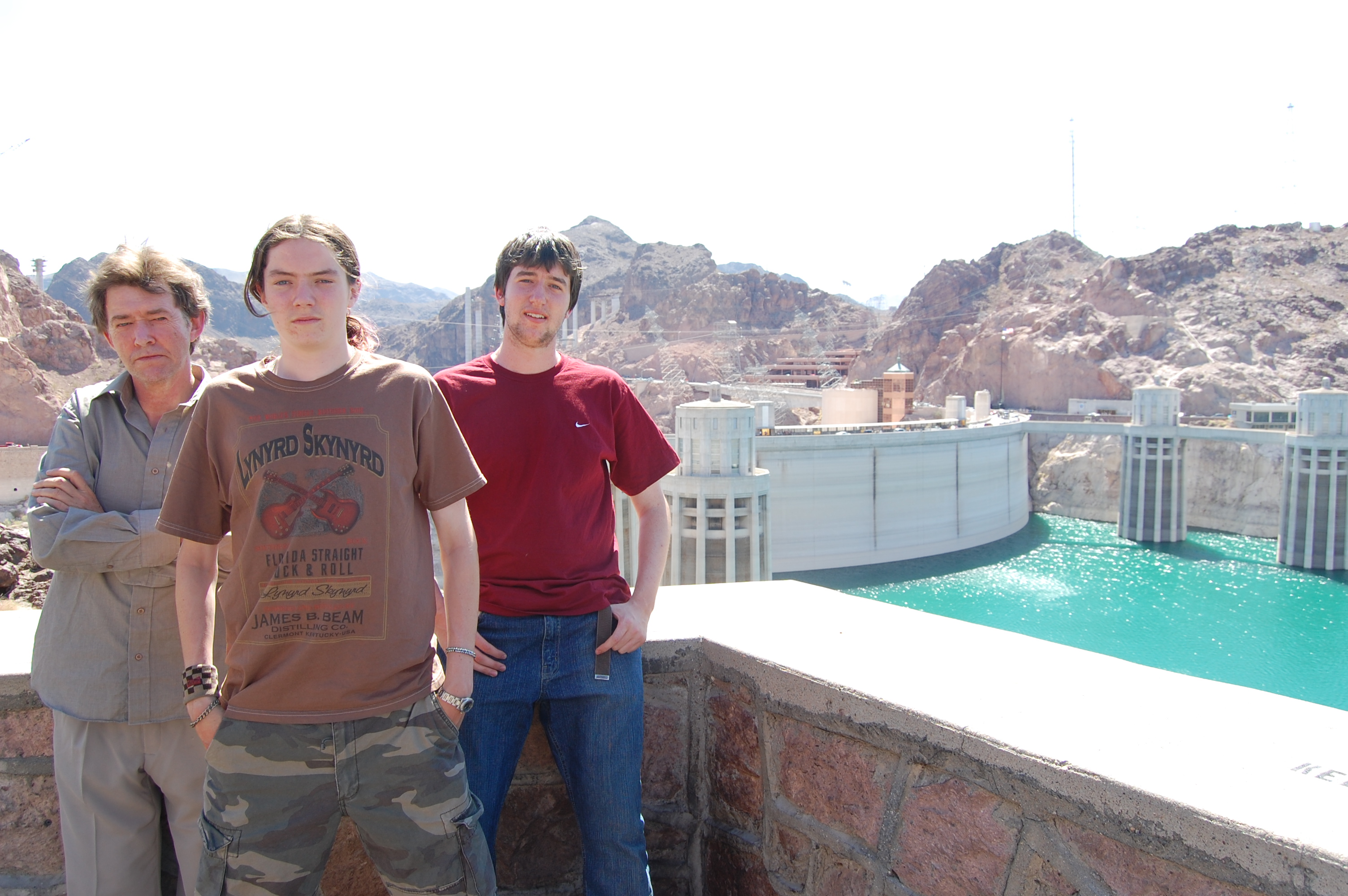
We head north on 93 with dust devils dancing off the road to the sounds of Sheryl Crow and Michelle Shocked on the stereo. Isolated trailers and shacks pin down handkerchief plots of minor cultivation in the arid landscape. We rise and rise until we come to the cooling variety of a maze of black rock hills. The troopers welcome us to Nevada and when we come to the edge of the plateau, there’s Lake Mead in its impossible cool blue, a fake lake held in the heat by the miracle of the Hoover Dam. Constructed during the Great Depression of the 1930s, it is surely one of the engineering marvels of the world, transforming the desert beyond into an Eden, of sorts.

DSC_0395


The car is now recording one hundred and ten degrees and outside the souvenir store the heat blasts at us as from an open oven. A wiry old-timer plays lock-hard in the narrow car park. British or Australian, he loves the heat but for us it’s life in the oven with the thermostat flipped. A meaty black family from New York must be shedding pounds passing over the dam from Arizona into Nevada, but they’re permanently happy with it all. Golden rest rooms offer brief respite from the heat before we head off into the desert.

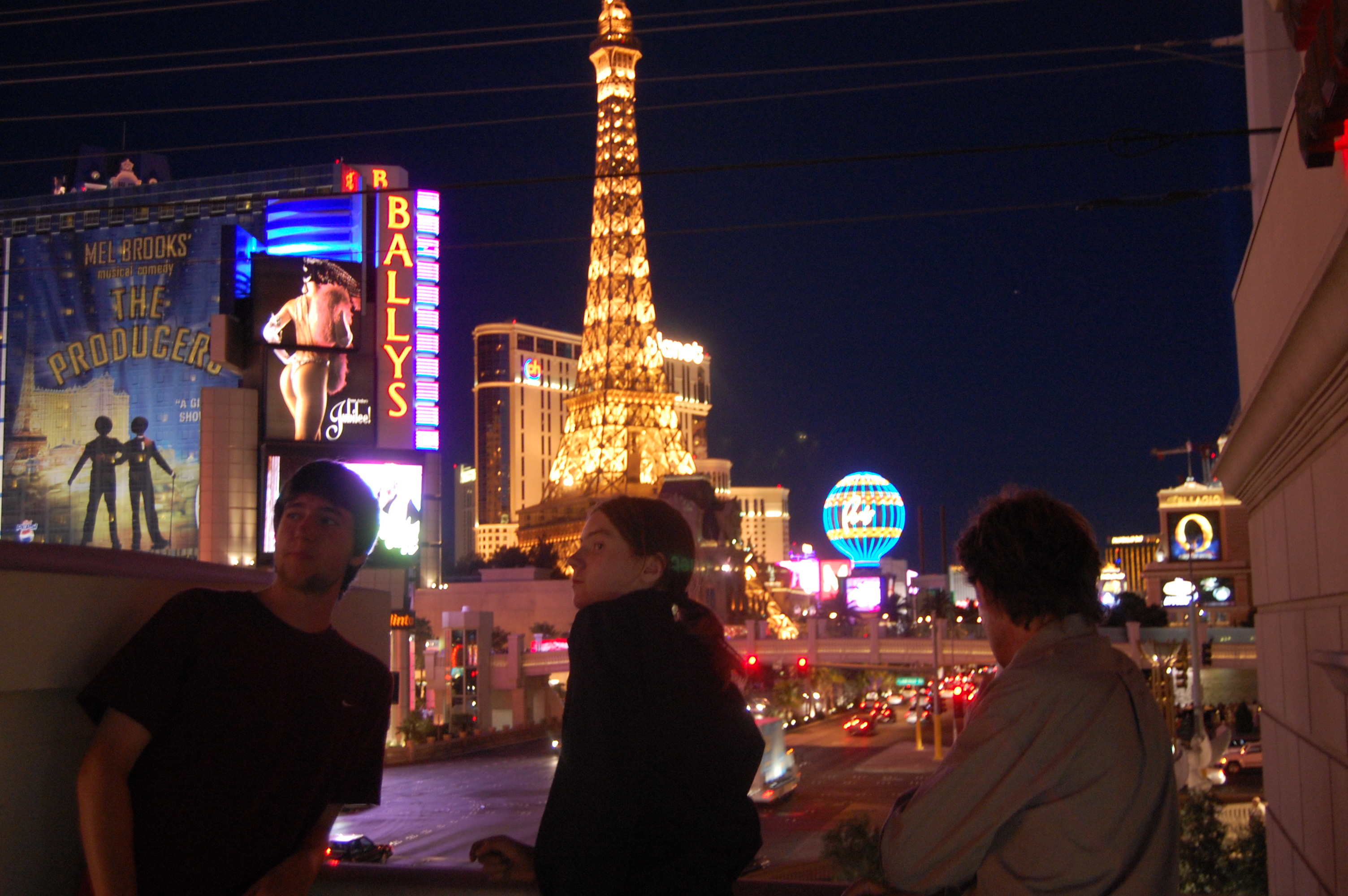
There are glimpses of Lake Mead against the desiccated landscape, then there’s a sudden pulse in the traffic and we’re flying into the Las Vegas freeways. Oran navigates us well through some tense moments and dizzy junctions but pretty soon we’re heading in city traffic towards the strip. We do an impressive swerve in the empty forecourt of Caesar’s Palace before finding the right route to the multi story. Then we’re bound for the gilded lobby of the hotel. Our room is very impressive with jacuzzi in the bathroom and telephone in the toilet. We can see the Eiffel Tower from our window and more of the unreliable skyline of Las Vegas.

Time for a swim to take off the desert heat. I could get to like the pool at Caesar’s Palace. You lounge there and call a barely clad waitress to bring you an overpriced, but well chilled and welcome, beer. Mind you, the prat at the next lounger has decided to try out his chat-up lines on her which she attempts to fend off with chillingly white, but all too polite smiles. My beer is warming.

Out on the street it’s hotter than you expect out-on-the-street to be. The heat brings a peculiar stillness to the air and with the banks of neon it feels like walking through a vast arcade. There are fine water sprays on the street to give some humidity to the desert air, but already my Mick Jagger lips are in need of a remould. Further on up and we’re on the Rialto bridge, with gondolas waiting expectantly. We stroll up the strip in the evening to see the pirate pantomime at the Treasure Island. I thought the desert heat dissipated at night but if anything it’s hotter and heavier in the milling crowds.

DSC_0406

Las Vegas is not a place you either love or loathe – you can do both. It is terribly fake. The sights of the world, the Eiffel Tower, Venice, New York, ring hollow as hardboard and will be gone again in a few seasons; but it’s fun. There is beauty in imitation and glitz has its own romance. The Belaggio and Cesar’s Palace provide their own version of grandeur and perfection at a reasonable price and, for a night or two, you can maybe feel like a high-roller or an elegant courtier.

We take the monorail on the second day and sit beside a Colorado couple who are regulars here. They are from Grand Junction – before I die, I gotta see that town- and they recommend the original strip but it’s a bit far for us. Historical Las Vegas! We walk back through baking sunshine with occasional detours into the various casinos. Circus is tacky and weird, and it echoes some childhood feeling of Fossett’s, or Bray in the fifties. And besides, herself can attempt to catapult rubber chickens into a pot. Another casino with a western theme, vaguely nineteen seventy-ish is getting ready to shut down. We eat at a chrome diner and try to cool down a little.

The pool beckons again, a better place to while away the hours than in the relentless ching ching of the interior. We splash out on the Caesar’s Palace buffet tonight and this really is a meal you can shake hands with in the dark. I dream of it still but to describe it is probably too close to food porn – eat your heart out Homer Simpson!

The Boss and Davin continue on down to Luxor tonight, but Oran and I double back at New York. I’ve seen as much of the world as I can possibly take in forty eight hours. Hispanic men flick cards with sexual services all along the strip, while families and couples gawp at the Belagio fountains and the neon show goes on and on into the night.

Later, I make my own way through Caesar’s Palace casino into the wee small hours. The arcade shops are all closed, more like a mall now than the surreal, almost Italian city it has been impersonating. Some still gather at the Trevi fountain but more are pulled towards the blackjack and roulette tables. If I wanted to be distracted I could take my place at a table where lingerie clad croupiers would take my chips and maybe spin a wheel or two, or I could just play it quietly from the bar, where it’s quiet and almost empty.

Oxford

Oxford is honey-coloured, gothic and ancient. There are thirty eight colleges in the University, all orbiting within this city of dreaming spires. Most of the buildings are of Victorian vintage, some Georgian, many built on institutional foundations that go back to medieval times. The blueprint is time honoured: college buildings clustered around a quadrangle forming a self contained unit. Student accommodation, dining halls and library are on site, most colleges have their own church attached. It is one of those places, like New York, or Venice, or Paris, that we know without ever having to visit. It looms large in literature and learning, has become a historical constant, and, of course, a television star in its own right. We have decided to filter the city through the lens of the Inspector Morse television series, itself drawn from the books of Colin Dexter.

Oxford is just an hour’s train ride from London. The Thames has shaken off its city suit this far upstream where we enter the more bucolic side of the Home Counties. That startling skyline is revealed at a bend in the river a couple of miles out. That the place lives up to expectations is almost a surprise, Oxford being at the centre of a metropolitan are of a quarter of a million people. However, the ancient University is all-pervasive, dominating all aspects of the city.

After coffee at the Buttery on Broad Street, we make a quick reconnoitre before convening for the Morse tour. It’s a pleasant walk around the periphery of the city centre, through the busy main shopping precinct along Cornmarket Street, then past Christchurch and Merton Colleges into peaceful parkland and along the cheerfully named Deadman’s Walk.

Back at Broad Street, we assemble close by the original Oxfam shop. Directly opposite is Balliol College; dating from the thirteenth century, its frontage a picture-perfect slice of Victorian gothic. Further along, the Museum of Science History strikes a classical chord. Although its plinth mounted busts stand guard sternly at the entrance, its mission has always been to provide access. Established in the late seventeenth century to nurture the growing Enlightenment, it boasts that it is the oldest purpose built museum in the world.

The Morse tour is lead by Linda, an affable Liverpudlian who understands the guide’s mission: to inform and entertain. The city is counterpointed against the unfolding story of Endeavour Morse and longtime sidekick, Robbie Lewis. We learn the truth and truth-tweaking of some fictional episodes, of actor John Thaw’s preference for brandy, and, should real ale be your preference, where to drink the Morse way. We barrel through back lanes in the shadow of the city wall, with only enough time to sniff and take note of a few rambling, olde pubs.

Facts and foibles of the city are teased out. We learn about the examination undergraduates and the connotations of their dress, down to the significance of their carnations. It sounds formal and traditional but somehow seems such fun. There’s the constant whirr of spokes as students cycle by. There are end of exam celebrations, with much throwing of confetti, amongst other debris. Typically Oxford, such things are both picturesque and real. Looked at rationally, what better way for a self contained city of learning to conduct itself.

Oxford has been the fulcrum of England’s intellectual life for centuries, but it is also metropolitan, political, a microcosm of elite society. Prime ministers and poets, sportsmen and soldiers have all passed through these hallowed halls, haunt them still as ghosts, no doubt. The art and science launched from here still endures, weathering each and every stone with significance.

Tolkein and Lewis – that’s CS – also intrude, their elves and fabulous kingdoms spun from homely surrounds – the clink of glasses in a pub, the swirls of tobacco smoke. There’s more than a hint of Hobbiton about. Wonderland too, as episodes of Alice peek out from the masonry. It was here that Charles Dodgson first conjured the story of Wonderland, as he entertained his three child friends on the river. Punting and rowing can be arranged, with river cruises on the Thames just south of Christ Church Meadow. Perhaps another day.

The most iconic collection of buildings are grouped around Radcliffe Square. The Bodleian Library, a repository for all books published in Britain and Ireland, has expanded beyond its original buildings. It now includes the distinctive classical confection of the Radcliffe Camera, dominating the square. To the south is the place where it all began, the University Church of St. Mary the Virgin, its elegant tower accessible for views of the city centre. Emphasising the theme of our tour, we have to wait while a film crew gets its shot, but that’s to be expected here.

We finish with a visit to the more day-to-day environment of the Covered Market. This is a fine example of the traditional markets that flowered in the eighteenth century and survive today. A colourful mixture of small businesses, whether food, fruit or fashion, forming a commercial counterpoint to the academic atmosphere all around.

In order to complete our quest, with an al fresco drink a la Morse, Linda advises us to go to the Trout Pub in Wolvercote for a sup by the river. It is a short excursion on the bus to Woodstock – but not the last one. Then we walk through a village hewn from times past, a rambling slice of Old England. We pass twin pubs set either side of the green, inevitably named: The White Hart and the Red Lion, then across the Common where the English typically protest their right of way. At last the Trout leaps into view. Time to take a bench on the terrace and sample the local cask ales. This is a drink that northerner Lewis – Robbie, that is – dismisses as ‘warm beer’. So does my companion, I’m afraid. For me it provides something of a perfect moment; to sit by a river between bridge and weir, in good company, far from the madding crowds, with a pint of traditional ale further reddened by the setting sun.

Copenhagen

I may as well write it: wonderful, wonderful Copenhagen, it really is. It’s way out east on the Danish archipelago, at the eastern tip of Zealand, glowering across the Oresund strait at Malmo. Sweden and Denmark have their issues, always have. So close to identity in race and language, in history and culture that surely they should be one. It is not so, that narrow stretch of Baltic is an uncanny valley dividing the twain. You can take a trip to Sweden by train, twenty minutes or so, we’ll cross that bridge when we come to it.

Copenhagen is formed by the sea, its lifeblood the water that flows through it. The Inderhavn snakes through the centre. At the northern end, the tiny figure of the Little Mermaid watches over the harbour. Hans Christian Anderson’s character seems oblivious to the sea, looking slightly stranded on a rock close to the shore. She is a most modest icon for a large city. Yet it encapsulates a larger story in its tiny form. She was a mermaid who rescued a drowning man, aren’t we all, but her pursuit of love was her tragic demise. The statue, erected by Carl Jacobsen of Carlsberg fame, has been decapitated and defaced many times, but survives. The smallest landmark of a major city, and the toughest, probably.

Copenhagen excites the fairy tale within. Slender spires touch the eggshell sky, gargoyles gambol on parapets, turrets host damsels awaiting deliverance. To walk through its streets is to court heroics, to become part of storyville. But it’s no Disneyland, wide streets turn to traffic canyons, commerce blares in all its seedy attractions. The city in parts can grow shabby with age and overuse. The ambition of an enhanced metro line is also disruptive. At times you get the feeling of a city with a glorious ruined past, hosting a modern, bustling parasite. It will be fine when it’s finished, if ever.

Olden oases persist. Age and beauty are respected. Stepping off the treadmill we take a boat tour from Nyhavn. This canal was built in the 17th century to enable ships sail into the centre of Copenhagen. Once a notorious red light district now it’s more up-market, but Nyhavn is still a sprinkling of the old salt. Gable fronted houses teeter on the pier, drinkers and diners carousing with gusto at quayside bars and stalls. There are different strata in the society of drinkers but they gel very well. Prices are prohibitively expensive so follow the local habit of buying cheap take aways and socialising around a fountain or on the banks of a canal.

There are hints of old Amsterdam. Across the Inderhavn, Christianshavn is formed around quiet canals, treelined streets carry cyclists and pedestrians, many commute by water. Bars cling to barges where punters watch the world float by. At times I am reminded of the Grand Canal back home, or what it could be.

The area merges with Christiania. The old disused army barracks was garrisoned by hippies in the late sixties and the culture persists. Dire warnings of drug crazed weirdos and overflowing garbage are wide of the mark. If anything, Christiania is cleaner than the city that surrounds it. You’ll see the stoner, early morning drinker and layabout, but enough about me, this is a quirky and fun exemplar of alternative living. The sun beams down on individualistic housing, creativity peeks through everywhere, smiling people crowd the cafes, the smell of new mown grass wafts through. On the main drag, the green light district, the mission statement is proclaimed in posters. No hard drugs or weapons, no cars or photos (oops, no-one told me). Meanwhile residents and visitors mingle, happy as hash and tobacco.

Back in the EU the world cycles on. We return across the Inderhavn to the city centre. The Stroget is a serpentine walkway through Copenhagen’s medieval heart. Thronged with strollers, lined with hostelries and shops, it seems all Copenhagen is here for the evening, anticipating the nighttime revelry. At the southern end is Radhuspladzen, dominated by the City Hall, This early twentieth century structure echoes Nordic medieval architecture, topped off by a 100 metre clock tower. The square itself is, typically I’m afraid, a cordoned off building site. Those Danes keep digging.

Night falls and the rare Baltic heat persists. The Tivoli Gardens are a step back in time and a step off the urban treadmill. Fun park, theme park, palace of recreation, it was opened in 1843 and its popularity continues to grow. The sculpted parkland is woven into an amusement park with a plethora of death defying, fantastical rides. There are restaurants, bars, concert halls and theatres, conceived in architectural styles from around the globe. As the illuminations come on it is transformed into a true wonderland.

Fortified on Danish courage, we seek the most spectacular ride. The chair-o-plane ascends to ridiculous heights. In the cooling night air we are side by side, flying above the fairytale towers, lit by magic lanterns. The stars swirl in harmony, the two of us turn to angel dust.

St Petersburg …

St Petersburg

St Petersburg is the epitome of the early modern idea of what a city should be. It grew out of the mind of that harbinger of enlightened despotism,Tsar Peter the Great, becoming a focal point of an empire straddling Europe and Asia. East may be east, west may be west, but there is a meeting of sorts here.

Peter was looking west when he founded St Petersburg. Paris provided something of a template, its triumphal arches and long wide boulevards harking back to ancient Rome. The city is built on the marshy delta of the Neva River where it meets the gulf of Finland. This watery environment allowed St Petersburg to be fashioned as something of a northern Venice, it was envisioned its citizens would commute by an extensive grid of canals. This plan didn’t come to fruition, freezing winters making canal travel impossible for half the year. But the city established itself as a trading port, its merchants ensconced in fabulous palaces, retaining enough rivers and canals to make the comparison valid.

Approaching St Petersburg by sea seems appropriate and alluring, but is rather more banal these days. Communist ideals established rudimentary living conditions with rows of shabby tower blocks ringing the city. Soviet Russia may be gone but it is not yet buried. Commerce is something of a delicate flower, restaurants, bars and stores are beginning to pop up amongst the crumbling fabric of its streets. There should certainly be call for it, main street Nevsky Prospect throbs with streetlife, cars and pedestrians hurrying along in a constant torrent.

Citizens pour in from the suburbs through the impressive metro system. Stalin saw the stations as palaces for the workers, kitting them out with chandeliers and artistic mosaics. Though multitudes descend into the bowels of the earth, an eerie sense of calm prevails. Brash consumerism or panhandling do not intrude here, nor are we advised to take photographs. Petersburghers do not take fondly to strangers, and westerners setting off cameras in their faces is too invasive by far.

There is something futuristic in all this, in an old-fashioned way, as in Fritz Laing’s Metropolis or Orwell’s Nineteen Eighty Four. Nevertheless the fabric is real enough, some facades decay where others are gilded, golden spires punctuate the skyline speaking of great wealth in bygone days. St Petersburg is a peculiarity in Europe, it is new, rather like an American city in that respect, yet there are ancient echos in its churches with their Byzantine faith, while arcane elements of empire and sovietism still persist.

By the mid 18th century St Petersburg was achieving its golden age under the guidance of Catherine the Great. German by birth she came to embody her adoptive city. Enlightened at first, she believed rulers were called to serve, founding hospitals and schools for the betterment of her people.

Such high idealism would fade, but her most enduring legacy is housed in the sprawling Hermitage, an array of four palaces on the Neva River. Catherine occupied the Winter Palace in person, also in mind and spirit. She initiated the acquisitions that would see the Hermitage Museum become one of the world’s greatest art museums. The range of work is astonishing, spanning the history of visual art from ancient Egypt to the twentieth century. A roll call of old masters is on show, Leonardo, Michelangelo, Botticelli, El Greco, Durer and Renoir to name a very few. Most captivating is a fine selection of Rembrandt’s, exhibiting a majestic range of skill and emotion from the erotic Danae to the deeply moving Return of the Prodigal Son.

Awe inspiring as the collections are, they are almost upstaged by the opulence of the interiors. The baroque Jordan Staircase at the entrance is a hard act to follow, yet still to come are the State Rooms, the Malachite Hall and the Hall of Twenty Columns, amongst other delights.

The Hermitage hosts three million visitors a year, it is as busy as the Metro stations at rush hour. Our guide, Irina, marshals us well. Holding a delphinium aloft, we acquire a sense of identity with her. We can even take turns at the delphinium. She exhorts us not to be shy. Later, on a tour of the Cathedral on Spilled Blood, she makes us push through other groups to ensure we see everything – it’s a jungle out there in tourist land.

What a name that is, the Cathedral on Spilled Blood. One of the few quintessentially eastern buildings in a neoclassical city, it was built as a shrine to the reforming Tsar, Alexander II, assassinated on this spot by a terrorist bomb. Alexander III, was, not surprisingly, less keen on reform. If anything, the old Russian style of the church was a reassertion of traditional values, its swirling golden domes rising above an exuberant confection clad in mosaics. The interior is no less impressive, covered in mosaics on religious and historic themes, pervasively blue, almost a calming influence on the constant throng of visitors.

Spilled blood has been a constant theme in this city. Pushkin, who died following a duel to uphold the honour of his wife, died in a house nearby that is now a museum. There is also a monument to the ‘Russian Shakespeare’ in the Square of the Arts.

Rasputin’s  baleful influence on the doomed Romanovs caused Royalists to plot his demise. The monk was plied with poison, enough to kill a horse it is said, yet remained unaffected. A bullet to the head was no more lethal and several shots and stabbings later the assassins dumped a trussed Rasputin in the icebound river. That did it, although he still managed to undo his bonds before drowning.

The Great War was exacting untold misery as the country lurched towards revolution. Trotsky’s plot was to occupy strategic buildings in the capital, now called Petrograd, effecting a coup d’etat with minimal fuss. With the empire disintegrating he was pushing an open door and the, misnamed, Bolsheviks came to power. Civil war followed as the capital shifted back to Moscow. Renamed Leningrad the city once more rose from the ashes. World War Two would visit more horror and Leningrad would withstand an epic nine hundred day siege where over half a million died.

So good they named it thrice, it finally reverted to its original name following the fall of the communist regime. These days it struggles to again wear the mantel of sophisticated European city. New shoots of culture are blooming, yet those shabby clothes of paranoia and conservatism are hard to shake off. Buskers, street artists, even some graffiti are invading the streets and alleys. Canal boats ferry tourists about the city’s waterways and sidewalk cafes are sprouting, Europe is coming back.

The floating world, the dreaming spires, are infected by a riotous gothic. A dangerous energy seeps through the streets and canals. Sordid and sacred history is never far from the surface. The spilling of blood, the swelling of symphonies, poetry and polemic are in the spit of the citizens. This city has always been central to the conveyance of ideas, the creation of art, music and literature. They flowed as ink on a page or flame from a torch, ultimately engulfing the globe for good and ill. Dostoevsky called St Petersburg “the most abstract and imaginary city.” So it was in Peter’s conception that raised it from a swamp, so it remained through its achievements and intrigues. After leaving, long after passing through the jaws of the sea locks at Kotlin Island, it lingers in that special place in the mind where cities form, attaching themselves to endless convoluted dreams. St Petersburg floats on, within your presence or beyond.

Vancouver

Vancouver.

Vancouver is on the same latitude as Ireland and suffers nominally the same marine temperate climate. It rains, man, it pours. The city is set on a peninsula against a dramatic backdrop of snow capped peaks. Not that we can see them on the first day as it lives up to its sodden image with a welcoming downpour. By the next day however the clouds have lifted to reveal the highrise city and the Coastal Range across the bay.

Vancouver’s population density is said to be second only to Hong Kong and has all the rich and varied hum of city life which that implies. It is very modern and preserves only isolated scraps of its heritage. Even the landmark monoliths of the early twentieth century are dwarfed amongst the skyscrapers, they’re still impressive though. The Fairmont Hotel is in the signature Canadian style with a steep bronze roof like a French chateau. The Marine Building is an exuberant art deco building from 1929, designed to appear like a ‘great crag rising from the sea.’

Something of a coherent urban heritage survives in Gastown. The area takes its name from English adventurer Jack Deighton who established the first saloon here in 1867. Deighton earned the nickname Gassy Jack for his voluble espousal of any worthy cause in the growing city. He died in 1875 and his body lies in an unmarked grave but there’s a statue to him on Water Street standing atop a beer barrel.

Gastown remains a picturesque enclave of late nineteenth century buildings with a good concentration of bars, restaurants and clubs.

Chinatown is nearby. The second largest Chinatown in North America after San Francisco, Vancouver’s is more downbeat and edgy. Tens of thousands of Chinese arrived in the eighteen eighties to build the Trans-Canada railway and formed a shantytown here. The Chinese community was ghettoised for decades but, as builders of Vancouver, they cleverly constructed a network of tunnels allowing them quick access to the city from which they were forbidden. An ornamental, traditional gate now marks the entrance to Chinatown but it is the streets between here and Downtown that have developed into a modern ghetto. The area is reminiscent of Dawn of the Dead, with crowds of those who have fallen through the bottom of society congregating, zombie-like, in the streets and squares.

While much of Downtown gleams new, Granville Street remains a shabby but seductive slice of fifties Americana. Glorious old film theatres jut into the street which is low-end shopping by day and thronged with rough edged nightlife after dark. Where the street crosses False Creek Granville Island is an oasis off the city grid, a maze of markets, restaurants and cafes. There are art galleries and buskers and along by the Creek is a great place to admire the city skyline.

Modern Vancouver is more than highrise Condo heaven. The library at Robson Street resembles Rome’s Coliseum, but its nine floors are devoted to more intellectual pursuits. Entrance through an outer spiral arm leads into an impressive concourse with several cafes. Light pours in through an atrium six stories overhead. The library itself is airy and spacious, creating an overall effect of calm within a busy maelstrom of human traffic.

After feeding your head you won’t need to go far in Vancouver to feed the body. The rich ethnic mix means there’s no shortage of variety and, not surprisingly given that it is the Pacific out there, there’s plenty of Chinese and Japanese cuisine. Davie Street is Vancouver’s Castro and lined with restaurants and clubs. It is friendly and unapologetic, self-contained to an almost parochial degree.

Granville Street at night is more hetro and there’s an even more butch option at GM place which is home to the Canucks ice hockey team. Canada’s national sport is incredibly fast and skillful, but there’s more than that, you’re guaranteed a night of beer, loud music and regular punch ups. What more could you ask for? Well, the Stanley Cup, hockey’s premier prize, would be nice, but as yet it has eluded the grasp of the boys in blue.

More natural and timeless pleasures can be found in Stanley Park on the northern tip of the city. The thousand acre expanse of parkland is in sharp contrast to the metropolis looming over it. Vancouverites and visitors flock here for sport and recreation and its many attractions include a vivid reminder of the areas origins. The Totem Park is a startling collection of totem poles by local ‘Indian’ tribes. The Canadian term is First Nation, after all, they were here first. They’re still here, and the timeless visual narratives of the totem poles is a fascinating counterpoint to the exclamation mark of modern humanity, the two facing each other across a short stretch of grass and water.

Reykjavik

Iceland loomed large last year, not so much as a destination – more a roadblock. Eyjafjallajokull sent a pall of ash over the North Atlantic disrupting flight services all over Europe. It’s not the first time Icelandic volcanoes have had a baleful effect on Europe. Three thousand years ago the explosion of mighty Hekla contributed to the eclipse of the early Mediterranean civilisations of Minoa and Mycenae. It won’t be the last.

Iceland straddles the continental divide between Europe and America. The faultline is visible in the region of Thingvellir where the continental plates rear in sheer walls above a steaming plain. It is the site of the world’s oldest parliament, the Althing. Here, in 930 AD, ancient Icelanders gathered to hold court and elect their parliament. Irish monks were the first people to reach Iceland but the Vikings would supplant them and become the were the first Europeans to colonise the North Atlantic and ultimately reach America.

Four hundred years before Columbus, Leif Eriksson founded Vinland (Greenland) and the colony lasted a couple of centuries before fading from sight and memory. In the 1930s the Americans commemorated the explorer with the donation of a dramatically heroic statue which guards the plaza before Reykjavik’s landmark Hallgrimskirkja. The church is named for Hallgrim, a 17th century devotional poet. He married Goethron, a Westland Islander captured by Algerian pirates in 1620. She was amongst a fortunate few to be ransomed by the Danish king and Hallgrim was dispatched to reacquaint the freed captives with Christianity – thus do love stories begin.

At the top of Hallgrimskirkja’s immense spire you can see all of Reykjavik neatly laid out below. There’s a palpable sense of drama and contrast on this fulcrum between the old world and the new, where Europe meets America. Powerful organ music pushes up from the stark church full of gothic power, while the modernist spire feels like a spaceship to heaven. Meanwhile, the city far below has a feeling of toy town. The buildings are clad in corrugated iron, painted in primary colours tumbling down to the harbour, beyond which jagged snow-capped  mountains pin down the deep blue horizon.

Iceland’s modern parliament building dates from 1880 and is set in a pleasant square in the city centre with the small Cathedral, Domkirkjan, nearby. I shelter from the cold in a pleasant bar opposite the park and enjoy a pint of the local brew, Gull, the rim of the glass frosted with ice. There are large photos on the walls of the recent disturbances after the financial crash. The black and white prints give a feel of ancient history, the scenes themselves, featuring police in riot gear, look improbable in such a placid square amongst an amiable people. The crash and the anger were real enough though.

There is political fire too in the work of Erro at the City Arts Museum. Iceland’s most significant visual artist was a prolific exponent of the collage, depicting a strange synthesis of propaganda, sex and consumerism. His most appealing series shows Mao and the Red Army leading a communist invasion of Europe and the USA. There is much reference to classical painting and iconic advertising such as the Rothman’s ad. Perhaps the east will rise, as Erro hints, or perhaps the twain should never meet. Iceland itself is finely poised, ever growing, ever changing.