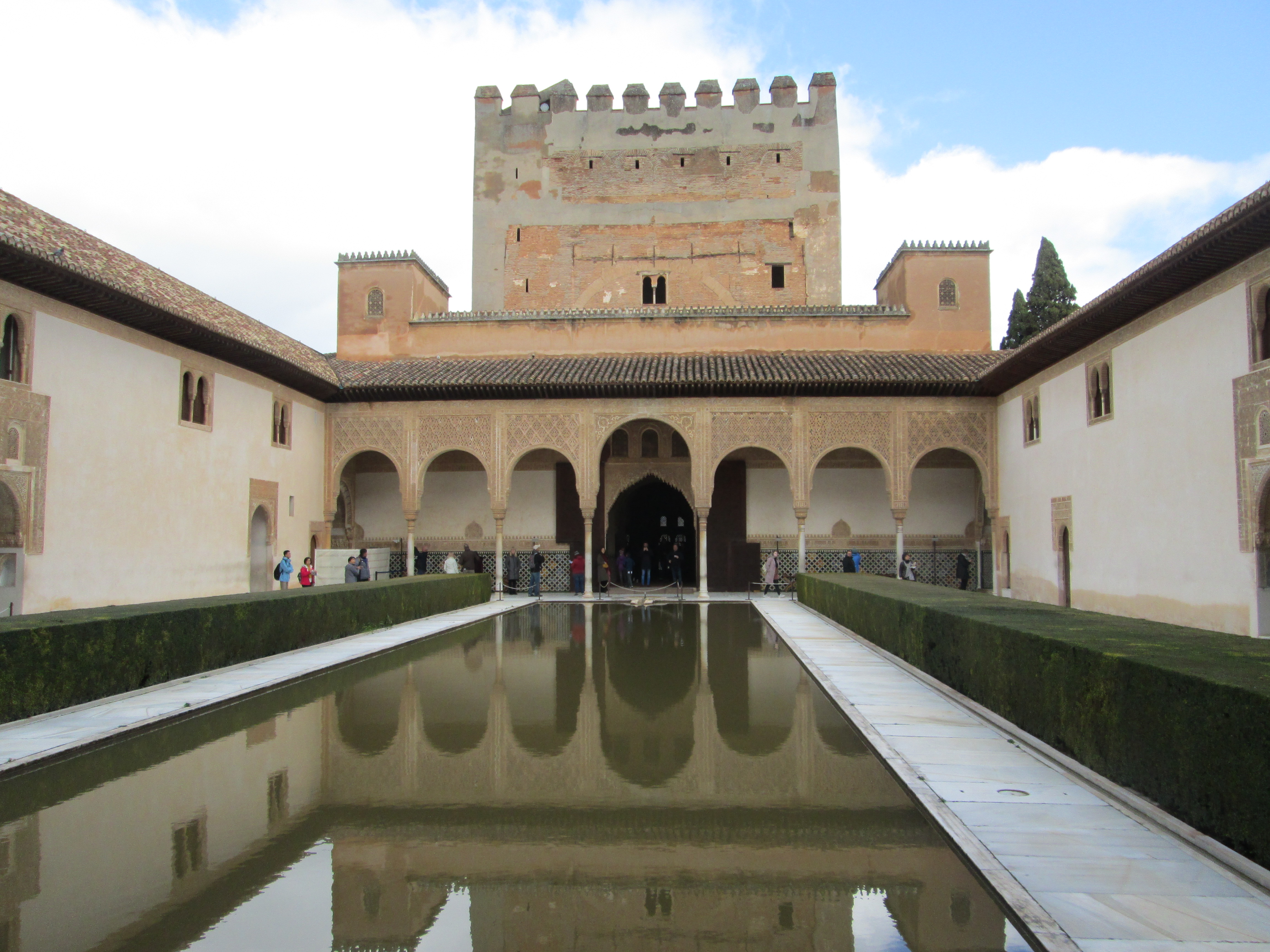
Andalusia is the southernmost region of Spain, with its capital at Seville. It is the hottest place in Europe with summer temperatures in the forties and low rainfall. The more moderate climate along the coast, still hot and sunny, has been a magnet for tourists for decades. Coming, like many, from the cool, damp, grey green island I call home, it is always a shock to find a place where warm sunshine and blue skies are the norm. Costa del Sol is well named, stretching for about a hundred miles from Nerja in the east, via Malaga and Marbella to La Linea near Gibraltar in the west. Home to one and a half million people, millions more visit for its resorts, sunshine beach holidays made-to-measure, cheap beer and nightlife, There is much more than that, of course. Spain reveals itself to those willing to look.
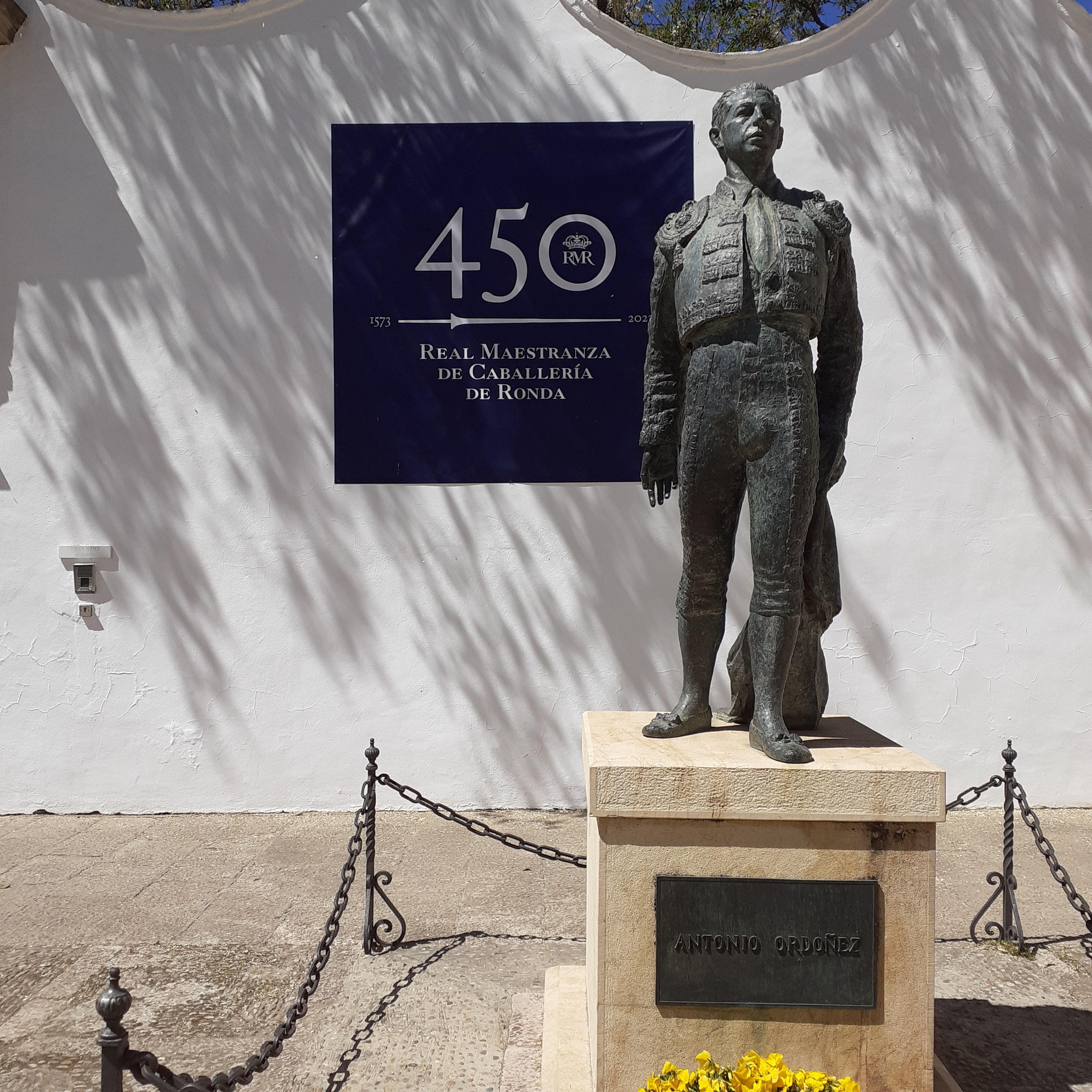
Andalusia seems an ideal region for a self-drive tour, or there’s a comprehensive public transport network with bus and train linking the main cities. Malaga, Seville, Cordoba, Granada and Cadiz are rich repositories of Classical, Moorish and Renaissance heritage. It is the home of Flamenco, originally the music of the Gypsies, the theme for dancing at the crossroads of civilisation. Bullfighting is deeply embedded in the culture also, much of its tradition developed in this region, and its popularity endures here more than elsewhere.
There are more than eight million inhabitants, making it Spain’s most populous region. Andalusia is derived from the Arabic, Al Andalus. This applied to the Moorish territories of Iberia between 700 and 1492. The name may hark back to the Vandals who invaded Iberia and North Africa in the 5th century. The Vandals originated in Poland and are today remembered for their sacking of Rome and the origin of the word vandalism as the arbitrary defacement of culture and art. They faded from view in the sixth century with the expansion of the Byzantine empire under Justinian and assimilation amongst the peoples of Iberia and North Africa
Africa looms large, culturally, historically and geographically. It is closest to Andalusia where the narrow entrance to the Mediterranean forms the Strait of Gibraltar. At its narrowest point the gap separating the continents is a mere thirteen kilometres wide between Point Marroqui in Spain near Tarifa and Point Cires in Morocco. A nexus for shipping, for exploration, trade, migration and invasion, the gap is guarded by the Pillars of Hercules, a name stretching back to the myths of antiquit. Physically, these are the Rock of Gibraltar, a British territory, and across the Strait either Monte Hacho or Jebel Musa (Mount Moses). Both of these lie near the city of Ceuta. a small Spanish territory in Morocco. Regular ferries sail there from Algecerias, just across the bay from Gibraltar; a huge port and the southernmost city of continental Europe.
For most, Malaga airport is the usual gateway to the region. My first visit was aboard a cruise ship bound for the Atlantic, first to Morocco and on to the Canaries and Madeira. Our first stop was Malaga; the sort of thing one says when about to step off the edge of the world before passing through the Pillars of Hercules sixty miles to the east. It has been an important port for two millennia or more. Phoenician traders from Africa were the first to set up shop here and Malaga remained within the sphere of Carthage until the Romans established dominion in the third century BC. The Muslim Caliphate established its fortress here after the fall of the Roman empire. The Emirate of Granada arrogated power over the region in the thirteenth century. Most stubborn of the Moors, they resisted the Christian Reconquest until 1487.

Overlooking the port, the hill of Gibralfar rises to the north.. An ancient ruined casle crowns the summit. Lower down, the citadel of Alcazaba, was built in the eleventh century within the walls of the Moorish city. Alcazaba is superbly maintained and we rise through a maze of alleyways a thousand years old, gardens and fountains emerging regularly. Gurgling water, sheltering trees and the scent of flowers mellow the near African harshness of the climate in high summer. It’s a good climb to the top, with spectacular views from the walls over the city and coast.
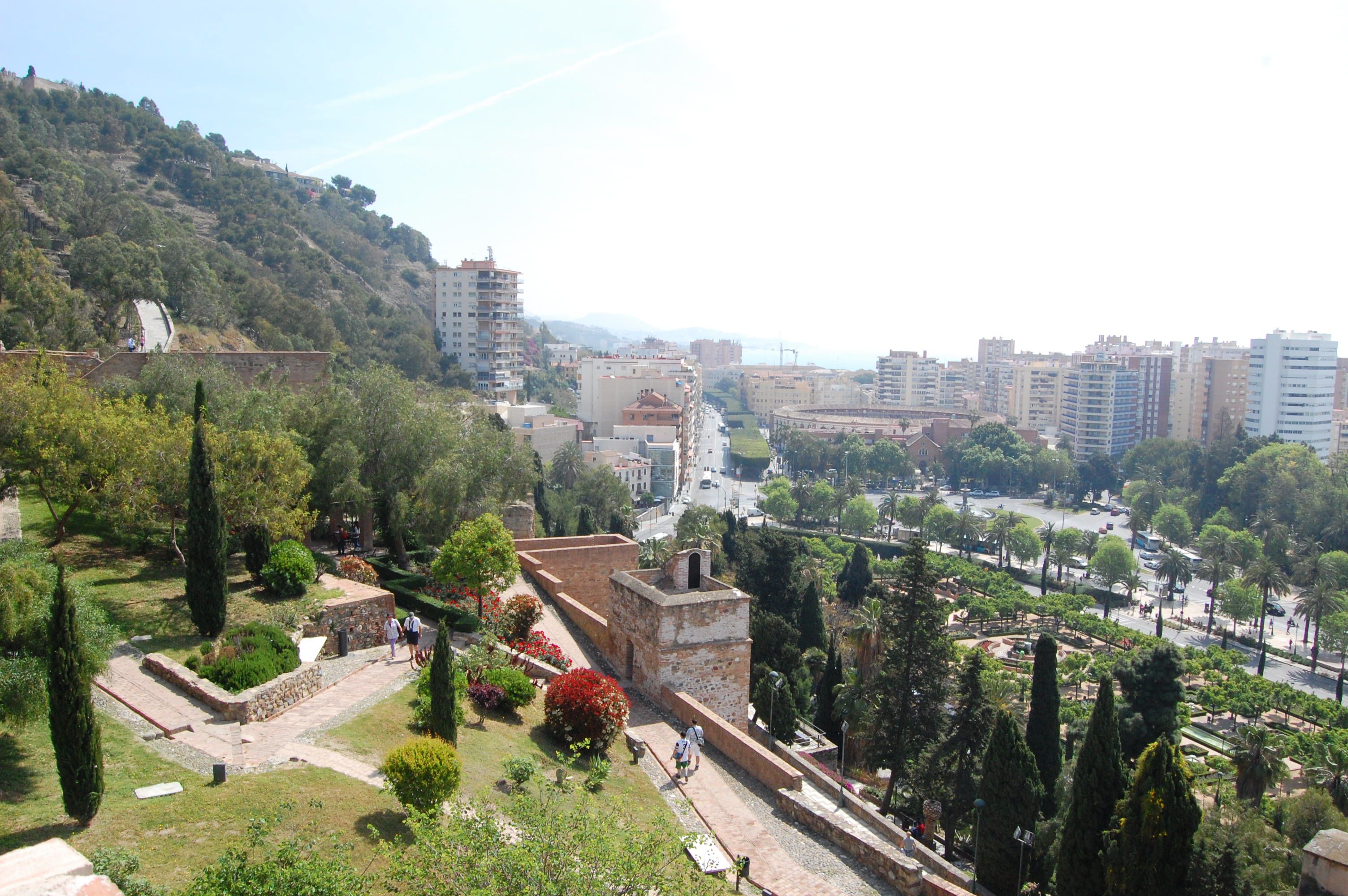
Below, the old Roman amphitheatre, dating from the first century BC, nestles on the landward side. Radiating out from this, the medieval town still preserves its chaotic street pattern. Perfect for the stroller who doesn’t mind getting lost, you certainly won’t go hungry or thirsty with a full range of daytime and eaving eateries and watering holes. We stroll down Calle Marques de Larios, a pedestrianised street with gleaming surface, lined with elegant boutiques and shoe shops. From the seafront it cuts through the heart of the medieval area. Just off this street, Calle Strachan leads to the Cathedral de la Incarnacion. Construction began in the sixteenth century on the site of the city Mosque. A grand though haphazard project, it exhibits a variety of styles, going through Gothic, Renaissance and Baroque. The completed tower soars to three hundred feet, but the project ran out of funds in the nineteenth century. The second entrance tower was left incomplete, gaining the church the nickname, La Manquita, the one-armed lady.
Near the Cathedral is the old Jewish Quarter. In the Calle San Agustin you’ll find the Buenavista Palace, a sixteenth century building which is now home to the Picasso Museum. It’s located only two hundred metres from the Plaza de la Merked where Picasso was born in 1881 and holds over two hundred works donated by members of Picasso’s family.
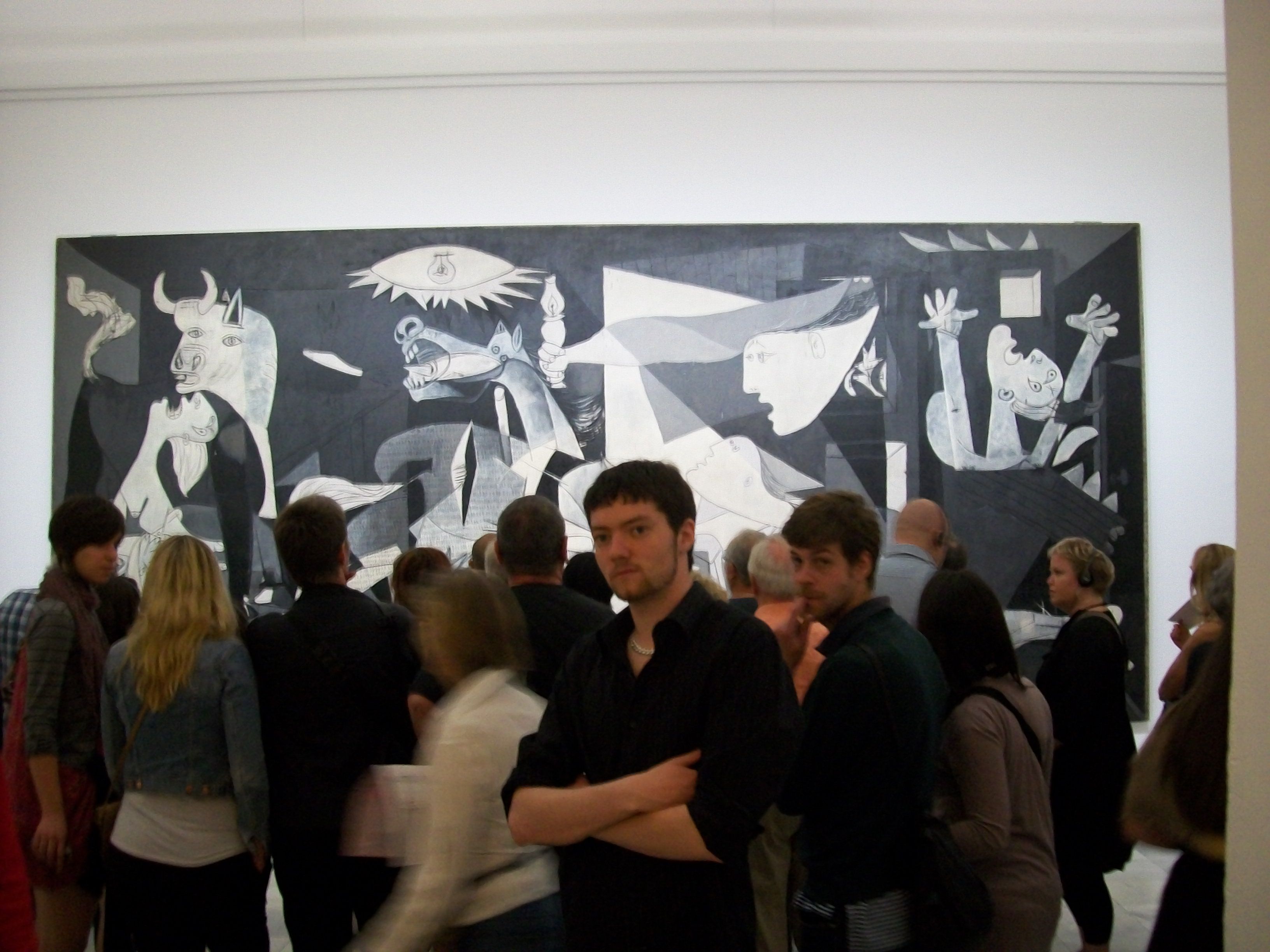
Pablo Ruiz Picasso was a radical innovator in the determinedly Avante Garde Fine Art of the twentieth century. As a young painter, his Blue Period and Rose period showed his realist skills, where colour and mood combine. He made a radical departure to develop the fragmented technique of cubism, with French painter Georges Braque and fellow Spaniard Juan Gris. Impossibly prolific, sometimes to the point of self caricature, true genius and the profound are evident in probably his best known work Guernica. This emerged from the the bombing of the Basque town by German and Italian airforce during the Spanish Civil War. Picasso did not want the work shown in Spain during Franco’s dictatorship, and it was kept for over four decades at the MoMA in New York. A century after Picasso’s birth, Spain was restored to a democracy, and the painting returned, first to the Prado and since 1991 at the Reina Sofia, also in Madrid. Although first displayed behind bullet proof glass, it has since had no extra protection than any other painting. I took this photo of my son, Davin, in front of the unprotected painting in 2010.

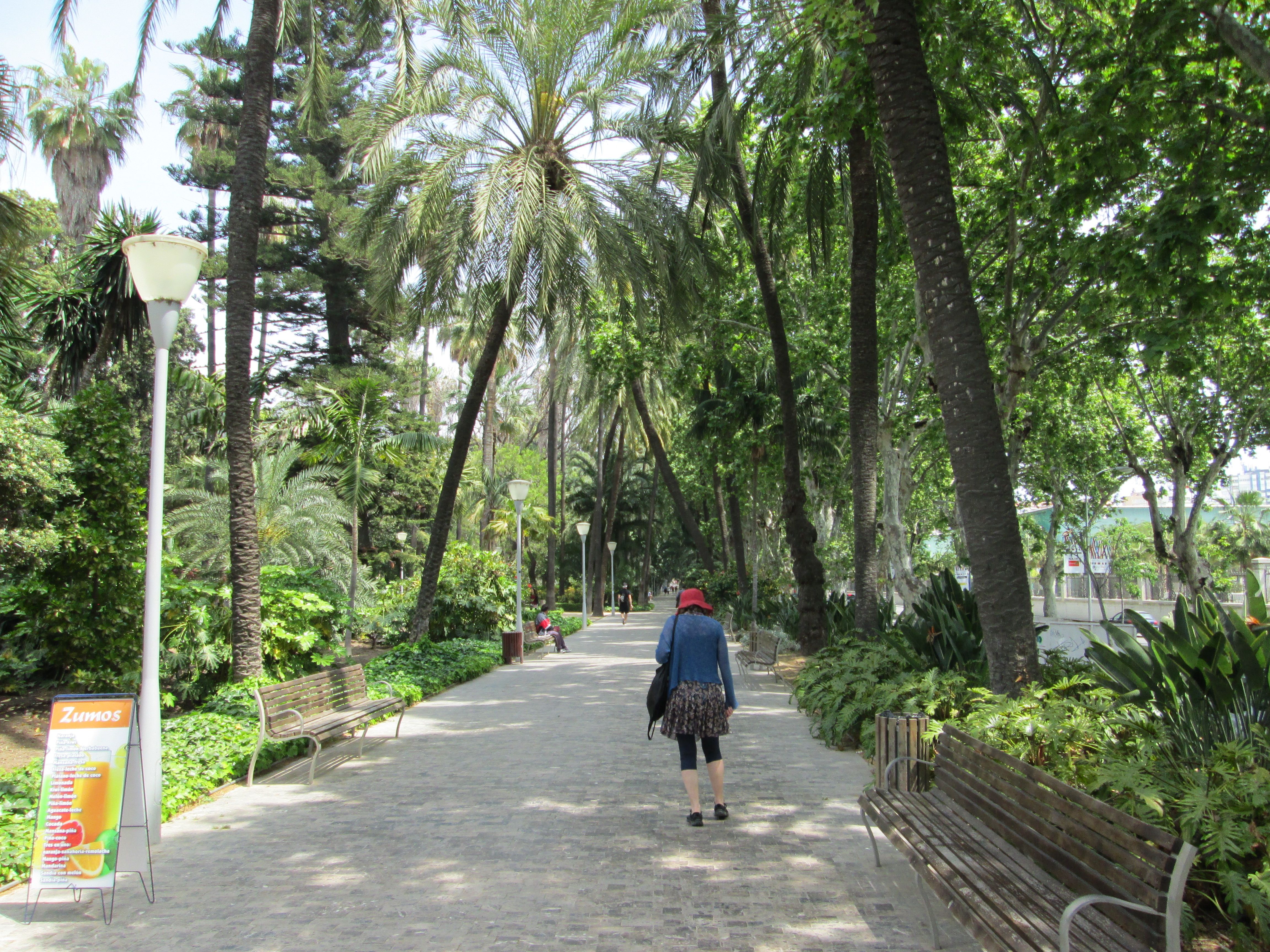
A labyrinth of streets, dotted with galleries and bars leads down to the River. The Guadalmedina, literally the Town River, is typical of Spain’s urban rivers, forming a disappointing concrete esplanade. At Siesta time crowds gather in the Atarazanes, the nineteenth century Central Market, queuing at stalls selling beer and tapas. We return through modern thoroughfares to the seafront. A lovely linear park, lined with towering palm trees, makes something of an oasis in the afternoon sun. Back at the Marina, the restaurants and bars are thronged. We squeezed into one, which is a self service. A welcome draft beer is just what the body needed. The afternoon is simmering, the crowds ebbing. We watch the sea flowing, as we soon must, towards the Pillars of Hercules, the wild Atlantic waiting beyond.
I would return, of course, and explore other parts and aspects of the city. Malaga, as a good city should, rewards many visits. And there’s so much more in the fascinating region that is Andalusia. That is something of an ongoing project for me. Over the next few weeks I will write about visits to Granada, Marbella, Ronda, and other sketches of Spain, experienced and anticipated.
 xxharrison
Great post, Shane! I look forward to reading about your visit to the Archivo General de Indias in Seville (if you did stop by the place). Lots of historians in the Philippines visit it due to the vast trove of resources related to the colonial period, under the Spanish crown.
Also, your son is a chip off the old block — as the idiom says. Fine-looking gentleman just like his da!
Thanks for your kind comment, Monch. Davin really was a chip off the old block, and always happy to have him in a blog. Meanwhile, I haven’t yet been to Seville, hope to visit next April.
I too enjoyed visiting Málaga. We spent several days there exploring the city and using it as a base for the wider area
Yes, Marion, it is an ideal base camp, and there’s so much to explore in Andalusia. Going back again in Spring, aiming to take in Seville and Cadiz before a weeks relaxation on the coast.
That’s great. We didn’t bother hiring a car and just went around by train. One week in and around Málaga and the second in Seville from where we took the train to Cadiz.
Good suggestion, Marion. I am planning to use bus and train to connect Seville, Malaga and Cadiz.
That’s exactly what we did.
What a beautiful culture Shane! So happy you’ve had a great visit! The photos are gorgeous too!
Thanks Samantha. Glad you liked the photos, which come from a wide range of visits.
Great stuff Shane. So many layers of World history to peel back in that part of the World. Cadiz is the oldest city in this part of the World. Conil is a wonderful town. Having a Manzanilla Sherry on the beach at Sanlucar de Barameda is a wonder, Chopitos, Acedia, Tortillilita de Camaron, Mojama, Chuletón de Retinto – more please
Thanks Brendan. Sounds like some great pointers there, particularly the Manzanilla sherry on the beach. I’m making a list for my next visit in Spring. Meanwhile, I will be writing more in the coming weeks including Grenada and Ronda. Cheers!
Beautiful southern region of Spain excellent photos and description 👌
Thank you, Priti. I’m glad you enjoyed it. There’s more to come on amazing Andalusia.
☺️
You are lucky to visit such a beautiful place! Well shared thanks. 👌