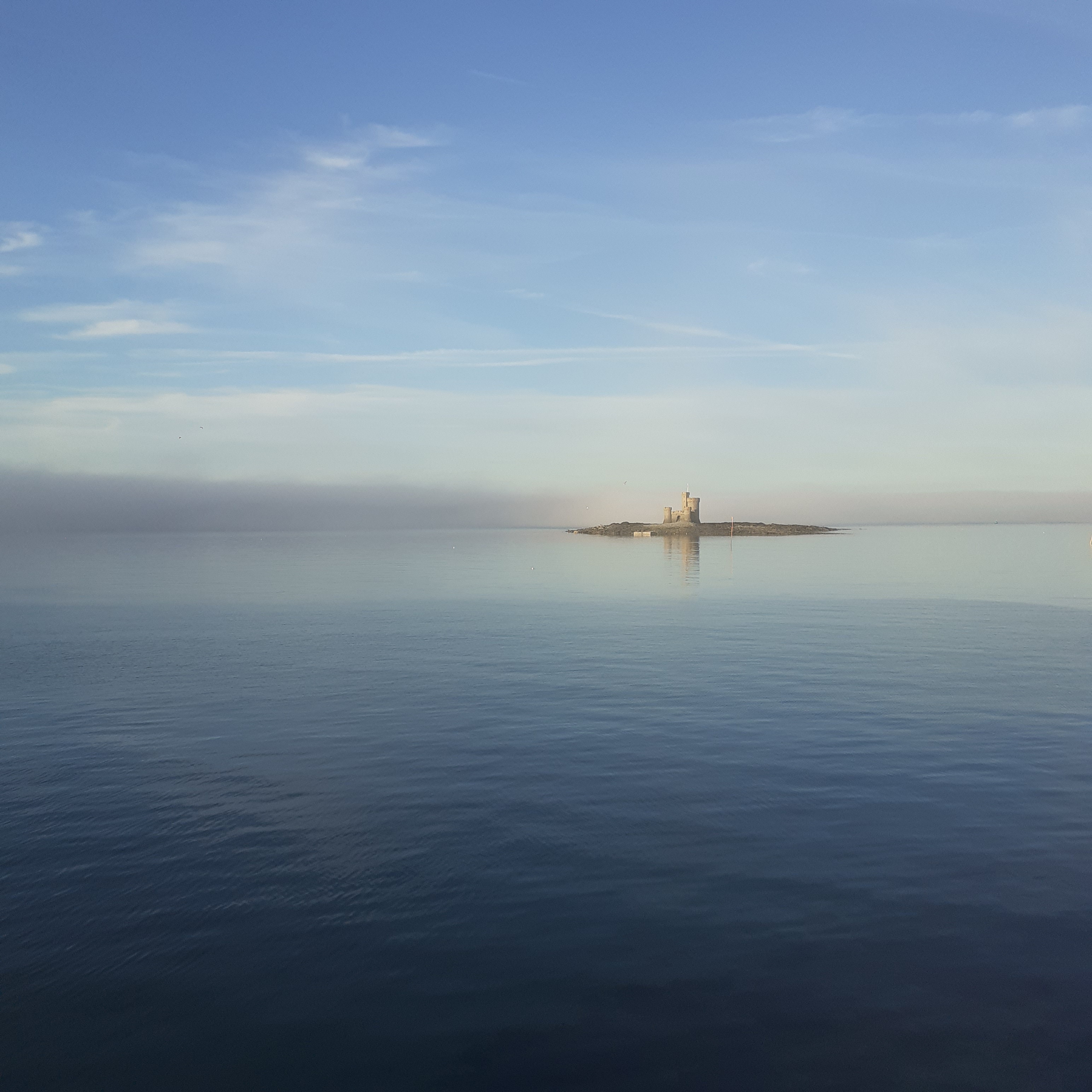
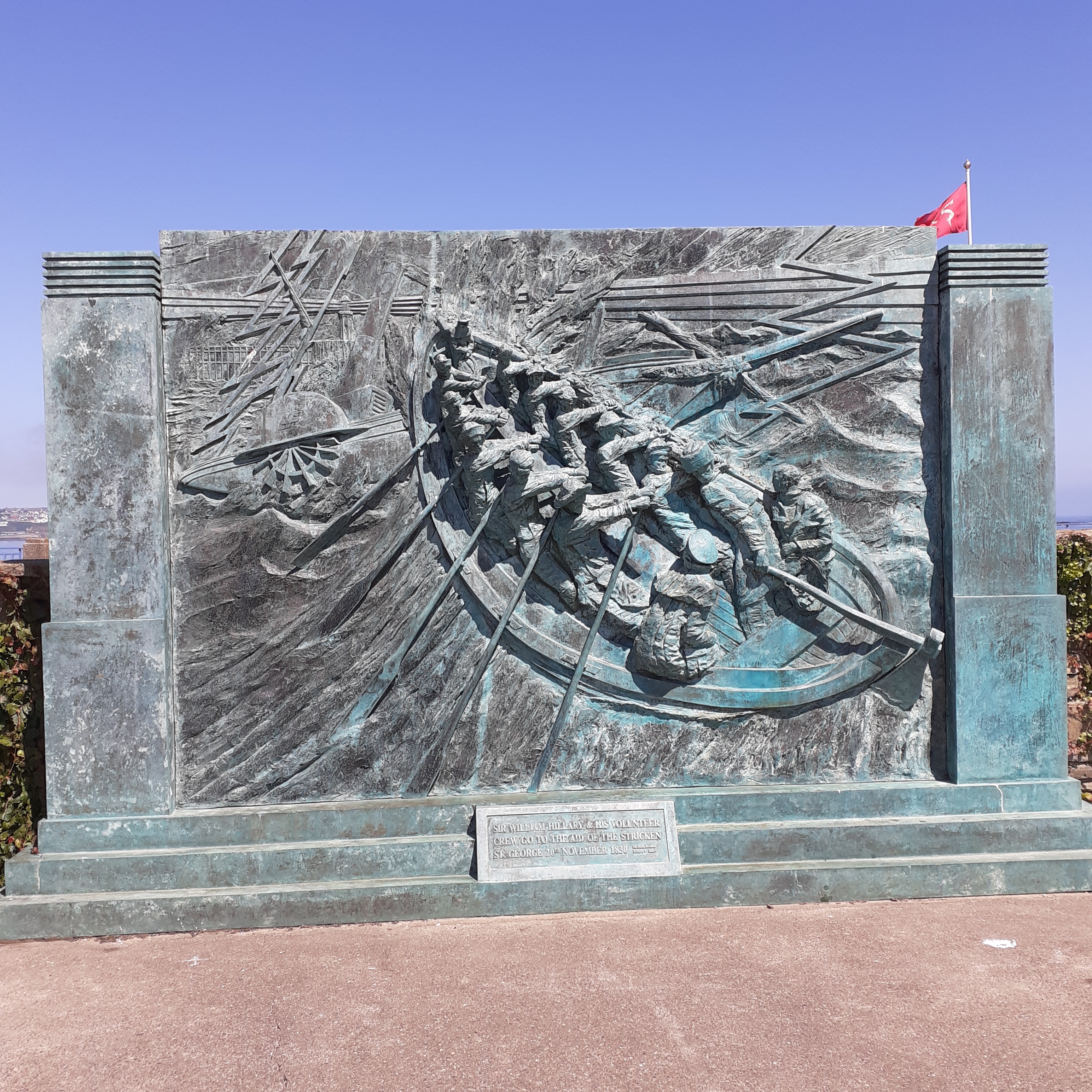
The morning is warm and hazy, sea, sky and promenade merge in the glaring whiteness. Out in the bay, the Tower of Refuge makes a magical sandcastle apparition; at once real, but not real. The Tower occupies the small St Mary’s Island just offshore. It was built as a refuge, and guide, for sailors suffering shipwreck on the notorious reef. Sir William Hillary, founder of the Royal National Lifeboat Institution initiated the project in 1830, following the sinking of the St George. The ship of the St George Steam Packet Company was landing its cargo from Liverpool when it ran aground on a stormy November night. Hillary himself commanded the rescue and was injured when swept overboard. There is a memorial to the rescue on the Loch Promenade. A bronze relief vividly depicts the danger and daring of this heroic episode. The Tower was completed in 1832, William Wordsworth wrote a poem in its honour during a visit the next year. A statue was erected to Hillary on the headland beyond the port and he is buried here in Douglas at St George’s Churchyard
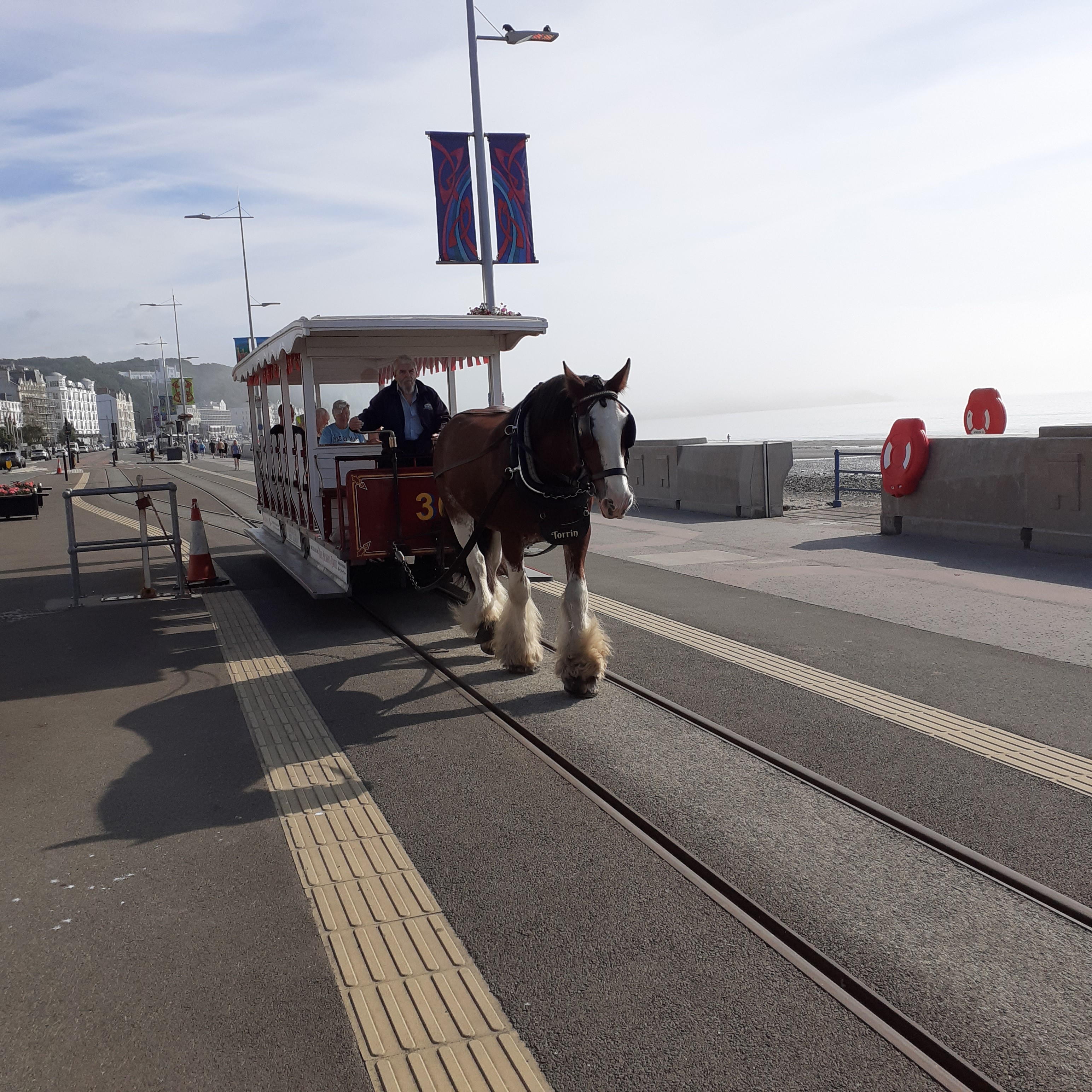
The perfect way to see the beautiful island of Mannin is to use its excellent public trasport system. £21 will get you an all day ticket usable on all trains, trams and busses. We got full value from it on a hectic day whizzing about the island’s sights. From Villa Marina, towards the southern end of the Douglas Promenade, we took a horse drawn tram to the Electric Railway terminal at the far end of the seafront. The service was built and run by Thomas Lightfoot from 1876, who sold it on in 1882. It operates during the summer months.
The Electric Railway was established in 1893. The terminus is called Derby Castle which was also the name of the large amusement park that once stood nearby until the end of the 1960s. The original tiny picturesque rustic ticket office survives while the Terminus Tavern adjacent also dates back to the 1890s.
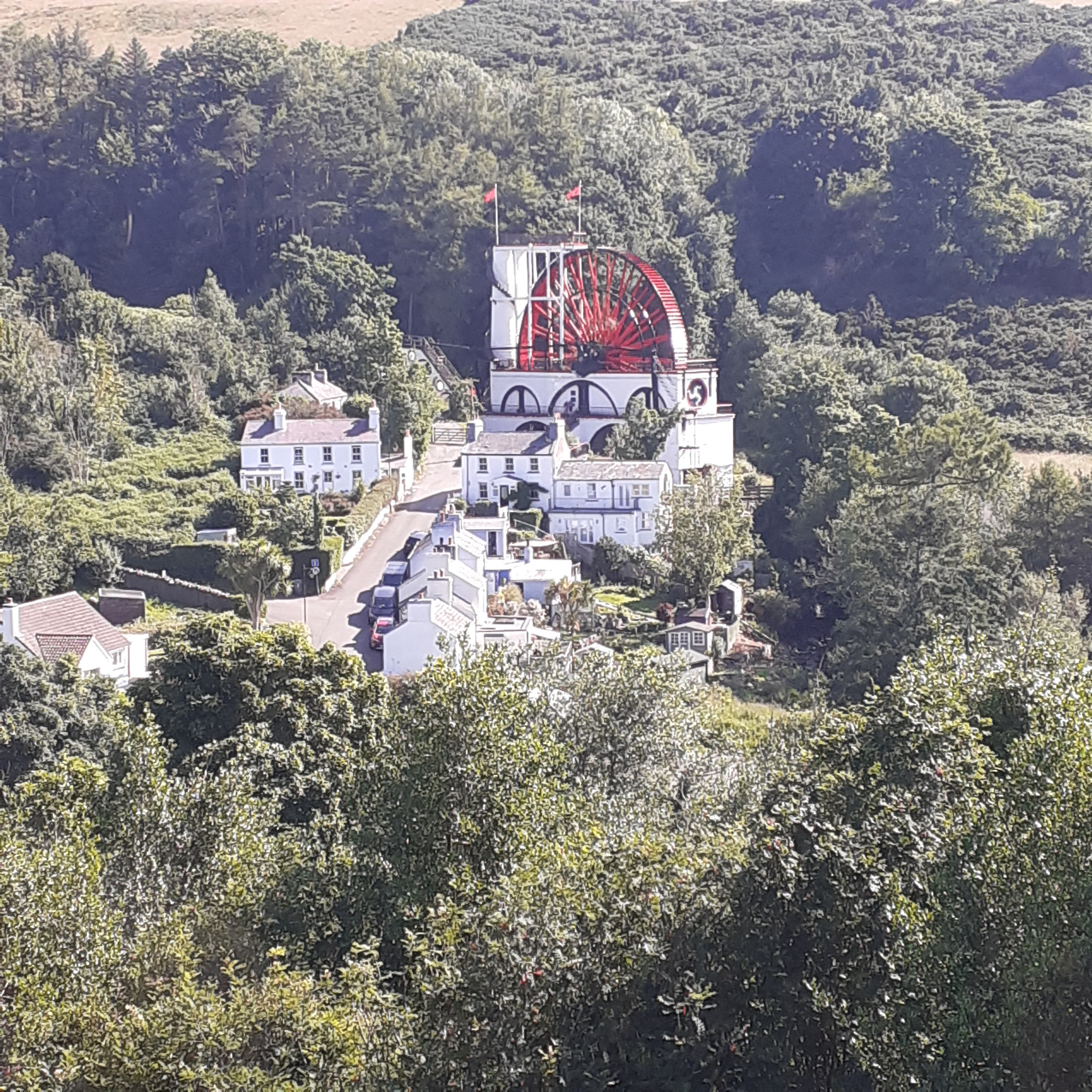
The Electric Railway travels north to Ramsay. It makes its discreet way through the suburbs of north Douglas into open green countryside and woodland. At Laxey there’s a connection with the line leading to the top of Snaefell, the island’s highest point. Laxey itself is a pleasant winding village tumbling down a valley from the highlands to the sea. Its fame rests on the Laxey Wheel, a short uphill stroll from the tramstop. The Laxey wheel is the largest working waterwheel in the world with a diameter of over 72 feet. It was built in the 1850s for the local lead and zinc mines.
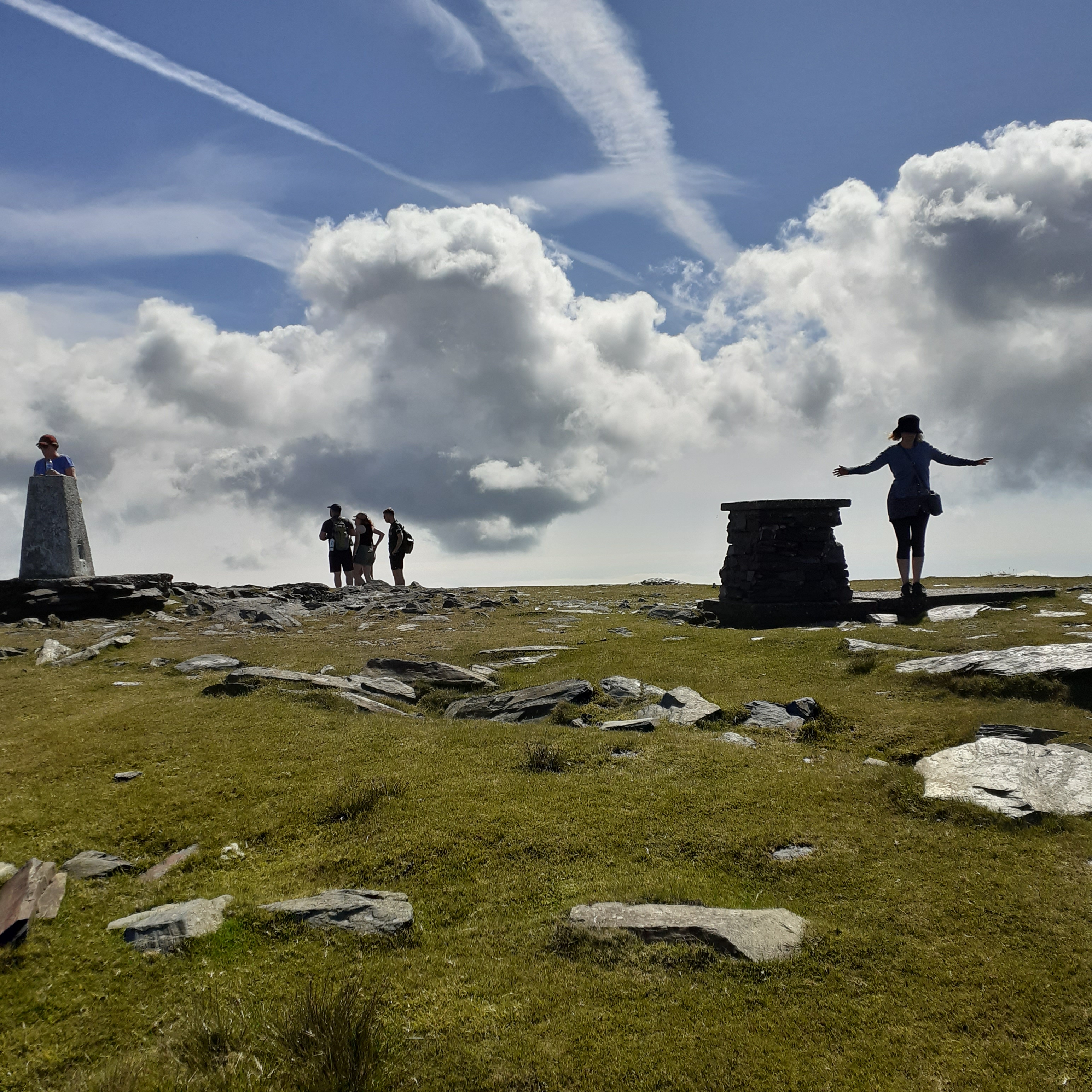
Snaefell Mountain railway climbs to the top of Snaefell, near enough, at just over two thousand feet. The five mile journey takes about half an hour. There’s a pelasant cafe for refreshments and snacks with seating outside to take advantage of the spectacular panorama. The view boasts that it takes in seven kingdoms: the Isle of Man, England, Ireland, Scotland and Wales. The other two kingdoms being the Kingdoms of Heaven and of the sea. This last being ruled by Mannanin Mac Lir, so closely associated with the island. We summit in complete calm under hot sunshine, even at this altitude.
Back at Laxey we have coffee at the tramstop and explore downstream towards the sea. We catch a bus from Laxey back to Douglas. The main bus station in Douglas is at the southern end of town and it is only a short walk from here to the Railway Station for steam trains. The Steam Railway goes south to Castletown and Port Erin. Also passing near the airport at Ronaldsway.
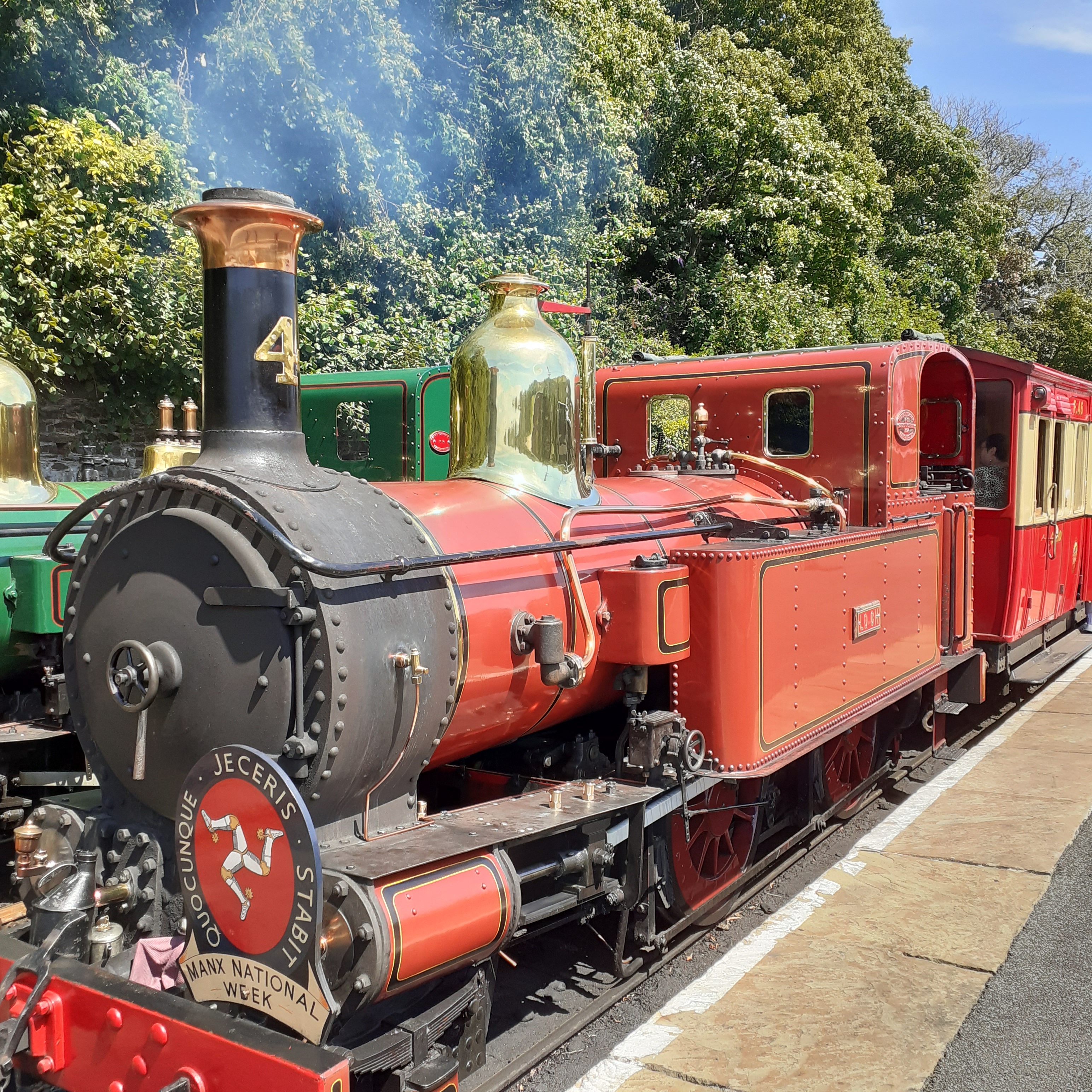
The Steam Railway is a most colourful way to see the island. It was set up in 1873. The traditional rolling stock is quaint and dinky, the timber clad compartments with facing banquettes seating six people. It’s about an hour to the terminus at Port Erin, with Castletown a little over halway along.
Castletown was the island’s original capital until 1869, the Tynwald meeting here until moving up the road to Douglas. It lies on the river estuary of the Silver Burn south of a small harbour. A majestic medieval castle rises in the town centre. Castle Rushen is a well preserved fortresss dating from the thirteenth century when the Kings of Mann and the Isles reigned. It was later the scene of the century long tug of war between the English and Scots for control of Mann. Robert the Bruce capturing the castle three times, though ultimately the English would prevail.
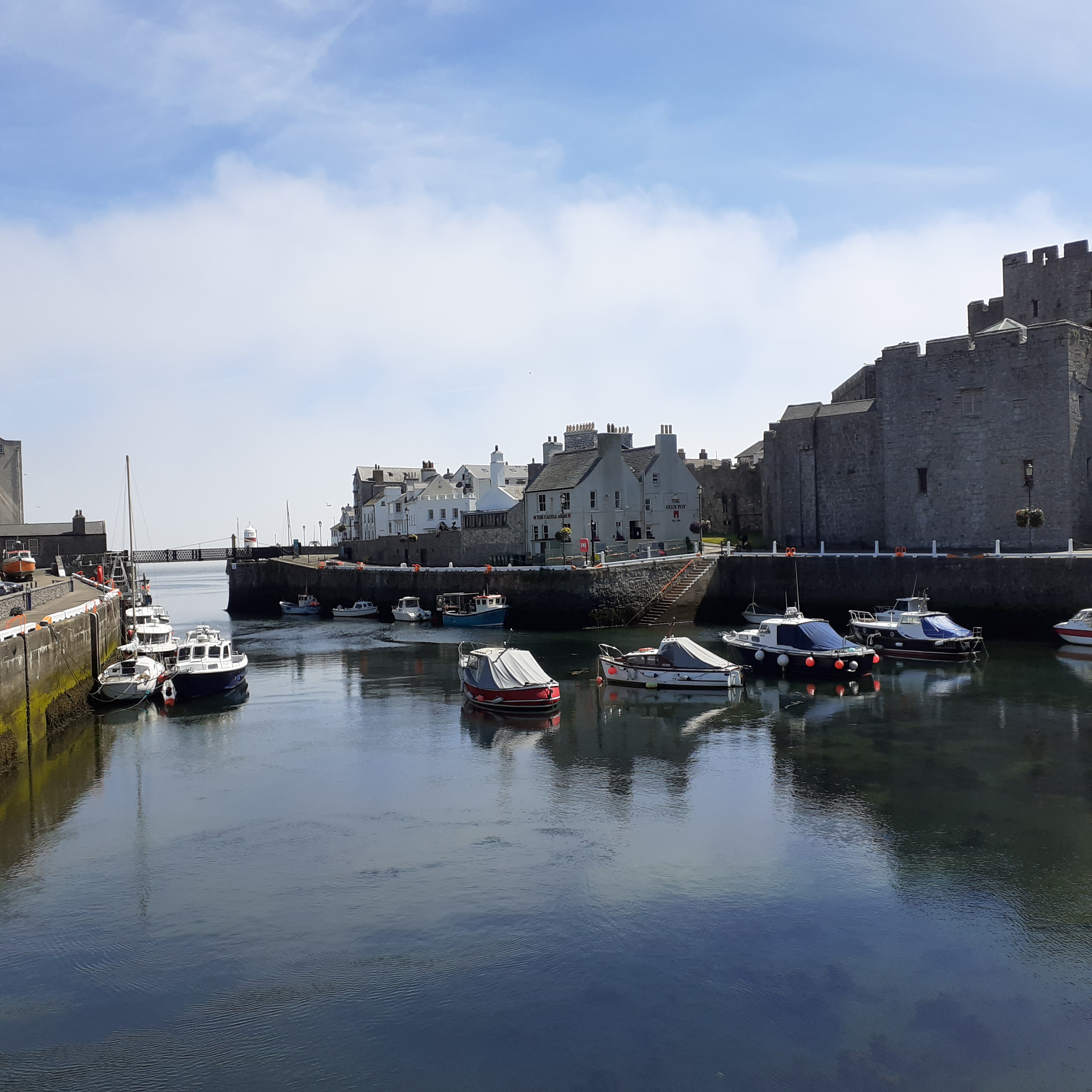
It’s a short walk along the river into town. A giant heron sculpture guards the bridge. Above the quayside is the castle entrance. The Arts and Crafts Police Station blends well with the Gothic feel of the place. The main town square, Market Square, has become an occupied fan zone for bikers, gathered about a giant screen with food and drink from local hostelries and mobile outlets. Our visit is a fortnight after the TT Races, but another major event, The Southern 100 is on nearby, with such biker heroes as Dean Harrison. Five times TT, Dean is English but lives in Laxey. Then there’s local lad Nathan Harrison. You can’t keep up with the Harrisons! Whatever about the Castle, and the hectic world of motorbikes, we’re not rushing (pun intended) and we have plenty of time for a snack and a pint of beer in the glorious sunshine we’ve enjoyed throughout our stay on Mannin.
The steam train service tails off around half four, although busses still go into the night. We return to Castletown station which has a model railway display and the same cheerful traditional ambience as elsewhere on the isle. The train is quite packed and some compartments are fully booked but we get seats and head off in smoke and sunshine.
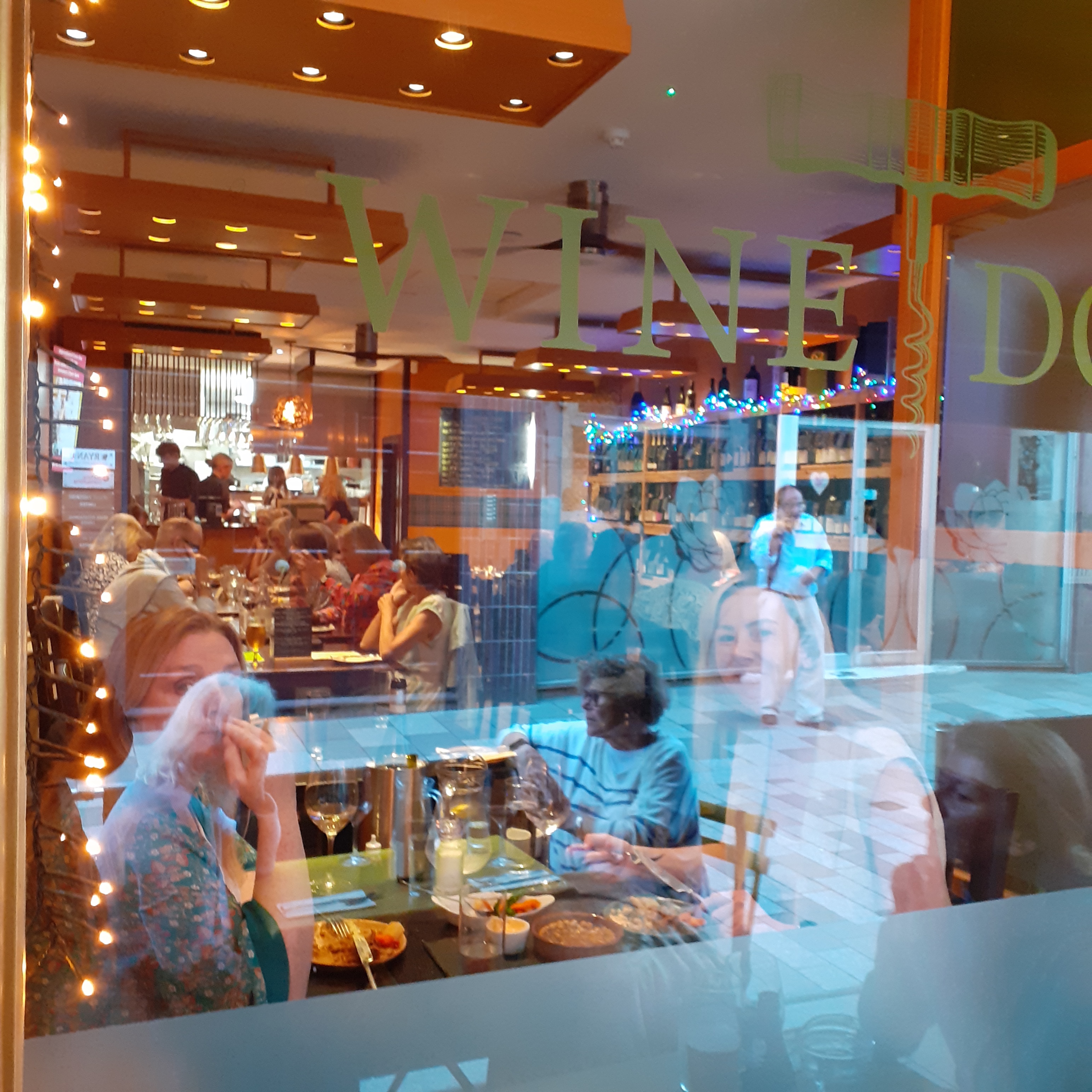
Back in Douglas we enjoy an evening stroll along Loch Promenade shrouded in an eerie and intermittent mist. The Tower of Refuge is a magical mirage in the bay. We dine in Duke Street, on the front outdoor patio of Wine Down. The interior is crowded, perhaps because the restaurant is very good. Heaters on the patio dilute the misty evening chill, and the wine and good food help too.
Tomorrow we’re leaving Man and taking the ferry across to Liverpool. For a farewell song I’ll take one that evokes our stop in Laxey, sort of. Apt too for our ongoing ferry odyssey. Proud Mary was written by John Fogerty for his band Creedence Clearwater Revival. One of my favourites. It was a big hit single and appeared on their second album, Bayou Country in 1969.
Left a good job in the city
working for the man every night and day
and I never lost one minute of sleeping
worrying about the way things might have been
Big wheel keep on turning
Proud Mary keep on burning
Rolling, rolling, rolling on a river.
 xxharrison