Southwest of Malaga the A7 highway flows past the strip of beach resorts that have become synonymous with holidays on the Costa del Sol. Torremolinos, Benalmedina and Fuengirola form a densely populated highrise urbanisation along the sun blasted coast. A little farther on is La Cala de Mijas which retains much of the feeling of the whitewashed Andalusian fishing village. Mostly lowrise and home to about ten thousand people, this is a different world from the crowded developments nearer Malaga. The modern commercial centre fronts the A7 and there’s a weekly open market here. Behind that the old town meanders down to the searont.
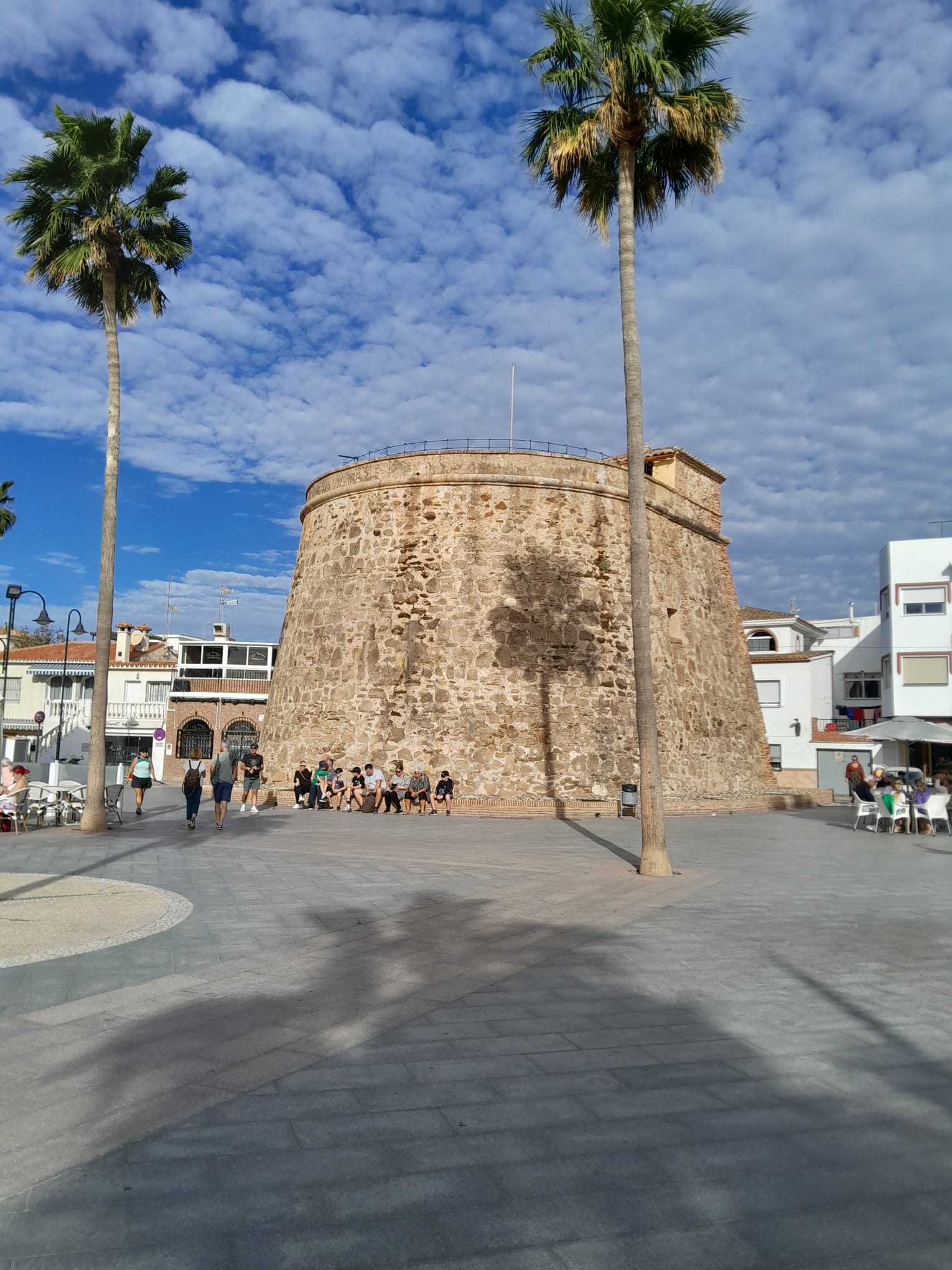
A small plaza with plenty of restaurants and bars is laid out around the historic watchtower. This resembles our Martello towers, and is of similar function and era. Its official title – Torre Vieja de La Cala de Moral, derives from the original name for the town, referring to the area’s abundant mulberry trees. The tower was built in the late eighteenth century as a watchtower guarding against Berber pirates, still prevalent along the coast. Built on a hoof shaped plan, the wall curves around three sides with the linear fourth side rising sheer to the ramparts. The building contains a museum, and the top is accessible for visitors to admire an impressive panorama.
We stopped at an adjacent restaurant for lunch, the busy waiter doing well to cater to the midday trade. No better place for a postprandial stroll; the coastal boardwalk connects to Cabopino, Marbella’s eastern outpost, 6km farther on. La Cala is pleasantly remote from the hectic holiday world, while still conveniently close to it.
The Romans called the area Tamisa which the Moors shortened to Mixa leading to Mijas when the Catholic Monarchs took over. The municipality of Mijas also includes Calahonda and La Rivera farther along the coast. Collectively known as Mijas Costa, it is something of a golfer’s heaven. Though I’m more keen on nineteenth hole pursuits myself.
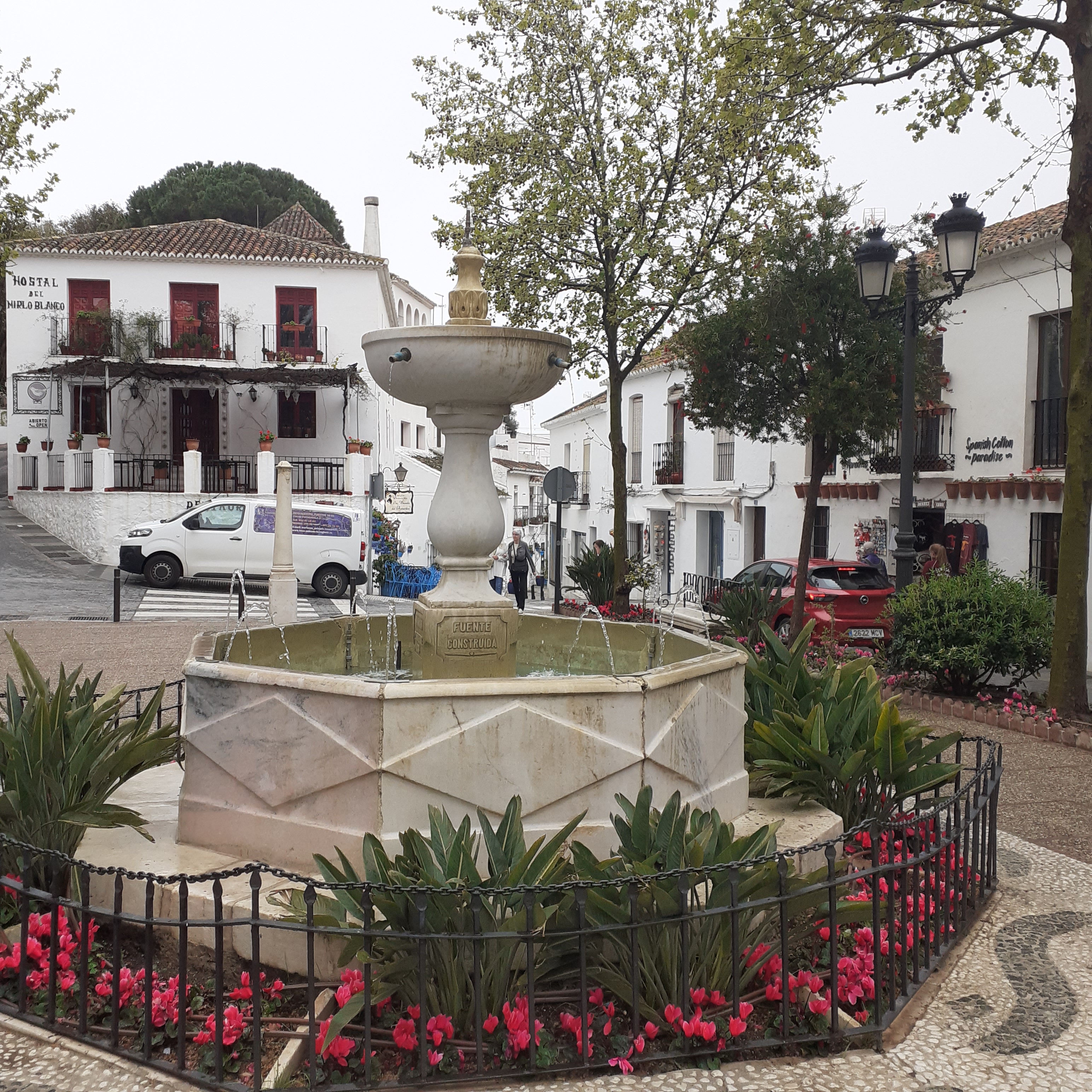
There’s a more authentic experience a couple of miles inland. The settlement of Mijas Puebla teeters atop the high coastal hills. Sierra de Mijas rise to a height of 1,150 metres. Mijas Puebla itself sits at 1,476 feet above sea level. Once across the A7, it’s a zig zag drive to reach the town and there’s a multi storey carpark right in the centre. We called into the tourist office at the pedestrian entrance and talked to the friendly lady there. She gave us a street map of the town and some good pointers. We visited on a rainy morning and, as the rain cleared, the clouds still clung to the high altidude village, lending it a remote grandeur.

A small grotto nearby teeters above the drop to the coast. The candles glow invitingly, in contrast with the rain outside. A place for pause and a prayer. The tiny streets pack in a surprising amount of commercial variety with good shopping and services. The precarious position of the town frequently allows for some spectacular views. Into the maze of backstreets the quirky charm persists. We come across the town’s tiny bullring. Built, uniquely, in an oval, as distinct from a circle, it is Spain’s smallest bullring; probably.

There’s a bar with Picasso sitting outside, in full artist regalia. Waiting no doubt for a passing Joyce or Beckett. I’m sure they’d have got on fine here. We find an outside table balanced at a steep corner. The proprietor was keen to get us indoors but we stuck to our guns and had a pleasant coffee and tortilla while the street crowds began to peek out again after the rain.
Fuengirola is spread out below the hills. It is the last stop on the Malaga coastal train line. From here we have, in previous visits, taken that train from the airport and got a bus on towards Marabella. A previous drive through from Malaga, via Torremolinos and Benalmedina, was rushed and a bit chaotic. I am more orientated now, at home on the Spanish highway, and we took the short drive up from Marbella to have a deco. There’s convenient parking near the Moorish fortress at the southern end of town; though we skipped this and parked in the centre in an outdoor lot beside the port.
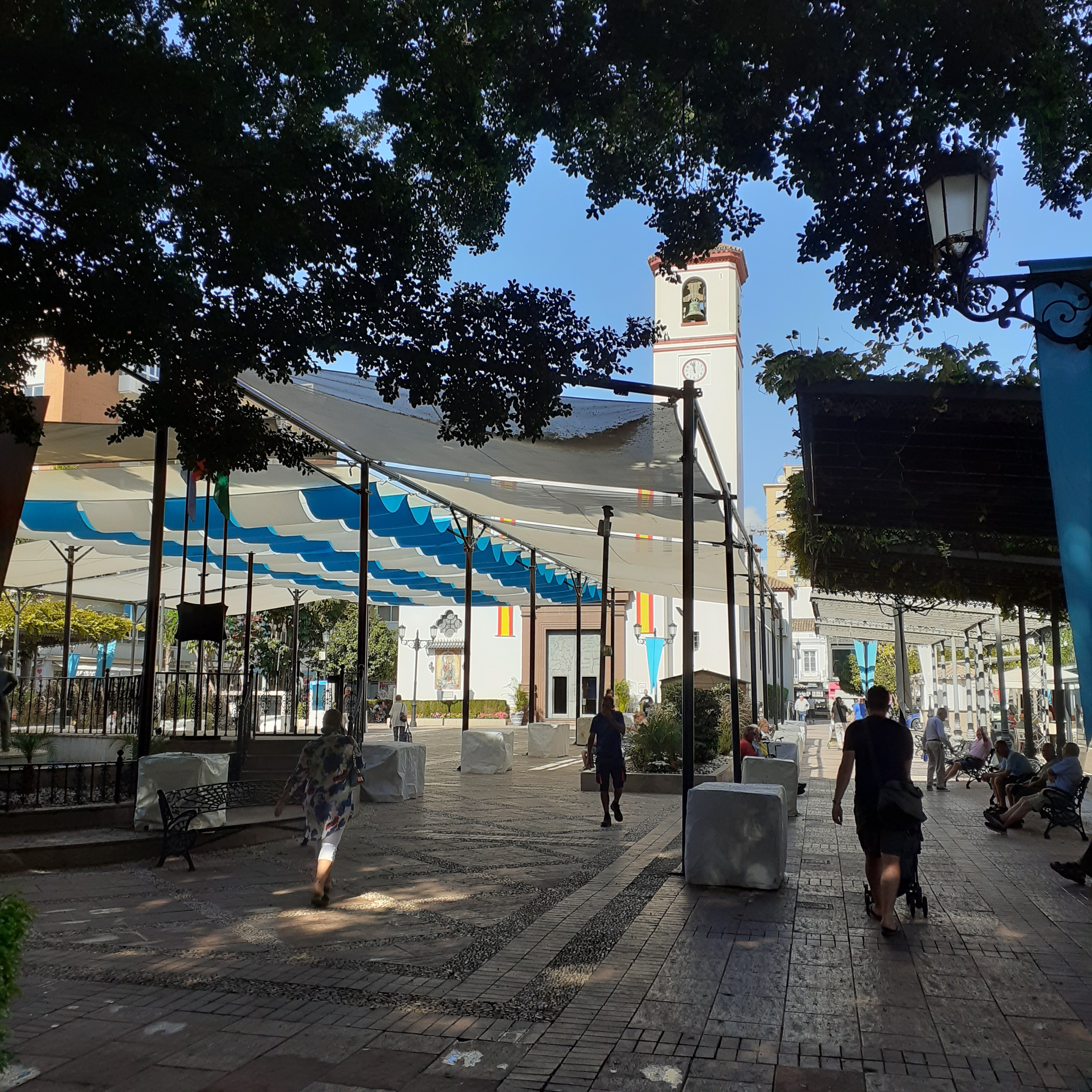
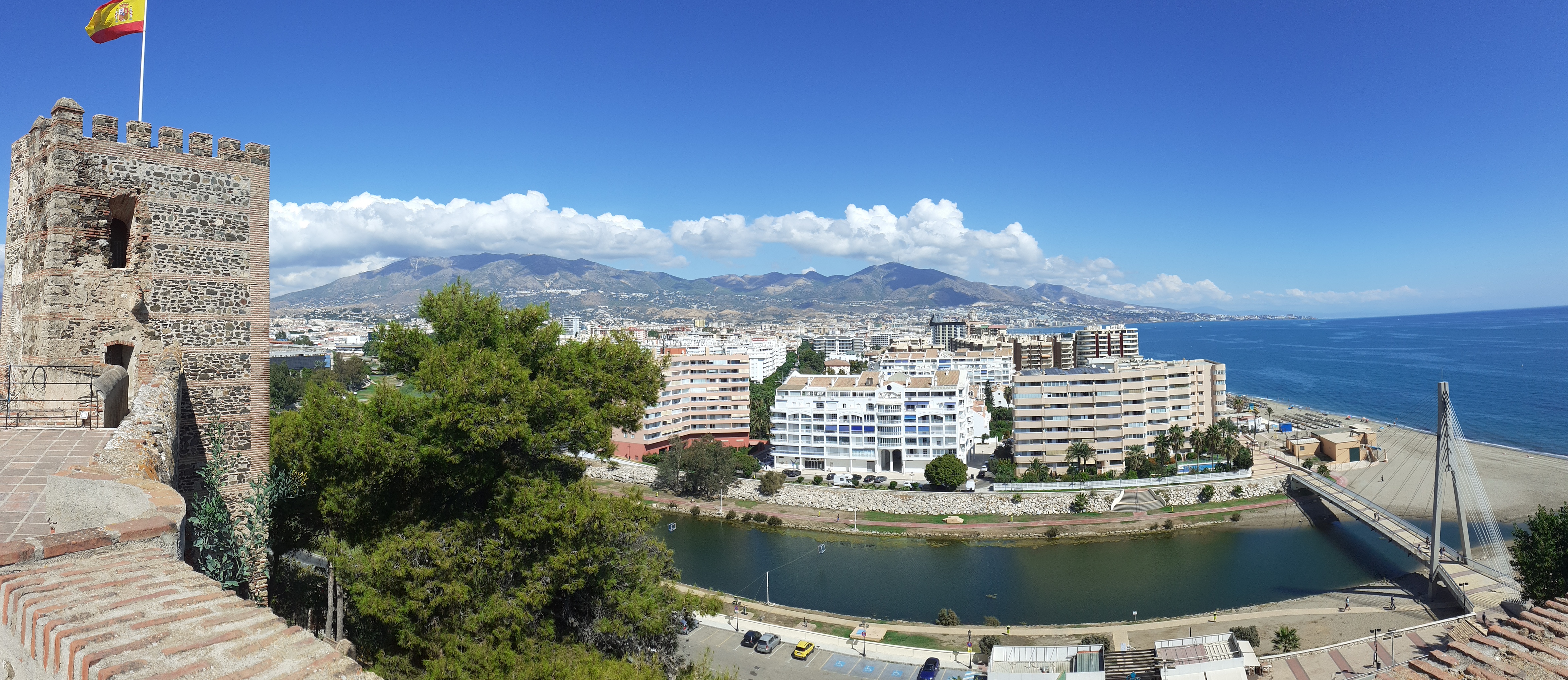
The string of resorts along this stretch of coast isn’t exactly a pearl necklace, but it does its trick and has its moments. It’s a scorching day in mid September and the beachfront is thronged with strollers and swimmers. Just a few blocks inland is the older part of town leading up to the Plaza de la Constitucion. This tiled square faces the church of Our Lady of the Rosary, its clean, white facade topped by a high belltower. Plaza del Ayuntamiento is nearby along the main thoroughfare. To the side, narrow streets lined with bars and cafes take us through a more intimate environment. Calle Dr. Maranon is part of an enclave of low, white terraces, welcome relief from the highrise norm. We catch a glimpse of the Central Mosque beneath its daylight sickle moon. The Rio Fuengirola marks the southwestern end of town. On the far bank the fort stands atop a rocky outcrop.A friendly visitor, German I think, falls into conversation before striking out enthusiastically for the summit. We opt first for the shade. Bar La Terraza is a small cafe bar on the far bank where we stop for coffee and a snack..
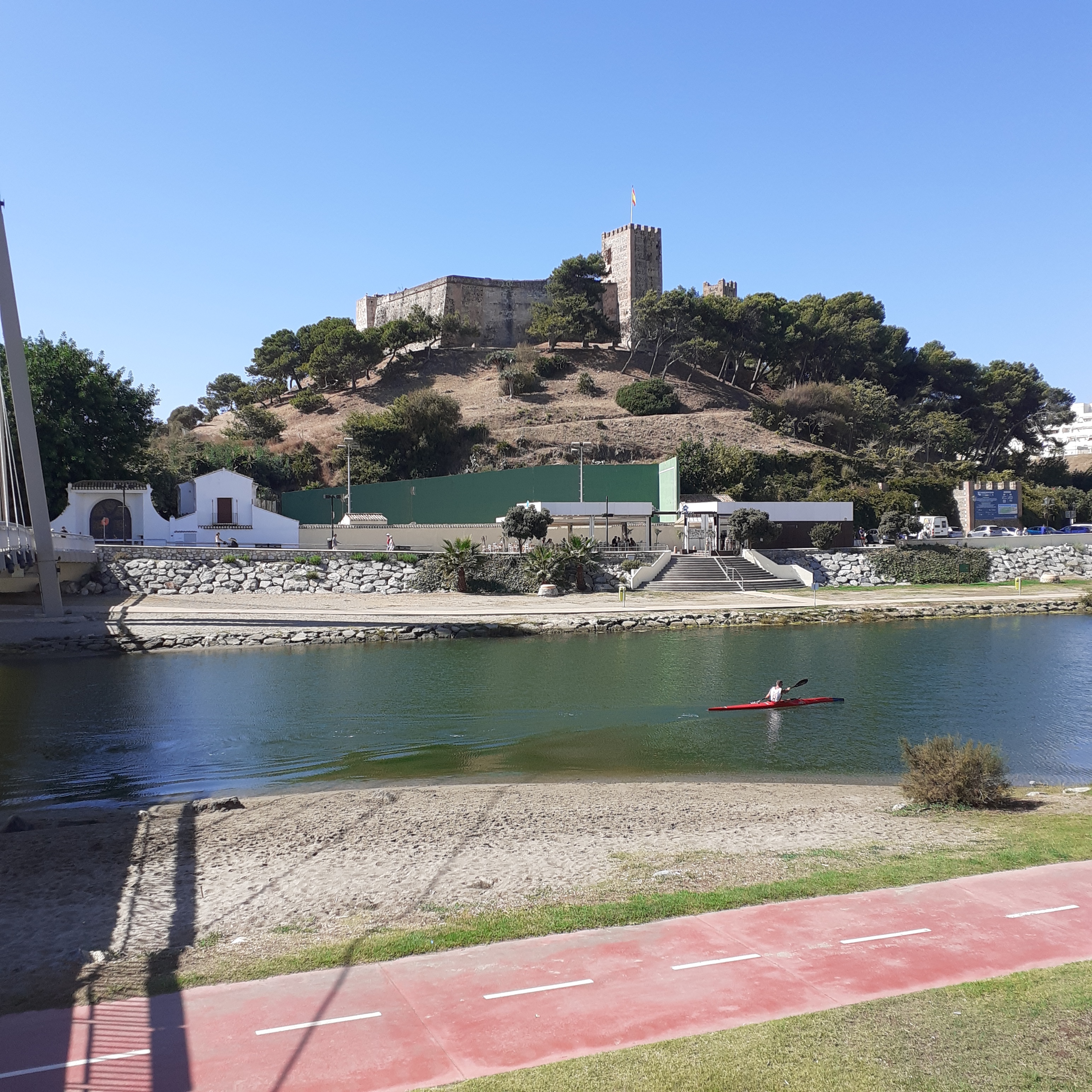
Sohail Castle was built by the Moors at the end of the tenth century. It is likely the site was used before by Phoenicians and Romans, but it is the Moorish structure that remains. The imposing, red fortress consists of four corner towers connected by curtain walls. From the parapets there are dizzying views of the coast and town. A Festival of Music and Dance is held here in June
The Catholic Monarchs conquered at the close of the fifteenth century. Later the Castle was extensively damaged during the War of the Spanish Succession. It was back in use again for the Peninsular War, but was deserted by the start of the twentieth century, only recently being repaired as a visitor attraction

Fuengirola was mostly uninhabited after the Reconquista, Mija being the largest settlement hereabouts. By the 17th century a small town had grown around fishing and farming. A lone inn catered for travellers. It was not until the 1960s that Fuengirola was transformed into a top resort. Today the population is 85,000. of whom a quarter are foreign born. Many of these are Irish, British and Scandinavian with immigration too from Morocco and Latin America. High season sees an influx of visitors, and high season here spans at least six months. You can see why. It’s mid September and the mercury’s touching thirty.
Local business and employment has benefitted and expanded hugely from tourism, but there are problems too. Spain has been in the news recently for anti tourism protests. While these may give rare opportunities for lefties to shout abuse at foreigners, there is a real issue. The steeply rising population further swelled with visitors, puts pressure on amenities and accommodation. Not just here, mind, but all around the world. Governments need to strive for balance. Locals and visitors need to treat each other with mutual respect, preserving the integrity of the places where we live and play. For us and future generations.

Mana are a Mexican rock band. Donde Jugaran los Ninos? (Where Will the Children Play?) is the title track of their third album from1992. It remembers an idyllic childhood, setting it against the overcrowded modern world. Nostalgic, naieve, still it chimes with us all. An echo of Joni Mitchell’s Woodstock: how to get ourselves back to the garden? It is a universal concern. The world keeps on turning, with more and more people in it. We need to spread our wings and fly. And use the broadened mind that travel bequeaths.
Cuenta el abuelo que de niño él jugó
Entre árboles y risas, y alcatraces de color
Recuerda un río transparente y sin olor
Donde abundaban peces, no sufrían ni un dolor
Cuenta el abuelo de un cielo muy azul
En donde voló papalotes que él mismo construyó
El tiempo pasó, y nuestro viejo ya murió
Y hoy me pregunté, después de tanta destrucción
¿Dónde diablos jugarán
Los pobres niños?
 xxharrison