 Kilmainham to Dolphin’s Barn
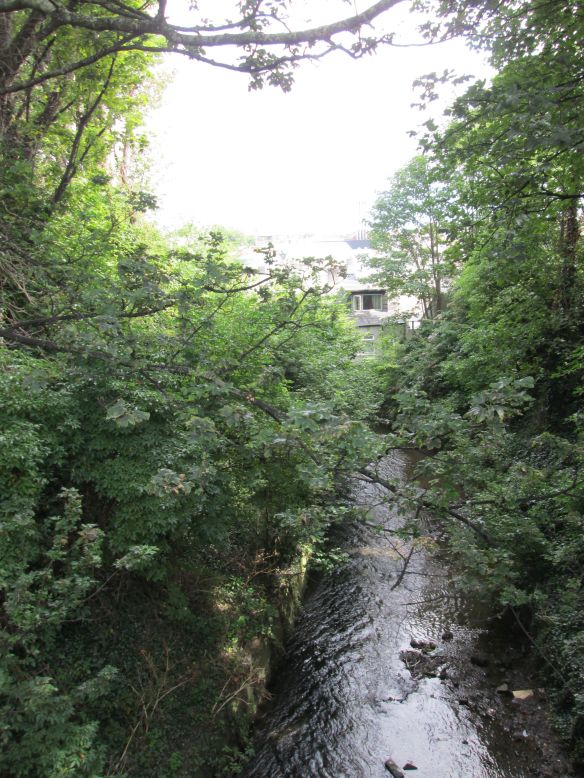
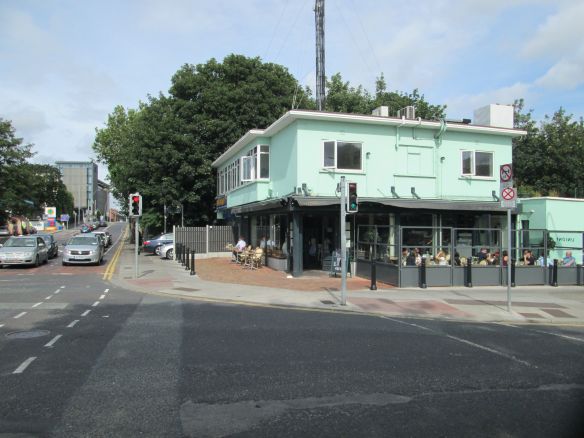
Moving on from the Patriots Pub, the road falls downhill from Kilmainham to the Camac River which flows discreetly under a high, short bridge. At the junction there’s a pleasant restaurant with outdoor seating housed in a modernist building with a certain Art Deco ambience. Called Union 8 from the Dublin 8 postal district it’s a busy spot, modelled, I think, on a notion of Brooklyn brassiere chique.
 The Old Kilmainham Road heads east towards the city. Further townwards, an early twentieth century housing estate is perched on its hill. Known as Mount Brown, there’s a whiff of Gothic romance off the place, home for the urban hobbit. It’s an early example of Dublin Corporation’s attempts to break out of the ghetto housing to which the working classes were once condemned. Designed by keen modernist TJ Byrne, it stands comparison with the Iveagh Trust terraced housing projects of that era.
Inchicore stays off to our right by way of Emmet Road. Inchicore is from the Irish, sheep island. Shepherds used to gather their flocks here on land bordered by the Liffey and Camac rivers. Over the last century it has grown into a heavily populated working class suburb.
Local club St. Patrick’s Athletic play out of Richmond Park, a pitch not renowned for its resemblance to a billiard table. It was said that the goalie at one end was unable to see his opposite number below the knees. Though, why a goalie would ever want to see the ankles of his opposite number is hard to figure. Founded in 1929 in the Phoenix Park, they set up house at Richmond Park the following year. They came of age in 1951 when they were admitted to the League of Ireland and are the only club to have maintained a topflight status ever since. In that time they have won nine League titles and three FAI cups.
Paul McGrath dallied with the side before departing for Manchester Utd. McGrath was a majestic centre back who became one of Ireland’s most loved footballers, featuring at European Nations and World Cup tournaments. Born in 1959 in England, spending his early years in an orphanage before returning to Ireland at age six. In 1981, while working as a security guard, he signed professional terms with St Pat’s, becoming Player of the Year in his first, and only season. Black footballers were something of a rarity in early eighties Ireland, McGrath was given the nickname the Black Pearl of Inchicore. He moved to Manchester United in 1982, fans adapting a chant which is now indelibly associated with him: Ooh ah, Paul McGrath!…
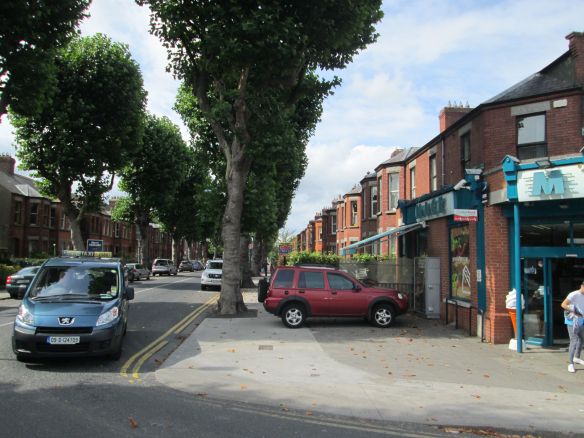
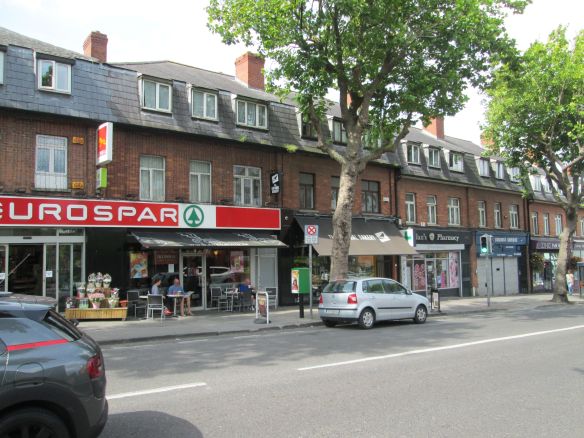 Rising with the road again, this section of the SCR holds a certain charm. The redbrick terrace with mansard roofs is dappled beneath the plane trees. Eurospar and the Natural Bakery have scattered chairs and tables providing a slice of cafe society for the passing boulevardier. I can imagine Phil Lynott strolling down from Dublin 12 with local lad, Brian Downey. There might even be a pre-echo of Parisienne Walkway.
I remember Paris in forty nine,
Champs Elysees, Saint Michel and old Beaujolais wine,
And I recall that you were mine,
In those Parisienne days
Lynott would collaborate with Gary Moore on this 1979 hit. The trio had briefly formed a temporary Thin Lizzy in 1974 following the departure of guitarist Eric Bell, and prior to the foursome featuring the dual guitars of Scott Gorham and Brian Robertson. The opening line alludes to Lynott’s birth year and his father, Cecil Parris, whose surname was grafted onto Lynott’s given name.
Looking back at the photographs,
Those summer days spent outside corner cafes.
Oh, I could write you paragraphs
About my old Parisienne days.
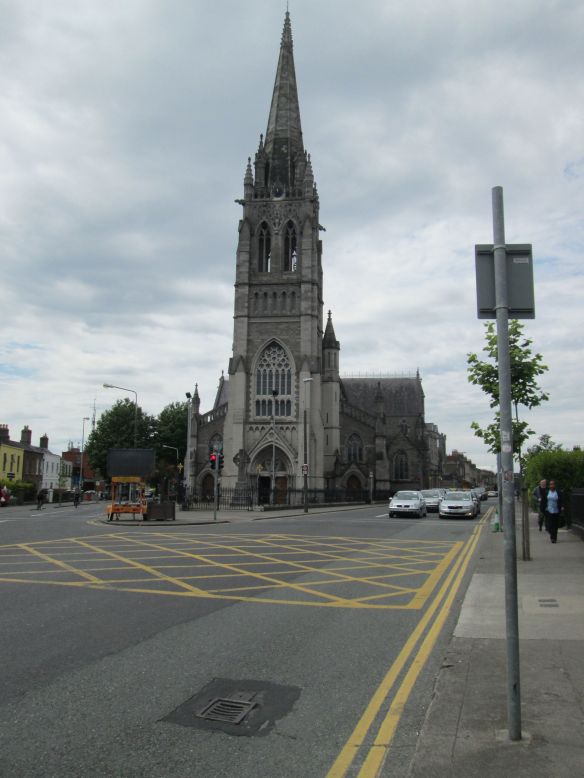
The SCR turns sharply east, before the Grand Canal. On the southern side of the street, a handsome Victorian building stands out. Now known as Hybreasal House this was originally a convent of the Little Sisters of the Poor. Founded in 1883, Saint Patrick’s House was used as a nursing home for the elderly for more than a century, converted to apartments in 1993. The cut stone granite building was designed by WH Byrne architects who designed a host of religious buildings throughout Ireland in the late nineteenth century.
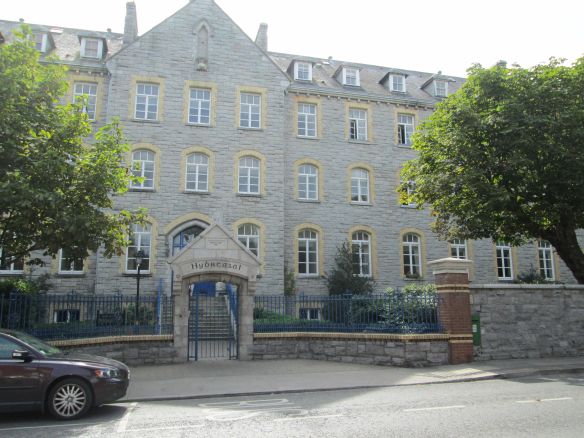 The term Hy-Breasal derives from Irish myth. The fabled isle in the Atlantic was said to appear only one day in seven years and was a land of idyllic perfection. Described by St Brendan the navigator, and others, as a circular island divided by a canal, it was something of an El Dorado, golden domes and spires set amidst great natural beauty. The name was appropriated for Brazil, on its discovery, although a convoluted rebuttal insists that the term Brasil derives from a local timber commodity. The perfection of navigation, saw the fading of such myths, as the reality which had informed them emerged from the mists. They are, I suppose, true, if inaccurate. For that matter, the Dublin of our odyssey is itself circular divided by a central waterway, the Liffey. Welcome so, to Hy Brasil.
We return to the elegant residential streetscape typical of the Circular Roads, redbrick and treelined, implicitly packed with undiscovered narrative. This straight stretch of road culminates at the gates to St. James’s Hospital before crossing the Red Luas line at Rialto Bridge which gives its name to the area.
 Here the Luas is built on the old terminal section of the Grand Canal. Completed by the end of the eighteenth century, having begun in 1759, the crucial waterway connection with Sallins took twenty years. Within another five the Canal pushed through to the Shannon. The Grand Canal Basin served Guinness’s and the various breweries and industries of the Liberty of St Thomas Court. At the turn of the century, the Canal was extended in a loop toward Dublin Bay, and by 1810 joining the confluence of the Liffey and Dodder rivers at Grand Canal Docks. Which we’ll see at the end of our odyssey.
The song, the Good Ship Kalibar, is a fanciful ballad harking back to the intrepid lives of ancient navigators of the inland waterways.
Heave away me hearties, we’re bound for lands afar,
As we sail away from James’s Gate, aboard the Kalibar!
The Basin segment remained in use for almost two centuries, before being filled in as a linear park in 1976. It was the end of a most enthralling piece of urban fabric, an ancient industrialised zone reflected in its watery highway. It is again a new avenue of utility with the building of the Luas Red Line in 2004 from Connolly Station through here and on to the Square in Tallaght.
Rialto implies echoes of Venice, it does hug the Grand Canal after all. It seems that the bridge across the old Grand Canal at its intersection with the South Circular, built by Henry Roche, was reminiscent of Ponte de Rialto in Venice, somehow. But it was a good name, and it stuck. What Shakespeare would have made of it, one may wonder.
Many a time and oft in the Rialto you have rated me, about my money and my usances. Still have I borne it with a patient shrug, for suffrance is the badge of all our tribe. You call me misbeliever, cut throat dog and spit upon my Jewish gaberdene, and all for the use of that which is mine own.
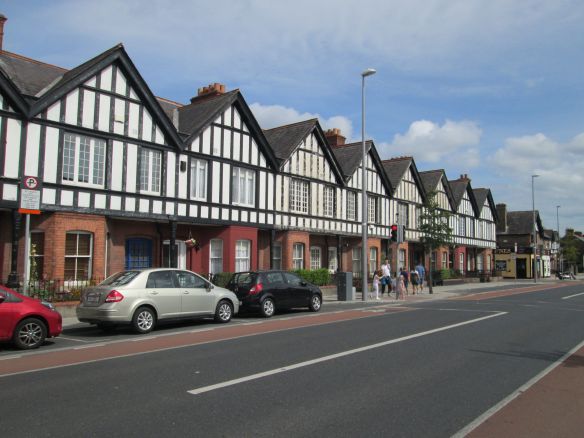 Rialto is an old working class suburb, housing those employed by the canals, breweries and distilleries as Dublin spread southwest from the Liberties. It has evolved its own character, something of an urban village. Although flanked by notorious housing projects, the SCR thoroughfare is characterised by the redbrick, woodframe ambience of Victorian design. A lovely Tudor revival terrace arcs along the northern rim of Rialto’s central plaza. The architectural style, sometimes called Mock Tudor, became popular towards the end of the nineteenth century and is somewhat incongruous, though picturesque, within the context of Ireland’s Capital.
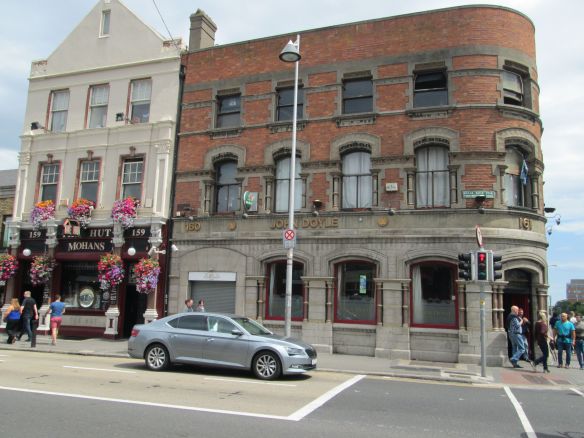
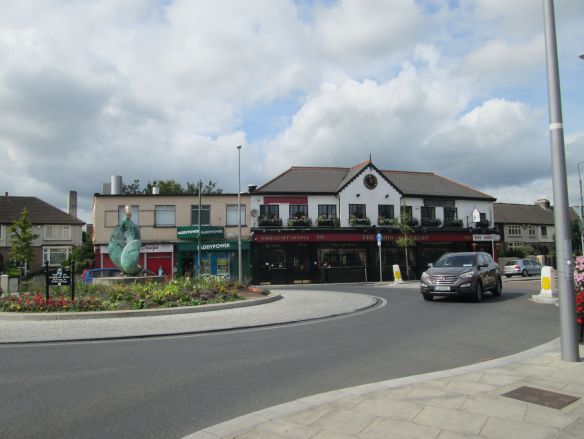 Across the road the pub is named for the Bird Flanagan. William ‘The Bird’ Flanagan, born in 1867 lived beyond in Walkinstown and was a notorious practical joker. He earned his nickname from a prank he played on a local policeman. Buying a festive goose at a local butchers at the Barn, he had it hung outside the shop for collection later. Catching the attention of the unfortunate constable, the Bird grabbed the goose and ran towards Rialto. He was apprehended near the canal, whereupon he showed his purchase docket.
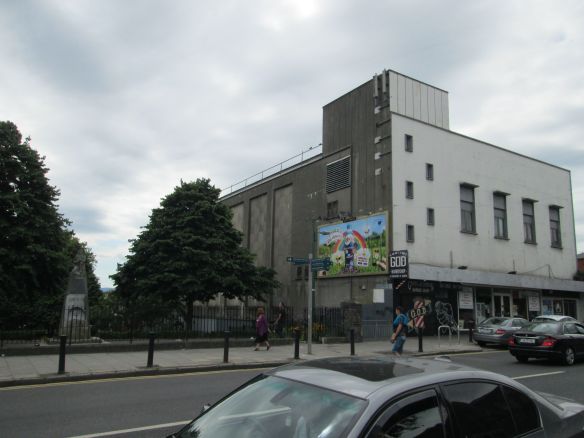
Behind the street lies Dolphin House, one of the housing schemes hugging the canal bordering Rialto, including Fatima Mansions. Seen in their day as an exemplary improvement on the slum conditions of the inner city, from the seventies on, the positive image waned. Fatima Mansions became a heroin supermarket and was demolished in the late noughties. Herberton Apartments replaced them, but the term Fatima persists in the local Luas stop. The Rialto Cinema is another echo of times past. It was a massive 1,600 seater auditorium. Built in 1936 its art deco frontage was a distinctive area landmark. It closed after nearly forty years, 1971, and was converted to an auto showrooms.
 I worked in Dolphin’s Barn in the eighties and spent many a lunchtime strolling around. I often had my lunch in the sitdown chipper on the south side of the street, which I think was called The Lido, across the road from the cinema. Many years later I reimagined the place in the narrative of Annie, a teenage girl who paints an unreliable picture of life in sixties Dublin.
Many’s the time and oft through Rialto I did stroll. I’d listen to the songs of bargees sweeping under Rialto Bridge heading down to Portobello. The hawkers looking down from the banks, singing their response, like they were starring in a musical. Summertime, the boys would play wearing nothing but their Jockeys. They’d gather by the locks, plunging into the greasy water in turn.
A visit to the Horse Show with her father leaves her besotted by the Italian showjumping team led by Captain Raymondo D’Inzeo. Much like myself in fact, when my father used take me to the RDS. Mind you, Annie is the eponymous narrator in The Secret Lover of Capt Raymondo D’Inzeo wherein she describes how the Italians plotted their Aga Khan Cup campaign from a secret room in the chipper. It is here called Cassoni’s by way of tribute to the family whose original Irish business was in Thomas Street nearby.
Just past Cassoni’s I see the car, a red Alfa Romeo with the roof rolled down. Graciano is at the wheel, la Contessa Rossi languishing in the passenger seat. We had stopped by the cinema and I had turned my back on the road to read the coming attractions. I hear a car door close. As I turn I know I will see her approaching. She stands before us, her cigarette poised. She asks for a light. Robbie obliges, though she stays looking at me all the time.
“You,” she says, “you have set your sight on the Captain. You are good. A young girl with well turned calf. But would he set his cap for you, the Captain? In all probability. He can acquire what he likes.”
I can’t think what to say. “Will Italy win the Aga Khan?” I stammer.
La Contessa puts her head to one side, like a bird looking at a worm. When she speaks, it is not by way of a reply. “I see your man there. He is within your reach. Don’t take me wrong for, believe me, we both have love in our hearts. And yes, we will win.”
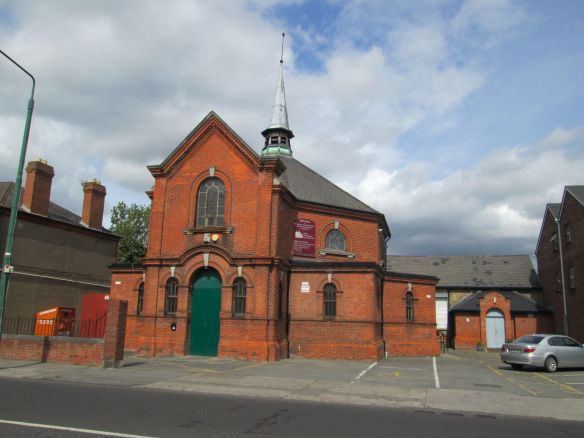 Which they did. That was the early sixties and I last frequented these parts in the early eighties. We reach Dolphin’s Barn and cross the chaotic urban artery towards Cork Street and the City. Dublin 12 lies to the South beyond the Canal, but we continue our journey to the East.

 xxharrison