
There are daily ferries from Douglas to Liverpool, the crossing taking three hours. The boat, the Mannanin again, is packed. Mostly bikers returning from their Isle of Man TT pilgrimage. We breakast on the boat. It’s a full English, or Irish, or Manx; you know what I mean. I was once in Liverpool, back in the early seventies on a daytrip by boat. I bought myself a portable typewriter and an airbrush, fuelling my twin ambitions to be a writer and an illustrator. It’s a long story. Or, several short stories and a novel, some slick illustration too, though I’ve abandoned that technique for the paintbrush.
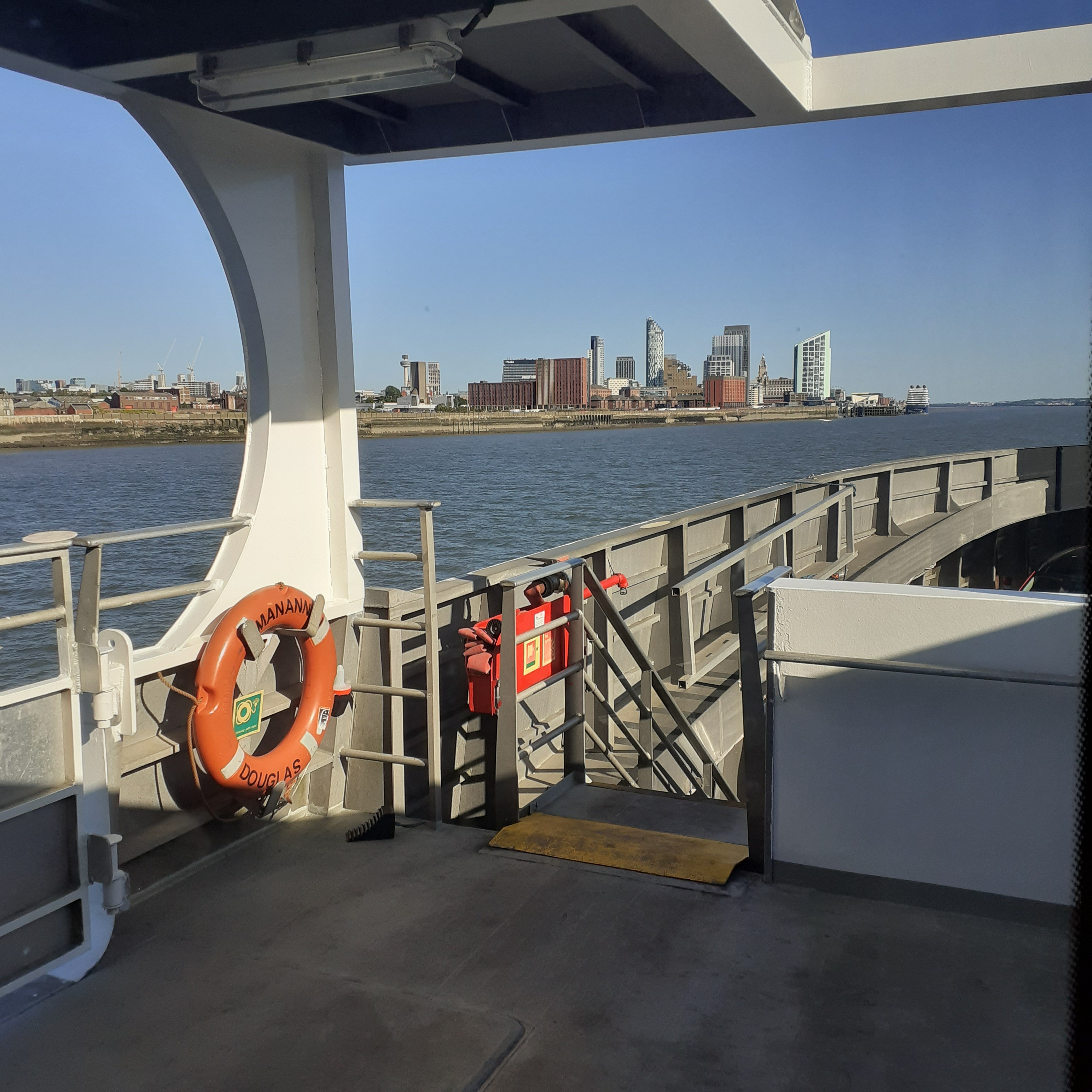
Our day in 70s Liverpool was shrouded in drizzle, the city providing a gothic silhouette to our shopping adventure. This time, it’s baking in blue heat. The ferry berths on the northern end of the waterfront. The majestic dockside running south has been beautifully developed into a vibrant showpiece for the city, dotted by landmarks with a host of visitor attractions. It absolutely throbs with life under the hot sun.
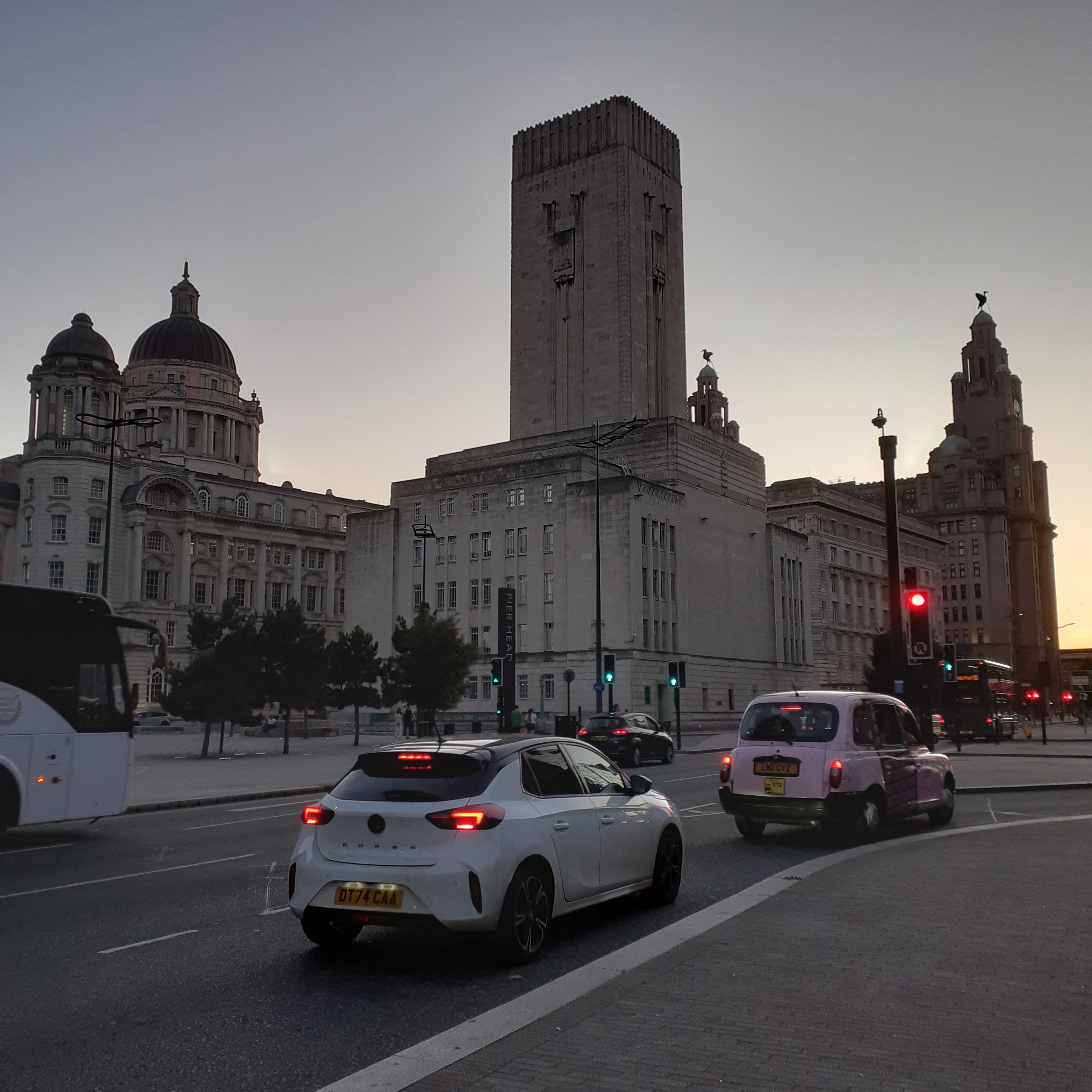
We walk the mile or so to our hotel, the Ibis, at Albert Dock. This stretch of dockland along the Mersey River is very much the heart and soul of the city. Pier Head provides a stunning architectural panorama. This area was called George’s Dock until the end of the nineteenth century. Liverpool Corporation bought the site with the Mersey Port and Docks Board retaining a portion for its new headquarters. The Port of Liverpool Building was completed in 1907. A typically Edwardian building in a Neo Baroque style, its central tower and dome was the tallest in Liverpool when built, very much the city landmark. This was surpassed in 1911 by the Royal Liver Building, the true Liverpool icon. In 1916 the Cunard Building came in between. Built to a modernist version of an Italaian Renaissance palace it completes the trio known as the Three Graces. Behind this trio is a fourth grace, perhaps, the George’s Dock building from the 1930s. This is an Art Deco building with a high central tower used as a ventilation shaft for the Mersey Tunnel. The reliefs on the top half of the tower resemble a sleeping face.
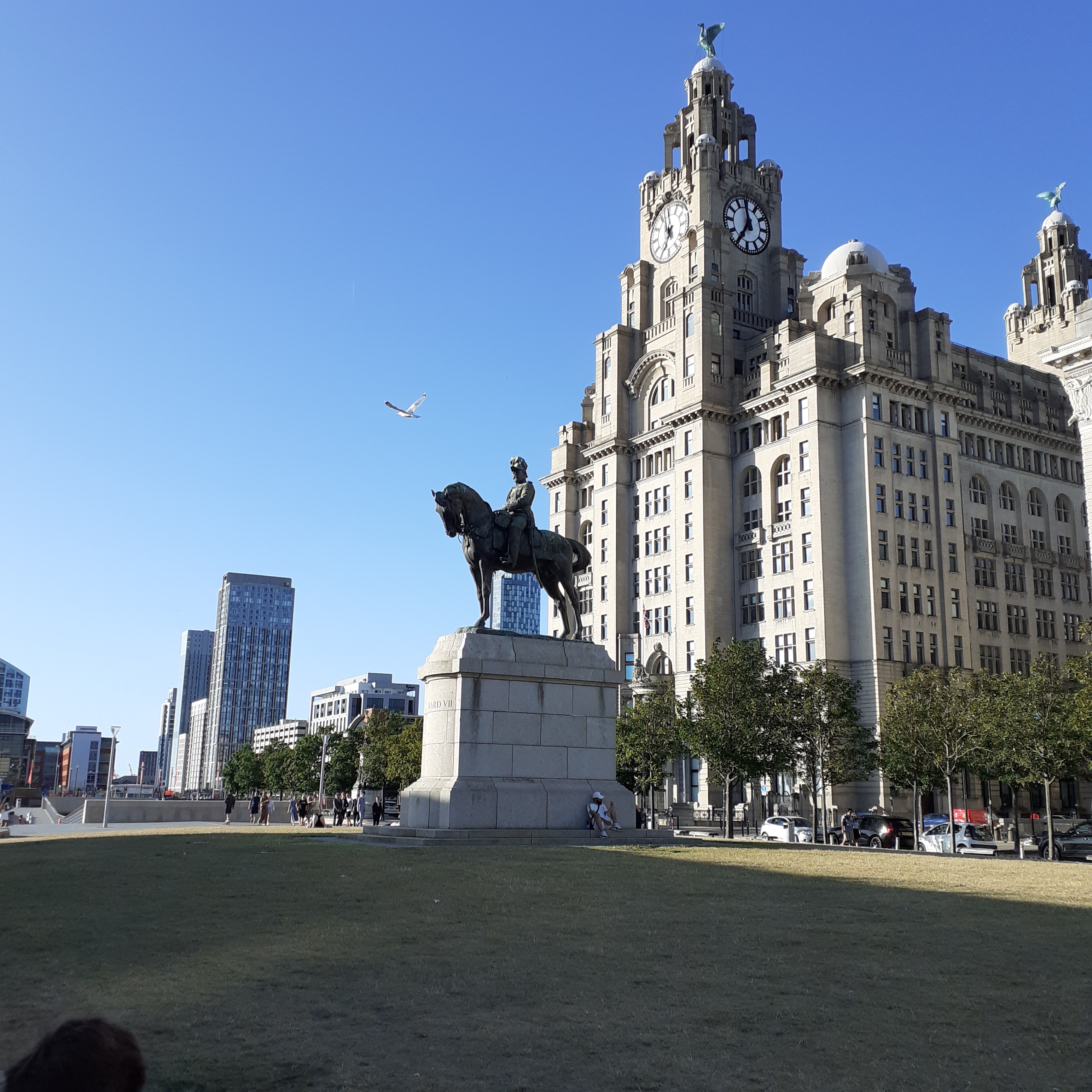
The Liver Building was designed by local architect Walter Aubrey Thomas for the Royal Liver Friendly Society. It’s one of the first major buildings I knew. My mother was a customer and her insurance book featured a line drawing on the cover The Liver Man came every month in his fancy Austin Cambridge to do the account thing. Exotic times. England’s first skyscraper is built of white reinforced concrete. Its twin towers climb to almost a hundred metres. The Liver Birds perch atop, eighteen feet tall. The mythical birds have been named Bella and Bertie. Taken from the ancient city’s coat of arms they are, officially, cormorants. Since Liverpool received its charter from King John in 1207, it’s likely that the bird first featured in the city arms, in homage to the king, was meant to be an eagle. Just badly drawn. It became a cormorant by the late eighteenth century, on the blazon for the coat of arms granted by Norroy King of Arms,the authority for northern England and Ireland, a certain George Harrison. The bird, whatever it is, has become the emblem of Liverpool itself and the football club Liverpool FC, though local rivals Everton, the older club, originally used it. Anyhow, a hundred metres up, Bertie looks inland, Bella to sea. It is said she keeps an eye out for the sailors, while he checks to see if there’s a pub open.
The Liver Birds was also the name of a BBC tv series from the early seventies, written by Carla Lane and Myra Taylor, two local housewives. It featured Polly James and Pauline Collins, and later Nerys Hughes, as the girls, or birds, in question. Something of a female equivalent of another north of England comedy the Likely Lads. The theme song was sung by the Scaffold, a comedy folk group including John Gorman, Roger McGough and Mike McGear, nee McCartney, brother of Paul. It is now possible to take a trip to the top of the Liver Building and with the birds to share this lovely view.

Even more famous than the two birds are the four lads, the Fab Four. Their statue at Pier Head provides the perfect photo opportunity. You can insert yourself amongst the foursome as they, slightly larger than life, stride out towards the Mersey. John, Paul, George, Ringo and yourself. Become your own fifth Beatle.
The Beatles form a good proportion of our mission. or pilgrimage, to Liverpool with a visit to the Beatles Story on Albert Dock. The Beatles Story opened in 1990 and has been a flagship of the growing Beatles tourist industry. Housed in a 19th century warehouse, the exhibition takes visitors through a chronological tour of the Beatles phenomenon. The group were one of many beat groups who flourished at that time, inspired by the first lowering of rock and roll across the Atlantic. Beatles was a clever pun, with a nod to Buddy Holly’s Crickets. The original trio of Paul McCartney, John Lennon and George Harrison, were augmented by drummer Pete Best and bassist Stuart Sutcliffe. The band played locally and for a few seasons in Hamburg, Germany. Sutcliffe stayed in Germany to pursue a career in art but less than a year later in April 1962, he tragically died of a brain haemorrhage. Pete Best was dismissed during their first London recording sessions with George Martin and Ringo Starr was drafted in. Then they had a hit with Love Me Do and the rest is history, with a fair bit of hysteria thrown in.
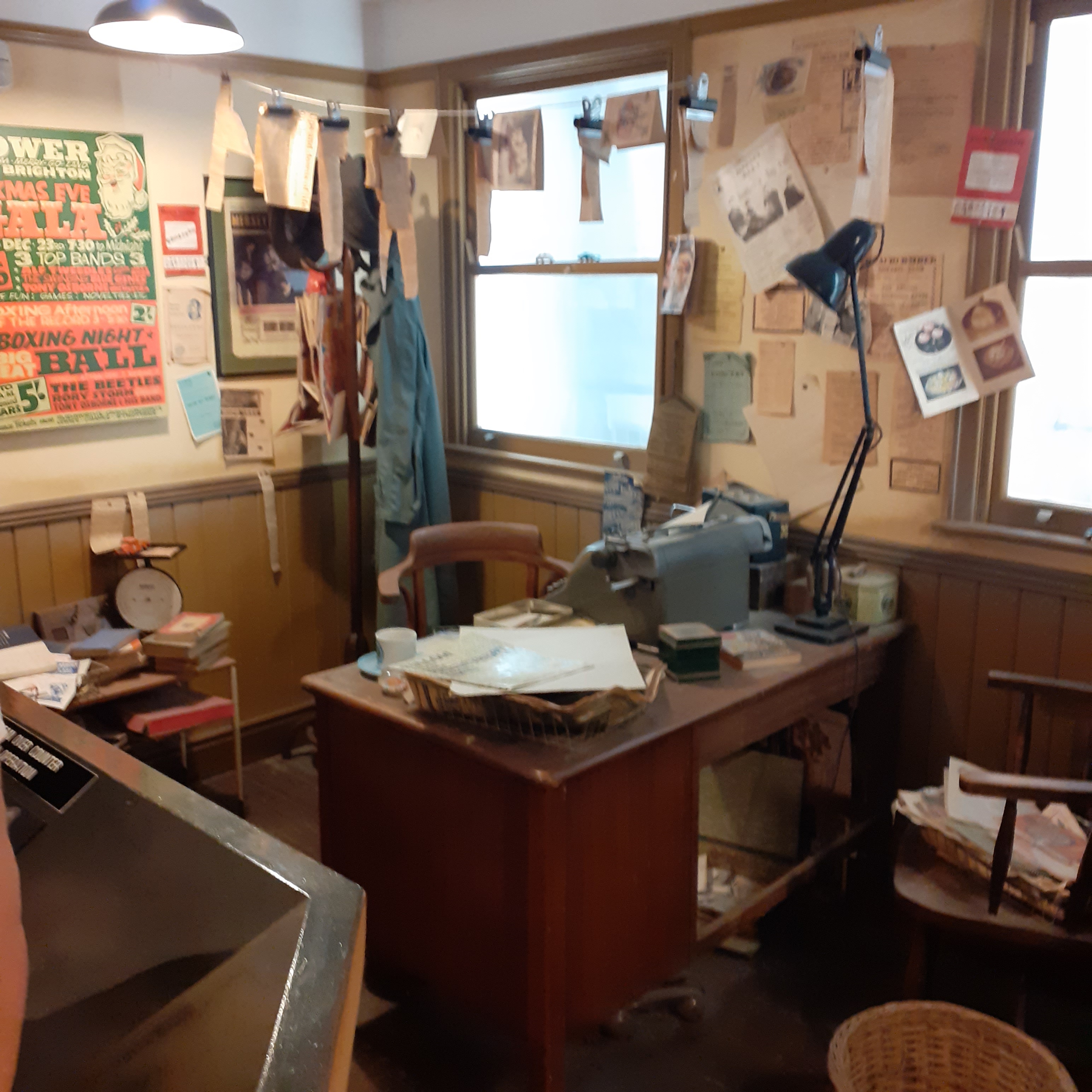
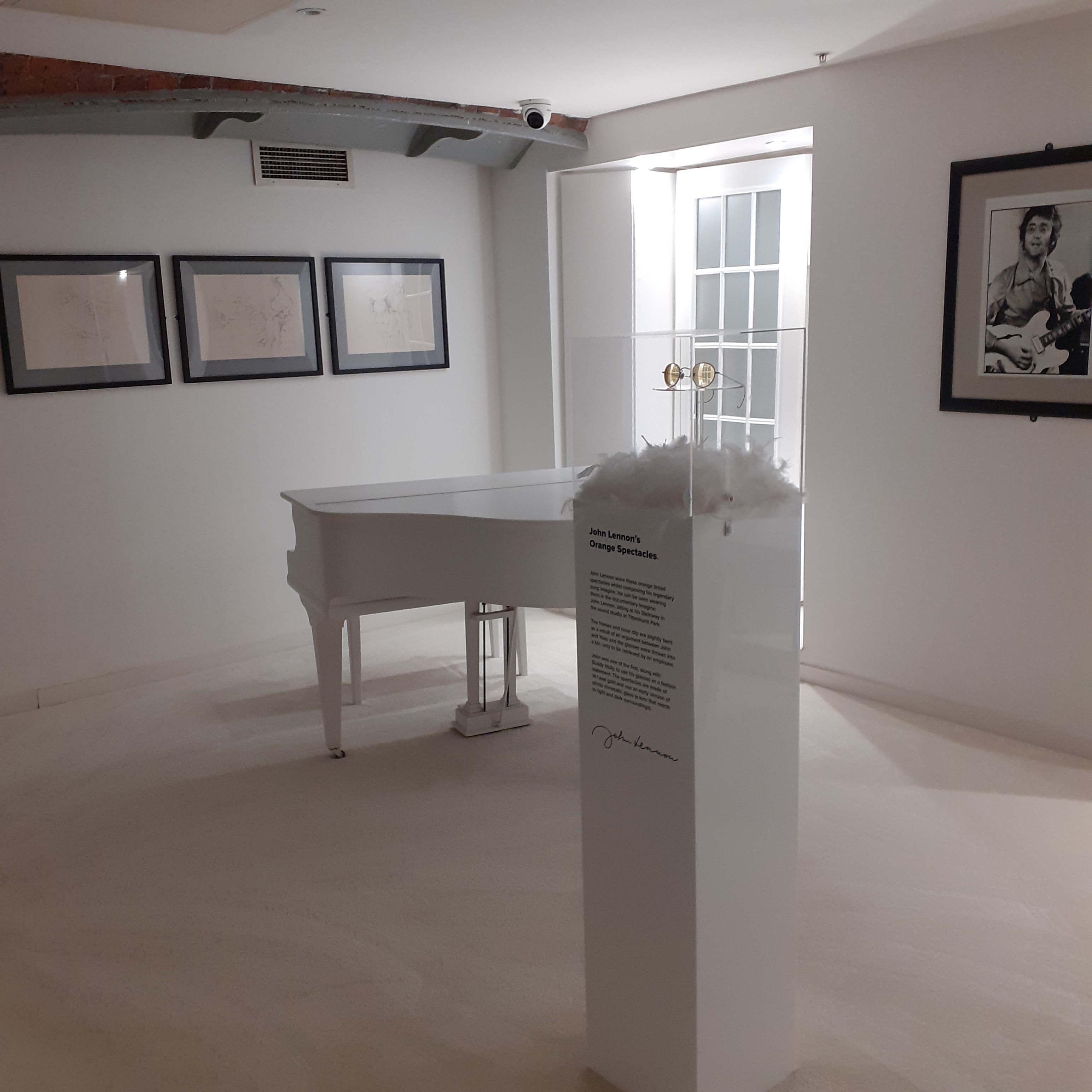
The Beatles Story constructs a sequence of imaginative tableaux and actual paraphernalia by way illustration. Brian Epstein’s crowded office, George Harrison’s first guitar, John Lennon’s specs and a room devoted to Sgt Pepper’s Lonely Hearts Club Band. Each of the four have their own room and there’s a touching note at the end with John Lennon’s piano room from Imagine.
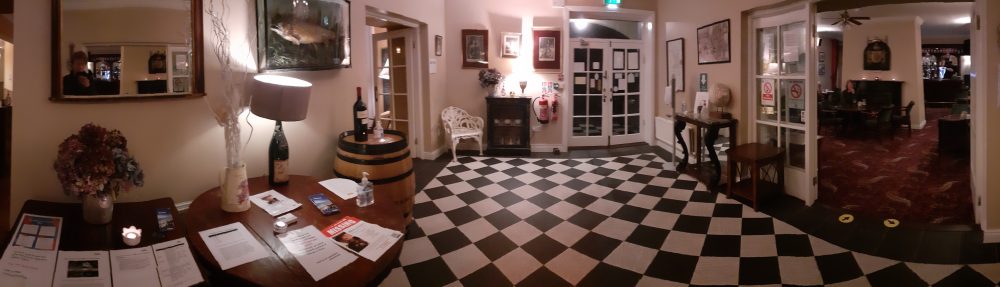
There’s also a recreation of the Cavern Club. The Cavern Club itself is a focal point of the Cavern Quarter up on Mathew Street. It opened as a jazz club in 1957. By the early sixties, beat groups were knocking on the door. The Beatles most persistently. Between February 61 and August 63 the group made almost 300 appearances there, but by then they had outgrown such a small venue. Ten years after, the Cavern shut up shop. Then the zeitgeist moved towards restoration. Developers originally hoped to excavate the original cellar but instead had to make a reconstruction with a lot of the original material
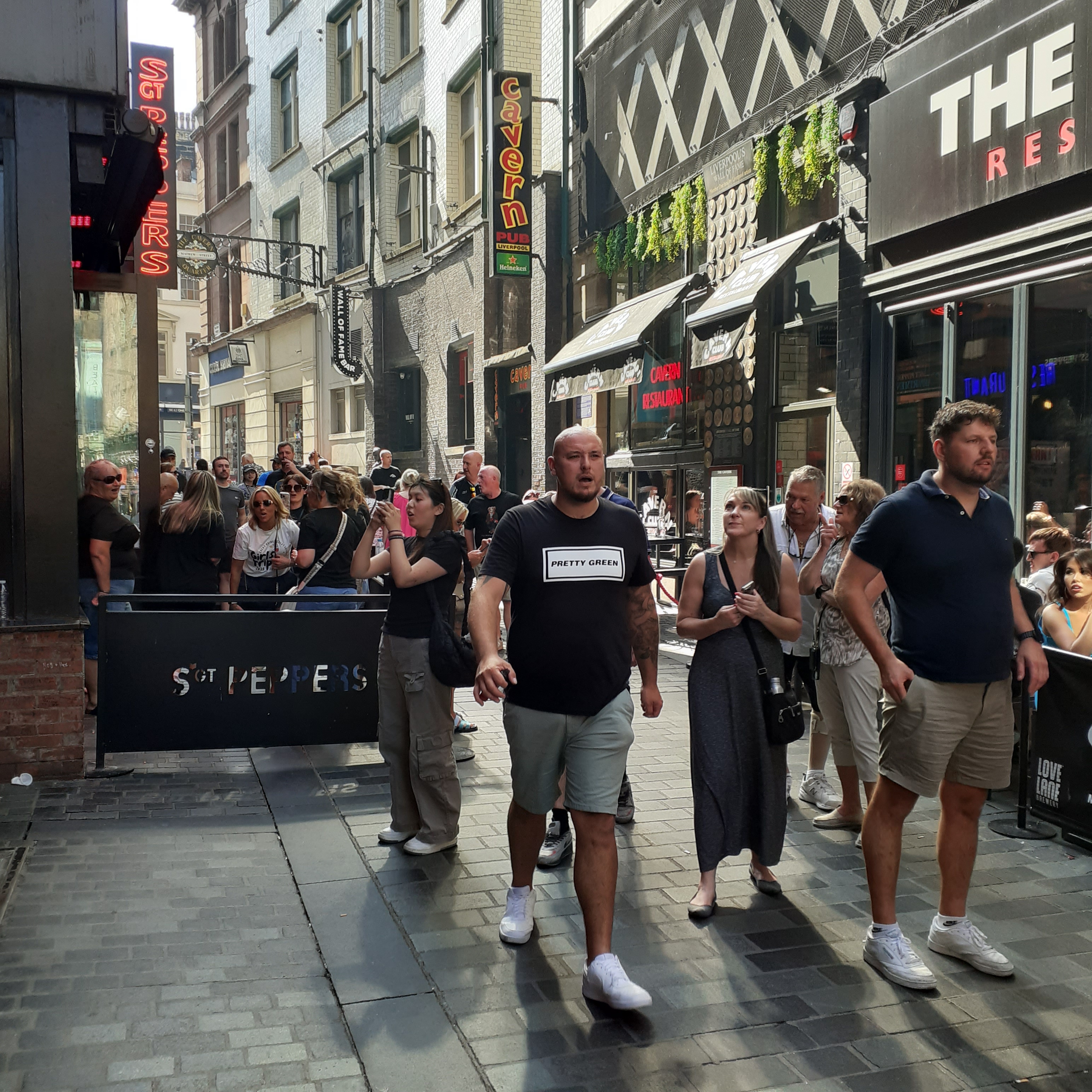
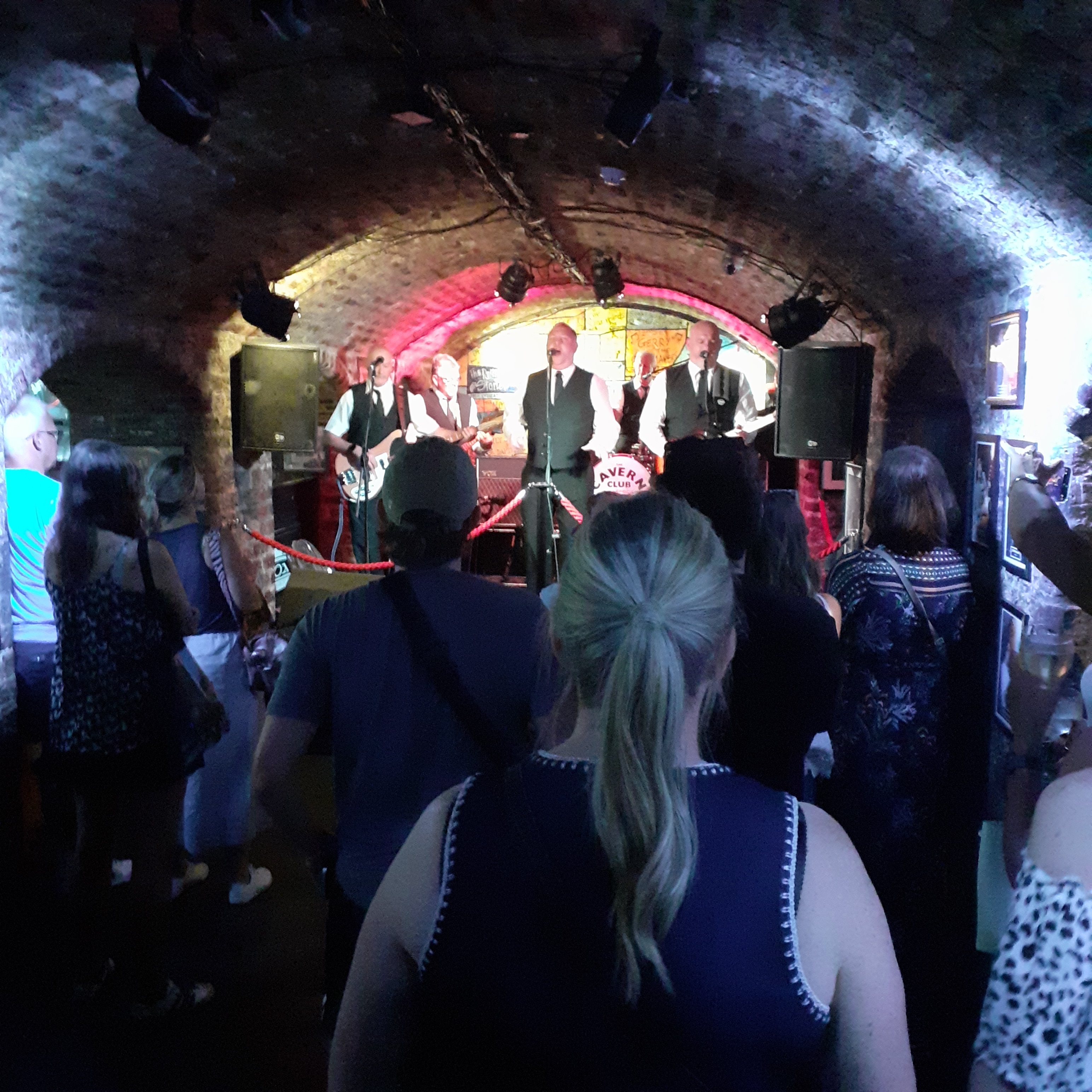
M and I make our way up there on friday night when the quarter is at its most raucous and exuberant. Weaving through the crowds in a mixed musical din has a certain spice to it. Sometimes weaving won’t quite work. A sequined lady from a time machine lurches to grab me. She is a doppelganger for the Cilla Black statue nearby on Mathew Street, if rather more aggressive. M and I decided to return on Saturday afternoon. Still loud and fun, but more relaxed. A fiver will get you in, card only, to walk a few flights down into the actual Cavern Club. Okay a reconstruction but it’s as real as it gets, and that’s fine by me. An amiable troubadour, somewhere west of Bill Bailey, takes us through a field of memories. The repertoire was a mixture of Beatles and Monkees, with some Oasis thrown in too, their comeback tour looming large in late July;

The Monkees were the American TV Beatles, and the band for my age group. Daydream Believer was amongst their best, and enjoyed a second coming with a later generation of Macams. Alternative lyrics came from a lively party of Sunderland lassies in the Cavern that day. Cheer up Peter Reid! Who, by way of connection, is a Scouser dressed in blue. Everton, in other words. As regards alternatives, it wouldn’t have been appropriate to shout for my Monkees favourite: Randy Scouse Git.
The Cavern has branched out, with a theatre hall set up and a dining area part of the labyrinth we explored. We stuck with the original, enjoying a couple of drinks before finishing with the Searchers, or five rocking old geezers in suits playing their stuff. Then we walk, tired and emotional, happy really, up many flights of steps and into the sun. We’re in the home the Merseyside sound; Gerry and the Pacemakers, the Merseybeats, Cilla Black and the Searchers. The Beatles, of course. The people who made teenage living fun, made us what we are today, and made too many damn fine records to mention.
There can be only one choice to play us out. On first setting foot in the Cavern, the opening song our troubadour played was Here Comes the Sun. It appeared on 1969s Abbey Road, the last album recorded by the Beatles. It was written by George Harrison in the April of that year. Harrison was oft referred to as the Quiet Beatle. Though he wasn’t quiet. He was, however, the most Irish of the Beatles, as you can tell from the lyrics of this song; ha ha. In fact his mother Louise, nee Ffrench, would often take him home to visit her ancestral family in Drumcondra, Dublin. In the early fifties, George with mother and brother was photographed on O”Connell Street, Dublin, by Arthur Fields, the famous Man on the Bridge. Curiously, my own mother, Veronica, was from Drumcondra. An O’Flanagan she would go on to marry a Harrison, from Blantyre, Scotland. She loved the Beatles too. Get Back was her favourite.
Little darlin’
It’s been a long, cold, lonely winter
Little darlin’
It feels like years since it’s been here
Here comes the sun, doo-doo-do
Here comes the sun
And I say, “It’s all right”
 xxharrison