1. Cork
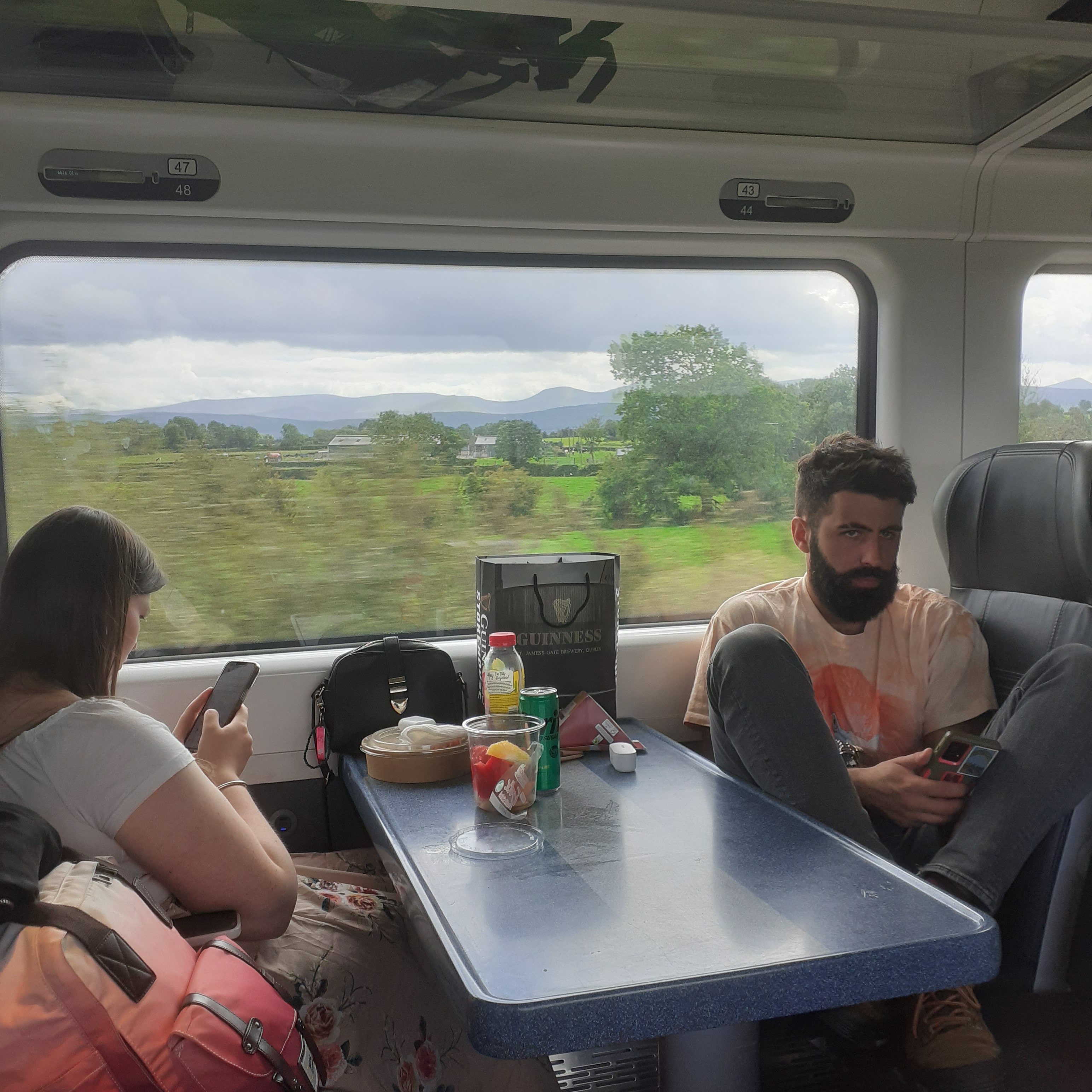
Dublin to Cork is two and a half hours by rail. There’s a train every hour on the hour leaving from Dublin Heuston. The train barrels through the south midlands to Limerick Junction before veering due south through Cork, Ireland’s largest county and on to the Republic’s second city, Cork. The train arrives at Cork Kent station to the north east of the city on the Glanmire Road. It’s a short walk from there to my accommodation at Isaacs Hotel on McCurtain Street.
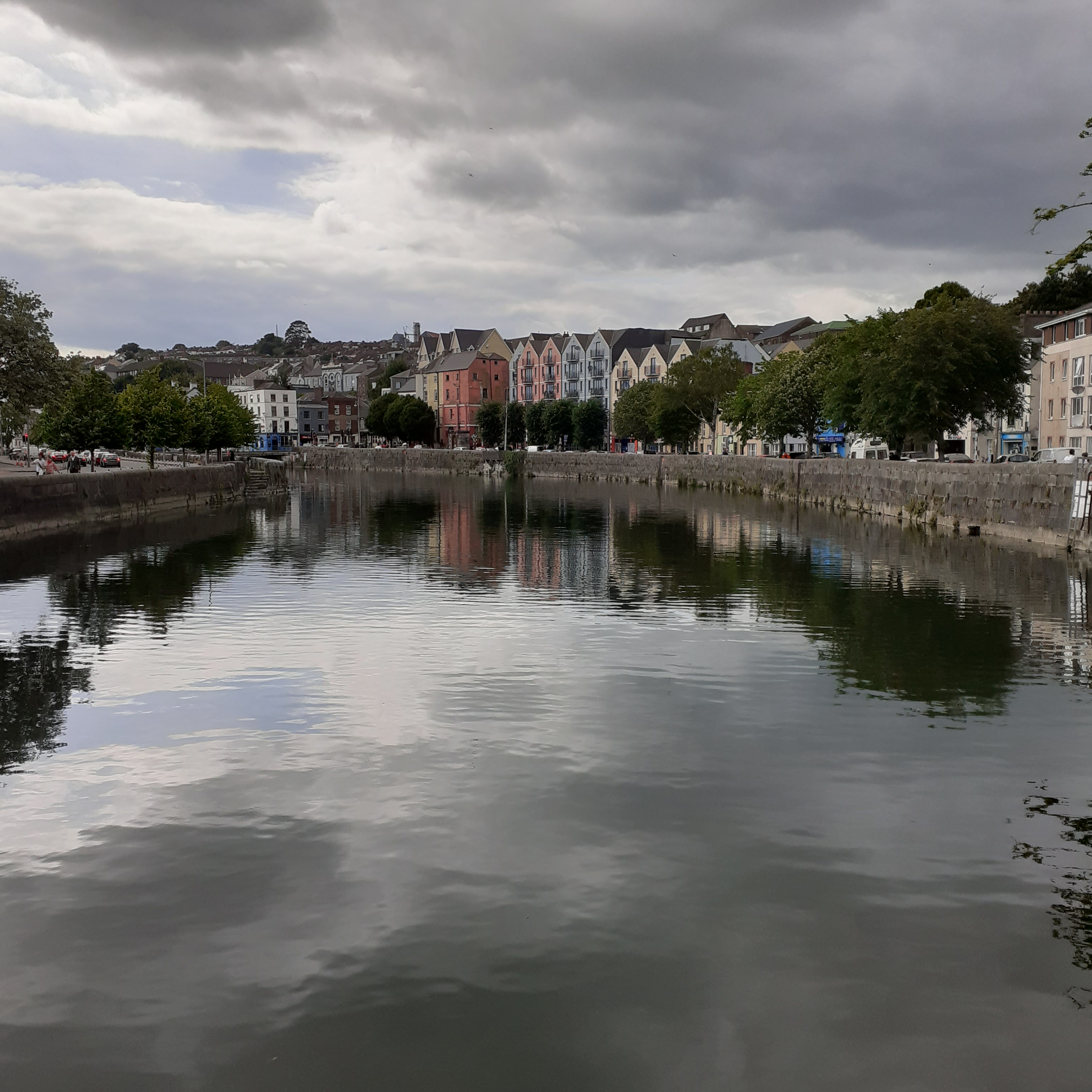
McCurtain Street is being ripped up at the moment but there’s plenty of restaurants, cafes and bars on this busy thoroughfare. Following the main road takes you down to the River Lee, and the city centre lies on the low lying island formed by the division of the river. The division in the River Lee happens well west of the city, past the University campus. The northern branch is the major; wide and relatively straight. The southern branch is narrower and windier, giving a quirky, intimate and scenic aspect to the city.

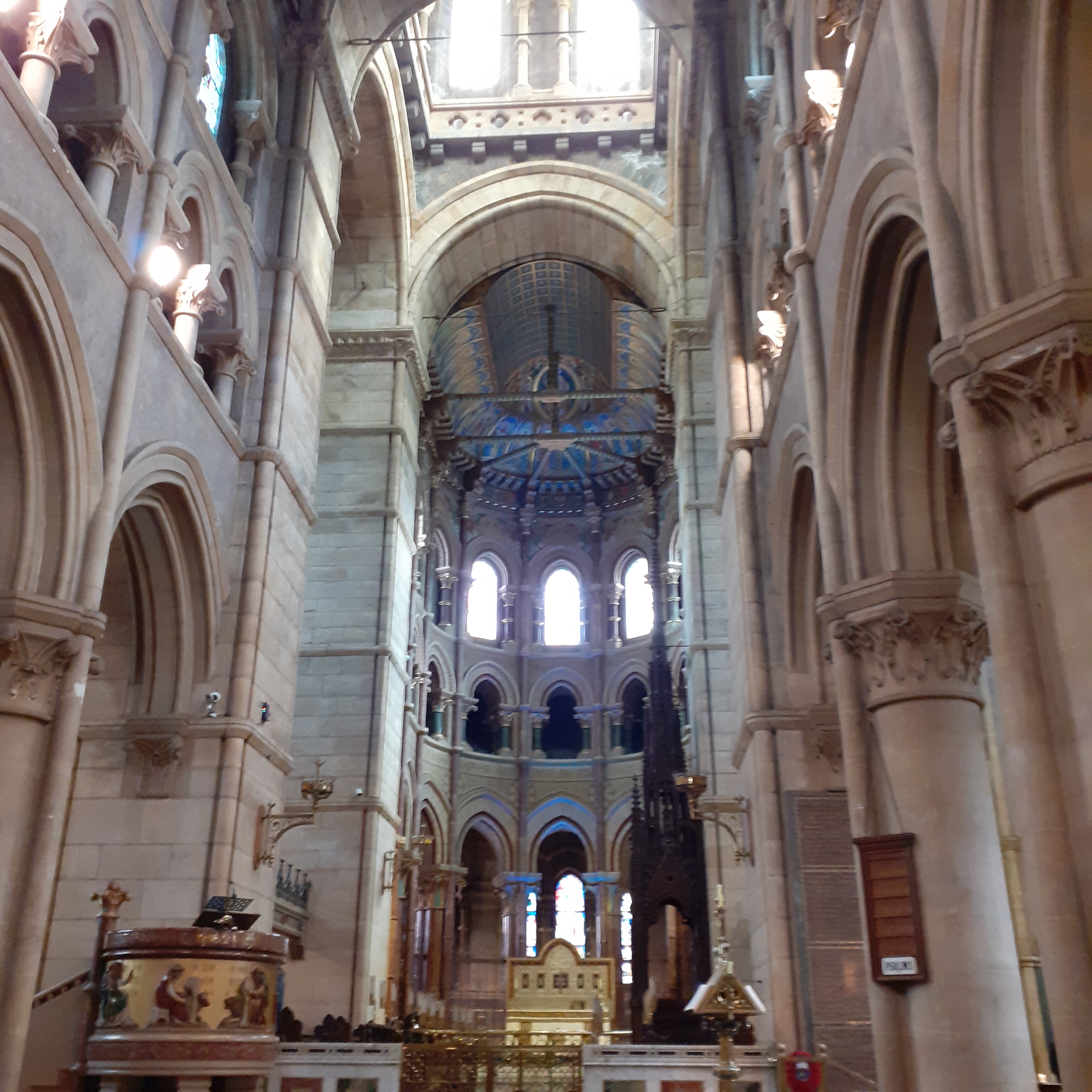
Union Quay takes you past the City Hall and the College of Music. On the opposite bank there’s the Cork studios of national broadcaster, RTE. A few doors up the distinctive ornate Neo Gothic spire of the Holy Trinity Church soars above Father Mathew Quay. Begun in the 1830s, it was not completed until the 1890s, construction having been delayed by the Famine. The design was chosen by competition, the winner being English architect John Pain, who also designed Blackrock Castle and the Courthouse on Washington Street. The interior includes three windows by Harry Clarke, and the window behind the High Altar is dedicated to Daniel O’Connell,
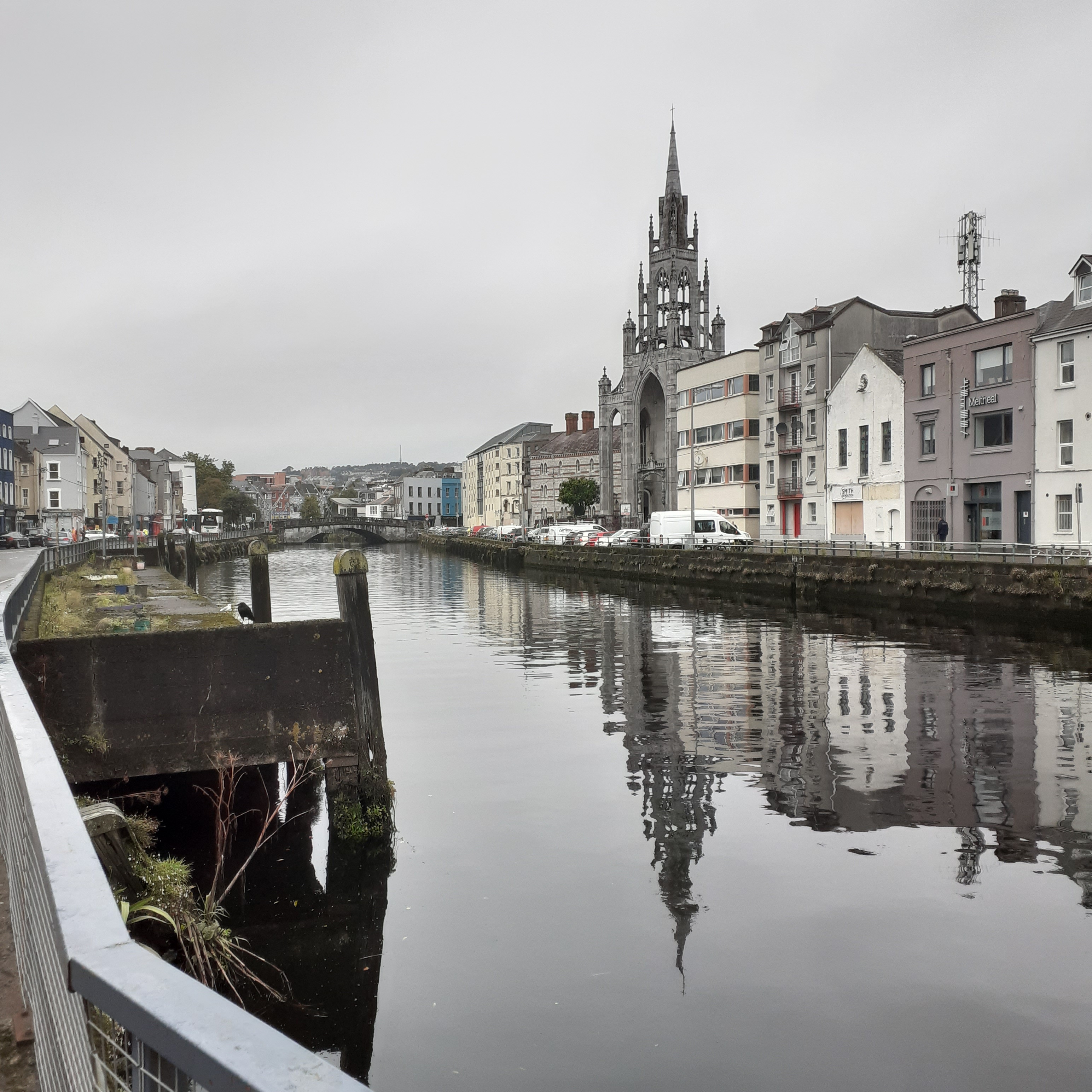
The spire and facade were the last element completed, and were somewhat scaled down from Pain’s original plans. Still very impressive though, facade and spire combining in a unified statement, the entire structure tapering to its peak while the use of flying buttresses and cast iron supports give the building the lightness of lace, as an observer put it: more air than stone. The church belongs to the Capuchins, an order of Fransiscan friars, and is also dedicated to the memory of Father Matthew who commissioned the church, and otherwise devoted himself to helping the poor, becoming also a notorious campaigner against the demon drink.
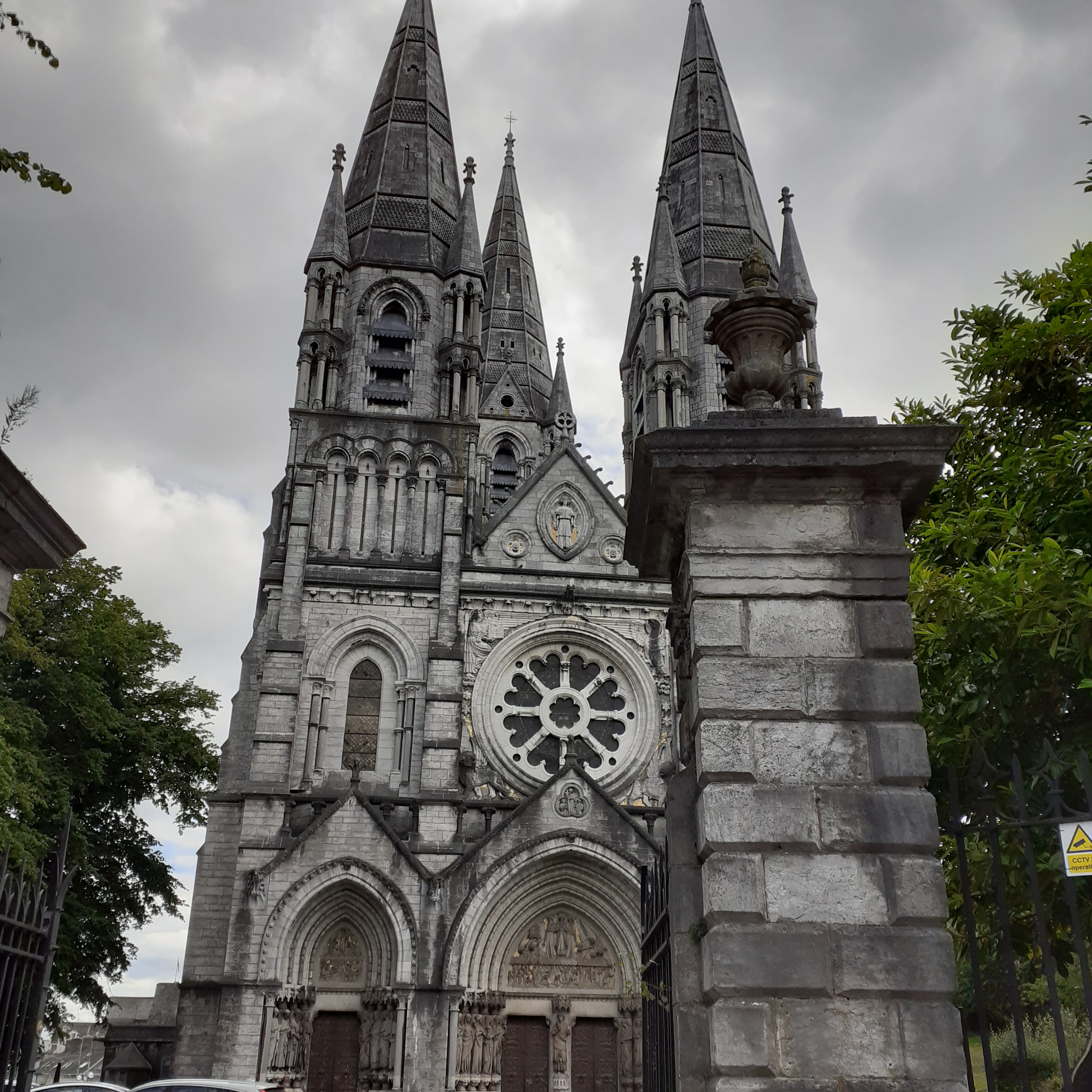
South Parish occupies the steep river banks, and like Shandon on the north bank, was an early suburb of the ancient walled city. The streets hereabouts go back a long way, with many colourful names. Whether Father Matthew had anything to do with Sober Lane, I can’t say, but it boasts one of Cork’s best beer gardens and an ironically named bar on Sullivan’s Quay. Uphill, we passSt Finbarr’s South, which dates from 1766 and is the oldest Catholic Church in the city. Sculptor John Hogan contributed the sculpture of the Dead Christ on the High Altar in 1832, carved from the same white marble from the Carrara Quarry used by Michelangelo. Farther up, the Red Abbey is one of Cork’s oldest structures, an early fourteenth century Augustinian abbey. The friars persisted, even after the Dissolution of the Monasteries in 1541, for another century until the Catholic Rebellion of 1641. Only the church tower remains,
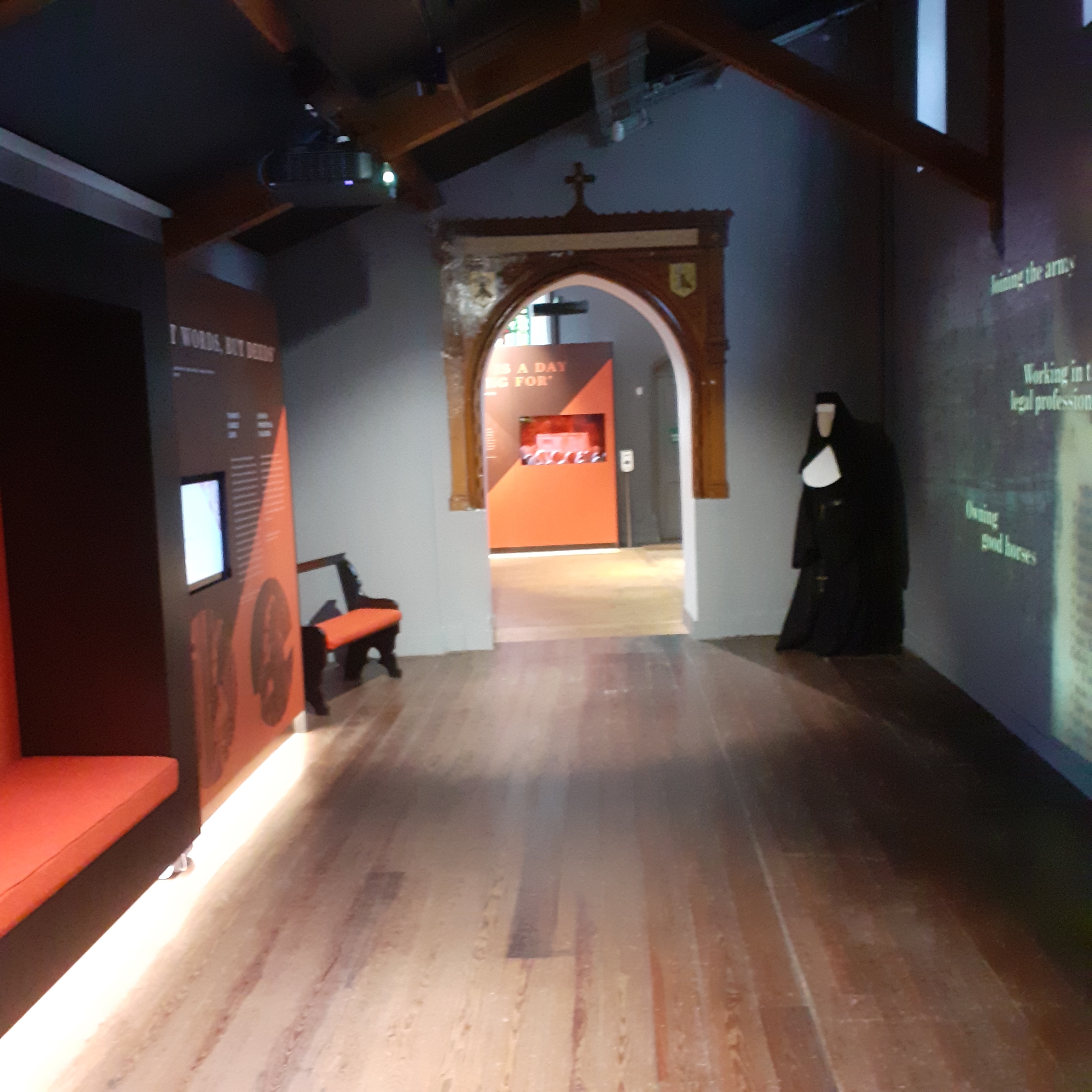
Nano Nagle Place is situated further up on Douglas Street. Born in 1718 Honora Nagle was from a well to do Catholic family in Penal days. The Catholic population then was poor and uneducated, something which Nagle determined to address. Her Uncle Joseph mantained a Protestant front to safeguard the family’s fortune. This allowed for Honora’s education in in Paris. While there she noticed the contrast between her life of privelege and the misery endured by the city’s poor. This she compared to the plight of her own Catholic community back home. She returned to Ireland and established seven schools, for boys and girls, the first in the ghetto where she grew up on Cove Street. She also established a convent for the Ursuline Sisters, a French order of nuns. Being enclosed kept them remote from the community, so Nagle went on to found her own, outgoing order. The convent she founded in 1771 forms the nucleus for Nano Nagle Place, with a museum, bookshop, gardens and her tomb. The award winning museum gives a lively, animated tour through Nagle’s life and work and also illustrates the parallel development of Cork city in the eighteenth century.
Fionnbarra’s Bar farther down Douglas Street, is a good place to slake your thirst with an eccentric beer garden out back. Brightly painted statuary serves to further tilt the axis of reality off the vertical, although a few pints of the brew would contribute to such effects also.
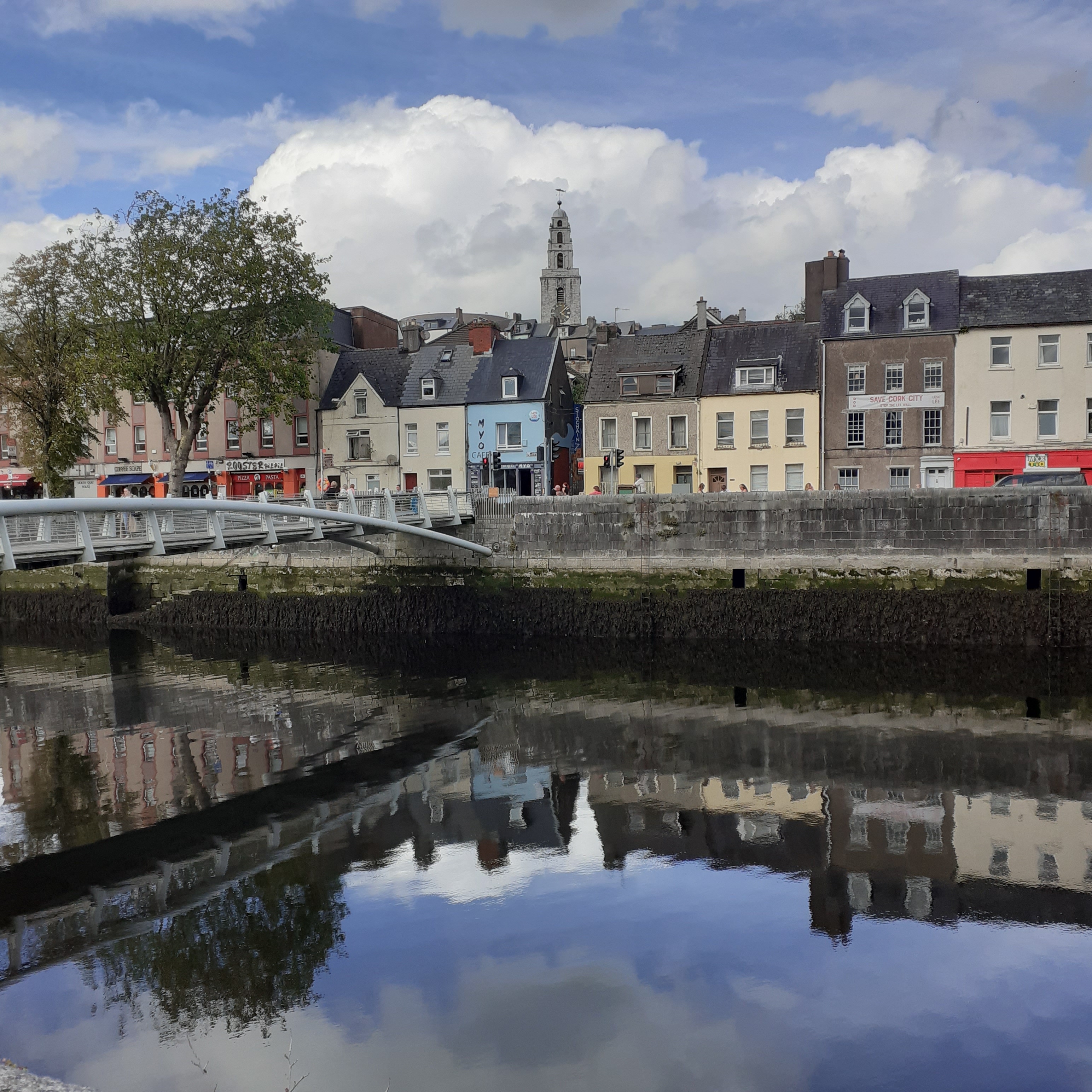
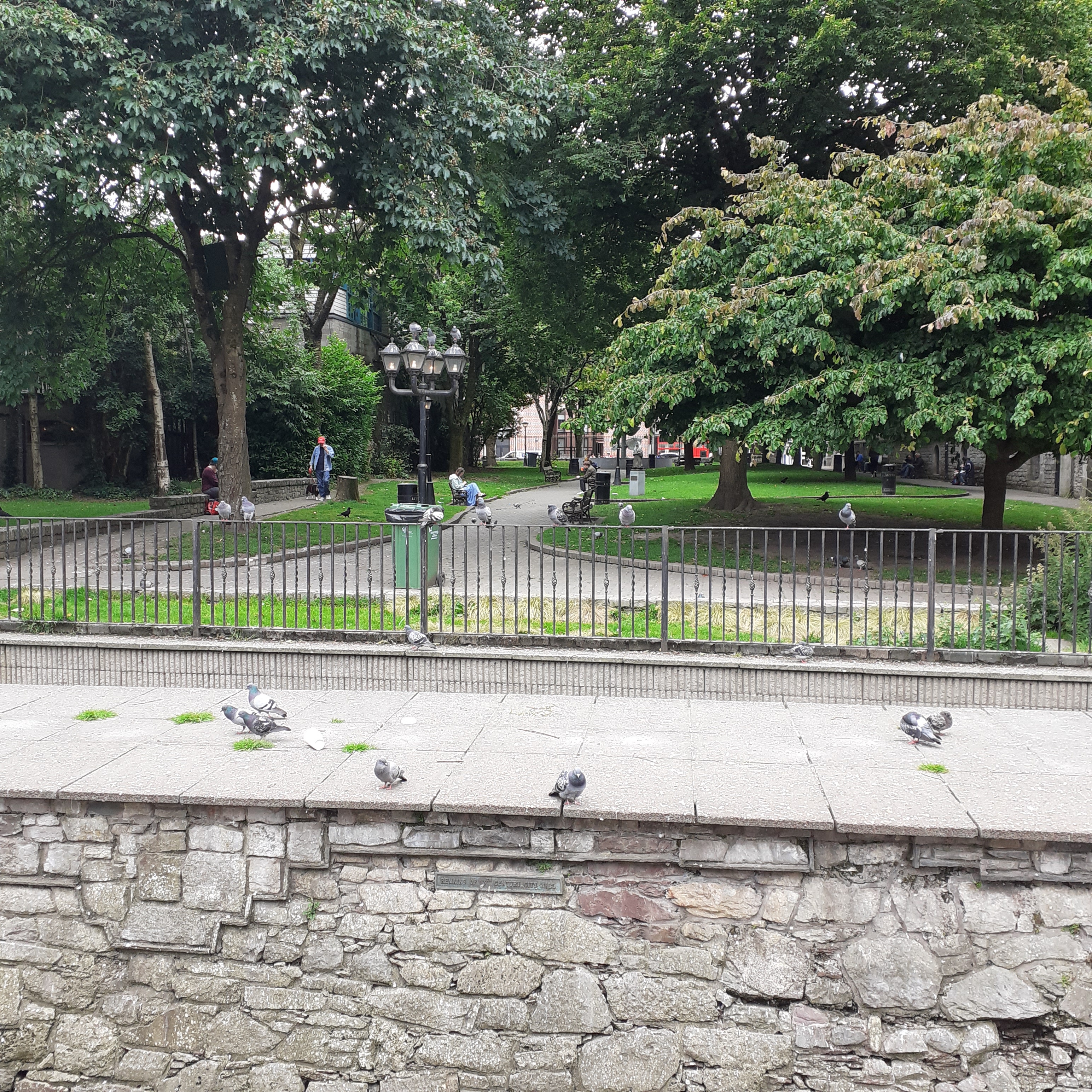
I take the Nano Nagle footbridge across the river on to Grand Parade. Triskel Arts Centre is within the old walled city of Cork. A fragment of these walls remain in the Bishop Lucy Park next door, on the west side of Grand Parade. There’s a short but very useful account of ancient Cork and its early viking origins. Christchurch is a restored eighteenth century church once the main Church of Ireland place of worship in the city. It dates back to the eleventh century when a Hiberno Norse church was built on this site, this becoming a focal point for the developing city. You can view the ancient crypt beneath the current structure. Today the building is an intrinsic part of the Triskel and features regular music, arthouse cinema and literary events. There are regular exhibitions. My visit coincided with Then I Laid the Floor, featuring the work of three artists. The exhibition references a house built by relatives of Sao Paolo based Irish artist James Concagh, providing an interesting if vague visual narrative. Contributory work is provided by Brian Maguire whose art from all corners of the globe is consistently samey and shouldn’t detain you too long.
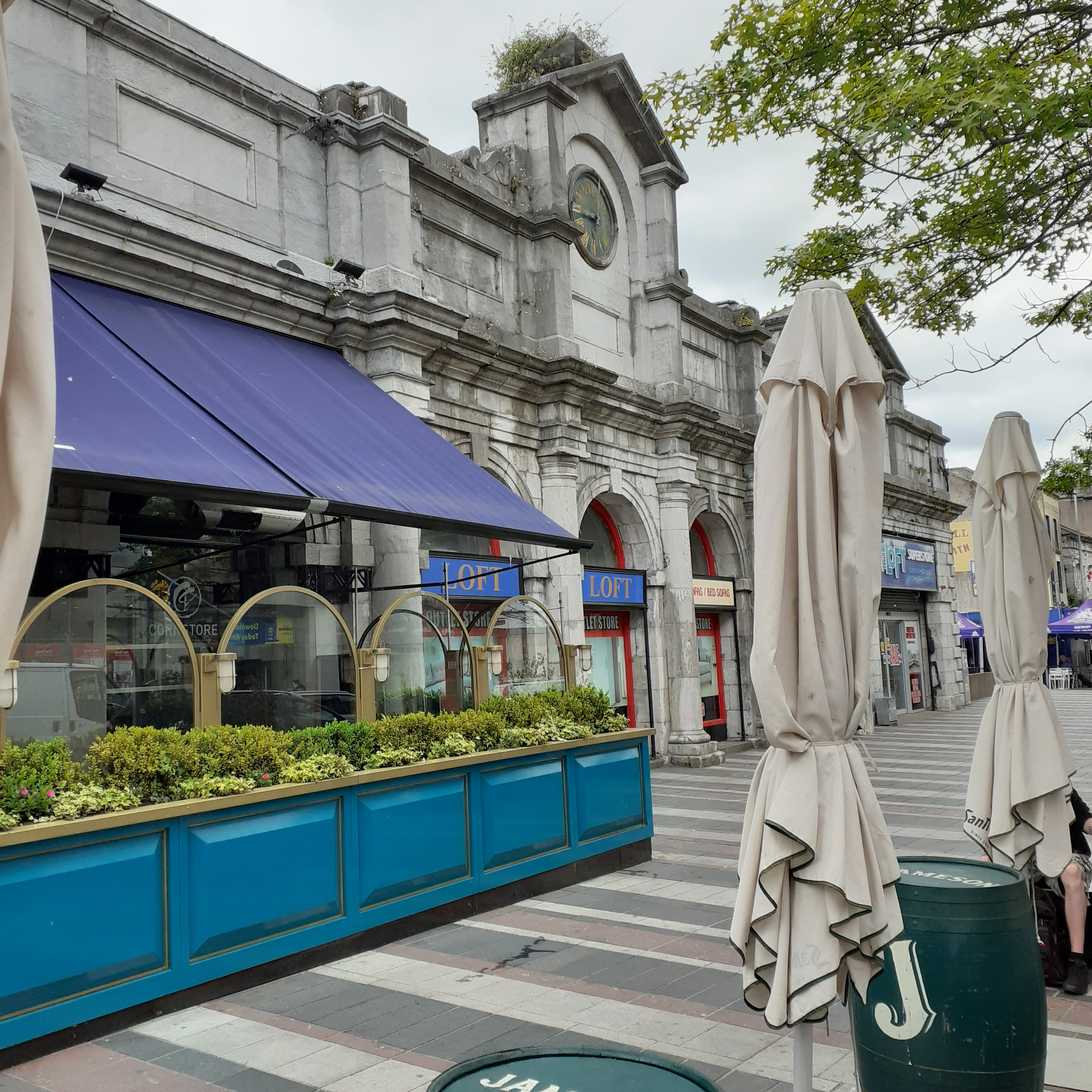
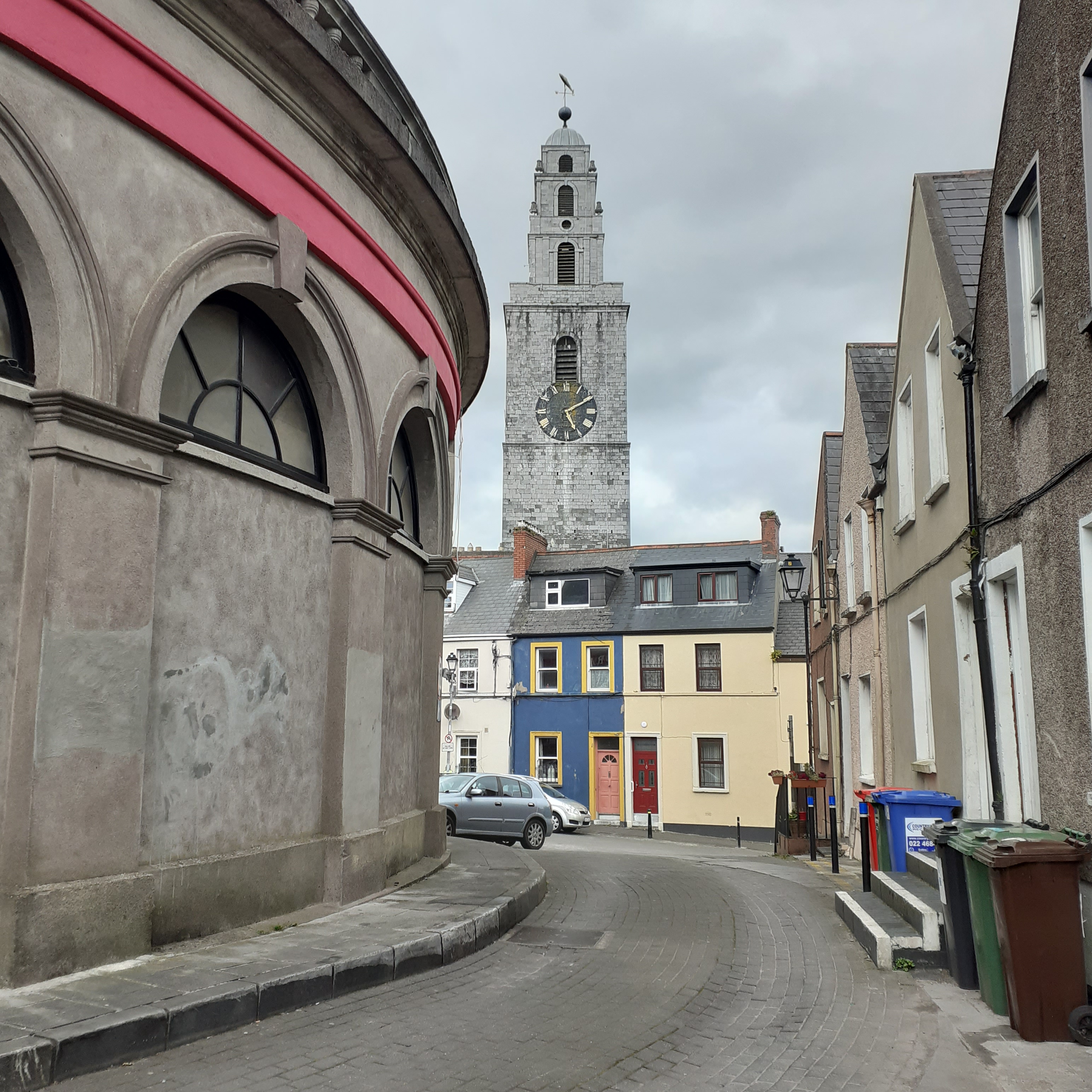
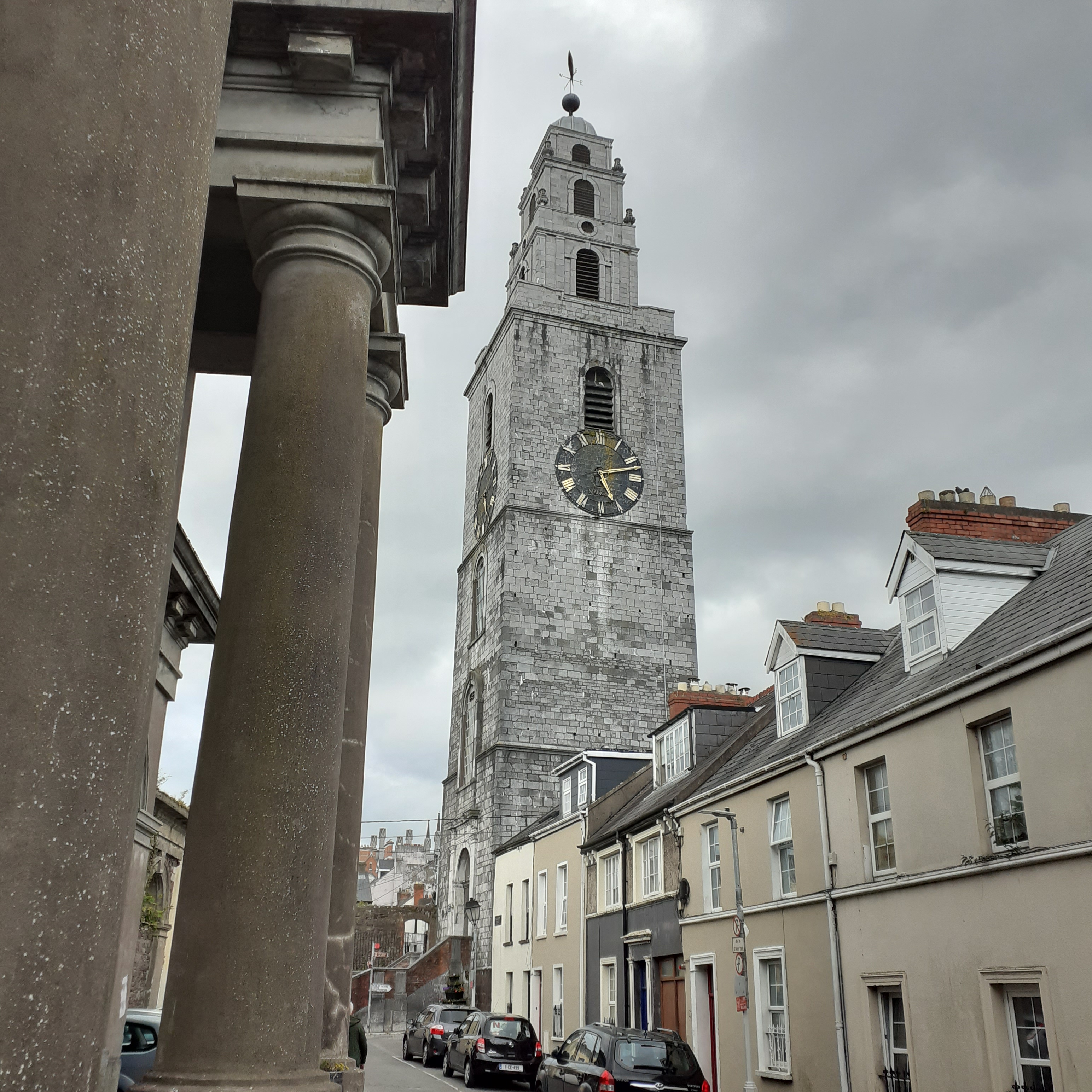
Farther along we reach the Cornmarket and the North branch of the river appears. The Shandon Footbridge takes us across the river and the climb up Widderling’s Lane leads to the heart of Shandon. This working class area has its own unique inner city feel. I had my eyes set on a Middle Eastern restaurant in the shadow of the bell tower of St Anne’s and sitting outside on a warm evening in the labyrinth of backstreets certainly had a Mediterranean feel to it. The restaurant even supplied a hookah pipe to an adjoining table to enhance the ambience. Unfortunately, my order resembled dessicated goat dipped in vinegar and I didn’t stay long. I resolved on a pint to wash away the lingering taste and hurried back to Son of a Bun, a good American Hamburger restaurant on McCurtain Street with which I’m familiar.
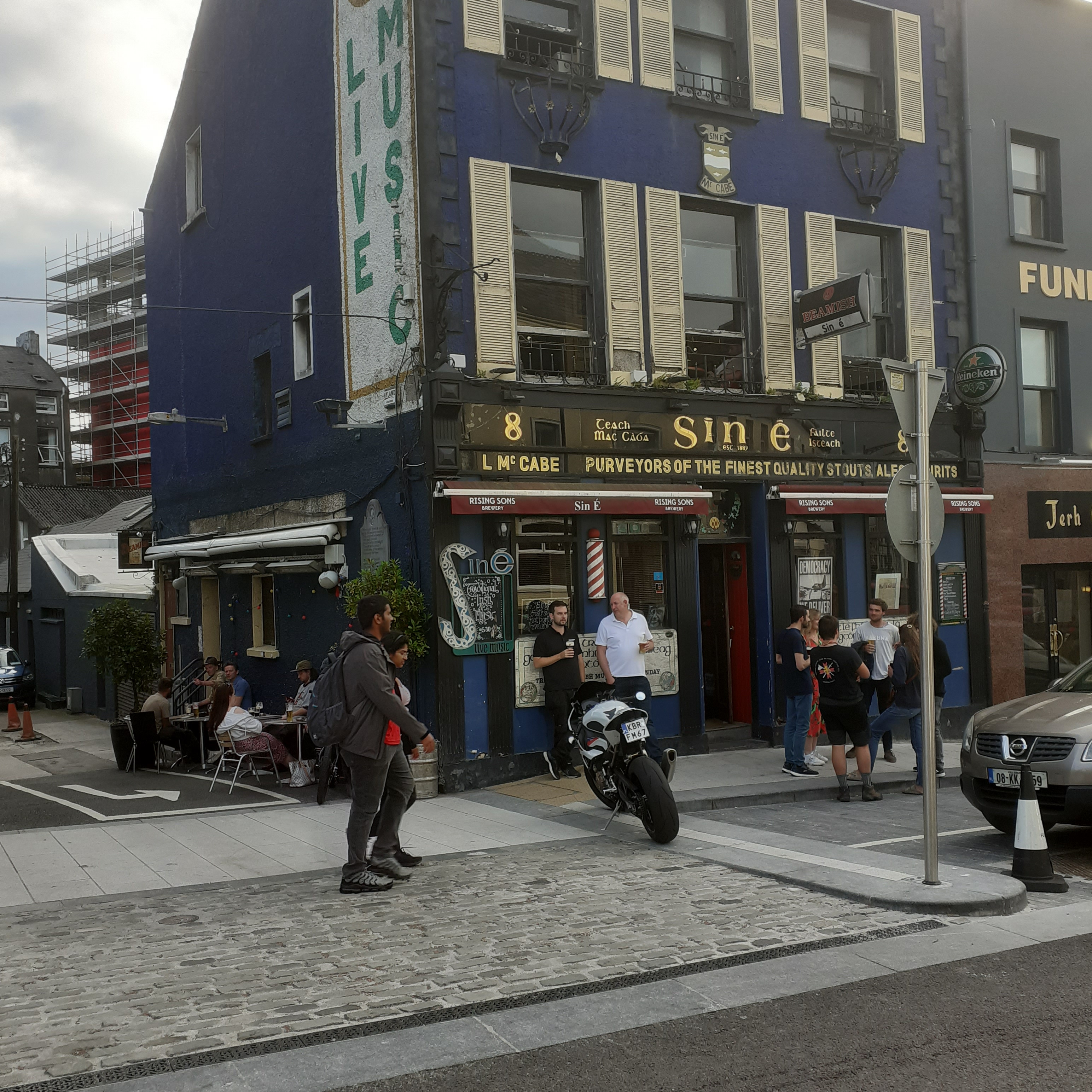
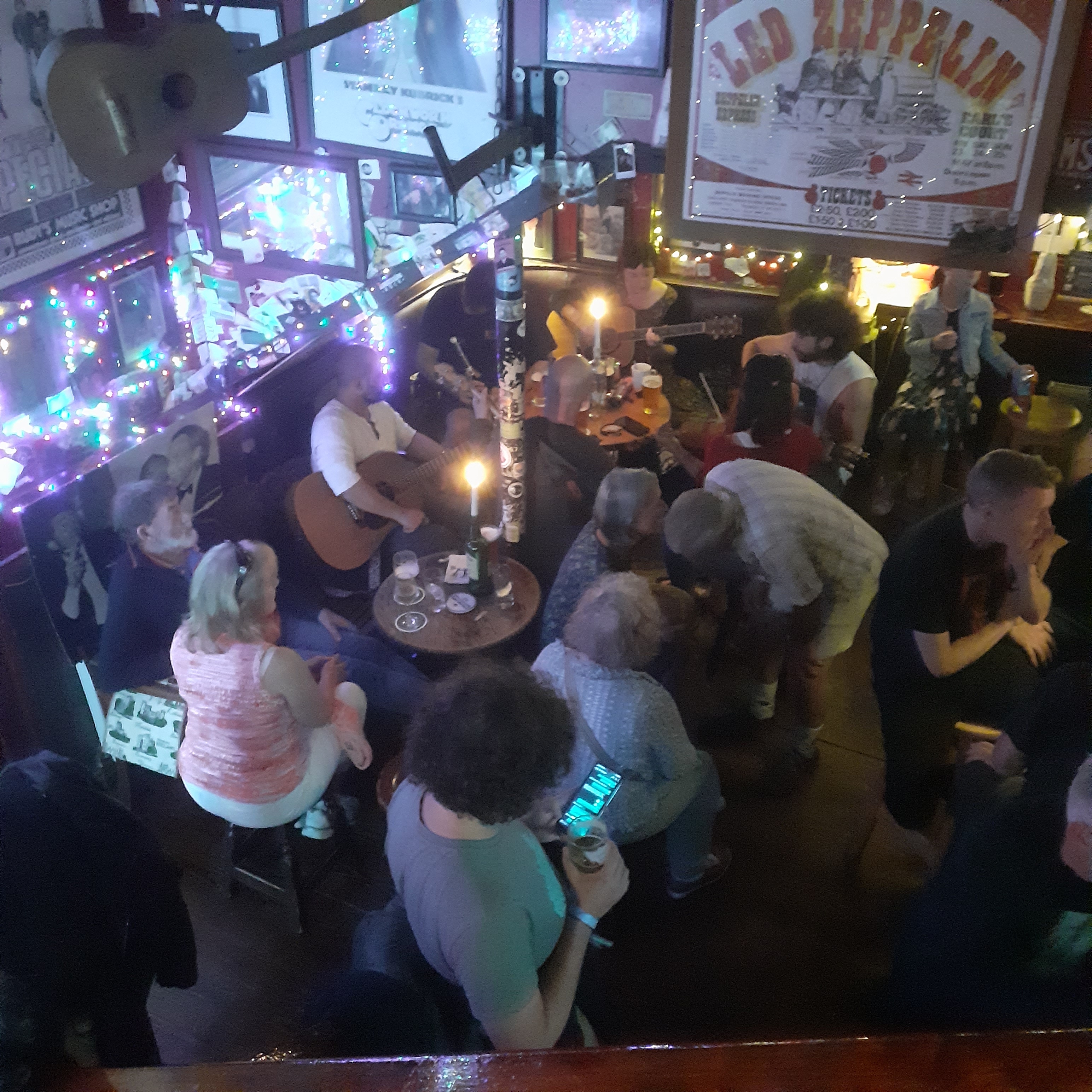
On the way I noticed one of Cork’s best loved bars. Sin É, Irish for that’s it. This is a busy spot with regular traditional and ballad music. The packed interior is a gem, and upstairs there’s a more reflective spot with candlelit tables where I grab a window seat. And thereby hangs a tale. The candles are not yet lit, and though on my ownio, I decide to light up for a little atmosphere. This attracted a tourist, German I think, who asked for a light for his own unlit candle. I obliged. Thus the light was spread troughout the world. I spent a happy half hour writing in my notebook and a few more moments reflection before heading off down the city centre. I got as far as the Oliver Plunkett, on the eponymous street, where outdoor seating allows for relaxed people watching. Looking for the notebook again, I find that it’s gone. It can only be back in Sin E, so I must return. The place is truly hopping, and I am none too optimistic approaching the upstairs table now occupied by a young woman. She has stowed my notebook on an adjacent shelf. It is a small thing of no great value, but I am delighted to be reunited with it again. Downstairs, I decide to celebrate with a pint. In an alcove, I take out a fistful of change and begin to count out the money required. Suddenly, the German tourist from before is at my shoulder. I will buy you a pint, he says, for earlier you gave me fire. Don’t you just love it. I had to laugh. I wasn’t sort of money, but had typically accumulated a lot of shrapnel and wanted to lighten the load. What goes around comes around. I see out the evening with pints and pleasant company. That’s Cork for ye; Sin É.
 xxharrison