Edinburgh – The Writers’ City – 4

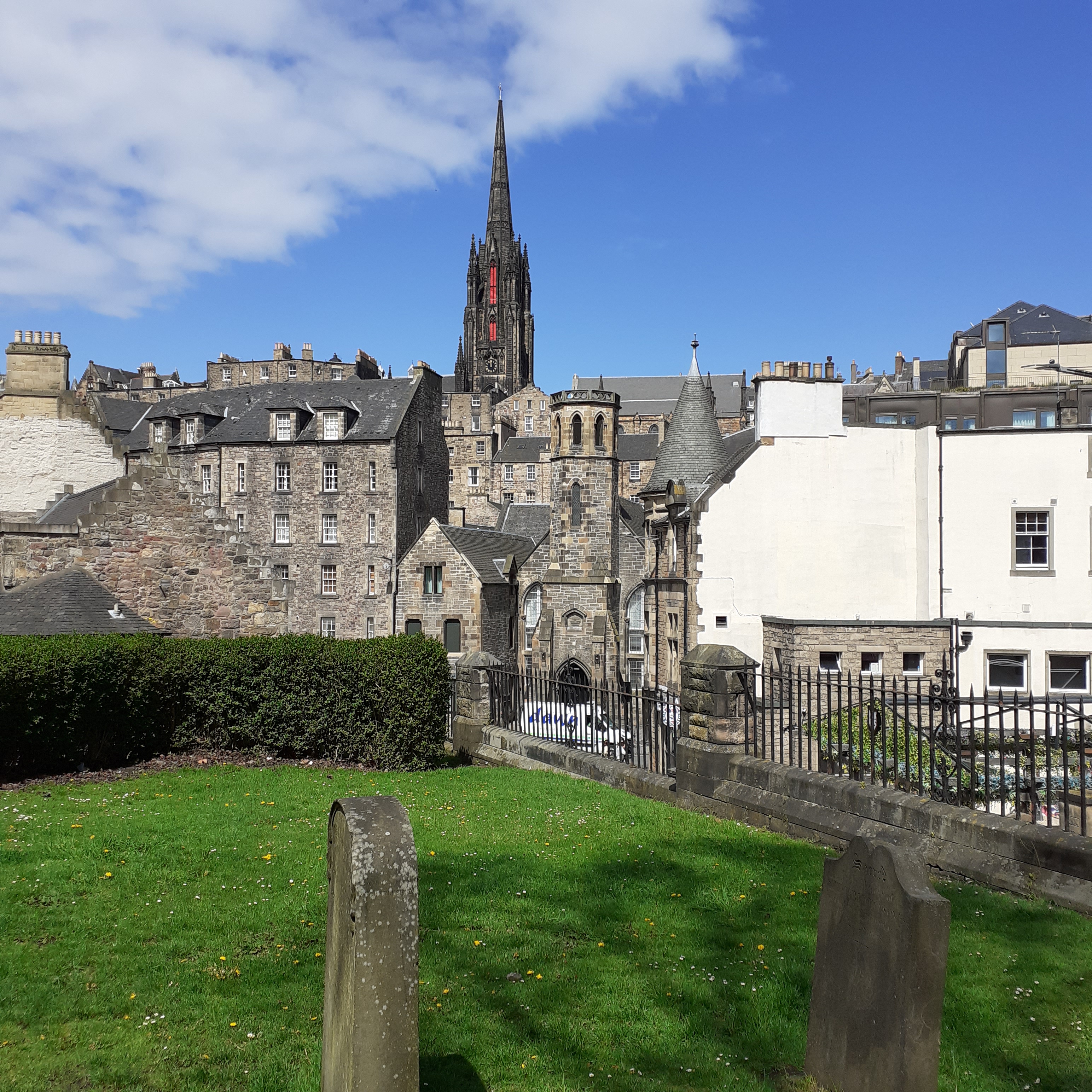
At the end of Grassmarket the road divides. Straight on and you pass under the bridges that buttress the Old Town. Candlemaker Row slopes upward to join George IV Bridge with the wall of Greyfriars Churchyard along one side. The Grey Friars themselves were Franciscans whose monastery was dissolved in 1560 as Scotland was gripped by the Reformation. The cemetery was a replacement for the St Giles Cathedral churchyard up on the Royal Mile. It was a place of free assembly and The Covenanters signed the National Covenant here in 1638. This asserted the primacy of the Scottish Presbyterian Church but their revolt was soon defeated in the Battle of Bothwell Bridge. Following the battle, four hundred prisoners were held in a section of the churchyard, and it became known as the Covenanters Prison.

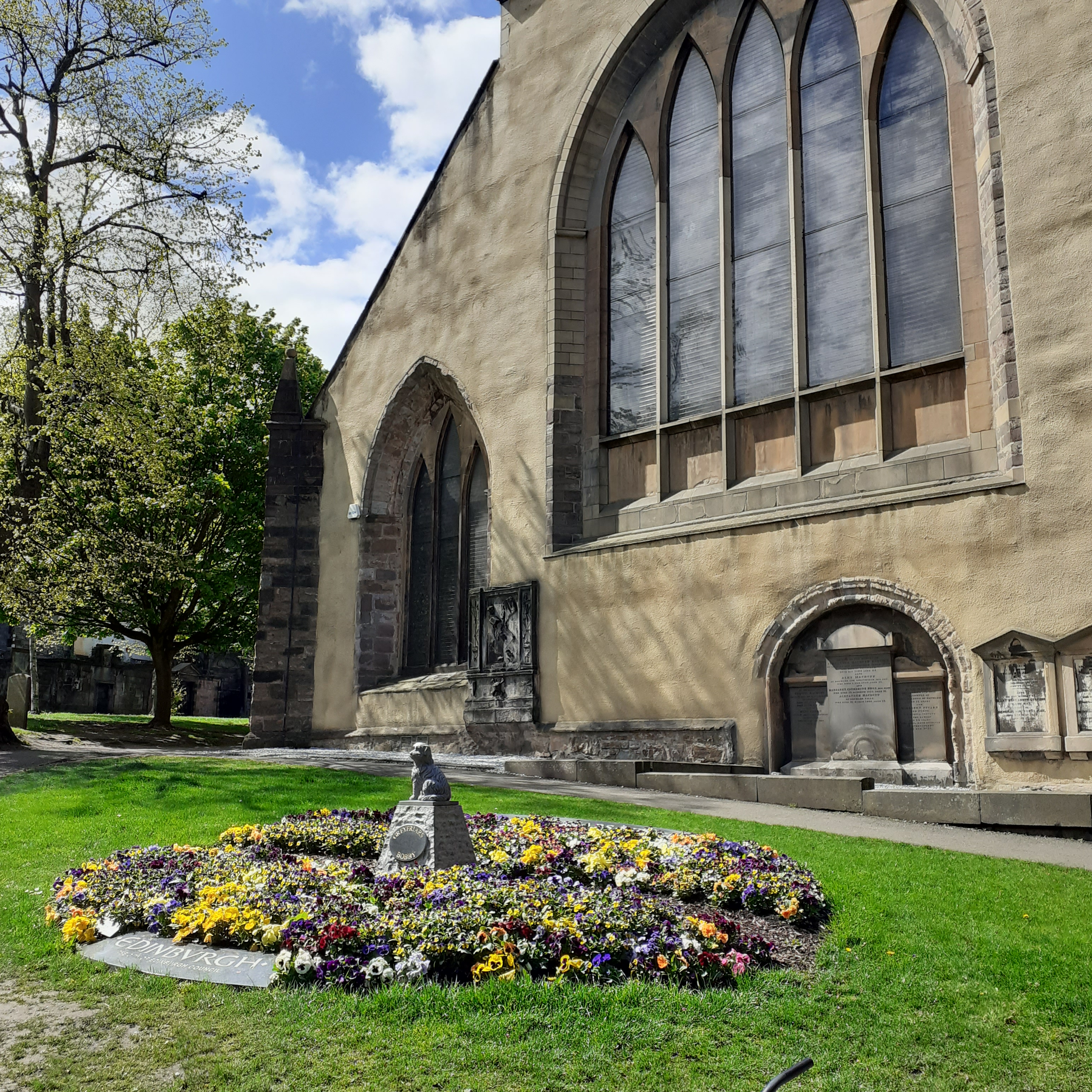
Most famous of the kirkyard’s  former residents is a wee dog. Greyfriars Bobby. A Skye Terrier, he belonged to a nightwatchman with the city police, John Gray. When Gray died in 1858, it is said that Bobby, his watchdog, kept watch at the graveside until its own death fourteen years later. By this time he had become well known, to the extent that Edinburgh’s Lord Provost, William Chambers had the dog licensed and collared. A year after Bobby died, English philanthropist, Lady Angela Burdett-Coutts was so touched by the story that she had a statue erected in is memory. Outside the gates you’ll find the granite fountain surmounted by a lifesize bronze statue of Bobby. 
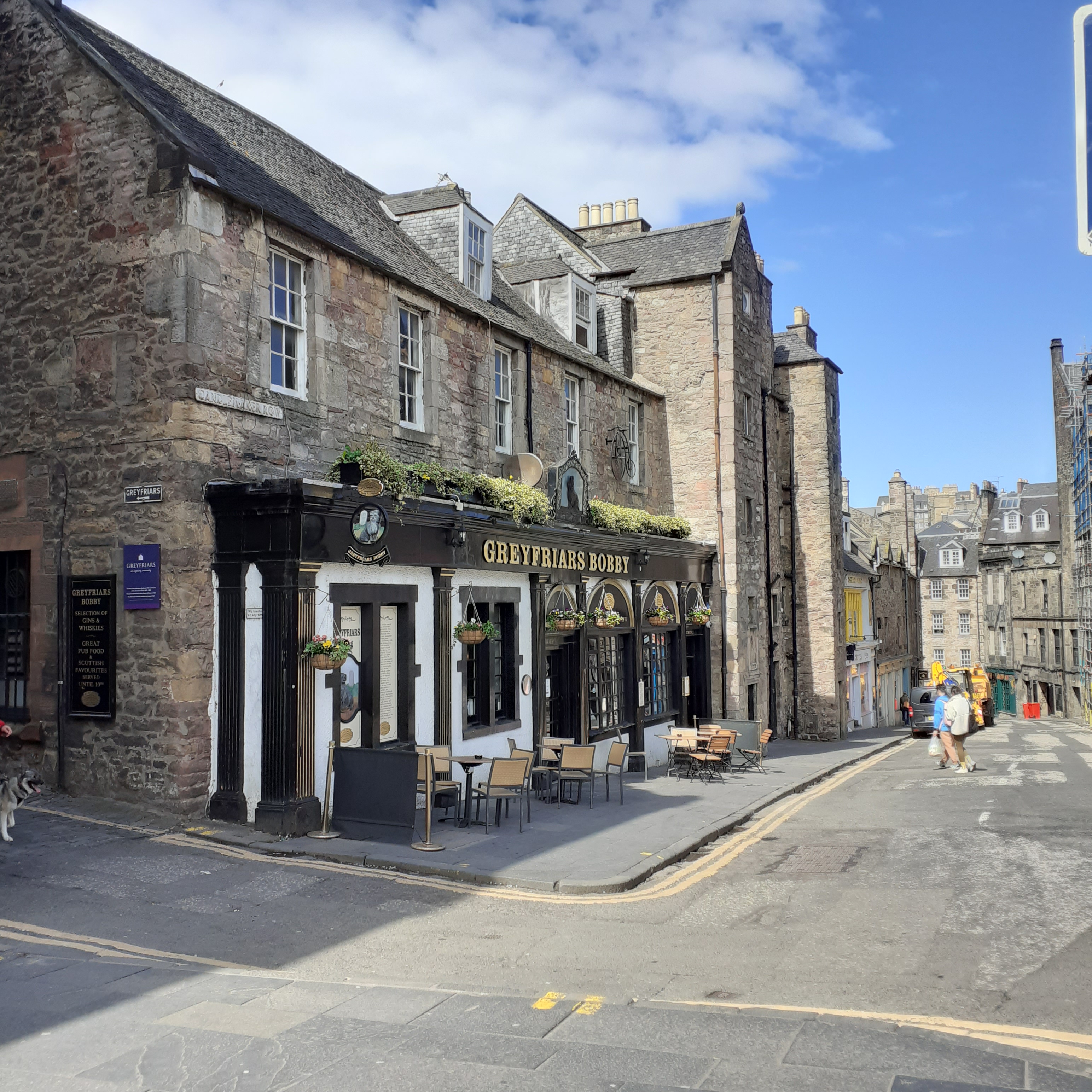
The legend has grown. I saw the Disney film back in the early sixties. This was based on Eleanor Atkinson’s novel of 1912 and has a different version of events. Here, John Gray is a farmer who comes to Edinburgh and dies. A major character is Mr John Traill, of Trail’s Temperance Coffee House, who in real life claimed Jock and Bobby were regular visitors. As the coffee house was opened four years after Gray’s death, it may be something of a shaggy dog story. A more recent film in 2005 controversially starred a West Highland Terrier playing Bobby, an example of cultural appropriation. The Temperance Coffee House was located outside the gates, and is now, thankfully a bar. Greyfriars Bobby’s Bar is an old style pub, with outside tables to catch the midday sun

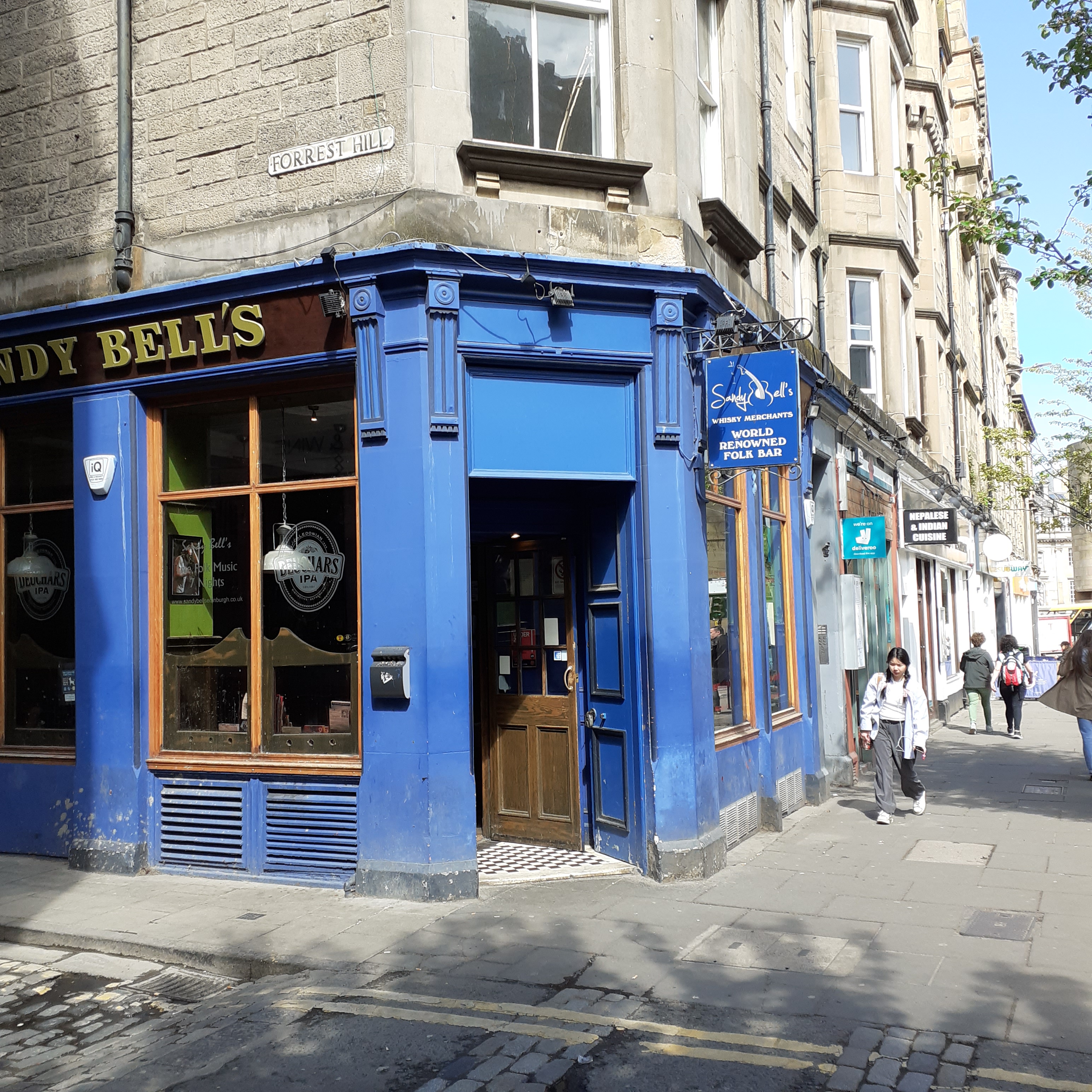
Around the corner on Forrest Road is Sandy Bell’s, another pub on the Rankin Rebus Pub Crawl. This is a folk bar with evening sessions featuring Irish and Scottish traditional music. It’s a century old and was first known as the Forrest Hill. Blossoming in the folk heyday of the sixties, Barbara Dickson, Billy Connolly and Gerry Rafferty are amongst its alumni. In the 80s a landlord installed a puggie or slot machine, bane of British pubs, but the regulars delivered an ultimatum, either it goes or we go, and it lasted all of a day. Sandy Bell’s became the official name in the nineties, as that’s what everyone called it, dating back to the twenties when the pub was owned by a Mrs Bell.

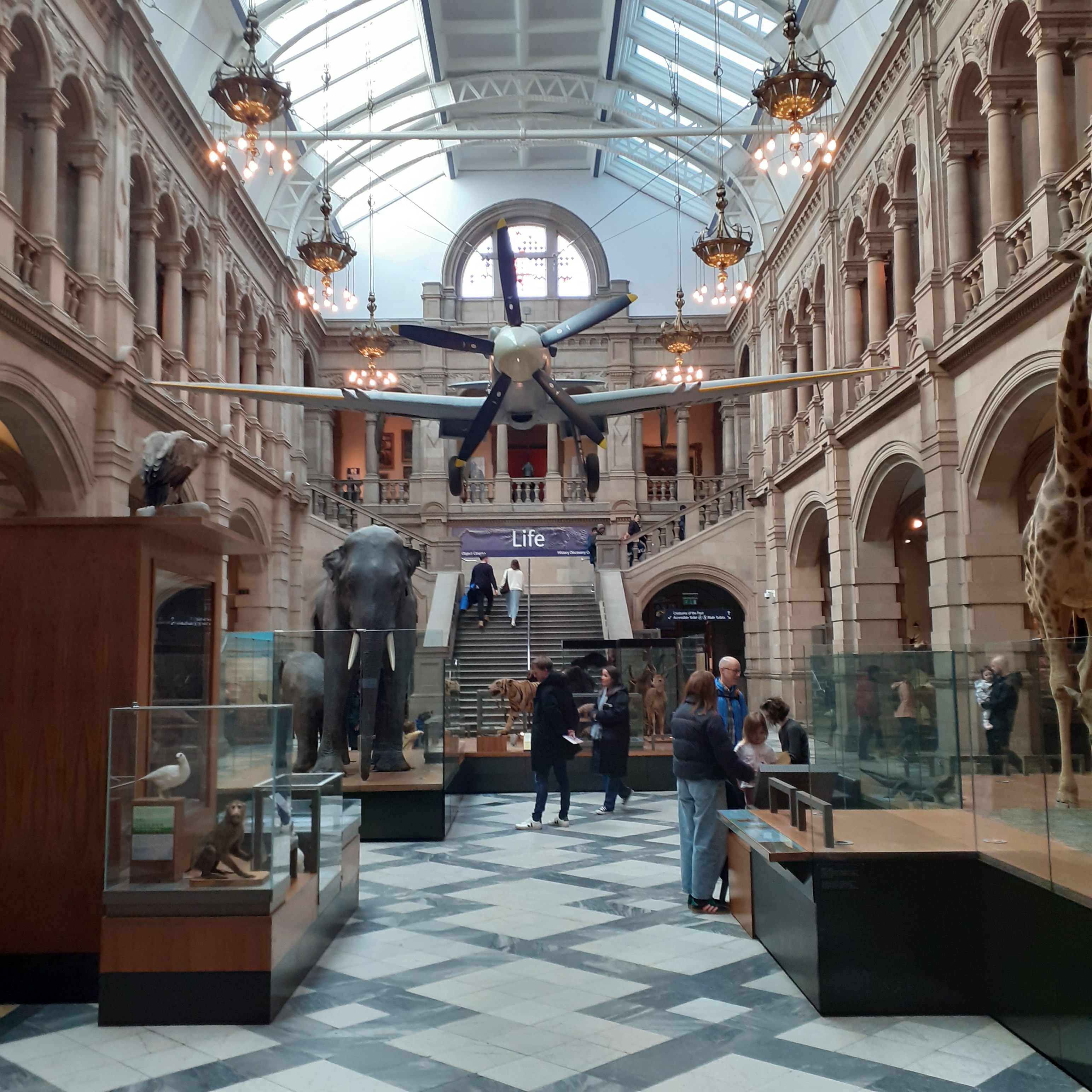
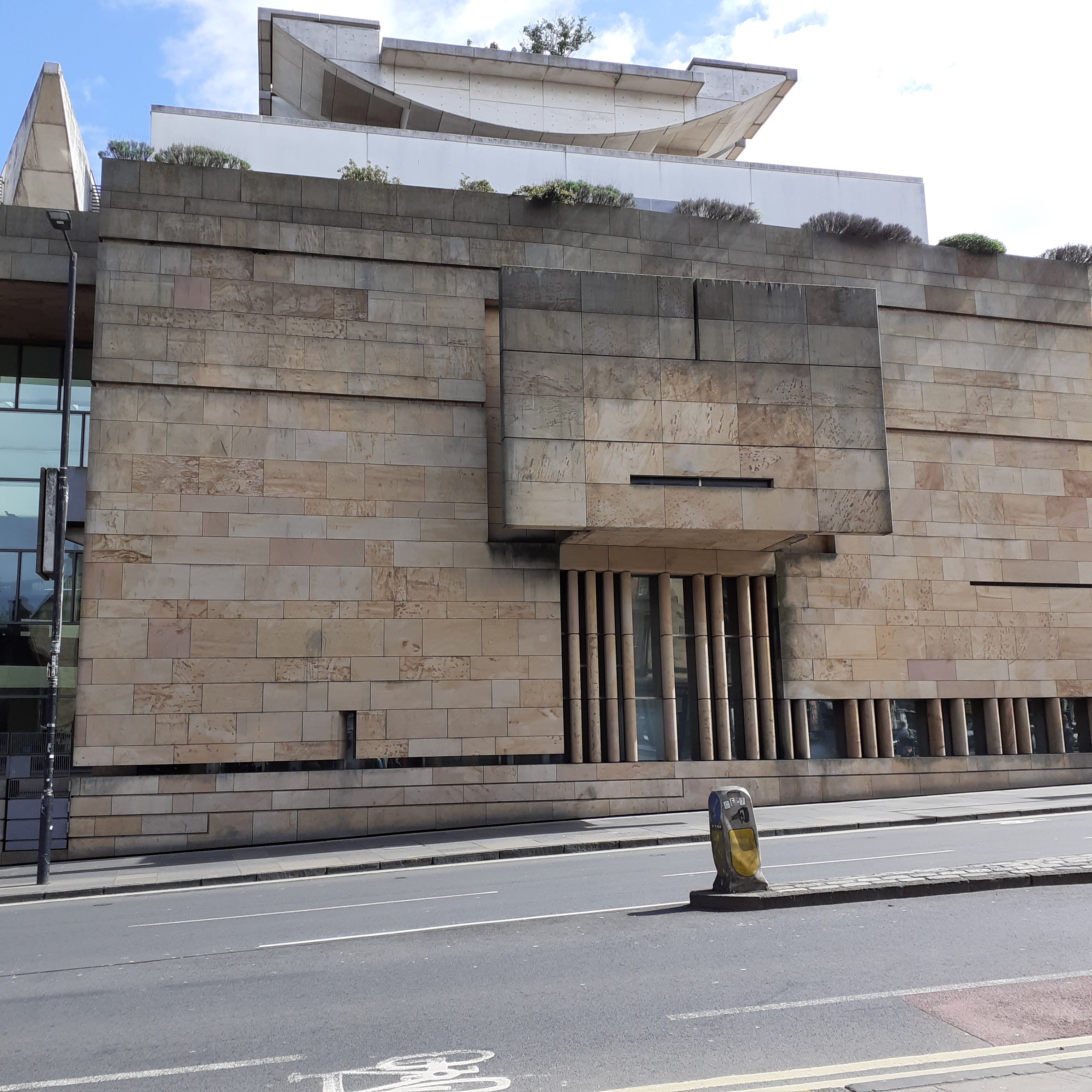
Across the street is the Scottish Museum. This is two buildings. The Royal Museum was built in the 1860s and houses displays of industry, science, technology and natural history. The modern building from 1998 is a formidable and concrete slab in the Le Corbusier style, which paradoxically concentrates on history and antiquities. Admission is free. The old building has that Great Exhibition air to it; the Grand Gallery of cast iron and light was inspired by the Crystal Palace.

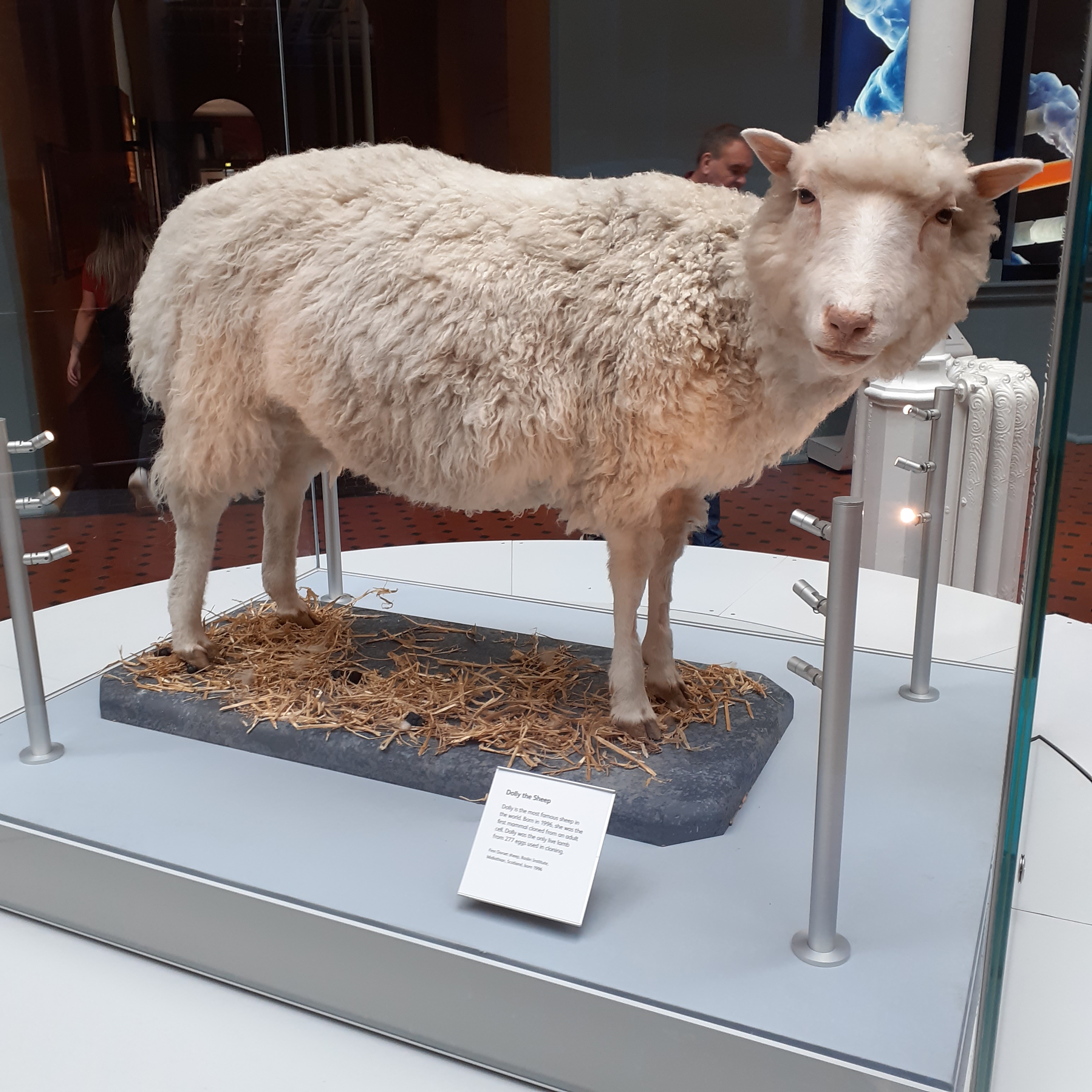
The Discoveries Gallery features the world of adventure and invention.You can meet Dolly the Sheep. Born in 1996, she was the first mammal cloned from an adult cell, and kept at the Roslin Institute for animal research where she died in 2003 from lung cancer. Ian Wilmut leader of the research group derived the name from the fact that Dolly was cloned from a mammary gland cell and, sez he, “There’s no more impressive pair of mammary glands than Dolly Parton’s.”

There’s exhibitions on Ancient Egypt and East Asia, and the arguably more ancient Elton John’s suit is amongst the fashion artefacts on display. In the new building Scotland is investigated through the ages. This is rich in detail but challenging. Some years back I visited Stirling Castle, which had an excellent guided tour, along with permanent displays that clearly mapped the heritage of Scottish Kings and Queens. I didn’t really get that clear a narrative here, perhaps I was tiring. It’s a vast museum, and hard to take in everything in one day. Worth a visit, or two.

The statue guarding the entrance is of William Chambers, who asides from his love of dogs, had a notable career. Born in 1800, he opened his first bookshop at nineteen and established a publishing empire with his younger brother Robert. As Lord Provost of Edinburgh in the 1860s he initiated major street construction projects hereabouts.

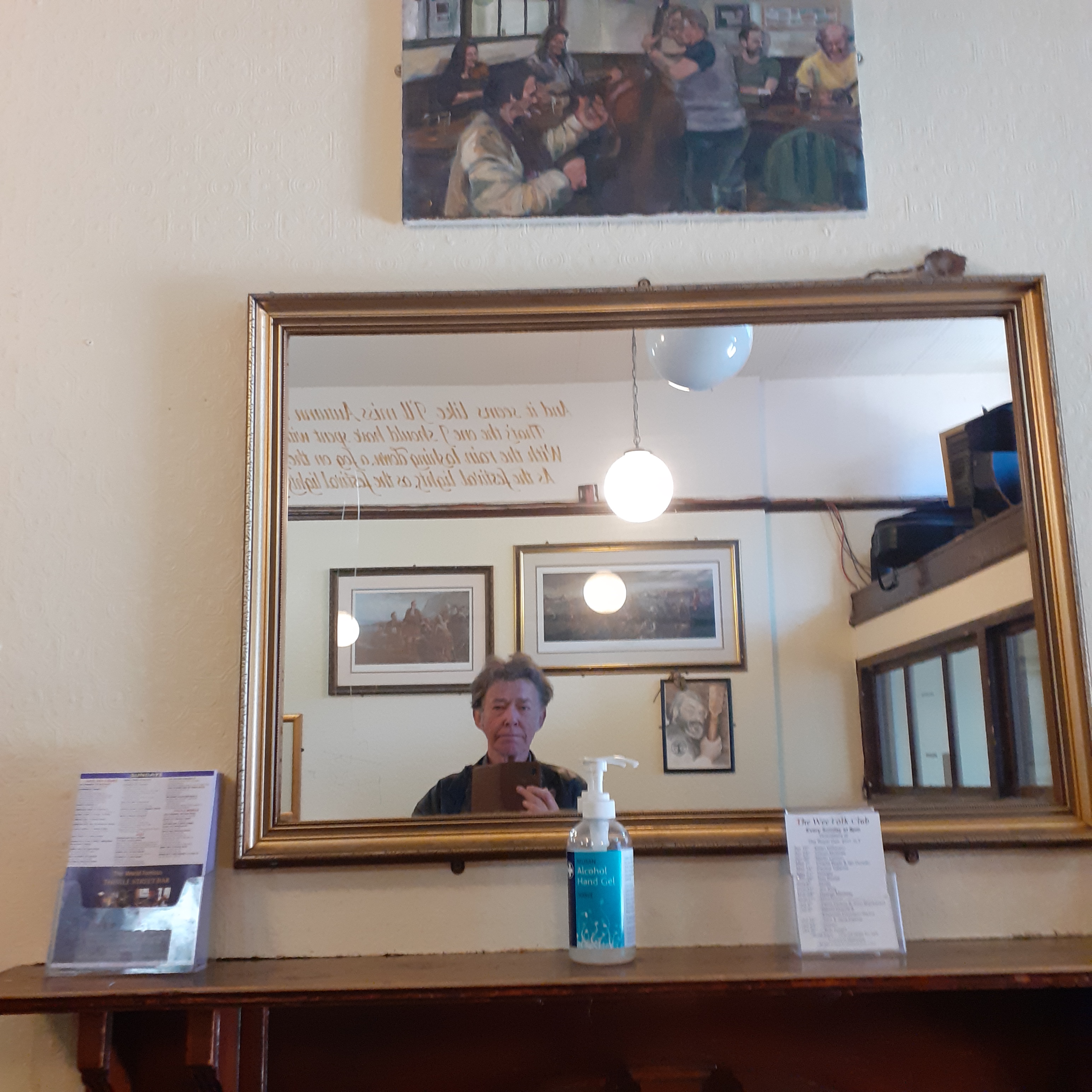
Chambers Street connects to the North and South Bridges joining Old and New Towns and bisected by the Royal Mile. I’m searching for the Royal Oak, another stop on the Rebus Pub Crawl. Hidden down Infirmary Road, its modest entrance leads to a welcoming traditional bar. The pub is two centuries old and is long established as an informal folk music venue. It features in Rankin’s Set in Darkness, eleventh in the Rebus series set during the birth of Scottish devolution. A duo discusses politics at the upstairs bar while I am engaged by the young lady serving. She tells me tales of growing up on Scotland’s east coast and I can thread in vague experiences of my own including Inverness and the shores of Lough Ness. There be monsters and dragons, and bagpipe festivals, and ancient standing stones where you might catch a glimpse of Catriona Balfe flitting through timezones in a diaphanous shift. But I digress. The lady merges the two conversational groups and now we argue over the travails of Mister Trump and his chances of reelection. There’s a  smoke break, and I’m left alone with the mirrors and memories, and haunting lines of musicians who have gone or yet to visit. 

Last on Rankin’s list is Bennetts, another old style pub on the southern approaches. It’s on my route home to Morningside, retracing my steps back to Tollcross and onto Leven Street. Bennetts is next door to the King’s Theatre, currently closed for renovations. There’s been a pub here since 1839, its current incarnation dates to the start of the twentieth century, about the time the theatre first opened. It’s a beautiful Victorian bar with high windows, wood and brass fittings, an open fire and snug. Here I spy the bagpipe busker from outside the Academy, his weaponry laid out on the table on his LGBQT flag. The barman proposes a chocolate flavoured stout which hails, I think, from Skye. Meanwhile, beyond Bennett’s huge windows, the sky above has opened and the deluge pours upon all without. I should stay sheltered I suppose.
Further on, Bruntsfield Place rejoices in the high, neo-gothic architecture typical of the city. Bruntsfield is birthplace of Muriel Spark. Her novel the Prime of Miss Jean Brodie was published in 1961. It was filmed in 1969 starring Maggie Smith. The film depicts Jean living in this area with the school based on nearby Morningside. On one of my all too many days off school I snuck into a Dublin cinema to catch this, becoming lost in a world of Scottish schoolgirls, bohemian art and some challenging social political theory. Maggie Smith won an Oscar. I’m in m’prime!

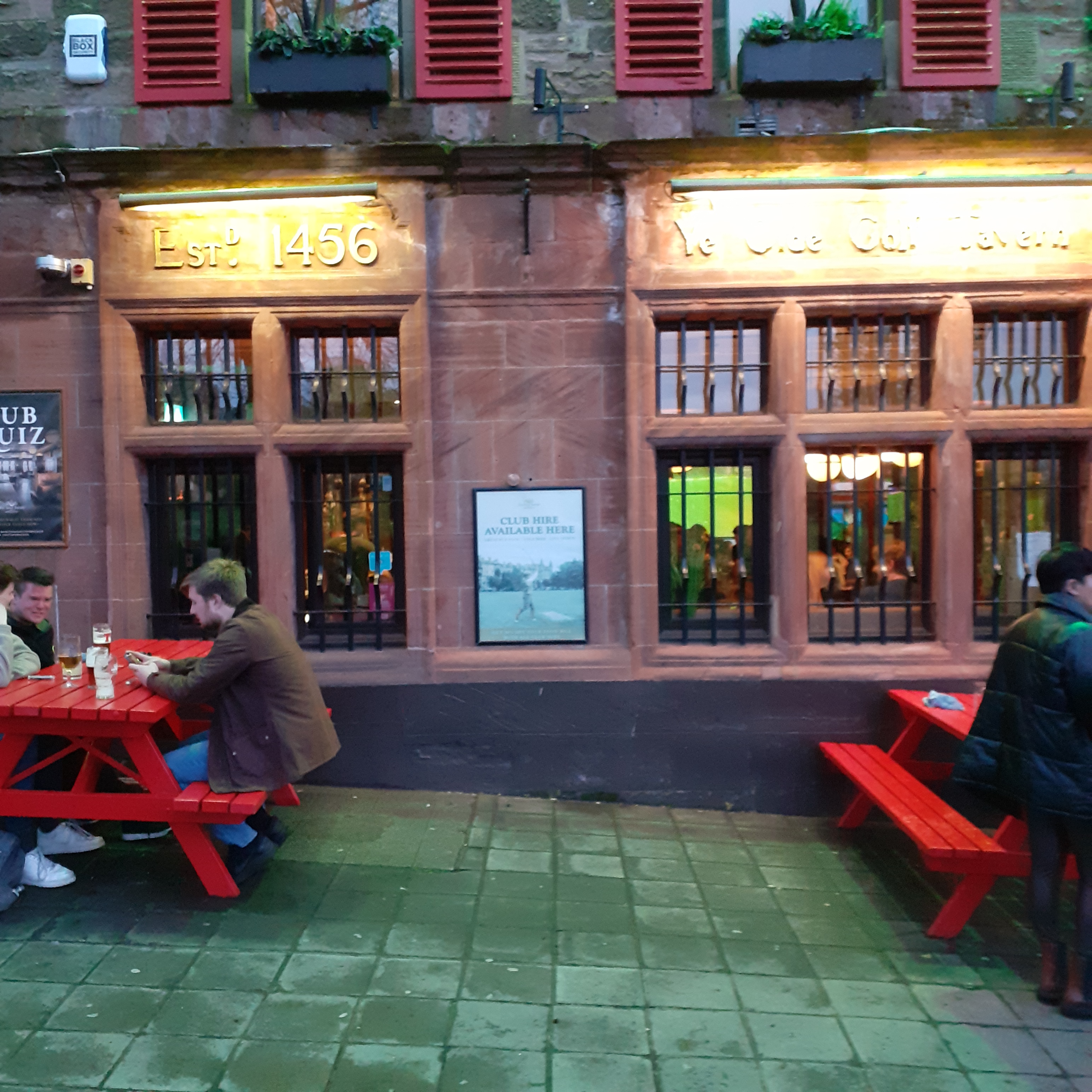
Bruntsfield Links provides a welcome slice of greenery on the city’s edge. It is, perhaps, the founding place for the ancient game of golf. The Golf Tavern boasts of dating back to 1456. Certainly, the Links were the playground of the Edinburgh Burgess Golfing Society, now known as the Royal, which claims to be the oldest golf society in the world, formed in 1735. They became a club and moved to their own course in 1890. There is still a pitch and putt course on the Links, but most is now a public park.

From the seats outside I have a view across the links to Arthur’s Seat. Arthur’s Seat is a remnant of the ancient volcano, along with Calton Hill, and the Castle Crag. It has featured frequently in the city’s literature, with many appearances in the Rebus series. One particularly evocative scene occurs in James Hogg’s fantastical novel the Confessions of a Justified Sinner of 1824. A broken spectre on the misty mountain makes for an eerie culmination in the struggle between the two sibling protagonists, George and Robert. Robert and his evil alter ego, Gil Martin is another inspiration for Jekyll and Hyde.

The Arthur in question is said to be the legendary king of the Britons who halted the AngloSaxon advance in the sixth century. Those events and their people are lost in the mists of time. Rather as Arthur’s Seat is now. A fog, or haar, has swept over the Old Town, so that as I turn to say farewell, the spires and peaks and castle of Auld Reikie float on its murky cushion, slipping off towards the horizon. And are gone.

Edinburgh – The Writers’ City – 3

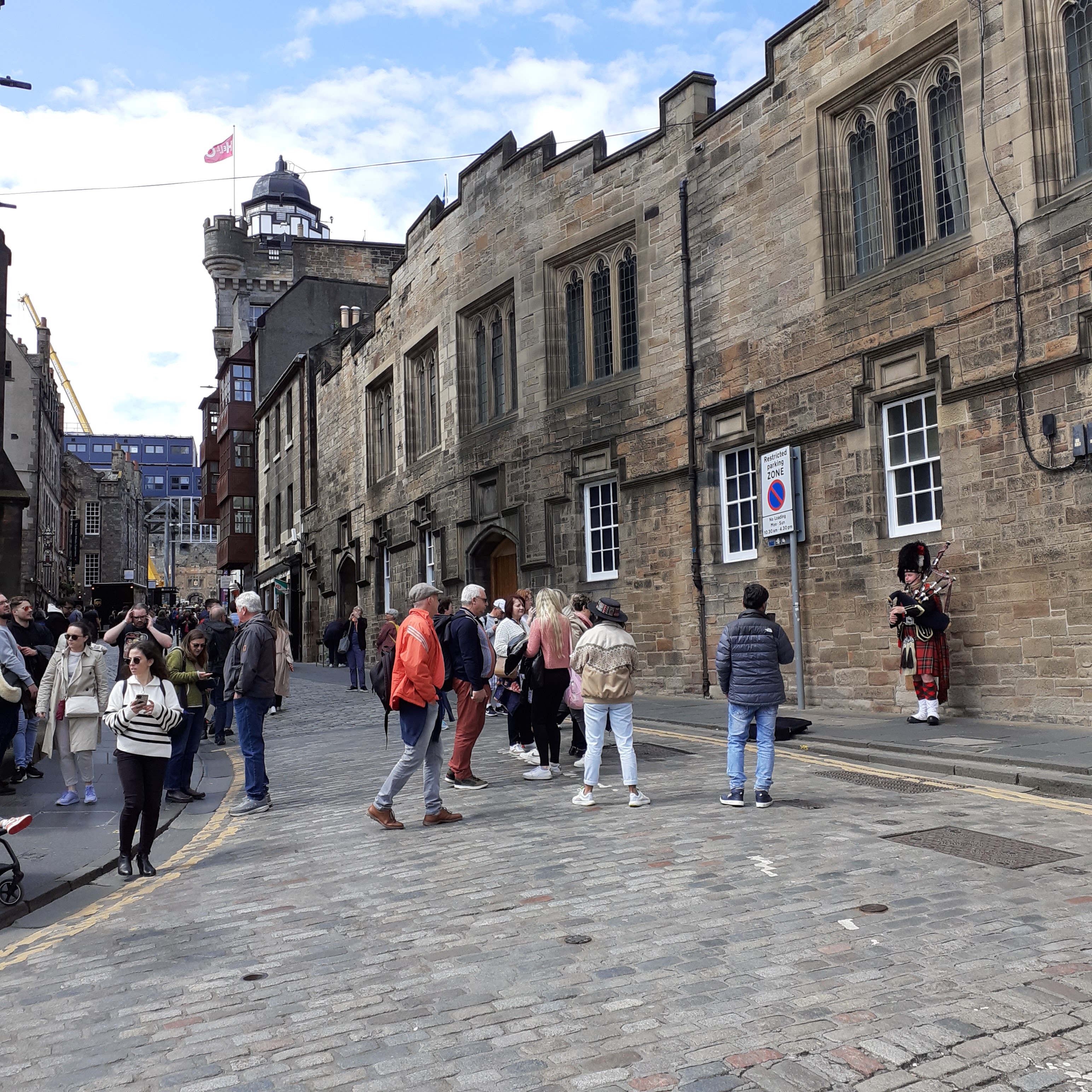
The Edinburgh Writers’ Museum is a good place to get a grounding in the city’s literature. It features three writers who are prominent in the historical canon: Robert Burns, Walter Scott and Robert Louis Stevenson. The building itself is well hidden, being off one of those many narrow, windie ways that drop down from the spine of the Royal Mile to the city of the plains below. Having missed it the day before, I find myself back at the summit of the Old Town again, clearer of mind and vision, determined to reach my target. The Old Town is, of course, crowned with the Castle fronted by the famous Esplanade, conjuring visions of strapping Scotsmen in kilts blowing a multitude of bagpipes. From here descends the Royal Mile, main street Scotland and a mixed wonderland. After the sedate aura of the Camera Obscura, the street is again thronged and rings with the refrains of serial bagpipers busking in doorways.

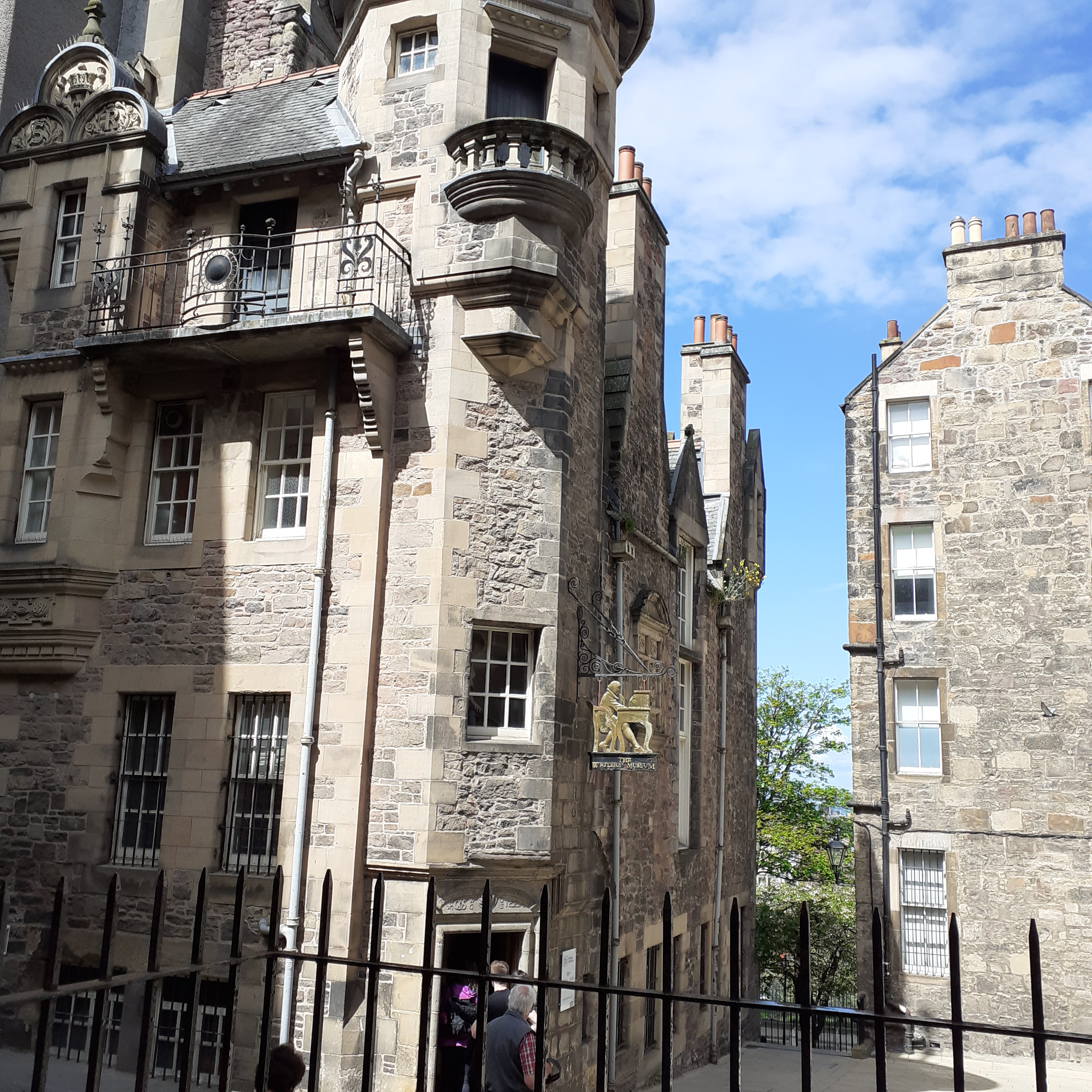
Helpfully, there’s a tourist pointing down the laneway by a souvenir shop, which turns out to be Lady Stair’s Close connecting Lawnmarket and the Mound. A close is a gated enclosure, for the posher sort who didn’t want to rub soldiers with regular folk. A wynde, meanwhile, was open to all. The narrow lane widens to reveal a quaint, but grand, turretted house. Lady Stair’s House was built in 1622 for Sir William Gray, and was long known for his widow, Lady Gray, who continued to live there after his death. Their granddaughter Elizabeth Dundas, became Lady Stair and that name is now attached to the building. In fact, the original house was largely demolished in an extensive renewal of the Old Town in the late nineteenth century. The new house is a cunning medieval pastiche by Arts and Crafts architect Stewart Henbest Capper. Other than the inscribed lintel little above ground remains from the original. All was passed on to the Burgh in 1907 for use as a museum by then owner, Archibald Primrose, the Earl of Rosebery. The house overlooks Makars’ Court. Makar is the Sots term for a writer, or bard. It was appled here in 1997 when twelve writers were commemorated with quotes from their work engraved on pavement slabs. There are over forty there now. Amongst them, one from Walter Scott:Walter Scott: This is my own, my native land.

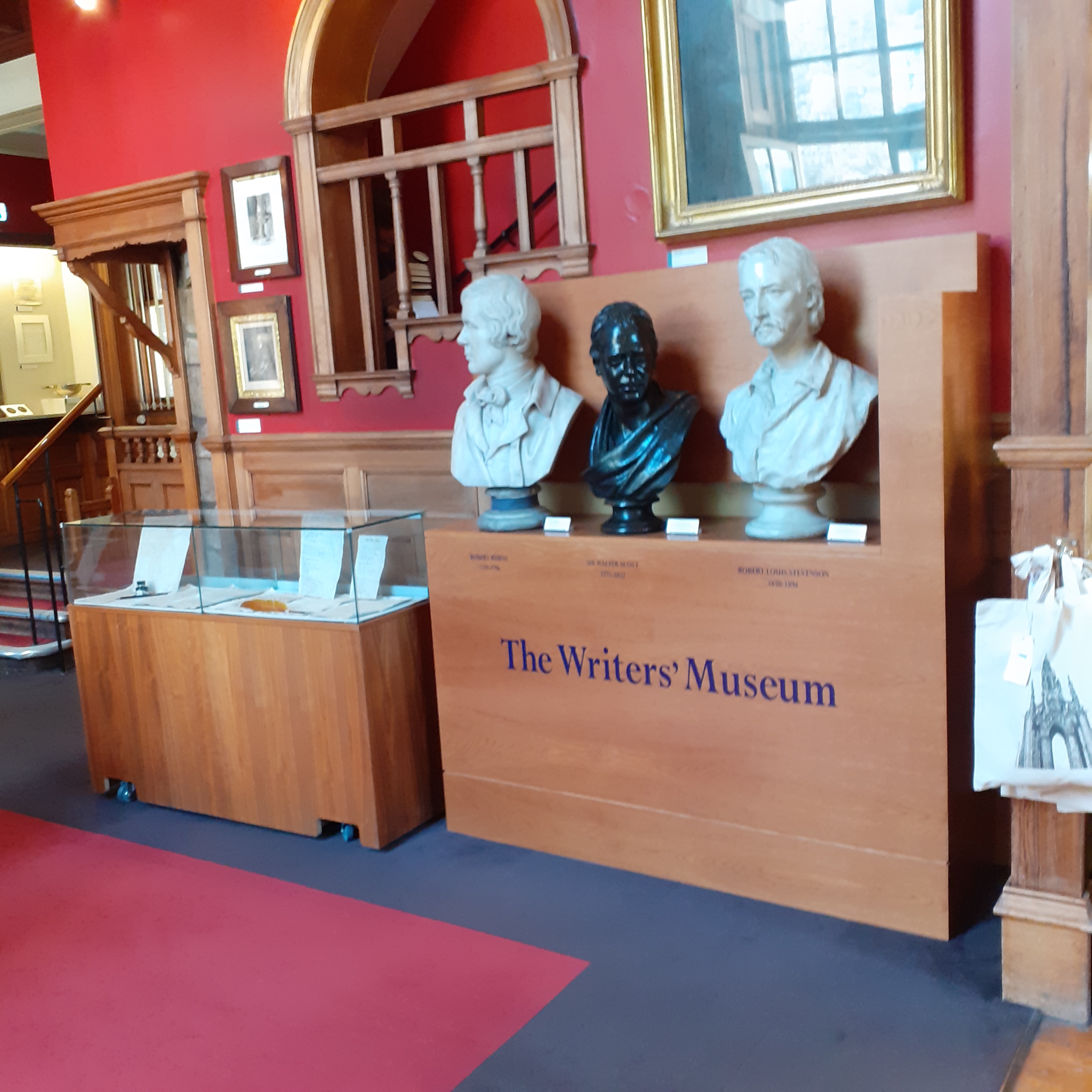
I mooch around for a while, as the preceeding tourist points at various parts of the building. Entrance is free and offers a series of nestled portals into a number of worlds. There’s Robert Burns, Scotland’s Bard, who epitomises the traditional national identity in the music of language. Born in Ayr in 1759, he wrote in English, and the Guid Scots Tongue, and indeed often somewhere in between. Scots is the old English of the Anglo Saxon settlement of Britian and is preserved in Burns’s poetry. His first collection Poems, Chiefly in the Scottish Dialect, includes To a Mouse, a startling ode to empathy.

Meanwhile, Address to a Haggis is the focal ceremony of Burns Night, another Scottish National Holiday in Winter. Saint Andrew’s Day in November, and Hogmanay on New Year’s Eve being the others. The Haggis, served with tatties (Potatoes) and neaps (parsnips), is a rite of passage for anyone wishing to eat their way through Scotland. White pudding is our equivalent, humbler than the exalted haggis; Great Chieftain o’ the Pudding Race, as Rabbie puts it. Burns is also responsible for Auld Lang Syne, which he adapted from an ancient source. It is a song of farewell, but implicitly of unextinguishable friendship. It is the standard farewell to the old year, and a welcome to the new throughout the English speaking world. And then there’s Jools Holland. Burns himself bade farewell to this earth in 1796, at the age of thirty seven.

The best laid schemes o mice an’ men

Gang aft agley,

An’ lae’e us nought but grief an’ pain,

For promis’d joy!

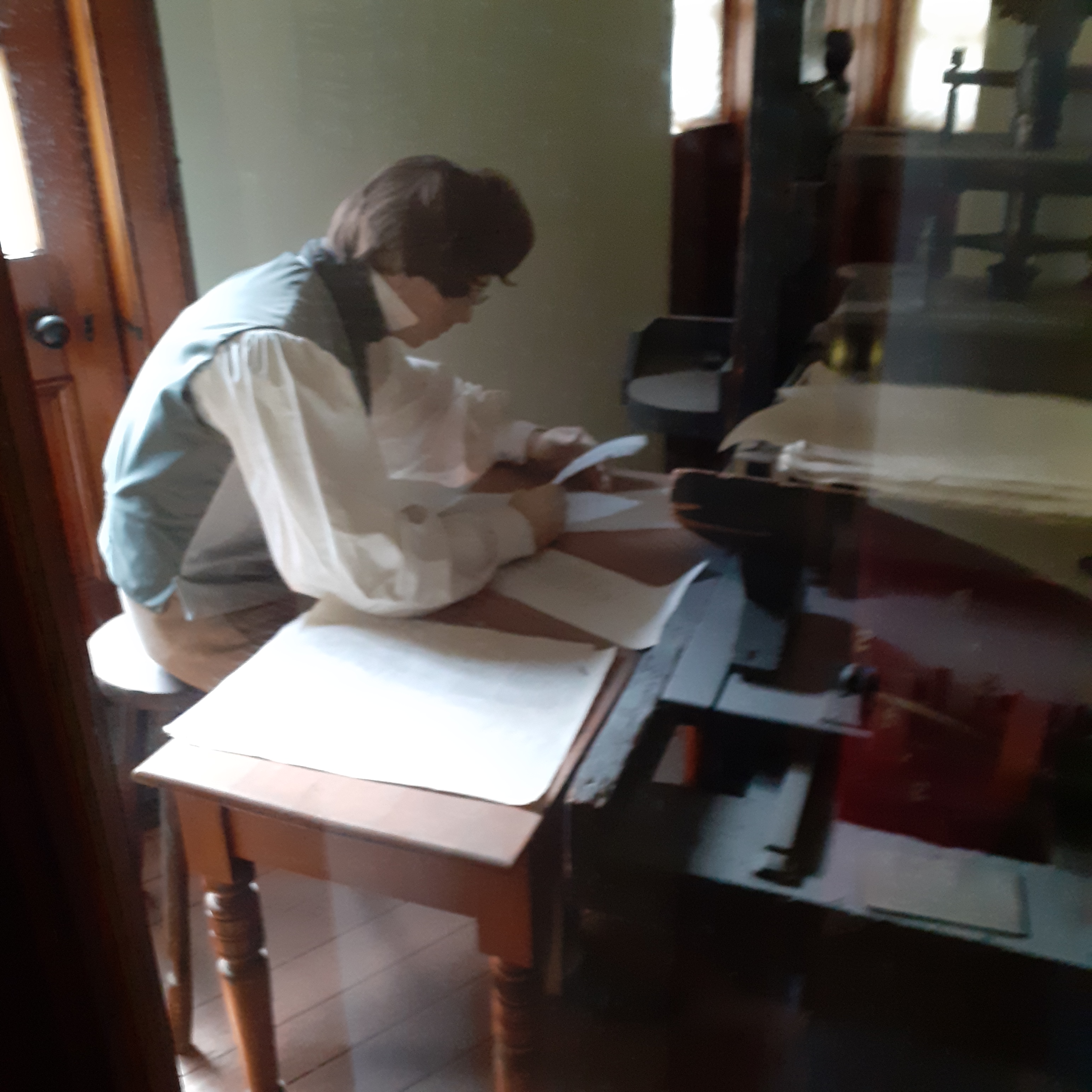
The museum’s Walter Scott display includes the first edition of Waverley and the press on which the Waverley novels were printed, James Ballantyne’s handpress. There’s a lifesize tableau to bring you into that world.

Robert Louis Stevenson (1850 – 1894) completes the trio. An illustration for Travels with a Donkey in the Cevennes 1879 is based on the quote:

I lay lazily smoking and studying the colour of the sky, as we call the void of space, from where it showed a reddish grey behind the pines to where it showed a glossy blue black beween the stars, 

The line speaks to all travellers who have reflected on their travels. Writers should stensil it to their bedroom ceiling; make it the motto of their dreams, and their inspiration on waking. Consider also Treasure Island, Kidnapped, A Child’s Garden of Verses. There’s a ring Stevenson received as a present from a Samoan chief, engraved Tusitala, signifying the teller of tales. Stevenson was certainly a masterful weaver of tales, from the raw material of his travels, his imagination, and the humdrum of life. His wardrobe is here, made by the infamous Deacon Brodie. Brodie was a renowned cabinet maker and locksmith, skills he also harnessed when moonlighting as a burglar. His split life was a possible inspiration for the Strange Case of Doctor Jeckyll and Mister Hyde. Stevenson died in Samoa and is buried there beneath the epitaph: Home is the sailor home from the sea.

A happy man or woman is a better thing to find than a five pound note, is another quote to leave with; though you’d be hard put to get a pint out of the latter in modern Edinburgh. Drunk from the joys of literature, I feel an actual drink would be in order. I wind my way downhill past The Bow, and on to Grassmarket.

Grassmarket is a long plaza in the shadow of Casle Rock, with a concentration of eateries and drinking dens. Cobblestoned and tree lined, it’s perfect for an outdoor drink on a sunny day. The Black Bull, the Beehive, The White Hart and Biddy Mulligan’s are just some of the species of wild life you’ll find here. Dating back to the late fourteenth century, the area for centuries operaed as a horse and cattle market. Some of the hostelries are indeed ancient and ripe with story. William and his sister Dorothy Worsworth stayed at the White Hart, as did Robbie Burns, and more balefully, the murderers Burke and Hare. Though not all at the same time. The Wordsworth’s stay is recorded in Dorothy’s Recollections of a Tour Made in Scotland, 1803. The account features the six week sojourn of the Wordsworth’s through the Scottish Highlands with their friend Samuel Taylor Coleridge. Their journey by jaunting car was something of a Romantic epic, amd a homage to such Scottish literary and historic figures as Burns, Scott, Rob Roy and William Wallace.It was published posthumously in 1874. Up until the end of the twentieth century Grassmarket remained a rough area, but recent developments have brought it upmarket, with outdoor wining and dining to the fore. The views of the Castle rising above the marketplace have become emblems of the city, and a magnet for tourists along with the hostelries.

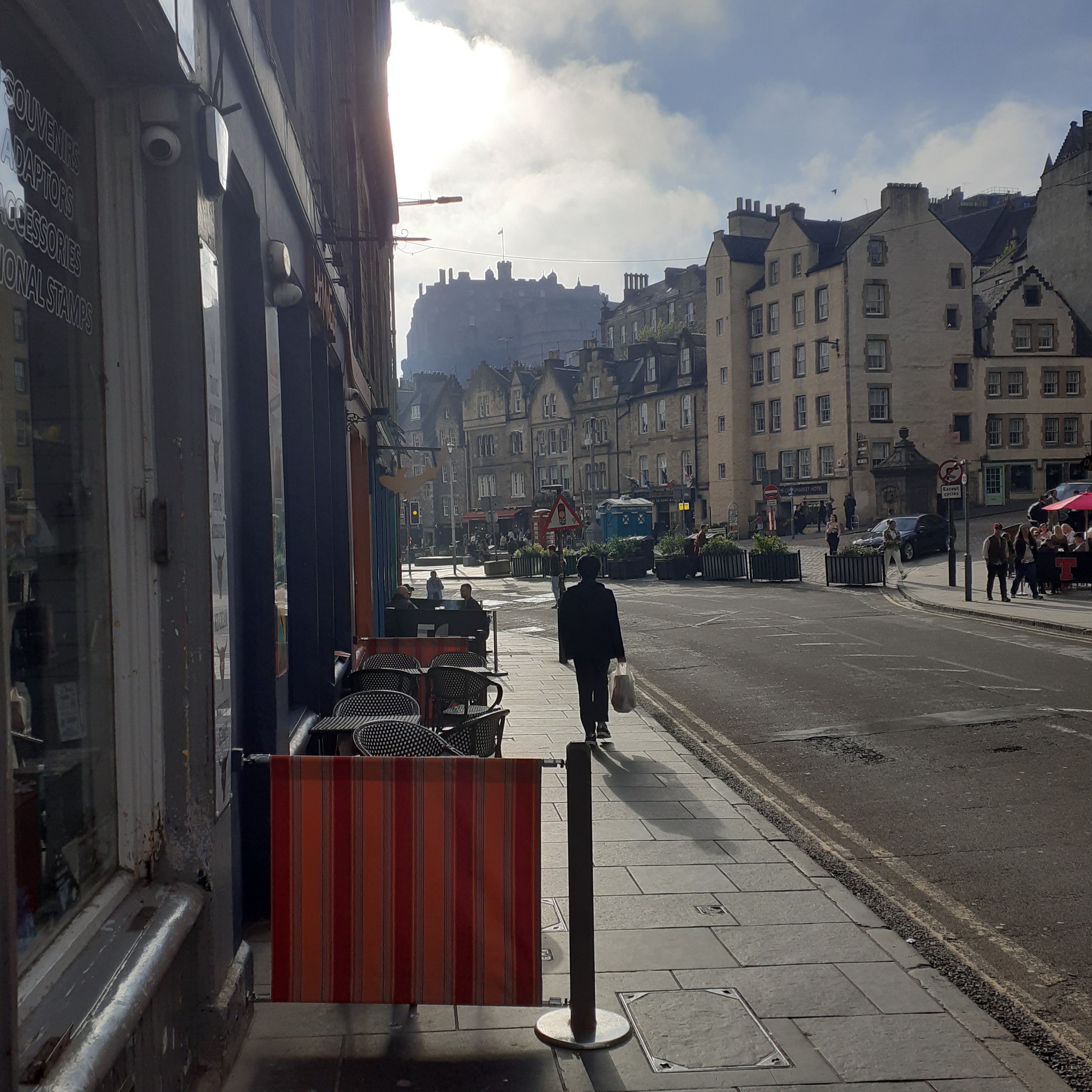
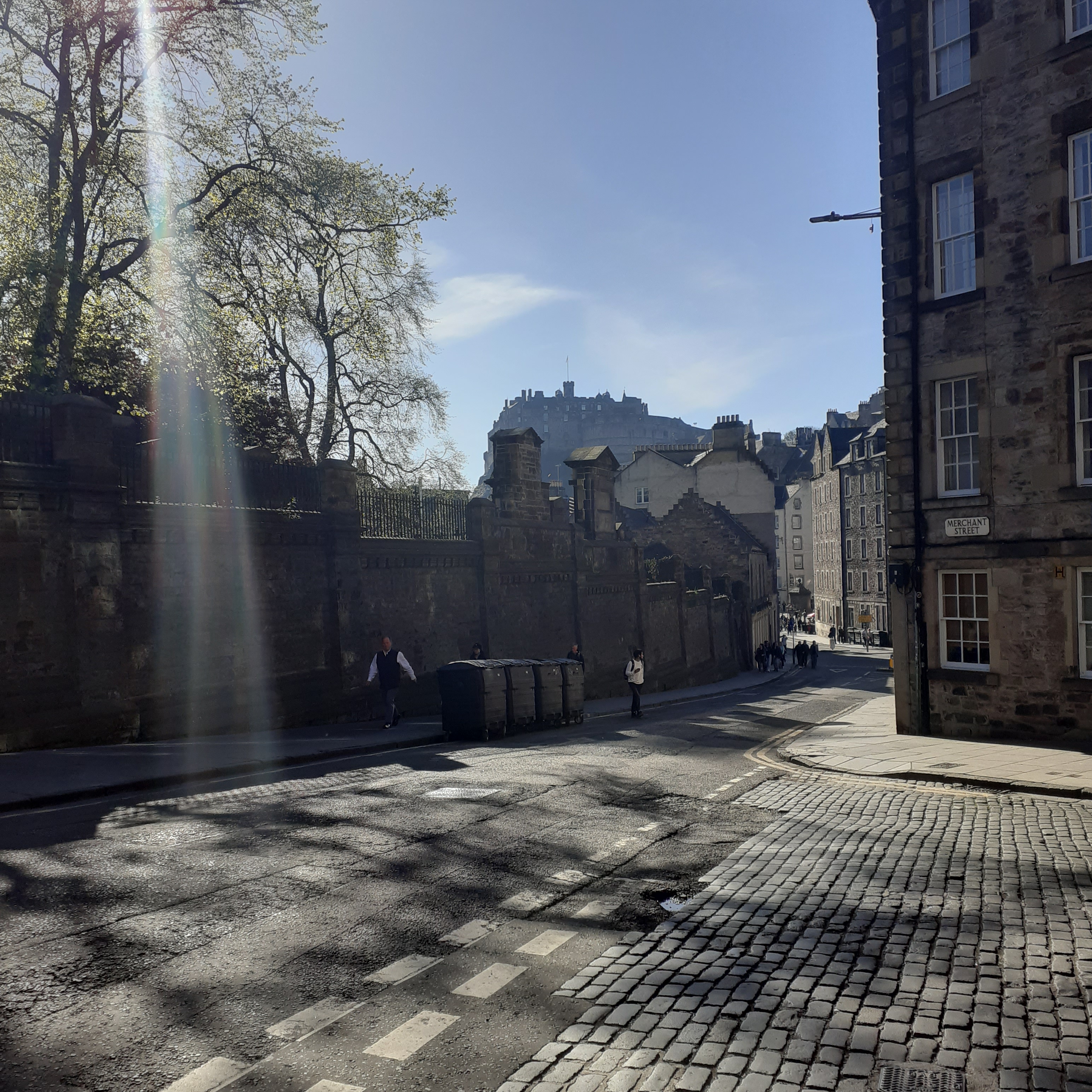
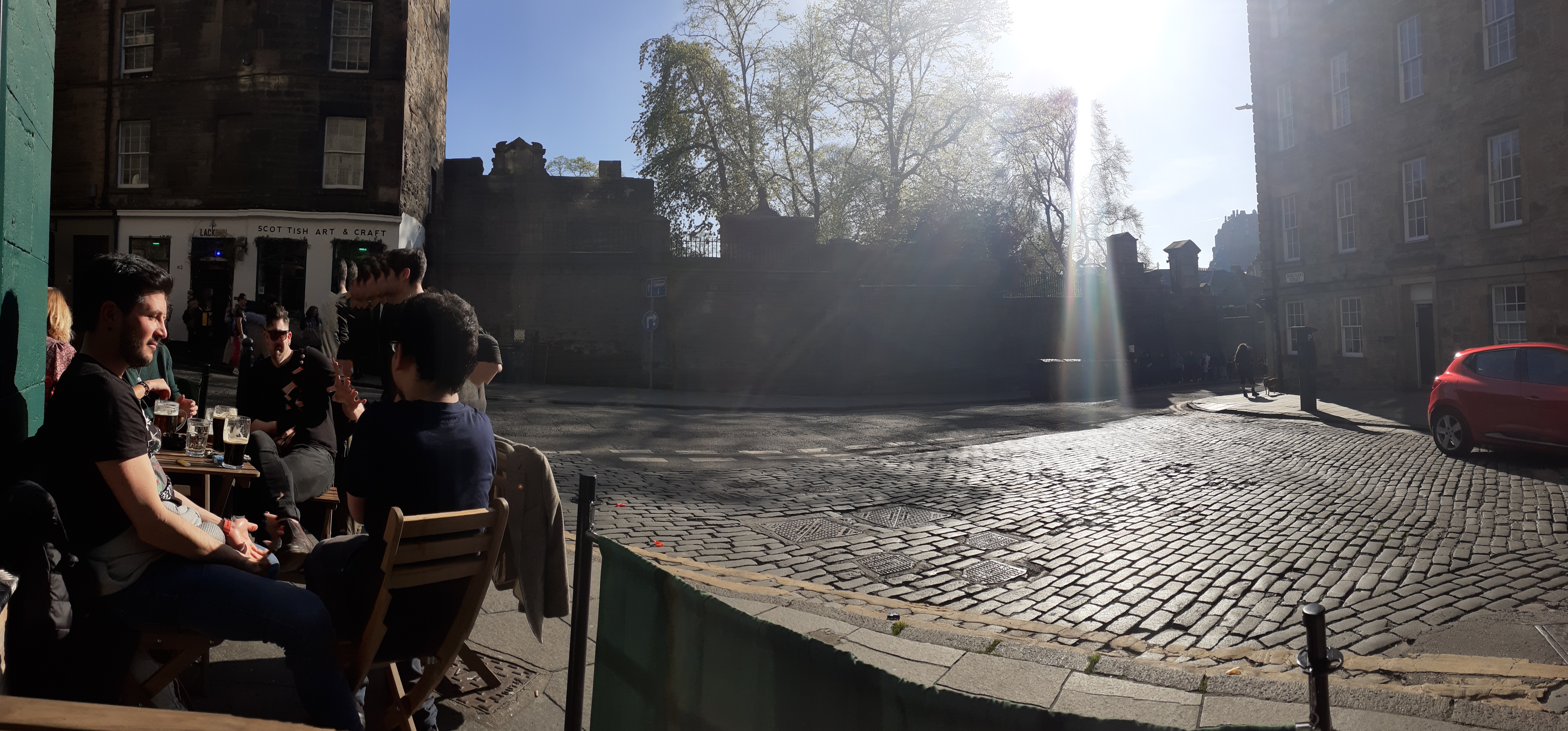
My route takes me towards Candlemaker Row, a street rising up past Greyfriars to the heights of the George IV Bridge. Perched on the corner of Merchants Street is the Oz Bar where I linger a while on outdoor seating perched on its sloping sidewalk. Greyfriars Churchyard and cemetary is across the road. At a nearby table, a young American lady is sketching a view of the Castle which hovers in the sky above the tall buildings. A varied group of Latinos occupies much of the rest of the seating, talking fluently in English, with sprinklings of Italian and Spanish (I think) thrown in. The Oz harks to the land down under, and is suitably sunkissed today. The building was gutted in the same fire that did for the Elephant House a couple of years back. Happily, it has risen again from the ashes. The sun sends a welcoming cone of light down from the heights of the Castle to include us all. I can float like a speck of spiralling dust for as long as it takes. Time truly stands still in this corner of the city.

Edinburgh – The Writers’ City – 2

Edinburgh’s Old Town rises south of Prince’s Street, an audacious signature across the sky. The Castle occupies the high, westernmost part of Castle Hill. This is a volcanic plug, formed when magma cooled in a massive volcano that stood here three hundred million years ago. The hill that remains stands four hundred and thirty feet above sea level, surrounded by cliffs on three sides. Rising  two hundred and fifty feet above the surrounding plain, it made for an ideal defensive location in ancient times. Picts, Gaels and Anglo Saxons have taken advantage of that and abided here. Its Gaelic name is Dun Edin, the fortress of Edin, though who, or what, Edin was, nobody knows. It was established as a burgh by King David in 1124. David ruled from 1124 to 1153. He subsequently became a saint, the only avenue of promotion open to a king, and seldom granted. In the real world, he introduced Norman style administration to Scotland, superceding the Gaelic system that prevailed.

More coloquially, Edinburgh is also known as Auld Reekie, or old smoky as we would say. Being built on a rocky outcrop, and this being the north, the fires of the citizens smoke could be seen from twenty miles away. And country folk do refer to the big city as the Big Smoke

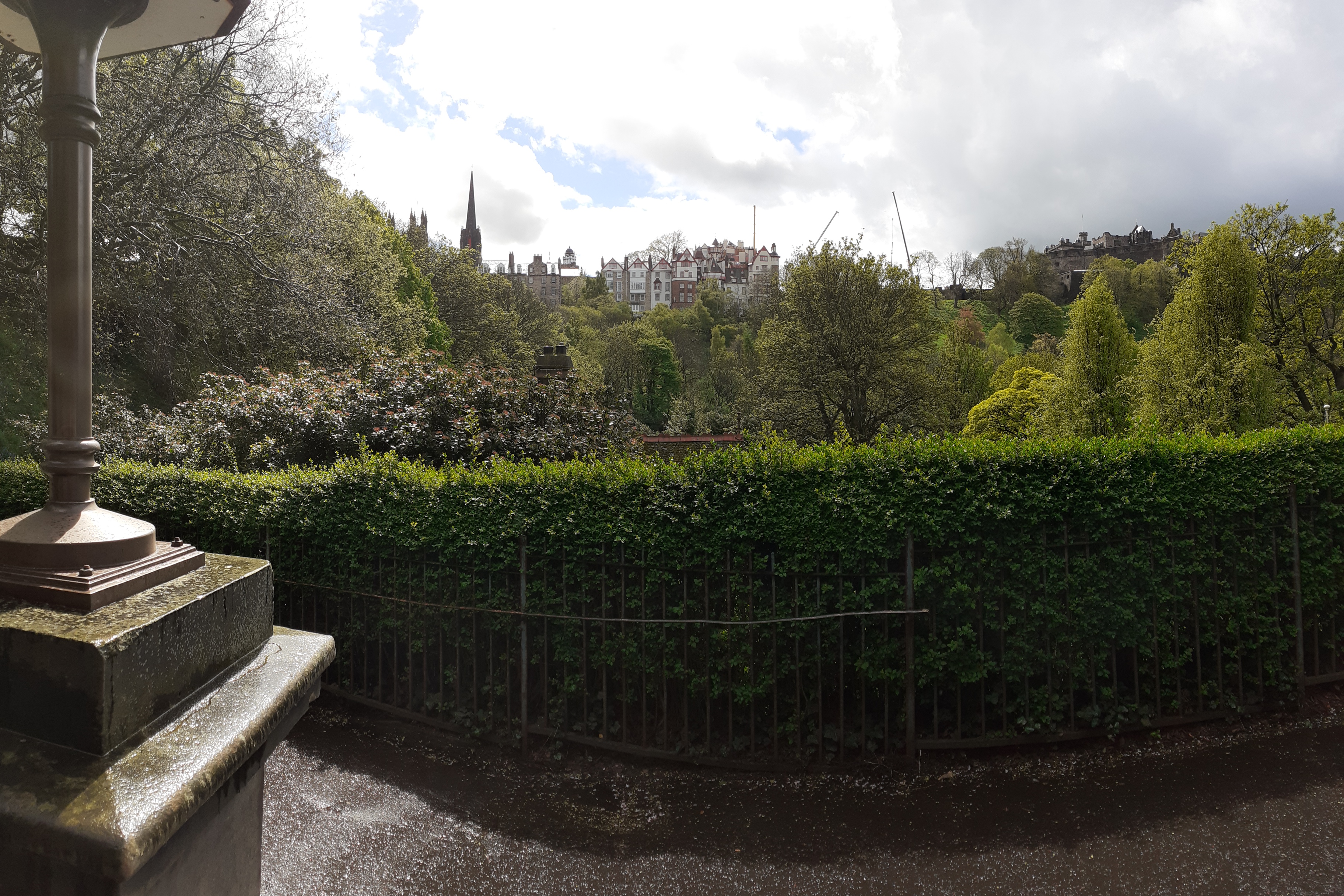
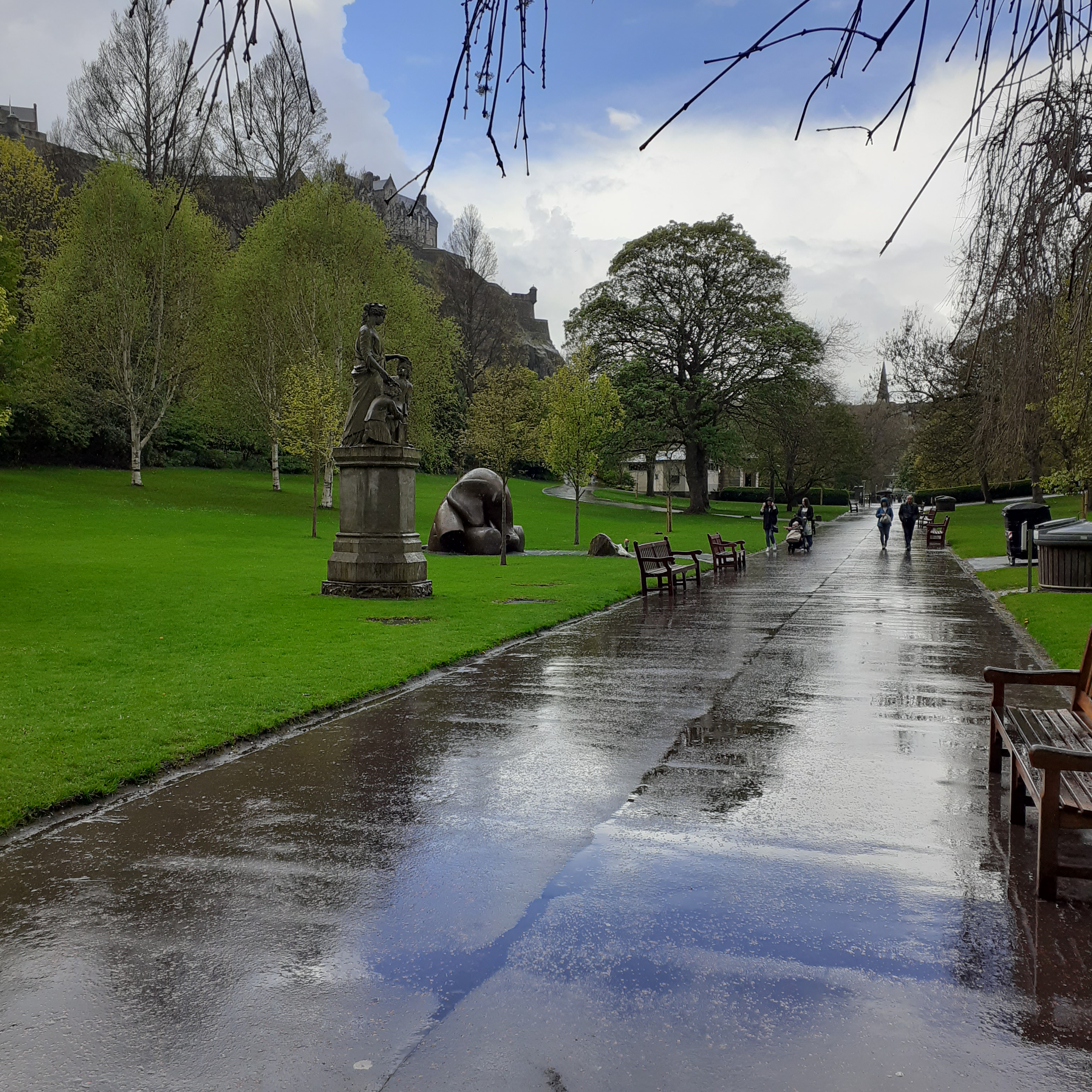
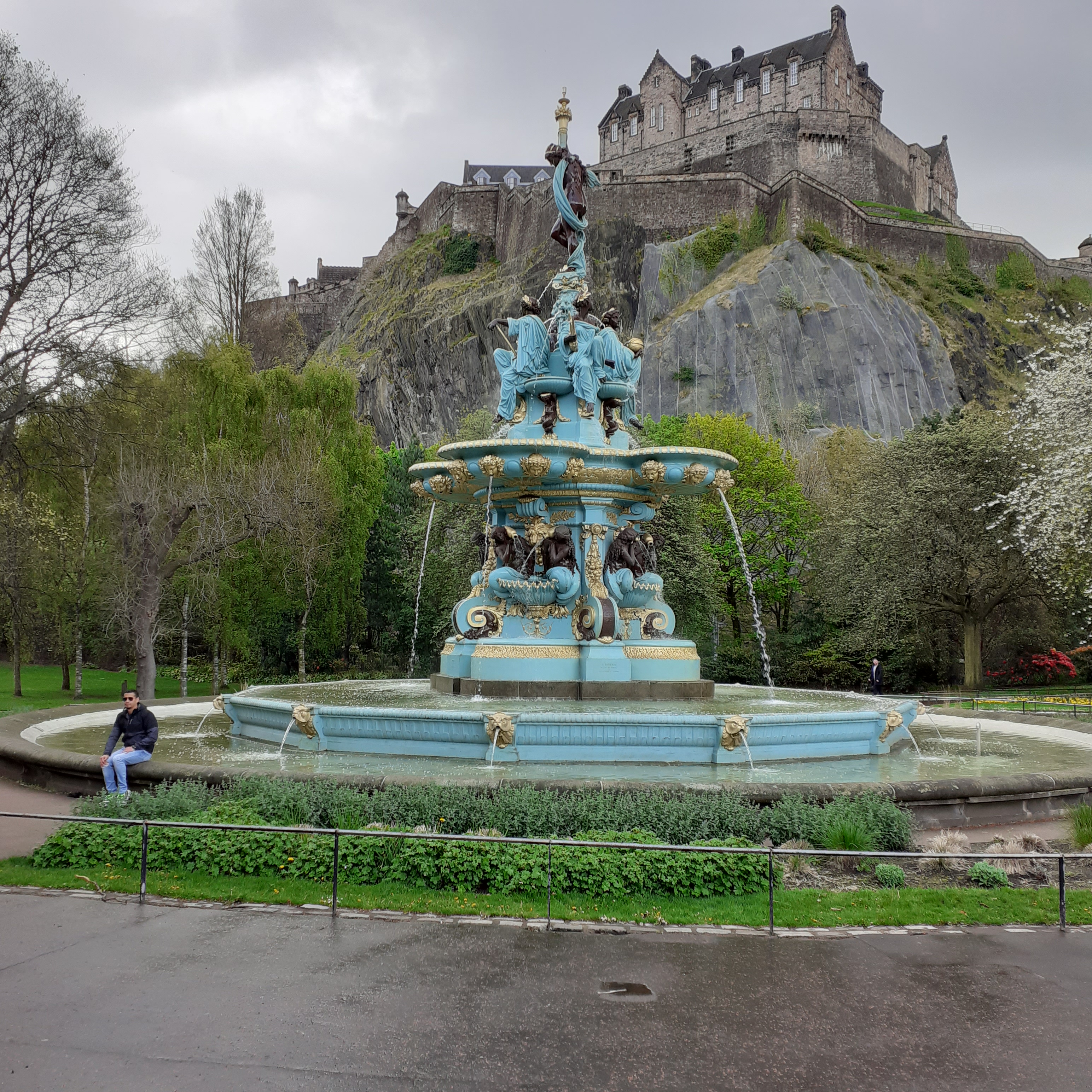
Beneath Castle Hill lies the New Town, with Prince’s Street marking its northern edge. Edinburgh’s principal street is lined with imposing commercial buildings, though a grumpy Dub might say it is like O’Connell Street with one side missing. That, of course, allows for the view, probably the best urban panorama you are likely to see. The serrated skyline of the Old Town topped by the Castle, viewed across a sylvan park dotted with choice statues and grand buildings.

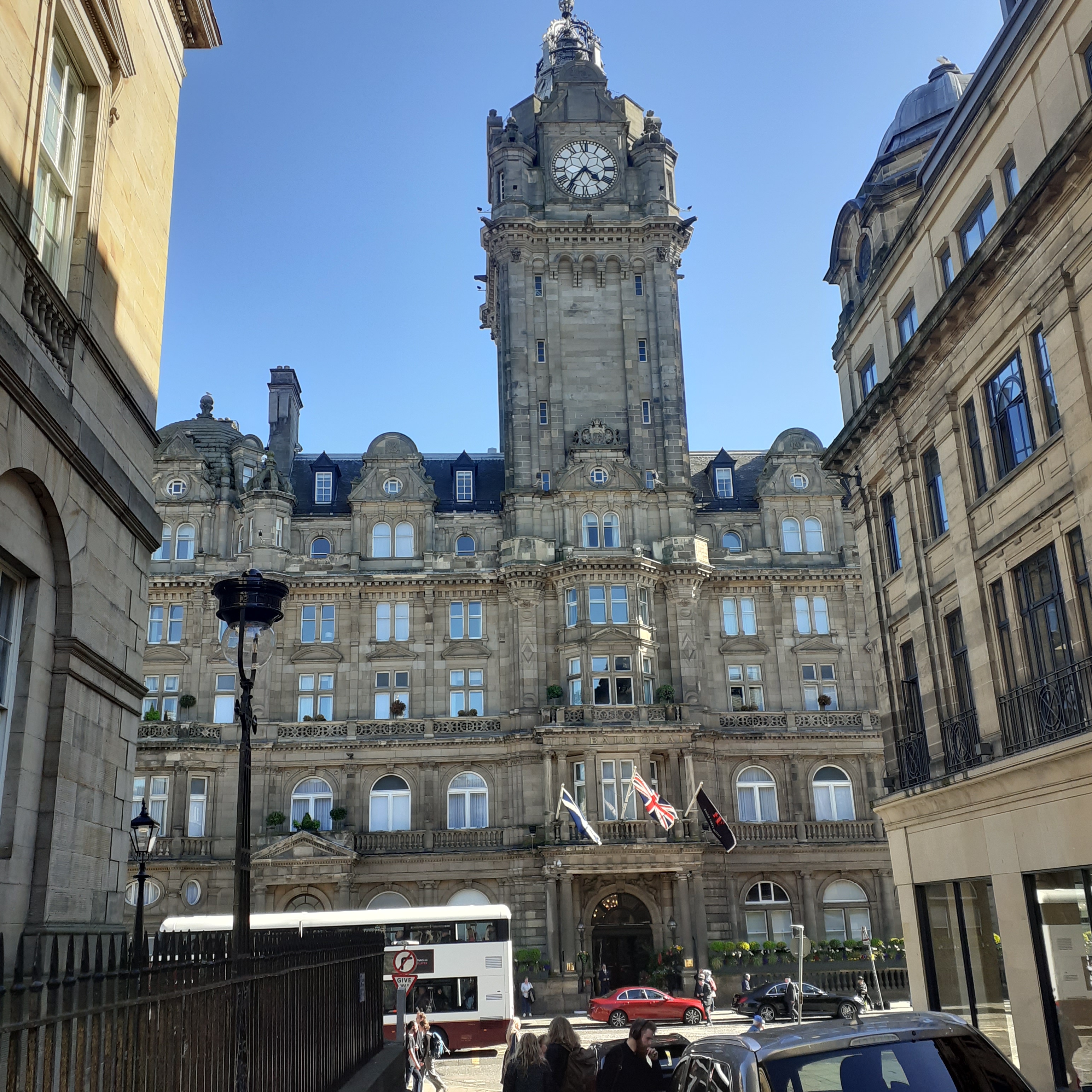
The eastern end of the street is dominated by the Balmoral Hotel and Calton Hill with its monument strewn summit. Edinburgh is also known as the Athens of the North, eighteenth century travellers noting the similarity between the cities, particularly the Acropolis floating above the lower city and Castle Hill. Artist Hugh William Williams held an exhibition in 1822 with his sketches of Edinburgh and Athens displayed alongside each other for comparison. Calton Hill became the focus for this notion with the design of the National Monument of Scotland modelled on the Parthenon in Athens. Begun in 1826 as a monument to Scotish soldiers and sailors who had died in the Napoleonic Wars, lack of funds meant it was left incomplete in 1829. This might also recall one tourist’s comments on first seeing the Acropolis; hmmm, it will be nice when it’s finished

The view over the city from here is certainly iconic. The Balmoral Tower nearby is a dominant feature on the skyline. The building was designed by William Hamilton Beattie, and completed in 1901. It operated as the North British Hotel until the early nineties, when it became the Balmoral, just in time for my arrival in Edinburgh. At least, I dreamed of staying there, while lounging with M atop Calton Hill back in the day, furiously smoking into the mist, wondering which improbable tower we would most like to occupy for the night. One writer who made her dream real was JK Rowling. She was then just beginning her series on the exploits of tyro magician Harry Potter. 

The Philosopher’s Stone began life in Porto, ultimately seeing the light of day in Edinburgh where she lived from 1995. Her haunt then was the Elephant House coffee shop, its magical views of Edinburgh Castle inspiring the fantastical setting of her work. She completed her series in a room at the Balmoral, something of a point of pilgrimage for the more fabulously well to do Harry Potter fan. It will cost you a grand a night. It would take me nearly a week to spend that amount on accommodation here. Which is plenty. Harry Potter and the Deathly Hallows brought the epic to an end in 2007. 

The Elephant House is set further south on George IV Bridge, one of a number of bridges connecting the Old Town with its surrounding lowlands. The bridge is mostly lined with buildings, but there’s a gap at the Elephant House where you can gaze into the gloomy chasm of Cowgate. A terrace to the rear of the coffee house gives wonderful views of the castle, and here Rowling liked to sit and let her imagination run riot. Sadly, the building was giutted by fire last year, and there has been no movement since towards reconstruction.

Other than the Balmoral, the south side of Prince’s street is devoted to parkland and spectacle. The main rail station, Waverley, is next door, recessed in the hollow between North Bridge and Waverley Bridge. The Mound, leading up to the Old Town, was made from excavated ground, and the lower slope hosts The Scottish National Gallery and the Royal Scottish Academy. Prince’s Street Gardens makes a wonderful foreground for views of Castle Hill. All of this was originally a stagnant pool, the North Loch, filled in on the construction of the New Town.

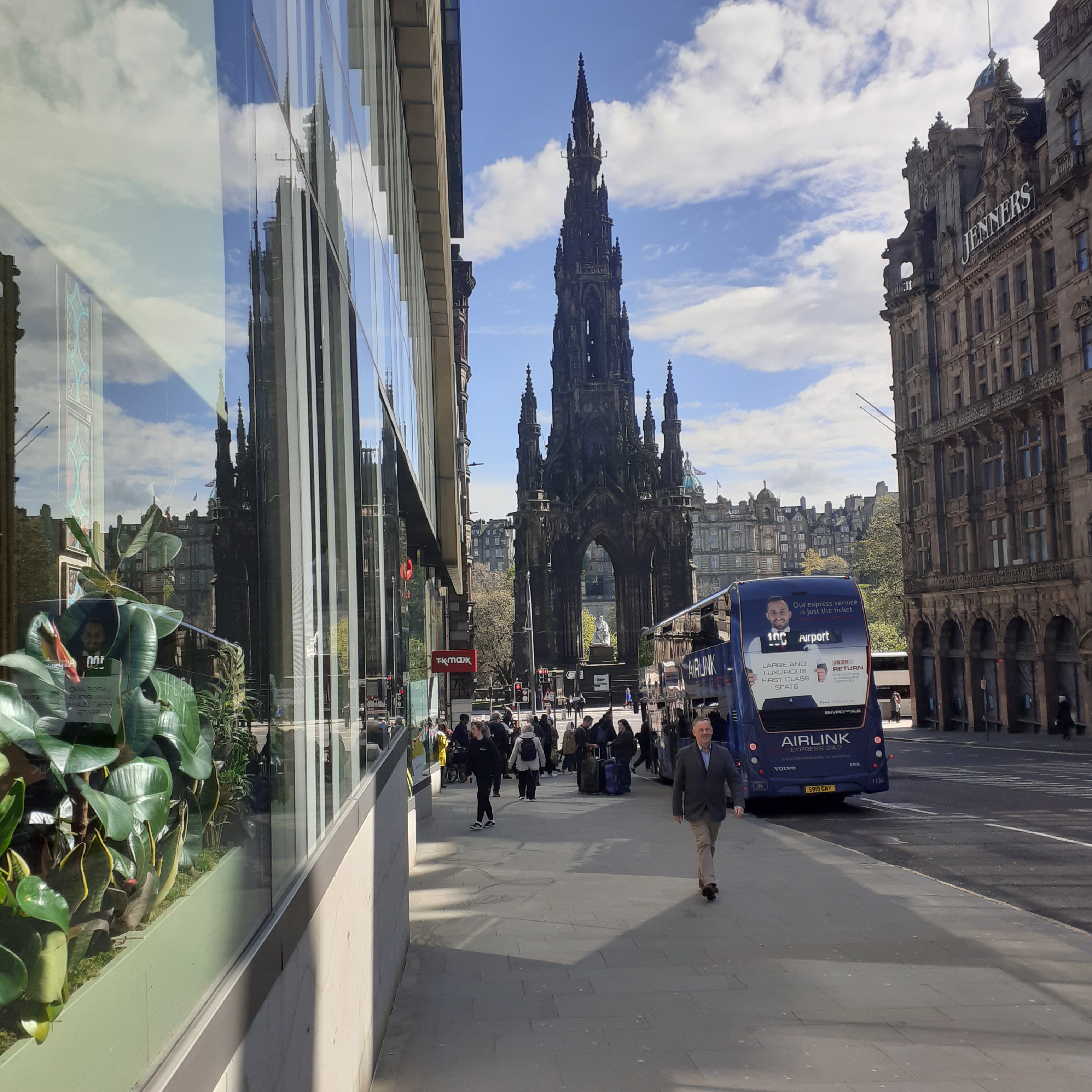
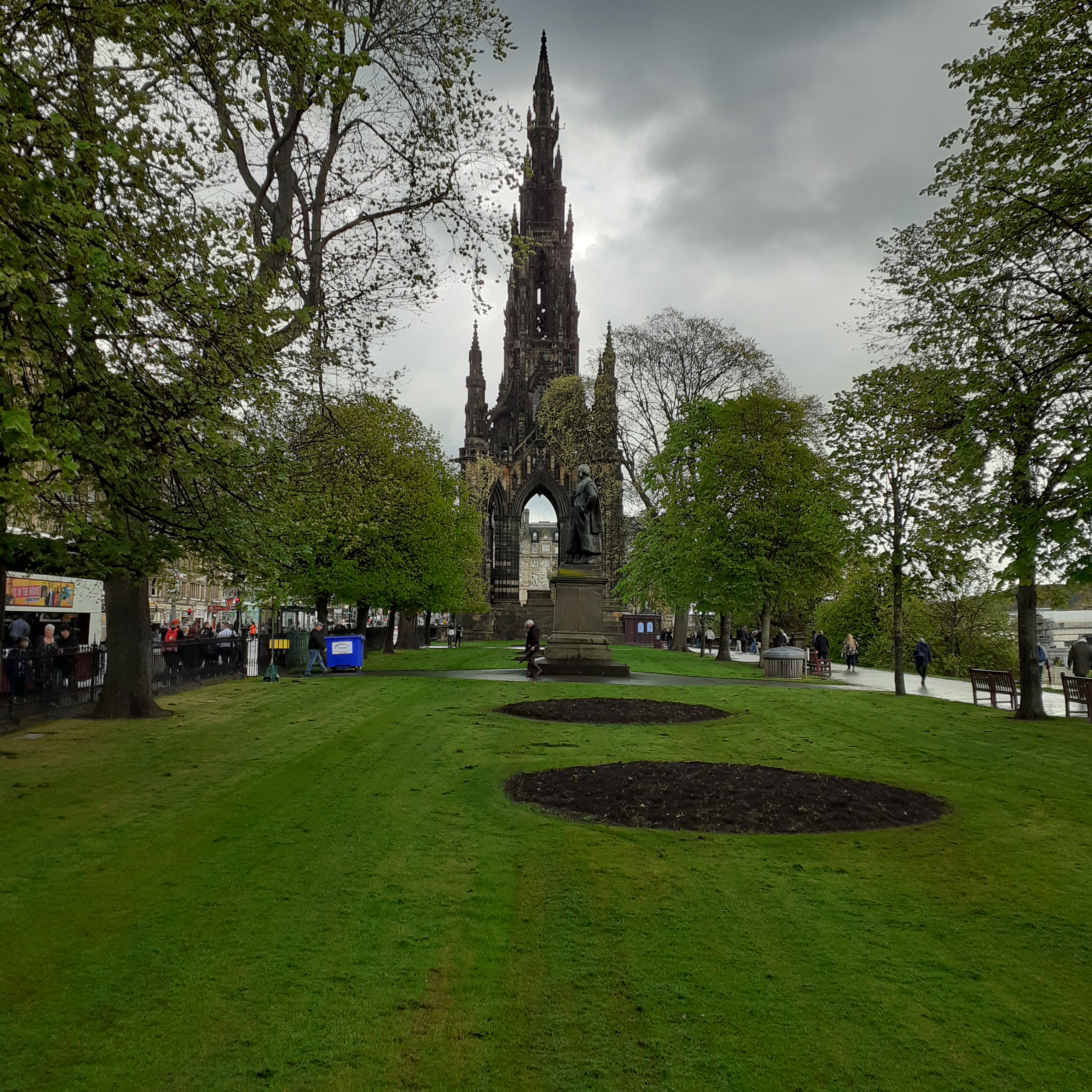
The Scott Monument marks the eastern entrance to the gardens. It is two hundred feet tall, the largest monument to a writer in Europe and was designed by an amateur, George Kemp. He won the competition to design a fitting memorial to the recently deceased writer and work started in 1838. The dark, gothic masterpiece was completed in 1844, but Kemp never saw that, having drowned in the Union Canal some months earlier returning home from work.

Walter Scott was born in 1771. A writer, historian and public figure, he became a personification of Scottish literature and nationhood. He was amongst the first to use history as a basis for literary fiction with The Waverly Novels. These begun in 1814 with Waverley. Scott, then best known as a poet, published them anonymously, and subsequent novels had the byline: the author of Waverley. The narratives are frequently set in 17th or 18th century Scotland; such as Rob Roy, but also in Medieval England (Ivanhoe) and during the the Crusades in the Holy Land. They became hugely popular, defining narratives of the Romantic Age, establishing in our minds, or hearts, the exalted notions of romantic love, adventure, heroism and nationality. Something that Waverley Station, named for them, scarcely does. Walter Scott died in 1832.

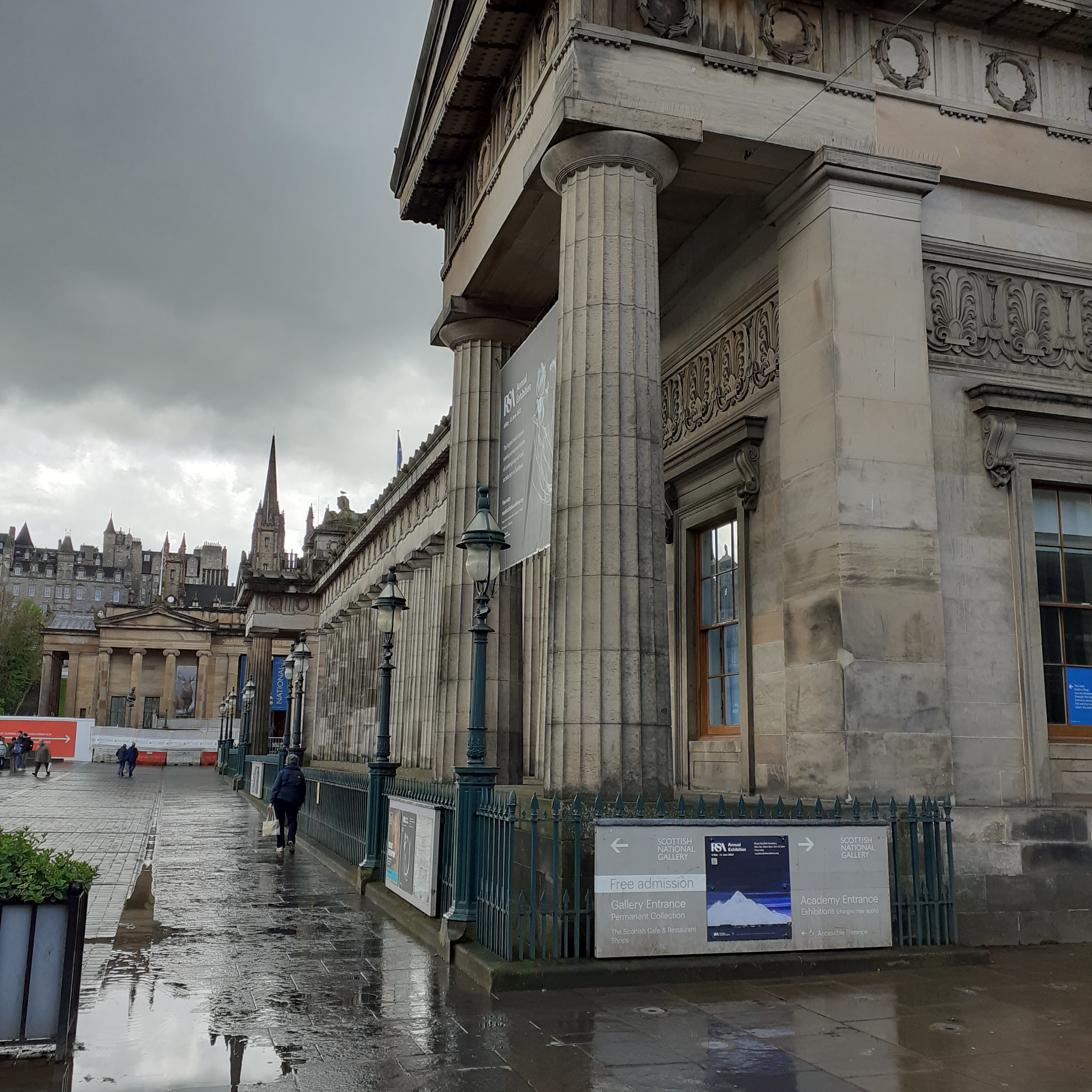
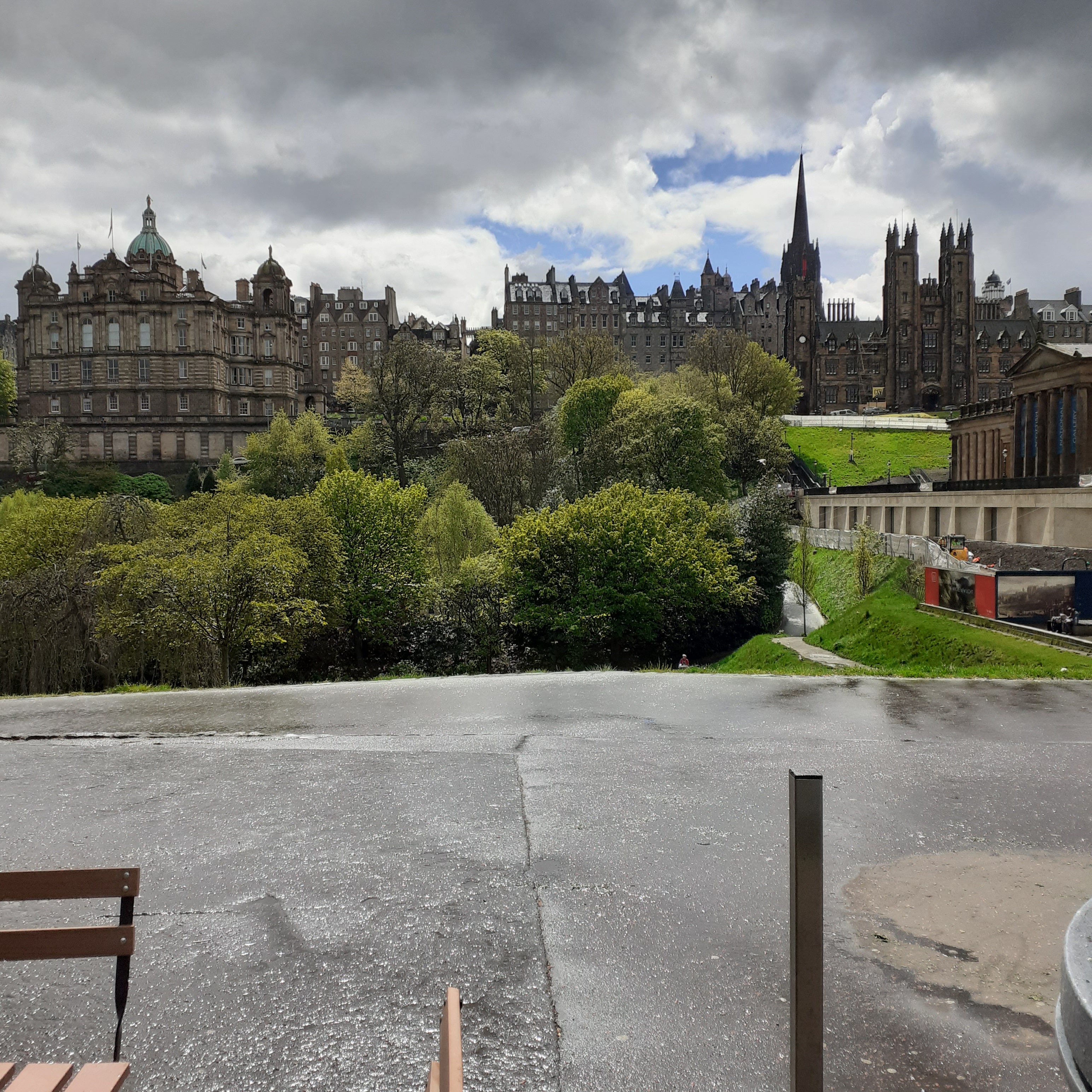
The National Gallery of Scotland and the Royal Scottish Academy are at the base of the Mound. Both are in the neoclassical style and designed by William Henry Playfair. The Academy opened in 1826. Its annual exhibition, like our own RHA, features the work of contemporary Scottish artists. The National was built thirty years later and features leading traditional Scottish painters along with a good collection of international art; Peter Paul Rubens, Titian,Cezanne and Turner amongst them. The Impressionists are well represented, allegedly. However, as seems to be the case in most cities these days, half the gallery is closed for renovation, which put paid to the Impressionists. The gallery is rather small to begin with, but there is a fine display of Scottish masters.

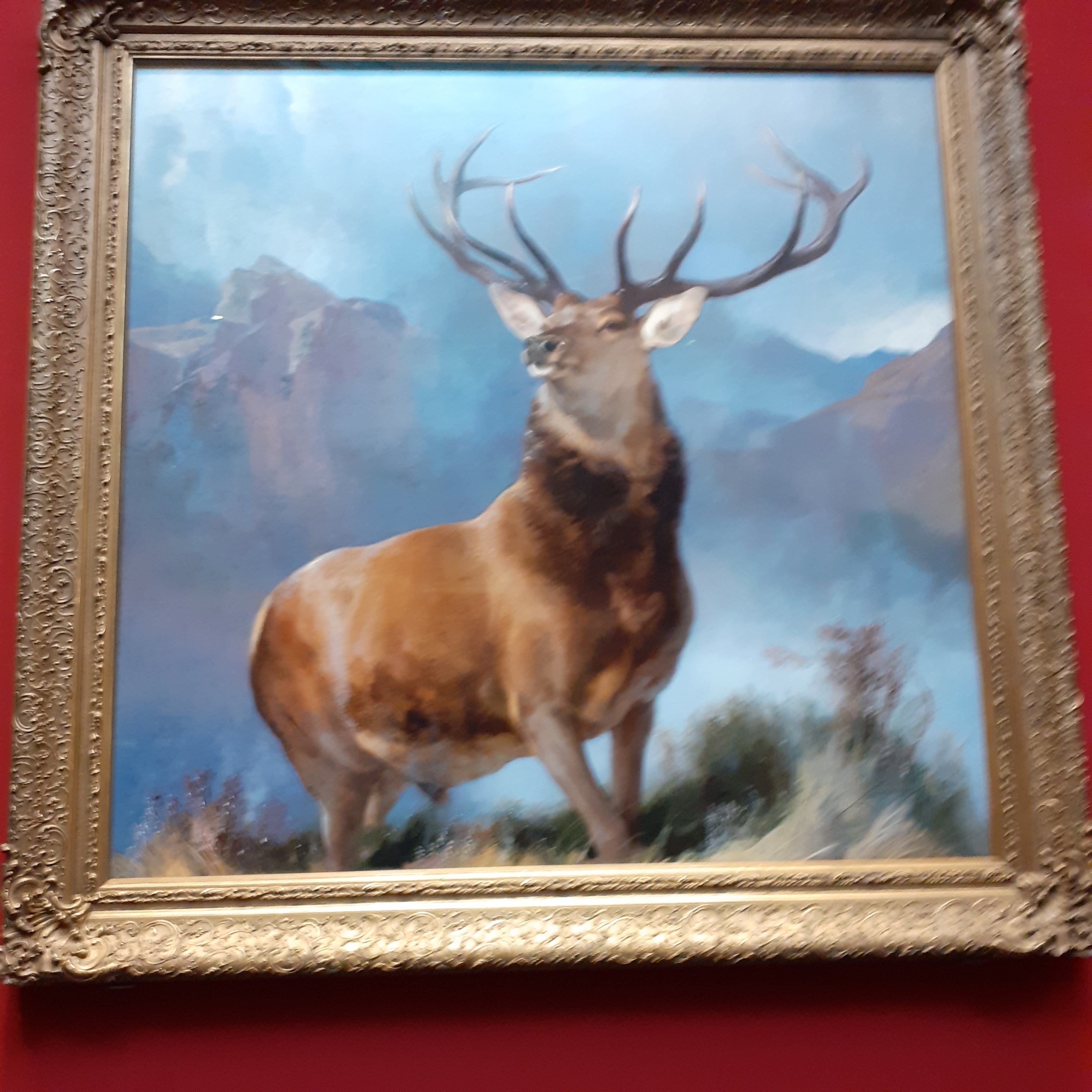
Monarch of the Glen by Edward Landseer is the most famed. Landseer was an English painter, but frequently visited the Scottish Highlands for their wild landscapes. He also provided the Lions guarding Nelson’s Column in London. The Monarch was painted in 1851 having been commissioned by the House of Lords. Since they proved too stingy to pay for it, it went into private ownership. Frequently loaned out for exhibition, it became hugely popular with the public. Pears Soap acquired it in the twentieth century and used it in its advertising. Distillers Dewars and Glenfiddisch followed suit. McVitie’s use of on the packaging of Scottish Shortbread probably lead to the painting being deemed the ultimate biscuit tin image of Scotland. Eventually it came home in a way, Diageo selling it to the National for the knockdown price of four million.

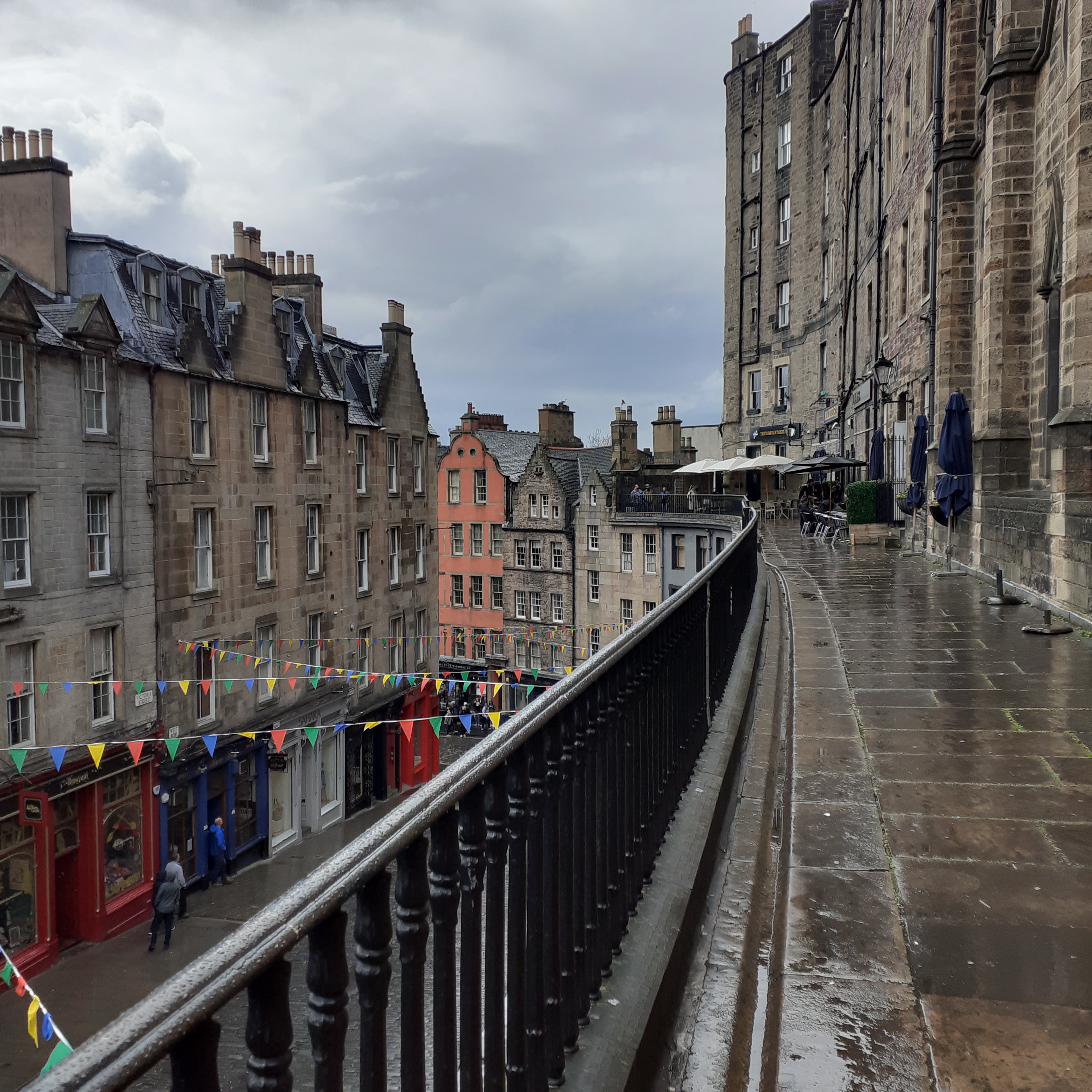
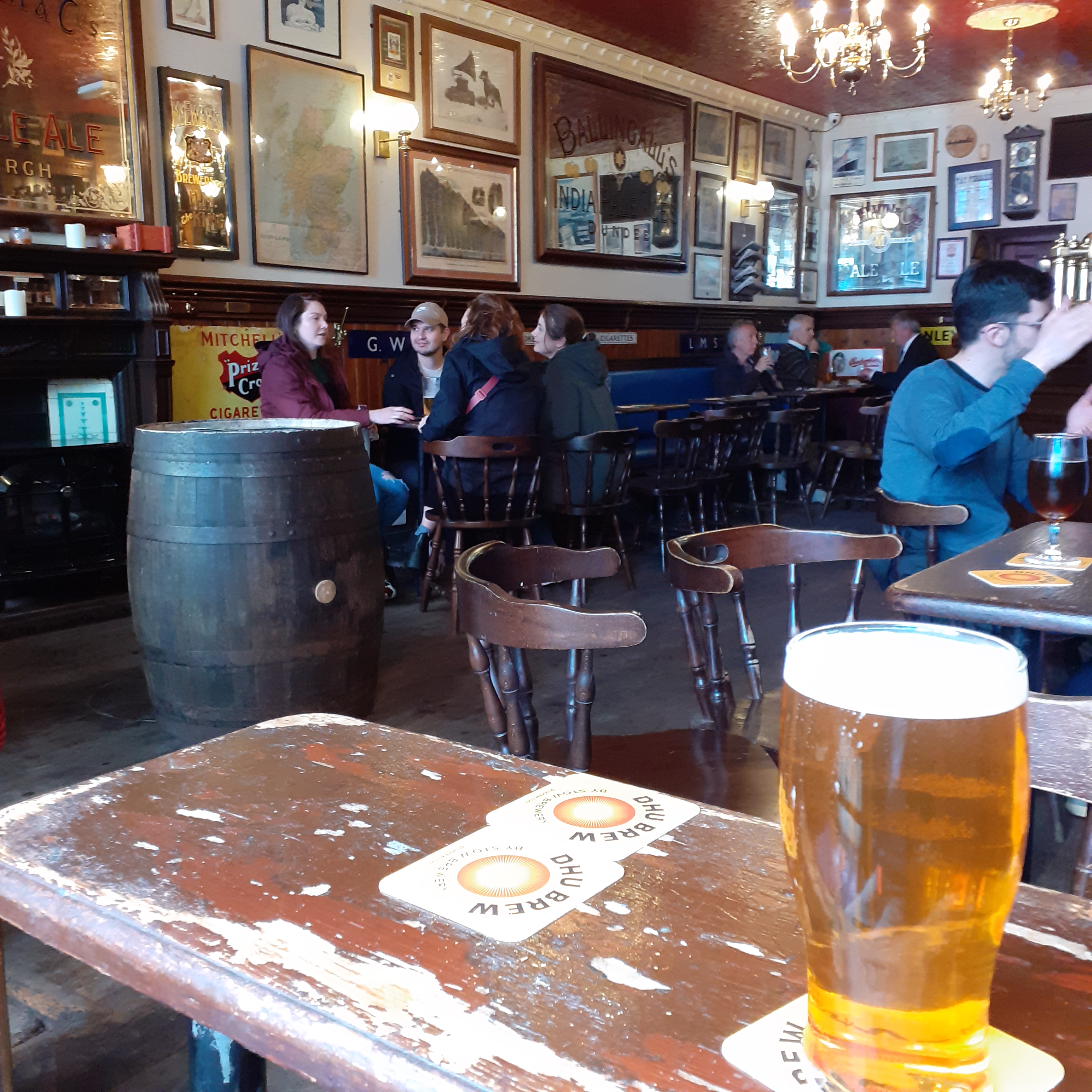
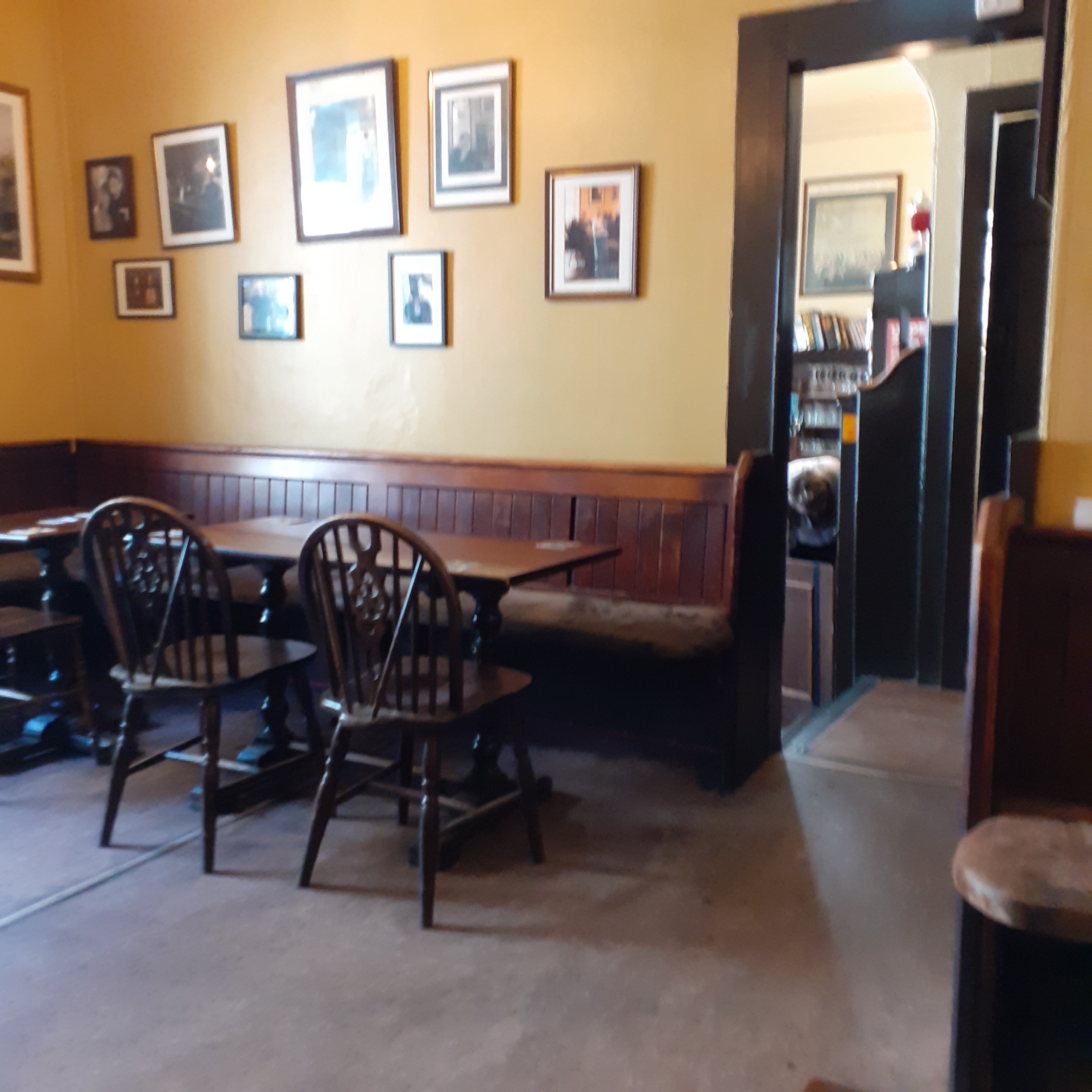
From the National Gallery of Art I head uphill towards the Edinburgh Writers’ Museum. This should be easy to find, but wasn’t. Edinburgh is a windie city, and I am distracted by the rain, the bagpipes and the sheer joy of it all. I find myself in Bow Street and seek solace in Ian Rankin’s Rebus Pub Crawl, remembering that the Bow Bar is number four on the list. The West Bow is an ancient Edinburgh Street, rising in two levels to the giddy heights of the Castle. The Bow Bar is a determinedly traditional brown bar, dark and timbered, with floor to ceiling windows. In fact it was refitted in this style in the early 1990s. I order an IPA from the young one behind the bar, a Belma and Louise, to be precise. The bar is packed but I make for the one vacant table by the window where I pose in the shaft of honeyed light sweeping down from on high, and lose myself in the moment.

Edinburgh – The Writers’ City

There are few cities that provide the spectacle and depth of Edinburgh. Its skyline is an imagined fantasy, ancient and ornate. Implacable of outline, yet it harbours a wealth of tales, written and being written up until this very moment. Cities are as much a construct of stories as they are of stone, Edinburgh rejoices in both. Like Dublin, you can translate it through its writers, distant and contemporary wordsmiths honoured in various ways. Prince’s Street features the stunning spire of the Walter Scott Monument, rising two hundred feet into the sky. There are more discreet memorials too. The dark laneways of the old town speak of Stevenson’s Jekyll and Hyde. Above them rise a conspiracy of spires and turrets, the broken teeth of old volcanoes, the whispering stone of graveyards and kirks. Sleuths saunter in the shadows, from Sherlock Holmes to John Rebus, while demons and wizards, killers and creators number amongst the cast of Edinburgh’s multitude of stories.

As one door into this maze, I thought of the contemporary world of John Rebus, that hardboiled detective created by Ian Rankin. Planning this trip to Edinburgh, only my second, I messaged Rankin if he could offer a tour of Rebus watering holes as a pathway through the city. Rankin obliged, so I had a list of seven pubs giving me a route through the streets of the Scottish capital.

It has taken me three years to act on it.The lockdown gave us our own version of the plague, locking us into awkward isolation. I had first visited Edinburgh in the mid nineties. Autumn is a good time to visit Scotland, grey, gold and auburn, and prey to mists. It was a treat for my fortieth birthday, which falls on Saint Andrew’s Day. Andrew provides the Saltire for Scotland’s flag, being the patron saint. And I am half Scottish. My father was born in Scotland, in the mining country of Blantyre, between here and Glasgow.

Back then, myself and M took the Hidden Edinburgh tour, which was a guided walk through the subterranean city of the Old Town. Gloomy indeed, especially in late November. It took off from the Royal Mile, the spine of the city. Our young guide was as charming, loud and funny as we expect a Scottish guide to be, they’re just born to it. Tales of ghosts and ghouls and graverobbers loomed out of the misty evening. We journeyed beneath the streets themselves, finding graveyards down there too, Stopping in a catacomb, our guide whispered this was once an entire street which had been blockaded in Plague times, the residents left there to die, or survive if God so chose. Now, that’s what I call Lockdown.

Rankin was born in 1960 in Cardenden, Fife, north of Edinburgh, on the far side of the Firth of Forth. He never intended to write a detective series. The first Rebus adventure was intended as a stand alone novel, as something of a modern day version of Robert Louis Stevenson’s Strange Case of Dr Jekyll and Mister Hyde. Titled Knots and Crosses it was published in 1987 and followed by Hide and Seek in 1990, also influenced by Jeckyll and Hyde. Hide, get it? 

Rebus himself was born some years before his creator, in the later forties up in Fife and hardened in the smithy of Northern Ireland during the early Troubles. Exit Music, 2007, saw Rebus reach sixty, retirement age for a police officer. Rebus was buried, but not dead, and rose again five years later in the appropriately titled, Standing in Another Man’s Grave. Rebus now retired but unable to let the past, or the present go. Rankin has published twenty four Rebus novels up to the recent A Heart Full of Headstones 2022. 

Rankin puts the Oxford Bar, Rebus’s most regular haunt, top of his list. Coincidentally, my trip to Oxford some years back, also took a writer’s prism, in this case Colin Dexter’s Morse. Myself and M took a wonderfully entertaining tour in tandem with the adventures of Morse, and of course the long suffering Lewis. The Oxford Bar itself is in Edinburgh’s New Town. The idea of the New Town was first proposed by James VII when Duke of York (of New York fame) as a sophisticated extension to the overcrowded ancient city above. The Battle of the Boyne put paid to that, as James lost his crown, but the idea was refloated in 1766 and a design competition held. This was won by a young local architect James Craig and work soon began on the project.

Prince’s Street forms the southern edge. George Street is the central axis, along the apex of a low ridge from the Albert equestrian statue in Charlotte Square to the Melville Memorial in St Andrew’s Square. It is calm and wide, diners relaxing outdoors in the midday sun. Queen Street completed the northern perimeter. The narrower Rose Street and Thistle Street lie between, with the transverse streets at right angles: Hanover Street, Frederick Street and Castle Street The naming emphasises the theme of the unification of the two kingdoms, as some like to see the annexation of Scotland. It is all very Georgian and grandiose. But there are creeks and alleys.

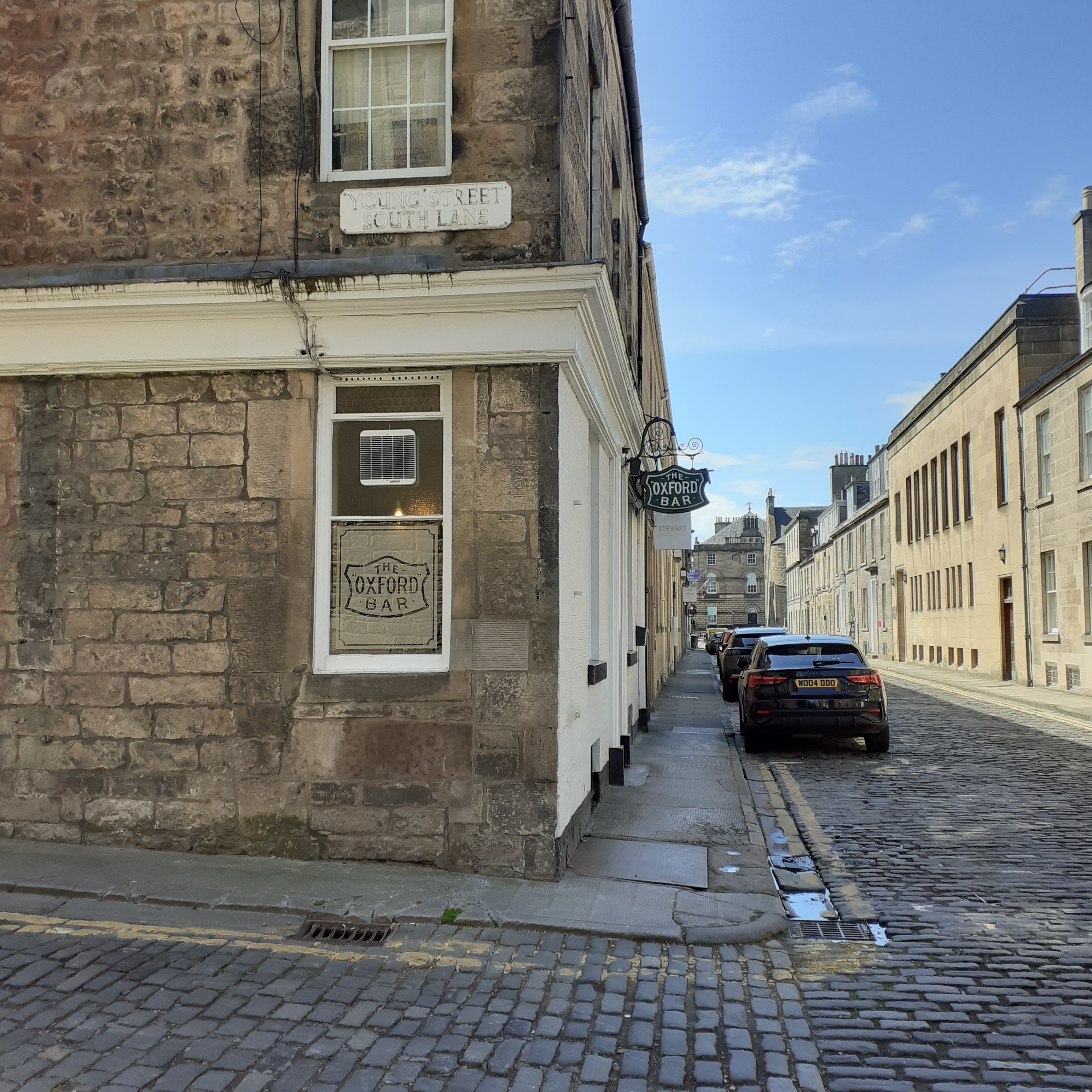
The Oxford Bar is well hidden, an oasis in a cramped enclave of grey brick on narrow Young Street, north of George Street. It dates back to 1811 and retains the intimate structure of its origins. There’s a tiny bar inside the entrance, a few steps up to a larger room to the rear sparsely furnished in gloomy wood, aglow with honeyed daylight through the sandblasted Oxford window. It’s there I take my pint of IPA and sit as if in a sepia photograph, my only company the solid beam of sunlight, and a man reading a novel by its light. It’s a literary pub, to be sure. I noticed Robbie Burns presiding over the bar as I ordered my Deucher’s. The photo gallery features musicians and others, but most notably Rankin himself (natch). I see too that Colin Dexter is a noted visitor. On the way out, I receive a bookmark or two as souvenir from the pleasant landlady who served me,

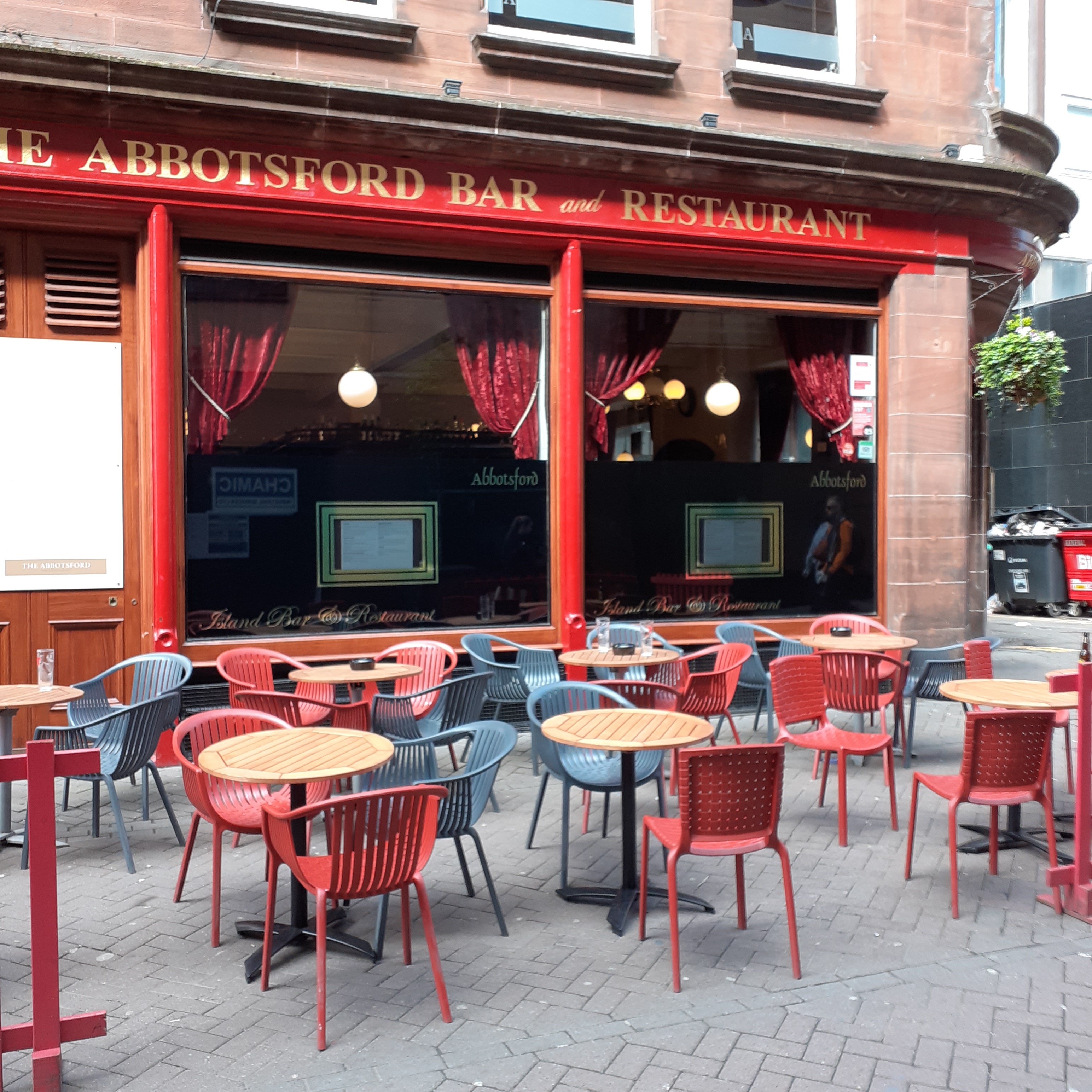
Outside, I take in the  atmosphere in the traditional manner before heading south along Castle Street. Rose Street, reminds me of Cork’s Oliver Plunkett Street, narrow, straight, cobbled and quaint.It’s pedestrianised and a busy mix of shops, cafes and bars. Abbotsford is at the eastern end. Named for the home of Sir Walter Scott in the Borderlands to the south. The pub is an Edwardian saloon, well upholstered beneath an ornate ceiling and around an imposing mahogonay island bar. There’s a restaurant upstairs. I order a Tennents, frothy and longlasting, the gift that keeps on giving. The bar is busy and I take my drink onto the terrace where I can catch the suns afternoon rays. A nearby busker rests his back against the railings of Rose Street Garden. This open air cafe and wine bar is a popular celbrity haunt. It les at the back of The Dome on George Street, a neo-classical building from 1847, once a bank and now a chic restaurant. Back on my stretch of pavement, more are following my lead in taking the air. It’s most pleasant. The busker’s repertoire is Dylanesque, with a tartan weave that includes The Proclaimers amongst others. He’s giving it the full nine yards, and might be better dialling it down a bit. I wonder should I ask him to sing Faraway.

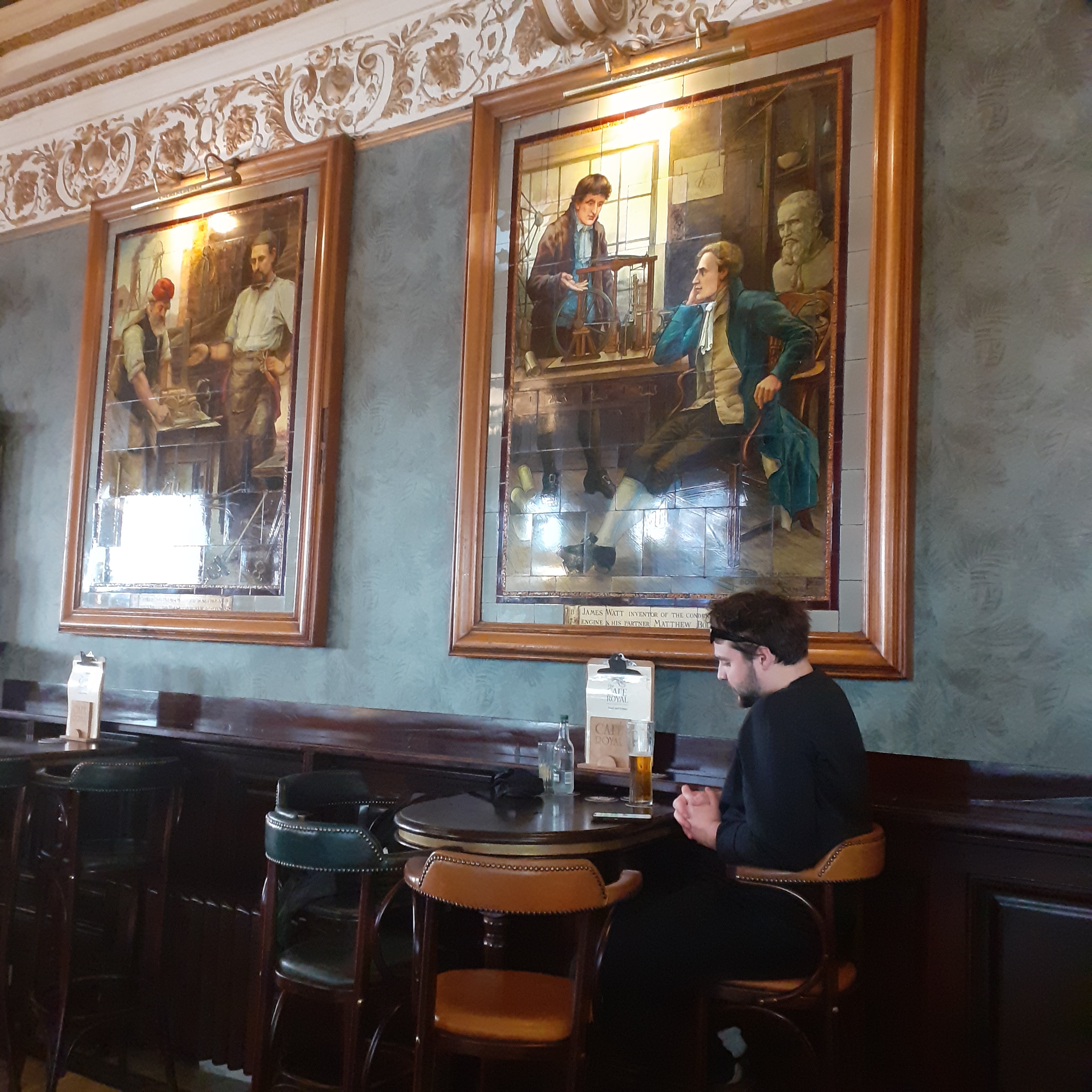
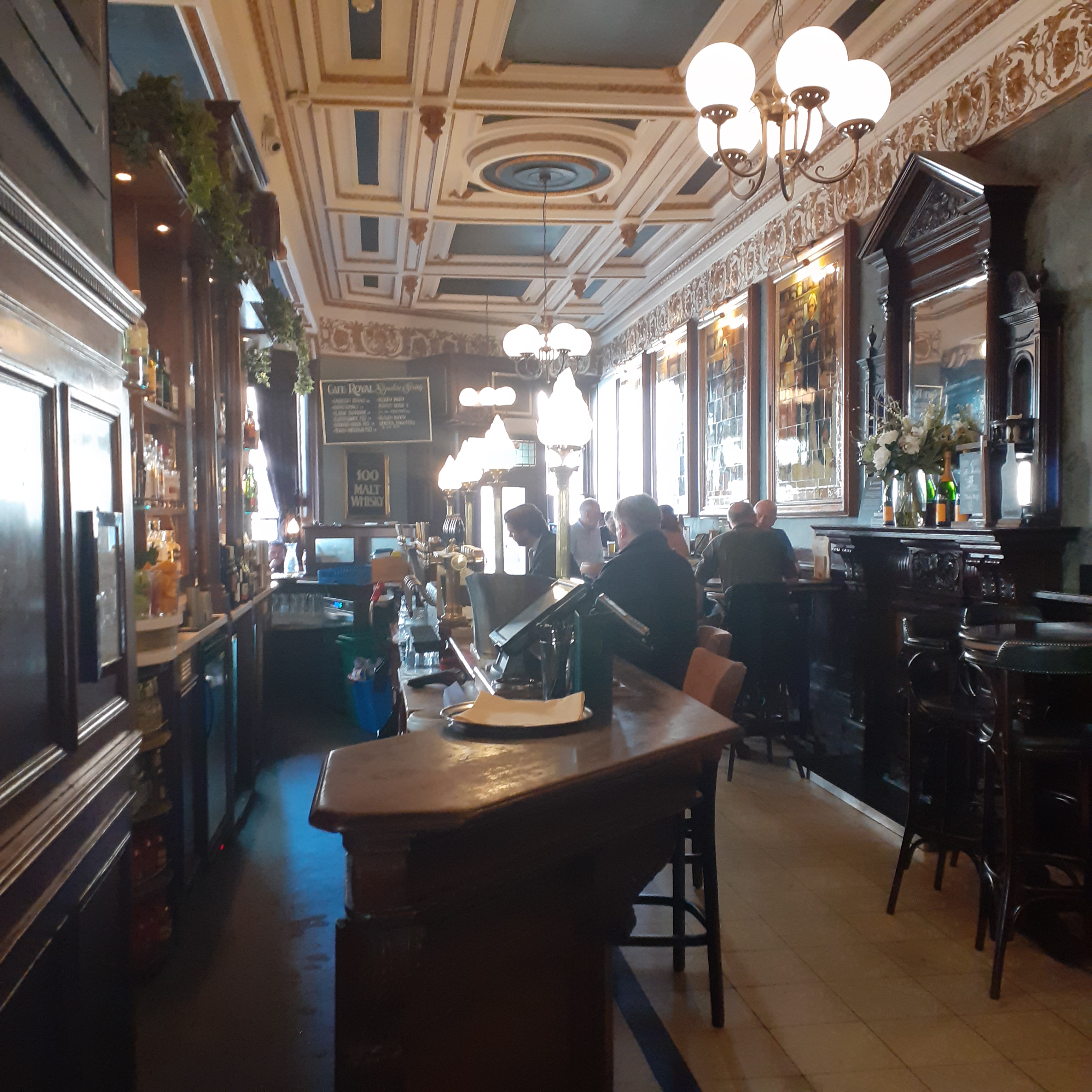
Number three on the list is the Cafe Royal. This is beyond St Andrew’s Square on a secluded side street. The Cafe Royal is a lovely Victorian bar with towering glass windows designed by Architect Robert Paterson.from 1863.  It describes itself as an Oyster Bar. Though shellfish is poison to me, there are more edible alternatives including haggis, venison and other Scottish delights. The walls are adorned with glorious ceramic tiled panels by John Eyre and stained glass windows featuring famous inventors such as James Watt. I can imagine myself in an age of elegance, amongst the gleaming brasswork and gasslamps. Prince’s Street is just a block away, abuzz with the height of the tea time rush. But here is a place to shelter from the outdoors, however benign, and bask in the glow of crafted opulence, art and intimacy; and a fine malt whisky, of course. 

Bridge Across T’Skye

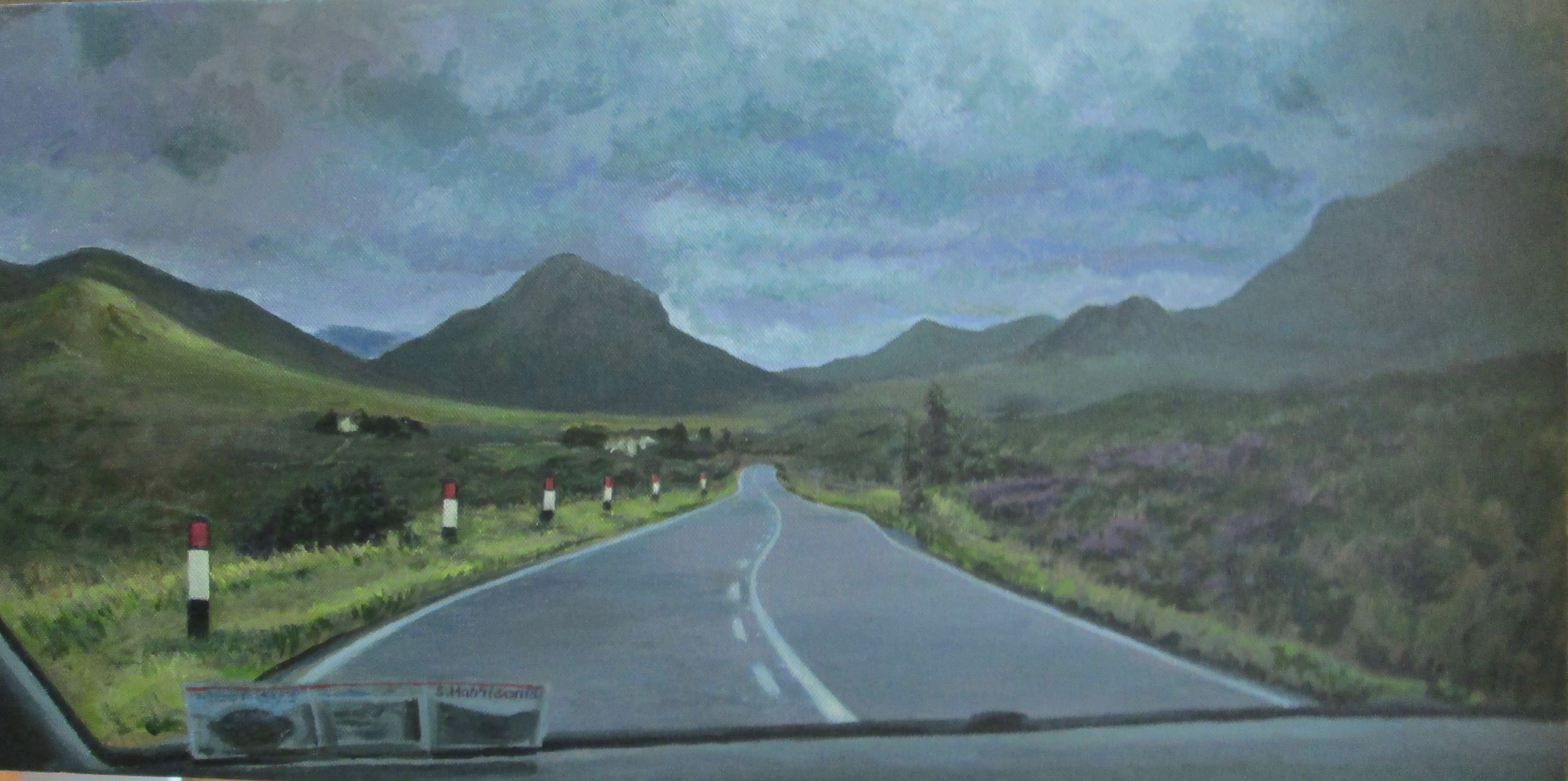
Skye Paintng

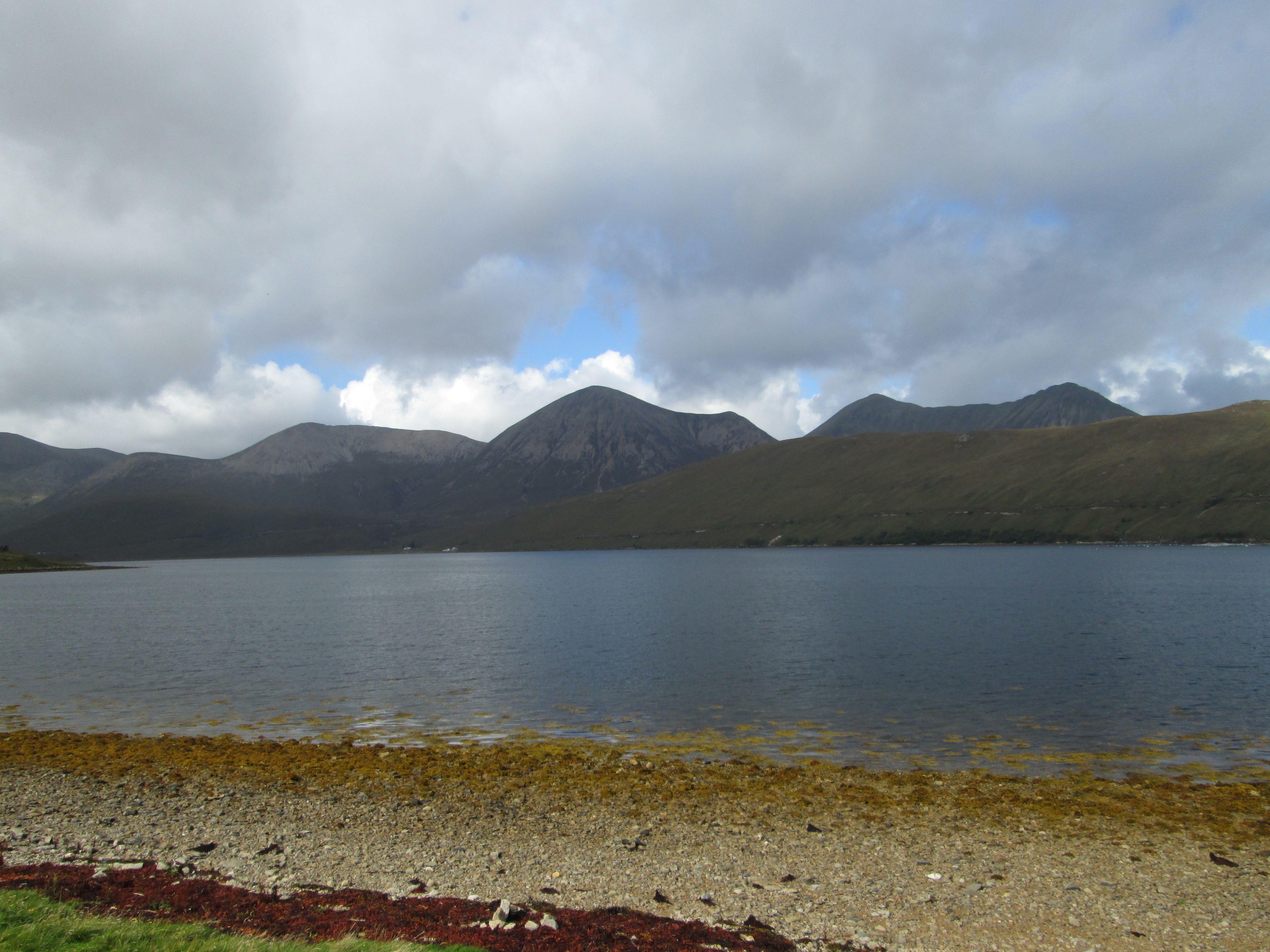
I’ve taken the bridge across t’Skye. It’s akin to flying, but without the anticlimax of landing. In Skye the heart soars with each vista, heaven reflected in its lakes and mountains, God’s breath in its firmament. From Kyleakin on, the scenery never dips, but rises to trump what’s gone before.

The largest of the Inner Hebrides, Skye itself looks poised to take off from Scotland’s west coast. The Gaelic name implies Winged Isle, though it may also derive from the Norse for Misty Isle. The Norse ruled here from the ninth till the thirteenth century. Subsequently, the clans MacDonald and MacLeod fought over it. Ultimately, the clan system was dismantled by the conquering English who suppressed the Jacobite Risings. From here, Bonnie Prince Charlie was aided in his flight by Flora MacDonald in 1746. The escape has become mythical in the emergence of modern Scottish identity.

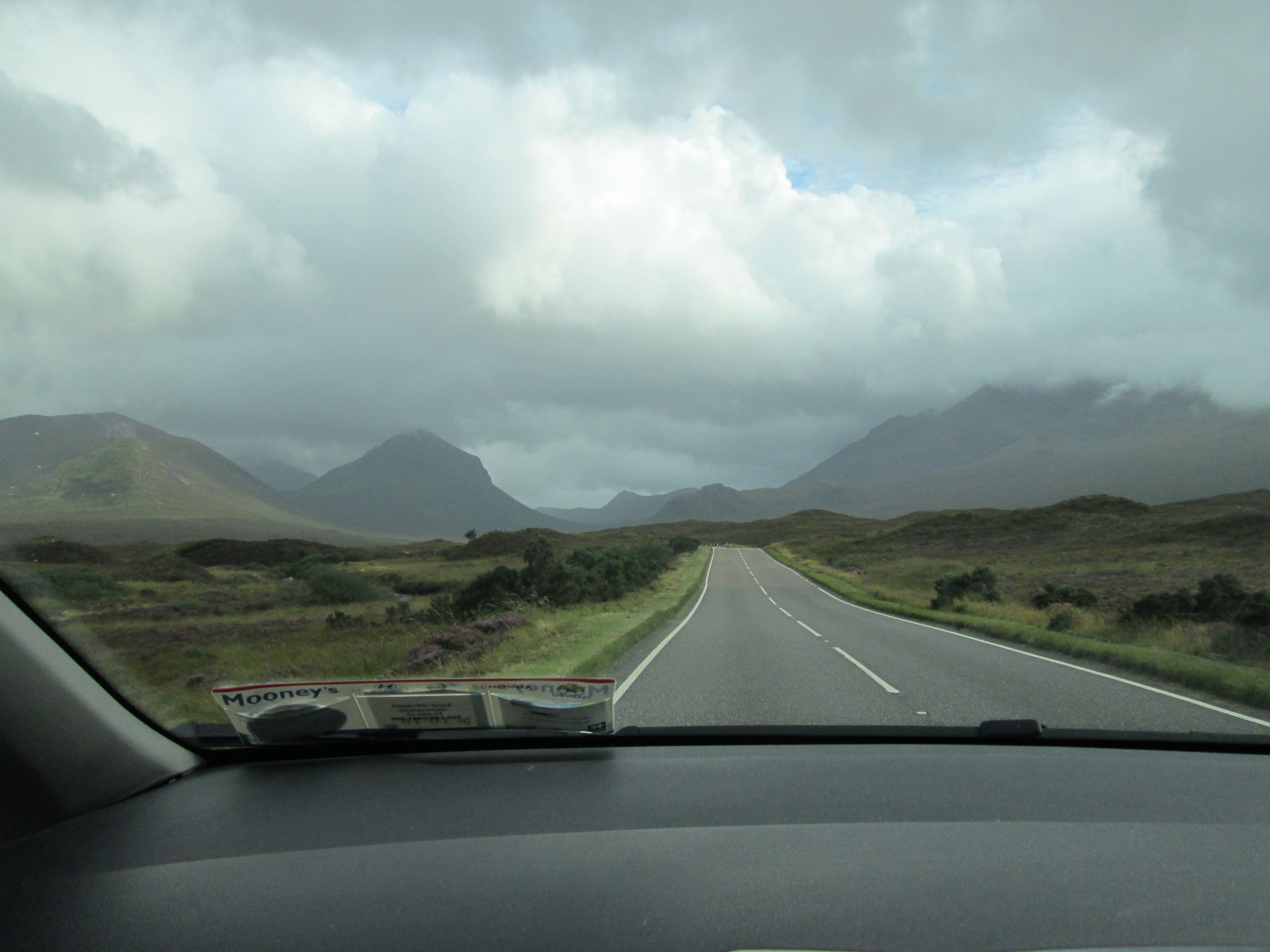
We had but a day here. Taking in the town of Portree and continuing on through the majestic and desolate landscape of Quirang at the top of the island. We walked in the footsteps of dinosaurs, exchanged words in ancient Gaelic. Returning to the mainland we wound down to the present along this beautiful road. Rain and sunshine vied to paint the landscape in their own hues. I have rendered it in acrylic on canvas.

Visions of Scotland 5 – Stirling

img_1358

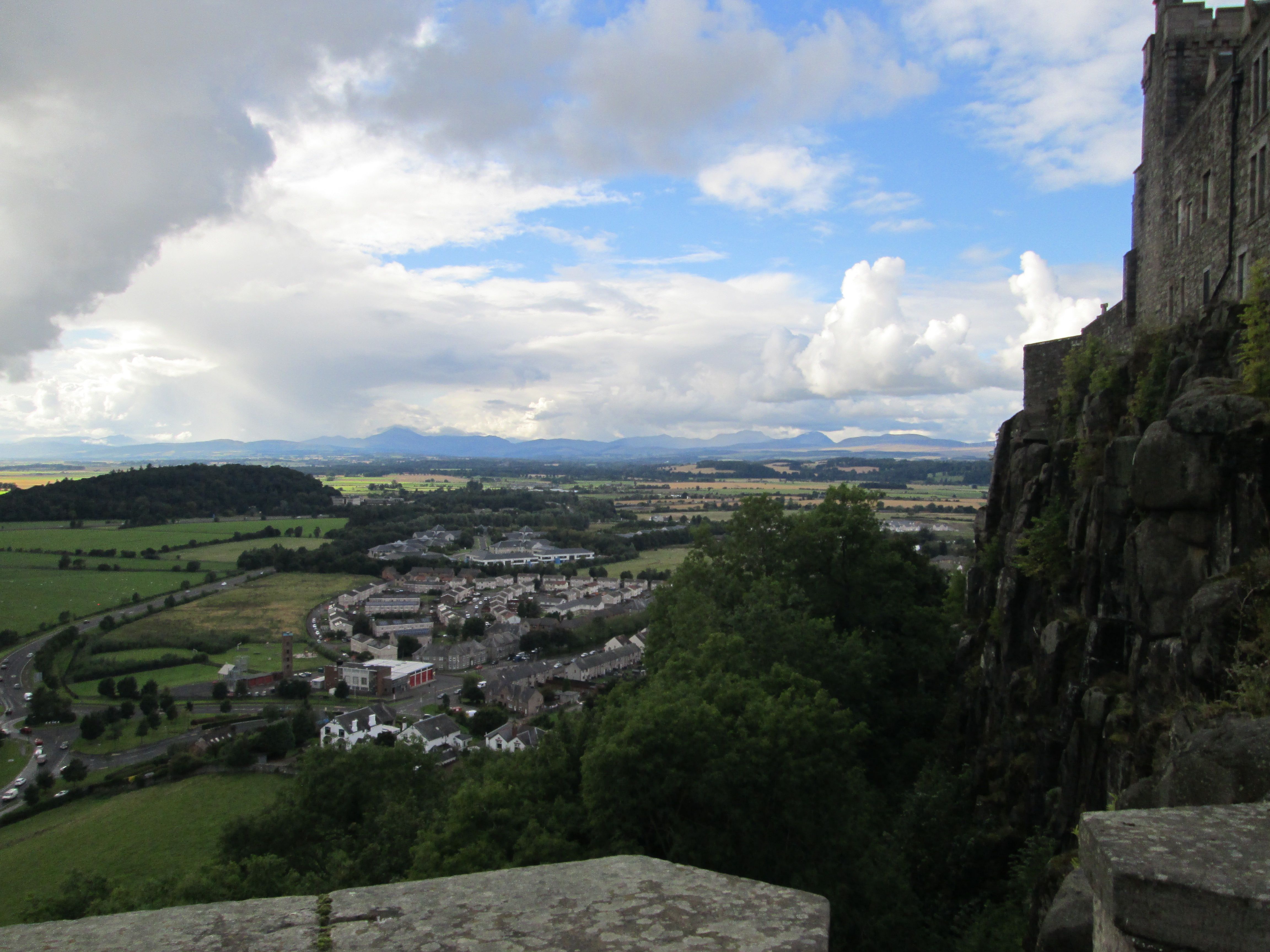
Looking north from the Castle battlements

Heading down south to Stirling, we fall slowly out of the Scottish Highlands. It’s a shift in time and space, in terms of both physical and spiritual reorientation. On each journey there is the first step of the journey home. This is it. Thus, we find the most appropriate point of departure at the portal offered by Cava Cairns. This Bronze Age burial complex is a few miles east of the city. Perched above the river Nairn, the site nestles in a homely pastoral landscape. Timeless, in its own sweet way, but hosting the weird construct of ancient days.

cava-1

The portal is here, somewhere.

It was here that Clare (Catriona Balfe) passed back in time from postwar Britain to revolutionary Jacobite Scotland in Diane Gabaldon’s Outlander. The stones will take you a lot further back than that. Four thousand years at least. It looks quite different from the telly, mind. Claire isn’t there in her nightdress, which is a pity, if not a surprise. The absence of any televisual drama is more than compensated by the presence of … What, I can’t be sure. But Presence it is. Stark, beautiful and quite moving.

  Nearby is the field of Culloden, where Stuart hopes were dashed in a final, fatal confrontation with the Hanoverians in 1746. At least, that’s how it stands in this universe.

   There are other worlds to inhabit. Ringed by mad mountains, stalked by sentient woodland, permeated by a migrating fog of fantastical beings. Southbound again, the road rises intermittently yet falls consistently towards the centre.

The Cairngorms dream under a blanket of clouds away to the east. The road snakes its way to Blair Atholl. The House of Bruar offers a break for coffee and shopping. Here we bag our proud deer trophy. Flatback wood if you must know, but handsome nonetheless. A short hike will take you to a renowned beauty spot of Blair Falls. Macbeth’s vision of doom, Birnam Wood is further on. Bubble, bubble, toil and trouble. Nothing is ever quite what it seems, is it?

img_1321

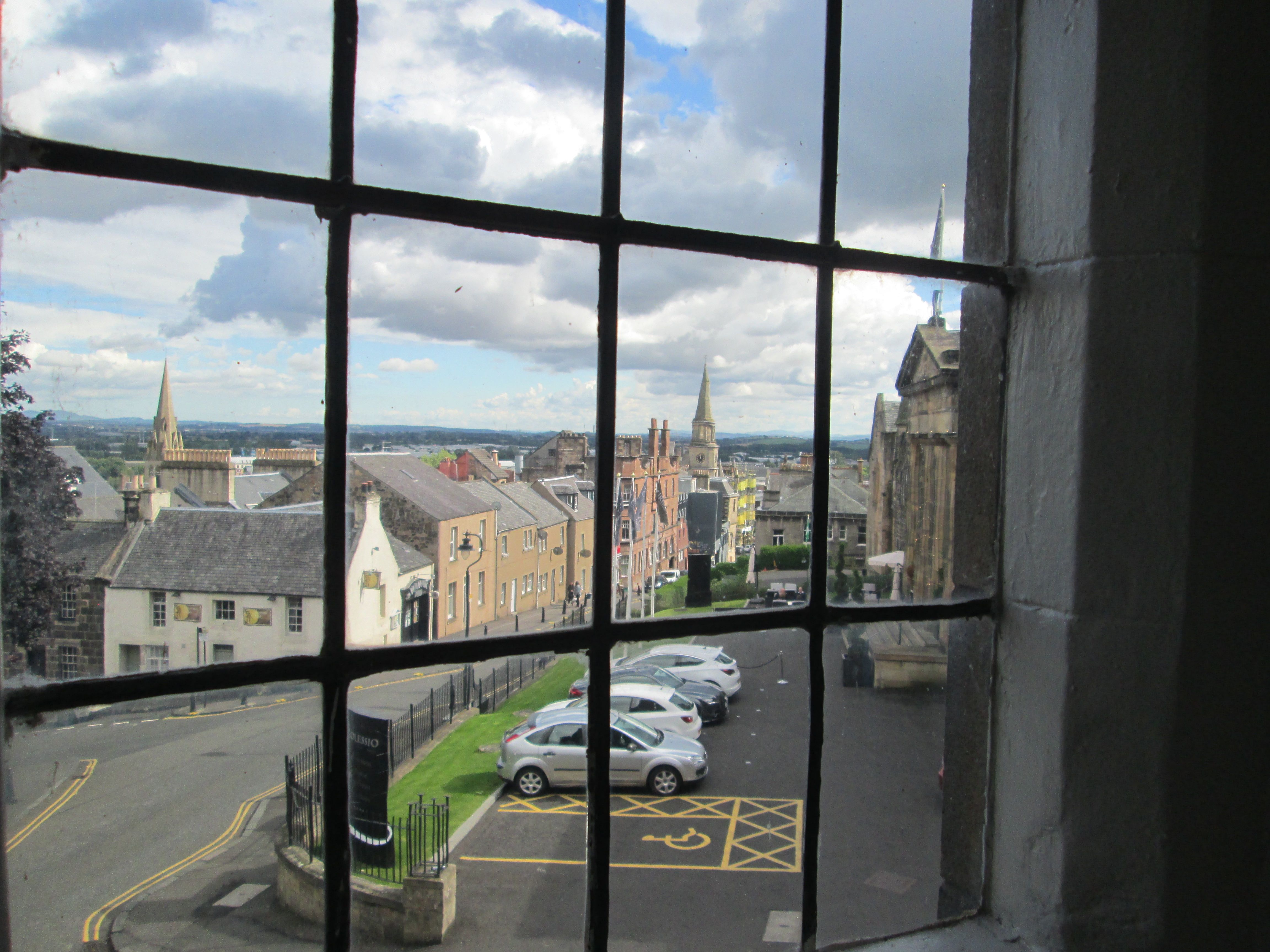
Stirling from the schoolhouse window

Stirling straddles that notional focus of Highland and Lowland Scotland. Near the mouth of the River Forth, it enjoys a commanding location in matters of war and trade. The approaches are suitably epic. The William Wallace Monument is a gothic tower on a volcanic crag east of the town. It is located overlooking the site of the Battle of Stirling Bridge, where Wallace helped kickstart the cause of Scottish nationalism. More breathtaking still, Stirling Castle crowns a granite crag rising precipitously from flat marshland. The city of Stirling, with a population of nearly fifty thousand, flows down from this spectacle.

The higher part of the town is medieval and known as, logically enough, the Top o’ the Town. Here the streets are cobbled, steep and sinuous, houses piled one on the other to the giddy environs of the Castle. We put into the Stirling Highland Hotel, a converted schoolhouse of the Victorian era. There’s an astronomical observatory on the roof, so there must have been something of a Hogwarts thing going on back in the day.

Drop down to the bustling town centre for refreshment before our assault on the Castle. We have Panini on the sidewalk near where yobos loudly play. The large shopping centre takes an unsympathetic lump out of town. Still, pleasant environs heading back up the hill with pink gable front houses in that atmospheric Scots Gothic style.

img_1329

Stirling Castle

Haul ourselves onward to the Castle. Just outside is the Church of the Holy Rude, site of Christenings and coronations. Founded in the twelfth century, the present structure dates from the fifteenth. Wander through the tombs and trees, floating through time and above vast panorama of central Scotland. Talking of ancient things, for the first time I find myself characterised as such. Over sixties get discount on entry here. Hey, I’ll do it! We take the guided tour which is a good way of putting structure on the castle complex, and to assimilate the wealth of history and personality encompassed there.

img_1339

Castle tour guide

The fortress dates back to the days of Alexander I, Scotland’s royal founder in the early twelfth century. Its oldest buildings date from the fourteenth century. It was destined to develop way beyond the parameters of the typical Norman fortress. James IV (1473 – 1513) determined to establish Scotland on a par with Europe’s leading kingdoms. Stirling Castle became the leading showhouse for the project. Influenced by German and French design, the castle was reimagined as a Renaissance palace. James enlisted artists and scientists for the prestige of his court. Alchemists toiled to unlock the secrets of the fifth element. The challenge of flight was addressed, unsuccessfully. An Italian alchemist, John Damian, threw himself from the ramparts, clad only in feathers and bare hubris. Plummeting, not unexpectedly, to the ground, his life, if not his blushes, was saved by a convenient copse of trees. Unabashed, he assured the king that failure was a result of using chicken feathers, not the best choice, being a flightless fowl. Quite.

img_1353

Mary Queen of Scots, herself.

In our wanderings we meet Mary Queen of Scots, who springs to life from a painted, stilted half-myth to something close to the spirited woman she was. We gaze at rich unicorn tapestries, mingle with kitchen waxworks, whisper assignations by the postern door.

Out on the battlements, alone in a turret, this is the eyrie of the world, atop its dizzy cliff, ringed by rank marshes, a further distant circle of blue peaks ringing the horizon. It’s the real gothic fantasy. You can stand sentinel on the parapet of Dredgemarsh, imagine all the Games of Thrones that haunt the stones here. It is the best castle ever.

img_1393Time to close our evening in more mundane pursuits. Stirling is lively at night, without much by way of airs and graces, but plenty of good places to eat and drink. All you can eat at Chung’s Chinese is enough by way of temptation – the one thing I can’t resist. Return to the Hotel for a quiet beer in the bar. High windows here as in room. Schoolhouse rules apply. The ambience is pleasant and in solitude we can savour all we’ve experienced on this Scottish tour. It seems like and age, and a wee spark of time. The last day dawns damp and grey. We finish as we started on our first in Glasgow, in Wetherspoons for the best Scottish breakfast in, well, in Scotland.
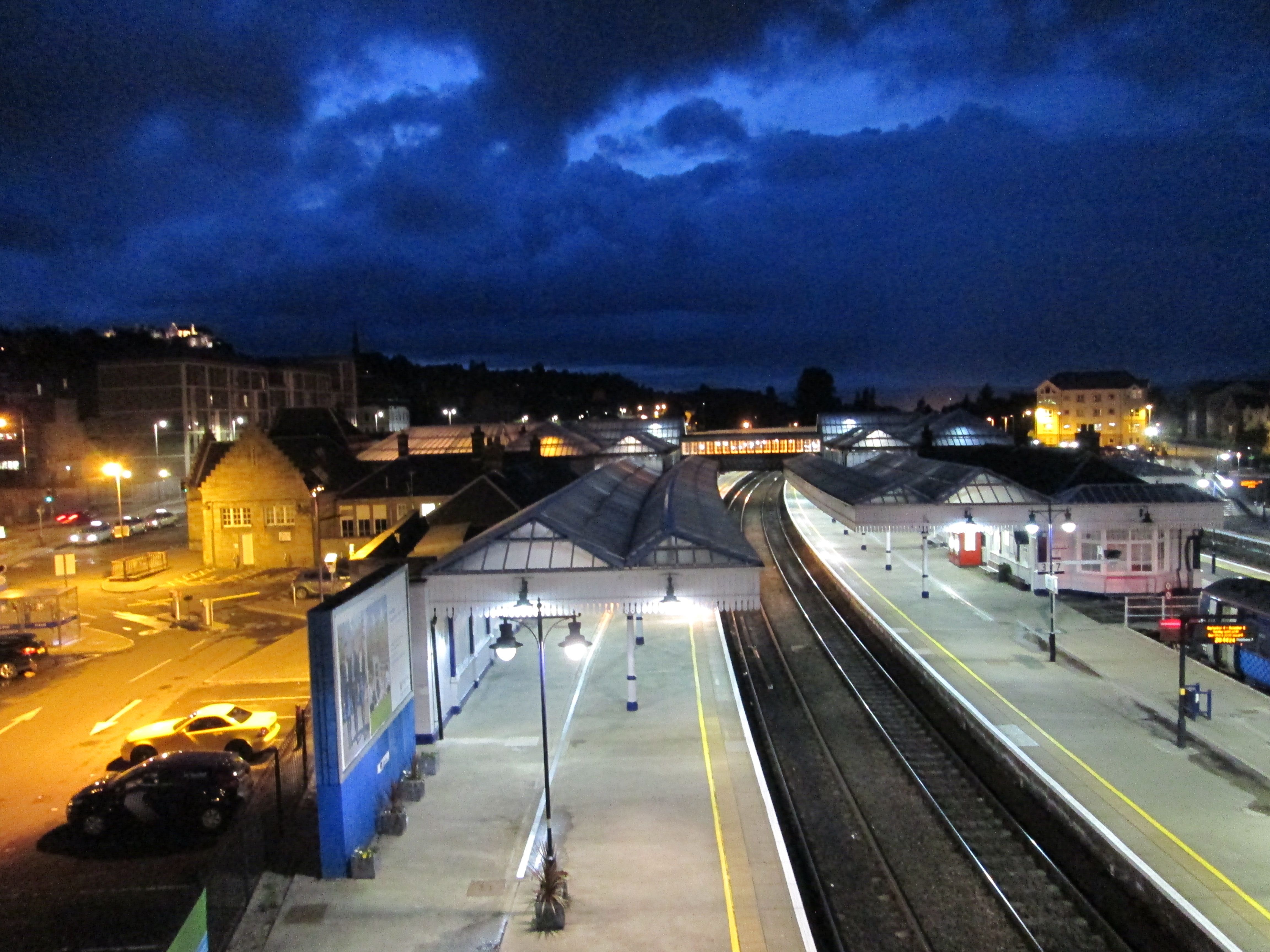
img_stirling-sta

Stirling Station

Visions of Scotland 4 – Inverness

img_1261

East out of Kyle we retrace the road to Invergarry where we pick up the rift valley route. As in Ireland, the east of the country is more gently scenic than the wild west. This is the Highlands still, though. Inverness, our destination, is the capital of the region.  Along the shores of Lough Ness, we are unmolested by the mythical beastie. In truth, there is no chance of dinosaurs surviving anywhere, let alone a busy narrow waterway. They were here once, as Dughal Ros told us yesterday, but only their fossils remain. Still, it’s good to have fantasy.

  Inverness has grown to city status with a population of fifty thousand. It’s centered on a low rise above the eastern bank of the Ness river where it flows into the Moray Firth, heading towards the North Sea. We stay at Carrig Eden on the western approach. The area is attractive, typically Caledonian in characteristic honey coloured stone with gable fronts. Our genial hosts, Caroline and Donald, have polished their home to a welcoming jewel. We are warned of two things. One, Daniel O’Donnell is playing that night in the Eden Court theatre nearby. Two, there is a bagpipes festival in town. Looks like it’s the bagpipes so.

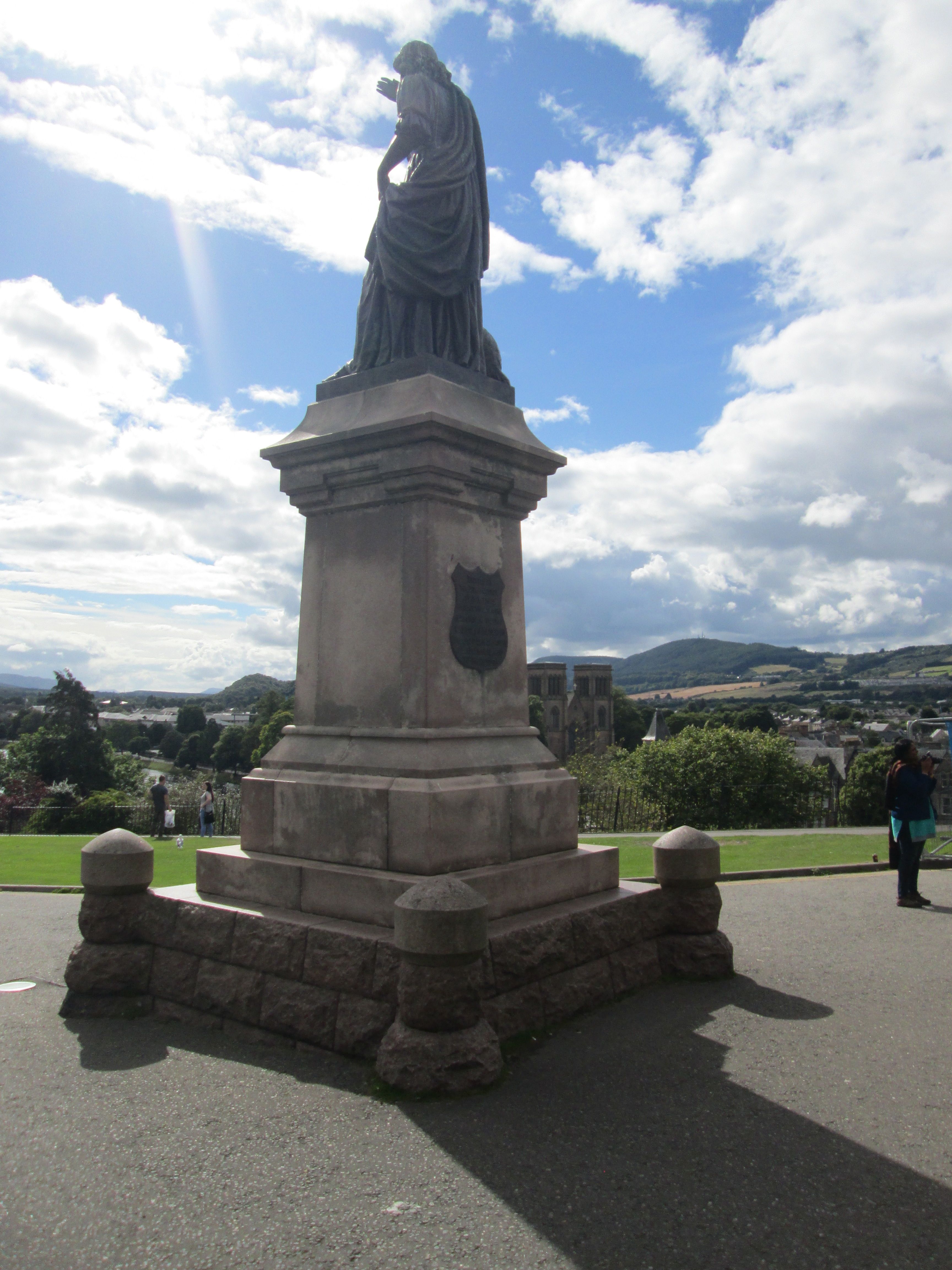
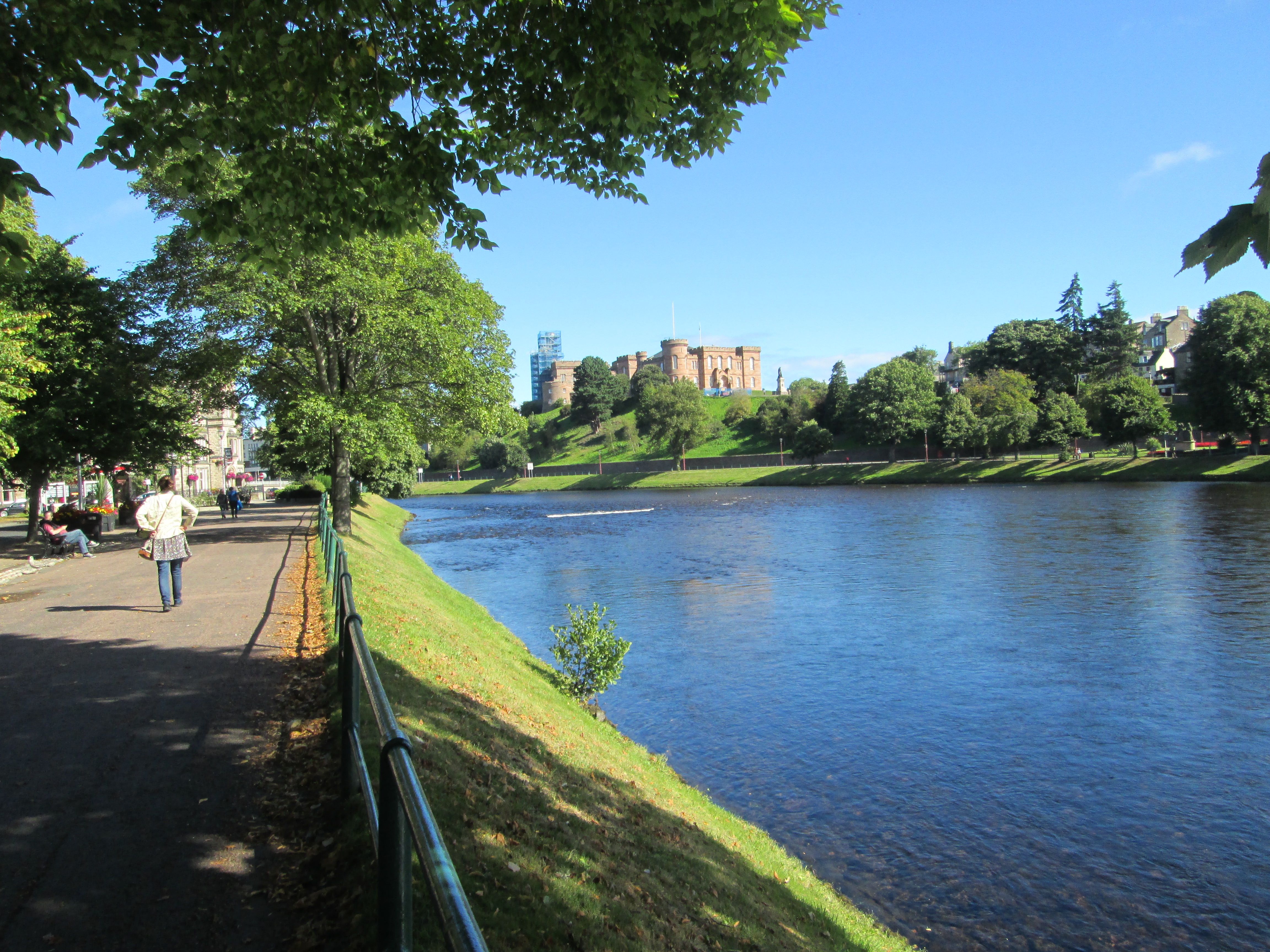
img_1267   The Eden Court is a modern complex by the banks of the river. From the banks we catch our first glimpse of the city. Inverness Castle is the dominant feature. Built in red sandstone it tops a steep escarpment rising from the Ness. It is not, strictly speaking, a castle. The present structure dates from 1836. It  functions as a courthouse. The first castle to stand on the site was destroyed by Robert the Bruce in 1307. The next castle stood here until sacked by the Jacobites in the rebellion of 1746. A statue of Flora MacDonald stands at the entrance park, shielding her eyes to gaze meaningfully westward. Having aided the escape of Bonnie Prince Charlie, and doing time for it, she headed out west herself, living in America before returning to die on the isle of Skye.

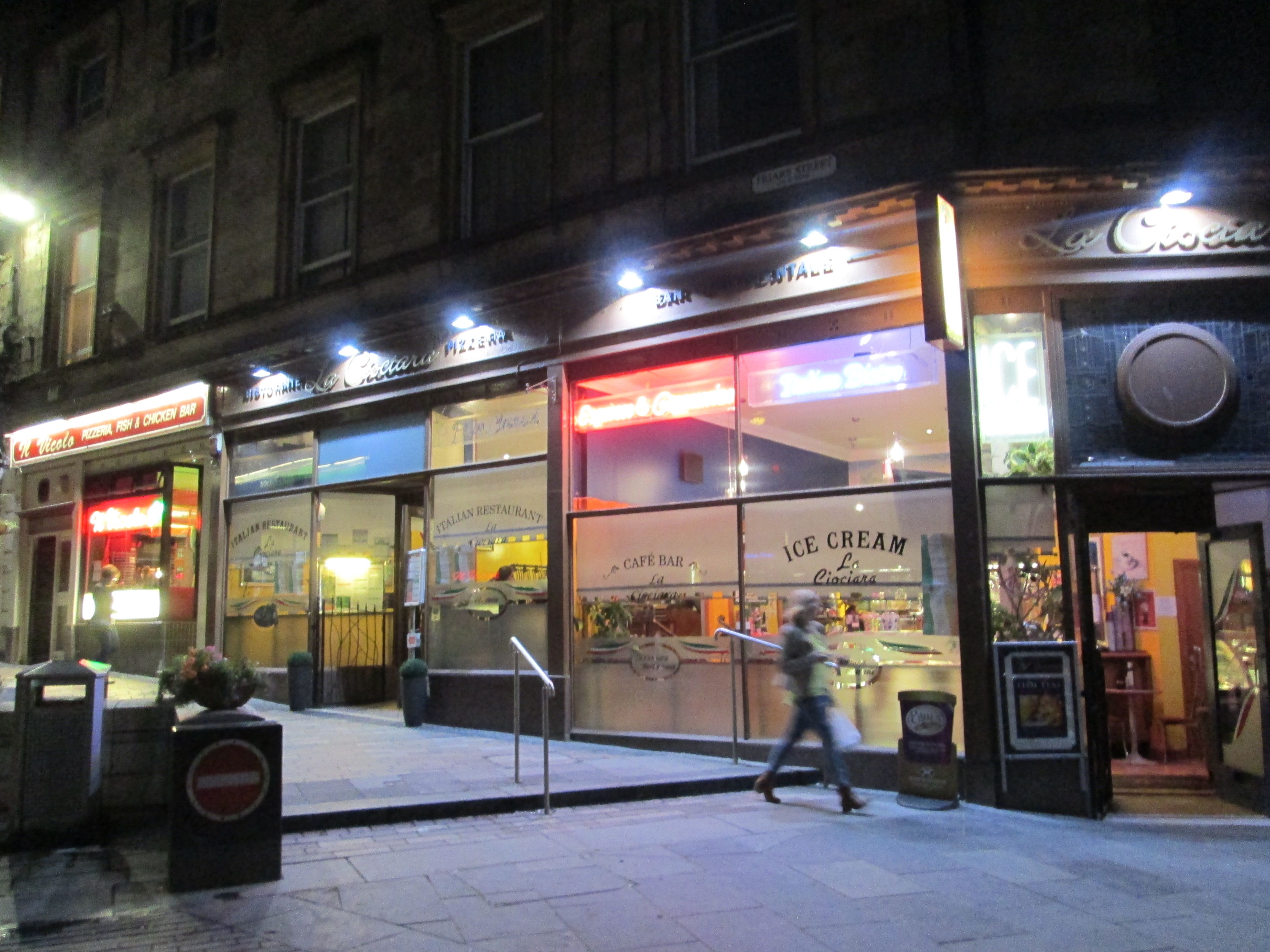
  Both sides of the river are pleasant. We pass the nineteenth century gothic Cathedral on the west bank before stopping for coffee in an Italian place with outdoor seating. We are entertained by a young woman making a major production number tying up her bike. Man, you must have to mind your bike real careful in these parts.

 shane3

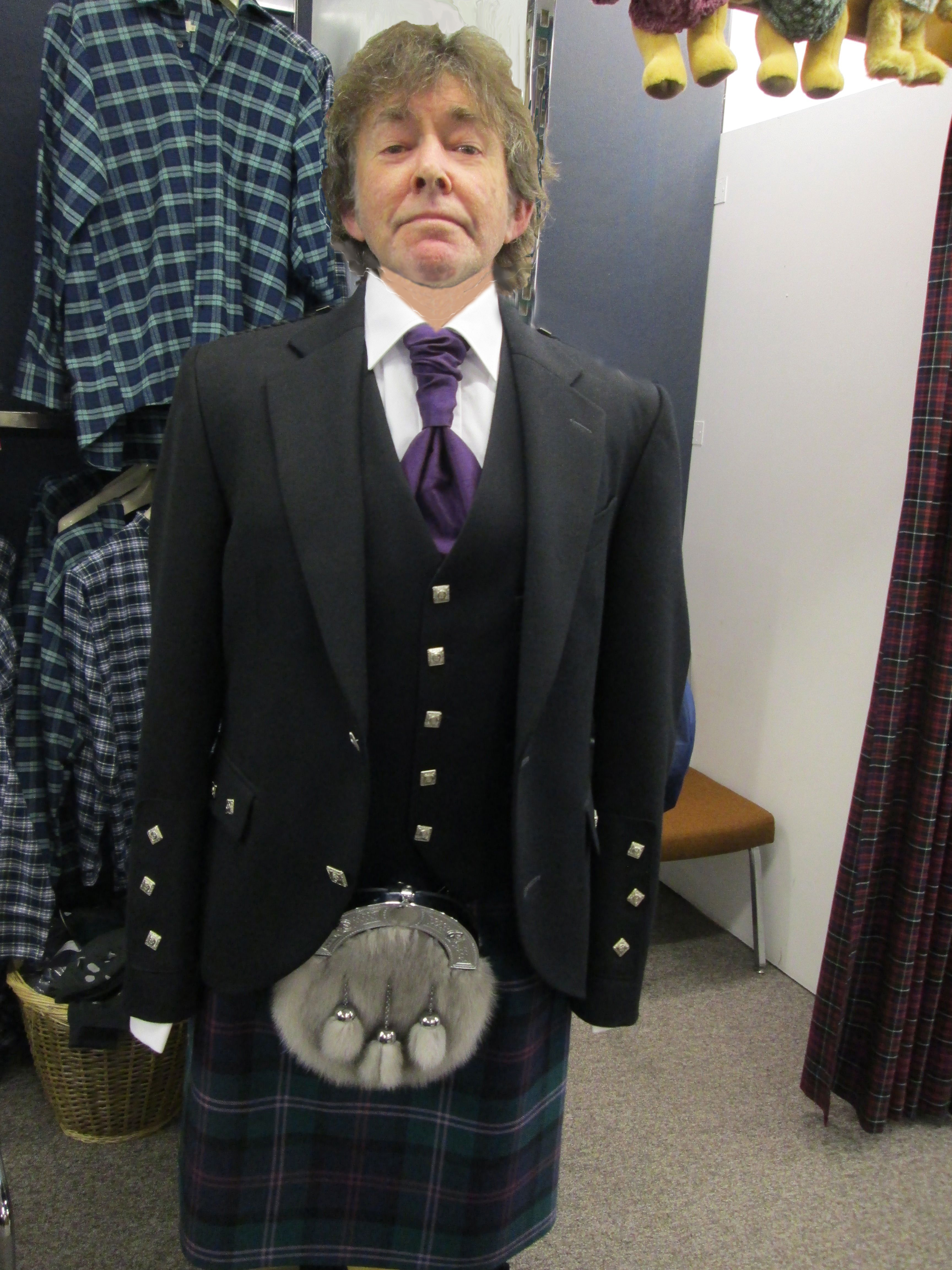
The strains of the pipes beckon us east across the bridge. Before that, we take a look at the House of Fraser. I reckon I’ll need to kit up, the whole nine yards, on the off-chance of running into Claire from Outlander (as portrayed by Caitriona Balfe) somewhere about town. A convincing impersonation of Jamie is quickly conjured. You can go for a variety of rental of traditional outfits here. Full dress for that formal night, half-dress for the more casual, a dashing Jacobite attire for the full blooded Scot.

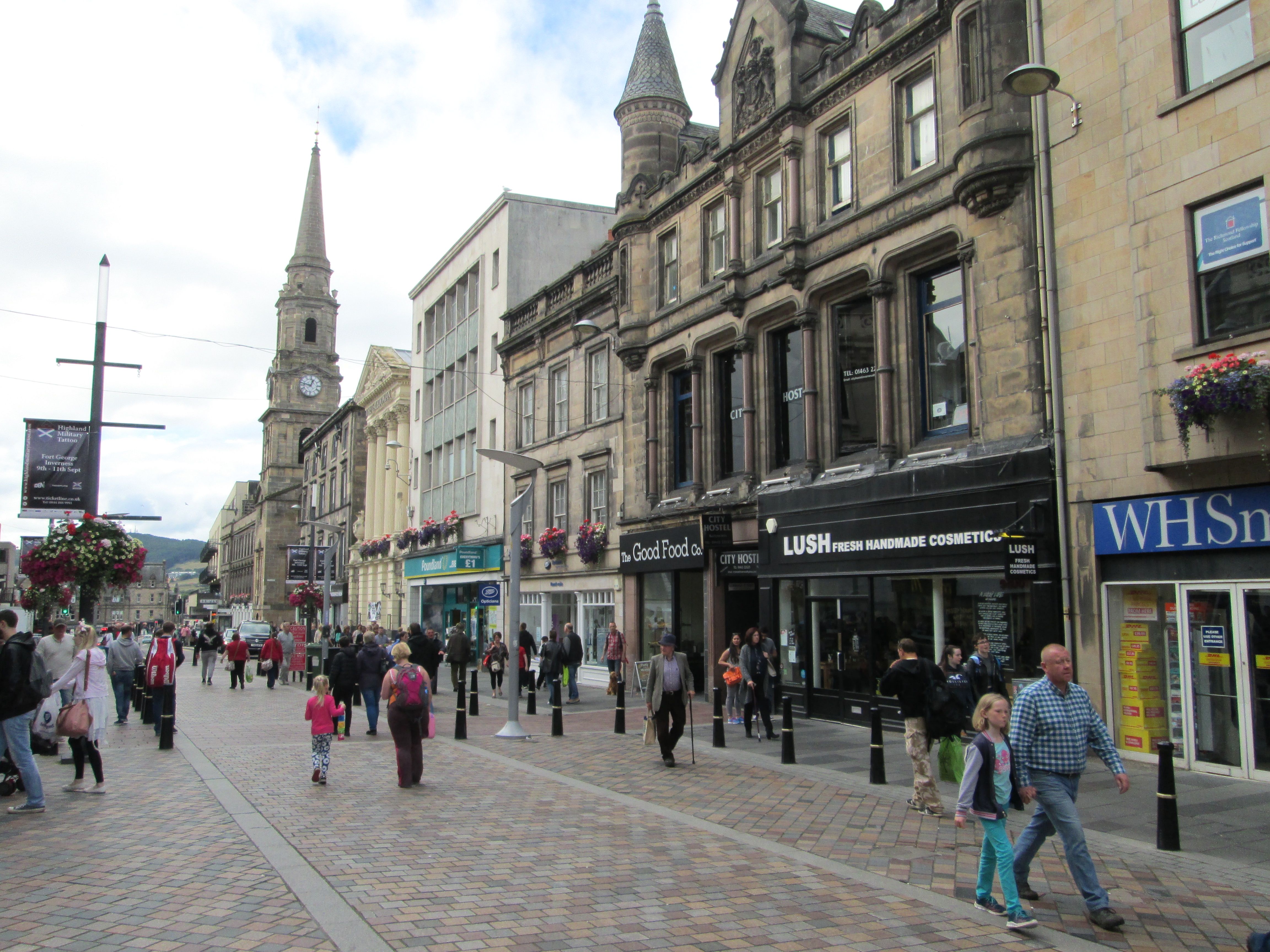
  High Street slopes uphill from the bridge. It’s busy and sporadically loud with the great yarp of the bagpipes. Something stirring about them, to be sure, if not quite the first music for the car stereo. Here, in this special place, I’d opt for the Waterboys. The attractive main street jolts to an unlovely close at the harshly modern Eastgate Centre. Still, probably better to have it in town rather than dragging people out to the periphery.

img_1277 

After extensive shopping, time for a quick snack. Hoping to sidestep the inertia that can pass for service in the Highlands, we opt for McDonald’s – an ominously local name now that I think of it. Inverness McDonald’s is the worst McDonald’s ever. The till is abandoned just as we reach the head of the queue. After a couple of minutes we call the attendant from the next till. He says he’ll get the manager, who is standing conveniently nearby with other staff leaning on the furniture, chatting. She informs us, cheerfully enough, that the attendant will return soon, and rejoins her discussion group. A few more minutes and we give up.

  img_1298

We attempt a trip down memory lane to find the lost hostel of our youth. Still lost to us, sadly. Having followed the signs through winding residential roads we eventually lose the trail. But it’s a pleasant walk in glorious sunshine. We’ve booked dinner at the Castle Inn and, hungry and thirsty, head for it early. Nicely situated, clinging to the cliff overlooking the river, the Castle visible to the north. Rustically traditional, the place is crammed, as any good place should be. We take our drinking and dining pleasures al fresco. Good food, service and company, perfectly passing the sunny afternoon into early evening.

img_1287 

Afterwards, we potter around the Castle grounds. The place itself is not open to visitors but there are plans to remedy that. We follow Flora’s gaze up towards Loch Ness, back to the wild, wild west. We head down to the nearby bank as evening falls. This is a pedestrianised river walk leading to a footbridge that will take us back to Eden Court. There’s plenty of time to stop for drinks on the lawns of the Waterside Rest, busy now as the city nightlfe clicks into gear. The sky seeps slowly to velvet blue as the first stars peep out. A stillness settles in the air. We could sit here forever, relaxing by the riverside in the chill of the endless Highland evening.img_1307

Visions of Scotland 3 – Skye

Skye 1

Kyle’s main purpose is its link with the Isle of Skye. The mainland railhead here connected by ferry with the island. This was superseded by the creation of the Skye bridge, an impressive arch just north of the town. Early morning we’re across, ready to spend the day in exploration.

Skye 2

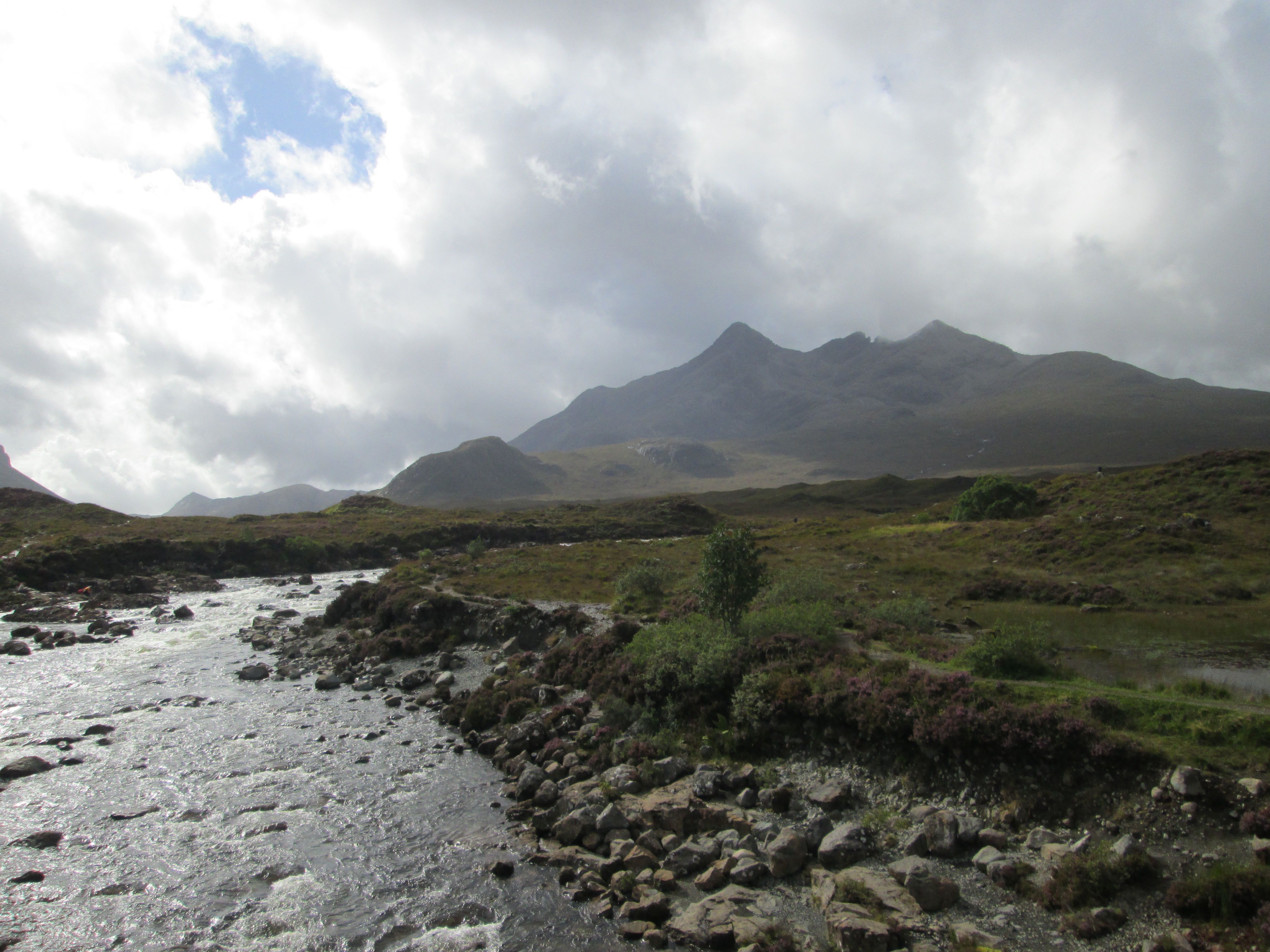
It’s a large island and we’ve picked the northern portion, including the main town of Portree. Crossing the bridge is itself akin to flying, but without the anticlimax of landing. In Skye the heart soars with each vista, heaven reflected in its lakes and mountains, God’s breath in its firmament. From Kyleakin on, the scenery never dips, each corner anticipated to trump what’s gone before.

Portree

Portree

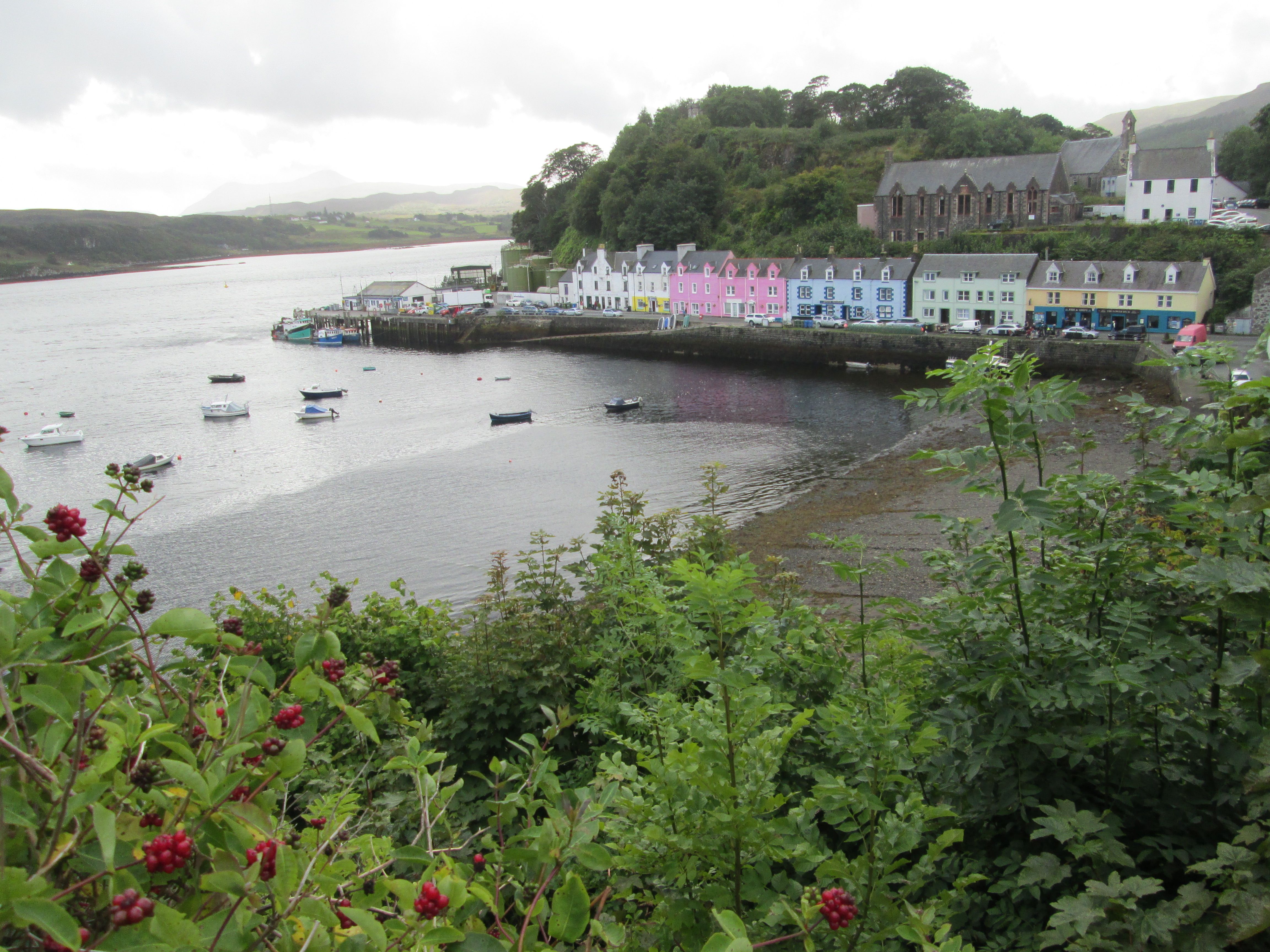
Portree is pleasant to potter around. Coming in from the empty hinterland, there’s plenty of life and commerce. The high town has a square and a couple of lively streets. There is, inevitably, a Bank Street. Plenty of shops, too, and a few decent pubs. There’s a drop down to a colourful dockside. The town curves around the bay, the housing arrayed attractively in terraces above. I’d reckon this is a good haven for sketching, although we don’t have time to indulge.

It’s a sunny day and we stop for attempted refreshments in the square where a coffee shop, or so it says, has outside seating. Sadly, we must endure another bout of Scottish service. Try to place the order inside and are told we’ll be attended on. But as regards waiting, we’re the ones doing it. Repeat process and finally give up. What is that all about? I bring money which presumably pays the wages of employees. Yet too often in Scotland there’s little interest in this transaction. Shades of Yugoslavia. Though at least the Scots are pleasant.

Old Man of Storr

Old Man of Storr

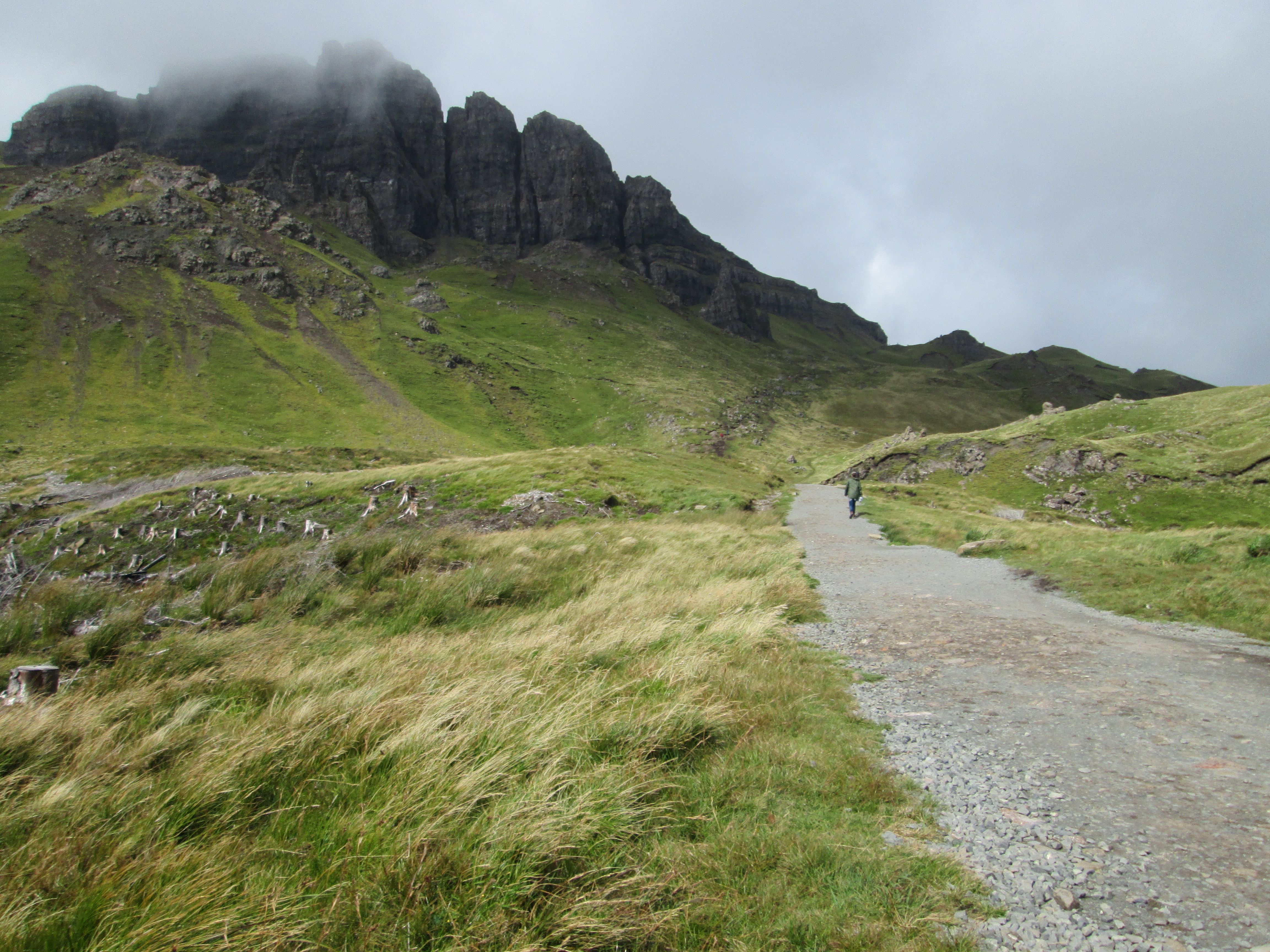
We head up the coast to the Old Man of Storr. This is a startling formation, not unlike a raised and weathered Giant’s Causeway. The geological formation is similar, being made of basalt, resulting from the rapid cooling of ancient submarine lava. There’s a well worn path snaking upwards. The destination is a bit further than we’d bargained so thirty minutes in we get to a good vantage point about halfway up and enjoy the view. Much debate on the exact configuration of the Old Man himself, but while we differ on details, I figure it’s pretty convincing.

Jurassic Park

Jurassic Park

There was a time when Dinosaurs strode the land about here. Staffin is Scotland’s Jurassic park. The name is Viking for Land of the Pillars, as evident in the alternatively descriptive Kilt Cliff. Where Mealt waterfall plunges over nearby cliffs into the sea there’s a graphic giving more details concerning the terrible lizards. Talking to a fellow traveller, we’re directed to a crofter’s cottage which local scientist, Dughall Ros has turned into a museum. You can buy ancient artifacts, large and small here. Dughall was bitten by the dino bug when just a kid and devotes his career to mining the benefits of the area. Even more precious, he’s willing and able to pass on his knowledge to the interested traveller. Time well spent talking to him, purchasing some interesting goods while we’re at it.

Further on, there’s a slightly more successful coffee stop. Strangely though, the proprietor greets us with “we’re closing in half an hour.” It’s only three o’clock! Oh well, who wants to eat anyway? Perhaps the hitchers who depart hungry and perplexed. We do manage to wolf down a tasty slice of cake.

img_1247

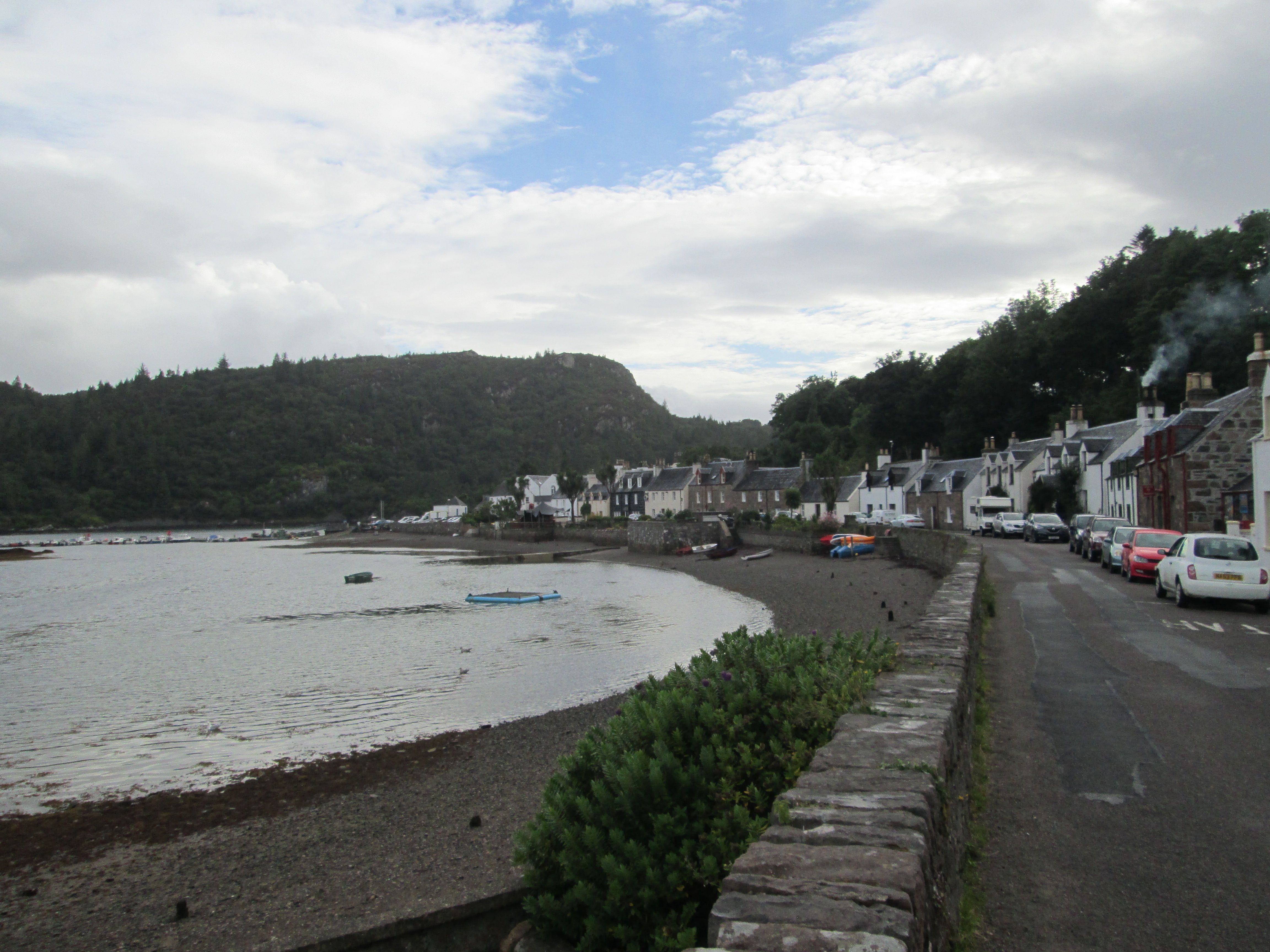
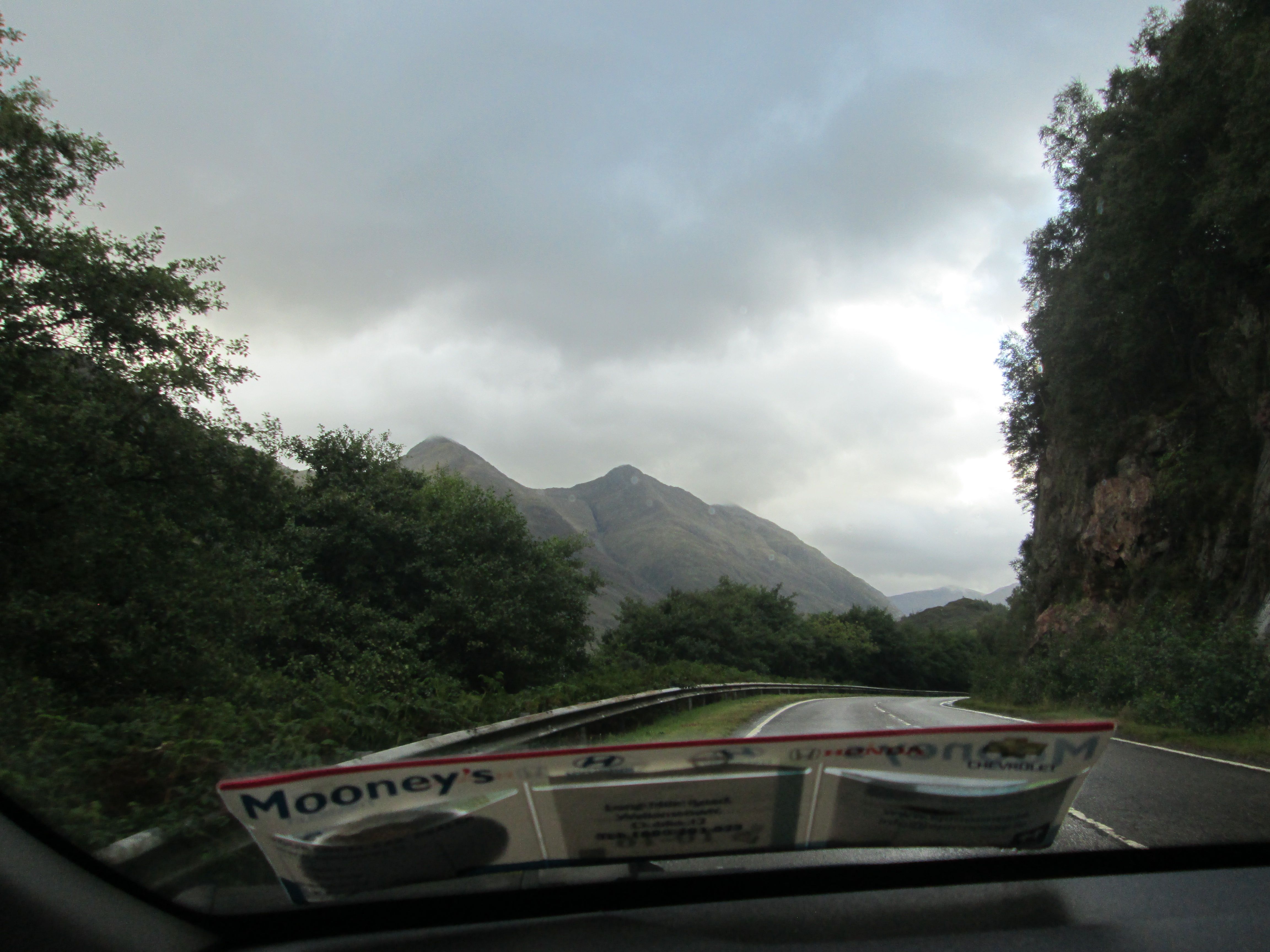
We continue on through the majestic and desolate landscape of Quirang at the top of the island. Returning to the mainland we continue past Kyle to Plockton, which a fellow guest has recommended for its drinking and dining pleasures. This was more how I imagined Hamish MacBeth’s stomping ground. Picturesquely situated around a secluded, wooded loch there are a number of attractive eateries. Plockton Hotel has a cozy bar in deeply gleaming wood and brass. I have an excellent local brew which may be called Schiehallion – try saying that after a few! The restaurant’s popular and we find out why. Good food and friendly service. Worth waiting for. If I ever get back to these parts, and I hope to, I think I’ll stay here.

Plockton

Plockton

Visions of Scotland – 2

Fort William to Kyle of Localsh


Glen Nevis

Glen Nevis

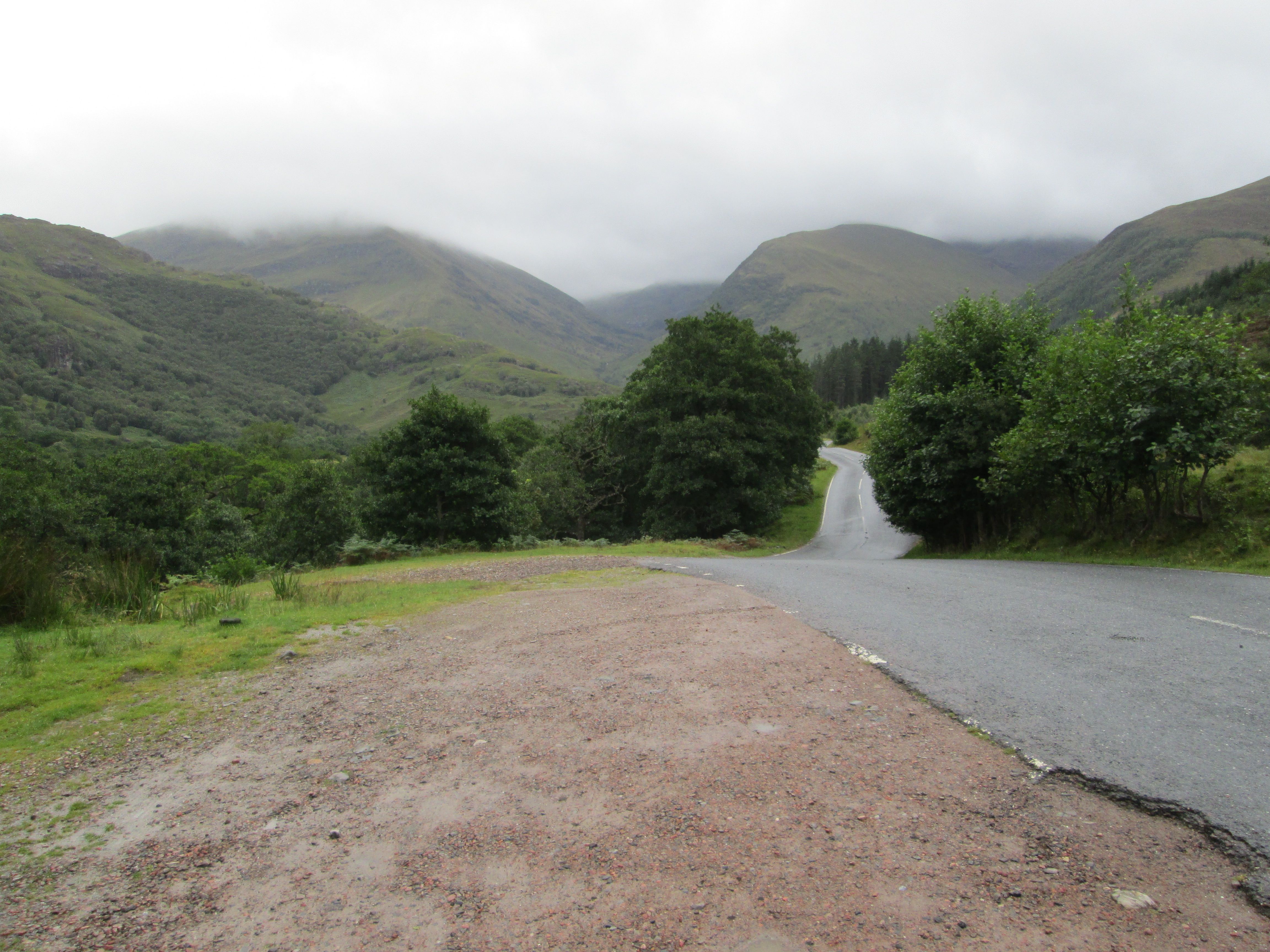
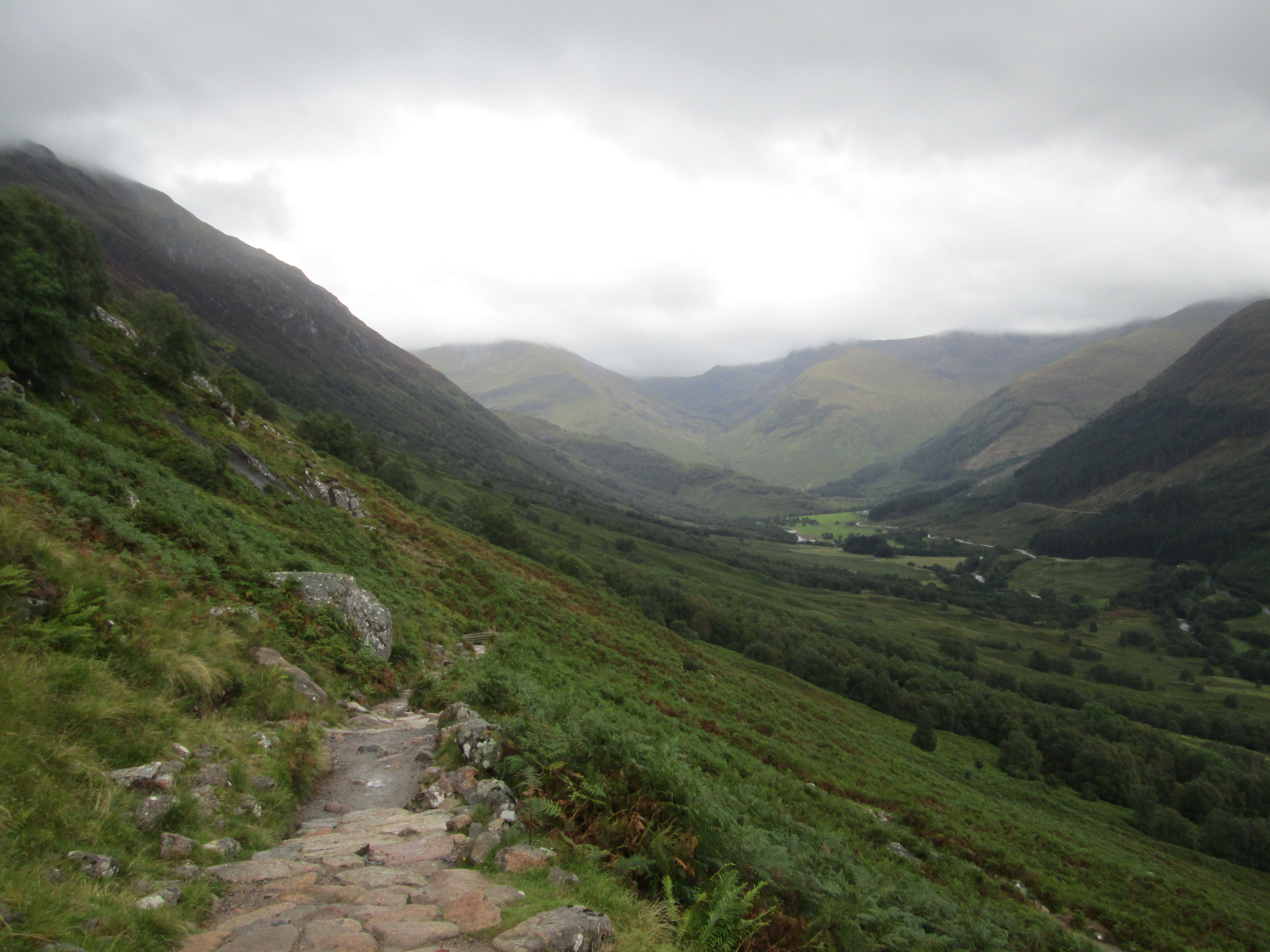
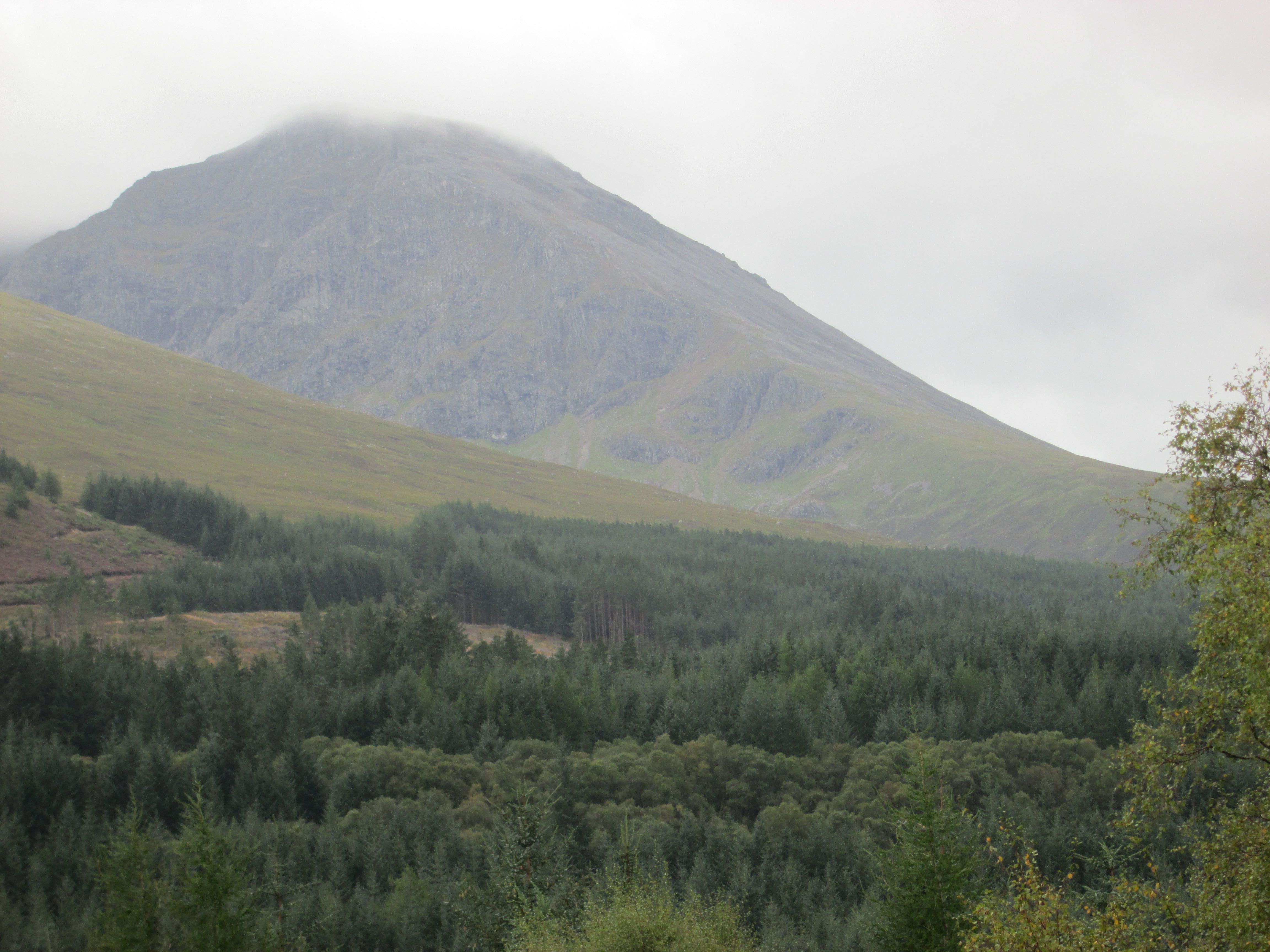
Before leaving Fort William, we must first set foot on Ben Nevis, mightiest mountain in the Celtic Isles. The mountains are obscured by clouds, but that’s just Scotland’s version of the dance of seven veils; the veils being various forms of mist and rain and translucent light. Glen Nevis is only yards from the town, but plunges immediately into giddy wilderness. We could be singing ‘I saw the rain-dirty valley, you saw Brigadoon’, indeed we probably did.

Climbing Ben Nevis

Climbing Ben Nevis

We make an assault from base camp, knowing that we lack the time to summit. Estimates of four hours up and a little less down are probably a tad conservative. Our calculations put us half way there in ninety minutes, reaching two thousand feet where a wooden bridge spans spectacular falls. And we were dawdling. Another time we’ll make it to the top. It’s a pleasant, well worn path with plenty of friendly banter from fellow travellers. The zig-zag climb is moderate, the views, slowly revealed in the waxing day, uplifting, heartstopping.

Big Ben himself

Big Ben himself

At last we hit the road, travelling up the rift valley parallel to the Caledonian Canal. At Invergarry we turn into the Highlands proper. Habitation recedes into heathland and scattered forest. We find a roadhouse at Cluanie. As we pull in, a convoy of trucks passes us uphill, each bearing a windmill propellor. What an odd juxtaposition out here! The roadhouse is sufficient for coffee and chowder, the service sporadic and homely.

Eiiean Donan

Eilean Donan

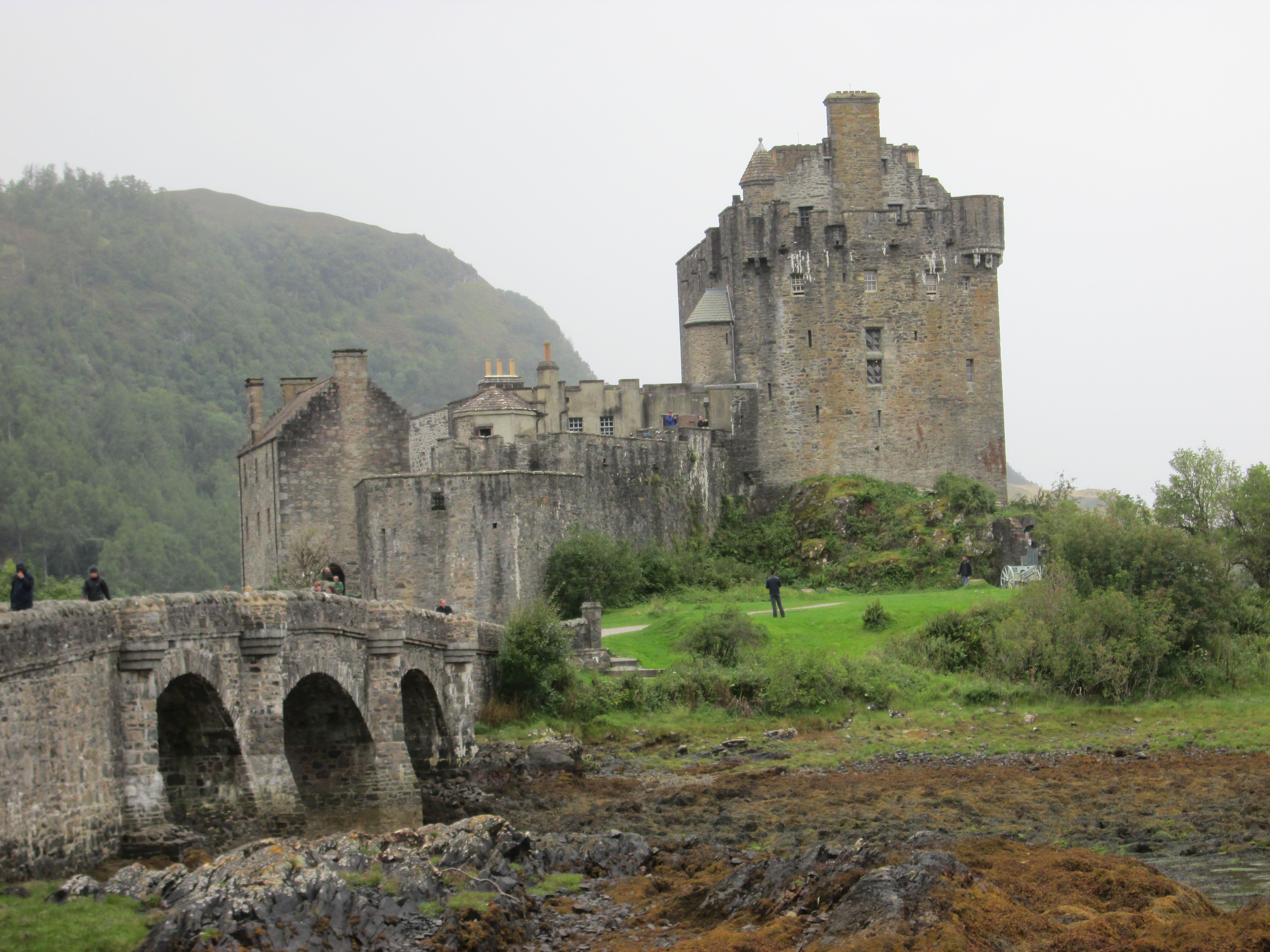
Evening approaches as we descend Glen Shiel. The castle at Oilean Donan stands proud at a craggy confluence of lochs. It’s crowded but worth the visit. The castle is well preserved and fitted, still functioning as a residence. Displays include lifesize tableaus from history creating an illusion of all time seeping through these walls. Real life folk are dotted around too, willing to converse on all aspects of the castle’s past and present. A whiskey fragrant guide in full highland garb leans casually on a waxen laird as he imparts words of wisdom. Good luck to him, he’s jovial and true. Scotland’s history is beginning to seep into me too. Half familiar but in a way that’s more storied, and sung, than factually held. So close to us also, it’s surprising it’s not more familiar back home. Only a visit can put that right. Places themselves are the living book.

Nightlife in Kyle

Nightlife in Kyle

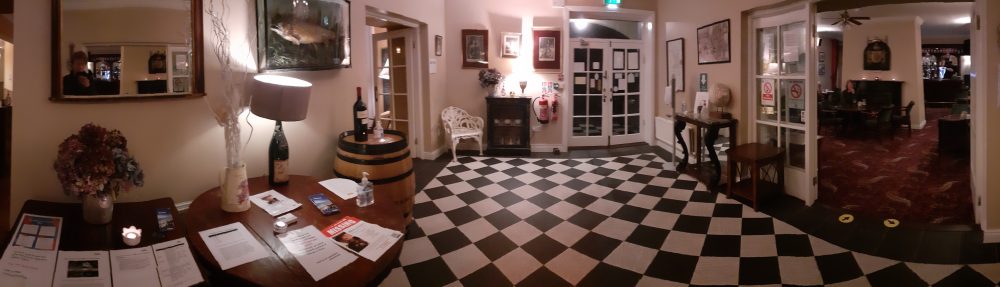
Our destination, Kyle of Lochalsh is a couple of miles further on. I’d picked it without reference to Google Earth. I’d remembered the series, Hamish MacBeth which I thought was set here. Memory deceives, I’m afraid. Kyle’s a bit of a dump, a main road bisecting a scattered settlement, a rail terminal and a functional dockside. The Main Street is mundane, dominated by two banks with our hotel the most pleasant point at its summit. Something of a stereotype to report that while Irish main streets are lined with pubs, Scottish main streets are lined with banks. Perhaps here, men are really born to pray and save.

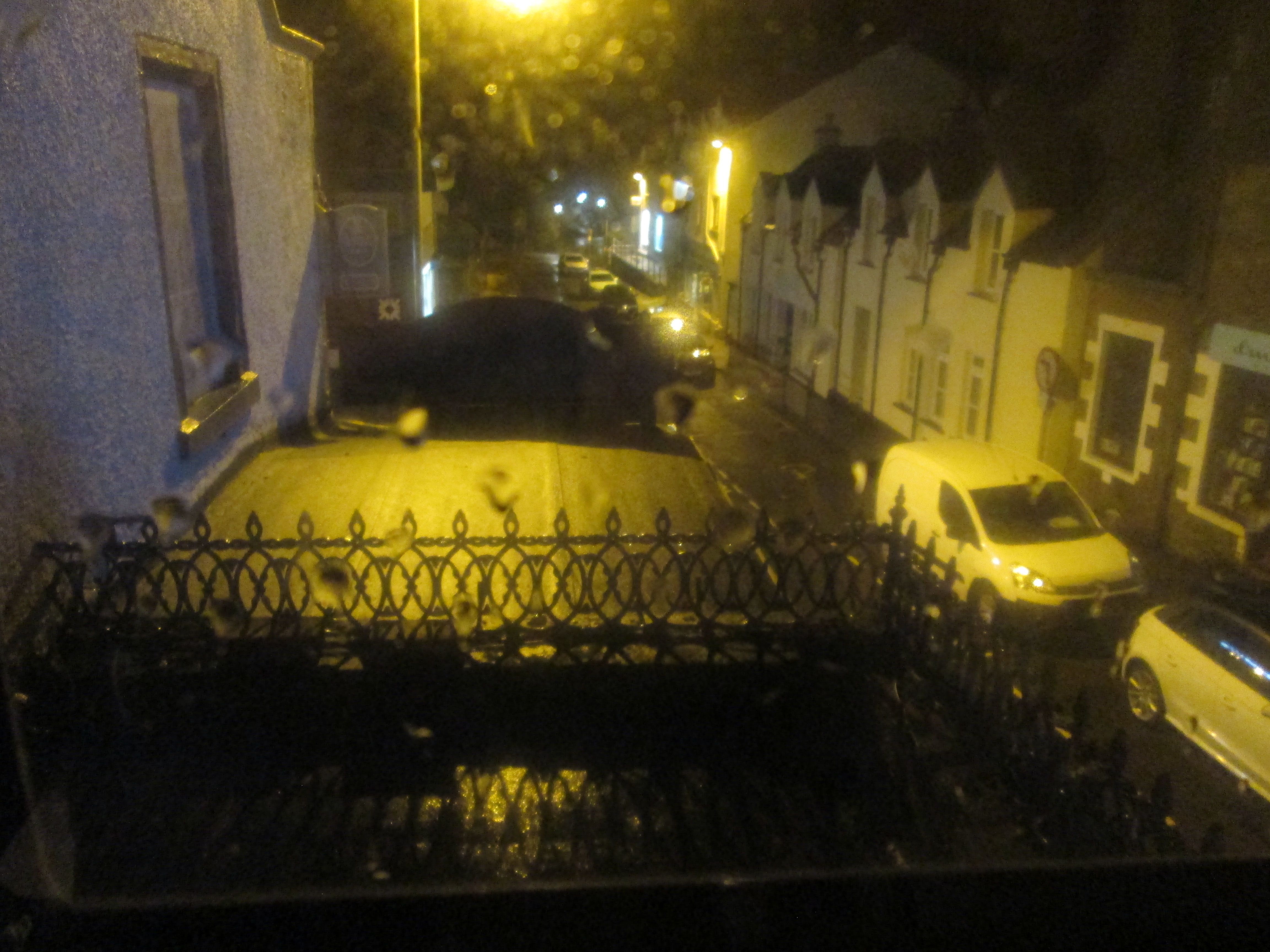
Still, the hotel is fine and we wave a decent meal of fish and chips in the bar. Our room is cosy old style, with a view down Main Street to the water. Raindrops mottle the window pane as the streetlights come on. Tomorrow, it’s on to Skye which is visible just across the water. We will discover too that nearby Plockton was the village I had imagined, a picture book perfect collage of mountain, woodland and water with atmospheric eateries and hotels. Look forward to telling you more.

Plockton

Plockton