City in Blue
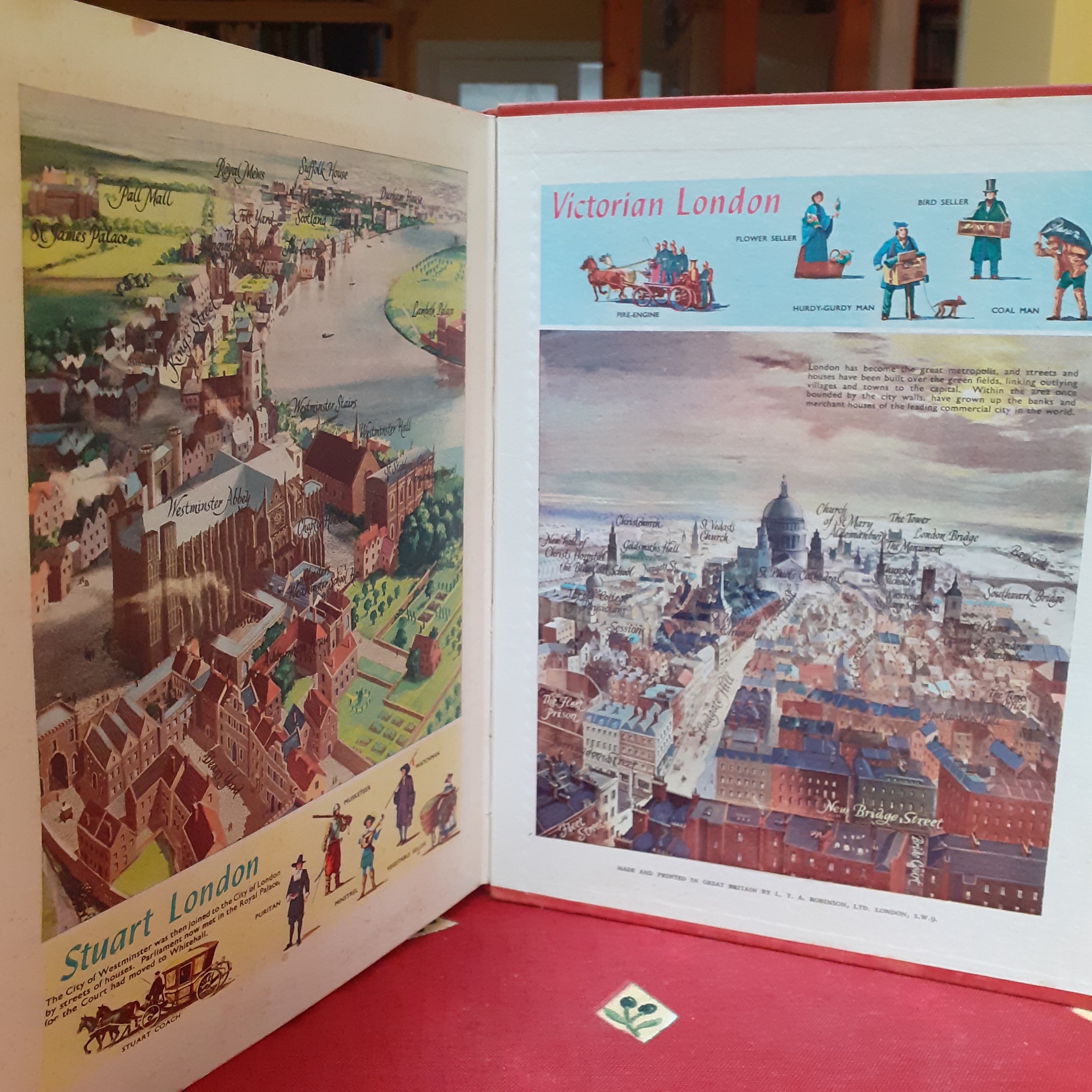
There are a number of arbitrary hooks which snared me as regards London. I loved pictorial history books as a kid and these being Anglocentric featured much on the development of English culture and society, with London at its centre. The Tower of London, St Paul’s and the Thames were familiar to me, as illustrations of their place through history.
Pop music too, of course. In 1968 my soul spun upon hearing Last Night in Soho by Dave Dee, Dozy, Beaky, Mick and Tich. Dave Dee was sometimes known, ominously, as the singing policeman having once been a cadet in the Wiltshire Police; one of those boys in blue. Here, he’s one of the bad boys we love. It was my first single, and also, I’ve just read, Waterboy Mike Scott’s. Great minds, Mike, great minds.
You came into my life like rain upon a barren desert
Just one smile and I was born again
I felt sure it wasn’t too late
I’d find strength to make me go straight
I had love and threw it away
Why did they lead me astray
For last night in Soho
I let my life go
Last Night in Soho was written by Ken Howard and Alan Blaikely and released on the Fontana label, which used attractive deep blue graphics. The song is a cautionary tale, melodramatic but seductive. London is cinematically rendered, in a collage of crime and romance. How dangerous and attractive this place Soho sounded! I had a fondness for maps, and a London street guide was thumbed close to invisibility, as I traced my path through Soho and the wild West End.
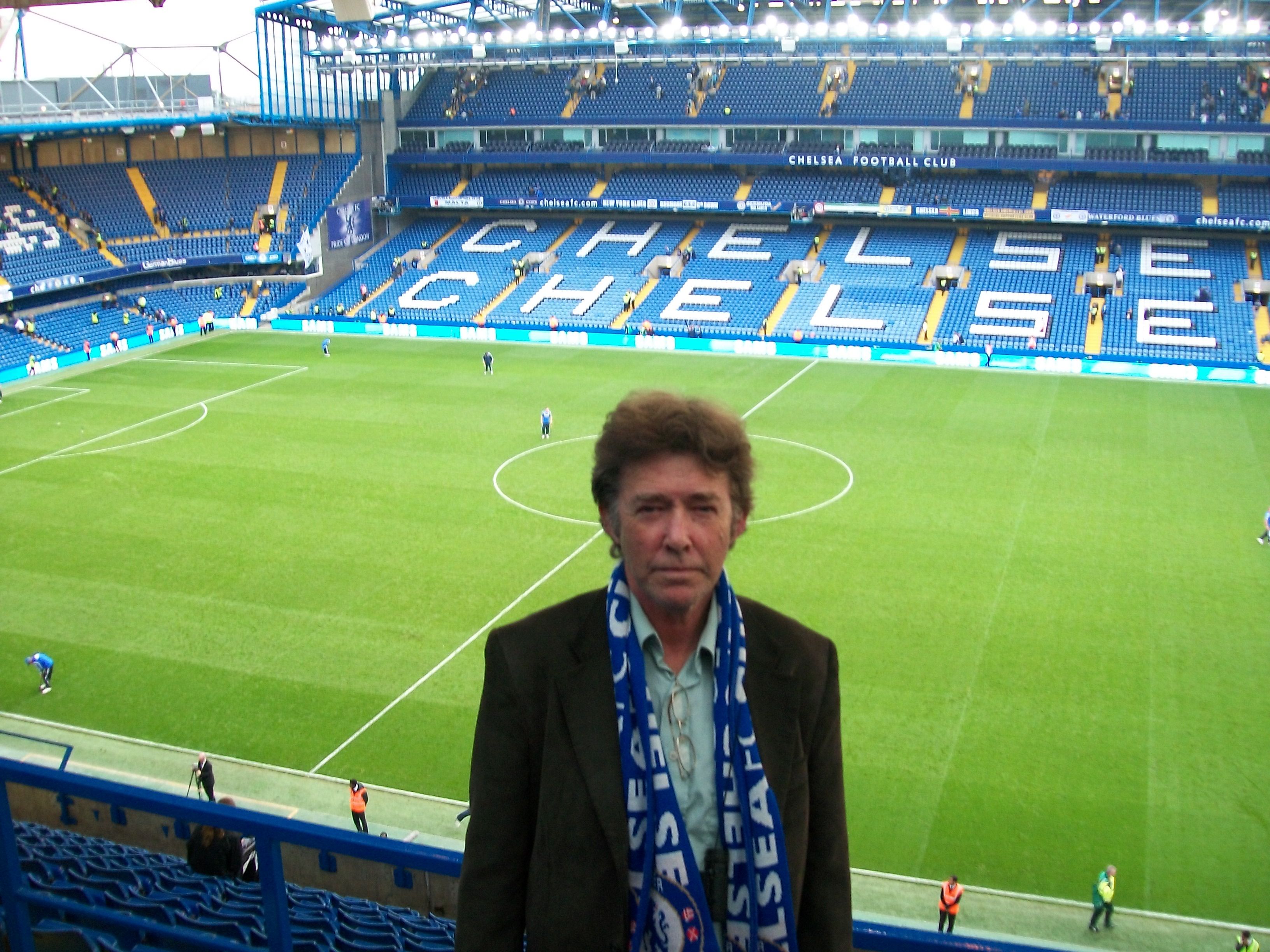
As a football fan, the towers of Wembley loomed large in my youth. FA cup finals provided a rare chance to see a full televised match. My first featured West Ham and Preston North End. But I lost my heart to the boys in blue, Chelsea, although losing the final to Spurs in 1967. I had built many memories of London by the end of the twentieth century, physically stepping onto the streets of London, seeing the sights, the galleries, eating, drinking, going to the movies, music gigs and theatre shows. But it would be 2005 before I actually went to a Chelsea game. As a treat for my fiftieth birthday, M and Sons brought me to the Hotel Chelsea right in their home ground. Chelsea were turned a hundred years old then having been founded in 1905 to occupy Stamford Bridge, an athletics stadium in Fulham. That’s a different Stamford Bridge to the one up near York that hosted King Harold’s semi final victory over the Norwegians in 1066. Harold lost the final to the Normans at Hastings, led by William, since known as the Conqueror.
Chelsea FC were admitted immediately to the Football League, though it would take another fifty years to win it, which they did in the year of my birth, 1955. Another fifty years later at the end of November I saw them play at the Bridge, as defending League Champions, having triumphed again the season before. They played Wigan Athletic, John Terry scoring the only goal of the game. They would go on to win the Premiership that season.
Earlier, with M and the boys, I met star players Peter Bonetti and Bobby Tambling. Tambling was the Blues star striker of the sixties scoring over two hundred goals. Bonetti was their goalkeeper, known as The Cat. I fancied myself as a goalie in my youth, but was known as the Vampire, as I couldn’t deal with crosses. Bonetti had played in Chelsea’s first FA Cup winning team, in 1970, beating Leeds Utd in a glorious mudbath at Wembley. Kicking and a gouging in the mud the blood and the beer, as Johnny Cash ‘sang’.
The Fox and Pheasant is the oasis of choice, out in the beer garden oiling the tonsils for the afternoon ahead. I sank a few with my boys here on an Easter weekend before seeing Chelsea beating Arsenal two nothing with a brace by Didier Drogba, later marching down the Fulham Road singing Didier Drogba, la le la le la. The day after seeing Henry IV at the Globe, Davin and I attended the first game of the season to enjoy Chelsea beating West Brom 6 – 0. Drogba scored a hat trick. Visiting the Chelsea Museum, we got to lift the Premier League trophy and the FA Cup, the benefit of a double winning year. Been there, done that, even bought a souvenir teeshirt.

Woke up, it was a Chelsea Morning
And the first thing that I heard
Was a song outside my window
And the traffic wrote the words
It came ringing up like Christmas Bells
Rapping up like pipes and drums
Chelsea!
Joni Mitchell’s song from 1969 is a song of joy. Oh, to feel like that of a morning! It appeared on her album Clouds.
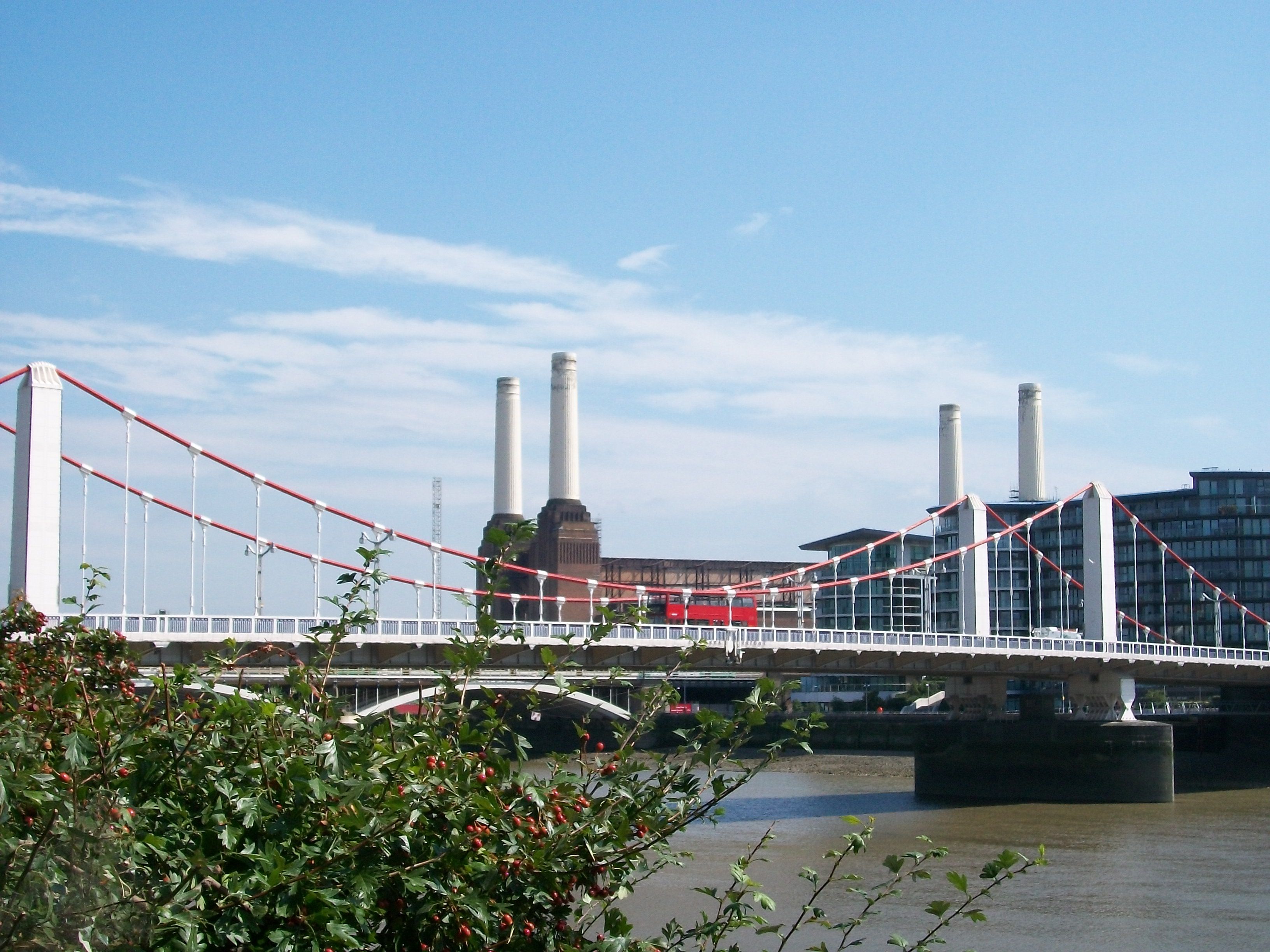
You can head back east to the Borough of Kensington and Chelsea by Fulham Road or King’s Road nearer the River Thames. The crossing is bracketed by World’s End and Brompton Cemetery, which sound more cheerful on a matchday. Along the river I can stroll along Cheyne Walk and think at least something sounds like it’s named after me. Chelsea Bridge is further on. The current structure dates from 1937, replacing an earlier one originally known as Victoria Bridge. Like its predecessor it is a suspension bridge, though much wider, and while plain enough, pleasantly illuminated at night.
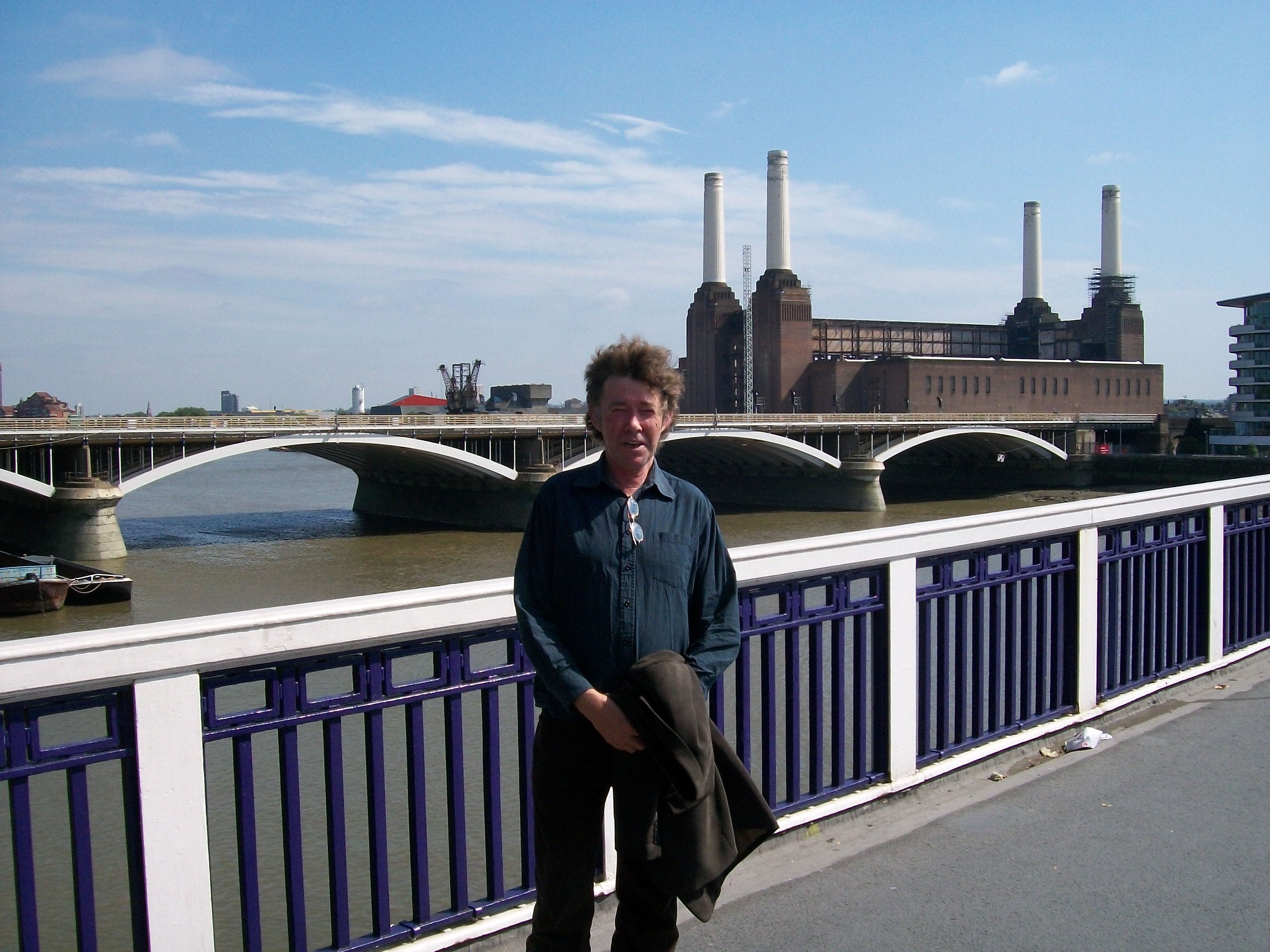
A landmark across Chelsea Bridge is the Battersea Power Station. This massive coal fired power station was designed by engineer Leonard Pearce with architects Giles Gilbert Scott and Theo Halliday. Construction began in 1929. It was paused during the Second World War; the complex ultimately completed in 1955. In the late seventies decommissioning began and the building became derelict for thirty years until redevelopment in 2012. Numerous bids included Chelsea’s plan to convert the station into a football stadium. But that didn’t fly. Frank Gehry and Norman Foster were amongst the leading architects redesigning the forty acre site along with restoring the original buiding on a project incorporating residential, retail, leisure and entertainment. The complex was opened in 2022.
Battersea Power Station is a combination of awe inspiring scale and art deco elegance. One of London’s most iconic buildings, it is also a cultural landmark in its evocation of both utopian and dystopian themes. Pink Floyd fans will know this from the cover of their 1977 album, Animals. The cover photo, by Hipgnosis, was not collaged or manipulated, no Photoshop back then. A giant inflatable pig was hoisted into place for the shoot. Unfortunately, the monster broke free, terrorising the population of West London and Heathrow Airport before landing in Kent. You can’t get more Orwellian than that.


 xxharrison