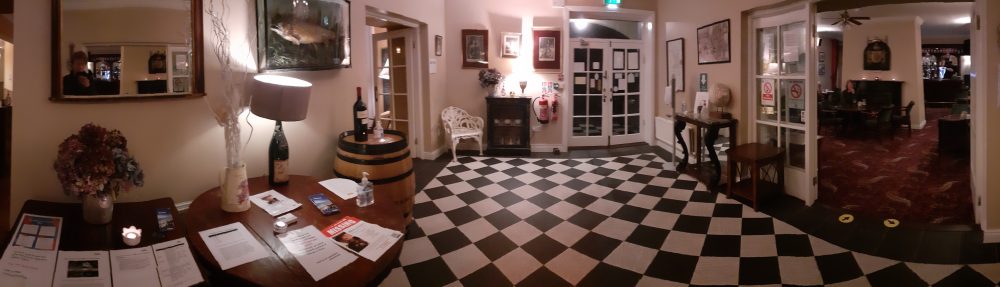
Phibsborough to the Phoeno.
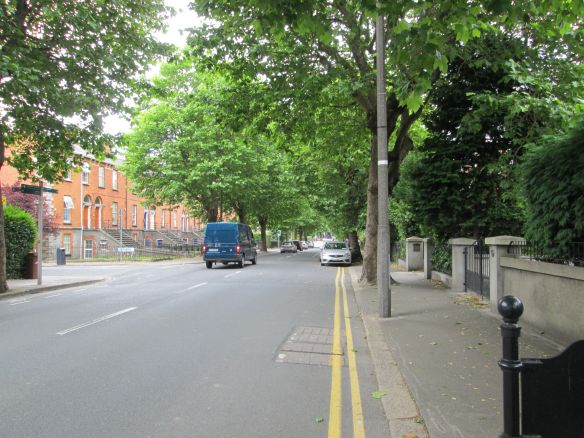
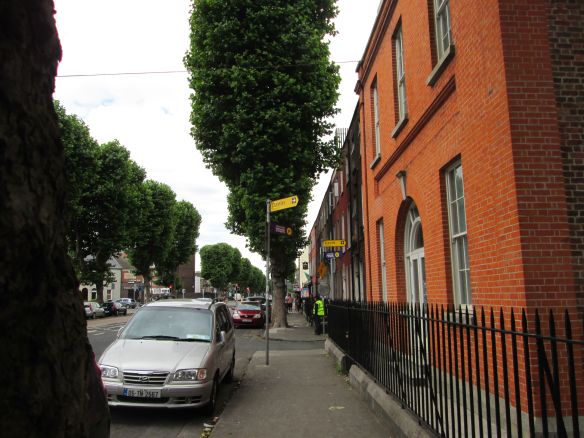
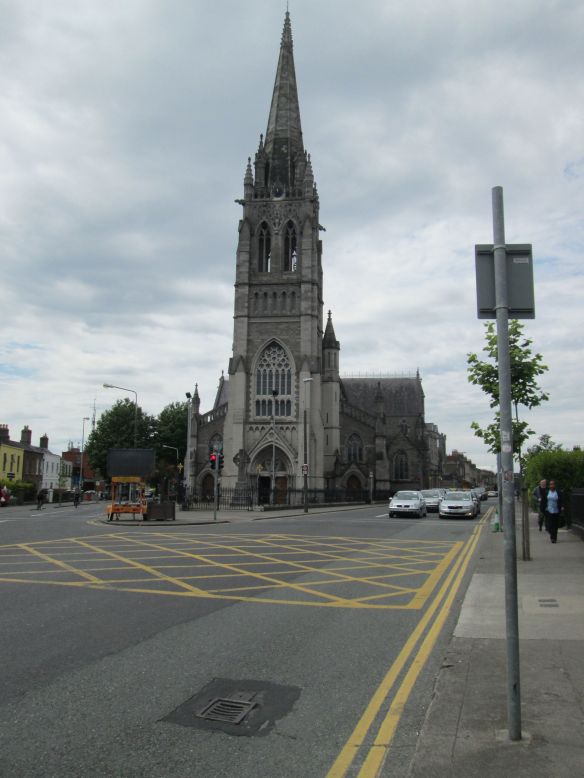 Heading west from Phibsborough, we keep left at St. Peter’s Church. This was built piecemeal from the 1830s as Catholicism asserted itself in post Emancipation Dublin. The present grand gothic structure incorporates the original Catholic school, betrayed by its more fortress like design. The imposing tower, rising two hundred feet, brought the project to fruition in 1910. The splendour of the interior is enhanced by the stained glass windows, including a Harry Clarke from 1919. From here, the North Circular takes on a more salubrious appearance. The street is tree lined and this lazy Sunday afternoon the dappled light grants the illusion of passing through a painting. It is an elegant, if shabby genteel, avenue from here to the Phoenix Park.
I’m just a Cowboy, lonesome on the trail,
Lord, I’m just thinking about a certain female.
Further on, we cross the railway track, laid in the late 1840s connecting Broadstone Station nearer the city with Galway and Sligo out in the wild west. The railway conveyed people and cattle from country to capital (and beyond) for ninety years. Few of either species made the return journey. Inevitably the well grew dry and the railway went into decline. The line closed in 1937, Broadstone station, a neo-Egyptian Victorian pile, remaining as offices and depot for CIE, the transport authority. Eighty years on, the cross-city Luas tramway at last came into being, and this portion of rail line is once more in use.
 To the south is the extensive area of Grangegorman. This was a manor estate during the middle ages with extensive orchards. Dublin city has crept around it but oddly not through it. Grangegorman remains as a large undeveloped slice of the crowded capital. The population of Dublin’s dowdy westside was largely poor and so the area was seen as suitable for siting a variety of the more sombre Victorian institutions. A House of Industry, basically a poorhouse, was established here and around this sprouted the Richmond Lunatic Asylum, the Richmond Hospital and a penitentiary. The area persisted under this cautionary cloud until recently. St Brendan’s Psychiatric Hospital, the largest such facility in Ireland closed its doors in 2013 after nearly two centuries. Major development is underway, incorporating a campus for DIT (Dublin Institute of Technology, or Didn’t get Into Trinity as the joke goes).
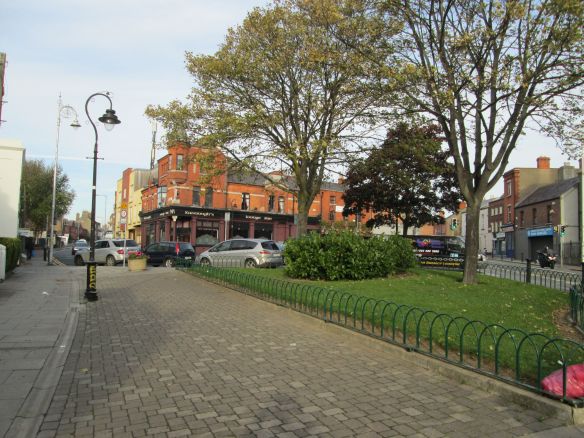 Oxmantown and Stoneybatter were other ancient settlements beyond the city walls. How ancient you can tell by the fact that Oxmantown rejoices in a weirdly Viking nomenclature. A cluster of streets with such names as King Citric, St Olaf and more, hint that this was once the haunt of the Dane. Oxmen denotes East-men, which relative to these latitudes is from whence they came.
For all the Nordic associations, the area’s one mention in song is more Mediterranean.
I’ve wandered north and I’ve wandered south,
Through Stoneybatter and Patrick’s Close,
Up and around by the Gloucester Diamond,
Back by Napper Tandy’s House.
The song is The Spanish Lady and it’s sung by the usual suspects. There’s a touch of the salacious in the places namechecked. The Gloucester Diamond was in Monto, the notorious red-light district back east beyond Summerhill. Stoneybatter has always been edgy in name and nature. Whack for the too-rye, too-rye, lady – indeed. As for Napper Tandy’s house, this was hardly a fixed abode, the eighteenth century revolutionary being inclined to change address a lot to evade the authorities. He was eventually run to ground in Hamburg, taken back to Ireland and sentenced to be hanged. However, at the intervention of Napoleon, he was allowed flee to France, and died in Bordeaux in 1803.
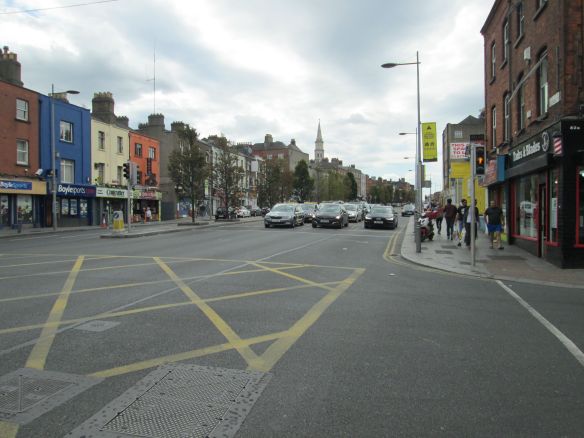
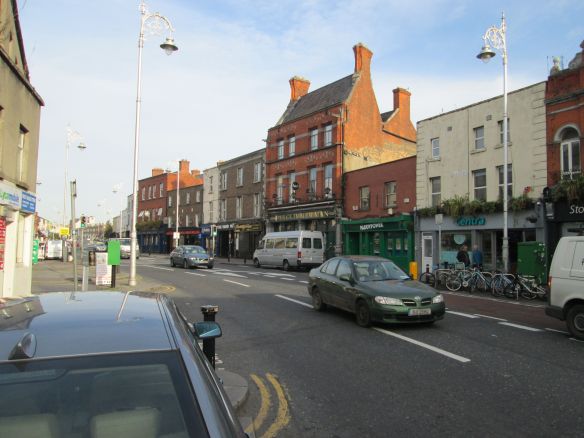 A detour at Prussia Street, along Manor Street takes us to Stoneybatter. This is a bilingual stew of the original Irish: Bothar na gcloigh. This means Road of Stones, mangled over time to become Stoney-Batter. The irish word for road, bothar, also tells a tale. It literally means cow-path
When I was a cowboy out on the western plain
I made a half a million, working on the bridle reins
Come a cow-cow, yicky come a cow-cow, yicky, yicky, yea!
The area is also known as Cowtown, the Dublin City Cattle Market being held here for over a century until 1973. I fancy there’s a wild west ambience here, if you just squint your eyes, suck on yer cigarillo and tie your horse to the sidewalk rail. Saloon of choice for me is the Glimmer Man. Full of quirks, niches and western charm, there’s a good yard at the back to spark a lucifer and wallow in the ambient gloom of an Irish pub.
The glimmerman of old was a dreaded functionary of the Gas Company in the Emergency years. He could check if the gas was being abused in defiance of wartime rationing. The prevalence, indeed the existence, of this ogre is probably greatly exagerrated in Dublin legend. The reference has expanded to include all types of unwelcome bureaucratic intrusion. Listen to the Radiators sing:
Rattled by the glimmer man, the boogie man, the holy man.
Living in the shadows, in the shadow of a gunman.
This particular oasis abounds in more moderate paraphernalia, from the Labour Party to Players Navy Cut and a suitably retro soundtrack. I’ll drink to that. I prefer to think of the more hopeful implications of the name. A glimmer of hope.
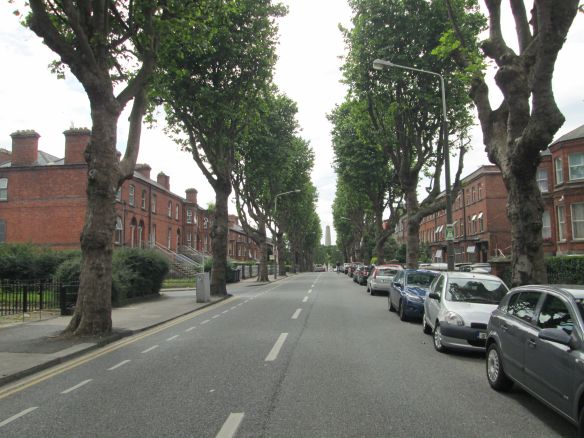 Leaving the Glimmer Man, we return to our circular path. The final section is sylvan and suburban as far as the Phoenix Park. The avenue, lined by elegant if well worn Victorian houses, stops at the park gates, but the vista culminates further on at the Wellington memorial. The giant obelisk, rising to over two hundred feet, is a notable landmark of the city. It was built in homage to the Duke of Wellington, Arthur Wellesley, after his success against Napoleon at Waterloo. Wellington is alleged to have disparaged his birthplace by saying that being born in a stable doesn’t make one a horse. The phrase derives from Daniel O’Connell by way of lampooning the Duke’s pretensions. I imagine the thought must have crossed Wellesley’s mind once or twice, all the same.
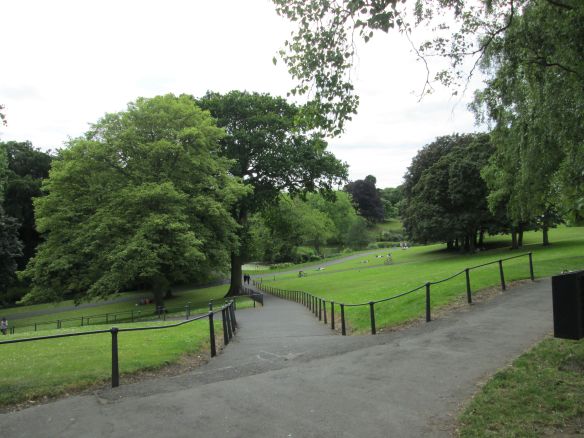 Bringing the northern semi-circle of our odyssey to a close offers a few alternatives. Technically, the route descends via Infirmary Road to Parkgate Street, where a sharp right onto Conyngham Road takes us along the walls of the Park, above the Liffey valley to Islandbridge. Alternatively, a meander through this quadrant of the Park is very pleasant. The Phoeno is worth a section to itself, so I’ll leave that for another day. I’ll finish with Philo:
Roll me over and turn me around,
let me keep a-spinning till I hit the ground.
Roll me over and set me free,
the cowboy’s life is the life for me.
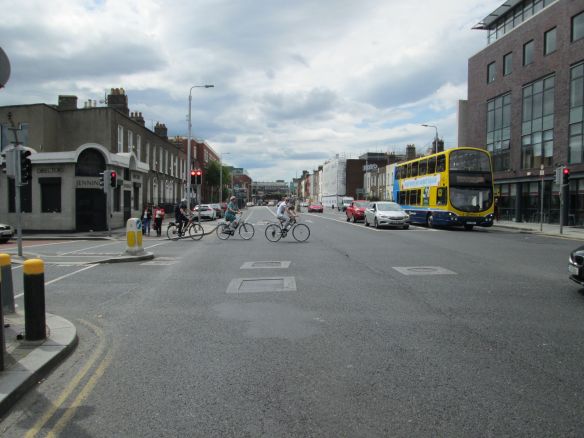
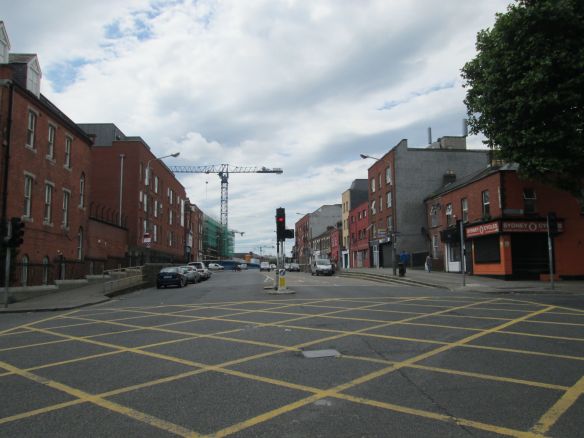
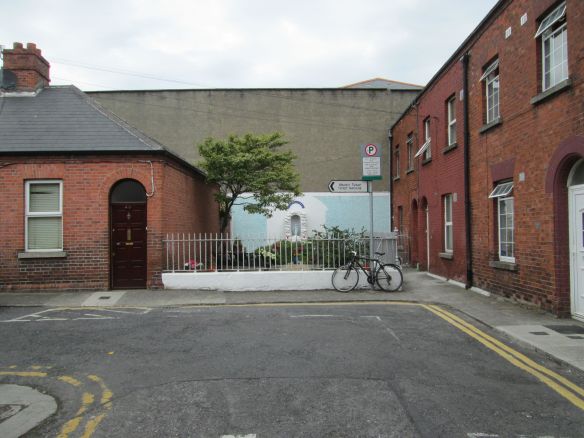
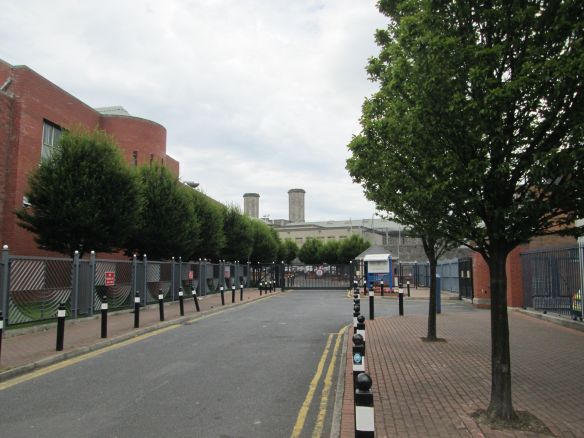
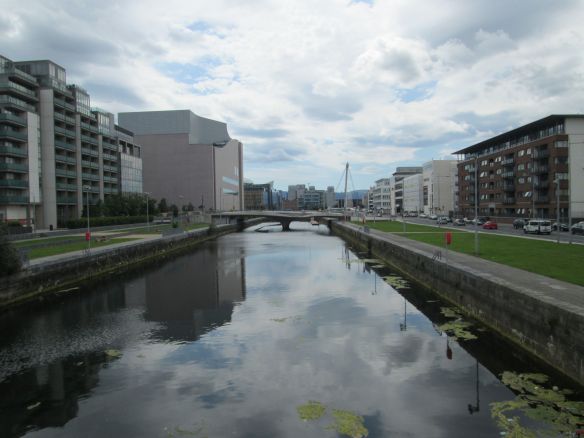 Heading north on Guild Street, the Royal Canal to our right seeps towards the Liffey. A new city, linear and rational is being stamped over the old North Wall docklands. That’s the feeling crossing Mayor Street where the Luas Red Line takes passengers arrow straight from Connolly Station to the Point Village. The Point Depot at the eastern end of the Docks is the major venue for indoor concerts. I saw Bob Dylan there some years back. A man with a hat playing piano. I could have spent the evening out in the real world, where the Liffey melts into the sea. I could have sat contentedly and watched the river flow, the memory of Bob’s music stronger in my blood.
  At Ferryman’s Crossing, a rusty reminder of the old days rises in the form of a decrepit crane. The old docklands peep through, first the palimpsest, then the ancient script itself. It’s still being written. Often the same old story. Sheriff Street runs parallel to the quays but remains remote from the modern narrative there. The area has a rough inner city reputation.
  The Church of St. Laurence O’Toole marks the start of Seville Place. It was built in the Famine years and opened in 1850. Along Seville Place, the grandly named First to Fourth Avenues suggest New York. In fact, these are short, cottage lined cul de sacs. Under the railway bridge we reach Amiens Street.
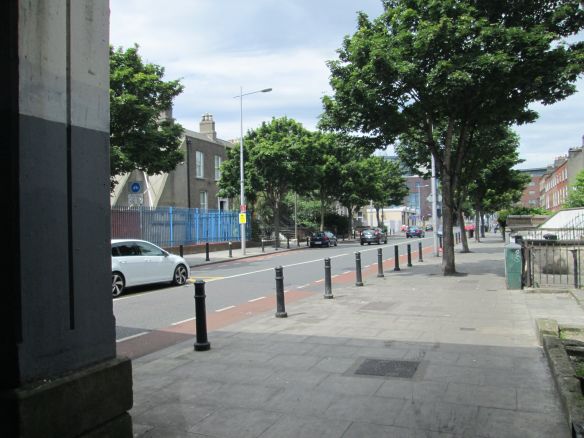 This street provides Dublin’s main transport and communications hubs. Connolly Station, topped by an ornate Italianate tower was opened in 1944 as Dublin station, later named Amiens Street. By 1853 it served the rail link to Belfast. Madigan’s Pub, on the main concourse, was a Mecca for thirsty travelers on long, dry, Good Friday. It is the most central of all bonafide pubs. You would need a train ticket to deserve a pint, of course; a small price to pay. Such quaint customs are now consigned to the slop tray of history, as Ireland’s Good Friday prohibition has been lifted.
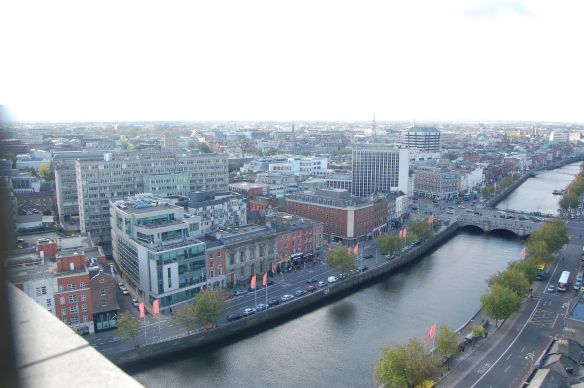
 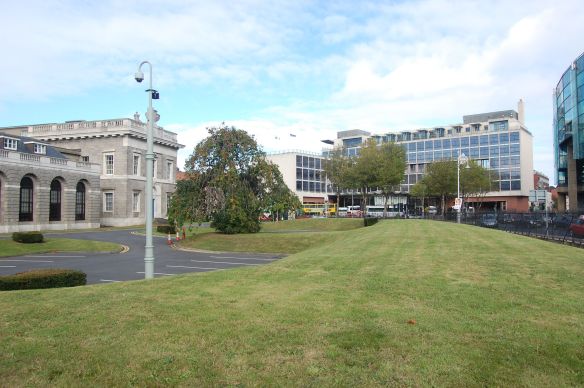 A little further off track, Bus Aras, nearer the river, was an early modernist pile. Designed by Michael Scott and completed in 1955, from here you can take a bus to anywhere in Ireland, or all the way to London. Bus Aras and Connolly combine to form a startling urban portal, full of the contrasts of history and architecture. At just the right spot, the panorama includes Victorian Connolly Station, Georgian Custom House, the International Financial Services Centre and the Ulster Bank HQ across the river.
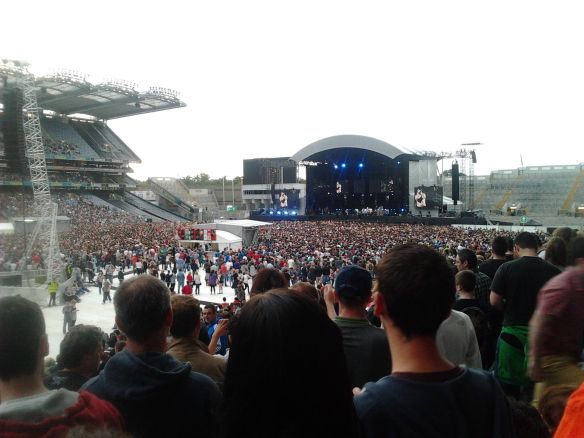
 At more civilised hours we could repair to Cleary’s pub, beneath the bridge, shuddering under the weight of passing trains. Old style boozer of dark wood, sparse light on glinting glasses being raised at the long bar. One more toast before boarding the Gravy Train. Last wet my whistle here with Davin, on our way with to the Red Hot Chilli Peppers at Croke Park farther north.
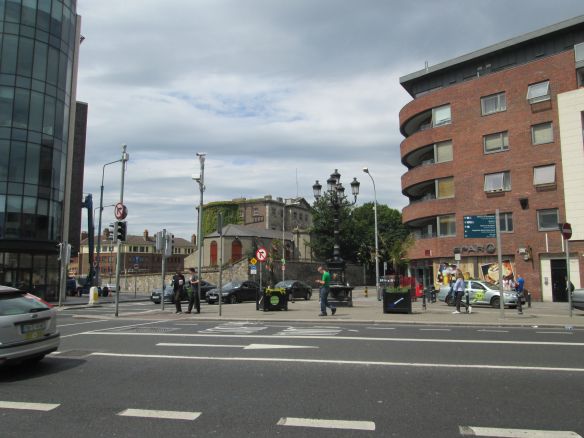 At the junction of Seville Place and Amiens Street, we’re back on track. Heading North by Northwest is Portland Row, leading to the North Circular proper. Amidst the grimy urban bustle sits the landmark of the Five Lamps, delicate and redolent of a bygone age. It sits on a junction of five streets. Again weirdly suggestive of Old New York’s Five Points, notorious focus for Irish gangs in the mid nineteenth century. The eponymous, though fictional, Dublin gang appear in Bob Geldof’s Rat Trap:
  xxharrison