When I took up the guitar in my early teens, it was to flamenco that I turned. I was thinking a lot about the paintings of Salvador Dali in those days and I also became immersed in Spanish history. The Alhambra was a particular fascination, a red castle ringed by snow capped peaks, above the city of Granada. So, some fifty years later, I at last made my pilgrimage. An early Easter was approaching and a blanket of snow lay over Dublin. The plane was a while on the tarmac as workers chipped ice off the wings. At least we were off to sunny Spain.
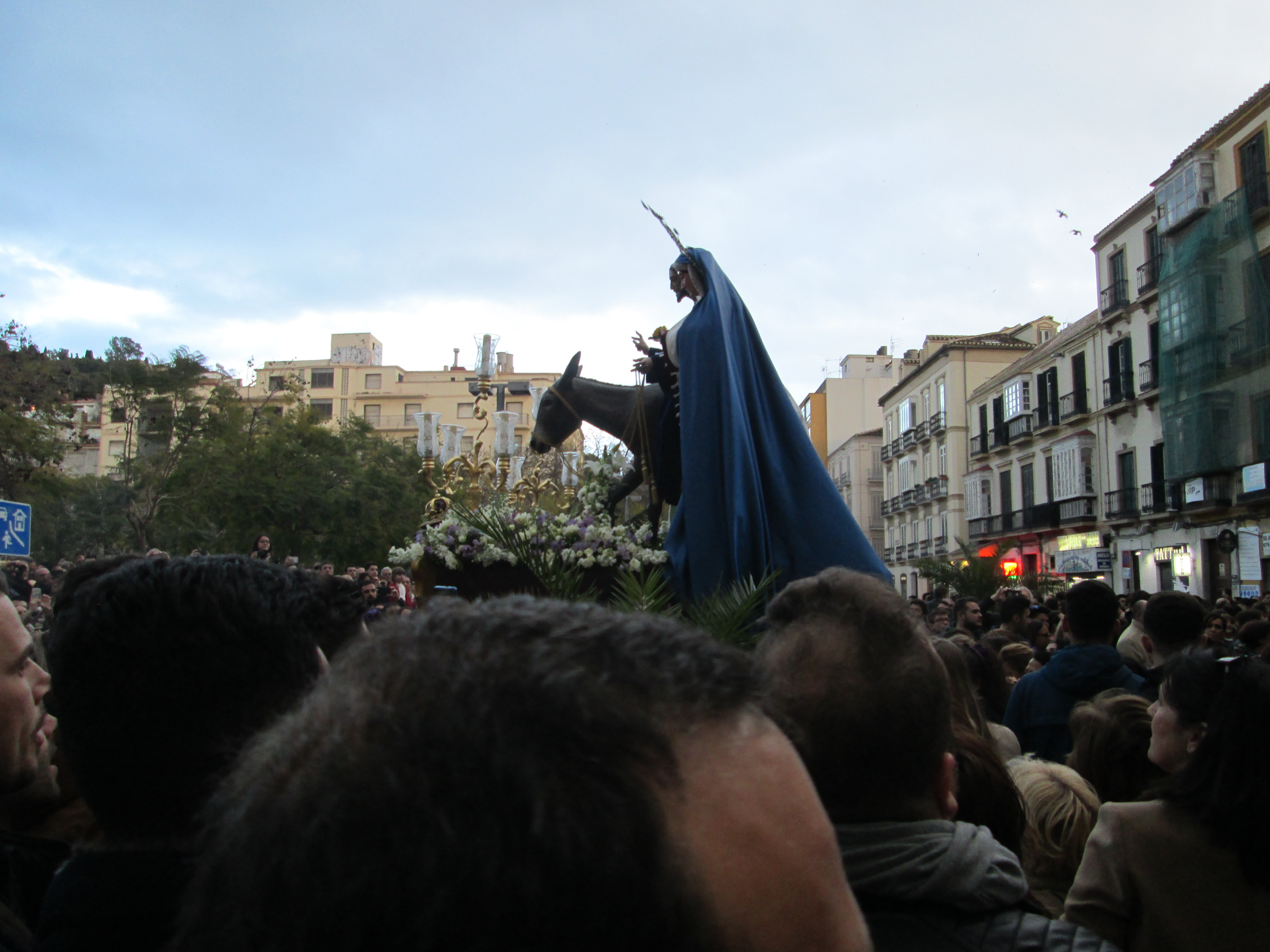
There was a bleak sun on Malaga when I landed, but it was cold and the sidewalk bars huddled behind plastic awnings with heaters ablaze. It’s a two hour bus ride up to Granada, but I had an overnight and aimed to get a taste of Malaga in a day. Relaxing over a wine, I noticed that crowds of people were heading towards the city centre and figured there was something on. It being Holy Week, a procession by one of the Brotherhoods passes each day. I quickly succumbed to its hypnotic magnetism. Solemn music accompanies towering floats, or tronos, one of the Christ and the other, typically more exuberant, is of the Virgin.
Each weighs several tons and are carried, very slowly, by members of the Brotherhood from their parish church through the city centre, past the Cathedral and on to the Plaza before Teatro Cervantes. Which is where to relax as the solemn spell wanes.
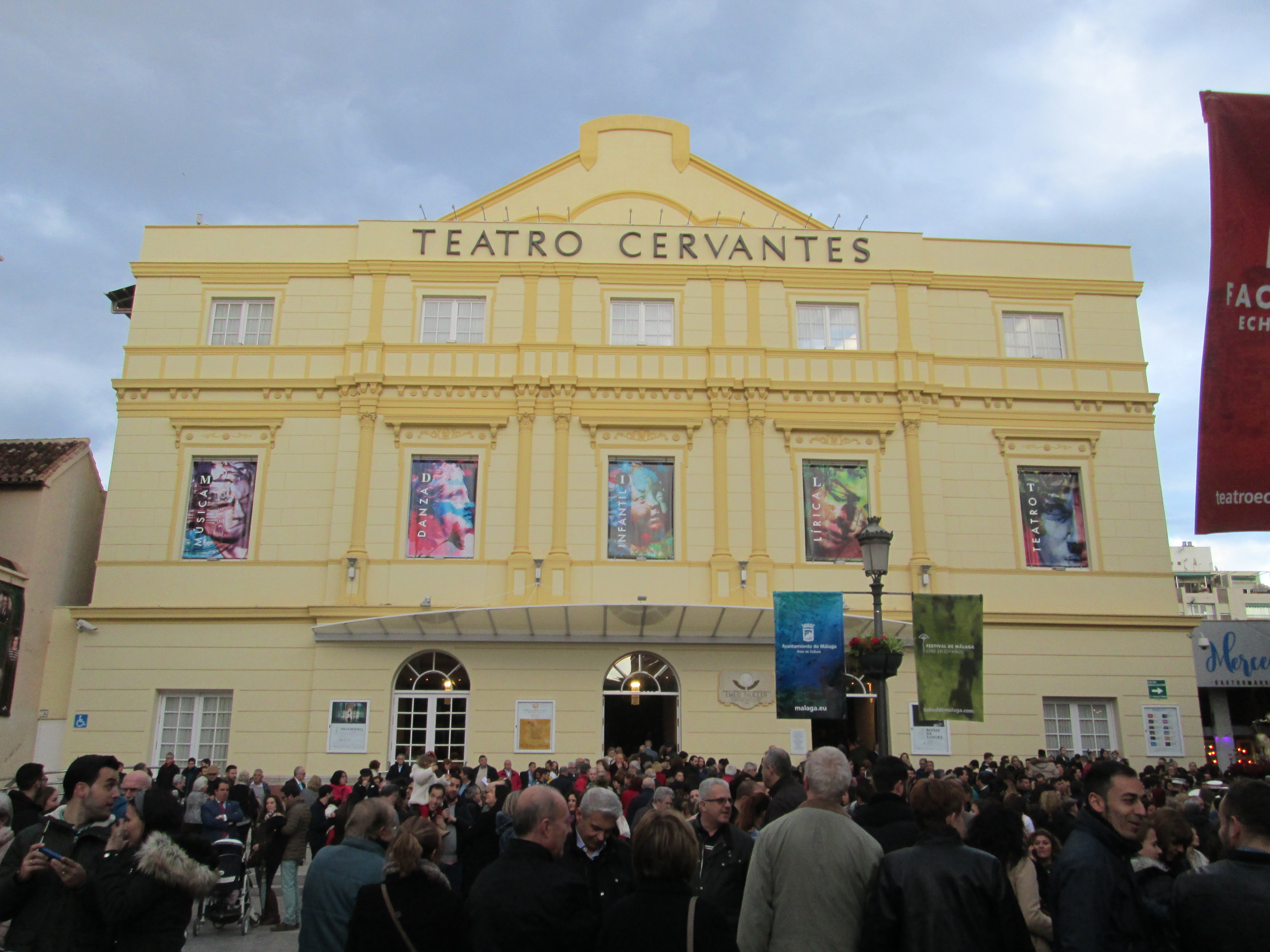
The Teatro Cervantes was built in 1870 and named for Miguel de Cervantes. Cervantes is well commemorated throughout Andalusia. His writing pervades the entire Spanish consciousness. As is Shakespeare to English, he is central to Spanish. Don Quixote is regarded as the first novel in the modern sense, and has become, after the Bible, the most translated book in the world. We all know its eponymous hero, hopeless and heroic, forever tilting agaist the hostility of life. Cervantes came to embody his own maxim, that the pen is the language of the soul
My own pilgrimage took me to Malaga Bus Station to the west of the city early the next morning. Granada, just over ninety miles distant, is a two hour bus journey through coastal mountains, the snow capped Sierra Nevada ultimately embracing the city as we reach our destination. Granada’s Bus Station is a good bit out of town and I took a taxi to the centre and my hotel.
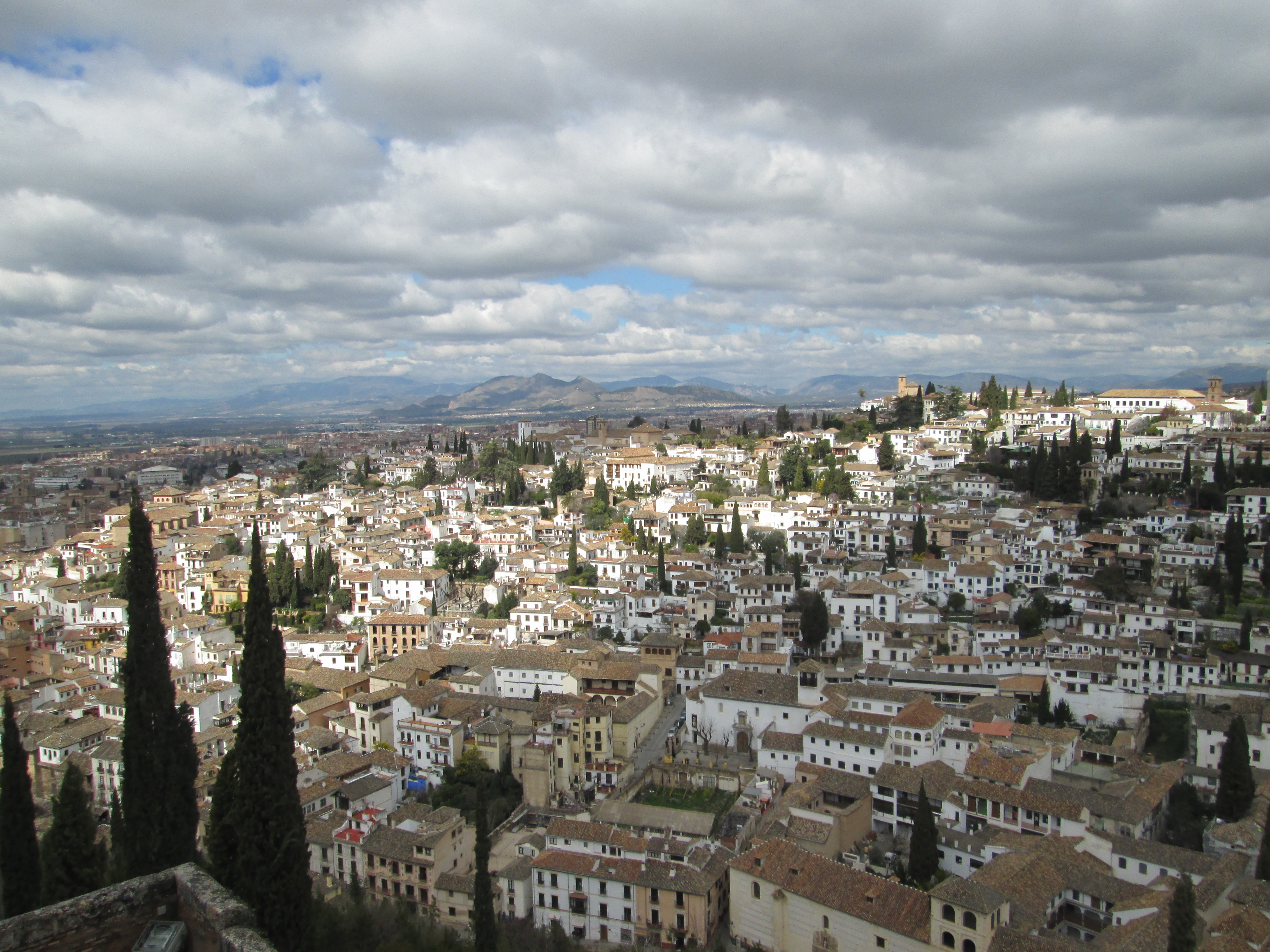
Granada, a place of dreams, where the Lord put the seed of music in my soul. (Andres Segovia)
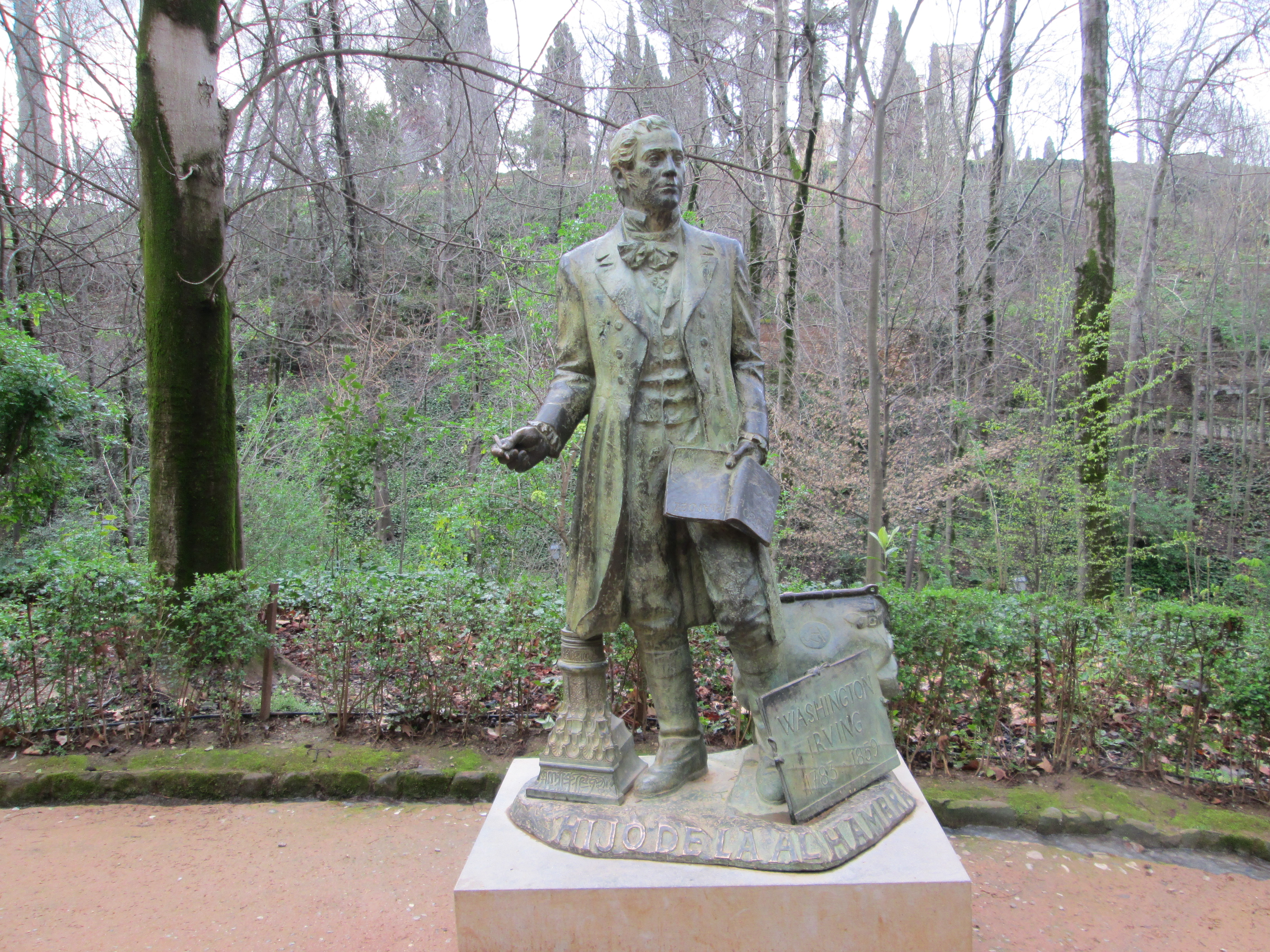
The fabulous castle overlooking it all, the Alhambra, was the last fortress the Moors. Alhambra signifies the Red Castle, from the blood toned colour of its stone. The Moors built their first fortress in the ninth century but the existing complex dates to 1333 when Yusuf I was Sultan of Granada. In 1492 the Catholic Monarchs, Ferdinand and Isabella, defeated the Emirate of Granada. 1492 was also the year when Italian explorer Christopher Columbus came here to receive the support of the Monarchs in his ambition to sail to the New World. This is when the Western World was born. An early history of Columbus was written by Washington Irving, American author and ambassador to Spain. He, in tur, rediscovered the Alhambra for the modern world. His Tales of the Alhambra was published in 1842. In 2009, on the 150th anniversary of his death, a bronze statue was erected on the wooded approach to the citadel.
I entered through Puerta de la Justicia under its Moorish horseshoe arch. From the ramparts there’s a great view over Granada framed by the Sierra Nevada. When the Moor last looked out from here, the Alhambra was entirely a construct of the Islamic culture of northern Africa. Within a couple of decades a more European style spread. The Palace of Carlos V was built by order of the Emperor in 1527 in the Renaissance style. The entrance patio is a startling homage to Classicism, with its two story colonnade forming an entrancing circle.
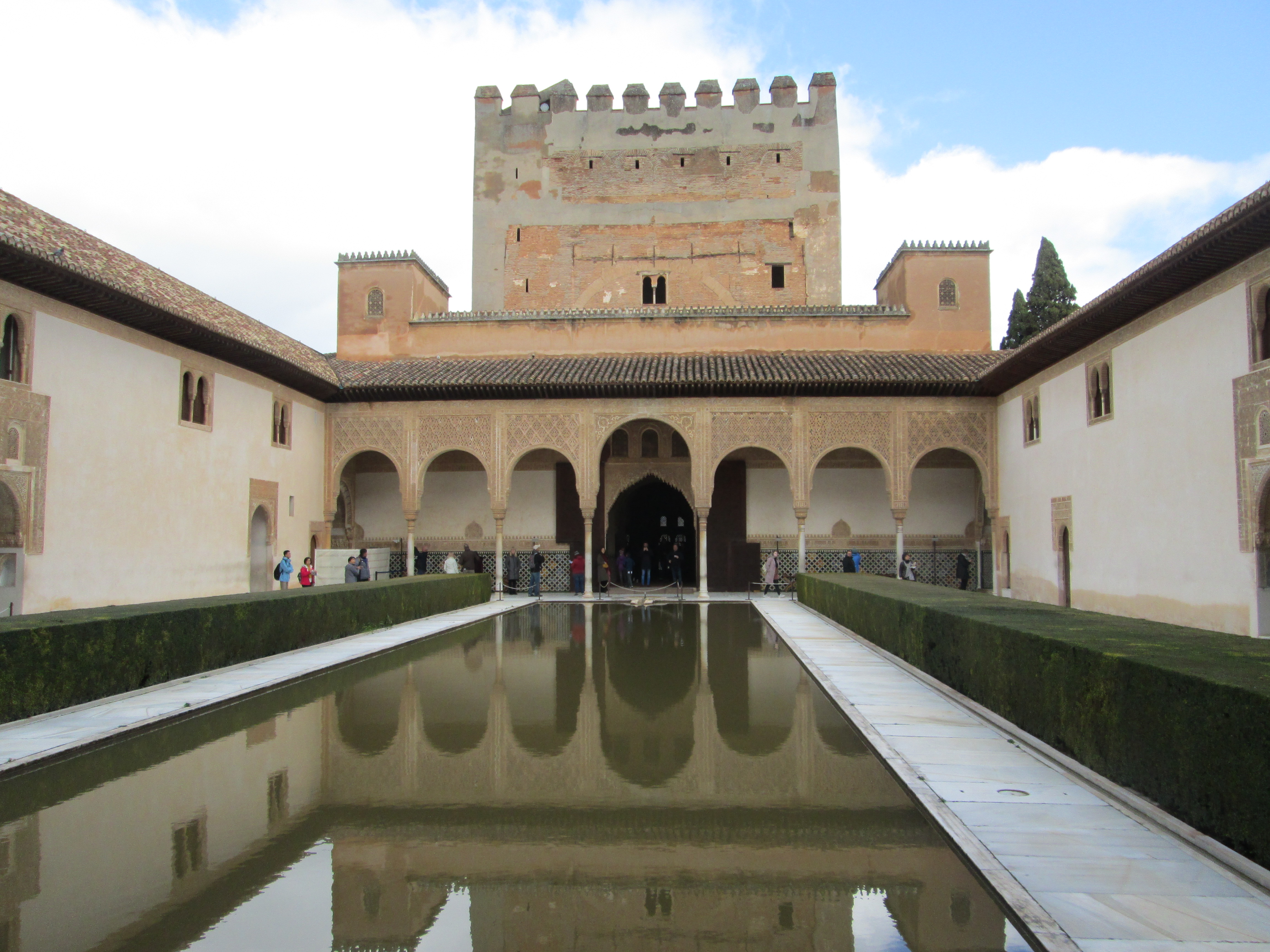
The Nazaries is the showpiece of the Alhambra, a magnificent palace for the Kings. A separate ticket is required for visitors, and well worth it. Guide books caution to come prepared for the heat, but my visit coincided wih a severe cold snap. Four degrees and falling I was frozen blue in the long entrance queue. The Nazaries unfolds on entering, a stone flower opening into more spaces than anticipated from the outside. There are three palaces within the complex. First, the public area dealing with justice and administration. Then the Camares Palace which was the royal residence. Finally, the Palace of the Lions, where the harem was located. A magnificent centrepiece is the Court of the Lions with its sculptured lions forming a circle within delicately rendered cloisters.
For a short break, I took a table in the tiny tearoom of the American Hotel. A Tuna Sandwich and two hot Americanos got me back to room temperature. A friend had recommended a visit to the terrace at the Parador Hotel but it was not a patio day and the interior had that lowrise furniture peculiar to hotels and inimicable to relaxation.

The Alcazaba is the fortress at the business end of the Alhambra, its towers giving majestic views over Granada. It is the oldest part of the complex, dating to the thirteenth century. From there, I made my way down towards the entrance through beautiful gardens. The first blooms were appearing but had not quite come to life. Across a ravine there’s a stiff climb to the Generalife, the Gardens of the Architect. These beautiful gardens surmounted by an elegant villa provided a retreat for the Royal Household from the travails of the Alhambra and give glorious views of the Alhambra.
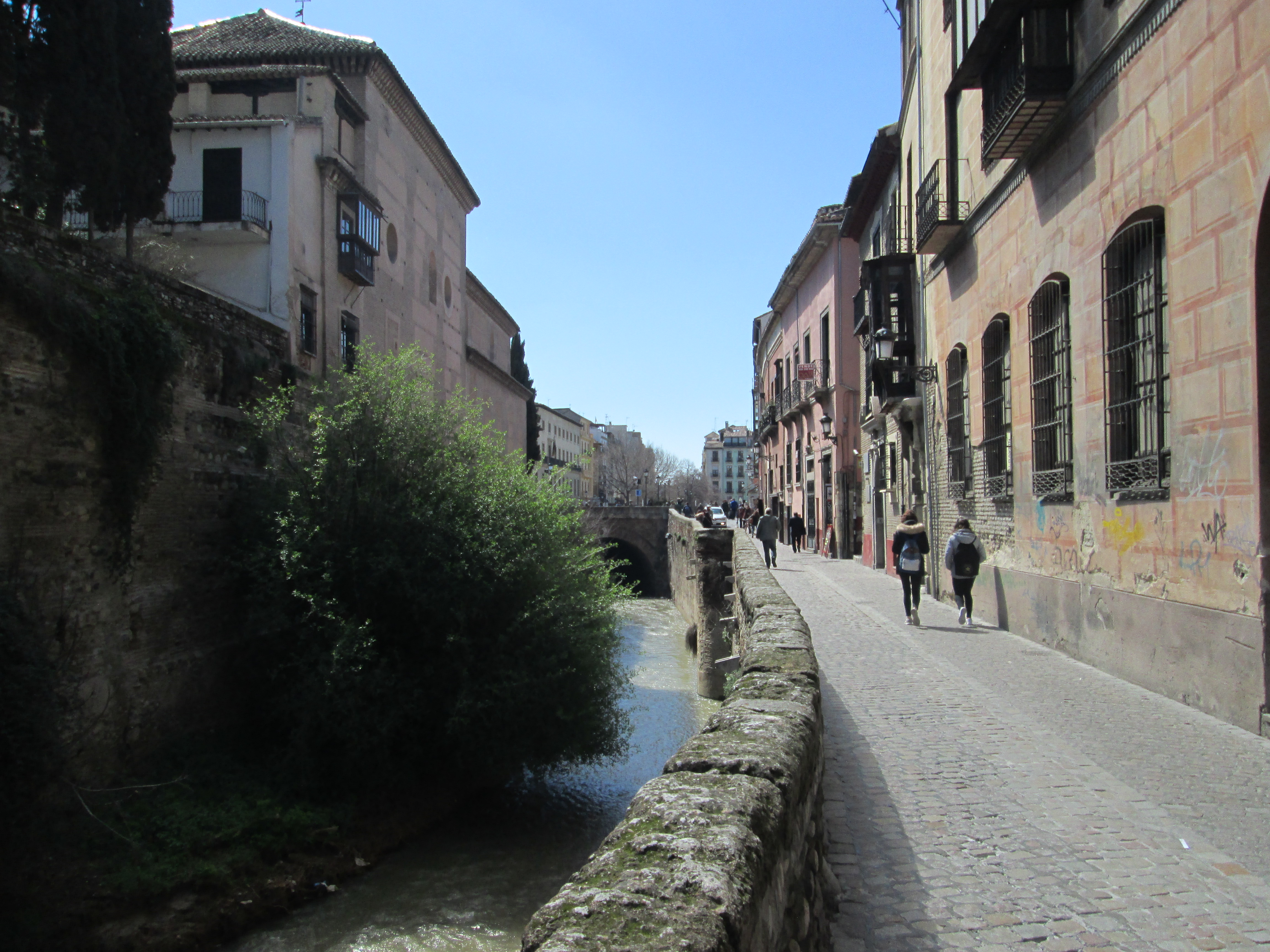
On exit, I put into the first available bar. Below the walls there was shelter and sufficient warmth from the sun to allow me enjoy a beer and tapas al fresco. Heading downhill past the northern walls alongside a rapid stream, I emerged onto the banks of the Darro river following it back towards Plaza Nueva in the city centre.
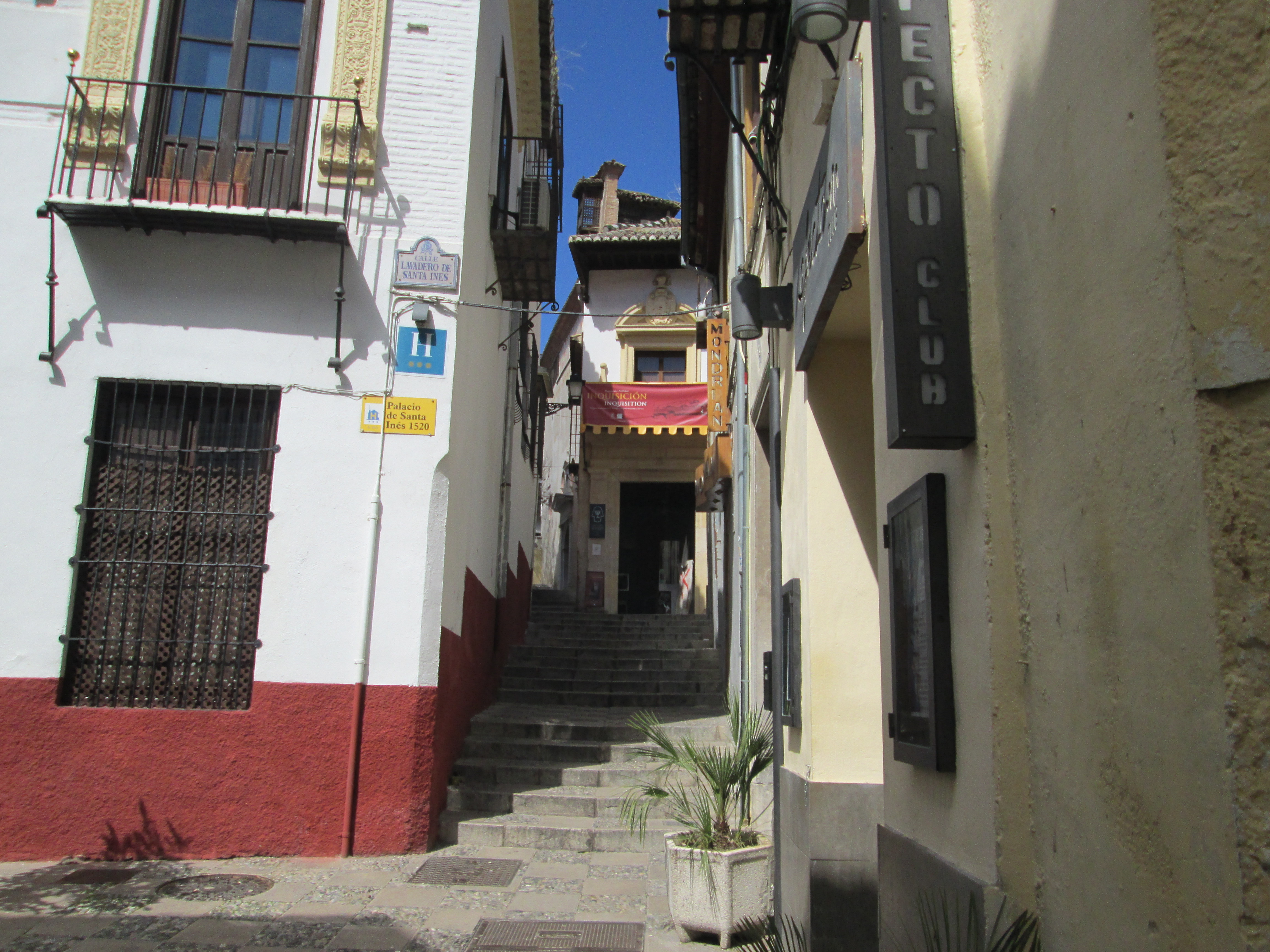
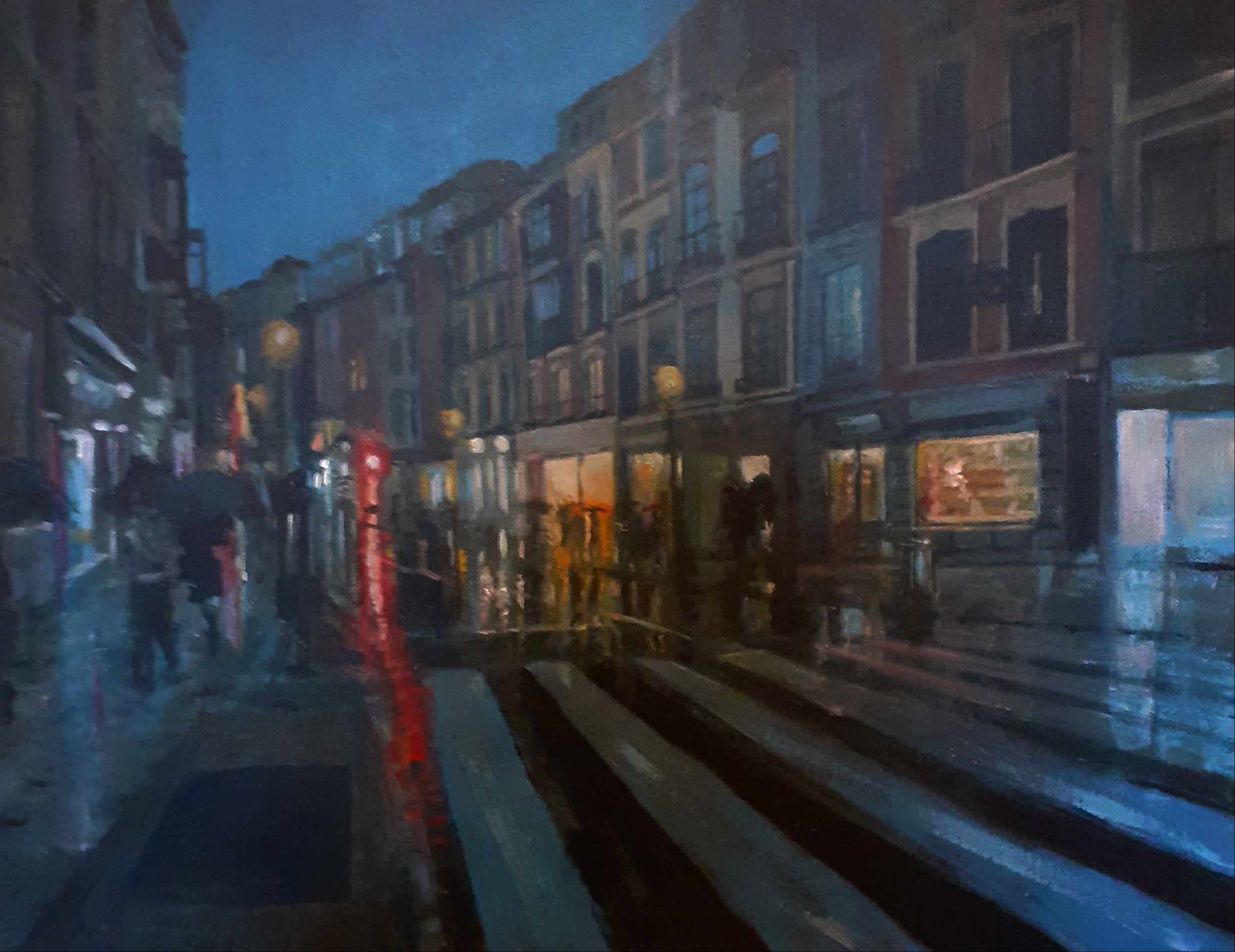
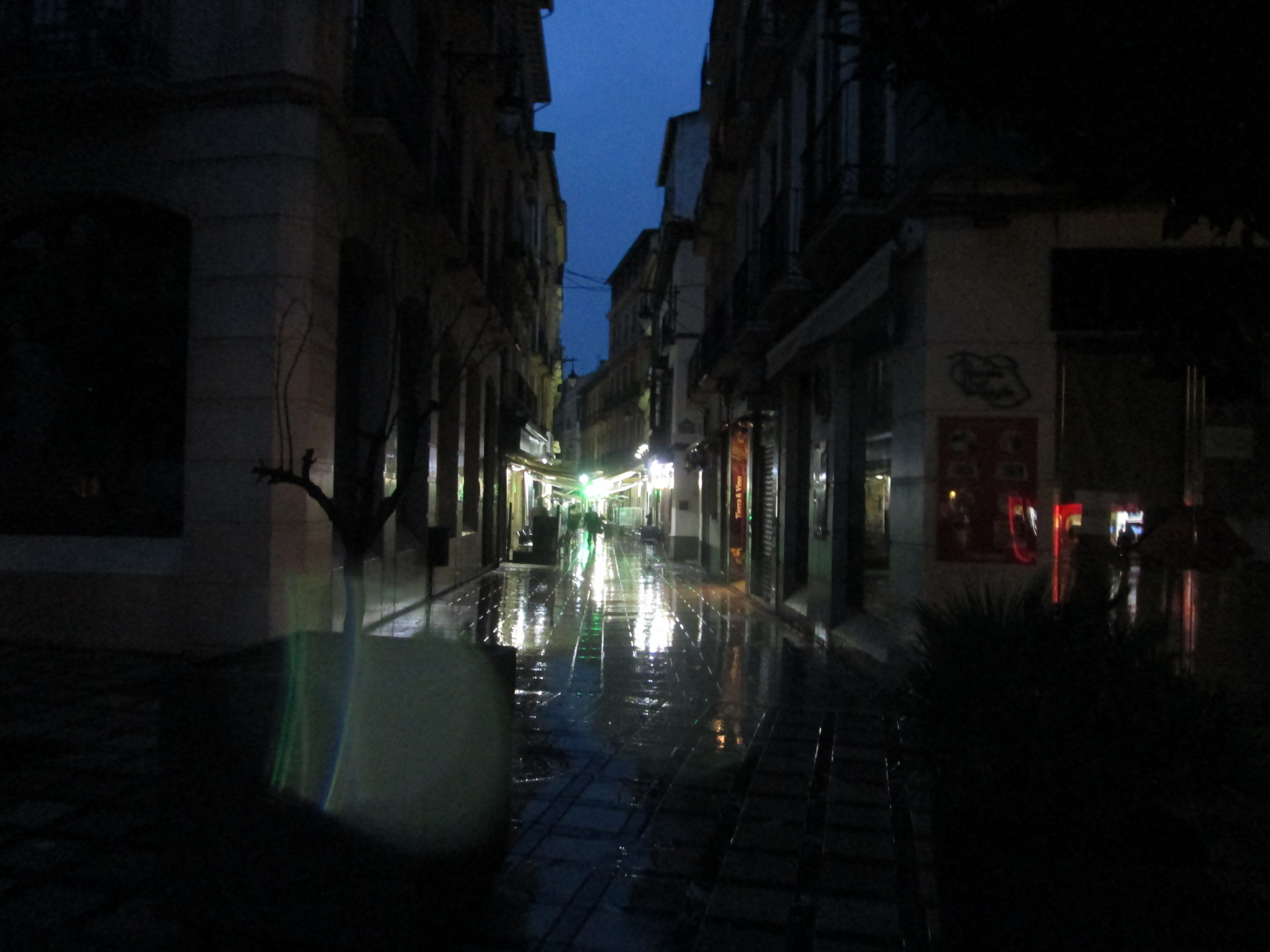
Overlooking the Darro is the Albaicin, dating back to the 13th century and rich in Moorish heritage. The streets meander past high walled villas with white washed walls, towering palms and pines. Quiet and weird; at times I felt I had strayed into a Dali painting. Stranger still, it darkened off to the west and a sudden storm came upon us. Snow fell in curtains across the backdrop of the Alhambra.
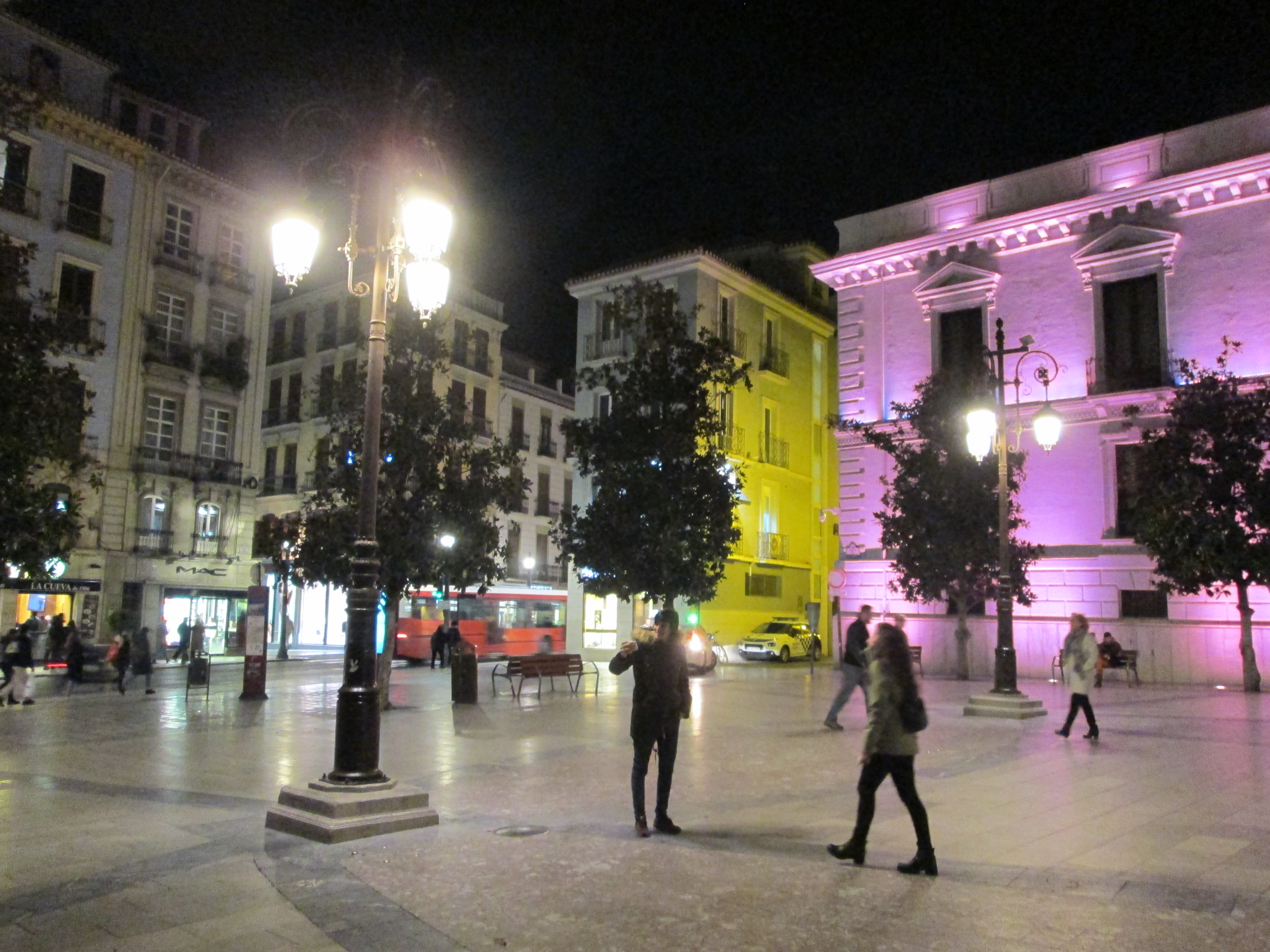
Plaza Nueva merges into the Plaza de Santa Ana and on into the modern city centre. I had planned on a flamenco evening in Sacromonte, but the weather closed off that particular avenue of pleasure. I did spend much of my second day in Sacromonte, a bleached enclave clinging to the steep hill at the edge of Grenada, This was originally home to the gypsy, or Gitanos population, and is rich in the heritage of guitar and Flamenco. There are tiny taverns and homespun museums, and a feeling of being remote from the big city.

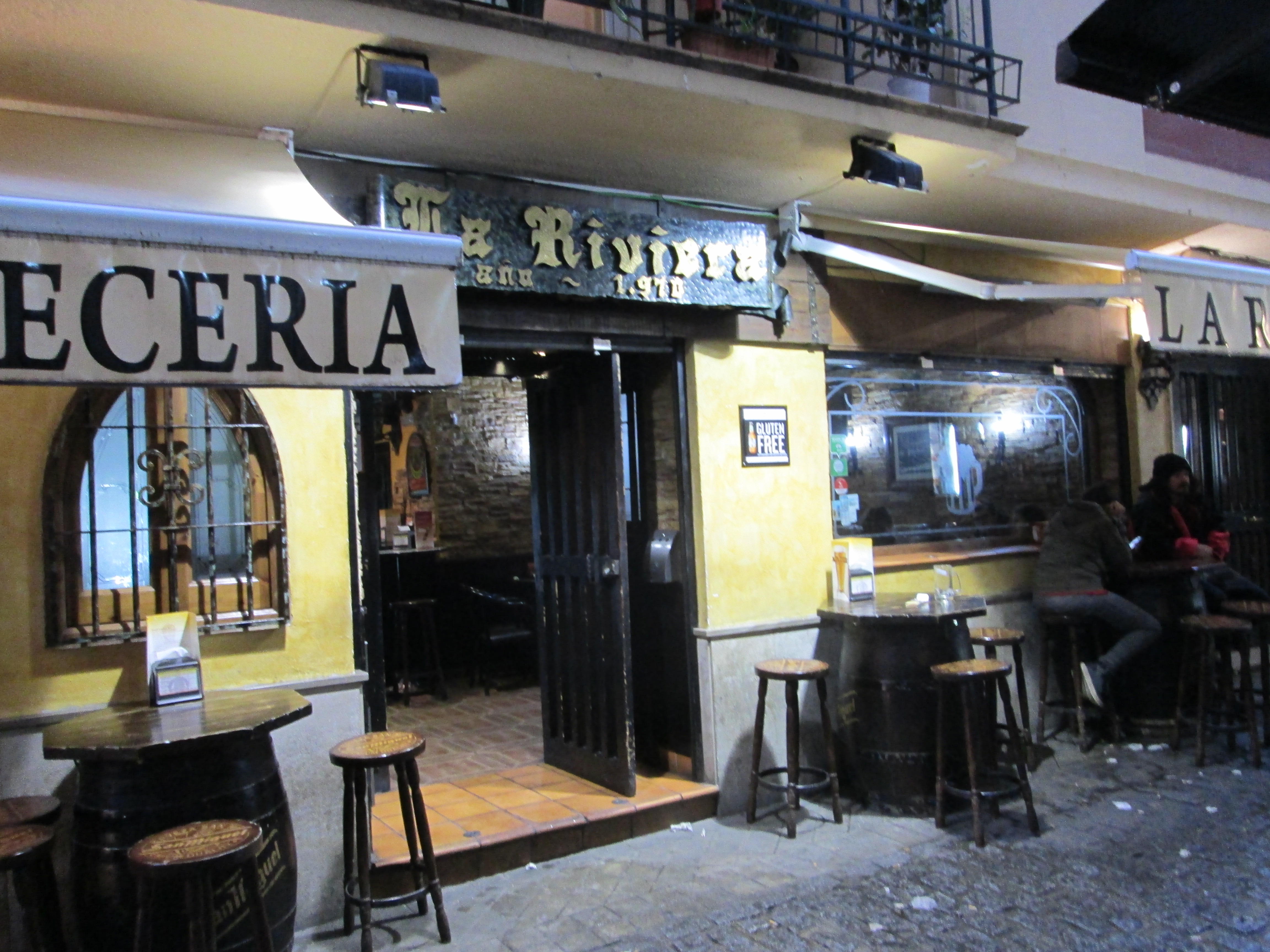
At night I’d spend some time in Hannigan’s Irish Bar, not far from the Cathedral of the Incarnation. Hannigan’s does not do the complementary tapas that are a feature of local establishments. It’s a wonderful custom, but there is a time to stop eating and sit in splendid isolation over a drink and contemplate the sound and stories that permeate the city. Hannigan’s seemed to share my fondness for the Red Hot Chili Peppers, whose music, to me, carries some echo of the spirit of the Andalusian guitar.
Fly away on my zephyr
I feel it more than ever
And in this perfect weather
We’ll find a place together
from the 2002 album By the Way, a favourite of mine, and yes, I remember in Granada smiling at the mention of perfect weather; but in a strange way it was. In sunshine or snow, the magic of the Alhambra endures. The winding way to the citadel begins near the Fontana del Toro on the Plaza de Santa Ana. It is said that a drink from its waters has magical qualities. Drink once and you will return forever. I hope to, some day. Meanwhile, Christmas is around the corner and this is likely to be my last post for the year. Happy Christmas to yous all!
Oh the weather outside is frightful
But the fire is so delightful
And since we’ve no place to go
Let it snow, let it snow, let it snow!
 xxharrison