
Andalusia – 10. Cadiz to Marbella by Bus

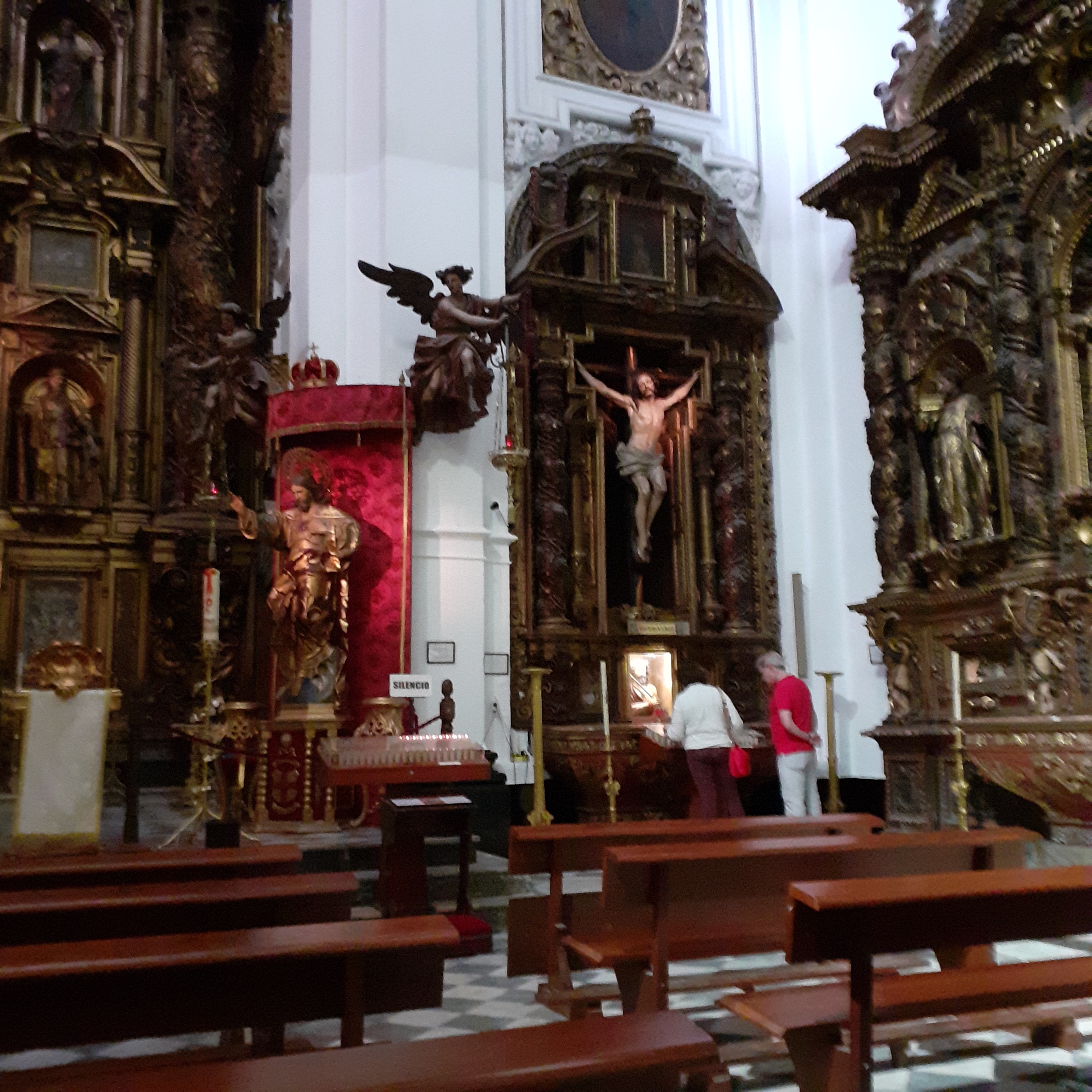
Our recent tour of western Andalusia took us from Seville to Cadiz by train, and we then got a bus from Cadiz to Marbella. This was a three and a half hour journey with a number of stops on the way. There are usually two or three busses per day and it cost €56 for the two of us. We booked for the two o’clock departure giving us a relaxed final morning in Cadiz. We had breakfast in Cathedral Square and strolled around a bit, visiting the Church of Santiago across from the Cathedral. This was a Jesuit church built in 1563 but destroyed by English and Dutch invaders at the end of that century. Rebuilt in the Baroque style it eatures exuberant interior decoration with ornate baroque altarpeices from the seventeenth century populated by lifelike clothed statuary. We dallied on the main square before picking up our bags and one last cup of coffee for the road, near the statue of the Pearl of Cadiz. 
Your sister sees the future like your mama and yourself

You’ve never learned to read or write, there’s no books upon your shelf

And your pleasure knows no limits, your voice is like a meadow lark

But your heart is like an ocean, mysterious and dark

One more cup of coffee for the road

One more cup of coffee ‘fore I go

To the valley below

One More Cup of Coffee is from Dylan’s 1976 album Desire, also featuring Emmylou Harris on vocals. There is a strong Gypsy inluence in the narrative, and Dylan’s vocal style borrows from traditional Jewish singing. Meanwhile the Valley Below is common to all travellers who find themselves moving on.

The bus station is beside the rail station so it was a short walk. The weather is wet and cool, a bit like home. The bus heads on through the modern extension to the city of Cadiz, then along the connecting isthmus to the mainland. This part of the city is built up with medium rise hotels lining a long sequence of beaches such as Playa de la Santa Maria and Playa de la Victoria. Farther on is a grubby industrial area. The urbanisation extends to Chiclana de la Frontera famous for La Barrossa beach. It has a population of 80,000 and is also on the railway line connecting to Cadiz, Jerez, Sevilla and Madrid. After that there’s Conil de la Frontera a traditional white town of about twenty thousand people. This too is famous for its beaches and is a popular destination for Spanish holidaymakers.
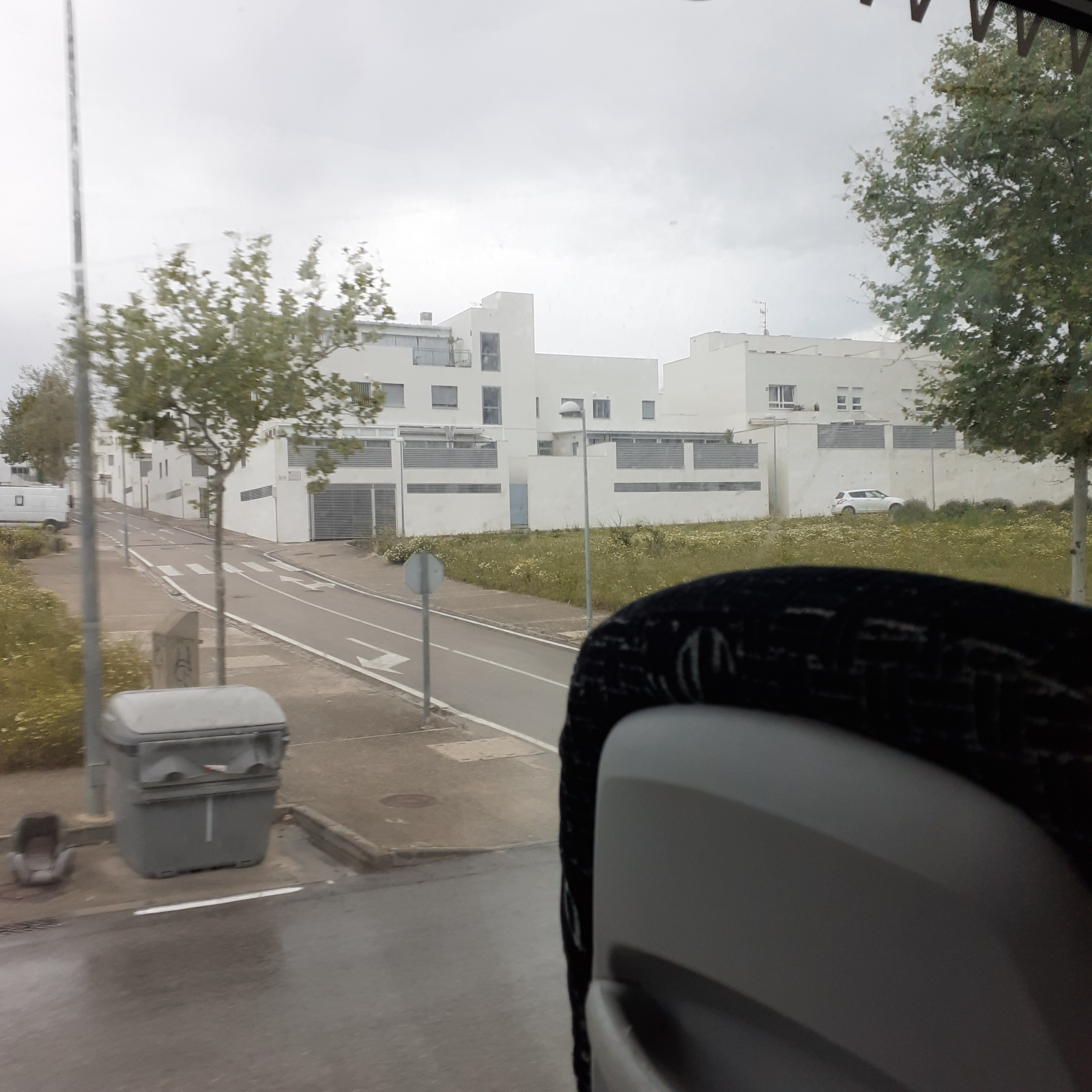
Then we head towards Tarifa on the Costa de la Luz. Spain’s southernmost point is a magnet for windsurfers. It is very windy owing to the Venturi effect which funnels the wind passing through the Strait of Gibraltar separating Spain from Africa. Algeciras is next. With a population of 120,000 it is one of the largest ports in Europe. It is also a ferry port for Tangier and other North Arican ports, and the Canaries too.
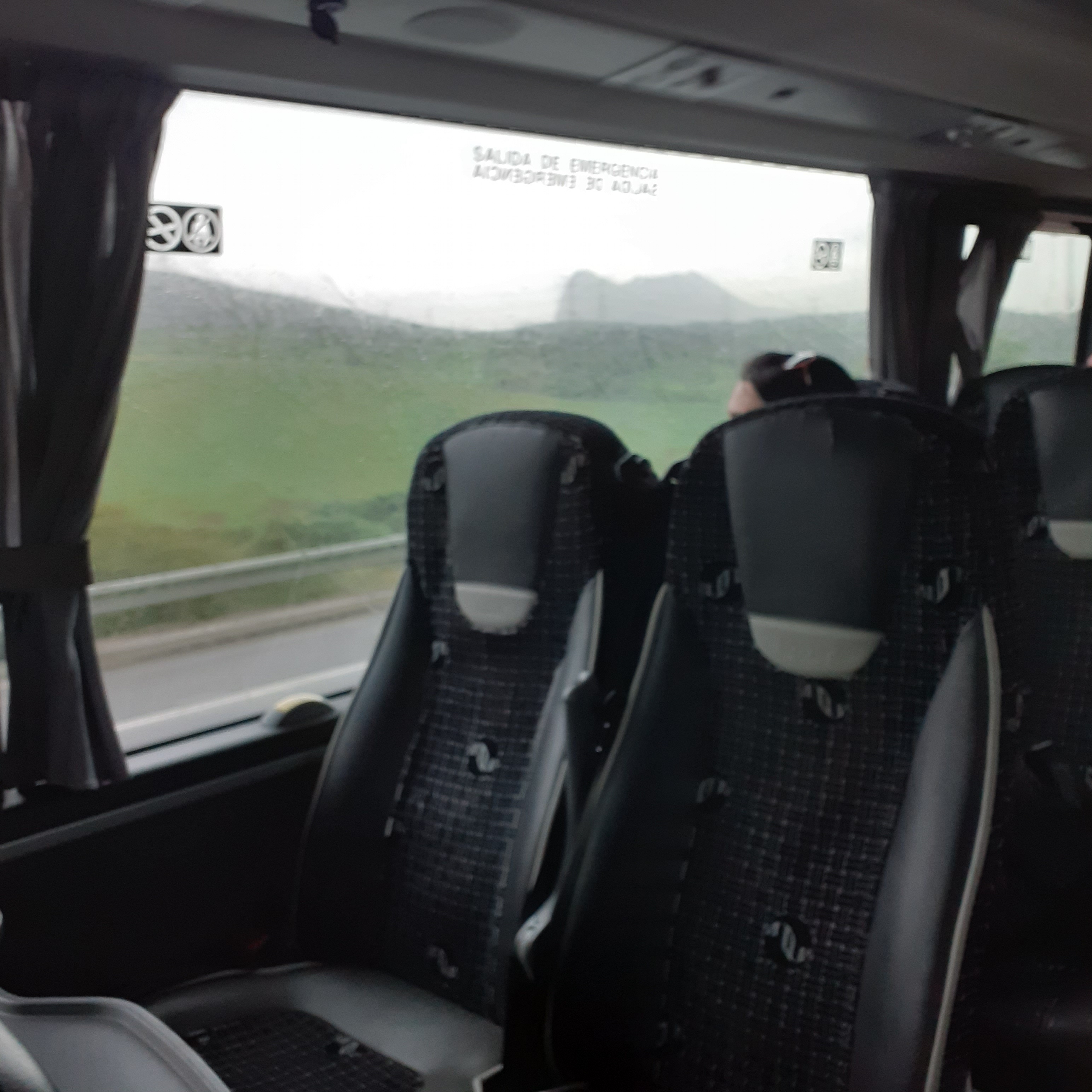
Leaving Algeciras we pass Gibraltar, the high Rock suspended in the clouds. Gibraltar was captured by an Anglo Dutch fleet during the War of the Spannish Succession, it was granted to Britain in 1713 at the Treaty of Utrecht. Besides the British, Gibraltar is occupied by monkees. These are Barbary macaques, numbering about three hundred and the only European wild monkees, not counting ourselves. The scenic coastal mountains rear out of the gloom, scratching some welcome blue swathes in the sky. Estepona is the last stop before Marbella.

The way it is long but the end is near

Already the fiesta has begun

The face of God will appear

With his serpent eyes of obsidian

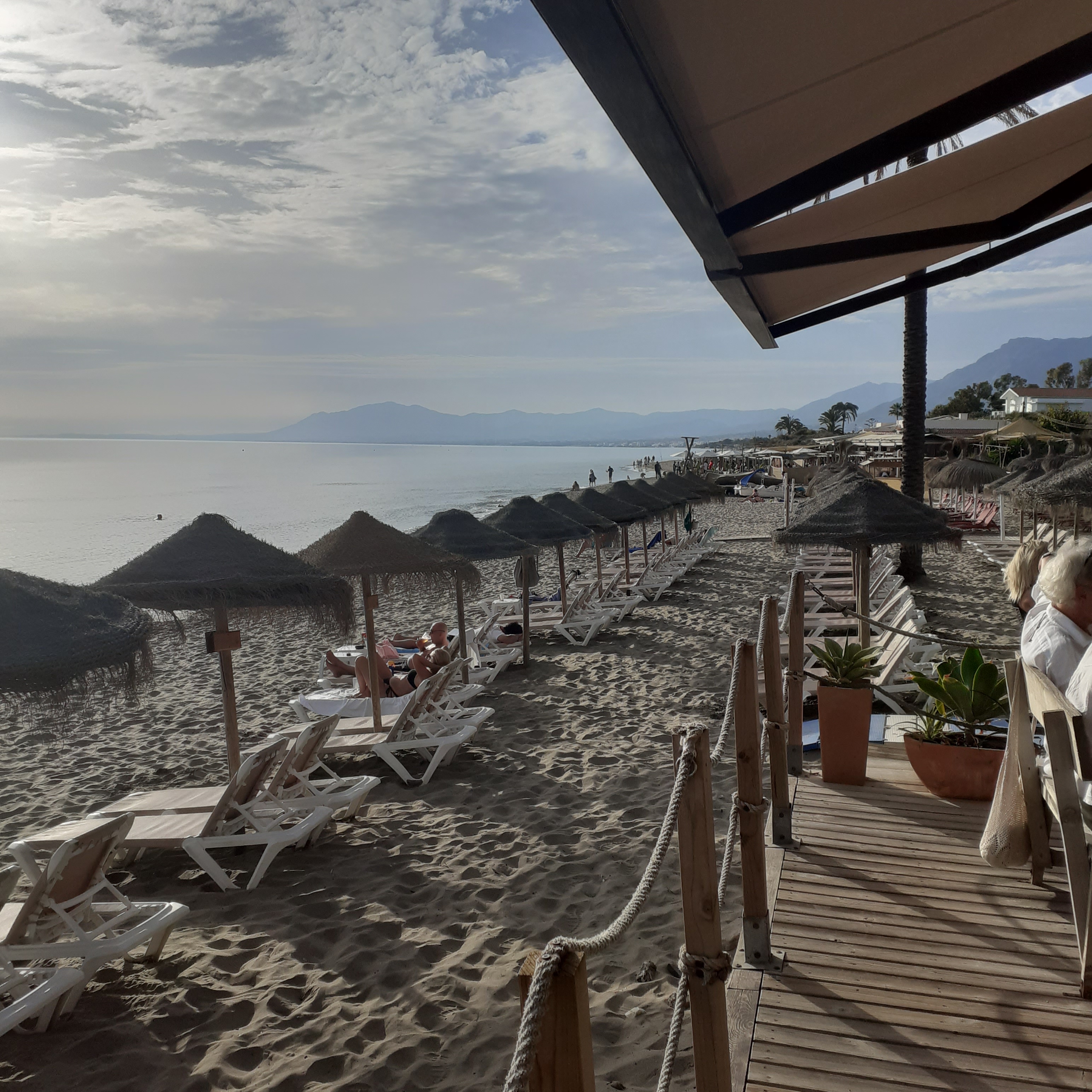
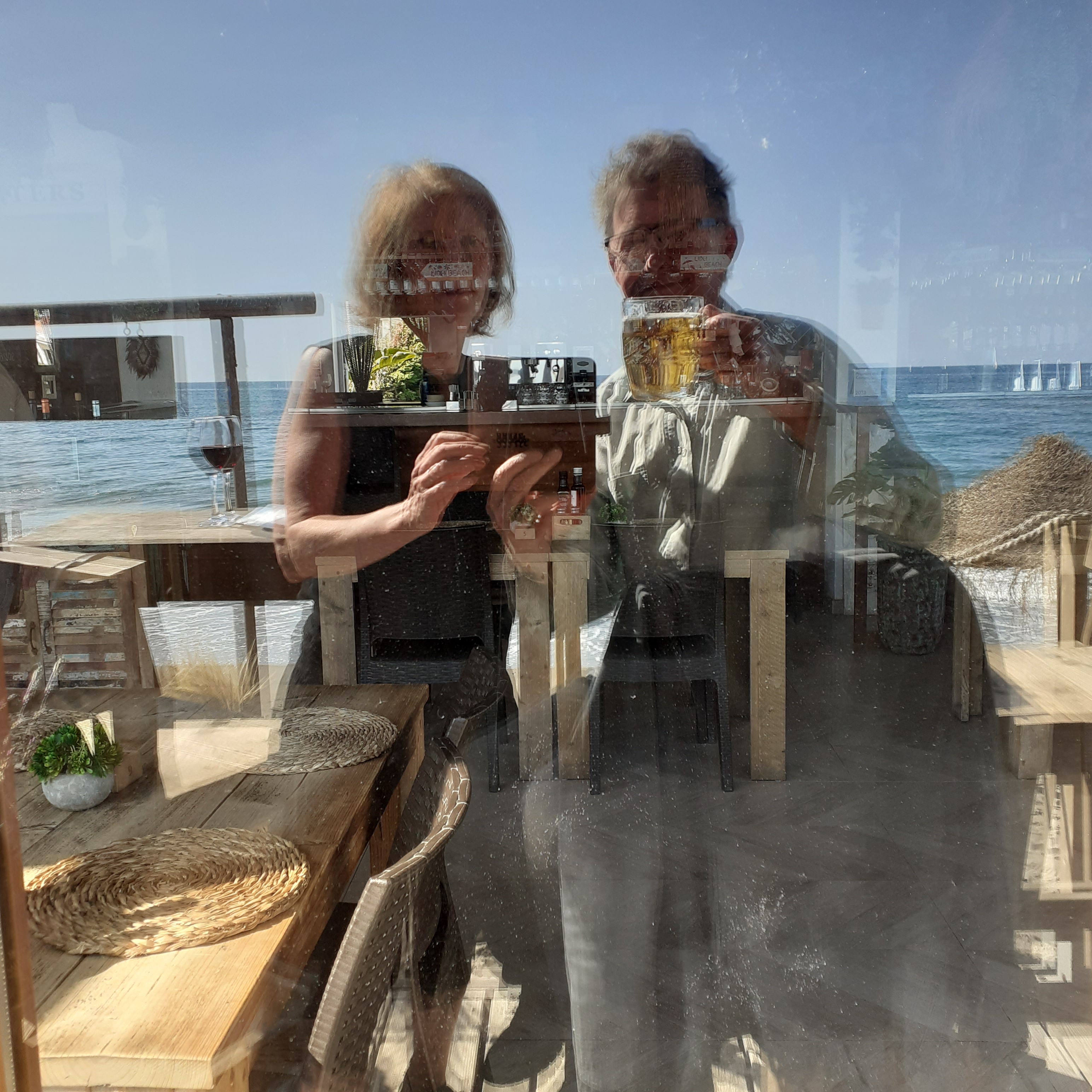
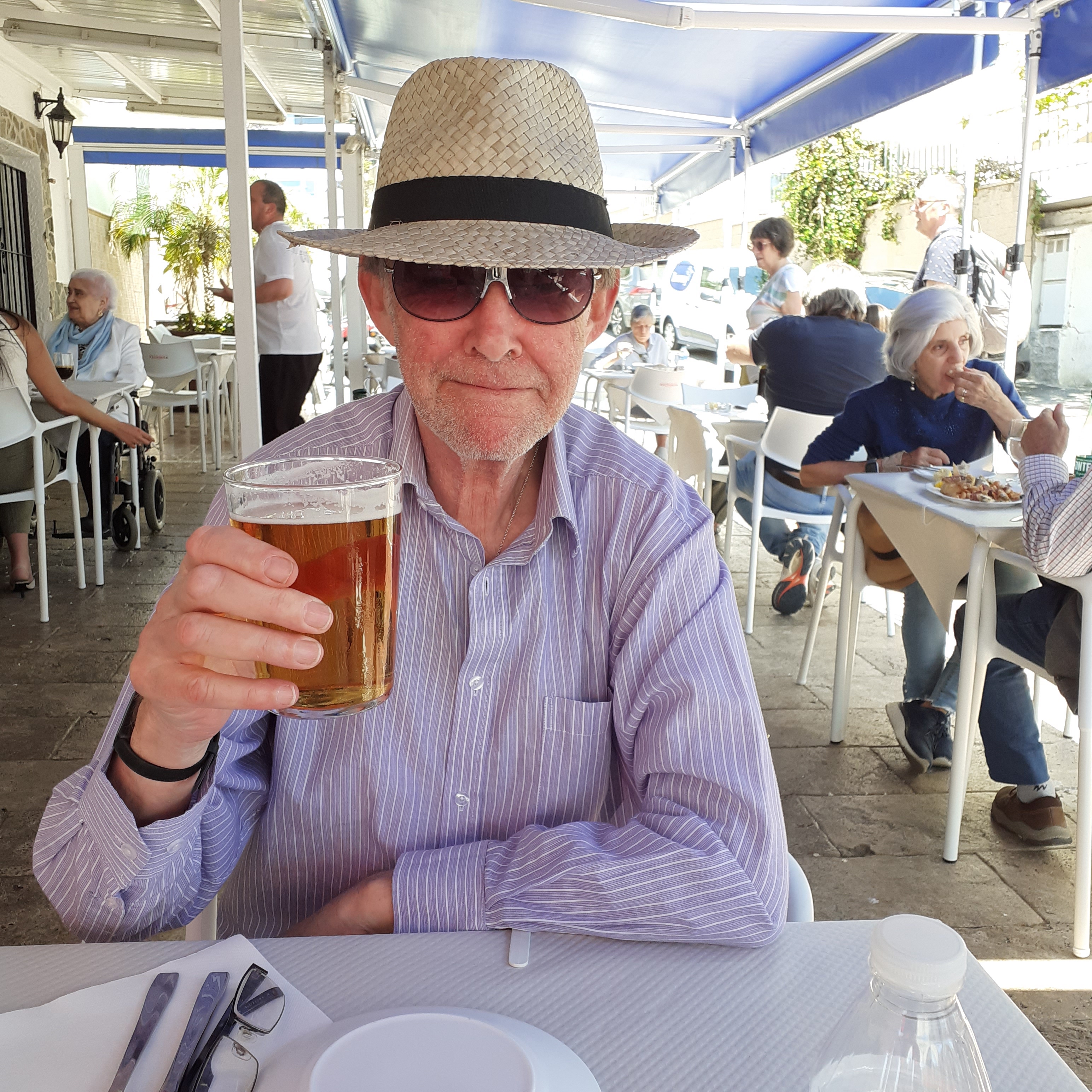
Marbella bus station is outside the city centre. We had originally booked a hotel, but cancelled and opted to head straight for the villa. The taxi from the station cost €20 and deposited us in Elviria central. The sun made a welcome appearance and after shopping we had pizzas and pints outdoor on the square. We did make a trip into Marbella the next day taking the local bus and spending a leisurely few hours walking up the coast towards Puerto Banus, where the rich folk go. We returned to eat at Canuto in Marbella with good local tapas. We walked the six miles home along the beach in hot sunshine and high waves. At last we reached our favourite stop in Elviria. The Lido Bar along the beach has become our sunset bar, the perfect place to relax over a few drinks, or a bight to eat. We fade into the spectacular coastal scenery looking out over the Mediterranean, Africa beckoning just beyond the lip of the horizon.
No llores, mi querida

Dios nos vigila

Soon the horse will take us to Durango

Agarrame, mi vida

Soon the desert will be gone

Soon you will be dancing the fandango

Romance in Durango is also on Dylan’s album Desire.
Andalusia – 6. Twisting by the Pool

With five episodes so far in our tour of Andalusia, a couple of destinations remain. In April I will be going to Seville and Cadiz and I look forward to giving my account of those two fascinating cities. Seville is the capital and largest city in the region and dates back over two thousand years. Cadiz is more ancient still; one of the oldest towns in Europe. I will be travelling by plane, bus and train. Meanwhile, we will be taking a break in our hideaway in Elviria, Marbella. A break, for me, means doing nothing much at all. 

We’re going on a holiday now

Gonna take a villa, a small chalet

Costa del Magnifico

Yeah, the cost of living is so low

Scribbling is allowed, in whatever form I decide to record worthwhile memories. Some painting or prose, or both, will emerge. This acrylic is a moment captured last Spring in Elviria, just a few kilometres east of Marbella. That rippling blue rectangle is a familiar motif in Hockney’s Californian paintings and sum up that mood of ecstatic indolence at the heart of swimming pool culture. To be sure. There are a couple of musical equivalents; though less than one might suppose. Kate and Anna McGarrigle’s rendition of Loudon Wainwright’s The Singing Song is one and Nightswimming by REM another, if not quite the right time of day. Closest is Dire Straits, with Mark Knopfler’s Twisting by the Pool. A rare fun rocker from the bluesy Geordies, it is a retro take on the Spanish holiday boom for sun starved Britons in the early sixties. The song doesn’t appear on any of the band’s studio albums, and first surfaced as a single 1983. It was a firm favourite as an encore, as I witnessed at  Stadium gig in Dublin the early eighties.

Yeah (yeah), gonna be so neat

Dance (dance) to the Euro beat

Yeah (yeah), gonna be so cool

Twisting by the (twisting by the)

Twisting by the (twisting by the)

By the pool (twisting by the pool)

So, while I hope to be pumping ink with my biro, or painting my next masterpiece for over the mantelpiece; more than anything else I will be

Twisting by the pool (twisting by the pool) twisting by the pool (twisting by the pool)

We’re twisting, twisting by the pool, twisting by the pool, twisting by the pool

Twisting by the pool (twisting by the pool) twisting by the pool (twisting by the pool)

We’re twisting, twisting by the pool, twisting by the pool, twisting by the pool

Andalusia – 4. Marbella

We walked to Marbella along the beach one morning. It’s about 6 miles from Elviria, and I was feeling the heat near the end. Still Spring, but climbing into the mid twenties by mid-day. Approaching the city outskirts there are a number of rugby pitches, and we are in the city proper when we reach Playa de Venus adjacent to the port. Puerto Deportiva with its modern green lighthouse lies beyond. On more sedentary days, there are regular busses along the coastal highway, the A7, for a more leisurely trip into town. It takes under half an hour. 

Marbella has long been a resort for the quality. Meaning well to do, and sometimes more quantity (of cash) than quality. The resort was an early example of Costa Del Sol tourism, established just after the Second world war. The city population today numbers 140,000 people, though that can treble during the holiday season. North western Europeans, including a lot of British and Irish, swarm for the guaranteed heat and sunshine. A long, long time ago it was popular with southern visitors of a different sort. The Moors colonised Iberia from the eight century, the name Al Andalus was then applied to the whole Iberian peninsula. Andalusia persists in the name of the Moors last redoubt.The Moors established a citadel here in Marbella, the Alcazaba, fragments of which survive, and a Mosque. 

There are two parts to Marbella. The bustling well serviced seafront where we arrived after our walk is the modern resort. The Old Town, a little farther inland, is a warren of lanes and quaint squares sloping ever upwards. After the conquest of the Catholic Monarchs in the late fifteenth century there was significant development in this walled, medieval town. The Plaza de los Naranjes was built as the centrepiece of the Old Town. It remains a picturesque antique square with some fine public buildings. The town hall was built in 1568 and the Mayor’s House nearby. At the south west corner is the Chapel of Santiago from the fifteenth century; the oldest building in the city. It predates the square, which explains why it is set at an odd angle to it.

The square itself is regular, tree shaded and ringed with restaurants and bars. Nearby is another ancient church. The Church of Santa Maria de la Encarnacion is a Baroque building of the seventeenth century, built over the existing mosque. Painted white and with an imposing bell tower it stands out as the old city’s grandest church.

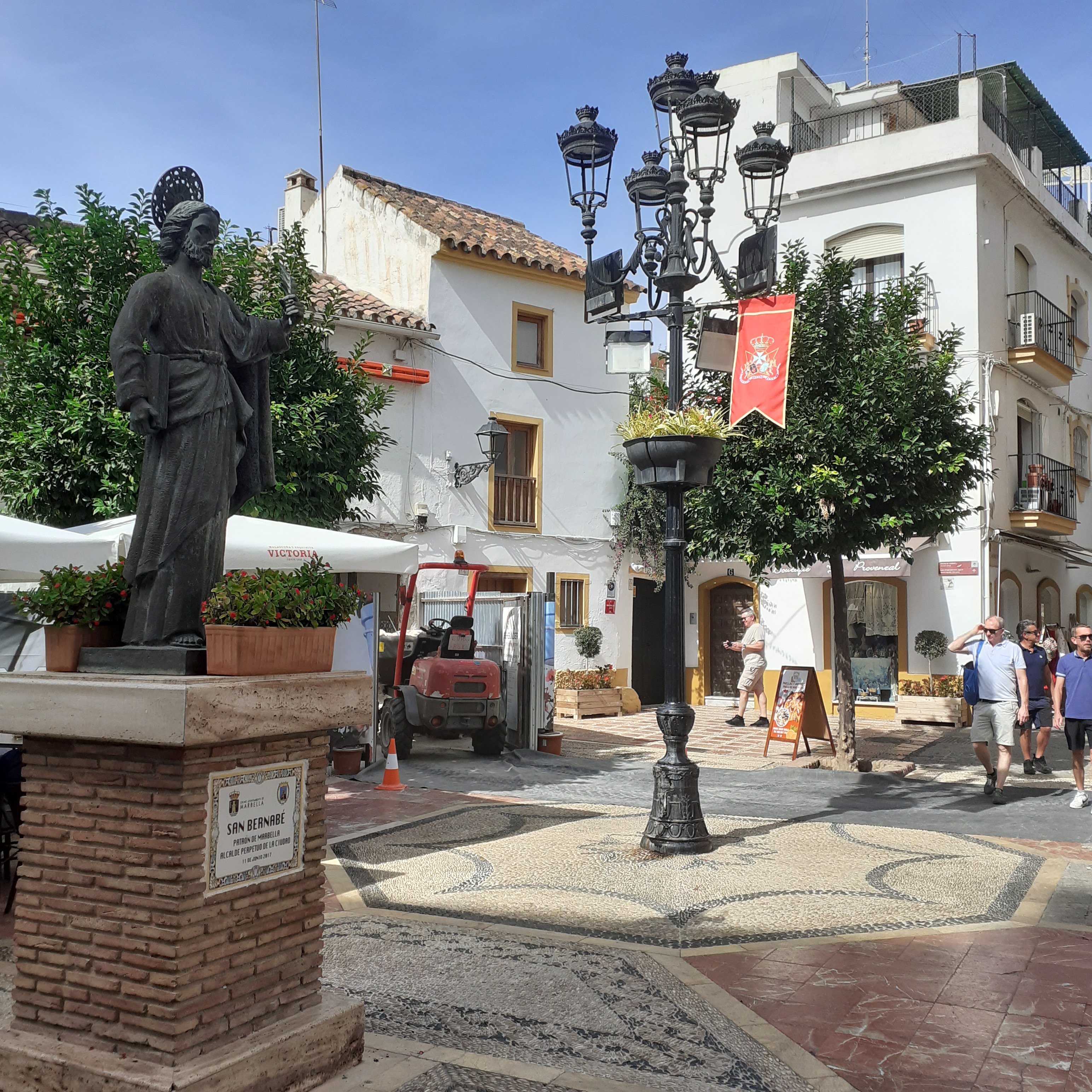
Heading further uphill the streets tunnel back to their medieval origins. The Castillo de Marbella, the remains of the Moorish Castle, lies to the north east of the square. From here, following the line of the walls back down to the modern commercial centre, we come to Plaza de la Iglesia with its statue of Saint Bernabe, the town’s patron saint. His festival is on the 11th June, ushering in a week of dancing and carousing in the Spanish way. Festivities are rarely remote from Marbella at any time though this, we hear, is particularly wild. Our ambitions for earthly delights are not particularly Bacchanalian today and we make do with an easygoing hour or two in Plaza Manuel Cantos, where the Irishman Pub and Luigi’s Italian Restaurant provide sufficient for our drinking and dining pleasure. Other soirees might include El Balcon de la Virgen and Patio Marbella in the labyrinth of the old town. 

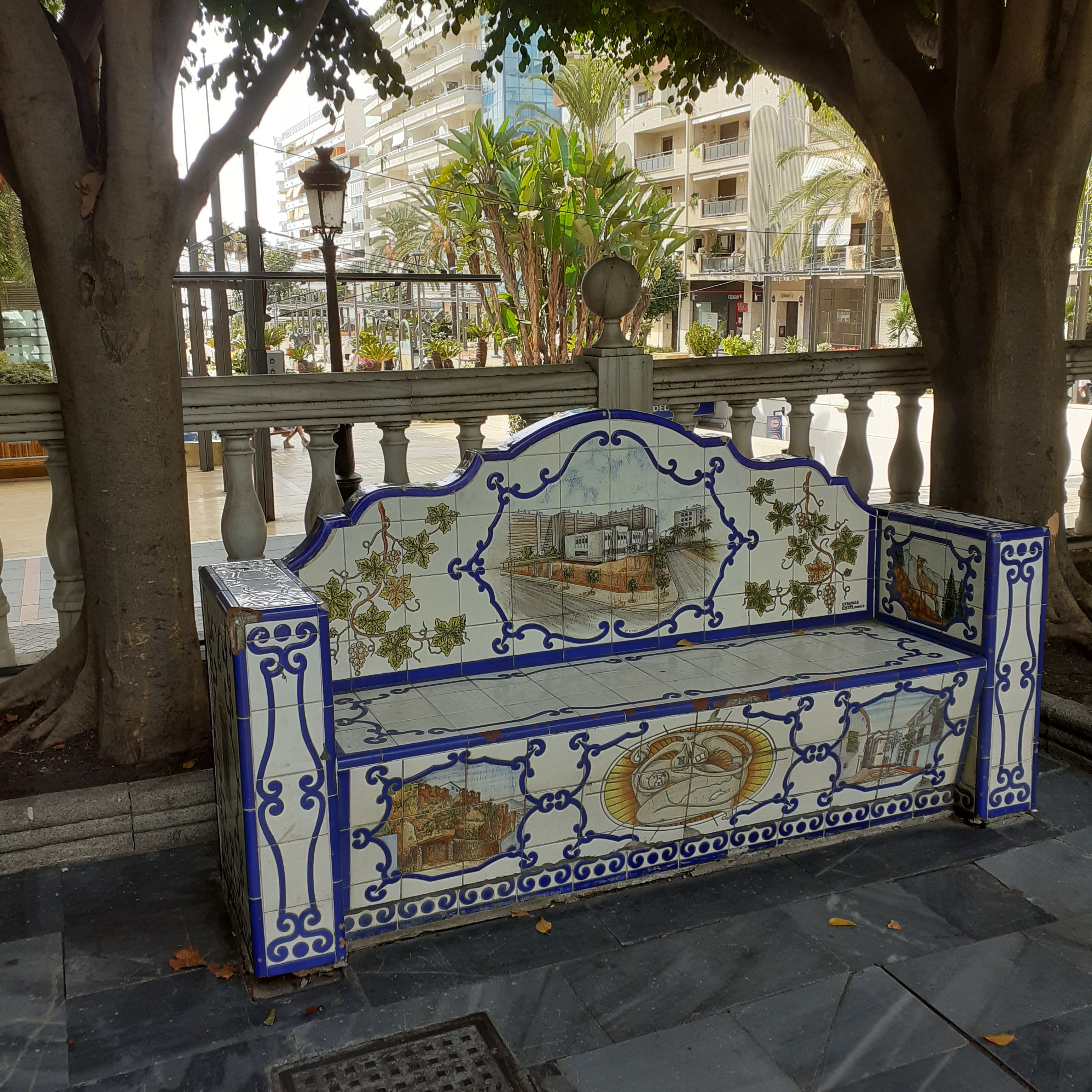
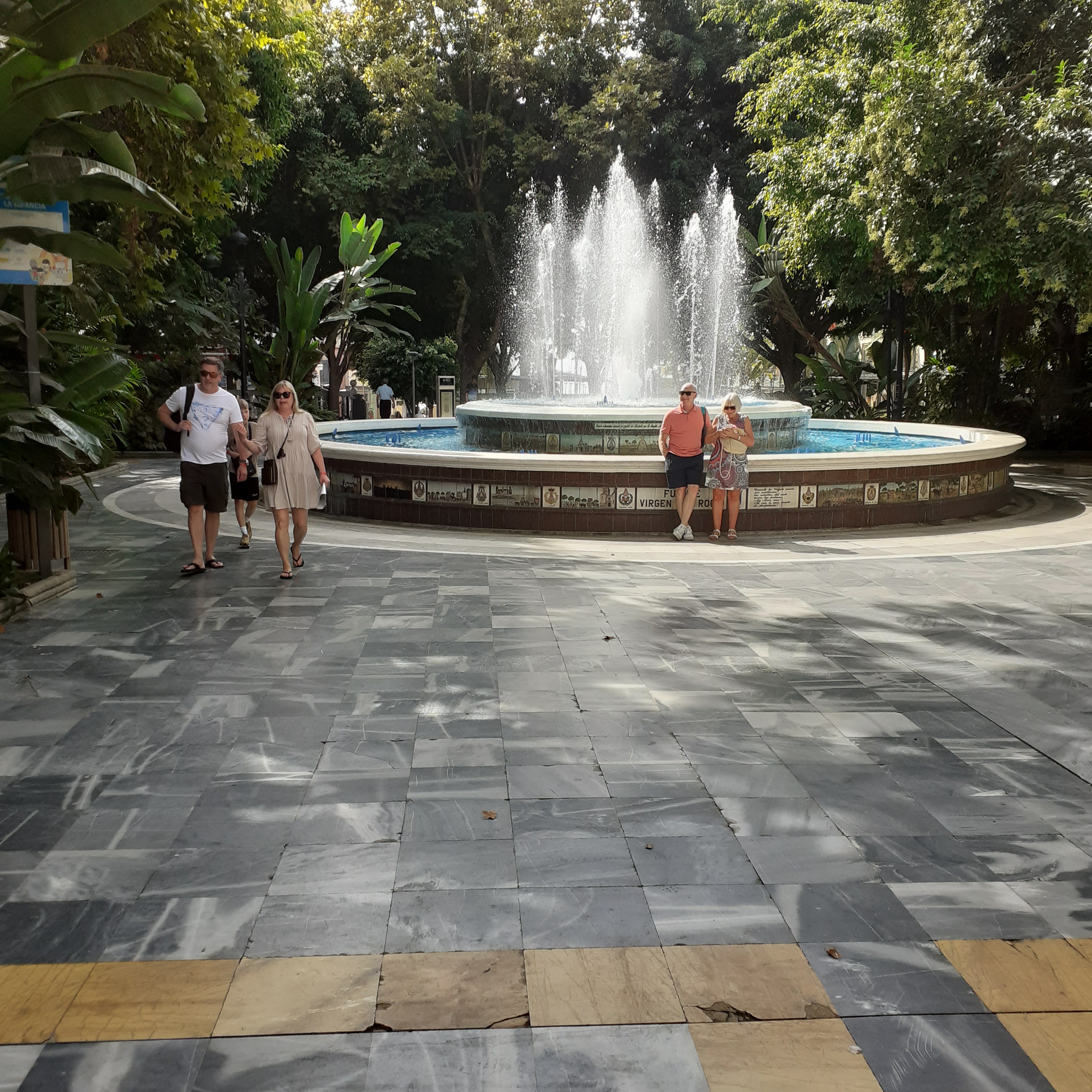
Between the Old Town and the modern seafront, Ensanche Historico, the Historic Extension, is laid out to ease transition between the two. Across the busy thoroughfare of Paseo de Alameda, Alameda Park is an elegant formal park, richly planted and decorated in colourful tiles. All of this radiating out from a historic fountain. It’s a glorious place to hang out, the setting luminous under the shade of palm trees.

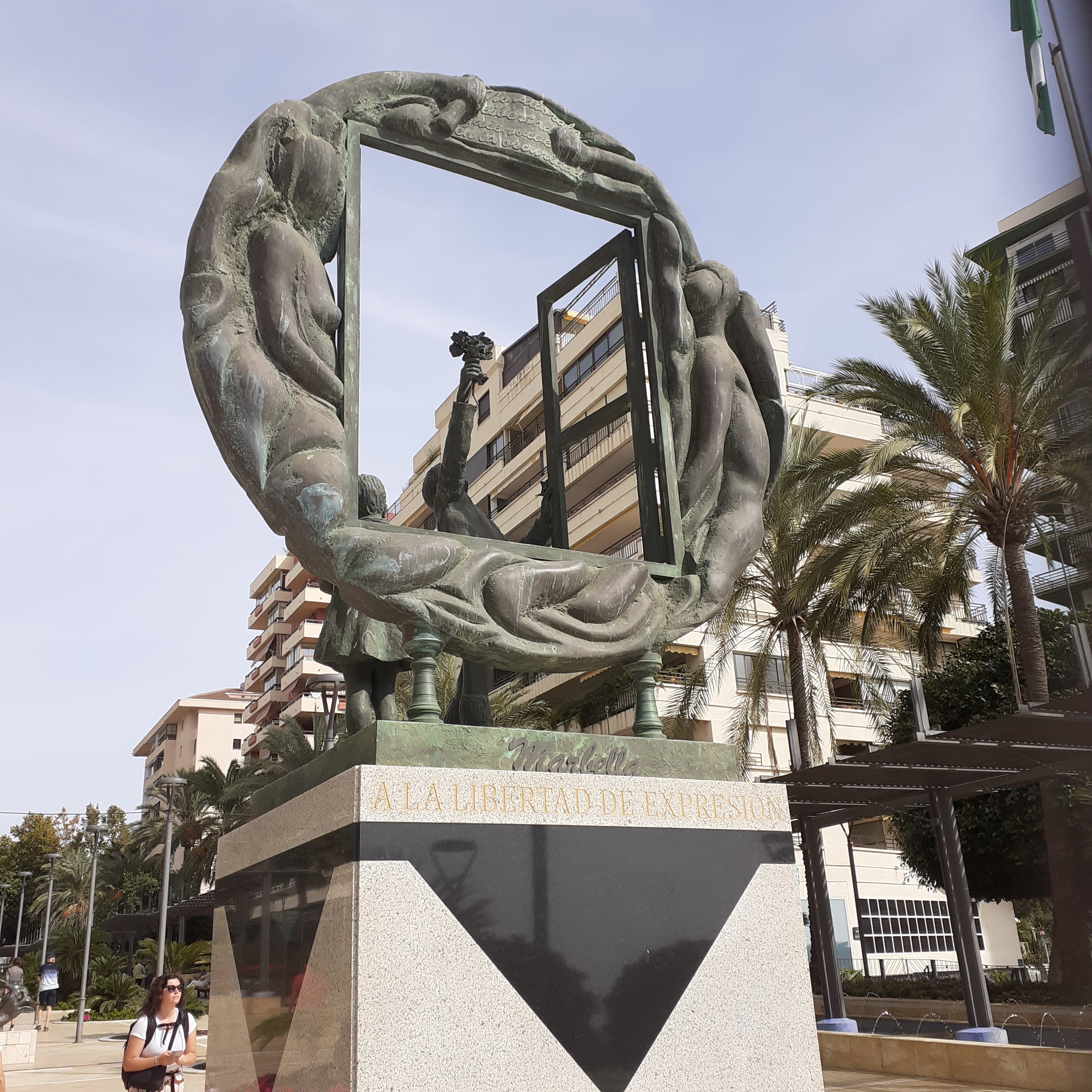
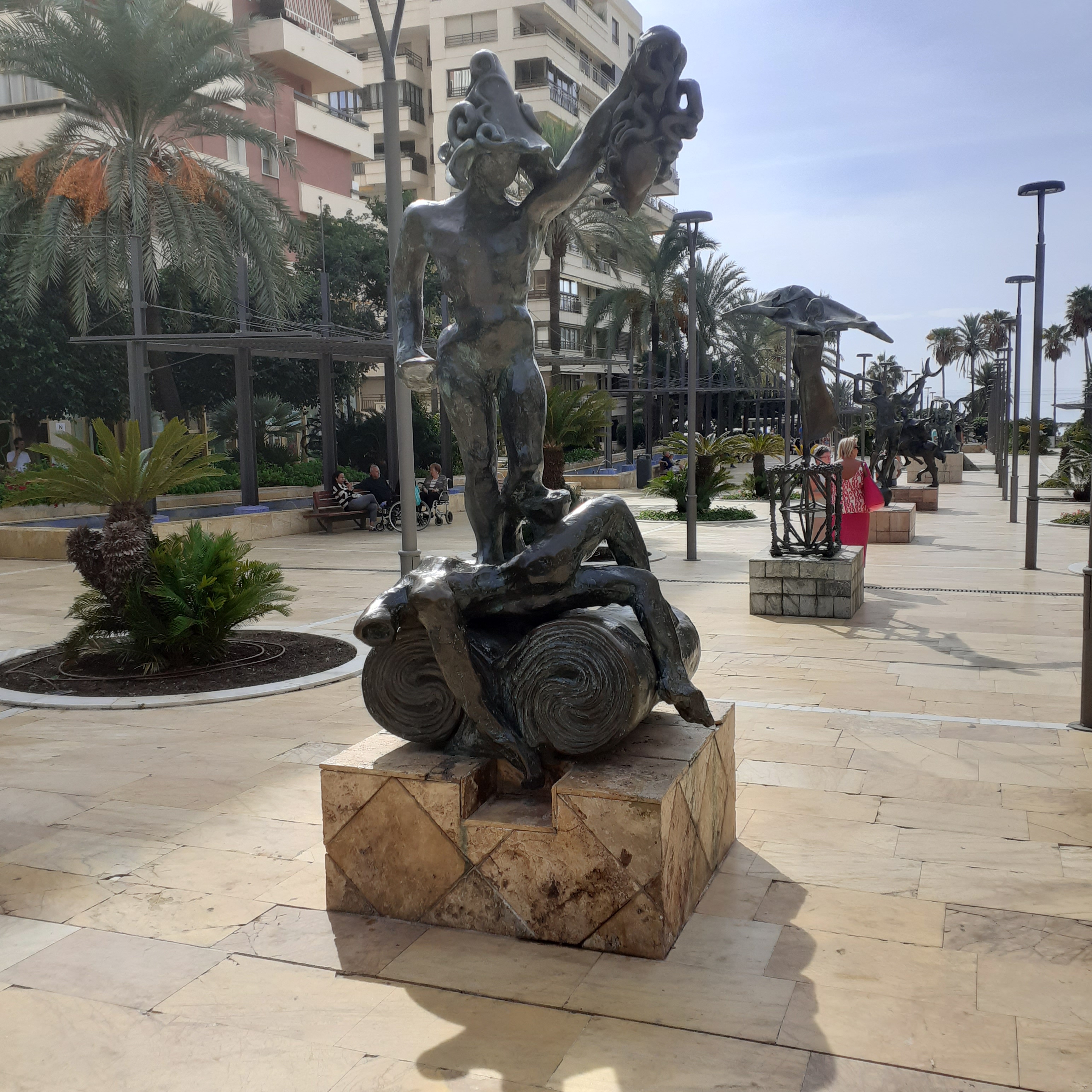
Beyond the park, The Avenida del Mar, as its name suggests, forms a wide esplanade sloping down to the seafront. It is lined with sculptures by Salvador Dali and others. Eduard Soriano is a notable other, his Monument to the Freedom of Expression overlooks the seafront promenade. This shows two figures at an open window surrounded by apt quotations, including the sculptor’s: Freedom does not die, it is born and sleeps daily.

Dali’s ten bronze sculptures were cast in Verona and acquired in 1998. They feature a range of hallucinogenic imagery as one would expect from such a major Surrealist. Some are drawn from Classical mythology including figures of the god Mercury and of Greek hero Perseus beheading Medusa. There are metamorphoses of nature with Man on a Dolphin and Cosmic Elephant, and inevitably Dali’s wife and  muse, Gala, who is depicted leaning out a window.

Dali has no specific connection with Marbella. He hailed from Catalonia, born in 1904 in Figueras, near the French border. As for Andalusia, he was in his younger years very friendly with Federico Garcia Lorca, one of Spain’s leading poets. Then there is the film, Un Chien Andalou. Lorca, whose advances were rejected by Dali, interpreted the film’s title as a swipe at him and became further alienated from the Surrealist movement.

Lorca may simply have been paranoid, though the title does intrigue. It is taken from the Spanish saying: an Andalusian dog howls – someone has died. The idea sprang from an exchange of dreams with filmmaker Luis Bunuel and the two collaborated on the 1929 silent film which was directed by Bunuel and co-written with Dali. It ran to just sixteen minutes. The notorious opening scene begins with the reassuring caption, once upon a time, but quickly becomes ominous. A man sharpens his razor while a thin cloud bisects the moon, He restrains a seated young woman and brings the razor to her staring eye. Provocative, repulsive and outrageous, the film went down well which was something a disappointment to its writers who were prepared for a riot. It echoes forever through avant garde film. David Lynch would be a good example. Think Blue Velvet for one, and many’s the rock video.

Marbella promenade stretches from the port for a further seven kilometres to Puerto Banus in the west. Puerto Banus marina, with its luxury yachts is an upmarket nightspot and includes, amongst other delights, O’Grady’s Irish Pub. There are plenty of opportunities for refreshment at this end of the boardwalk, and plenty of time, which seems to grow profusely in the sunshine of Andalusia. That day we took a bus back to base camp. We were helped by a lovely Norwegian couple who come here every year. And why not. Folk from frozen fjords and rain dirty valleys need some time to gaze at the actual heavens.

To everything – turn, turn, turn

There is a season – turn, turn, turn

And a time to every purpose under heaven

A time to be born, a time to die

A time to plant, a time to reap,

A time to kill, a time to heal,

A time to laugh, a time to weep.

This version by the Byrds, from 1965, surfaces whenever joy is required. Pete Seeger wrote it in 1959, setting the words from the Book of Ecclesiastes to a major chord sequence. Those words from the Bible are attributed to King Solomon of the 10th century BC. Very old school. Seeger supplied the “turn, turn, turn” and the Byrds took it to No 1 with their characteristic jangling guitars and sublime vocal harmony.