
Back in the seventies, on our daytrip to Liverpool we visited the modernist Roman Catholic Cathedral. Known as the Metropolitan Cathedral, or Paddy’s Wigwam to some, it is at the North end of Hope Street. The Anglican Cathedral lies near the street’s southern end forming something of a heavenly bracket. However, the naming of the street isn’t a reflection of this ecclesiastical nature. Neither faith, hope nor charity are invoked; Hope Street is named after William Hope, a merchant who once lived here in the late eighteenth century.
Hope Street also hosts the Liverpool School of Art building from 1883. John Lennon and Stuart Sutcliffe studied here in the early sixties. In 2008 the Art School moved, though the memory of Lennon remained. The new school is housed in the John Lennon Art and Design Building nearby. Meanwhile, the Liverpool Institute for the Performing Arts is now based in the old building.
The Metropolitan Cathedral was completed in 1967. It was a long time coming. During the Great Famine in the 1840s, Liverpool saw a huge influx of Irish Catholics. Many passed through the port, heading for America or elsewhere in Britain and Empire. Many stayed. By the 1850s a Cathedral was planned. Edward Pugin was the first commissioned for this, but only a local parish church resulted. In 1930 Edwin Lutyens was chosen, producing designs for a massive cathedral on Hope Street, to rival the also massive Anglican Cathedral. It would have been one of the largest churches in the world, with the largest dome. But it wasn’t to be. The strictures of World War Two put a halt to such grandiose plans. Only the crypt was completed in the late fifties. This, strangely, plays host annually to the Liverpool Beer Festival. Or perhaps that’s not so strange.
And if life is a bar room in which we must wait
‘Round the man with his fingers on the ivory gates
Where we sing until dawn of our fears and our fates
And we stack all the deadmen in self addressed crates
Heaven knows no frontiers
And I’ve seen heaven in your eyes
No Frontiersthe is a song written by Jimmy MacCarthy, becoming the title track of Mary Black’s 1989 album.
At last, sometime between Lady Chatterly and the Beatles first LP, Frederick Gibbert’s radical modern design went ahead. Built on top of the crypt, it forms a flared conical structure above a circular plan with the altar central. Sixteen curved concrete trusses frame the building, forming flying buttresses at the lower level and rising into a pinnacled crown at its height. The rushed and economical construction practices of the time resulted in flaws appearing early, and extensive rapairs and alterations were required in the 90s.
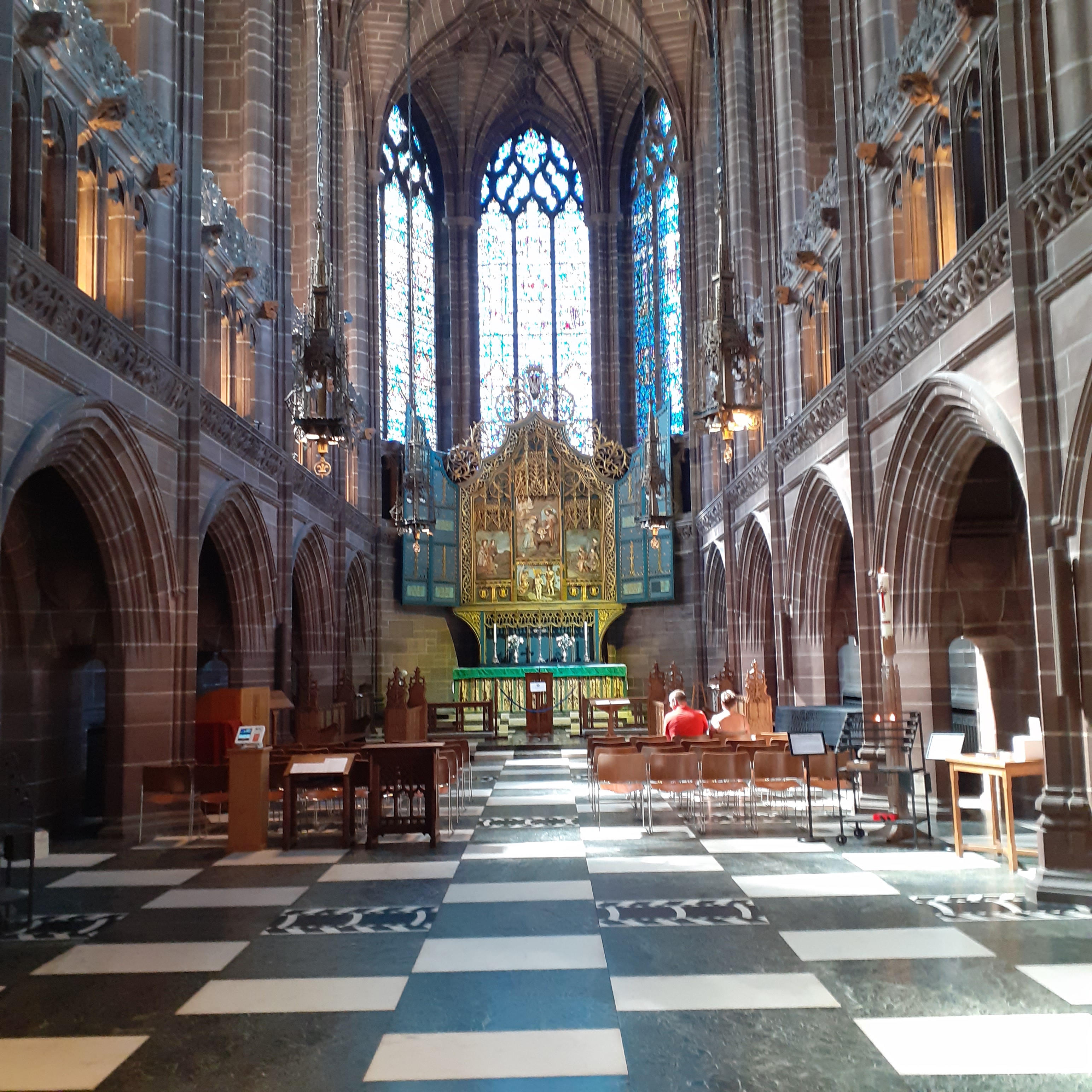
The Protestant Cathedral is more traditionalist, though it is also a twentieth century building. Begun at the start of the century, it is the largest cathedral in Britain. Giles Gilbert Scott was a student in his early twenties when he won the design competition. More contentious still, he was a Catholic. But, maybe that brought a certain flourish to the interior, particularly the Lady Chapel. Scott was a versatile architect and designer, his notabe works including Battersea Power Station, and the iconic red telephone box.
Overall, his design for the Cathedral draws on gothic tradition with a more pared down modernist finish. It was greatly modified early on towards a simpler, bolder statement. The central tower rises to over a hundred metres, immediately establishing the church as a city landmark, already in a strong position occupying the high ground south of the centre.
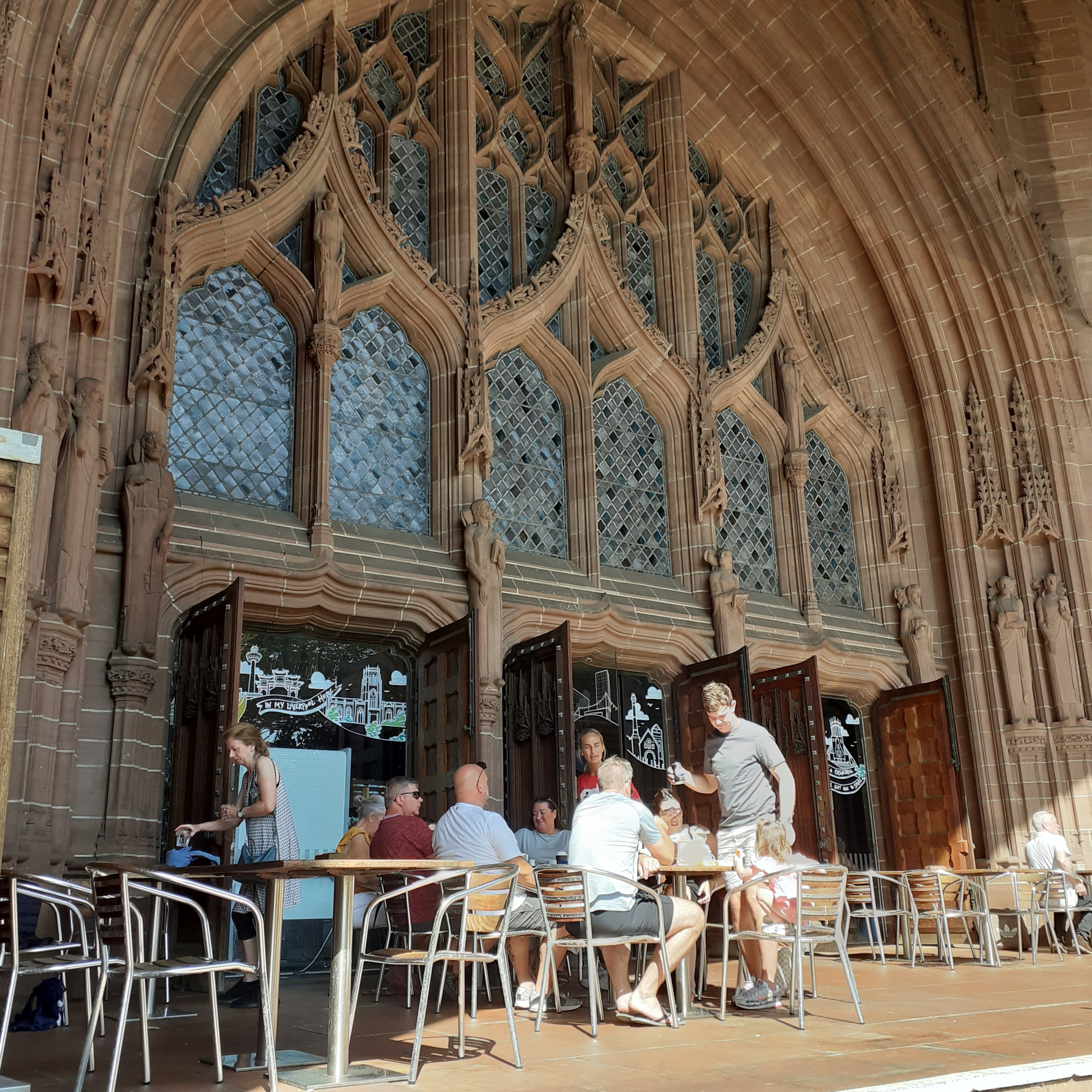
The vast interior is a perfect place to top up on spiritual awe. We’re hungry too, having skipped breakast, and that physical yearning was also catered for. On the terrace there’s a licensed bistro, good for breakfast, lunch, a coffee and a snack. You can even relax with a beer. Hitherto, my only experience of drinking alcohol in a concecrated building has been the odd communion with two substances. Liverpool is more liberal, whichever foot you kick with. Whether down at the Crypt or up on the High Church. So it’s something of an Ecumenical matter to go boozing with the Anglicans. I’ll drink to that! Later we ell in with a friendly vicar and talked about this and other things, including the various works off art the cathedral has accumulatied in its time.
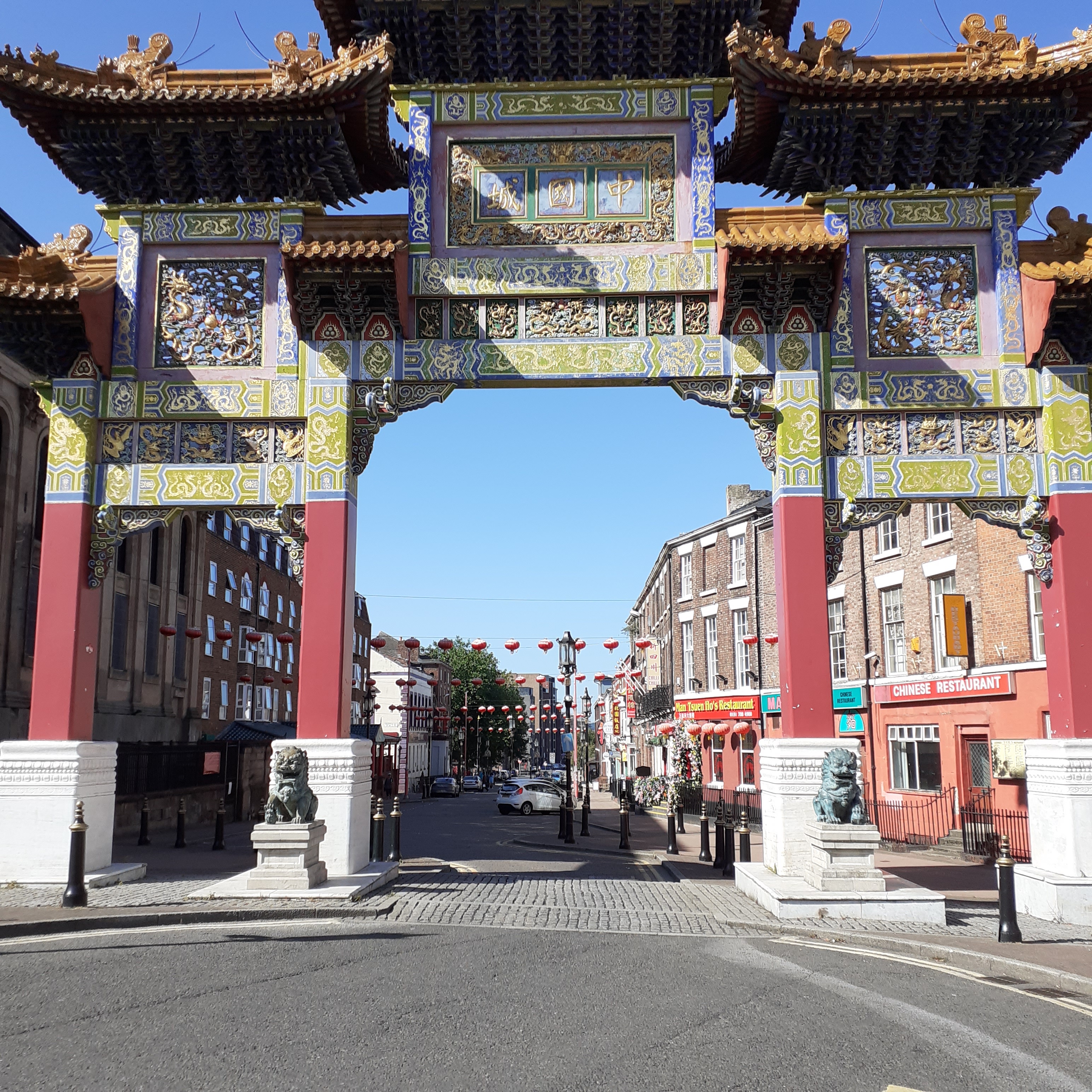
Heading downhill towards the Port, we pass through the gate of Chinatown. The spectacular arch was transported from Shanghai at the Millennium and reassembled here. It is one of the largest such arches outside of China itself. Liverpool’s Chinatown is the oldest established in Europe, develpoing back as far as the mid nineteenth century.

A familiar focus of travellers to Liverpool is Lime Street. When laid out in the eighteenth century it was on the city’s periphery, but the coming of the railway in 1836 brought it to the centre.The Rail Station is famous, fronted by the Great Northwestern Hotel built in 1871in spectacular Renaissance style. This was originally the Railway Hotel, and closed in the 1930s. Subsequently it was used for office and accommodation returning recently to the hotel business, operating as the Radisson Red.
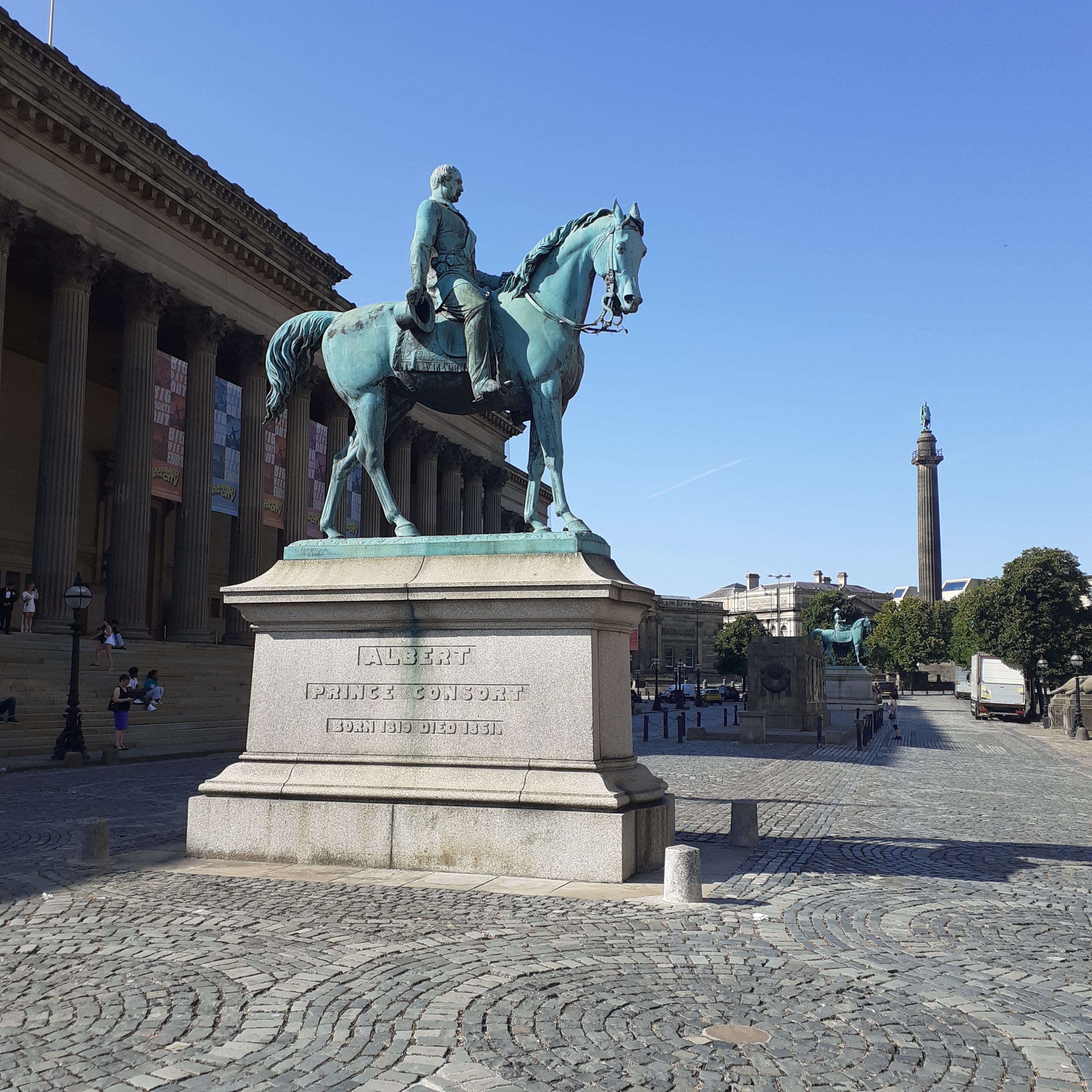
Lime Street gushes with colonial and mercantile pride. Statues stand guard; of Prince Albert, Disraeli and of course Nelson atop his column. St George’s Hall dominates the plaza opposite the station. It was opened in 1854 and contains a Concert Hall and law courts Behind the Hall are St John’s Gardens, a welcome green space on a scorching day. Then its back into the throng heading downhill through Liverpool’s main shopping precinct, completing our circle on the Waterfront.
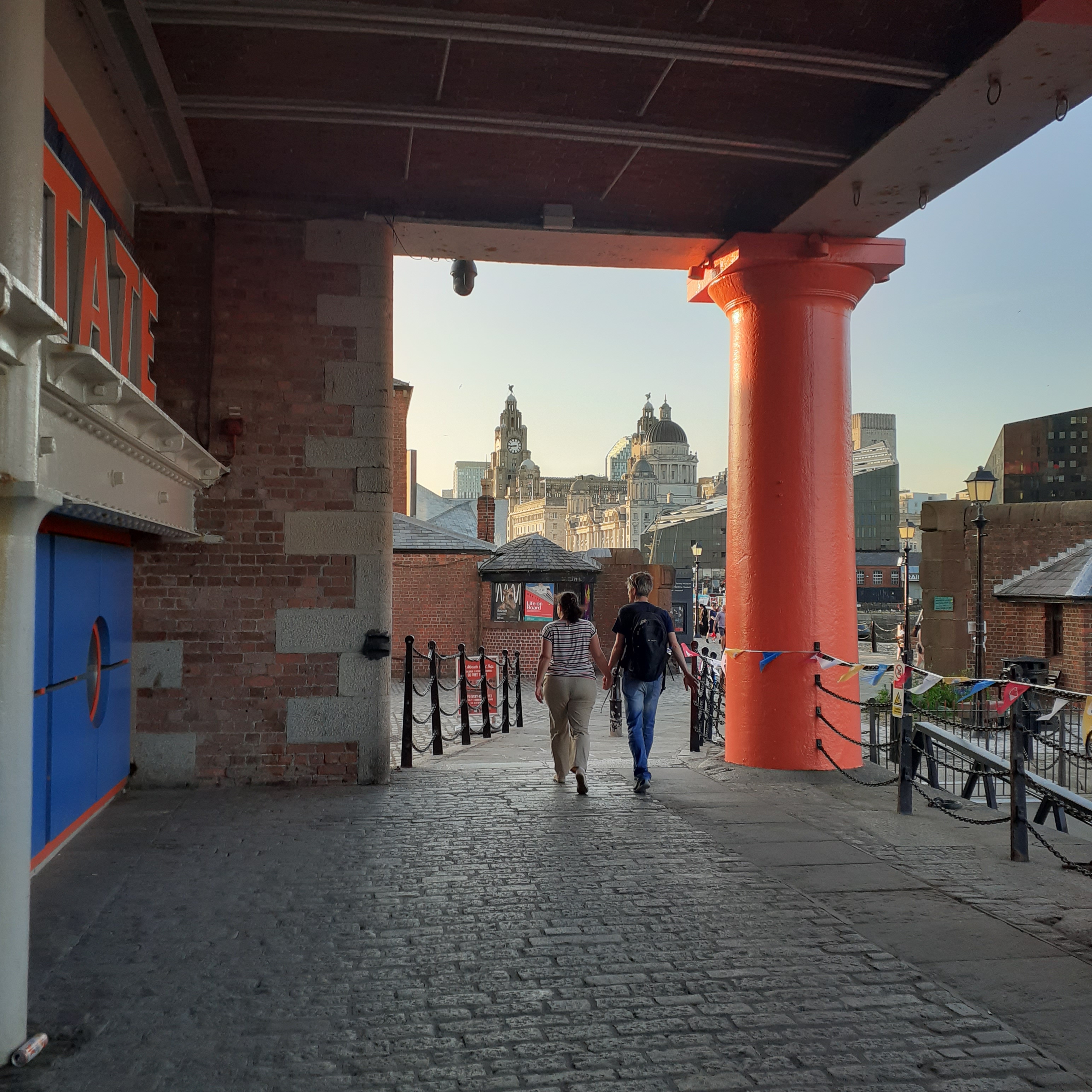
Our hotel, the Ibis, is beside Albert Dock, so the city centre and major sights are nearby. Albert Dock was built in 1846 of cast iron, redbrick and stone, a state of the art facility in its day, machinelike in its eficiency and fireproof too. The changing patterns of world trade and technology made it derelict just over a century later. In the early seventies, redevelopment could have meant removal, however sympathetic redevelopment won out preserving the majority of the buildings in a waterways setting. Apartments, shops, bars, restaurants and visitor centres line the waterfront, and this is the go to part of Liverpool, where it was once the place for leaving.
The Tate Liverpool opened in 1986 adding to the city’s prestige. Unfortunatey, the Tate was closed during our visit due to major renovations. My love of art galleries has been thwarted by such closures in recent years, so this is just another in a long list. The RIBA, Royal Institute of British Archotects, hosts a selection of the Tate collection in the meantime. The Liverpool Maritime Museum, the modern Museum of Liverpool, and the Beatles Story are other major attractions. There’s a funfair into the night, and everywhere the madding crowds strolling and going out to the many hostelries onstreet and off, and floating in the dock for that matter.

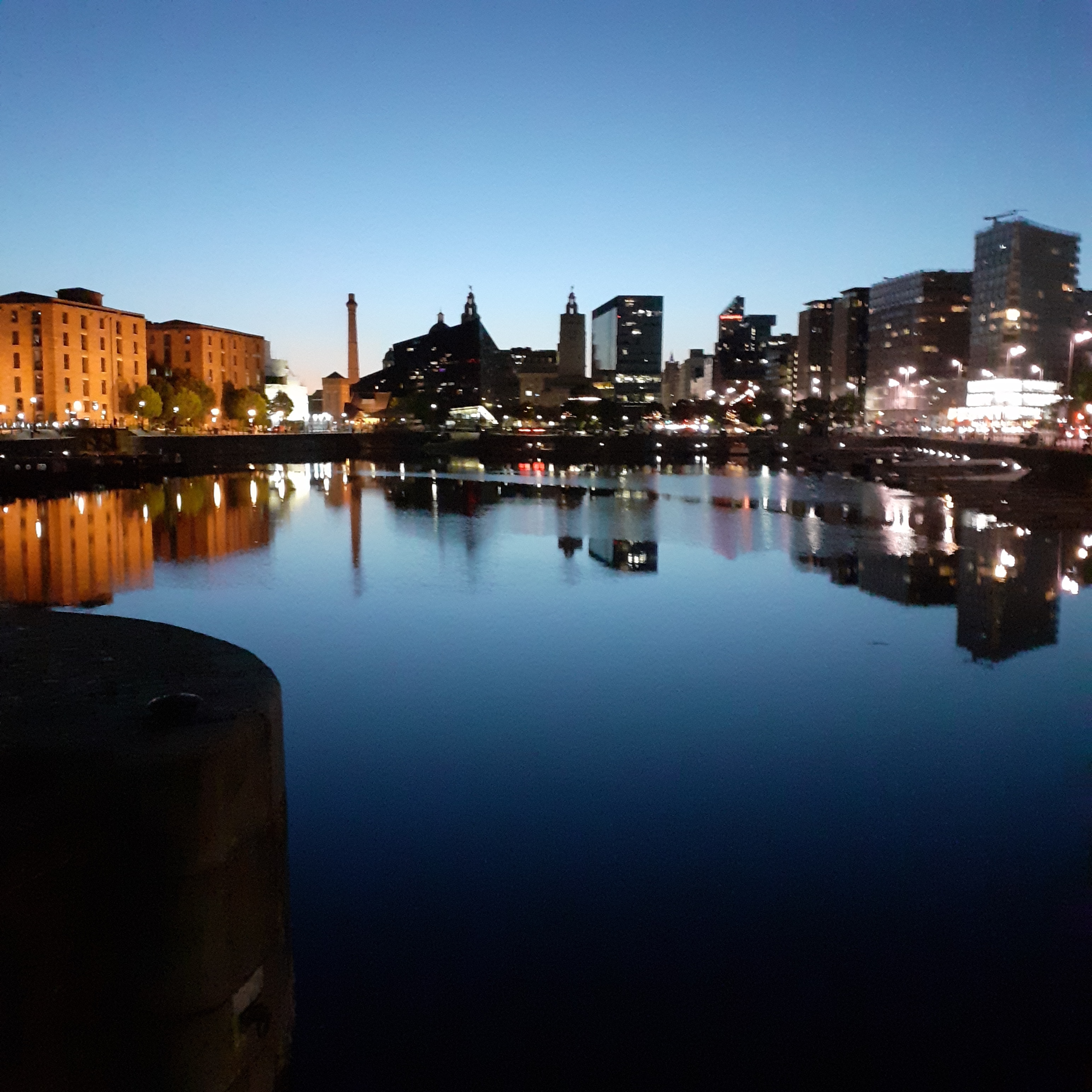
We frequented the Pump House for a few drinks. It’s set in a converted redbrick beneath a soaring chimney. There’s seating outside looking over Canning Dock and Mann Island, with the Tate Liverpool making a sharp modernist statement beyond. Later, we head through the Colonnades around Albert Dock browsing its shops and restaurants. We dine at the Panam Restaurant and Bar, its glass frontage giving a fabulous view over the dock as night falls. It’s an early rise in the morning and we catch a bus to the airport from the station next door. The airport is another major building named for the Beatles John Lennon. Originally Speke airport, it was renamed in 2001. It now sings.
Oh Liverpool Lou, lovely Liverpool Lou
Why don’t you behave just like other girls do?
Why must my poor heart keep following you?
Oh, stay home and love me my Liverpool Lou
Liverpool Lou was written by Dominic Behan in 1964. Ten years later the Scaffold did a cover, attributing it to Paul McCartney. McCartney later apologised and correced the attribution. On Desert Island Discs in 2007, Yoko Ono picked Behan’s song, saying that Lennon had sung it as a lullaby to their son, Sean.
 xxharrison