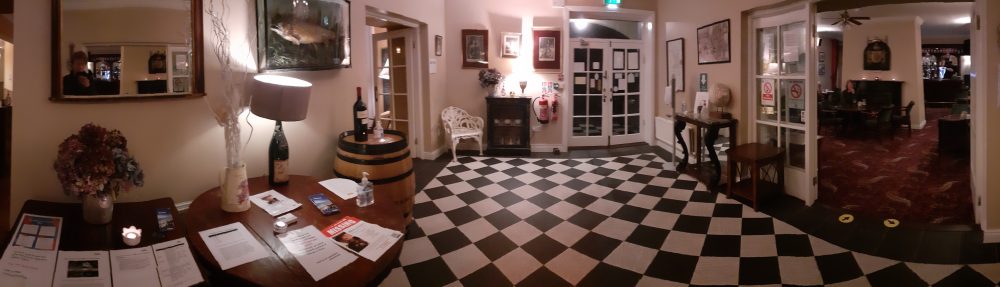
Cleary’s Pub lies in the shadow of the Loopline where it crosses Talbot Street. It is packed with the glinting brass and gloomy wood of the genuine, olde worlde Irish pub. With genuine passenger and freight trains hurtling overhead. I have stopped there on my way to concerts in Croke Park and in bygone days to slake my thirst after a hard day’s night in the Sheriff Street Sorting Office adjoining Connolly Station. Or even before the working night. The zombie shift could be tedious, but with hazardous interludes, so it was no harm to soften the sharper extremities of perception with a couple of pints before closing time. There were times too, in the wee small hours, when the Sorting Office would ring empty and hollow, the workers having repaired to some early opener to put in a round or two. I’d need to solve whatever task they’d set for me, some devious and booby trapped blockage, before sloping off into the dawn to herd them home from whatever watering hole they were hiding in. Grainger’s and the North Star being most likely.
Sheriff Street itself heads seaward before the Loopline, skirting the back end of the IFSC before crossing the Royal Canal to end off in the distance at East Wall Road. Our path continues northwards. A little further along Amiens Street we cross the line of the North Circular Road. Seville Place is on our right and Portland Row slopes up to our left towards Summerhill from where it continues on as the North Circular Road proper. At the five point intersection stands a notable Dublin landmark: the Five Lamps. This famous monument was erected in 1880 to fulfil the wishes of Lieutenant General Henry Hall who died five years earlier. Hall, from Athenry in County Galway, served with the British Army in Bengal and wanted his memorial to encourage sobriety. The cast iron fountain at its base provided clean drinking water, not available in the surrounding tenements.
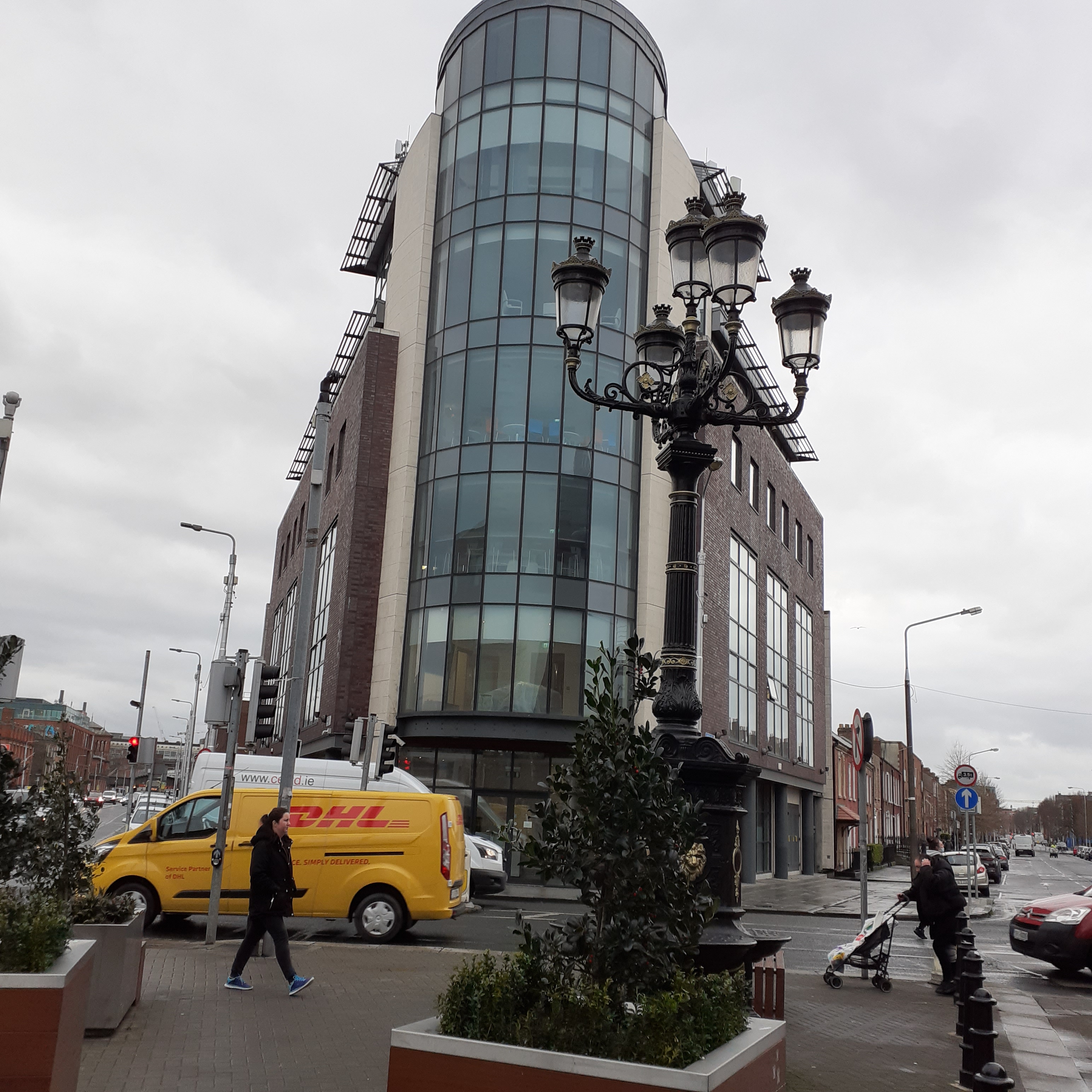
The Five Lamps miraculously survived the North Strand Bombing of May 1941. WW2 was phrased the Emergency in neutral Ireland, but bits of war intruded. Three hundred houses were destroyed and twenty eight people died in this rare and brutal assault by German planes. Whether it was a mistake or a warning by the Luftwaffe we don’t know. Dublin had sent firefighters up to Belfast to deal with the aftermath of German bombings there, and Ireland’s neutrality was always slanted toward the Allies. Ireland remains neutral, though not passive, at time of going to press.
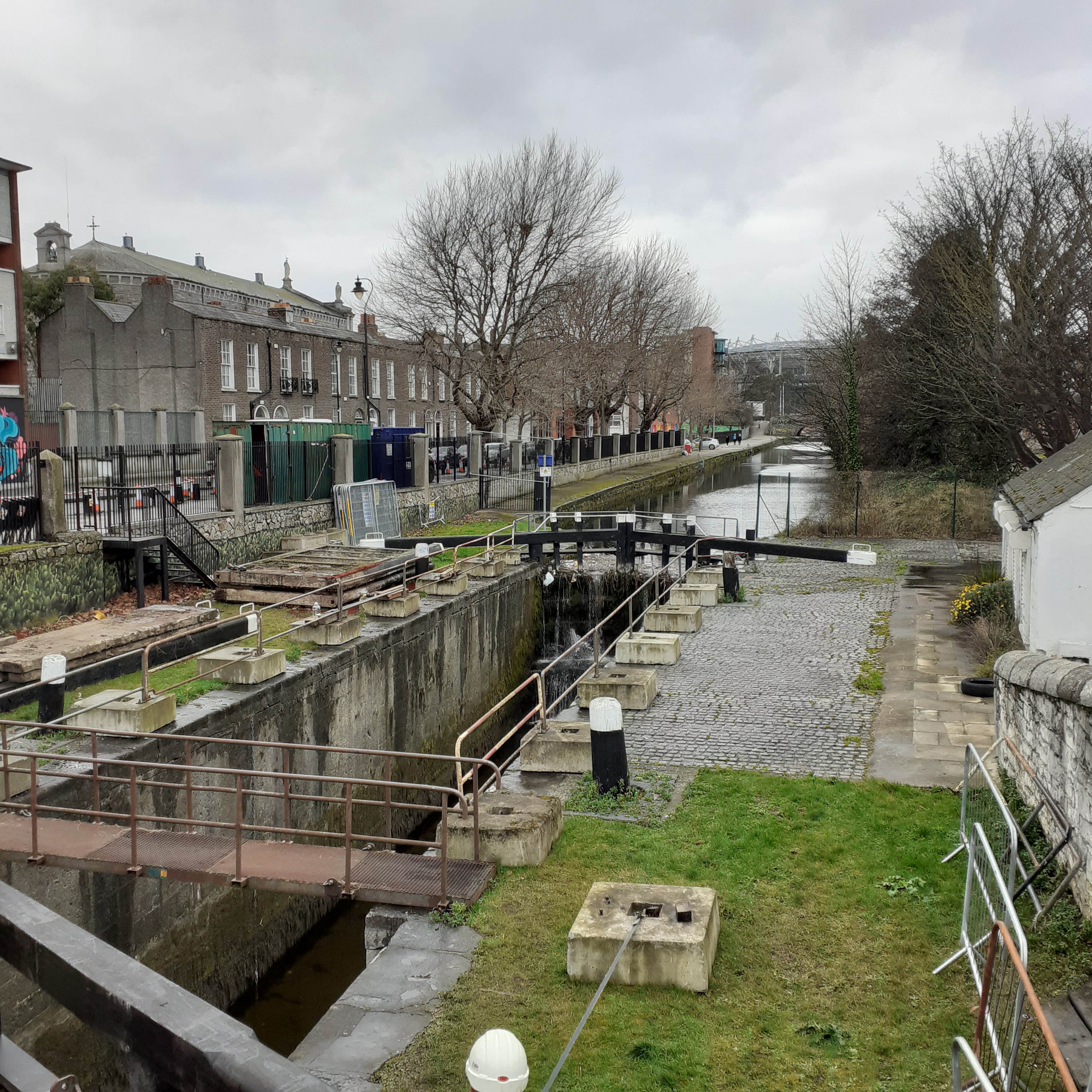
Continuing along North Strand Road, we cross the Royal Canal at Newcomen Bridge which is also the site of the first lock of the Royal Canal. The Royal Canal was the northside riposte to the Grand Canal on the southside. In 1790 construction began and soon the canal flowed westwards from Phibsborough to the Shannon River at Longford. The city extension of the Royal, as with the Grand, followed in the nineteenth century to link the Shannon with the Irish Sea. The Dublin Mullingar railway from the mid nineteenth century runs alongside the canal for much of its length.
Looking westward from the bridge, through the chaos of canal, railway and cityscape, Croke Park frames the horizon. The eighty thousand capacity stadium is the third largest in Europe. A feature of a stadium visit is the Skyline Tour. Way up in the eaves, it gives an elevated, dizzying, view over Dublin City. Croke Park has been the headquarters of the Gaelic Athletic Association (GAA) since its foundation in 1884. The major finals in hurling and football are played there. It is also, betimes, a concert venue. U2, Bruce Springsteen and the Red Hot Chilli Peppers are amongst those who have headlined, and whom I’ve seen.
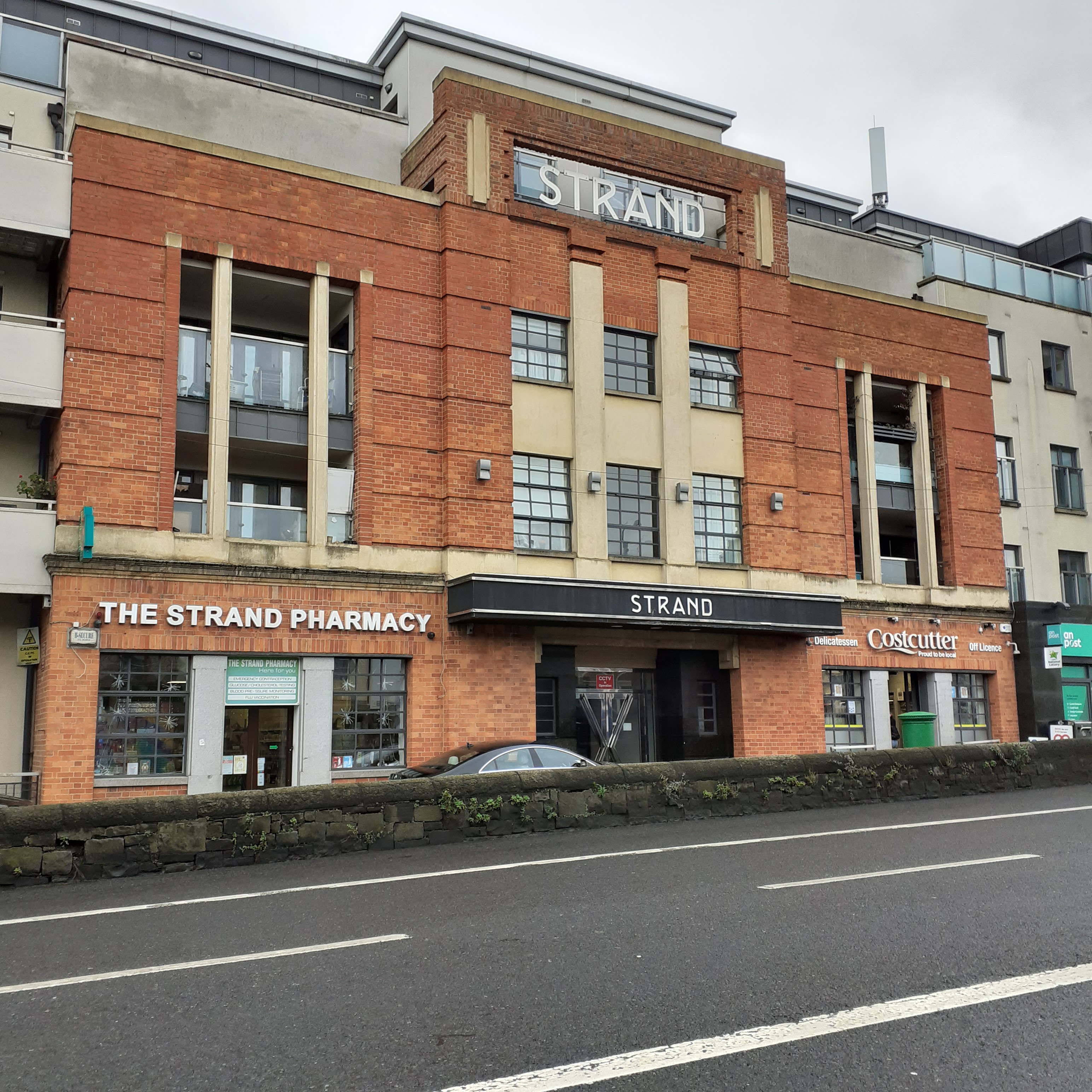
The Strand Cinema on the eastern side of the road was built in the mid thirties, becoming briefly a music venue and a bowling alley, before closing down along with so many suburban cinemas. The art deco facade was preserved and has been tastefully adapted as the frontage of an apartment complex.
Once more beneath the railway, this one also heading west, we continue through the dingy city outskirts to reach the Annesley Bridge crossing the Tolka River. Upstream, the river has enjoyed a pleasant suburban sojourn through The Botanic Gardens, Glasnevin and Drumcondra. But, off to our right, the murky Tolka seeps towards the docklands before taking a sharp left to join with the waters of the bay. East Wall Road continues straight into the docklands and eventually meets the Liffey at the East Link Bridge.

I worked in a factory down on East Wall approaching the Millennium. Planart made components for computers, bound for Finland mostly. It was a small operation, so I could follow through from darkroom to the final, messy business of etching. Urban spacemen in protective gear, the acid got everywhere. Not a place of love stories, so. Still, a young woman working production took a shine to the guy I worked with in the darkroom. I love a man with an accent, she said. Mac was from Arklow. I was appointed matchmaker, but such hints that I dropped, clanging from a height, went unheard by the Adonis of Arklow.
We argued regularly over music. There was wall to wall radio on the shop floor, strictly commercial, while one hip hop comrade was confined to the canteen for his aural hit. Rock music prevailed in the darkroom where I worked with Mac. The Cranberries were coming on strong just then. Their song, Zombie, stood out. Dolores Riordan wrote it in response to the death of two English boys in the IRA bombing of Warrington in 1993. Riordan’s enraged yodel fed directly into the zeitgeist. Mac quibbled with its political naivety, as he saw it. But it was a passionate vindication of light, and of leaving behind the dark, the heroic dead, and the persistent undead. No Need to Argue was the album, their second, released in 1994, and a global multi million seller.
It’s the same old theme
Since nineteen-sixteen
In your head, in your head, they’re still fighting
With their tanks, and their bombs
And their bombs, and their guns
In your head, in your head, they are dying
Zombie, zombie, zombie!
What’s in your head?
 Heading north on Guild Street, the Royal Canal to our right seeps towards the Liffey. A new city, linear and rational is being stamped over the old North Wall docklands. That’s the feeling crossing Mayor Street where the Luas Red Line takes passengers arrow straight from Connolly Station to the Point Village. The Point Depot at the eastern end of the Docks is the major venue for indoor concerts. I saw Bob Dylan there some years back. A man with a hat playing piano. I could have spent the evening out in the real world, where the Liffey melts into the sea. I could have sat contentedly and watched the river flow, the memory of Bob’s music stronger in my blood.
  At Ferryman’s Crossing, a rusty reminder of the old days rises in the form of a decrepit crane. The old docklands peep through, first the palimpsest, then the ancient script itself. It’s still being written. Often the same old story. Sheriff Street runs parallel to the quays but remains remote from the modern narrative there. The area has a rough inner city reputation.
 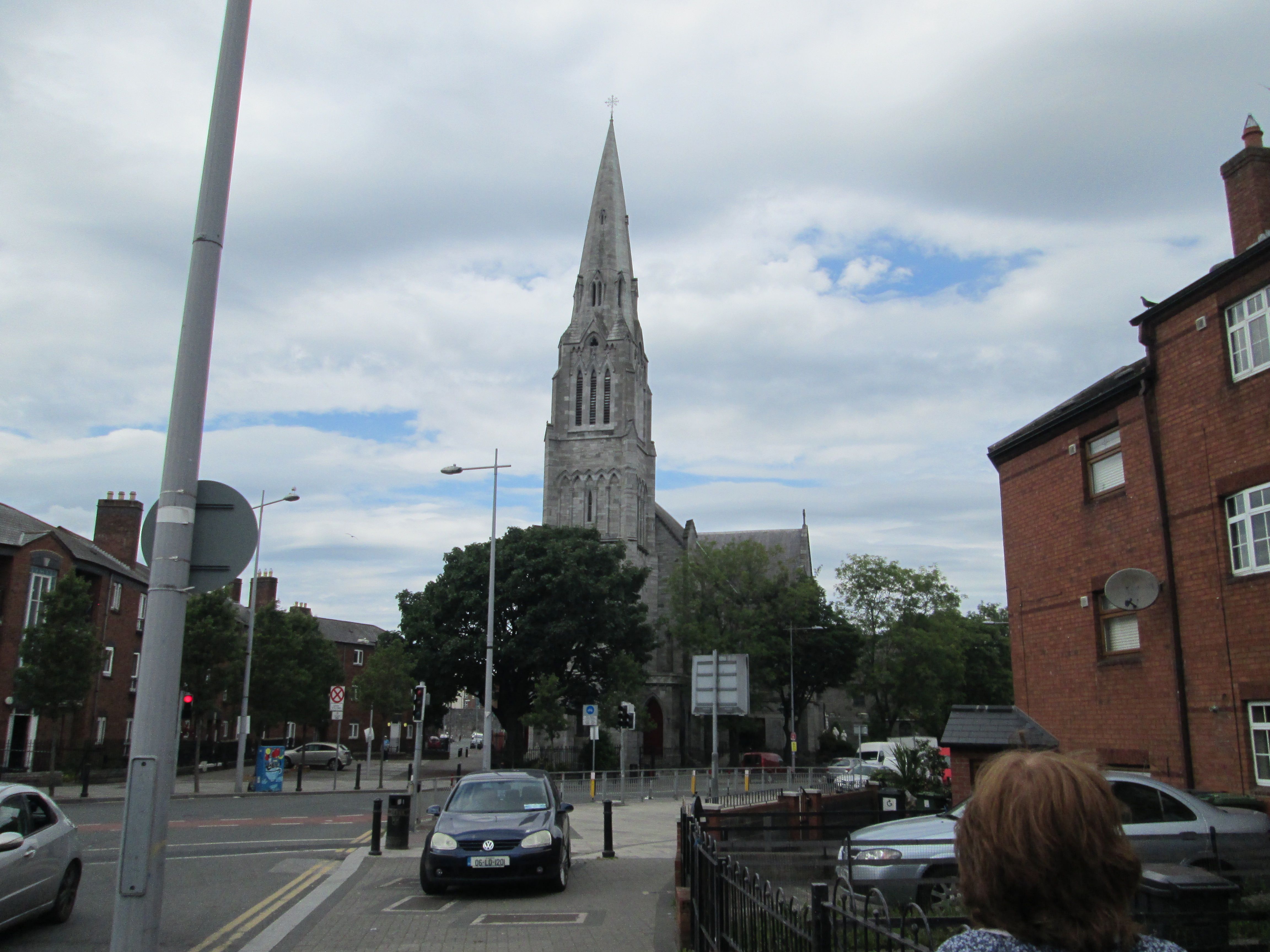 The Church of St. Laurence O’Toole marks the start of Seville Place. It was built in the Famine years and opened in 1850. Along Seville Place, the grandly named First to Fourth Avenues suggest New York. In fact, these are short, cottage lined cul de sacs. Under the railway bridge we reach Amiens Street.
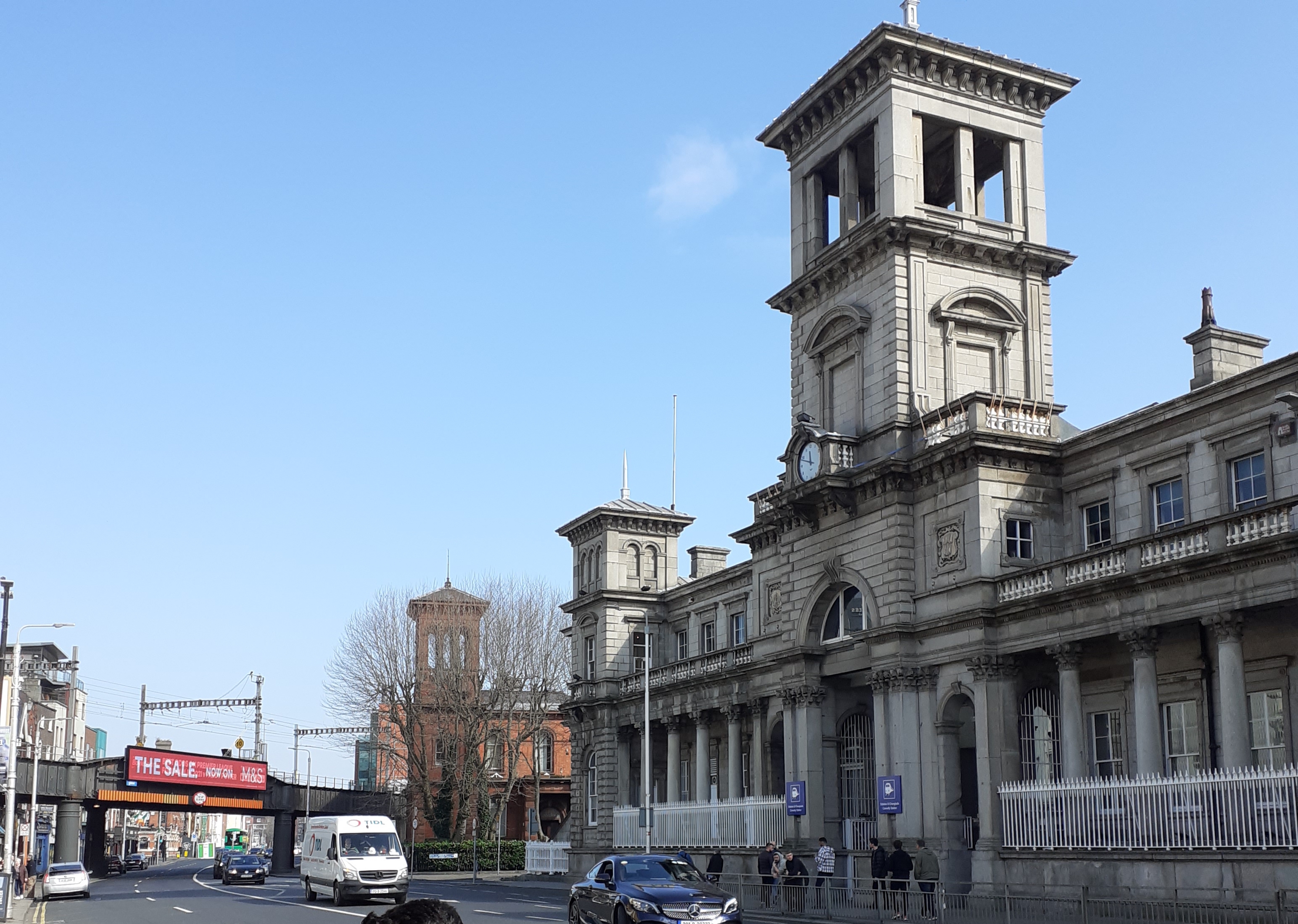
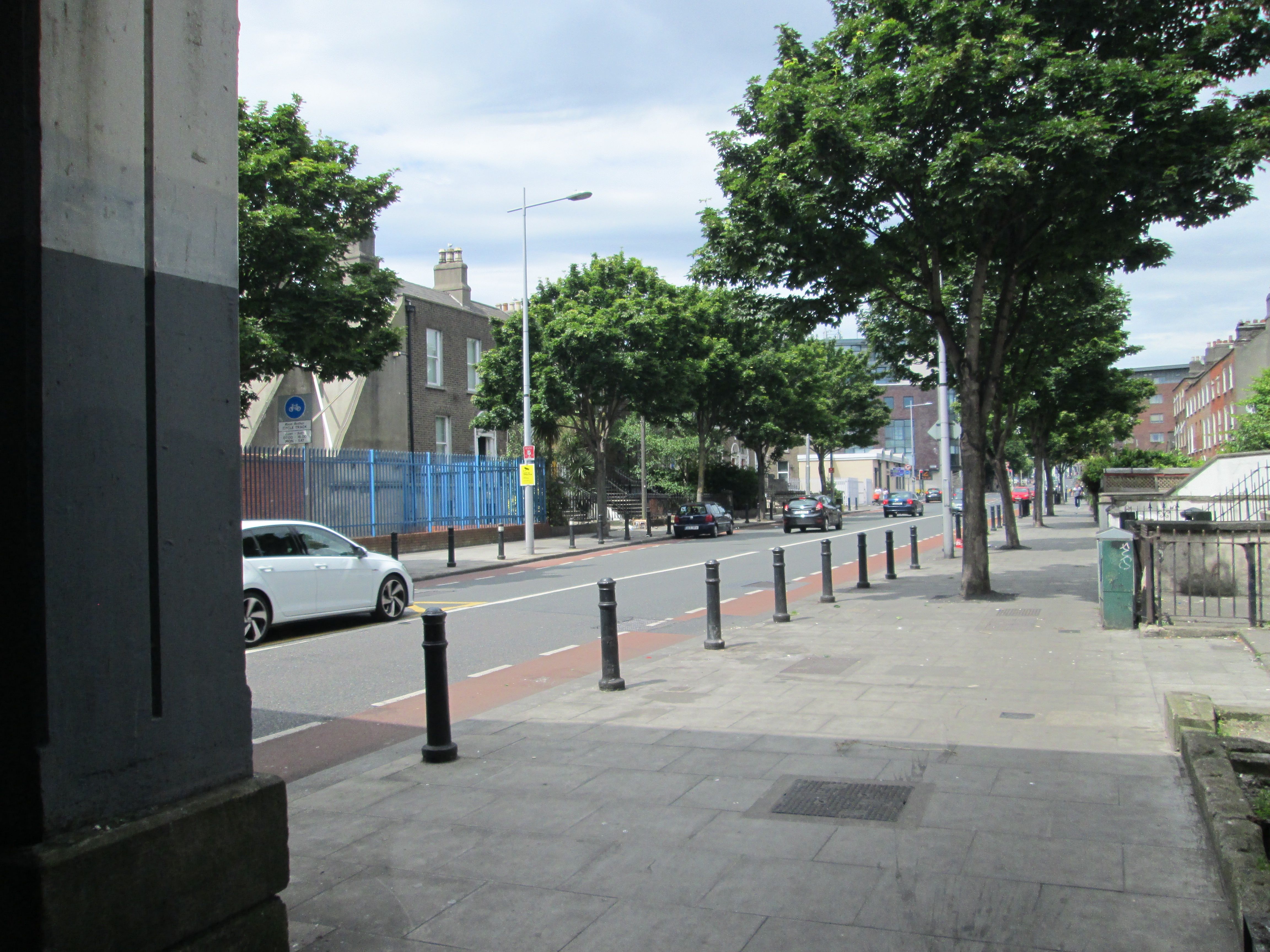 This street provides Dublin’s main transport and communications hubs. Connolly Station, topped by an ornate Italianate tower was opened in 1944 as Dublin station, later named Amiens Street. By 1853 it served the rail link to Belfast. Madigan’s Pub, on the main concourse, was a Mecca for thirsty travelers on long, dry, Good Friday. It is the most central of all bonafide pubs. You would need a train ticket to deserve a pint, of course; a small price to pay. Such quaint customs are now consigned to the slop tray of history, as Ireland’s Good Friday prohibition has been lifted.
 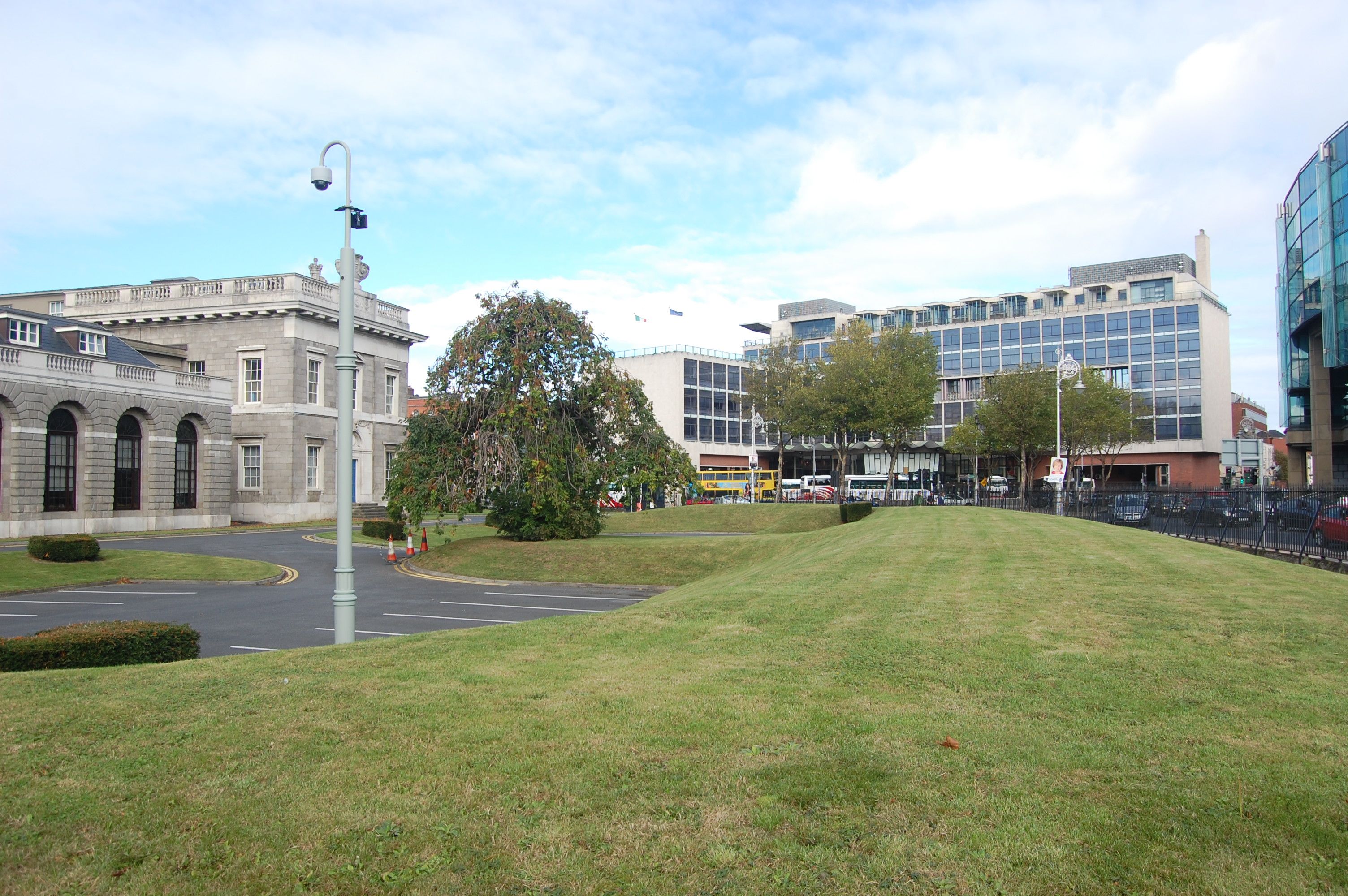 A little further off track, Bus Aras, nearer the river, was an early modernist pile. Designed by Michael Scott and completed in 1955, from here you can take a bus to anywhere in Ireland, or all the way to London. Bus Aras and Connolly combine to form a startling urban portal, full of the contrasts of history and architecture. At just the right spot, the panorama includes Victorian Connolly Station, Georgian Custom House, the International Financial Services Centre and the Ulster Bank HQ across the river.
 At more civilised hours we could repair to Cleary’s pub, beneath the bridge, shuddering under the weight of passing trains. Old style boozer of dark wood, sparse light on glinting glasses being raised at the long bar. One more toast before boarding the Gravy Train. Last wet my whistle here with Davin, on our way with to the Red Hot Chilli Peppers at Croke Park farther north.
 At the junction of Seville Place and Amiens Street, we’re back on track. Heading North by Northwest is Portland Row, leading to the North Circular proper. Amidst the grimy urban bustle sits the landmark of the Five Lamps, delicate and redolent of a bygone age. It sits on a junction of five streets. Again weirdly suggestive of Old New York’s Five Points, notorious focus for Irish gangs in the mid nineteenth century. The eponymous, though fictional, Dublin gang appear in Bob Geldof’s Rat Trap:
  xxharrison