London Waterways

Chelsea, Battersea and Paddington
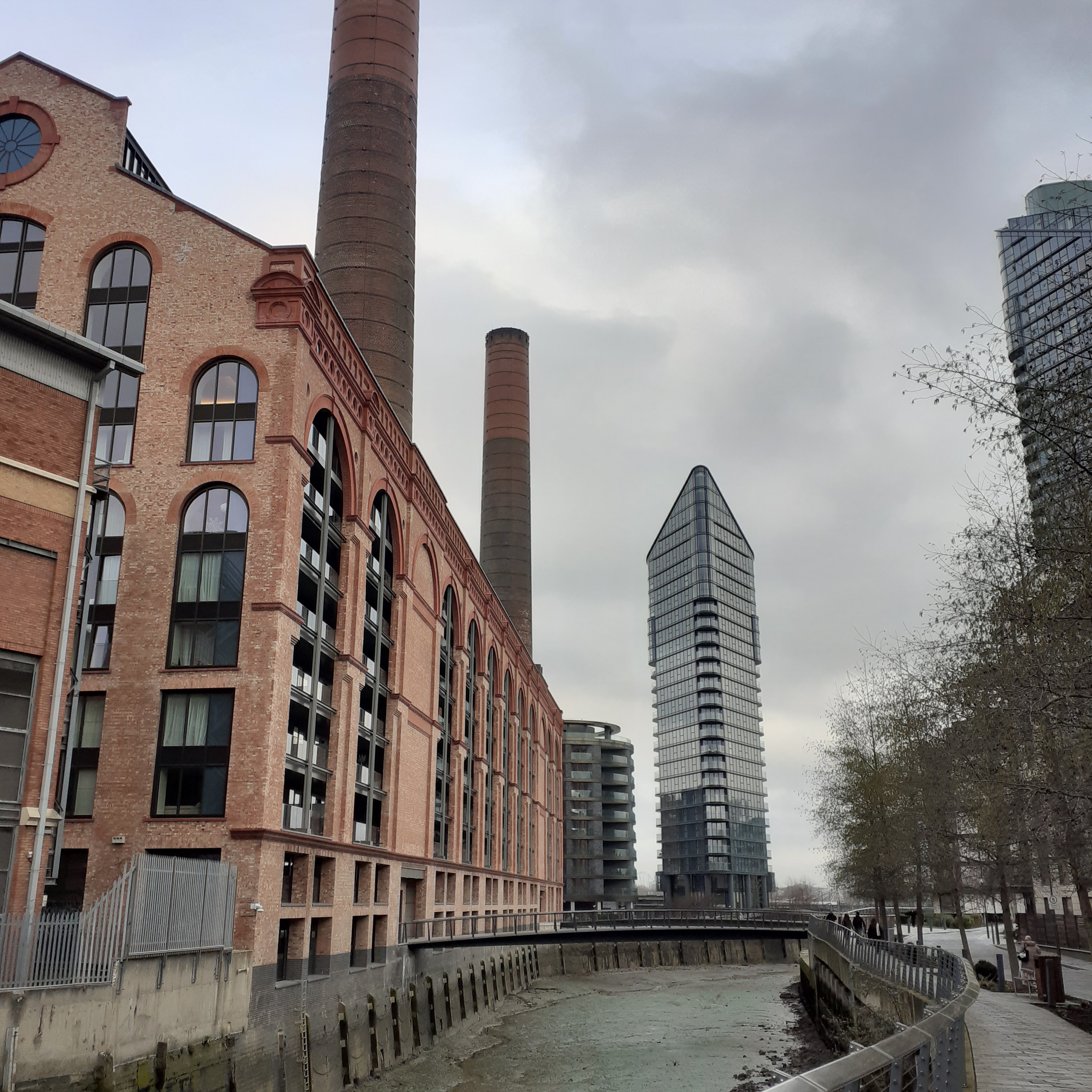
The Thames is broad and sinuous on its passage through London and into the sea. There’s a boat service from Putney in the west to Greenwich in the far east. For the more athletic a walk along the river bank is a necessary pleasure in getting to know the city. Staying recently in Fulham, we took an afternoon stroll down to Chelsea Harbour and continued on downriver to Battersea. 

The sleek new highrise development around the Harbour blends attractively with Lots Road Power Station, an incongruous landmark and a reminder of industrial times past. The name Chelsea derives from chalk wharf, signifying the nature of its river trade. Chelsea itself is a well to do city residential area. Rather grand, mostly pretty, it is often quirky too. 
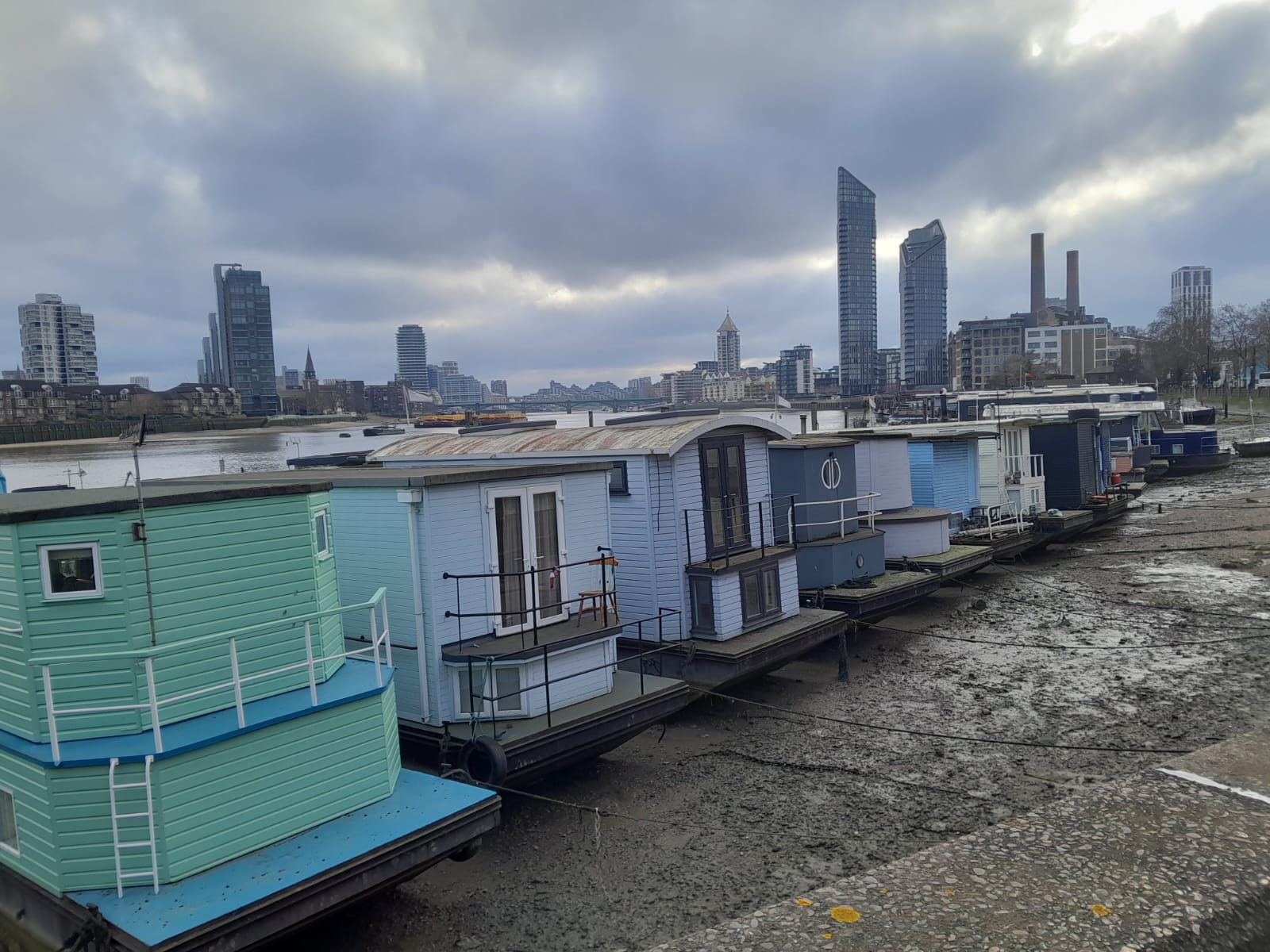
We are fans of the Chelsea Detective, the tv series starring Adrian Scarborough as DI Max Arnold, with Irish actress  Vanessa Emme as DS Layla Walsh. Arnold lives in a Thames houseboat around here, The moorings stretch along Cheyne Walk and we almost felt we should call in for a drop of wine and some piano accompaniement. The riverside idyll is overshadowed by the redbrick towers of Worlds End, a residential borough development from the 1970s. The name derives from a local pub built in the 1890s. An earlier inn of that name dates to Restoration times, when it stood at the end of London, or civilisation. The King’s Road leads back to the city centre. The King in question is Charles II and has become, perhaps inevitably, a byword for trendiness.

Along the river Cheyne Walk is lined with eighteenth century Georgian townhouses and long home to the rich and famous including artists Dante Gabriel Rosetti, JM Turner and James McNeill Whistler. Whistler’s painting of the Old Battersby Bridge is one of his famed blue nocturnes. A modern bridge now spans the river.
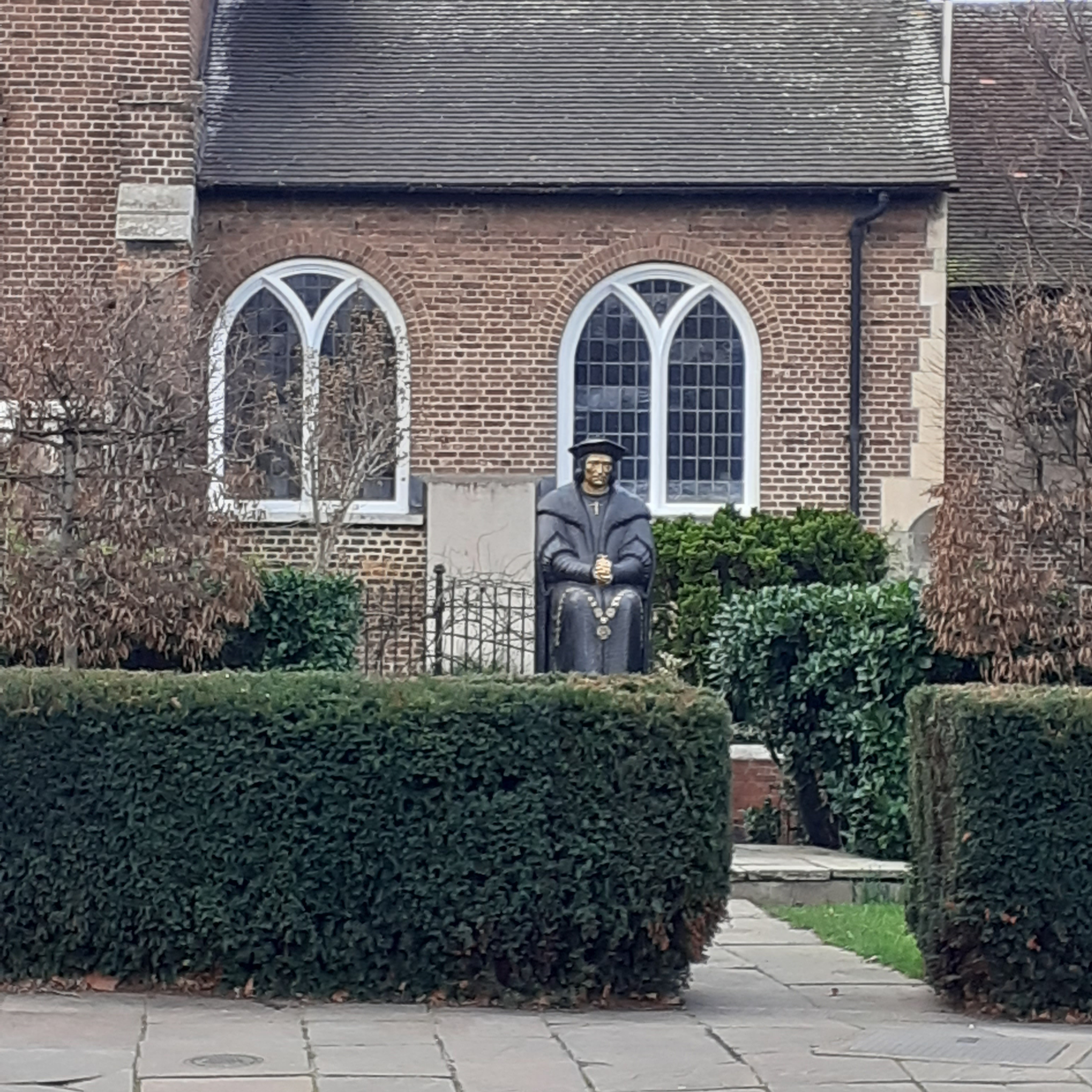
The Old Chelsea Church is a much older resident. Dating back to Norman times, it has become a fascinating patchwork over the years, with much reconstruction after the Blitz. Thomas More’s statue by Leslie Cubitt Beavis sits to the side. More wrote Utopia, a fictional acme for an idyllic society. The book was published by Erasmus in 1516, in Latin. The English translation appeared in 1551 sixteen years after the author’s death. More had refused to take the Oath of Supremacy that recognised Henry VIII as head of the Church.

Albert Bridge was built in the 1870s as a suspension bridge to link Chelsea with Battersea. Structurally plagued by problems, it is sometimes called the Trembling Lady as it can vibrate under certain traffic conditions. Calls for its demolition have gone unheeded, and the bridge is spectacularly illuminated at night.

By Albert Bridge, the intimacy of Cheyne Walk gives way to the bustling thoroughfare of the Chelsea Embankment. This leads on to Chelsea Royal Hospital. Established by Charles II, at the prompting of Nell Gwyne, allegedly. Gwyn was the King’s mistress, not a fact that was hidden away. She would have wielded influence over the King, Nell was one of the first leading ladies of English theatre. Charles himself had abolished the ban on women taking to the stage. She was something of a pin up of her day, and the king commissioned a nude portrait, with Nell cast as Venus, to be shown, furtively, to special guests. 

The Hospital was designed by Christopher Wren and completed in 1682. It is used as a nursing home for army veterans. Their resident uniform is blue, but their scarlet dress uniorm is better known.The red uniformed pensioners are regular pitchside guests at Chelsea Football club who were once nicknamed the Pensioners. They discarded the monicker in 1955 the year they first won the league title, ironically with the oldest average age team to win. The Hospital grounds have hosted the Chelsea Flower Show held annually since 1913
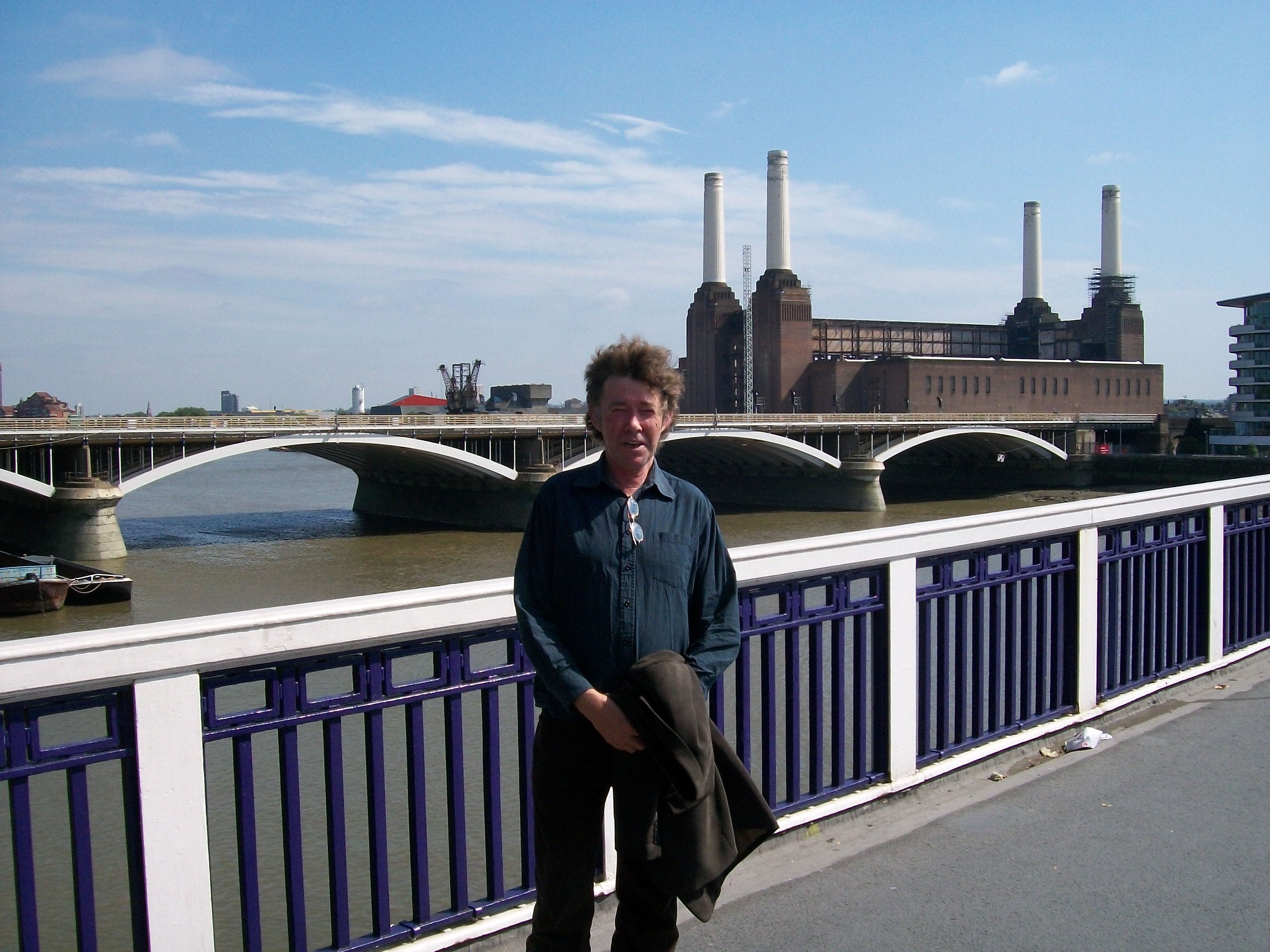
Chelsea Bridge is framed by the massive Battersea Power Station across the river. The current structure is a suspension bridge built in 1937 replacing a previous structure from1694. It is also illuminated at night. Battersea Power Station has been extensively renovated in the last decade to return the building to its former glory. And glorious it is; the four cream chimneys towering above its redbrick bulk make for one of London’s most loved icons. Giles Gilbert Scott and Theo Halliday were the project architects. Construction started in 1930 and with the interruption of the war was only completed twenty five years later.

The recent redevelopment masks some of the spectacle with highrises, so I was fortunate to get the full view on a previous visit. Chelsea Football Club were amongst the proposals with plans for a new stadium, but the council, and indeed many of the Stamford Bridge faithful, opposed this. The resultant development transforms the old building into a modern shopping centre. The surrounding apartments are augmented by shops, restaurants and bars. At night, the illuminated chimneys are truly a spectacular sight, if also a little bit Orwellian. Pink Floyd’s Animals is probably responsible for that. Roger Waters’s opus drew freely from George Orwell’s Animal Farm, with a cast of sheep and pigs, and dogs. The 1977 album cover featured a giant inflatable pig flying between the front towers. This Hipgnosis graphic is amongst the memorobilia you can buy at the souvenir shop inside. 
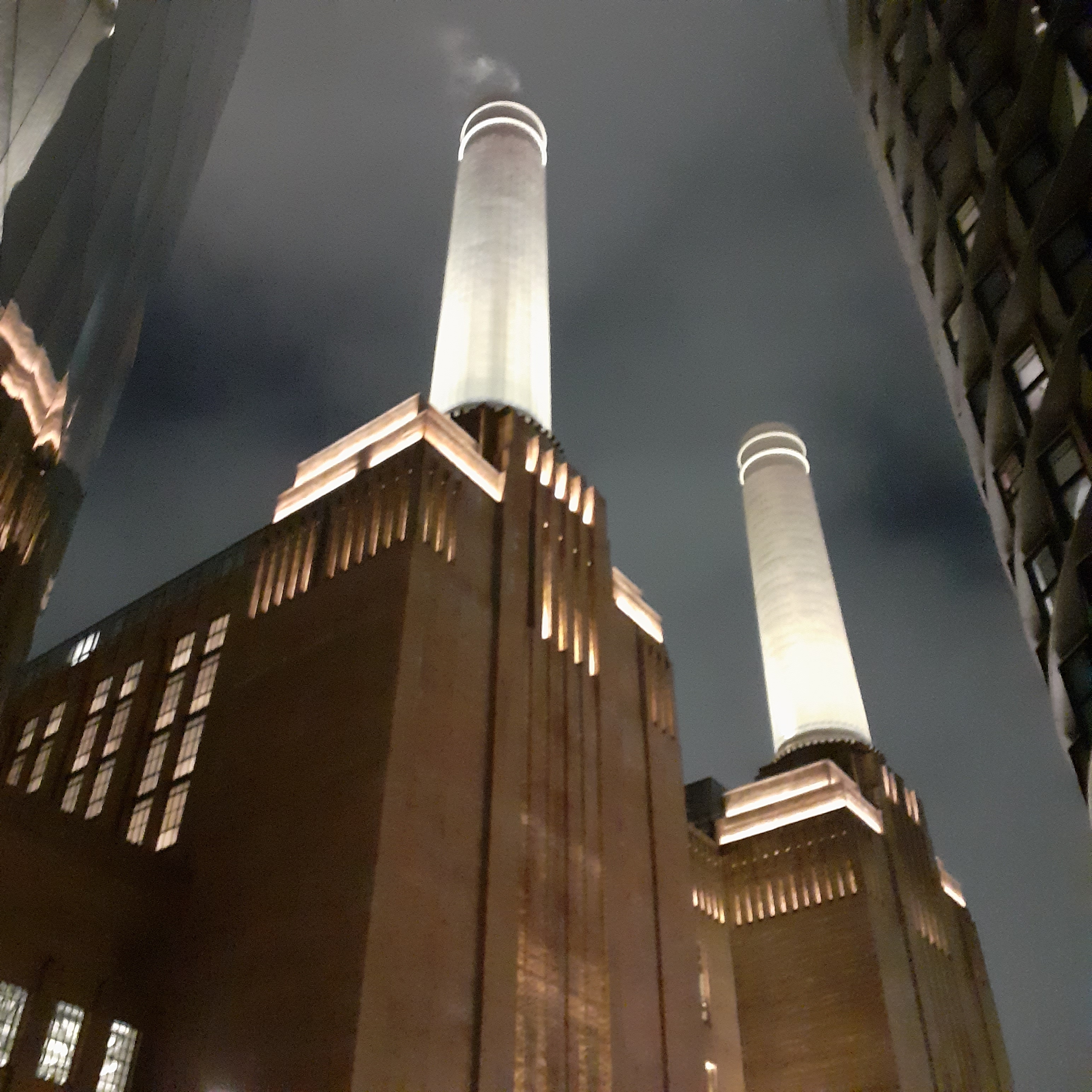
There’s a full shopping centre inside the old structure, and a museum with lift to the top of a chimney. Good eateries too, though we opt to eat outside and catch the fading light. Megans Restaurant is a pleasant informal eaterie with Mediterranean fare and panoramic views of the river. It’s the perfect spot for a famished sunset meal. Here the Thames turns sharply north towards the city where the glass highrises bounce the sun back at us before their own illuminations fade in. The Tube Station south of the complex connects with Leicester Square, the epicentre of London’s nightlife. Picadilly Circus is adjacent with Shaftesbury Avenue winding between Soho and Chinatown where we can go walking in the wild West End. 
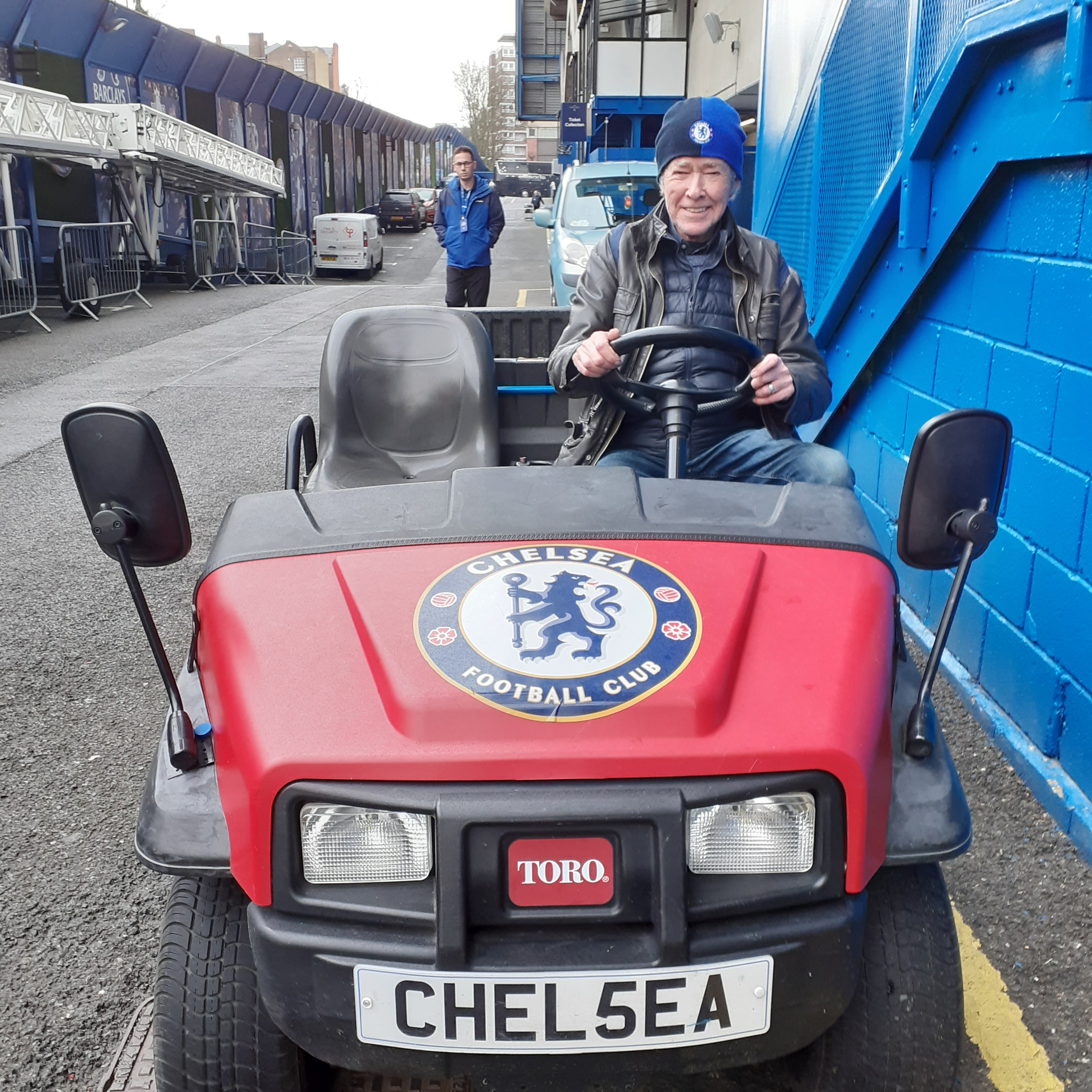
We are staying at the Hotel in Stamford Bridge. The evening game is Chelsea v Leeds. Echoes of the 1970 FA Cup Final. That was a 2 all draw, with Chelsea winning the replay. An hour in on a rainy Tuesday night and Chelsea are two up, but when the orphaned referee lost his white stick Leeds pulled level. Normal service resumed but the score remained the same. Cole Palmer, maker and taker respectively of both Chelsea scores, had an open goal at the final whistle but his shot, if taken at Battersea, would have creased Pink Floyd’s flying pig. Two all again. But it’s always good to be back at the Bridge singing Blue is the Colour and marching down to the Fox and Pheasant for a few well earned pints.
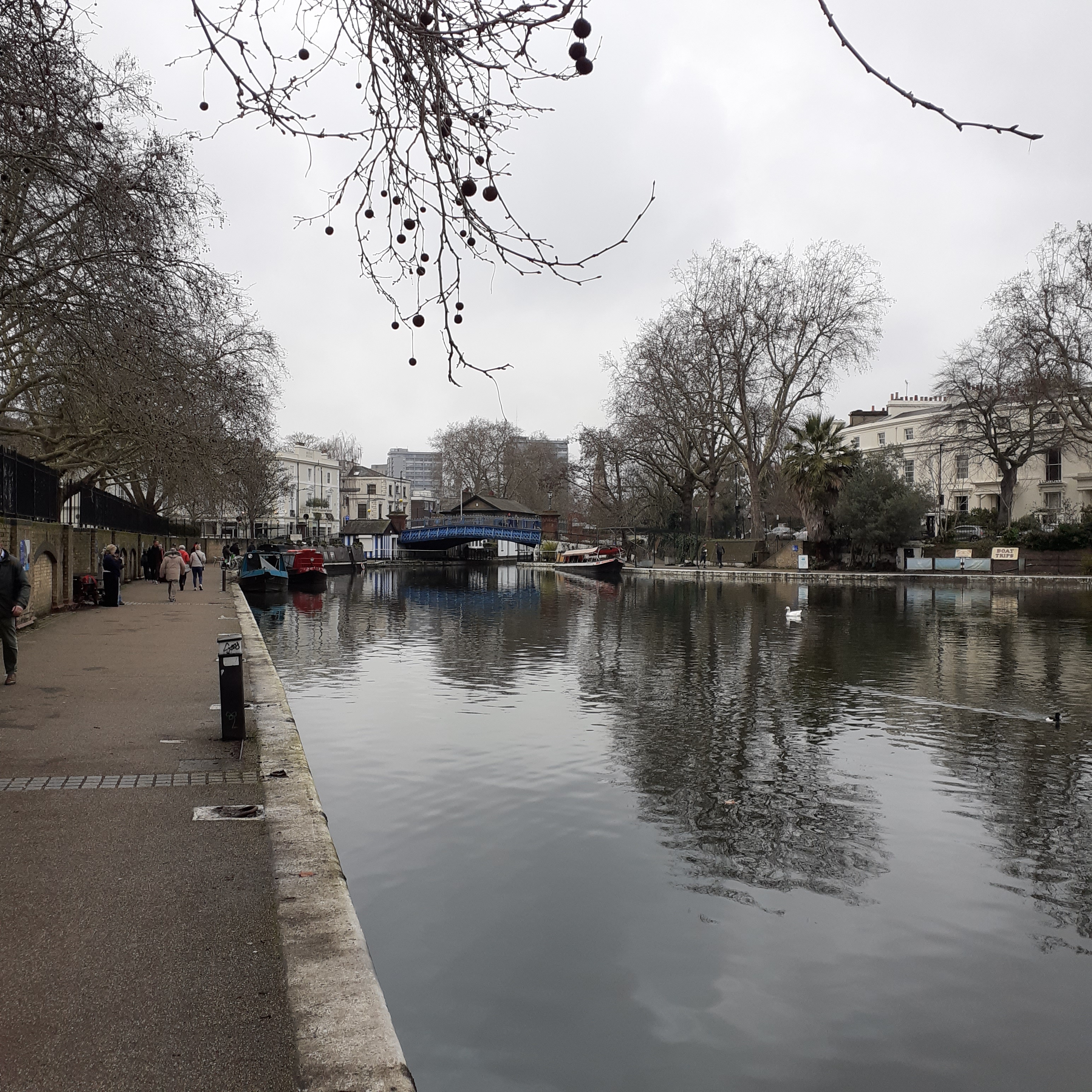
A more modest waterway meanders along London’s northern perimeter. We have walked the Regent Canal from King’s Cross to Camden Lock, after which it arcs around Regent’s Park and London Zoo. This time we aim to explore the intriguingly named oasis of Little Venice. We take the District Line from Fulham to Paddington, where a helpful Station Man gives us detailed instructions. Little Venice forms where the Regent’s Canal joins with the Grand Union Canal and the Paddington Basin. The naming is variously attributed to Lord Byron and Robert Browning, who each noted the place as an oasis from the bustling city, and helped popularise the area for artists and other creative wanderers. The junction forms a triangular basin, wide enough for long boats to turn. The surrounding area is characterised by white stucco houses of the Regency era. The salubrious suburbs of Maida Vale and St John’s Wood spread to the North. Abbey Road, another famous album cover, is not far off. 

Water is all around, including regular dousings from above. We shelter under Westbourne Terrace Bridge and watch a longboat turn. Then, passing beneath the Westway, we’re back in the crowds with Paddington Station the focal point. There are table tennis tables laid out if you fancy a set or two of ping pong. Cafes in barges line the basin if you fancy refreshment. We did both, the tennis first, then the coffee.
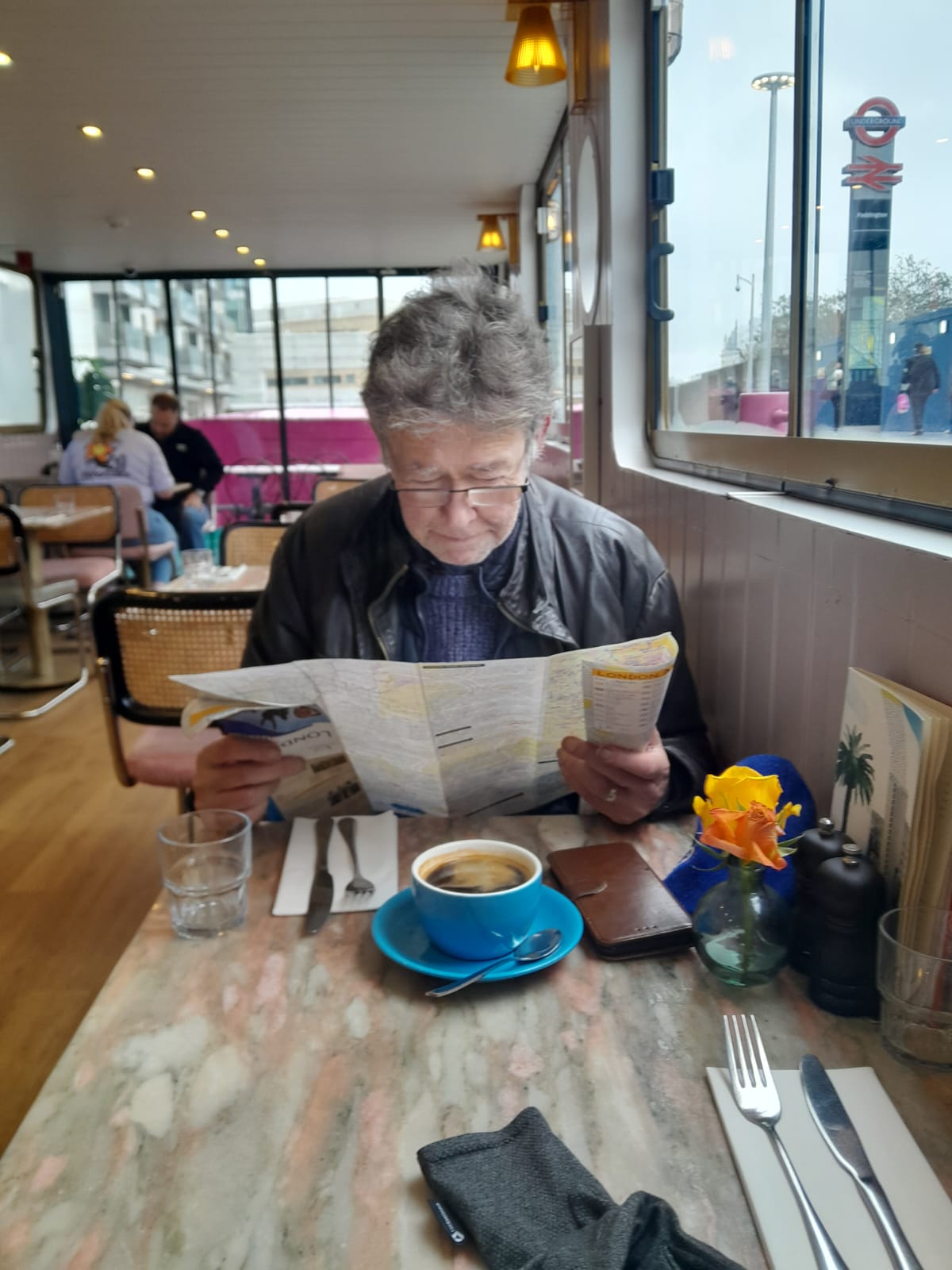
Watching us politely is a small blue bear. Paddington Bear was created by Michael Bond in the fifties. It all started when he bought the one remaining teddy bear, sitting alone on a shop shelf, as a Christmas gift for his wife. After he had time to think on that, expensive jewellery and the like, he wrote the first Paddington book, A Bear Called Paddington, and the rest is history. Not exactly history, the bear is a fictional character after all (real bears don’t wear duffel coats, usually). The station returns the honour with a bronze statue and themed bench inside.

Paddington Station was built in 1854 and designed by Isambard Kingdom Brunel. The huge glazed roof was inspired by the Crystal Palace of the Great Exhibition in Hyde Park. Brunel is familiar to us from our own home station of Bray, also built in 1854. Paddington itself brings back memories too. I spent part of the summer of 1976 here in a squat, dividing time between Elephant and Caste and Paddington, flitting along the Bakerloo Line, or upstairs on the busses. Dickens Tavern and The Sawyers Arms on London Street are familiar names. One, I recall, had a sunken central area with booths on a surrounding mezzanine. It’s all something of a dream to me now, was then even.

South of Paddington is Hyde Park. with Kensington Gardens to the west. The Serpentine divides them, a long curved pond, wide and calm. Rain shrouds the surrounding city and we shelter at the tearooms past the bridge across the Serpentine. There’s a homely friendliness amongst the small crowd sheltering and the customers entering and leaving the cafe. Rain restricts the view to a misty parkland. It is hard to believe we are at the centre of a great Metropolis.

Millions of people swarming like flies ‘round Waterloo Underground

But Terry and Julie cross over the river where they feel safe and sound

And they don’t need no friends

Long as they gaze on Waterloo Sunset 

They are in Paradise

Released by the Kinks in 1967, and written by Ray Davies, Waterloo Sunset is an evocative imagining of a pair of lovers filled with hope set against the glowing backdrop of the Thames at Sunset. Alternating between first and third person lends the song a sense of melancholy, offsets the glow of a loving couple with the bittersweet consolations of the solo traveller. 
London’s Piccadilly Line and the 14 Bus

If you are flying into London Heathrow, the most convenient connection to the city centre is to take the Piccadilly Line on the London Underground, aka The Tube. It’s just over half an hour to reach the central zone while the line continues on out to the suburb of Cockfosters. From Earl’s Court in the west, the line passes through ten Tube stations in the city centre before reaching King’s Cross St Pancras in the north east, all convenient for most top London sights, accommodation and your wining and dining pleasure. If the Piccadilly line doesn’t go by your front door, there are numerous connections with London’s spaghetti bowl of underground lines, eleven in all.

While the Tube is a boon, fast and comprehensive, it’s a good idea to use the above ground bus service too. London’s red double deckers are a famous attraction in themselves, and they are cheaper than the Tube. A favourite route is the 14 which starts in Putney on the River Thames, the starting point for the annual University Boat Race between Oxord and Cambridge. The 14 passes through Fulham before following much the same route as the Picadilly Line, terminating at Russell Square not far from Kings Cross.

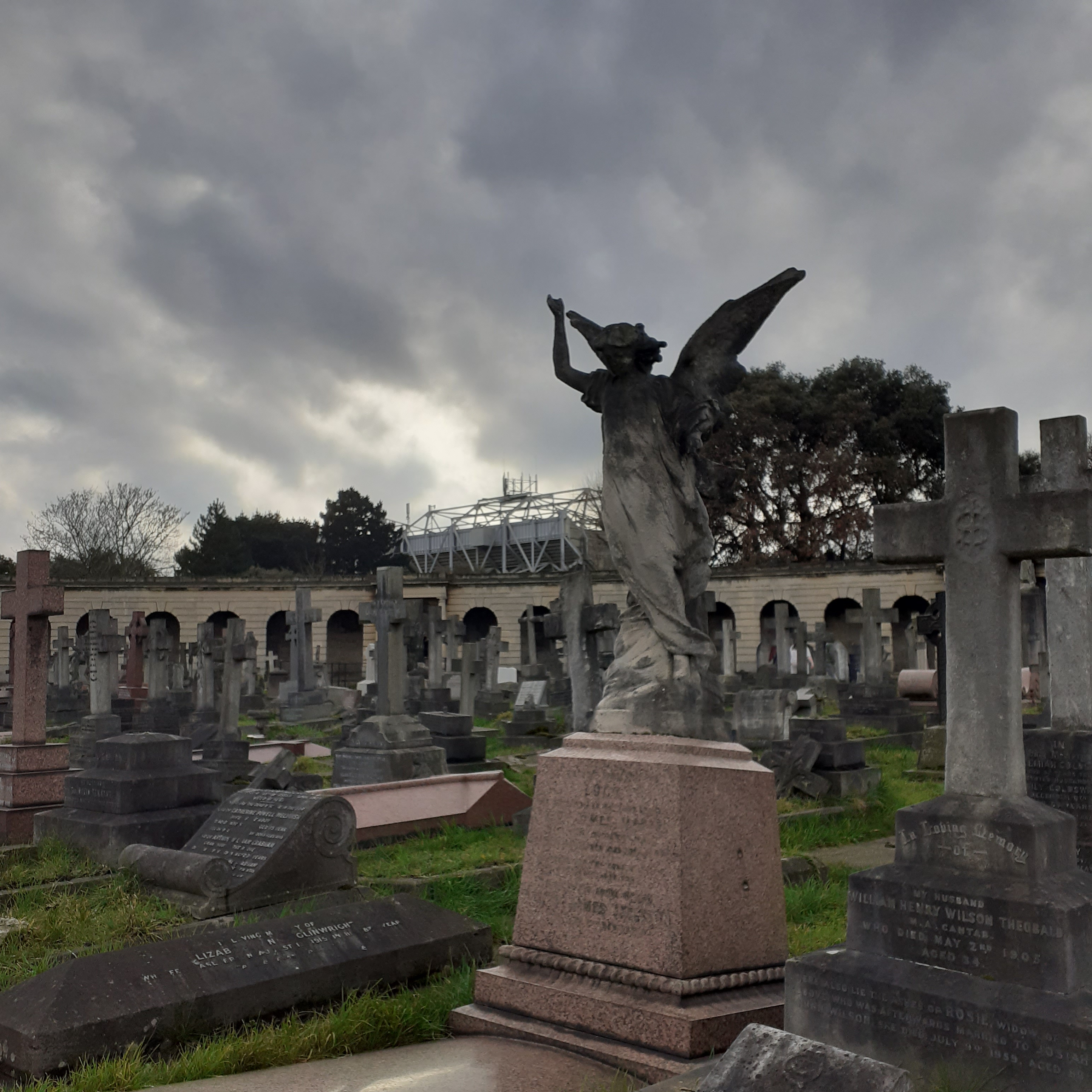
Here’s just some of the fun you can have along these routes. On our recent trip we took the Tube from Heathrow to Earl’s Court and could have taken the District Line to Fulham Broadway, but walked instead through Brompton Cemetary. Opened in 1840 this is the resting place for two hundred thousand departed. Amongst these are Luisa Casati flamboyant Italian fashion and art icon, whose Venetian residence is now the Guggenheim, Henry Cole, inventor of the Christmas Card and moving force behind the Great Exhibition of 1851 in Hyde Park’s Crystal Palace, Emmeline Pankhurst, radical Suffragette leader and Kit Lambert manager of The Who. Beatrix Potter, who lived nearby, browsed the tombstones in naming her characters, including a certain Peter Rabbett. An impressive feature at the southern end centres on a domed chapel flanked by symmetrical collonades, the development modelled on St Peter’s Square in Rome.

We were staying at the Stamford Bridge Hotel at Chelsea FC on the Fulham Road. The 14 goes past the door, heading along the Fulham Road before turning into South Kensington. It is a lively spot at the nexus of several major thoroughfares. The tube station lies below a shopping arcade facing onto Onslow Square. The natty boulavardier cast in bronze is Bela Bartok, the Hungarian composer who lived hereabouts between the wars. He stands on stainless steel leaves serenaded by a songbird.

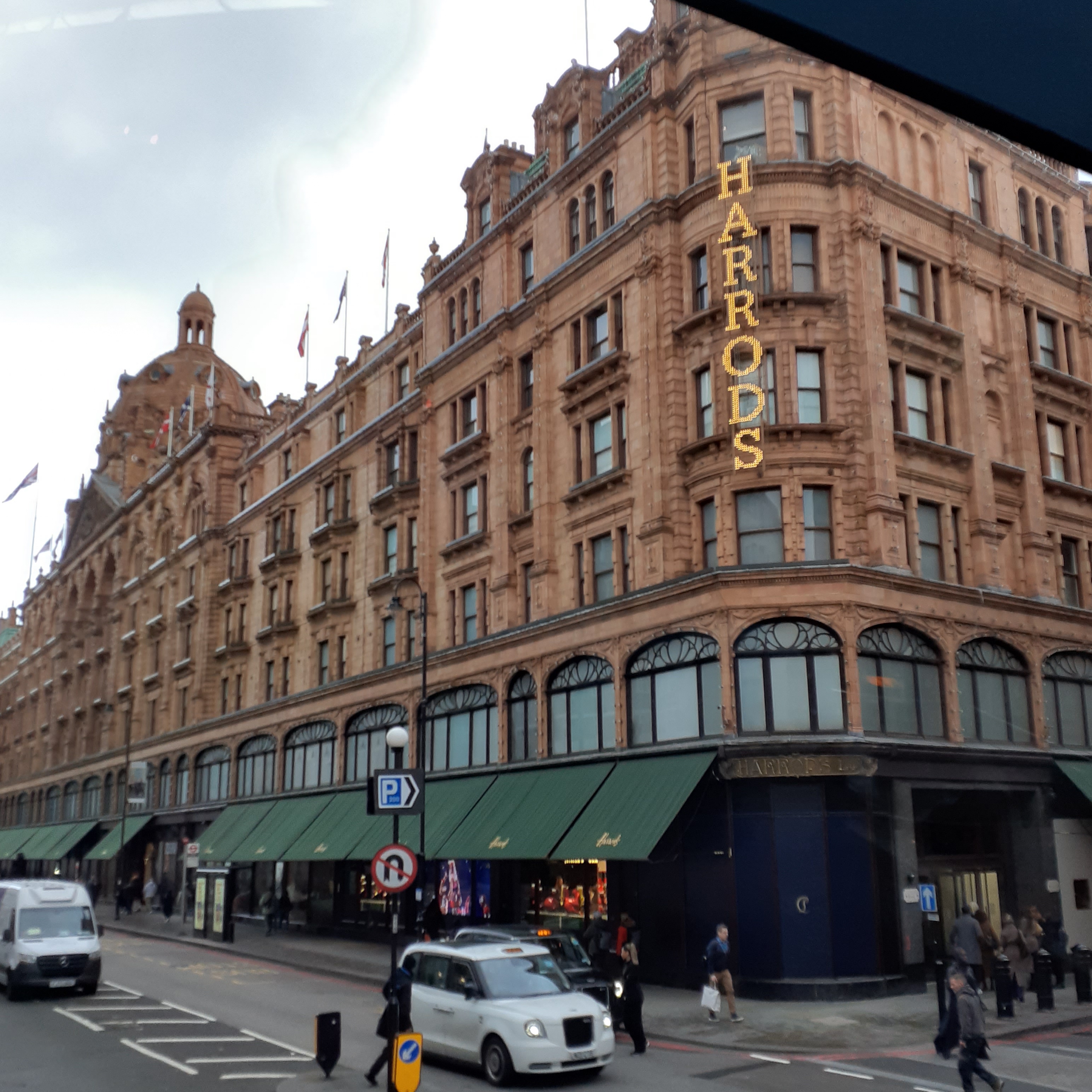
Turning onto Cromwell Road, the street is dotted with elegant landmarks of the Victorian Age. The  Natural History Museums is an ornate gothic cathedral guarded by dinosaurs The Victoria and Albert Museum is next door. Founded in 1852 by the V and A mentioned it is another majestic landmark and the largest museum of applied art and design in the world, Joining Brompton Road we head into Knightsbridge ,London’s shopping mecca. Flagship of fashionable retail is Harrods Luxury Department Store opened in 1905. Its vast redbrick facade fronts the largest department store in Europe. 

Hyde Park Corner marks the southeastern edge of the park at its junction with Green Park. The entrance pays much homage to Dubliner Arthur Wellesley, the Duke of Wellington. He had defeated Napoleon at Waterloo, though on which platform we can’t say (as Myles na gCopaleen might have said). Speakers Corner, by the way, is at the northeastern end, the place where you can spif publicly on any topic, a hobby more often endured in public bars.

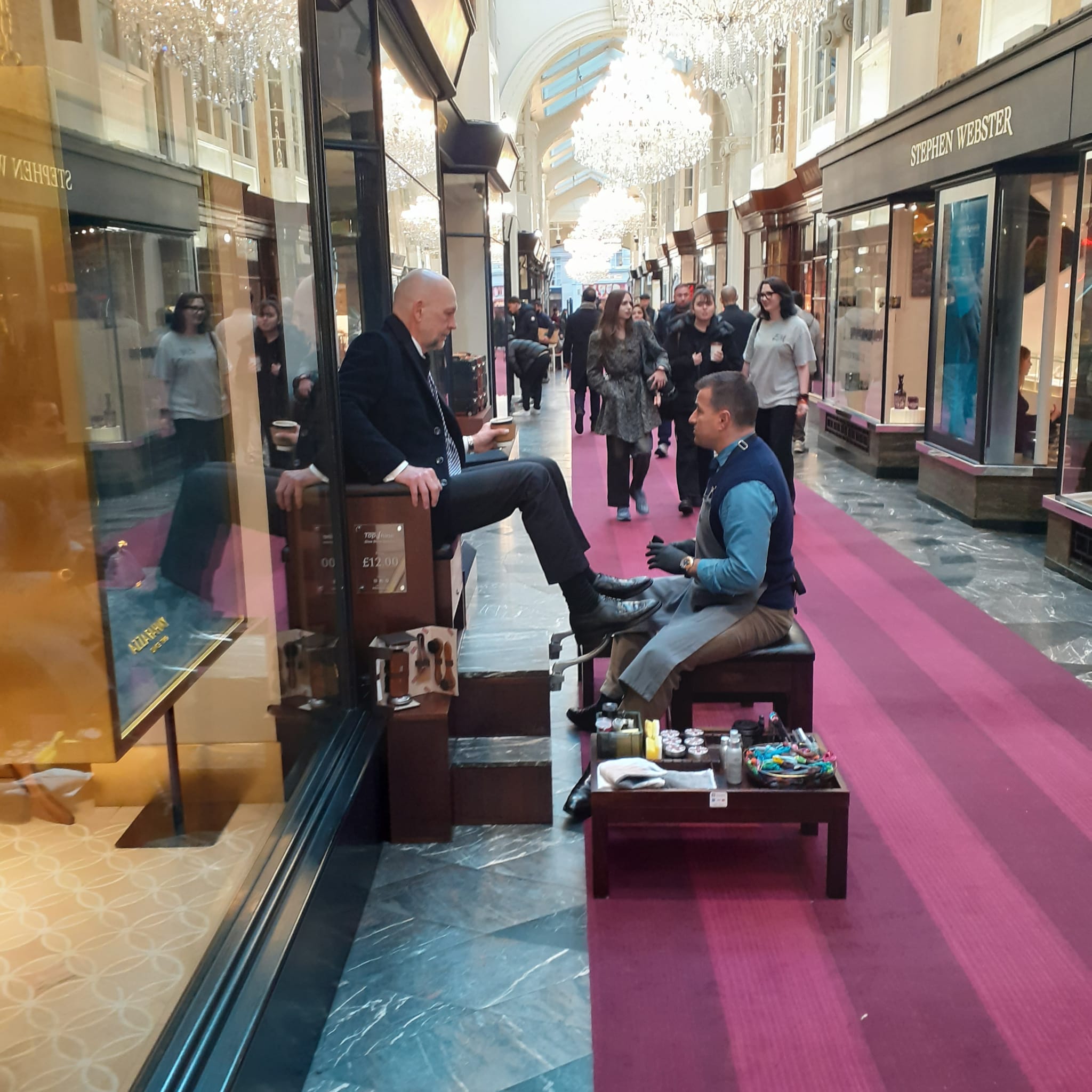
The thoroughfare of Piccadilly is wide and straight, leading into the heart of central London. The name comes from piccadill, the white lace collars popular in Shakespearean times, and made and sold here in the early 1600s. Getting off before Piccadilly Circus, we turn into the Burlington Arcade. Lit by giant chandeliers it is  the oldest and swankiest of London’s covered shopping arcades. Built in 1819, there are forty high end shops, many famed jewellers and watchmakers, pampering cafes or even a shoeshiner where you can relax to take it all in. The Burlington is patrolled by Beadles kitted out in traditional attire.

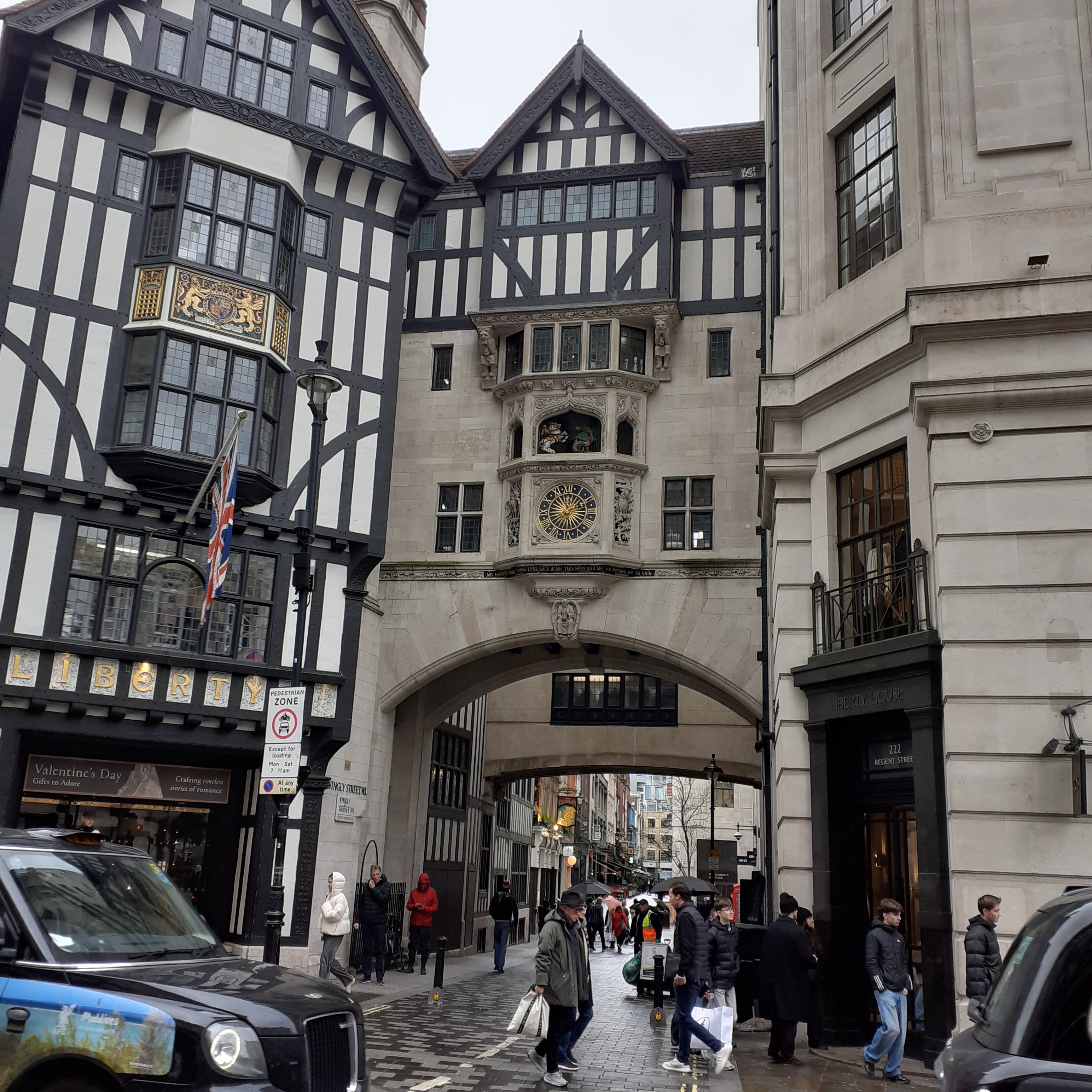
At the end of the arcade we turn right towards Regent Street and strike for Liberty’s, a Tudor Revival building from 1920. Like its architecture, it is an intriguing blend of traditional and cutting edge, offering fashion, beauty, homeware and textiles over five floors around a central atrium. The building picturesquely spans the entrance to Carnaby Street. The famed indigenous fashion shops of sixties London are now mostly swamped by international brands. The vibe of Soho persists and there are plenty of quirky shops and no shortage of choices for refreshment. We get a coffee in Cafe Concerto, a large Italian cafe on the corner of Shaftesbury Avenue, with huge picture windows, sidewalk seating and  tempting cakes and snacks. Leicester Square is around the corner, the centre for theatre tickets and cinema.

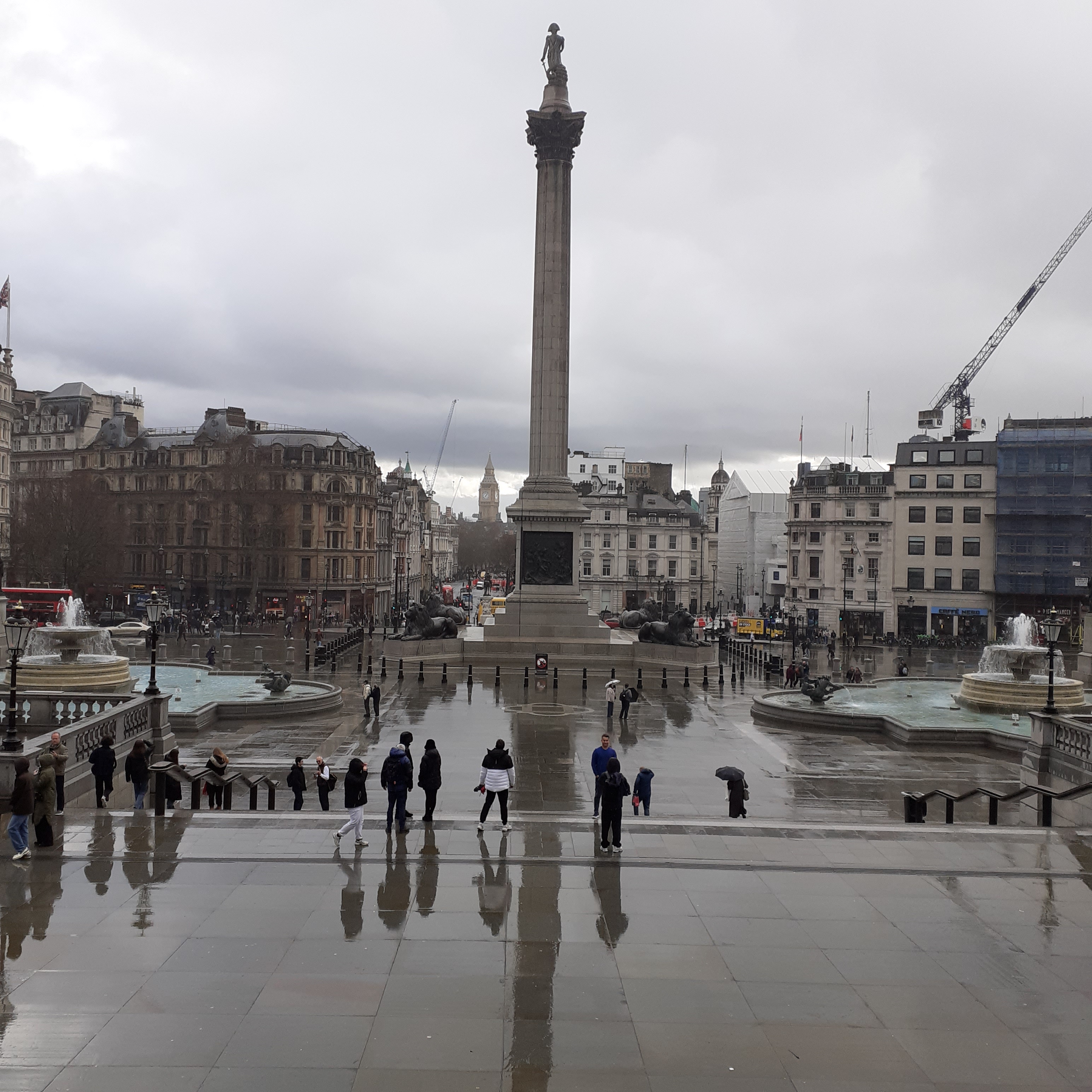
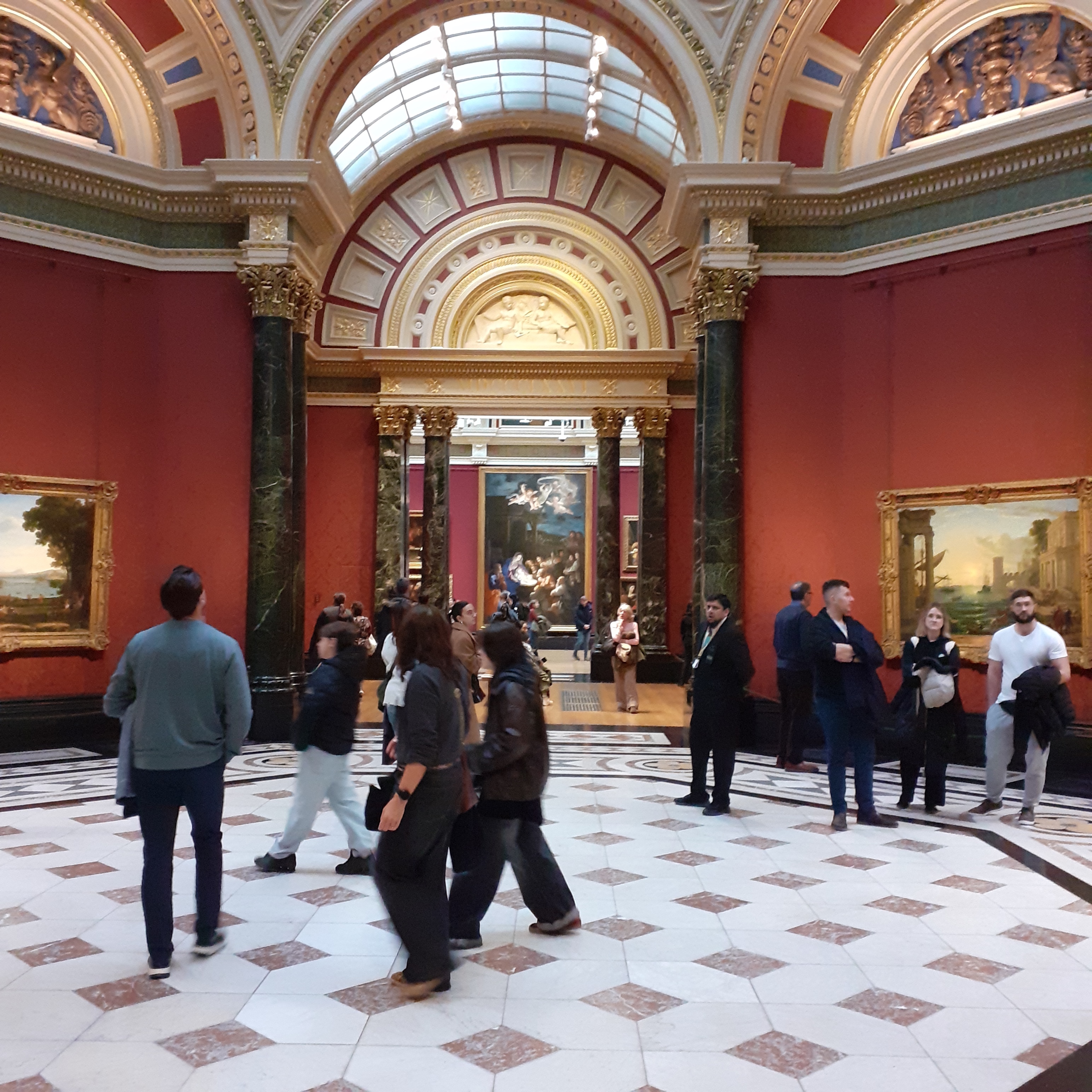
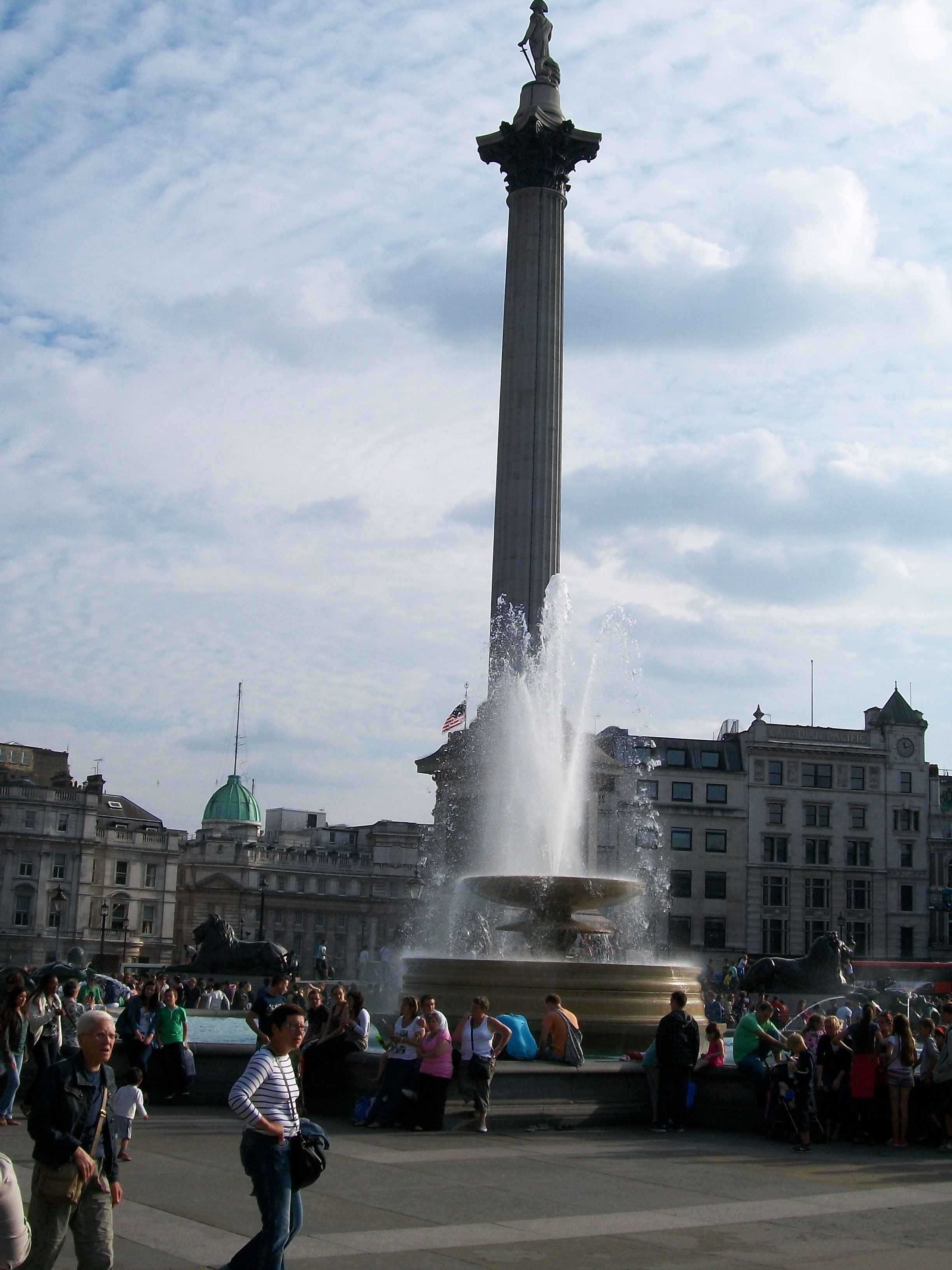
The visual arts are also world class around here. A visit to the National Gallery of Art on Trafalgar Square is a must. Or the Portrait Gallery nearby, both if you can. Turner’s part in the collection is a central feature. Most recently we concentrated on late eighteenth and nineteenth century art. The viewer is led from Constable and Turner on to Monet’s reflective pools and Seurat’s giant bathers. But there’s much more than that. It’s free in, so make a few visits. Don’t eat it all at once.

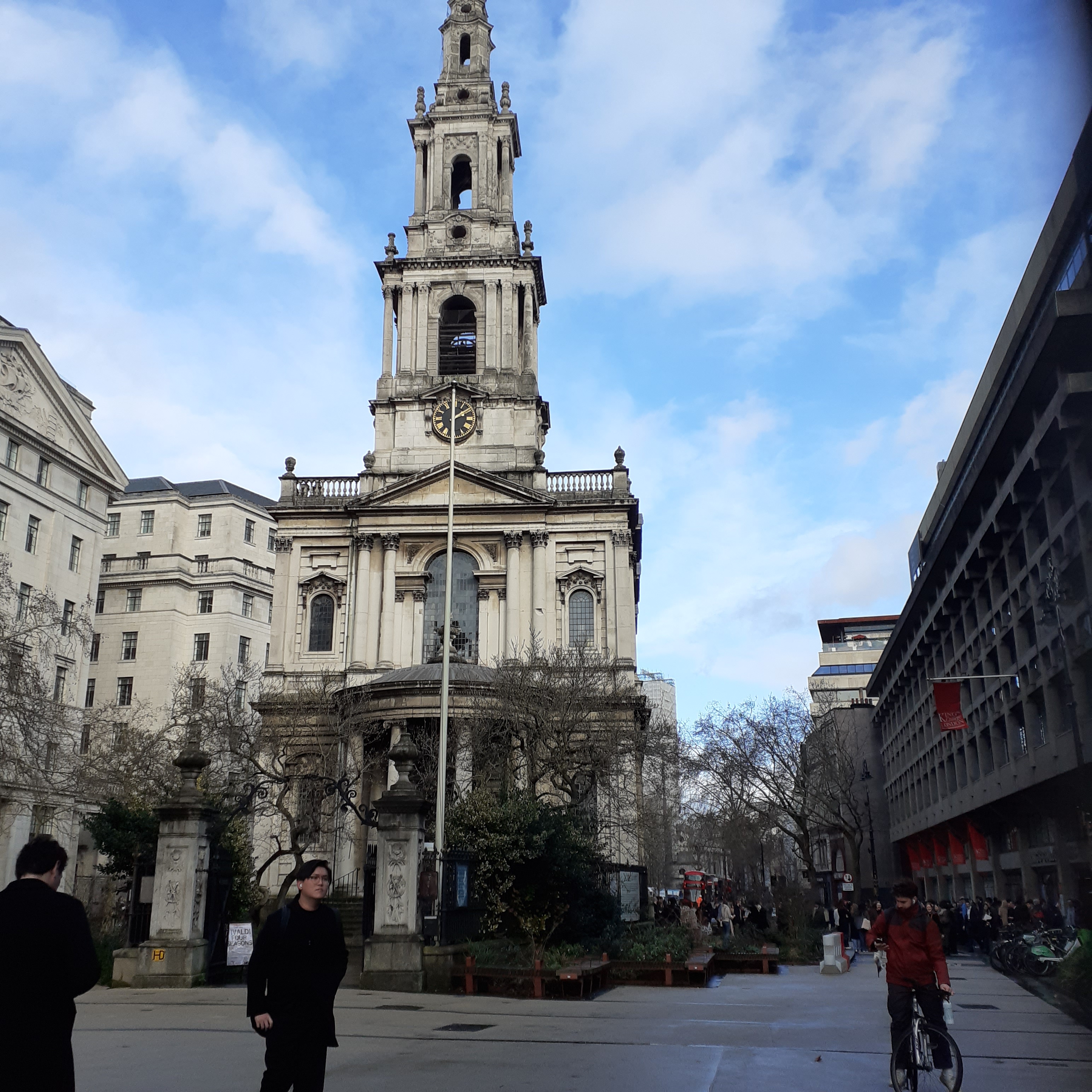
A stroll up the Strand takes us through the heart of old London. The street divides in two at the churches of Mary le  Strand, and St Clement Danes. These churches were once traffic islands, but pedestrianisation has returned to them a more antique and relaxed vibe. Volunteers and vicars are happy to greet, and impart interesting information. St Mary’s, smaller of the two, was associated with the Wrens during WW2, Clement Danes with the RAF. Here, I am told, it was designed by a Scottish Catholic, an unusual combination you would think but to which I can attest, being the son of one.

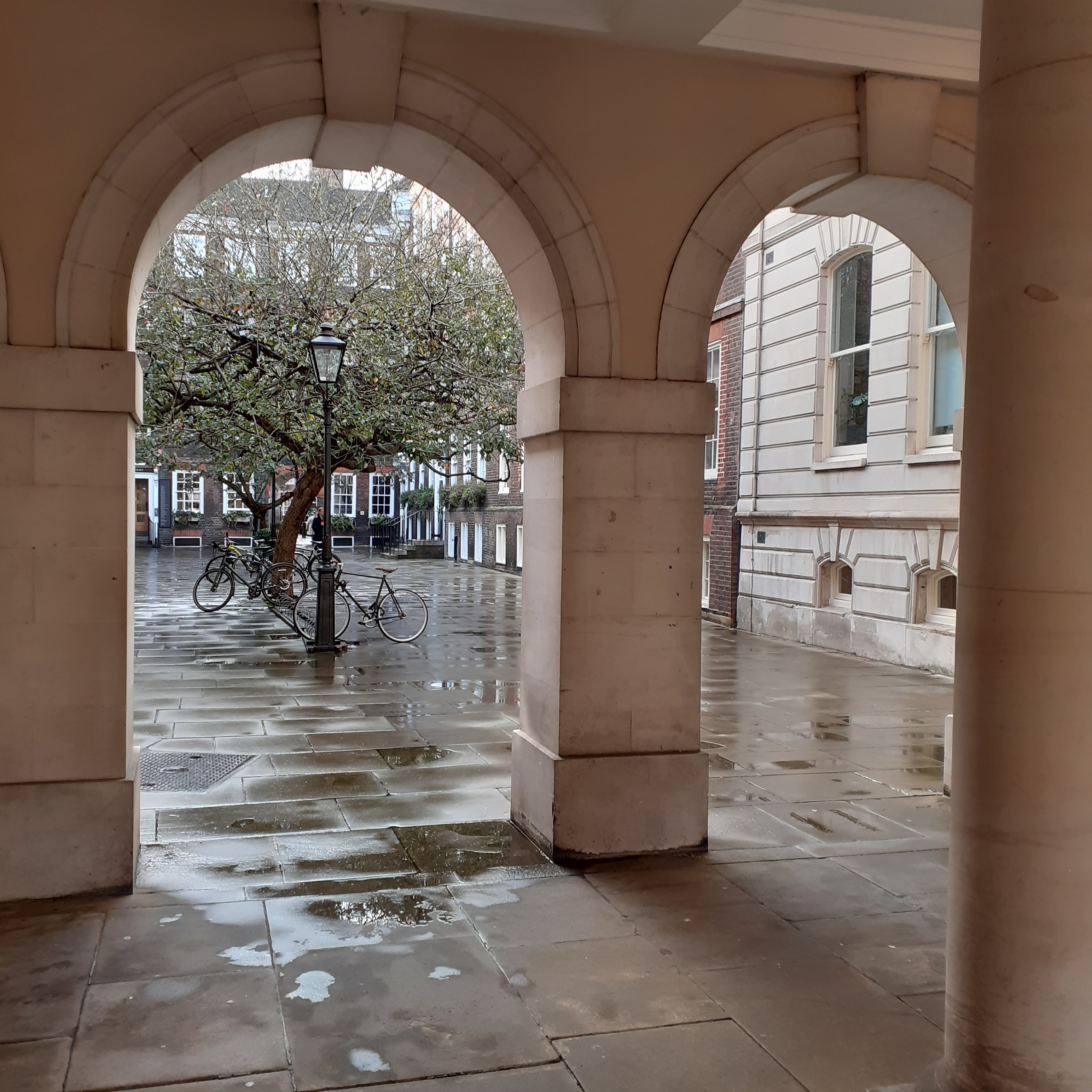
Safely on the kerbside, the Law Courts is a sprawling masterpiece of Gothic Revival, familiar to watchers of the BBC News. It was designed by George Street and opened by Queen Victoria in 1882. Opposite the Law Courts is Temple Bar, once an ancient gate on the western edge of the City. Ducking into a laneway we head down towards the river. A detour through the Temple is worth it, entering the quiet and traditional world of England’s ancient court procedures. The Inns of Court, professional associations for barristers, have their own dining halls, administrastion offices and the various Chambers for practicing lawyers include appartments for senor barrisers and judges. Temple Church is nestled here. It was built by the Knights Templar in the late twelfth century. Extensively damaged during the Blitz, renovation work was not completed until 1958. The church is famed for its appearance in the Da Vinci Code by Dan Brown.

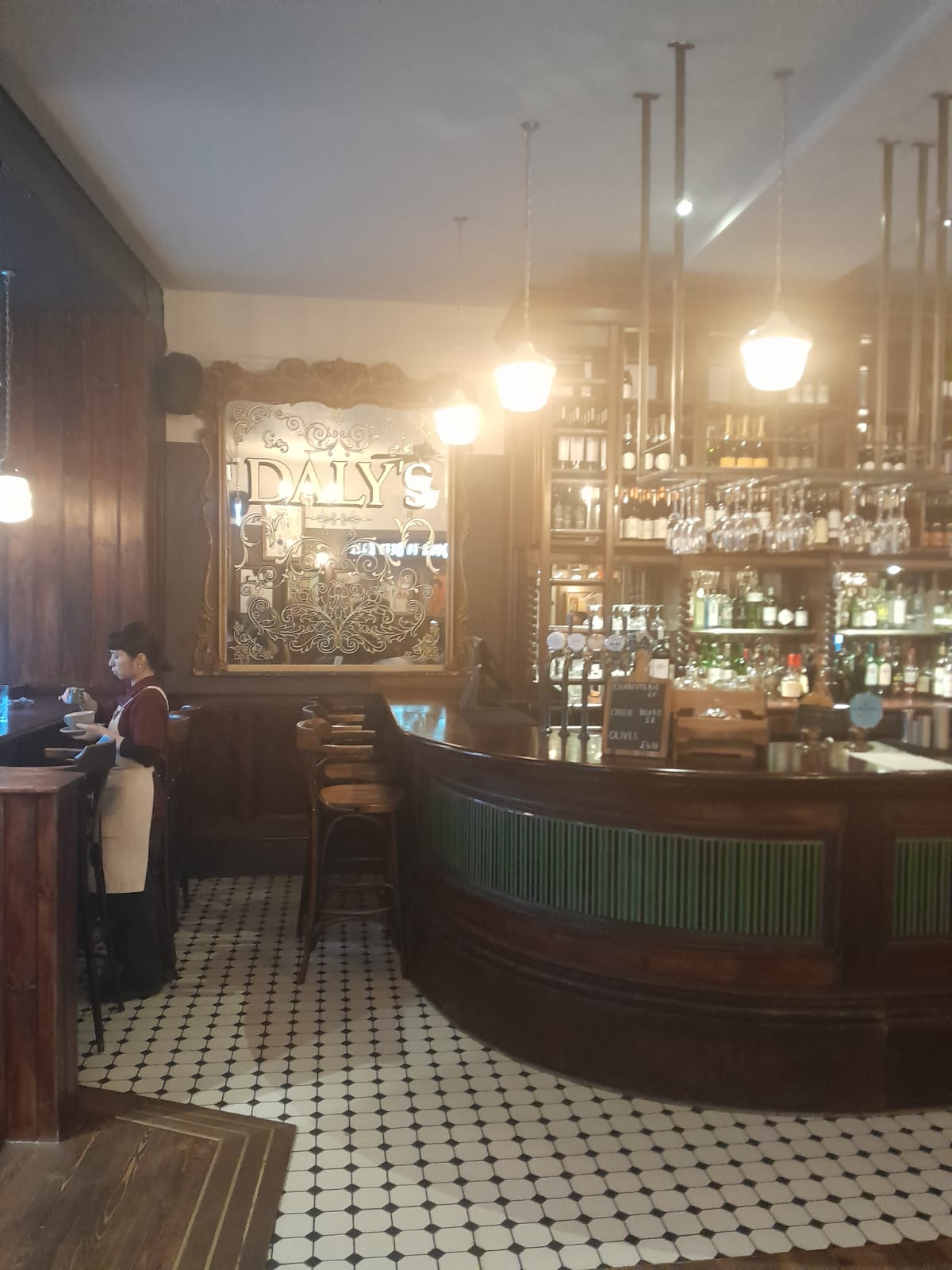
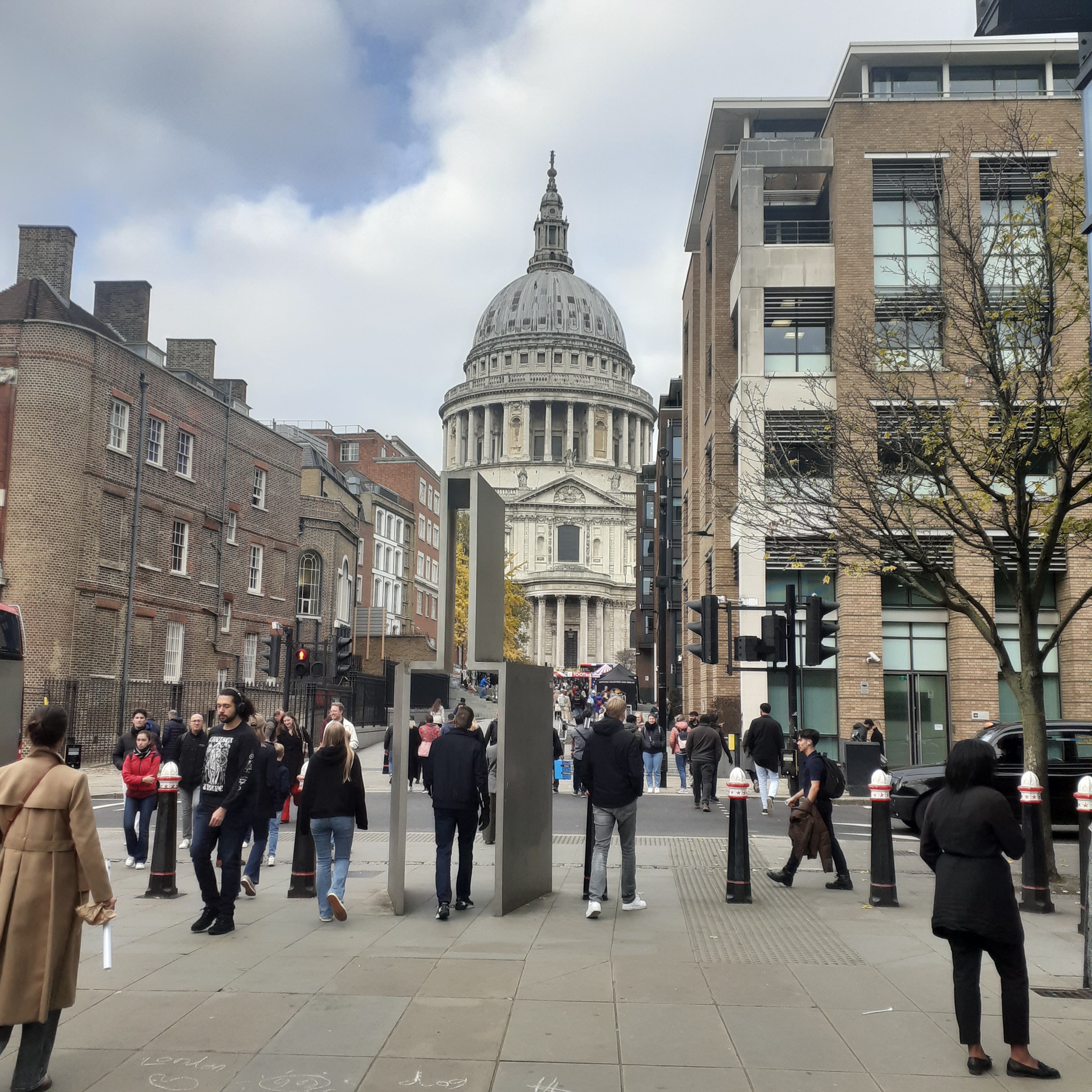
St Paul’s sits at the top of the hill. The entrance fee is prohibitive, but prayer is free. There’s a calm square to the side of the cathedral where we rest and watch stormclouds brewing. A steep pathway leads us down to the river where the Millennium Bridge leads over to the South Bank. You can see downriver to Tower Bridge while the Globe Theatre and the Tate Modern bracket four centuries of creativity on the quayside. This time we walked the north bank upriver, cut  in through Temple Bar, and had a few nice pints of Guinness at Daly’s back on the Strand.

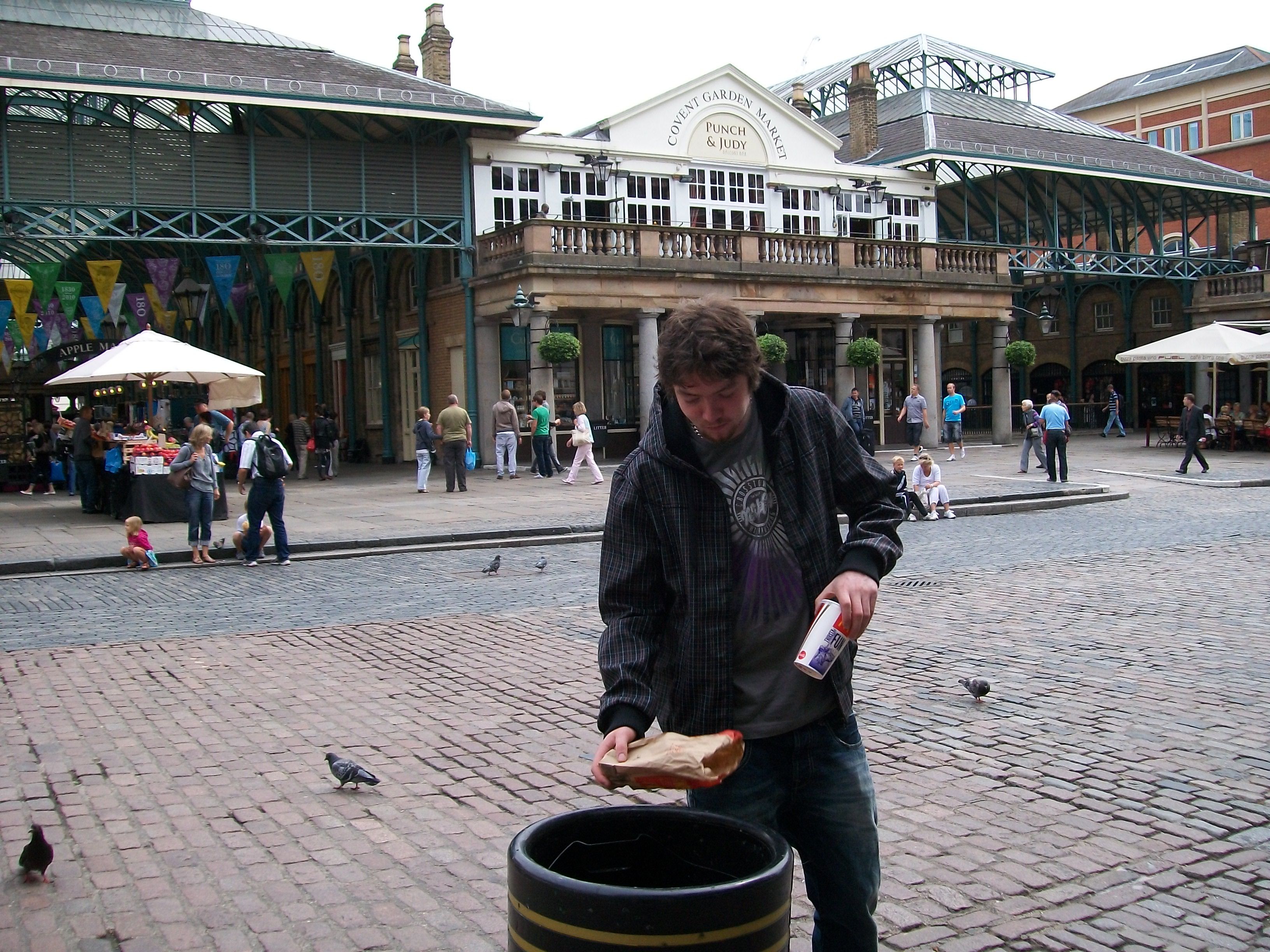
The monumental postwar buildings of Aldwych curve back towards the West End. Covent Garden is a little farther on. An oasis from its merry mayhem is found in the grounds of another St Paul’s. The church was built the 1630s and designed by Inigo Jones an early trailblazer of Neo-classicism in England. Entrance is from the graveyard garden.The portico facing the public square is technically to the rear. This has been noted for the first recorded performance of a Punch and Judy Show and remains a regular haunt for street performers. The portico also featured in George Bernard Shaw’s Pygmalion and the later film My Fair Lady. The area around became a noted theatre district soon after St Paul’s completion. Known as the Actors Church, inside there are plaques dedicated to many notable figures of stage and screen, including Charlie Chaplin, Noel Coward and Vivien Leigh. Across the square Covent Garden’s nineteenth century market building is busy and pleasant, with musicians playing on the lower level. The old market area also hosts the Royal Opera House and the London Transport Museum.

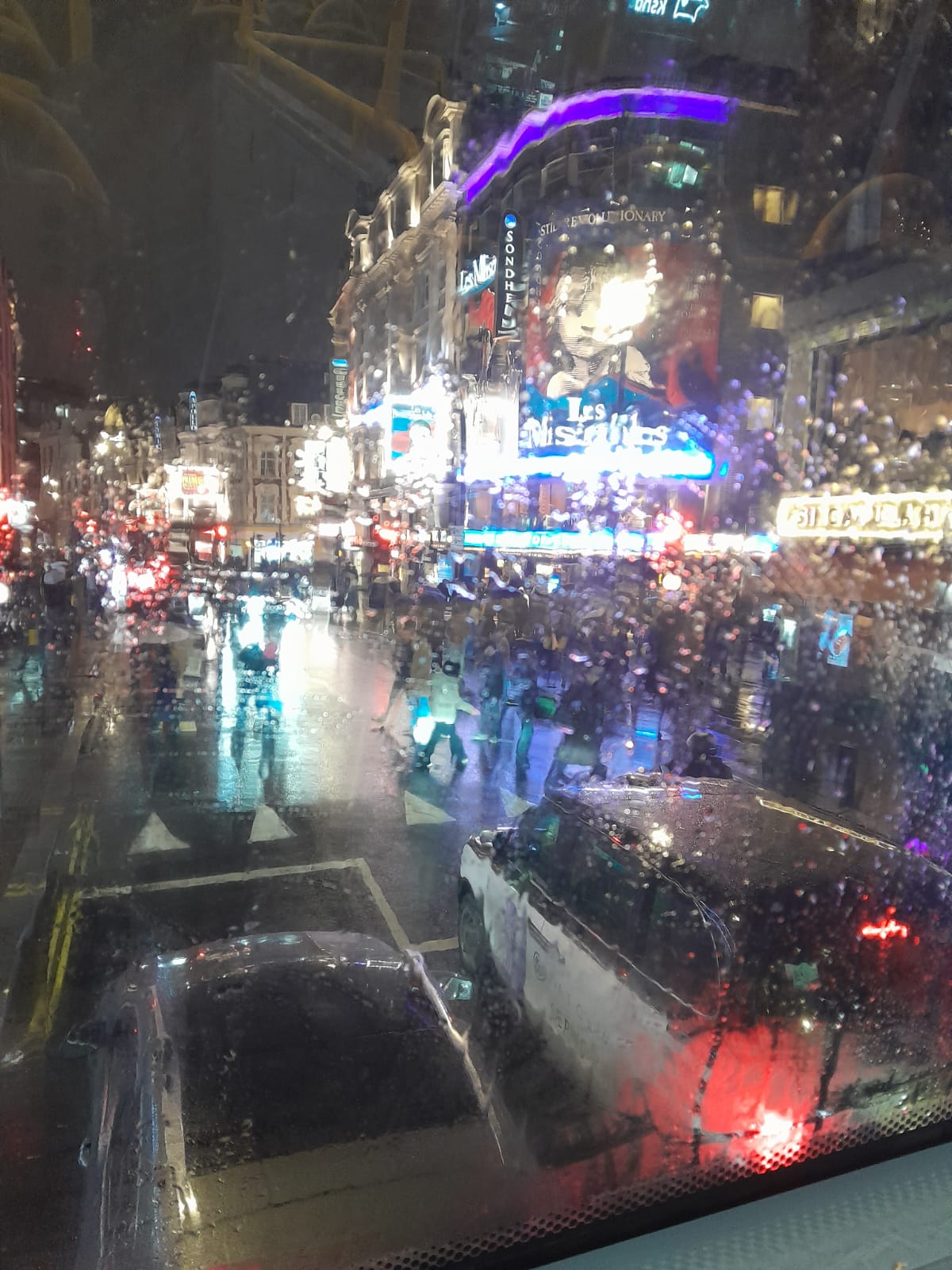
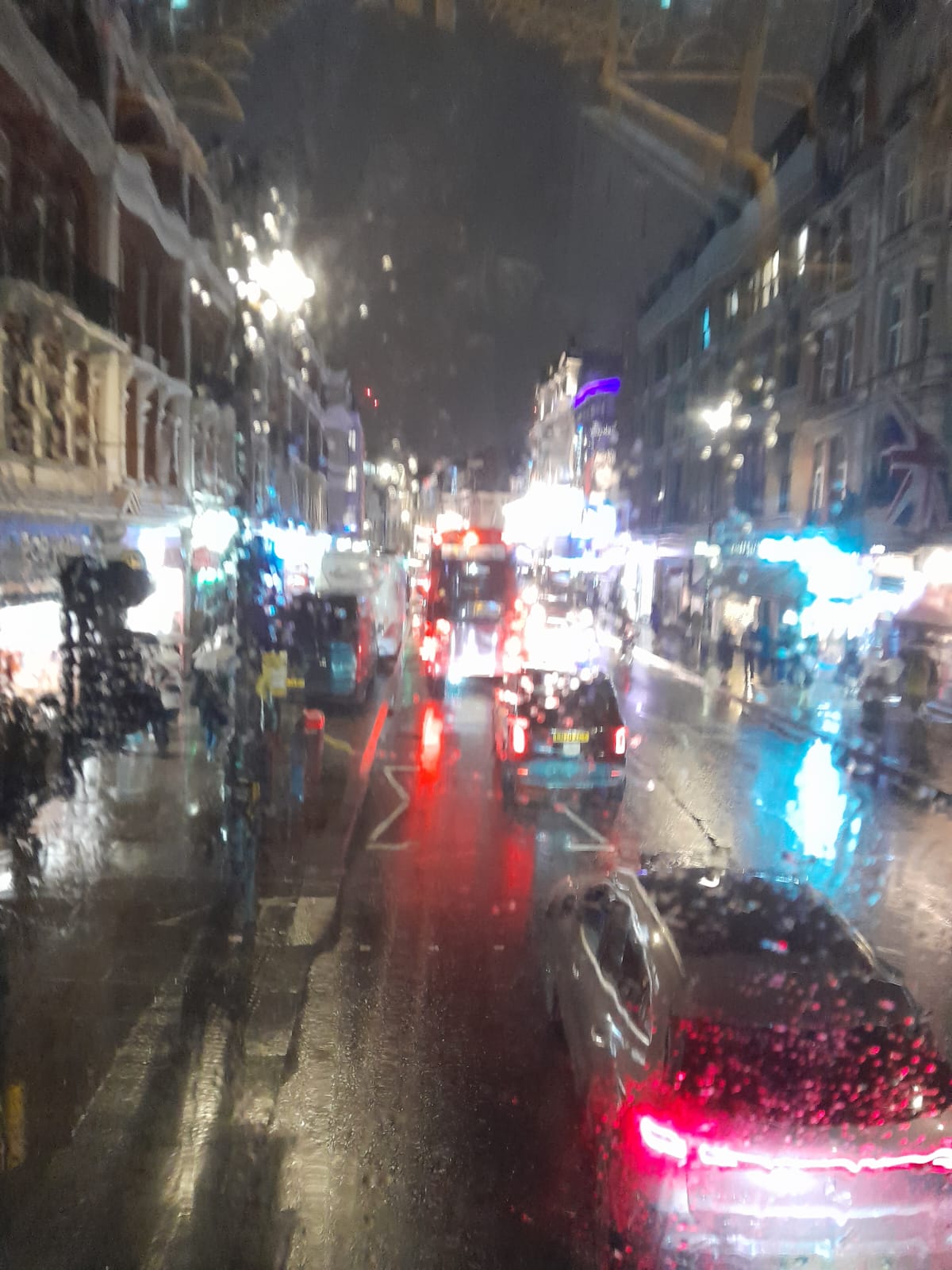
We are on a contemporary London transport project however. A short walk to Holborn by way of Lincoln’s Inn Fields, we stop at an Indian restaurant before heading on to Russell Square to catch our bus. Although London’s alleged rainforest climate is often touted in film, on my sixteen or so visits in the last fifty years I can’t actually recall being rained on. Now the rain pours down as we reach the 14 terminus at Russell Square. First we pass the British Museum, then through the full length of Shaftesbury Avenue. The theatre district glimmers in its floodlights and neon, the madding crowds unfazed by the downpour. A sign proclaims Les Miserables. Not us.

I saw you walking down Shaftesbury Avenue

Excuse me for talking I wanna marry you

This is seventh heaven street to me

Don’t you seem so proud

You’re just another angel

In the crowd and I’m…

Walking in the wild west end

Walking with your wild best friend

Wild West End is a song from Dire Straits’ eponymous debut album in 1978.

London Memories – 4.

River and Time

The River Thames is a highway, and has been since Roman times. Emperor Claudius led the invasion in the fifth decade of the first millennium, establishing Londinium as a fording point where the City of London now lies. The City itself became London’s financial district, marked by the Tower of London to the east with St Paul’s Cathedral towering above its western end. Enclosed by walls it had a population of over fifty thousand people at its height in the second century AD.

London was abandoned after the last leaving of the Romans in the early fifth century. The Anglo Saxons established a small settlement outside the ruined city, known as Lundenwick. Located just west of the ancient walls, the Strand now bisects this zone. Alfred the Great reoccupied the ruined walled city during the Viking invasions of the ninth century. By the time of Edward the Confessor, London had reestablished itself as England’s capital. Edward built WestminsterAbbey and after his death in 1066, William Duke of Normandy was crowned king there on Christmas Day, fresh from his victory at the Battle of Hastings. William would build the Tower of London, the imposing Norman fortress and notorious prison, showing who’s boss. London was back.

The ancient city’s inheritor, the financial district, is highrise and cold. This is where true power now lies. Soaring above it all, some of the more fanciful modern cathedrals of commerce have been given such playful names as The Gerkin and the Cheese Grater. Across the river the tallest of them all, the Shard, scrapes a sharp nail along the underbelly of the sky.

The true signature of the London skyline is best appreciated from the pedestrian bridge connecting the City with the Globe theatre on the South Bank. St Paul’s Cathedral boasts a heritage stretching back almost a thousand years. The medieval cathedral stood here for six centuries from 1066 until the Great Fire when it was destroyed. It was rebuilt by Sir Christopher Wren, completed fifty years later in an exuberant Baroque style. Loved by most, some stern Protestants have decried a whiff of Popery about its ornament and grandeur, noting its similarity to St Peter’s Basilica in Rome.

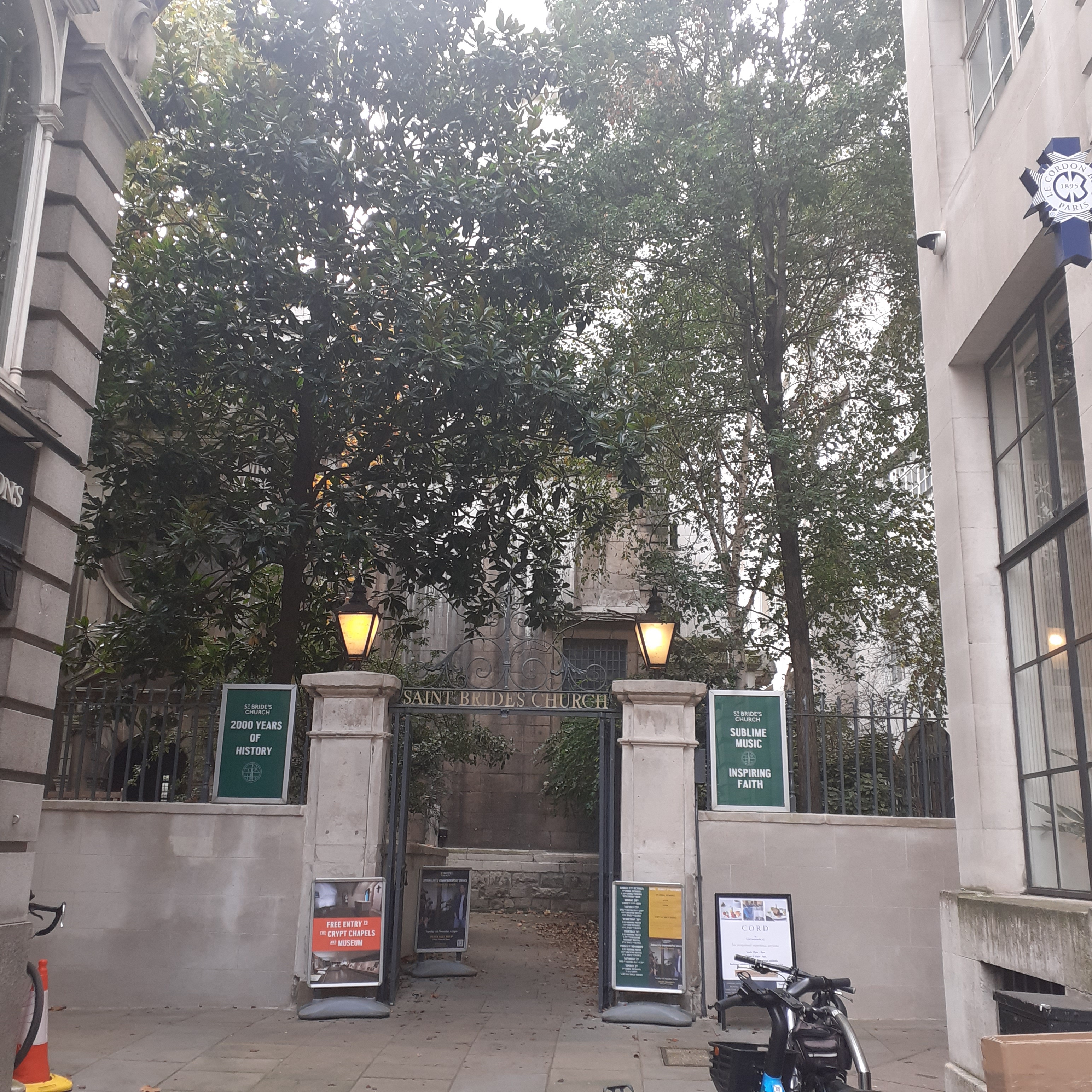
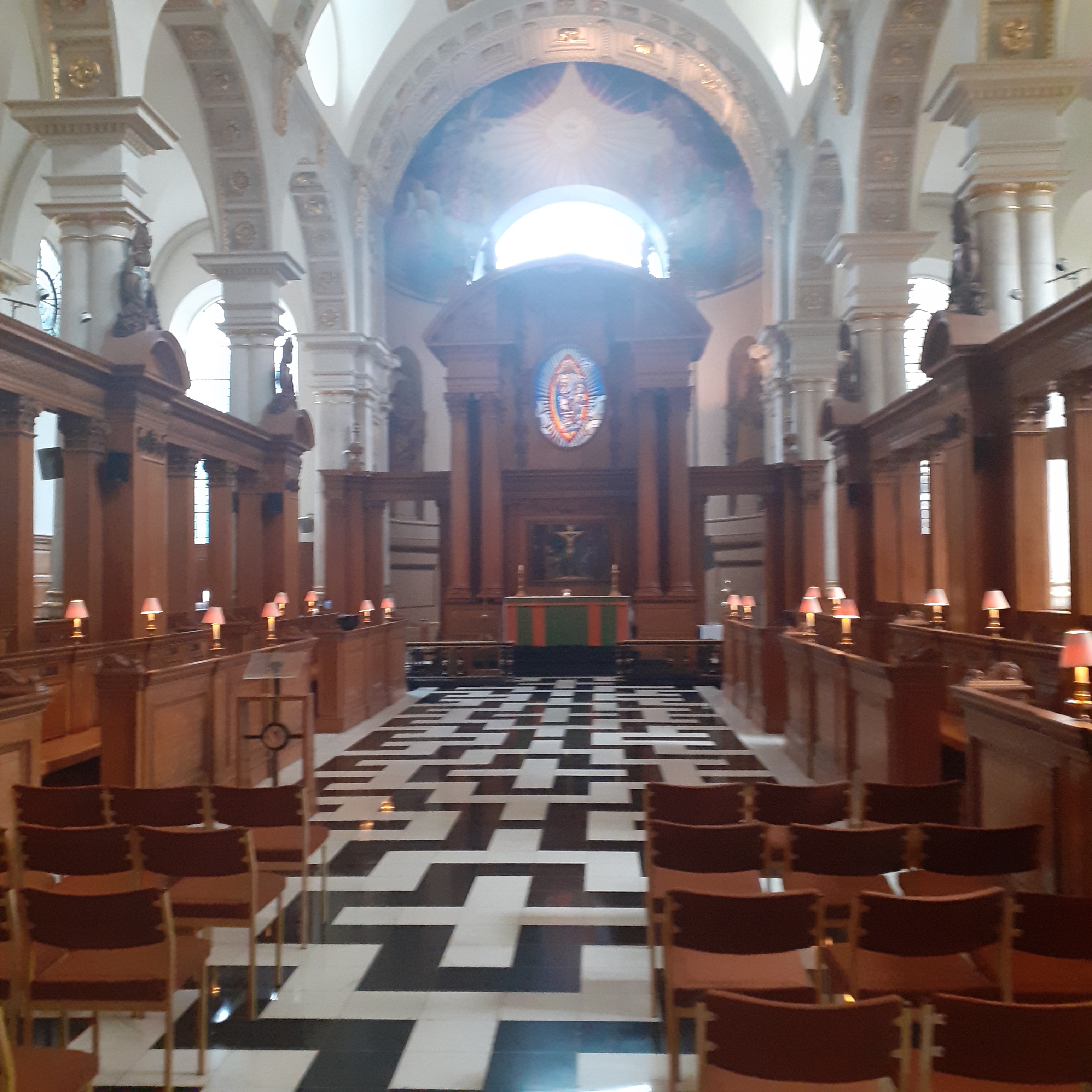
Some vestiges of the Roman Walls persist nearby, their perimeter topping Ludgate Hill. Walking down Ludgate Hill takes us to Fleet Street, once the centre of the newspaper trade. Hidden up a nearby lane, you might find St Bride’s Church. Another Christopher Wren building, St Bride’s is also known as the Printers Church. It was originally founded by Irish monks converting the West Saxons in the seventh century, and named to honour St Bridget of Kildare.

Bridget lived between 450 – 525 AD. The name Brigid, original Gaelic form of Bridget, is associated with a Celtic Goddess, a name we recognise from the Brigantes of Boadicea fame in Roman Britannia. Little is known of Saint Bridget’s early life but she established a community of nuns and came to be an important Abbess in the early Gaelic church, taking precedence over the Bishop of the Diocese of Kildare. Kildare, Gaelic for the church of the oak, has a cathedral dedicated to her.

Saint Brigid’s feast day falls on the first of February, and is associated with early spring rites. A ritual associated with her is the fashioning of a small cross from rushes. The distinctive cross, its prongs radiating from a central square swirl, has also been adopted as the logo for the Irish national broadcasting service, RTE. Brigid was patron of poetry and the arts, livestock and dairying, and was symbolically associated with fire. Amongst her more regular miracles was the ability to turn water into beer. She was exceptionally popular amongst both Irish and Danes for some reason

St Bride’s has an even more global association. Here, in 1587, Elenora White married Ananias Dare. The couple promptly set sail for America with a group that founded the first English speaking colony there, at Roanoke, Virginia. Their daughter Virginia, born later in 1587, was the first child born in America to the colonists but disappeared along with her parents and other colonists. Desperate attempts by Elenora’s father John White, the colony’s governor, from 1580 failed to resolve the mystery of the disappearance. The Lost Colony may have been wiped out by natives, or perhaps some, maybe Virginia, were sheltered by a local tribe, and intermarried with them.

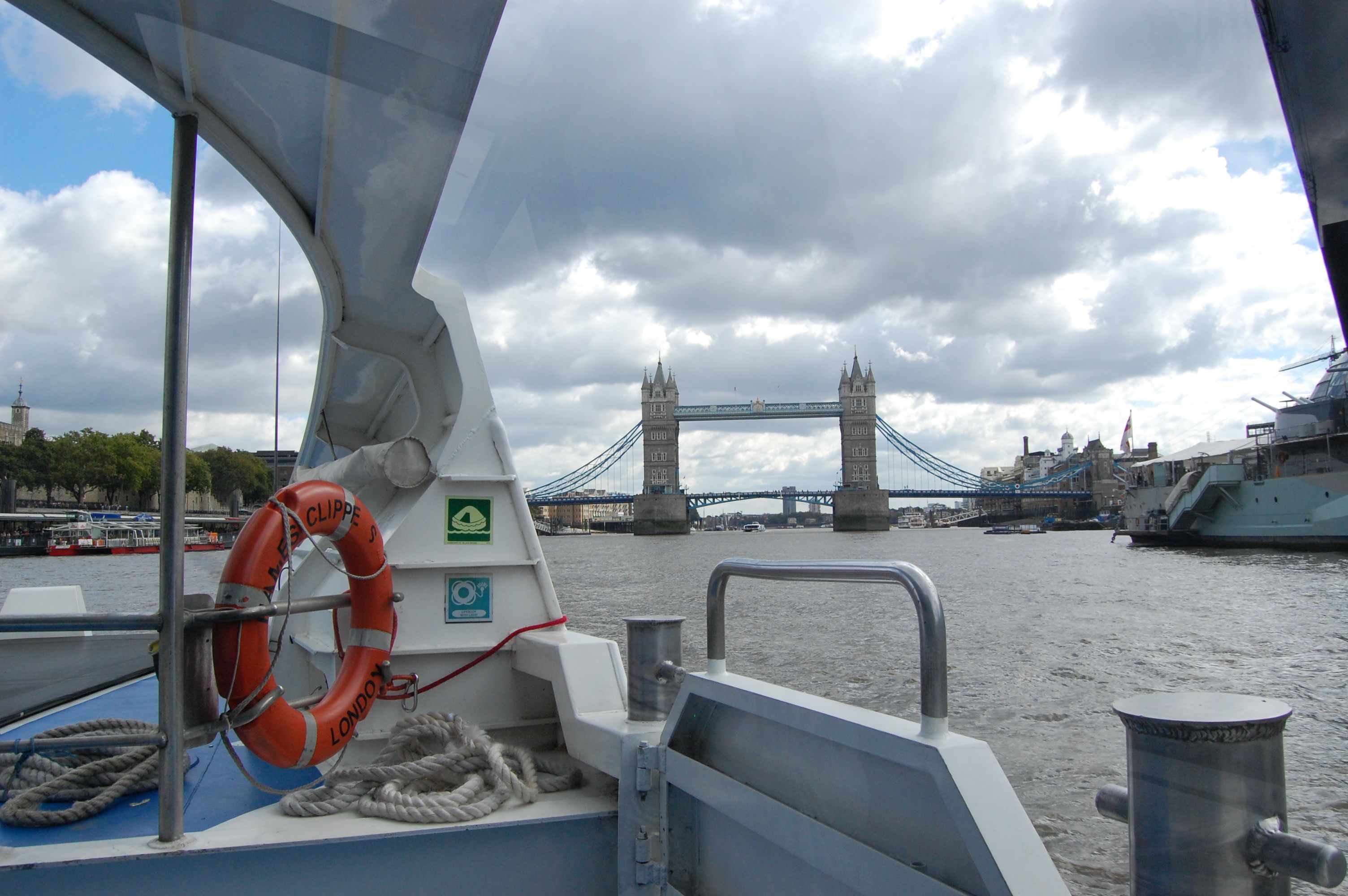
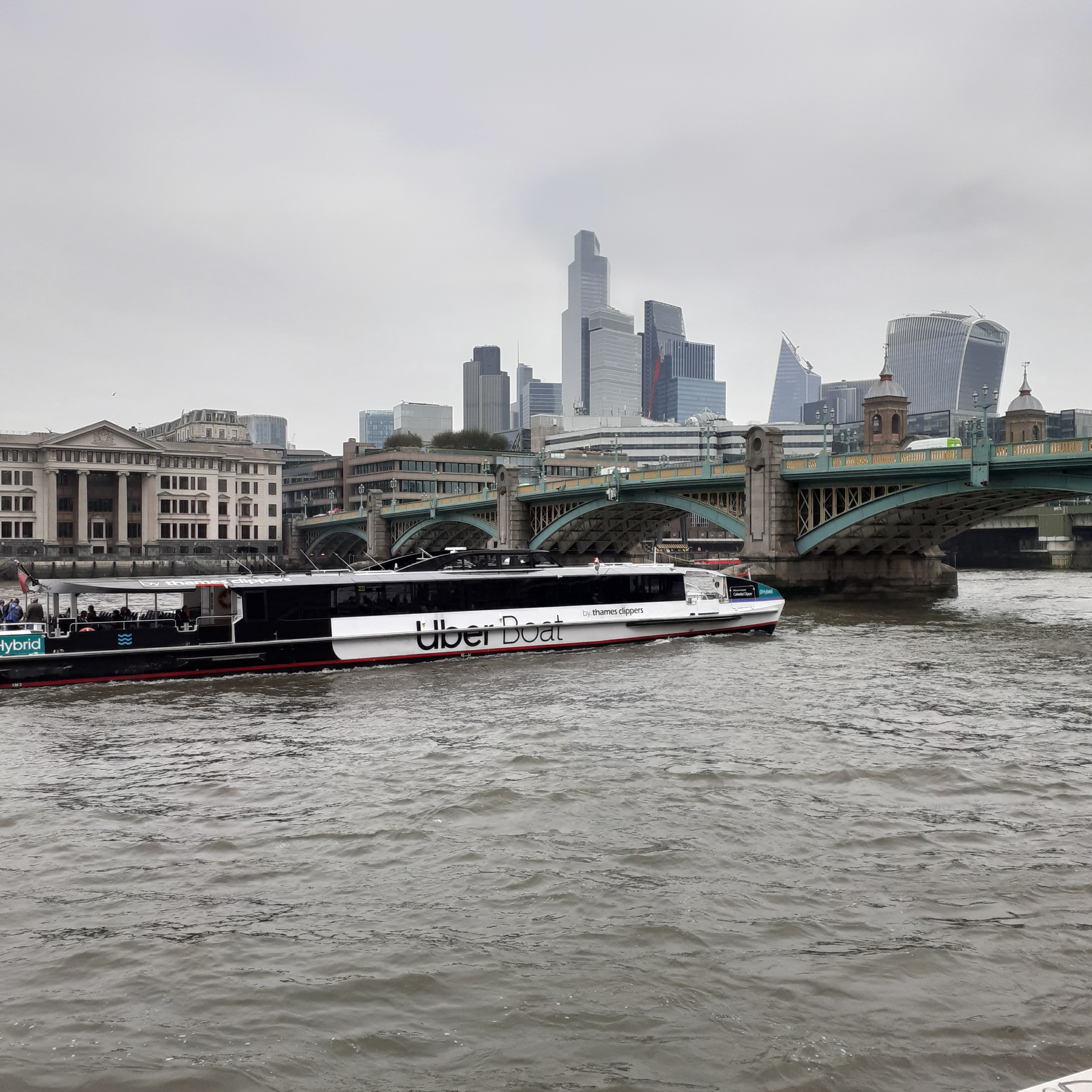
There are plenty other churches of interest in the immense shadow of St Paul’s. Continue down the Strand, which flows either side of two landmark churches, St Clement Danes and St Mary le Strand. There’s also Temple Church made famous by Dan Brown. The Strand, as the name implies, is not far from the river. The Thames bustles with pleasure boats, service and commercial craft. M and I once took a trip from Embankment to Greenwich by boat. Operated by Thames Clippers, the service runs from Putney way out west, passing Chelsea, Battersea Power Station and the Houses of Parliament to the Embankment where we got aboard. Heading east the City rises to our left, with Shakespeare’s Globe on our right. We pass through Tower Bridge, another emblem of London with its fortress-like architecture and bascule. Horace Jones was the architect and John Barry the engineer. The project completed in 1894

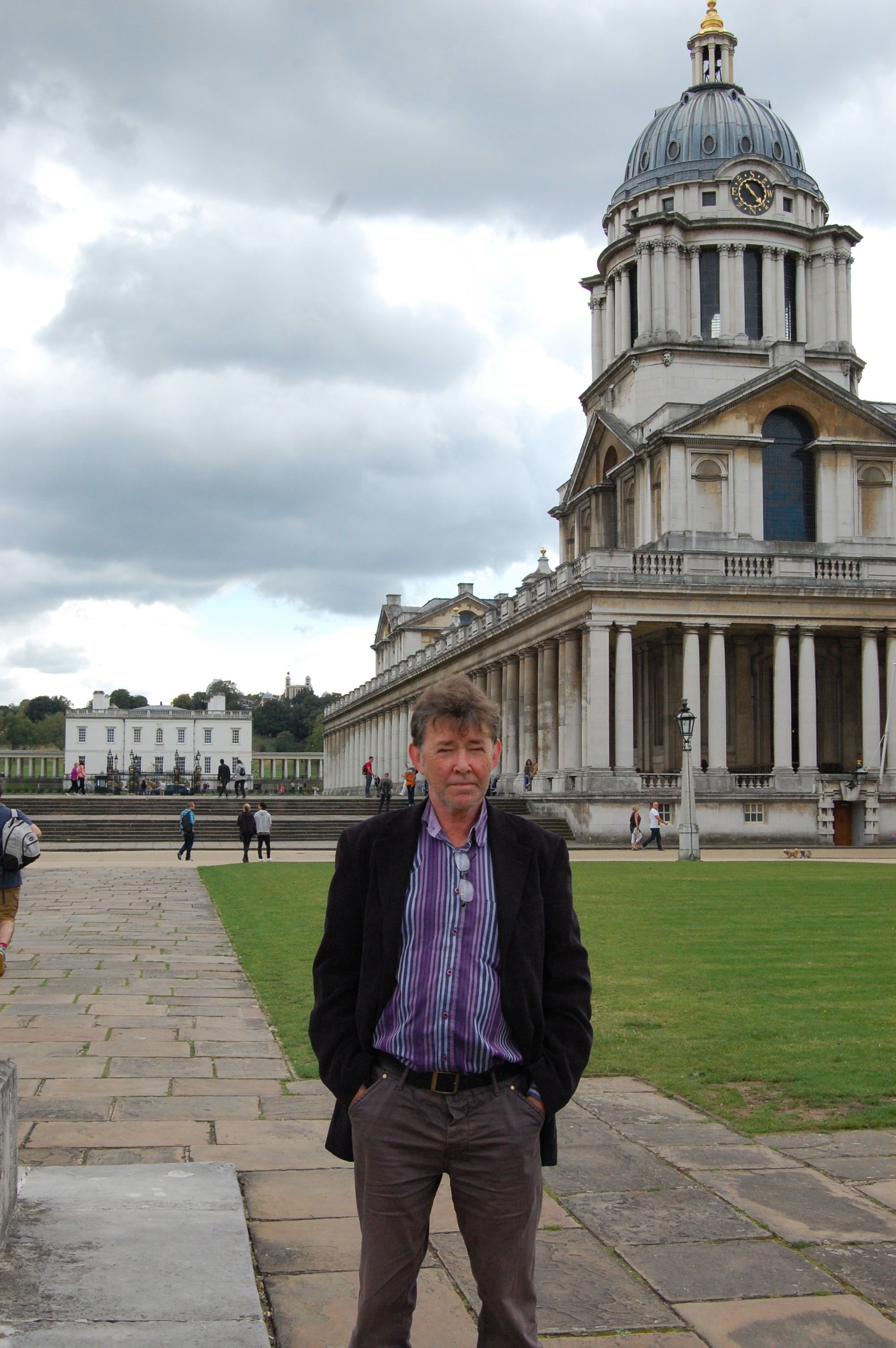
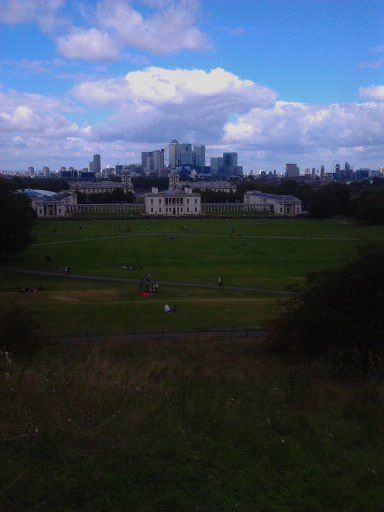
Into the exotic east, Canary Wharf is a couple of stops before Greenwich, while Woolwich Arsenal lies further to the east. Greenwich awaits on the south bank. The Royal Navy College is a neo-classical masterpiece of Christopher Wren. Begun in the late 16th century, it was originally the Royal Hospital for Seamen. Beyond the splendour of its colonnades and domes, Greenwich Park slopes up to the Royal Observatory. Highrise London stretches along the western horizon. From 1884 Greenwich was recognised as the line 0 of longitude. The accurate measurement of longitude had been a problem in previous centuries. With the Longitude act of 1714, the British Parliament offered £20,000, almost four million quid in today’s money, to anyone who could devise a reliable system for the reckoning of longitude.

At that time, John Harrison, a carpenter from Lincoln in his early twenties, was making almost frictionless clocks..He took on the challenge and In 1759 Harrison’s H4, similar to a pocket watch, seemed to fulfil the criteria. However, the board demurred, putting Harrison’s success down to beginner’s luck. His H5 passed the test, though Harrison still had difficulty extricating the prize. Only the support of George III gained him some compensation, to the tune of £8,500. Harrison was eighty years old and died shortly afterwards in 1776. His timepiece was used by Cook on his second and third voyages. William Blythe also carried one, although it was nicked by Fletcher Christian, to be returned to the Maritime Museum much later. The Museum has an exhibition devoted to the Harrison clocks. On our visit a museum guide gave a detailed and entertaining account of Harrison’s travails. Spellbound, I lost all track of time. We nearly missed our boat.

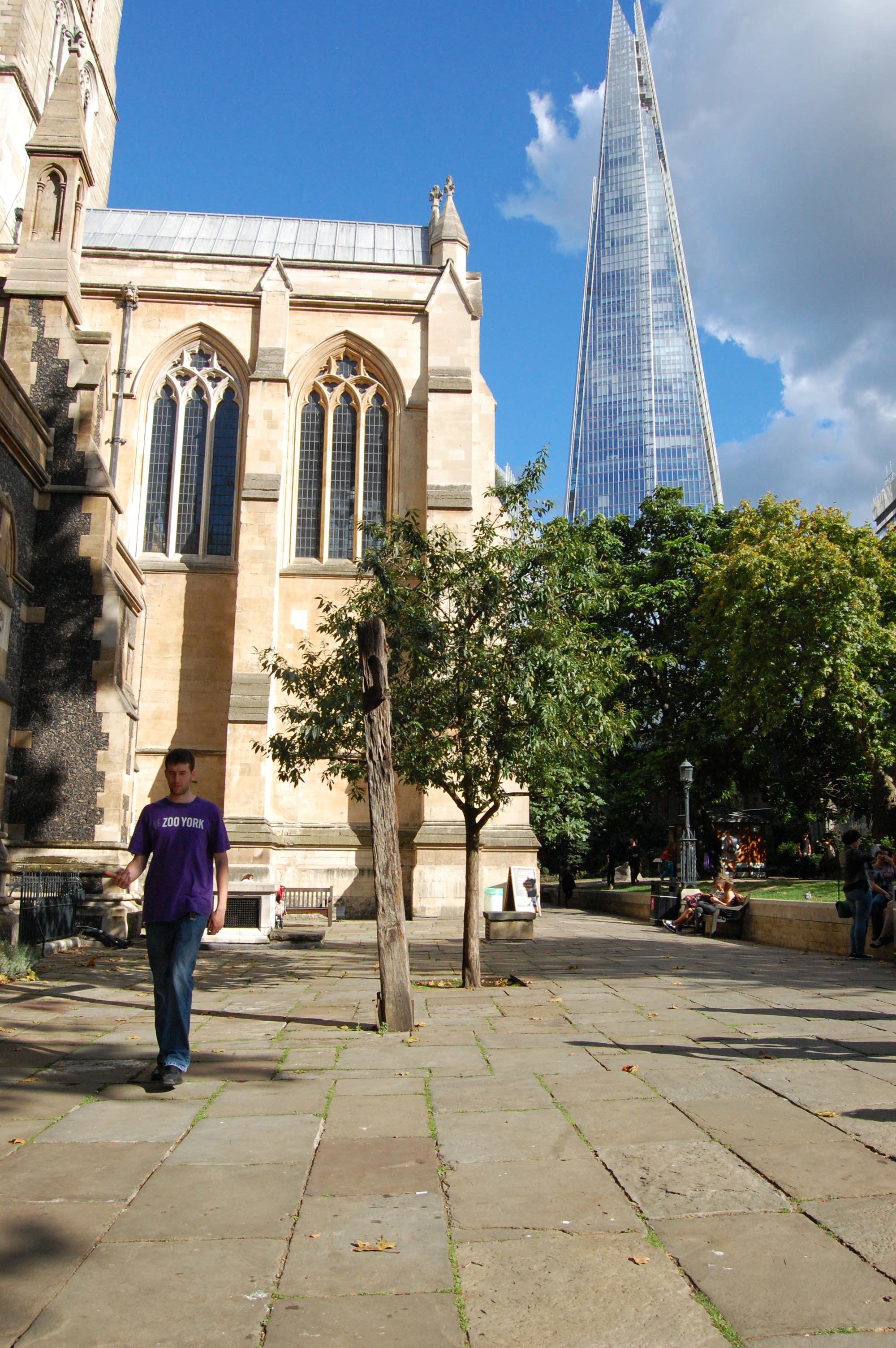
Beyond Greenwich and you are flowing onto the world’s highway, with all the oceans and seas connecting with all the freeflowing rivers and placid canals. Our return trip took us to Southwark Cathedral. The bells were ringing out as we found an outdoor table at a local hostelry. Glorious sound, no doubt, unless you are tying to enjoy a quiet pint in a beer garden. London certainly swings like a pendulum do. And London is always calling the curious traveller.

London calling to the faraway towns …

The ice age is coming, the sun is zooming in

Meltdown expected, the wheat is growing thin

Engines stopped running, but I have no fear

London is drowning-and I live by the river

London Calling is by The Clash, written by Joe Strummer and Mick Jones. It is the title track of their 1979 album, and echoes the opening call of BBC World Service during WWII. The febrile apocalyptic tone is very seventyish, or maybe still persistent. I somehow heard the song’s hookline as “London’s burning, and I live by the river.” Which might be more consoling. Not to worry, though; the Thames Barrier was completed in 1982 near Woolwich protecting London’s flood plain.

Leaving Liverpool

Back in the seventies, on our daytrip to Liverpool we visited the modernist Roman Catholic Cathedral. Known as the Metropolitan Cathedral, or Paddy’s Wigwam to some, it is at the North end of Hope Street. The Anglican Cathedral lies near the street’s southern end forming something of a heavenly bracket. However, the naming of the street isn’t a reflection of this ecclesiastical nature. Neither faith, hope nor charity are invoked; Hope Street is named after William Hope, a merchant who once lived here in the late eighteenth century.

Hope Street also hosts the Liverpool School of Art building from 1883. John Lennon and Stuart Sutcliffe studied here in the early sixties. In 2008 the Art School moved, though the memory of Lennon remained. The new school is housed in the John Lennon Art and Design Building nearby. Meanwhile, the Liverpool Institute for the Performing Arts is now based in the old building.

The Metropolitan Cathedral was completed in 1967. It was a long time coming. During the Great Famine in the 1840s, Liverpool saw a huge influx of Irish Catholics. Many passed through the port, heading for America or elsewhere in Britain and Empire. Many stayed. By the 1850s a Cathedral was planned. Edward Pugin was the first commissioned for this, but only a local parish church resulted. In 1930 Edwin Lutyens was chosen, producing designs for a massive cathedral on Hope Street, to rival the also massive Anglican Cathedral. It would have been one of the largest churches in the world, with the largest dome. But it wasn’t to be. The strictures of World War Two put a halt to such grandiose plans. Only the crypt was completed in the late fifties. This, strangely, plays host annually to the Liverpool Beer Festival. Or perhaps that’s not so strange.

And if life is a bar room in which we must wait

‘Round the man with his fingers on the ivory gates

Where we sing until dawn of our fears and our fates

And we stack all the deadmen in self addressed crates

Heaven knows no frontiers

And I’ve seen heaven in your eyes

No Frontiersthe is a song written by Jimmy MacCarthy, becoming the title track of Mary Black’s 1989 album.

At last, sometime between Lady Chatterly and the Beatles first LP, Frederick Gibbert’s radical modern design went ahead. Built on top of the crypt, it forms a flared conical structure above a circular plan with the altar central. Sixteen curved concrete trusses frame the building, forming flying buttresses at the lower level and rising into a pinnacled crown at its height. The rushed and economical construction practices of the time resulted in flaws appearing early, and extensive rapairs and alterations were required in the 90s.

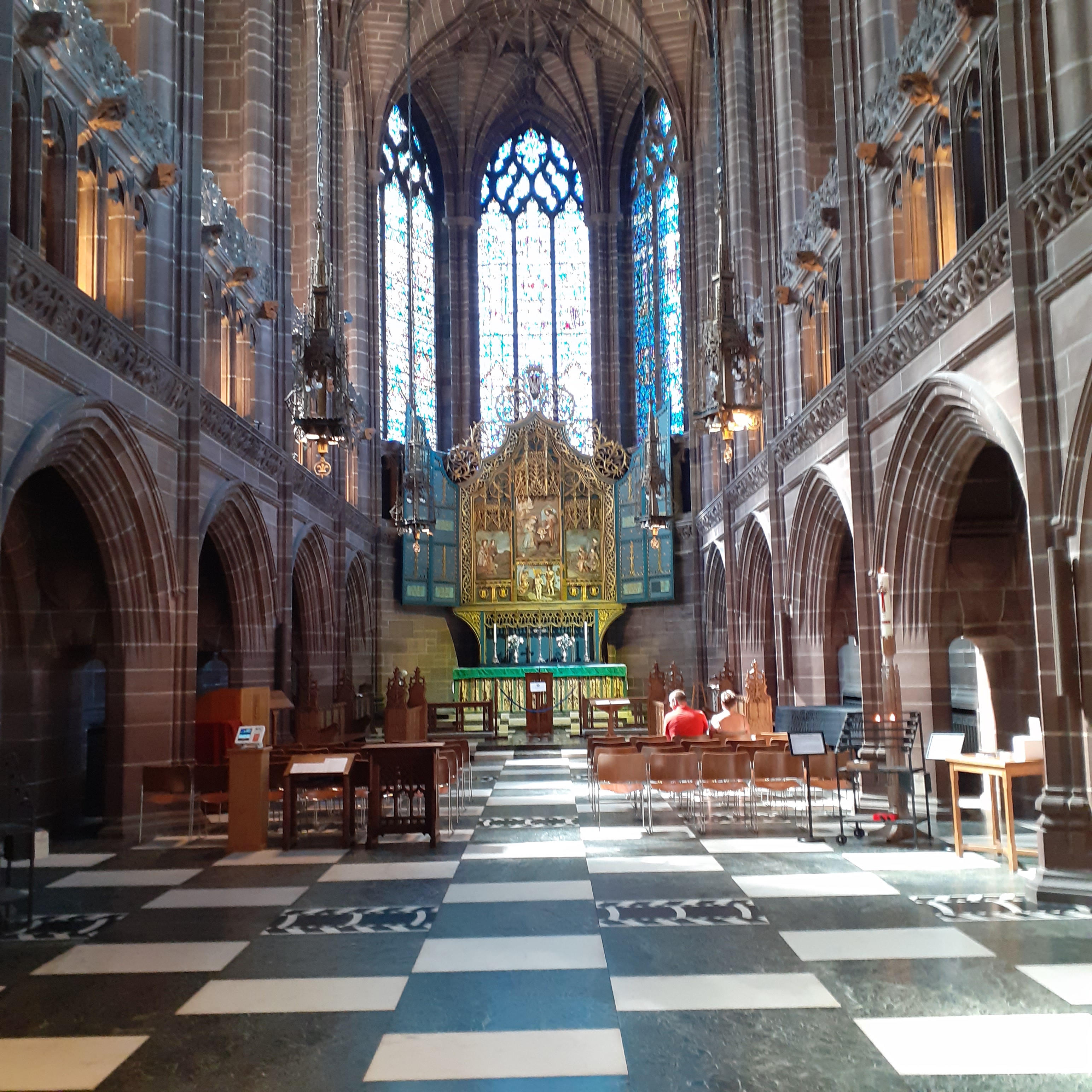
The Protestant Cathedral is more traditionalist, though it is also a twentieth century building. Begun at the start of the century, it is the largest cathedral in Britain. Giles Gilbert Scott was a student in his early twenties when he won the design competition. More contentious still, he was a Catholic. But, maybe that brought a certain flourish to the interior, particularly the Lady Chapel. Scott was a versatile architect and designer, his notabe works including Battersea Power Station, and the iconic red telephone box.

Overall, his design for the Cathedral draws on gothic tradition with a more pared down modernist finish. It was greatly modified early on towards a simpler, bolder statement. The central tower rises to over a hundred metres, immediately establishing the church as a city landmark, already in a strong position occupying the high ground south of the centre. 

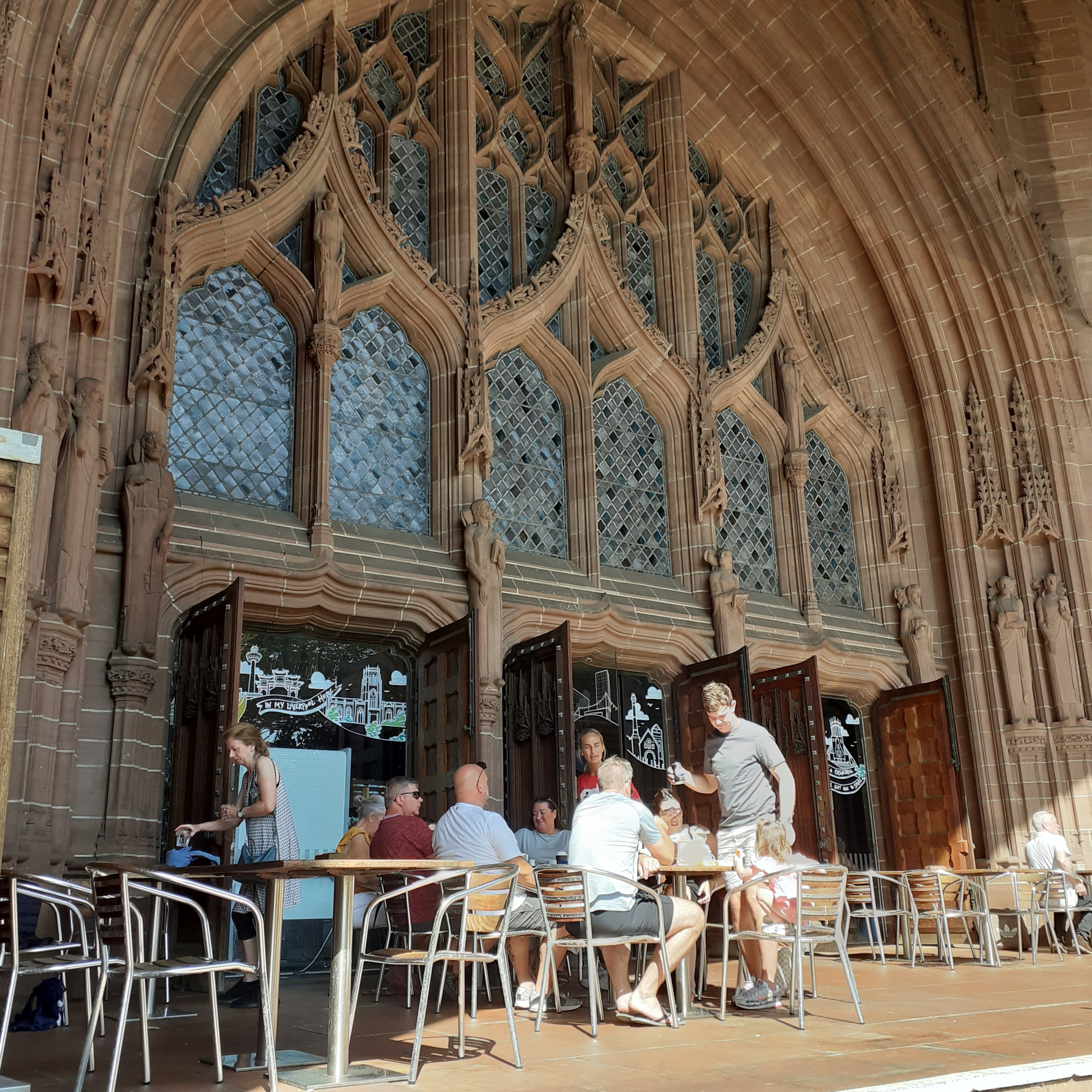
The vast interior is a perfect place to top up on spiritual awe. We’re hungry too, having skipped breakast, and that physical yearning was also catered for. On the terrace there’s a licensed bistro, good for breakfast, lunch, a coffee and a snack. You can even relax with a beer. Hitherto, my only experience of drinking alcohol in a concecrated building has been the odd communion with two substances. Liverpool is more liberal, whichever foot you kick with. Whether down at the Crypt or up on the High Church. So it’s something of an Ecumenical matter to go boozing with the Anglicans. I’ll drink to that! Later we ell in with a friendly vicar and talked about this and other things, including the various works off art the cathedral has accumulatied in its time. 

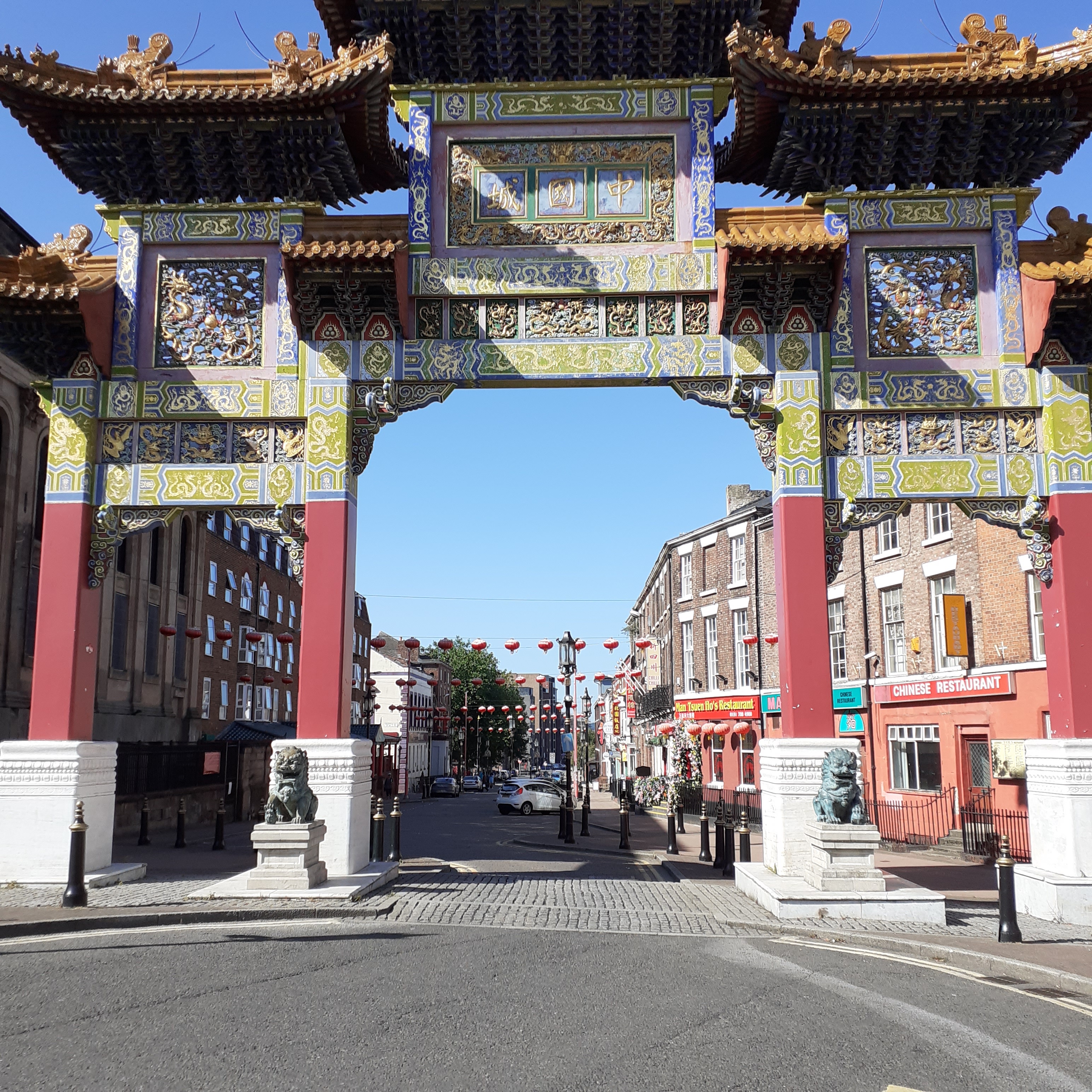
Heading downhill towards the Port, we pass through the gate of Chinatown. The spectacular arch was transported from Shanghai at the Millennium and reassembled here. It is one of the largest such arches outside of China itself. Liverpool’s Chinatown is the oldest established in Europe, develpoing back as far as the mid nineteenth century.

A familiar focus of travellers to Liverpool is Lime Street. When laid out in the eighteenth century it was on the city’s periphery, but the coming of the railway in 1836 brought it to the centre.The Rail Station is famous, fronted by the Great Northwestern Hotel built in 1871in spectacular Renaissance style. This was originally the Railway Hotel, and closed in the 1930s. Subsequently it was used for office and accommodation returning recently to the hotel business, operating as the Radisson Red.

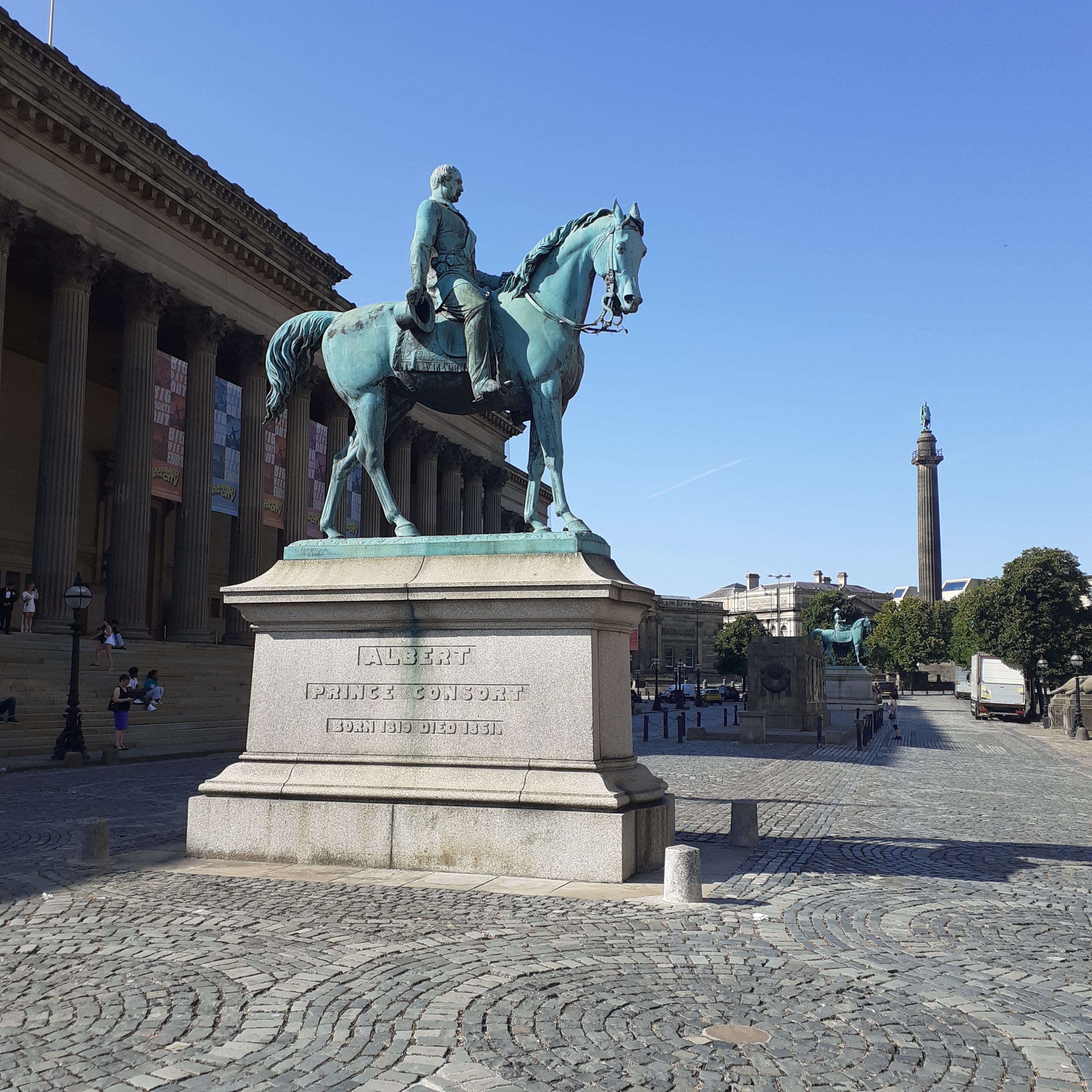
Lime Street gushes with colonial and mercantile pride. Statues stand guard; of Prince Albert, Disraeli and of course Nelson atop his column. St George’s Hall dominates the plaza opposite the station. It was opened in 1854 and contains a Concert Hall and law courts  Behind the Hall are St John’s Gardens, a welcome green space on a scorching day. Then its back into the throng heading downhill through Liverpool’s main shopping precinct, completing our circle on the Waterfront.

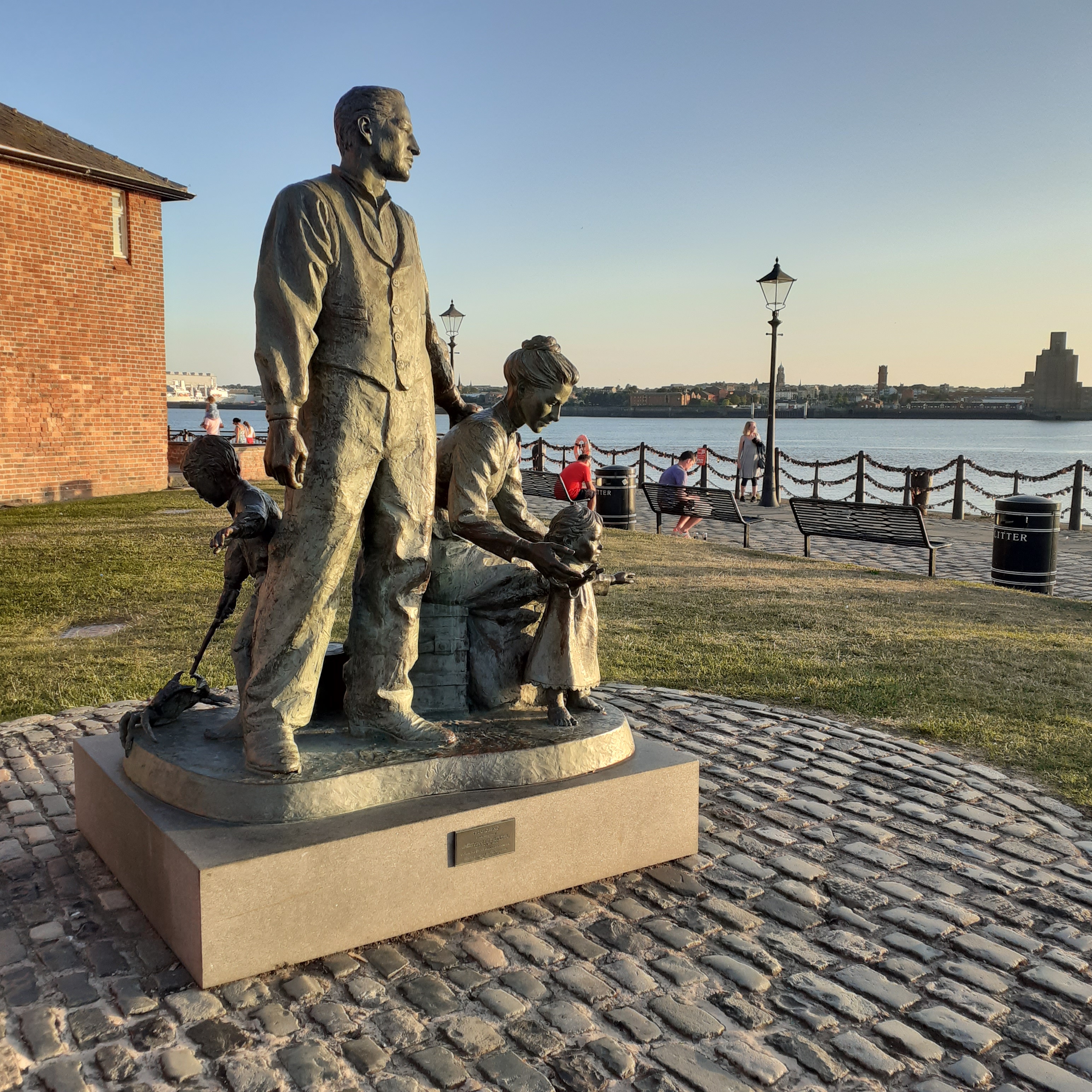
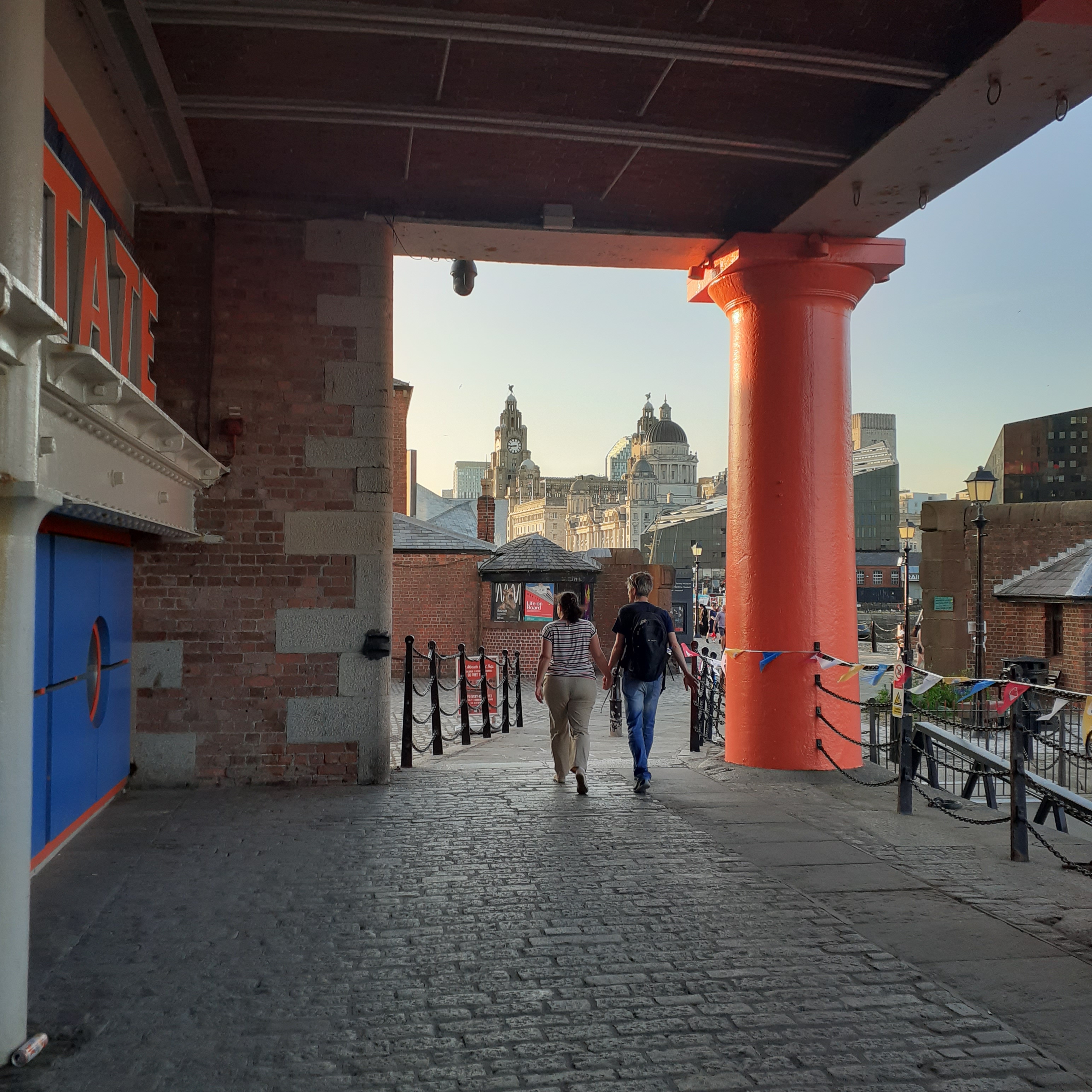
Our hotel, the Ibis, is beside Albert Dock, so the city centre and major sights are nearby. Albert Dock was built in 1846 of cast iron, redbrick and stone, a state of the art facility in its day, machinelike in its eficiency and fireproof too. The changing patterns of world trade and technology made it derelict just over a century later. In the early seventies, redevelopment could have meant removal, however sympathetic redevelopment won out preserving the majority of the buildings in a waterways setting. Apartments, shops, bars, restaurants and visitor centres line the waterfront, and this is the go to part of Liverpool, where it was once the place for leaving.

The Tate Liverpool opened in 1986 adding to the city’s prestige. Unfortunatey, the Tate was closed during our visit due to major renovations. My love of art galleries has been thwarted by such closures in recent years, so this is just another in a long list. The RIBA, Royal Institute of British Archotects, hosts a selection of the Tate collection in the meantime. The Liverpool Maritime Museum, the modern Museum of Liverpool, and the Beatles Story are other major attractions. There’s a funfair into the night, and everywhere the madding crowds strolling and going out to the many hostelries onstreet and off, and floating in the dock for that matter.

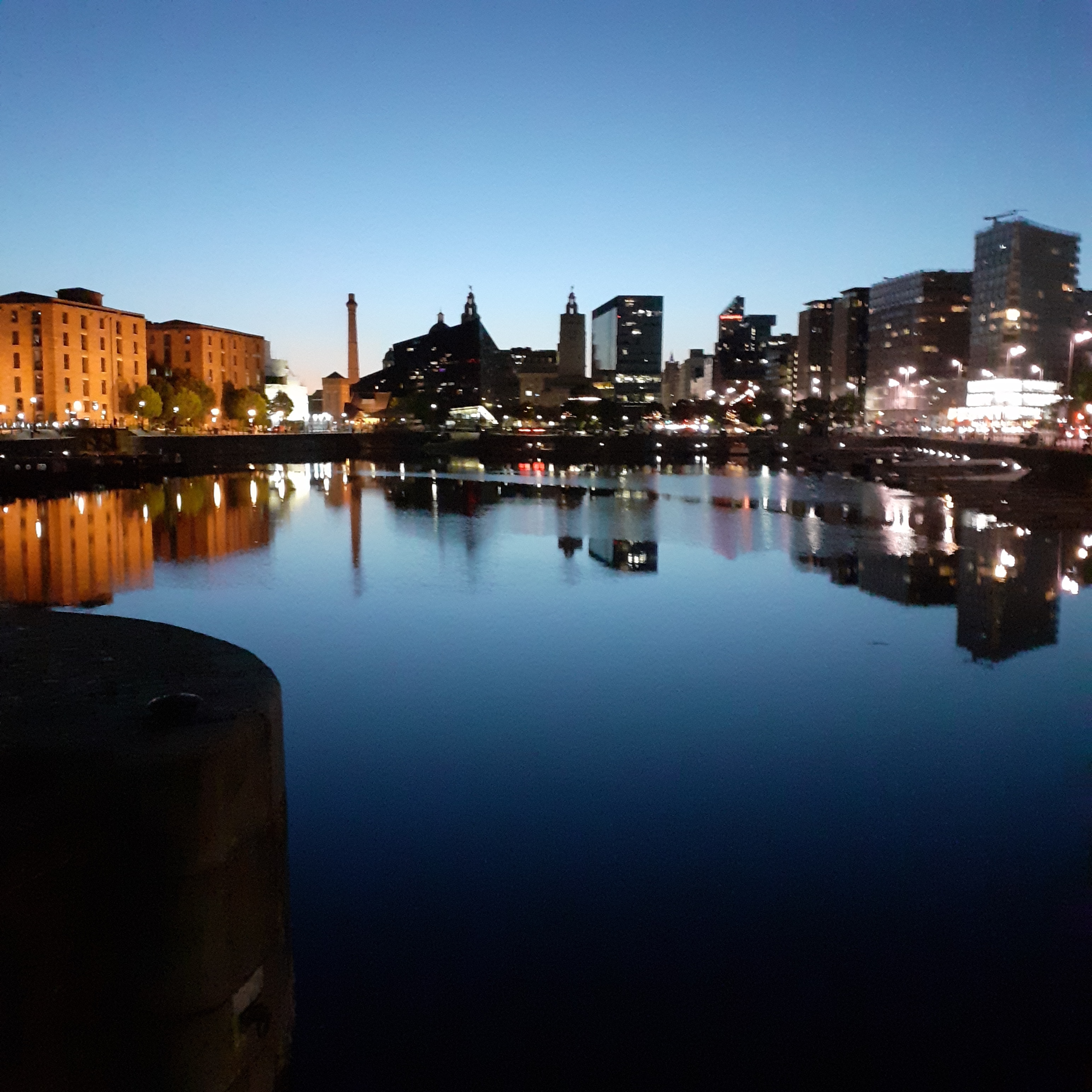
We frequented the Pump House for a few drinks. It’s set in a converted redbrick beneath a soaring chimney. There’s seating outside looking over Canning Dock and Mann Island, with the Tate Liverpool making a sharp modernist statement beyond. Later, we head through the Colonnades around Albert Dock browsing its shops and restaurants. We dine at the Panam Restaurant and Bar, its glass frontage giving a fabulous view over the dock as night falls. It’s an early rise in the morning and we catch a bus to the airport from the station next door. The airport is another major building named for the Beatles John Lennon. Originally Speke airport, it was renamed in 2001. It now sings.

Oh Liverpool Lou, lovely Liverpool Lou

Why don’t you behave just like other girls do?

Why must my poor heart keep following you?

Oh, stay home and love me my Liverpool Lou

Liverpool Lou was written by Dominic Behan in 1964. Ten years later the Scaffold did a cover, attributing it to Paul McCartney. McCartney later apologised and correced the attribution. On Desert Island Discs in 2007, Yoko Ono picked Behan’s song, saying that Lennon had sung it as a lullaby to their son, Sean.

Ferry to Liverpool

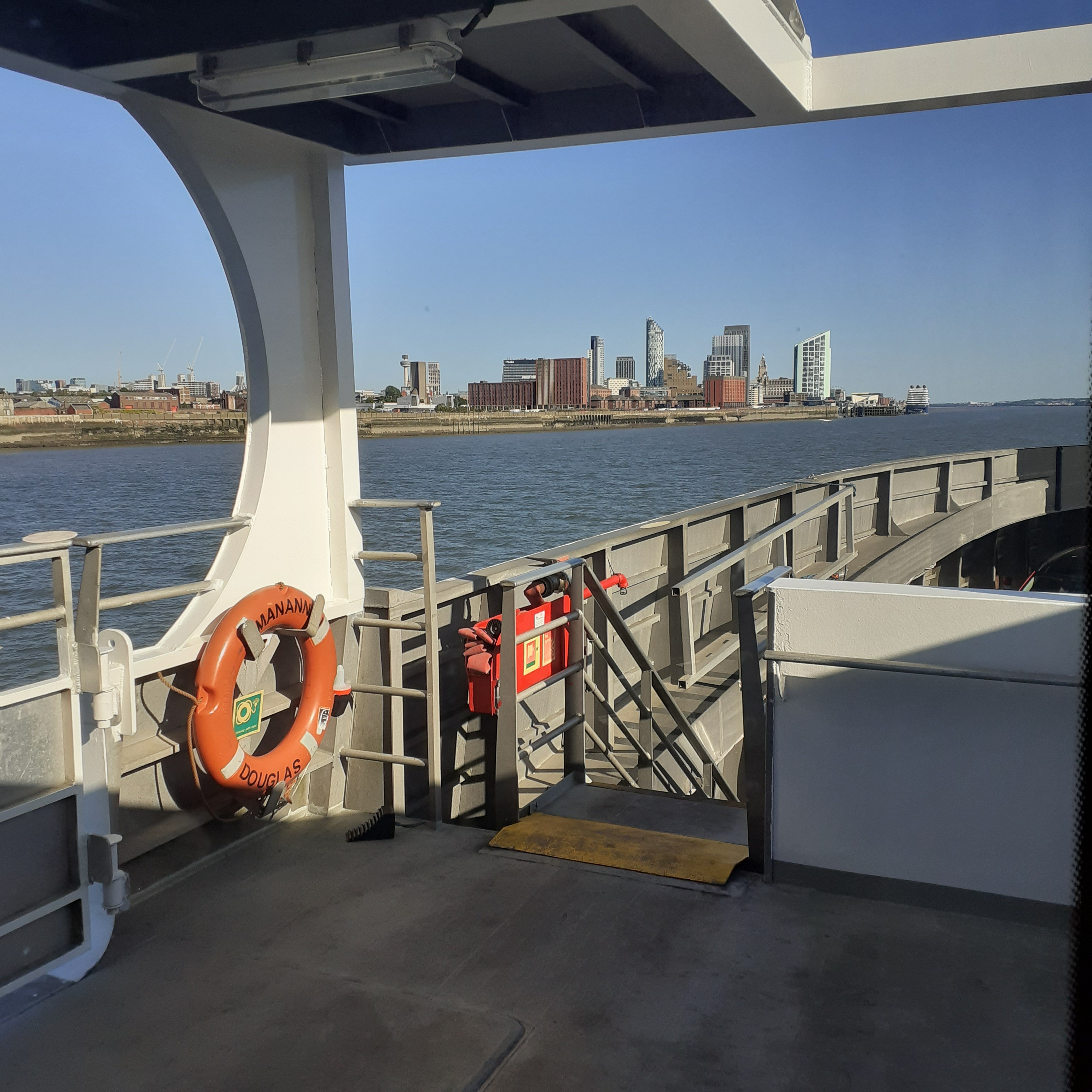
There are daily ferries from Douglas to Liverpool, the crossing taking three hours. The boat, the Mannanin again, is packed. Mostly bikers returning from their Isle of Man TT pilgrimage. We breakast on the boat. It’s a full English, or Irish, or Manx; you know what I mean. I was once in Liverpool, back in the early seventies on a daytrip by boat. I bought myself a portable typewriter and an airbrush, fuelling my twin ambitions to be a writer and an illustrator. It’s a long story. Or, several short stories and a novel, some slick illustration too, though I’ve abandoned that technique for the paintbrush. 

Our day in 70s Liverpool was shrouded in drizzle, the city providing a gothic silhouette to our shopping adventure. This time, it’s baking in blue heat. The ferry berths on the northern end of the waterfront. The majestic dockside running south has been beautifully developed into a vibrant showpiece for the city, dotted by landmarks with a host of visitor attractions. It absolutely throbs with life under the hot sun.

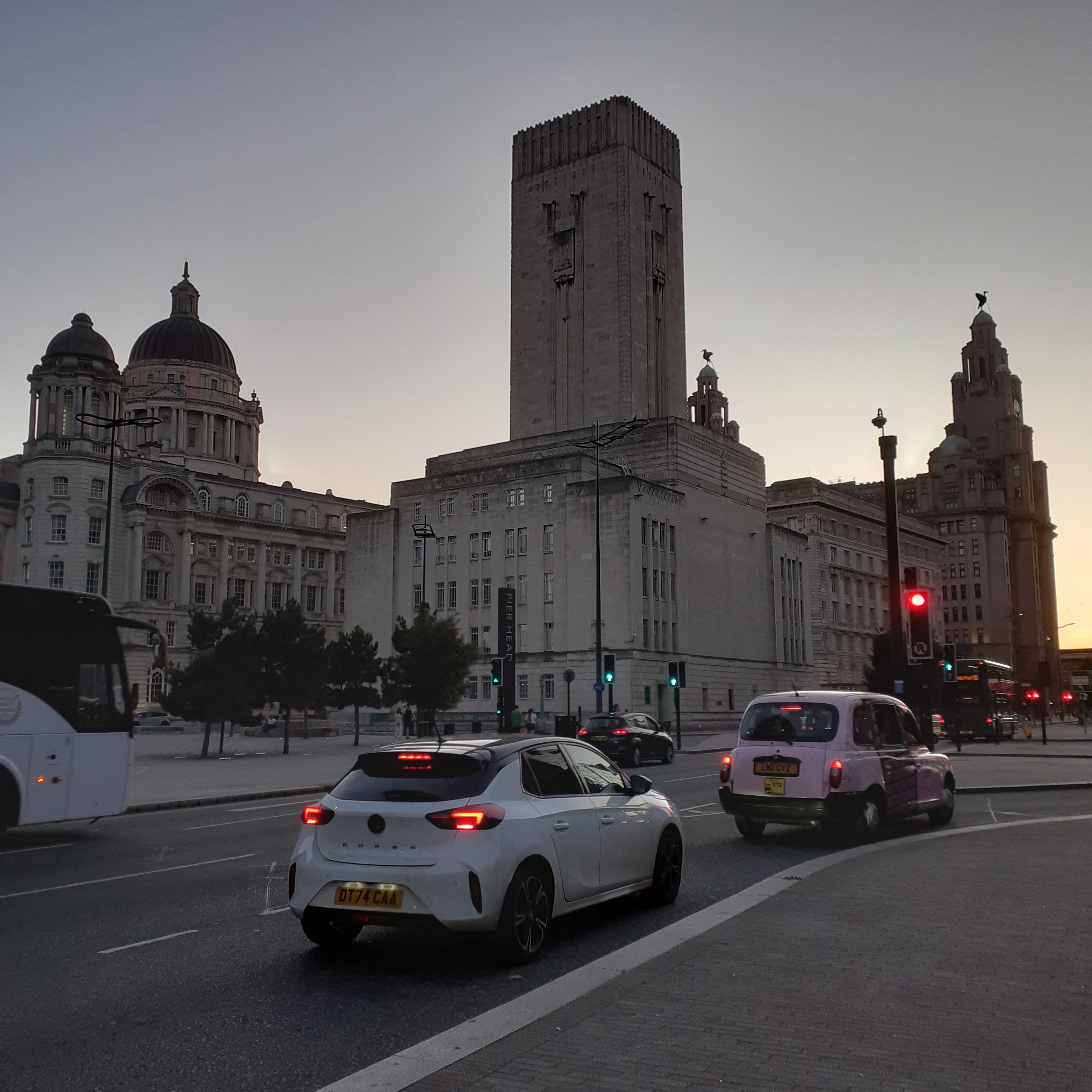
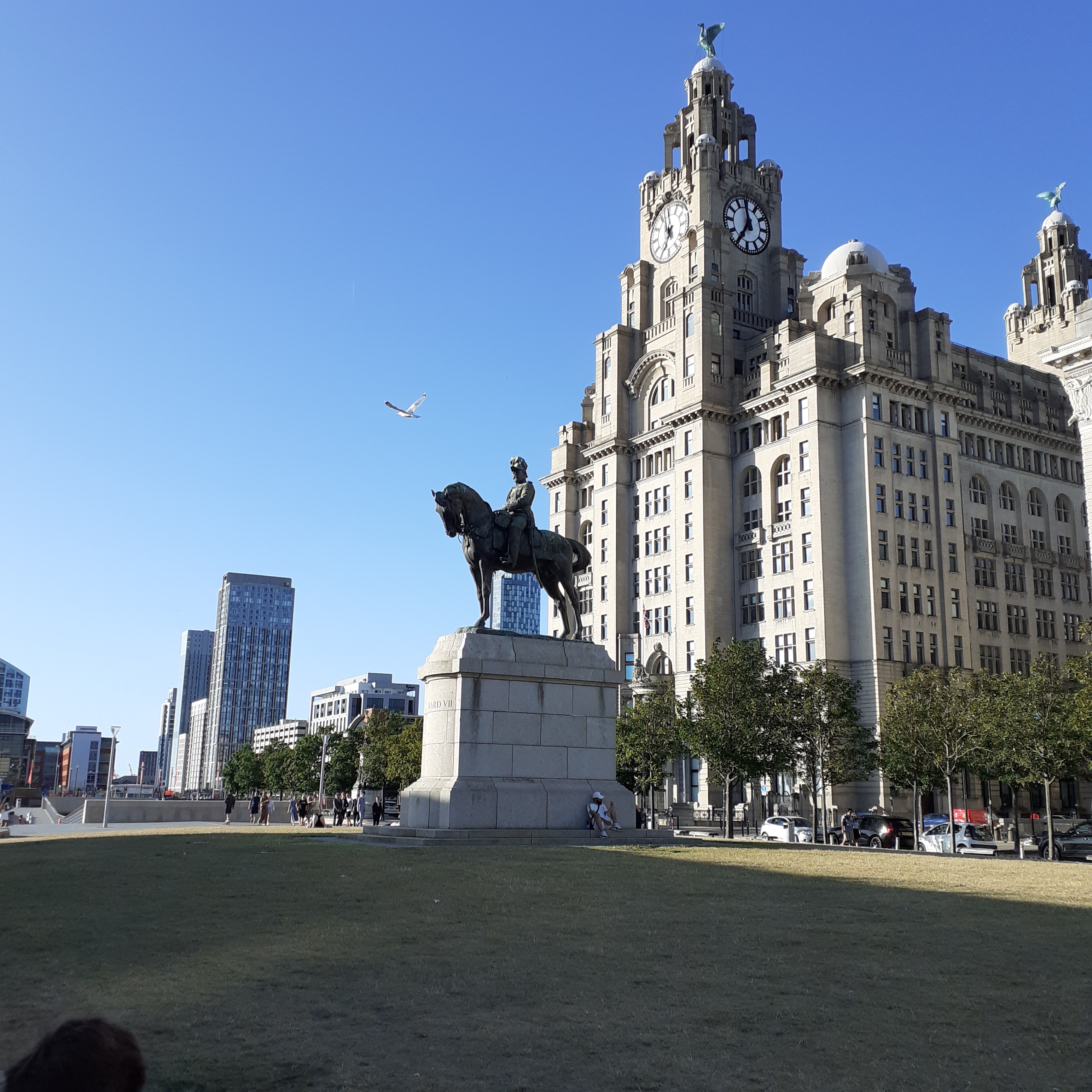
We walk the mile or so to our hotel, the Ibis, at Albert Dock. This stretch of dockland along the Mersey River is very much the heart and soul of the city. Pier Head provides a stunning architectural panorama. This area was called George’s Dock until the end of the nineteenth century. Liverpool Corporation bought the site with the Mersey Port and Docks Board retaining a portion for its new headquarters. The Port of Liverpool Building was completed in 1907. A typically Edwardian building in a Neo Baroque style, its central tower and dome was the tallest in Liverpool when built, very much the city landmark. This was surpassed in 1911 by the Royal Liver Building, the true Liverpool icon. In 1916 the Cunard Building came in between. Built to a modernist version of an Italaian Renaissance palace it completes the trio known as the Three Graces. Behind this trio is a fourth grace, perhaps, the George’s Dock building from the 1930s. This is an Art Deco building with a high central tower used as a ventilation shaft for the Mersey Tunnel. The reliefs on the top half of the tower resemble a sleeping face.

The Liver Building was designed by local architect Walter Aubrey Thomas for the Royal Liver Friendly Society. It’s one of the first major buildings I knew. My mother was a customer and her insurance book featured a line drawing on the cover The Liver Man came every month in his fancy Austin Cambridge to do the account thing. Exotic times. England’s first skyscraper is built of white reinforced concrete. Its twin towers climb to almost a hundred metres. The Liver Birds perch atop, eighteen feet tall. The mythical birds have been named Bella and Bertie. Taken from the ancient city’s coat of arms they are, officially, cormorants. Since Liverpool received its charter from King John in 1207, it’s likely that the bird first featured in the city arms, in homage to the king, was meant to be an eagle. Just badly drawn. It became a cormorant by the late eighteenth century, on the blazon for the coat of arms granted by Norroy King of Arms,the authority for northern England and Ireland, a certain George Harrison. The bird, whatever it is, has become the emblem of Liverpool itself and the football club Liverpool FC, though local rivals Everton, the older club, originally used it. Anyhow, a hundred metres up, Bertie looks inland, Bella to sea. It is said she keeps an eye out for the sailors, while he checks to see if there’s a pub open.

The Liver Birds was also the name of a BBC tv series from the early seventies, written by Carla Lane and Myra Taylor, two local housewives. It featured Polly James and Pauline Collins, and later Nerys Hughes, as the girls, or birds, in question. Something of a female equivalent of another north of England comedy the Likely Lads. The theme song was sung by the Scaffold, a comedy folk group including John Gorman, Roger McGough and Mike McGear, nee McCartney, brother of Paul. It is now possible to take a trip to the top of the Liver Building and with the birds to share this lovely view.

Even more famous than the two birds are the four lads, the Fab Four. Their statue at Pier Head provides the perfect photo opportunity. You can insert yourself amongst the foursome as they, slightly larger than life, stride out towards the Mersey. John, Paul, George, Ringo and yourself. Become your own fifth Beatle.

The Beatles form a good proportion of our mission. or pilgrimage, to Liverpool with a visit to the Beatles Story on Albert Dock. The Beatles Story opened in 1990 and has been a flagship of the growing Beatles tourist industry. Housed in a 19th century warehouse, the exhibition takes visitors through a chronological tour of the Beatles phenomenon. The group were one of many beat groups who flourished at that time, inspired by the first lowering of rock and roll across the Atlantic. Beatles was a clever pun, with a nod to Buddy Holly’s Crickets. The original trio of Paul McCartney, John Lennon and George Harrison, were augmented by drummer Pete Best and bassist Stuart Sutcliffe. The band played locally and for a few seasons in Hamburg, Germany. Sutcliffe stayed in Germany to pursue a career in art but less than a year later in April 1962, he tragically died of a brain haemorrhage. Pete Best was dismissed during their first London recording sessions with George Martin and Ringo Starr was drafted in. Then they had a hit with Love Me Do and the rest is history, with a fair bit of hysteria thrown in.

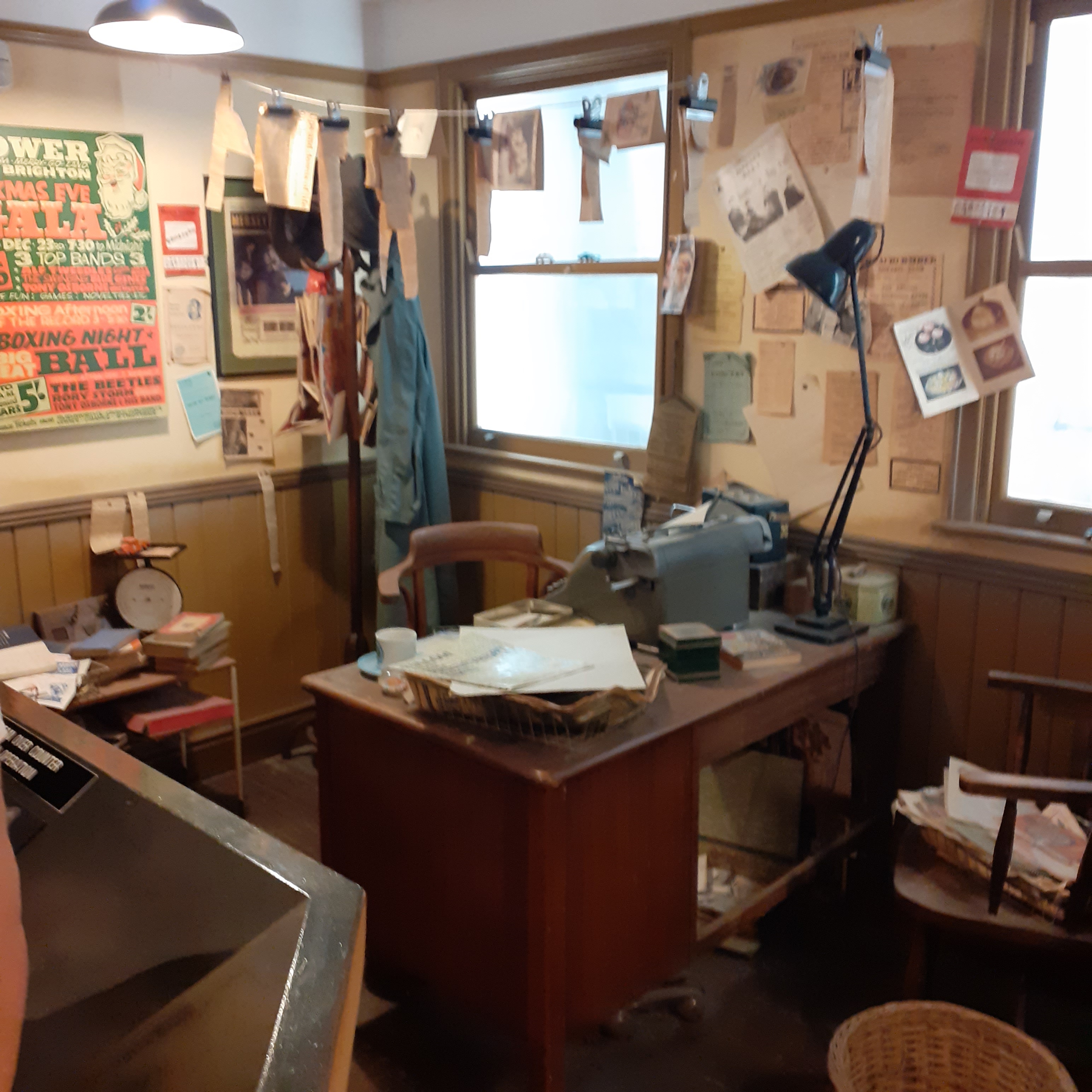
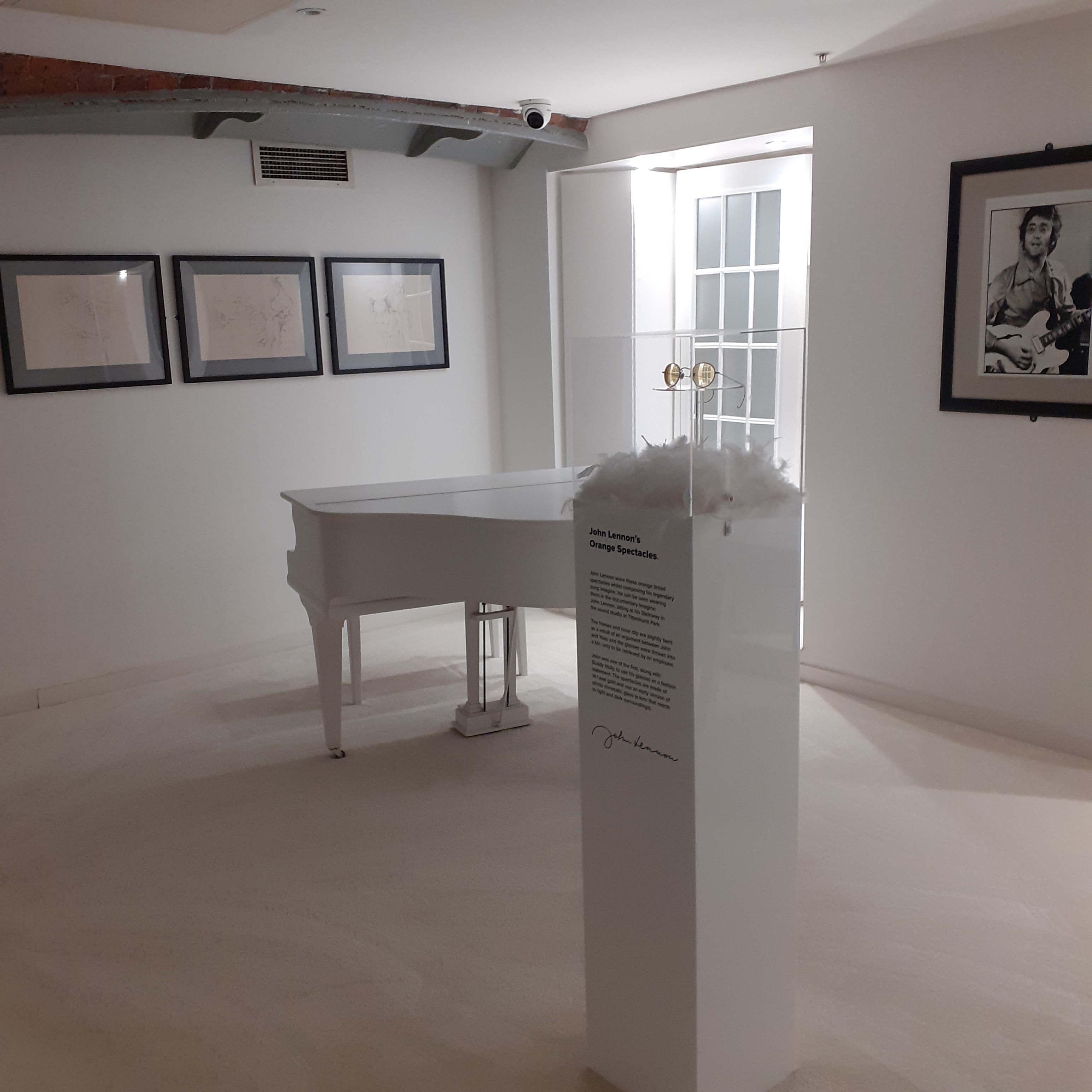
The Beatles Story constructs a sequence of imaginative tableaux and actual paraphernalia by way illustration. Brian Epstein’s crowded office, George Harrison’s first guitar, John Lennon’s specs and a room devoted to Sgt Pepper’s Lonely Hearts Club Band. Each of the four have their own room and there’s a touching note at the end with John Lennon’s piano room from Imagine. 

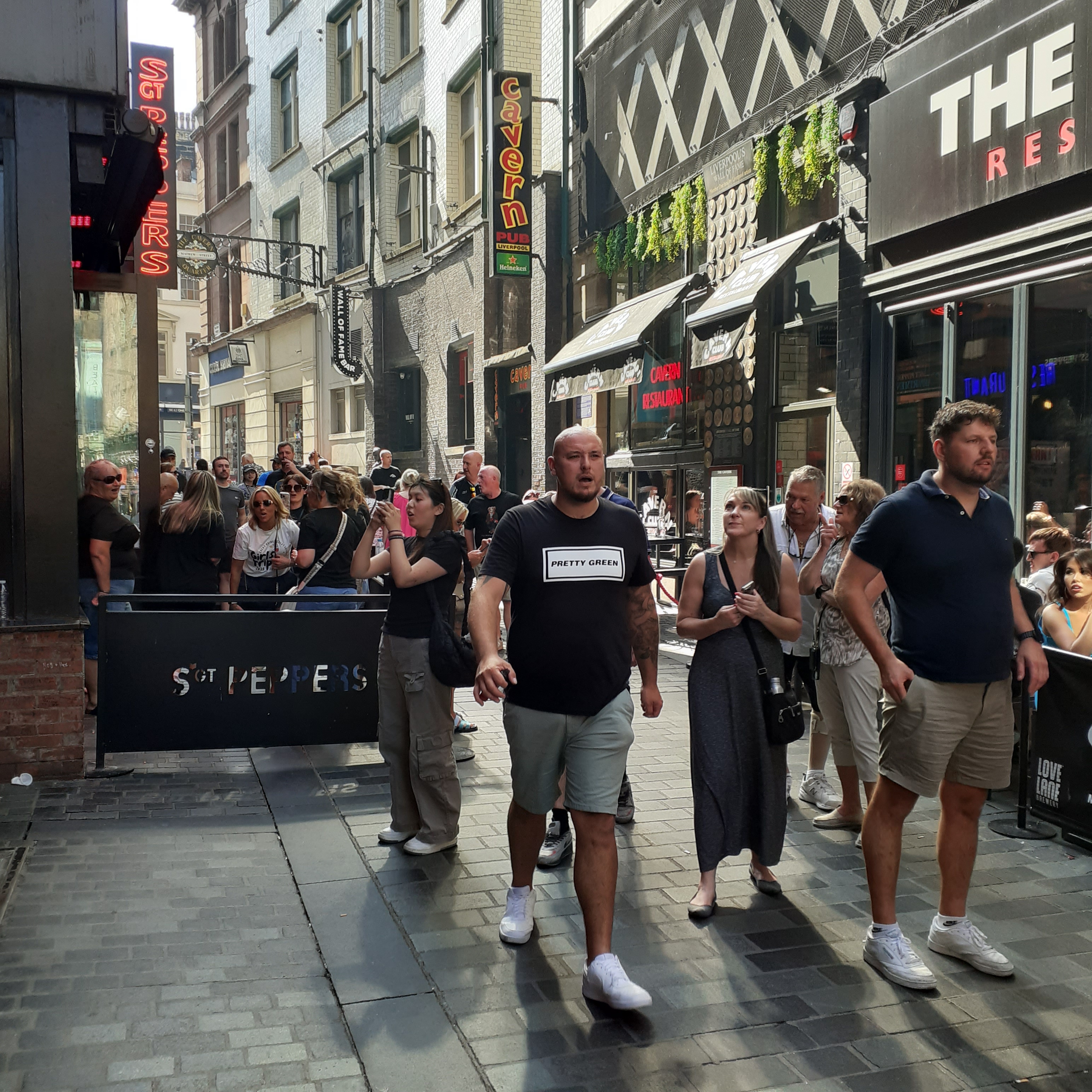
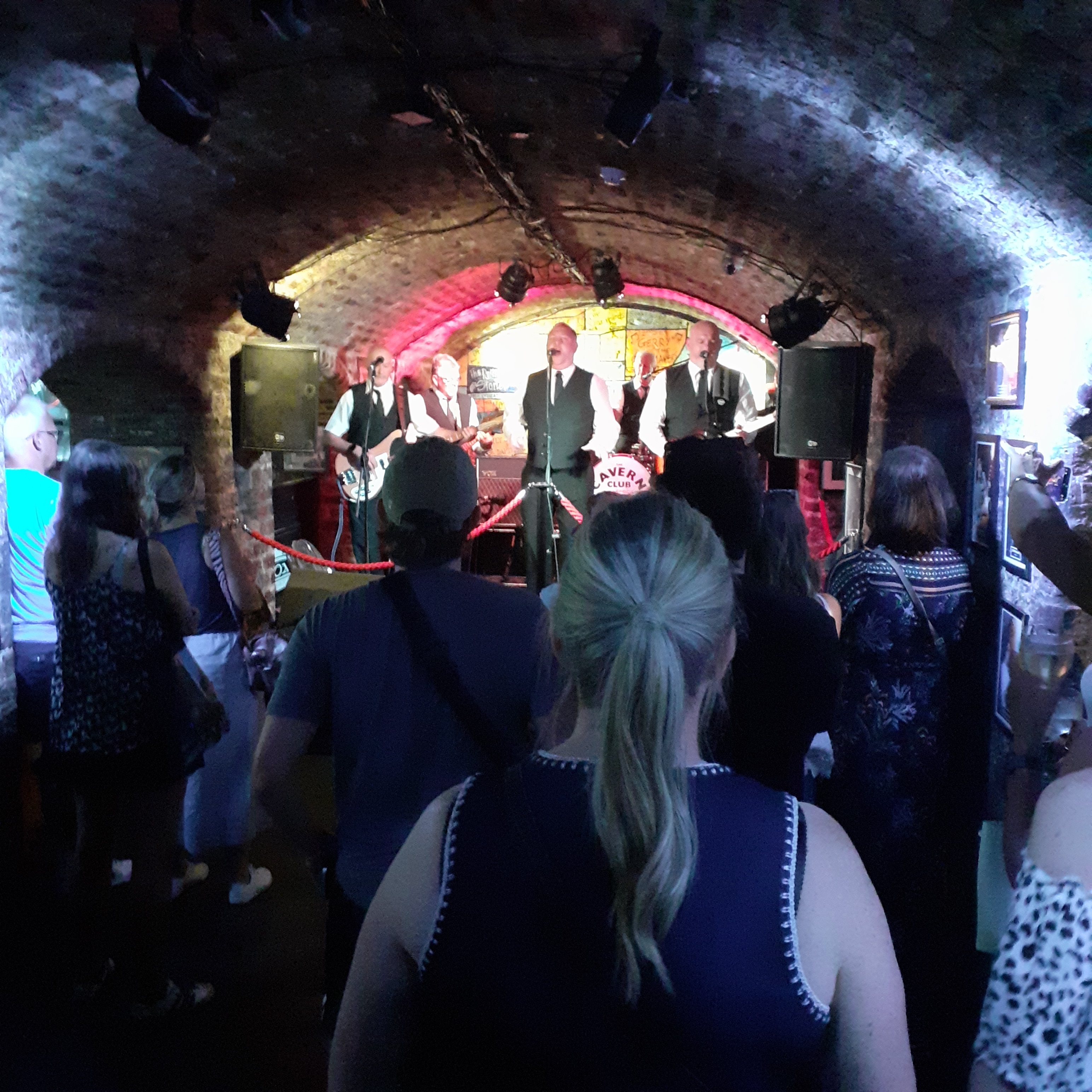
There’s also a recreation of the Cavern Club. The Cavern Club itself is a focal point of the Cavern Quarter up on Mathew Street. It opened as a jazz club in 1957. By the early sixties, beat groups were knocking on the door. The Beatles most persistently. Between February 61 and August 63 the group made almost 300 appearances there, but by then they had outgrown such a small venue. Ten years after, the Cavern shut up shop. Then the zeitgeist moved towards restoration. Developers originally hoped to excavate the original cellar but instead had to make a reconstruction with a lot of the original material

M and I make our way up there on friday night when the quarter is at its most raucous and exuberant. Weaving through the crowds in a mixed musical din has a certain spice to it. Sometimes weaving won’t quite work. A sequined lady from a time machine lurches to grab me. She is a doppelganger for the Cilla Black statue nearby on Mathew Street, if rather more aggressive. M and I decided to return on Saturday afternoon. Still loud and fun, but more relaxed. A fiver will get you in, card only, to walk a few flights down into the actual Cavern Club. Okay a reconstruction but it’s as real as it gets, and that’s fine by me. An amiable troubadour, somewhere west of Bill Bailey, takes us through a field of memories. The repertoire was a mixture of Beatles and Monkees, with some Oasis thrown in too, their comeback tour looming large in late July;

The Monkees were the American TV Beatles, and the band for my age group. Daydream Believer was amongst their best, and enjoyed a second coming with a later generation of Macams. Alternative lyrics came from a lively party of Sunderland lassies in the Cavern that day. Cheer up Peter Reid! Who, by way of connection, is a Scouser dressed in blue. Everton, in other words. As regards alternatives, it wouldn’t have been appropriate to shout for my Monkees favourite: Randy Scouse Git.

The Cavern has branched out, with a theatre hall set up and a dining area part of the labyrinth we explored. We stuck with the original, enjoying a couple of drinks before finishing with the Searchers, or five rocking old geezers in suits playing their stuff. Then we walk, tired and emotional, happy really, up many flights of steps and into the sun. We’re in the home the Merseyside sound; Gerry and the Pacemakers, the Merseybeats, Cilla Black and the Searchers. The Beatles, of course. The people who made teenage living fun, made us what we are today, and made too many damn fine records to mention.

There can be only one choice to play us out. On first setting foot in the Cavern, the opening song our troubadour played was Here Comes the Sun. It appeared on 1969s Abbey Road, the last album recorded by the Beatles. It was written by George Harrison in the April of that year. Harrison was oft referred to as the Quiet Beatle. Though he wasn’t quiet. He was, however, the most Irish of the Beatles, as you can tell from the lyrics of this song; ha ha. In fact his mother Louise, nee Ffrench, would often take him home to visit her ancestral family in Drumcondra, Dublin. In the early fifties, George with mother and brother was photographed on O”Connell Street, Dublin, by Arthur Fields, the famous Man on the Bridge. Curiously, my own mother, Veronica, was from Drumcondra. An O’Flanagan she would go on to marry a Harrison, from Blantyre, Scotland. She loved the Beatles too. Get Back was her favourite.

Little darlin’

It’s been a long, cold, lonely winter

Little darlin’

It feels like years since it’s been here

Here comes the sun, doo-doo-do

Here comes the sun

And I say, “It’s all right”

London Memories -2

City of Drama

Leaving London back in ’73, we made our winding way back to Holyhead via Stratford on Avon, hometown of the Bard, William Shakespeare. He was born there in 1564 and the town has become a mecca for Bardolators. Stratford is suitably picturesque, packed with tourists and Tudor style buildings. From our ad hoc camp by the river our trio wondered if we could swim across the Avon and bunk into the rere of the theatre for a show. A Midsummer’s Nights Dream, most likely. We visited Anne Hathaway’s Cottage, a sizeable thatched timber-framed building with a museum. Anne Hathaway was twenty six and with child when she married eighteen year old Will. Daughter Susanna was born six months later, and another year on Anne gave birth to twins Judith and Hamnet.

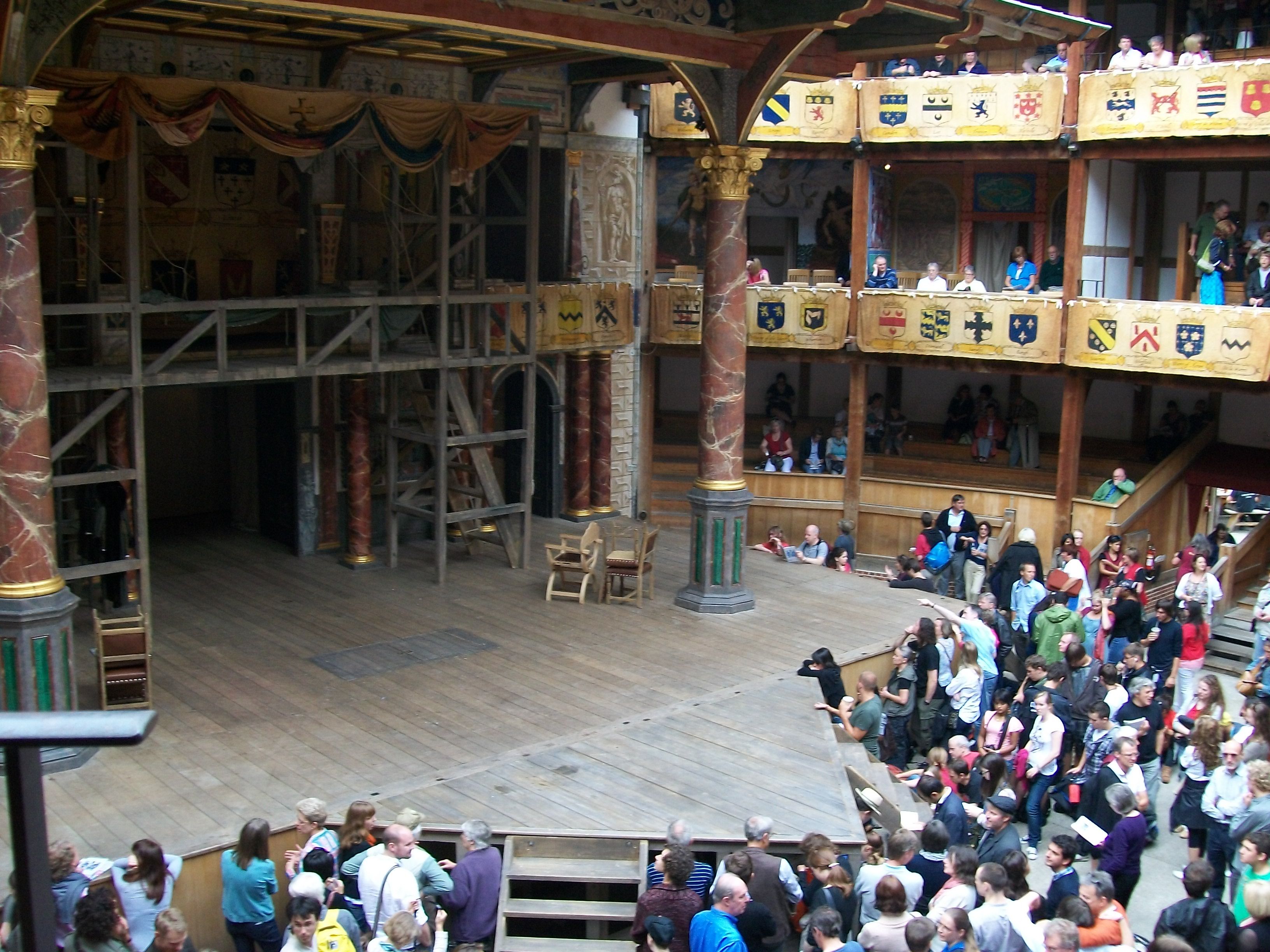
In his early twenties, Shakespeare moved to London and became part of the theatre scene. He acted and wrote with a group called the Lord Chamberlain’s Men and in 1599 they established their hq at the Globe Theatre in Southwark. The first Globe burned down in 1613 during a performance of Shakespeare’s Henry VIII. A pyrotechnic flourish misfired, and sparks ignited the thatched roof. There were no injuries, other than a man whose breeches caught fire which helpful spectators extinguished with their tankards of ale. A rare occasion of a punter being obliged to buy a round for the people who had just drenched his crotch with beer. The theatre was rebuilt but the flame of drama was extinguished during the Civil War period from 1642. The Commonwealth under Oliver Cromwell. were against the brazen licentiousness of the world of theatre. The Globe was ultimately demolished. Although the Restoration saw the return of theatre, staging had changed to a more refined, and subdued form, indoors and viewed through the Proscenium Arch. Actresses, forbidden in Tudor and Jacobean days, were now allowed. Shaskespeare’s popularity was reignited and his plays revived. 

The modern version, Shakespeare’s Globe, was built in 1997, the culmination of a long campaign by Sam Wanamaker, American born actor and director for film and stage. It is located just over two hundred metres from where the original stood, and is a very realistic rendition of how the outdoor Elizabethan theatre would have looked. Daily tours explain its setting and heritage, and what you might have experienced back in the day; theatre in the round, outdoors with a rumbuxtious audience drawn from the broad social spectrum of city life. More rock gig or football crowd than the genteel theatre of today, with plenty of two way rapport; but there was poetry and message in the medium too. Drinking, smoking and heckling were not so much tolerated as encouraged. It was a daytime thing, and not well thought of by the great and the good. Though, of course, many from that sector did attend, and indeed sponsor the enterprise.

Best of all, book seats for a performance. On a family trip in 2010, we booked seats for Henry IV, Part 1. This features the notorious Falstaff, chief amongst the company of the young dissolute Hal, future king, here depicted as dedicated to life on the raz. Young Will perhaps drawing on  memories of his own misspent twentysomething back in the eighties. My son, Davin, was dubious of the joys of an afternoon of Shakespearean theatre. I impressed upon him that the following day, Saturday, we would go to Stamord Bridge to watch Chelsea trounce West Brom by six goals with Didier Drogba scoring a hat-trick; an astonishingly accurate prediction as it turned out. He got fully immersed in the experience. Most cheerful he was relaxing in the bar. afterwards, as he thought, less so on being informed that was merely the intermisssion.

London’s modern theatre district flourishes on the other side of the river. The West End denotes the main commercial centre of London. It stretches north of the river up to Regent Street to the west of the ancient walled city. The areas of Soho and Covent Garden are central to London nightlife, with Leicester Square and Picadilly Circus its focal points.

Leicester Square is the place to go for tickets for silver screen or show. Myself and M got tickets here for the fun dance show Top Hat ten years ago, front row seats which were quite startling. Cinema remains a a draw for us even though films are not so frequently banned in Ireland as before. Myself and M visited back in the mid seventies on our way to Greece, and took in an afternoon showing of the Life of Brian. Monty Python’s satire on zealotry and mass hysteria was set at the time of Christ and caused a muttering of modern zealots to chant: Down with that sort of thing! Still, we emerged into the afternoon sunlight happily singing always look on the bright side of life.

West End, of course, is synonymous with theatre. Alongside New York’s Broadway it is the main theatre zone of the English speaking world. There are about forty venues showing musicals, classic and modern theatre. Other, non commercial theatres, including the Globe, Covent Garden Opera House and the Old Vic feature classic repertoire and the work of contemporary and acclaimed modern playwrights.

The longest running show in West End history is The Mousetrap. Written by Agatha Christie it was first performed in 1952 and is now approaching thirty thousand performances. A whodonit with a twist, it’s a typical scenario for the author. Born Agatha Miller in 1890, by her death in 1976 she had published sixty six novels and over a dozen collections of short stories. Her most famous creation is the fastidious Belgian sleuth Hercule Poirot. The Mousetrap was originally a radio play called Three Blind Mice, and then a short story. The title had to be changed for the stage as another play called Three Blind Mice had been produced in the thirties by Emile Littler. The name the Mousetrap was taken from Shakespeare’s Hamlet, it being Prince Hamlet’s smartarse reply to Polonius concerning the title of the play at court. Hamlet had hijacked the play to let off his own grenade. “The play’s the thing wherein to catch the conscience of the King,” he mused.
On a family visit in the Noughties we took in a performance at St Martin’s Theatre which has hosted the play since 1974. We four at home often enjoyed an elaborate murder mystery on the telly. Theatre, by its nature, brings you into the box itself. You are sharing atoms with these people. The famous twist is a major subversion of the mystery genre. I have often wondered since if anyone has ever thought of suspecting Poirot for causing the puzzles he so brilliantly solves. After all, he is a common thread throughout so many killings. The play was just the thing, so, to be followed by convivial food and drink.

St. Martin’s is on West Street, just off Shaftesbury Avenue and close to the Seven Dials. This is an intersection of seven straight streets, giving the small plaza an incongruous centrality in the great scheme of things. From here, you can go anywhere. Eateries abound, though we took the quaint decision to go for a fish and chips nearby. Well, it was my fiftieth birthday, and the One and One is my favourite food. Why not have it here at the centre of Chipperdom? There was a bench outside and we watched the world go by. Nearby, Shaftesbury Avenue seethes with life. Across the street Soho embraces the divine vices. Musicians strum and dancers strut, and wining, dining and dancing pleasures galore stretch into the wee small hours. In all the darkness and joy, what better time to join the vamps and werewolves of London.

I saw a werewolf with a Chinese menu in his hand

Walking through the streets of SoHo in the rain

He was looking for the place called Lee Ho Fook’s

Gonna get a big dish of beef chow mein

Ah-hoo, werewolves of London

Ah-hoo

Ah-hoo, werewolves of London

Ah-hoo

Werewolves of London was written by Warren Zevon, Waddy Wachtel and Leroy Marinell. It is included on Zevon’s third album, Excitable Boy, from 1978 and was its lead single. Fleetwood Mac provide the rhythm section, in case you wonder why it’s so good. Phil Everly suggested the idea to Zevon having seen the 1930s film Werewolf of London. Lee Ho Fook’s was London’s best known Chinese Restaurant, located on Gerrard Street in Chinatown, at the south end of Soho. The name itself suggests the sort of ribaldry that chimes with the suggestive comedy of the song’s lyrics. The restaurant closed in 2008. Zevon died in 2003, but the music lives on.