Grafton Street’s a Wonderland

Grafton Street winds its way uphill from College Green to St. Stephen’s Green. From where the traffic veers left into Nassau Street, it is pedestrianised. Molly Malone used rest her barrow here, but she has wandered off down Sussex Street to the west. Grafton Street is the main southside axis for quality shopping and cafe society. Trendy, thronged and throbbing with a multitude of buskers, this is the place to see and be seen. Street performers have included the Hothouse Flowers, the Waterboys, Rodrigo y Gabriela and Glen Hansard. The ghost of Phil Lynott might breeze by whistling Old Town.

Grafton Street was named for Henry Fitzroy, the Earl of Grafton and illegitimate son of Charles II who owned the land hereabouts. He died at 27, leading Williamite forces against the Jacobites in Cork in 1790. 

Right here, right now, I emerge from Duke Street with my supply of Nespresso. To my right Bewley’s Oriental Cafe may beckon with its aromas of coffee beans, or I might fade into Johnson’s Court for a hidden prayer in Clarendon Street Church and light a candle for my mother. Grogan’s Castle Inn, the Powerscourt Centre and the Dublin City Markets lie that way. Straight up into the glare, the street opens onto St Stephen’s Green.

Dublin can be heaven with coffee at eleven

And a stroll in Stephen’s Green

There’s no need to hurry, there’s no need to worry

You’re a king and the lady’s a queen

Dublin Saunter as sung by Noel Purcell, actor of stage and screen, has become an anthem for Dublin’s most positive vibrations. It was written for him by friend Leo Maguire who also wrote the Whistling Gypsy. The song evokes summer, but a summer for the soul. It’s yours anytime. I’ll echo its call, and with it send my greetings to all of you, for Christmas and the New Year.

Grafton Street’s a wonderland, there’s magic in the air

There’s diamonds in the lady’s eyes and gold-dust in her hair

And if you don’t believe me, come and meet me there

In Dublin on a sunny Summer morning

South Dublin’s Rocky Shore – 7

7. To Bulloch Harbour and Dalkey

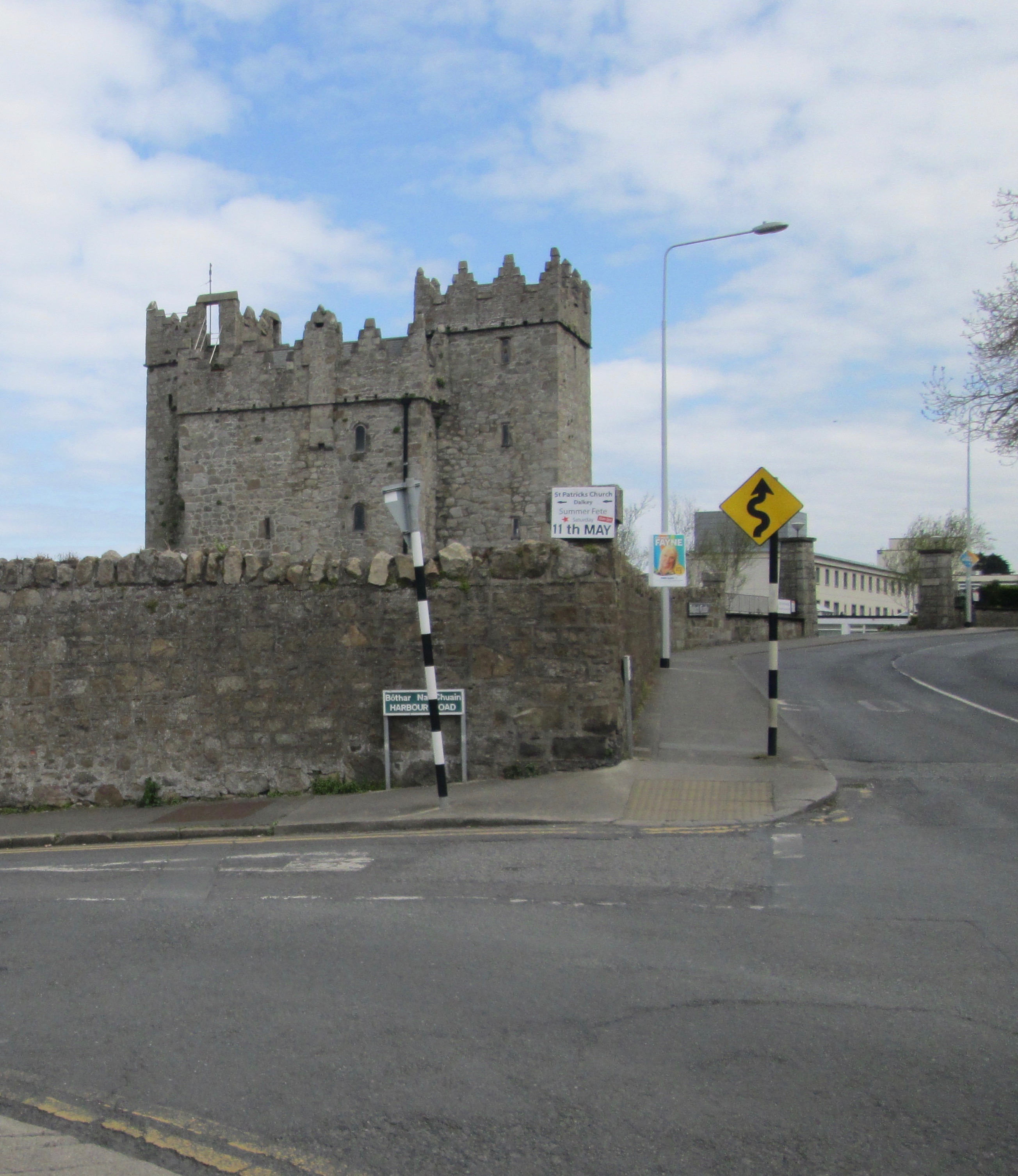
From the Forty Foot the coast cuts south and the city disappears. A laneway leads down to the shore but the tide is full in and the route to Bulloch Harbour looks treacherous. At low tide there’s a rugged foreshore to navigate, and you’ll still face a bit of a clamber over the wall at the far end to get into the harbour. We take the inland loop by way of Sandycove Avenue and the main road, Sandycove Road. This leads up a slight gradient to Bulloch Castle.

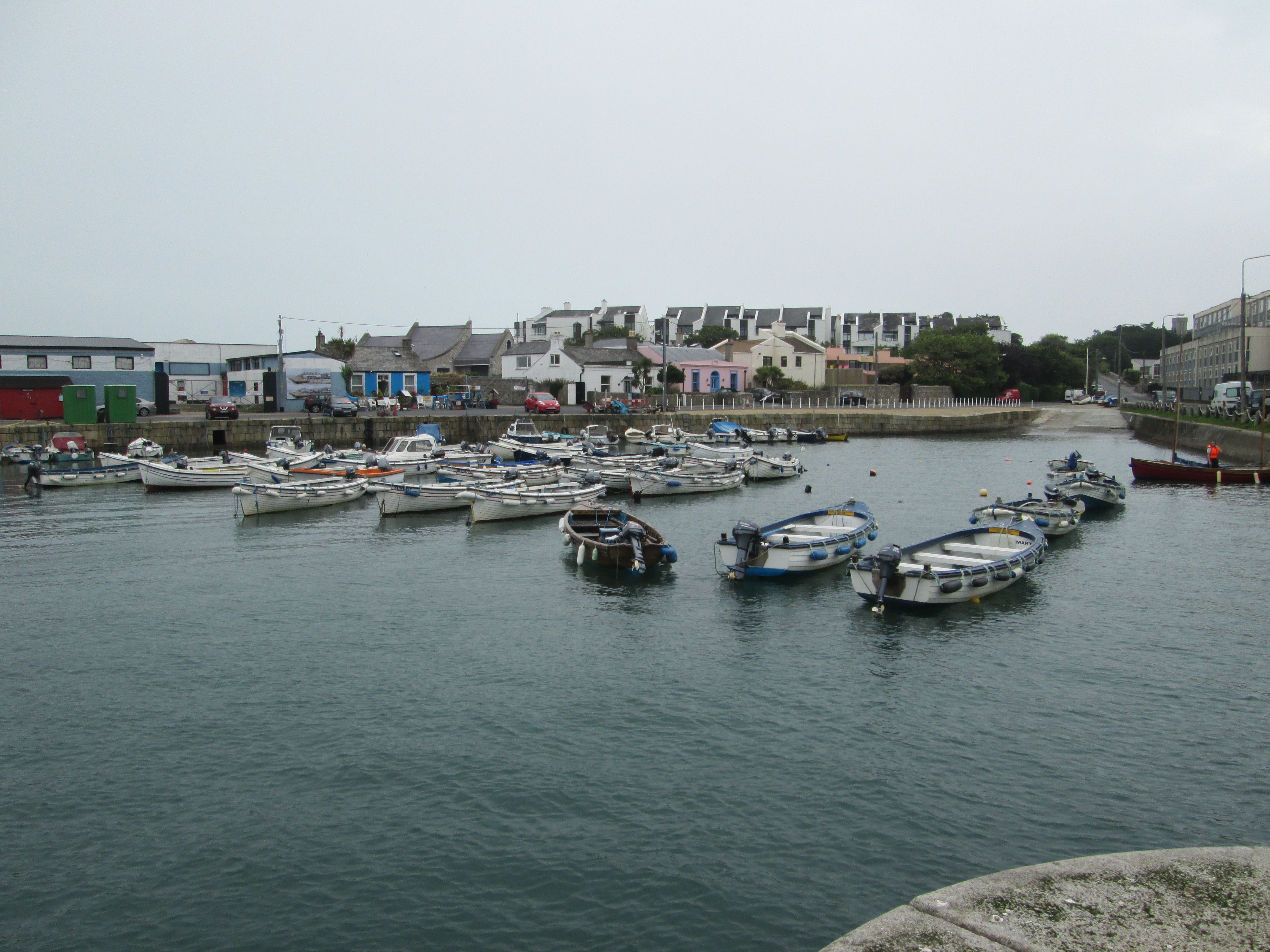
Bulloch Castle dates from the middle of the twelfth century when it was the centre of a fortified town gathered around the natural harbour below. This was a lucrative fishing port  requiring protection from marauding Wicklow tribes to the south. The operation was run by Cistercian monks until the dissolution of the monasteries by Henry VIII in 1539. The castle keep remains, a tall rectangular structure with angular towers at each end. 

Harbour Road leads down to  the harbour, as you’d expect. The modern harbour was constructed of local granite in the early nineteenth century. Nestled beneath the imposing tower it is still possible to let your mind drift back to ancient days. But time moves on, and  the harbour is ringed by modern apartments.

We sit for a while and watch some young lads clamber up from the far shore over the harbour’s north wall, then continue their coastal walk past the south end of the harbour. That’s a bit intrepid for us, and we stick to Harbour Road which leads on to Dalkey, keeping as near the coast as possible

Immediately we come to Pilot View, expensive apartments which have accumulated their own recent history. Patrick Connolly, Attorney General in the Fianna Fail administration of the eighties, lived here. He took a house guest, a younger man Malcolm MacArthur, a dilettante whom he knew socially. MacArthur murdered nurse Bridie Gargan in Phoenix Park in 1982 as part of his madcap plan to steal a car to use in a robbery to fund his expensive lifestyle. Days later he visited farmer Donal Dunne who had advertised a shotgun for sale. MacArthur turned the gun on him and killed him.

MacArthur botched his ultimate robbery at the house of a US diplomat in Killiney. The diplomat offered to write a cheque, giving him time to exit the room find a convenient window and escape. Dalkey Gardai received a tip off, from MacArthur of all people, who phoned to explain that the recent botched robbery was merely a prank. A lively trail of eccentric behaviour lead the Guards at last to Pilot View and they arrested the killer. MacArthur spent thirty years in prison, finishing up at the open prison Shelton Abbey, in County Wicklow, where he worked as the in-house librarian. You didn’t want to let your books go overdue there! Connolly was forced to resign.

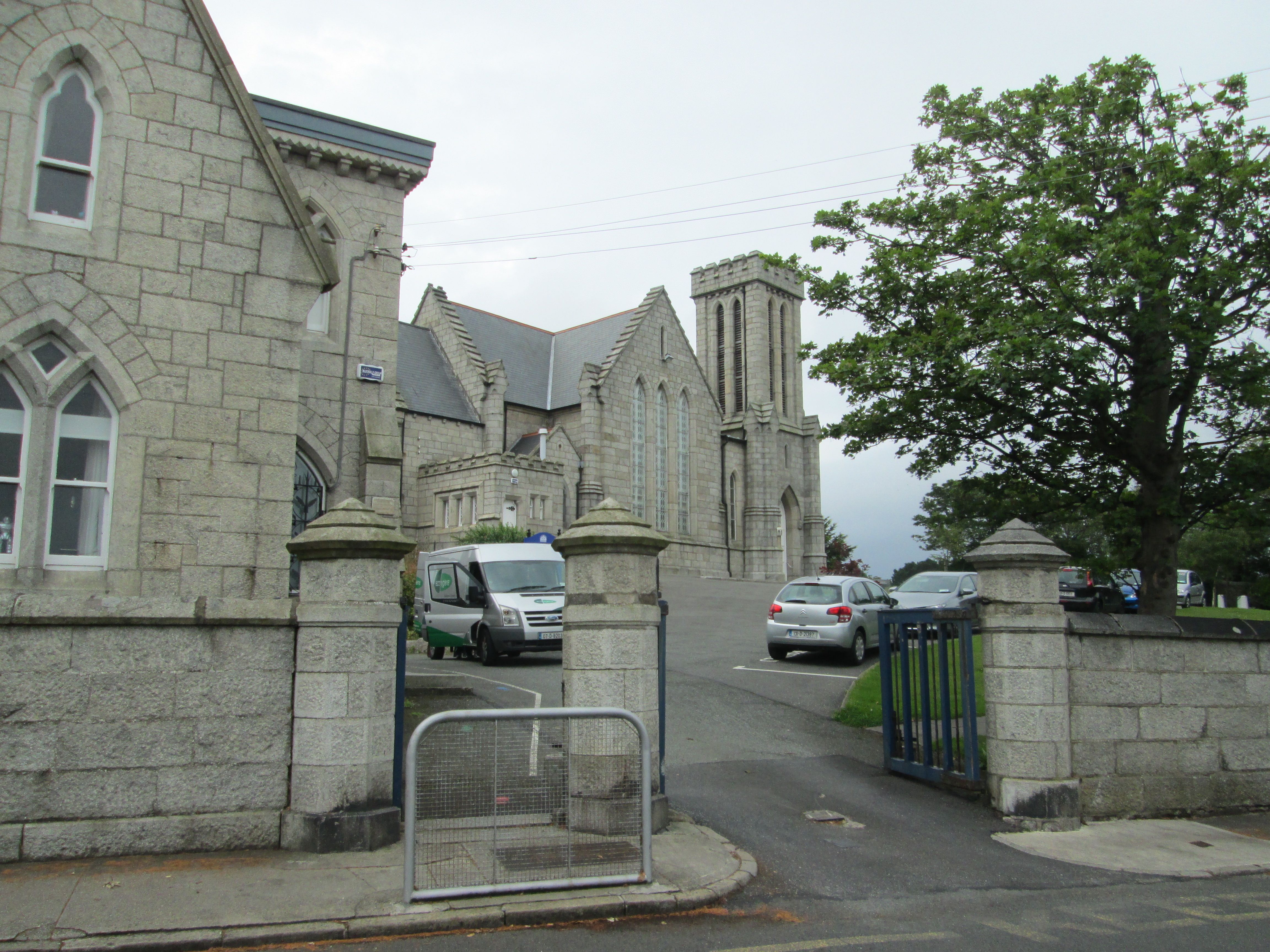
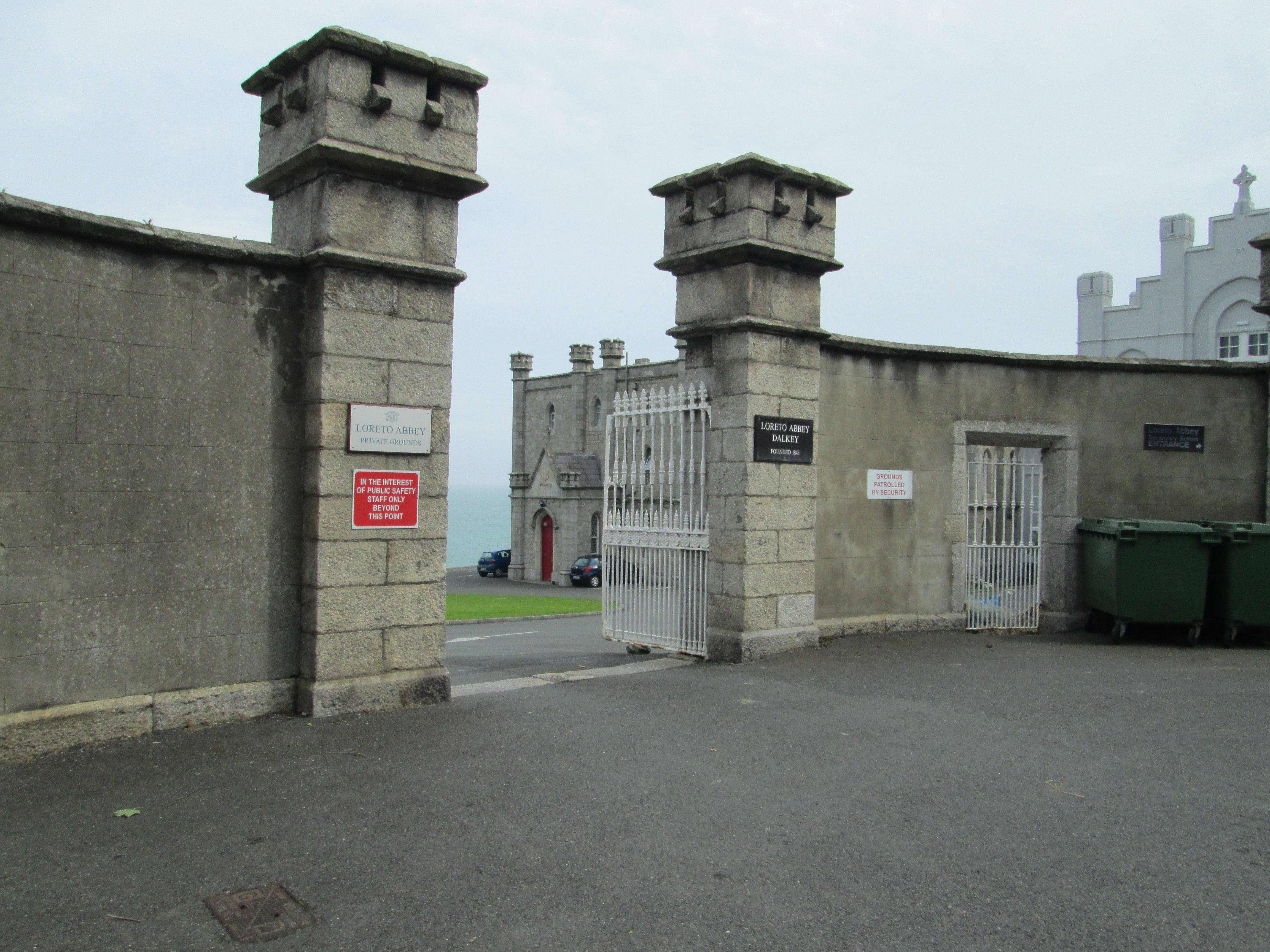
The road takes us past St Patrick’s Church and National School, serving the Church of Ireland Community.  This is a pleasant nineteenth century Gothic ensemble, with gate lodge, school and imposing church. Farther on, Loreto Abbey was established by the Loreto Sisters in 1843. The Institute of the Blessed Virgin Mary was founded in the seventeenth century by Englishwoman Mary Ward, taking their name from the Marian shrine at Loreto in Italy. Frances Ball established their first base in Ireland at Rathfarnham in County Dublin. For a couple of years the nuns ran a day school and boarding school from their temporary abode in Bulloch Castle. Ball designed the castellated granite building for their new residence. It makes an imposing statement standing sentinel on this headland, with the waves of Dalkey Sound pounding the rocks below. Any girl seeking to escape would have been advised to take an inland route. The boarding school has been closed since 1982.

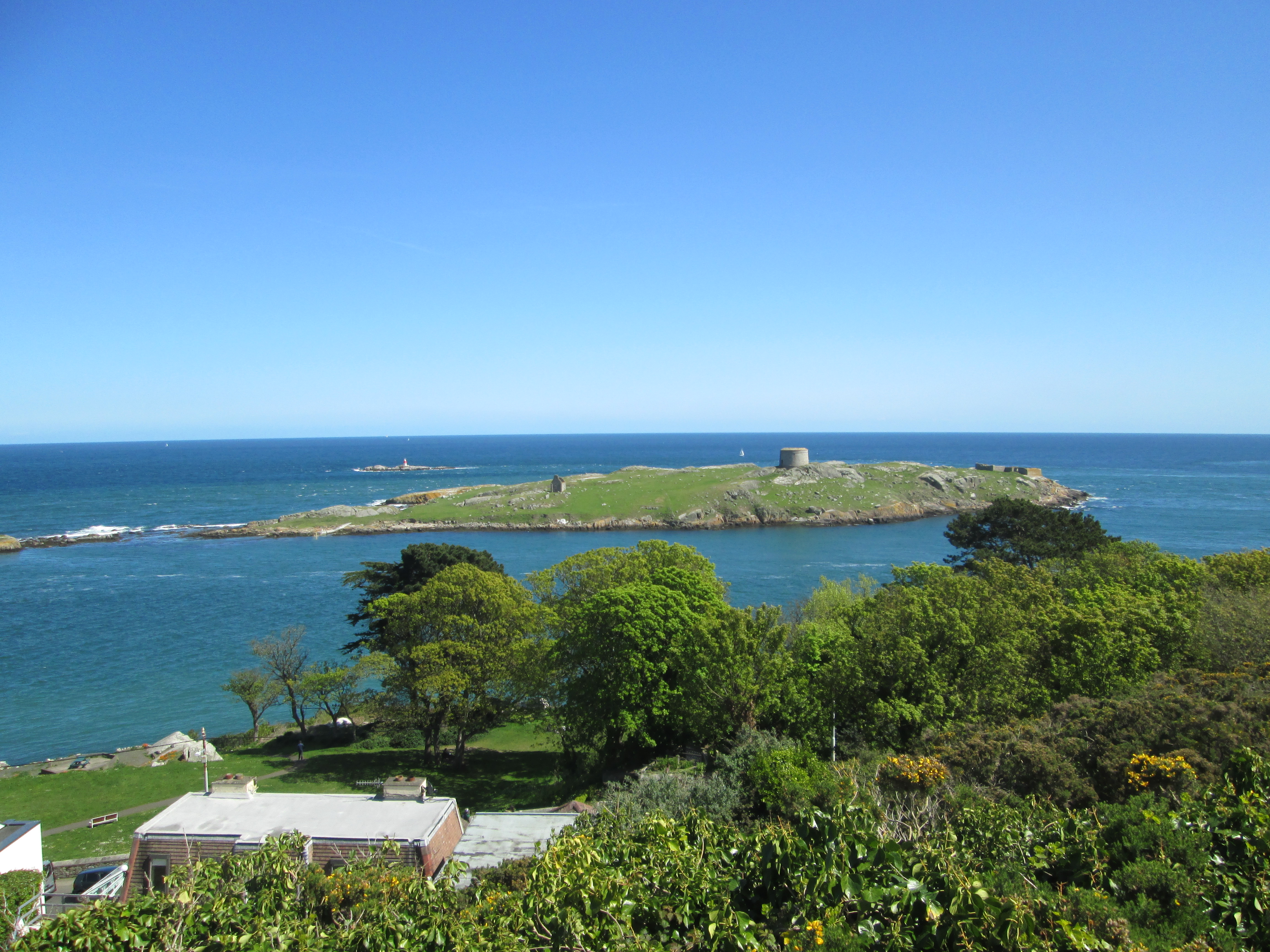
Dalkey Sound, as we mentioned previously, was a relatively safe haven for shipping and the town operated as a port of choice for Dublin before the developments of the late eighteenth and early nineteenth centuries. The name Dalkey is taken from the Irish, Thorn Island, which initially referred to Dalkey Island which we can spy floating to the south of the Abbey. 

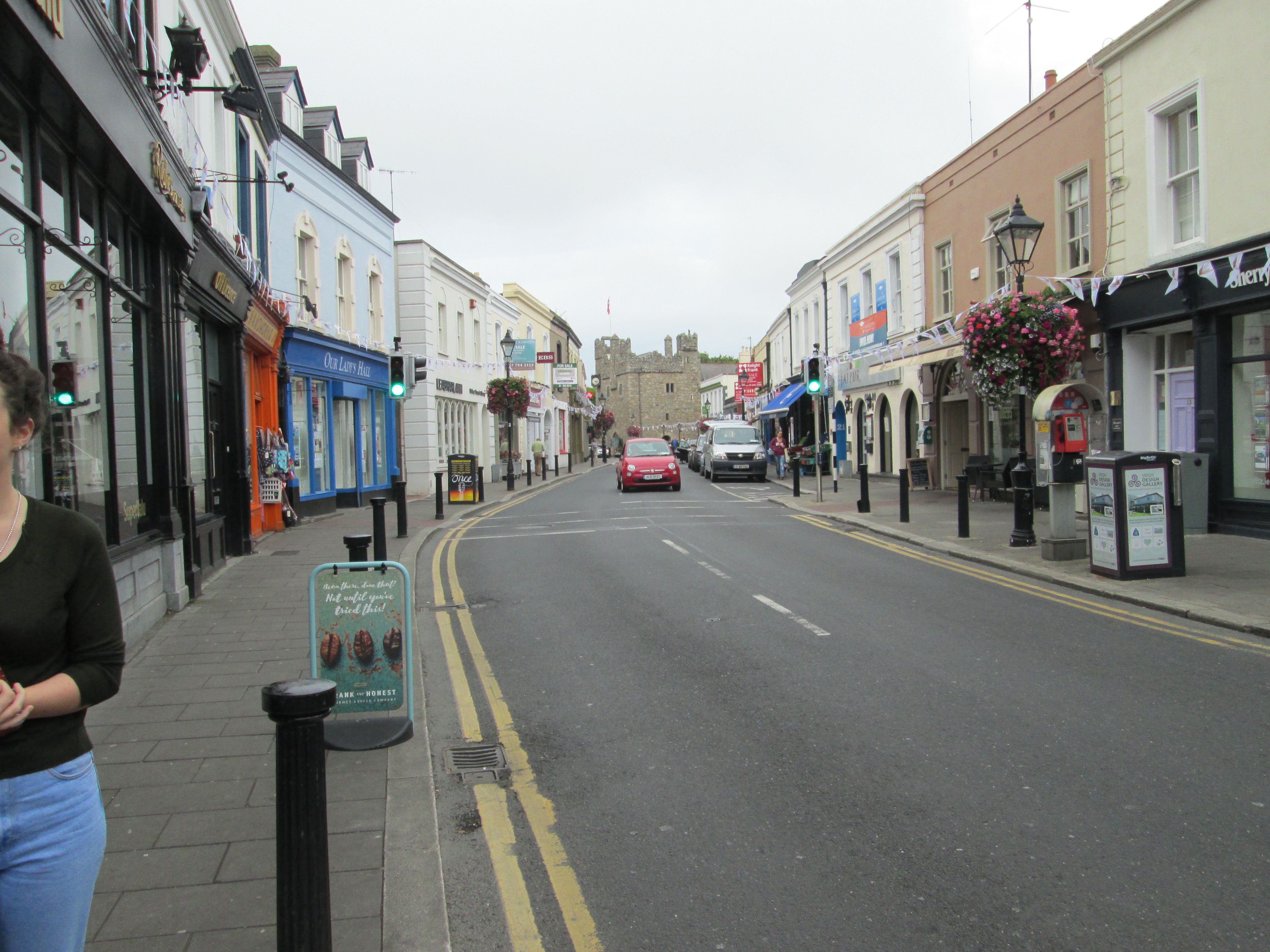
We’ll return to the rocky shore later, but for now, we veer right onto Convent Road which meanders on down to Dalkey’s main drag, Castle Street. Castle Street offers an almost funride compendium of urban styles, appropriately for a place dating back to the Vikings and maintaining its importance through the late middle ages. The predominant style is Tudor Revival, popular in the late nineteenth century and again appropriate, giving a hint of medieval times.  

Jewels in the crown are Dalkey’s two castles, located about halfway along the street. Goat’s Castle is the larger of the two and functions as a town hall and heritage centre, and is now referred to as Dalkey Castle. Across the street, Archbold’s Castle is a private residence. The two combine to transport us back in time. There are a few welcome oases too. Queens nearby, with its front patio has long been a favourite of mine. Established in the eighteenth century it is Dalkey’s oldest pub, but has now ceased trading, which is a shame. McDonagh’s further on was a more dingy port of call. It’s now called the Dalkey Duck (oh dear), though I suppose you can call it what you like. I used to call it the Love Shack, which is something of a mystery, but most likely came from the song by the B 52s which in the summer of 89 was number one in Ireland. The place has been given a revamp, but back then it was a place to drink Guinness in the darkness. It’s been a while now. But brighter days beckon. There’s still some singing to be done over the dark times.

Darkness falls and she will take me by the hand

Take me to some twilight land

Where all but love is grey

Where I can’t find my way

She’s a Mystery to Me was written by local residents Bono and the Edge of U2 and sung by Roy Orbison. The song bears witness to fate and the power of dreams. It was a sultry night near Soho, and Bono tossed and turned his hotel bed. He had fallen asleep with dreams of Blue Velvet in his belfry. Visions of Isabella Rossellini often season my dreams too, but here mingled with Roy Orbison singing In Dreams to strange happenings, 

A candy-colored clown they call the sandman

Tiptoes to my room every night

Just to sprinkle stardust and to whisper

Go to sleep, everything is alright 

Bono awoke with the song, he reckoned, stuck in his head. But it was another song, and he played a rough take to the band at rehearsals for their gig. As if to verify that the song was made for him, and made in heaven, who should drop by backstage that night after the gig … 

Night falls I’m cast beneath her spell

Daylight comes our heaven turns to hell

Am I left to burn and burn eternally

She’s a mystery to me

Drinking in O’Donoghue’s

O’Donoghue’s  Bar was founded in 1789. It must have soaked up the revolutionary fervour of the age, with all the rebel rousing balladry that entails. The pub is bound forever to Dublin’s folk boom of the 1960s. Most especially, it is associated with the Dubliners. Ronny Drew, Luke Kelly et al were permanent fixtures as much as the pumps and the optics. Located in Merrion Row, it hosts regular folk sessions in the long back snug. The Haggard to the side forms an extensive outdoor area. 

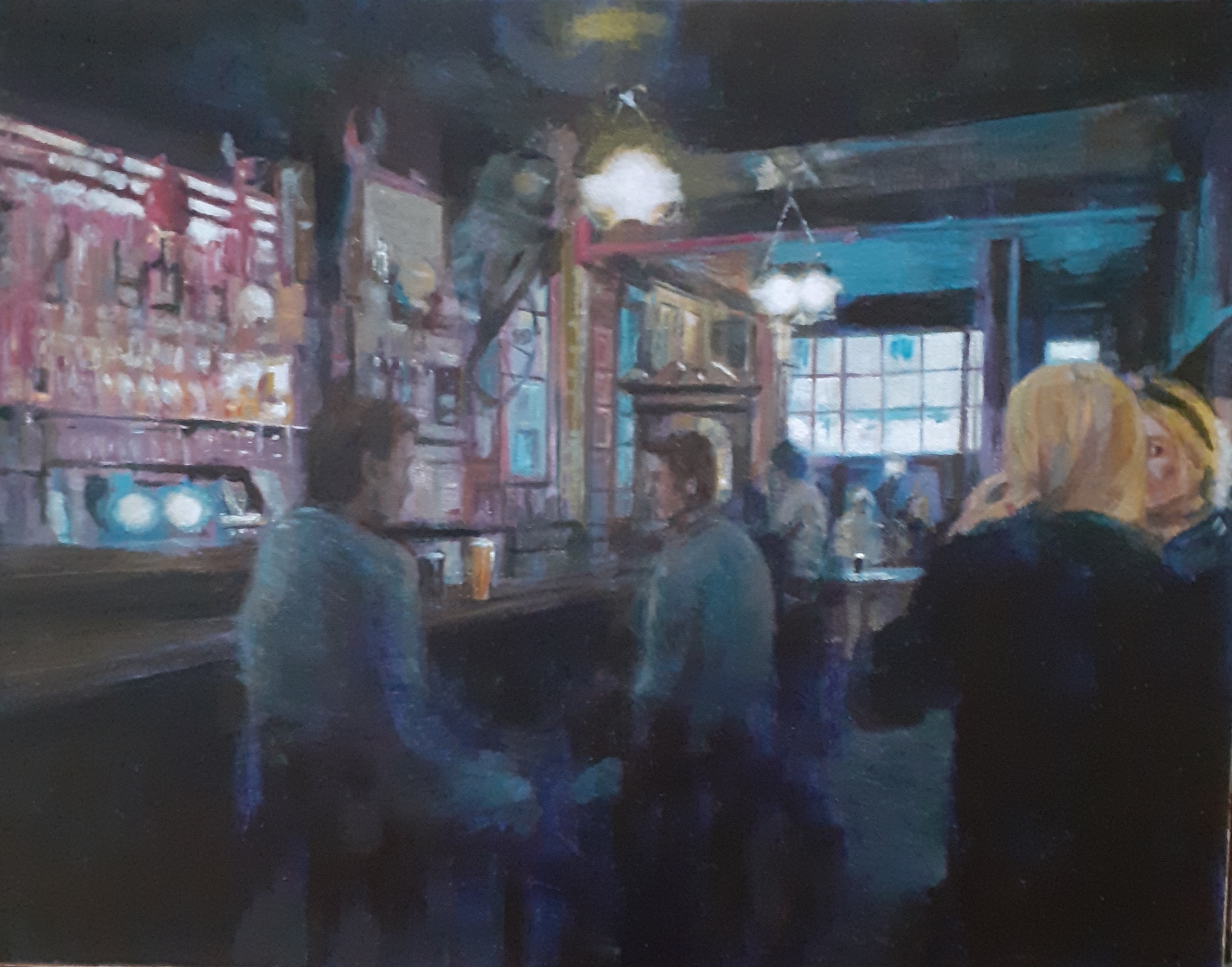
O’Donoghue’s is often my first port of call when I go in to Dublin. It’s been a while since my last visit. I always go there on my birthday, and other places besides. My annual treat is looking unlikely, my birthday’s on Monday. But a man can dream. This painting is a typical view, as I nurse a pint of Harp and take in the scenery, and Sally O’Brien and the way she might look at you.

One day as I rambled to Donnybrook Fair

I met lovely Sally a combing her hair

she gave me a wink with her roving dark eye

and I says to myself I’ll be there by and by

The song Ramble Away is an English folk song, from Somerset. Shirley Collins’s version is probably the best known, appearing on Anthems From Eden with her sister Dolly in 1969. For the lyrics here I’m using a version by Tommy Tourish, a Donegal sean nos singer, as the mentions of Donnybrook Fair and Sally’s roving dark eye chime with the place I’m in. You might pass this way if you were going to Donnybrook Fair, that most ancient and famous of fairs. The girl to the right I see as something of a Sally O’Brien, and the way she might look at you. There’s contact there, a spark.

Al O’Donnell sang the song with Birmingham Fair the setting. I’d have thought Al might use Donnybrook Fair, as he worked in RTE for thirty years. O’Donnell grew up in Harold’s Cross, and was a player in the folk boom. He mostly played solo, but briefly joined Sweeney’s Men, replacing Henry McCullough when he left in 1968, between the band’s two albums. Al released two albums of his own. The first eponymous album from 1972 kicks off with a fine version of Ramble Away, which is also the title of his double cd set from 2008. He passed away in 2015.

South Dublin’s Rocky Shore

1414239148621

-1 Shankill to Killiney.

Right now, we are caught in something of a bubble, constrained to our particular bailiwick. But bubbles are the thinnest of membranes, we can see with our minds and soar with our imaginations. Often, we can find paradise on our doorstep. Living along the east coast is a boon in many ways. The view is an ever open doorway, unlocking life’s treasure chest. The sea is a conduit for our dreams and adventures, a balm on life’s troubles and constraints. The sea alone, this side of space, coats the orb on which we balance, and the means, this side of flight, by which we can traverse it.

I find myself hugging the coast. Wicklow and Dublin are my usual stomping grounds. That’s a good stretch of coast from the Boyne estuary and Drogheda to the Avoca River and the port of Arklow. I’ve written recently on Drogheda (Counties Louth and Meath, I know), Malahide, and Swords. Howth and Raheny await my attentions. Here, I intend to map out the joys of Dublin’s south coast.

I was recently atop Bray Head, and the view looking north is an inspiration. From soul to sole; the plan formed for a good walk, or series of walks, from Shankill along the sea shore to Killiney, ascending to the Vico Road and on to Dalkey, then downhill via the Metals to Dun Laoghaire. Then, or another time, pick a way back along the rocky shore via Bullock Harbour, Dalkey and the Colliemore, returning by the Vico to Shankill.

2017-01-21 10.36.46Shankill (from the Irish ‘old church’) is Dublin County’s southernmost town. It has a population of just over 14,000, Dublin’s suburban expansion transforming what was once a small village. The bridge at the north end of the Main Street, the old Dublin Road, crosses the now defunct Harcourt Street Line, the original rail connection between Bray and Dublin in 1854. A little later, the coastal route pushed through to Dun Laoghaire and on to Westland Row. Today, this route provides the Dartline commuter rail service from Greystones to Howth and Malahide in North Dublin. 

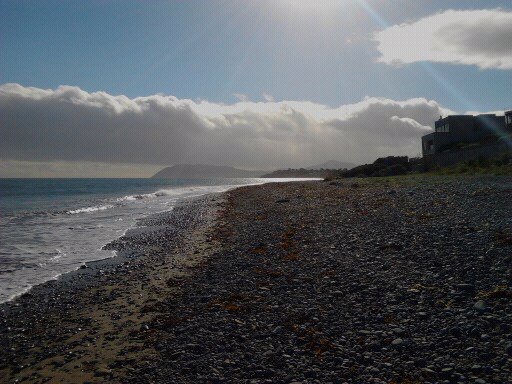
A long suburban road falls from the bridge towards the beach, passing Shankill Dart station on the way. Shankill beach is a thin strip of shingle slung below low, rapidly eroding cliffs. I parked at Corbawn Avenue, just north of the entrance to the beach and, with the sun on my back, hiked along the playing fields to gain the pathway leading down to Killiney Strand.

Killiney Bay

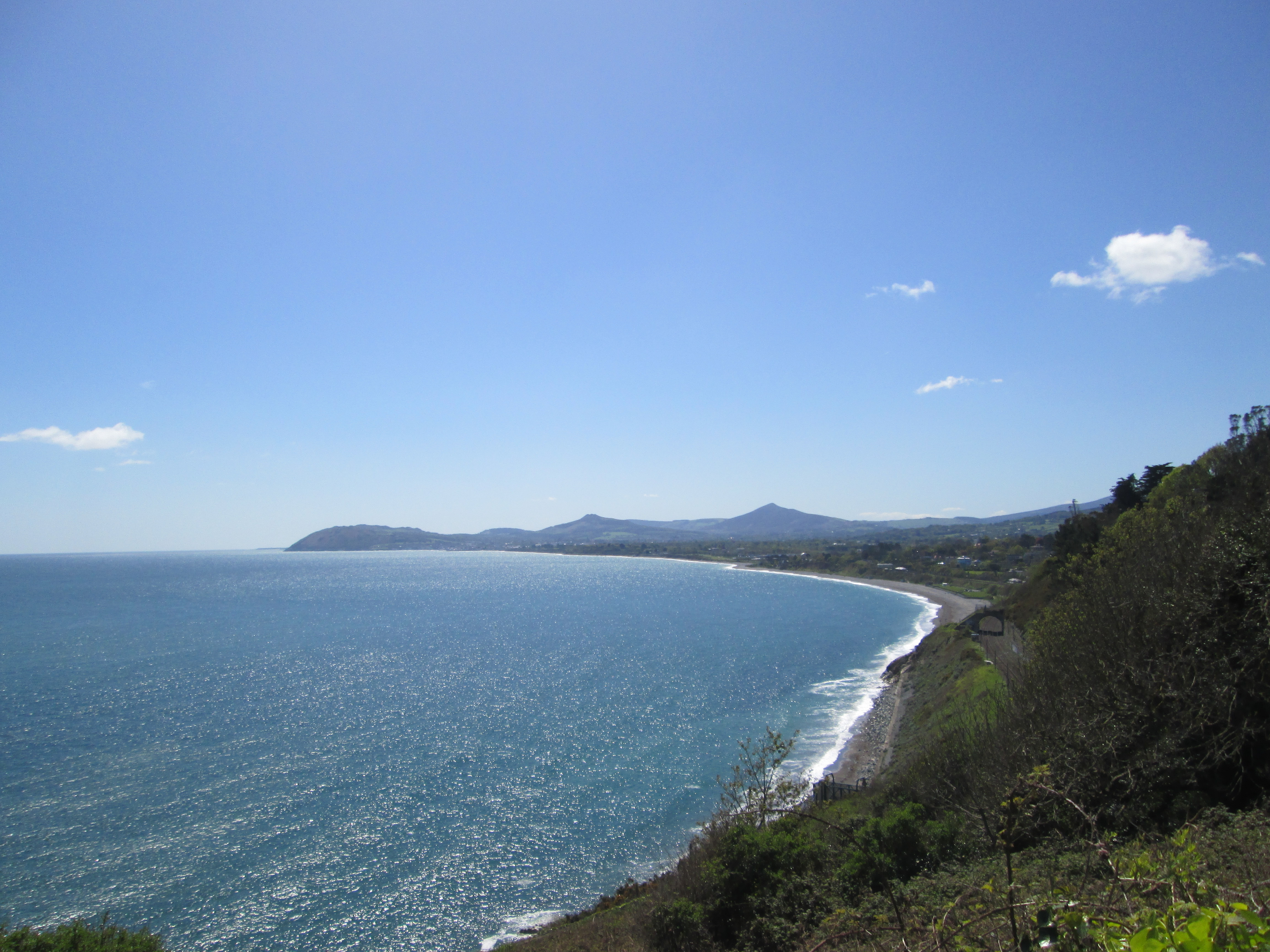
Killiney Bay has excited comparison with the Bay of Naples, and though such comparisons are often strained, on a glorious day such as this you can see the connection. The bay is framed to the south by Bray Head and the Sugarloaf Mountains, attractively conical peaks the larger of which gives a passable imitation of a volcano. The names of the roads mirror the conceit: Vico, Sorrento, Capri and San Elmo. Above, Killiney Hill stands sentinel, crowned by its obelisk. The craggy coast is clad in woodland and expensive villas, this is the address for the rich and famous.

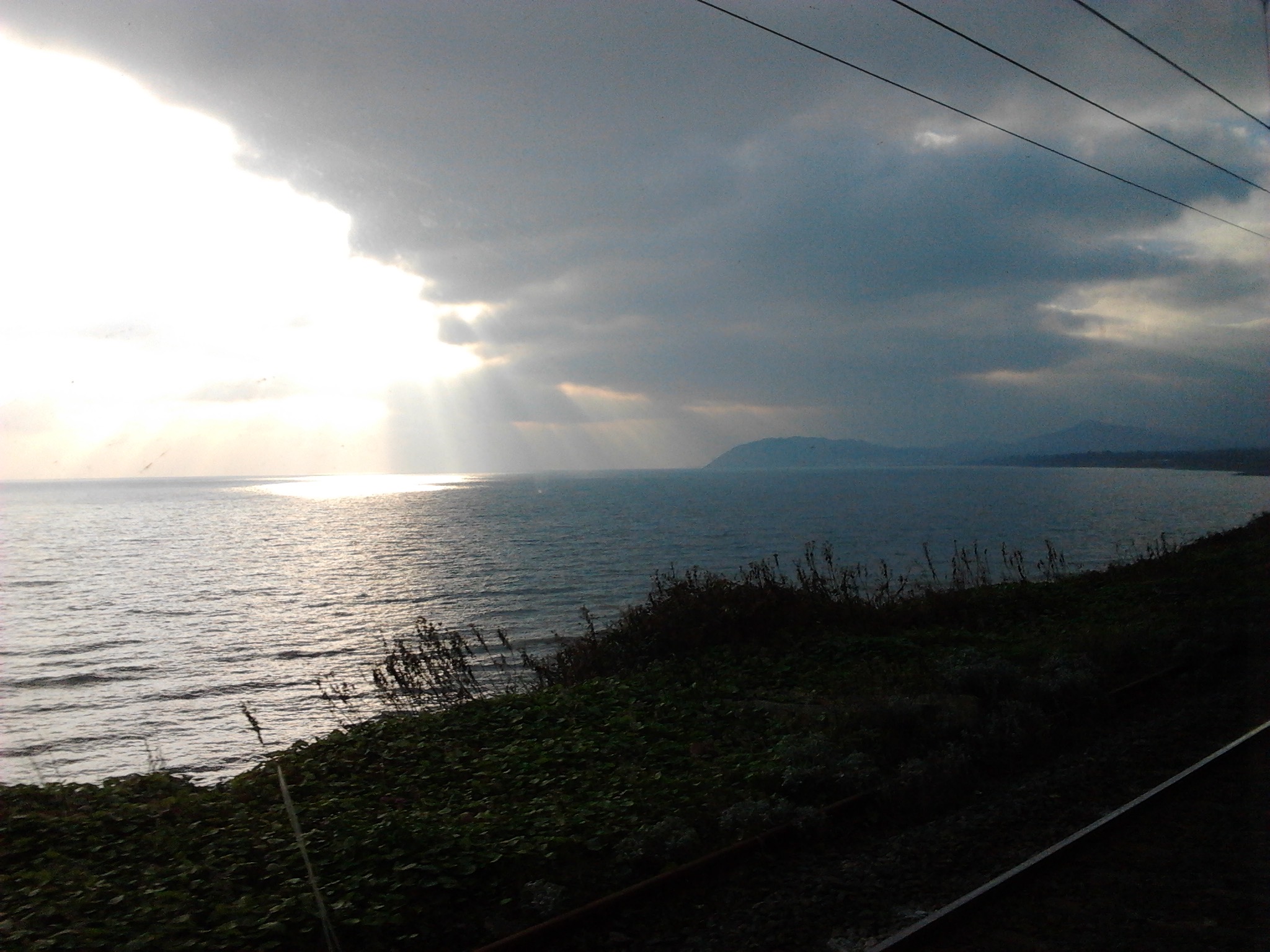
Snaking along the lower reaches of the headland, the Dartline hugs the coast to Dublin. The views it offers of the bay are worth the fare, in spades. Strand Road runs the far side of the track, a connection between the high road and Killiney Dart Station. At the southern end is Holy Child College, a fee paying Catholic secondary school for girls founded in 1947. It is run by The Society of the Holy Child Jesus, an international community of Roman Catholic sisters which was formed in England in 1946 by Cornelia Kennedy.

Born Cornelia Peacock in Philadelphia in 1809, she married an Episcopalian minister, Pierce Connelly with whom she had five children. The couple converted to Catholicism, but Pierce pushed on towards the priesthood. Cornelia took vows of permanent chastity and in 1847 became a nun. but a long and bitter legal dispute with her estranged husband followed. He, ironically, had grown jealous of her attachment to the faith.

For all her sorrows, the order Cornelia established was run along the lines of the Jesuits and encouraged its students to express themselves through Art, Music and Drama. In that respect, they encouraged a glitterati of artistic alumnii: writers Eavan Boland and Maeve Binchy amongst the best known.

Reverend Sisters, I remember were it yesterday

standing young and green before the wisdom age and your black habits wrought

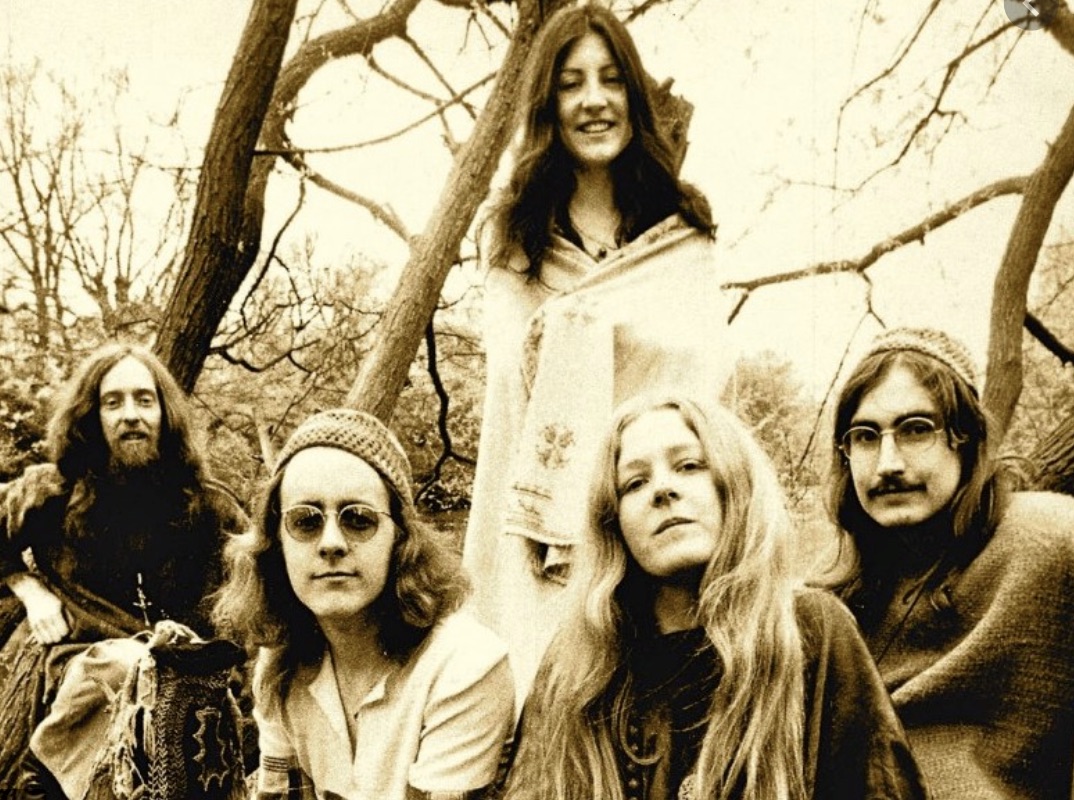
The sisters also fostered the talent of a trio of girls: Alison Bools, Clodagh Simonds and Mary White, together known as Mellow Candle. In their mid teens they put together demo tapes and in 1968, aged just fifteen, they cut their first single Feeling High in London. As with much of the band’s work, commercially it disappeared without trace. Two years later, Alison, at art college, and Clodagh, returned from a sojourn in Italy, or perhaps just Vico Road, reformed Mellow Candle augmented by two guitarists. 

Reverend Sisters I remember everything you see

all your words and teaching left some imprint on my memory

though I’m sad it had to be this way

as you said we change with every day

Reverend Sisters though I hate to say it

now the veils are lifted from my eyes and I can see

Reverend Sisters/Mellow Candle

Mellow Candle

These merry pranksters went on trips around the bay, played in the company of Doctor Strangely Strange, Thin Lizzy and Horslips, and signed with Deram records. The fully electric quintet that cut their only album, Swaddling Songs, comprised the twin female vocal with Clodagh on keyboards, guitarist Dave Williams who married Alison at a ragged Lizzy stadium gig, ex-Creatures bassist Frank Boylan and drummer William Murray. Swaddling Songs is a gem, a shining example of music transcending genres and time. In its own time it was completely ignored. 

I was one of a handful who bought it, as fans do, but weirdly it attained cult status two decades later and is now a collectors item. Mellow Candle’s music is unclassifiable. When ascribed genre, they were often labelled folk-rock, or Celtic-rock, neither being particularly accurate. They were a genre unto themselves: Breton sea shanties, renaissance music, choral, folk, and prog rock in a joyful collision – baroque and roll perhaps; their sound poised forever on the event horizon in some other universe.

I suppose, life and school in such a locale would tend to lead the soul towards all things maritime and wild. One can imagine Simmonds out on the strand, or bathing off shore. My younger self tended a lot towards such imaginings, but dreams can come true. 

At a summer gig in the summer of seventy one, Mellow Candle played support to Thin Lizzy in Blackrock Park. The park made a natural amphitheatre sloping down to a pond, with the bandstand an island in the water. Not being ones to hold back, and it being a glorious day, the girls plunged into the water for the finale and formed a pre-Raphaelite tableau of bathing nymphs. But then, on such a day, who could resist the urge to join them? So, here’s to swimmin’ with Clodagh Simonds.

gravity

Pity the poet who suffers to give

sailing his friendship on oceans of love 

strange harbour soundwaves break out of his reach

love is a foreigner to the queen of the beach 

The Poet and the Witch/Mellow Candle 

Kings on the Roof

Kings 2020

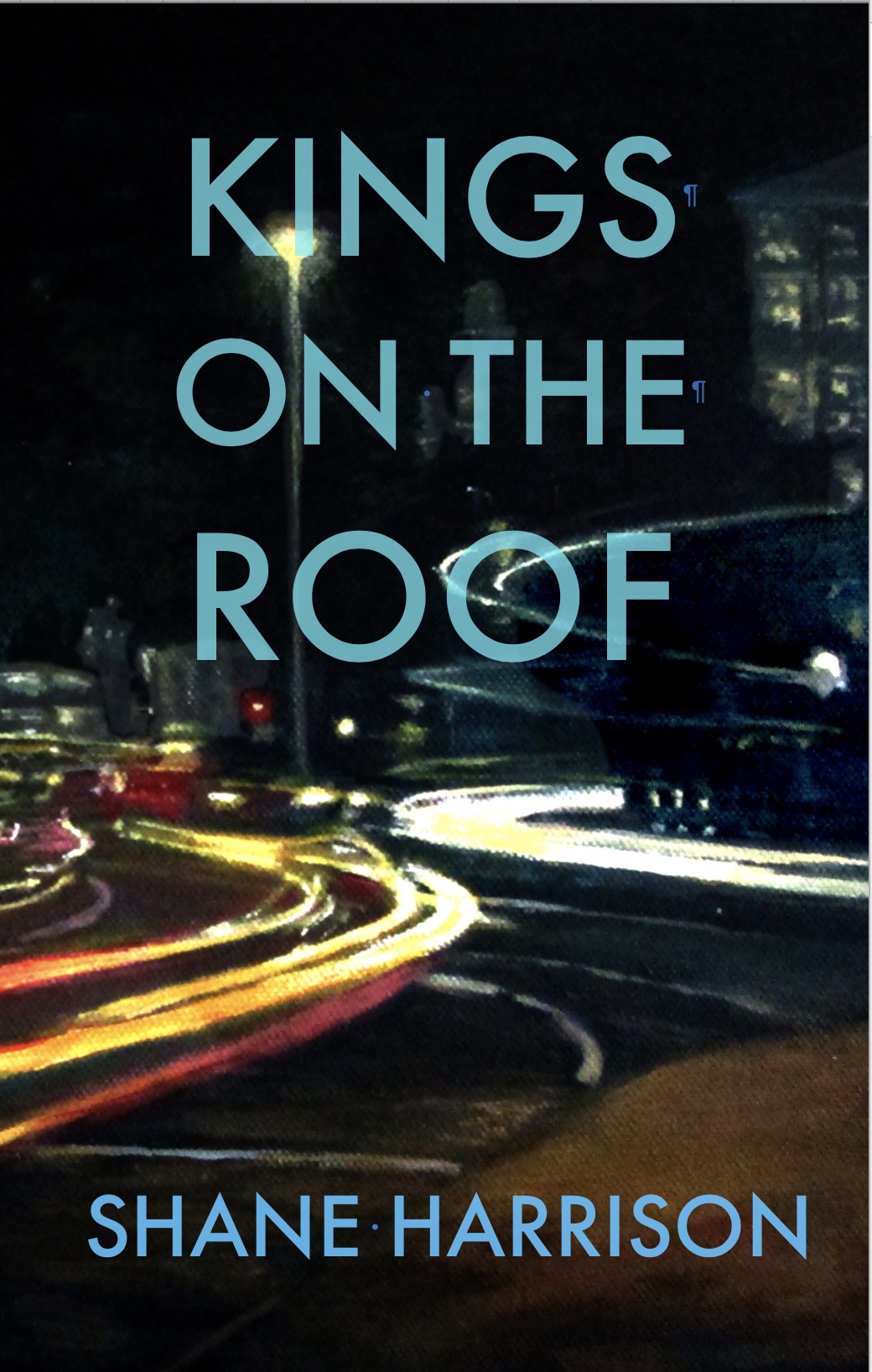
You’ll know me, that I mostly write on travel, posting that topic with photographs and the odd painting. History, art appreciation, personal reflections and music are all part of the mix. But there’s another me that writes fiction. Again, personal reflection and travel are part of the mix, sound and vision too. It’s a different world, but which is real or ideal I can’t say. This is something that happens every seven years or so, and it’s happening again. My latest collection of short stories, Kings on the Roof, is about to go live. Published by Forty Foot Press, it has eleven stories drawn from all across my universe. The title story is set around Dublin’s Amiens Street, with Sheriff Street Sorting Office and Cleary’s Pub beneath the railway bridge featuring. An extract from this story appeared in the second part of my series, Dublin’s Circular Roads. 

… back then when everything seemed possible, even there in the Sorting Office, in the bowels of that clanking beast, amongst the trolls and elves of the workaday world. We’d climb onto the high gantry and up the fixed ladder to the roof, Alex, the Bishop and I. We were kings of the world up there, with Dublin spread out beneath us, above us only a rippling sky.

There’s an autobiographical element to this story, as I worked in Sheriff Street with the P7T in the late seventies. A more mythic Dublin features in The Secret Lover of Captain Raymondo D’Inzeo. Set in the sixties in the Liberties, the narrative includes fanciful versions of Marconi, the Easter Rising, the Theatre Royal and the magnificent Italian showjumping team winning the Aga Khan. There were extracts in part eight of Dublin’s Circular Roads. 

Just past Cassoni’s I see the car, a red Alfa Romeo with the roof rolled down. Graciano is at the wheel, la Contessa Rossi languishing in the passenger seat.

   “You,” she says, “you have set your sight on the Captain. You are good. A young girl with well turned calf. But would he set his cap for you, the Captain? In all probability. He can acquire what he likes.”

   I can’t think what to say. “Will Italy win the Aga Khan?” I stammer.

   La Contessa puts her head to one side, like a bird looking at a worm. When she speaks, it is not by way of a reply. “I see your man there. He is within your reach. Don’t take me wrong for, believe me, we both have love in our hearts. And yes, we will win.”

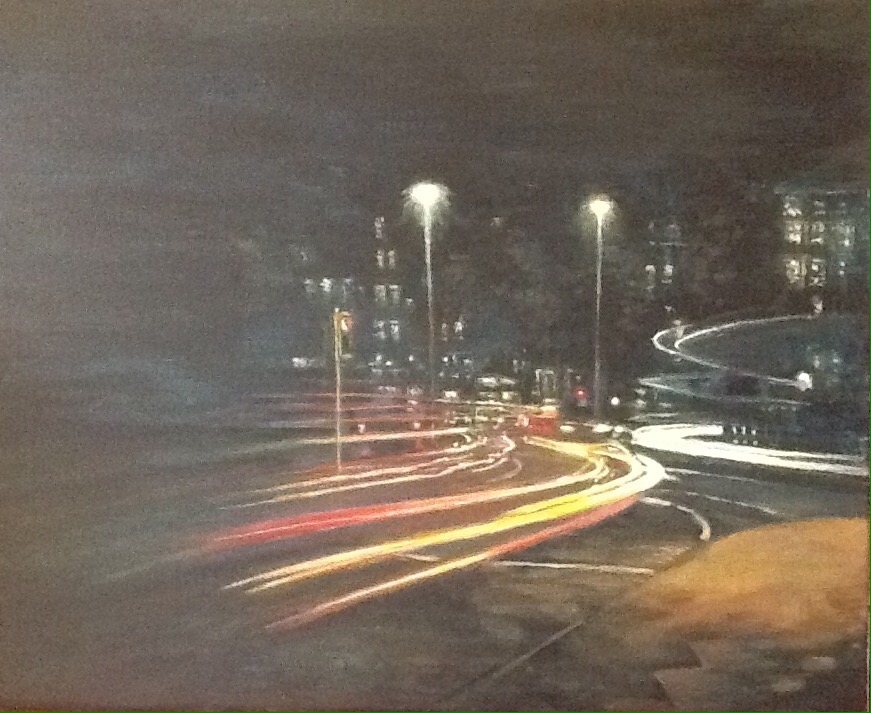
Meanwhile, a more recognisable Dublin appears in the stories A Man Walks into a Bar and the Black Moon. Both are contemporary but, suspended in their own gothic fog, drift to and fro in time. The cover illustration is realistic enough, based on a photographic time exposure of city traffic at College Green, Dublin’s dizzy fulcrum. Both the acrylics painting and prose featured on this blog about two years ago. 

… this is the beating heart of Dublin. Whenever you stand there, you will experience the rattle and hum of the city. The song it makes is of all the songs that have been sung here, all the words written and spoken, the history of centuries and recent seconds. At night I find it something special, intimate in its inkiness, dangerous and comforting in that non stop firefly display. Stand and watch the lights of passing traffic going everywhere, fast, at the same time. That’s city life.

Kings on the Roof is published by Forty Foot Press, and is available on Amazon.

The City at Night

Belgrade

A blog I follow, Danventuretravels, posed the question of what characterises a visit to a city. Well, it goes without saying that you should at least leave the port area, whether ship or plane. And purchase something to consume at a public place, coffee, beer or snack. 

A young man I know, who shall be nameless, took a Mediterranean cruise with some stunning city visits: Rome, Barcelona, Athens etcetera. Asking for a report I got the view from the deck as the port hove into view, the weather and the distant skyline. It turned out that Mark (oops) hadn’t managed to get ashore so beguiling was life on board ship.

For most, though, the advantage and disadvantage of cruises are: you see the sights, but you don’t get the full deal. I have written pieces on cities from such daytrips. Talinn, Helsinki and Stockholm are a few. I saw enough to want to return and sample the nightlife of Talinn and Helsinki. I wouldn’t hurry back to surly Stockholm, though it is an impressive regal city. I would think that you need to see the city at night to get the full picture.

Most paintings I do of places I have been are night time scenes. I do daytime paintings too, and I do go out during the day; I am not a vampire. It does strike me though, that the city comes into its own at night.

This scene suggested itself at the start of our great isolation. It called to mind many things urban and attractive, and even a little bit alienating. The umbrellas recalled Renoir’s Les Parapluies. Bunking off school, I’d take a 50something bus across Dublin’s slate sea to the city centre, hiding out at the movies or in Dublin’s Municipal Gallery, now the Hugh Lane. My favourites there were Harry Clarke’s Geneva Window and Renoir’s painting. The painting is specific to its time and place, it manages also to be universally evocative. Those shades of blue and grey, the dappling effect of rain and greenery, the pale complexioned lady and her russet hair, could be captured in a park in Dublin in the rain. The Window breathed with the life and fire of the city at night.

The focus of city centre, swirling lights and traffic, hurrying pedestrians, the language of traffic lights and zebra crossings are of modern times. They are everywhere. I posted a painting of Dublin’s equivalent nexus, College Green last year.

Col Grn

I’m also reminded of a visit to Granada in the rain and snow. Although the Alhambra and Sacromonte are indelible memories, an abiding image of the city came from its streetscapes at night in the rain. I wandered amongst those endless reflections that plunge from the sky to pass through the pavements, no longer solid but a membrane between different worlds. 

What do they do down there? They do much the same as us. Travelling through the city at night. But with a different perspective. The lights have their language, the stained glass sings and silent movies play across gabled ends. 

Jim Morrison sang, more or less, on LA Woman:

Are you a lucky little lady 

in The City of Lights?

Or just another lost angel

in the city at night, City of Night.

Like many drivers, for me the city and the road are often refracted through the music of the Doors. I can think of myself as a fellow traveller. The first time I went overseas was with my parents to Paris in 1971. Going home from Le Bourget my eyes fell across a newspaper in the departure lounge. Front page news of the death of Jim Morrison in the city early that morning. He was twenty seven. I was fifteen. And I was getting out alive.

Whatever memories the photo provoked, however, this particular city was anonymous. Not just in the sense that the city offers perfect anonymity, all the more so at night. But this was a scene I did not know, could not place the photograph. I had never been. Neither I, nor anyone within my ken. All the more reason then, to plunge in and make this the model for my city at night.

As I painted, songs filtered in and out. I wanted to convey that sense of movement and impermanence. That everything is nothing but light. I could be driving through the city at night, or being driven; a passenger without a destination. Iggy Pop wrote the Passenger under the influence of a poem by Jim Morrison, amongst other things. 

Get into the car

we’ll be the passenger

we’ll ride through the city tonight

we’ll see the city’s ripped back sides

we’ll see the bright and hollow sky

we’ll see the stars that shine so bright

the stars made for us tonight

Okay, for peace of mind then, the city lies on the banks of the Danube but is downstream of Budapest. Its name translates as the White City. We call it Belgrade, once capital of Yugoslavia, now capital of Serbia. This is Republic Square, the National Theatre on the right, the National Museum facing us.Will I ever go there? Perhaps someday, when I visit Europe, after the rain.


College Green, Dublin

Kings College Gr

The dazzling and hectic firefly fight that is College Green at night might soon be no more. The plaza, a nexus for cross city traffic, is to be pedestrianised. It is a pity really. The necessity for keeping parts of the city for pedestrians is recognised, but it needn’t become an obsession. Cities thrive on traffic; the loud, energetic, electrical surges so evident in the city at night. That is their poetry.

This is a painting of a time exposure looking south towards College Green at the height of Dublin’s late night rush. We stand on the island opposite the Bank of Ireland, originally the Parliament Buildings until the Act of Union of 1801. Westmoreland Street and Temple Bar are towards the right, Trinity College and Grafton Street to the left.

Parliament House was designed in 1729 by Edward Lovett Pearce in the Palladian style. It was a confident and modern statement marking the centre of the Irish Capital. With Trinity College it delineated College Green as the focal point of the developing Georgian city. James Gandon contributed to the extension of the building later in the century. The resulting sweeping curve joins Dame Street and Westmoreland Street. Connecting with Dublin’s. main street, O’Connell Street (formerly Sackville Street), it forms the central thoroughfare of the city.

This is the beating heart of Dublin. Whenever you stand there, you will experience the rattle and hum of the city. The song it makes is of all the songs that have been sung here, all the words written and spoken, the history of centuries and recent seconds. At night I find it something special, intimate in its inkiness, dangerous and comforting in that non stop firefly display. Stand and watch the lights of passing traffic going everywhere, fast, at the same time. That’s city life. Or was.


Dublin’s Circular Roads – 6

The Phoenix Park.

Where the arc of the North Circular declines, the road swerves south and dips steeply towards the Liffey by way of Infirmary Road. Straight ahead the Phoenix Park beckons, spreading its serene blanket of greenery on the western periphery of Dublin. Once remote, it is now a playground for its urban and suburban surrounds.

Phoenix connotes birth from fire, or revolutionary rebirth, concepts not without echo in the park’s historical fabric. In fact, the name derives from the Irish Fionn Uisce, meaning clear water. This refers to the Liffey along the southern edge, where the waters run clear above the muddy waters of the tidal estuary.

In Norman times, this was part of the demesne of the Knights Hospitalier based at their abbey south of the river at Kilmainham. The dissolution of the monasteries by Henry VIII in 1537 dispossessed the monks of their lands. At the Restoration more than a century later, Lord Lieutenant James Butler, the Duke of Ormond, established the lands as a royal hunting park. A herd of fallow deer was imported and is still in occupation. In 1680 the lands were split each side of the Liffey. The Royal Hospital was built at Kilmainham to cater for retired army soldiers and is now the Irish Museum of Modern Art.

In 1745 the Phoenix Park became a public park, one thousand seven hundred and fifty acres enclosed by an eleven kilometre wall, reputed to be the largest urban park in Europe. It is twice the size of New York’s Central Park and more than four times the size of London’s Regent’s Park.
The Park is a significant city thoroughfare. The main drag, Chesterfield Avenue, ascends in a neatly dividing diagonal between Conyngham Road and the Castleknock Gate. It bisects a vast expanse of manicured nature. There’s grassland and woodland, the brazen herd of deer, pitches for football, cricket and polo grounds, the dog pond for our four legged friend and the Zoo for more exotic critters There is a sprinkling of monuments and hidden amongst trees, some significant buildings.
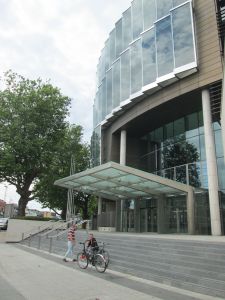
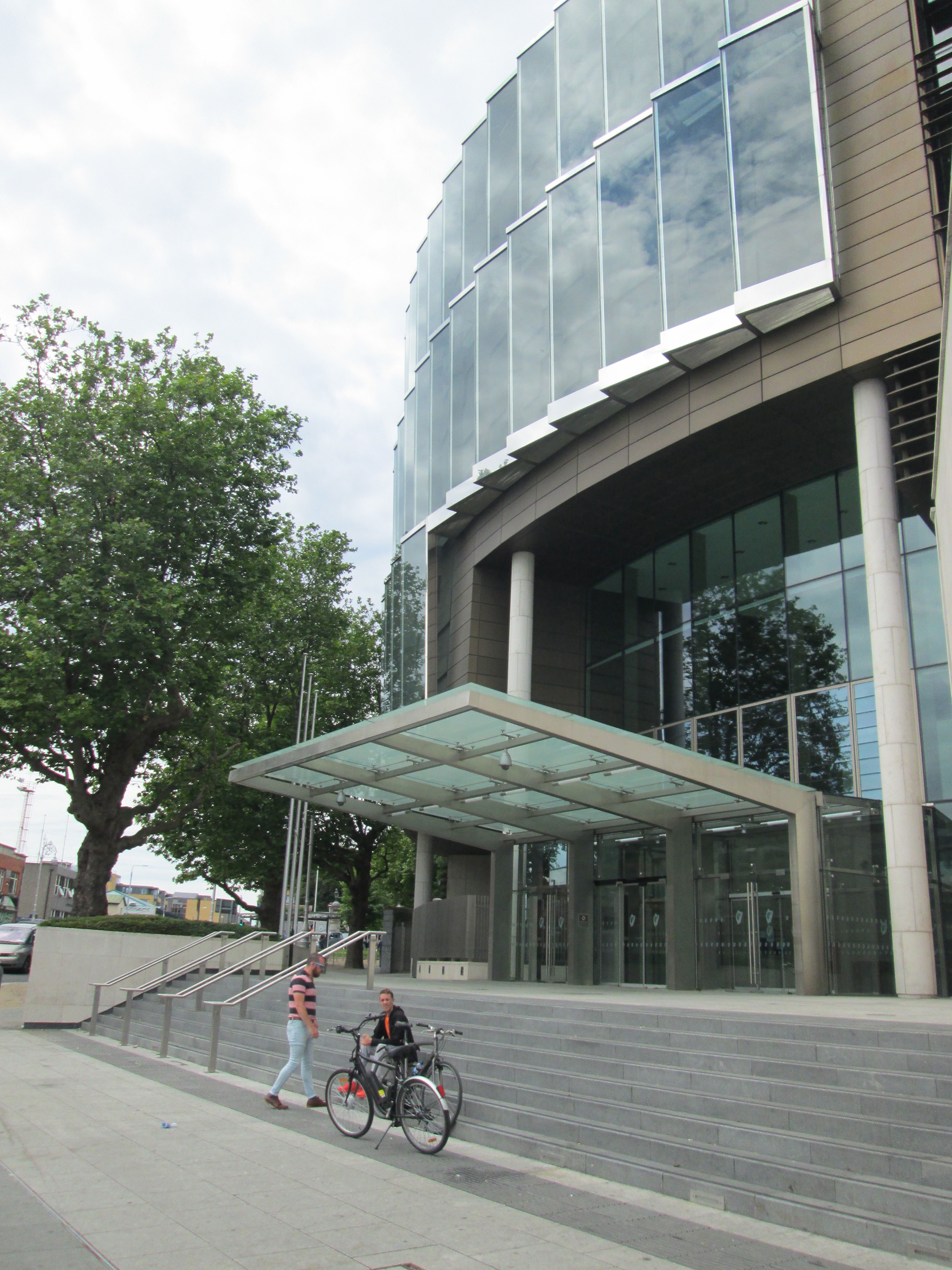
The Garda headquarters are to the right near the Park Gate, the NCR entrance. To the south is the Office of the Director of Public Prosecutions and the Criminal Courts of Justice. Not the best spot for loitering criminals so. Mind you, Bohemians Football Club was founded by a group of young men at the Gate Lodge in 1890. They’re the oldest soccer club in Ireland, and played their first games at the Polo Grounds.
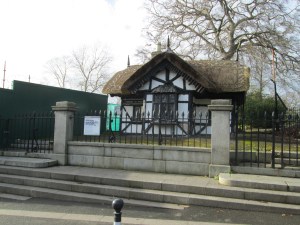
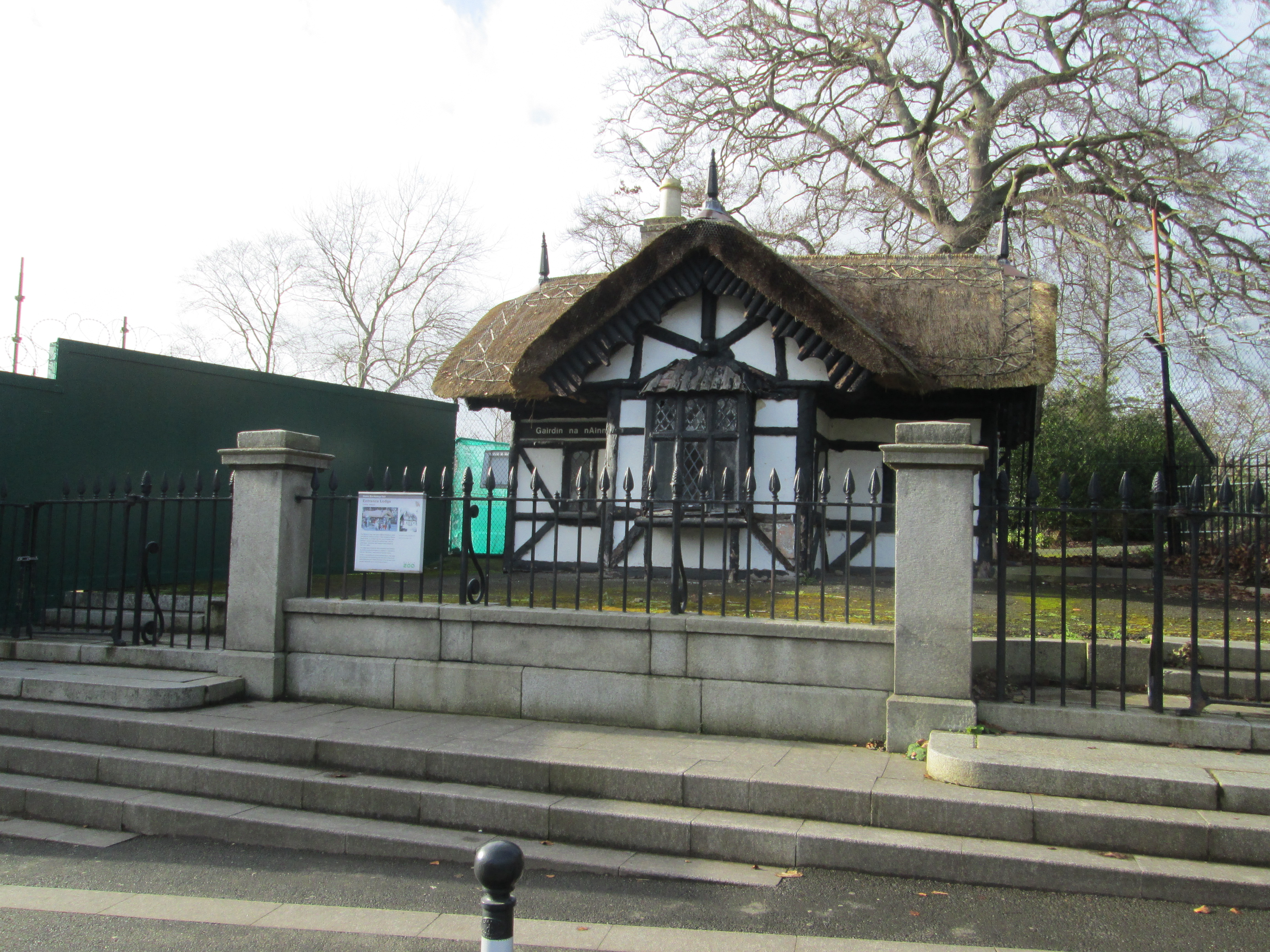
Dublin Zoo is nearby. The quaint entry post survives, a charming thatch out of Africa and another era. The large modernist entrance is adjacent. The Zoo is picturesquely constructed around ornamental lakeland. A more enlightened policy these days gives the animals some room to roam. Monkeys and chimps have their islands, predator and prey of Serengeti and beyond have large outdoor compounds. The Zoo was opened in 1831 and quickly became a popular destination for Sunday day-trippers. Still is today.

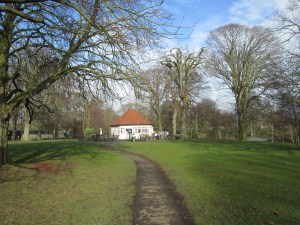
Nearby are the quaint circular tearooms. A place where I like to catch a coffee and lounge on its outdoor terrace. Of a morning in Spring or early summer a perfect moment is possible, with the air hanging like gauze from awakening trees. It’s busy today though, despite the wintry cold, and I pass on.
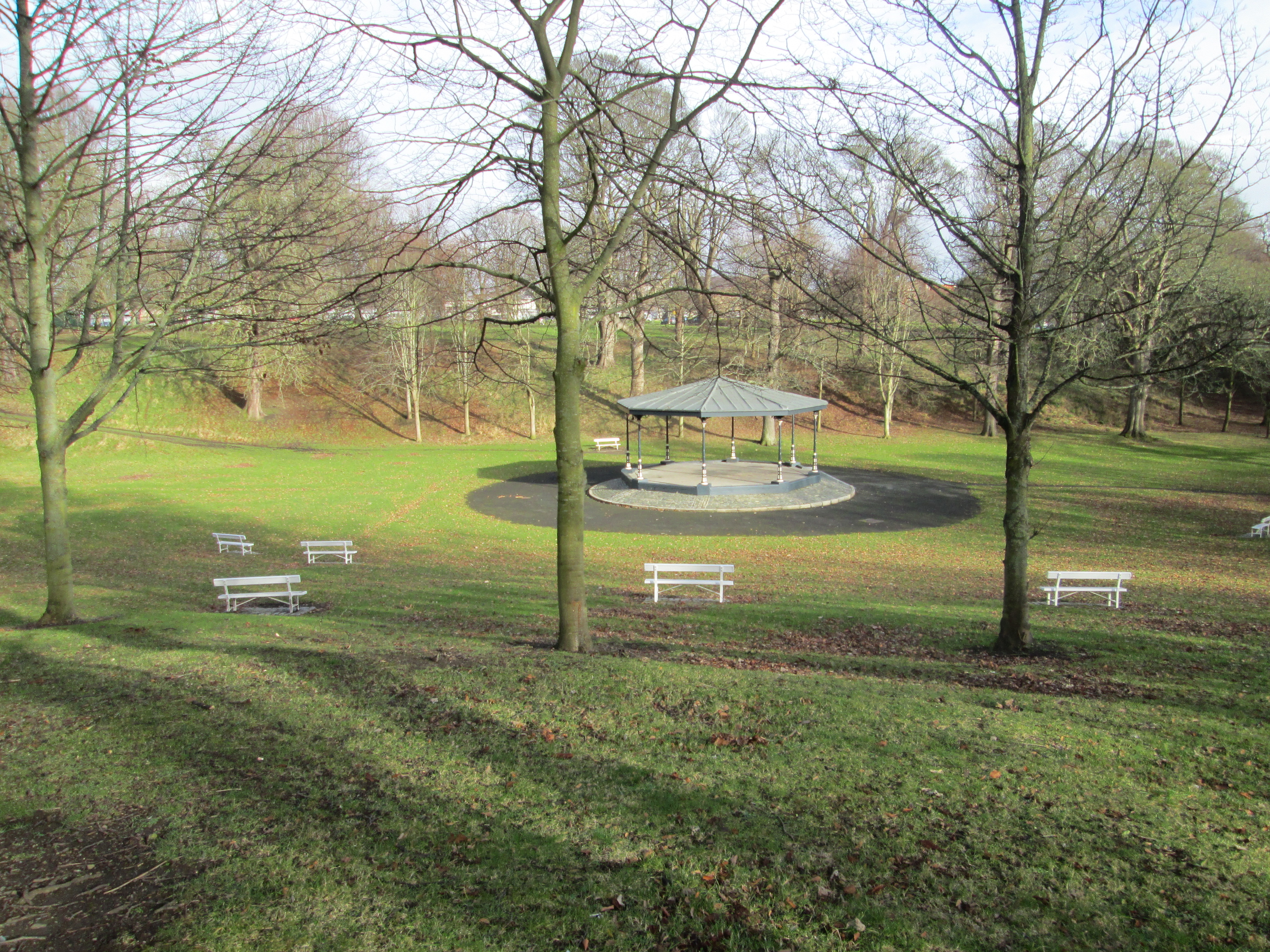
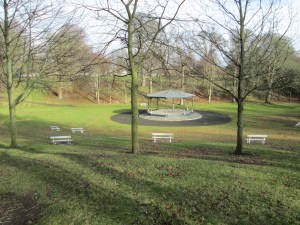
The ground falls steeply away to the east, falling away towards the Hollow. The Hollow has long been an occasional outdoor music venue, whether for formal brass band or a bit of good old time rock and roll. The ornate bandstand from 1890 provides the focus. I was a frequent flier in the mid seventies, with that hippy coterie and Mary Rose. I should namecheck the playlist, but then I smoked the green, green grass of home. The Park holds memories of greater gigs. They vary from the visit of Pope John Paul II in 1979 to the Red Hot Chilli Peppers some years later. The Pope attracted a million to his gig, the Chillies somewhat less; though they were rowdier and louder, including me and my teenage son, singing and sweating through a summer day.
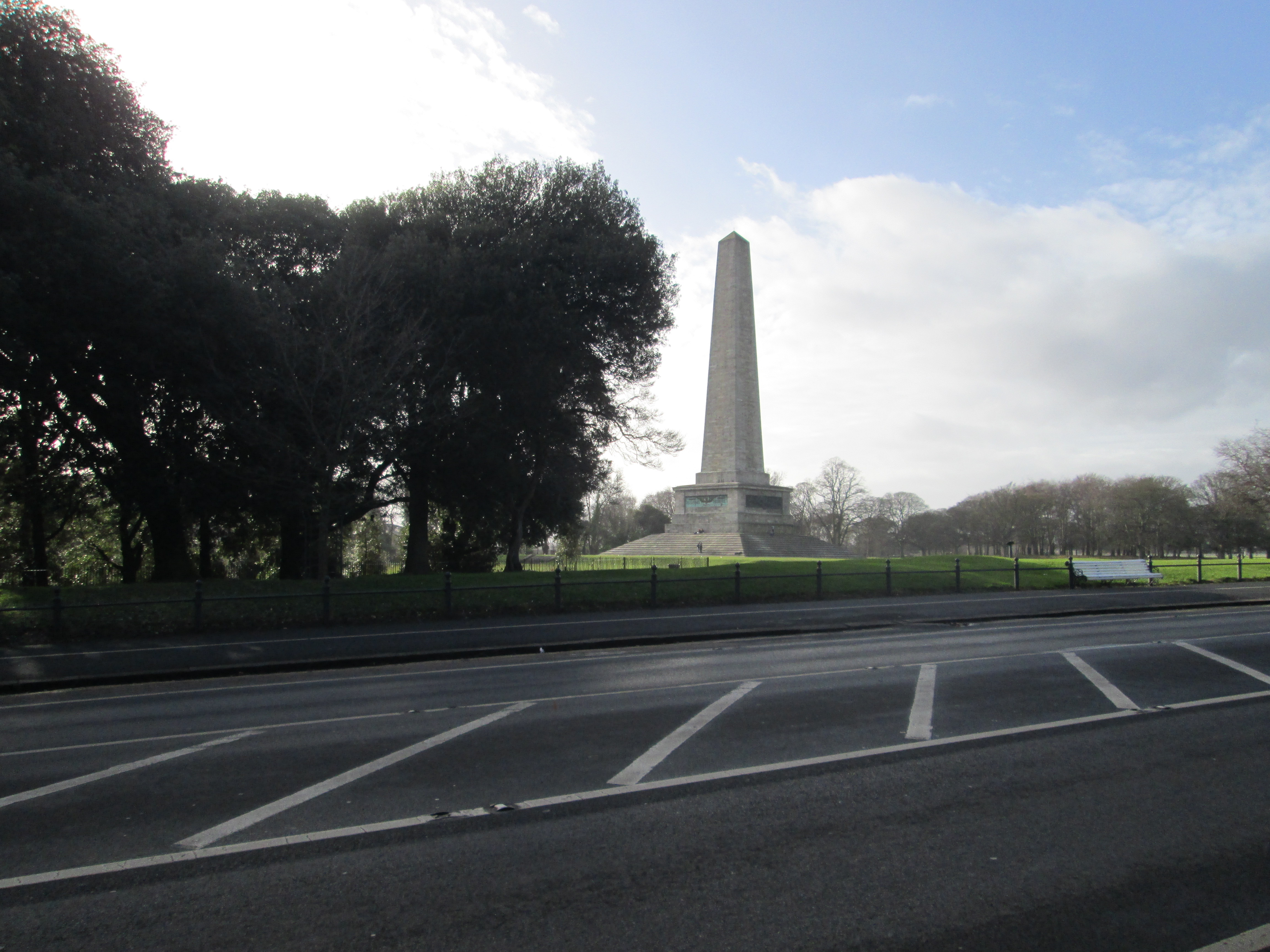
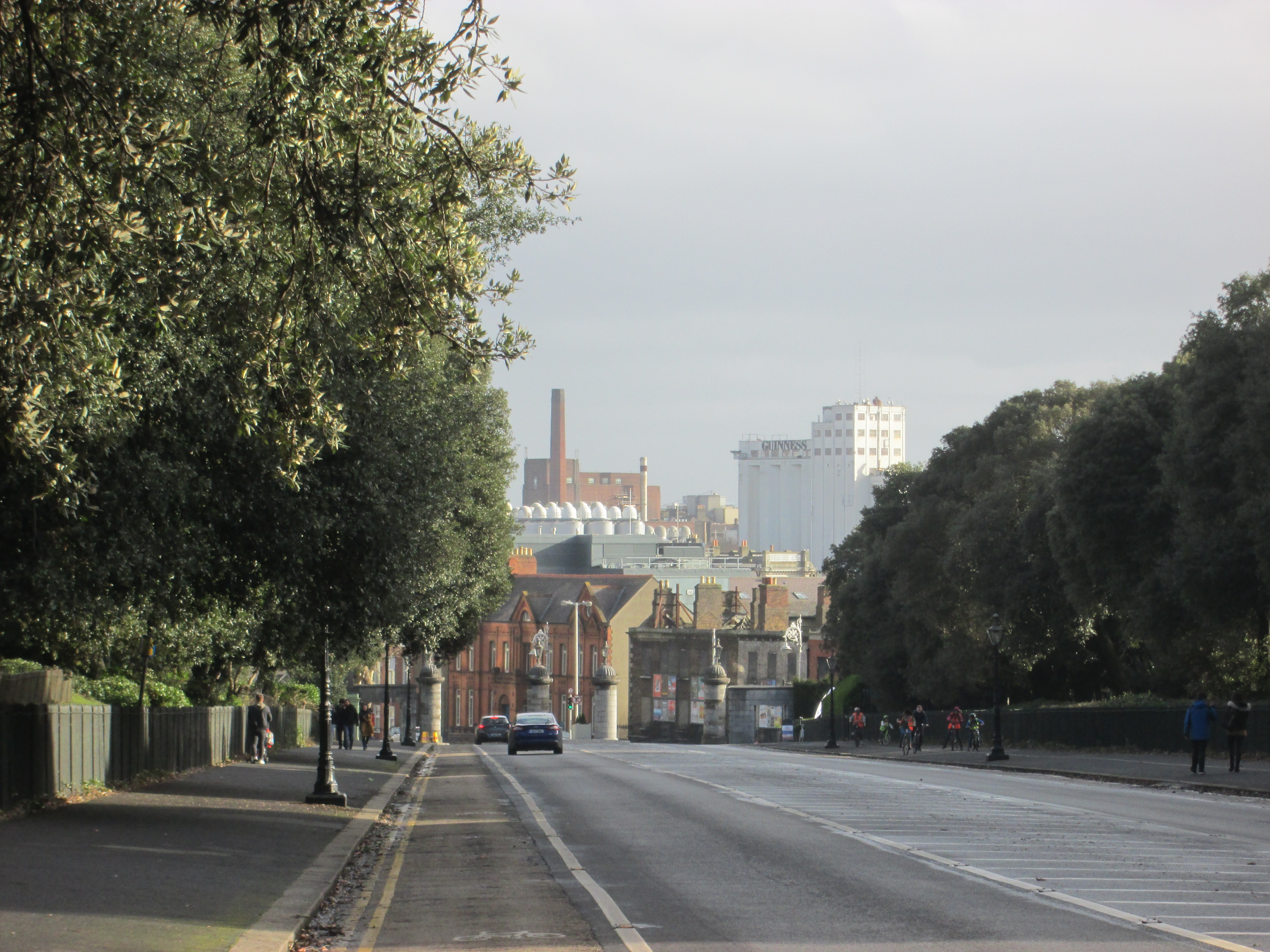
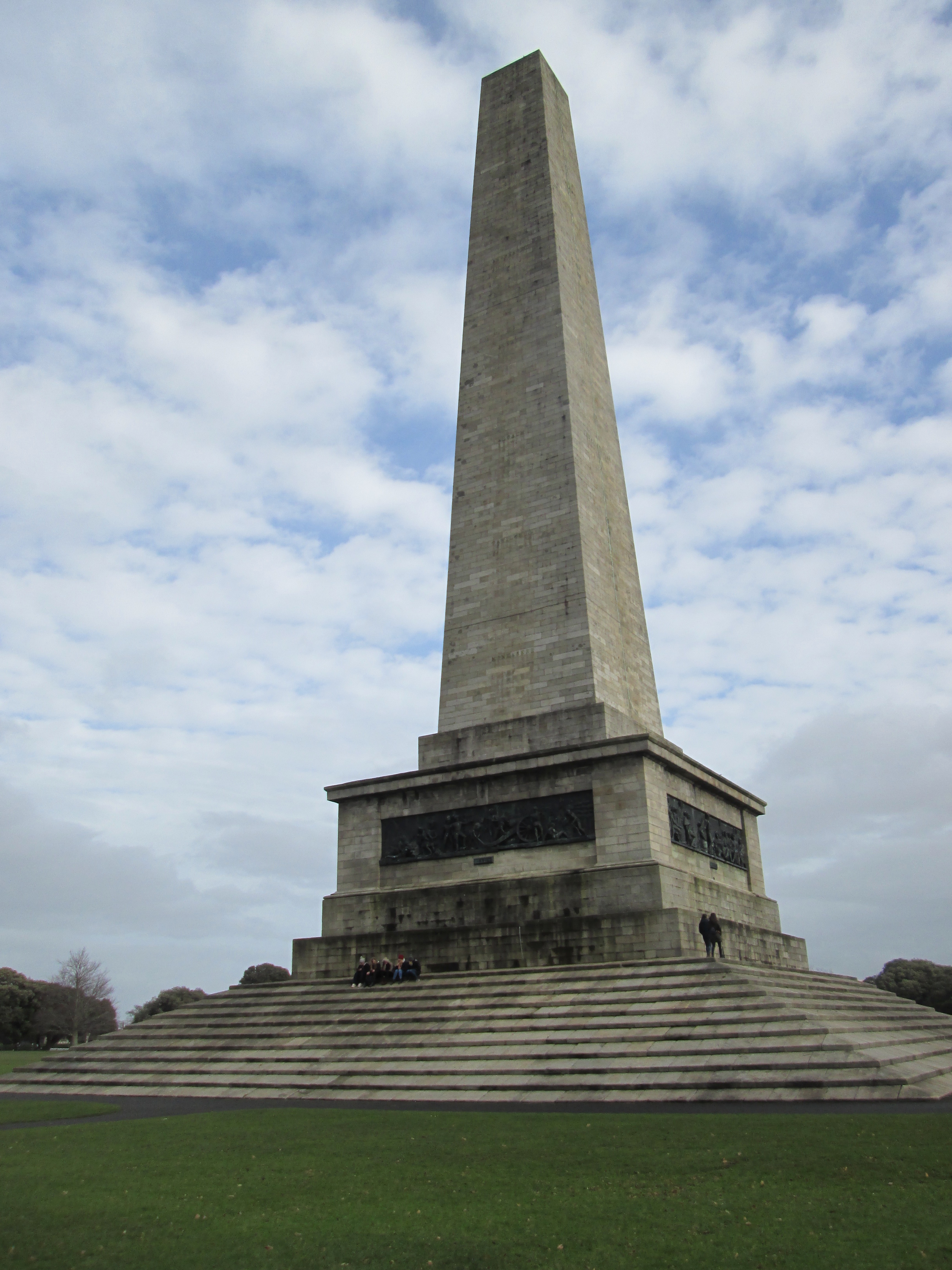
This quadrant of the Park is marked by the stone finger of the Wellington Monument. Crossing the main road there’s an iconic view of Dublin to your left. As the road falls towards the Parkgate Street entrance, the stacks and towers of the Guinness Brewery rise up with the city, a throbbing urban wall against the sublime greenery of the park.
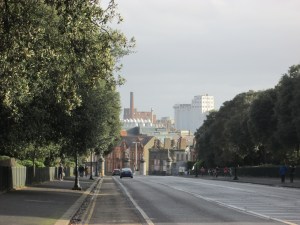
Off track to our right is Aras an Uachtaran, the residence of the Irish President. It was built in 1750 by the Chief Ranger, Nathaniel Clements. Clements was a property developer and politician, who lived in Henrietta Street, the first grand Georgian streetscape. The Aras, viewed across the lawns, is oddly resonant of the White House in Washington, although the resemblance is coincidental. Neo-classical architecture doesn’t vary all that much at first glance.

Before Independence it was the Viceregal Lodge and witnessed one of those darker incidents that form a contrast to the Park’s bucolic idyll. In May 1882 the newly appointed Chief Secretary Lord Cavendish was walking in the vicinity with Under Secretary Thomas Burke when they were stabbed to death by two members of The Invincibles. The assassins were spirited away by getaway man James Fitzharris, more colourfully known as Skin the Goat.

When Carey told on Skin the Goat
O’Donnell caught him on the boat
He wished he’d never been afloat

George Hodnett’s mock trad spoof, Monto, gives a scabrous and partial account. Cavendish had just replaced Forster, known as Buckshot for his hardline attitude to the Land League.

You’ve heard of Buckshot Forster
the dirty auld imposter
He took his Mott and lost her up the Furry Glen.

Forster resigned over Parnell’s release from Kilmainham Jail, and Cavendish’s first day in the post proved to be his last. After the outrage, Carey, leader of the Invincibles ratted out the perpetrators, but paid a high price when assassinated on a ship out of Cape Town.

It wasn’t very sensible
To tell on the Invincibles
They stand up for their principles, day and night.
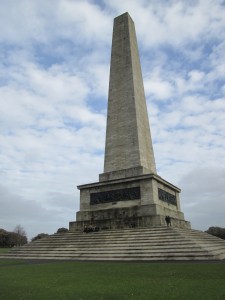
I skirt the Wellington Monument, its plinth gained by sloping steps and today occupied by happy loving couples taking in the view, being kings of their castle. Wellington Road branches left off Chesterfield and descends towards the Islandbridge Gate.

Exactly a century on from the Invincibles outrage, Malcolm McArthur, an effete, financially straightened socialite, hatched a convoluted plot to stage a solo armed robbery. Determined to steal a car, in July 1982 he loitered in the woodland nearby. He identified a target, a young nurse, Bridie Gargan, who parked her car and left it to take the summer sun.

Spring was never waiting for us girl
it ran one step ahead as we followed in the dance.
Between the parted pages we were pressed
in love’s hot fevered iron, like a striped pair of pants.

The plan was not best laid. MacArthur dragged her to the car and violently assaulted her, driving out of the park with her dying in the back seat. His escape took him towards James’s Street Hospital where, bizarrely, an ambulance, its driver thinking MacArthur was a doctor with a patient, escorted him through the grounds of the Hospital with siren blaring. MacArthur kept going, eventually depositing the car and its victim in Rialto.

I recall the yellow cotton dress
foaming like a wave on the ground around your knees.
The birds like tender babes in your hands
and the old men playing checkers by the trees.

Days later he murdered farmer Donal Dunne while posing as a purchaser for his shotgun. MacArthur was run to ground in his hideout; the residence of the Attorney General in Dalkey. You couldn’t make this stuff up. John Banville tried with the Book of Evidence but it’s not nearly so bizarre as the fact. The AG, meanwhile, headed off on holiday, it was booked after all. Taoiseach Charles Haughey ordered him home. Haughey’s expression of disbelief resulted in the coining of the acronym, so descriptive of the era, by Conor Cruise O’Brien; GUBU: Grotesque, unprecedented, bizarre and unbelievable.

MacArthur’s Park is melting in the dark
All the sweet green icing flowing down.

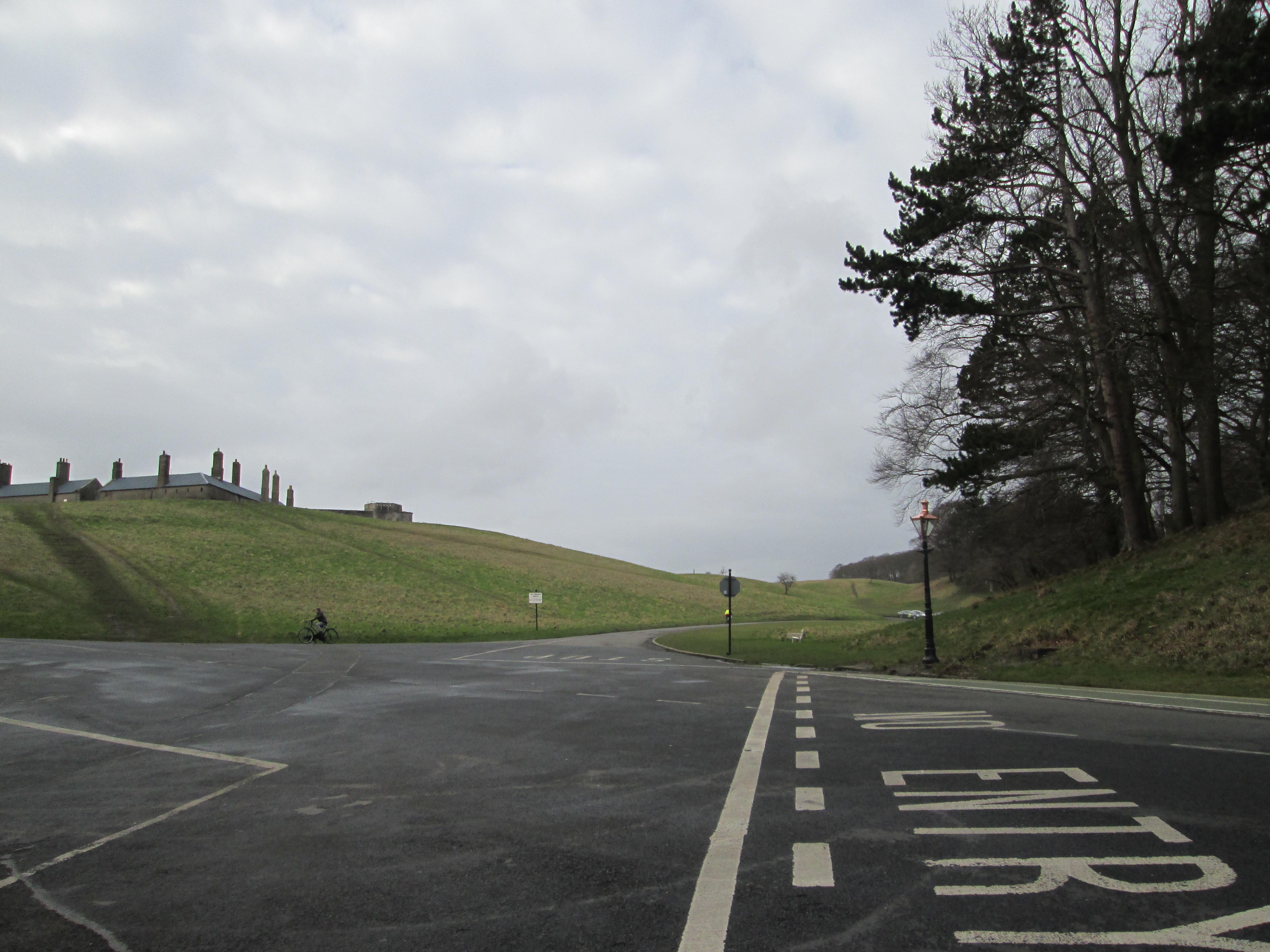
The Magazine Fort stands guard over Islandbridge Gate. It dates to 1734, a star fort dominating this undulating, lonely south-western section of the Park. It featured in the overture for the 1916 Rising. A group of Volunteers, posing as footballers, gained entry to the fort claiming they needed to retrieve their ball. I have no idea if any were members of Bohemians, but they managed to disarm the guards. However their plan to blow up the fort by way of signalling the onset of the Rising was something of a damp squib.

Exiting by the pretty Gate Lodge, a short left takes us to the Liffey bridge. Rising up to the south is the first stretch of the South Circular Road and the second part of our odyssey. Conyngham Road heads east, a short stroll along the southern wall of the Park to the Luas line at Kingsbridge connecting to the city centre. A halfway house, if you like.


Dublin’s Circular Roads – 3

From the Five Lamps to Mountjoy   

Amiens St

Crossing Amiens Street

When we’ve finished hanging around the Five Lamps we head north by northwest along Portland Row. The route picks up some of that ol’ Georgian charm, much tarnished now by urban grime and shifts in demographic fortune. At Summerhill, we intersect with the well-worn artery connecting the city centre with Ballybough, further out to the north. This is Poor Town in Irish. Some other names in the vicinity are more optimistic: Mountjoy, Summerhill. But the feeling of Poor Town is all pervasive.

Summerhill

Summerhill

I recall sitting in a car in Ballybough back in the early nineties, waiting for a girl that worked with us. My companion says to me, apropos a dog balanced on three legs by a lamppost: “See that dog? That’s Tony Gregory’s brother’s dog.”

I’m working at Industrial etching on East Wall Road, smoking Players Navy Cut, sweaty and stubbled, jeans and skin stained with acid. Yet, if I were to scratch that mutt behind the ears, that would establish five degrees of separation between me and the apex of power. Me, the dog, Tony Gregory’s Brother, Tony Gregory and Taoiseach Charles J. Haughey. Tony was the eponymous focus of the Gregory deal in 1982, wherein, by guaranteeing support for Haughey’s Fianna Fail government, Ballybough would be guaranteed a tranche of funds. Hey, look at the place now!    

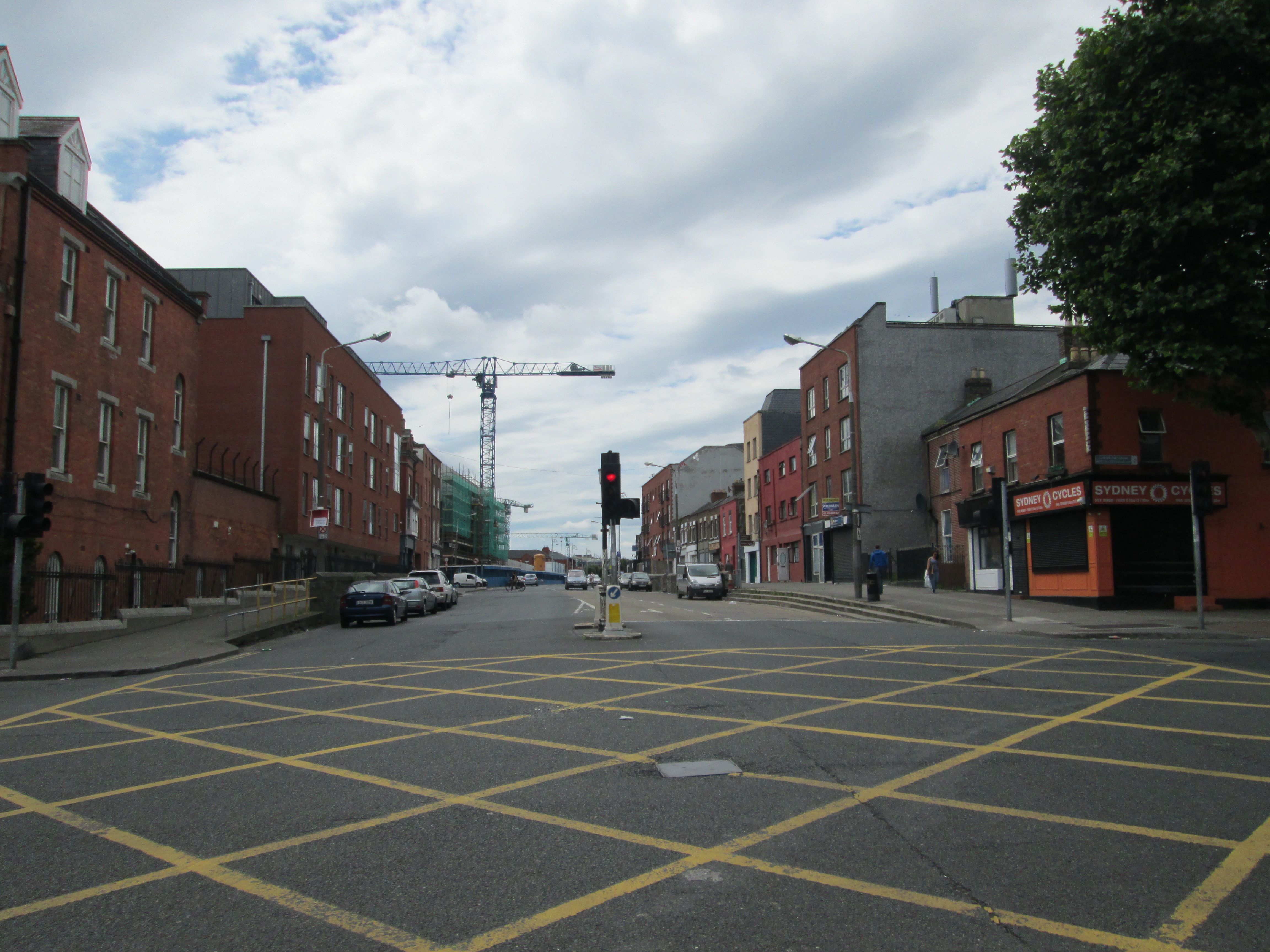
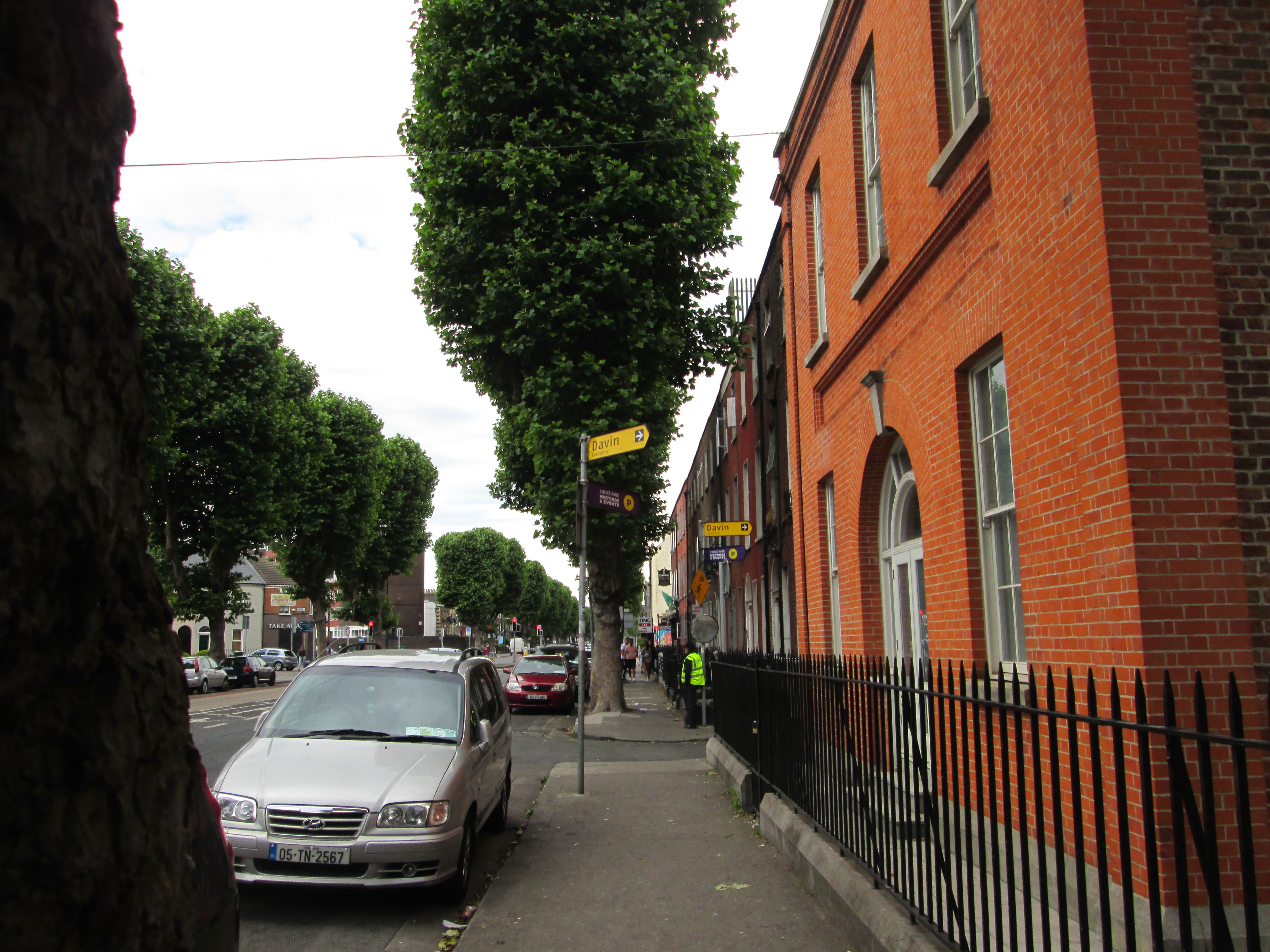
NCR to CrokerThese are the approaches to Croke Park, headquarters of the Gaelic Athletic Association. The GAA, founded in 1884, fostered a notion of Gaelic sport as a distinct entity. The codification of team sports was a recent phenomenon. Gaelic Football codified the traditional line of football as played here. Fielding (catching) was a feature, a high degree of physicality was allowed along with limited ball carrying, though kicking remained paramount. There was no offside, resulting in an allover hectic game. 

Hurling is akin to hockey, but more physical and expansive. The ball may be caught and carried and propelled aerially. The Scottish version, Shinty, is more earthbound but offers a slight international angle. Burly Australian Rules gives Gaelic Football an international outlet in Compromise Rules. Its success is debatable, but there are some good punch-ups so we won’t give up on it yet.

On match days approach roads become rivers of humanity in high flood. The huge stadium is masked by red brick houses. It’s an impressive confection when it reveals itself. Madeover at the turn of the century, it holds eighty two thousand and is the third largest sports stadium in Europe. All Ireland finals are hosted in September. The Dubs, at time of writing, have just won their third football title in a row. The Cats of Kilkenny have been lords of hurling for an age, though fading now. Galway are current champs.

There are tours of the stadium, encompassing the history of the GAA and an impressive sky walk where Dublin is spread at your feet. The history is deeply entwined with the Nation’s. During the War of Independence, Croke Park was the setting for Bloody Sunday, November 1920.  Following Michael Collins’s strike against Castle spies, the Cairo Gang, British Auxiliary forces and RIC attacked killing two players and twelve spectators including women and children.  Another massacre almost fifty years later would also claim the title Bloody Sunday. The British Army killing of thirteen civilians in Derry in 1969 informed U2’s song. Bono’s intent is stringently non-violent though.

I can’t believe the news today

I can’t close my eyes and make it go away

How long, how long must we sing this song?

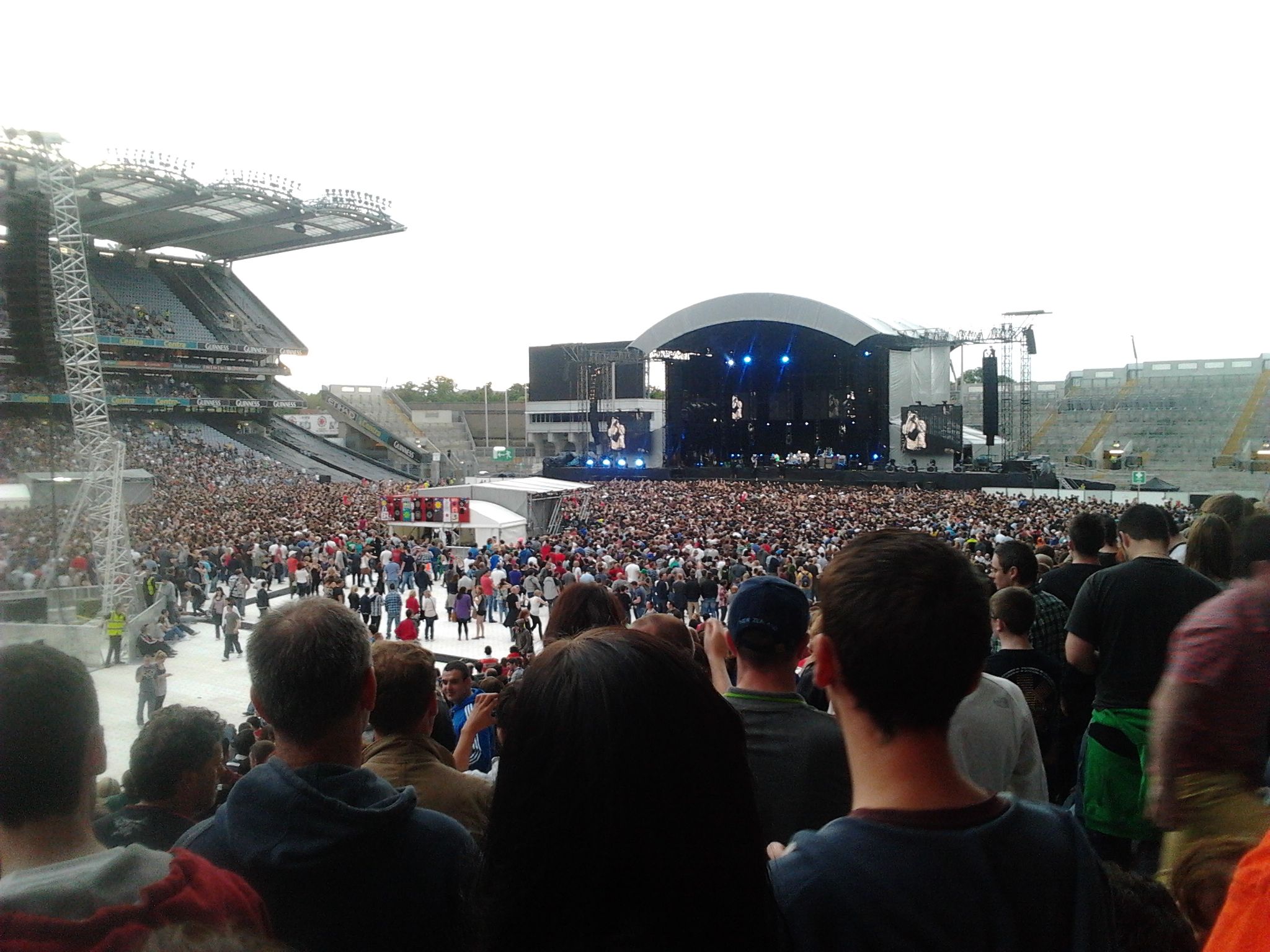
I’m more inclined to visit Croke Park for the music. I once walked all the way from Crumlin with several hundred to see Thin Lizzy play a free concert, footing the bill for Dickie Rock. I’ve swam the streets with the rivers of thousands to hear U2, the Red Hot Chili Peppers and Bruce Springsteen pound it out under floodlights and soaring stands.

Chillies Croker 2012

Red Hot Cilli Peppers at Croker

Soft spoken with a broken jaw

step outside but not to brawl

Autumn’s sweet we call it fall

I’ll make it to the moon if I have to crawl

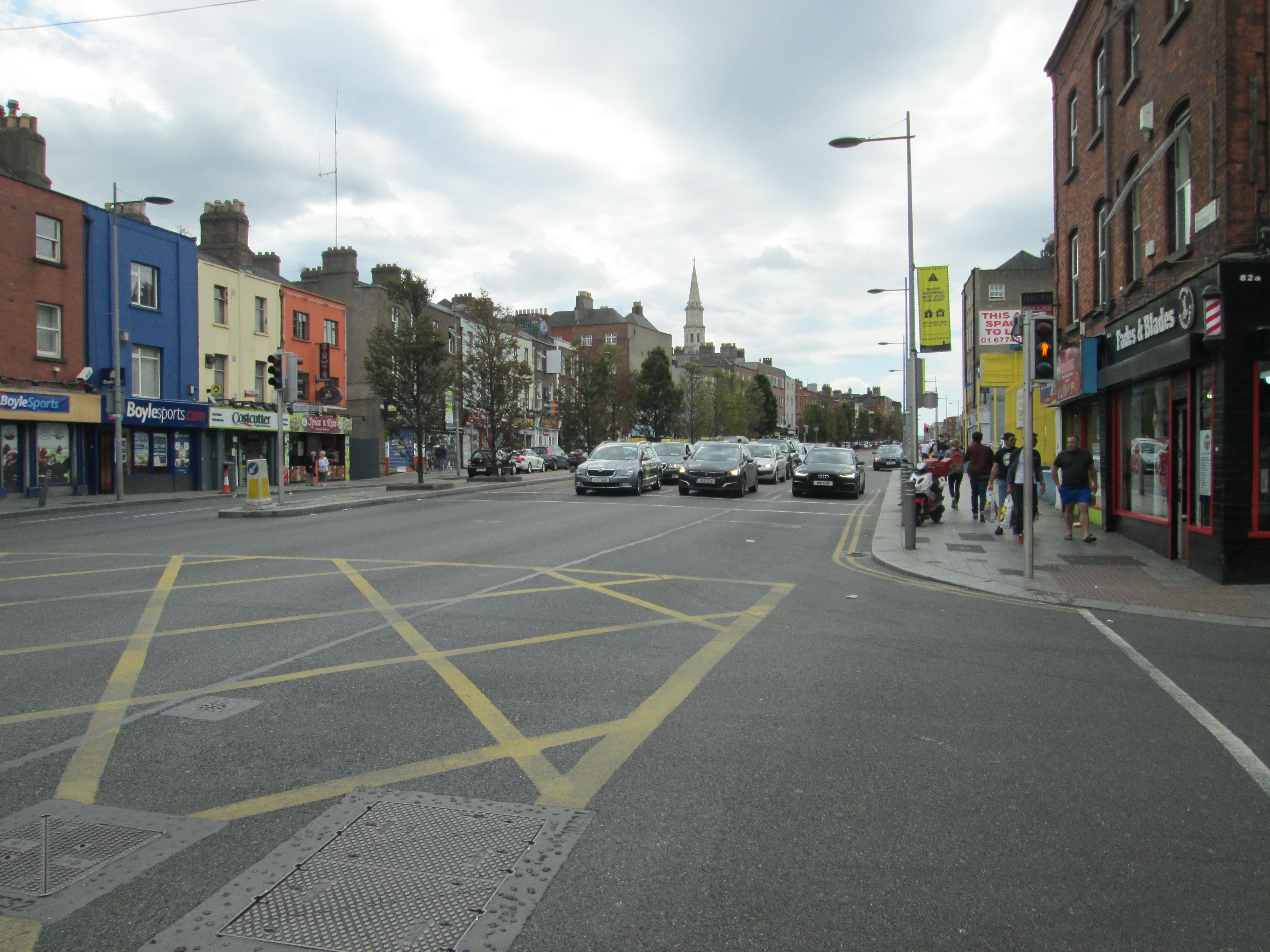
Crossing Summerhill we step onto the North CIrcular Road proper. Despite the occasional rivers of people this is no paradise for winers and diners. Casting around, I notice the Brendan Behan Pub. Once the Sunset, scene of a notorious gangland murder, local family, the Gannons, have given it a once-over and a new name. No chance that Brendan ever popped into his eponymous pub, but it’s pretty certain he would have had it been there in his day. The Hogan Stand is further on, and the BigTree, at the junction of Dorset Street, is a renowned rumbustious meeting spot for Culchie and Jackeen alike.

NCR Mjoy

Crossing Dorset Street

Mountjoy gives its name to the surrounding area. You can see the edge of Mountjoy Square from the North Circular. Mountjoy is the only Georgian Square that is actually square. The land was developed in the late eighteenth century by Luke Gardiner, Viscount Mountjoy, a banker, developer and MP (all the things we so admire these days). When completed in around 1818, it was considered the acme of the new suburban style. The great and the good could escape the cramped conditions of the teeming medieval city, for life in a Rationalist paradise. Dublin’s urban development was at the cutting edge for the times: long straight boulevards, rectangular sylvan squares.

By the end of the nineteenth century the district had gone downmarket. Sean O’Casey drew heavily on the atmosphere of Mountjoy in his plays Juno and the Paycock and The Plough and the Stars.     

M'joy Benedict Gdns

Benedict Gardens

By the twentieth century northside Georgian Dublin was in decline, the fashion for suburban development leeching the life out of the inner city.  Mountjoy Square was half demolished by the nineteen sixties. The situation was halted and reversed as Dubliners acquired more appreciation of their architectural heritage. Thanks to the work of the Georgian Society, founded in 1966, and activists like David Norris, Ireland’s stateliest Homo himself, Georgian Dublin reasserted itself as a defining factor of the city. Although there is a danger this is becoming a little too precious, it is a vast improvement on the near bombsite landscape of Dublin’s sixties and seventies development.

A hungry feeling came o’er me stealing

and the mice were squealing

in my prison cell

Mountjoy

Mountjoy Prison is sandwiched between the North Circular and the Canal. Referred to by residents and potential clients with some irony as ‘The Joy’. Built in 1850, it originally accommodated prisoners bound for Van Dieman’s Land. Such had been the condition of Ireland in the Famine years that they might have been considered the lucky ones. Built in the style of Britain’s Pentonville, it became Ireland’s largest prison, adopting a bleak, isolationist regime. Forty six prisoners were exectued before the abolition of the death penalty. Kevin Barry is perhaps the best known. He was hanged in 1920, aged eighteen, during the Irish War of Independence.

And the Auld Triangle

Goes jingle jangle

All along the banks of the Royal Canal

Famous residents include Brendan Behan, who was born nearby in 1923 and incarcerated during the Troubles as an IRA member. He was released in 1946. His play, The Quare Fellow, from 1954, is  set in the prison, taking place on the day leading up to the execution of an inmate. It evokes a strong stance against capital punishment. The last hanging in Ireland happened the same year. Behan himself was overfond of the Drop and his waxing artistic success was offset by declining health. He died aged only forty one in 1964, the year capital punishment was abolished. Still, his ghost can be heard whistling softly hereabouts.

Scar tissue that I wish you saw

sarcastic Mister know it all

close your eyes and I’ll kiss you cause

With the birds I’ll share this lonely view

Dublin’s Circular Roads – 2

From Spencer Dock to the Five Lamps.

Spencer DockHeading north on Guild Street, the Royal Canal to our right seeps towards the Liffey. A new city, linear and rational is being stamped over the old North Wall docklands. That’s the feeling crossing Mayor Street where the Luas Red Line takes passengers arrow straight from Connolly Station to the Point Village. The Point Depot at the eastern end of the Docks is the major venue for indoor concerts. I saw Bob Dylan there some years back. A man with a hat playing piano. I could have spent the evening out in the real world, where the Liffey melts into the sea. I could have sat contentedly and watched the river flow, the memory of Bob’s music stronger in my blood.

FerrymanAt Ferryman’s Crossing, a rusty reminder of the old days rises in the form of a decrepit crane. The old docklands peep through, first the palimpsest, then the ancient script itself. It’s still being written. Often the same old story. Sheriff Street runs parallel to the quays but remains remote from the modern narrative there. The area has a rough inner city reputation.
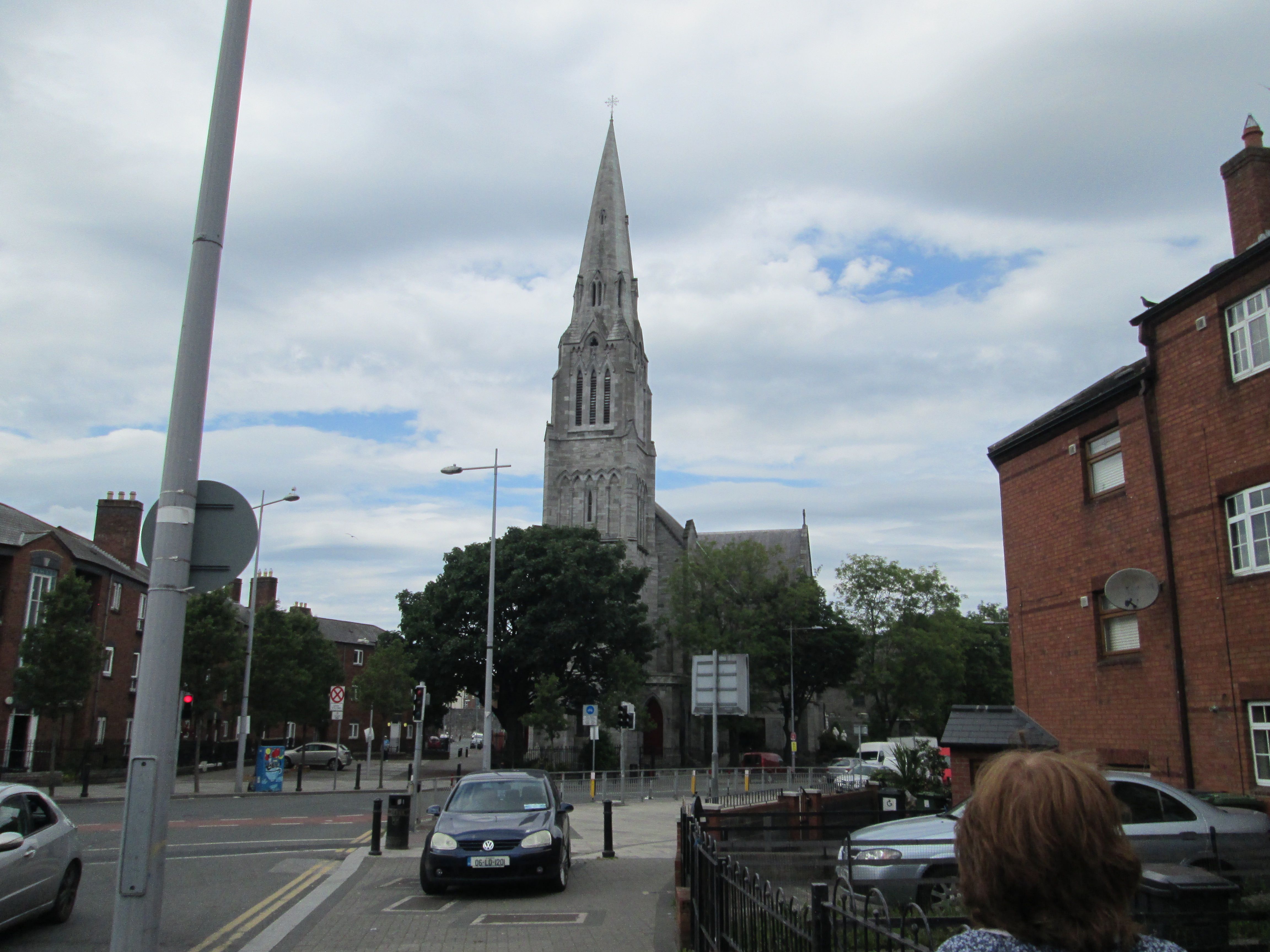
Lorcan OThe Church of St. Laurence O’Toole marks the start of Seville Place. It was built in the Famine years and opened in 1850. Along Seville Place, the grandly named First to Fourth Avenues suggest New York. In fact, these are short, cottage lined cul de sacs. Under the railway bridge we reach Amiens Street.
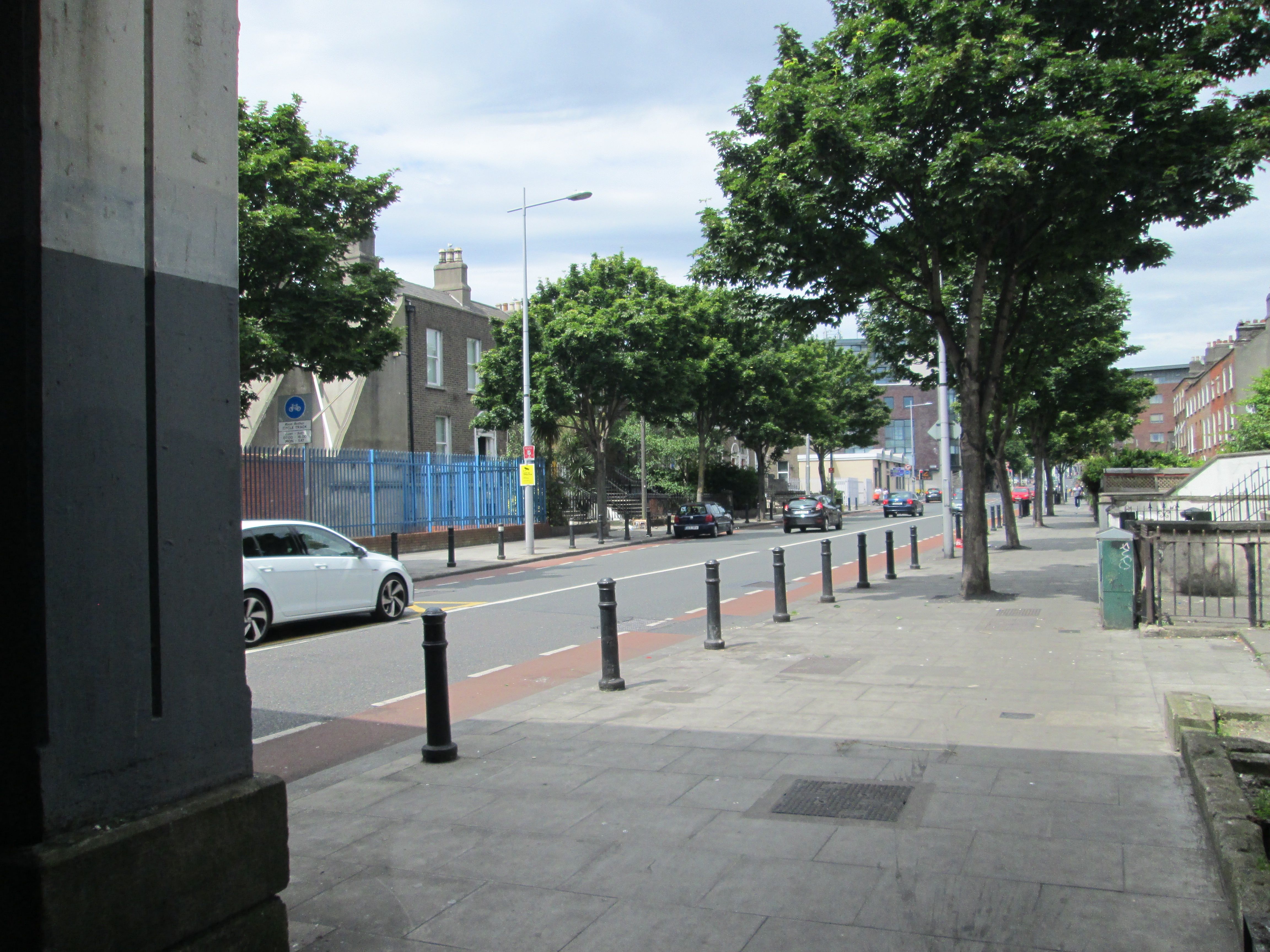
Seville 2This street provides Dublin’s main transport and communications hubs. Connolly Station, topped by an ornate Italianate tower was opened in 1944 as Dublin station, later named Amiens Street. By 1853 it served the rail link to Belfast. Madigan’s Pub, on the main concourse, was a Mecca for thirsty travelers on long, dry, Good Friday. It is the most central of all bonafide pubs. You would need a train ticket to deserve a pint, of course; a small price to pay. Such quaint customs are now consigned to the slop tray of history, as Ireland’s Good Friday prohibition has been lifted.
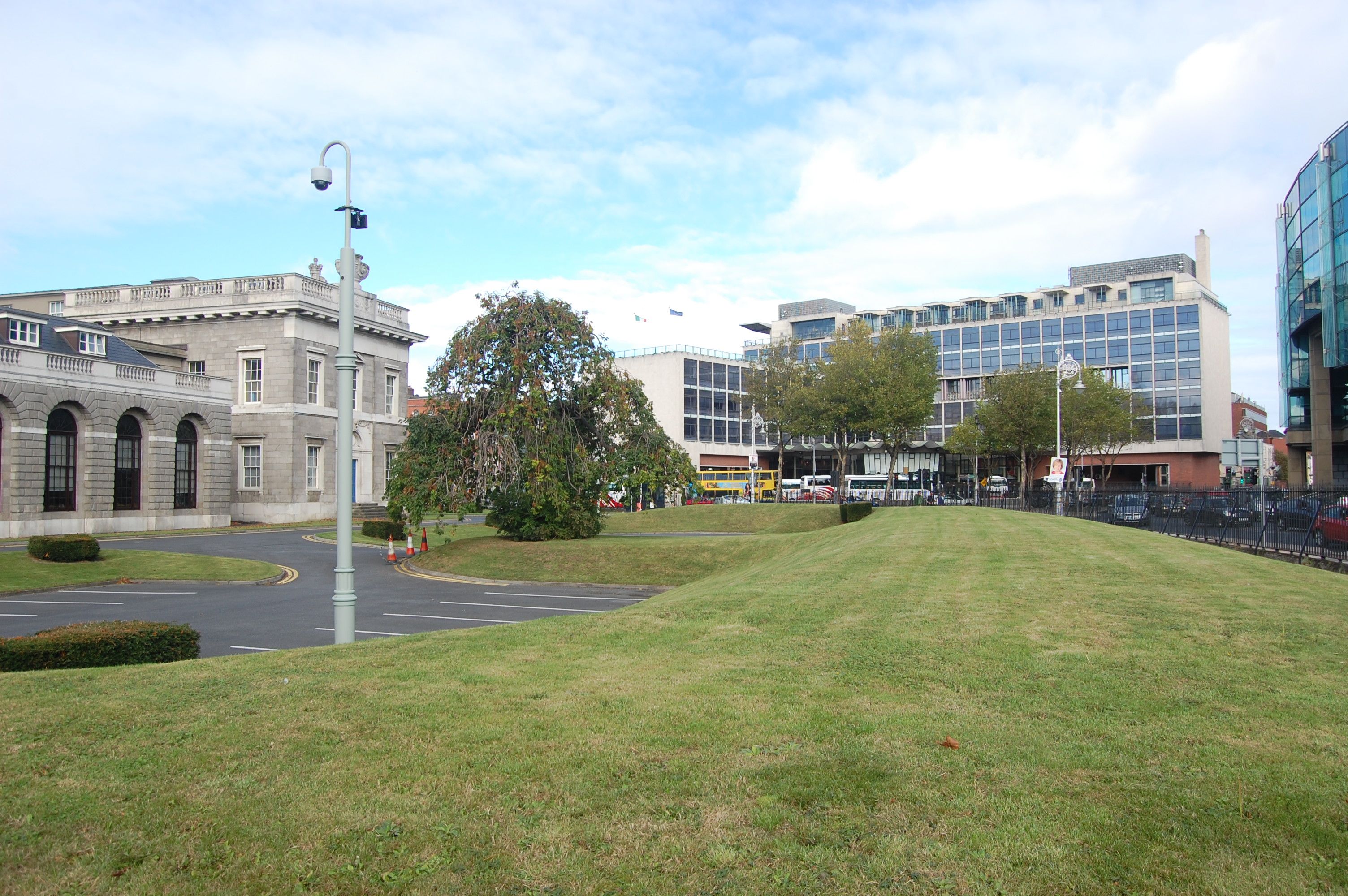
BusarasA little further off track, Bus Aras, nearer the river, was an early modernist pile. Designed by Michael Scott and completed in 1955, from here you can take a bus to anywhere in Ireland, or all the way to London. Bus Aras and Connolly combine to form a startling urban portal, full of the contrasts of history and architecture. At just the right spot, the panorama includes Victorian Connolly Station, Georgian Custom House, the International Financial Services Centre and the Ulster Bank HQ across the river.
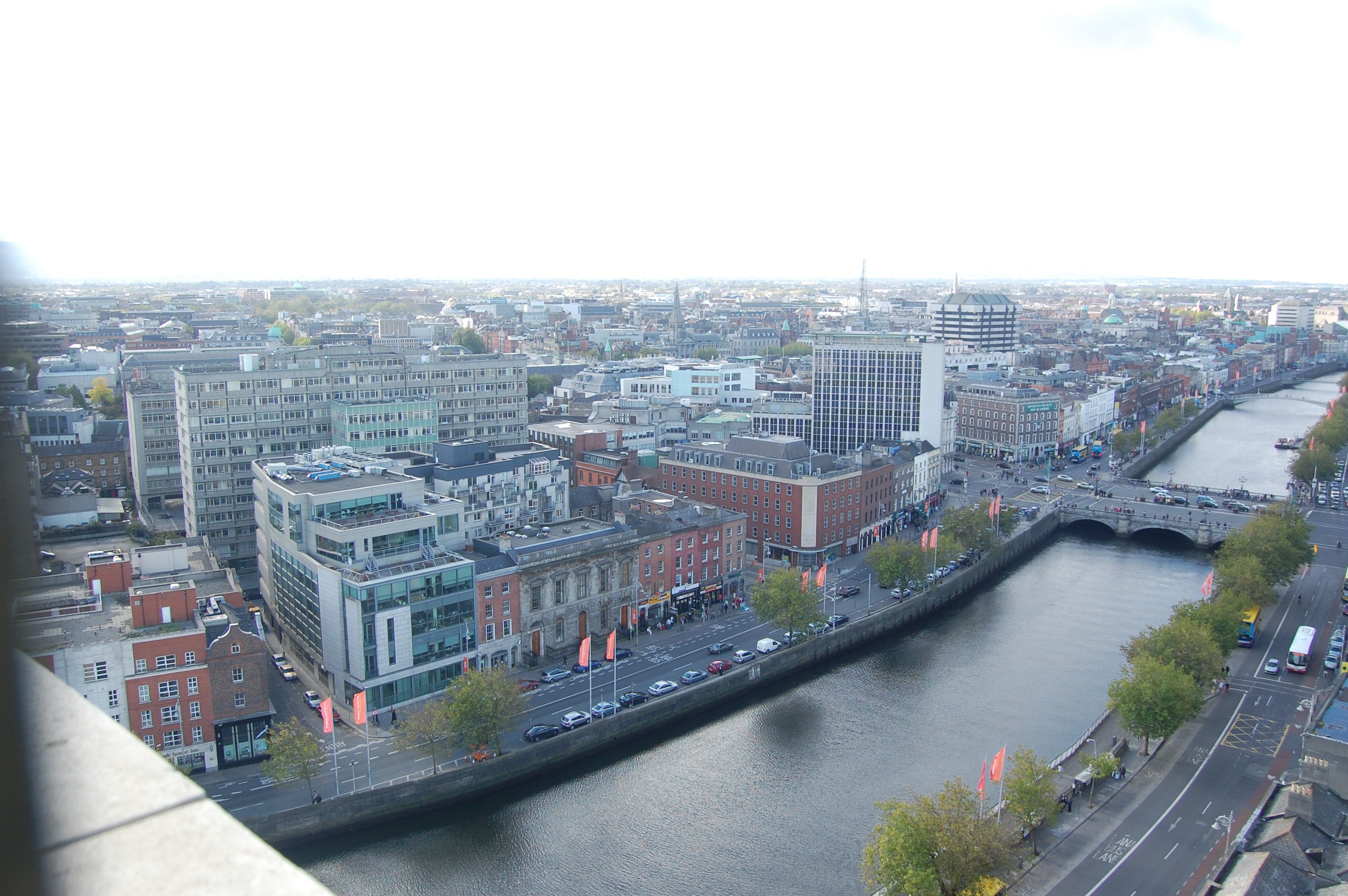
The area is rich in memories from when I worked in Sheriff Street Sorting Office beside Connolly back in the day. This is Ireland’s main sorting office with a constant flow of post by day and by night. Working shift meant being on the Gravy train, one week in three doing all-nighters. Maintenance involved clearing blockages on the various belts and chutes forming the working innards of the building. A blockage was often a good excuse for shop floor workers to decamp to a nearby early opener for a pint. So, having cleared the blockage I’d have to hike off to the North Star or Grainger’s and clear the bar. Later, at dawn, a smoke break on the roof gave a view across the waking city to the mountains beyond.

… back then when everything seemed possible, even there in the Sorting Office, in the bowels of that clanking beast, amongst the trolls and elves of the workaday world. We’d climb onto the high gantry and up the fixed ladder to the roof, Alex, the Bishop and I. We were kings of the world up there, with Dublin spread out beneath us, above us only a rippling sky. (from Kings on the Roof by Shane Harrison)

DSC_0365At more civilised hours we could repair to Cleary’s pub, beneath the bridge, shuddering under the weight of passing trains. Old style boozer of dark wood, sparse light on glinting glasses being raised at the long bar. One more toast before boarding the Gravy Train. Last wet my whistle here with Davin, on our way with to the Red Hot Chilli Peppers at Croke Park farther north.

Monto, bordered by Amiens Street and Talbot Street, was the name of the area in Victorian days. This was Dublin’s red light district until cleaned up by the authorities after Irish Independence. In James Joyce’s novel Ulysses, the area appears as Nighttown, where Leopold Bloom and Stephen Dedalus visit a brothel. Joyce has a nearby street names after him. You can hear his ghost whistle there, maybe catch his silhouette, some foggy night.

The area lives on in song and ribaldry. George Hodnett imagined it for us in his song Monto, immortalised by the Dubliners. The first line name-checks Ringsend, south east in the saltier part of Dublin 4. 

If you’ve got a wing-o, take her up to Ring-o

Where the waxies sing-o, All the day.

If you’ve had your fill of porter, and you can’t go any further

Give your man the order: Back to the quays!

And take her up to Monto, Monto, Monto,

Take her up to Monto, langer-oo! To you!

5 LampsAt the junction of Seville Place and Amiens Street, we’re back on track. Heading North by Northwest is Portland Row, leading to the North Circular proper. Amidst the grimy urban bustle sits the landmark of the Five Lamps, delicate and redolent of a bygone age. It sits on a junction of five streets. Again weirdly suggestive of Old New York’s Five Points, notorious focus for Irish gangs in the mid nineteenth century. The eponymous, though fictional, Dublin gang appear in Bob Geldof’s Rat Trap: 

Just pass the Gasworks, by the meat factory door

the Five Lamp Boys were coming on strong.

Rat Trap is practically the theme song for The Boomtown Rats. Alive with eastside docklands imagery, still it chimes with many listener’s folk memory, namechecking Top of the Pops, the universal Italian cafe and signs that say: walk, don’t walk. Geldof was an alumnus of the International Meat Packers south of the river, near the old gasworks and near our journey’s end. I take it the Five Lamp boys were out of area. Looking for a pint perhaps.

The Five Lamps structure itself was erected with a drinking fountain for the area’s poor. Besides providing potable water the fountain was also intended as an encouragement for sobriety. That was back in 1880. They survived the German bombing of the adjacent North Strand in May 1941. Three hundred houses were destroyed and twenty eight people died. Almost eighty years on the area struggles against less fatal if more persistent misfortune.

There’s screaming and crying in the high rise blocks,

It’s a rat trap Billy but you’re already caught.

The high density housing hereabouts doesn’t actually soar but makes for a queasily crowded environment. It’s time to push on. We’re one kilometer into our epic, only thirteen to go.