Chelsea, Battersea and Paddington
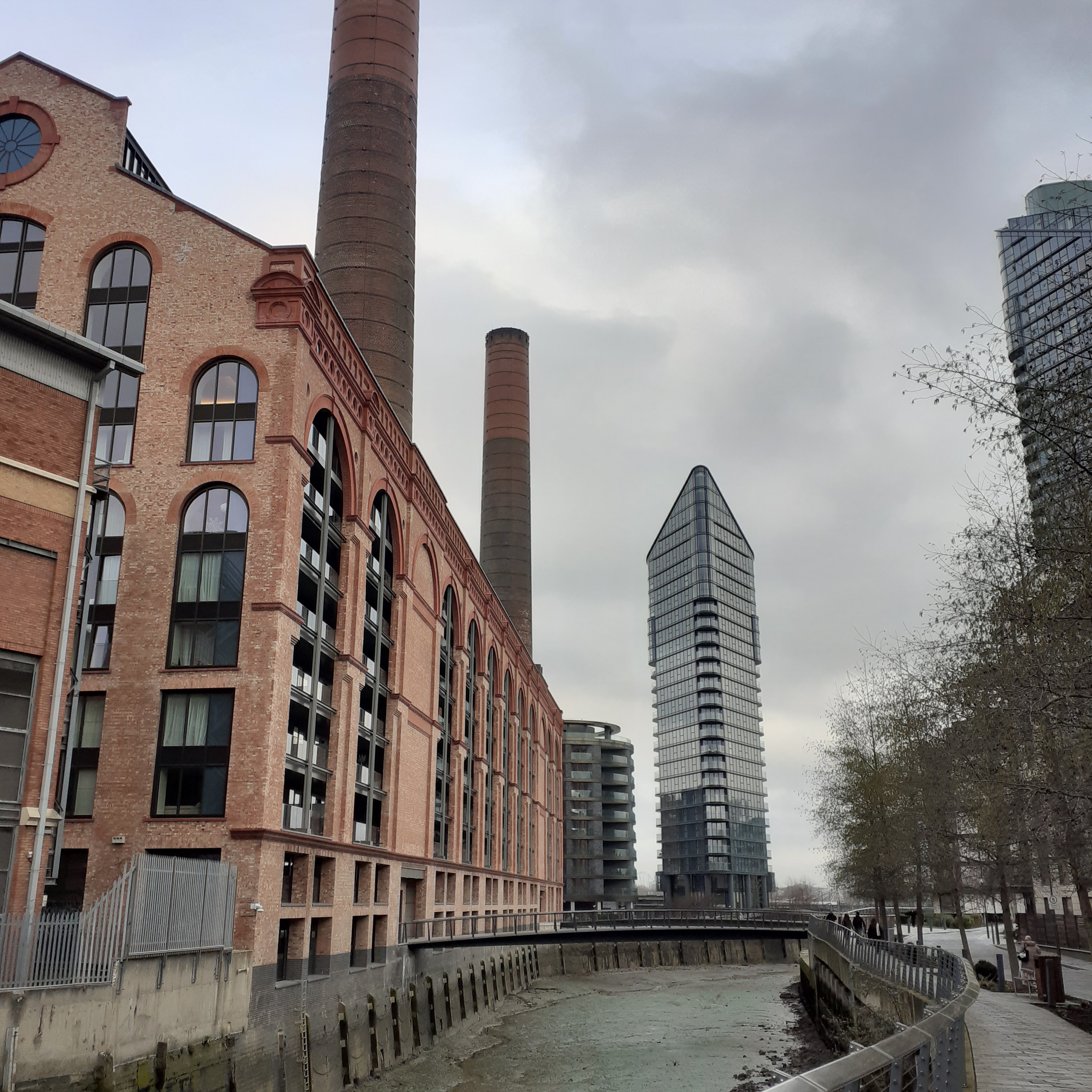
The Thames is broad and sinuous on its passage through London and into the sea. There’s a boat service from Putney in the west to Greenwich in the far east. For the more athletic a walk along the river bank is a necessary pleasure in getting to know the city. Staying recently in Fulham, we took an afternoon stroll down to Chelsea Harbour and continued on downriver to Battersea.
The sleek new highrise development around the Harbour blends attractively with Lots Road Power Station, an incongruous landmark and a reminder of industrial times past. The name Chelsea derives from chalk wharf, signifying the nature of its river trade. Chelsea itself is a well to do city residential area. Rather grand, mostly pretty, it is often quirky too.
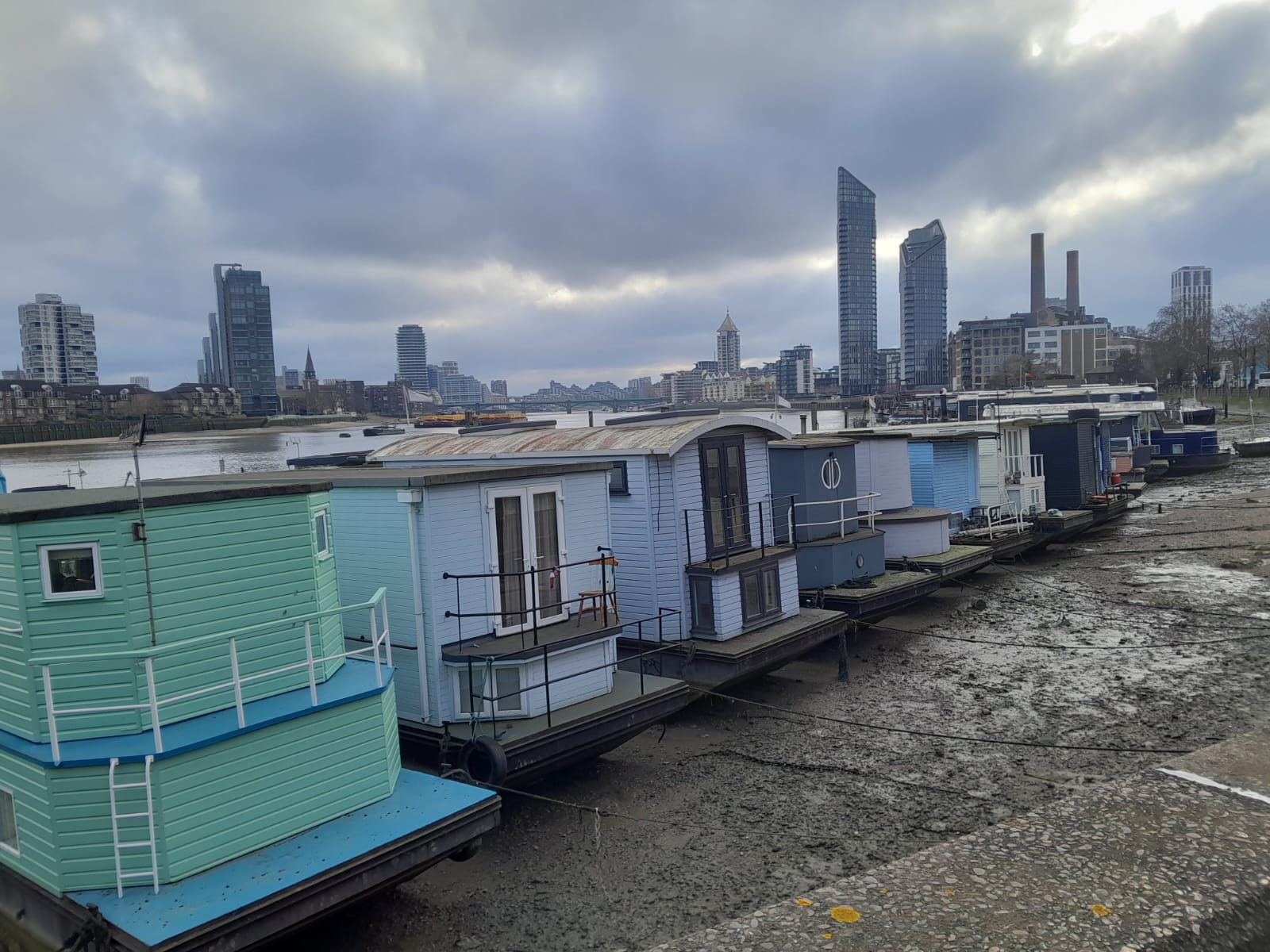
We are fans of the Chelsea Detective, the tv series starring Adrian Scarborough as DI Max Arnold, with Irish actress Vanessa Emme as DS Layla Walsh. Arnold lives in a Thames houseboat around here, The moorings stretch along Cheyne Walk and we almost felt we should call in for a drop of wine and some piano accompaniement. The riverside idyll is overshadowed by the redbrick towers of Worlds End, a residential borough development from the 1970s. The name derives from a local pub built in the 1890s. An earlier inn of that name dates to Restoration times, when it stood at the end of London, or civilisation. The King’s Road leads back to the city centre. The King in question is Charles II and has become, perhaps inevitably, a byword for trendiness.
Along the river Cheyne Walk is lined with eighteenth century Georgian townhouses and long home to the rich and famous including artists Dante Gabriel Rosetti, JM Turner and James McNeill Whistler. Whistler’s painting of the Old Battersby Bridge is one of his famed blue nocturnes. A modern bridge now spans the river.
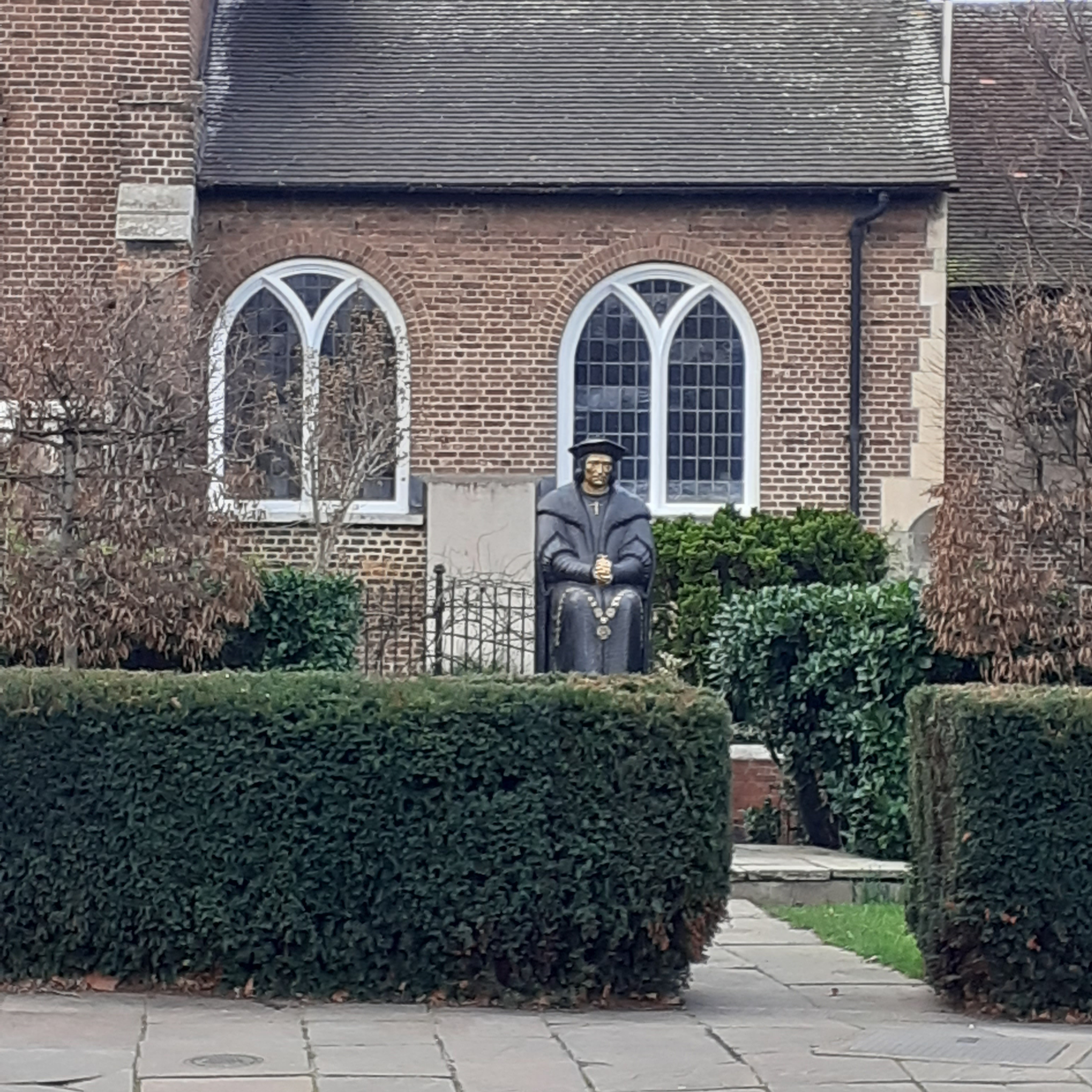
The Old Chelsea Church is a much older resident. Dating back to Norman times, it has become a fascinating patchwork over the years, with much reconstruction after the Blitz. Thomas More’s statue by Leslie Cubitt Beavis sits to the side. More wrote Utopia, a fictional acme for an idyllic society. The book was published by Erasmus in 1516, in Latin. The English translation appeared in 1551 sixteen years after the author’s death. More had refused to take the Oath of Supremacy that recognised Henry VIII as head of the Church.
Albert Bridge was built in the 1870s as a suspension bridge to link Chelsea with Battersea. Structurally plagued by problems, it is sometimes called the Trembling Lady as it can vibrate under certain traffic conditions. Calls for its demolition have gone unheeded, and the bridge is spectacularly illuminated at night.
By Albert Bridge, the intimacy of Cheyne Walk gives way to the bustling thoroughfare of the Chelsea Embankment. This leads on to Chelsea Royal Hospital. Established by Charles II, at the prompting of Nell Gwyne, allegedly. Gwyn was the King’s mistress, not a fact that was hidden away. She would have wielded influence over the King, Nell was one of the first leading ladies of English theatre. Charles himself had abolished the ban on women taking to the stage. She was something of a pin up of her day, and the king commissioned a nude portrait, with Nell cast as Venus, to be shown, furtively, to special guests.
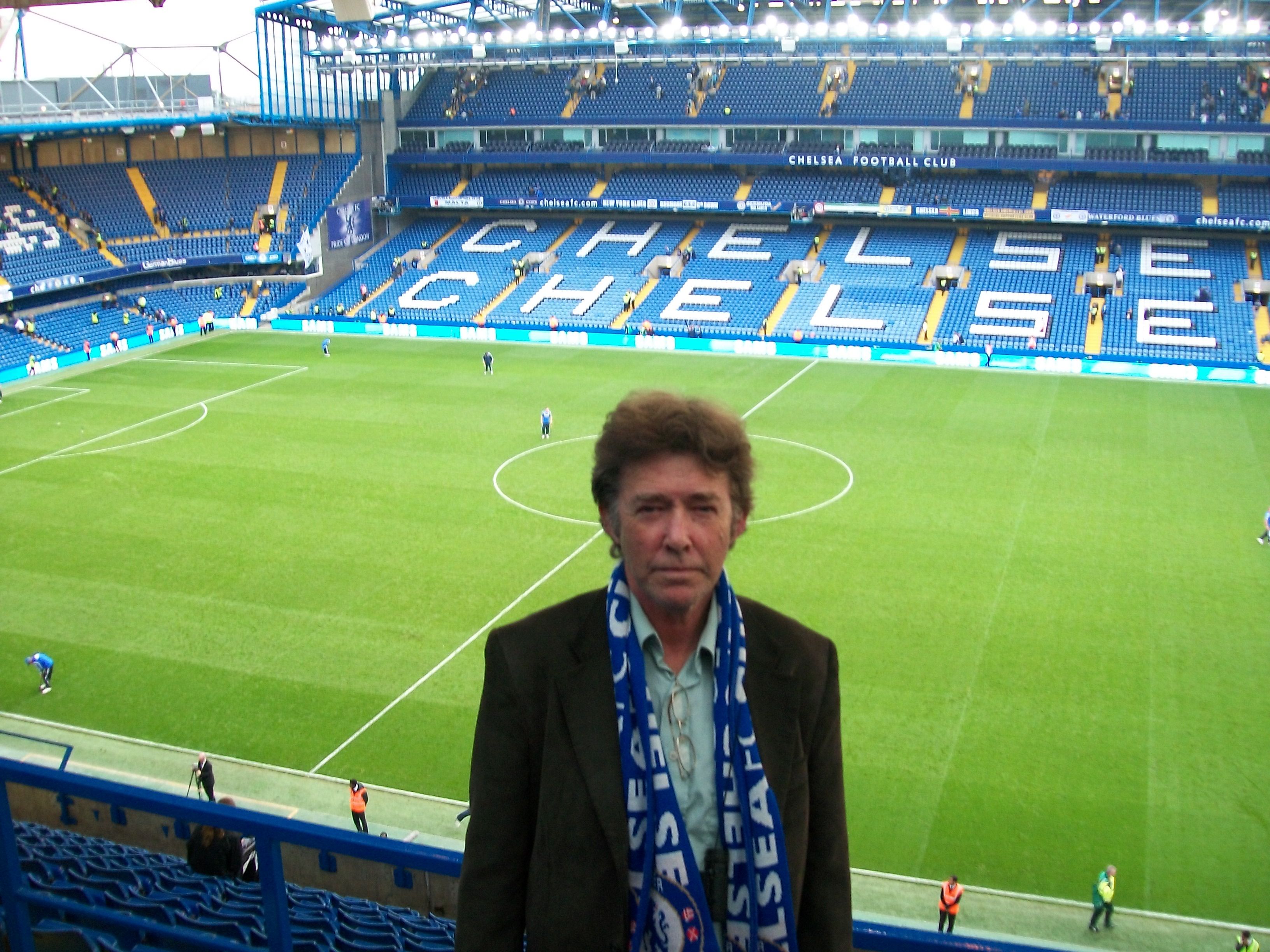
The Hospital was designed by Christopher Wren and completed in 1682. It is used as a nursing home for army veterans. Their resident uniform is blue, but their scarlet dress uniorm is better known.The red uniformed pensioners are regular pitchside guests at Chelsea Football club who were once nicknamed the Pensioners. They discarded the monicker in 1955 the year they first won the league title, ironically with the oldest average age team to win. The Hospital grounds have hosted the Chelsea Flower Show held annually since 1913
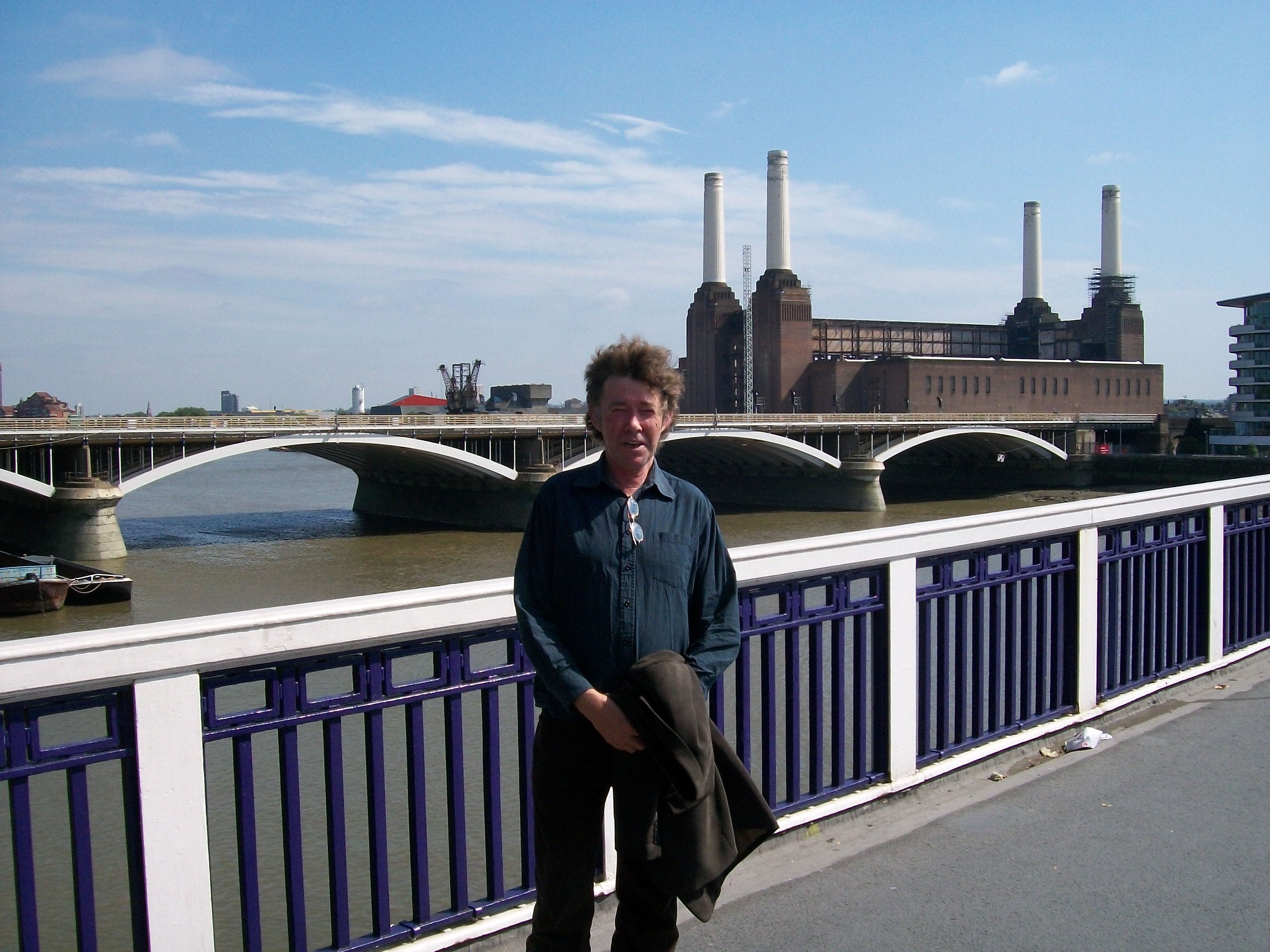
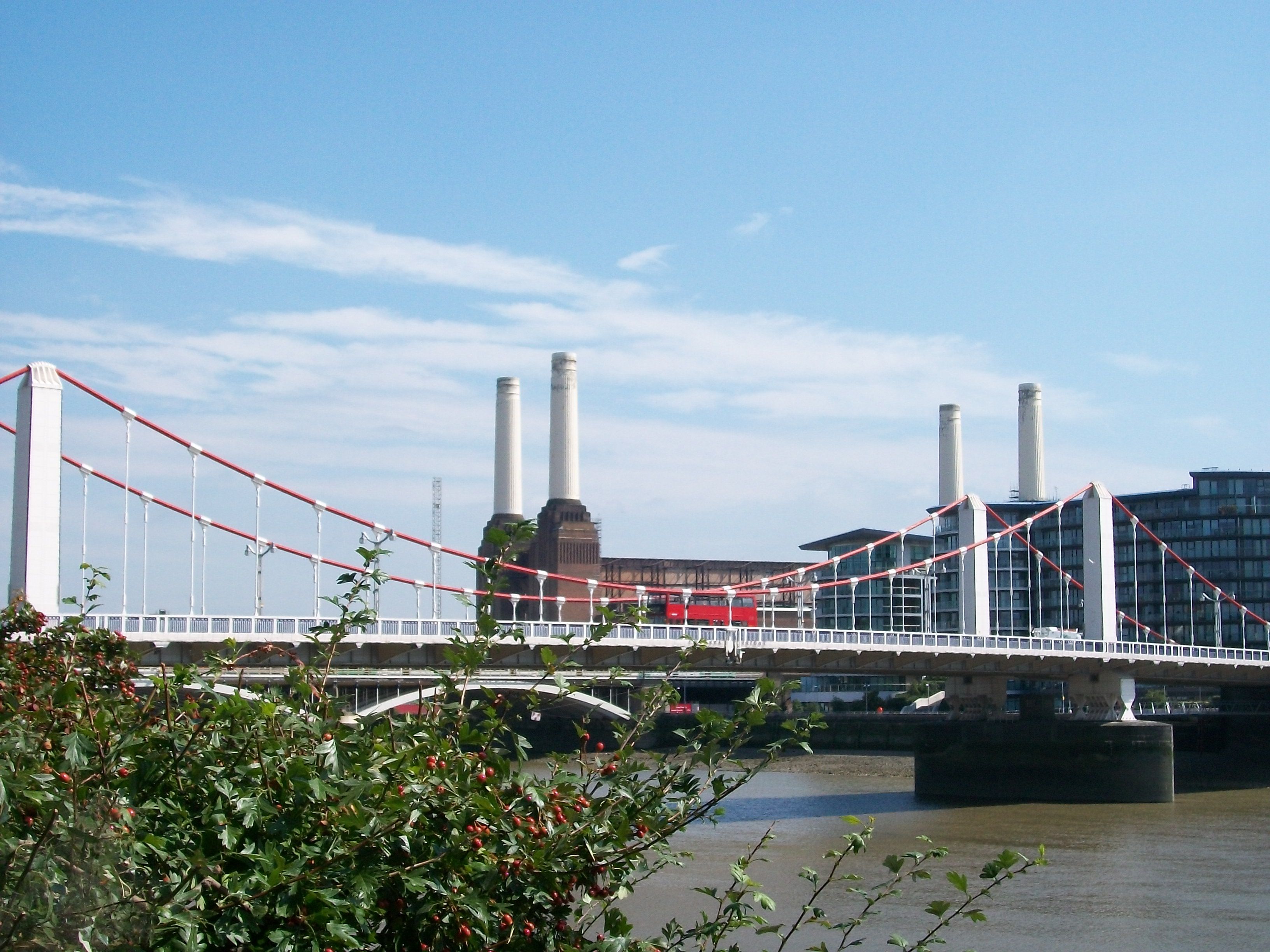
Chelsea Bridge is framed by the massive Battersea Power Station across the river. The current structure is a suspension bridge built in 1937 replacing a previous structure from1694. It is also illuminated at night. Battersea Power Station has been extensively renovated in the last decade to return the building to its former glory. And glorious it is; the four cream chimneys towering above its redbrick bulk make for one of London’s most loved icons. Giles Gilbert Scott and Theo Halliday were the project architects. Construction started in 1930 and with the interruption of the war was only completed twenty five years later.
The recent redevelopment masks some of the spectacle with highrises, so I was fortunate to get the full view on a previous visit. Chelsea Football Club were amongst the proposals with plans for a new stadium, but the council, and indeed many of the Stamford Bridge faithful, opposed this. The resultant development transforms the old building into a modern shopping centre. The surrounding apartments are augmented by shops, restaurants and bars. At night, the illuminated chimneys are truly a spectacular sight, if also a little bit Orwellian. Pink Floyd’s Animals is probably responsible for that. Roger Waters’s opus drew freely from George Orwell’s Animal Farm, with a cast of sheep and pigs, and dogs. The 1977 album cover featured a giant inflatable pig flying between the front towers. This Hipgnosis graphic is amongst the memorobilia you can buy at the souvenir shop inside.
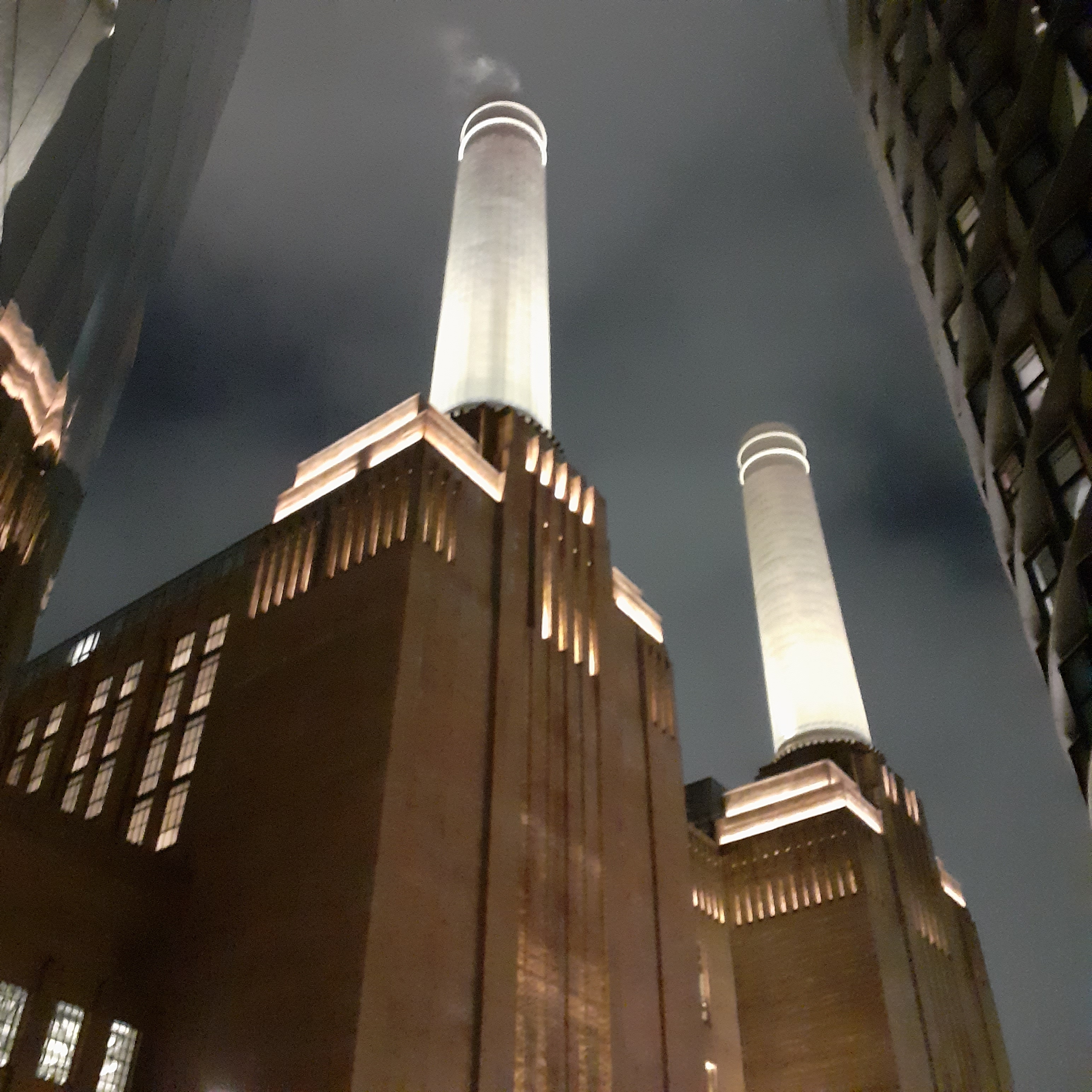
There’s a full shopping centre inside the old structure, and a museum with lift to the top of a chimney. Good eateries too, though we opt to eat outside and catch the fading light. Megans Restaurant is a pleasant informal eaterie with Mediterranean fare and panoramic views of the river. It’s the perfect spot for a famished sunset meal. Here the Thames turns sharply north towards the city where the glass highrises bounce the sun back at us before their own illuminations fade in. The Tube Station south of the complex connects with Leicester Square, the epicentre of London’s nightlife. Picadilly Circus is adjacent with Shaftesbury Avenue winding between Soho and Chinatown where we can go walking in the wild West End.
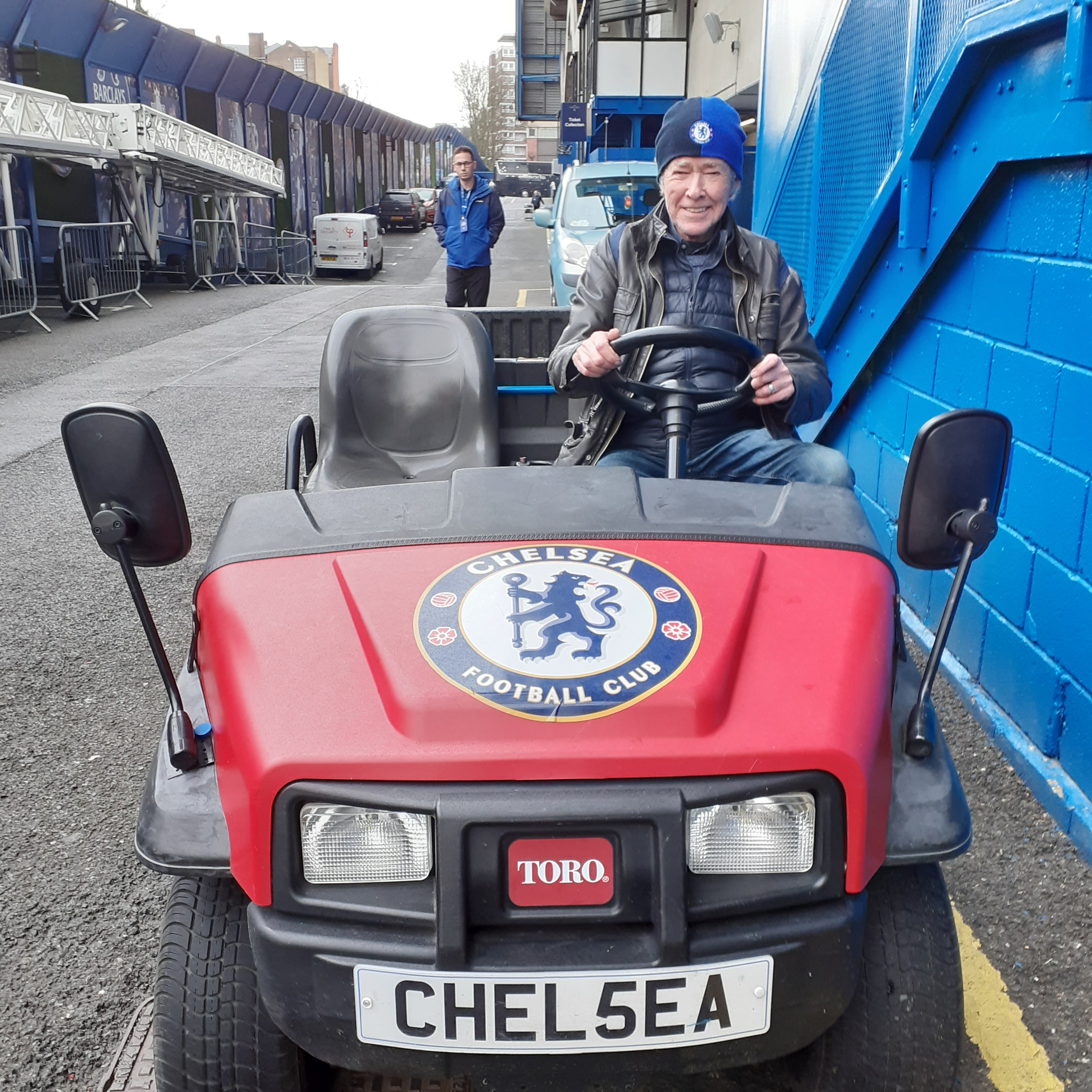
We are staying at the Hotel in Stamford Bridge. The evening game is Chelsea v Leeds. Echoes of the 1970 FA Cup Final. That was a 2 all draw, with Chelsea winning the replay. An hour in on a rainy Tuesday night and Chelsea are two up, but when the orphaned referee lost his white stick Leeds pulled level. Normal service resumed but the score remained the same. Cole Palmer, maker and taker respectively of both Chelsea scores, had an open goal at the final whistle but his shot, if taken at Battersea, would have creased Pink Floyd’s flying pig. Two all again. But it’s always good to be back at the Bridge singing Blue is the Colour and marching down to the Fox and Pheasant for a few well earned pints.
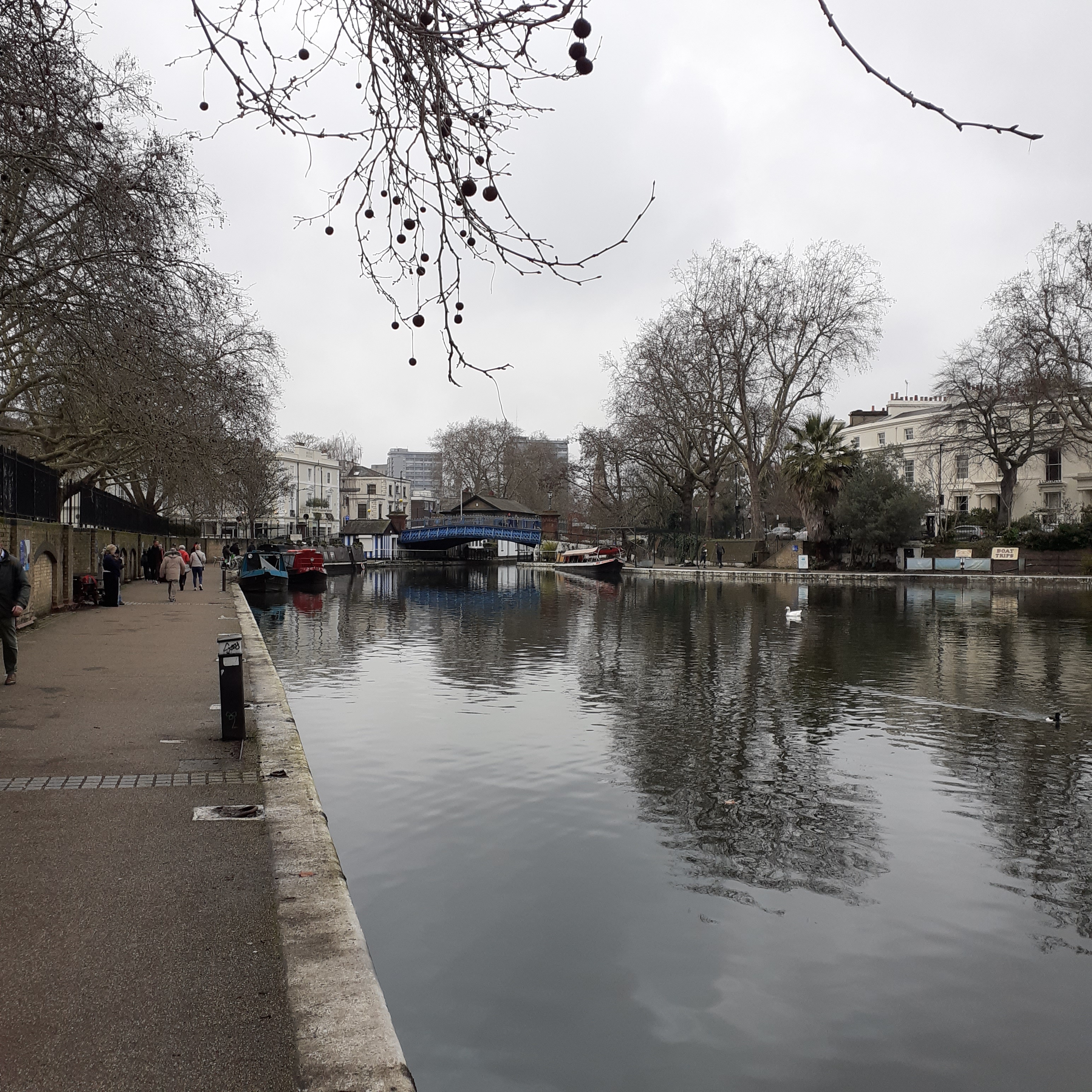
A more modest waterway meanders along London’s northern perimeter. We have walked the Regent Canal from King’s Cross to Camden Lock, after which it arcs around Regent’s Park and London Zoo. This time we aim to explore the intriguingly named oasis of Little Venice. We take the District Line from Fulham to Paddington, where a helpful Station Man gives us detailed instructions. Little Venice forms where the Regent’s Canal joins with the Grand Union Canal and the Paddington Basin. The naming is variously attributed to Lord Byron and Robert Browning, who each noted the place as an oasis from the bustling city, and helped popularise the area for artists and other creative wanderers. The junction forms a triangular basin, wide enough for long boats to turn. The surrounding area is characterised by white stucco houses of the Regency era. The salubrious suburbs of Maida Vale and St John’s Wood spread to the North. Abbey Road, another famous album cover, is not far off.
Water is all around, including regular dousings from above. We shelter under Westbourne Terrace Bridge and watch a longboat turn. Then, passing beneath the Westway, we’re back in the crowds with Paddington Station the focal point. There are table tennis tables laid out if you fancy a set or two of ping pong. Cafes in barges line the basin if you fancy refreshment. We did both, the tennis first, then the coffee.
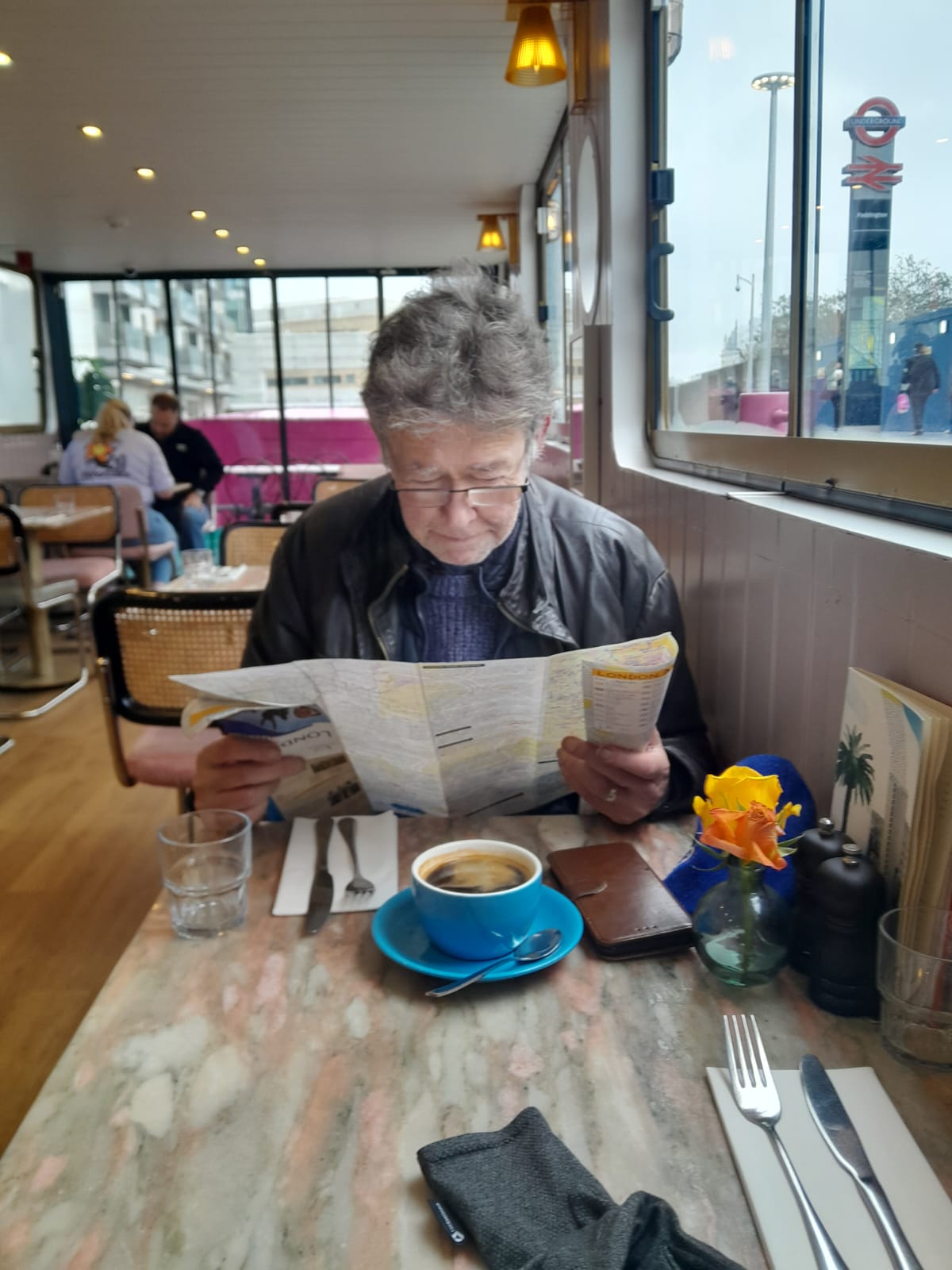
Watching us politely is a small blue bear. Paddington Bear was created by Michael Bond in the fifties. It all started when he bought the one remaining teddy bear, sitting alone on a shop shelf, as a Christmas gift for his wife. After he had time to think on that, expensive jewellery and the like, he wrote the first Paddington book, A Bear Called Paddington, and the rest is history. Not exactly history, the bear is a fictional character after all (real bears don’t wear duffel coats, usually). The station returns the honour with a bronze statue and themed bench inside.

Paddington Station was built in 1854 and designed by Isambard Kingdom Brunel. The huge glazed roof was inspired by the Crystal Palace of the Great Exhibition in Hyde Park. Brunel is familiar to us from our own home station of Bray, also built in 1854. Paddington itself brings back memories too. I spent part of the summer of 1976 here in a squat, dividing time between Elephant and Caste and Paddington, flitting along the Bakerloo Line, or upstairs on the busses. Dickens Tavern and The Sawyers Arms on London Street are familiar names. One, I recall, had a sunken central area with booths on a surrounding mezzanine. It’s all something of a dream to me now, was then even.
South of Paddington is Hyde Park. with Kensington Gardens to the west. The Serpentine divides them, a long curved pond, wide and calm. Rain shrouds the surrounding city and we shelter at the tearooms past the bridge across the Serpentine. There’s a homely friendliness amongst the small crowd sheltering and the customers entering and leaving the cafe. Rain restricts the view to a misty parkland. It is hard to believe we are at the centre of a great Metropolis.
Millions of people swarming like flies ‘round Waterloo Underground
But Terry and Julie cross over the river where they feel safe and sound
And they don’t need no friends
Long as they gaze on Waterloo Sunset
They are in Paradise
Released by the Kinks in 1967, and written by Ray Davies, Waterloo Sunset is an evocative imagining of a pair of lovers filled with hope set against the glowing backdrop of the Thames at Sunset. Alternating between first and third person lends the song a sense of melancholy, offsets the glow of a loving couple with the bittersweet consolations of the solo traveller.

 xxharrison