Gibraltar is one of those quaint appendages that persist, jutting out from a murky past into the modern age. The UnionJack flies over it, denoting British ownership. Travel squibs proclaim red phone boxes, fish and chips and Bobbys on the beat as an abiding signature of the place. Only partly true. It is a British Overseas Territory. British, but weirdly so. Red, white and blue, but bathed in sunshine, a babel of Spanish and foreign patois, with monkees thrown in.
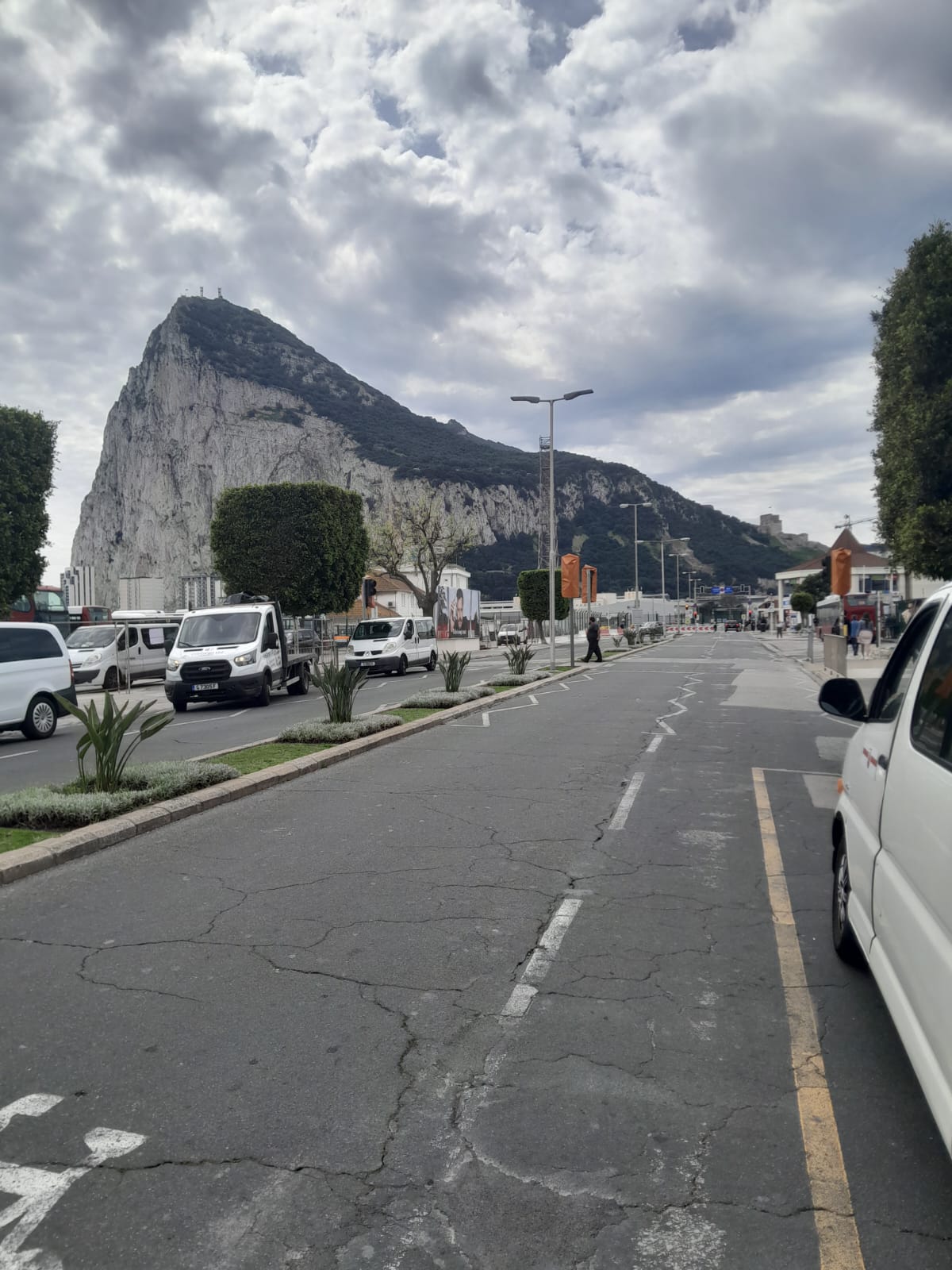
The Rock of Gibraltar is one of the Pillars of Hercules, the mythological portal to the Mediterranean Ocean, an implied northern tower anchoring an imagined bridge between Europe and Africa. It rises sheer from the sea to an impressive fourteen hundred feet with a land area of under three square miles and a twelve km coast. The population of thirty four thousand, the same as my hometown, Bray, is a mixture of British, Spanish, Portoguese, Maltese Italian and Jewish. English and Spanish are spoken, the local dialect Llanito being similar to Andalusian.
In the early eight century, Tariq Ibn Zayid began the Muslim conquest of Iberia by landing here, bestowing his name on the peninsula, Jabal Tariq. His army of Berbers and Arabs advanced over two thirds of Iberia, defeating the Visigoths and delivering Iberia to Islamic Rule for five hundred years. Juan Alonso de Guzman regained Spannish control in 1462 towards the end of the Reconquista. An Anglo Dutch fleet captured Gibraltar during the War of the Spanish Succession, and at the Treaty of Utrecht, 1713, it was granted to the British crown. The Spanish have tried to reclaim it, most determinedly in the Great Siege during the American War of Independence, but the British held on. Well, they lost America, but you win some … It has been of considerable strategic value especially during the Napoleonic Wars and the Second World War.
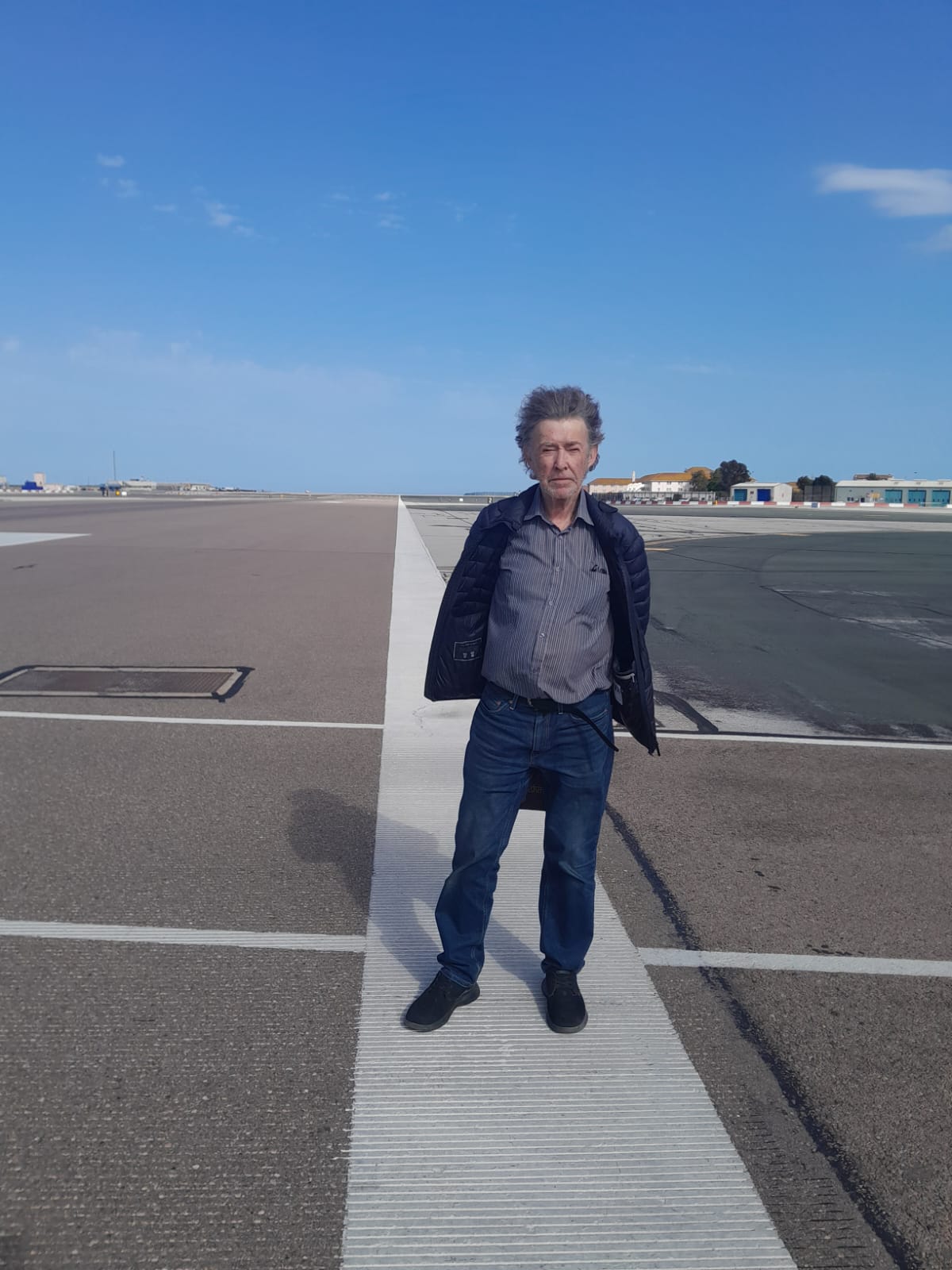
La Linea de la Concepcion is on the Spanish frontier. A somewhat neglected sprawl. The bockety approach roads give some hint of the absence of territorial certainty hereabouts. We park here on the seafront, a short walk to the isthmus leading out to Gibraltar. Passing through Spanish and British border control with little ado, the visitor must first cross the airport runway at right angles to the isthmus. A photo opportunity straddling the runway’s central line is thought to verify the line between two jurisdictions; though of course both feet are on British ground. The modern outskirts are highrise and busy with traffic. Entrance to the Old City is discrete, through a narrow laneway and unimposing gateway.
We come into a lively square, the Lord Nelson pub at one end. Premises on Casemate’s Square proclaim an archetypal Britishness, beer and fish n chips abound. We stop for this, of course, and the battered cod and chips are very good indeed. The Main Street unrolls from the far corner though we miss it the first time and end up on Line Wall Road, a blank thoroughfare which as the name suggests runs atop the defensive walls. Irishtown runs parallel to the Main Street. The narrow pedestrianised street was once an area of disrepute, and it now houses the Central Police Station. Its Irishness probably derives from an Irish Regiment stationed here in the nineteenth century.
The old town of Gibraltar was largely constructed following the Great Siege. Givanni Boschetti, an Italian architect, arrived in 1783 and is responsible for much of the reconstructed city’s style, combining British and Mediterranean aspects. Visually it looks typically Mediterranean, a collage of souvenir and craftshops, high street outlets, with plenty of gelaterias , cafes and bars crowding the pavements.
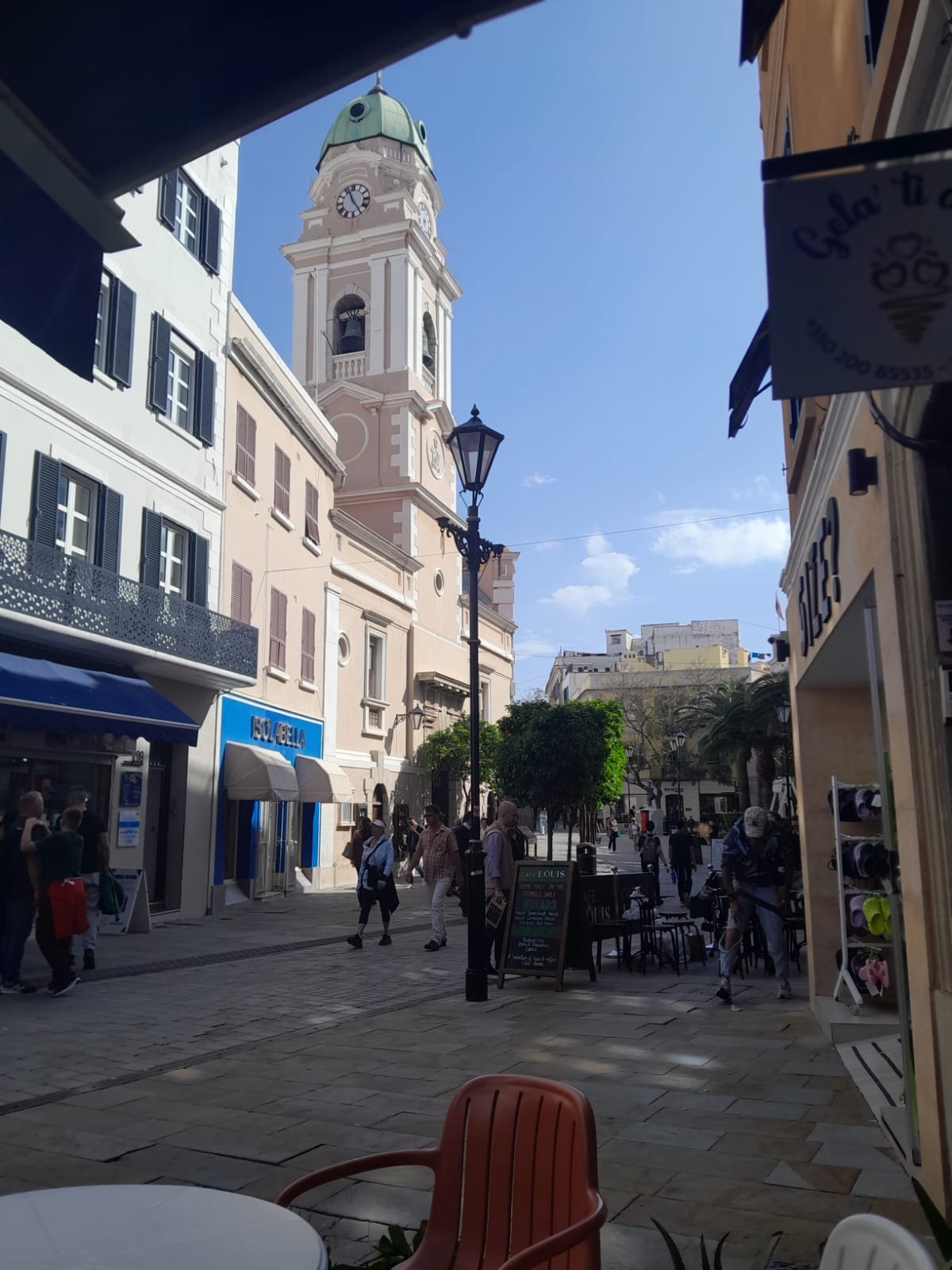
We stop for ice cream in the shadow of the Catholic Cathedral of Santa Maria La Coronada. This was originally built in 1462. Also predating the British takeover, the Southport Gates, formerly the Africa Gate, is a three arched gateway built into the Charles V Wall, defending the southern end of the old town. John Mackintosh Square nearby has the Parliament House and City Hall. King’s Chapel and the Convent is now the Governor’s Residence. It was originally home to Franciscan Friars. The British Governor set up house in 1728, the building remodelled a century later.

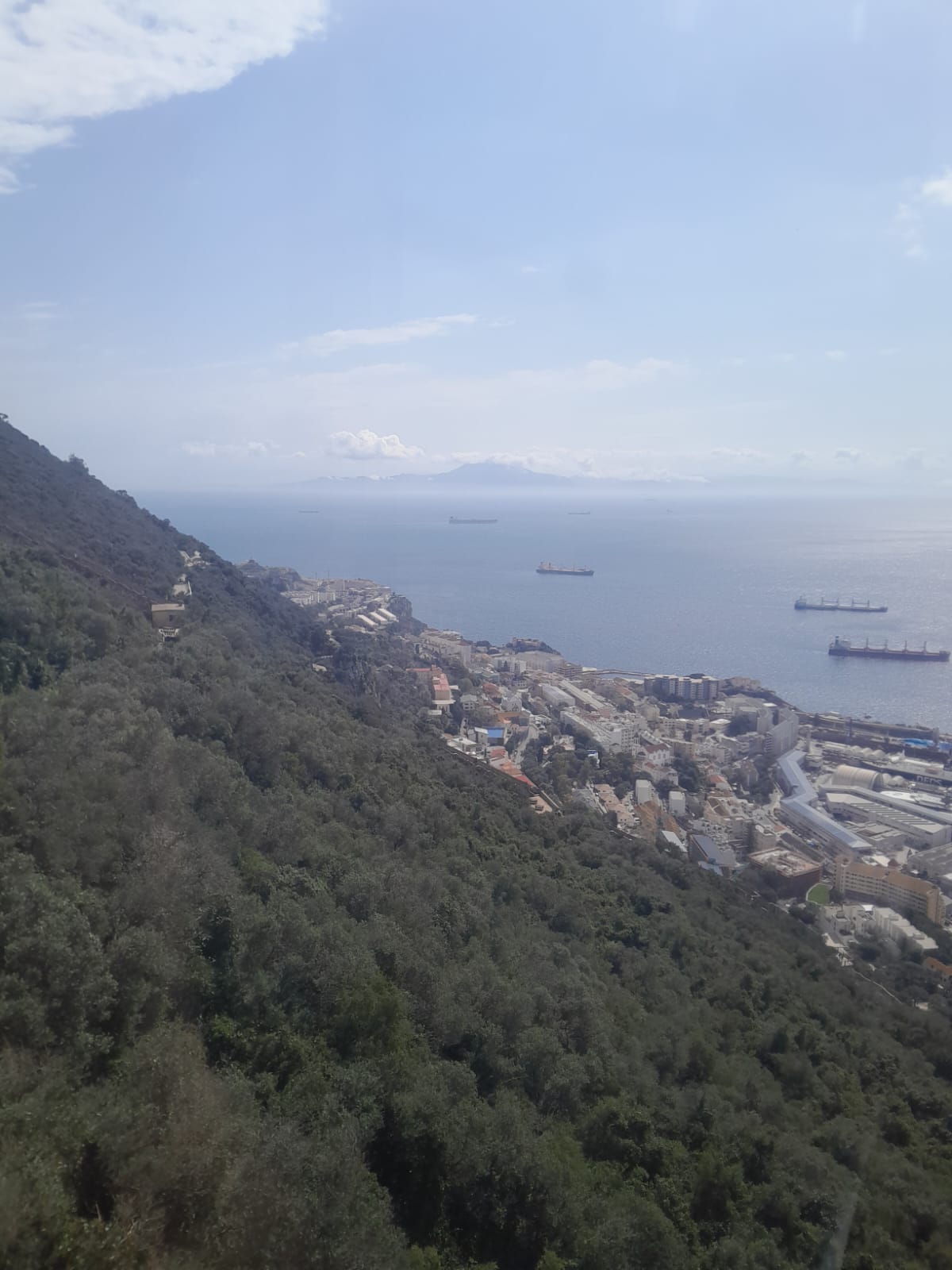
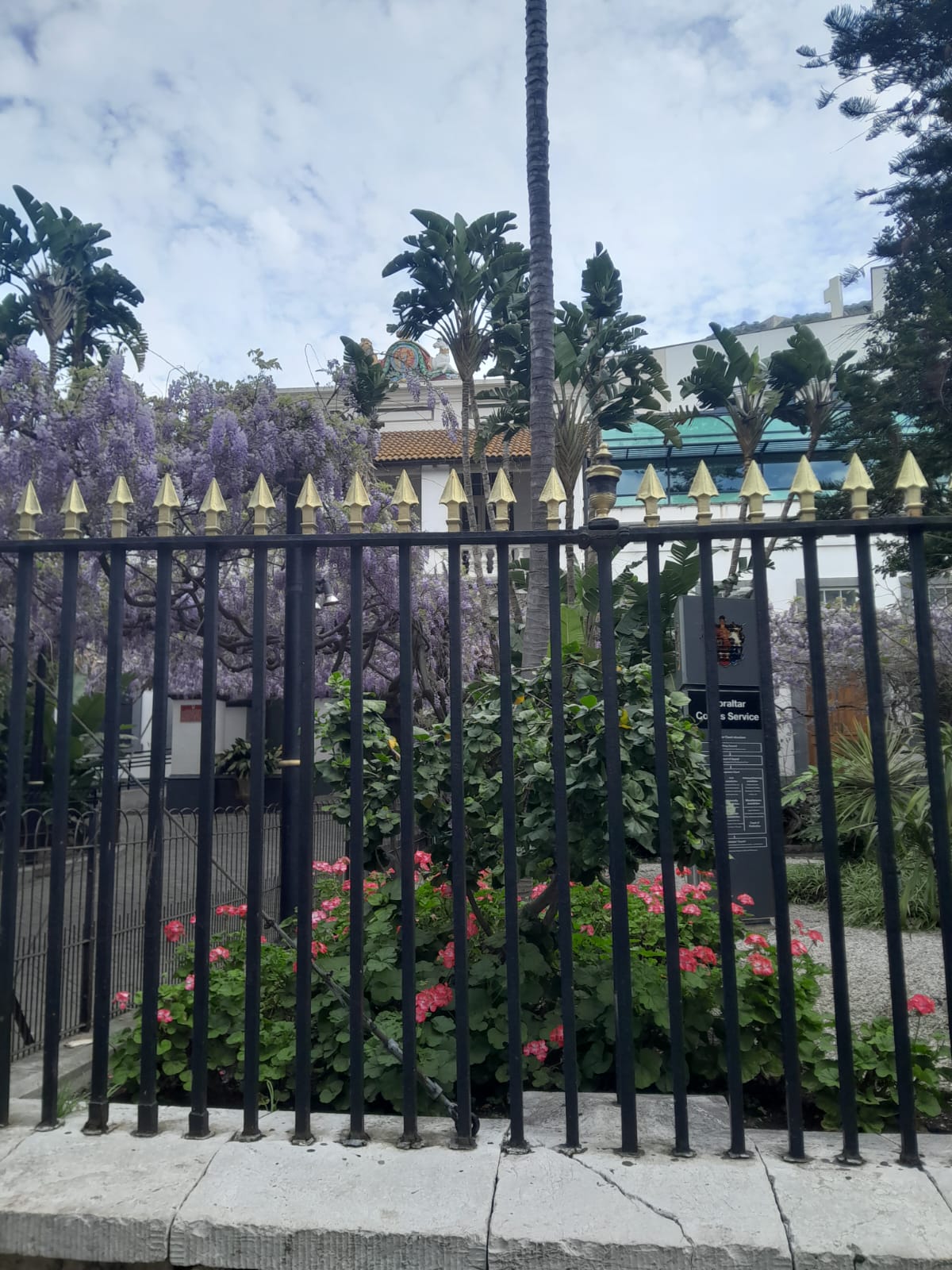
We continue past the Courthouse, an old Spanish villa set back and fronted by an exuberant garden. It’s not far to the Cable Car that takes you to the top of the Rock. Admission can be either return journey or include a pass to the nature reserve occupying much of the uplands and a number of tourist attractions up there. We opt for the return as we don’t have enough time to devote to an extensive exploration. Ticket queue and wait occupies a half hour or so and the trip takes five minutes. At the top is a modernist cafe with stunning views from its terraces. Africa floats beyond, the other Pillar of Hercules almost within touching distance across the strait. A stunning panorama includes the city below, Gibraltar’s peak nearby and mainland Spain stretching off to Algeciras in the distance. Gulls and cormorants swirl above, and then there are the monkeys.
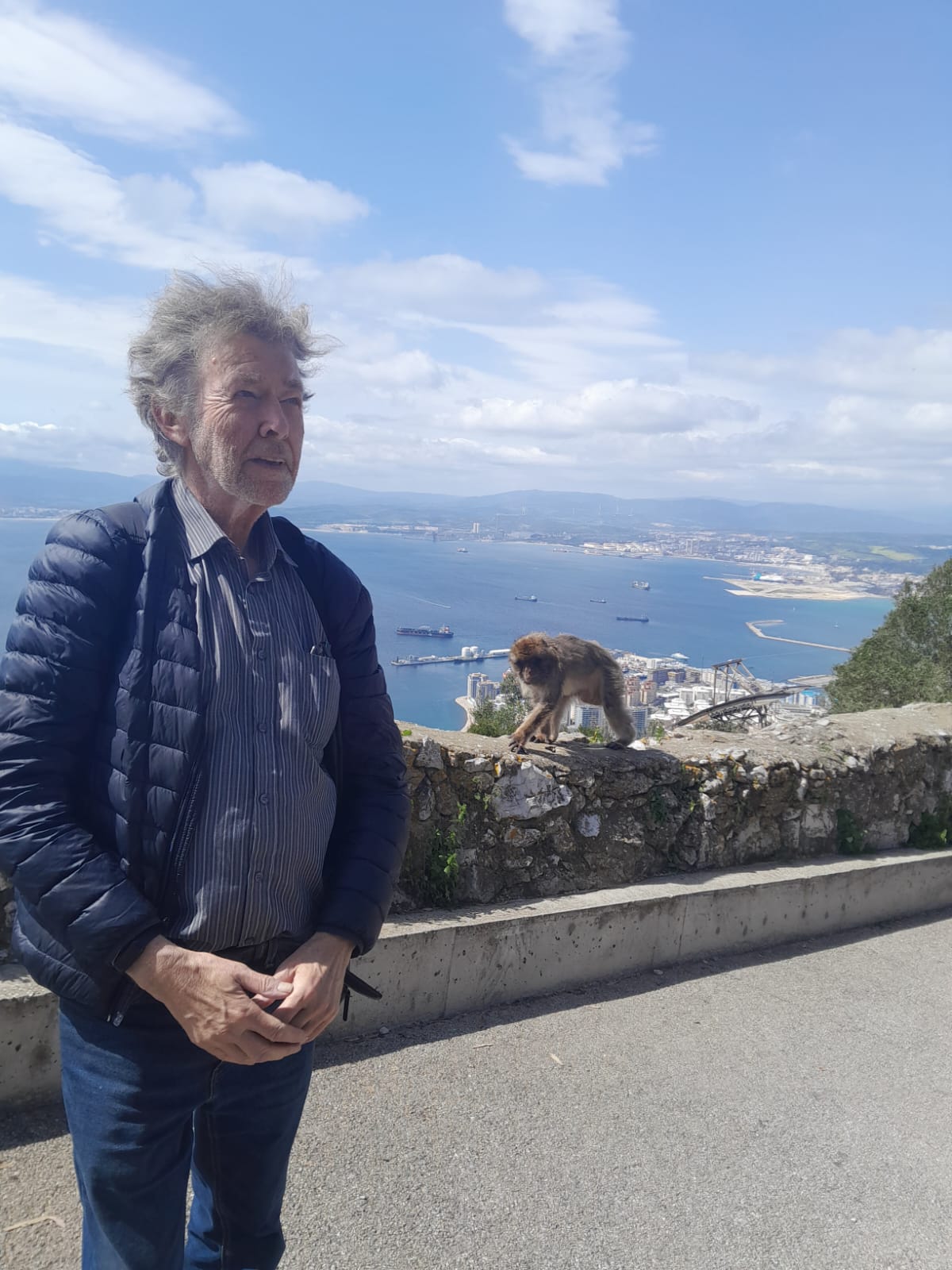
The Rock’s colony of two hundred and fifty Barbary Macaques, are the only wild monkeys in Europe. Brought over from Africa by the Moors, they abide five centuries on. Well used to gawking tourists, they pose helpfully for shots, and the chance of food. They may not just wait for it either. As I posed for a photo before a seemingly disinterested simian, the chancer snuck up and grabbed at my backpack to the great consternation, or amusement more like, of onlookers. I won the tussle, persuading the rogue to desist. Note, visitors are supposed to wear their backpacks to the front. Note too, these are wild animals, though used to tourists they may become agitated where too many get too close. Stretching and yawning, impressive yawns by the way, are a caution. In case of confrontation, try speaking Simian. The phrase Aieeeee!, which means just about everything in their language, usually works, and comes naturally in such situations I can assure you.
Hey, hey, we’re the Monkees and people say we monkey around
But we’re too busy singing to put anybody down
… We’re just tryin’ to be friendly, come and watch us sing and play
We’re the young generation, and we’ve got something to say
Written by Bobby Hart and Tommy Boyce, this was the theme to the mid sixties tv series featuring what was originally a fictional band the Monkees. It featured on their eponymous debut album. Micky Dolenz sang vocals, but the other Monkees, Davy Jones, Mike Nesmth and Peter Tork didn’t feature. The foursome eventually wrestled control of their own material but when the series was cancelled ater two seasons their star began to wane. Perhaps. For people of my vintage they too abide. Our introduction to rock and roll, an original garage band in fact. Here’s to Monkeeing around!
 xxharrison