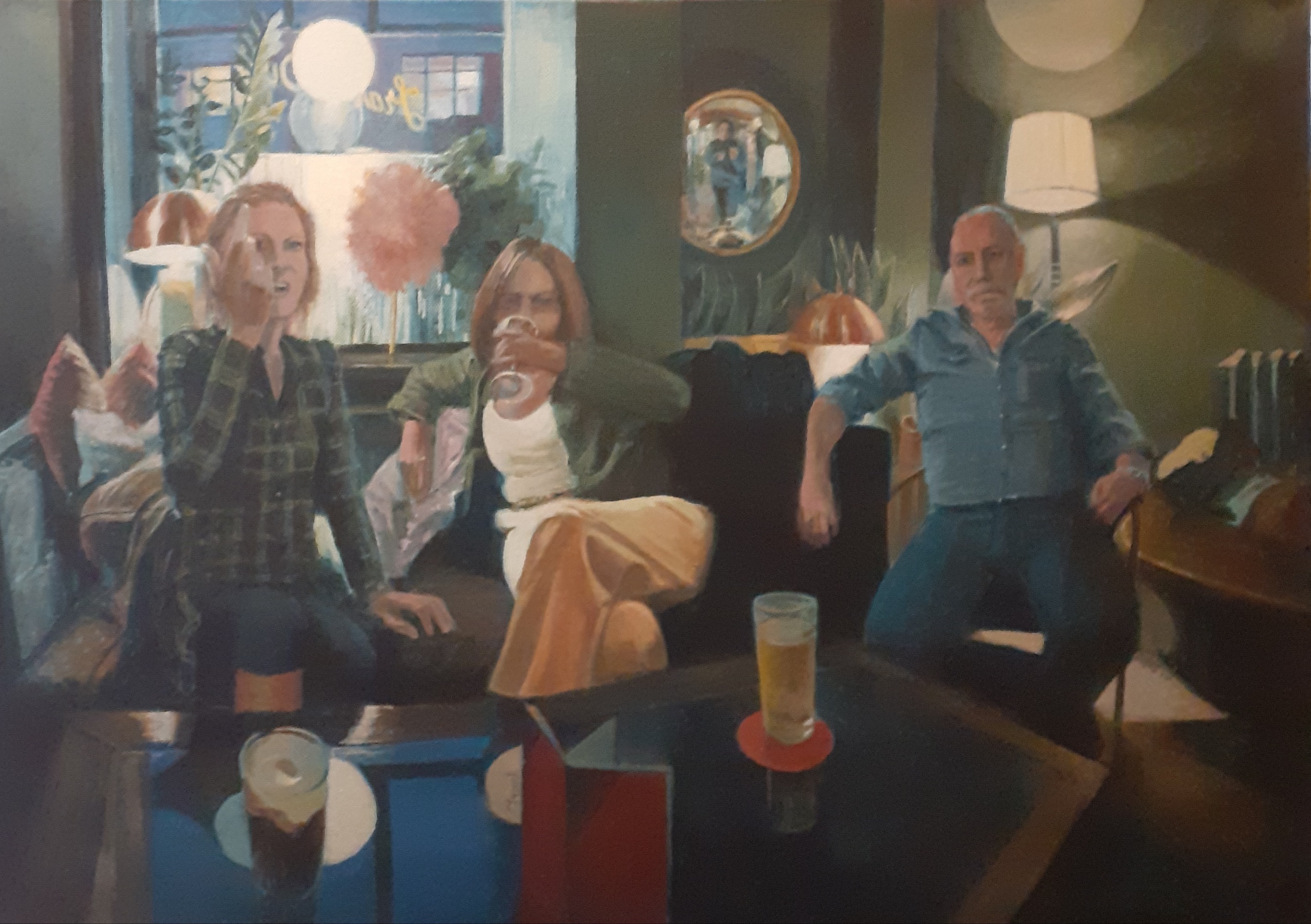
I have been slowing down of late on the art front. The pain thing. Slowing down on all fronts, truth be told. Still, I did squeeze out this spark, in the realm of friends and family. The best place to be. As before, the location is Frank Duff’s pub at the top end of Main Street, Bray. It’s last orders at the end of a great night out; drink and conversation flowing. You’ll catch me standing in the mirror. I suppose I could be singing The Parting Glass, although that’s a tad melancholy in the contecxt.
Songs of love and friendship have tumbled down to us since the time of Thomas Moore. And ever on into the future; here’s hoping. This night in Duff’s was recent, but takes me back to the days o the foreign telegram. So, I tunnel back to the early seventies and Mellow Candle’s only album Swaddling Songs. While the focal, and vocal, point of the group was the sparkling duo of Alison O’Donnell and Clodagh Simonds, this song was written by guitarist Dave Williams. The lyrics are cut from the same cloth though, and sung with gusto by the female leads. There’s a hint of winter and its globe of interior warmth in this verse, evoking that familiarity amongst friends and lovers caught in the moment.
Sell me heat-haze sell me rain sell me wet and dry
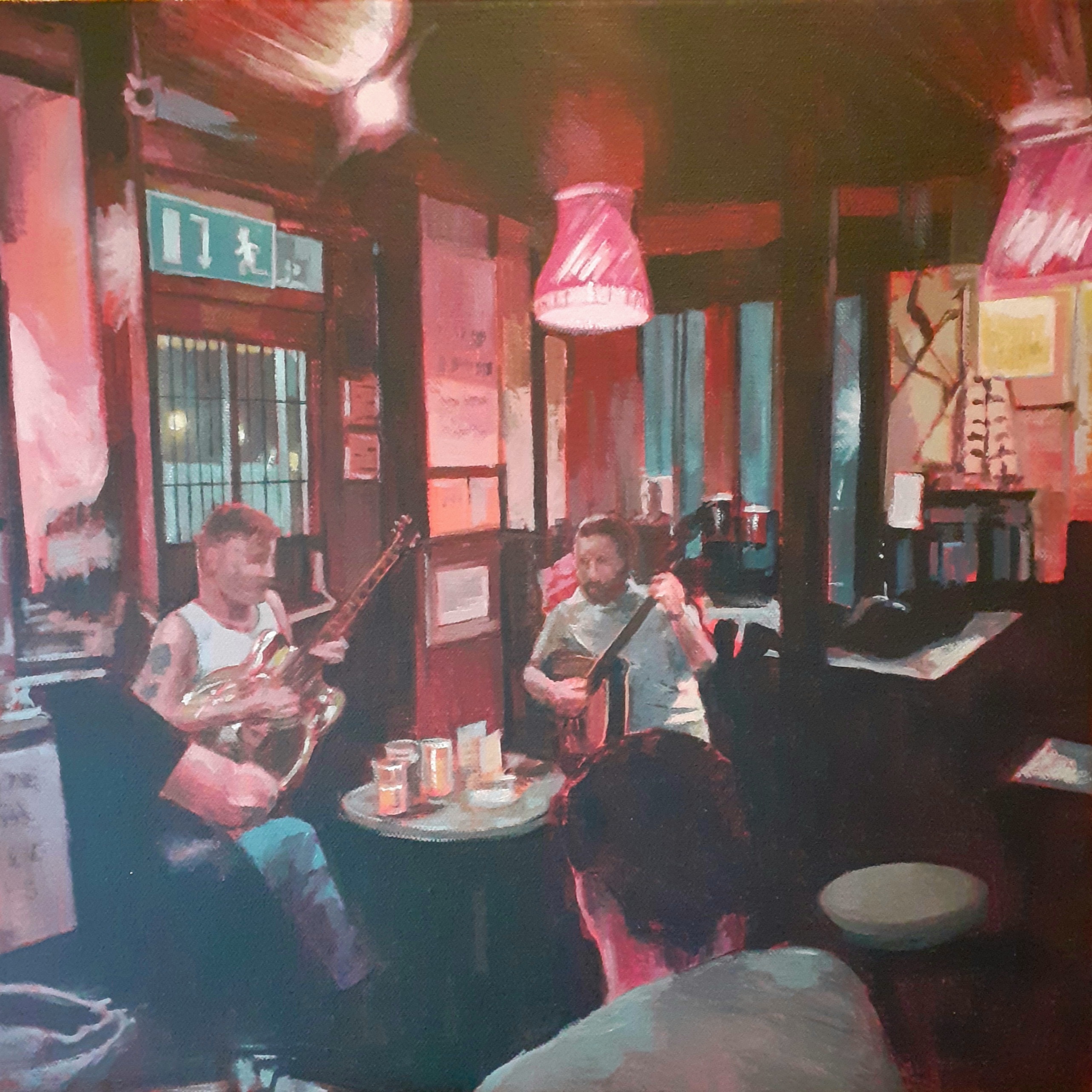
Bray’s Harbour Bar is a favourite watering hole, and I have posted on it before. Drinking Outside the Harbour Bar was painted in the bright sunshine of a summer’s evening. Here, we are huddled inside the original bar in early November. There’s a music session, with three hombres giving it yards. Ballads and folk in the bar, with rock off in the back lounge. I’m in the snug, in between, swaying from one to the other.
This was originally the Harbourmaster’s cottage when built in 1831. The harbour itself was only a small dock then, the full harbour arriving in the 1890s. The bar has been licensed since the 1860s or so. The O’Toole Bros ran the show until ten years ago when the Duggan family added it to their fleet. Throughout its century and a half, it has kept its traditional vibe; seafarin’, rough hewn, crammed with bric a brac and all the ancient, and tyro, mariners adrift on the sea of life. It’s cosy in winter, with the log fires lit and the mellow glow of lights in the timbered shadows. And the music starts to play.
Tonight, I might get loaded
On a bottle of wine, on a bottle of wine,
Gonna feel alright, gonna feel alright,
Yeah, I feel alright!
I Got Loaded is a song for the good times. Listen to Los Lobos howling. Spanish for ‘the wolves’, the band formed in East LA in the mid seventies. Their second album, How Will the Wolf Survive, appeared in 1984 and includes this track. It was written by Camille Bob, and was first released in 1965 by his band L’il Bob and the Lollipops.
The Dart has been taking commuters, daytrippers and various wanderers around the Bay for forty years. Dart is a clever acronym for Dublin Area Rapid Transit. It runs from Malahide or Howth in the north to Greystones in the south. The last two stops are outside of County Dublin. Reaching the Dargle River we are in County Wicklow. The town of Bray has been established here since the Norman invasion, building on earlier Gaelic settlements.
This view is taken from the window of a southbound Dart, about to cross the bridge over the Dargle. I am returning from Dublin city where it has been raining, but now the sun’s coming out and Bray rises steaming out of the gloom. The Sugarloaf Mountains appear on the horizon, and the land is marked by the tower of the Catholic Church of the Most Holy Redeemer, and the spire of Christchurch (CofI). Bray Daly Station is my stop. Opened in 1854, the line was quickly extended to Greystones and runs parallel to the seafront behind the hotels and houses lining the Esplanade which was newly established then.
This painting is acrylic on canvas and has been accepted by the Signal Open Art Exhibition of 2024. I am delighted to be chosen and looking forward to seeing all the other works on show. The exhibition runs from Tuesday 6th August until Sunday 18th August. Should be fun. Give it a dekko!
Every time it rains
You’re here in my head
Like the sun coming out
I just know that something good is going to happen
I don’t know when
But just saying it could even make it happen
Cloudbusting by Kate Bush is guaranteed to lift the heart, without reneging on past sadness. It is on her 1985 album Hounds of Love.
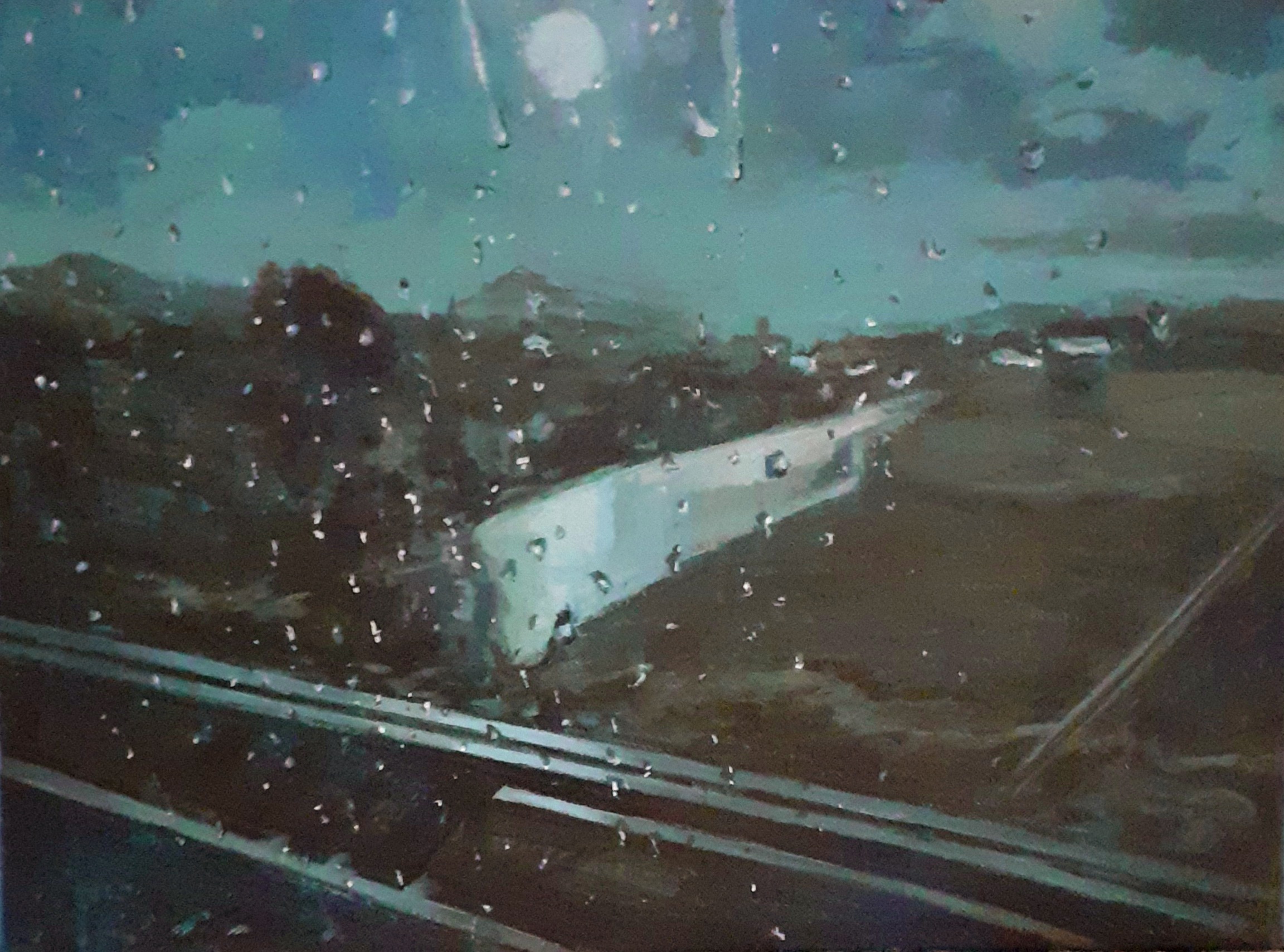
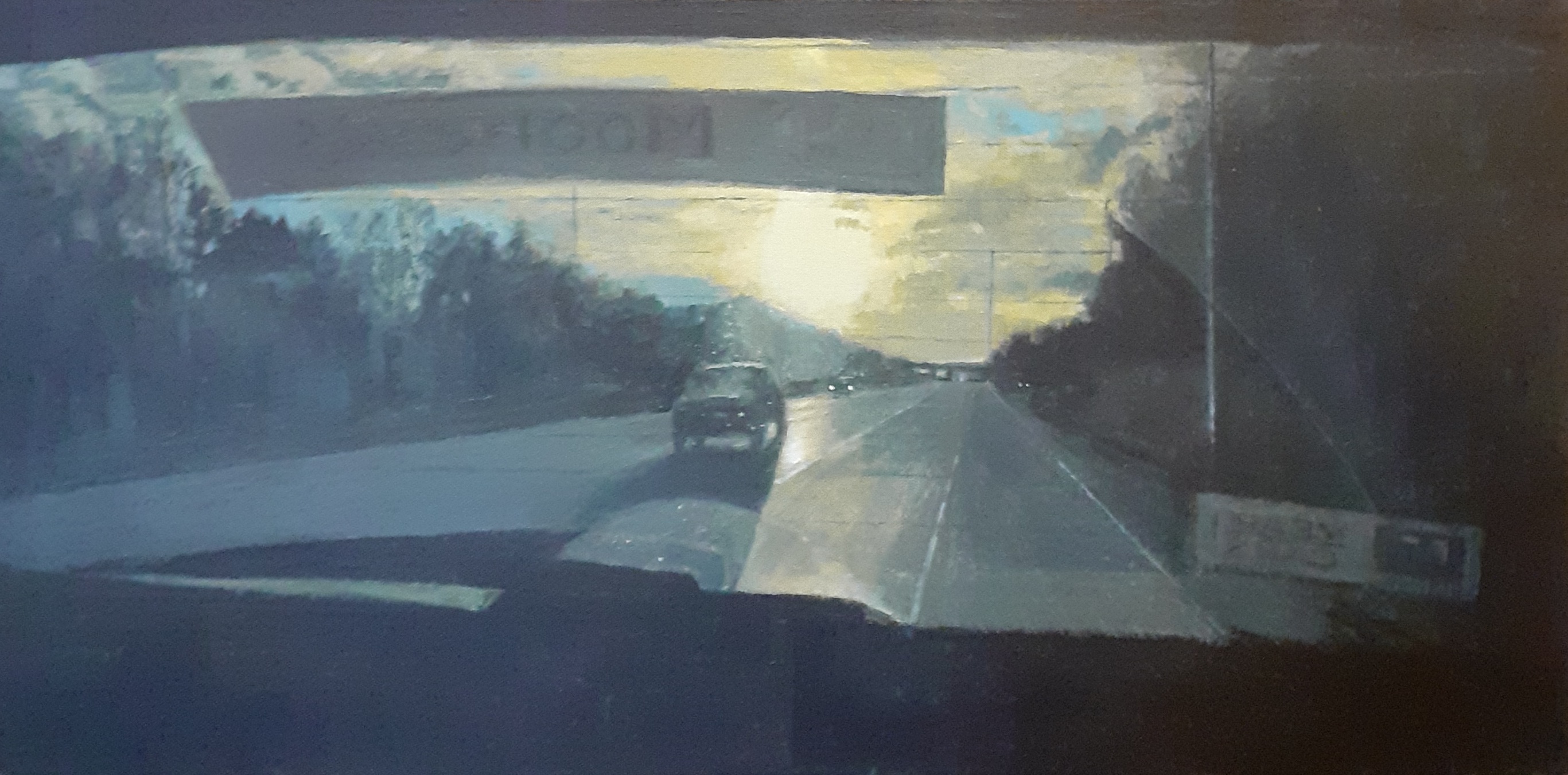
Last October we took a week away in Elviria, near Marbella in Spain. I haven’t posted since returning, but there is work in the pipeline. I am penning a series on Andalusia, the region in Spain that includes a few places I have been, Malaga, Grenada, Marbella and Ronda, and a few places I haven’t; Seville and Cadiz, yet. Meanwhile, I am wintering at home, as usual. This particular work is set close to home. The original photo was taken by a backseat passenger and focusses on the receding view of Bray as we head north on the N11 towards the M50. Being a rearview, we can’t see where we’re going but have an ever-shrinking view of where we’ve been. A bit like life, I supose.
To which end I spend my days
within the poetry of motorways
In this acrylic it’s late Autumn and near the end of a rainy evening. You may just about make out a flyover in the distance and beyond that the Small Sugarloaf, or Giltspur, is consumed in the glare of the setting sun. The banner across the top of the rear window advertises Mooney’s car dealership on the Long Mile Road in Walkinstown. Shades of my youth lie there. My old school Drimnagh Castle was on the Long Mile and a whole vortex of memories is carried on the winds thereabouts.
Where ghost musicians haunt roads and lanes
with harps that once and old refrains,
I recall that I used to go on the hop some afternoons and head out along the Long Mile towards the Naas Road. One companion then was Gerry Ryan. There was one occasion where we got as far as the Red Cow Inn (a small bar then, in the early seventies) slaked our thirst with a pint and headed back home. Gerry was a nippy winger and went on to play soccer for Bohemians over in Phibsboro. He would graduate to the top division of English soccer with Brighton and Hove Albion and of course was capped as an Irish international. He stayed in Brighton after retirement and ran a pub, the Witch Inn in Sussex. Gerry suffered poor health in recent years and returned home to D12. He died in October at the age of 68.
There are other shades there also, and I’ve written of them in other ways. A poem of my old hometown might fit within some blues refrain for our theme song. I’ve included a few quotes here. It’s called the Girl from Fox and Geese.
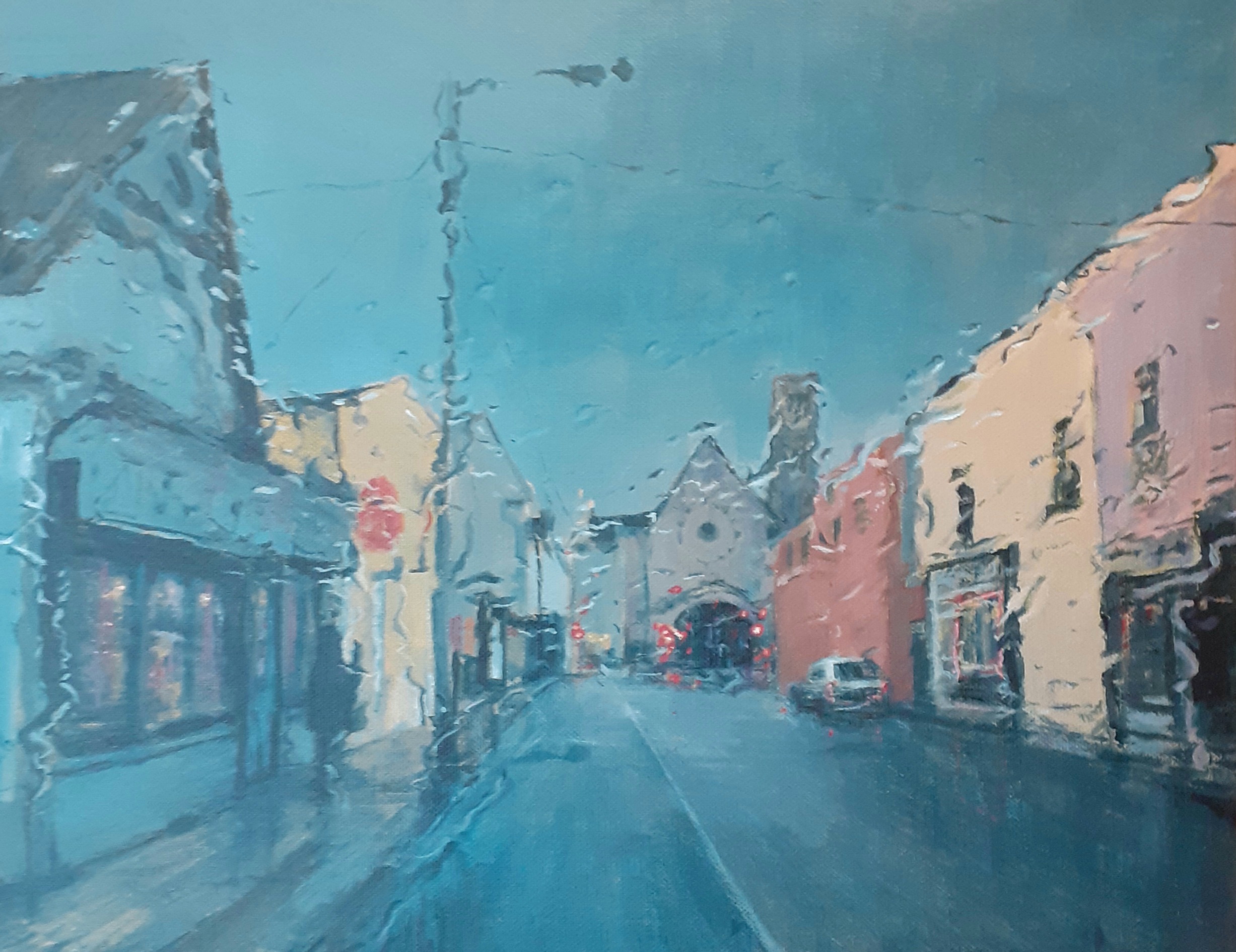
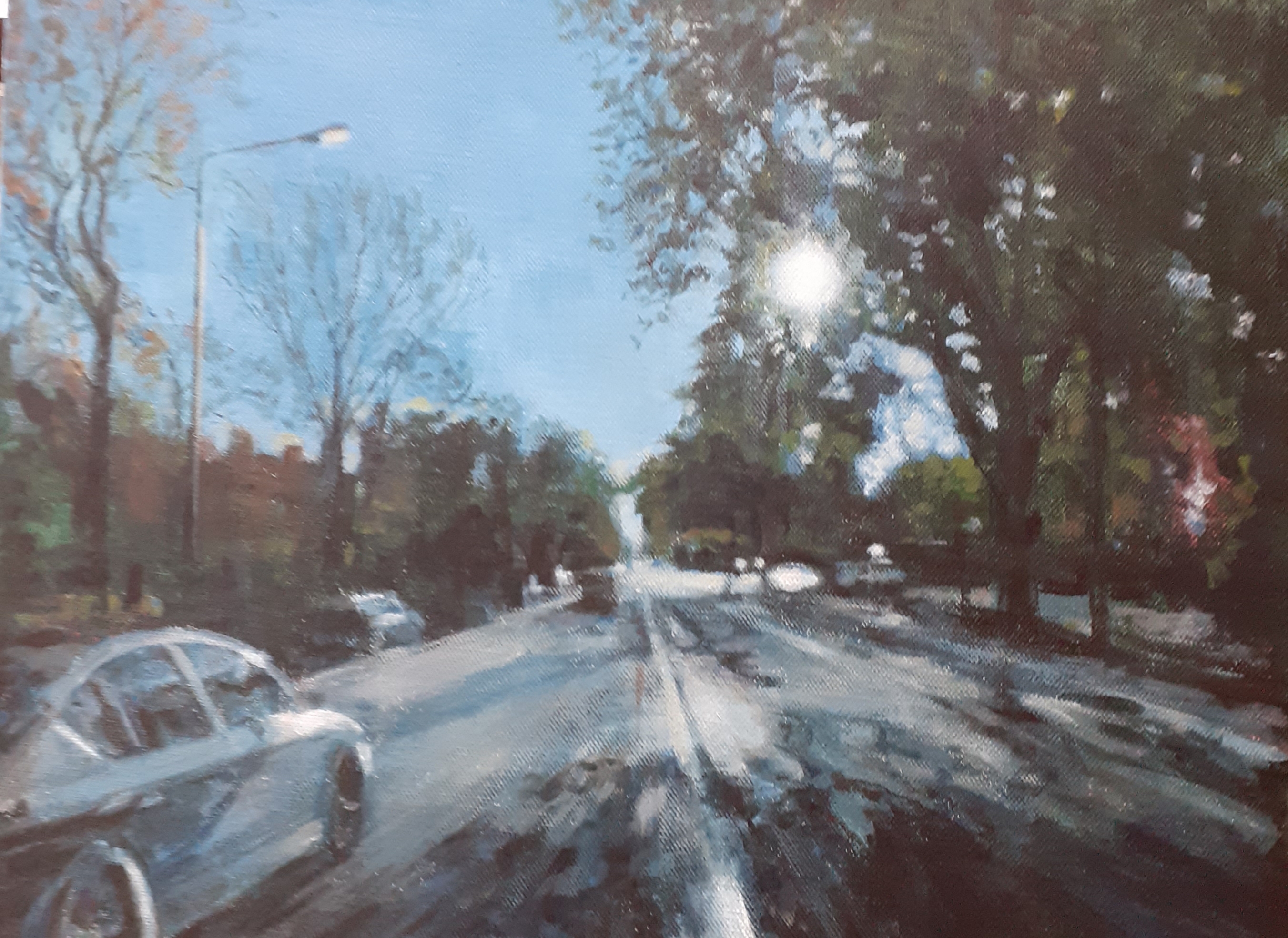
This has been a wet summer, even by Irish standards. It is a constant perspective here to view life through rain streaked glass; huddled in a cafe shopfront, looking out the kitchen window, scenery rushing through the windscreen of a car. I’ve painted Connemara driving through the rain and more recently, a sodden rush hour from the upstairs front seat of a bus on Amiens Street. The latter I took from a friend’s photo (thanks Paula Nolan!) but this one is all me own work. Taken through the windscreen of our car parked on Florence Road, Bray, looking up towards Main Street and the Church of the Most Holy Redeemer. We are dropping in to Florence Furniture and Antiques in the left foreground. A good antiques shop is a treasure chest of the past, and more. An alternative universe where it is possible to imagine each artefact a living thing, a receptacle for history and craft, and love, and much, much more; hopeful, awaiting its future in another setting. The stories they could tell. The building was previously an art shop, and a printworks before that.
Across the street is Hayes Butchers Shop, a long established family business and friendly with it. Stories and gossip are exchanged here in the old fashioned way. It’s where I get all the beef; if you catch my drift. The Church was established in 1843, funded by subscription including generous donations from Bray’s sizeable Protestant community. It was remodelled in the 1890s by WH Byrne who, around the same time, was supervising the reconstruction of Dublin City Markets on Sth Great George’s Street to the magnificent building we see today. The Holy Redeemer, however, looks very different now to the nineteenth century structure. The mid sixties saw the facade altered to a modernist gabled front with a new plain, soaring bell tower. Surprisingly, you will find the nineteenth century interior remains. The old within the new.
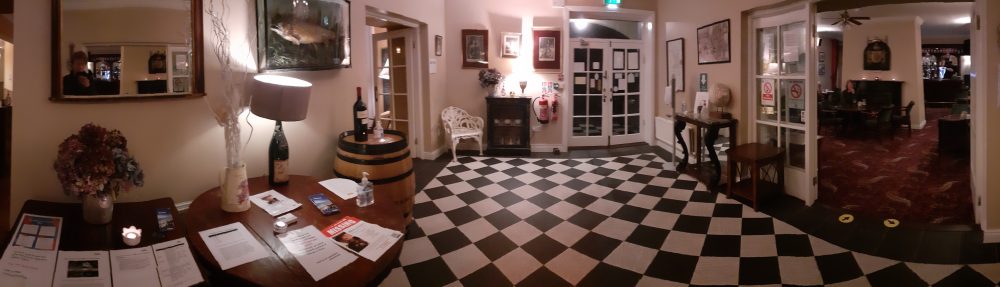
At the top of Main Street, just across from the Town Hall, is one of Bray’s finest pubs, Frank Duff’s. It’s my local, being closest to my house, exactly 1.3 km to be precise. That’s a fifteen minute walk, though longer returning.
The name bears no relation to the Frank Duff who founded the Legion of Mary and championed the destruction of Monto Town, Dublin’s red light district in the 1920s. The reference is to the Frank Duff who set up shop here with wife Sheila in the 1940s. Their son, Ken, inherited the business in the late seventies. When Ken died in 2017, his sister Madeleine, ran the business for four years. Covid effectively shut the pub down. As a food free zone it didn’t qualify for the restricted opening of other premises over the lockdown period. The Duggans, owners of several premises in Bray, including the Harbour Bar and the Martello, took over in 2021.
During the Duff years the pub ignored such unnecessary distractions as food, piped music and television. It was all for a few drinks and a chat. The ideal local, so. More eccentrically, the pub rejoiced in a cycling theme, from the time the Tour de France came to Bray in 1998.
Shay Elliott was the focus of commemoration for the Wicklow cycling fraternity. Elliott was born and raised in Crumlin, in Dublin 12, and was a cycling pioneer in Ireland. He was the first Irishman to particiate in the Tour, and in 1963 became the first English speaker to wear the Yellow Jersey of race leader, which he held over three stages. He returned to Ireland, and became involved in Bray Wheelers, coaching new talent in the sport. He died in May 1971, from shotgun wounds, and was buried at St Mochonog’s Church, Kilmacanogue, near Bray. A monument to him was erected in Glenmalure, just south of Glendalough. It is a glorious spot to contemplate Wicklow’s mountain scenery.
Refurbished for its reopening, the premises has been divided along traditional bar and lounge lines. Television made its first appearance at Duffs in the old style, dark wood bar, while the lounge kept to the ancient tradition of banning the haunted fishtank. I am more often found in the lounge, to the rear of the premises where there’s a fire and high stools.
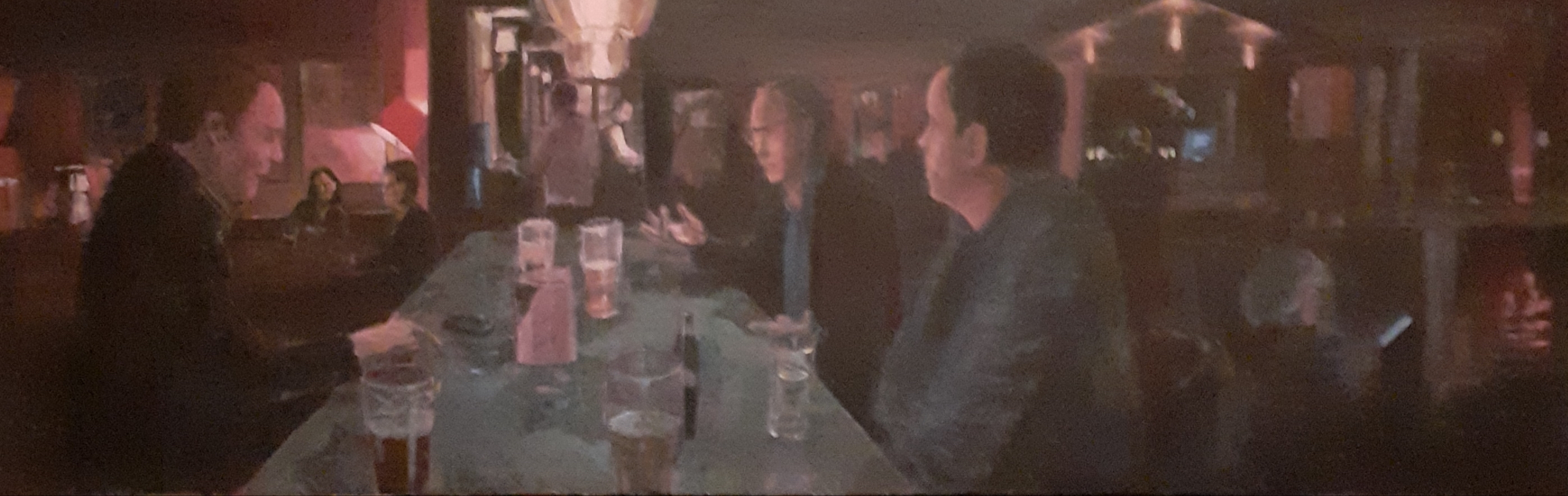
That’s the setting for this acrylic. It captures a moment in time, as friends debate the finerpoints of music, art, philosophy and football. A modest amount of drink has been consumed, though more may follow. We sit at the high table, while other clients are arrayed on armchairs and couches, bathing in the glow of warm lamps and an open fire. I am looking towards Main Street, hoping to catch the eye of a friendly staff member, more than likely, and let my comrades solve the problems of the world.
You know the first time I traveled Out in the rain and snow In the rain and snow I didn’t have no payroll Not even no place to go
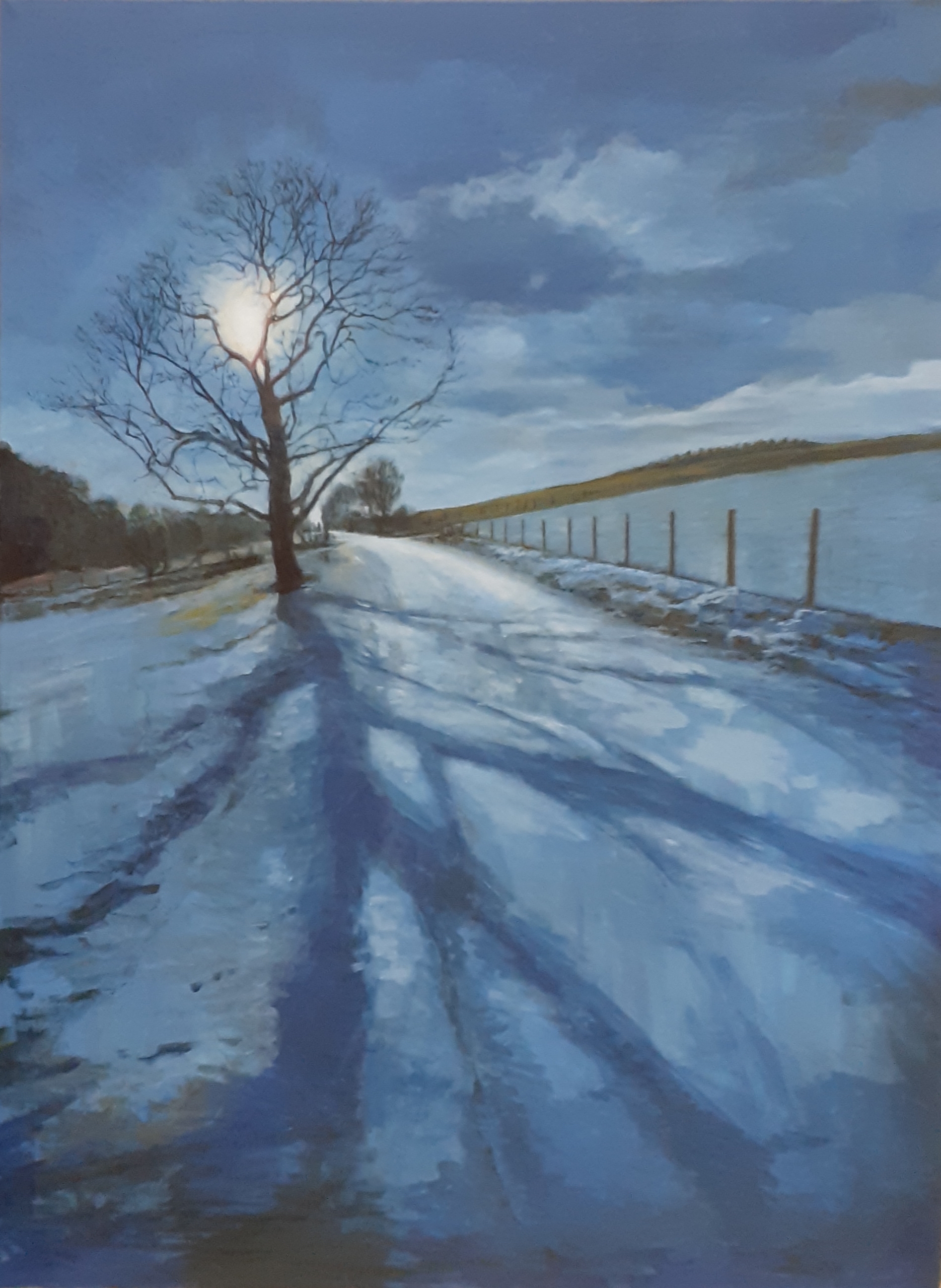
The Snow Tree
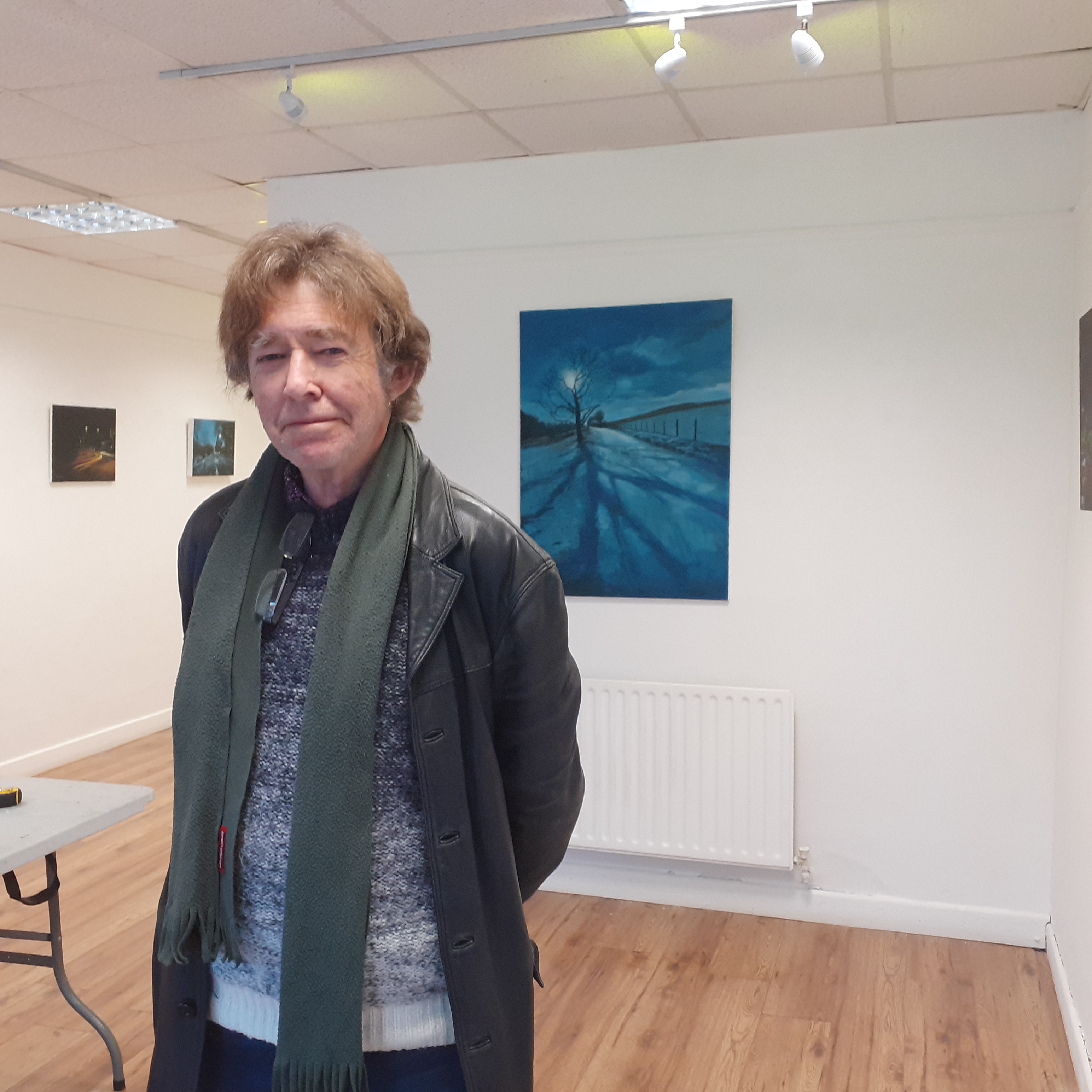
This is the first time I’ve put together an exhibition of my paintings. Although I have been painting and drawing for as long as I can remember, my visual art has been a bit sporadic over the years. Most of my energy has gone into commissioned work or illustrations for specific briefs and events.
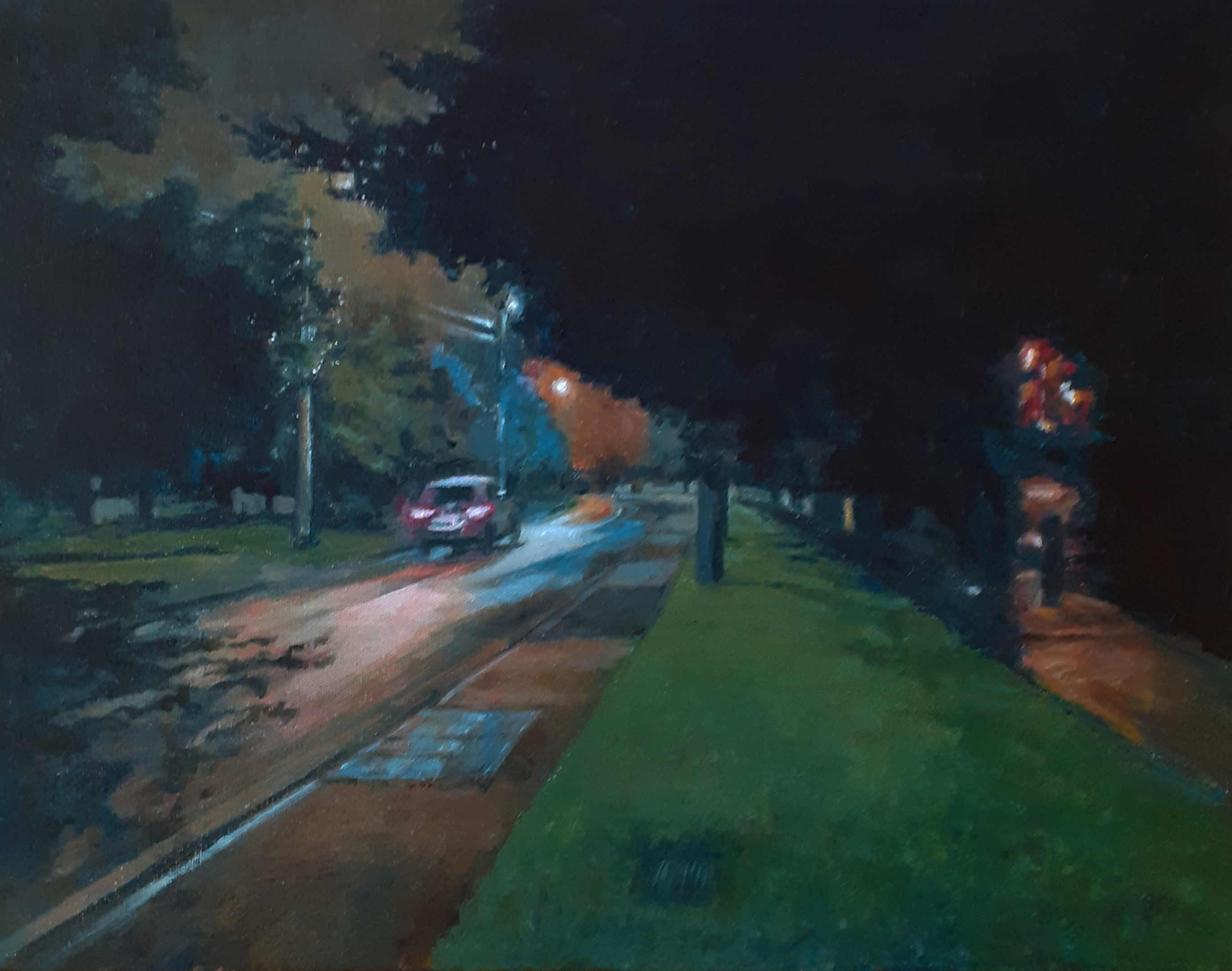
Rainy Night in Ripley Hills
Over the last five years I have devoted more time in generating a coherent body of work, painting on canvas. This has culminated in the show, On the Road, currently at the Signal Arts Centre in Bray.
Approaching Fairyhill
There are twenty painting in all, around the loose theme implied by the title. It’s subtitled: a travelogue in pictures. All this means, is that as soon as I step outside my front door, I am on the road. Early paintings in this process were taken from walking home at night and feature streetscapes of Bray and its suburbs.
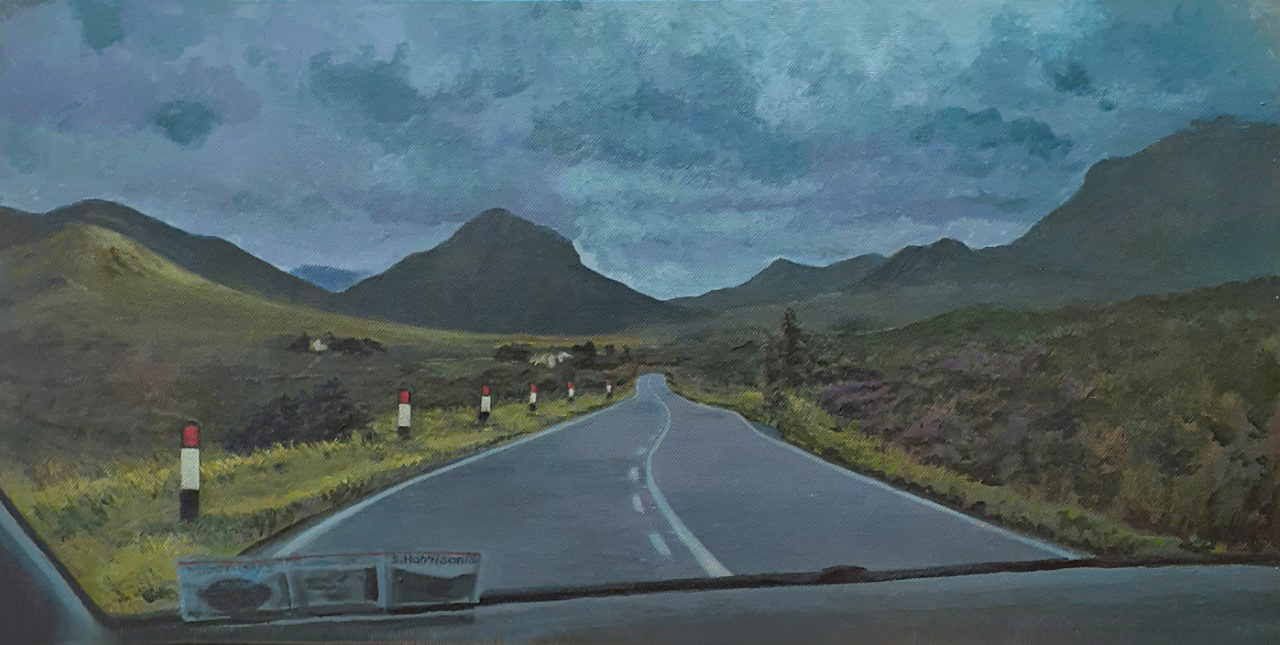
Driving Through Skye
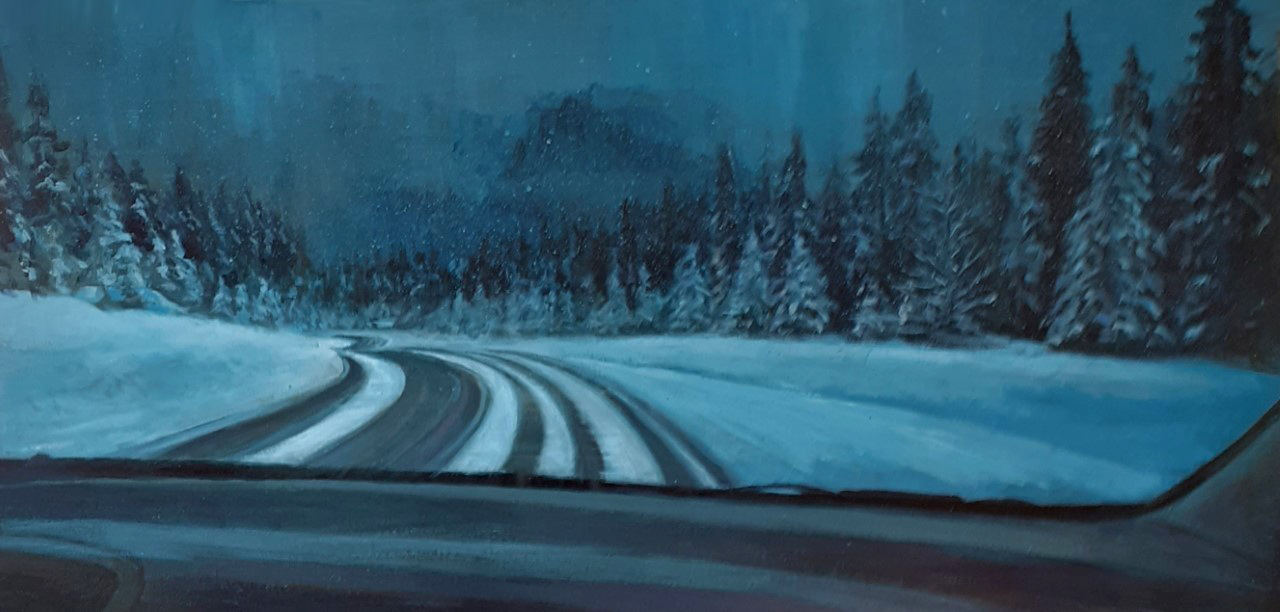
Farther afield, I have used photographs through the windscreen of our car, driving the highways and byways around Dublin and Wicklow. Then there are the many places I have visited over the years. Vancouver, the snowy mountains of British Columbia, the city of Granada in Spain and the highlands of Scotland are included in my subject matter.
Road to Whistler
There are many ‘nocturnes’, nighttime paintings of cities and motorways. At other times, I am painting into the low winter sun. I like the stark contrasts created, those long, eerie shadows. At other times, it’s the rain, and that great feeling as countryside or town emerges from a heavy shower, the dark veil of cloud pulled aside for the glaring sun.
Crossing Morehampton Road
It’s exciting, isn’t it? Stepping out into the world, never stepping in the same river twice. And so it goes. I keep on painting, looking for new inspiration and challenges. Most of the paintings have appeared in these pages, with prose attached to set them in their context. Here I am reprising them again.
Snowy Night in Granada
The Signal show runs to the end of the month. Thanks to everyone there, they have been wonderful. And thanks for all the comments and encouragement from folks on wordpress and facebook and all my friends here, and far away.
Vancouver at Night
But I ain’t going down That long old lonesome road All by myself If I can’t carry you, baby Gonna carry somebody else
Canned Heat recorded On the Road Again in 1967, the summer of love (or the autumn thereof).
The walk from the Dargle River to Arklow on the Avoca is about 54k, taking in, near enough, the coastline of County Wicklow. After Arklow, there is a short stretch to Clogga Beach after which Kilmichael Point marks the border with Wexford. I haven’t done that yet, but it’s on my list.
All the way to Wicklow Town we kept to the coast, though after that access was restricted to select entry points. It’s been an epic in seventeen parts. The first seven were in Bray which certainly offers plenty, though we had barely covered a mile of our journey before embarking on the cliff walk to Greystones. That’s about a 7k stretch and you’d do it easily in ninety minutes. If you want to do it via Bray Head and Summit, it will take a bit longer with a climb to 240 metres. You can make it a loop walk or go station to station and take DART in one direction.
Greystones all the way to Wicklow is along the beach for a little over 20k. Detours to Newcastle and the East Coast Bird Sanctuary were taken. The Bird Sanctuary is a good outing of itself. Greystones to Newcastle is around 8k, and it’s another 13k to Wicklow.
Wicklow was good for a bit of exploration. South of the town you can navigate the headland by way of the Black Castle and join the Glen Beach Cliff Walk as far as the Lighthouses. Wicklow to Arklow is a distance of about 25k, but there’s no one coastal path. We drove it and dropped into Magheramore Beach and Brittas Bay, the latter a splendid walk end to end of about 5k. After Mizen Head, the road runs close to the sea for 12k all the way into Arklow.
And of course, what kept us going was the travellers tales, the myths and legends, and the songs playing in our heads. Much of the playlist is provided by local artists, some a bit further afield.
Double Cross, (Fintan Coughlan), Tired and Emotional/Mary Coughlan (1985)
Telstar, (Joe Meek) The Original Telstar – The Sounds of the Tornados/The Tornados (1962)
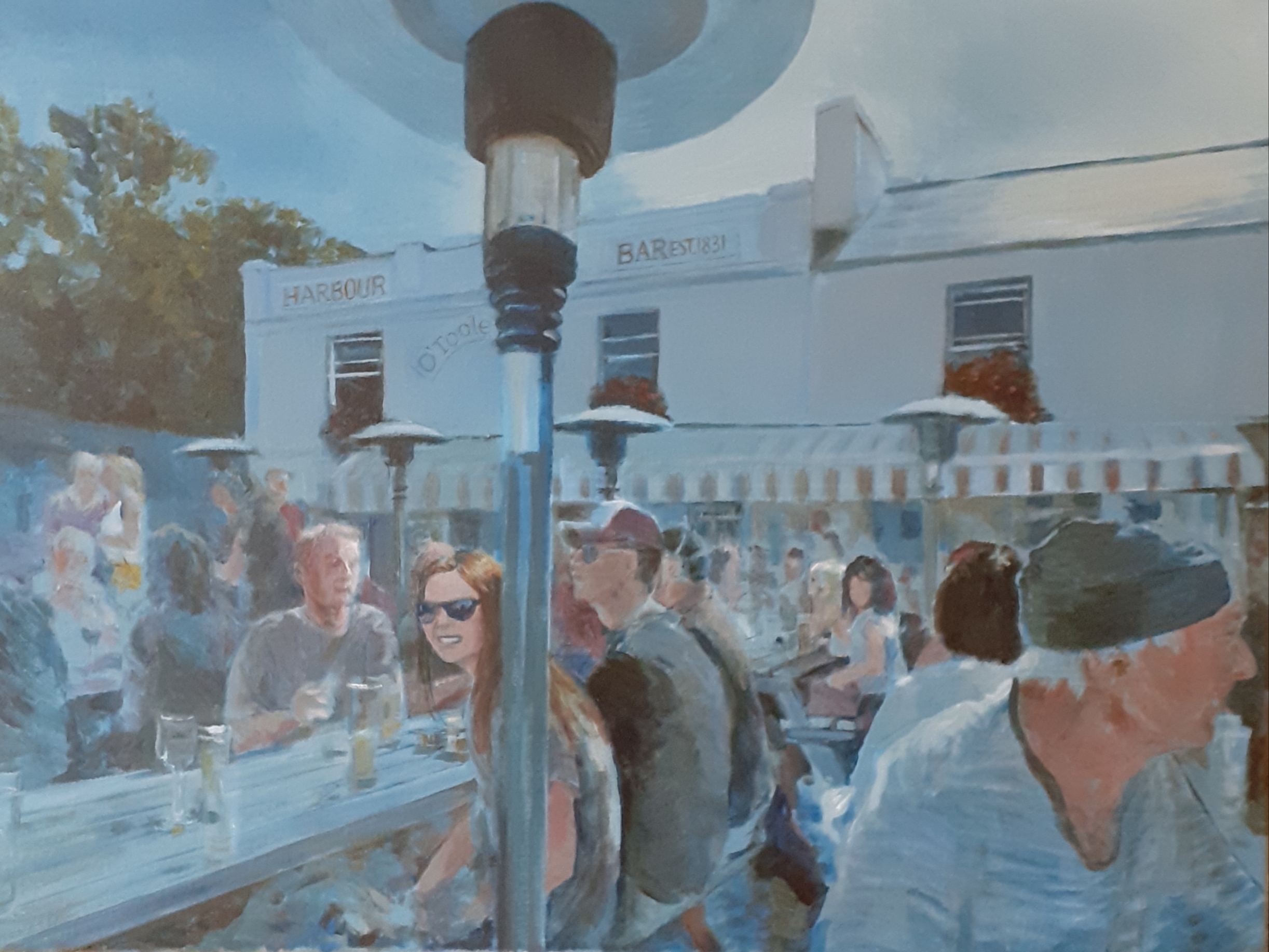
Bejabbers, I’ve had my first vaccine. Suddenly, things are looking up. The world, long empty, is again filling up with possibilities. Restrictions are being eased and in about a month al fresco drinking and dining will return. So, in case any of yiz have forgotten what that’s like, I’ve painted this scene outside the Harbour Bar from about two years back. It is after the Bray Air Show on a blazing summer’s day and tens of thousands of thirsty folk go looking for a pint. And what better place than Bray?
I am alone in a crowd and it is a very pleasant place to be. I hope I’ve conveyed the feeling of being inside the scene, as distinct from the remote artist observing from the outside. I’m thinking of those great group paintings of Auguste Renoir: the Luncheon of the Boating Party and the Moulin de la Galette. That was late nineteenth century Paris and Renoir and his mates were changing the way we look on life, love and art, and the whole damned thing. But people are the same all over, throughout space and time. After the plague year, the world will open again. I’m celebrating.
Simply, this is what people do and always have. This is what makes life fun. The painting is quite different from the more isolated feel I usually go for, and I’ve needed to adjust my technique to accommodate that. It’s in acrylics, as usual, but has more of a watercolour feel to it. I laid out the composition precisely, but went for a freer brushstroke to capture that atmosphere of movement and joy. I hope this works. Of course, nothing beats the real thing. Bring it on!
After the joy of the summit, we magic ourselves back to where we began, beside the Scenic Car Park at the junction of the Cliff Walk and the steep path up Bray Head. A good walker can combine both paths in a loop, or take either route between Bray and Greystones. But with time on our side, we have taken both separately.
The cliff walk curves away to the left and from now on is a relatively level, well beaten path all the way to Greystones. It’s just over 6K and takes about an hour and a quarter to walk. It’s a path well travelled and particularly busy on a summer’s weekend. In the morning you’ll have the sun on your side and a glimmering coastal panorama. Shade falls after noon but the views remain captivating. There’s a surprising remoteness for such proximity to town and city, and a welcome seasoning of wild fauna. There are goats on the high headland, seals and sometimes dolphins in the sea, and the air alive with birdlife. Gannets, kittiwakes, guillemots, razorbills, shags and cormorants ply their trade along the cliffs. Herring gulls and great black-backed gulls circle ominously, and you might spot such elegant predators as peregrine falcons and kestrels.
The Cliff Walk originated with the extension of the railway southbound in 1856. The Earl of Meath, whose Kilruddery estate stretched from Giltspur to the sea, did not want the railway line to bisect his demesne, but was willing to donate the land along the foreshore free of charge. The problem was this consisted of sheer cliffs and was going to require major engineering skill to construct a railway along it.
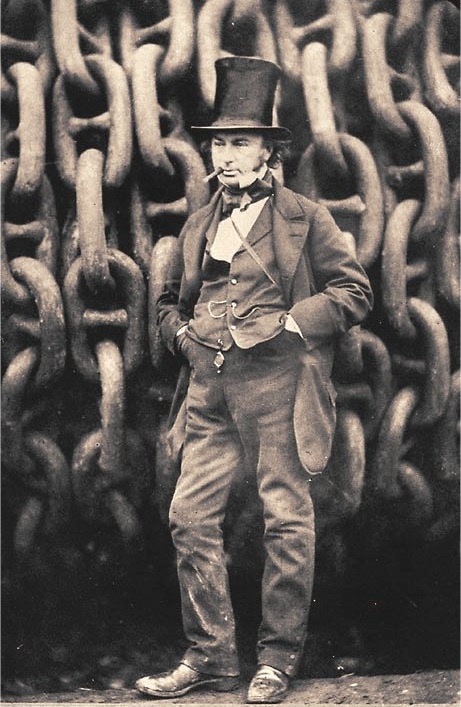
Isambard Kingdom Brunel was given the task. Brunel was the star engineer of the time, born in 1806 in Portsmouth, England to a French father and English mother. Having completed his education in France, he returned to England in the late twenties to work with his father Marc on the construction of the Thames Tunnel. His subsequent career showed extraordinary invention and versatility over a wide range of projects. The famous Clifton Suspension Bridge near Bristol was an early triumph of design and aesthetics. Various difficulties prevented it being built during his lifetime, but, though altered in its final details, it is considered a fitting tribute to his genius. He became a central figure in the development of railways in these islands and pioneered modern oceanic travel with the design of large scale, propeller driven, all metal steamships.
The Great Western, a paddle steamship, made the Atlantic crossing in 1838 in just fifteen days with fuel in reserve. Great Britain, the first truly modern ship, was made of metal rather than wood and driven by propellers instead of paddle. In 1852 he began work on the Great Eastern, the largest ship of its time. 700 foot long and holding four thousand passengers, it carried enough fuel to make the round trip to Australia. Finally launched in 1860, Brunel wouldn’t live to see the day; he died, aged fifty three, in 1859. As often happened with Brunel’s projects, it was not quite the success intended. Brunel was ahead of his time but world trade had not attained the economies of scale required to see his plans blossom. But, while it failed as a passenger liner, the Great Eastern found success as a cable lying ship, laying down the first successful transatlantic telegraph cable in 1866
Brunel first appeared in Ireland and encountered Dargan at the opening of the Dalkey Atmospheric Railway in 1844. Dargan enlisted Brunel as engineer for the development of Bray seafront, with the building of the sea wall and Promenade. He was the obvious candidate for the job of extending the railway line to Greystones, and he surveyed and engineered the route in1855/6.
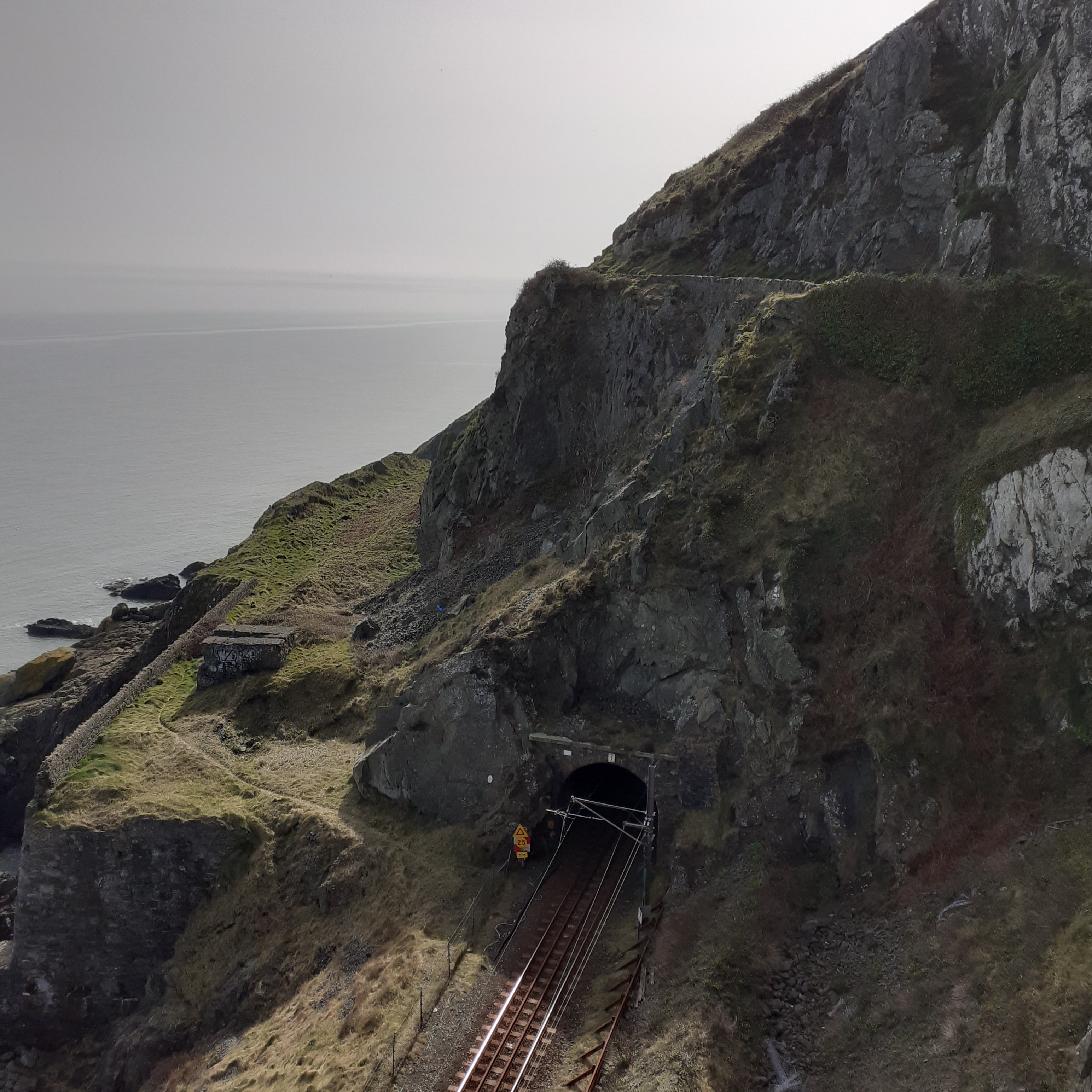
The coastal route may seem the most logical route south from Bray, but it brought practical difficulties. Brunel was faced with the prospect of forcing the railway through high coastal cliffs. He opted for timber trestle built viaducts where possible. The original line had only two tunnels but since completion there have been four realignments. Erosion and rockfalls saw the route moved closer to the cliffs and the modern line passes through four tunnels, the longest and most recent built in 1917, almost a kilometre long. Such changes and high maintenance costs lead some to call the development Brunel’s Folly. But given the lucrative passenger trade, especially since electrification, this seems a misnomer. Whatever the cost, the benefit of this glorious route in terms of both engineering and aesthetics is well worth it.
The ten minute spin is the most spectacular of Ireland’s railway journeys. The hour long trip from central Dublin is a joy: exiting via the starred coast of the teeming city, past Dun Laoghaire, Ireland’s first train route, and then bursting upon the glorious scenery of Killiney Bay. Bray follows, and then to cap it all there’s this thrilling ten minute leg to Greystones. The route features on series three of Michael Portillo’s tv series of great railway journeys. These days the rail is electrified and trains travel every half hour.
Bray Station has a mural of Brunel. He cuts a distinctive dash with his high beaver hat and bristling sideburns. He is said to have always carried a leather pocket case lined with fifty cigars. Now there’s a man who liked to plan ahead. Nothing more frustrating than finding yourself halfway along a railway line in exotic terrain and running out of your preferred cheroot. I reckon fifty should do between Bray and Greystones, maybe both ways if you fancy cutting down.
After construction, the walk was opened to the public, but with conditions. Lord Meath built a lodge to levy a toll of one penny, every day except Friday, when the Lord had it to himself. Lord Meath’s Lodge today lies in ruins, almost a scenic embellishment in itself. There’s a set of steps leading up the cliff just past the southern standing gable. This was for Lord Meath’s own guests, leading up to a scenic headland route, today overgrown. The view from the top of the steps is magnificent. I seem to remember that the lodge was converted for use as a tea rooms in the fifties and sixties, at the time of a major tourism upsurge. Such enterprise died off in the depressed seventies and eighties. It might fly again though. I’ve seen it work on many continental cliff paths.
After a short uphill section, we come to a deep slice in the headland: the Brandy Hole . There’s a spectacular view into the ravine, illustrating the wonders of building a railway in such a hostile environment. You can still see where the old route lay seaward of the modern tunnels. This was the scene of a serious accident a decade after the line was opened. A northbound train derailed at Brabazon Corner on an August morning in 1867 and plunged off the trestle viaduct to fall ten metres into the landward side of the ravine. Two were killed and dozens injured. An investigation found no fault with the structure itself, though the railway was realigned. Ten years later the viaduct was removed and the route pushed further inland.
The Brandy Hole was a smugglers’s cove up to the mid nineteenth century. It was used to smuggle brandy, wine and silk from France. The cut of the ravine kept activities out of sight of the coastguard in Bray and Greystones. There was entry to a vast cave at sea level and, it is said, a tunnel connecting to the landward side of Bray Head. Such traces were obliterated with the construction of the railway.
This aspect of the cliffs, to be hidden in plain view, lends an aura of mystique. The shimmering shifts of the atmosphere, birds and clouds and sparkling sea, can make the wayfarer feel unmoored in time. You expect to turn and see the promenaders of Bray in Victorian attire, twirling parasols or moustachios, politely perplexed at your modernity. Or rounding a sudden bend, a ruffian might lounge with dubious beard and earring. Tipping their tricorn hat for a lucifer, in that pleasant sulphurous flare you’ll catch a glimpse in their one green eye of the hidden cave and its glittering treasure.
I fled to the island where the animals roam
found a darkened cave and called it my home
at night I could hear the birds and insects
and lay my body down on a bed of regrets
Holy Moses, the devil’s after me
between the sea and the sky chasing me down
Holy Moses by the Cujo Family, from their eponymous debut album of 2010.





 xxharrison