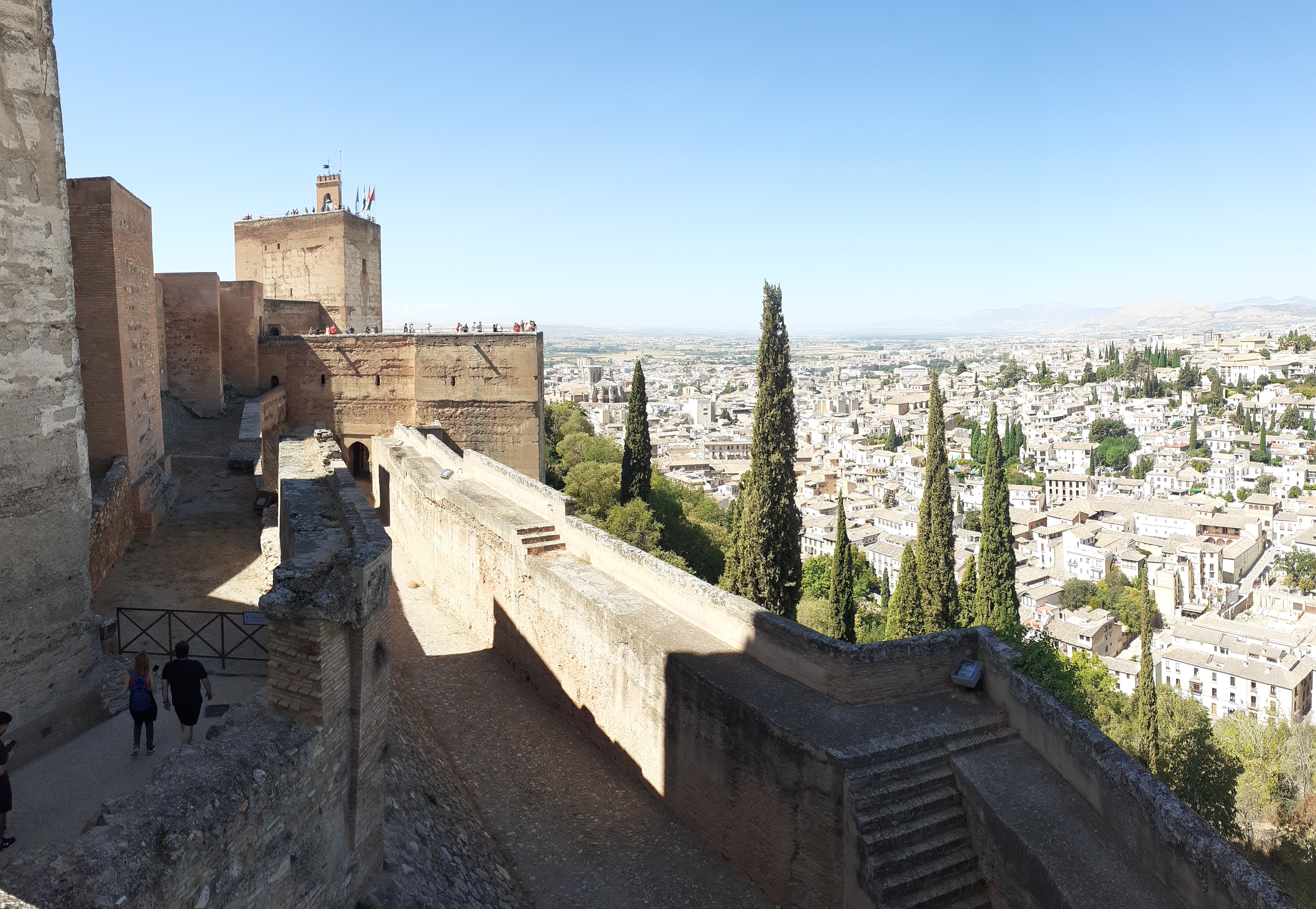
We took the bus direct from Malaga airport to Granada some sixty miles northeast. The journey takes about an hour and a half which brought us into late afternoon. The road rises through the coastal mountain range before falling to La Vega de Granada, the fertile green basin leading into the city. The Sierra Nevada soar to the south. Spain’s highest peaks make an impressive backdrop as we alight at the terminus, Grenada with a population of over two hundred thousand sits two and a half thousand feet above sea level. Higher still, the magical Alhambra floats above the city.
I visited Grenada before, around Semana Santa in late March, and the Sierra were snow capped on the horizon. Grenada shivered, showers of snow and sleet washing across the limpid Spring air. That was my pilgrimage to the Alhambra, visions of Spain caught in a curious snow globe. It was brought about by my first guitar, an Alhambra, and my ambition to play flamenco. Now I’m back.Fying solo’s fine, but with M in tow I have a shoulder to lean on and an ear to burn and boast to.
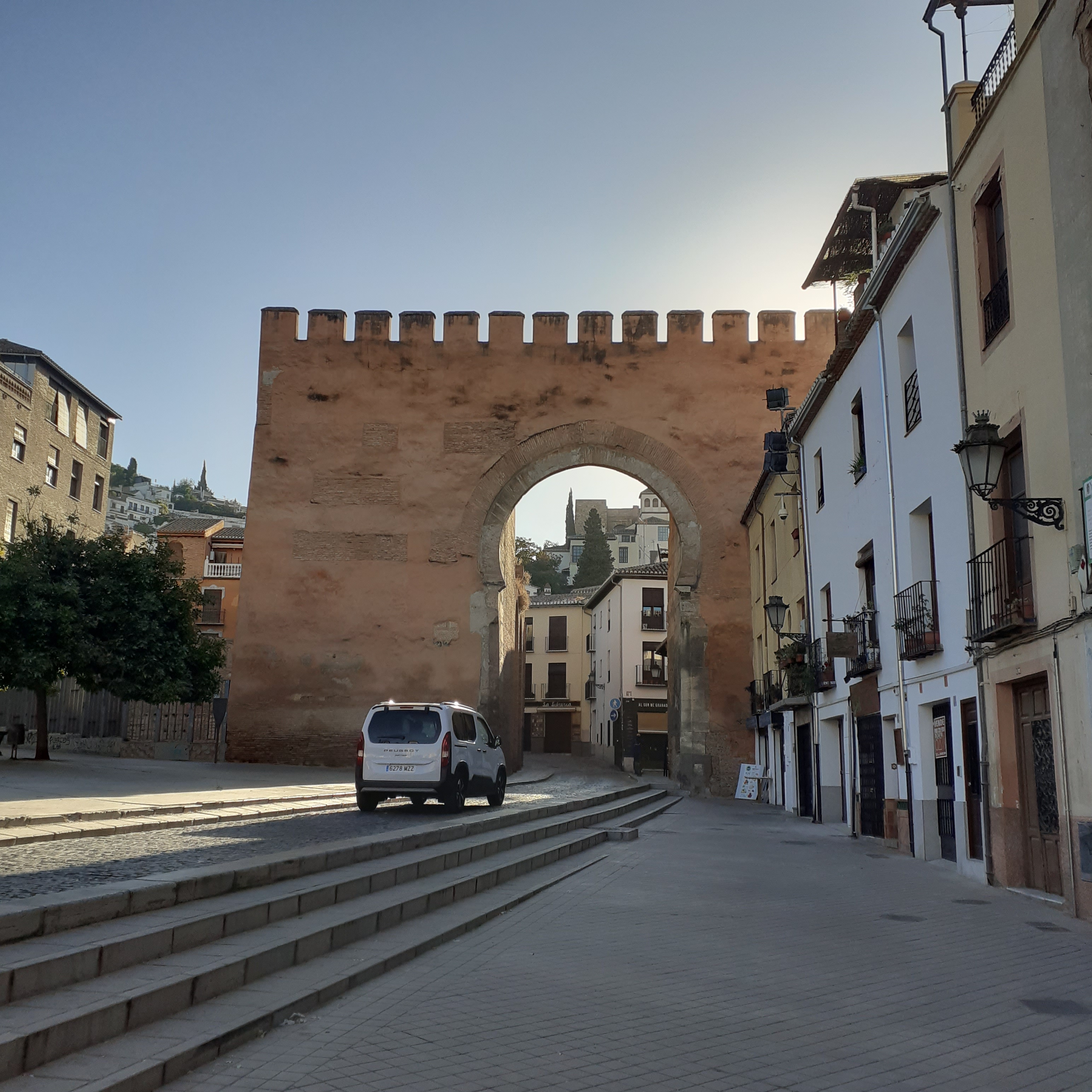
Granada bus station is a good bit out of the city centre and we take a taxi to our hotel. We are staying in the Exe Triunfo Hotel off the top of the main avenue, Gran Via de Colon. The receptionist is a fountain of knowledge and our three days in Granada are well mapped out. The hotel is next door to an ancient entrance gate of the city. The Gate of Elvira, a russet fortified archway, presides over the square. Passing through, we enter the labyrinth of the Old Town winding down to the city centre. Gran Via de Colon to one side and a steep hillside forming the other bracket.
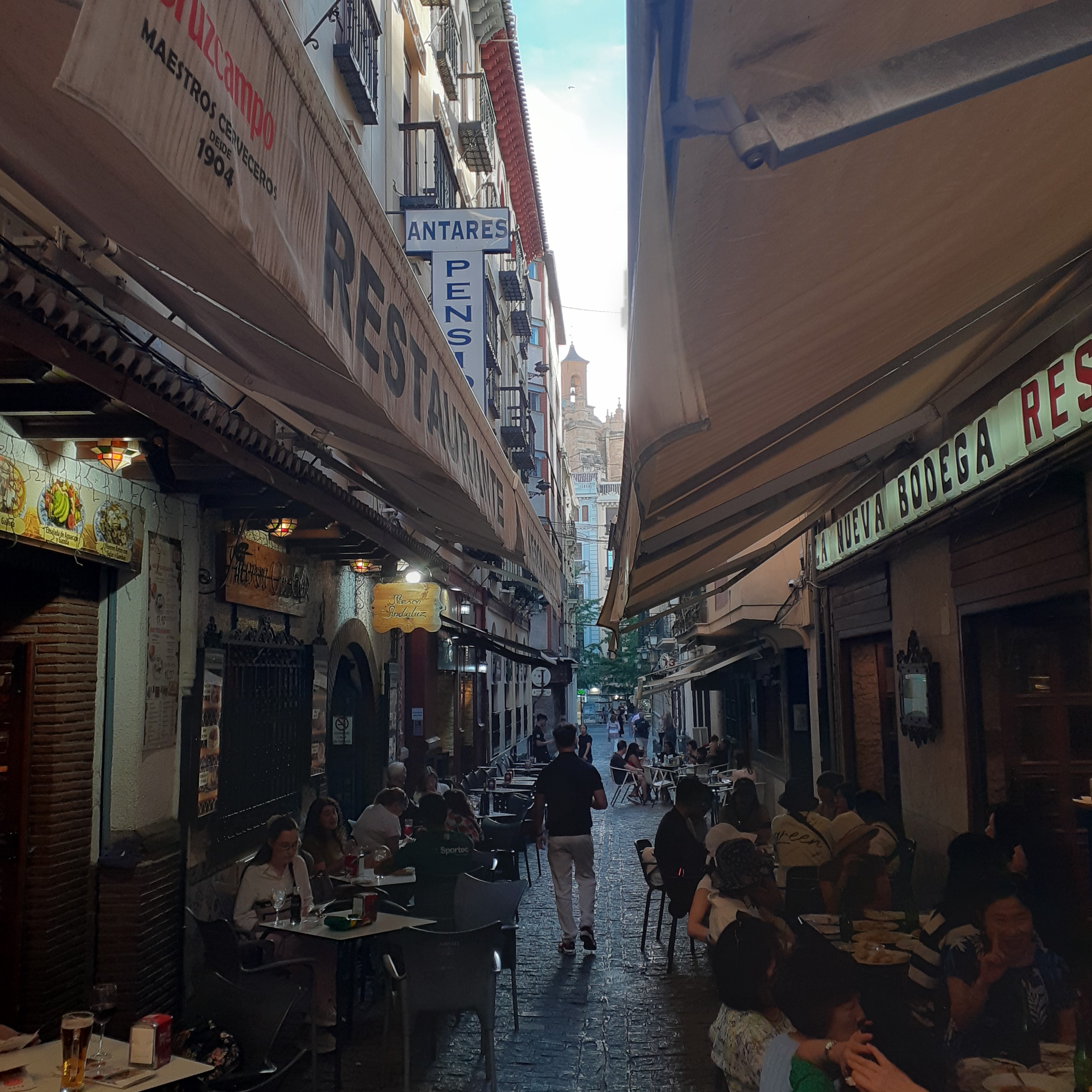
Calle Elvira itself is the main drag of the Old Town. The name is a curious echo of our friend’s villa in Elviria near Marbella where we will be heading next week.. But this is a slice of ancient urban Spain. Rambling, rickety and full of character. It is lined with quirky shops, cafes and casual eateries. Elvira leads to the city centre where the Plaza Nueva spans the Darro River. Before that, the street branches into a few vibrant city lanes. Caldereria Nueva leads uphill into the Albaicin. Towards Gran Via, Cetti Meriem has a cluster of clubs and eateries. We eat at a few of these, the food and the atmosphere are great. This area had been a haunt of mine in the cold times of old. Hennigan’s Irish bar to be precise. Nights spent amidst copious pints and a vivid soundtrack of suitable rock including the Red Hot Chilli Peppers and Iggy Pop.
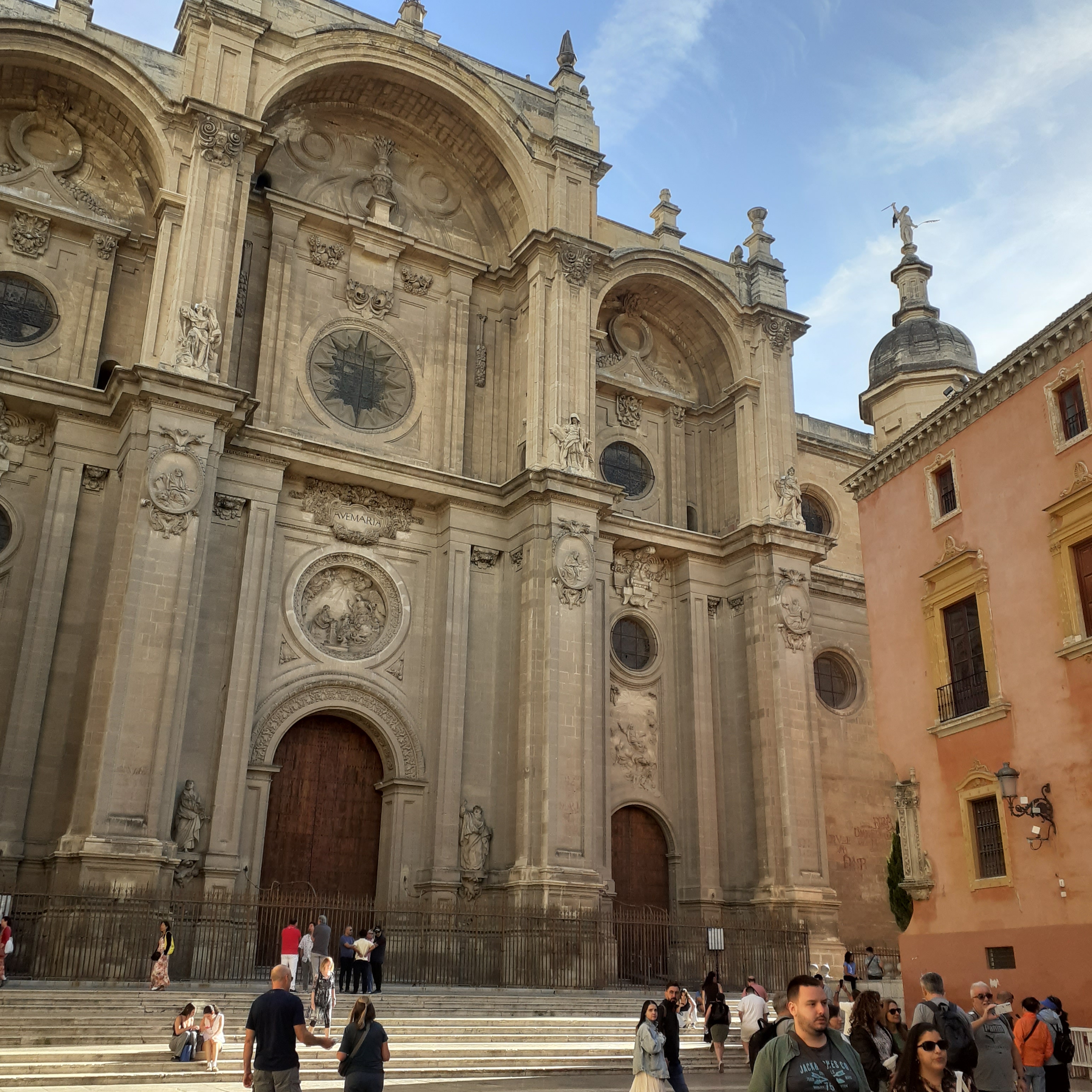
At the far end of Cetti Meriem, the Cathedral soars above the pediment. The Cathedral was begun in the sixteenth century, replacing the existing mosque within the Moorish medina. It is a montage of architecture, the end backing onto Gran Via a packed ornate gothic, the frontage an imposing Baroque facing Plaza Pasiegas. The massive towers on the north were never completed. I recall how its white interior perfectly mirrored the cold exterior in that cruel April. More comforting, the vast dome with gold stars scattered across a deep blue sky.
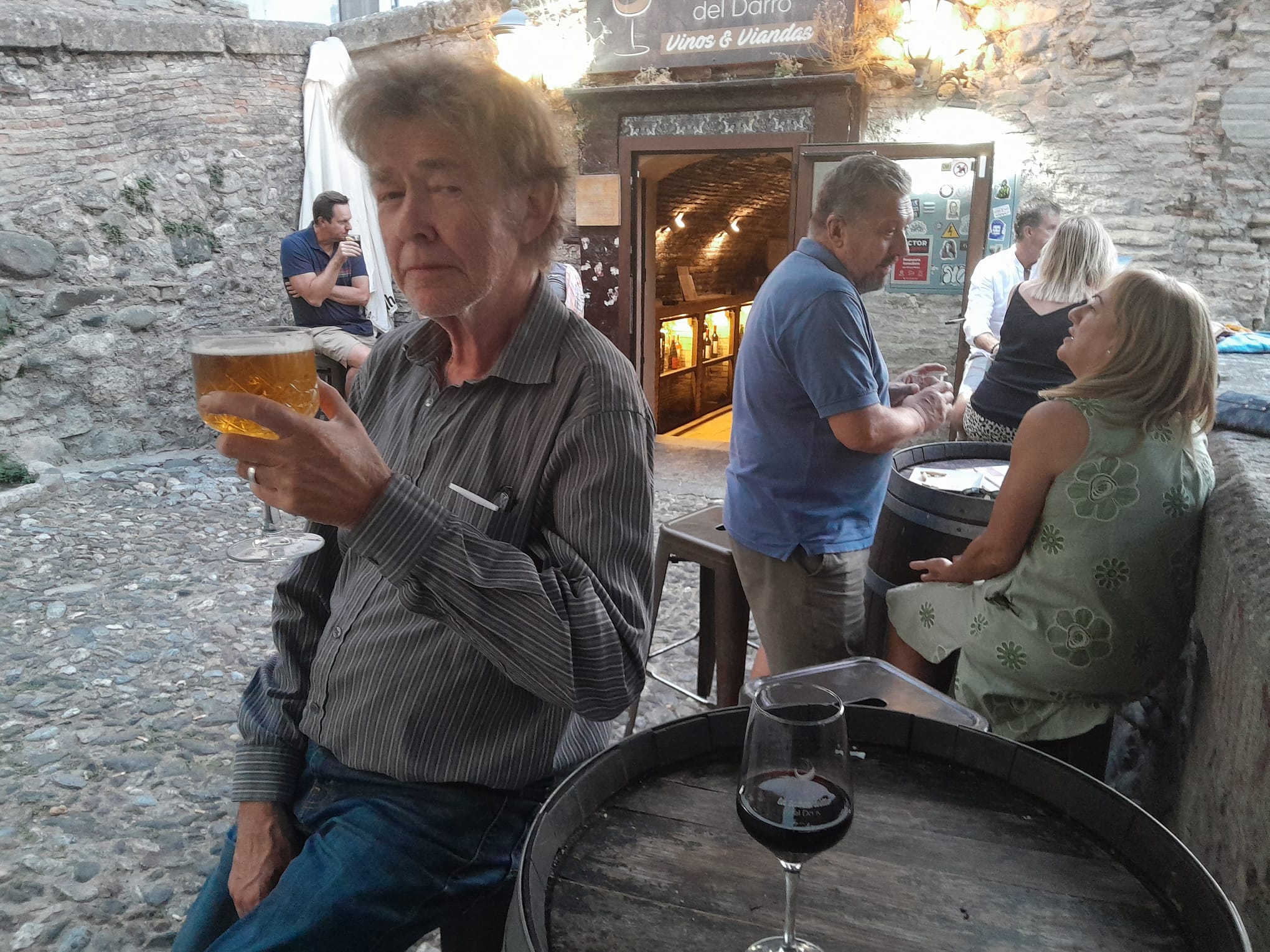
Elvira ends at Plaza Nueva with its lively bars and restaurants. Despite its name it’s an old square, being built over the Darro River in 1500. The Royal Chancery flanks the north side while the Church of Santa Ana closes the square with the Darro visible beyond. Nearby there’s a fountain and beyond there’s access to the Alhambra via parkland. Alternatively, you can take a bus. It’s a punishing uphill climb, especially in the heat, so that’s what we did this time.
The Alhambra for five centuries was home to the Moors who had occupied much of Iberia in the 8th Century. Grenada would be their last stronghold. The Nasrid dynasty ruled Grenada from 1232 until the Reconquista of 1492. They built the Alhambra on the site of an 11th century fortification. In fact that had been the palace of Samual the Prince, a Jewish leader in a Moslem state. Muhammed I founded the complex we see today, greatly enlarged and embellished over the two hundred and sixty years of Nasrid rule. Ultimately, Muhammad XII, aka Boabdil, was defeated by the combined monarchs of Castile and Aragon and forced to surrender Granada to them. As he left for the coast through the Sierra Nevada, he took one last look back at what had long been his, and his people’s home.
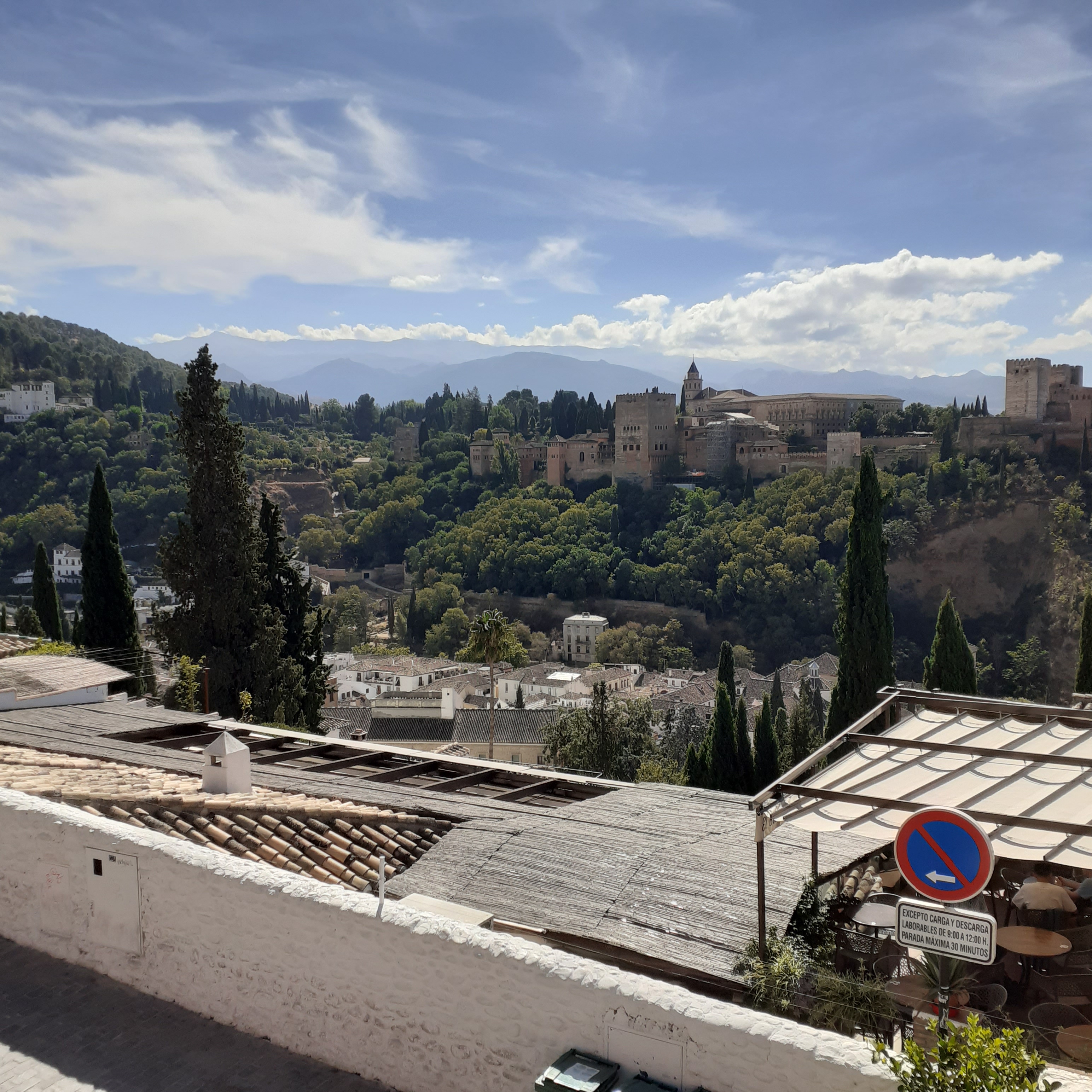
The mountain pass where this happened is now called Suspiro del Moro, the Moor’s Sigh. Salman Rushdie’s book, the Moor’s Last Sigh 1995, refers a few times to the episode. In a story of identity and memory, Boabdil’s action provides apt illustration. It was Rushdie’s first book since the Satannic Verses of 1988. Fanatical reaction to that resulted in the fatwa issued by Ayatollah Khomeini, leader of Iran. Similarly aligned groups such as Hezbollah and Al Quaeda have persisted in the fatwa into the current century. Rushdie lost an eye in a knife attack in New York three years ago. He still lives, and writes and thinks.
The Alhambra became the court of Ferdinand and Isabella. Christopher Columbus was witness to Boabdil’s handover and was received at court by the Monarchs as they approved his voyage to the Americas. There is symmetry therefore in that it was an American, Washington Irving, who established the Alhambra in the modern imagination. He lived in the complex in 1830 and published Tales of the Alhambra 1832. This contributed hugely to the preservation and restoration of the Alhambra over the last two hundred years.
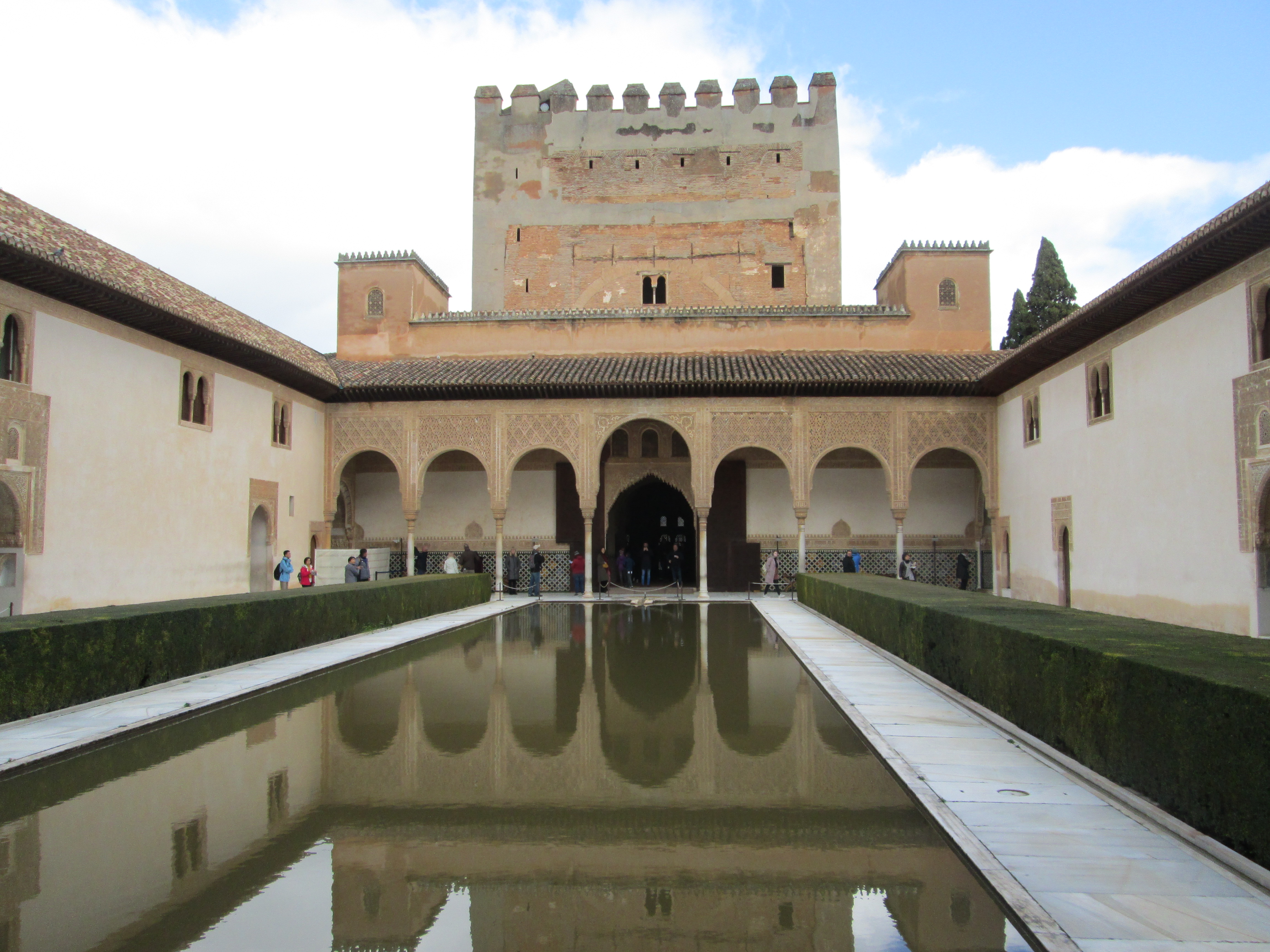
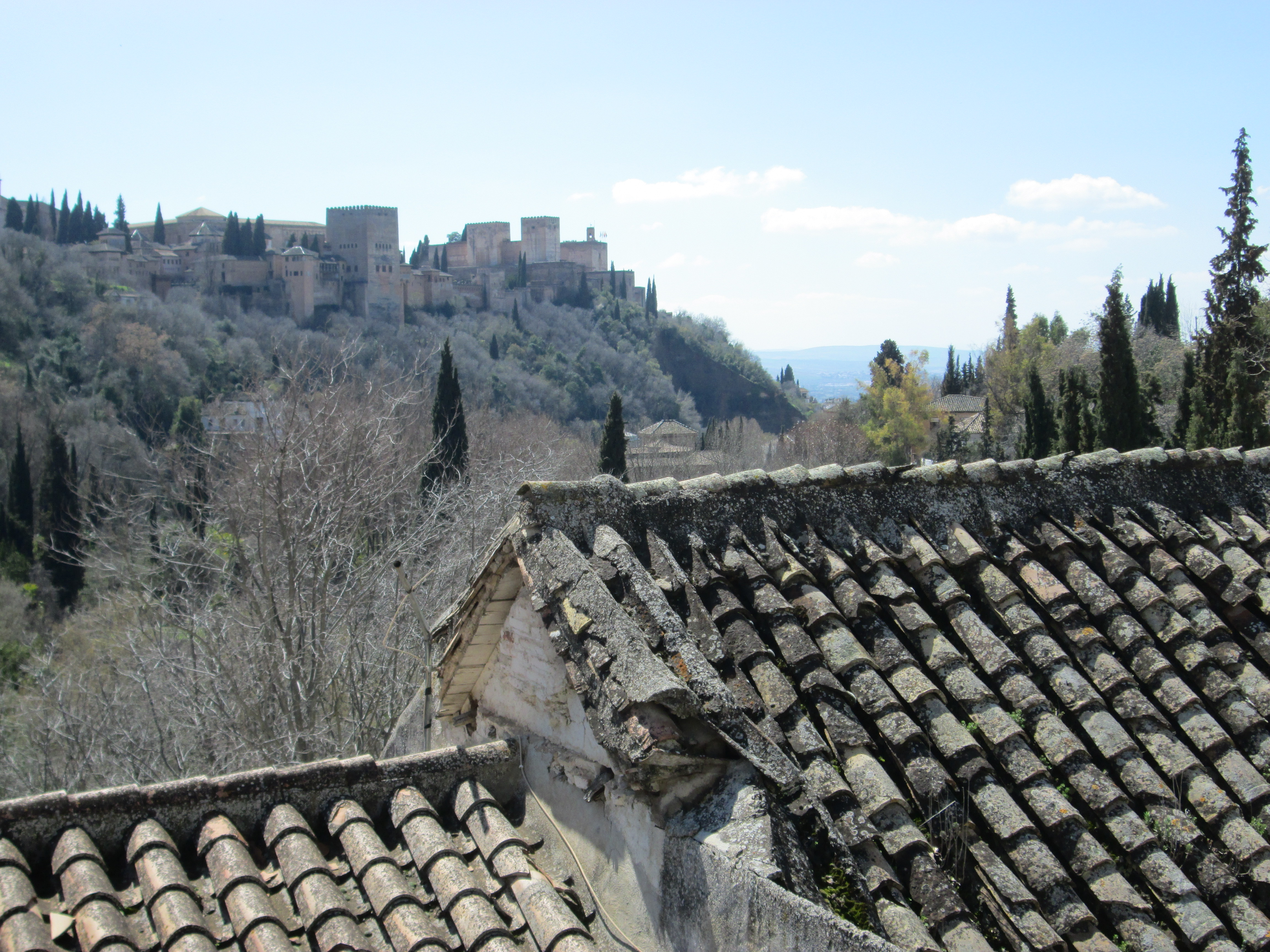
It is a huge complex with many different facets, including palaces, gardens, two hotels and other services. The Alcazaba fortress on the west side overlooks Granada. There are several towers giving great panoramic views over the city and mountains and the complex itself. The Generalife is a garden estate just outside the walls to the east. The Nasrid Palace is the jewel of the Alhambra, a glorious medley of rooms and courtyards, pools and fountains, featuring the best of Mudejar craft and design. Access to the Nasrid Palace requires a specific ticket. This was fine on my first visit but this time, though I tried some three months in advance, tickets were sold out. So shop early. It’s a treasure indeed. Nevertheless, there is an awful lot to see with a general admission ticket. From morning till late aternoon, we had our time in paradise.
At the business end of the complex is the Alcazaba. Plaza Aljizibes alongside forms something of a town square, a public access area with services and refreshment stalls. The Renaissance Palace of Carlos V lines the other aide of the square. This was begun in 1527 but only completed four hundred years later. The Renaissance building encloses a circular courtyard, with a collonaded terrace on the upper floor. The Museum of Fine Arts there houses a collection of Spanish art from the 17th to the 19th century. The Alhambra Museum is on the ground floor.
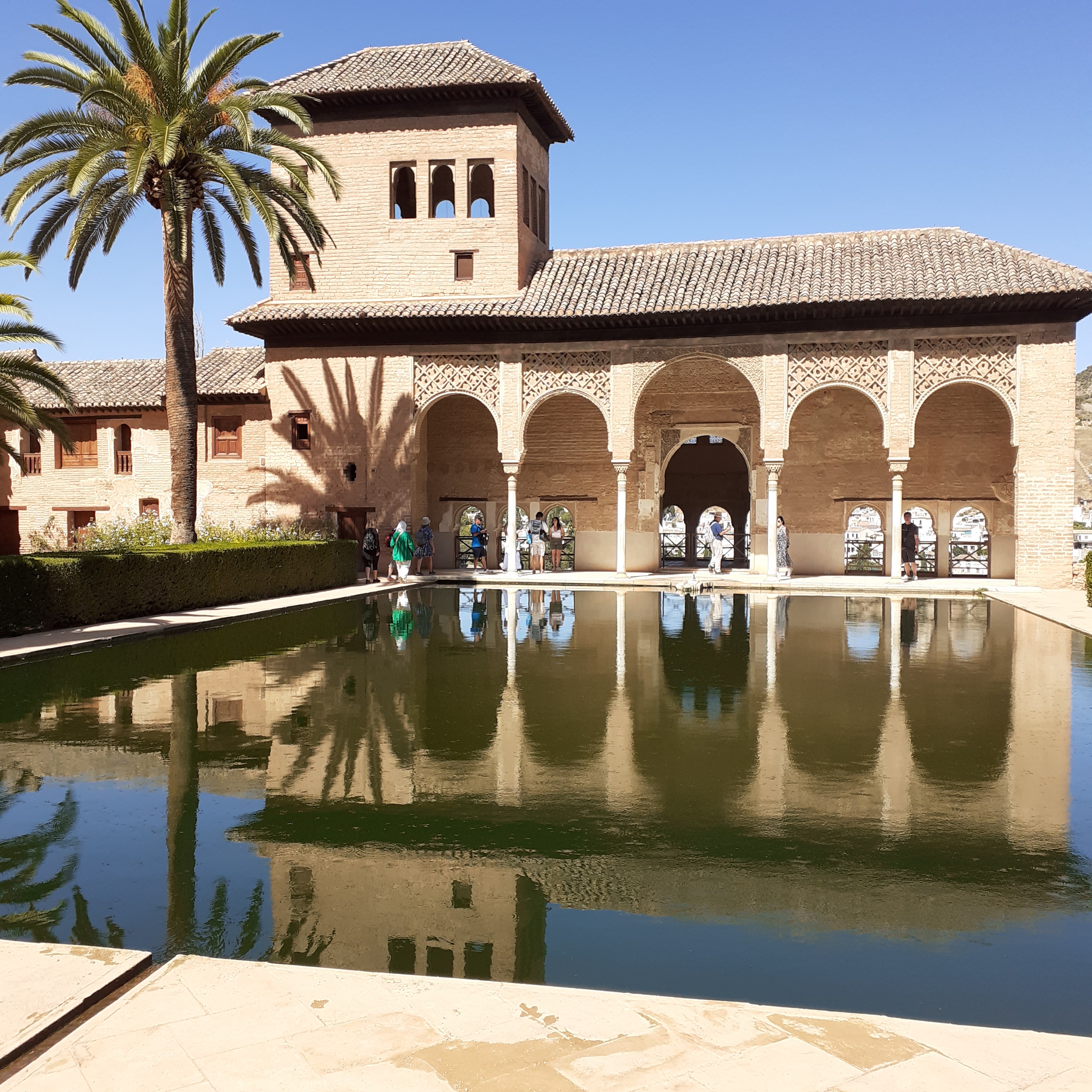
Just past the Nazrid Palace, the Partal Palace is accessible, This is the oldest surviving palace with an elegant pavillion overlooking a reflective pool. Calle Real is a public street near the southern wall. Along here is the Church of Santa Maria built on the old mosque. Further on is the American Hotel, with a cafe in its pleasant courtyard. I had stopped here before for some coffee and heat. Today we go for the Parador de Granada, a larger hotel. We stopped for a drink on its terrace, a perfectly relaxing conclusion to the day
Beyond the gardens of Partal and Secano we leave the Alhambra for the Generalife. This lies across a narrow ravine with beautiful gardens leading up to an attractive villa. Built as a retreat for the Royal Household free from the travails of the Palace, it offers some of the best views of the Alhambra, Granada and Sierra Nevada
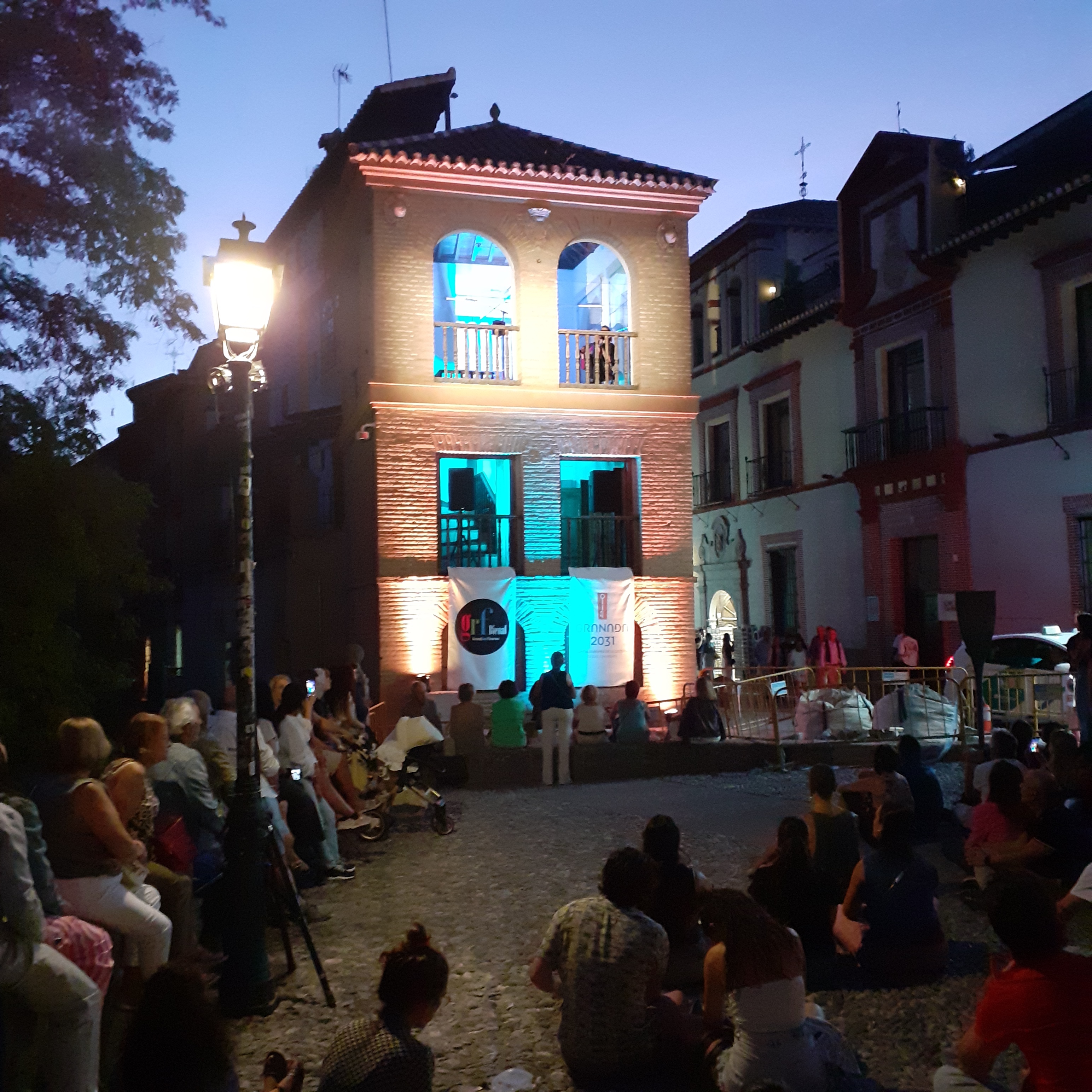
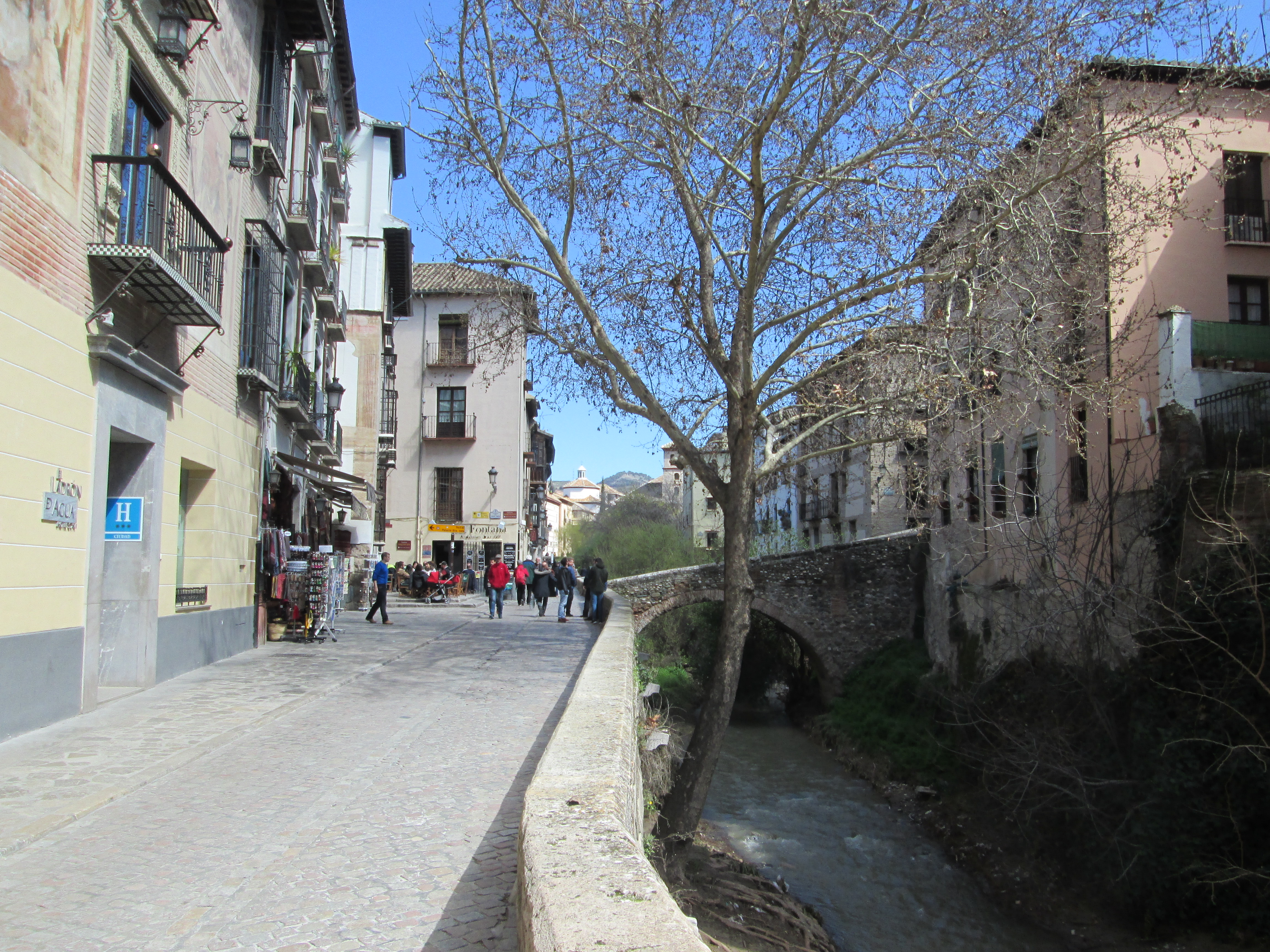
We left the Alhambra by way of Carretera de los Chinos, a long downhill saunter below the castle walls. This led us down to the Darro and Puenta del Rey Chico. There was a music concert that evening where the riverside street broadens into an esplanade with the floodlit Alhambra towering over the far bank. Crowds sat on the plaza, while a singer and guitarist serenaded from the tower at one end.
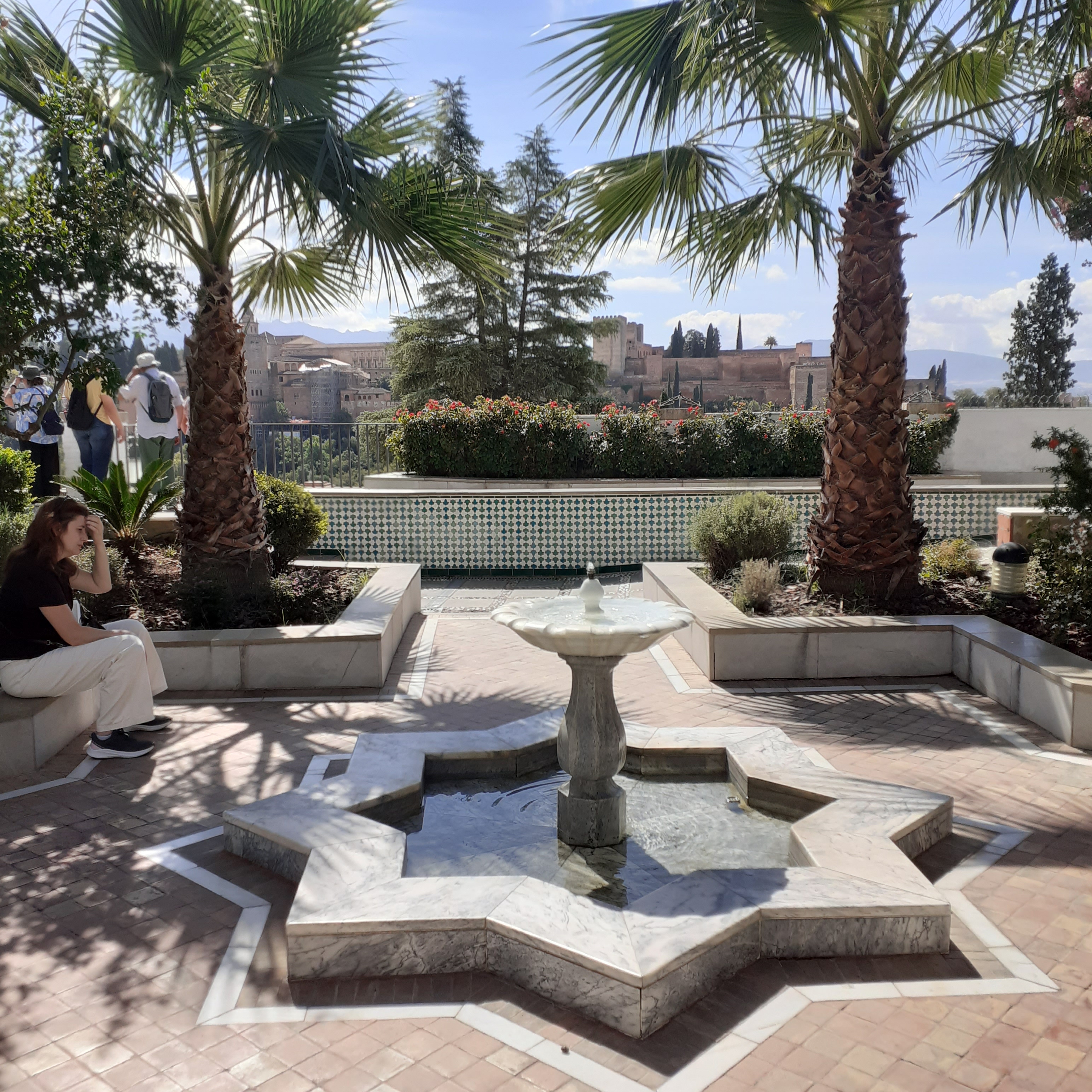
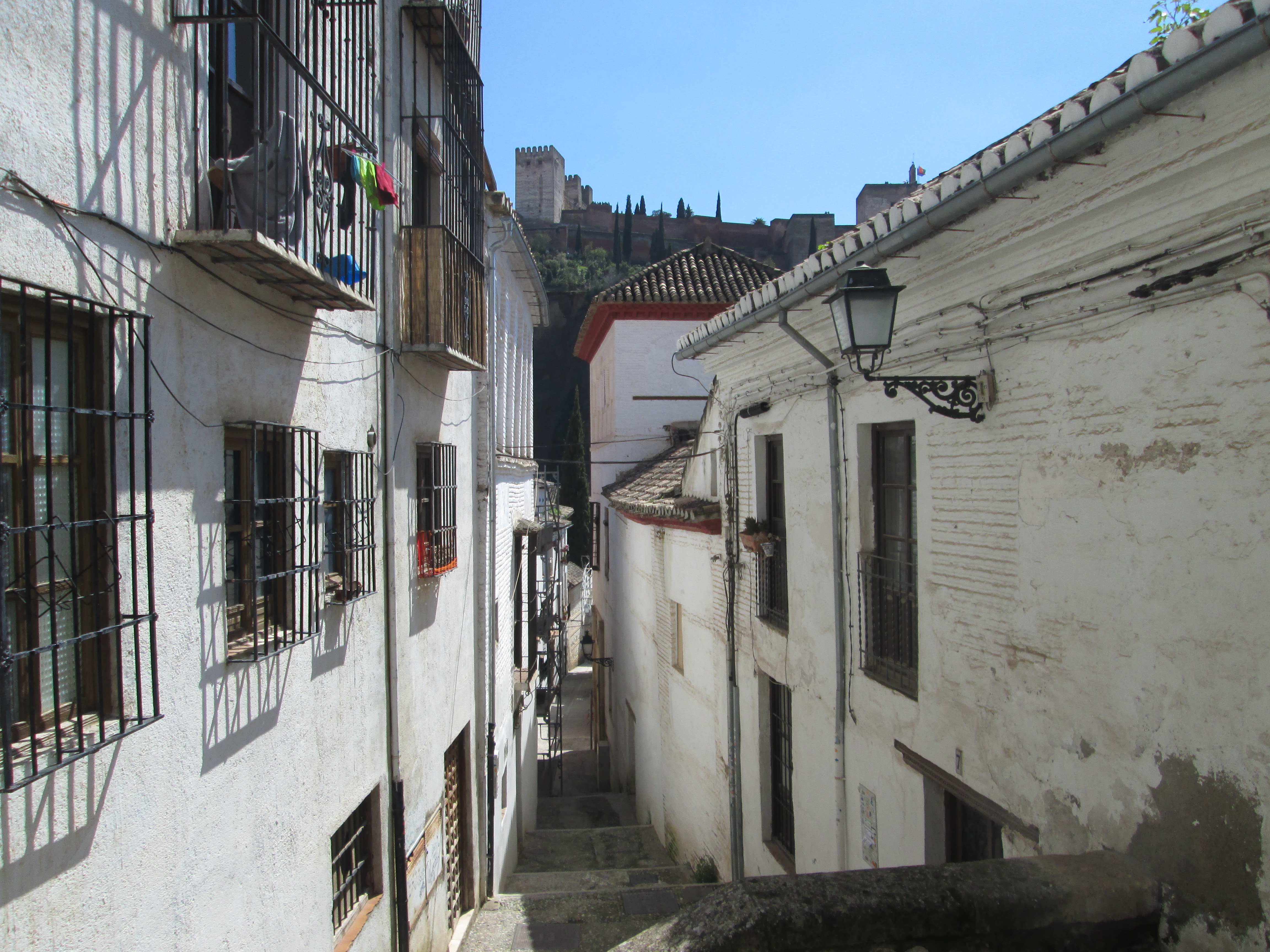
Facing the heights of the Alhambra is the steep ancient neighbourhood of Albaicin, and Sacromonte, the Sacred Mountain. From near the foot of Elvira there’s a sharp uphill to Plaza San Gregorio. The white church was built in the late sixteenth century, becoming deeply embedded in the community. We stopped adjacent for good food on a terrace at the edge of the commercial sector. From here the narrow street climbs up through the Alcaibin to the Mirador St Nicholas. The Mirador hosts such a view over sierra and castle that it must elicit an aching sigh or two. The grounds of the mosque next door offer respite, heat and throng dispelled in its subtle shade and soft fountains.
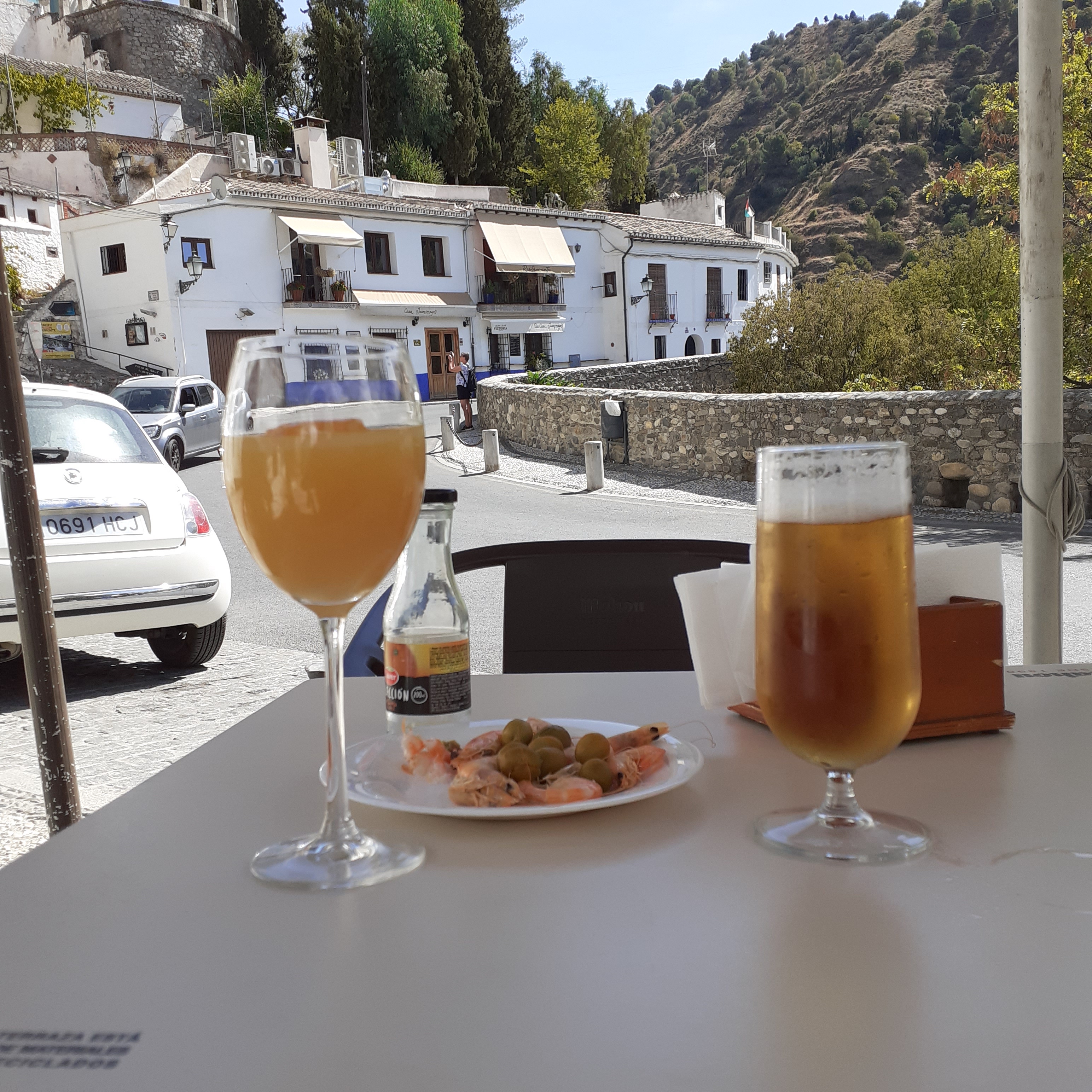
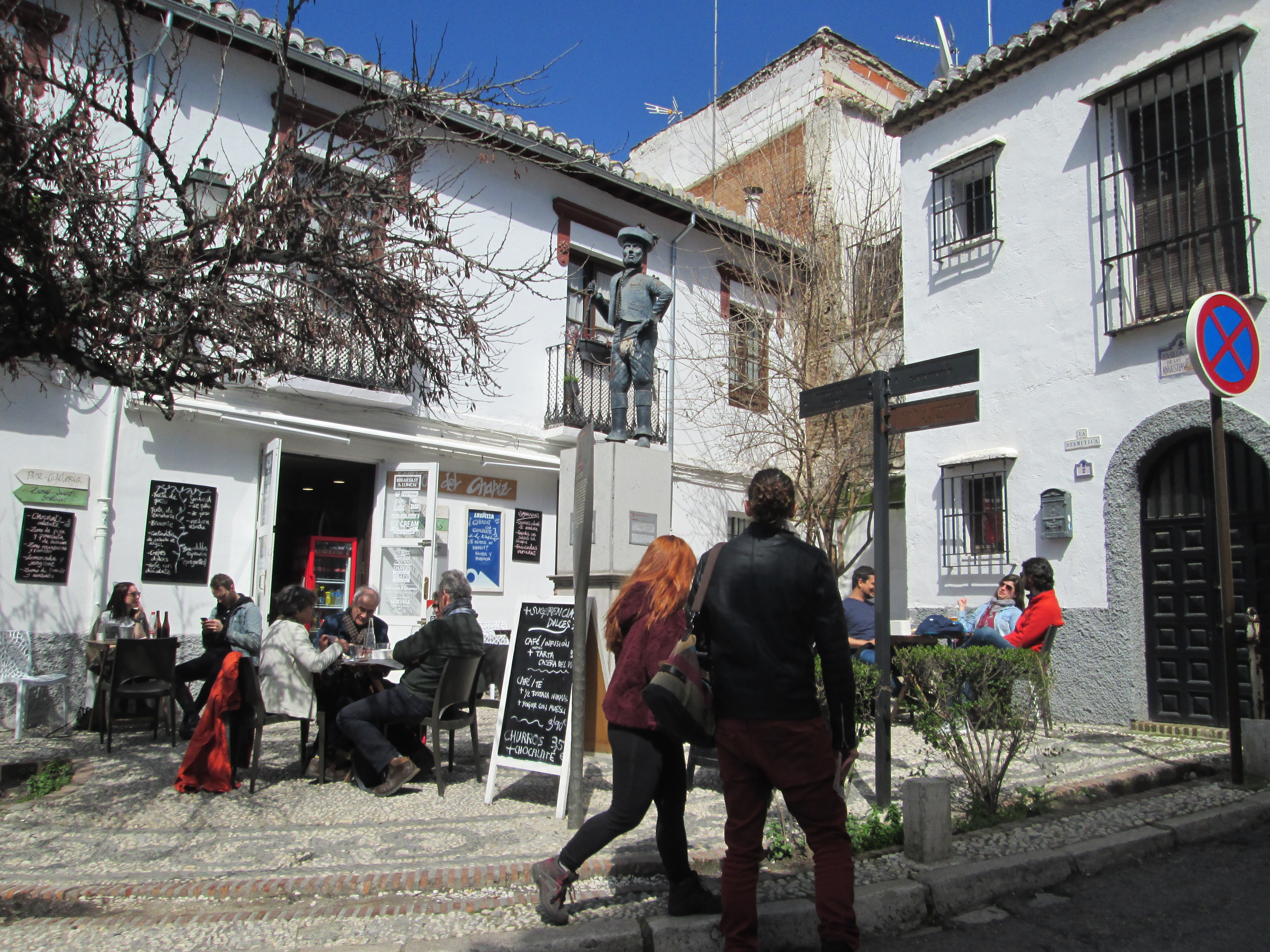
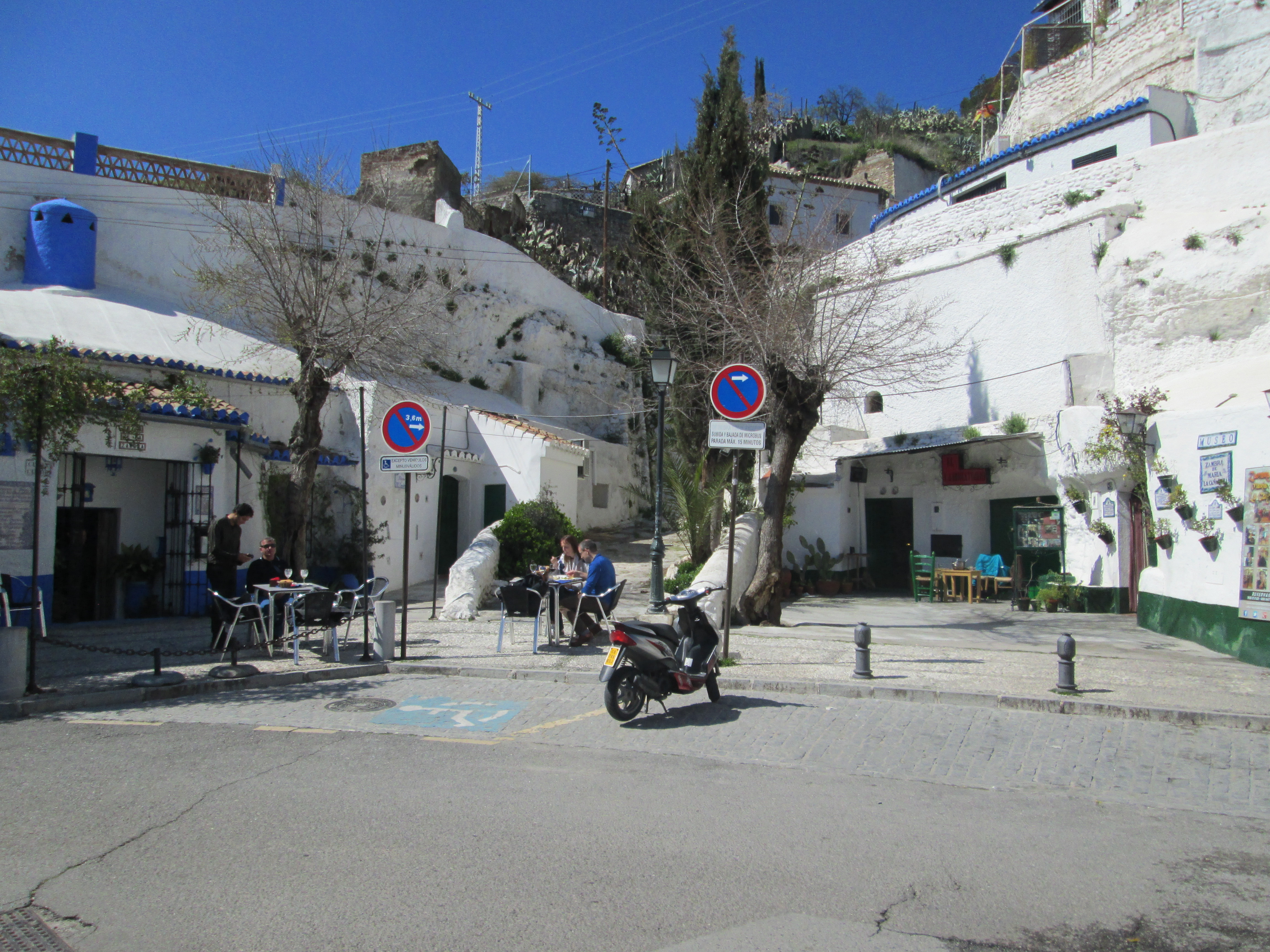
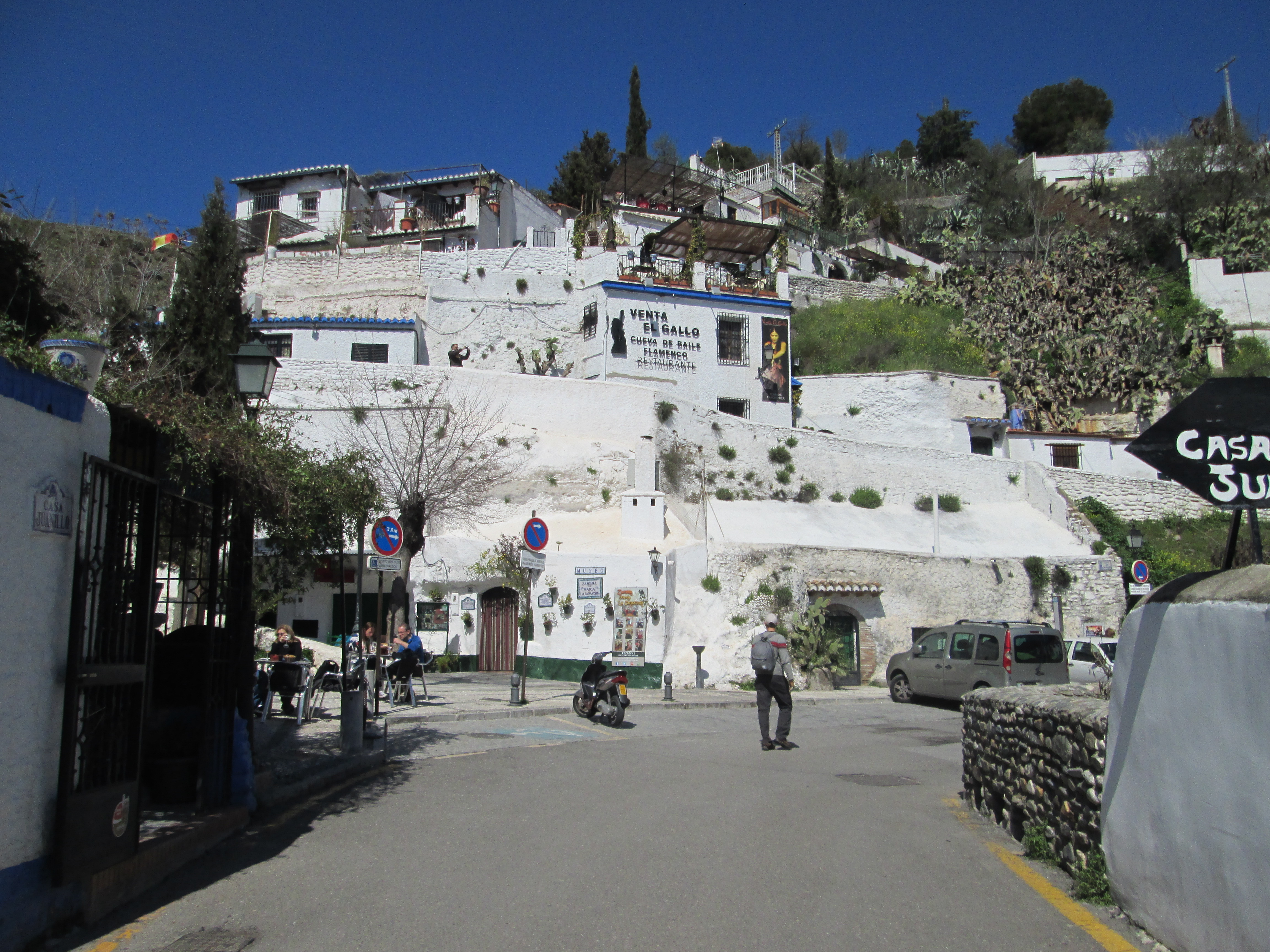
Beyond the Albaicin the steep hill descends to the Darro. There’s a turn at a picturesque, even picaresque, taverna, El Rincon del Chapiz. Take this turn to visit the Sacred Mountain. With our first step into Sacromonte, we are in a different world. The city evaporates and a mirage of a mountain top village rises before us. Winding up above the Darro Ravine, white houses cling to the slopes and the Sierra Nevada embraces all. We stop for a drink and tapas at Casa Juanillo, wondering how we have found ourselves in the middle of nowhere, and the centre of everything. This was originally the Gitanos quarter, and a mainspring for the source of flamenco music. Dotted all around are music venues; hold your whisht and you can hear the music echo from the stones and trees.
Fly away on my zephyr
I feel it more than ever
And in this perfect weather
We’ll find a place together
For old time’s sake, The Red Hot Chilli Peppers Zephyr Song (from By the Way 2002) to take us out, and up.



 xxharrison