Porto, Oporto

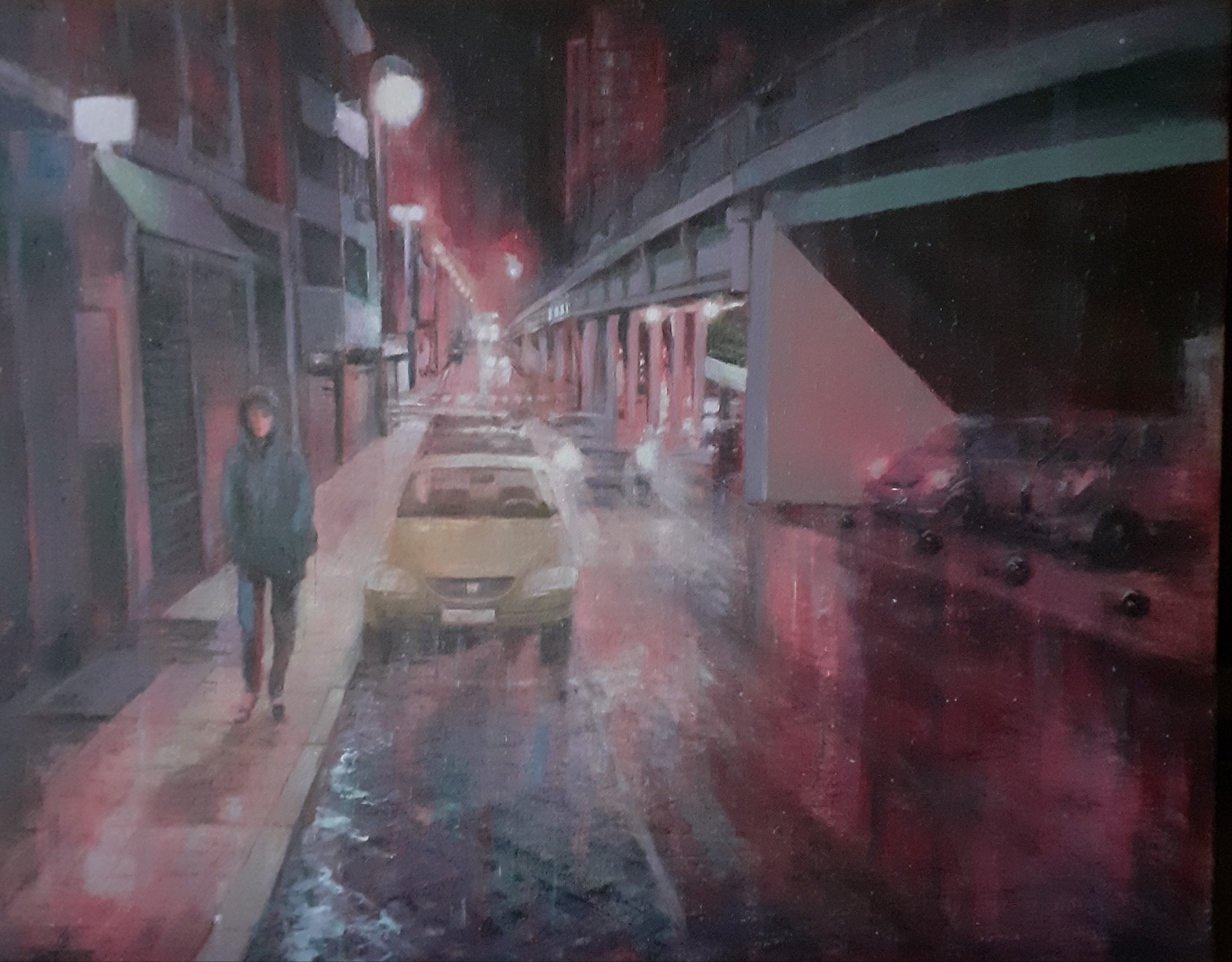
I visited Porto last September, my arrival coinciding with that of a rainfront which accompanied me for the duration. My accommodation, Sunny Balcony, Trindade, had an extensive, recessed balcony along the front wall giving me a good, sheltered panorama of the city in the rain from the fourth floor. Below my window was an overpass, taking the ring road below across a junction connecting to the city’s main street. It was busy, but cosy, there’s something soothing about the hiss of urban traffic in the rain. Visually too; the traffic forming into a sinuous illuminated snake. At ground level, the overpass provided shelter, and car parking. I passed under regularly between my accommodation and the restaurant across the road, and on to the city centre nearby.. The scene reminded me of an artwork I’d found many years ago in a calendar. The artwork, from the seventies perhaps, showed a similar underpass in an unnamed city, probably French or Belgian, the noirish nocturne suspended in a monochrome blast of chromium urban lighting. Porto was a calling for me to echo that painting.

In this acrylic I am using a different palette, with a more structured, geometric composition. I used a red ground, as the night is mild despite the rain, and the street lighting had a pinkish tinge. This is balanced against a cool grey for the city fabric with a dash of blue on the rainsoaked cobblestones. Of course, being me, it’s raining.

Why does it always rain on me?

Is it because I lied when I was seventeen?

Why does it always rain on me?

even when the sun is shining, I can’t avoid the lightning.

That song, by Scottish band,Travis, is taken from their 1999 album The Man Who. Lead singer, Fran Healy wrote it after a failed sun holiday in southern Israeli . Tell me about it. I have sometimes wondered if I could rent myself out to drought stricken regions as a rain god. Then again, there have been sunny days. Too many of them and you start missing the rain. So, let it fall, it washes the world and softens the sharpness of city life. And is often beautiful.

Howth Head Trip

North Dublin’s Sandy Shore – 11

Howth Head frames the Northern extremes of Dublin Bay, rising to 170 metres. Howth is from the Danish, Hoved, meaning headland. So, Howth Head is something of a tautology. In Finnegans Wake, James Joyce imagined it as the head of the giant Finnegan, with his feet in Chapelizod, and the Wellington monument in Phoenix Park indicating some happiness in between.

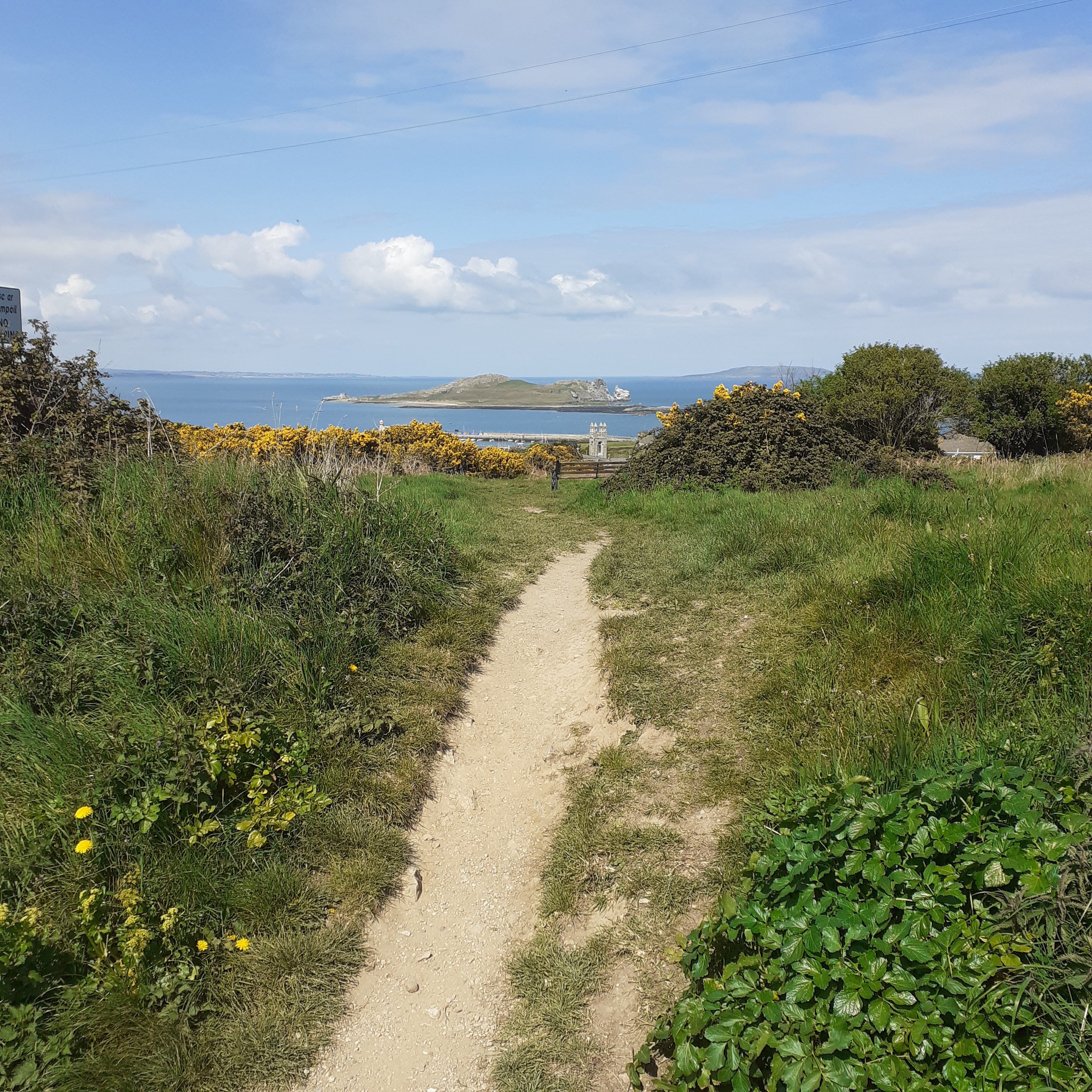
Howth has a population of over eight thousand, though is still colloquially referred to as a village. The commercial centre nestles on the north facing hillside near the end of the peninsula, fronting a large harbour with a fishing fleet, small cruise boats, and a marina. There’s a startling view across the harbour and the narrow, choppy sound to the deserted island of Ireland’s Eye.

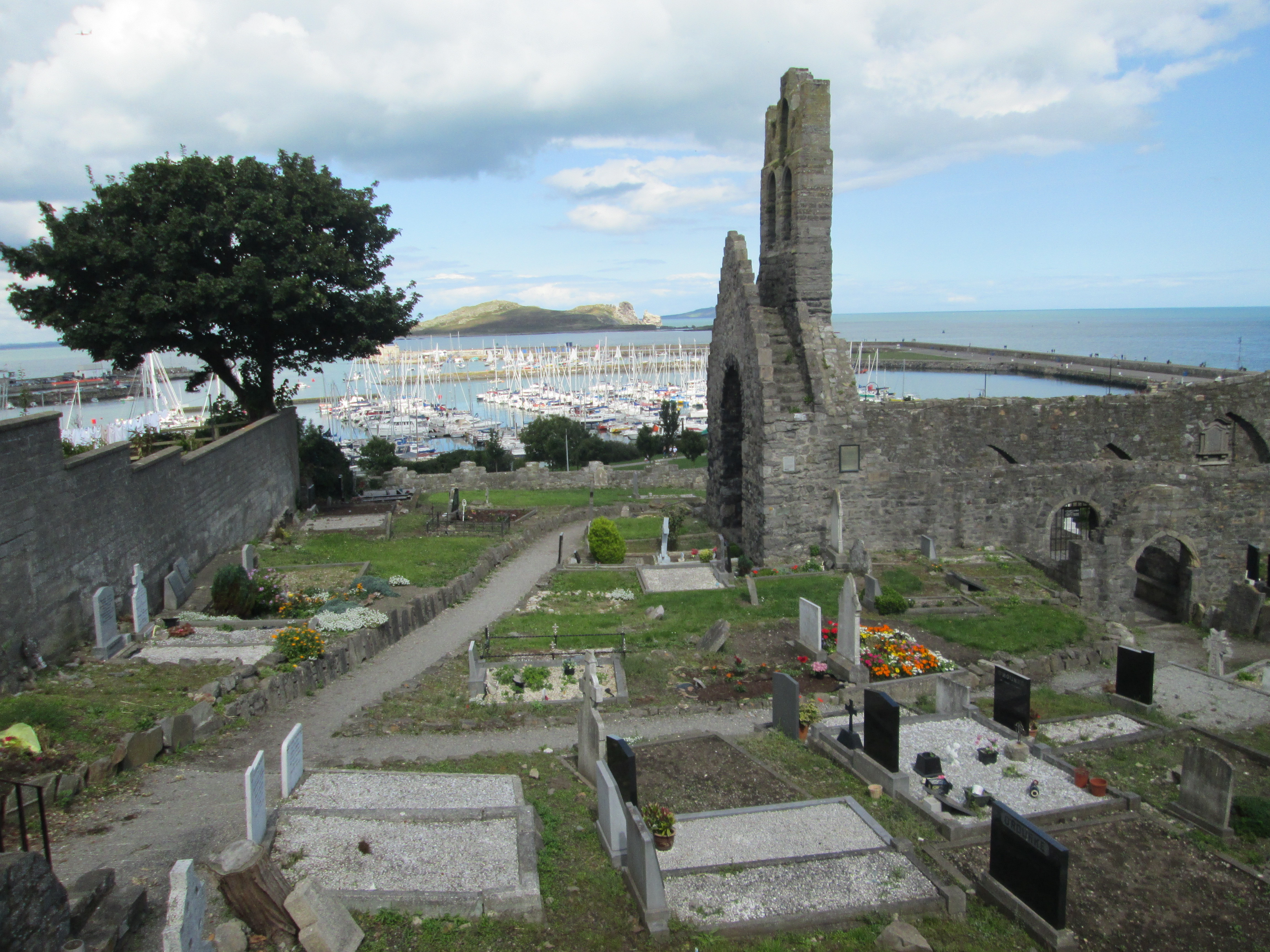
At the eastern end of the waterfront, the road rises towards the town centre by way of Abbey Street. St Mary’s Abbey and its graveyard commands the height above the Harbour. It was first established by Sitric Silkenbreard, King of Dublin, in 1042. In 1235 the parish church moved to St. Mary’s from the island, saving the locals from yet more boat trips on their day of rest. The present church dates back to late fourteenth century. 

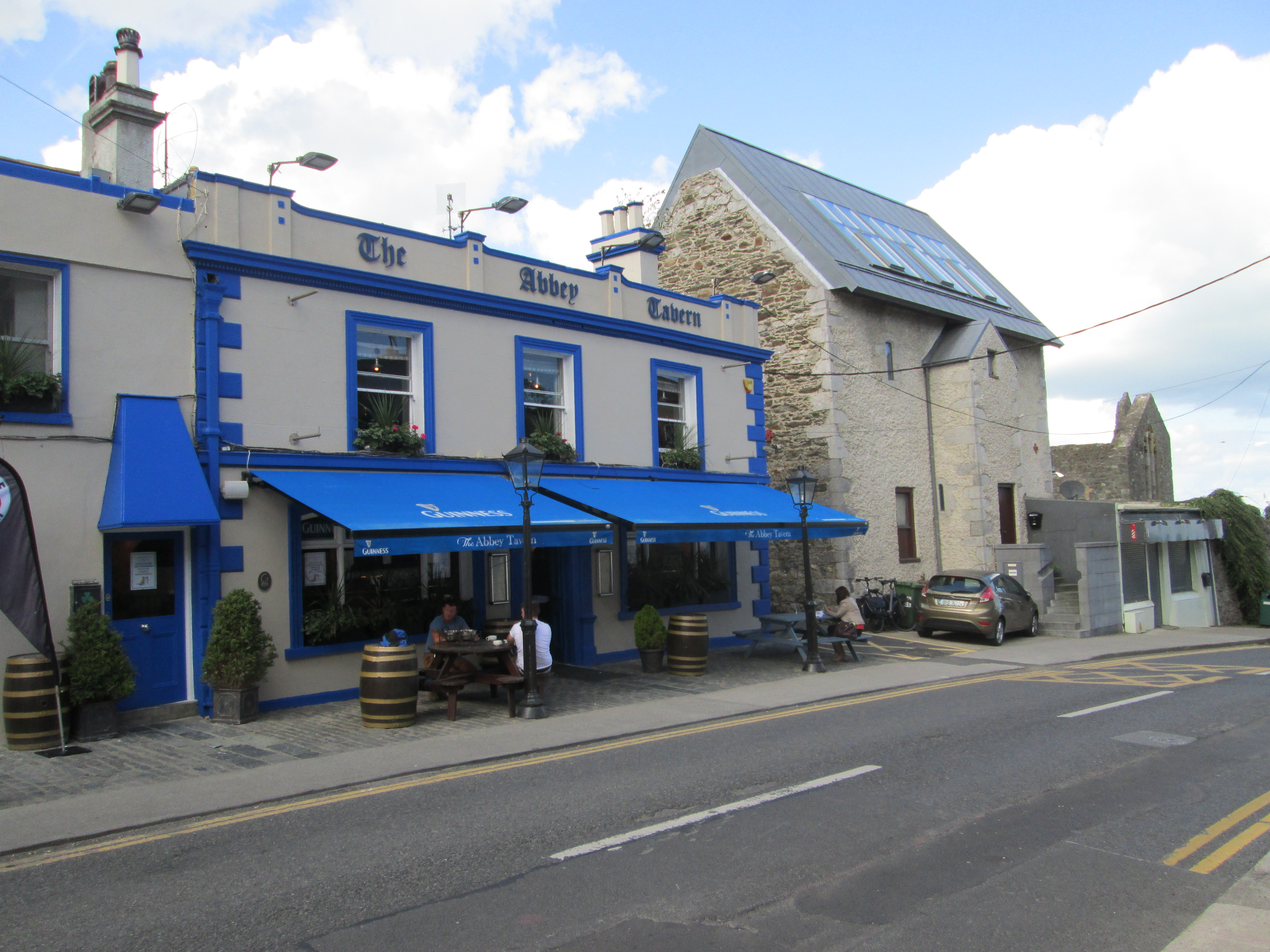
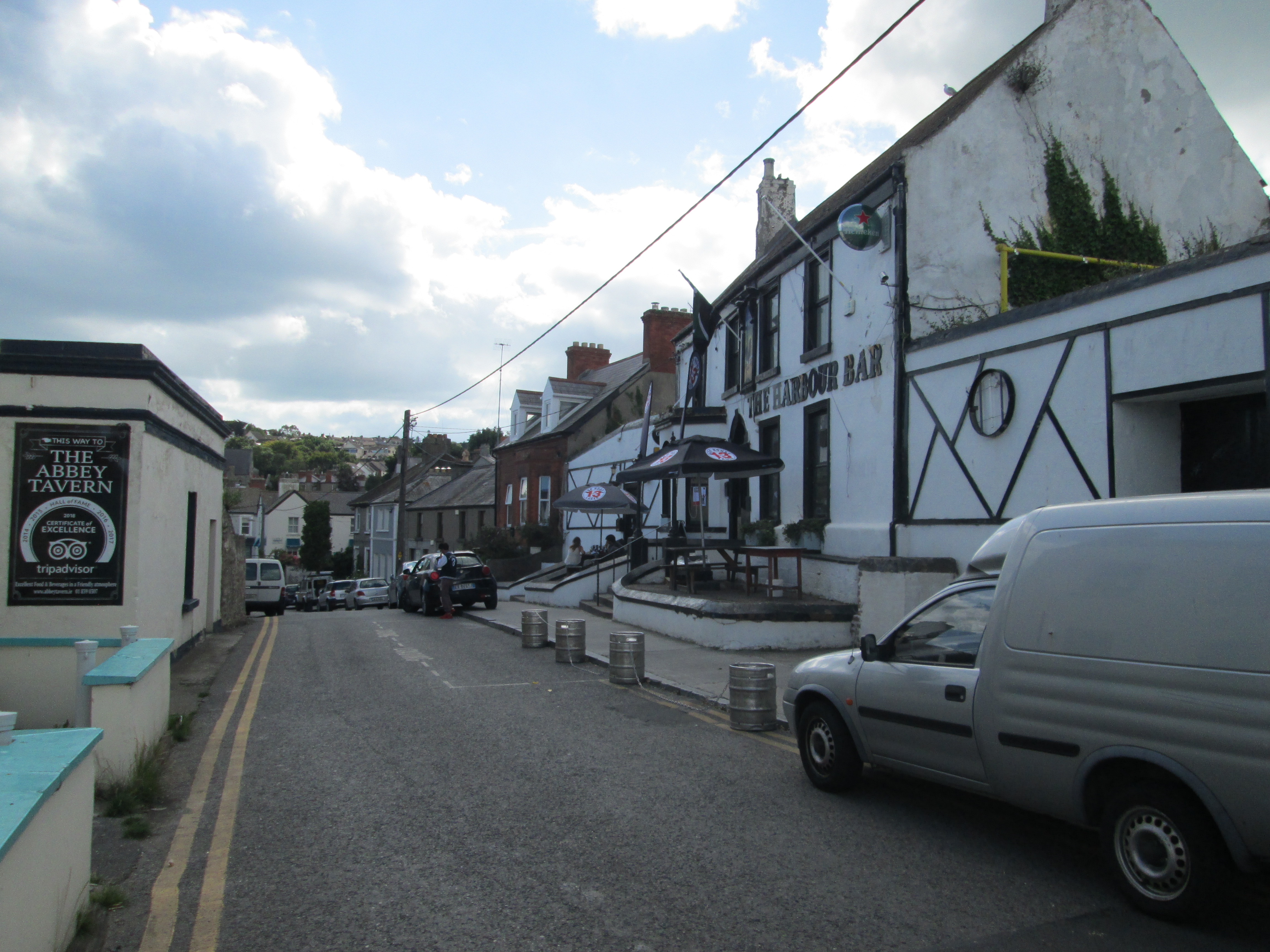
The Abbey Tavern is adjacent. This was a popular haunt of mine in the seventies. We translated that to the Happy Tavern, which with the drink flowing, the smoke blowing, and smiling friends all around, it certainly was. A decade earlier, it was one of the cradles of the Irish Folk boom of the sixties. As a singing pub, it required singers, and so Abbey Tavern Singers were formed in 1962 by publican Minnie Scott-Lennon. The group expanded to include a host of musicians playing fiddle, guitar, uileann oipes and spoons and an album was released on Pye records in 1965.

We’re off to Dublin in the Green, was their best known song. It was a renowned rebel-rouser, particularly at the time of the fiftieth anniversary celebrations of the 1916 Rising. But it was as a theme song for an advertising campaign by Canadian brewers Carling that brought it to wider notice. The song became a huge hit in Canada and also a US top 100 hit.

As for the Rising, Howth contributed to that event in the famous arms smuggling enterprise. On the 26th July 1914 Erskine and Molly Childers sailed their private yacht the Asgard, loaded with German rifles for the Irish Volunteers, into Howth Harbour. The Harbour Master reported the landing to the authorities and the Volunteers ran into a detachment of police and British soldiers, the Scottish Borderers, at Clontarf. The forces of law and order managed to seize twenty rifles, but had to return them after a court case established that police and army were acting illegally. And, after all, the Volunteers were supporting the writ of Parliament, unlike the British army, whose loyalties were ambiguous, to put it mildly. In total 1,500 rifles for the Irish volunteers were put ashore, 900 at Howth and the rest at Kilcoole in County Wicklow. Later a confrontation between a crowd of civilians and the Scottish Borderers on Bachelor’s Walk in Dublin, resulted in the death of four people when the soldiers opened fire. Three people were shot, one Sylvester Pidgeon, died of bayonet wounds.

The restored Asgard is on display in Collins Barracks, Dublin. The name lingered on here in Howth for a while. It was the name of a bar and hotel overlooking the tip of the peninsula on nearby Balscadden Bay. The Asgard was for a time run by Philomena Lynott, mother of Philo himself, main man of Thin Lizzy. There were regular gigs here in the summers of the seventies, though none, that I saw, with Lizzy. To one of these, sometime in the mid seventies, I brought M for our first date. It’s not the music I remember, but I’m sure it must have been heavenly. While the fire there kindled is still burning, the Asgard Hotel itself burned down in 1982 and was replaced by apartments. Lynott died in London in 1986, and there was a funeral mass in Howth. He is buried nearby at St Fintan’s Cemetery, Sutton.

Balscadden Road hugs the rocky coast as it winds up towards the Summit. WB Yeats lived at Balscadden House for three years from 1880. He would later write of local ghost stories and a poem, Beautiful Lofty Things, mentions his own paramour: Maud Gonne at Howth Station waiting a train. The blue plaque on the house quotes from He Wishes for the Cloths of Heaven, 

I have spread my dreams under your feet, tread softly because you tread on my dreams

Today, I meander through the town and on uphill to gain the summit. The town itself is much faded from how I remember it. The central hotel, once called the Royal and later the Baily Court, is long closed and gives Main Street a distinct feeling of desertion. However, the pretty Carnegie Library next door endures. The Church of the Assumption dominates the top of Main Street. This is the Roman Catholic parish church. It was designed by William H Byrne and built in 1899. It’s high square tower,  topped by pinnacles and gothic gargoyles give it a sense of drama.

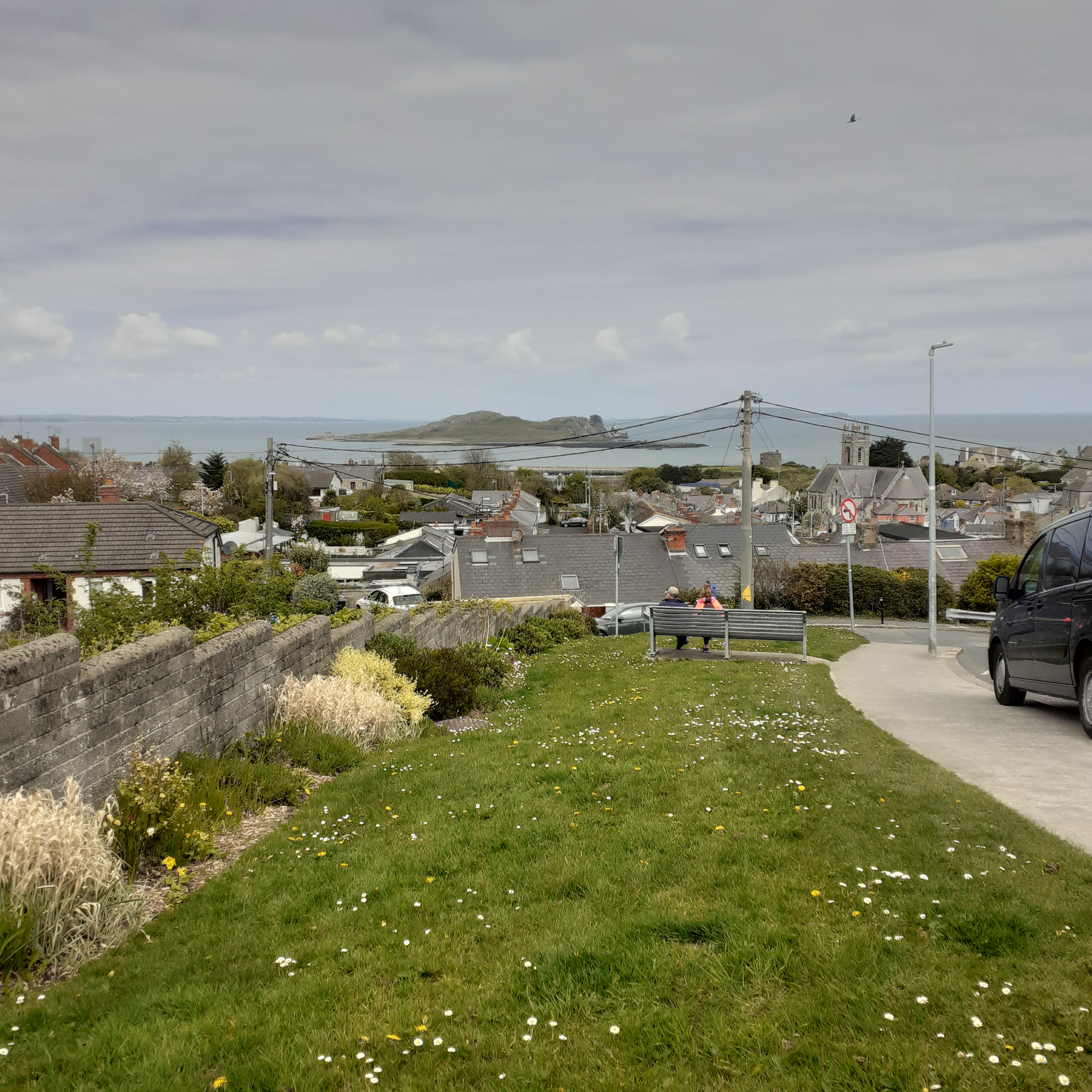
I fork right at the church; though left up Thormamby Road is more direct. Zigzagging upward through the steep and prosperous suburbia I am glad of the occasional bench to catch my breath, and absorb the wonderful vista that opens below. I manage to get lost halfway up, but am soon set right by a young man smoking an aromatic cigarette. He directs me towards the summit, which emerges from the fog in glorious sunshine.

And if you go chasing rabbits

And you know you’re going to fall

Tell ’em a hookah-smoking caterpillar

Has given you the call

Call Alice

When she was just small

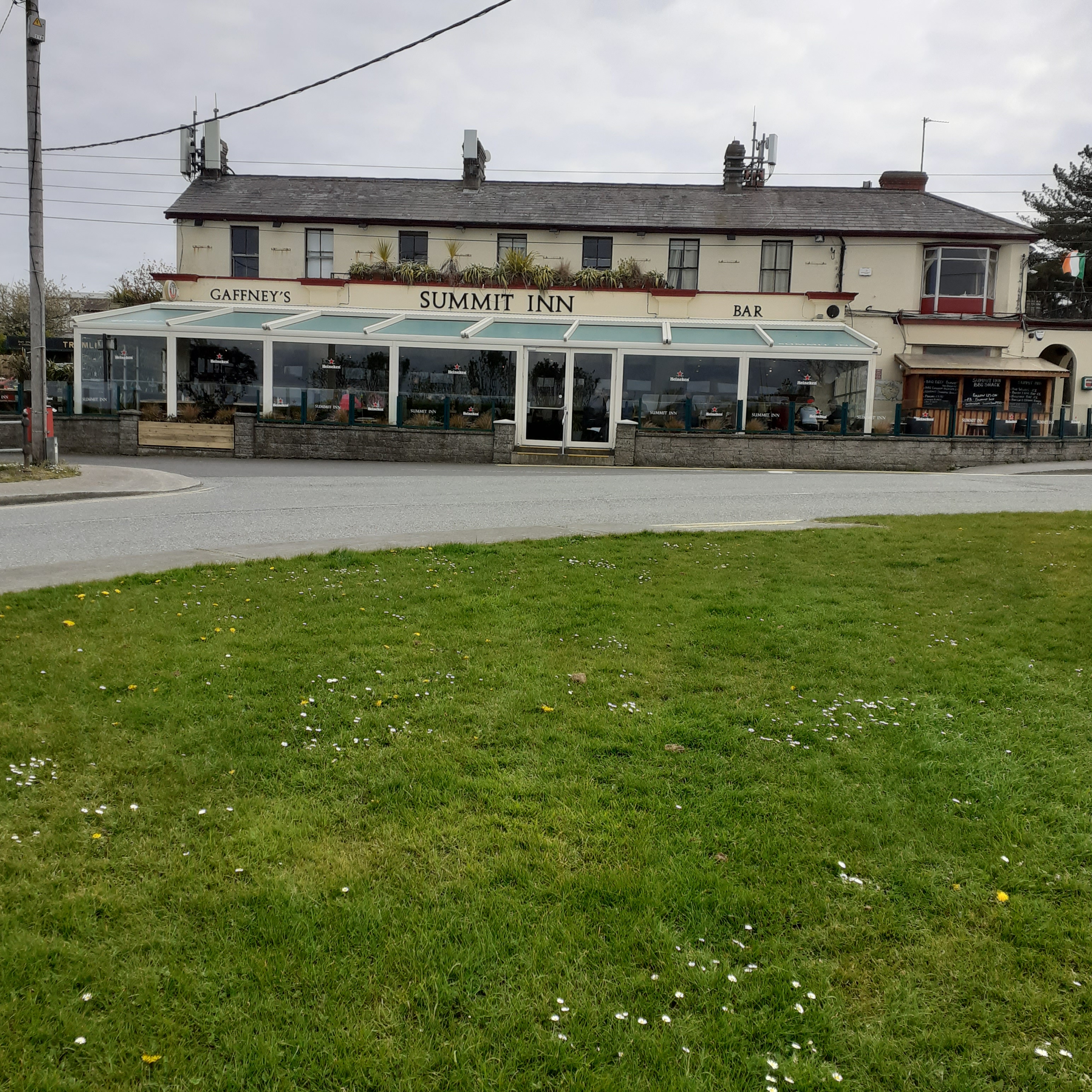
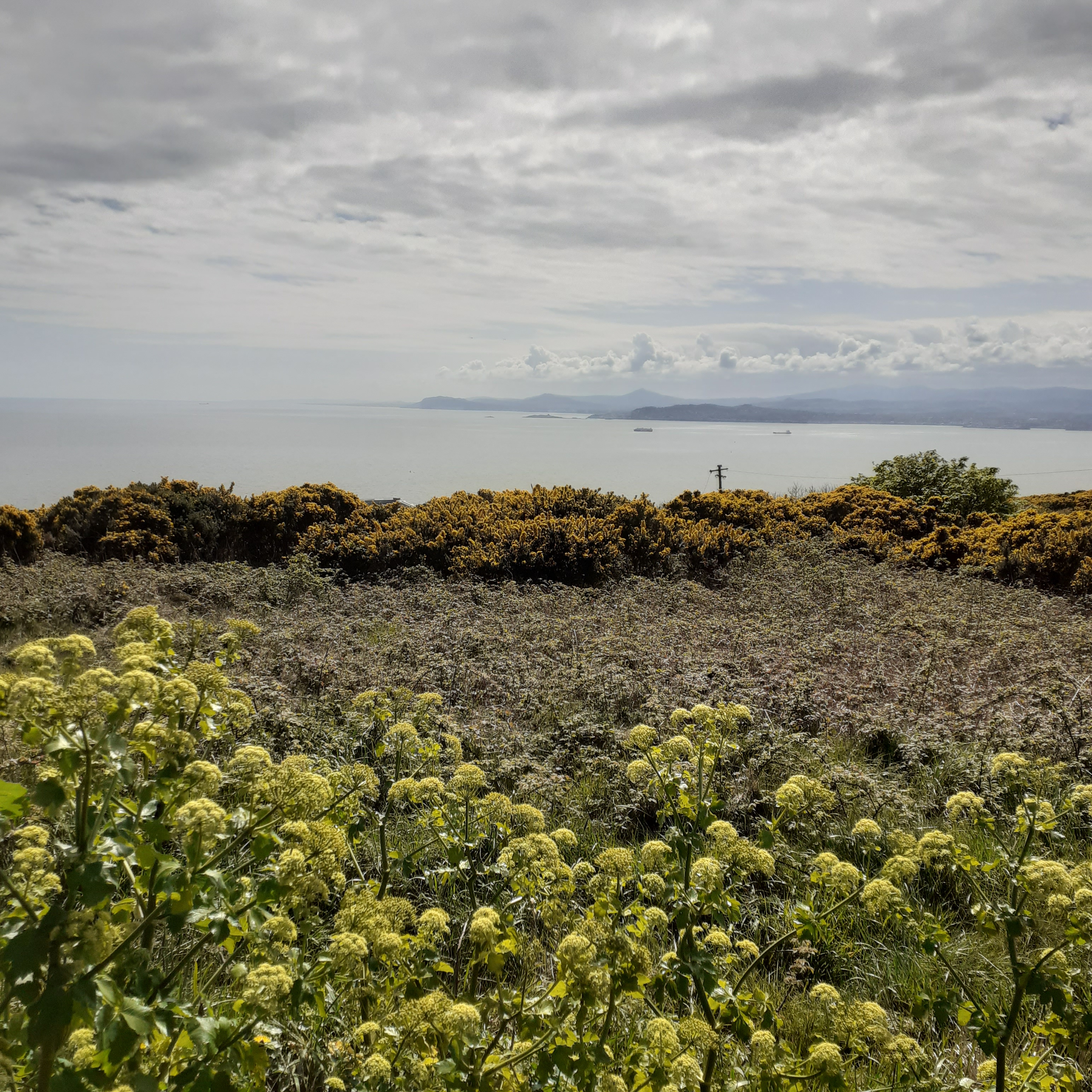
The Summit Inn is a good oasis for food and refreshment. Dating back to the nineteenth century. It boasts a traditional bar and turf fire, and there’s a good menu with main plates under twenty euro, and a pleasant outdoor terrace. The summit itself is accessible by bus and car, and offers one of those to-die-for views. Dublin city and the Wicklow Mountains are arranged across the blue waters of the bay, stilled with height and distance, too gorgeous to merely describe in word or pixel. 

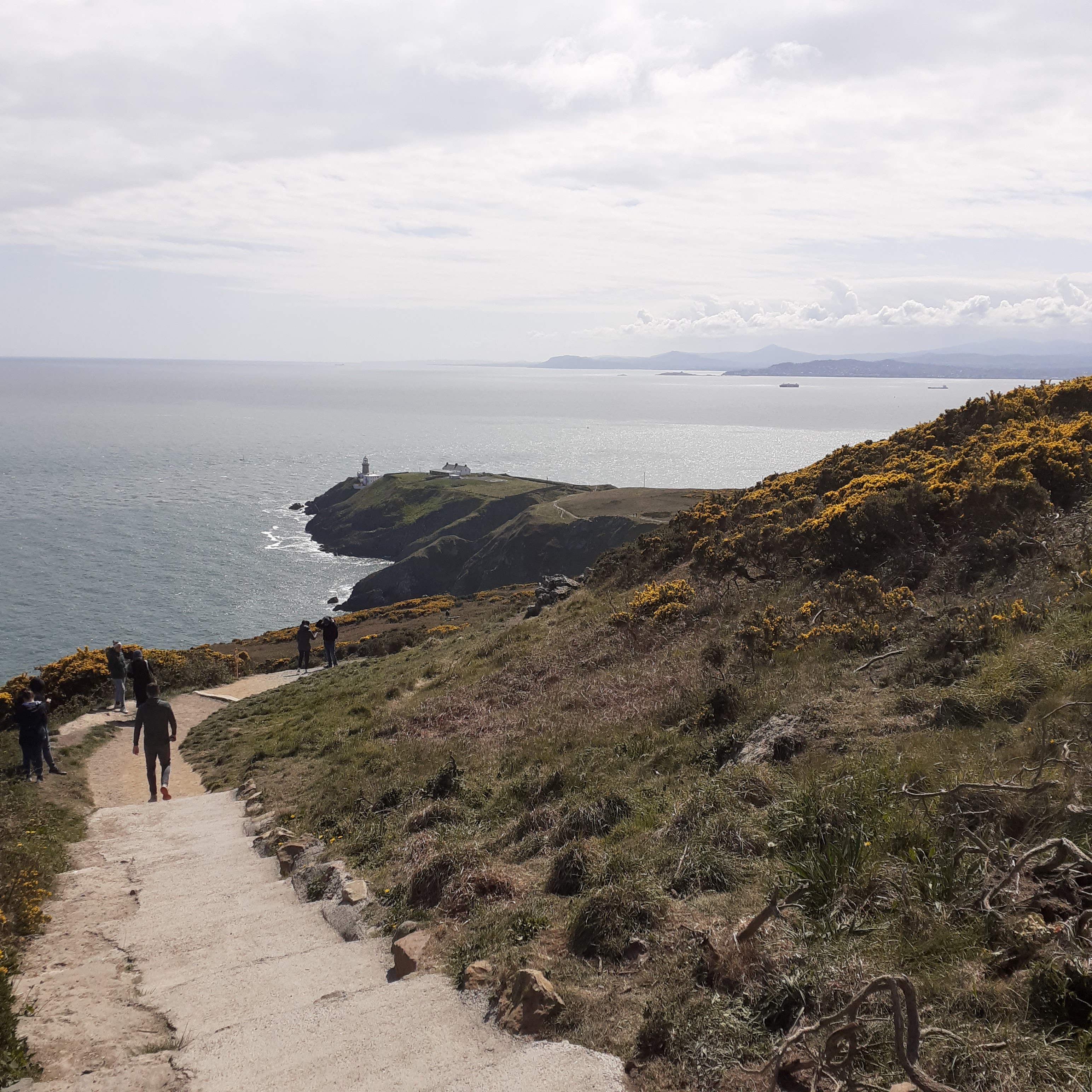
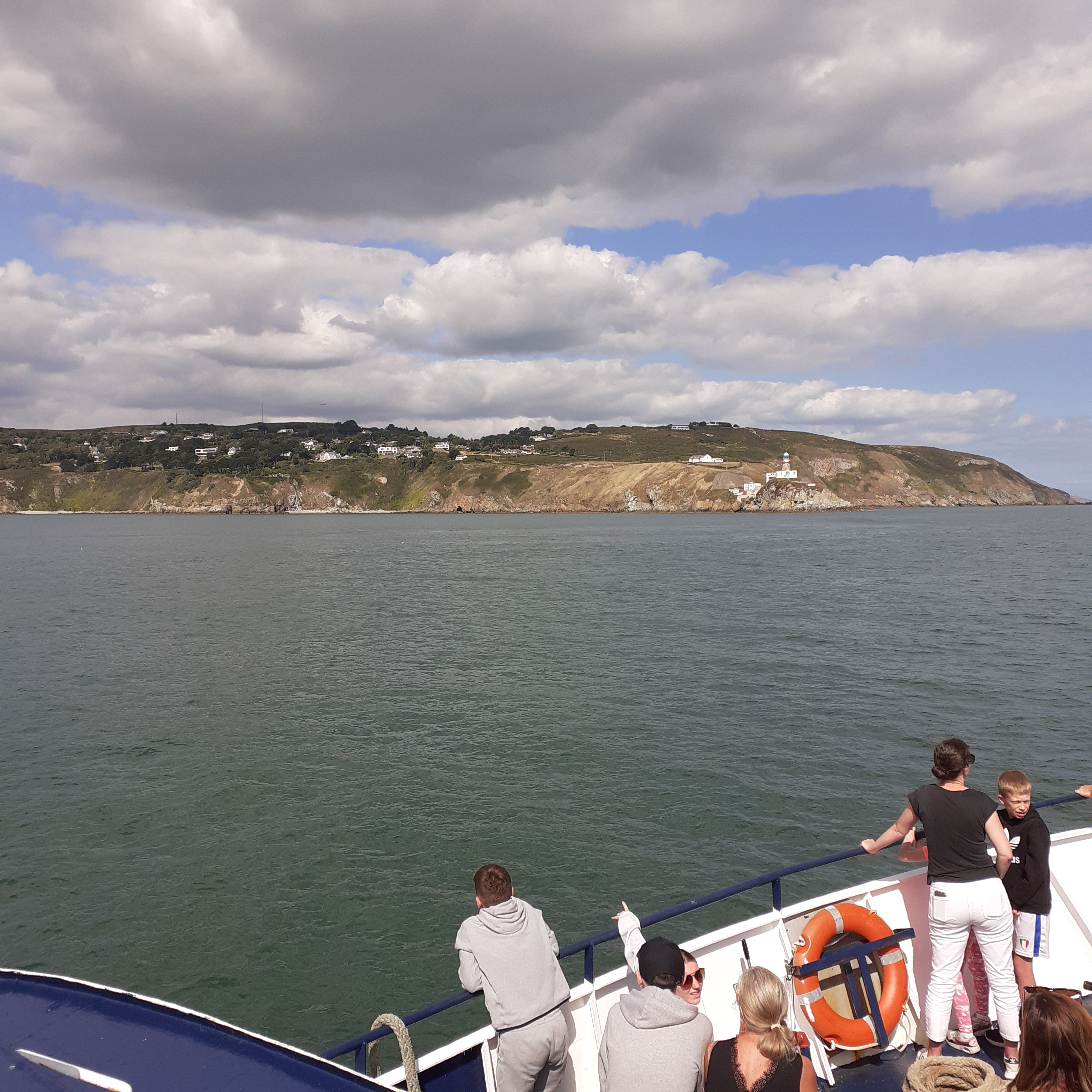
Amongst the many walks on the headland, the most well trodden heads down a steep and rugged path towards the Bailey Lighthouse below. The Bailey was first built in 1665, back in the days of the Restoration, by Sir Robert Reading. It had a square tower supporting a coal fired beacon. In 1810 this was replaced with a new structure on lower ground designed by George Halpin. He was Inspector of Lighthouses and considered the father of irish lighthouses; the Bull Wall, the Skelligs and Wicklow Head being amongst his work. In fact he increased the number of lighthouses fivefold to seventy two by the end of his career. He died in 1854 while inspecting a lighthouse. The Bailey tower is forty metres above sea level and the lightkeepers house is adjacent. It was the last Irish lighthouse to go automatic in 1997, though an attendant still lives there. The optic is on display in the National Maritime Museum of Ireland in Dun Laoghaire.

As I said, there are plenty of walks on the headland where you can free up your head with the unique balm of the great outdoors. A walk along the cliffs will take you back by Balscadden Road to the Harbour though I am taking a more direct path back to the station. First of all, a stop at the Summit Inn is in order. Food is available, but I am more inclined to feed my head, in honour of ancient days, and take my frothy pint into the sunshine.

One pill makes you larger

And one pill makes you small

And the ones that mother gives you

Don’t do anything at all

Go ask Alice

When she’s ten feet tall

White Rabbit was written by Grace Slick and features on Jefferson Airplane’s 1967 second album Surrealistic Pillow. It predates Lennon’s Lucy in the Sky with diamonds but is similarly of its time. Like that song it is heavily influenced by Lewis Caroll’s Alice, though Slick specifically uses Alice in Wonderland references as a metaphor for mind expanding drugs. It also, most potently, extols the formative value of reading, most especially when young. What a mind altering experience that is. Feed your head!

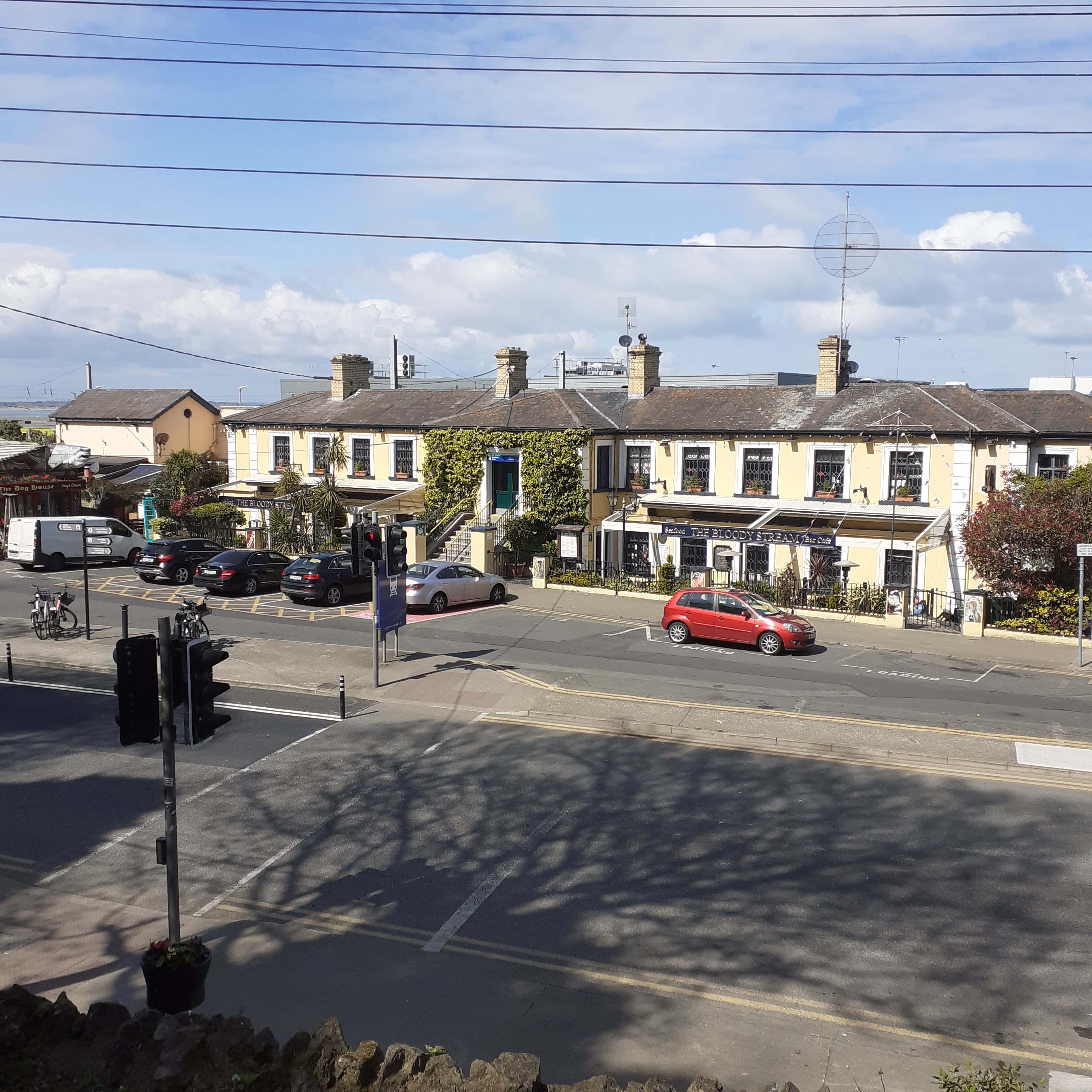
The walkway back down to sea level follows the old tramway, which ceased in 1959, to the head of Main Street. This is an easy, slow descent, well maintained. Occasionally, it gives elevated views of Ireland’s Eye, but by and large, the view is restricted by the hedging to each side. At a lower level, you can connect with the town, or continue on the marked path which skirts a housing estate before becoming a short forest trail along a rugged descent to the Station and the Bloody Stream.

Howth by Boat

North Dublin’s Sandy Shore – 10

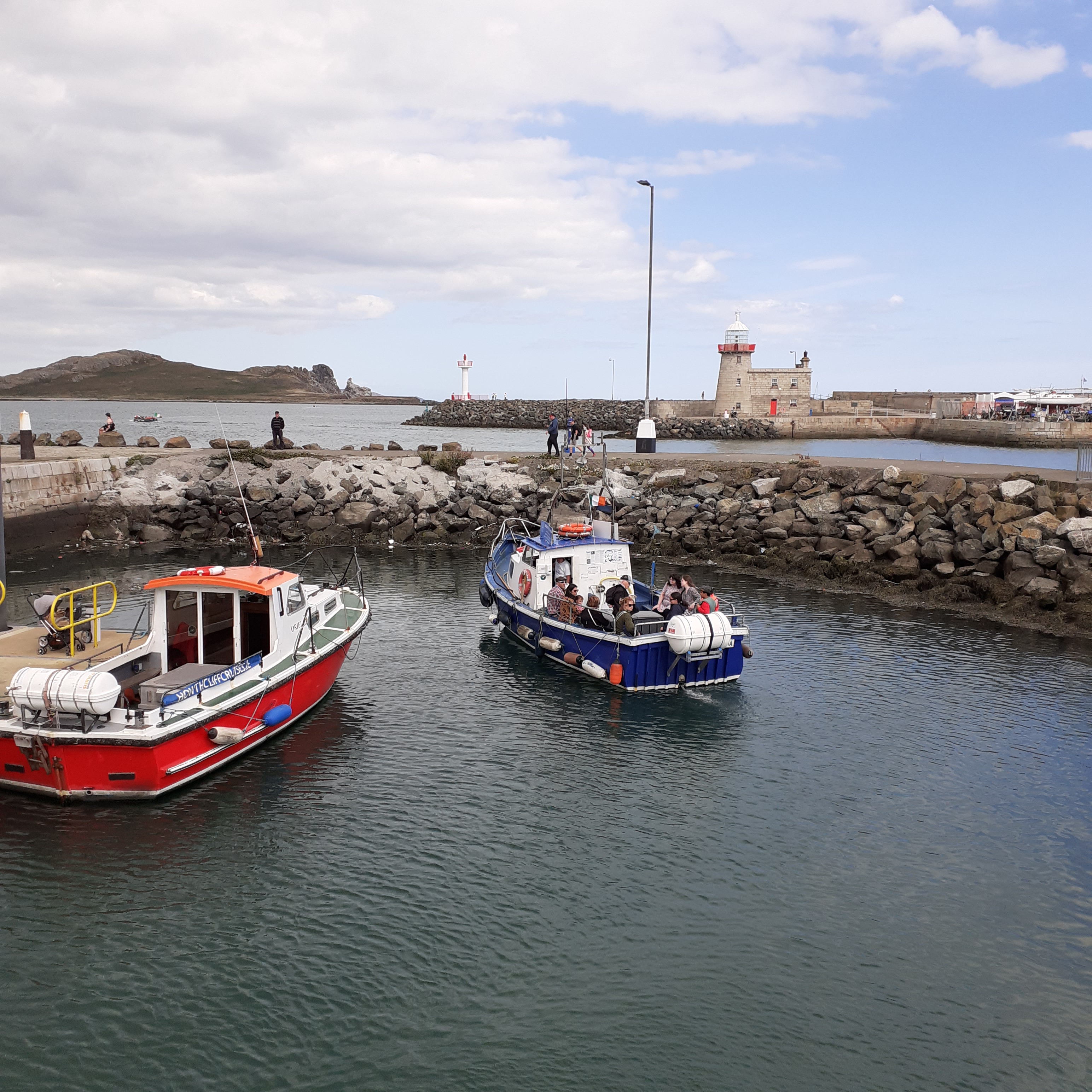
My usual mode of transport to Howth is the excellent Dart service, which travels all around the Bay from my home in Bray, via Dublin to the two northern outposts of Howth and Malahide. You can have also take a trip to Howth from Dun Laoghaire by boat. The journey can be booked in advance, costing twenty five euro, and leaves from Dun Laoghaire’s East Pier. Myself and M picked a pet day with sunshine and serene sea.

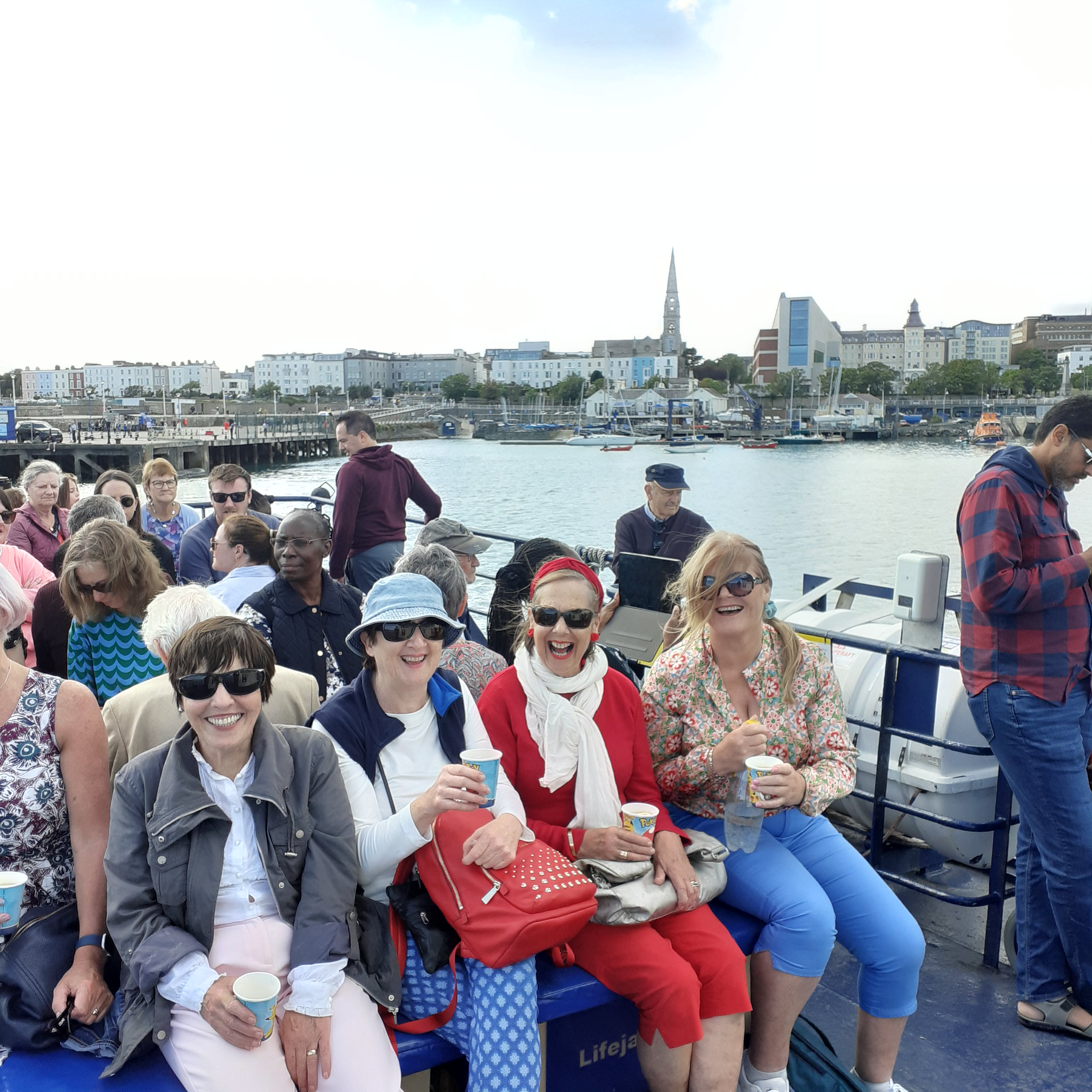
The St Bridget holds about a hundred passengers. Dublin Bay Cruises operate the service and other cruises around the bay. It is run by the Garrihy family, who also operate the Doolin to Aran ferry off the west coast of Clare. The open deck was well taken when we boarded with the passengers in high spirits. A friendly crewman directed us to a handy seat near the prow. A group of ladies on a day out toasted me as I took photos on the open deck. It’s an hour long cruise with an occasional commentary on the sights of interest.

Dun Laoghaire harbour was opened in 1820 by King George IV. The growing town became Kingstown, changed from Dun Leary, Leary’s Fort. When completed in 1842, it was the largest manmade harbour in Europe. In 1824 it acquired the Mail Boat service which had previously used Howth. The ferry to Liverpool continued to operate until 2014. Large cruise ships do visit, often mooring in deeper water outside the harbour. Though it once had an extensive fishing fleet, this was overtaken by Howth as the designated fishing port. 

We head out through the portal of its twin lighthouses into the open sea. The Great South Wall stretches four kilometres into the bay, connecting with the city quays, Dublin city rising from the waters beyond. The land is marked by the giant twin chimneys of the Poolbeg Generating Station, or the Pigeon House as it’s known. This refers to the old generating station, from 1900, which itself was named for the caretaker’s lodge from 1761. The caretaker was John Pigeon, who later opened a restauant and hotel. Across the Liffey estuary, the North Bull Wall, hanging down from Clontarf, frames the harbour. The Bull Island, formed by the Wall, is fronted by the spectacular five kilometre long Dollymount strand, with a nature reserve, bird sanctuary and two golf courses.

Through three hundred and sixty degrees, the panorama on deck is rich in spectacle and story. How fine it is to take a trip around the bay by that most traditional of transport modes, with my heart’s desire and a song in my head.

Timothy Leary’s dead

no n,n, no he’s outside, looking in

he’ll fly his astral plane

take you trips around the bay

bring you back the same day, Timothy Leary.

Legend of a Mind was written by Ray Thomas of the Moody Blues. It appeared on their third album, In Search of the Lost Chord in 1968. This was, incidentally,  the first studio album I owned, a Christmas present from my folks when I was thirteen. The perfect age to fill your head with rock, and all forms of strange new things.

Leary’s trips around the. Bay referred to the bay area of San Francisco where he lived in the late sixties. His trips didn’t involve boats, nor indeed any form of transport. Leary, the most dangerous man in America, according to Richard Nixon, promoted the use of LSD and psilosybin, to discover a higher level of consciousness.

Along the coast you’ll hear them boast

about a light they say that shines so clear

so raise your glass we’ll drink a toast

to the little man who sells you thrills along the pier

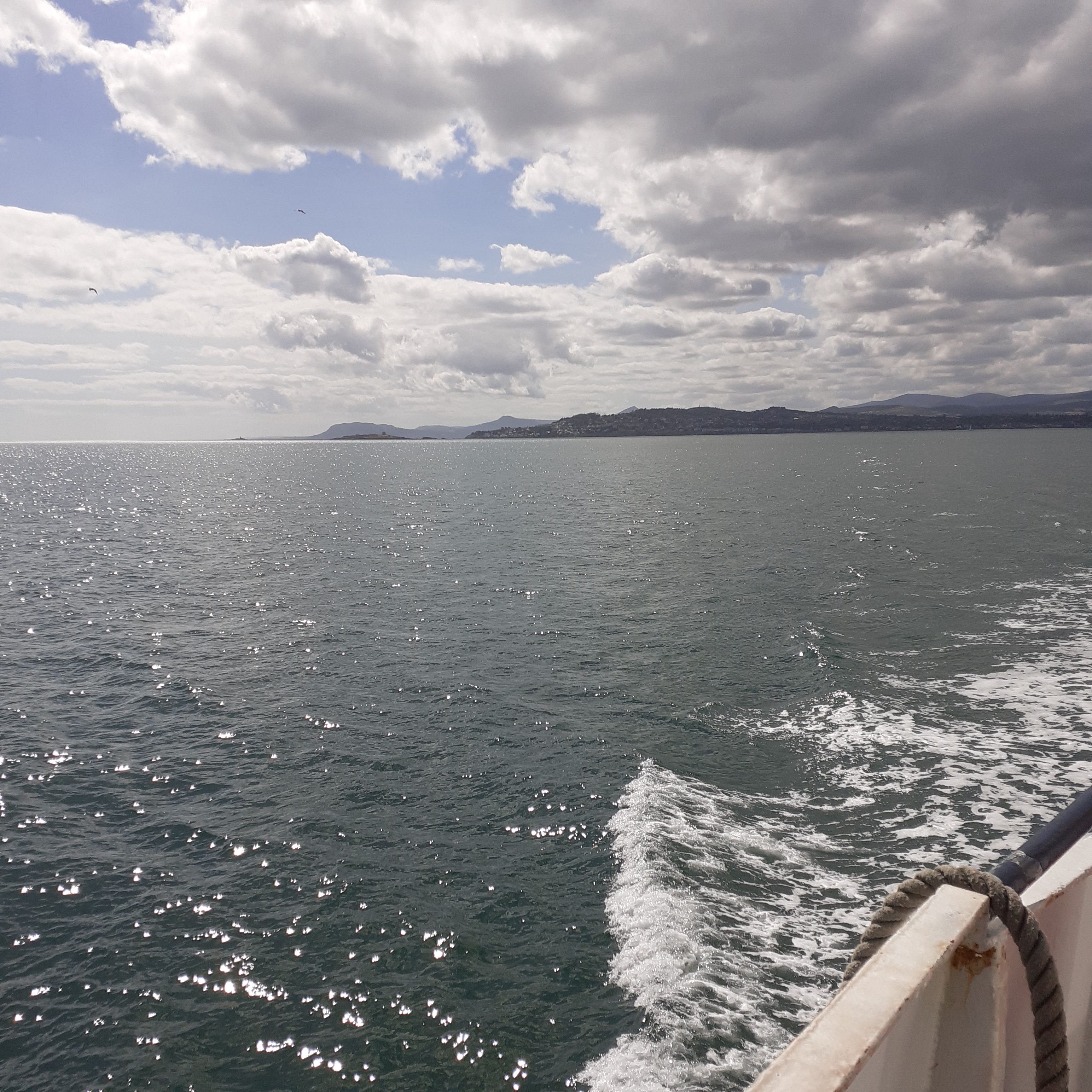
About seven miles out to sea is the distinctive Kish Lighthouse, a concrete tower with a helicopeter landing pad on top. It is sunk into the Kish Bank, a sand bank long a notorious trap for shipping. It was signalled by a lightship from 1811 to 1965 when the modern lighthouse was installed. We’re lost for a moment in the unique embrace of Dublin Bay. Bray Head, the Sugarloaf Mountians, and Dublin Range form the backdrop to Dublin’s Southside. North of the city we look into the mouth of the low lying central Plain, only Howth Head to the north as an outstanding feature. A fuller profile of the  east coast waxes into view. There’s the beginnings of that lonely feeling of setting sail from Ireland, while simultaneously, the consolation of the embrace awaiting the wanderer’s return.

A way a lone a last a loved a long the riverrun, past eve and adam’s, from swerve of shore to bend of bay, brings us by a commodious vicus of circulation back to Howth Castle and Environs

is the implied closing, and opening line of Finnegans Wake. James Joyce’s baffling third novel was published in Paris in 1939. It was seventeen years in the writing, following the 1922 publication of Ulysses. The last line completes the circular trajectory of the narrative, with Howth looming large. The dreamlike narration continues with an account of Amory Tristram’s seizure of Howth, and later mentions the visit of Grace O’Malley, or O’Malice as Joyce styles her.

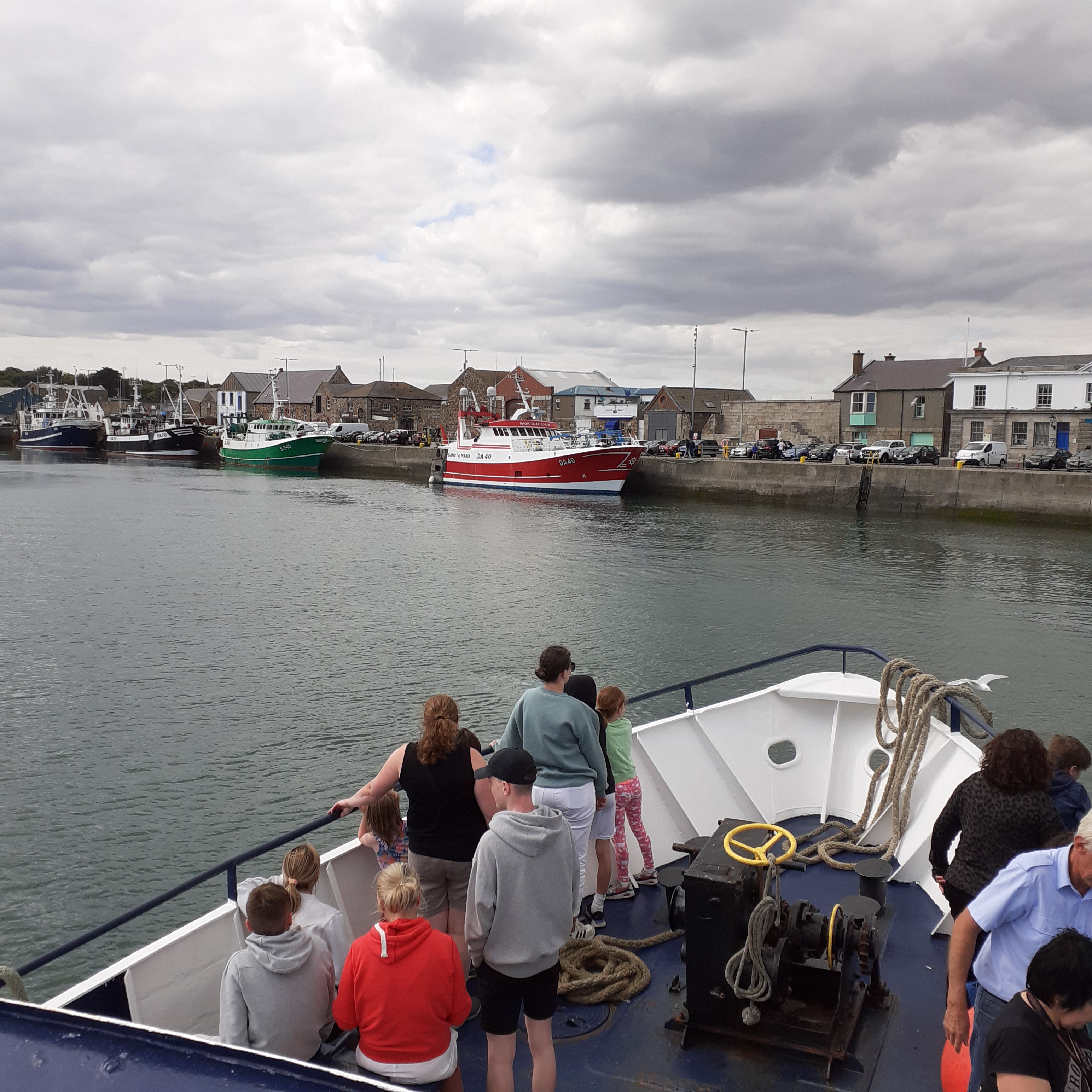
Howth looms larger still and we can pick out the houses and other features. The impressive sentinel of the Bailey Lighthouse signals our arrival. We skirt the rocky extremes of the peninsula and sail into the calmer waters of the sound. Howth Harbour awaits, looking out at the startling offshore presence of Ireland’s Eye.

The Harbour was begun in 1807, but ran into difficulties. John Rennie, the Scottish engineer, later responsible for Kingstown Harbour, was called in, and completed the harbour in 1813. The lighthouse project, also by Rennie, was completed in 1818 allowing Howth to become the port for the mailboat service before the construction of Kingstown. There was a major redevelopment of the harbour from the 1980s, with marina and fishing areas delineated and the provision of a State Fisheries Centre and the RNLI lifeboat service.

Ireland’s Eye is an intriguing name. It implies an allusion to the human eye, as if it is the physical organ from which Ireland espies the world at large. Simply, it is from the Danish for island, being from the ninth century Viking perspective the only island off Ireland’s east coast. There are a few others, but very few, and this is the most physically spectacular. It forms a large green hump, barren and rugged, its most pronounced feature being a jagged rocky sea stack on its eastern extreme. 

Its inhabitants these days consist of guillemots, razorbills, kittiwakes, cormorants, puffins, gannets and gulls, but humans have lived, and died, there too. Over time it has accrued a Martello Tower and the ruins of a church. The church was the parish church of Howth, founded in the seventh century. The Garland of Howth, an illustrated manuscript of the four gospels, was produced by scribes in the church between the 8th and10th century. It is now kept at Trinity College, Dublin. It is said that the custodian monk, beset by the determined devil, took the weighty tome and threw it at his tormentor. The Devil took off and the volume split the main island from the distinctive rocky stack to the east. My father, on a family holiday here in the early sixties, told me the feature was called the Devil’s Bit, being an actual bite out of the rock taken by Old Nick himself, on his flight from Ireland having been banished by all those saints and scholars. The only reference I’ve found to a Devil’s Bit is a prominent feature in County Tipperary, which, as you know, is a long way. But why dilute myth with fact?.

Tour boats depart hourly from the Harbour to the island. There are a half dozen or so operators off the West Pier, some going back generations. It has long been a popular jaunt for those seeking to get away from it all, nature lovers, or simply lovers seeking the tranquility of solitude. Murderers too, perhaps. William Burke Kirwan had one or the other on his mind when he planned a trip out there with his wife Sarah Maria Loisa in September 1852. He was an artist, born in 1814. Sarah was ten years younger. The couple lived on Merrion Street. There were no children of the marriage. Kirwan had long lived seperately in a house in Sandymount with his mistress, Maria Kenny and their eight children. An ominous background for a jaunt to so secluded a spot. Left alone on the island, Kirwan sketched, he insisted, while his wife went swimming. When the boatman returned, Kirwan claimed he was unable to find his wife. A search located her body, covered in blood, in a rocky cove. The courtcase was a sensation and Kirwan, defended by Isaac Butt, was sentenced to death. This was commuted after appeals by prominent society figures, and he was transported to a prison labour camp in Bermuda. Apparently he was treated leniently, being notoriously workshy, like any good artist. He was released in 1789 and, most likely, went to America.

Myself and M decide, however, we have had enough maritime adventures for the day and stroll around the harbour. The West Pier is the busiest promenade. Along with the crowds onshore, Grey Seals throng the waters. They often appear at lunchtime, waiting expectantly for treats from passersby. The harbour area has blossomed in recent years with several food joints to savour the fruits of the sea alfresco, and fight with the seagulls over them. We stop for fish and chips and then a coffee before taking the Dart home.

Morning in Amiens Street

January is cold and blear, a time for hibernation, especially for ancient Hibernians like myself. This painting is appropriate for the season in terms of climate and the hectic humdrum after the Christmas festivities, but there are harbingers of the joys of life too. The view is from the upstairs front seat of a bus barrelling down Amiens Street. Connolly Station and Bus Aras, the main train and bus stations respectively, are just behind us, ahead Dublin like crystals in the rain. Liberty Hall at almost sixty metres tall, considered a skyscraper when built in the sixties, really does scrape the sky on days like this. It is still the fourth highest building in Dublin. Off to our left the pyramid capped glass towers of George’s Quay Plaza, much the same height, line the far bank of the river. Straight ahead, the Customs House, Gandon’s late eighteenth century masterpiece, is shrouded in trees. Everything melts in the unrelenting rain.

But now they only block the sun

They rain and they snow on everyone

So many things I would have done

But clouds got in my way

The photograph was taken by a friend of mine from Art College days, Paula Nolan. Back then, the late seventies, the Art College was in temporary premises on George’s Quay. Paula is a photographer of note, her work being shown at successive RHAs. Her photos can rise to the clouds above, but frequently, as here, feature the drama of ordinary life in the city as she put her morning commute to good use. Despite all the mayhem and the rain, it makes me almost wish to be commuting again.

Rows and flows of angel hair

And ice cream castles in the air

And feather canyons everywhere

I’ve looked at clouds that way

Joni Mitchell wrote Both Sides Now in 1967, and it was a big hit for Judy Collins the following year. Mitchell’s version is from her album Clouds, 1969. 

Howth Castle and Environs

North Dublin’s Sandy Shore – 9

From Raheny, Watermill Road leads to the Bull Island causeway and on via Bayside and Sutton, to Howth on the peninsula that brackets the north of Dublin Bay. Alternatively, you can take the Dart. The Dartline branches at Howth junction; the western branch following the Belfast line as far as Malahide, while the eastern terminates in Howth.

The Northside Dartline is not so scenic as the Southside, passing through unremarkable suburbs between Clontarf and Bayside, but there are stories there too. The stop after Raheny is Kilbarrack, immortalised as Barrytown in Roddy Doyle’s trilogy: The Commitments, the Snapper and The Van. The Commitments was written largely in dialogue heavily spiced with f-words. The cinema version, written by Ian Le Fresnais, also responsible for the Likely Lads, kept faithfully to the book. This made it difficult to hear as Irish audiences collapse into helpless laughter at the dropping of f bombs, so drowning out subsequent dialogue. Doyle went on to win the Booker Prize for his fourth book, Paddy Clarke Ha Ha Ha; also set hereabouts, in a standalone coming of age story.

Howth was remote enough for us to take a family holiday there in the early sixties. We didn’t have a car then, few families did, and public transport was nowhere near as frequent as now. A bus into town and a train to Howth was something of an odyssey. These days the Dart whistles around the bay every fifteen minutes or so, and the journey from Bray to Howth takes under an hour and a half. The first tram service to Howth was in 1873. From Clontarf it connected to Howth Rail station and the Summit. Irish coach builder, John Stephenson, is credited with inventing the tram in New York in the 1830s. A horse drawn vehicle then, but running on rails made it easier for the horse and increased passenger capacity. Dublin’s first trams were double deckers, with the upper deck open to the sky.

Early electric tramways used street level current collection which was dangerous. The overhead trolley made city electric trams feasible. Haddington Road to Dalkey was the first in Dublin in 1896 followed by Dollymount to Fairview, in 1897. Dublin Corporation objected to electric trams going through the city; as they still object to such diverse things as high buildings, late night opening and Garth Brooks. Boss of the Dublin United Tramways company, William Martin Murphy, pushed objections aside, and by the end of the century, electric trams traversed the city powered by a huge power station in Ringsend. The first electric tram to Howth was in 1900. On May 31st, 1959, the tram took its final bow. This was the last tram to run in Ireland until LUAS reintroduced the concept in the early twenty first century.

I visited Howth by Dart on the hottest day of all time. Temperatures in Phoenix Park were measured at thirty three degrees. I reckon they were a few degrees cooler in Bray and Howth, mid twenties, say, which is very pleasant. In truth, for now, it remains the second hottest day of all time. On 26th June, 1887, a hundred and thirty five years ago, a temperature of 33.3C was recorded at Kilkenny Castle. However, climate activists are determined this abberation, as they see it, must be written off, Apparently, if observations don’t support the theory, change the observation. Either way, temperatures in the thirties are very unusual in Ireland.

The Dart was filling up with daytrippers at Connolly, and by Howth Junction was sardine packed. It emptied at Sutton, the strand there being the destination of youngsters eager to experience the scarce joys of summer in the temperate zone. So eager, they dropped everything they were carrying before leaving the carriege. I was practically alone coming in to Howth where I managed to wade through the debris to the door and alight. 
Picture yourself on a train in a station

With plasticine porters with looking glass ties

Suddenly someone is there at the turnstile

The girl with the kaleidoscope eyes

Blinking into the sunlight at the station, some tumbleweed blowing past the entrance, it was two short flights of steps down to the Bloody Stream. This is a traditional Irish Bar with a restaurant serving seafood and other popular mains. There’s a mediterranean style covered terrace to the side, a sun terrace in front and the cosy interior has open fires and live music in the evenings. The sunken terrace is a pleasant place to bask and sip a cool beer. A father and son nearby discuss the weather, an age old Irish topic. Do you think you can stand this heat, da? the son asks with some irony. The elderly gent is of the opinion that media coverage is more science fiction than science. All agree that the ill effects of global warming are best kept at bay by frequent stops for cool beer. 

The daunting name of the premises is historically based. In 1177, a Norman force under John De Courcey and led by Amory Tristram took Howth from the Danes at the Battle of Evora Bridge. Beneath the bridge the stream ran red with blood and was so named, passing it on to the pub under which it now flows. The heyday of the Danes in Ireland peaked in the tenth century, but even after the defeat at Clontarf, they ruled Dublin for a further century and a half until the arrival of their cousins, the Normans. The Normans defeated the Vikings at Waterford, Wexford and Dublin, but a force held out in Howth for a while. After the battle Tristram took the name De St Lawrence, the battle taking place on the saint’s feast day, and was granted the land and lordship of Howth. His original castle, a wooden structure, was on higher ground further east, but he later established his stronghold west of the station.

It’s a short walk along the main road from the Bloody Stream to the entrance to Howth Castle. First, some yards east of the entrance, St Mary’s church stands on its small promintory. This is the parish church for the Church of Ireland community of Howth. It was designed by JE Rogers in 1860 and is distinguished by an unusual spire which itself seems to grow from an older tower. The interior boasts a rich veriety of stained glass, including work by Evie Hone.
The stone built castle dates from the fifteenth century, with its keep and Gate tower. There’s a Restoration era tower from the 1660s and the complex was significally made over in 1738. Finally, a number of features were added by. Sir Edwin Lutyens in 1911 with a new tower housing the library, a loggia and a sunken garden.

Grace O’Malley stars in a well known incident. In 1576, putting in to Howth, she was confident of receiving the hospitality of the lord, but he, being at supper with his wife, barred the gates against her. Grace was furious, as in her own lands out west, the lord it was honourbound to offer hospitality to the traveller. The next day, the Earl’s grandson and heir, tricked into visiting Grace’s ship, was kidnapped and whisked off to Connaught. One can only imagine the teenager’s response to finding himself in the wilds of the west as prisoner of the notorious pirate queen. “It was sick, Dude!” or words to that effect. In response, the lord guaranteed to set an extra place at dinner table for the unexpected guest, a tradition upheld for four hundred and fifty years. Also, the gates to his Deer Park estate were to remain open to the public. As they are.
Adjacent to Howth Castle is the National Transport Museum. Run by volunteers, it features an interesting collection of various means of transport including a restored Hill of Howth Tram. Closed when I visited, its future is nebulous. Tetrarch Capital and Michael J Wright (The Bloody Stream) recently acquired the estate from the Gaisford St Lawrence family with plans to develop the property for tourism and retail with a luxury hotel and some resedential development.
The walk uphill past the castle takes me through mature woodland which opens onto startling greenery. Within the park, rhododendron gardens make for a spectacular summer walk. Planted in 1835, there are over two hundred species of rhododendron. Through April and May they provide an overwhelming kaleidoscope of colour and fragrance. Popular with us cosmic heads in the 70s, forming a shimmering background to many a pointless and swaying walk in the eternal summers of psychedelia.

In contrast, Deer Park golf course also adorns the flanks of the headland, with a modern bar in the clubhouse buildings. Having lost a lot of liquid on my walk, it being the hottest day of all time, I thought a few moments rest with cold liquid refreshment was in order. The Cafe Bar boasts a large and, surprisingly, deserted terrace. There are spectacular views over the golf course to the isthmus and North Dublin coast beyond. Behind, the serene blue sky is framed by the craggy summit of Howth Head. Heaven.

Follow her down to a bridge by a fountain

Where rocking horse people eat marshmallow pies

Everyone smiles as you drift past the flowers

That grow so incredibly high

Lucy in the sky with diamonds

Lucy in the sky with diamonds

Lucy in the sky with diamonds

The Beatles, from their 1967 album Sgt Pepper’s Lonely Hearts Club Band. Although it has long been seen as LSD induced, even the title, Lennon was inspired by his young son’s drawing of a schoolfriend, Lucy O’Donnell. Lennon also drew on the imagery of Lewis Carroll’s Alice in Wonderland. 

A Night in Frank Duffs

At the top of Main Street, just across from the Town Hall, is one of Bray’s finest pubs, Frank Duff’s. It’s my local, being closest to my house, exactly 1.3 km to be precise. That’s a fifteen minute walk, though longer returning.

The name bears no relation to the Frank Duff who founded the Legion of Mary and championed the destruction of Monto Town, Dublin’s red light district in the 1920s. The reference is to the Frank Duff who set up shop here with wife Sheila in the 1940s. Their son, Ken, inherited the business in the late seventies. When Ken died in 2017, his sister Madeleine, ran the business for four years. Covid effectively shut the pub down. As a food free zone it didn’t qualify for the restricted opening of other premises over the lockdown period. The Duggans, owners of several premises in Bray, including the Harbour Bar and the Martello, took over in 2021. 

During the Duff years the pub ignored such unnecessary distractions as food, piped music and television. It was all for a few drinks and a chat. The ideal local, so. More eccentrically, the pub rejoiced in a cycling theme, from the time the Tour de France came to Bray in 1998.

Shay Elliott was the focus of commemoration for the Wicklow cycling fraternity. Elliott was born and raised in Crumlin, in Dublin 12, and was a cycling pioneer in Ireland. He was the first Irishman to particiate in the Tour, and in 1963 became the first English speaker to wear the Yellow Jersey of race leader, which he held over three stages. He returned to Ireland, and became involved in Bray Wheelers, coaching new talent in the sport. He died in May 1971, from shotgun wounds, and was buried at St Mochonog’s Church, Kilmacanogue, near Bray. A monument to him was erected in Glenmalure, just south of Glendalough. It is a glorious spot to contemplate Wicklow’s mountain scenery.

Refurbished for its reopening, the premises has been divided along traditional bar and lounge lines. Television made its first appearance at Duffs in the old style, dark wood bar, while the lounge kept to the ancient tradition of banning the haunted fishtank. I am more often found in the lounge, to the rear of the premises where there’s a fire and high stools.

That’s the setting for this acrylic. It captures a moment in time, as friends debate the finerpoints of music, art, philosophy and football. A modest amount of drink has been consumed, though more may follow. We sit at the high table, while other clients are arrayed on armchairs and couches, bathing in the glow of warm lamps and an open fire. I am looking towards Main Street, hoping to catch the eye of a friendly staff member, more than likely, and let my comrades solve the problems of the world.

Porto – 3

A major attraction in Porto is a visit to Vila Nova de Gaia, home of the Port Wine trade, established in the late 17th century. The wine was named, of course, for the city. Designated a wine region in 1756, it is the second oldest in the world, after Chianti. It’s a fortified wine, usually sweet and viscous, stronger than regular wine, being up to 20% alcohol. The most common Port is Ruby.

In 1678 Liverpool merchants first visited. War with France meant French wine was in short supply and Port filled the gap. British brand names such as Cockburns, Croft, Osborne and Sandeman proliferated. Brothers George and David Sandeman from Perth, in Scotland, founded their company in 1790. The distinctive logo features the Don, a somewhat sinister figure draped in a cape with a wide brimmed Iberian hat.

At Sandeman, where tours and a free exhibition hall are promised, the door is blocked by a liveried man, who, upon enquiry had two words: No Inglesi. Enquiring about the exhibition I get the same two words. No Inglesi! No Irish neither, and I didn’t stick around to ask about the dogs. Much as I love the personal touch, it might have been better to put up a sign. I took a stroll around the neighbourhood and came upon a nearby restaurant offering sampling trays. I thought I’d try this in the pleasant noon sunshine. Unfortunately, after a long rest on the terrace, service was not coming my way, and only the odd glimpse of waiters at a distant table hinted that it was there at all. Perhaps the life of the Port connoisseur is not for me. 

The Gaia quayside leads me back beneath the Ponte Dom Luis I, and I take the bridge’s lower deck back to Ribiera. The Gaia side resounds to the all too frequent music of heavy construction and maintenance, the noise not much contained by plastic drapes. On the Porto side there is some lessening of the torture. 

Immediately beside are the remains of Ponte Pensil, a suspension bridge built in 1843 but dismantled for the construction of the Dom Luis I. The supporting posts remain and the riverside plinth now functions as a bar. As clouds rolled in and the din softened with distance, I decided to try it out. The terrace is the perfect place to watch the constant river traffic, and well sheltered from the spectacular cloudburst that follows, thunder forming a neat counterpart to the screaming metal on the far bank. A funicular runs up to the high city. It’s rather a long wait as one of the two cars is damaged and we can only board every second trip. The journey takes us past ancient city walls ending not far from Se Cathedral to complete a conveniently circular trip.

On my last morning in Porto, It’s bucketing down outside, but the vertical rain leaves my balcony dry and I breakfast there with a Nespresso and wait for the deluge to pass. I take a walk to Boavista when the rain clears. The street is straight but more narrow and dingy than I had reckoned. About a kilometre later, it widens at a huge circular plaza. Bovista plaza is nailed to the map with a mighty palm tree. The central sculpture is  the Monument to the Heroes of the Peninsular War where Portugese and British defeated Naploleon from 1808 to 1814.

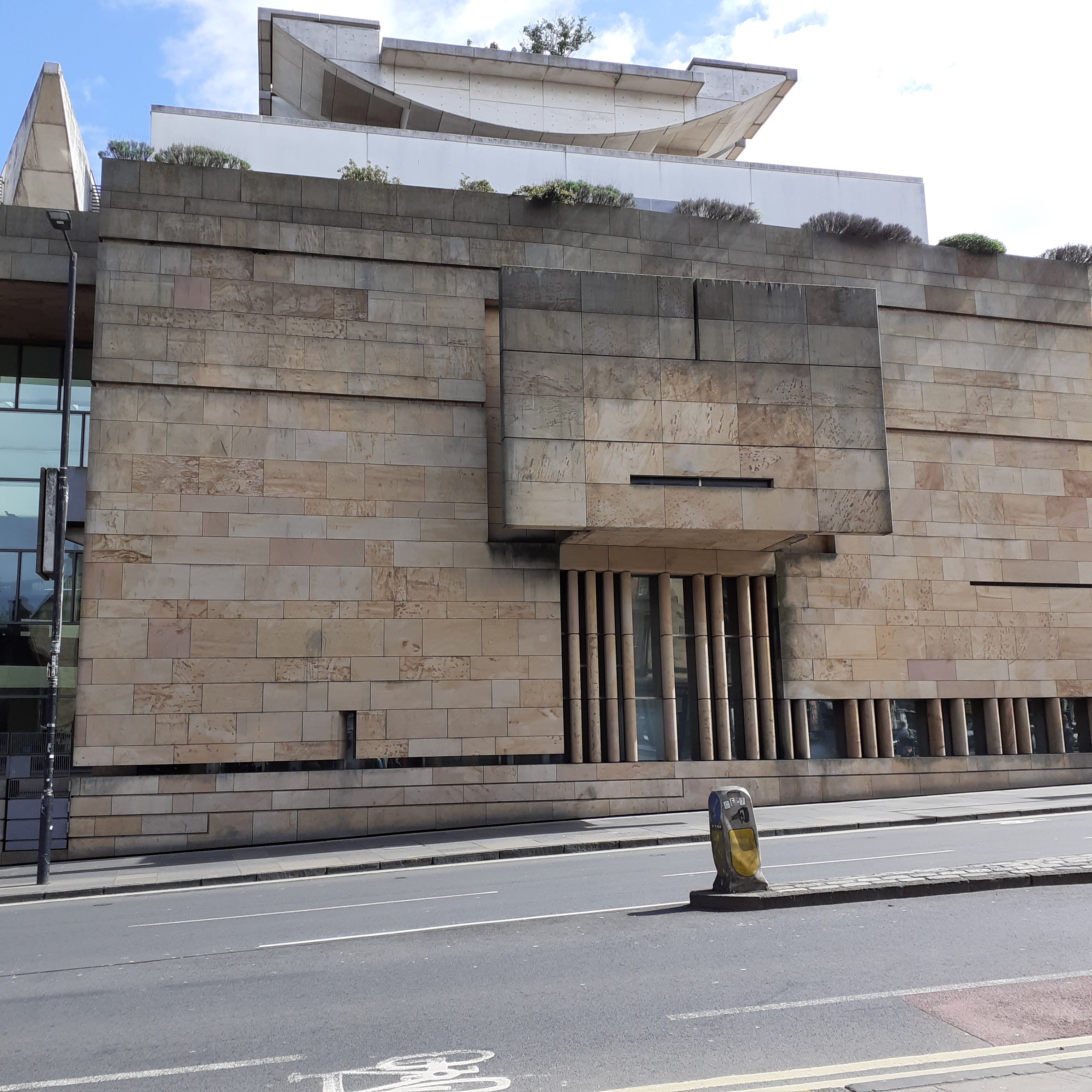
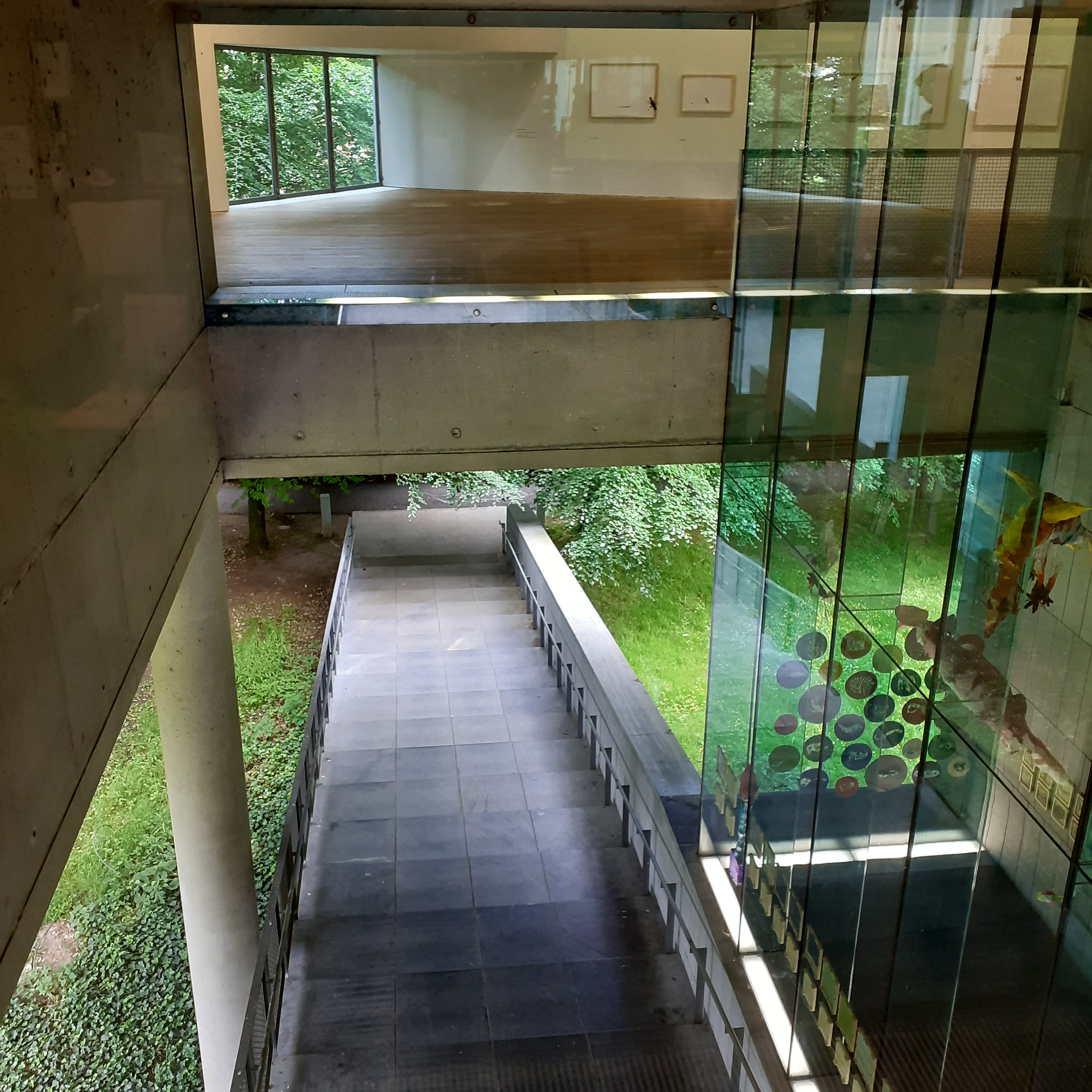
The Casa da Musica is a polished asteroid of hard angles and soaring slants. It was designed by Dutch architect Rem Koolhaas and opened in 2005. Entering it via a sleek flight of steps has been compared to boarding an alien spacecraft. The feeling doesn’t evaporate on steeping inside. It is polished and sparse. I make my way up several flights of stairs, curving from view but with the promise of the roof garden and cafe which is said to have great views over the city. Unfortunately the steps lead eventually to a closed door. Oh well, it’s raining again so a rooftop garden might not have been the best idea.

Boavista is busy but lacking in oases. South of the Avenue is the Agramonte Cemetary. This dates to 1855 and is the last home of the city’s wealthy residents. Mausoleums line the avenues of this city of the dead, decorated with sculptures by Soares Dos Rios amongst others. The sun is out and some refreshment on an outdoor terrace is called for. I find a pokey bar and order from the waitress. Ten minutes later there’s no sign, so I have to go in. The waitress breaks off from her phone call to point to an elderly gentleman behind the bar. I explain to the ancient how to pull which drink for me and carry it out myself, wondering if I’ll get to finish it before the barman is himself carried off to nearby Agromonte.

The Rua de Julio Denis travels due south and leads to the Crystal Palace Gardens, a landscaped park with fine views over the city. The orginal Crysal Palace was built in 1865 for the International Exhibition. The oriinal iron and glass structure was replaced in 1950 by the modernist dome of the Rosa Mota Pavillion. This is named for Olympic marathon runner, and hosts concerts and sporting events.

Towards the city centre is the National Museum of Soares dos Rios.  The neo-classical facade is distinguished by its red stucco upper storey. Formerly the Palace of the Carancas, the frowners, noting the disapproving atitude of the resident family Moraes e Castro. Soares dos Rios, the sculptor, was born in Gaia in 1847. He studied in Paris and Rome and returned to Porto to become the Professor of the Academy of Fine Arts, and committed suicide aged just 42. His most famous sculpture is The Outcast, which might be a window to his soul. 

Having paid, I found that much of the exhibiton rooms were closed for renovation. The remainder was eerily vacant of artworks. Perhaps it’s meant to be an installation, signifying  absence. There was an exhibition of  Magellan’s explorations, featuring charts and maps that looked interesting but the text was only in Portugese.

The eerily vacant gardens to the rear allow me time as an outcast. Although shadowed by a security guard, he’s drawn away by two tourists trying to escape over the back wall. There is something of a cycling heritage, with an early velodrome cited here. Of all the galleries I’ve ever visited, this was the one with least art in it. Climate activists would be forced to eat their own soup. Perhaps it would have been better to close altogether, as this was a waste of time.

The Lello Bookshop on Rua das Carmelitas is famed amongst fans of Harry Potter, it’s magical interior. filtered through the imagination of JK Rowling. Lengthy queues had formed as fans paid homage to the Scottish author. Nearby, two churches, Igreja do Carmo, and the Carmelites church stand, almost, side by side. The Carmelites Church dates to the 17th century, and was originally a convent. Next door is the more exuberant Baroque facade of the Igreja do Carmo. Between them, Porto’s narrowest house forms a wedge a metre wide. The narrow building was to keep the convent nuns separate from the monks. As the clergy would caution us at the school dance on a saturday night, during the slow set: leave enough room for the Holy Ghost. 

Clerigos church and tower, rising to 250 feet, is a major landmark of the city. Designed by Italian architect, Nicolau Nasoni, the church was built for the Brotherhood of the Clerics, and occupies a dominant island position where the street drops sharply towards the city centre. The tower can be climbed, if you’ve the breath for it, and the views from the top are said to be breathtaking.

The city centre is, sadly, off limits, and I pick my way back uphill through the labyrinth of alleyways.Somewhere off Rua Almada I find a bar with blue tables, the perfect colour to enjoy the sinking light of evening. The bar is one where you order and carry, which is an improvement on the prevailing level of service. Outside it’s raining so I wait within while the sound system plays Iggy Pop lsinging the Passenger. Ignatius wrote this with Ricky Gardiner for his second solo album Lust for Life in 1977. David Bowie is on piano and backing vocals.

I am the passenger, I stay under glass

I look through my window so bright

I see the stars come out tonight

Over the city’s ripped back sky

And everything looks good tonight

Singin’ la la la la la le lah 

La la la la la le lah 

La la la la la le la, le la la.

It’s time to say good bye. Any finish to a day in Porto is best with a nighttime wander about the Ribiera. The quayside takes on a magical quality with lights illustrating the dizzy combination of street stacked on street, tumbling down to the river, and above, bridges criss crossing the sky. It’s busy, of course, and there are few vacant seats at the riverside bars, but I find a place and the service, for a change, is swift and friendly. It’s a long uphill home, but on a night like tonight, I could grow wings. I’ll just take my time.

A Diner in Naas

This acrylic shows the interior of Eddie Rocket’s diner in Naas, County Kildare. Naas is taken from the Gaelic Nás na Rí, meaning the meeting place of the kings. It was a walled market town in medieval times and became the civic centre for County Kildare. The modern town has a population of over twenty thousand.

Naas to me is synonymous with road travel. I frequently passed through on my journeys to the south west until the town itself was bypassed by the N7/M7. Lawlor’s Hotel at the northern end of Main street was an occasional stop for refreshments and entertainment. In the seventies we followed the band Horslips who played there. It was fifteen miles from Walkinstown, about an hour’s round trip. 

Eddie Rocket’s is just around the corner. It’s an Irish restaurant chain founded in 1989. the Naas branch, one of forty outlets across Ireland, is an extensive two storey premises. A splash of Americana, with chrome and neon and red, red leatherette, you’re stepping back into rock and roll days but in a safe bubble of twenty first century comfort. The burgers are great and the service too. 

On a recent visit, I took my reference from reflections in the plate glass window by the entrance. There’s a dreamlike quality to the scene, a sense of being in a projection of a period film. There are two worlds on the canvas, our real world beside the imaginary or ephemeral. The viewer may sense that beyond that beautiful vision of the film of our lives, lies the vast blackness of night.

I was thinking of Edward Hopper, the American painter who recorded city and motorway diners, gas stations, motels and more across the USA. An inveterate traveller by car and train, he criss-crossed the vast country to research new subjects. His paintings are more than simple realistic compositions, evoking as they do humanity and often loneliness amidst crowds and buildings, and the splendid isolation of travel. Born in 1882 he died in 1967 in New York.

Porto – 2

Safely back on terra firma, I begin my descent to the quayside via Se cathedral, proud on its promintory above the Duoro. Porto’s Cathedral, Se Do Porto, was begun in the 12th century, with many additions over the centuries. It is stern, but impressive, having the appearance of a fortress atop a hill. Two square towers, topped by cupolas, frame the crenallated entrance. The giant rose window above the porch is its most ornamental flourish.

In the 17th century several alterations in the baroque style added some finesse , including a new portal and with cupolas added to the towers. The Baroque loggia on the northern facade is by Nicolau Nasoni, an Italian architect who was a major figure in the architecture of Porto. He also contributed much to the interior of the cathedral in the decoration of the new Baroque apse. Nasoni designed the Episcopal Palace, adjacent to the Cathedral, in 1734, although he didn’t live to see its completion. Vast as it is up close, it looms even larger when viewed from the river or the far quays. He also designed the Clerigos church tower, soaring above the rooftops of Porto and was buried in the crypt there in 1773.

Facing Nasoni’s loggia, is a figure on horseback. The statue commemorates Vimara Pires, a warrior who led the liberation of the city from the Moors in 868. The main square in front of the cathedral offers fabulous views of the city, and the perfect place to hang out in the embrace of the cathedral. It has provided historic settings to. It was on this spot in 1142 the Bishop persuaded some passing Crusaders, English, German and Flemsh, to help free the city from the Moors, again.

Below the cathedral lies the oldest quarter of the city, a warren of cobbled alleyways. I follow the quaint, winding lanes, down and down and down.The area is reminiscent of a Greek island village, and I feel suddenly remote from the hectic modern city with even the music of pneumatic drills absent. At the base of this steep descent, the Ribeira quayside is lined with crowded bars. Rising almost vertically above are the coloured houses. The terrace umbrellas might usually function as parasols, but today their function is more in the Irish context. I find a vacant table at last at the very end of the quay in the shadow of the bridge.

It’s Champions League night, and the local heroes of Porto take on, of all people, FC Bruges. My last European adventure had taken me to that most beautiful Belgian city. That was also a European night three years ago when FC Bruges beat an Austrian side and I caught the late second half for a famous home victory. Jovial Belgians take up most available seats but this small bar is less magnetic for crowds. One man at the adjacent table makes up for it with a stream of consciousness commentary on all events in Flemish, and occasianally English. I try to pretend he’s a pneumatic drill. Every time it rains, the same joke caption booms: Come to Oporto for the sunshine! Sunny Oporto! And, once seated safely under my umbrella, it does rain a lot, and very heavily. A few inches from my shoulder a cascade of water forms a solid sheet, as Ribeira’s gutters jam. I pull up my hood and gather my anarok about me. My Flemish friend leaps unexpectadly to the aid of a fellow countryman in a wheelschair, helping him to a sheltered table. So, a nice man, I think.

I have booked the Six Bridges Cruise on the Duoro and have long ago decided that today’s not the day. But, downing my beer, the sun hoves into view, and a large window of blue with it. I make my way to the kiosk to redeem my online booking for an actual ticket. I fish the form out of my shoulder bag. Quite literally fish it, because the water has got in through the drawstrings and the sheet is a sodden mess. The young lad at the kiosk is unfazed, all I need is the number he says, and somehow deciphers the smudged characters. The boat arrives in ten minutes and I’m on.

The cruise does what it says on the tin. Taking us under the six bridges that span the river. Heading inland at first, then turning and making our way to the end of the estuary where Foz meets the Atlantic. The narrow boat sits low in the water and its timber benches give it a pleasantly antique feel. You can imagine, if you wish, that you are skating along on the traditional craft, the rabelo, used in the portwine trade. However you see yourself, the shifting views from the river will quickly grab your atention. The deck is not too crowded, as you would want to be mad to go on the river on a day like this. But it’s the madness of Wonderland, with magic in the air.

From the Ribeira quayside we head inland under the Dom Luis I Bridge and on to the Infante Dom Henrique Bridge,This carries motor traffic, and pedestrians, and is the most recent bridge. Completed in 2003, its shallow arch seems to float magically above the river with no visible means of support. A little further upriver is the Maria Pia Railway Bridge, similar in style to Dom Luis I but with a single deck. It was also built by Seyrig in 1877. Railway traffic ceased in 1991 but has been wisely retained as a city landmark. The plain white modernist Sao Joao now carries the railway. It was designed by Edgar Cardoso, a local engineer and professor. Ponte de Freixo is another concrete bridge. It has eight spans and was built in  1995. This is where we turn to head once more through the city which crowds the steep river banks, jostling with a friendly flotilla of tour boats and pleasure craft.

The Duoro widens as we approach the Atlantic and is spanned by the modern Ponte de Arrabida. also designed by Edgar Cardoso. This is a sleek modernist arch carrying a six lane highway. The elegant concrete arch forms the portal to Porto for the Atlantic traveller. We turn as the prow tips the bay, bathed in welcome sunshine, with the resort town of Foz appearing at the eastern edge of the city.

We disembark on the Gaia side, which makes a quiet contrast to the full voiced choire of Bruges supporters on the far bank. There’s a modern bar on the waterfront for lunch and a long drawn out pint, where I can absorb more of the river view of which no one could grow tired.

Next door is the cable car which I take to the top of the hill in high good spirits. Be a bird, or a superhero for a few minutes, drifting above the orange tiled roofs, floating further and further above the mighty river.

If life is a river and your heart is a boat

And just like a water baby, baby born to float

And if life is a wild wind that blows way on high

Then your heart is Amelia dying to fly

Heaven knows no frontiers

And I’ve seen heaven in your eyes

No Frontiers is a song by Jimmy McCarthy, most famously the title song from Mary Black’s 1989 album.

Porto – 1

Oporto, or Porto, is Portugal’s second city, three hundred kilometres up the coast north of Lisbon. It is set on the estuary of the River Duoro, and is, as the name suggests, a port city and also, the city of Port Wine. I had booked my trip to Porto in 2020, but without perfect vision. As you know, we entered near two years of lockdown and all trips were off. I wrote a poem a year back called Europe After the Rain. The title is nicked from a Max Ernst painting which alludes to a distant dawn after the Nazis embraced the continent in war. My Europe After the Rain looked forward to a time when lockdown would cease and we could resume our lives and the sublime pleasures of life, of contact, social interaction and travel. I would travel to Europe, after the rain. And so I did. And then it rained. Man, it poured.

My Ryanair flight touches down an hour or so late. Not just evening is falling on the city, but torrential rain, making everything darker still. I wonder at the optimistic name of my apartment, Sunny Apartment, Trindade Balcony. Sou’westers and turf fires would seem more in order than balconies. My host, Jose, brightens things up with a welcome, including a bottle of red wine. The apartment is sunny in atmosphere, and indeed the balcony is sufficiently sheltered to allow me sit there over a glass of wine as veils of rain drape the city, I’m home at last. In Europe

It’s late, but I must dip my toe in the ocean, so to speak. The road outside is on two levels. The central thoroughfare passes overhead on stilts. I duck beneath, and grab a seat at a bright restaurant across the road. I order Franseschina, a selection of meat in a sandwich, toasted and drowned in melted cheese and, here’s the thing, gfloating in bowl of red soup. I’m examining this in anticipation and some suspicion, when the fries arive. I can’t actually finish the thing. Although I have eaten little on my travels, it is very filling. The waiter assures me he would have no problem with it, and he’s thinner than me.

My street is just ten minutes from the city centre. The principal street, Aliedos Avenue, is just a couple of blocks downhill. I breakfast nearby on scrambled egg and bacon with toast. It’s raining again so I put up the hood on my anorak and head downtown. Halfway down Aliados there’s a problem. The city fathers have decided to transform the urban paradise into hell. An excessive fortification of machinery and metal barriers is strung across the bottom half of the principal throroughfare and encompasses several streets off, including much of the area around Sao Bento Station. Negociating the city centre is well nigh impossible as walkways run into dead ends. What were they thinking of to close down the historic city centre?

Liberty Plaza is entirely obliterated and there is no egress to the western end of the city centre from here. It’s like a bomb site. There’s nothing I can do save soldier on. I pick my way through scaffolding and debris to the railway station. San Bento is central to Porto, both as a point of arrival, and departure, and as a visitor attraction in its own right. Outside, the station is an imposing public building of the Belle Epoque, within, the entrance hall is a glorious palace of illustrative art. The building was designed by Jose Marquez da Silva in 1904 in the Beaux Arts style on a plinth overlooking Almeida Garret Plaza. Grand though it is, step inside for a truly awesome spectacle. The ticket hall is a wrap around mural, illustrating the sweep of Portugal’s history and heritage. It was made by Jorge Colaco in the blue ceramic tiles known as azulejos. These are a distinctive feature of Portugese architecture, and those of Sao Bento represent the artform at its best. It took a dozen years for the entire project to be completed and Sao Bento was officially opened in 1916. The platform itself forms its own spectacle. The Batalha area forms a steep ridge immediately east of the platform, and here the trains plunge underground, or emerge magically from the bowels of the earth. In a city of giddy views, this view of a teetering hillside barrio floating above the angular lines of the railway station is outstanding, and the perfect introduction, or adeos, to the city of Oporto.

The first thing to do in Oporto is get to the bridge. The Dom Luis I Bridge is the abiding symbol of the city. Putting the station behind me, I keep to the high road where a busy pedestrian street on my right descends towars the Ribeira quayside. A little further on the ancient Cathedral perches on high, but the bridge is only a few yards further on, so I keep to my route. I am rewarded with sunshine, and suddenly the flower of Porto opens before me. The River Duoro is blue, and far, far below. I step from solid land and onto the swaying embrace of the metal bridge. I’m making a habit of this highwire for beginners. From Bristol to San Fran and now the coast of Portugal. A teetering walk, heel to heel and toe to toe, without the aid of a safety net, mad tourist with vertigo once more steps onto the wire above a bottomless chasm.

Dom Luis I Bridge was built in 1886 with a span of 170 metres. It connects two steep rocky crags that pinch the estuary of the Duoro. The city of Porto is on the north bank, Vila Nova de Gaia on the south bank. It is built on two levels. The top level carries a tram service with pedestrian sidewalks, the bottom level is pedestrian. Gustave Eiffel first proposed a design with a single deck but this was rejected. A disciple of Eiffels, Theophile Seyrig, developed Eiffel’s proposal and this was accepted. The project was carried out by a Belgian construction company. Ironically, it is Eiffel for whom the roadway on the Porto side is named.

The bridge is shared with a lot of tourists and a frequent tram service. There is, of course, a dizzying array of photo opportunities. The rain has relented, allowing the sun to bathe the panorama in light. Sunny Oporto, slung across the highest slopes of paradise. On the far bank, the monastery of Serra do Pilar is perched above Vila Nove de Gaia. This was originally a 17th century monastery but has long been a military barracks. That dashing Dubliner, Arthur Wellesley, the Duke of Wellington, occupied the monastery in 1809 during the Peninsular War. From here he launched his blitzkrieg assault in the Battle of the Duoro where he routed French forces to secure Portugal. Shortly afterwards, Wellesley was elevated to the perrage as Viscount Wellington, and later Duke of Wellington after the defeat of Napoleon

There’s a cable car service down to the south bank quays, but today I’m going to retrace my steps and do the north bank, Ribeira. I returnwith more confidence, narrowly avoiding getting run over by a tram. Listen for the bells, the bells! There’s beauty and there’s danger, and a lot more to see in the sunshine and the rain of Oporto.