Portobello
Crossing Clanbrassil Street, we enter Portobello. It is named after the area in West London, commemorating an event in the War of Jenkins’s Ear. Even back then the English were running out of names to give their little wars. Said Jenkins was a seaman much traduced by the Spanish foe before such amputations were glamourised by Van Gogh. In revenge, the English annexed the Spanish harbour stronghold of Portobello in Panama, in 1793.
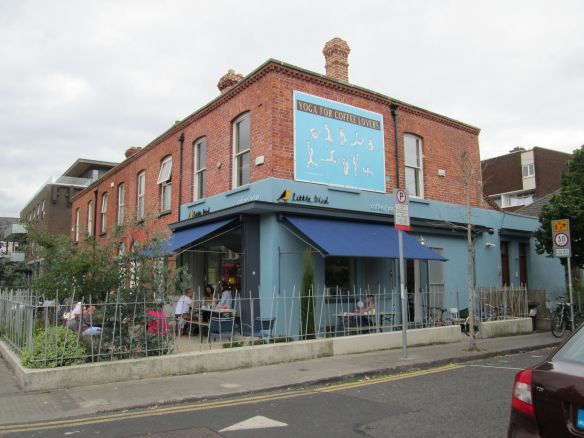
The atmosphere of lower middle class antiquity lingers; intimate, redbrick and tree lined. We are crossing into Dublin’s salubrious Eastside. By way of celebration, first port of call is within a block of Leonard’s Corner at the Little Bird Cafe. Laid back and ladled with a healthy dollop of New Age sensibility, there is a pleasant outdoor apron where we can survey the streetlife. The view east is dominated by St. Kevin’s Church of Ireland at the corner of Bloomfield Avenue. Built in 1883 in a deep shade of red sandstone, its spire forms a serene landmark. It served its congregation a bare century before being converted into apartments.

Before the church, the land was occupied by Royal Portobello Gardens. These were established1839 with a music hall and space devoted to daring spectacles. Charles Blondin, who traversed Niagara Falls on a tightrope, had a notorious mishap in Portobello. The far-famed unambolist, posters promised, would perform more of his arduous and daring exploits. Unfortunately the rope snapped and while Blondin escaped with little worse than a bruised ego, two workmen on the site were killed. Blondin turned escapologist as the inquest unfolded and a warrant was issued for his arrest. But all was resolved for him to return once more for his death defying, and thankfully not death causing, performance.
Another renowned visitor was Mr Pablo Fanque. From Norwich, he was a man of colour when such shades were less usual, and less popular than now. Yet, Mr Fanque bucked the trend, becoming both popular and profitable as a performer, and as a person. Fanque devoted himself to helping those in need in the community, with special generosity to other performers. One particular notice of a benefit performance for a certain Mr. Kite inserted itself into twentieth century popular culture.John Lennon came across a reproduction of the poster whilst rummaging in an antique shop and, putting the printed text to music with some small adjustments, gave us the Beatles’s song, Being for the Benefit of Mr Kite.
For the benefit of Mr Kite
There will be a show tonight on trampoline.
The Hendersons will all be there
Late of Pablo Fanque’s Fair – what a scene!
Over men and horses, hoops and garters
Lastly through a hogshead of real fire!
In this way Mr K will challenge the world!
The Gardens ulltimately pushed their luck too far. Mr Kirby, a pyrotechnician, was joint proprietor of the enterprise. Unfortunately, his fondness for playing with fire was to foreshadow his undoing. Stalked by a mystery arsonist, it is said, his own.house and the Gardens’ music hall burned down in 1862. St Kevin’s would dedicate itself to higher, that is heavenly, pursuits.
By the end of the nineteenth century Portobello became known as Little Jerusalem. Jewish emigrants, fleeing draconian edicts in Tsarist Russia settled here, leaving an indelible mark on the culture and fabric of the area and beyond. By the 1940s the Jewish community had reached four thousand people. Today , it is less than half that.
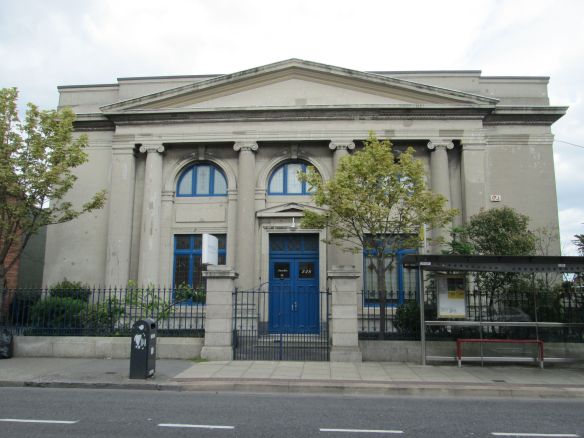
We had passed the Greenville Hall Synagogue on the far side of Leonard’s Corner, in Dolphin’s Barn. Built in 1925, it’s an impressive neo-classical building. As with the other synagogues dotted around the South Circular it has shed its original purpose. The suburbs of Rathgar and Terenure to the South are now the focus for Jewish worship.
The Jewish influence hasn’t entirely vanished. Between the SCR and the Canal, Lennox Street bisects the heart of Portobello. It is pervaded by the aroma of the Bretzel. The Bretzel is long famed for its bagels and, though now under new management, still casts its alluring smells of kosher bread. The Irish Jewish Museum is located on Walworth Road nearby. The site was once a small synagogue which was dubbed the Rebel Schul as it opposed the appointment of zealous Zionist, Isaac Herzog as Chief Rabbi in the fledgling Irish Free State. In a curious twist of fate, the Museum was opened in 1985 by Chaim Herzog, Isaac’s son, then newly inaugurated President of Israel who grew up in Bloomfield Avenue. Another Irish political dynasty of note was the Briscoes. Robert Briscoe and his son Ben represented the constituency for Fianna Fail for seventy five of the first eighty years of the state.
Your trouser cuffs are dirty,
Your shoes are laced up wrong,
You’d best take off your Homburg,
And your overcoat’s too long.
(Homburg by Procol Harum)
The arts also benefitted from the Jewish invasion. Harry Kernoff, whose studio was in Stamer Street, was born in London but is indelibly associated with the depiction of Dublin’s people and places. His best known paintings captured the colourful camaraderie of Dublin’s street and pub culture. They have become icons of bygone days, though Kernoff only began to be appreciated a couple of years before his death in 1974. Academy Award nominated Film director Lenny Abrahamson grew up on Bloomfield Avenue in the sixties. His work typifies the view of the outsider who is also an insider, giving an eclectic take on Irish life in such diverse dramas as Adam and Paul, Garage and What Richard Did. Stern Joyceans will be sure to visit 52 Upper Clanbarassil Street, home of Dublin’s most famous Jew. Leopold Bloom was, of course, a figment of James Joyce’s imagination.
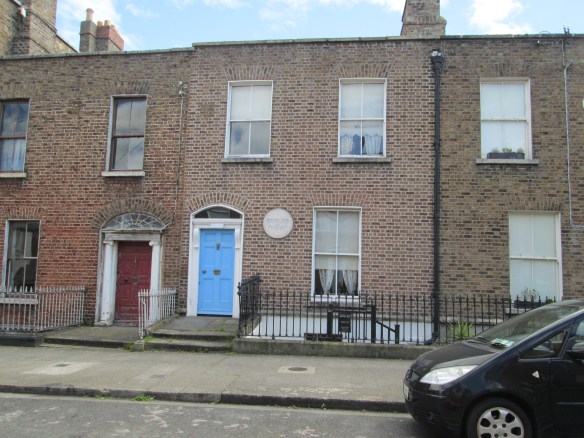
Another literary giant haunts the neighbourhood. George Bernard Shaw’s birthplace is at the corner of Synge Street.Born in 1856, Shaw emigrated to London as a twenty year old, to establish himself as a leading playwright and commentator. He wrote Pygmalion, setting up that saucy duel of language and class between Eliza Doolittle and Professor Henry Higgins. The Broadway team of Lerner and Loewe, adapting it as My Fair Lady, infused it with that innocent banter and exaggeration that bear the musical aloft like a soap bubble. Shaw was made of sterner stuff, while still alive with wit until his death at the grand old age of ninety four. He was awarded the Nobel Prize for Literature in 1925 and also bagged an Oscar for the screenplay of Pygmalion.
I have often walked down this street before,
But the pavement always stayed beneath my feet before.
All at once am I several stories high,
To be back on the street where you live!
Here, I must pause, and gather the dust of years about me. Through three hundred and sixty degrees, the redbrick is constant and calm. Lennox Street is surrounded by the footfalls of the city. It is serene in a wise and battered way.
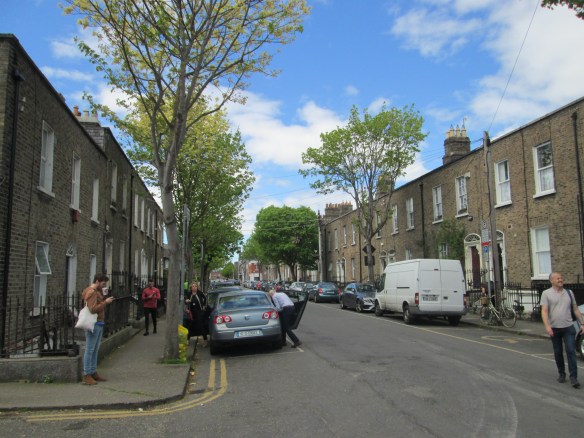
A long lost lover hails from these parts. Mary Rose was something of a mirror image of Eliza. Known as Professor Plum from her Loretto accent, a bloom amongst the thorny local dialect. I recall walking through empty streets on a sunny summer’s morning, redbrick terraces framing squares of blue sky, and the unexplained snowfall of Spring blossoms. Or maybe there’s other reasons for that.
Are there lilac trees in the heart of town?
Can you hear a lark in any other part of town?
Does enchantment pour out of every door?
No it’s just on the street where you live!
Synge Street leads back to the SCR where the stretch of road leading east is called Harrington Street. The church on the northern side is another St. Kevin’s, this one for the Roman Catholic Community. It was opened in 1872 and the site includes Synge Street CBS. From here to the junction with Kelly’s Corner is a richly atmospheric tree shaded boulevard, albeit a short one. Brother Hubbard’s colonises the pavement with the ambience of cafe society. Bearing left heads into Camden Street’s Golden Mile of music joints and bars, for centuries a raucous and rebellious thoroughfare.
She thinks she’s tough,
She ain’t no English rose,
But the blind singer, he’e seen enough and he knows,
Sings a song about a long lost Irish girl,
I’ve got one for you, my Portobello Belle.
Portobello Belle (Dire Straits)
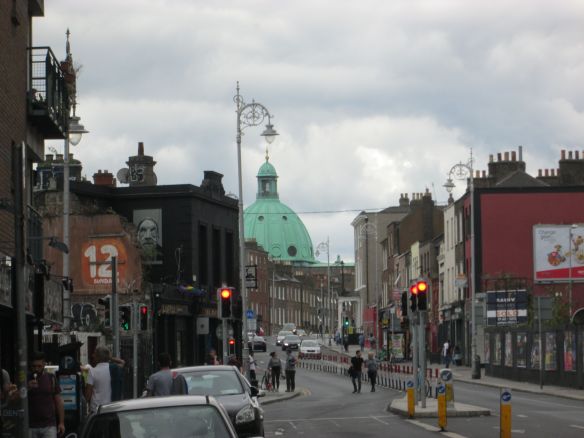
Richmond Street continues the Camden Street thoroughfare, heading south. At the junction, Kelly’s Corner, we experience a sudden connection with the blare of city life. This marks the end of Portobello. There’s a wonderful vista south towards Rathmines. The massive copper dome of the Church of Mary Immaculate, Refuge of Sinners looms above the rooftops.. The church was built in 1854 by architect Patrick Byrne in the Greek style, embellished later with an ornate pediment and portico by WH Byrne. It was destroyed by fire in 1920, but rebuilt in 1922 with the spectacular addition of the dome. This was made in Glasgow and it is said was intended for an Orthodox church in St. Petersburg but abandoned after the Russian Revolution of 1917. The elegant clocktower of Rathmines Town Hall shimmers in the middle distance. With the Grand Canal at your feet, at last it rhymes with its Adriatic promise.
Portobello Harbour was part of the GrandCanal extension in 1801 from the Basin to the Docks. The City Basin Reservoir, further west, was filled in circa 1883. The harbour itself was abandoned some time later, becoming a carpark. The historical function of the place is suggested by the pub frontage, proclaiming The Lower Deck. In the nineteen sixties this became a great ballads venue where bearded men beat a path towards freedom with banjos, fiddles and a rake of pints.
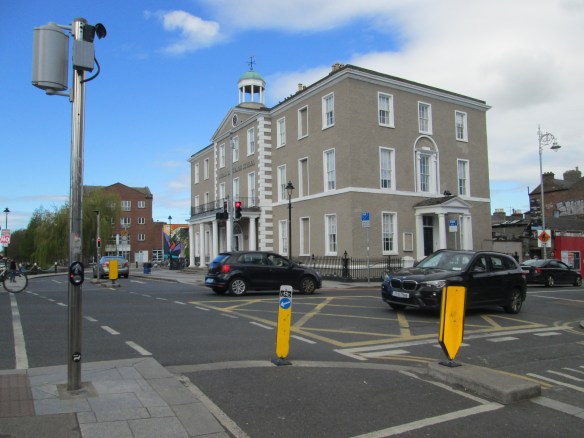
A large Georgian pile has presided over the spot since 1806. It was designed by James Colbourn as a grand hotel. The calm neo-classical palace gave an impressive welcome for the visitor to Dublin, whether approaching along the canal or from the south by way of Rathmines, a suburb that developed in the mid nineteenth century. Portobello House became a convent in 1859 but returned to being a hotel again a decade later. Through much of the twentieth century it became a nursing home and is now a language school.
Retracing our steps to Kelly’s Corner, we cross to Camden Street in search of refreshments. There’s no need to go far. The Bleeding Horse pub is said to derive its colourful name from the Battle of Rathmines in 1649. The battle took place at the time of the English Civil War. James Butler, then Earl of Ormonde, aligned the Royalists with the Irish Confederacy against Cromwell’s forces, leading an attack on the Parliamentarian stronghold of Dublin. They were routed by the Roundheads at Rathmines. The Earl survived, becoming first Duke of Ormonde and the man responsible for the remaking of Dublin, the Liffey Quays in particular, following the Restoration.
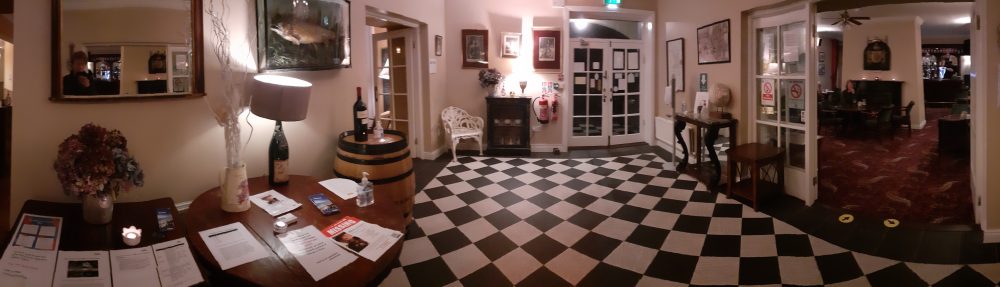
The Bleeding Horse was licensed in that year. It’s said that an early visitor was a riderless horse which wandered from the battle scene southwards to Camden Street where it poked its head inside the new inn before expiring from its wounds. A bit like me, in fact, though I don’t intend to expire before wrapping myself around a pint. The pub was frequented over time by Sheridan Le Fanu, Olvier St. John Gogarty and James Joyce. It is mentioned in Ulysses, wherein local Jewish gentleman, Leopold Bloom, fulfils an Odyssey in a day long perambulation around Dublin. I’ll drink to that..
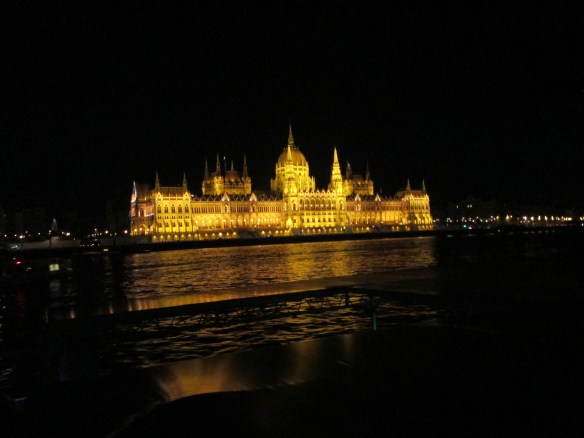
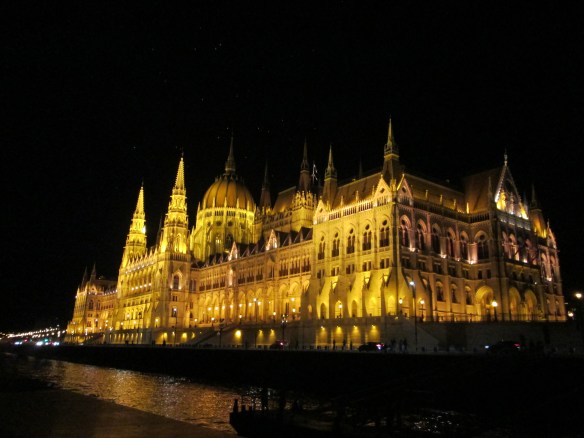
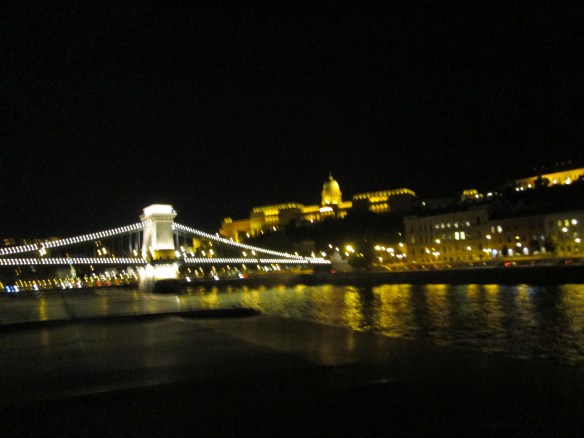
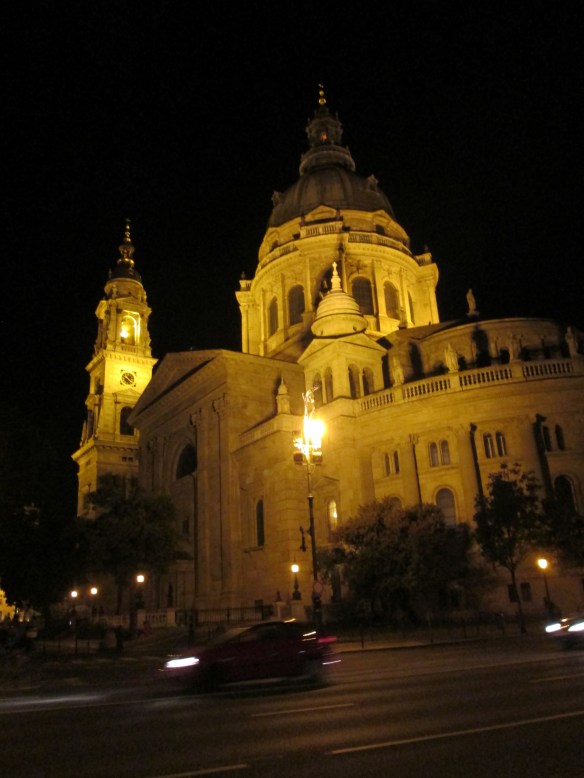
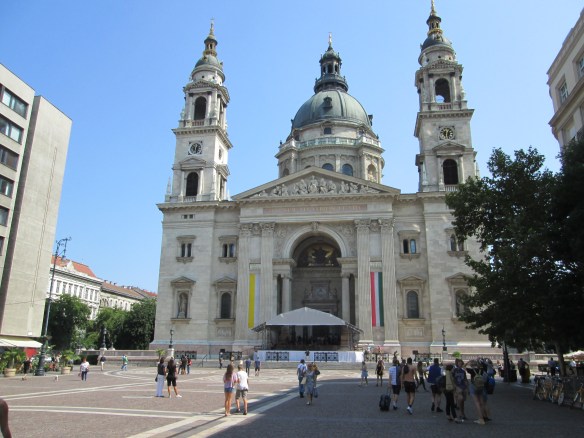
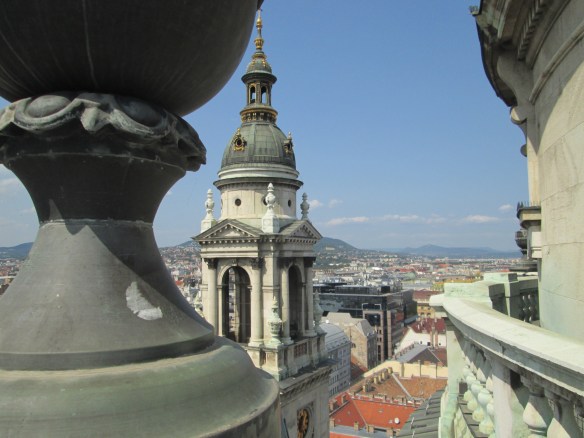
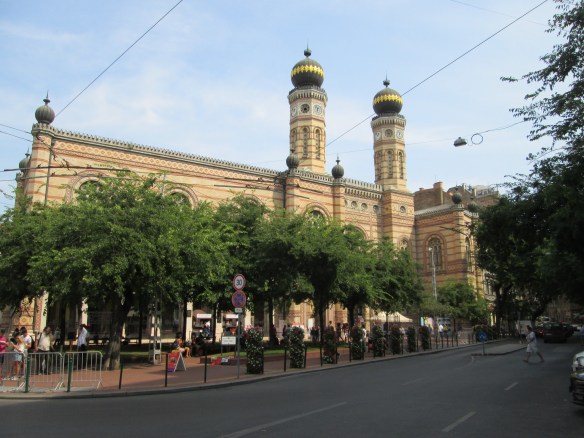


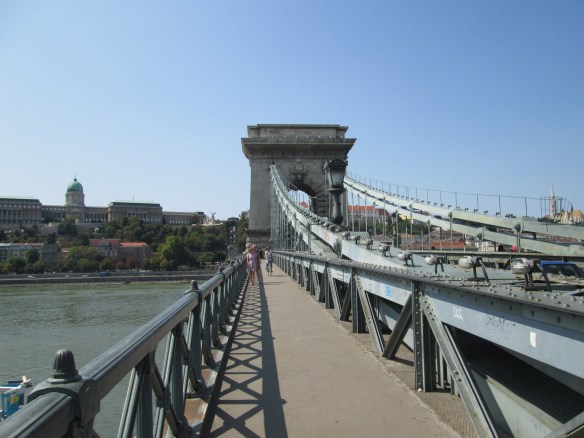

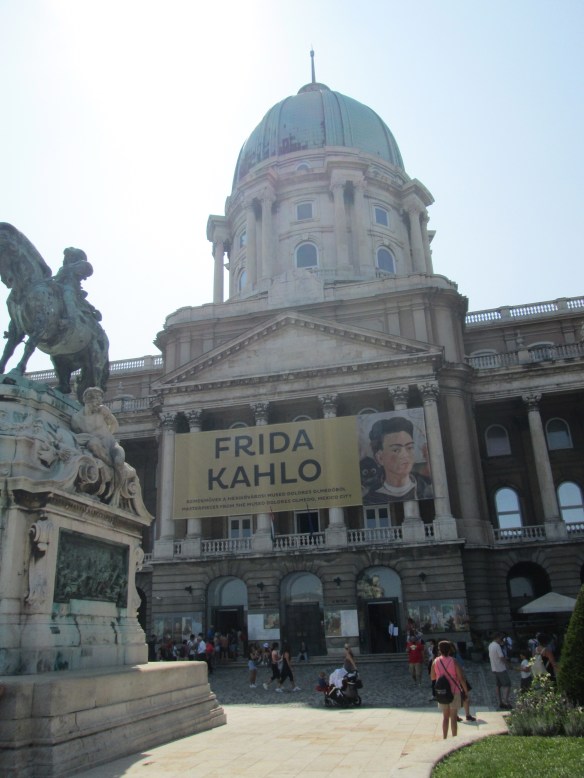

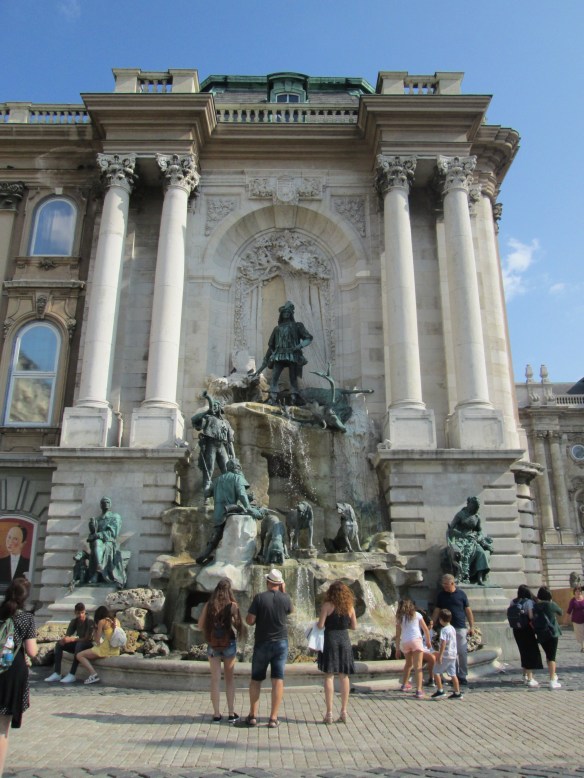
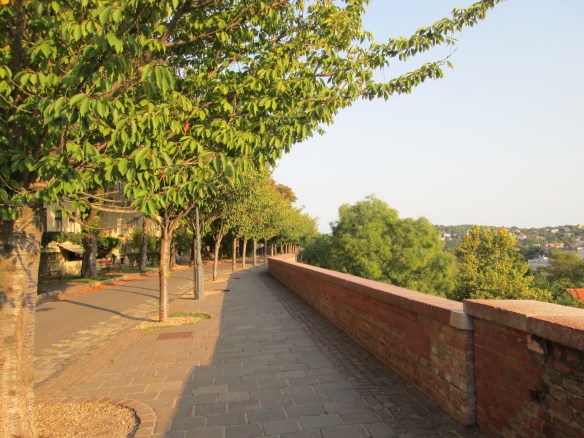
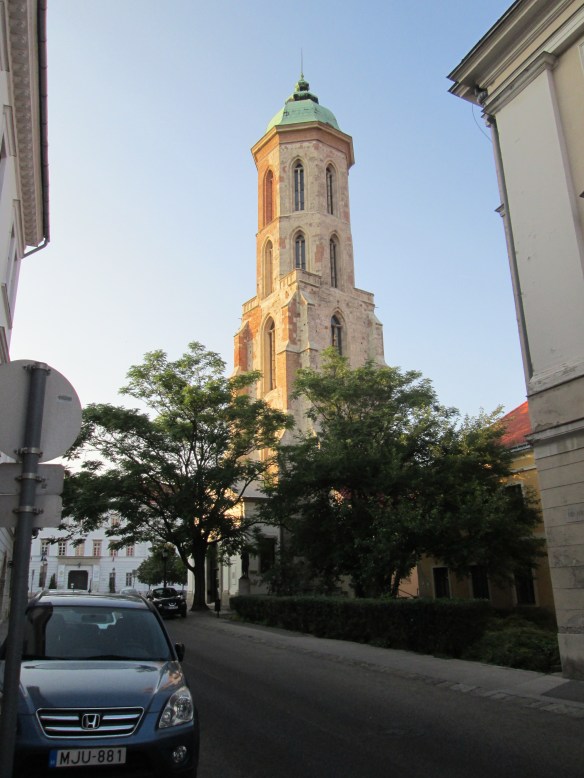

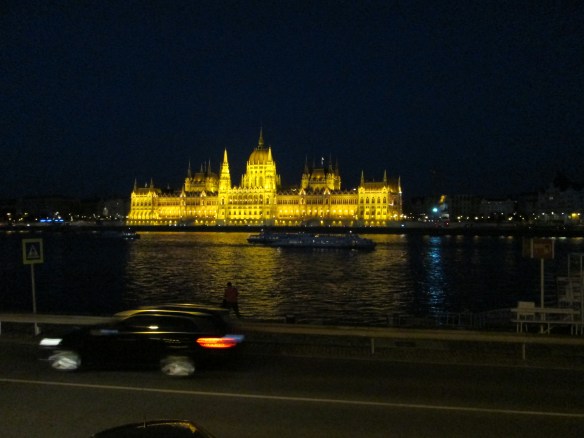
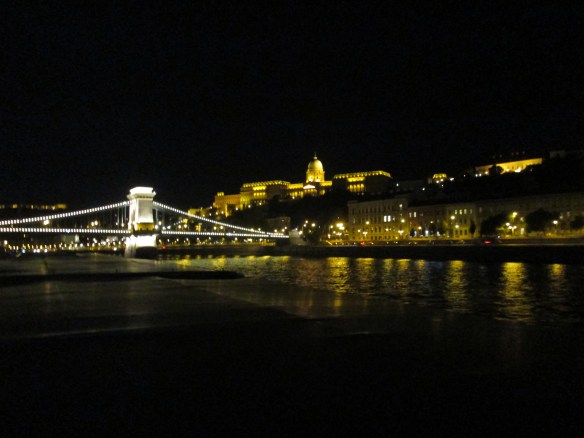
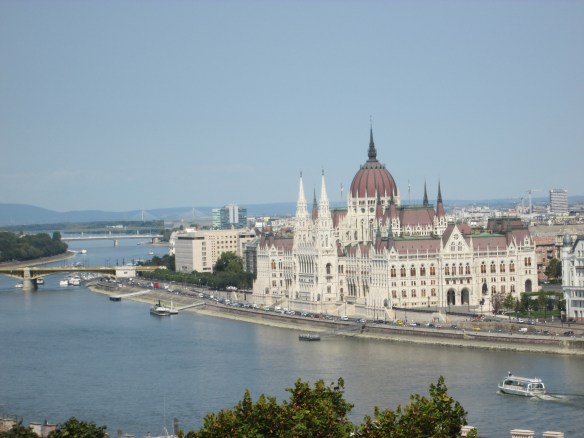
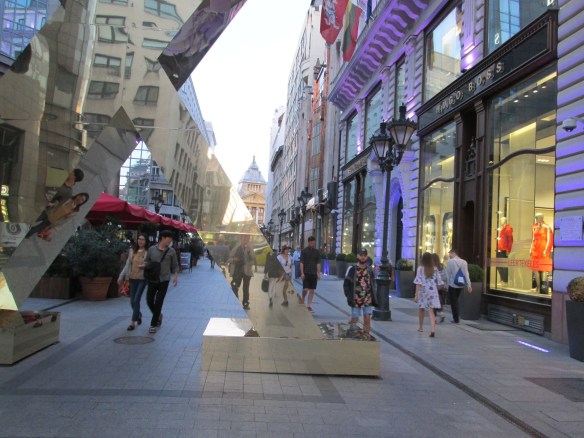
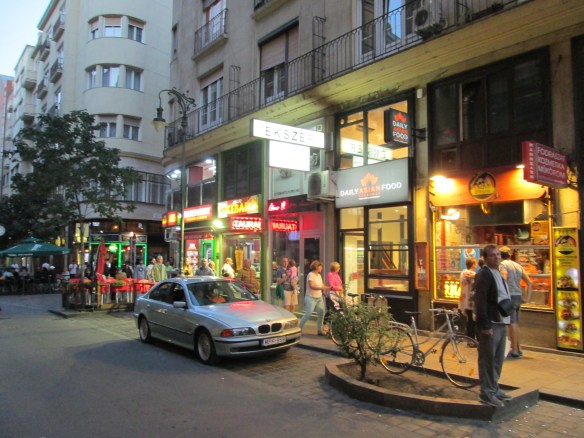
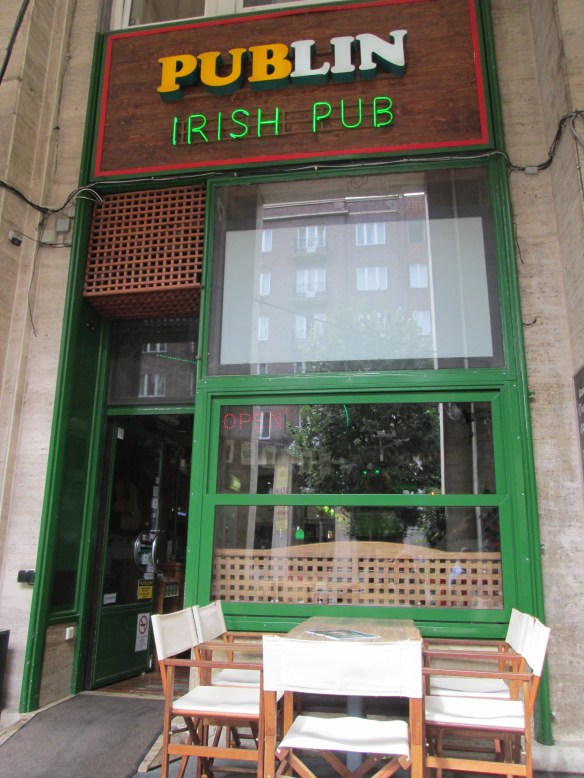 This, I find later, marks the outskirts of Pest’s fun precinct which centres on a couple of extensive pedestrianised arcades, fitted within the city block west of Deak Ter and south of Karoly Utka, It consists entirely of eateries and drinkeries. There’s good life here after dark, though strictly modern.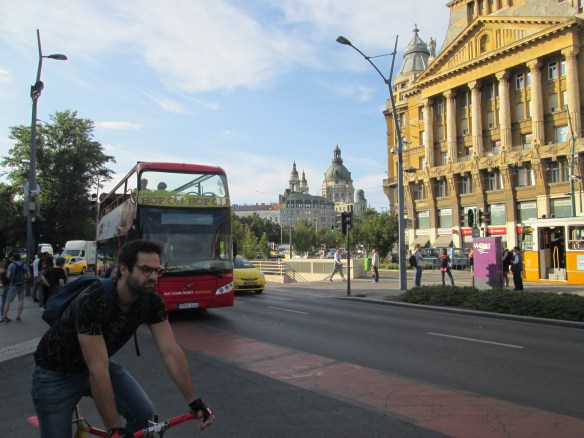
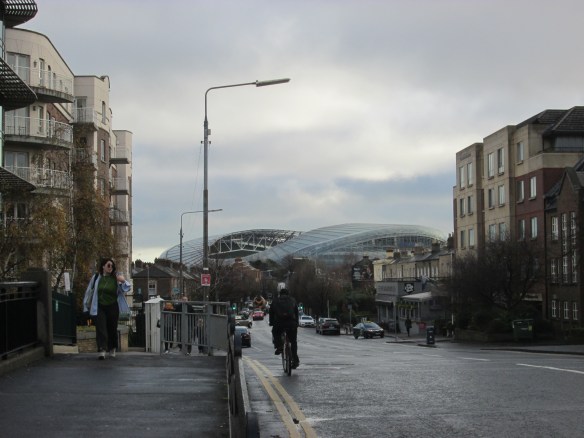


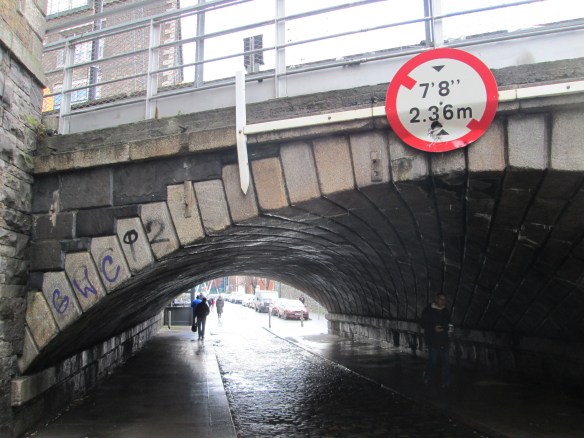

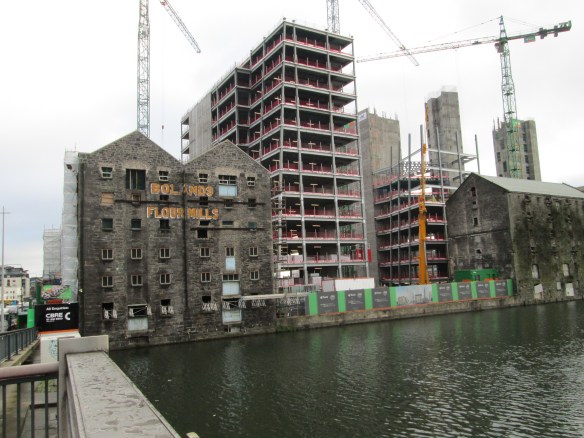
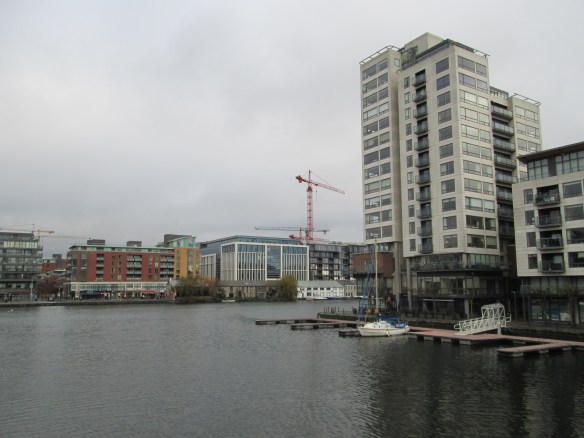
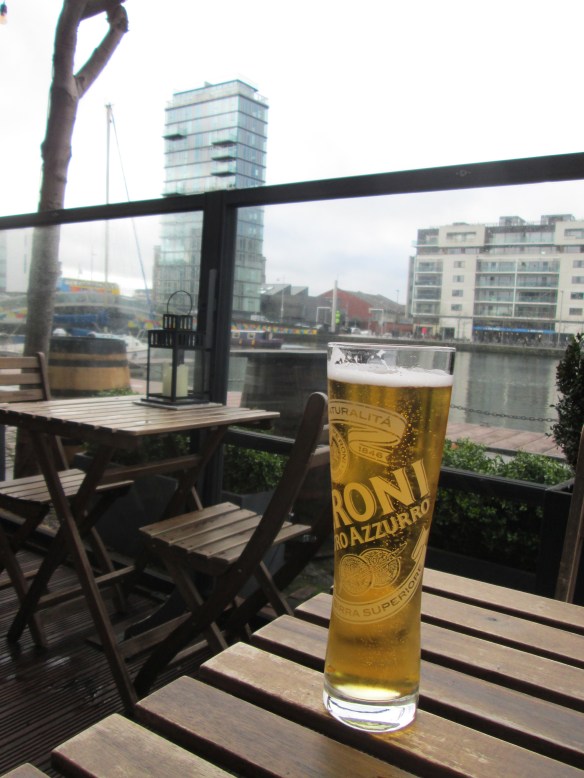
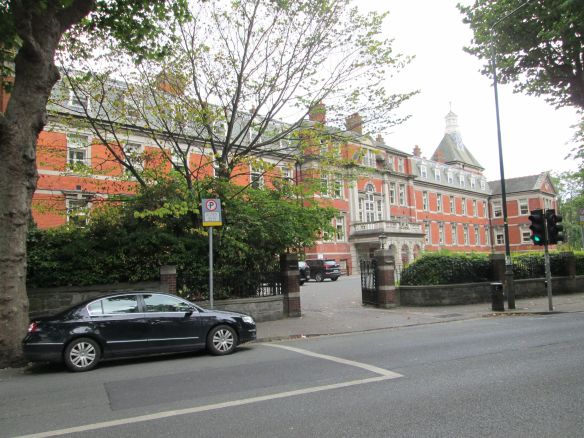
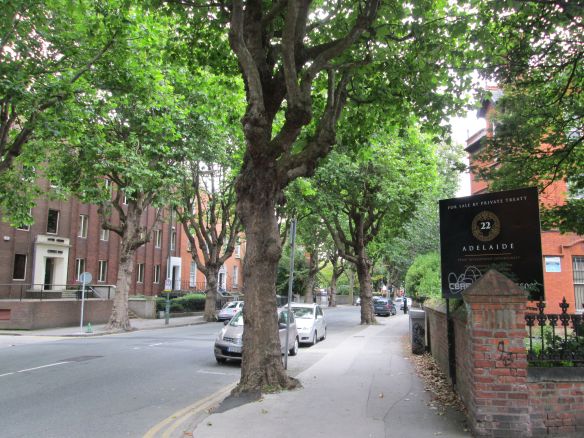 After Harcourt Road we merge onto tree lined Adelaide Road. On the city side of the street is the Royal Victoria Eye and Ear Hospital. This is a public teaching hospital founded in 1897, amalgamating two hospitals, one of which was founded by SIr William Wilde, Oscar’s father. Designed by Carroll and Batchelor in an English Baroque, or Queen Anne, Revival, style, it has an attractive, extensive, redbrick facade of three storeys capped by a mansard roof. I had to visit once, having been slashed in the eye by a maniac wielding a copy of the Irish Times. It will take too long to explain. The treatment was prompt and good, though a week with an eyepatch soon grows tiresome with wags enquiring, hey, Long John, where’s your parrot?
 Just past the hospital, we arrive at the junction with Leeson Street. The Leeson Street Strip was for long the city’s principal clubland, from the city centre on south towards Donnybrook. Its a bit more discreet than Harcourt Street and home to such haunts as the Sugar Club and Leggs. The restaurant Suesey Street namechecks the street’s original name.
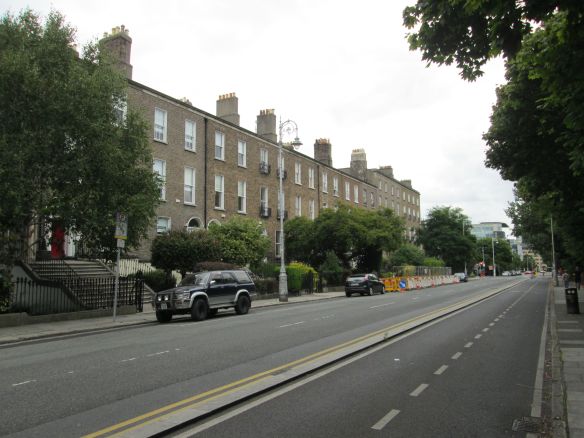
 Fitzwilliam Street is a long expanse of, mostly, intact Georgian architecture. Laid out in the 1760s it descends slowly and arrow straight from Leeson Street to Holles Street, the National Maternity Hospital bracketing its souther end. On the way are two sylvan squares. The small garden square of Fitzwilliam, and the large public gardens of Merrion Square. Irelands Government Buildings, Leinster House, home of the Dail (Parliament) and the National Gallery are on the western side. One of Dublin’s iconic vistas is on the East, the view to the Pepper Canister Church forming the culmination of the vista along Mount Street. This was designed by John Bowden and Joseph Welland, its slim white tower with cupola suggesting its nickname. Officially named St. Stephen’s Church, it has served its Church of Ireland congregation since the 1820s.
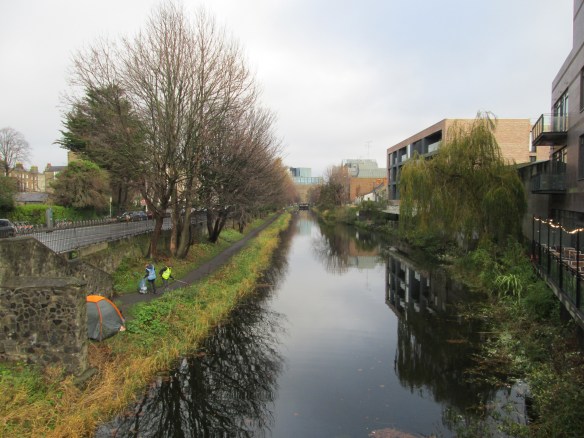
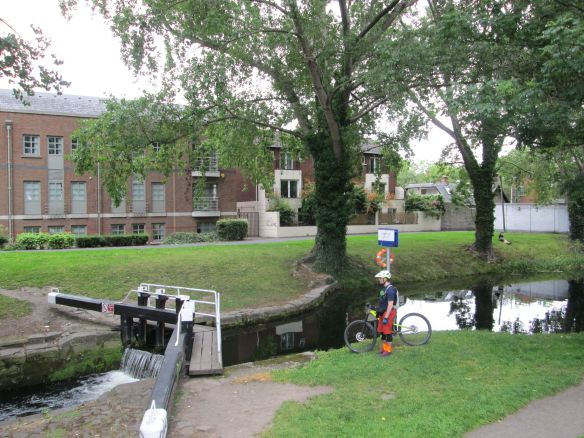
 The Grand Canal, meanwhile, offers a scenic route. From Leeson Street bridge to Baggot Street, Wilton Terrace has high office blocks to the north, hardly noticeable while strolling along the sylvan serenity of this stretch of Canal. The area was much haunted by the poet Patrick Kavanagh. The man from Iniskeen used to lounge on a bench by Baggot Street, absorbing the life and leaf of the canal, emanating poetry. He is commemorated here, not once but twice. The original bench in his honour is situated at the lock, erected by friends shortly after his death in 1968. Another more recent has a fine statue of the poet in gangly repose on one end of the bench. Sit with him and drift, float on the still waters for ever and ever.
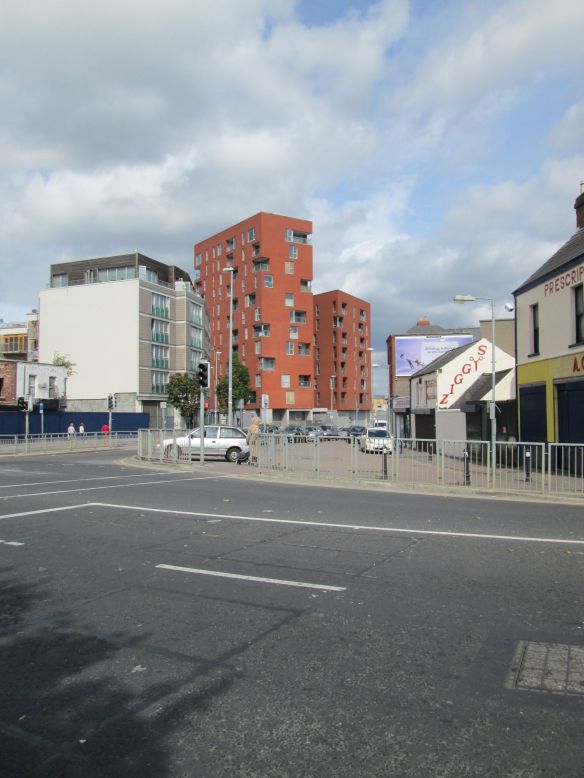
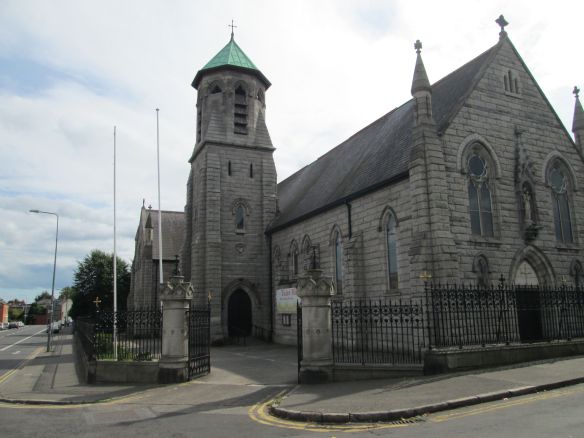 Our Lady of Dolours Church was built in 1890.
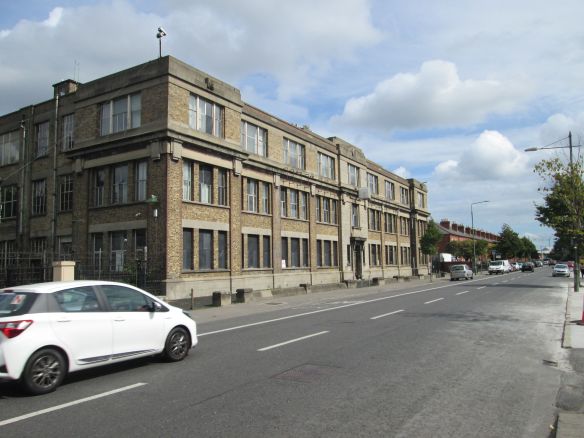 Player Wills building is a fine example of thirties industrial architecture. It’s a three story modernist block of ochre brick framed in grey stone, its top story in subtly different style from the lower floors. Built in 1935 it produced cigarettes for seventy years until 2005. There was also a small theatre for plays and concerts. John Player was an English cigarette manufacturer whose company merged with Wills in 1905. They produced such cigarettes as Player’s Navy Cut with the iconic brand identity of a sailor framed by a lifebelt.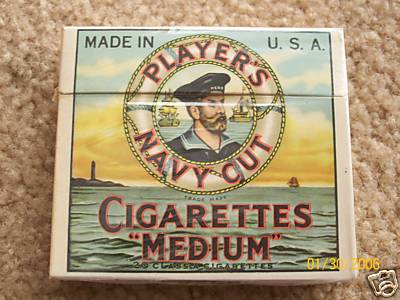
 At the next junction, Donore Avenue crosses the SCR. Looking left there’s a pleasant redbrick vista towards the Church of St Catherine and St James. To the right the road enters Crumlin across the Canal. The canal bridge is officially called Parnell Bridge, but usually known as Sally Bridge, or Sally’s Bridge. The name is obscure, local legend suggesting it’s named for a tragic girl or streetwalker. It may refer to the spot nearby where the canal crosses the Poddle River, now culverted. The Poddle was also known as the Saile River, from the Gaelic for dirty river, or salty river. The Poddle culminated a mile on in the tidal Black Pool, Dubh Linn, that gave the city its name.The Dubliners sing raucously of a, hopefully, fictional tragedy concerning the auld woman who lived in the woods.
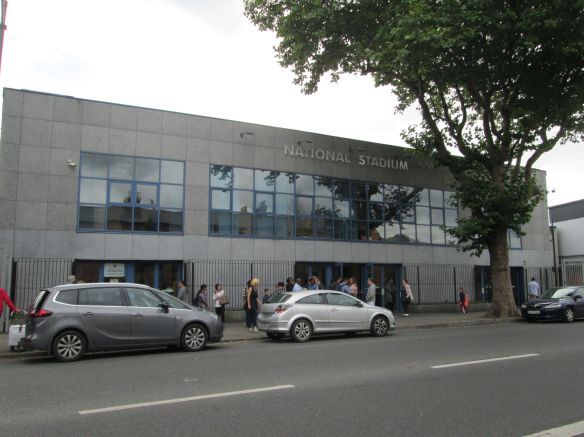 The National Stadium is on the southern side where the SCR bends slightly. Opened in 1939 as a purpose built National Boxing Arena, it has doubled as Dublin’s premier rock venue. The bands used to perform from the ring, viewed in the round. Although performers such as Rory Gallagher, would try to play to those behind him, logistics meant you were a bit shortchanged in these seats. Eventually, the stage was moved to the side. Performers I’ve witnessed include Rory Gallagher, Horslips, Leonard Cohen, Dire Straits and Procol Harum.
 Cafe society spreads along the pavement.across the road at Noshington, a pleasant little coffee shop under the shade of a tree.