Wicklow’s Wonderful Coast – 1

Bray Harbour and Seafront

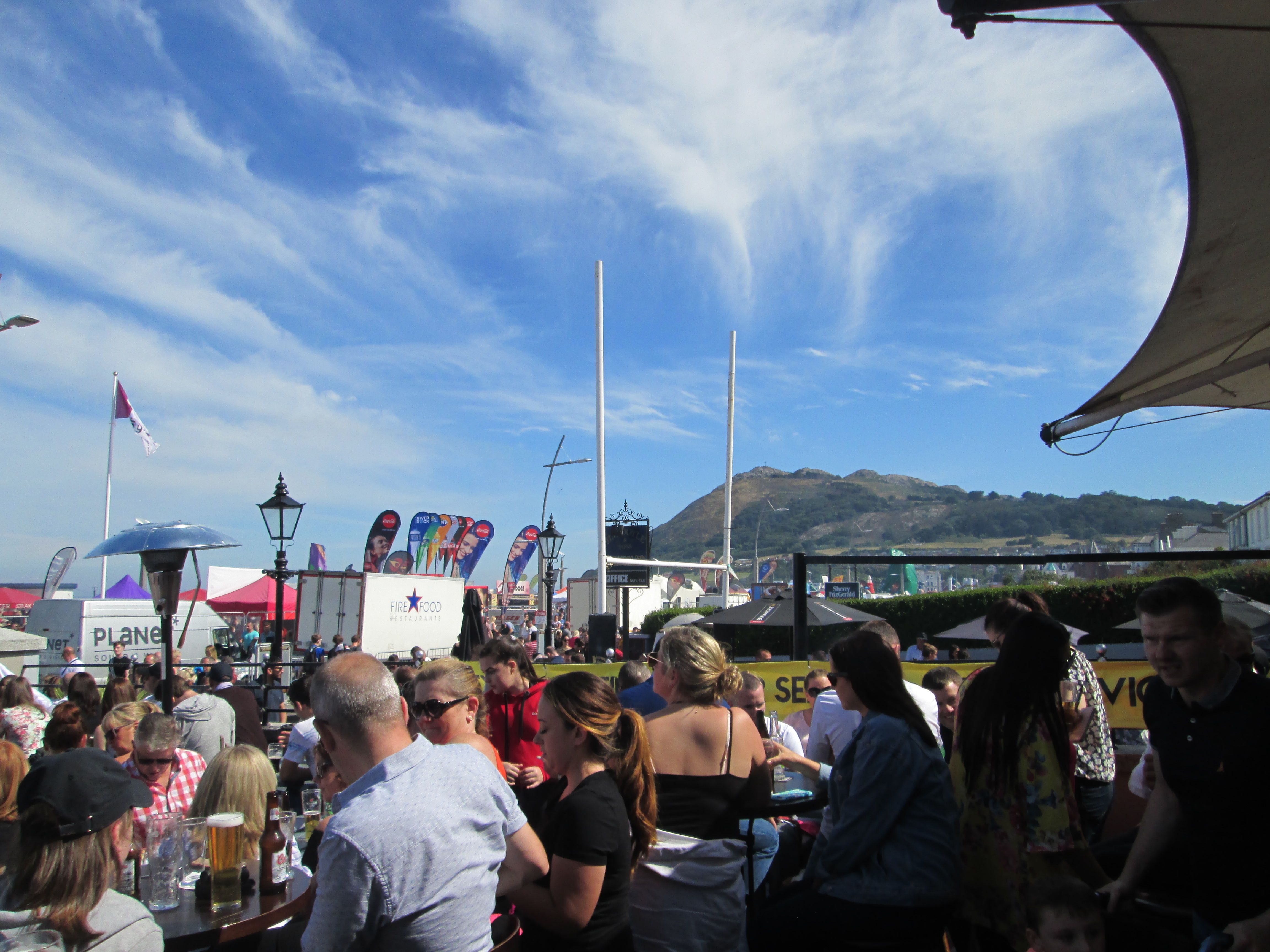
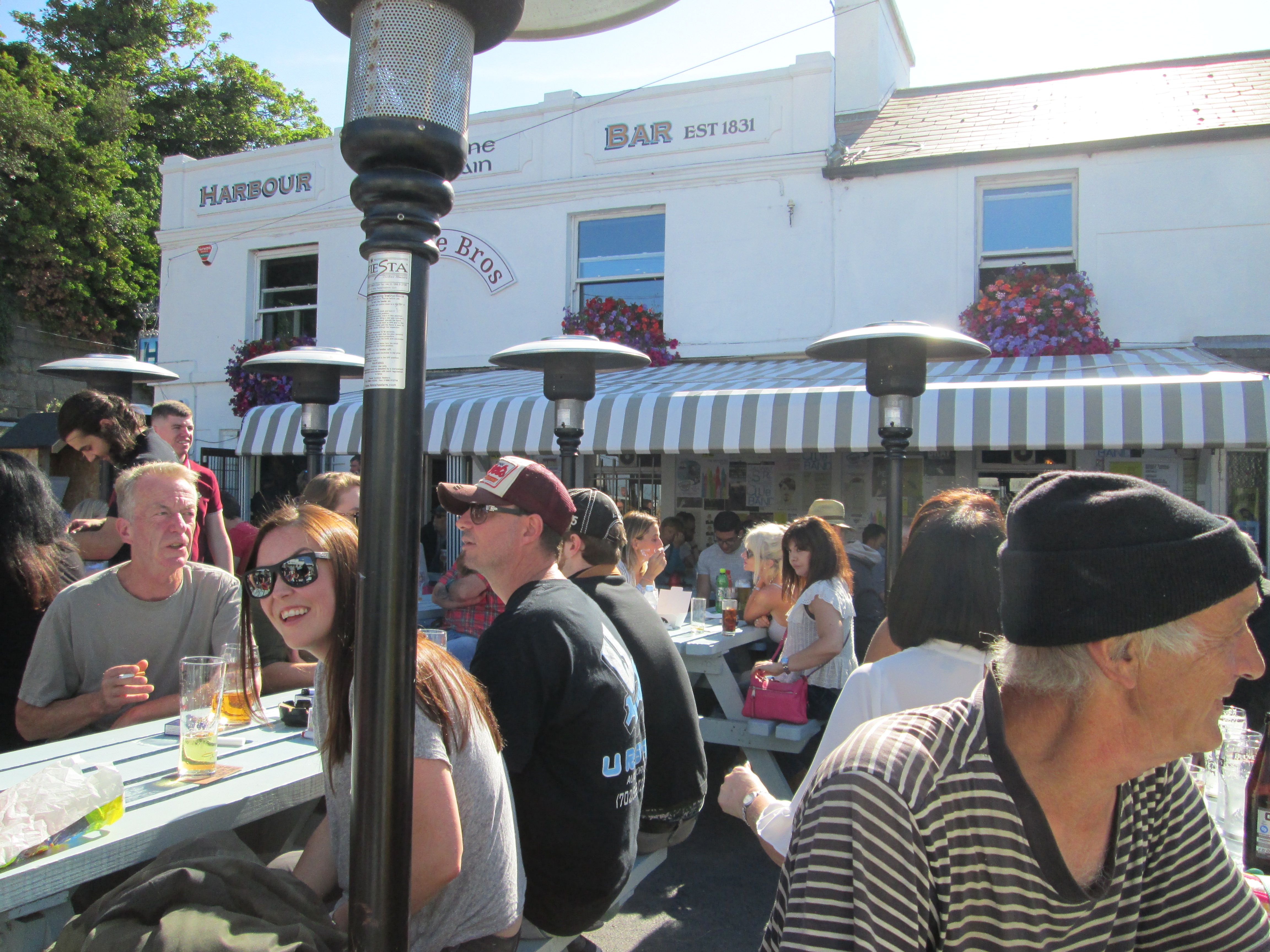
In the beginning, cross the Dargle River at the harbour, tiptoe past the swans, and head south past the Harbour Bar. Well, you don’t have to pass it, but if you want to walk Wicklow’s Wonderful Coast, you will eventually have to leave it behind. The building dates back to 1831, and twenty years later it became a licensed premies. That would be about the time the railway was built. It’s thirsty work. Before that, I’d say it served the odd salty dog sheltering from a storm. They still do a good pint and a decent fish and chips. Sea shanties can oft be heard, ringing in the rafters.

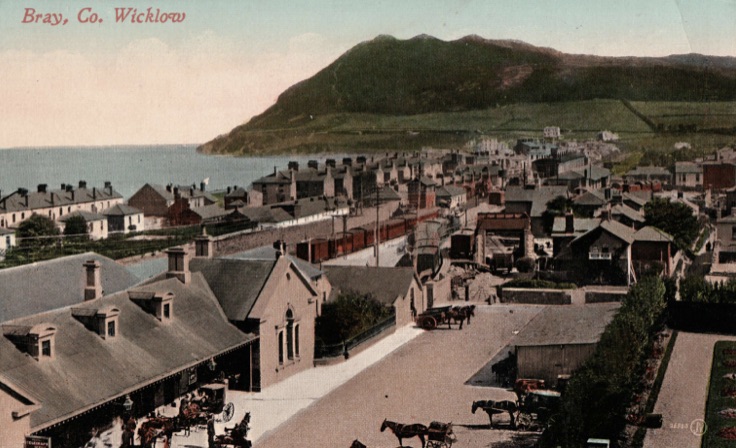
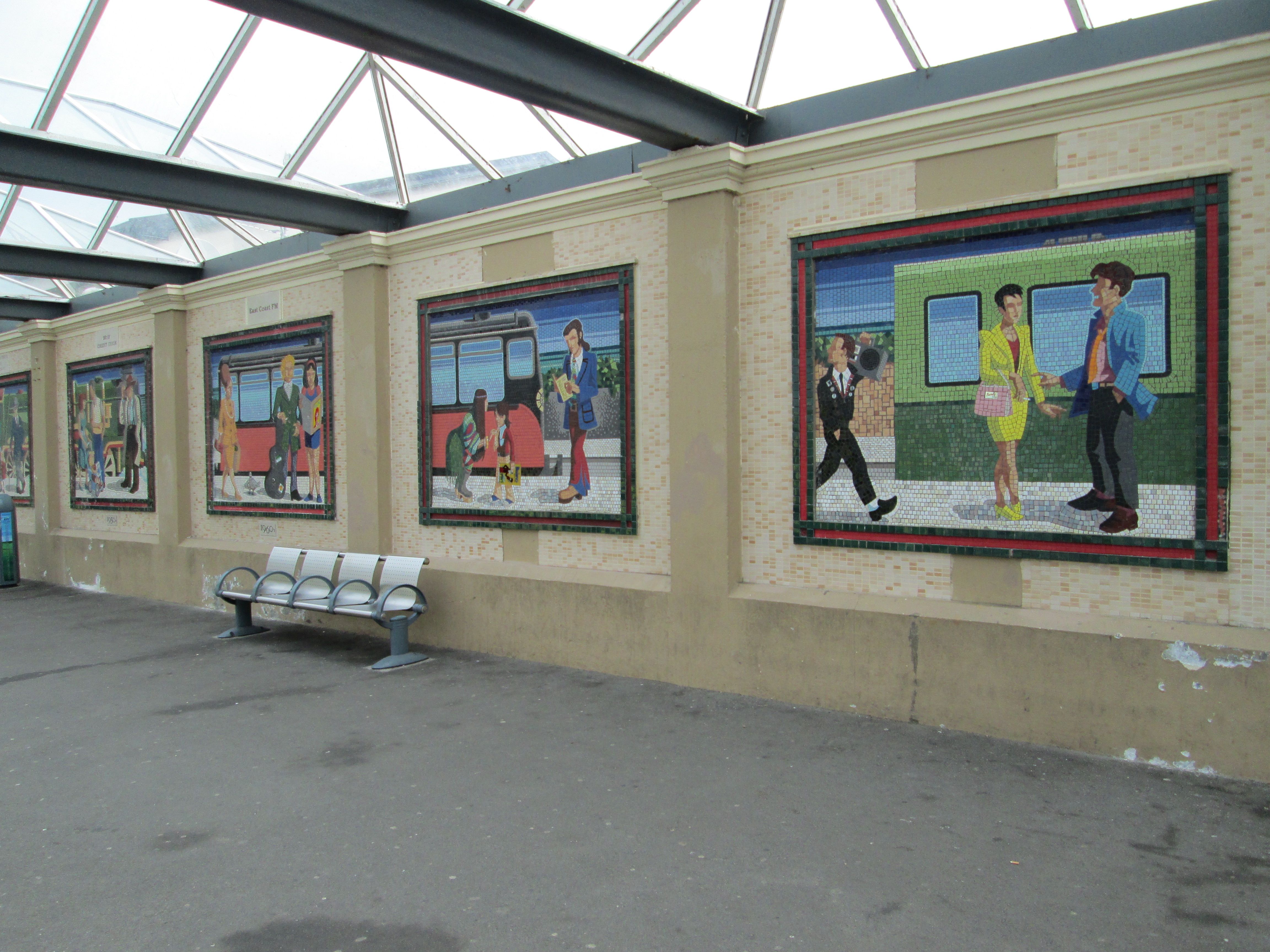
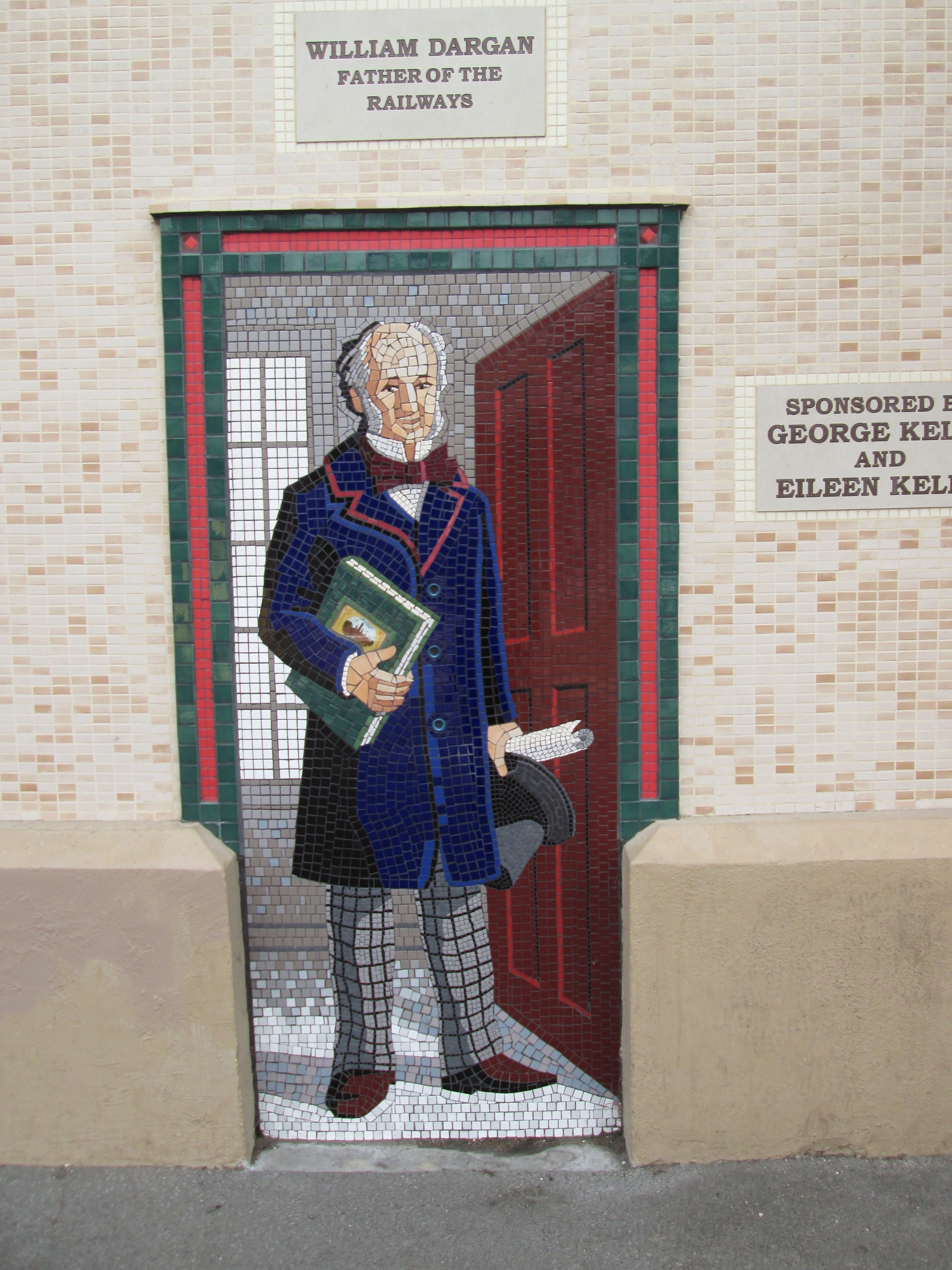
Bray got its harbour in the 1890s. Before that a small dock provided some haven for fishing boats and other small seaborne craft. The harbour had a lighthouse at the end of the South pier, but the fearsome sea hereabouts soon claimed it. The development of the seafront as an urban resort came with William Dargan. Dargan, born in Carlow in 1799, became Ireland’s leading railway entrepreneur in the Age of Steam. A self made man, who worked initially as a road contractor, by 1853 he had built six hundred miles of railway track. He organised and funded the Great Dublin Exhibition of 1853, which spawned the National Gallery. A statue of Dargan stands at the Gallery entrance on Merrion Square, but a greater monument was in embryo. Already responsible for the transformation of Dun Laoghaire, then Kingstown, with Ireland’s first railway connecting to Dublin in 1834, and such grand developments as the Royal Marine Hotel, Dargan determined to develop Bray as a resort for the quality along the lines of Brighton.

Bray, in his eyes, was ‘unsurpassed for beauty in the whole civilised world’. The hand of nature having done so much already, as he put it, he resolved, in typical Victorian style, to further improve on it. Incidentally, Queen Victoria herself had visited Dargan’s home during the Great Exhibition and offered him a title, but as a patriotic Irishman he refused. 

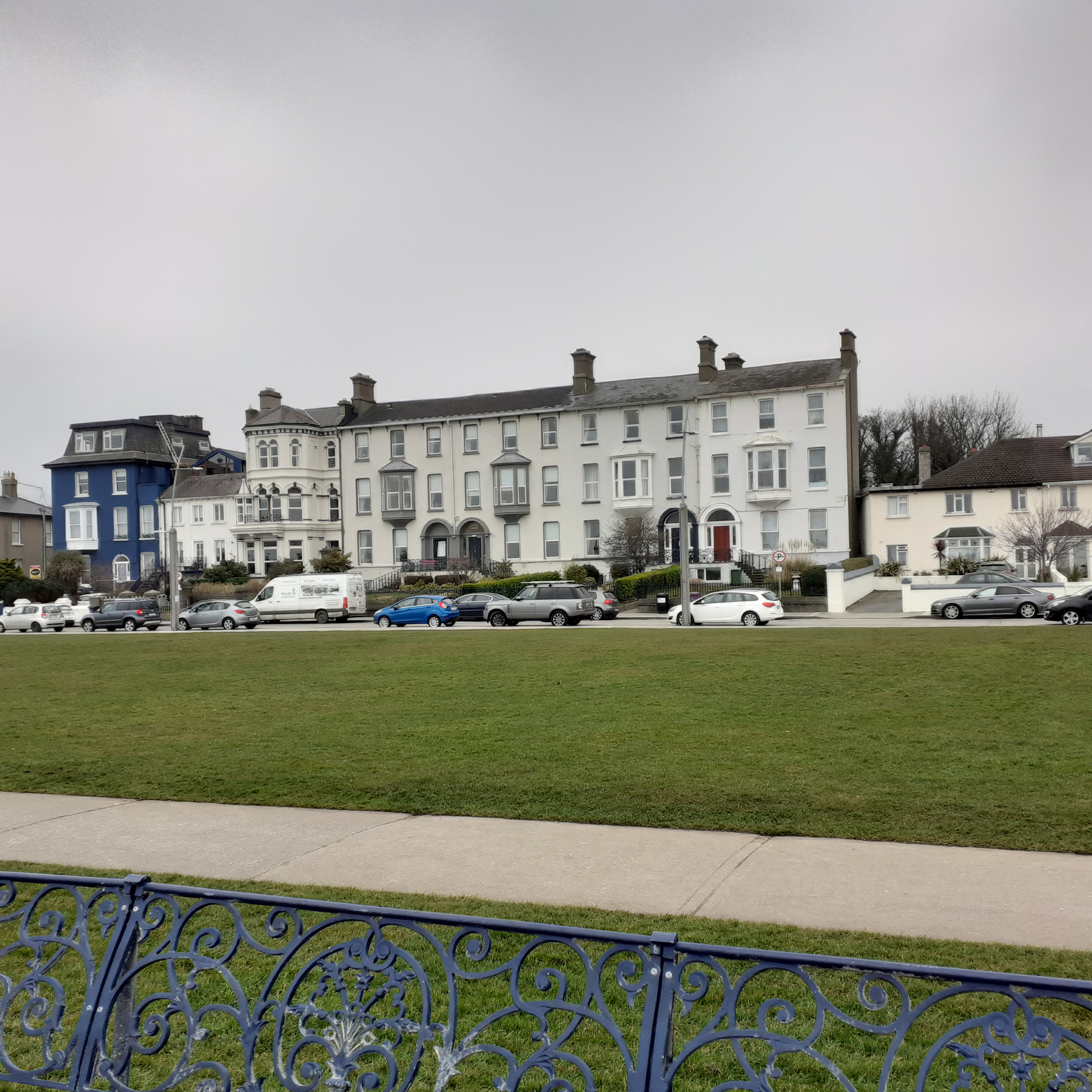
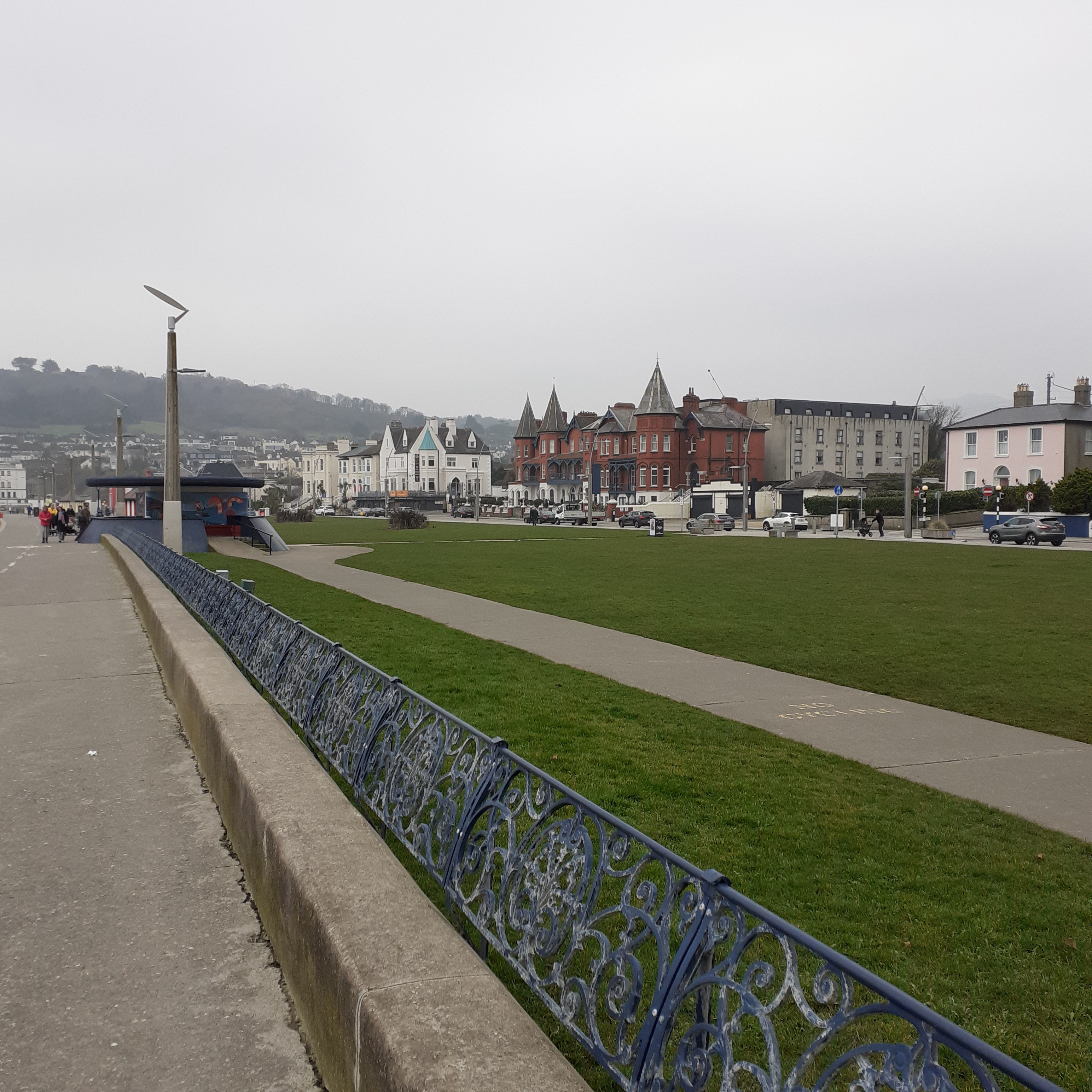
His outline for Bray imposed a rational and elegant urban development between old Bray and the coast. Relatively unique in Ireland, the plan featured straight thoroughfares meeting at right angles. Lined with fine terraces and villas, shaded by plane trees, Dargan created an attractive suburban environment for new residents. Dublin’s middle classes flocked to the town, availing of the railway’s provision of a forty five minute commute to the capital. Bray, already a thriving town of four thousand souls, would double in population by the end of the century. 

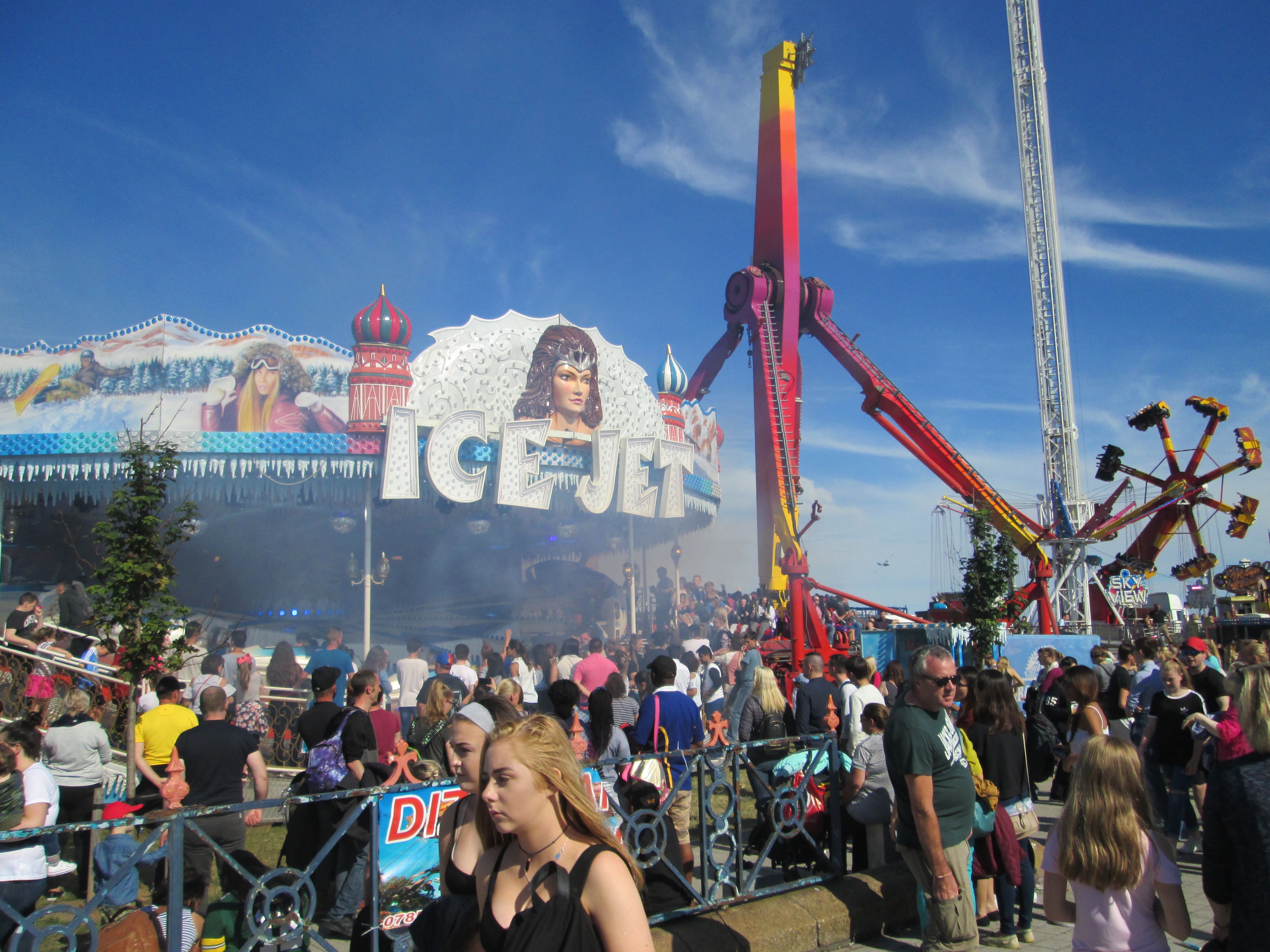
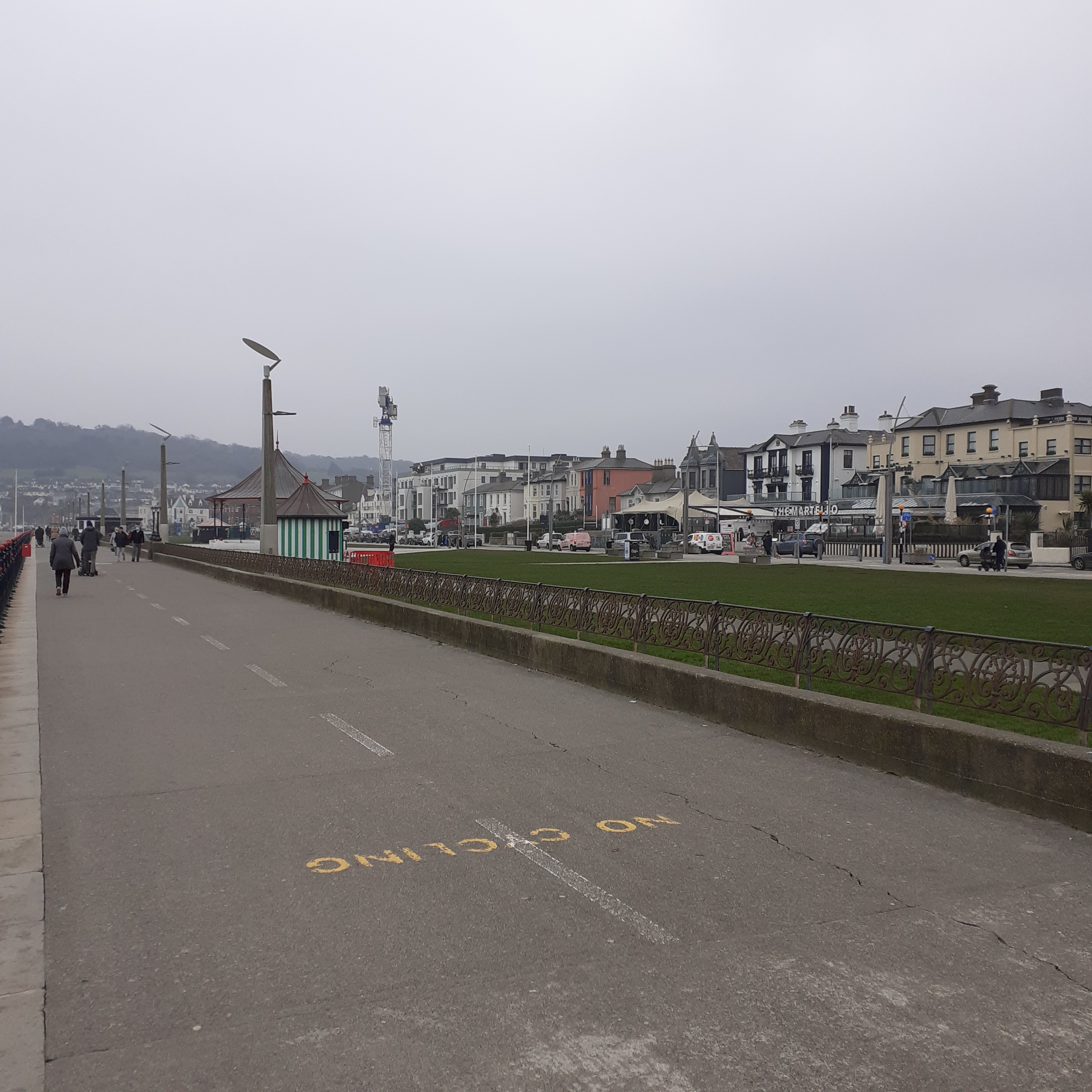
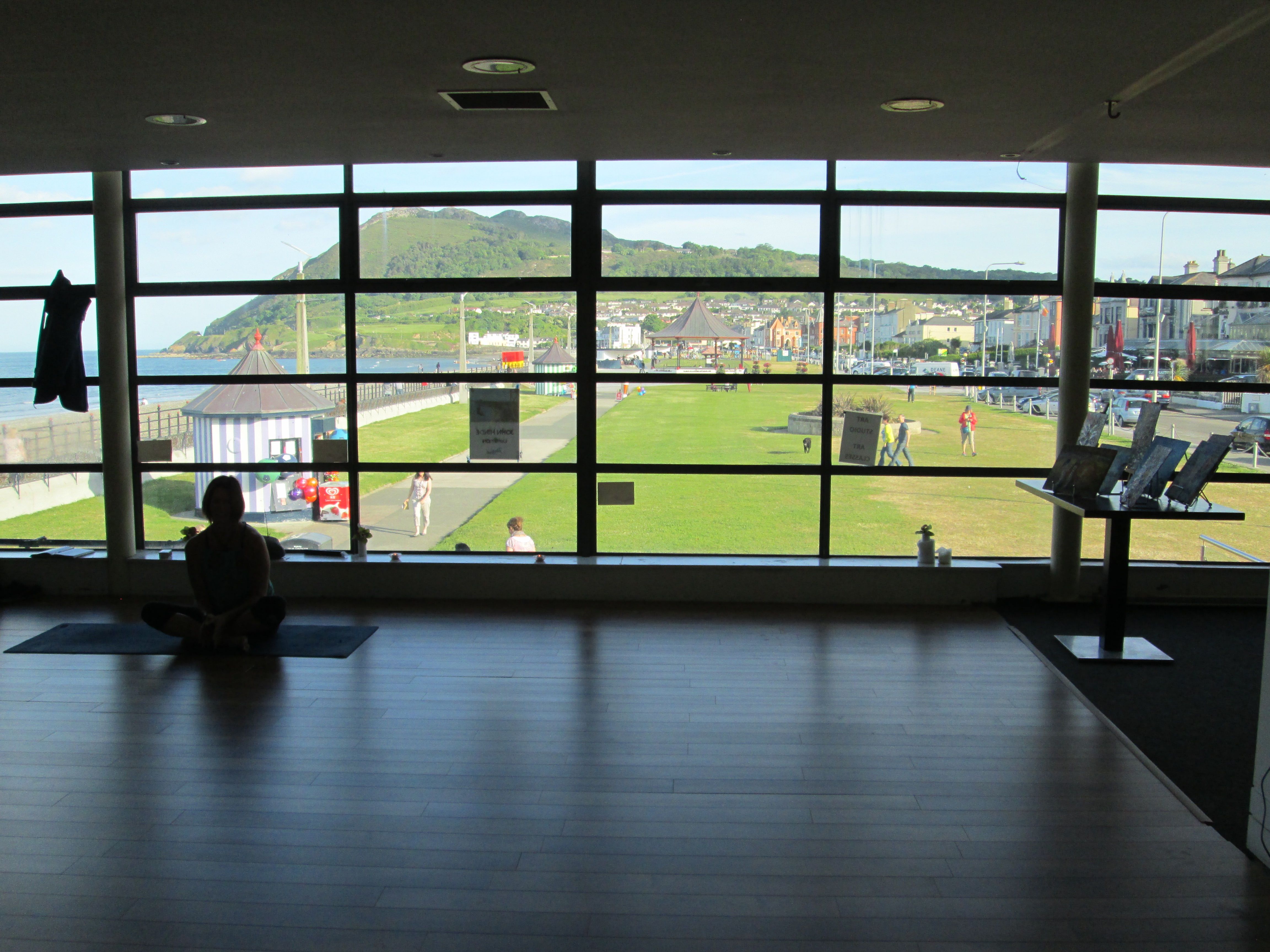
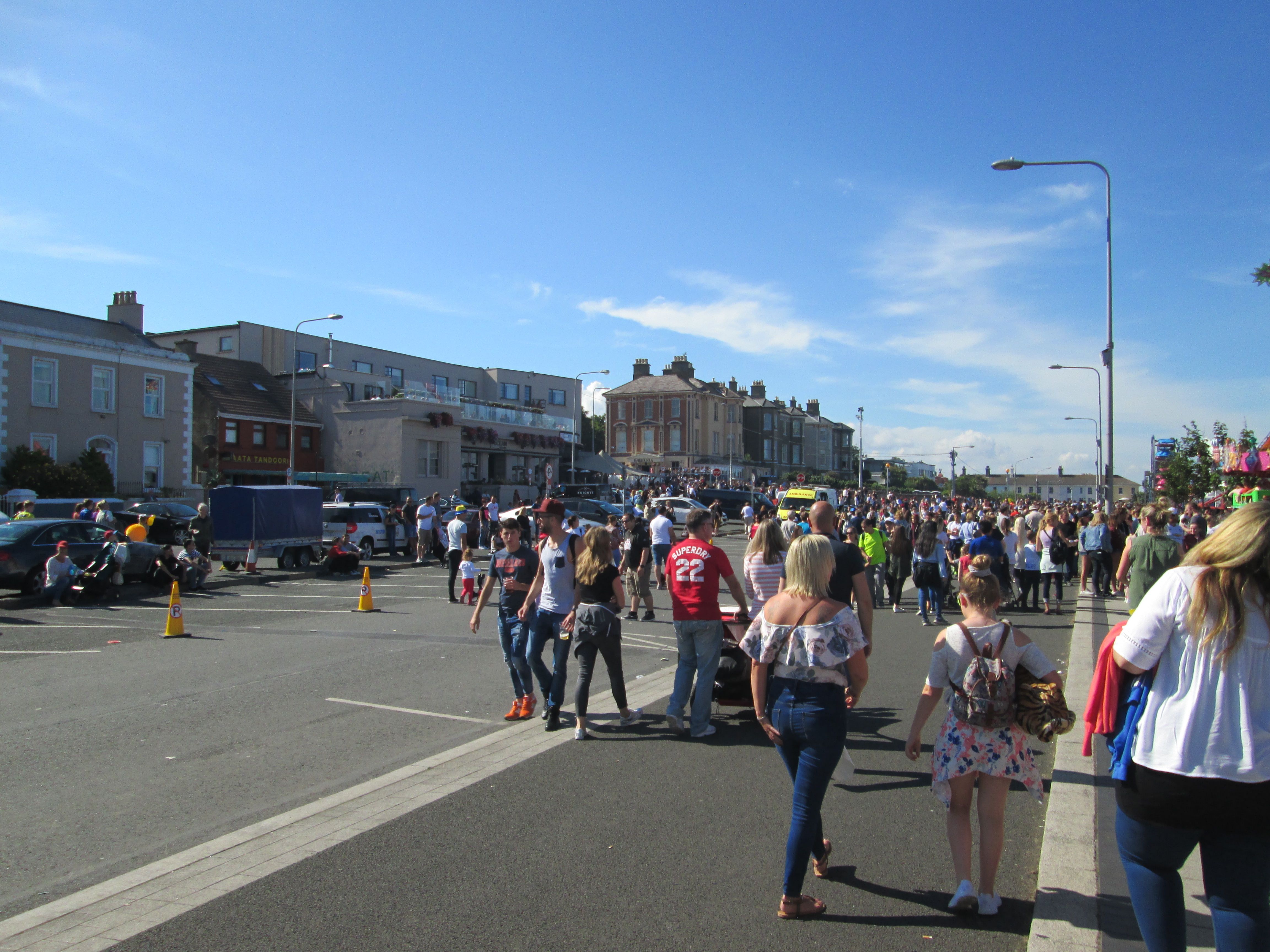
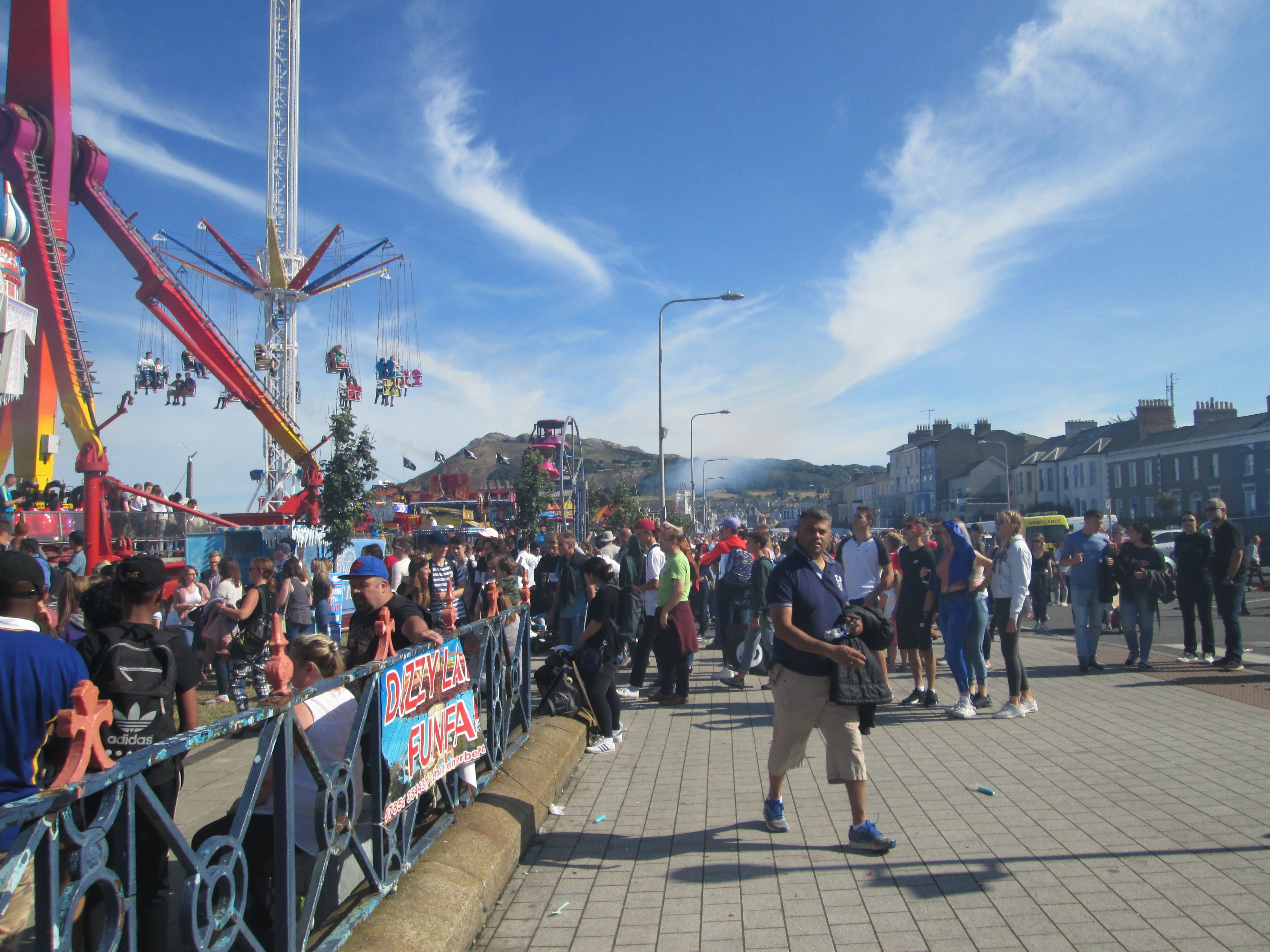
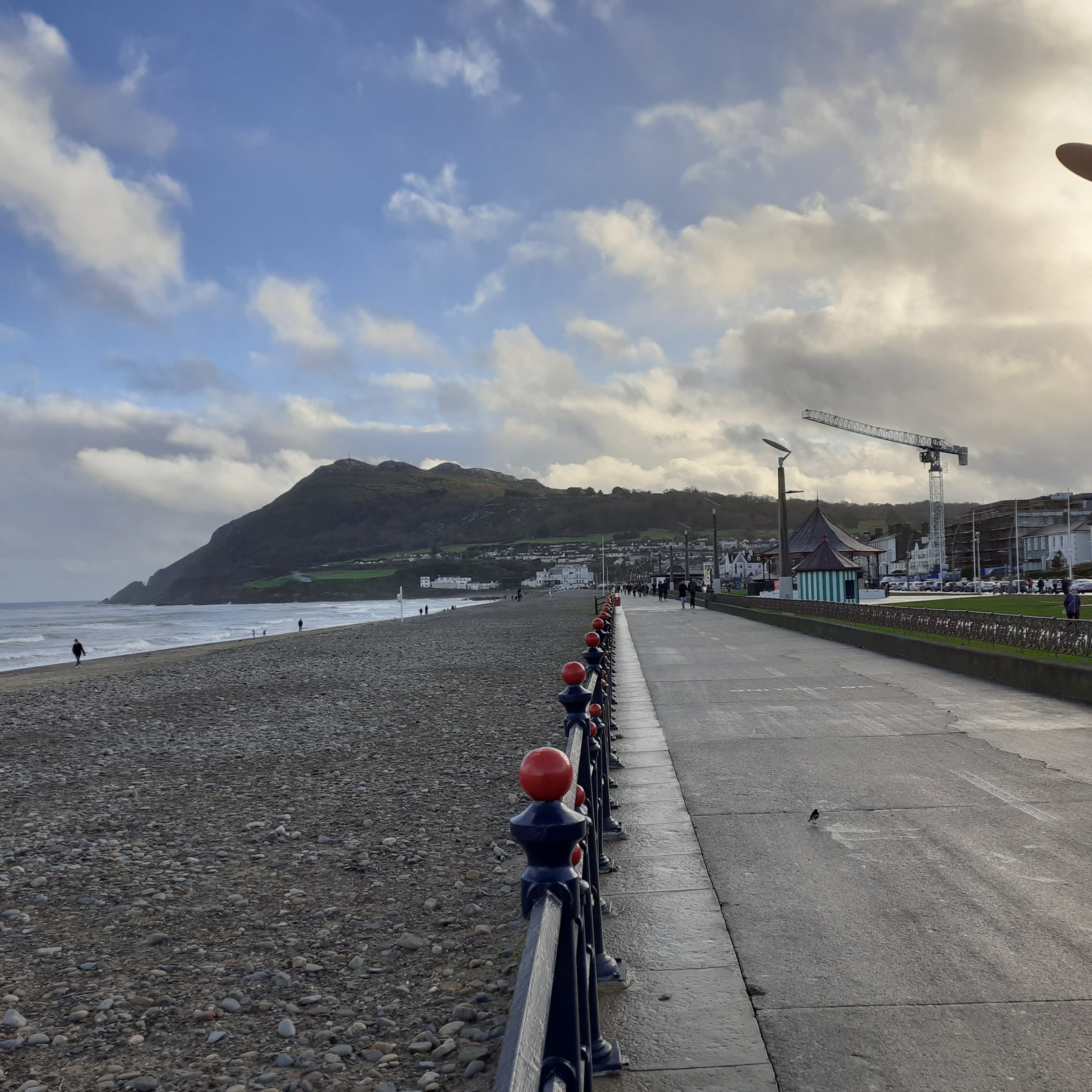
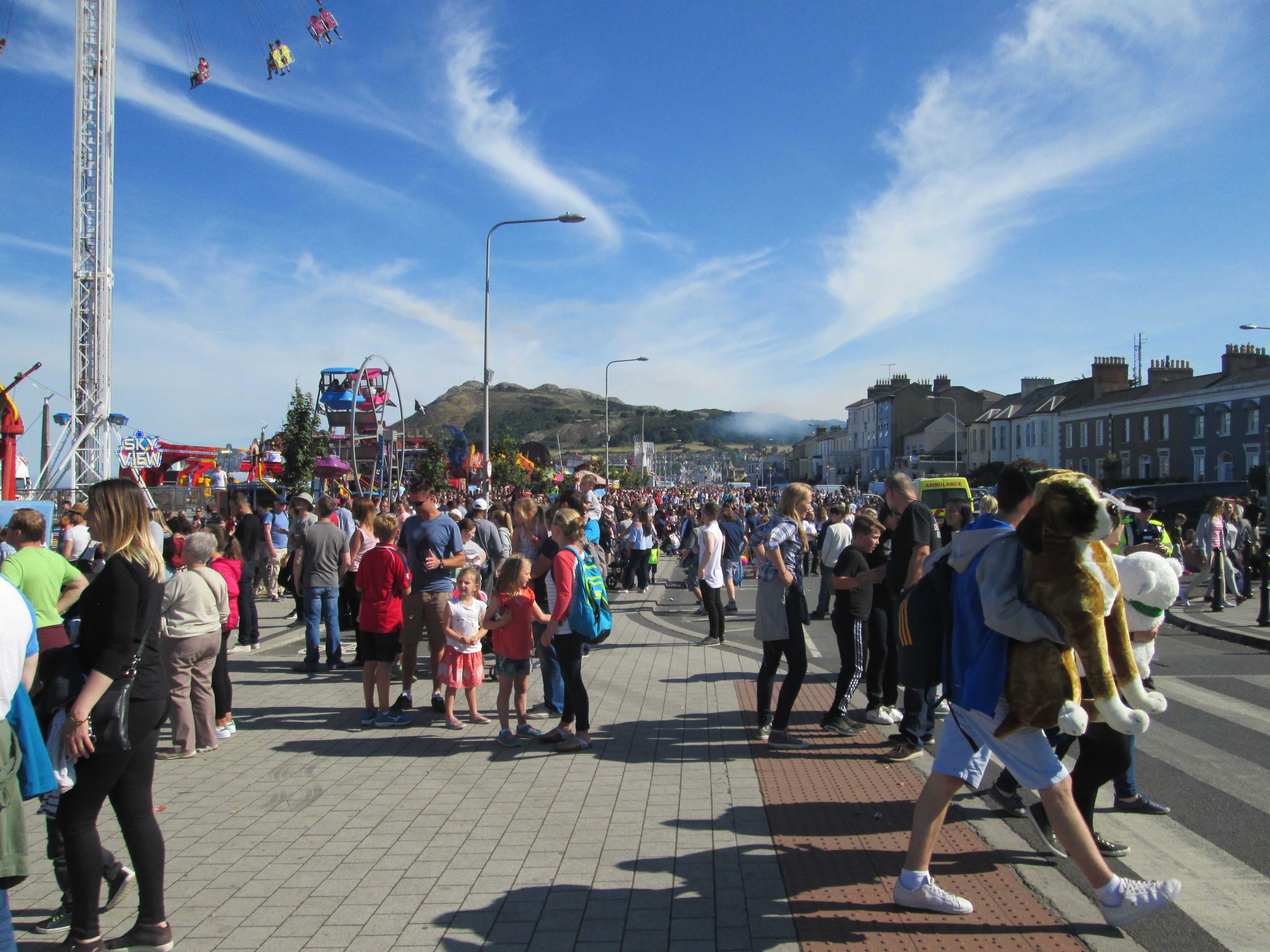
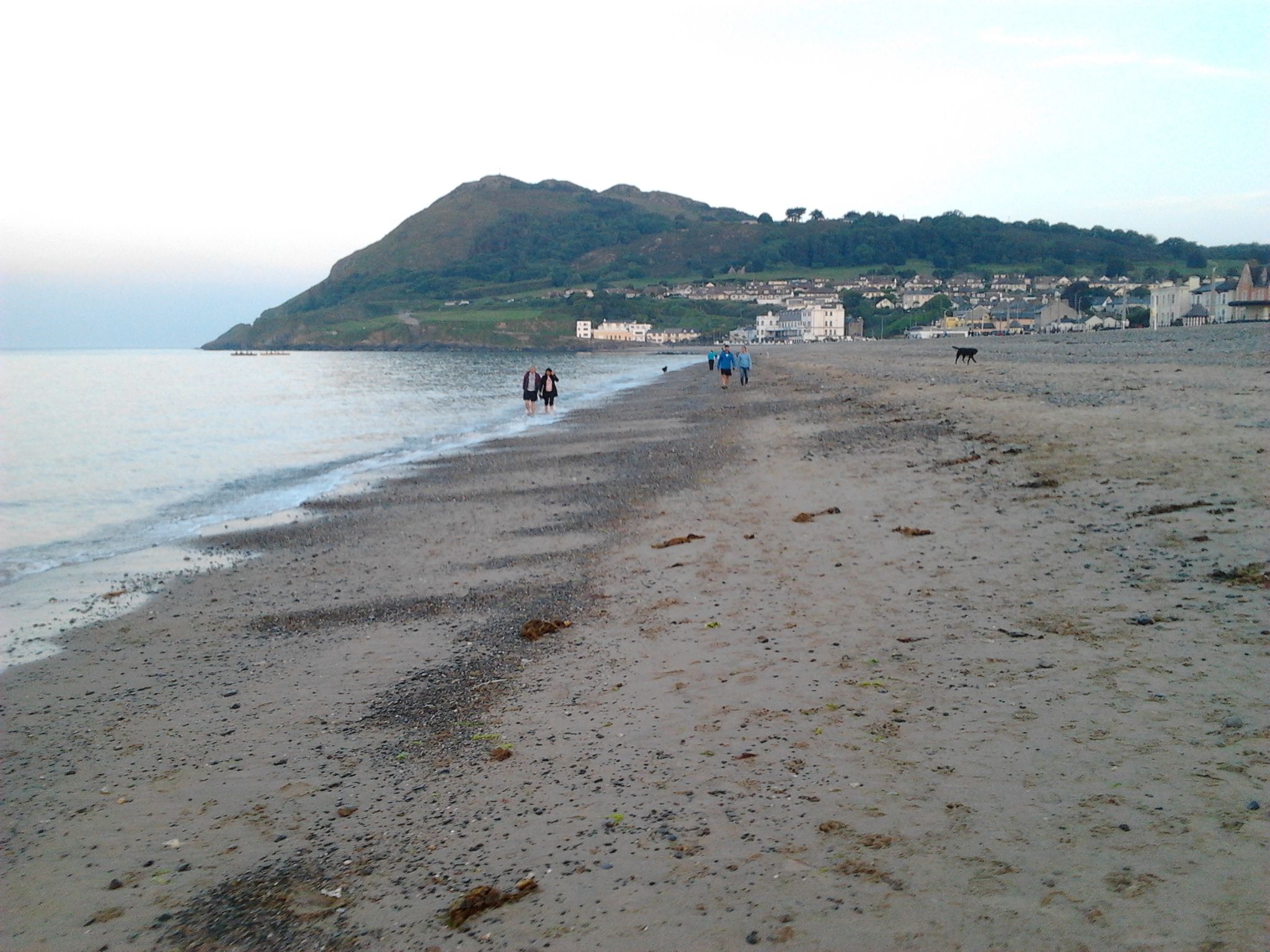
The centrepiece was the development of a seafront Esplanade, stretching along Strand Road for about a mile between the harbour and Bray Head. As with the lighthouse, the sea had other ideas. Throughout the sixties, the Esplanade was flooded on three occasions and a remedy was urgently required. The sea wall was built to stand proud before the waves and tall enough to shelter the Esplanade. Atop the wall, the Promenade assumed its commanding position, the definitive, iconic feature of Bray’s seafront. Here, the great and the good of society displayed their plumage, preening and promenading in the bracing sea air.  

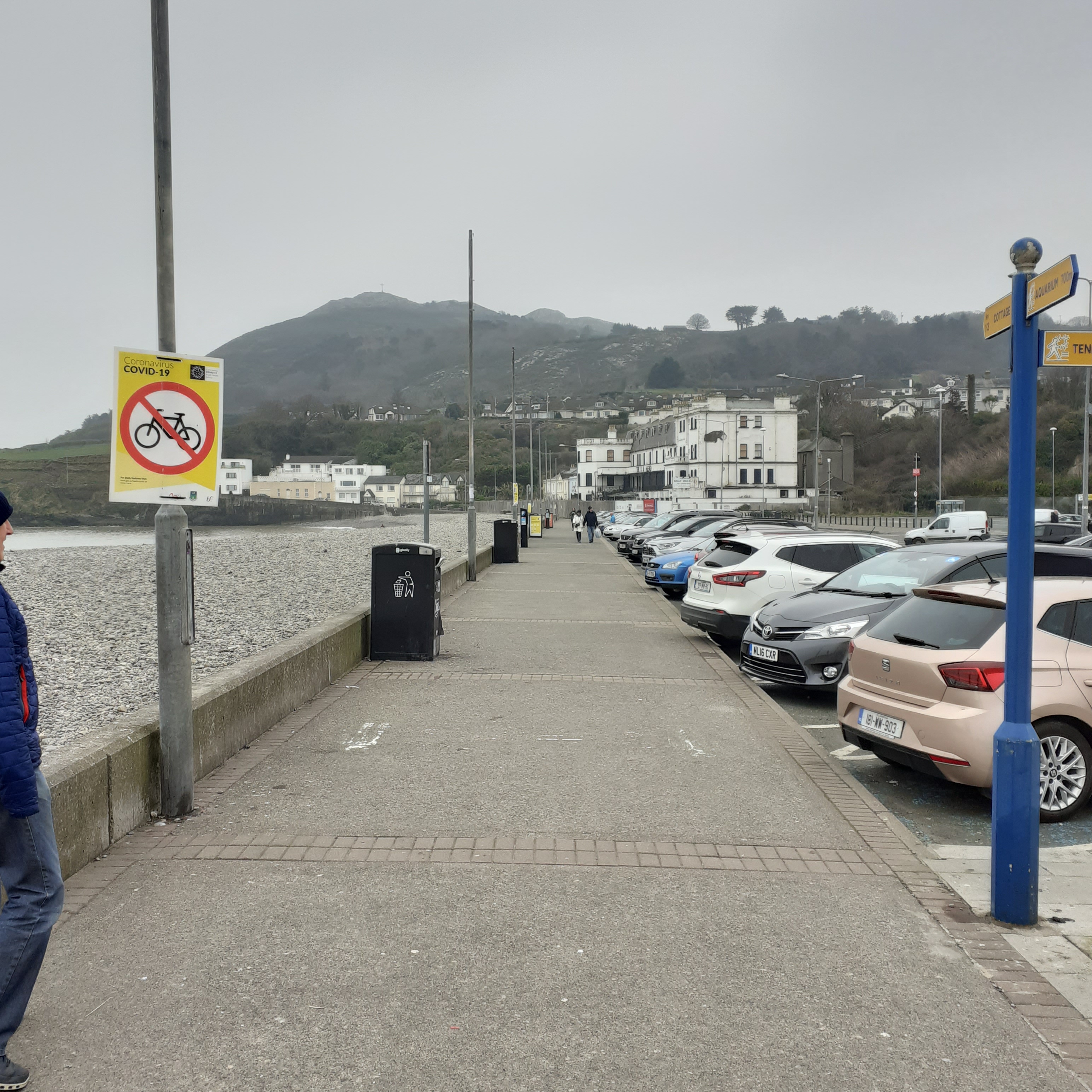
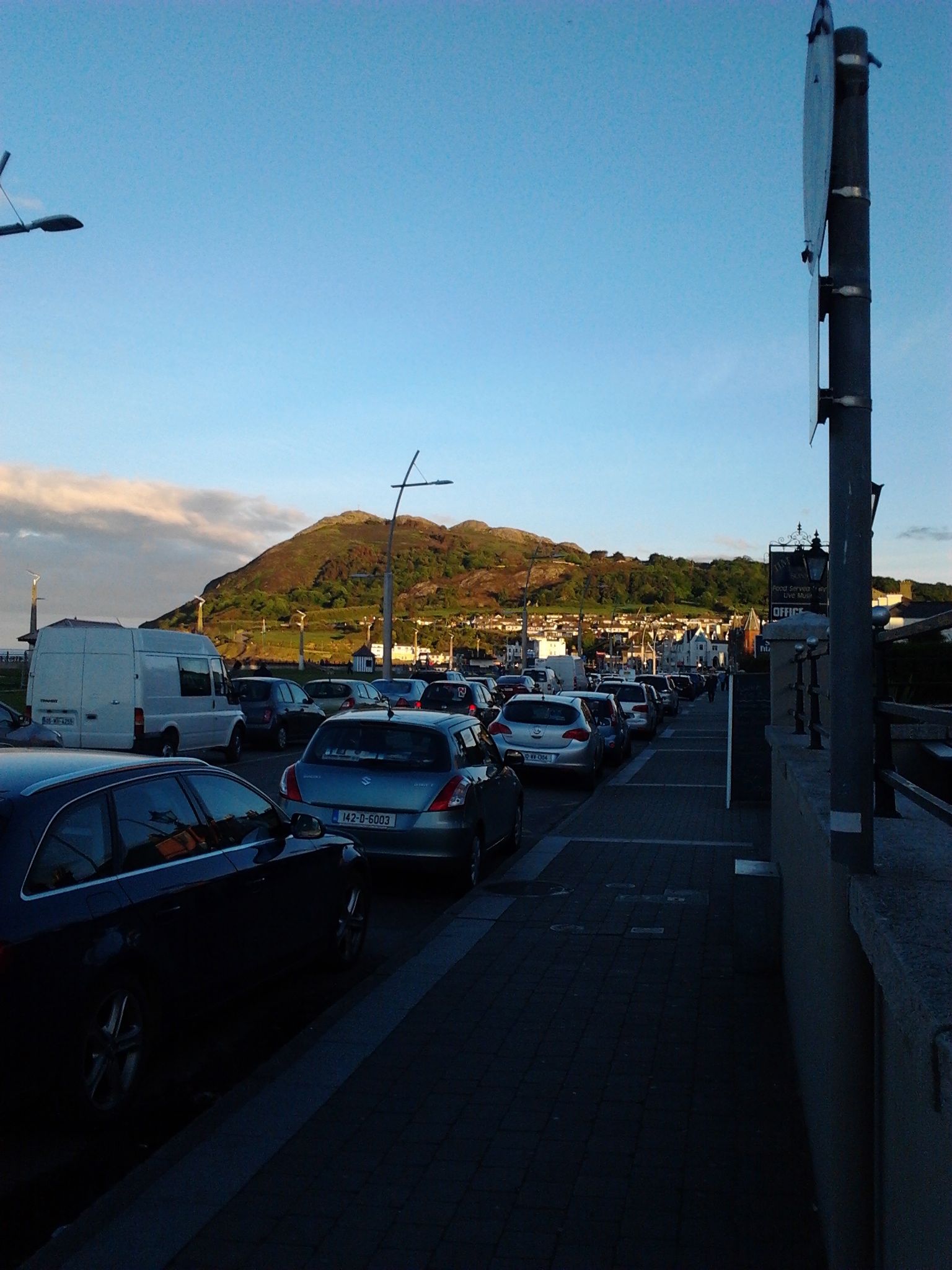
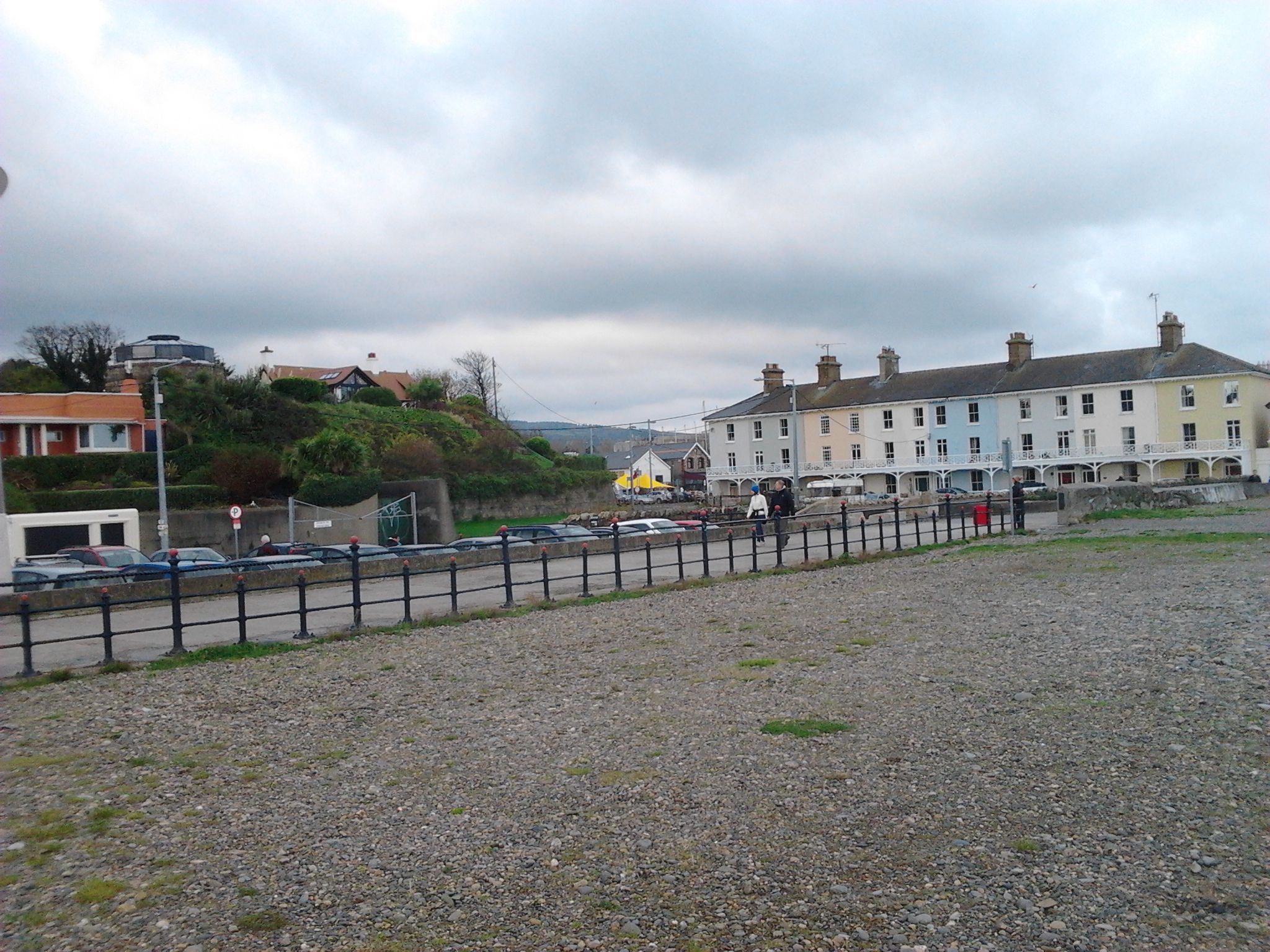
The Prom points arrow straight to the foot of Bray Head. Framing this northern end is Martello Terrace. The attractive terrace of eight three storey houses is set off by distinctive cast-iron veranda with timber fretwork railings and first floor balcony taking full advantage of the fantastic view. It was one of Bray seafront’s earlier terraces, being built around 1860. 

From 1887 for four years, number one was home to the peripatetic Joyce family. John Joyce was a rate collector, though wound up in Stubb’s gazette in the early nineties and was dismissed, sending the family into a tailspin of genteel poverty. Young James’s memories would be mixed. Aged only nine, Joyce wrote a poem on the death of Charles Stewart Parnell which so pleased his father that he had it published. This launched the literary career of Ireland’s Modernist giant. Payback is provided in an early scene from Portrait of the Artist, set in the drawing room at Martello Terrace. It is Christmas 1891, seen through the eyes of Joyce’s alter ego Stephen Dedalus. Over Christmas dinner, talk turns to the death of Parnell, Ireland’s great leader of the previous decade. Stephen’s father is inflamed by the treatment Parnell has received from conservative society, the press and the Catholic hierarchy. The experience is perplexing for Stephen, but carefully rendered by Joyce.

Some effects of Bray’s bracing atmosphere haunted the writer.  The snot green scrotum tightening sea was an expression that perhaps gestated here. Certainly the sea can be a fearsome presence. When first I came to town, the wall confronted the waves directly, storms thumping relentlessly against it, sending marine fireworks skywards in spectacular plumes of foam. Seafront protection has pushed the beach further out, and the walk is now calmer, if less exciting. 

The young Joyce acquired astraphobia, a fear of thunderstorms; induced, it is said, by a pious aunt who told her young charge that thunderstorms were a sign of God’s wrath. I suspect that the thumping of the raging sea against the gable walls of number one can’t have helped either. 

Later resident, writer and politician, Liz McManus often welcomed Joyceans and literary enthusiasts to commemorative soirees, including re-enactments of the famous scene. Liz was also petitioned by all shades of Joyceans with queries and requests. Most were easily obliged. Mind, being Joyceans, there was also a request for details of the plumbing, regarding the toilet facilities experienced by young James. For some learned paper, no doubt. 

Another resident of the terrace was writer and film director, Neil Jordan, who lived next door in number two. Jordan once dressed the seafront in candyfloss pink, with a full circus in tow for his 1991 film The Miracle. The full menagerie was included: lions, horses and elephants. The film is set in contemporary Bray, though since Ardmore Studios, Ireland’s main film studios, is located in the town, Bray and its environs can stand for just about anywhere. Disconcertingly, at the same time as The Miracle, Ardmore were shooting episodes of Angela Lansbury’s Murder She Wrote, dressing adjoining streets as an American winter setting. So, one went from the heat and dust of elephants and lions in a psychedelic Victorian seafront, to twentieth century Maine, knee deep in fake snow. Bray can be anything you want it to be.

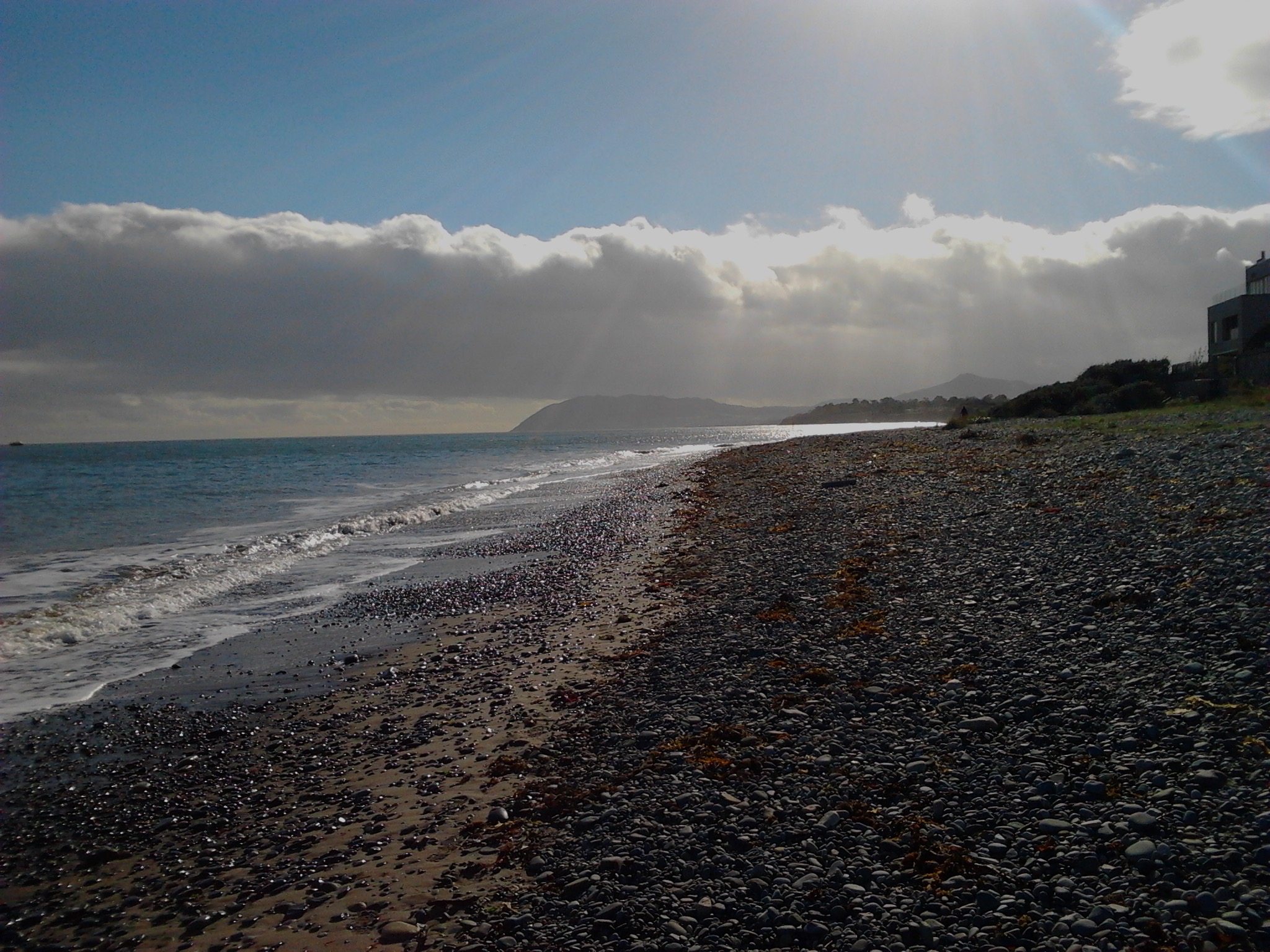
Storm clouds gather over the Prom

A more realist project of Jordan’s was the biographical film Michael Collins.Jordan decided that Bray Wanderer’s ground, just across the tracks from the seafront, would make a convenient double for Croke Park in the Bloody Sunday scene. A sizeable mob of townsfolk were dragooned as volunteers, resulting in the biggest crowd ever witnessed at the Carlisle Grounds. Bloody Sunday happened in November 1920 during the War of Independence. The day opened with Collins’s co-ordinated assault on top British intelligence operatives, the Cairo Gang, killing fifteen men. In retaliation, British Black and Tans killed fourteen civilians attending a GAA match. The scene generated some controversy. Jordan did point out that the actuality was probably more harrowing. In truth, film renderings of history are always different to some degree. Michael Collins, despite some glitches, gave a reasonable account of its subject, and was a critical and commercial success. In general, the Carlisle Grounds is a quiet enough spot. Even at home games. Built in 1862, it is the oldest soccer grounds in Ireland, though originally used for archery and athletics. Outside stands a Celtic cross, erected in 1929 as a memorial to those who fought and died with the British Army during the Great War.

When Jordan followed Bono up the coast to Killiney, Mary Coughlan took up residence. The original Galway girl made a huge impact with her debut album, Tired and Emotional. Released in 1985, it sold a colossal hundred thousand in Ireland. It blends blues and barroom balladry to conjure a tinted world of frontier saloons, smoky bars and an interior landscape of the wandering soul. The opening track, Double Cross, can be appropriated as a theme song by anyone in a particular state of mind.

Like my coffee I’ve grown cold

I stay behind and fade into the wall

I’m lost amongst the jostling crowds at lunchtime

I’m hoping you’ll come but I know that you won’t even call

Mary’s whirlwind career eventually deposited her on Bray’s stony shore, a boozy Boticelli babe, down to her last sea shell. But she could still calm the waves from her windows by the sea.  

Every hold that I had on time

Every dream that I thought was mine

Well, it’s all quite forgotten now

Lost without the double cross of you

Wicklow’s Wonderful Coast – Intro

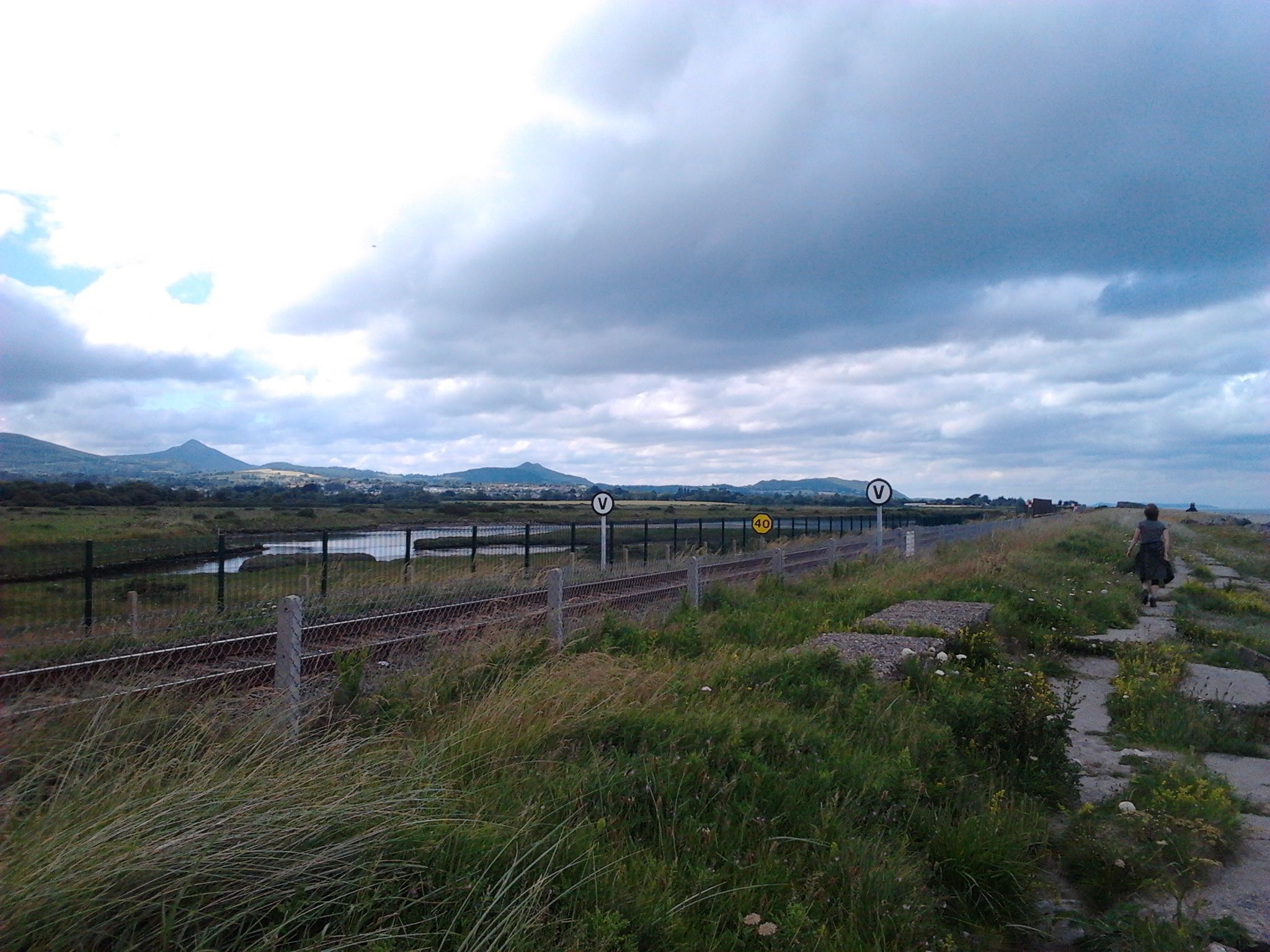
You could, if you chose, walk all the way around Ireland’s coastline, or near enough. There’s six thousand kilometres of it, or four thousand miles. That’s a long way from Clare to here and back, by the circuitous route. But one step at a time. We’ve just explored South Dublin’s Rocky Shore, from Old Dun Laoghaire to Shankill Beach. Just north of Bray, Wicklow’s coast begins. Sitting in the Harbour Bar, the boats jingling in a stiff Winter’s easterly, it was a good time to ponder continuing our coastal adventure. 

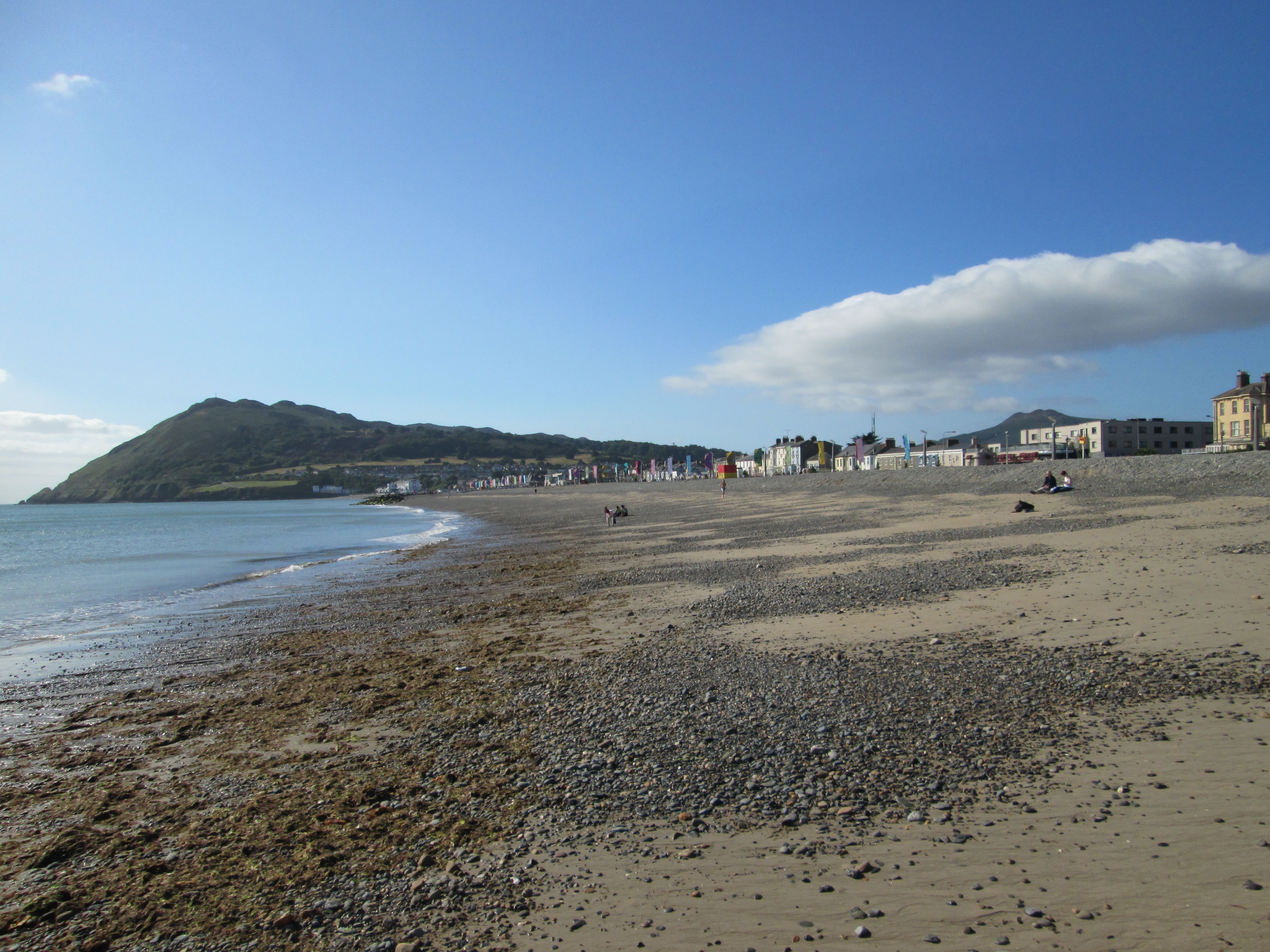
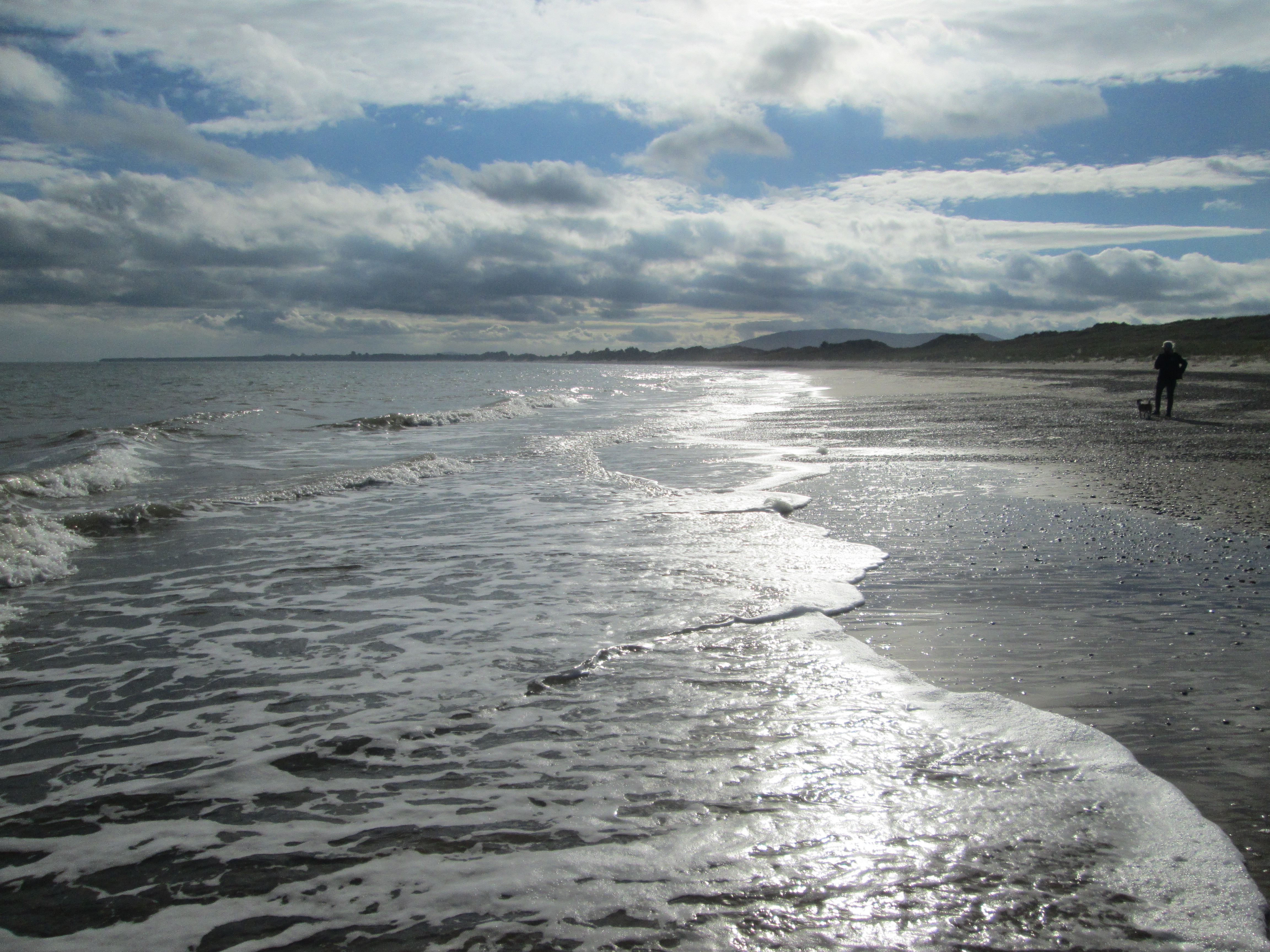
Wicklow, the Garden County, is most renowned as a mountainous region. The Wicklow Mountains cover most of the county and make for the largest continuous upland region in Ireland, even spilling into neighbouring counties, Dublin to the north and Carlow to the south. It is a rugged region, wild and beautiful despite its proximity to the Dublin metropolis. However, the Wicklow range is inland, separated from the sea by a narrow coastal plain. Only at Bray is there a high headland with sea cliffs. After that, the coastal route is mostly along the beach, but for a short break at Wicklow Head.

So, over the next few weeks, I we’ll travel together from the ancient town of Bray to the modern town of Greystones, on down through the ‘Southern Pale’ of Kilcoole and Newcastle to Viking Wicklow Town, then via Brittas Bay to Arklow, another Norse settlement until we reach the Wexford border. As usual, there will be plenty of detours, mingling seascapes with townscapes, meeting such figures as Saint Patrick, James Joyce and Hozier, exploring the history and geography along the coast of Ireland’s most beautiful county, its newest, and still perhaps one of its wildest. There’ll be glasses raised and songs sung. Who knows where it will all lead.

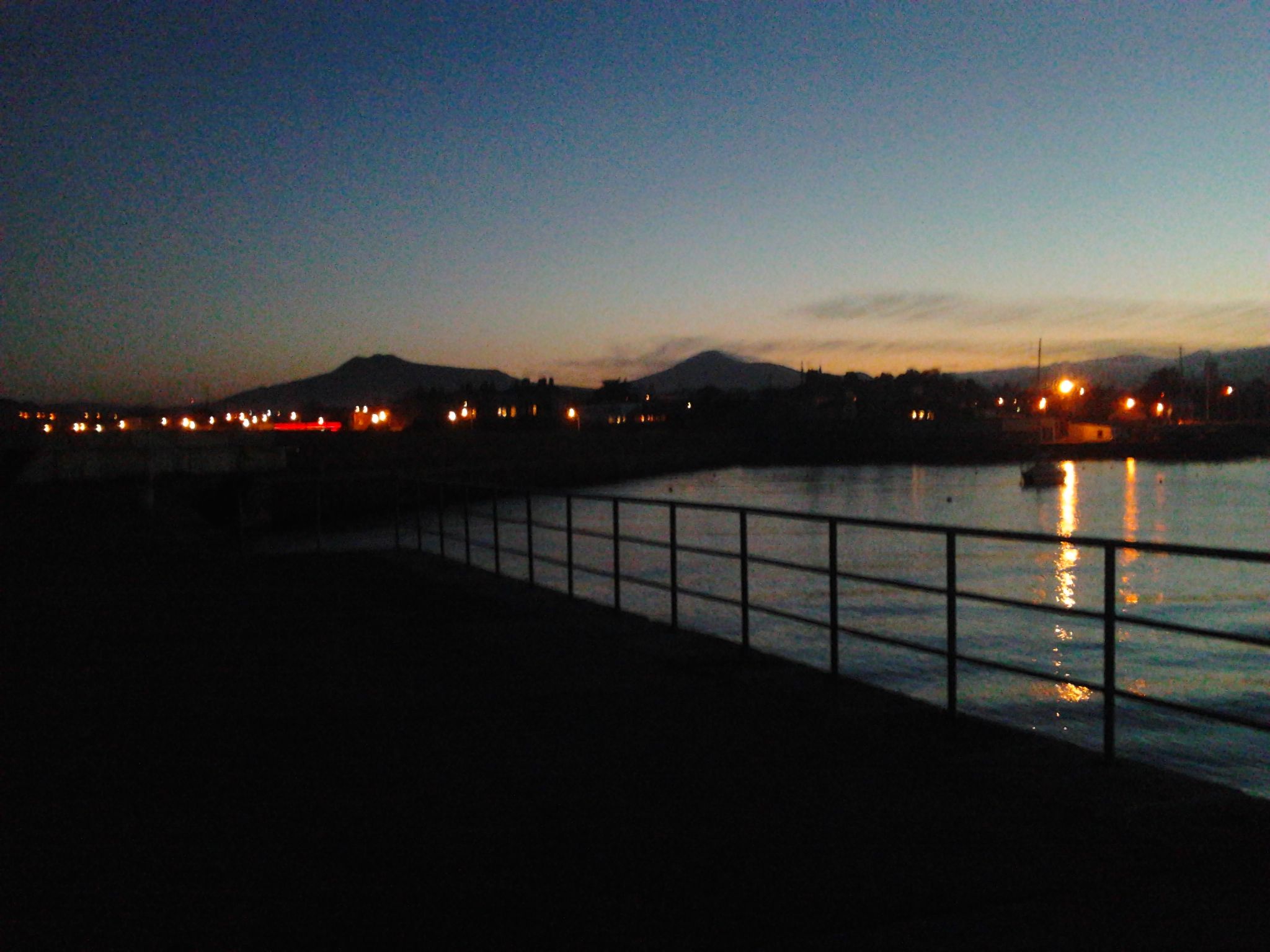
Well, okay, Arklow I suppose. But the path will meander as interst, and refreshments, dictate. The distance from Bray to Arklow, along the coast is about 60km, 40 miles or so, and would take about twelve hours in total. We’ll see. We will, like Alice, begin at the beginning. Standing in Bray’s harbour, the swans and boats beside us, the Dargle River and Dublin behind us, and before us a path along the coast beginning with the Promenade along the Bray sea wall. To be continued …

South Dublin’s Rocky Shore -10

Going back to the last resort, catch a 45 to the last resort

Shankill Beach was base camp for the exploration of South Dublin’s Rocky Shore. There remains a short stretch of coast leading down to County Wicklow. The border with Wicklow, if physically marked, would be logically defined by the Dargle River. However, the shiring of Wicklow was rather late, in 1610, making it Ireland’s youngest county. By then Bray was well established. Walter de Ridelsford built his castle in 1172, at the time of the Norman conquest, protecting his lands on either side of the Dargle. De Ridelsford was granted a license by King John in 1213 to hold a weekly market and Bray was born. The border is therefore defined by property more than geography, and joins the coast just south of the parkland of Woodbrook Golf Course.

A grubby industrial estate is an unpromising introduction to the Garden County, but soon you’ll come to the Dargle River. On the far bank the northernmost of three Martello Towers guarding Bray”s coastline from Napoleon, and the only one surviving, stands on a promontory above the harbour. Of a night, the moon being high, one would often see Bono clad in white shift and holding aloft a candelabra, flit in circles around the glass parapet, composing the lyric to his latest ouevre. Since his leaving all is dark, hardly a ghost remains. Perhaps he still hasn’t found what he’s looking for.

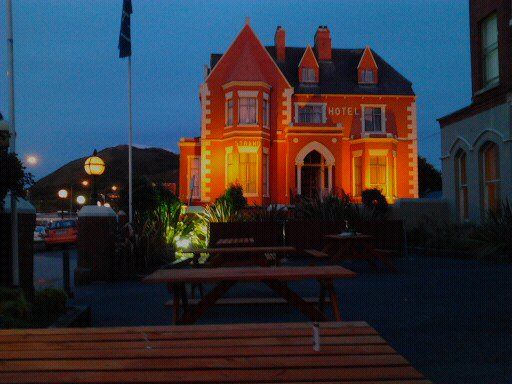
What I would be looking for is a pint. And lo, what should appear between the train tracks and the harbour only the Harbour Bar. Built as fishermen’s cottages in 1831, the pub has been serving thirsty seafarers and wayfarers for a century and a half. What better place to drown the Fisherman’s Blues.

And I know I will be loosened 

From the bonds that hold me fast 

And the chains all around me 

Will fall away at last

And on that grand and fateful day 

I will take thee in my hand 

I will ride on a train 

I will be the fisherman

With light in my head 

You in my arms

To recap then, we set off from Shankill Beach and followed the coastal path to Killiney Beach. Past Killiney DART station you can take the underpass to Strathmore Road and climb to Vico Road. Alternatively, if the tide allows, go farther along the beach and cross over the Dartline. Vico Road takes you down towards Sorento Terrace, visible to your right. At the junction, follow Sorento Road north which takes you to Dalkey Train Station. That section is about 6K  and will take an hour and a quarter. 

Cross the tracks to Ardeevin Road and keep on for the Metals. The Metals begin at the Quarry and the route is well signposted to Sandycove and Glasthule Train station. From there, cross the main road and straight on down to the seafront where the People’s Park will be to your left. It takes three quarters of an hour to get to the People’s Park, and we’ve walked 9k in total.

After that, we explored Dun Laoghaire’s seafront, all the way to the West Pier. That’s another forty five minutes, just over 3k, an hour and a half for the round trip. Three and a half hours walk so far for 15k.

Returning south, at the People’s Park again, keep to the coast from Teddy’s and around Scotsman’s Bay to the Forty Foot. Make your way to Bulloch Castle, down to Bulloch Harbour, and then follow Harbour Road and Convent Road into Dalkey. It’s fifteen minutes from Scotsman’s Bay to the Forty Foot and the same to Bulloch Harbour. Another twenty will take you to Coliemore Harbour, but allow some time to explore Dalkey. 4k of a walk since Scotsman’s, just under an hour.

Having explored Dalkey, take the southern route out via Coliemore Road, which leads all the way back to the Vico Road. Within ten minutes of leaving Coliemore Harbour you should reach Sorento Park and will have closed the loop. That’s four and a half hours walking for about 20k. 

Finally, another hour will take you back to Shankill Beach, five and half hours for the full walk. Overall, the route measures about 25k. but there are all sorts of detours and variants as we’ve seen. The nine parts described here involved five separate trips, although I’ve trod these highways and byways many more times than that – and will again.

Meanwhile, the South Dublin Rocky Playlist is provided for your wining and dining pleasure. I’ve tried to keep to local talent as much as possible but obviously strayed a bit at times.

Reverend Sisters, (Clodagh Simonds), Swaddling Songs/Mellow Candle (1971)

The Poet and the Witch (Clodagh Simonds), Swaddling Songs/Mellow Candle (1971)

Orinoco Flow (Enya, Roma Ryan), Watermark/Enya (1988)

And it Stoned Me (Van Morrison), Moondance/Van Morrison (1970)

Sheep Season (Simonds, A.Williams, D.Williams), Swaddling Songs/Mellow Candle (1971)

Thousands are Sailing (Chevron), If I Should Fall from Grace with God/The Pogues (1988)

The Captains and the Kings (Brendan Behan), Revolution/The Dubliners (1970)

Summer in Dublin (Reilly), Bagatelle/Bagatelle (1980)

Don’t Bang the Drum (Mike Scott, Karl Wallinger), This is the Sea/The Waterboys (1985)

She’s a Mystery to Me (Bono, The Edge), Mystery Girl/Roy Orbison (1989)

In Dreams (Roy Orbison), In Dreams/Roy Orbison (1963)

Love Shack (Pierson, Schneider, Strickland, Wilson), Cosmic Thing/ B52s (1989) 

Don’t Go (O Maoinlai, O Braonain, O’Toole)), People/The Hothouse Flowers (1988)

Silversong (Clodagh Simonds), Swaddling Songs/Mellow Candle (1971)

Zoo Station, (U2), Achtung Baby/U2 (1991)

In Darkness Let Me Dwell (Dowland), Songs from the Labyrinth/Sting (2006)

Sweet Thing (Van Morrison), Fisherman’s Blues/The Waterboys (1989)

Blackbird (Lennon, McCartney), The Beatles/The Beatles (1968)

Fisherman’s Blues (Scott, Wickham), Fisherman’s Blues/The Waterboys (1988)

The Last Resort (Ashford, Bonass), Sit Down and Relapse/Stepaside (1979)

South Dublin’s Rocky Shore – 9

9. Coliemore Harbour to Sorrento Point

Coliemore, the big harbour in Gaelic, made Dalkey the main port for Dublin in the middle ages, providing a deepwater harbour in contrast to the shallow and silt prone Liffey estuary. From the seventeenth century onwards it went into decline and the town of Dalkey quietened, and along with the hinterland withdrew into the wings. It is interesting now, stepping into the embrace of the harbour, how the trappings of the modern world slip out of view, and the harbour forms a window back to wilder times. Dalkey Island lying just beyond the harbour mouth remains ragged with the ruined profile of its fortifications and places of worship. There’s plenty of history written beneath its cloak of melting green. And what is not written in stone is embossed with myth and legend. 

Approaching Coliemore Harbour we passed Elsinore, a grand nineteenth century residence.  It is said that the nearby harbour bore some similarity with the Danish castle as described by Shakespeare in Hamlet. Such comparisons are lost in the mists of time. The connection with Shakespeare comes from friend and contemporary John Dowland. Dowland’s place of birth is unknown, but it was probably Ireland. He dedicates his work From Silent Night to “My loving countryman Mr John Forster the younger, merchant of Dublin, Ireland.” Dalkey has been claimed, by Irish composer and musicologist, W.H. Grattan Flood, though there’s no actual proof.

Dowland, a Catholic, failed to receive favour at Elizabeth’s court but in 1598 gained a position as lutenist to the Danish Court of King Christian IV for a fabulous salary. The eccentric plight of musicians at Christian’s court is well drawn in Rose Tremain’s Music and Silence, set some decades after Dowland’s departure. When Dowland returned to London he, with Shakespeare, gained favour at the court of King James I (James VI of Scotland). Around then, Shakespeare was putting the finishing touches to his epic, Hamlet, and it would seem likely that he plugged his friend Dowland for details of the Danish Court.

Dowland would have described the original, methinks, with Shakespeare more interested in the carry-on of the court than the architecture. The Bard derived the name Elsinore from the Danish town, Helsingor, in the shadow of the mighty Kronborg Castle. I once sailed from Copenhagen past Kronborg, and even on a crowded deck, the view evoked the mythology and romance I had anticipated. So close, and so far out of reach, there is something bittersweet in observing  a famed vista from the viewpoint of the seafarer, poised between port and storm.

Mind, Elizabethan Dalkey, famed for its seven towers, would have cut something of a dash as a fortified landmark on the storm battered rocky shore of south Dublin. The vista must surely have lodged in the musician’s soul, if this is indeed from whence he hailed. His final view from the sea was likely the only one, forever receding until fading into mist or horizon. Dowland’s lute playing and compositions have been revived by such as Julian Bream and Sting. Sting’s Songs from the Labyrinth captures the ancient sounds in amber. So, tinted as it is, we can still discern a facsimile of how it must have been, plucked from the air by the world’s first Rock star.

Dalkey’s Elsinore was home to architect John McCurdy, who designed the Royal Marine Hotel for Dargan. McCurdy was also responsible for the 1867 development of the Shelbourne Hotel in Dublin. He died at Elsinore in 1885, aged sixty. A century later U2 recorded tracks for their album Achtung Baby in the house. Coming home from their initial recording session in Berlin, Elsinore provided a more relaxed surrounding for local residents, Bono and the Edge. The opening track  Zoo Station, along with The Fly and Ultraviolet sprang from this session. With Achtung Baby, U2 traded their more earnest, traditional Rock sound for something more edgy and modern. As Dowland once sang:  My music, hellish jarring sounds, to banish friendly sleep. The album has become their second most successful after Joshua Tree, shifting eighteen million units. Nothing ironic about that.   

From Coliemore, we meander out towards Sorrento Point. Teetering on the edge of the map, the road makes a right angle at an elegant terrace of eight grand white houses. Sorrento Terrace was built in Famine times by William Masterson, who is also responsible for the Royal St George Yacht Club in Dun Laoghaire.

Looking over the terrace is a small park. It wears a neglected air, but shouldn’t be ignored. The rising path coils upward to a ruined bandstand and further on a casual sprinkling of benches allows pause to take in a stunning vista trough all points of the compass. On an elevated rock face to the east there’s a plaque commemorating Dowland. Designed by artist Sarah Purser, the plaque was installed in 1937. The portrait has been deliberately defaced, adding another layer of mystery to the tale.

This place does seem appropriate for Dowland’s memorial, remote enough to hear the sighs of sea and gulls mingle with the singing of ghosts, while all around the modern city throbs, cars go by, trains tunnel beneath and the boiling javelins of aircraft streak across the sky.

So, we rejoin the Vico Road, rising into the blue along the shoulder of Killiney Hill. Against that most majestic view of the bay, framed by the Sugarloaf Mountains and Bray Head to the south, it is perhaps the perfect time to let the credits roll. Or, you can just keep on walking, and let the songs rise up in your heart.

And I will stroll the merry way and jump the hedges first

And I will drink the clear clean water for to quench my thirst

And I shall watch the ferry-boats and they’ll get high

On a blue ocean, against tomorrow’s sky

And I will walk and talk in gardens all wet with rain

And never ever ever ever ever get so old again

Sweet Thing by Van Morrison is a song anticipating the joys of love, written during an enforced separation from his lover, Janet Planet. It is on the otherwise more reflective album Astral Weeks from 1968. Mike Scott gave the song an interesting twist on the Waterboys’ album Fisherman’s Blues, with an impromptu segue into the Beatles’ Blackbird, reaffirming the positive vibes of the Paul McCartney composition.

Blackbird singing in the dead of night

Take this broken wing and learn to fly

All your life you were just waiting for this moment to arrive

Blackbird singing in the dead of night

Take your sunken eyes, learn to see

All your life you were only waiting for this moment to be free.

Grafton Street’s a Wonderland

Grafton Street winds its way uphill from College Green to St. Stephen’s Green. From where the traffic veers left into Nassau Street, it is pedestrianised. Molly Malone used rest her barrow here, but she has wandered off down Sussex Street to the west. Grafton Street is the main southside axis for quality shopping and cafe society. Trendy, thronged and throbbing with a multitude of buskers, this is the place to see and be seen. Street performers have included the Hothouse Flowers, the Waterboys, Rodrigo y Gabriela and Glen Hansard. The ghost of Phil Lynott might breeze by whistling Old Town.

Grafton Street was named for Henry Fitzroy, the Earl of Grafton and illegitimate son of Charles II who owned the land hereabouts. He died at 27, leading Williamite forces against the Jacobites in Cork in 1790. 

Right here, right now, I emerge from Duke Street with my supply of Nespresso. To my right Bewley’s Oriental Cafe may beckon with its aromas of coffee beans, or I might fade into Johnson’s Court for a hidden prayer in Clarendon Street Church and light a candle for my mother. Grogan’s Castle Inn, the Powerscourt Centre and the Dublin City Markets lie that way. Straight up into the glare, the street opens onto St Stephen’s Green.

Dublin can be heaven with coffee at eleven

And a stroll in Stephen’s Green

There’s no need to hurry, there’s no need to worry

You’re a king and the lady’s a queen

Dublin Saunter as sung by Noel Purcell, actor of stage and screen, has become an anthem for Dublin’s most positive vibrations. It was written for him by friend Leo Maguire who also wrote the Whistling Gypsy. The song evokes summer, but a summer for the soul. It’s yours anytime. I’ll echo its call, and with it send my greetings to all of you, for Christmas and the New Year.

Grafton Street’s a wonderland, there’s magic in the air

There’s diamonds in the lady’s eyes and gold-dust in her hair

And if you don’t believe me, come and meet me there

In Dublin on a sunny Summer morning

South Dublin’s Rocky Shore – 8

Dalkey to Coliemore Harbour

There was a tramway that weaved through Dalkey long ago. The trams are gone but their memory was evoked for a time in the Tramyard on Castle Street. This little enclave was gathered around a courtyard with market stalls, a cafe and licensed restaurant. I only got to visit once, so it is still something of a chimera for me. I had finished my coffee and snack and noticed a young man across from me drinking a pint of Guinness. I hadn’t realised the place was licensed and so I called the waitress and said I’d have one of those, pointing to my neighbour’s pint.

There’s a story Maeve Binchy told of a trip to China when she came adrift of her itinerary, as a good explorer should. Finding herself hungry, she saw a room filled with men eating, which she took to be a restaurant. Plonking herself down, she was quickly attended by a man, a waiter perhaps, but no menu was proferred and a question hung in the air. With the language barrier, Maeve gestured to what a man at an adjacent table was eating. The waiter followed her finger, shrugged, and adroitly whipped the plate away from the surprised man and placed it in front of Maeve. What did she do? What could she do? She finished the plate and, leaving a generous wad of notes, swept out of the room wondering what story the poor man might tell of the large red haired foreigner who had appeared out of the blue to wolf his dinner.

My story didn’t quite work out like that. I did notice the waitress stop at the young man’s table and exchange words with the odd sidelong glance at me. My pint arrived and the waitress refused my money telling me the pint had been stood by the young man. I joined him at his table and we spent a happy hour in talk. The waitress was his girlfriend and he was passing the time until she knocked off for lunch. In his manner he reminded me of my younger son; he had a look about him as if he knew me coupled with a certain amusement and the unpracticed panache of a tyro cavalier. I held up my end and we parted. I almost walked on air as I left through the courtyard and fancied, if I looked back, that the entire scene would have folded away and disappeared, as the trams of yore had. This turned out to be true. Before I could next visit Dalkey, the Tramyard was closed, failing the fastidious test of a fire officer who somehow felt that an outdoor market and bar was a hazard. Maybe it was a chimera after all.

In my heart, as I reached the end of Castle Street, the song playing is both happy and sad. Life is good and all the better for living it for more than ourselves. There are absent friends.

Children playing building castles on the shoreline

Like a painted little love and lord it feels so fine

Liam O Maonlaoi hails from Monkstown. With schoolfriend, Fachtna O Braonnain, he played the streets with the Incomparable Benzini Brothers. They were the bulb of the Hothouse Flowers, top band of the late eighties. They signed with U2’s Mother label and their debut album, People, struck gold at home and abroad. Don’t Go, from the album, was a huge hit and, weirdly, was the interval act for the 1988 Eurovision Song Contest in Dublin. The song is bittersweet, a celebration of the good things in life tinged with the regret of the premature death of a friend.  

There’s a blue sirocco blowing warm into my face

The sun is shining on the other side of the bridges

And the cars going by with smiles in the windows

Don’t go, don’t leave me now, now, now

While the sun smiles, stick around and laugh a while.

The road forks, climbing to the right past Finnegan’s pub and on to the railway station. Veering left takes us past the Club where the road branches and we follow Coliemore Road to return us to the rocky shore. We will soon find ourselves back where we began, bringing to mind the meditations on travel, and other matters of life and death, of the great philosopher, and Dalkey resident, De Selby. 

Human existence being an hallucination, it ill becomes any man of sense to be concerned at the illusory approach of the the supreme hallucination known as death.

The town’s fictional manifestation is in The Dalkey Archive by Flann O’Brien, published in 1964. The book echoes his earlier The Third Policeman, which remained unpublished until after the author’s death. Both narratives feature the ramblings of the great thinker, De Selby. James Joyce appears in the Archive, very much alive but exiled to the wilds of Skerries where he works in a bar and nurtures his ambition to join the Jesuits. Flann O’Brien was one of the pen names of Brian O’Nolan, who wrote under the monicker Myles na gCopaleen for the Cruiskeen Lan column in the Irish Times. He gave Irish literature some of its most brilliant, surreal and hilarious works: At Swim Two Birds, the Third Policeman, and the Dalkey Archive. His infamous television interview with Tim Pat Coogan was recorded in the Joyce tower after a skinful and not long before his death in 1966. O’Nolan, a founding member of the now annual jamboree of Bloomsday, merits a commemoration himself, and so Mylesday is celebrated on the 1st of April, in the Palace Bar, Fleet Street.
Dalkey Island with its Martello Tower floats a few hundred yards offshore. It holds ancient remains of a 7th century stone church named for St Begnet and two holy wells. The wells were a magnet for mariners as they were touted as a cure for scurvy, a claim with some scientific validation. Scant ruins remain of a promontory fort built to protect the harbour. The martello tower is a more recent fortification against the Napoleonic threat in1804.

St Begnet is the patron saint of the town. Semi legendary, of royal birth and reputed beauty, she rejected suitors to embrace chastity and piety. Having been gifted a bracelet marked with the cross, she became an anchorite. She fled to Northumbria where she was confirmed in the faith by Saint Aidan at Lindisfarne. This places her in the early seventh century. It may be that her church on Dalkey island was established by nuns in her honour, not necessarily by herself.

Her legend implies that she was something of a virgin prophet. That epithet surfaced as the title of an early Mellow Candle recording session, the Virgin Prophet, released in 1996. It features the more folk orientated quartet before they settled on the rock rhythm section of Frank Boylan and William Murray. Most of the songs resurfaced on Swaddling Songs. The album has a suitably Pre Raphaelite cover, evoking memories of that mad afternoon in Blackrock Park. There’s a safe harbour below us. Coliemore, derived from the Irish for big harbour, was the principal port for Dublin in Renaissance times. The waters then were roiled with trade. All quiet now, a slow glass filling with sky. 

They have me captured in their city

in every living room my dust has laid me low

and well I know the brown earth will be my best friend

and when I’m gone they’ll find another way to mend

they’ll sell my Silversong for tears.

Silversong/Mellow Candle

South Dublin’s Rocky Shore – 7

7. To Bulloch Harbour and Dalkey

From the Forty Foot the coast cuts south and the city disappears. A laneway leads down to the shore but the tide is full in and the route to Bulloch Harbour looks treacherous. At low tide there’s a rugged foreshore to navigate, and you’ll still face a bit of a clamber over the wall at the far end to get into the harbour. We take the inland loop by way of Sandycove Avenue and the main road, Sandycove Road. This leads up a slight gradient to Bulloch Castle.

Bulloch Castle dates from the middle of the twelfth century when it was the centre of a fortified town gathered around the natural harbour below. This was a lucrative fishing port  requiring protection from marauding Wicklow tribes to the south. The operation was run by Cistercian monks until the dissolution of the monasteries by Henry VIII in 1539. The castle keep remains, a tall rectangular structure with angular towers at each end. 

Harbour Road leads down to  the harbour, as you’d expect. The modern harbour was constructed of local granite in the early nineteenth century. Nestled beneath the imposing tower it is still possible to let your mind drift back to ancient days. But time moves on, and  the harbour is ringed by modern apartments.

We sit for a while and watch some young lads clamber up from the far shore over the harbour’s north wall, then continue their coastal walk past the south end of the harbour. That’s a bit intrepid for us, and we stick to Harbour Road which leads on to Dalkey, keeping as near the coast as possible

Immediately we come to Pilot View, expensive apartments which have accumulated their own recent history. Patrick Connolly, Attorney General in the Fianna Fail administration of the eighties, lived here. He took a house guest, a younger man Malcolm MacArthur, a dilettante whom he knew socially. MacArthur murdered nurse Bridie Gargan in Phoenix Park in 1982 as part of his madcap plan to steal a car to use in a robbery to fund his expensive lifestyle. Days later he visited farmer Donal Dunne who had advertised a shotgun for sale. MacArthur turned the gun on him and killed him.

MacArthur botched his ultimate robbery at the house of a US diplomat in Killiney. The diplomat offered to write a cheque, giving him time to exit the room find a convenient window and escape. Dalkey Gardai received a tip off, from MacArthur of all people, who phoned to explain that the recent botched robbery was merely a prank. A lively trail of eccentric behaviour lead the Guards at last to Pilot View and they arrested the killer. MacArthur spent thirty years in prison, finishing up at the open prison Shelton Abbey, in County Wicklow, where he worked as the in-house librarian. You didn’t want to let your books go overdue there! Connolly was forced to resign.

The road takes us past St Patrick’s Church and National School, serving the Church of Ireland Community.  This is a pleasant nineteenth century Gothic ensemble, with gate lodge, school and imposing church. Farther on, Loreto Abbey was established by the Loreto Sisters in 1843. The Institute of the Blessed Virgin Mary was founded in the seventeenth century by Englishwoman Mary Ward, taking their name from the Marian shrine at Loreto in Italy. Frances Ball established their first base in Ireland at Rathfarnham in County Dublin. For a couple of years the nuns ran a day school and boarding school from their temporary abode in Bulloch Castle. Ball designed the castellated granite building for their new residence. It makes an imposing statement standing sentinel on this headland, with the waves of Dalkey Sound pounding the rocks below. Any girl seeking to escape would have been advised to take an inland route. The boarding school has been closed since 1982.

Dalkey Sound, as we mentioned previously, was a relatively safe haven for shipping and the town operated as a port of choice for Dublin before the developments of the late eighteenth and early nineteenth centuries. The name Dalkey is taken from the Irish, Thorn Island, which initially referred to Dalkey Island which we can spy floating to the south of the Abbey. 

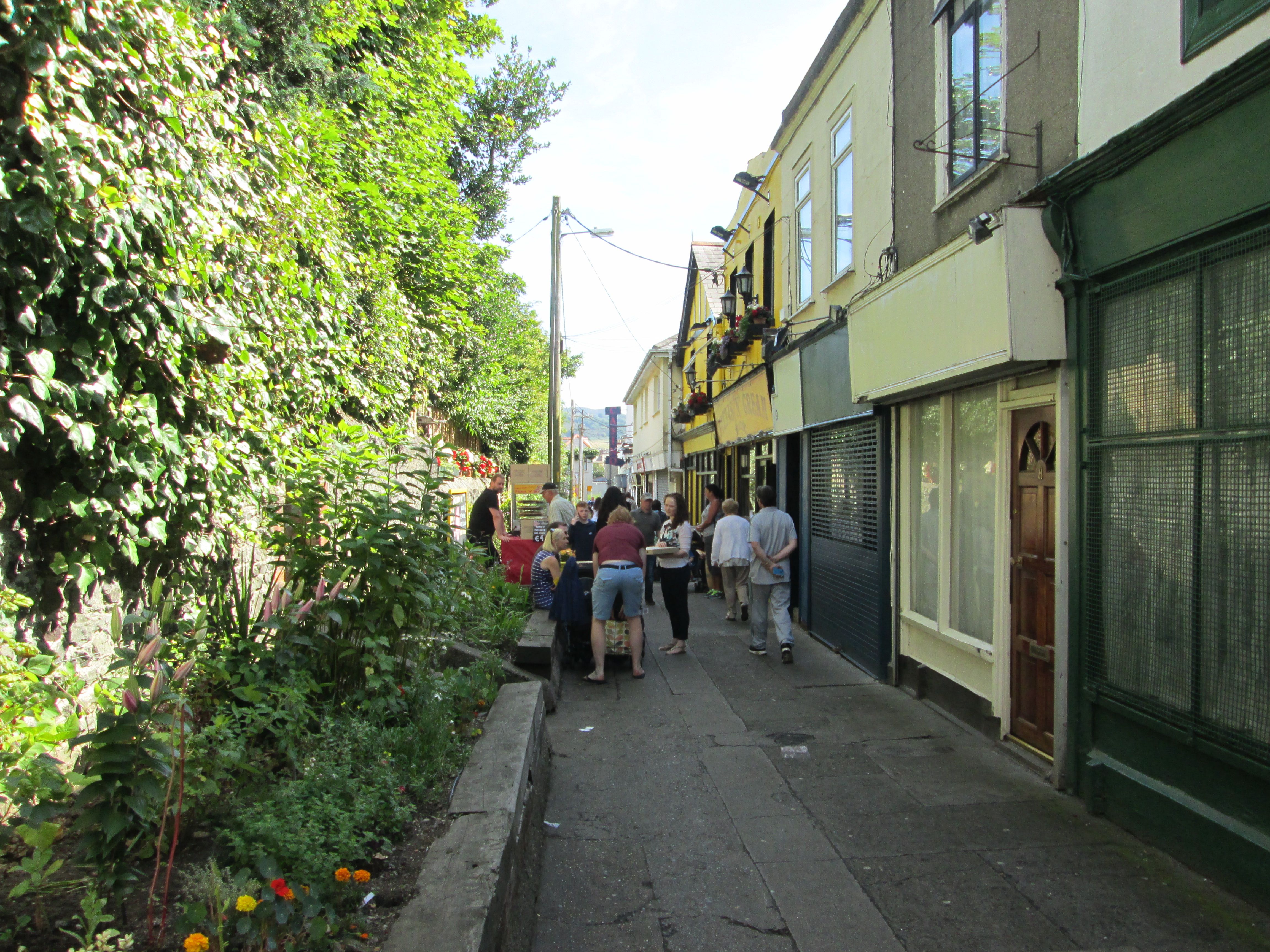
We’ll return to the rocky shore later, but for now, we veer right onto Convent Road which meanders on down to Dalkey’s main drag, Castle Street. Castle Street offers an almost funride compendium of urban styles, appropriately for a place dating back to the Vikings and maintaining its importance through the late middle ages. The predominant style is Tudor Revival, popular in the late nineteenth century and again appropriate, giving a hint of medieval times.  

Jewels in the crown are Dalkey’s two castles, located about halfway along the street. Goat’s Castle is the larger of the two and functions as a town hall and heritage centre, and is now referred to as Dalkey Castle. Across the street, Archbold’s Castle is a private residence. The two combine to transport us back in time. There are a few welcome oases too. Queens nearby, with its front patio has long been a favourite of mine. Established in the eighteenth century it is Dalkey’s oldest pub, but has now ceased trading, which is a shame. McDonagh’s further on was a more dingy port of call. It’s now called the Dalkey Duck (oh dear), though I suppose you can call it what you like. I used to call it the Love Shack, which is something of a mystery, but most likely came from the song by the B 52s which in the summer of 89 was number one in Ireland. The place has been given a revamp, but back then it was a place to drink Guinness in the darkness. It’s been a while now. But brighter days beckon. There’s still some singing to be done over the dark times.

Darkness falls and she will take me by the hand

Take me to some twilight land

Where all but love is grey

Where I can’t find my way

She’s a Mystery to Me was written by local residents Bono and the Edge of U2 and sung by Roy Orbison. The song bears witness to fate and the power of dreams. It was a sultry night near Soho, and Bono tossed and turned his hotel bed. He had fallen asleep with dreams of Blue Velvet in his belfry. Visions of Isabella Rossellini often season my dreams too, but here mingled with Roy Orbison singing In Dreams to strange happenings, 

A candy-colored clown they call the sandman

Tiptoes to my room every night

Just to sprinkle stardust and to whisper

Go to sleep, everything is alright 

Bono awoke with the song, he reckoned, stuck in his head. But it was another song, and he played a rough take to the band at rehearsals for their gig. As if to verify that the song was made for him, and made in heaven, who should drop by backstage that night after the gig … 

Night falls I’m cast beneath her spell

Daylight comes our heaven turns to hell

Am I left to burn and burn eternally

She’s a mystery to me

Drinking in O’Donoghue’s

O’Donoghue’s  Bar was founded in 1789. It must have soaked up the revolutionary fervour of the age, with all the rebel rousing balladry that entails. The pub is bound forever to Dublin’s folk boom of the 1960s. Most especially, it is associated with the Dubliners. Ronny Drew, Luke Kelly et al were permanent fixtures as much as the pumps and the optics. Located in Merrion Row, it hosts regular folk sessions in the long back snug. The Haggard to the side forms an extensive outdoor area. 

O’Donoghue’s is often my first port of call when I go in to Dublin. It’s been a while since my last visit. I always go there on my birthday, and other places besides. My annual treat is looking unlikely, my birthday’s on Monday. But a man can dream. This painting is a typical view, as I nurse a pint of Harp and take in the scenery, and Sally O’Brien and the way she might look at you.

One day as I rambled to Donnybrook Fair

I met lovely Sally a combing her hair

she gave me a wink with her roving dark eye

and I says to myself I’ll be there by and by

The song Ramble Away is an English folk song, from Somerset. Shirley Collins’s version is probably the best known, appearing on Anthems From Eden with her sister Dolly in 1969. For the lyrics here I’m using a version by Tommy Tourish, a Donegal sean nos singer, as the mentions of Donnybrook Fair and Sally’s roving dark eye chime with the place I’m in. You might pass this way if you were going to Donnybrook Fair, that most ancient and famous of fairs. The girl to the right I see as something of a Sally O’Brien, and the way she might look at you. There’s contact there, a spark.

Al O’Donnell sang the song with Birmingham Fair the setting. I’d have thought Al might use Donnybrook Fair, as he worked in RTE for thirty years. O’Donnell grew up in Harold’s Cross, and was a player in the folk boom. He mostly played solo, but briefly joined Sweeney’s Men, replacing Henry McCullough when he left in 1968, between the band’s two albums. Al released two albums of his own. The first eponymous album from 1972 kicks off with a fine version of Ramble Away, which is also the title of his double cd set from 2008. He passed away in 2015.

South Dublin’s Rocky Shore – 6

Around Scotsman’s Bay

We have spent some time within the embrace of Dun Laoghaire’s piers. Southbound again, we leave the East Pier behind and head along Queen’s Road back towards the People’s Park, intersecting with our outward path near Teddy’s Ice Cream shop. From Teddy’s we keep to the coast by way of Windsor Terrace. The curve of the bay is gentle and quietly suburban.

Snuggly settled in the nook between the East Pier and the promontory of Sandycove, is Scotsman’s Bay. Who the eponymous Scot was, we do not know. Perhaps it was in homage to the great engineer, John Rennie. Or recalled instead some wandering Caledonian, nameless and marooned by one of those notorious storms of the town’s prehistory.

In 1999, artist Dorothy Cross installed her work of art, Ghost Ship, in the bay. She took the decommissioned lightship, Albatross, coated it with white phosphorescent paint and floated it in the moonlight to illuminate the century’s end. I took a trip up the coast to view it with M back in the day. There was, of course, the compensation of ice cream at Teddy’s. Evening fell and nighttime flowered and Cross’s Albatross stole upon our sight, an eerie apparition emerging from the gloom. The vision, serene as it was, blazed with poetry and imagery. It was a silent film projected into the mist, and I thought of that greatest of all seafaring tales: Samuel Taylor Coleridge’s Rime of the Ancient Mariner. But here it was told without words. Harry Clarke’s incomplete rendition of the epic as an illustrated sequence is also recalled, his pen and ink alluding to the literary text while rendering the story in another dimension.

Day after day, day after day,

we stuck, nor breath nor motion;

as idle as a painted ship 

upon a painted ocean.

The Albatross tells a silent tale and makes a curious echo of events a century before, when stories were being sent abroad without visual stimulus. The first live radio broadcast of a sports event originated here in Scotsman’s Bay when Marconi transmitted his report of the Kingstown Regatta of 1898 from the Harbourmaster’s House, near the Marine Hotel where he was staying.

Guglielmo Marconi (!874 – 1937) was born in Bologna, Italy, to an aristocratic family. As a teenager he immersed himself in the study of wireless telegraphy using radio waves. Succeeding to some degree, he sought official support in his home country, but was dismissed as a lunatic. At the age of 21 he went to England to find the financial and official backing he needed for his pioneering development. His work brought him to Ireland as he pushed for a global system of communication. Marconi was part Irish, his mother, Anne Jameson, was of the famous Distillers in Wexford. He married an Irishwoman too; Beatrice O’Brien, daughter of Lord Inchiquin of Dromoland Castle in County Clare.

In 1901, Marconi relayed the first transatlantic wireless communication from Cornwall, through Wexford to Clifden and on to Newfoundland. He would go on to establish a regular service between Clifden and Nova Scotia. Marconi laid the groundwork from which audio communication on a global scale, all that radio and rock n roll, would flow.

Sandycove itself is a popular bathing spot and the focus for a famous literary pilgrimage. The quirky and distinctive promontory is crowned by a Martello Tower. It presides over a public bathing spot and a tiny harbour on Scotsman;’s Bay, with the famous, nay notorious Forty Foot Bathing spot hidden to the east. Another distinguishing feature is Michael Scott’s House, Garagh, a white marine art deco that suggests Miami Beach more than South Dublin’s Rocky Shore. Designed in 1937, Scott set out to harmonise with the curvilinear lines of the neighbouring Martello Tower and to suggest, somehow or other, the work of James Joyce, his hero. 

Michael Scott was a towering figure in Irish Modernism, if he did say so himself. He had fingers in the design pies of such projects as the Abbey Theatre, Busaras, and the RTE studios. Scott was often the architectural impresario, orchestrating the design skills of a large team, mostly under the banner Scott, Tallon, Walker.

Scott bought the neighbouring Tower with an eye to showcasing Joyce and his novel Ulysses. With funding from film director, John Huston, whose last film was of Joyce’s short story, the Dead, this ambition was achieved in the early sixties. The museum was launched on Bloomsday 1962, by Sylvia Beach, Ulysses first publisher. Enlarged and enhanced in 1978, it’s open all year and admission is free. And well worth it!

Martello Towers take their name from a redoubtable defensive tower at Mortella in Corsica. the British adapting the design for their own use during the Napoleonic Wars. Twenty eight towers defend Dublin’s coastline from Bray in County Wicklow to Balbriggan in North County Dublin, forming a relay of warning towers and a sturdy defensive chain against Napoleon’s French.

This Martello Tower forms the setting for Ulysses’ first scene: Stately plump Buck Mulligan came from the stairhead bearing a bowl of lather on which a mirror and a razor lay crossed.

Joyce stayed here, briefly, in 1904. Oliver St John Gogarty, an impecunious medical student at the time, invited Joyce to be his flatmate and share the rent; perhaps not the wisest of choices. Joyce left, in a hurry, after a hallucinatory night when Gogarty’s friend,  Samuel Trench, after a nightmarish vision of a panther, fired shots from his revolver into the fireplace. The three amigos reconvene in Joyce’s fiction as Buck Mulligan, Stephen Dedalus and Haines.  

The famous Forty Foot is on the southern side of the promontory. The bathing place was long a male bastion. Here men could gather and bathe as nature intended. Basically, you can swim in the nip. In Ireland’s climate, it tempts the phrase: hardy men. As it happened, late twentieth century feminism determined to put a halt to such exclusive clubs. Golf clubs, men only bars and the Forty Foot experienced the righteous wrath of women scorned. And so, democracy prevails. Of course, it was never compulsory to frolic naked in this spot. Discretion is often the better part of valour. Dedicated fishermen may dangle a worm in these sharp waters, but not that worm.

The clientele notwithstanding, the Forty Foot gives a view of the rugged nature of these shores. The city hidden from view, there’s just you and the rocks, and the snot green scrotum tightening sea.

Here we stand on a rocky shore

Your father stood here before you

I can see his ghost explore you

I can feel the sea implore you

Not to pass on by

Not to walk on by

And not to try

Just to let it come

Don’t bang the drum!

 Another Scot, Mike Scott, wrote these lines for the opening track of the Waterboys 1985 album, This is the Sea. The music for Don’t Bang the Drum was first conceived by Karl Wallinger and developed into the mother of all curtain raisers for the album. The intro is ablaze with Spanish guitar and soaring trumpet; then it really gets going. Scot has lived on these shores on and off since the mid eighties. Perhaps these lines make him a fitting candidate for the naming of the bay.

Well here we are in a special place

what are you gonna do here?

Approaching Fairyhill

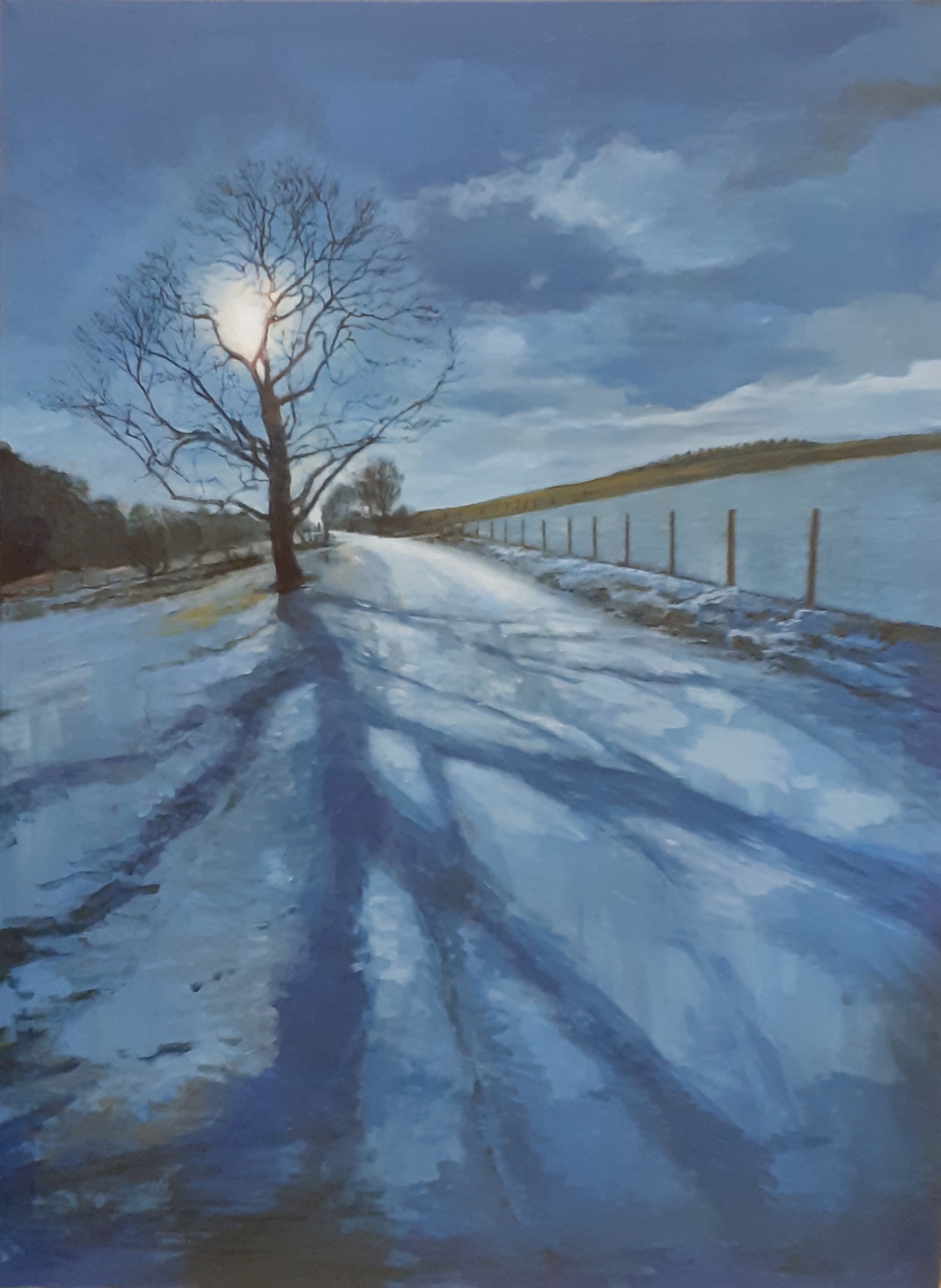
Climbing to the top of Fairyhill, the Killarney Road heads towards Ballywaltrim and the Southern Cross. Fairyhill has a commanding view of Bray and South Dublin. Little wonder that it would become a holy place, with Pagan and Christian resonances. St Saran’s Cross crowns the hill, an early marker of civilisation in Bray. In this painting, Fairyhill is to the right, its entrance through the keyhole like aperture in the dark triangle of shading trees. To the left the land falls away, discreet detached houses front the main road, my estate of Ripley Hills lies just a few steps farther on. The car, heading south, will pull its glow with it, to wherever it is it’s going. There will be a breath of silence as the spirits whisper to the sea and stars, before another traveller passes through.

I found myself on the roof of the world

just waiting for to get my wings

Strange angel in the changing light

said “Brother, you forgot something!”;

Glastonbury Song is inspired by Glastonbury Tor in Somerset, England. Written by Mike Scott, it is from the Waterboys 1993 album, Dream Harder. The Waterboys originated in Scotland but had been based in Ireland in the late eighties. Their Irish albums were identified with a fusion of rock and Irish traditional music, but with Dream Harder they returned to a more rock orientated sound. However Irish references still abound. Glastonbury Song namechecks Carraroe, the mansion on the Boyne and has that wonderful line: Caught the bus at the Faery fort. The song is an ecstatic fusion of the spiritual and the sensual. A critic noted that it takes a special genius to make the line ‘I just found god’ work as a hookline on a hit single.

My heart beat from the inside out

so lucky just to be alive!

Can you tell what I’m talking about?

any day now the Sun’s gonna rise.

I just found God, I just found God

I just found God where he always was.