London Memories -3

City in Blue

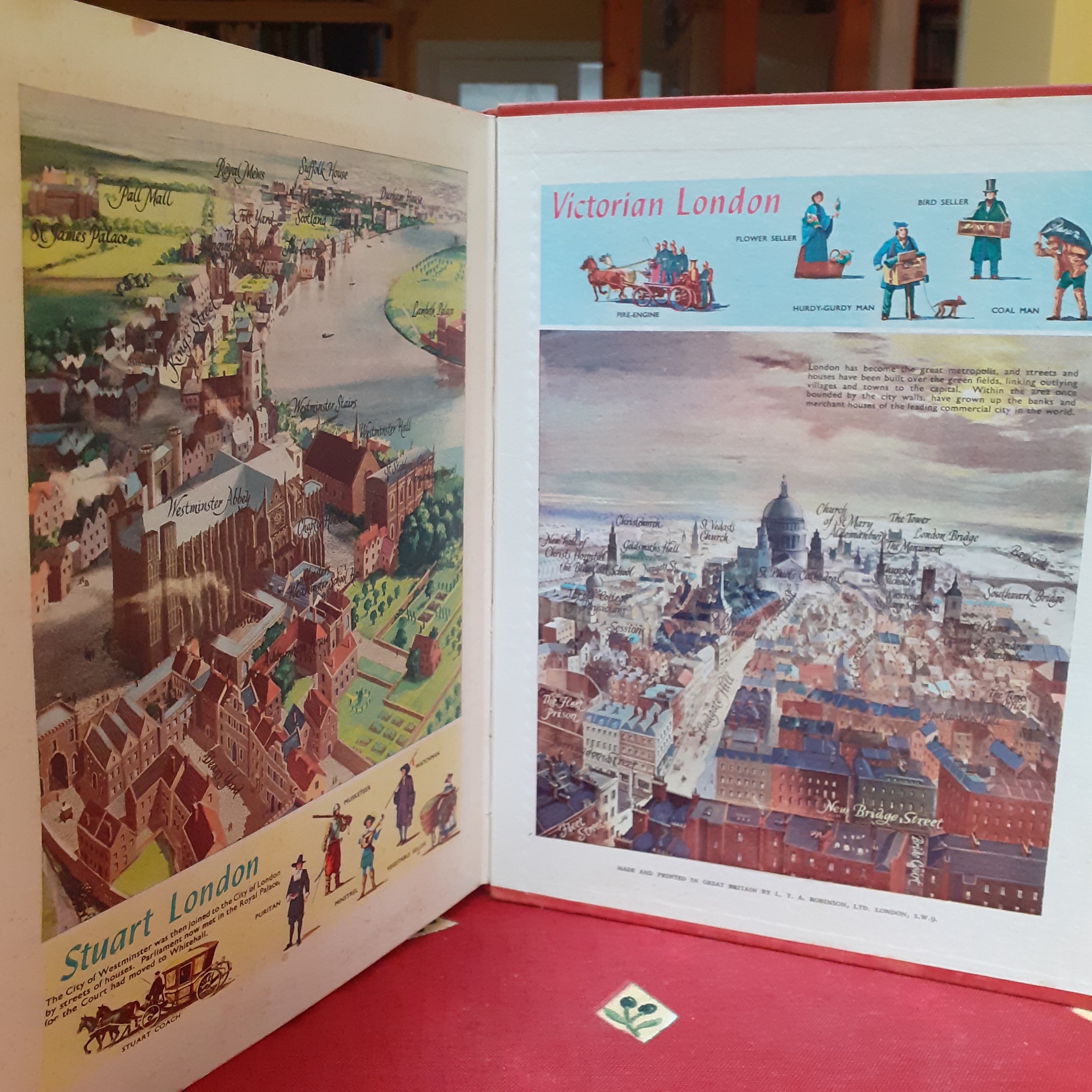
There are a number of arbitrary hooks which snared me as regards London. I loved pictorial history books as a kid and these being Anglocentric featured much on the development of English culture and society, with London at its centre. The Tower of London, St Paul’s and the Thames were familiar to me, as illustrations of their place through history.

Pop music too, of course. In 1968 my soul spun upon hearing Last Night in Soho by Dave Dee, Dozy, Beaky, Mick and Tich. Dave Dee was sometimes known, ominously, as the singing policeman having once been a cadet in the Wiltshire Police; one of those boys in blue. Here, he’s one of the bad boys we love. It was my first single, and also, I’ve just read, Waterboy Mike Scott’s. Great minds, Mike, great minds.

You came into my life like rain upon a barren desert

Just one smile and I was born again

I felt sure it wasn’t too late

I’d find strength to make me go straight

I had love and threw it away

Why did they lead me astray

For last night in Soho

I let my life go

Last Night in Soho was written by Ken Howard and Alan Blaikely and released on the Fontana label, which used attractive deep blue graphics. The song is a cautionary tale, melodramatic but seductive. London is cinematically rendered, in a collage of crime and romance. How dangerous and attractive this place Soho sounded! I had a fondness for maps, and a London street guide was thumbed close to invisibility, as I traced my path through Soho and the wild West End.

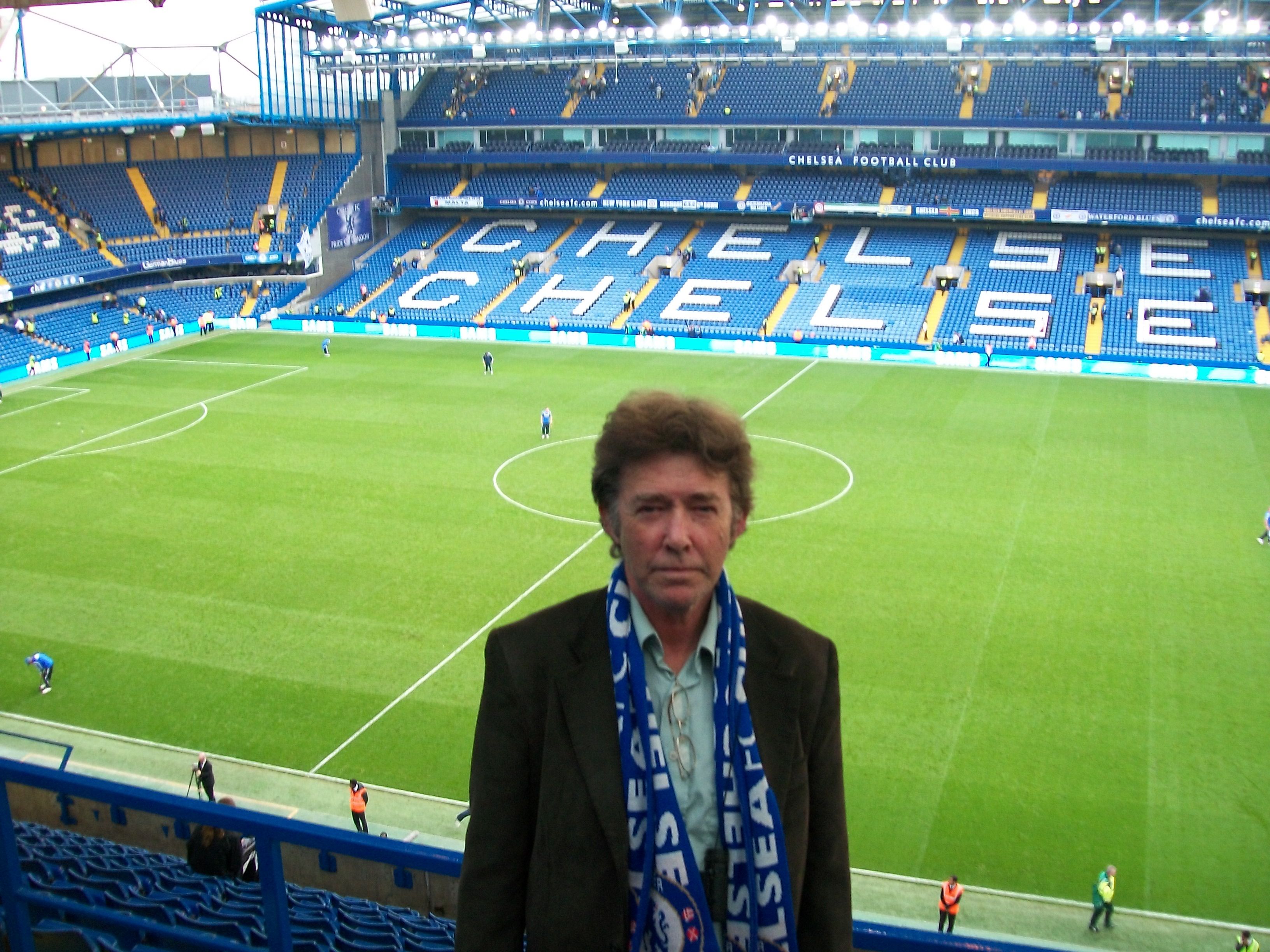
As a football fan, the towers of Wembley loomed large in my youth. FA cup finals provided a rare chance to see a full televised match. My first featured West Ham and Preston North End. But I lost my heart to the boys in blue, Chelsea, although losing the final to Spurs in 1967. I had built many memories of London by the end of the twentieth century, physically stepping onto the streets of London, seeing the sights, the galleries, eating, drinking, going to the movies, music gigs and theatre shows. But it would be 2005 before I actually went to a Chelsea game. As a treat for my fiftieth birthday, M and Sons brought me to the Hotel Chelsea right in their home ground. Chelsea were turned a hundred years old then having been founded in 1905 to occupy Stamford Bridge, an athletics stadium in Fulham. That’s a different Stamford Bridge to the one up near York that hosted King Harold’s semi final victory over the Norwegians in 1066. Harold lost the final to the Normans at Hastings, led by William, since known as the Conqueror.

Chelsea FC were admitted immediately to the Football League, though it would take another fifty years to win it, which they did in the year of my birth, 1955. Another fifty years later at the end of November I saw them play at the Bridge, as defending League Champions, having triumphed again the season before. They played Wigan Athletic, John Terry scoring the only goal of the game. They would go on to win the Premiership that season.
Earlier, with M and the boys, I met star players Peter Bonetti and Bobby Tambling. Tambling was the Blues star striker of the sixties scoring over two hundred goals. Bonetti was their goalkeeper, known as The Cat. I fancied myself as a goalie in my youth, but was known as the Vampire, as I couldn’t deal with crosses. Bonetti had played in Chelsea’s first FA Cup winning team, in 1970, beating Leeds Utd in a glorious mudbath at Wembley. Kicking and a gouging in the mud the blood and the beer, as Johnny Cash ‘sang’.

The Fox and Pheasant is the oasis of choice, out in the beer garden oiling the tonsils for the afternoon ahead. I sank a few with my boys here on an Easter weekend before seeing Chelsea beating Arsenal two nothing with a brace by Didier Drogba, later marching down the Fulham Road singing Didier Drogba, la le la le la. The day after seeing Henry IV at the Globe, Davin and I attended the first game of the season to enjoy Chelsea beating West Brom 6 – 0. Drogba scored a hat trick. Visiting the Chelsea Museum, we got to lift the Premier League trophy and the FA Cup, the benefit of a double winning year. Been there, done that, even bought a souvenir teeshirt.

Woke up, it was a Chelsea Morning 

And the first thing that I heard

Was a song outside my window

And the traffic wrote the words

It came ringing up like Christmas Bells

Rapping up like pipes and drums

Chelsea!

Joni Mitchell’s song from 1969 is a song of joy. Oh, to feel like that of a morning! It appeared on her album Clouds.

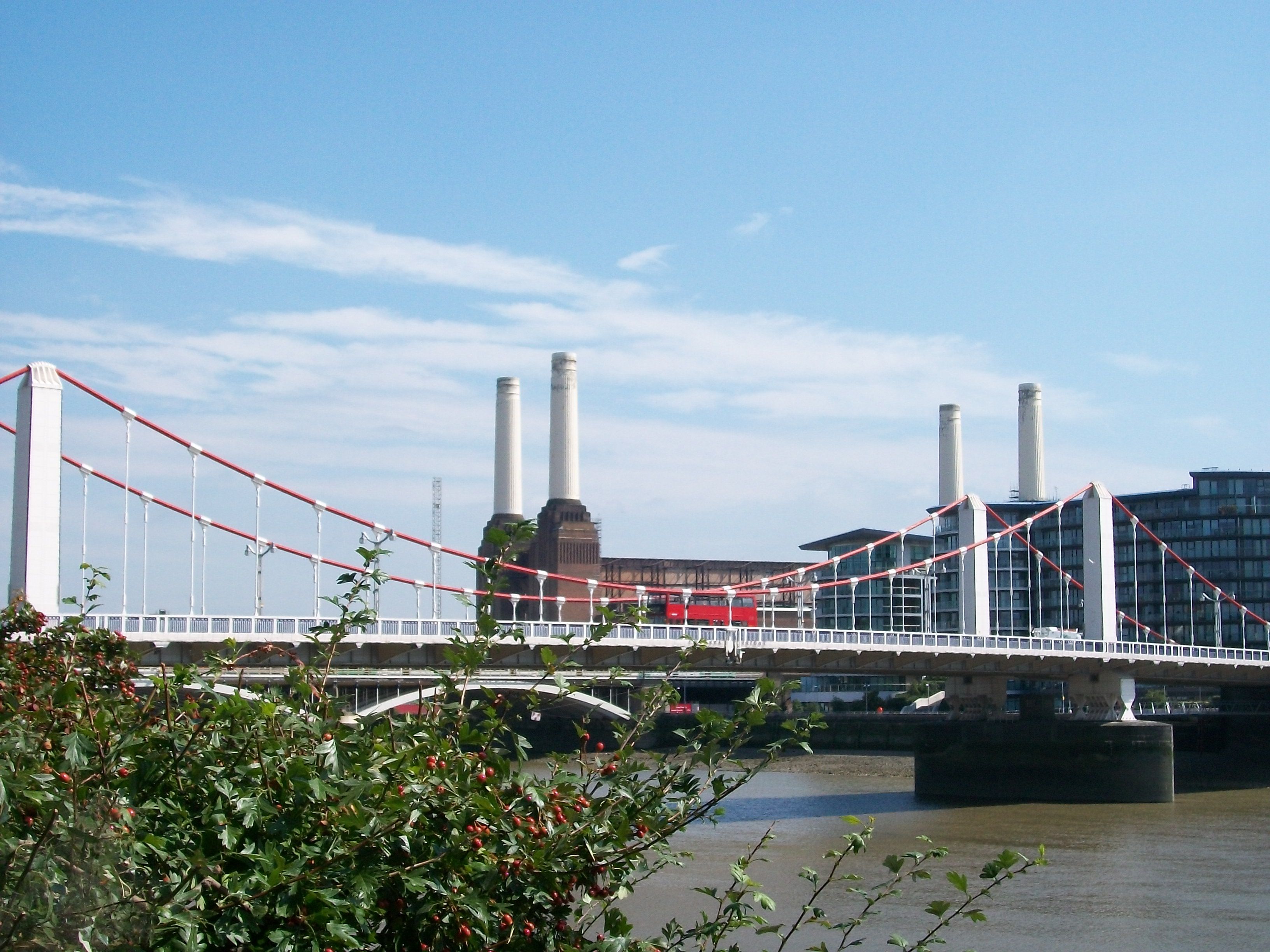
You can head back east to the Borough of Kensington and Chelsea by Fulham Road or King’s Road nearer the River Thames. The crossing is bracketed by World’s End and Brompton Cemetery, which sound more cheerful on a matchday. Along the river I can stroll along Cheyne Walk and think at least something sounds like it’s named after me. Chelsea Bridge is further on. The current structure dates from 1937, replacing an earlier one originally known as Victoria Bridge. Like its predecessor it is a suspension bridge, though much wider, and while plain enough, pleasantly illuminated at night.

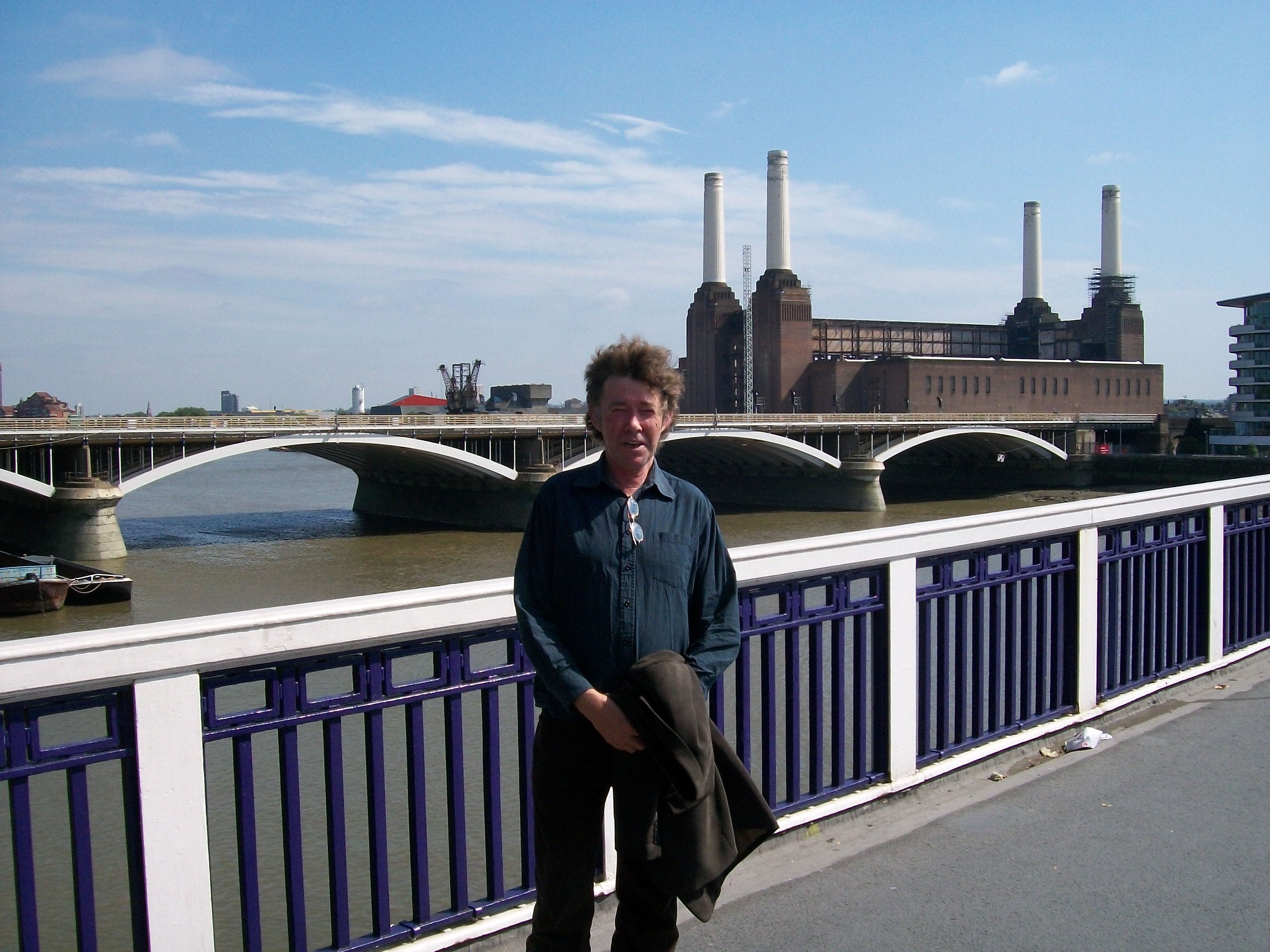
A landmark across Chelsea Bridge is the Battersea Power Station. This massive coal fired power station was designed by engineer Leonard Pearce with architects Giles Gilbert Scott and Theo Halliday. Construction began in 1929. It was paused during the Second World War; the complex ultimately completed in 1955. In the late seventies decommissioning began and the building became derelict for thirty years until redevelopment in 2012. Numerous bids included Chelsea’s plan to convert the station into a football stadium. But that didn’t fly. Frank Gehry and Norman Foster were amongst the leading architects redesigning the forty acre site along with restoring the original buiding on a project incorporating residential, retail, leisure and entertainment. The complex was opened in 2022.

Battersea Power Station is a combination of awe inspiring scale and art deco elegance. One of London’s most iconic buildings, it is also a cultural landmark in its evocation of both utopian and dystopian themes. Pink Floyd fans will know this from the cover of their 1977 album, Animals. The cover photo, by Hipgnosis, was not collaged or manipulated, no Photoshop back then. A giant inflatable pig was hoisted into place for the shoot. Unfortunately, the monster broke free, terrorising the population of West London and Heathrow Airport before landing in Kent. You can’t get more Orwellian than that.

London Memories -2

City of Drama

Leaving London back in ’73, we made our winding way back to Holyhead via Stratford on Avon, hometown of the Bard, William Shakespeare. He was born there in 1564 and the town has become a mecca for Bardolators. Stratford is suitably picturesque, packed with tourists and Tudor style buildings. From our ad hoc camp by the river our trio wondered if we could swim across the Avon and bunk into the rere of the theatre for a show. A Midsummer’s Nights Dream, most likely. We visited Anne Hathaway’s Cottage, a sizeable thatched timber-framed building with a museum. Anne Hathaway was twenty six and with child when she married eighteen year old Will. Daughter Susanna was born six months later, and another year on Anne gave birth to twins Judith and Hamnet.

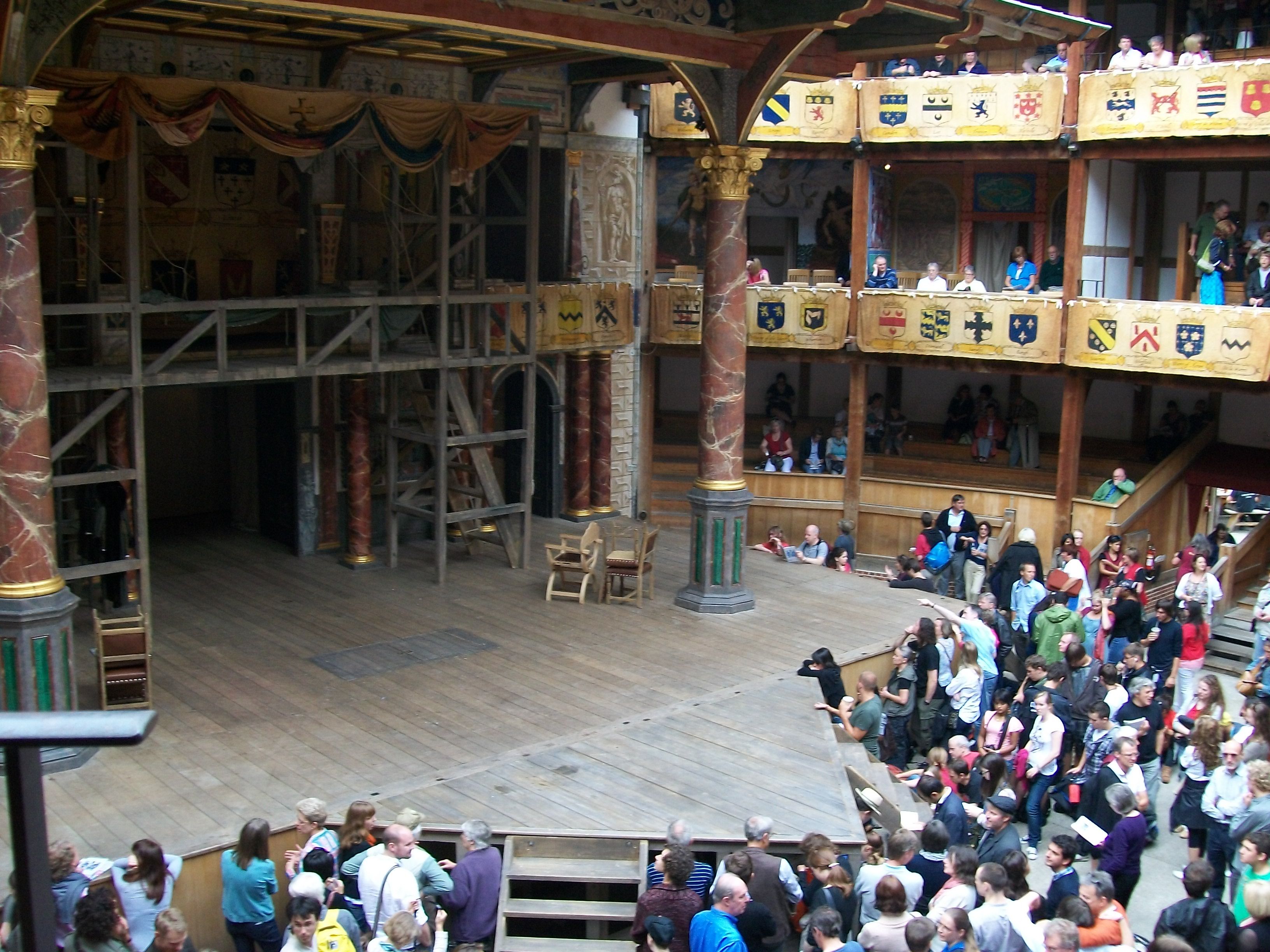
In his early twenties, Shakespeare moved to London and became part of the theatre scene. He acted and wrote with a group called the Lord Chamberlain’s Men and in 1599 they established their hq at the Globe Theatre in Southwark. The first Globe burned down in 1613 during a performance of Shakespeare’s Henry VIII. A pyrotechnic flourish misfired, and sparks ignited the thatched roof. There were no injuries, other than a man whose breeches caught fire which helpful spectators extinguished with their tankards of ale. A rare occasion of a punter being obliged to buy a round for the people who had just drenched his crotch with beer. The theatre was rebuilt but the flame of drama was extinguished during the Civil War period from 1642. The Commonwealth under Oliver Cromwell. were against the brazen licentiousness of the world of theatre. The Globe was ultimately demolished. Although the Restoration saw the return of theatre, staging had changed to a more refined, and subdued form, indoors and viewed through the Proscenium Arch. Actresses, forbidden in Tudor and Jacobean days, were now allowed. Shaskespeare’s popularity was reignited and his plays revived. 

The modern version, Shakespeare’s Globe, was built in 1997, the culmination of a long campaign by Sam Wanamaker, American born actor and director for film and stage. It is located just over two hundred metres from where the original stood, and is a very realistic rendition of how the outdoor Elizabethan theatre would have looked. Daily tours explain its setting and heritage, and what you might have experienced back in the day; theatre in the round, outdoors with a rumbuxtious audience drawn from the broad social spectrum of city life. More rock gig or football crowd than the genteel theatre of today, with plenty of two way rapport; but there was poetry and message in the medium too. Drinking, smoking and heckling were not so much tolerated as encouraged. It was a daytime thing, and not well thought of by the great and the good. Though, of course, many from that sector did attend, and indeed sponsor the enterprise.

Best of all, book seats for a performance. On a family trip in 2010, we booked seats for Henry IV, Part 1. This features the notorious Falstaff, chief amongst the company of the young dissolute Hal, future king, here depicted as dedicated to life on the raz. Young Will perhaps drawing on  memories of his own misspent twentysomething back in the eighties. My son, Davin, was dubious of the joys of an afternoon of Shakespearean theatre. I impressed upon him that the following day, Saturday, we would go to Stamord Bridge to watch Chelsea trounce West Brom by six goals with Didier Drogba scoring a hat-trick; an astonishingly accurate prediction as it turned out. He got fully immersed in the experience. Most cheerful he was relaxing in the bar. afterwards, as he thought, less so on being informed that was merely the intermisssion.
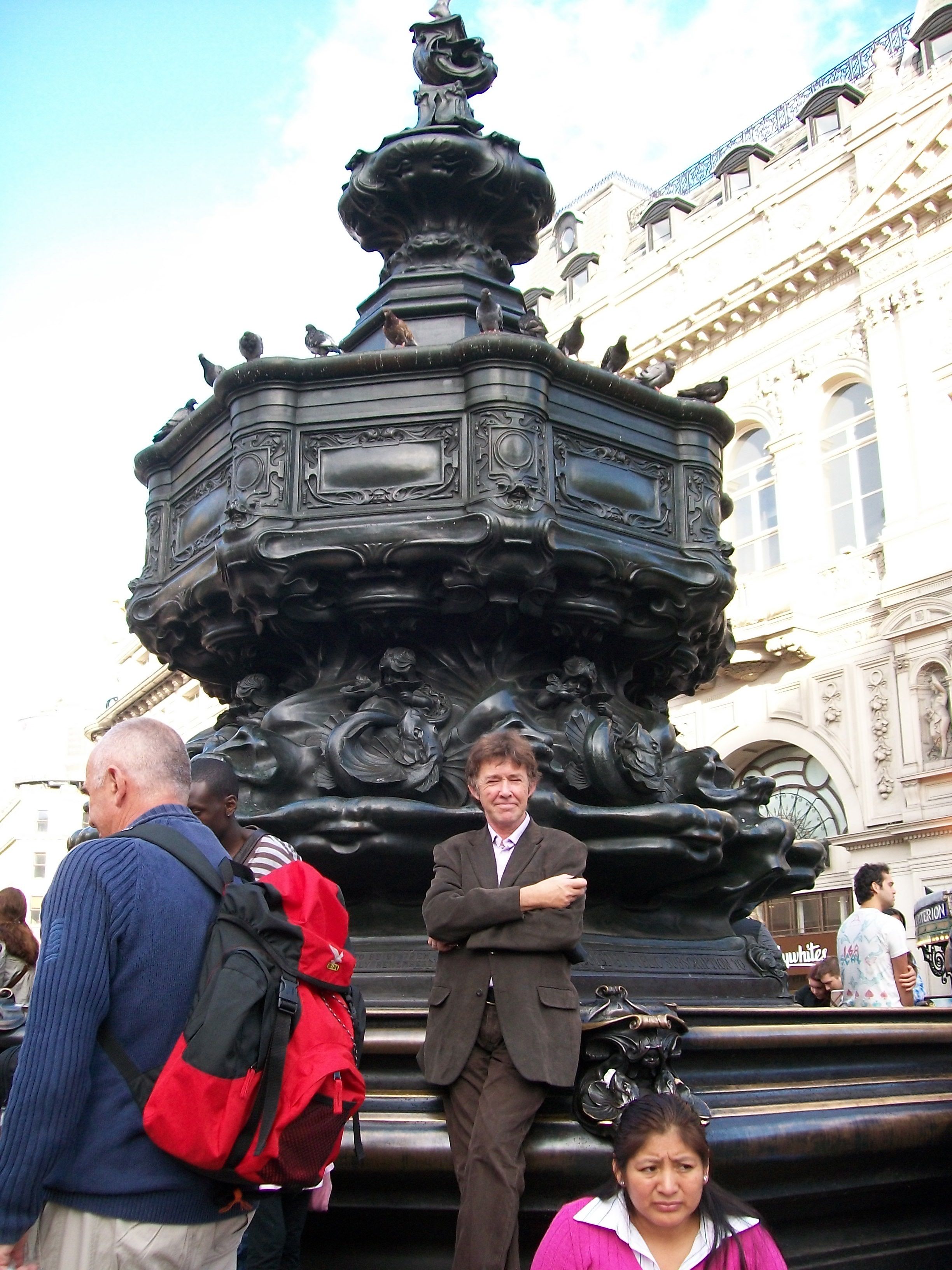
London’s modern theatre district flourishes on the other side of the river. The West End denotes the main commercial centre of London. It stretches north of the river up to Regent Street to the west of the ancient walled city. The areas of Soho and Covent Garden are central to London nightlife, with Leicester Square and Picadilly Circus its focal points.
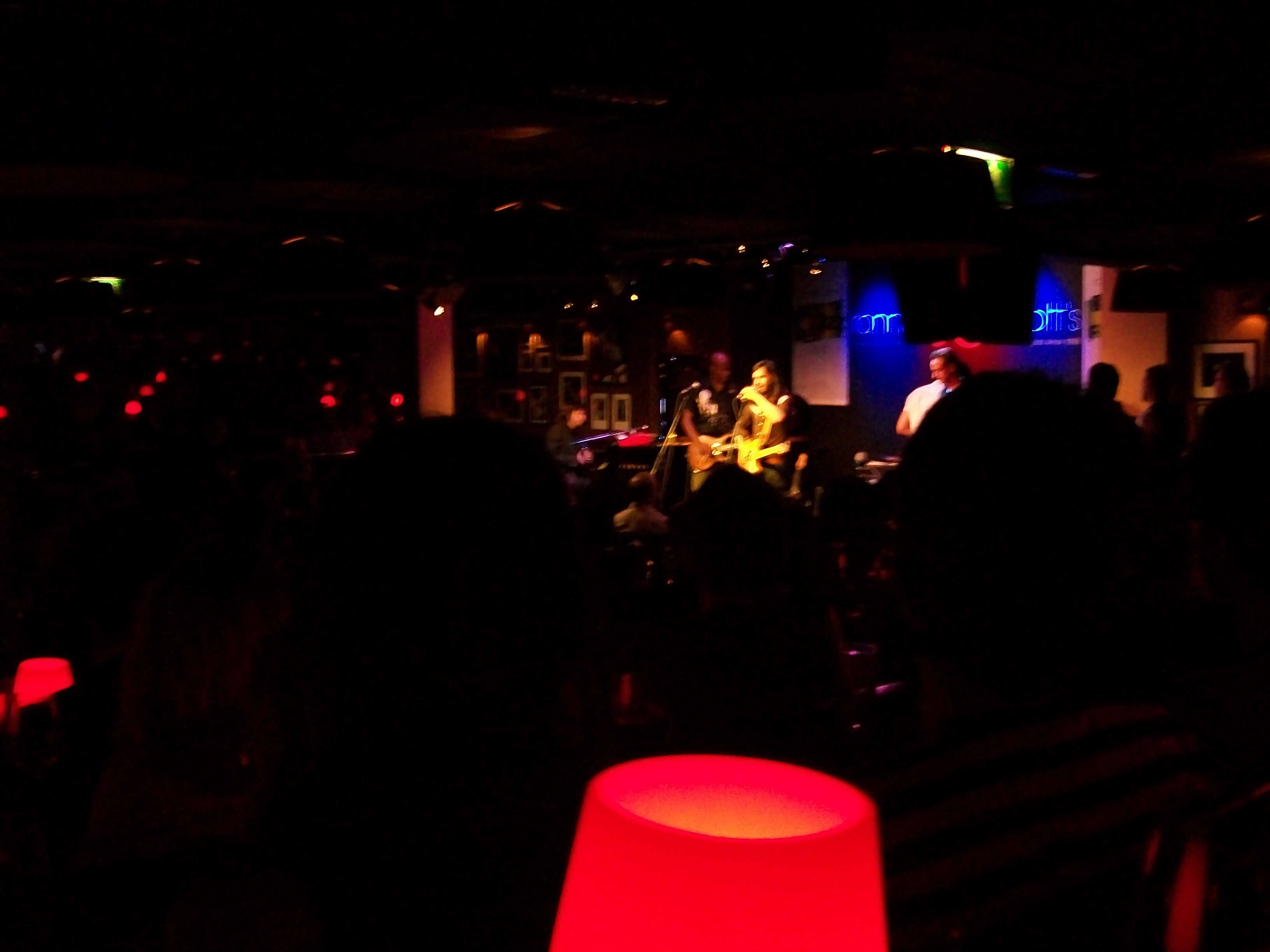
Leicester Square is the place to go for tickets for silver screen or show. Myself and M got tickets here for the fun dance show Top Hat ten years ago, front row seats which were quite startling. Cinema remains a a draw for us even though films are not so frequently banned in Ireland as before. Myself and M visited back in the mid seventies on our way to Greece, and took in an afternoon showing of the Life of Brian. Monty Python’s satire on zealotry and mass hysteria was set at the time of Christ and caused a muttering of modern zealots to chant: Down with that sort of thing! Still, we emerged into the afternoon sunlight happily singing always look on the bright side of life.

West End, of course, is synonymous with theatre. Alongside New York’s Broadway it is the main theatre zone of the English speaking world. There are about forty venues showing musicals, classic and modern theatre. Other, non commercial theatres, including the Globe, Covent Garden Opera House and the Old Vic feature classic repertoire and the work of contemporary and acclaimed modern playwrights.

The longest running show in West End history is The Mousetrap. Written by Agatha Christie it was first performed in 1952 and is now approaching thirty thousand performances. A whodonit with a twist, it’s a typical scenario for the author. Born Agatha Miller in 1890, by her death in 1976 she had published sixty six novels and over a dozen collections of short stories. Her most famous creation is the fastidious Belgian sleuth Hercule Poirot. The Mousetrap was originally a radio play called Three Blind Mice, and then a short story. The title had to be changed for the stage as another play called Three Blind Mice had been produced in the thirties by Emile Littler. The name the Mousetrap was taken from Shakespeare’s Hamlet, it being Prince Hamlet’s smartarse reply to Polonius concerning the title of the play at court. Hamlet had hijacked the play to let off his own grenade. “The play’s the thing wherein to catch the conscience of the King,” he mused.

On a family visit in the Noughties we took in a performance at St Martin’s Theatre which has hosted the play since 1974. We four at home often enjoyed an elaborate murder mystery on the telly. Theatre, by its nature, brings you into the box itself. You are sharing atoms with these people. The famous twist is a major subversion of the mystery genre. I have often wondered since if anyone has ever thought of suspecting Poirot for causing the puzzles he so brilliantly solves. After all, he is a common thread throughout so many killings. The play was just the thing, so, to be followed by convivial food and drink.

St. Martin’s is on West Street, just off Shaftesbury Avenue and close to the Seven Dials. This is an intersection of seven straight streets, giving the small plaza an incongruous centrality in the great scheme of things. From here, you can go anywhere. Eateries abound, though we took the quaint decision to go for a fish and chips nearby. Well, it was my fiftieth birthday, and the One and One is my favourite food. Why not have it here at the centre of Chipperdom? There was a bench outside and we watched the world go by. Nearby, Shaftesbury Avenue seethes with life. Across the street Soho embraces the divine vices. Musicians strum and dancers strut, and wining, dining and dancing pleasures galore stretch into the wee small hours. In all the darkness and joy, what better time to join the vamps and werewolves of London.

I saw a werewolf with a Chinese menu in his hand

Walking through the streets of SoHo in the rain

He was looking for the place called Lee Ho Fook’s

Gonna get a big dish of beef chow mein

Ah-hoo, werewolves of London

Ah-hoo

Ah-hoo, werewolves of London

Ah-hoo

Werewolves of London was written by Warren Zevon, Waddy Wachtel and Leroy Marinell. It is included on Zevon’s third album, Excitable Boy, from 1978 and was its lead single. Fleetwood Mac provide the rhythm section, in case you wonder why it’s so good. Phil Everly suggested the idea to Zevon having seen the 1930s film Werewolf of London. Lee Ho Fook’s was London’s best known Chinese Restaurant, located on Gerrard Street in Chinatown, at the south end of Soho. The name itself suggests the sort of ribaldry that chimes with the suggestive comedy of the song’s lyrics. The restaurant closed in 2008. Zevon died in 2003, but the music lives on.

London Memories

London is my most visited foreign city, a favourite place of mine for over fifty years. I haven’t posted much on it; only an account of a trip up the Thames to Greenwich that I can think of. So, time to put that right. Here’s the first in a compendium of memories of this great city.

The first I saw of London was in the summer of 1973. I was only seventeen and with a couple of friends crowded into a Renault 6 set off on an epic voyage to the neighbouring island. There was a Rock festival at London’s Alexandra Palace, with Ten Years After and Wishbone Ash headlining. Ten Years After were one of my favourites in those days. The late sixties and early seventies gave us Rory Gallagher, Thin Lizzy, Led Zeppelin, Pink Floyd and many more. Dublin was not a major stop on the global concert circus. Other than Ireland’s own, Taste, Lizzy and Horslips, it was slim pickings, though the Doors and Zep did play Dublin’s National Stadium around that time. So, when Ally Pally came up it was the perfect option to tap into the Rock zeitgeist.

The car ferry left from Dun Laoghaire, a four hour crossing to Holyhead in Wales. From there it was a long drive to London, meandering through Wales before passing by Birmingham. We overnighted near Leicester. Looking for a bite to eat, we asked a passing Bobby, as you do, for his recommendations. It was an amusing scene. My two friends were six four, and the policeman might just have equalled minimum height requirements. He recommended a nearby Indian, alien to lads from Dublin, but establishing a lifelong favourite. Who needs halucinatory drugs when you can have a mindbending vindaloo. My companions notable altitude caused panic beyond the forces of law and order. Indeed, febrile hippies, amongst whom we parked overnight, imagined the long arm of the law had found them in the hazy light of morning. Tom and Vin wore their hair short, whereas my flowing locks and mustachios helped ease the situation somewhat. Or maybe I was just the undercover guy.

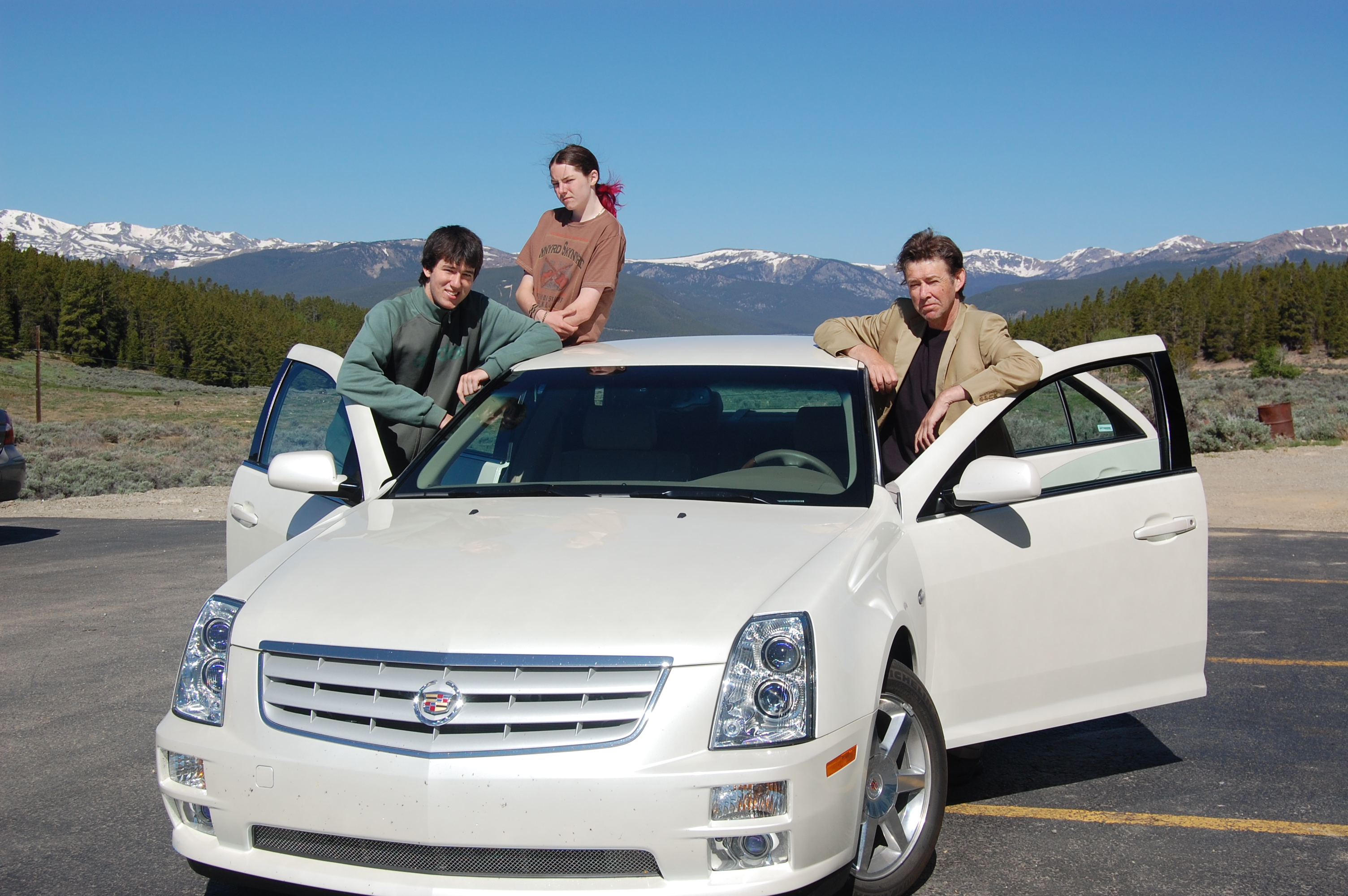
Another time, another place. Three Men in a Car, me with my boys, Oran and Davin, US 2007.

We parked at Potter’s Bar on London’s outskirts, and then stayed with Vin’s cousin Evelyn near Ealing. Our explorations of the great city were limited. We took a jaunt into the centre to pose in Picadilly Circus and swan around Leicester Square. It was decided to take in a film, ideally something along the lines of those banned back home. We got into the x-rated Heavy Traffic. The American film was a mixture of animation and live action, centering on a cartoonist, name of Michael Corleone, navigating the dingier side of New York. As much scabrous and surreal as salacious, it was, I suppose, a hazy premonition for the graphic artist within me. And it was unlikely such a film would ever go on general release in Ireland. Of course, Heavy Trafic is best followed with a plate of spaghetti Bolognese.

Picadilly, some years later.

We also took a saunter along Ealing Broadway. Ealing is famous for its film studios, the oldest in the world. Home to the Ealing comedies, natch, while the surrounding area has featured in scenes from Doctor Who and Monty Python. Ealing was something of an Alma Mater to Rock Music too. The Ealing Club had been a jazz venue until Alexis Korner’s Blues Incorporated played the basement in 1962, The band included drummer Charlie Watts, Brian Jones and pianist Ian Stewart with Mick Jagger and Keith Richards amongst the audience. Thus the Rolling Stones were gathered. In January 63 they played their first gig with the classic line up including Bill Wyman and Charlie Watts. The Who, Mannred Mann, Eric Burdon and Rod Stewart were also amongst the club’s alumnii. It was a short, but impressive, solar flare; the club closing in 1966.

Alexandra Palace lies further north, about five miles out of town near Muswell Hill. Alexandra Palace was conceived by architect and designer Owen Jones, who planned a Crystal Palace style glass building. It was built instead to the design of John Johnson and Alfred Meeson. From inception in 1873 it has been a people’s palace, built to provide leisure and entertainment for the great unwashed. And there would have been few that weekend more unwashed than ourselves. You could almost hear us hum. Fortunately, our stay in Ealing gave us a chance to clean up.

Instead of People’s Palace, it was named for Alexandra of Denmark,the Princess of Wales, and future Queen from 1901 to 1910. Her husband, Albert Edward, would become Edward VII. Speaking of; there’s a fair few streets named after him in my hometown, Bray: King Edward Road, Albert Walk amongst them. English tenor, John Sims Reeves sang to a crowd of a hundred thousand at the opening on 24th May 1873. Sixteen days later it all burnt down. it was rebuilt and reopened on Mayday 1875. The Palace became home to the first decades of television. BBC’s television service broadcast from there between1935 and 1955, with a break for the war. It burned down again in 1980, but phoenix like, rose from the ashes once more. And yes, Wishbone Ash did play Phoenix at their gig. 

The London Music Festival of August 1973 was an annual event and we had a two day ticket. The complex was alive with freaks and hairies like myself, and my two bodyguards. Fumble were playing some ear shattering rock and roll in the bar, while everywhere a strangely Catholic tang of incense hung in the air. I was sufficiently exalted to welcome my heroes to the stage on the second night.

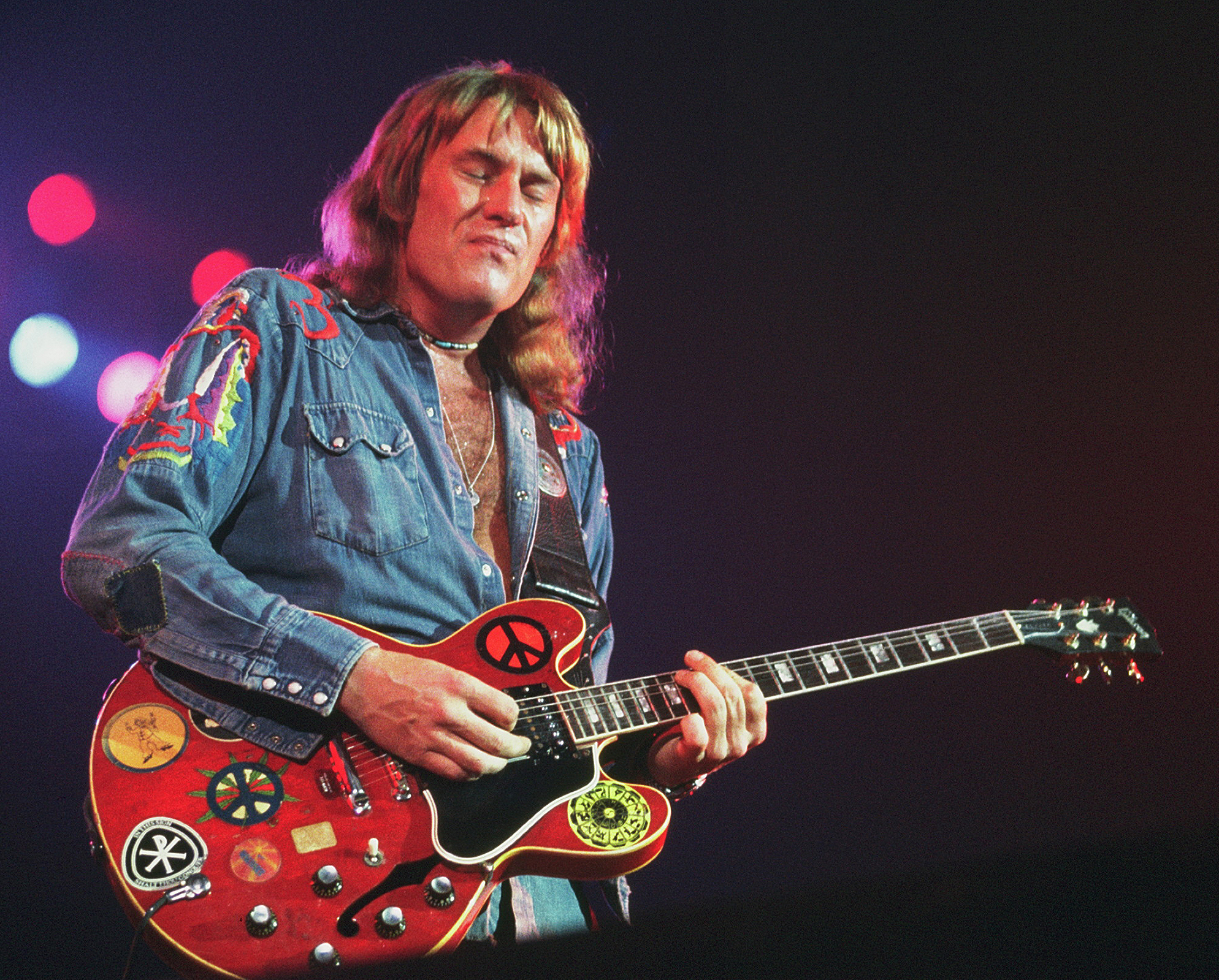
Barclay James Harvest were supporting and very good they were too. But my pulse was racing for the arrival of guitar hero Alvin Lee and his band. Ten Years After came from Nottingham. Alvin Lee, born Graham Barnes in 1944, with Leo Lyons on base, were known for a while as Ivan Jay and the Jaybirds. The name Ten Years After came in 1966, referring to Elvis Presley’s breakthrough year. They were renowned as a live band, their set from Woodstock, playing I’m Going Home, was a highlight of the film. And evermore. I had all the band’s albums. My favourite was A Space in Time from 1971, more complex and introspective than their other albums. It includes one of their few commercial hits, I’d Love to Change the World.

Everywhere is freaks and hairies

Dykes and fairies, tell me, where is sanity?

Tax the rich, feed the poor

‘Til there are no rich no more.

I’d love to change the world

But I don’t know what to do

So I’ll leave it up to you

The lyrics are probably not authorial, Lee and his fanbase would have identiied as ‘freaks and hairies’. The fast paced verse mimics the sloganeering of public discourse, the laid back chorus is more personal, and if anything, rejects the notion of rock star as the go-to person to free the world from its state of chassis. 

Marcus Bonfanti at Ronnie Scott’s, 2010.

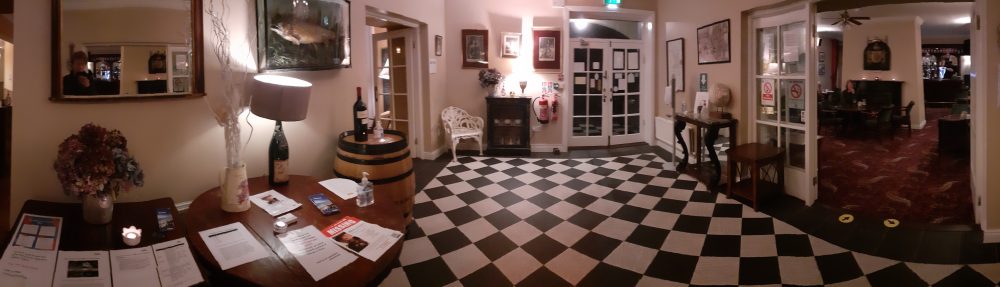
Another time, London circa 2010, we booked a table at Ronnie Scott’s for a blues night. Ronnie Scott’s, the famed Jazz and Blues venue was founded in a Soho basement in 1959 by Scott and Pete King, both saxaphonists. In 1965 it moved to its current larger premises on Frith Street, Soho. Scott died in 1996 but the soul plays on. Jimi Hendrix’s last gig was here in 1970, so what better place for Pilgrimage. Yes, another Wishbone Ash reference.

The party comprised myself and M, with our younger son Davin, a budding rock guitarist himself, and the same age I had been on my first London visit. With suitable flourish I led us across the road, past the queue and through the doors to the sacred sanctum of Jazz and Blues. Amongst the players that night was Marcus Bonfanti, a fine guitarist. Myself and Davin went to the desk at the break and bought his cd. What Good Am I to You. After Alvin Lee died in 2013, Bonfanti joined a new line up of Ten Years After.

Trip to Tipperary

It’s a long way to Tipperary, they say, but the roads are good. We left Bray late morning, arranging to hook up with our travelling companions in Cahir. The simplest route from Bray is to take the M50 through south Dublin, turn southwest along the M7 then veer on to the M8 down to Cahir. It’s a distance of two hundred kilometres which Google reckons can be done in two hours. But what’s the rush? 

We’re staying near Bansha, on the N24 along the railway line heading for Tipperary town and Limerick beyond. Bansha is familiar to us from olden days and the area is always worth visiting for its heritage and wonderful scenery. We booked three days in Aherlow Cottage, a three bedroom self catering accommodation adjacent to a farm. All mod cons, and many older ones, with a traditional hearth and a private garden flanked by trees and a river.

Bansha itself is a pleasant village. Nellie’s Bar on Main Street is the place to go, packed when we arrive on a Sunday when crowds gathered to watch the football. Hurling is more the sport of choice about here. Tipperary are the third most successful team in the country, with twenty eight titles, behind Kilkenny and Cork though, like everyone else, trailing in Limerick’s wake right now. Tipp were last All Ireland hurling champions in 2019. Throughout the week the pub’s quiet; plenty of space and time to dwell over a pint or two, and study the photographs and clippings on the wall of the bar.

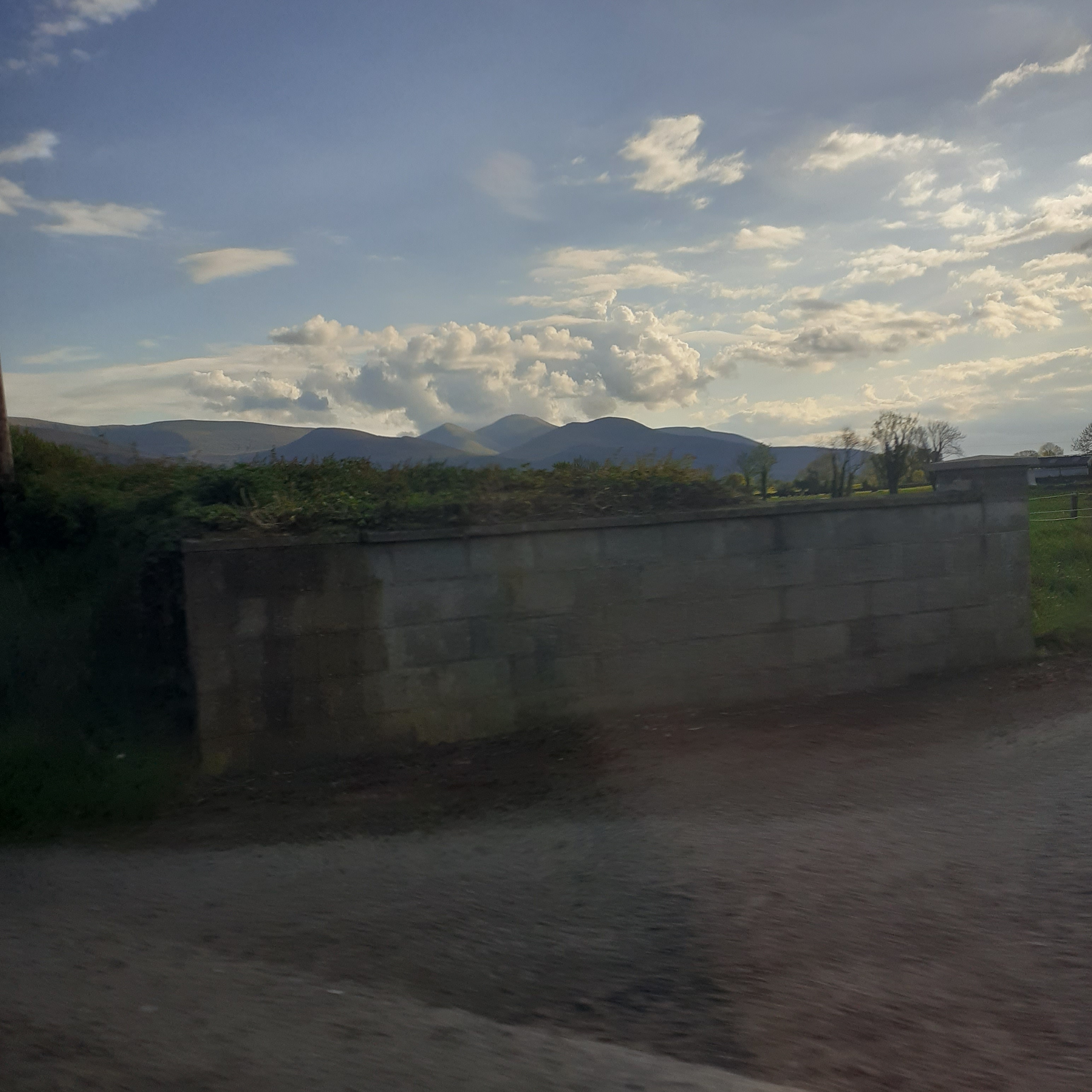
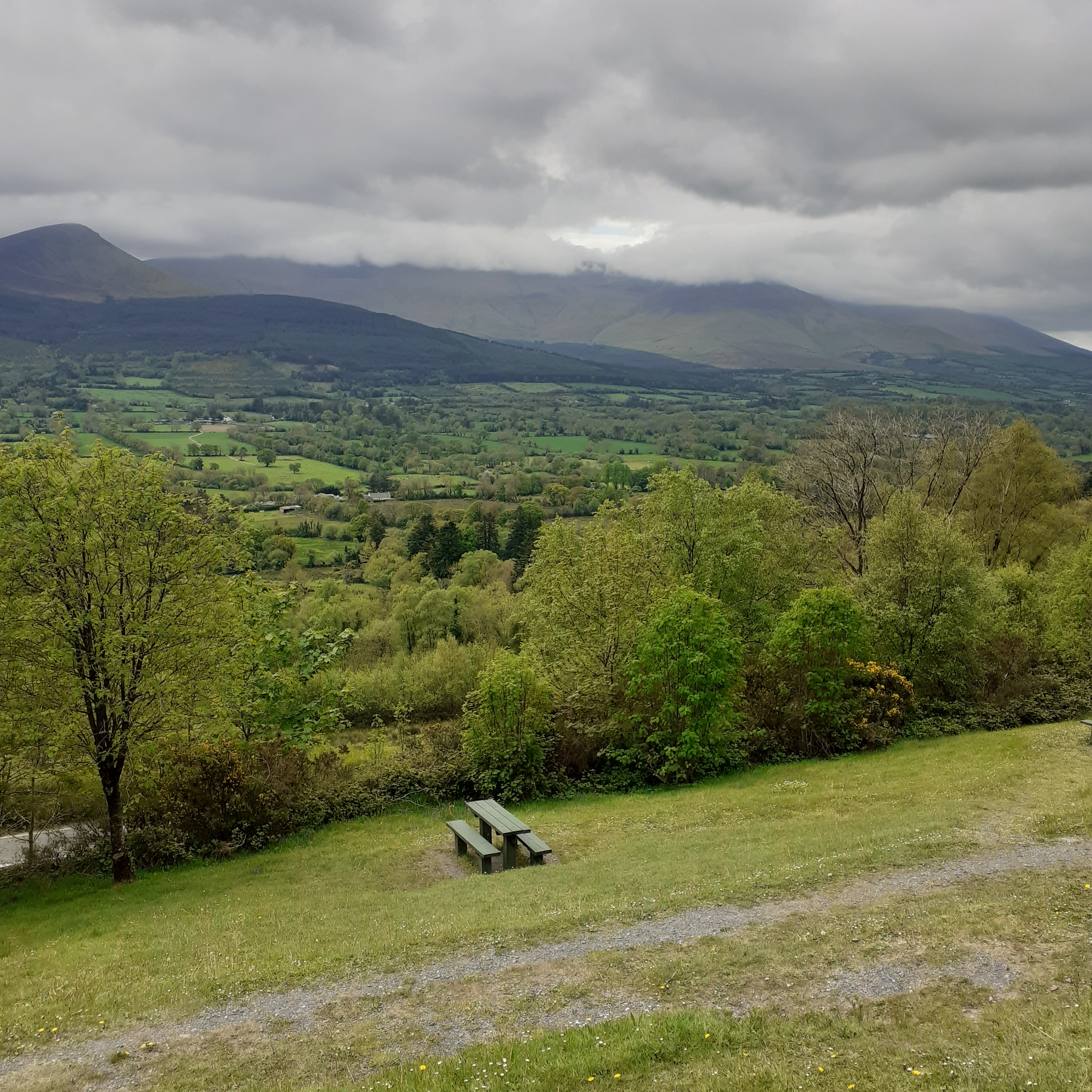
The Glen of Aherlow has a number of marked trails amidst a panorama of wonderful scenery. To the south the Galty Mountains rear into a blue sky and Slievenamuck shelter the valley to the north. The Galty Mountains rise to over three thousand feet and are the highest inland range in Ireland with Galtymore the highest peak outside of Kerry. Slievenamuck means mountain of the pig in Gaelic, referring to a notorious wild boar who once haunted the slopes. He’s long gone and, if you’ll pardon the pun, the place is just as interesting in his absence. The Slievenamuck range features loop walks of varying degrees of difficulty.

We took the trail from the statue of Christ the King heading uphill through Bansha Woods with fabulous panoramic views across the county rewarding us at the summit. Tipperary town is visible in the middle distance. We make downhill through rushing streams and forest paths. It’s well marked and you won’t go astray. There’s a picnic area near the statue where you can enjoy the scenery in a more leisurely fashion

The main town hereabouts is Cahir on the River Suir. The town has a population of three and a half thousand people. Most of it is built on the south bank of the river, centered on a main square. Such squares are a feature of Protestant plantations in Elizabethan and Jacobean Ireland. Quakers established themselves in Ireland in the mid seventeenth century. Cahir and Clonmel became their main centres in south Tipperary where they were prominent in milling and other businesses. Cahir and Clonmel were the first towns in Ireland to be linked by Charles Bianconi’s coach service in 1815. Up till then, the journey could take six hours or more by river. With the coach it could be done in two hours, though Google might claim even less. Charles Bianconi was born in Italy, near Lake Como, in 1786, and moved to Ireland when he was sixteen, fleeing Napoleon’s invasion. He worked in Dublin as an engraver before moving to Clonmel where he set up his transport business. 

Screenshot

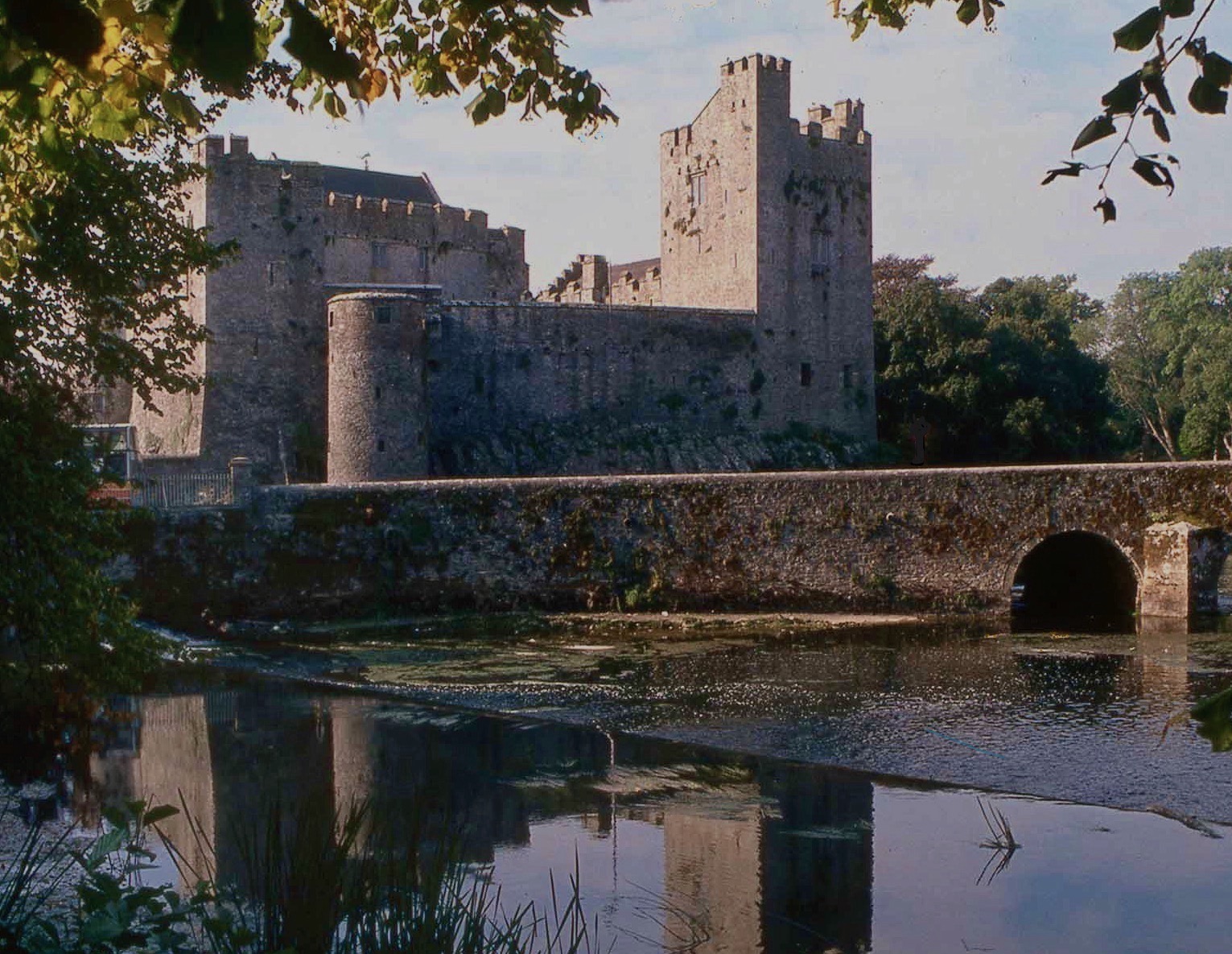
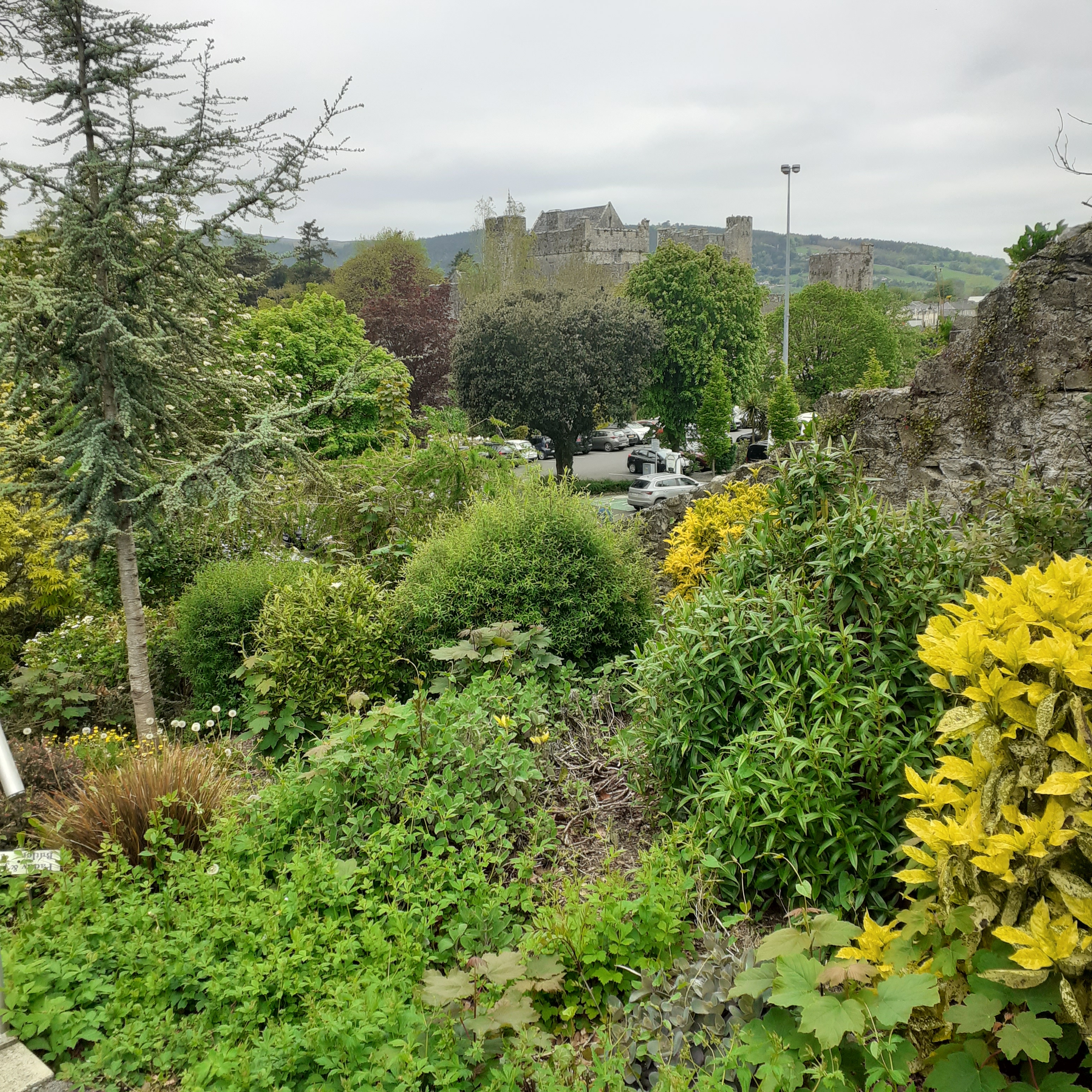
The most spectacular feature of Cahir is its castle. Cahir Castle is built on a small island in the river. It was first built in the mid twelfth century by the King of Thomond (North Munster) Conor O’Brien. This dynasty was established by Brian Boru, of Battle of Clontarf fame. This was the original stone fort, An Cathair, which gave the town its name. The Butlers of Ormond (East Munster) took over when in1375 James Butler was granted the castle estate as reward for his loyalty to Edward III. Munster, Ireland’s southern province, was then divided into three earldoms Ormond, Thomond and Desmond (South Munster). The new Castle had formidable walls rising sheer from the river, with a towering central keep all guarded by an array of sturdy towers. It was considered impregnable but in the three day siege of 1599 during the Nine Years War the Castle was taken by Robert Devereux, the Earl of Essex.and his ally Christopher St Lawrence, Lord Howth. This is the same Howth who, as a boy was kidnapped by pirate queen Grace O’Malley. Eventually released, he grew up to become a renowned warrior, albeit with anger management issues.

Since the death of the last Lord Cahir in the 1960s, the Castle has been the property of the Irish State. Entrance is €5 and there are guided tours. It is free to walk the Inch Field public park which embraces the castle on three sides. In modern times the Castle is much in demand for period productions in the film and tv business. Famous films are noted on a plaque outside. Amongst the roll call are John Boorman’s Excalibur from 1981, TV drama The Tudors and most recently The Last Duel in 2020. The Last Duel was directed by Ridley Scott and based on a nonfiction work by Eric Jager. Matt Damon is producer, co-writer and took the main lead of Jean de Carrouges fighter of the last Judicial Duel in France in the fourteenth century. Filming was delayed with the outbreak of covid and Damon found himself marooned in Dalkey, south of Dublin. The bould Matt didn’t mind, going for swims and coffee and hobnobbing with the locals. What’s not to like about being marooned in Dalkey, rubbing shoulders with Bono, Enya and Van Morrison? 

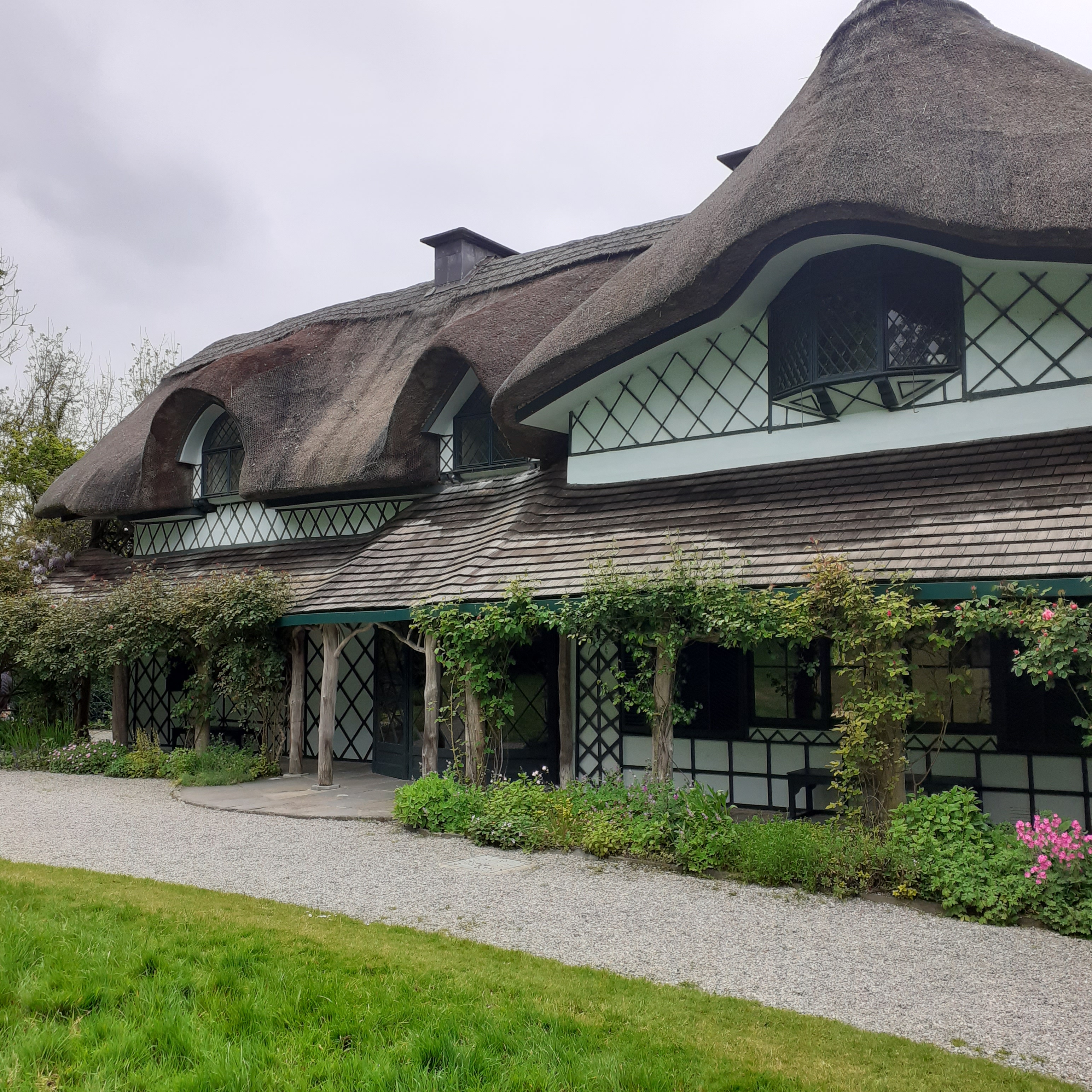
A 2 km riverside walk will take you to the Swiss Cottage. This early nineteenth century ornamental cottage is attributed to John Nash, the Regency architect who also designed the Cahir Parish church in 1817. Thatched and deliberately asymmetrical, it is a fabulous mimicry of what it was assumed an Alpine cottage might be. Such follies were for entertaining guests, who dressed, or even undressed, in rustic gear to let it all hang out, as it were. Downstairs there’s a music room to one side and beyond the central staircase the Dufour Room, named for its startling French Dufour wallpaper. This original wallpaper makes a fantastical backdrop, depicting a pleasure ground surrounding the Bosphorus. There’s an excellent guided tour to bring you around the interior which costs just €5, €4 seniors. Here we learned, amongst other things, Richard Butler’s own story which is itself outrageously romantic. He was an obscure teenager with only distant family connections until an unlikely string of aristocratic deaths meant the Cahir lordship became his inheritance. Grasping relatives abducted him to the continent but the plot was foiled by Arabella Jefferys. She rescued Richard and brought him to her home at Blarney Castle in County Cork, where he came of age and married her daughter, Emily in 1793. It was this happy loving couple that commissioned the Swiss Cottage.

Say you don’t need no diamond rings

And I’ll be satisfied

Tell me that you want the kind of things

That money just can’t buy

I don’t care too much for money

Money can’t buy me love

Ow!

Can’t Buy Me Love is a Lennon McCartney song from the Beatles album, A Hard Day’s Night in 1964. McCartney wrote the song in Paris and later mused if the ’t might be omitted. 

Leitrim – Lakes and Literature

Myself and M took a couple of days in Leitrim in the middle of June. We booked into the Riversdale B&B just outside Ballinamore. It’s a lovely old house along the Shannon Erne Waterway with moorings for watercraft where there’s a boatyard for barge building and repairs. The property is on a farm with horses gambolling in the nearby fields.There’s a heated swimming pool, a gym, table tennis and a grand piano offering us a diverse range of pursuits. The drive took us about two and a half hours from Bray, with coffee and a snack in Edgeworthstown. We followed the main road as far as Dromod, turning off for Mohill and Fenagh, which is more direct than the backroad route proposed by Google.

In terms of population, Leitrim is Ireland’s smallest county with a population of thirty five thousand people. In pre famine times there were a hundred and fifty thousand people and a thriving mining industry. Ore mining continued from the sixteenth to the eighteenth century, with coal mining to the fore in the nineteenth century. The Arigna Mines across Lough Ree in County Roscommon are now a visitor centre. The last mine there closed in 1990. The population had dwindled to a mere twenty five thousand in the 1990s. So things are picking up.

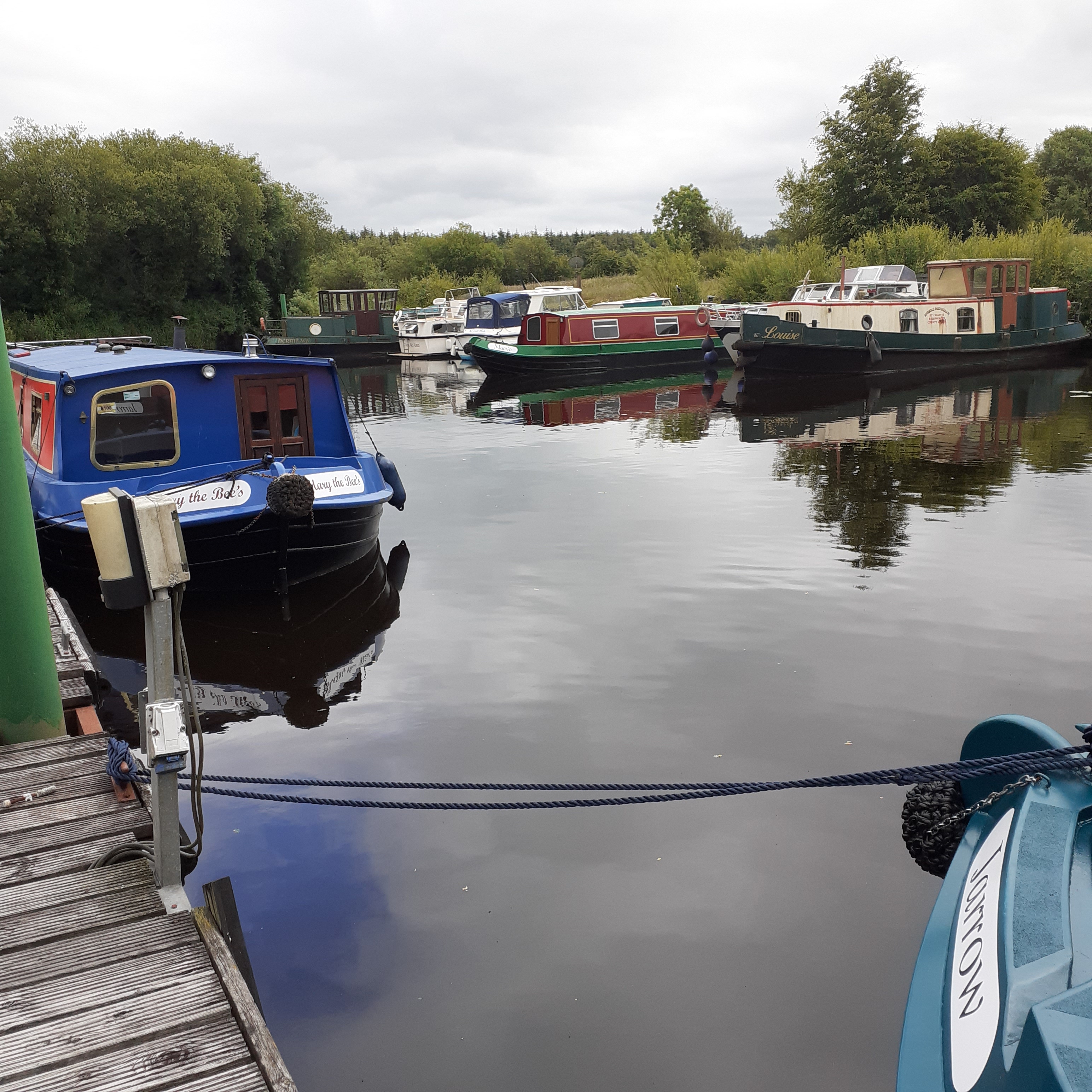
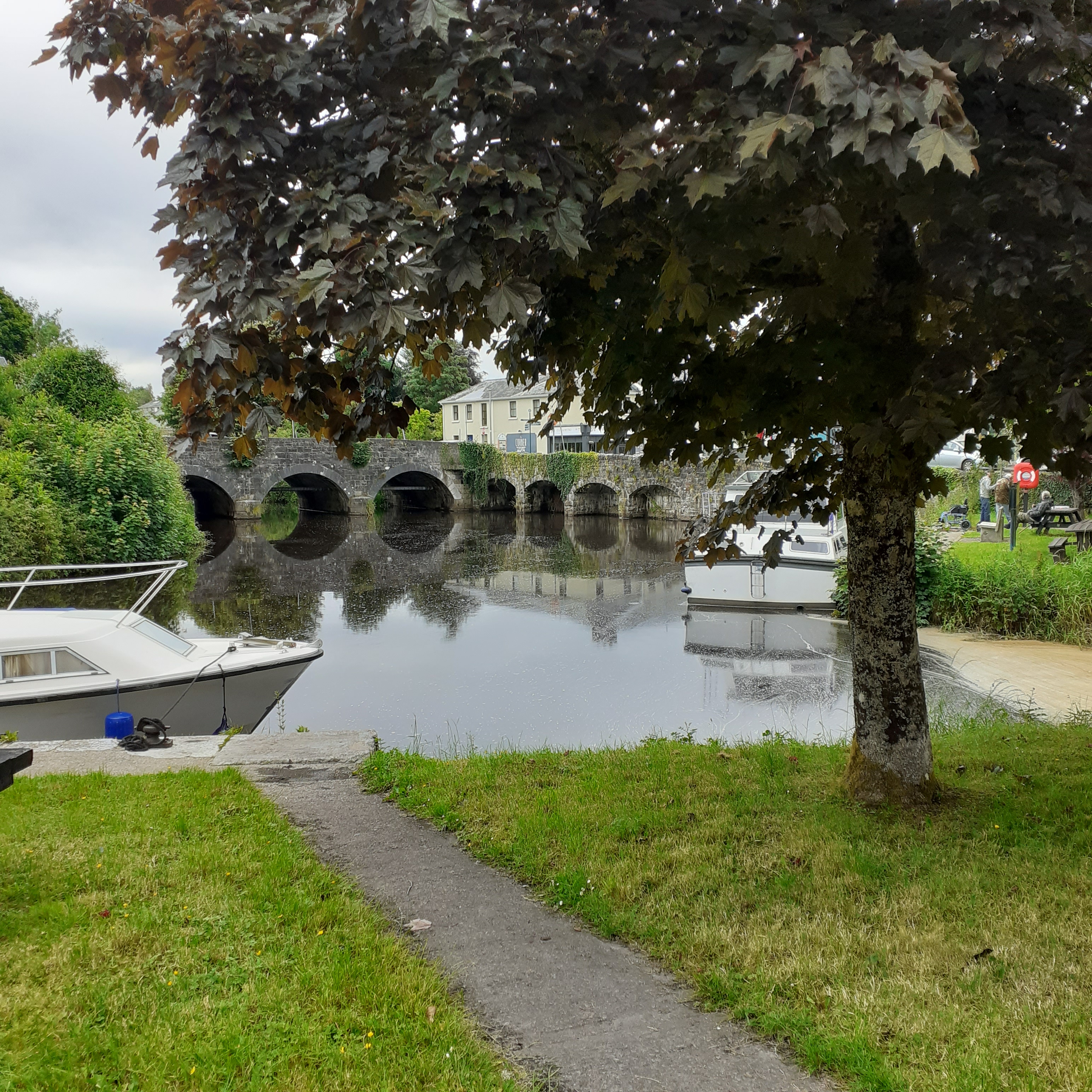
A main attraction for us was the Ballinamore Walkway and Cycling trail, a four and a half kilometre walk to the town, taking about an hour. It’s mostly flat, being along a canal, and is an extremely pleasant route through woodland and farm. Near Ballinamore there’s a weir and lock with an attractive expanse of placid water in the shade of the trees. We come into the town through a small parkland circling the mooring spot for river craft, framed by its multi-arched stone bridge and quayside.

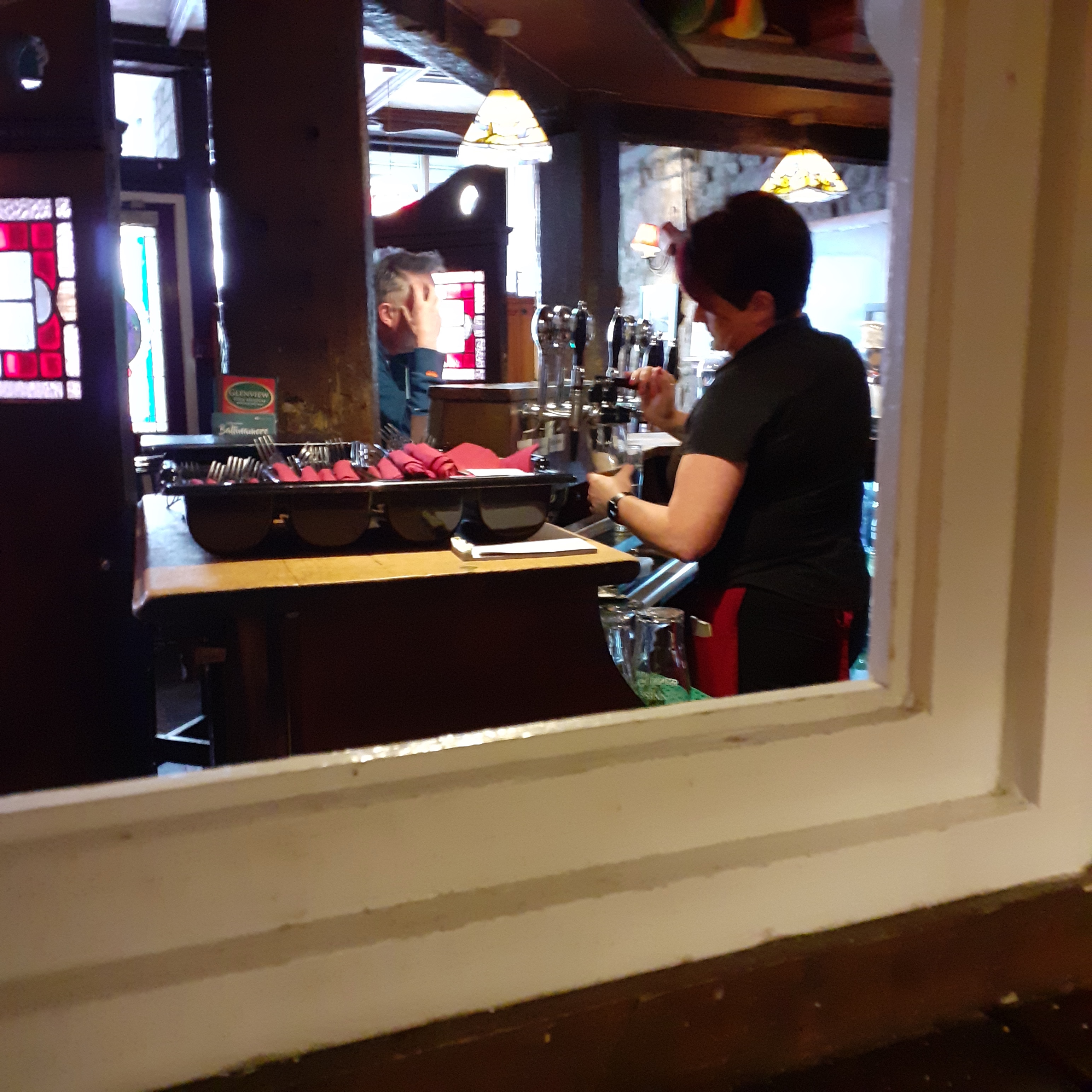
Ballinamore lies on the Yellow River, its main street rising up from the bridge. On the other side there’s a fine modern theatre, The Island, which as the name says occupies an island on the Shannon Erne waterway. The theatre hosts dramatic and musical events. Along Main Street, Smyth’s Pub, Siopa Ol as Gaeilge, is a traditional old pub serving good food and drink; and a lot of it. With friendly service and a relaxed atmosphere, it made for the perfect oasis at the midpoint of our walks along the waterway. 

The Shannon Erne waterway connects the Irish and Northern Irish canal and river network. The Shannon thereby becomes part of a navigable network through the midlands and connecting Dublin with Lough Erne and Enniskillen in Northern Ireland. It was built in 1840 but fell into disuse after the coming of the railway and the automobile. The railway once ran through here connecting the Dublin Sligo line to Ulster. It operated from the 1880s to 1959, when much of Ireland’s secondary rail network was decommissioned. The canal, however, came back and the restored waterway reopened in 1994.

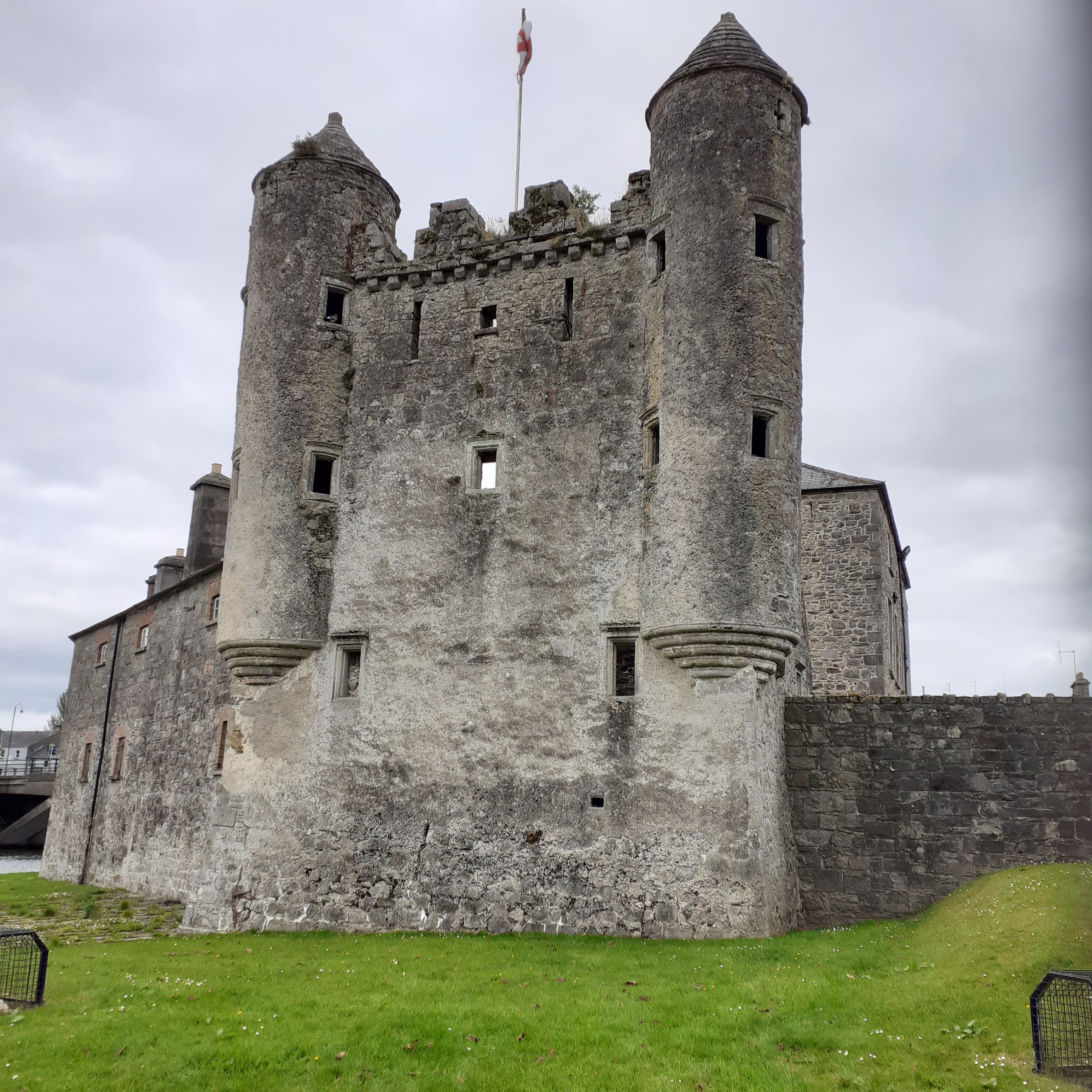
It’s a short drive from here to Enniskillen in Northern Ireland. Enniskillen is situated between Lough Enrne Upper and Lower and is located on an island. Enniskillen Castle stands on the Lough shore. It was built in the early fifteenth century by the local chieftains, the Maguires, but fell into English hands at the start of the seventeenth century with the occupation and plantation of Ulster. There is substantial free parking on the edge of town and it’s a short walk up to the main street marked by the spires of the main denomination churches. 

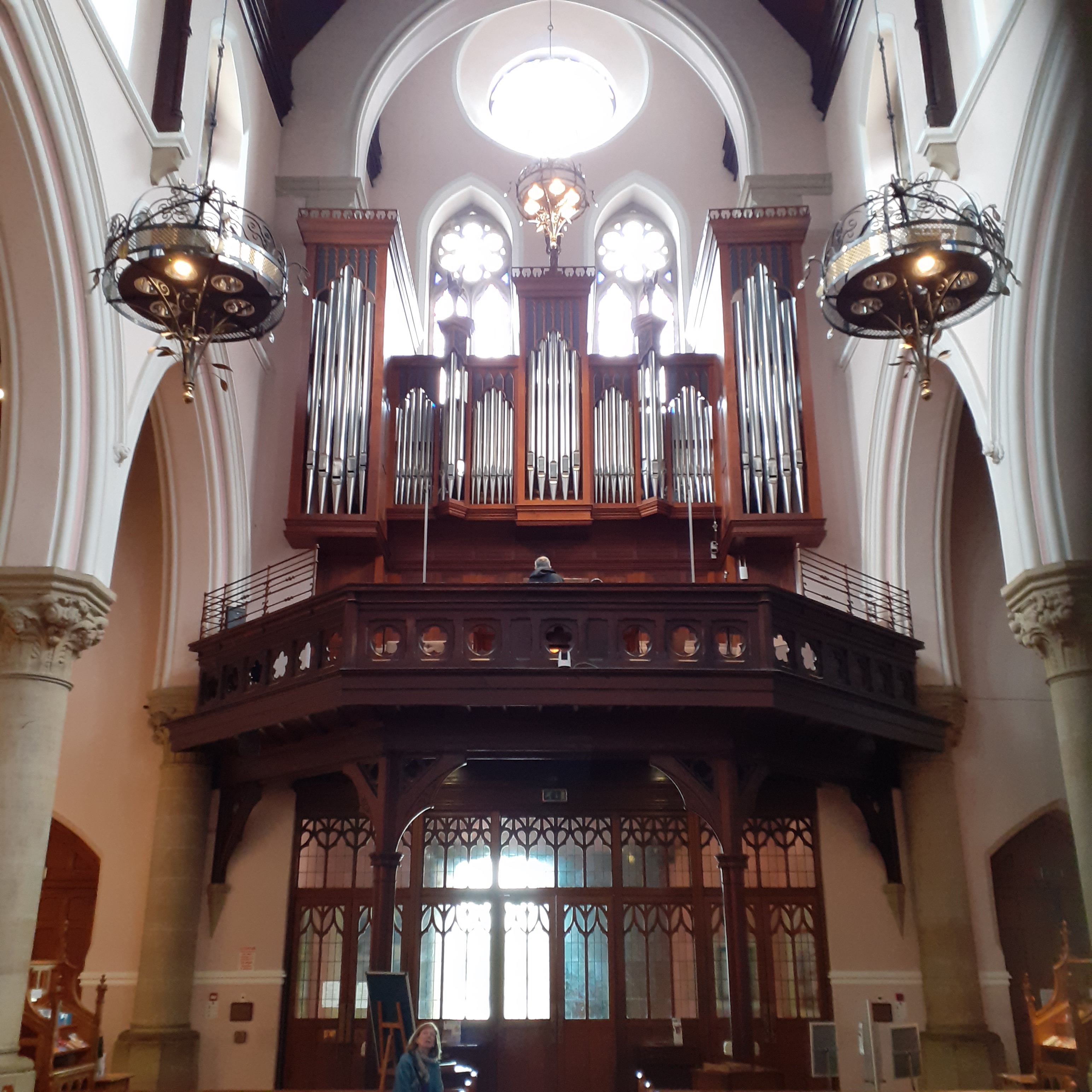
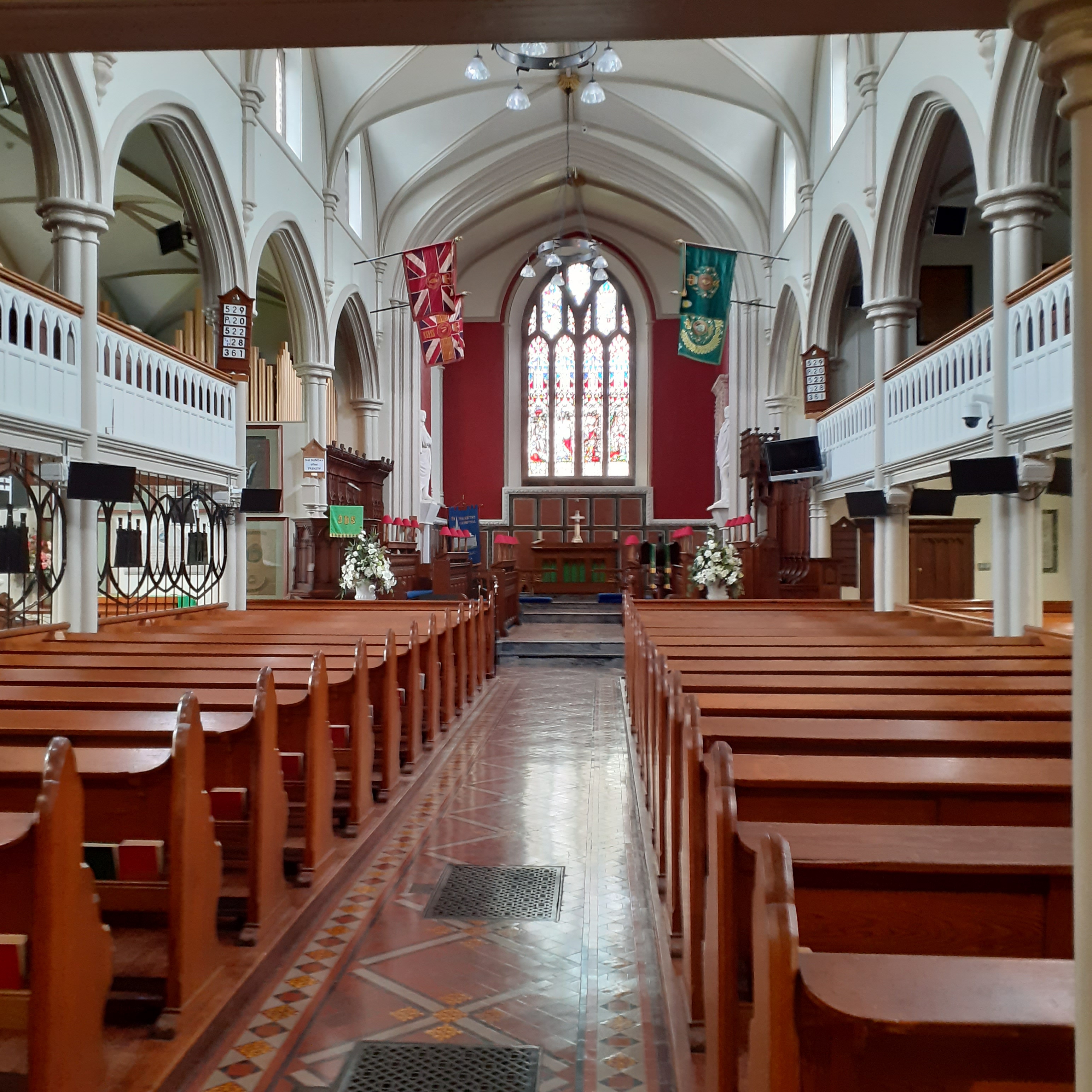
The Catholic St Michael’s dates from the 1870s and is built in the Gothic Revival style. It is preparing for mass, and the huge organ blasts into life as we enter, which is very exhilarating. Right across the street, the Protestant (CofI) church is smaller and looks older. St Macartin’s Cathedral is on the site of the first Protestant church built here in 1627. The current building dates from 1842. The main street follows the line of Chruch Street, High Street and Town Hall Street.the Town Hall crowns the island’s highest point. It was built in the 1880s replacing its dilapidated predecessor. The six storey copper domed tower forms a distinct landmark. The Clinton building marks the end of town, built overlooking the site of the Remembrance Day bombing by the IRA which killed twelve people in November 1987. The bombing further alienated the IRA and is often seen as a watershed of the Troules with democratic processes coming to the fore.

There are plenty of bars, cafes and eateries on or off the main street including William Blakes, Crowe’s Nest and Granny Annie’s. We eat at the Firehouse, which is as warm as the name implies and friendly. They serve us from the lunch menu too, although we were late.

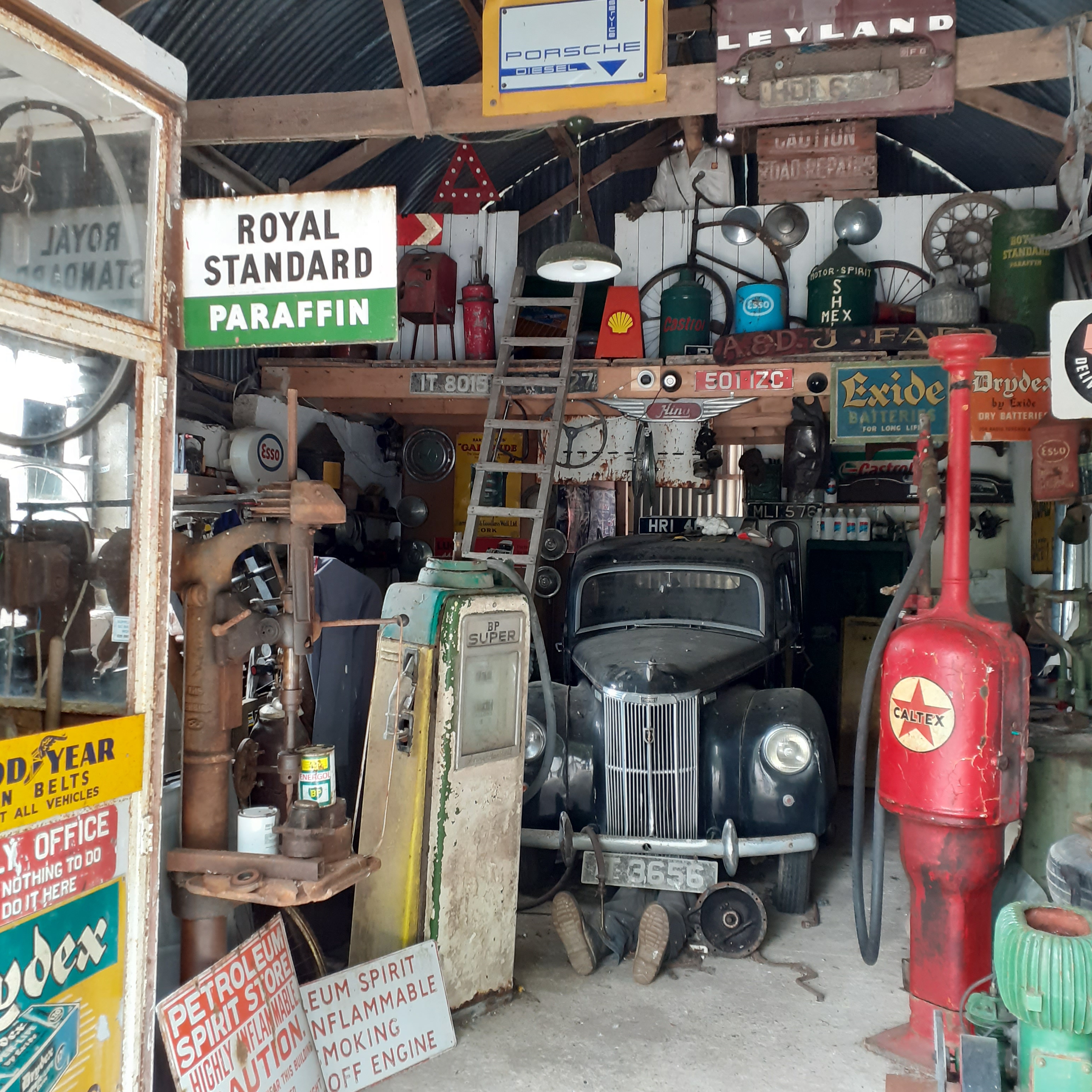
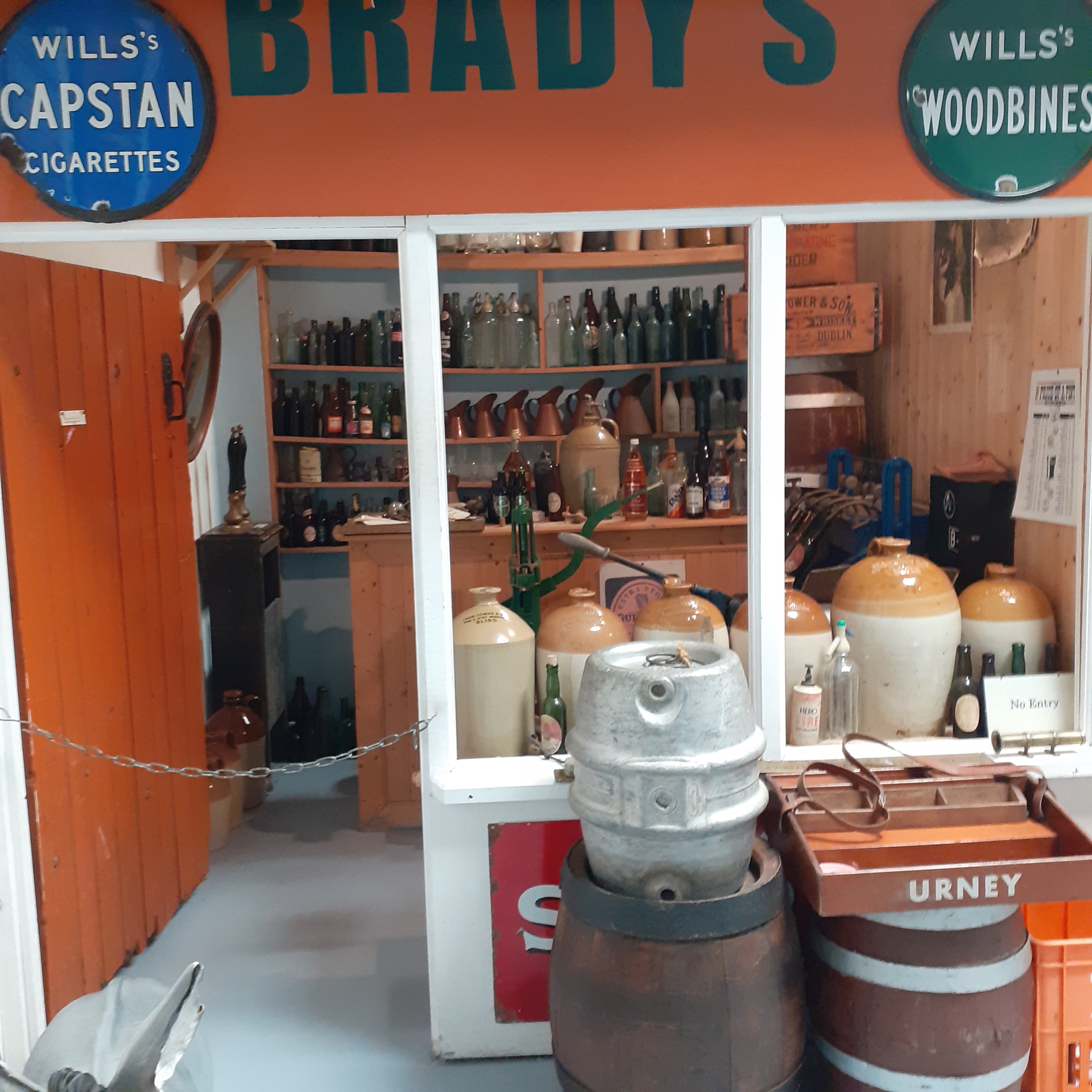
Next door to Riversdale, is the Glenview Folk Museum. This was founded at the start of the century and is run by the Kennedy family. It houses a wonderful collection of social and cultural paraphernalia. We popped over in the morning and ran into Brian Kennedy who gave us a personal tour with a few other couples. The collection is grouped around such community focal points as the pub, the general store, transport and farming life. I can actually remember some of these ancient displays, forgotten brands quaint production methods emerging from my X files. For younger viewers it must be mind bogglingly weird. Brian is an affable host, rich in anecdote and with all the enthusiasm you would expect from someone who has so loveingly and skillully prepared these displays. 

A section is devoted to writer John McGahern. Born near Ballinamore in 1934, by the end of the century he was seen as one of Ireland’s greatest living authors. But, as Brian points out, it had not always been so. McGahern became a primary school teacher, teaching at Clontarf in Dublin. When his second novel The Dark was banned, he was fired from his post by Archbishop McQuaid. For writers, being banned was something of a badge of honour, Brian O’Nolan complainerd that his career suffered due to the ignominy of never being banned. For Mcahern though, censorship of his book meant that he lost his job. He actually was cancelled. He returned to Leitrim, buying a farm near Fenagh. His last two books Amongst Women and That They May Face the Rising Sun(2002) secured his reputation at home and abroad. He died in 2006.

Brian Kennedy dwells on his marginalisation as a literary figure. A poster on display includes the usual suspects Joyce, Beckett, Yeats and Behan, though not McGahern. As with much artistic pursuits such perspectives change with time, and I imagine most literary fans would include McGahern on their own Rock Dreams poster.

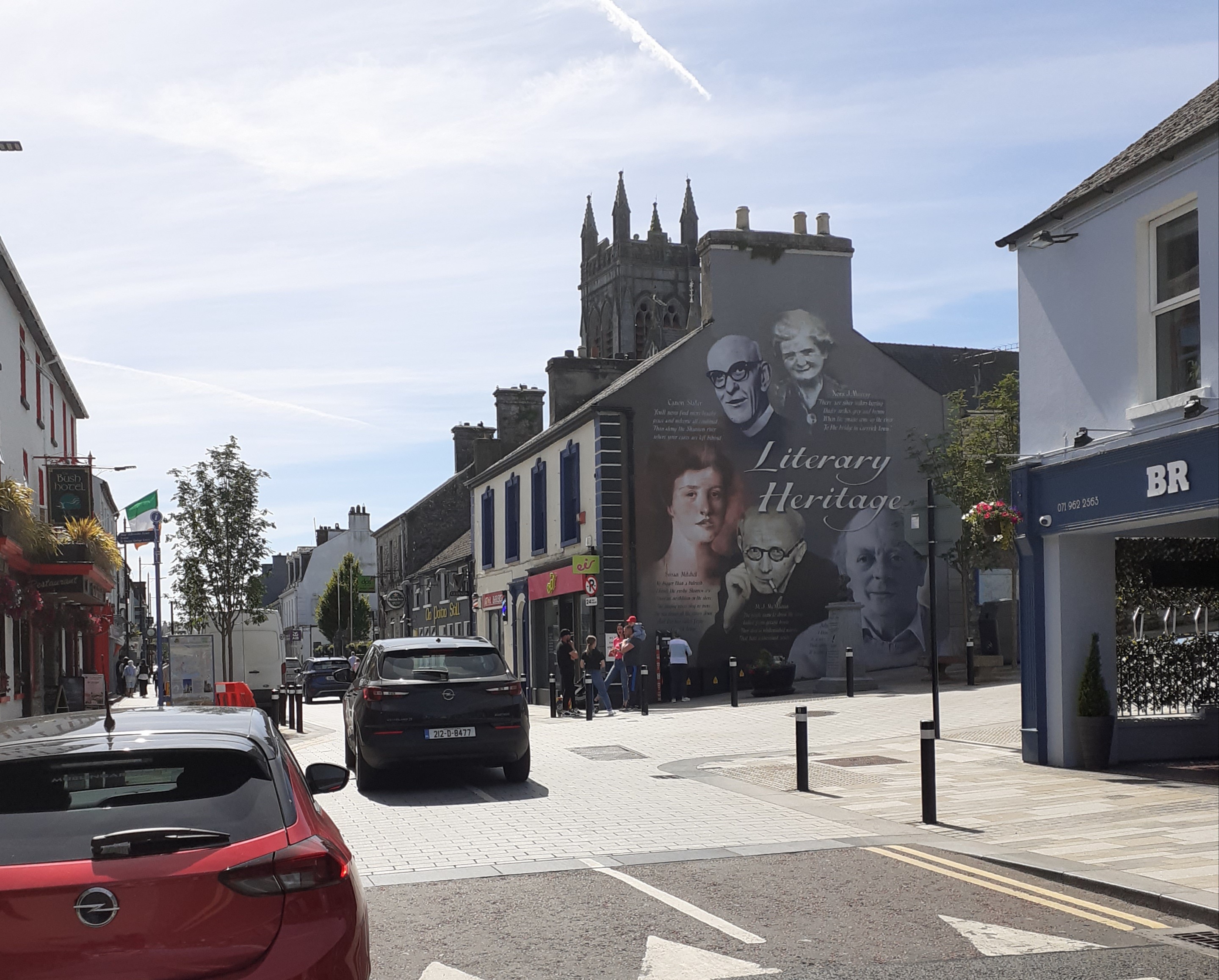
We pass through Carrick on Shannon on our drive home. Carrick is Leitrim’s county town, with a population of 4,700 people. It is one of the fastest growing towns in the country, developng a thriving tourist industry based on the amenity of the River Shannon. There is a palpable buzz about the town during the summer. We stop for a coffee at a colourful pavement cafe, VDA. Down the street we notice a fine gable end mural of the county’s literary heritage. Painted by artist Nik Purdy in 2020 it includes such writers as Susan Mitchel, Canon Slator, Nora Murray, M.J.McManus and, of course, John McGahern.

Andalusia – 10. Cadiz to Marbella by Bus

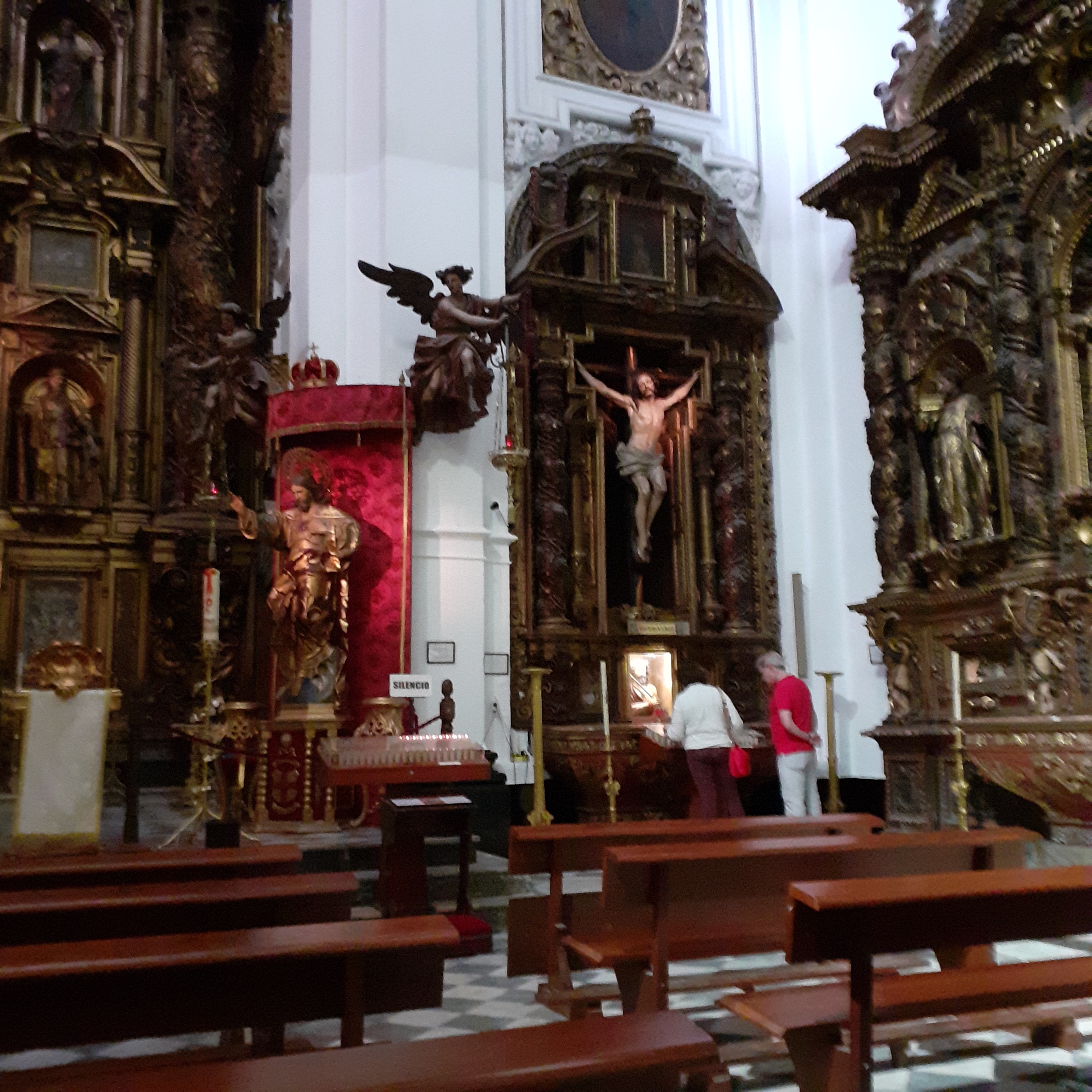
Our recent tour of western Andalusia took us from Seville to Cadiz by train, and we then got a bus from Cadiz to Marbella. This was a three and a half hour journey with a number of stops on the way. There are usually two or three busses per day and it cost €56 for the two of us. We booked for the two o’clock departure giving us a relaxed final morning in Cadiz. We had breakfast in Cathedral Square and strolled around a bit, visiting the Church of Santiago across from the Cathedral. This was a Jesuit church built in 1563 but destroyed by English and Dutch invaders at the end of that century. Rebuilt in the Baroque style it eatures exuberant interior decoration with ornate baroque altarpeices from the seventeenth century populated by lifelike clothed statuary. We dallied on the main square before picking up our bags and one last cup of coffee for the road, near the statue of the Pearl of Cadiz. 

Your sister sees the future like your mama and yourself

You’ve never learned to read or write, there’s no books upon your shelf

And your pleasure knows no limits, your voice is like a meadow lark

But your heart is like an ocean, mysterious and dark

One more cup of coffee for the road

One more cup of coffee ‘fore I go

To the valley below

One More Cup of Coffee is from Dylan’s 1976 album Desire, also featuring Emmylou Harris on vocals. There is a strong Gypsy inluence in the narrative, and Dylan’s vocal style borrows from traditional Jewish singing. Meanwhile the Valley Below is common to all travellers who find themselves moving on.

The bus station is beside the rail station so it was a short walk. The weather is wet and cool, a bit like home. The bus heads on through the modern extension to the city of Cadiz, then along the connecting isthmus to the mainland. This part of the city is built up with medium rise hotels lining a long sequence of beaches such as Playa de la Santa Maria and Playa de la Victoria. Farther on is a grubby industrial area. The urbanisation extends to Chiclana de la Frontera famous for La Barrossa beach. It has a population of 80,000 and is also on the railway line connecting to Cadiz, Jerez, Sevilla and Madrid. After that there’s Conil de la Frontera a traditional white town of about twenty thousand people. This too is famous for its beaches and is a popular destination for Spanish holidaymakers.

Then we head towards Tarifa on the Costa de la Luz. Spain’s southernmost point is a magnet for windsurfers. It is very windy owing to the Venturi effect which funnels the wind passing through the Strait of Gibraltar separating Spain from Africa. Algeciras is next. With a population of 120,000 it is one of the largest ports in Europe. It is also a ferry port for Tangier and other North Arican ports, and the Canaries too.

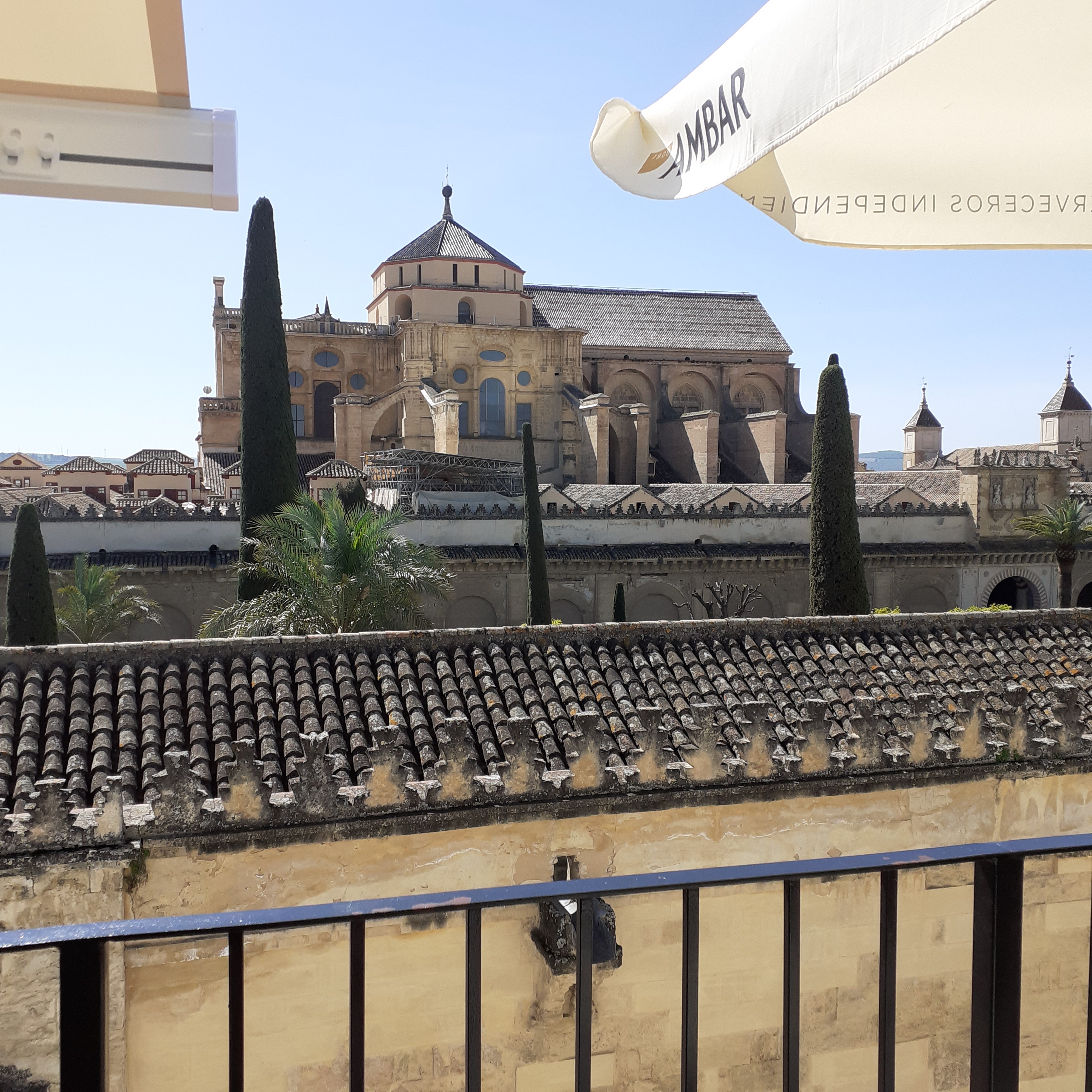
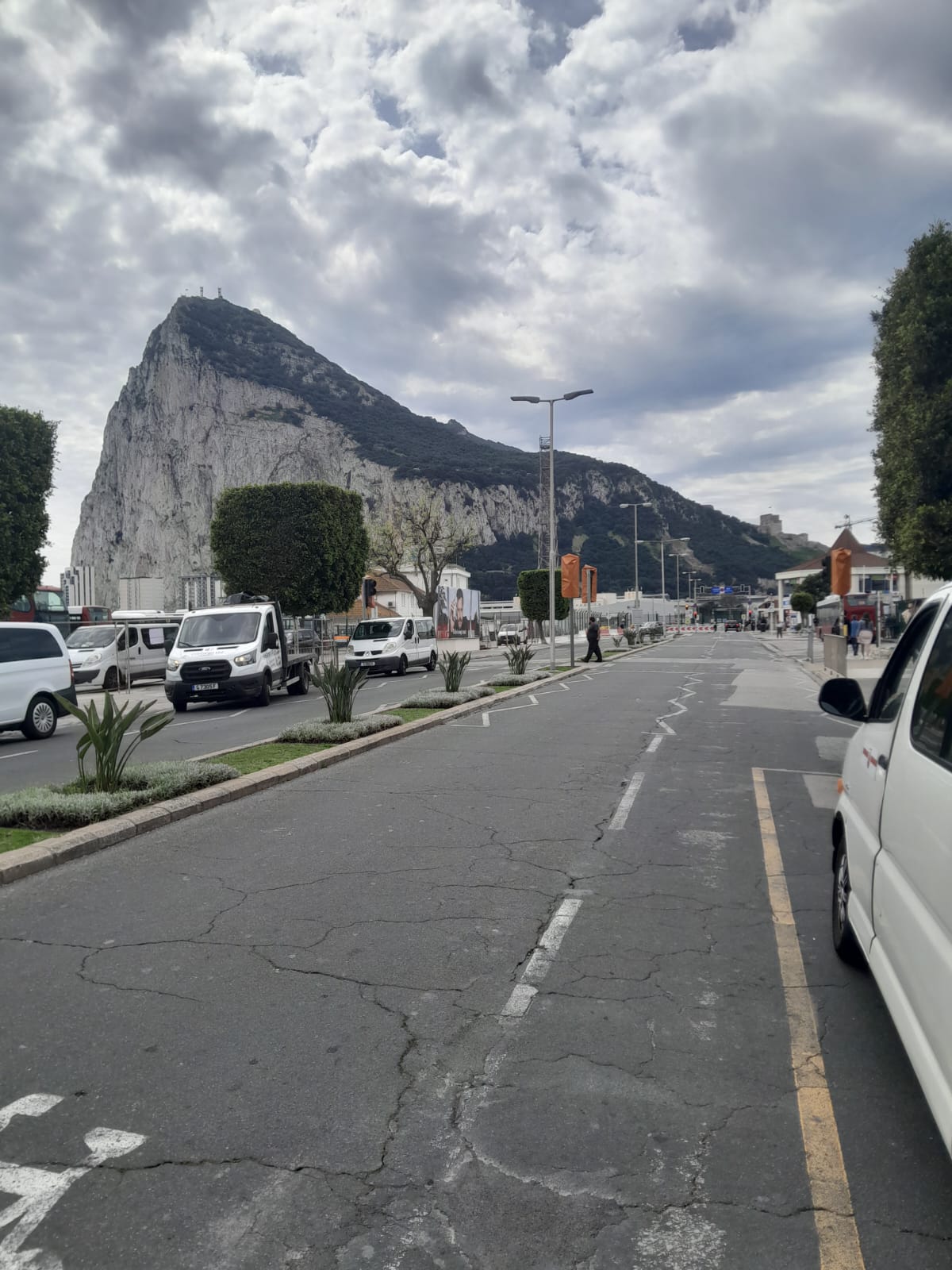
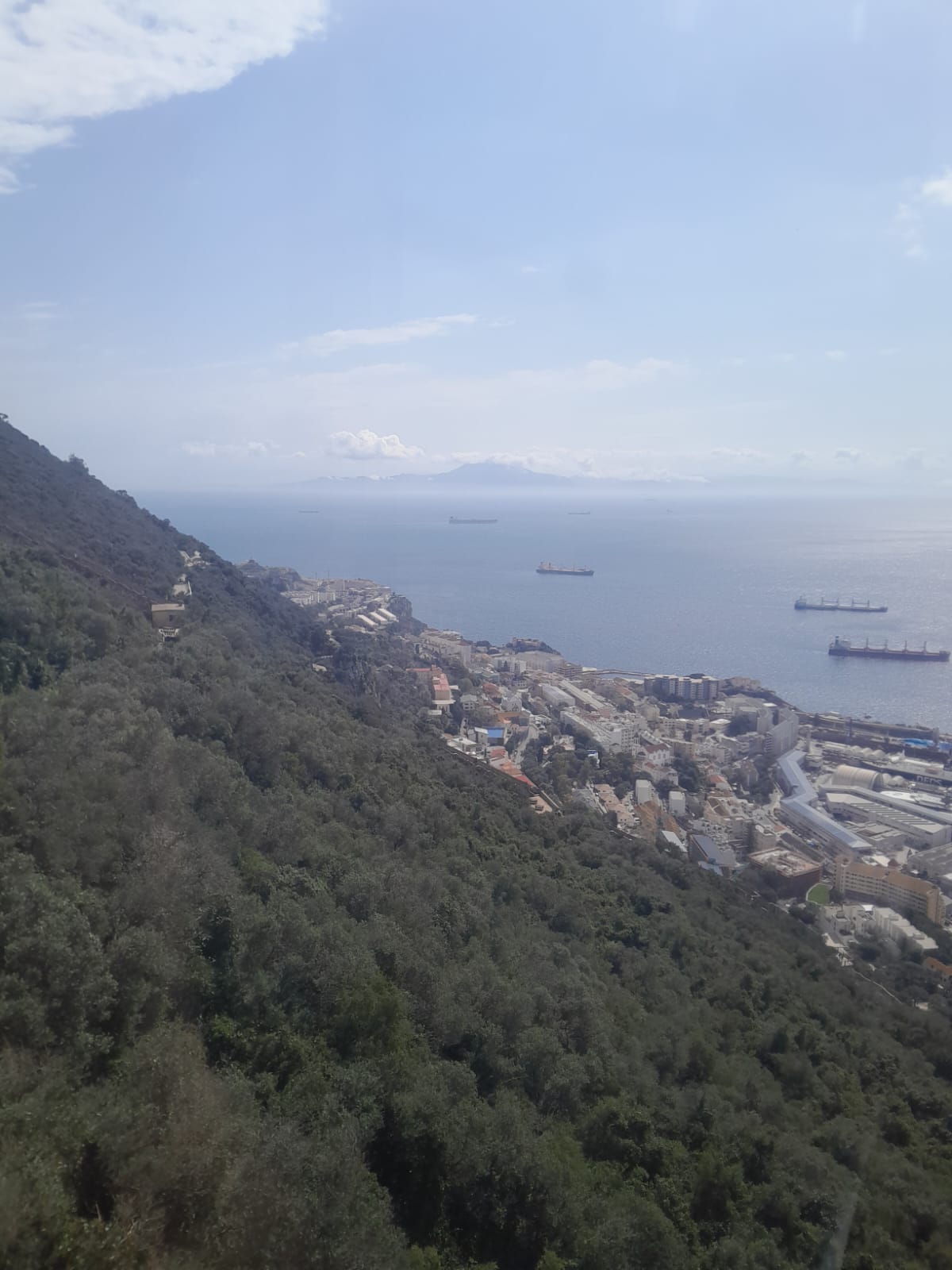
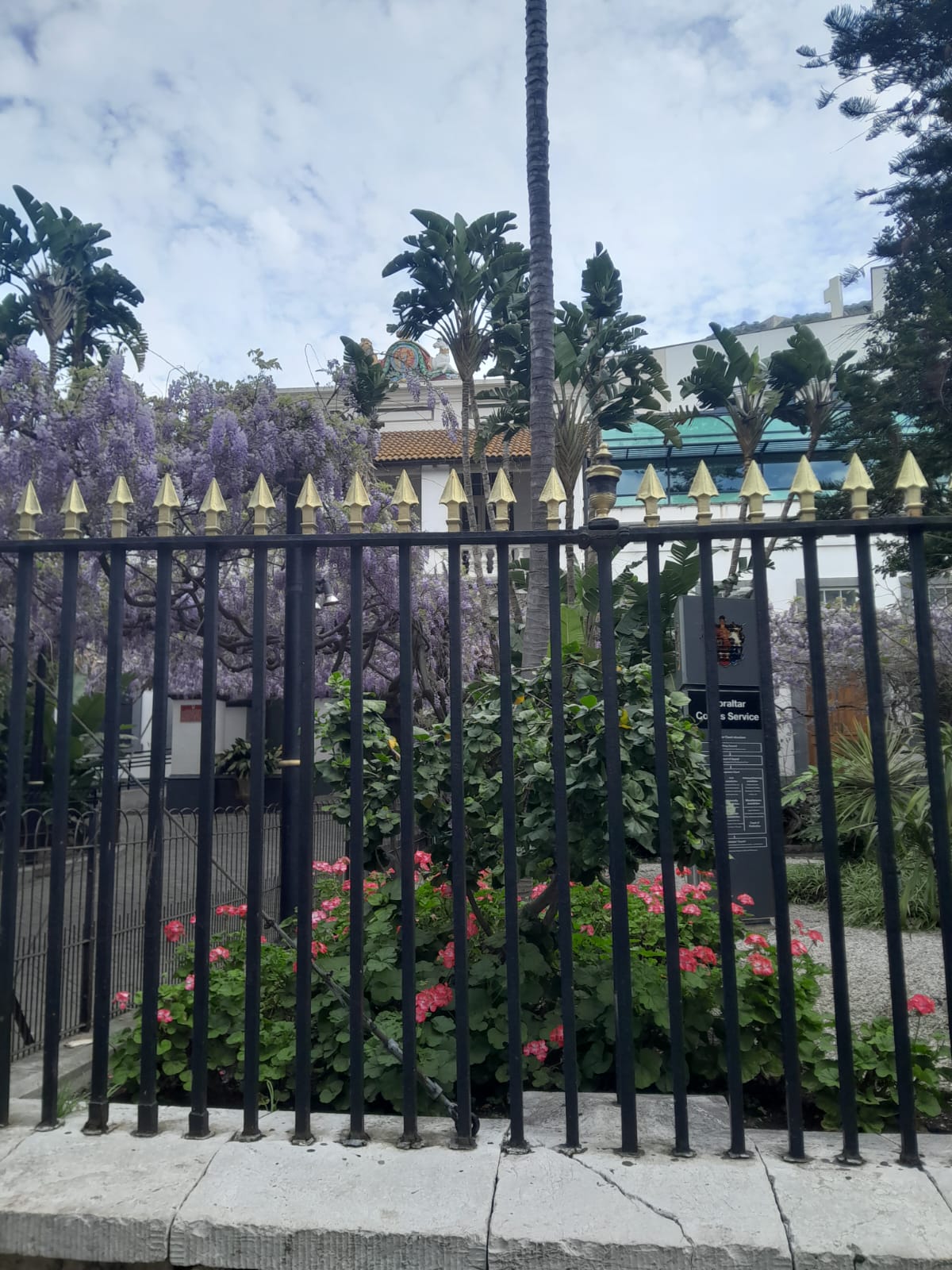
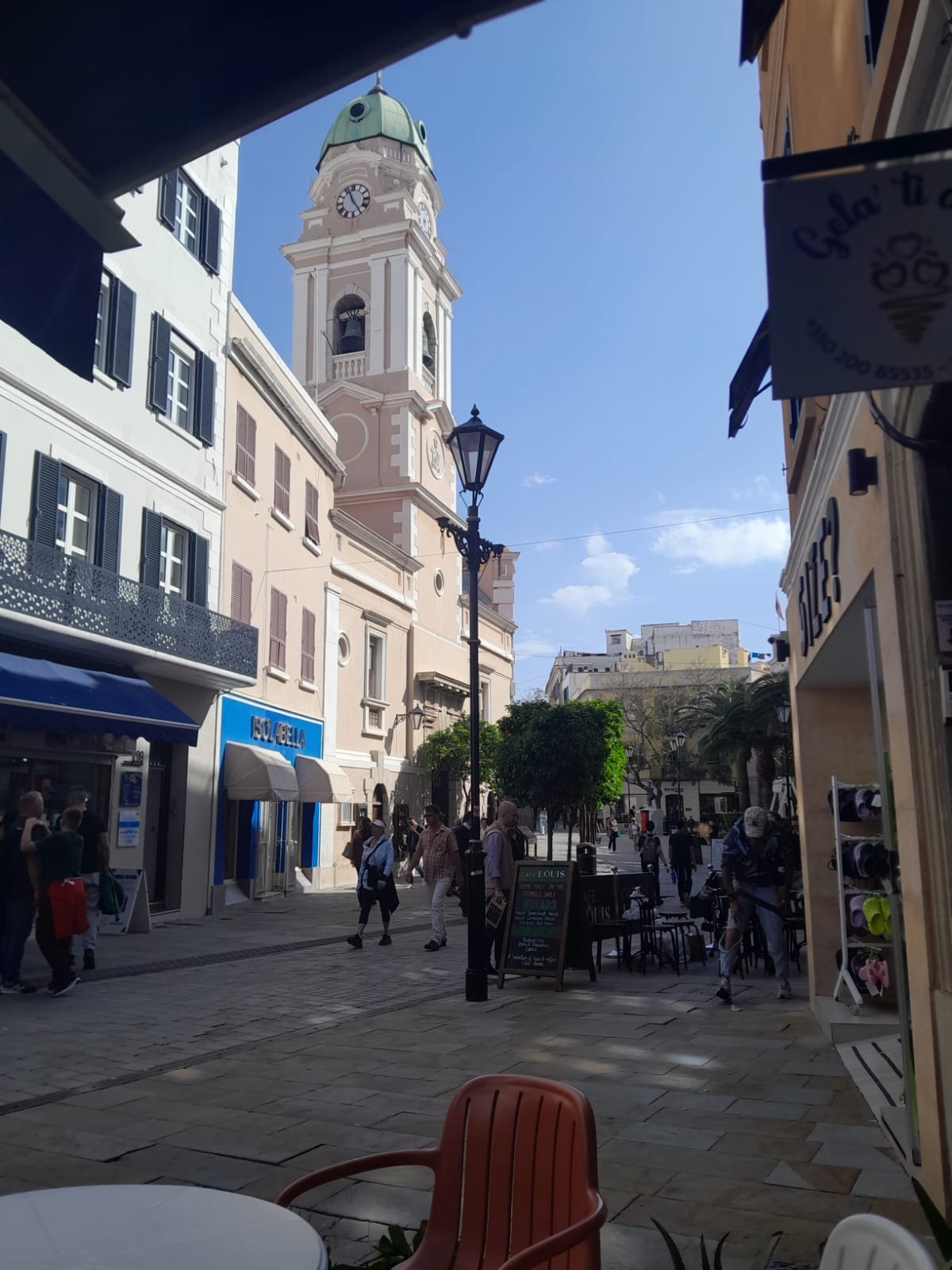
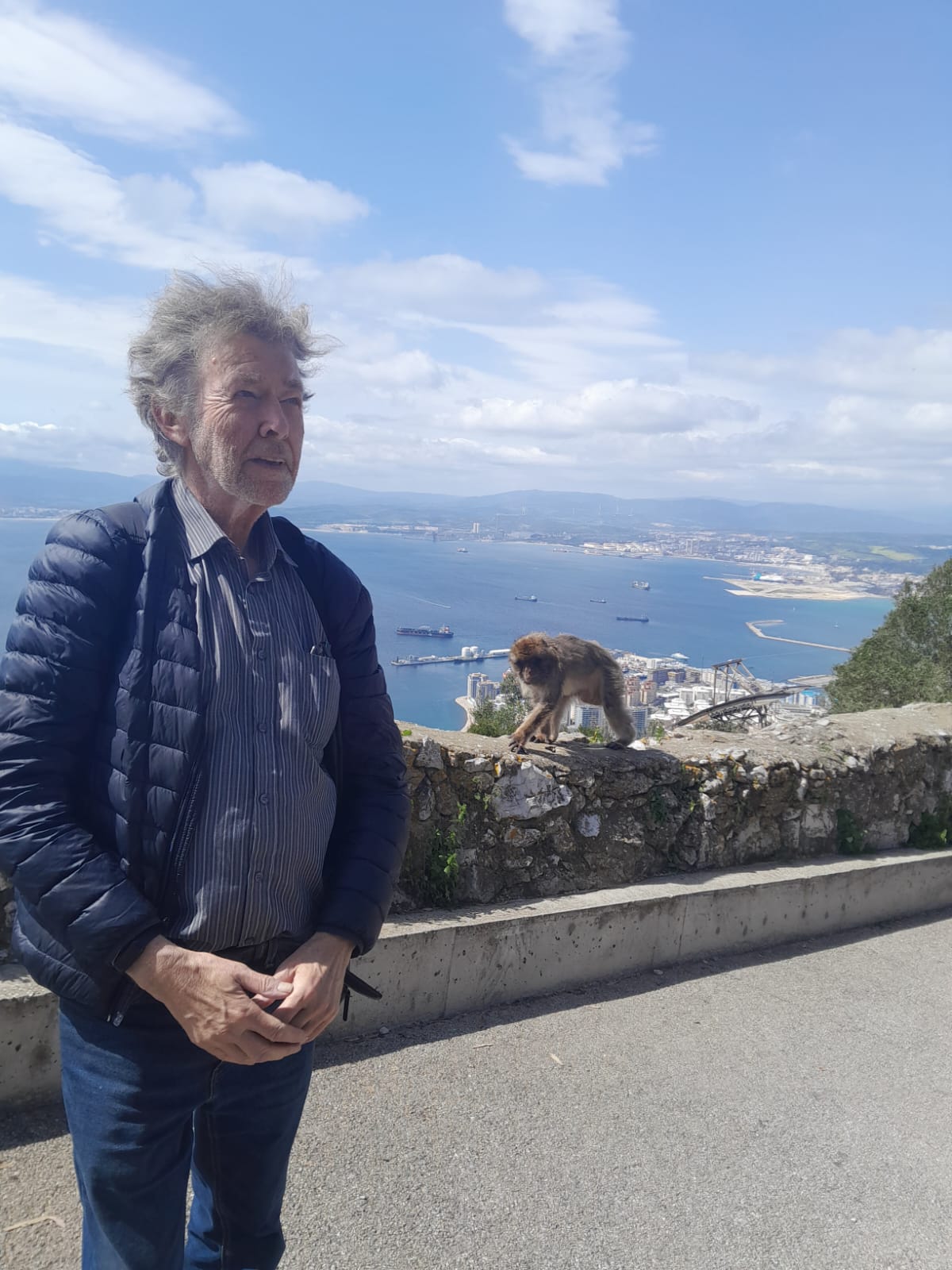
Leaving Algeciras we pass Gibraltar, the high Rock suspended in the clouds. Gibraltar was captured by an Anglo Dutch fleet during the War of the Spannish Succession, it was granted to Britain in 1713 at the Treaty of Utrecht. Besides the British, Gibraltar is occupied by monkees. These are Barbary macaques, numbering about three hundred and the only European wild monkees, not counting ourselves. The scenic coastal mountains rear out of the gloom, scratching some welcome blue swathes in the sky. Estepona is the last stop before Marbella.

The way it is long but the end is near

Already the fiesta has begun

The face of God will appear

With his serpent eyes of obsidian

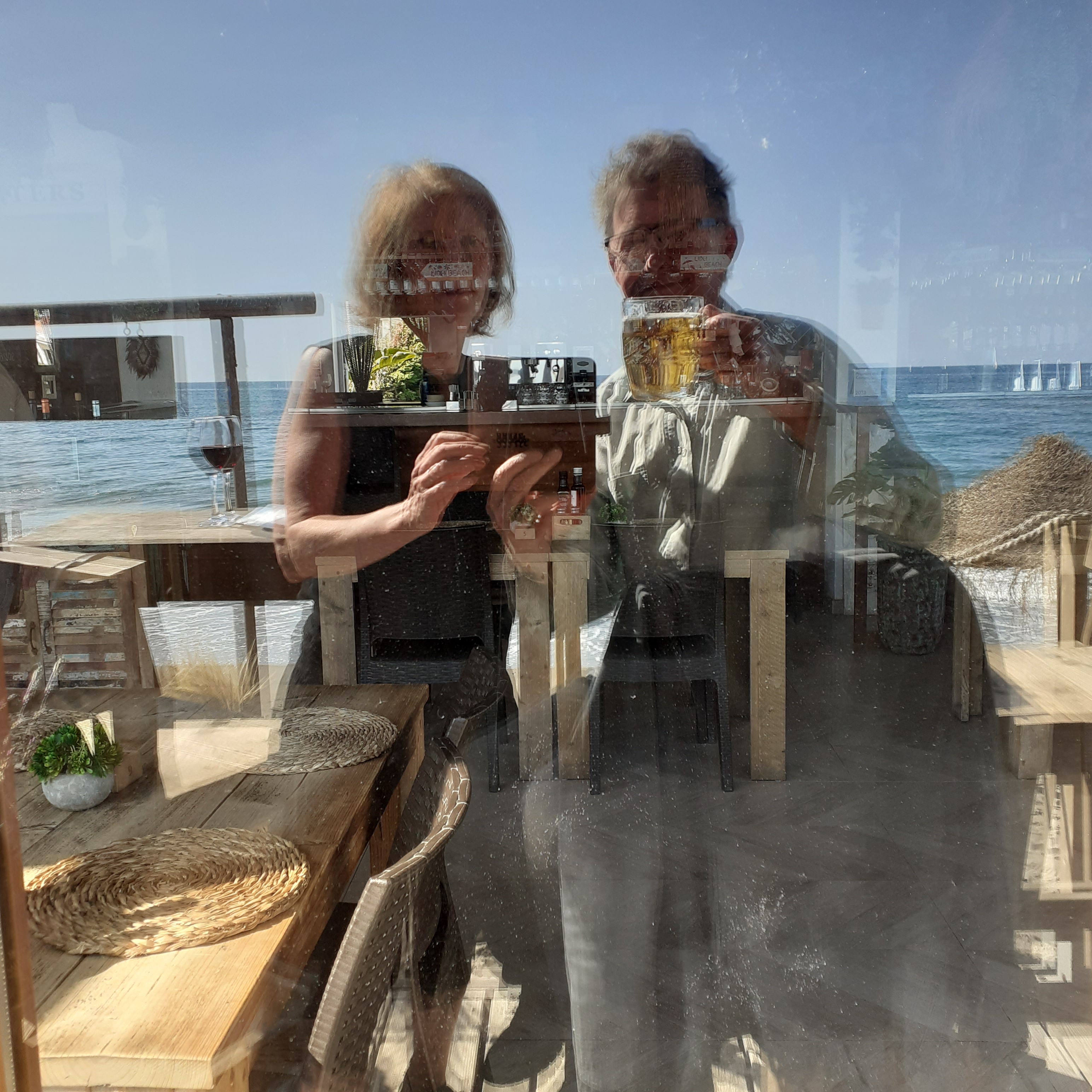
Marbella bus station is outside the city centre. We had originally booked a hotel, but cancelled and opted to head straight for the villa. The taxi from the station cost €20 and deposited us in Elviria central. The sun made a welcome appearance and after shopping we had pizzas and pints outdoor on the square. We did make a trip into Marbella the next day taking the local bus and spending a leisurely few hours walking up the coast towards Puerto Banus, where the rich folk go. We returned to eat at Canuto in Marbella with good local tapas. We walked the six miles home along the beach in hot sunshine and high waves. At last we reached our favourite stop in Elviria. The Lido Bar along the beach has become our sunset bar, the perfect place to relax over a few drinks, or a bight to eat. We fade into the spectacular coastal scenery looking out over the Mediterranean, Africa beckoning just beyond the lip of the horizon.

No llores, mi querida

Dios nos vigila

Soon the horse will take us to Durango

Agarrame, mi vida

Soon the desert will be gone

Soon you will be dancing the fandango

Romance in Durango is also on Dylan’s album Desire.

Andalusia – 9. Cadiz by Train

We take the train from Seville to Cadiz. There’s a train every hour or so and the hundred kilometre journey takes an hour and a half. Santa Justa Station is an ugly carbuncle on unkempt wasteland on the edge of the city. But once inside it is clean and functional and there are plenty of seats on the main concourse with cafes and eateries. We travel along the eastern Guadalquivir valley heading south through Sherry country. The fortified wine takes its name from Jerez de la Frontera, close to our destination. Further on, we enter the swamplands on the Bay of Cadiz and standing proud in the sea, the city of that name. 

There’s a Spanish Train that runs between

Guadalquivir and old Seville

at dead of night the whistle blows

and people fear she’s running still

Spanish Train and Other Stories, Chris De Burgh’s 2nd album from 1975.

Cadiz occupies a small peninsula jutting into the Bay. Initially it consisted of two islands but over the years they have joined and connect to the mainland via bridges and an isthmus. The spectacular La Pepa Bridge looms over the port. It is the longest cable stayed bridge in Spain at five kilometres. It was named as the Constitution of 1812 Bridge, planned for completion on the bicentenary of the launch of Spain’s first constitution in Cadiz. This briefly established a democracy which was crushed by the monarchy two years later. As for the bridge, the economic crisis added another three years before completion in 2015.

Cadiz is often touted as Europe’s oldest city. As with Seville, Hercules is claimed as the mythical founder, his name also used for the Pillars of Hercules guarding the entrance to the Mediterranean  farther East. More historically, three thousand years ago the Phoenicians set up shop here. They came from Tyre, in modern Lebanon, and named the settlement Agadir, derived from their word for wall, signifying a stronghold. Agadir is also the name of a Moroccan city, although the Spanish port’s name has mutated to Cadiz over the years.

Carthaginians and Romans followed. The Roman city of Gades was established on the southern island. Remnants of its ancient theatre survive and there is an excellent visitor centre showing a visual reconstruction, with ancient artefacts and a fascinating historical narrative. The Theatre was founded by Lucius Cornelius Balbus in the first century BC and only rediscovered in 1990. It is the largest known outside Pompeii and housed up to ten thousand spectators. Entrance is free for EU residents. It is close to the Plaza de la Catedral, via the Arco de la Rosa, one of the ancient gates of the city.

Cadiz fell under Muslim control between 711 and 1262 when the Reconquista confined the Moors to the Nasrid Kingdom of Granada. The fall of Granada in 1492 coincided with Columbus’s adenture in America, and the Conquistadors who followed established a lucrative transatlantic trade for the Spanish crown. Cadiz thrived during the eighteenth century as Spain’s designated transatlantic port.

The train terminates at the port, adjacent to the city centre. Our hotel, Convento Santo Domingo, is only a hundred yards or so from the station entrance. Convento Domingo is a seventeenth century Dominican convent. It is a sight worth seeing itself, a priveledge for hotel guests. Inside, cloisters surround a tiled plaza, with an eerie soundtrack of Gregorian chanting monks adding to the atmosphere.

Then the door was open and the wind appeared

The candles blew and then disappeared

The curtains flew and then he appeared

Saying don’t be afraid

The singing monks, and some wine, suggest the song of the Blue Oyster Cult: Don’t Fear the Reaper. Written by Donald Roeser, it’s on their 1976 album Agents of Fortune.

Music persists outside the convent where we encounter a statue to La Perla de Cadiz. Antonia Gilabert Vargas was a Gitana flamenco singer. Born in Cadiz in 1924 she became famous throughout Spain for her voice of power and softness. She died in 1975. A club on the nearby seafront trades under her name

A few hundred yards further on through the Barrio we find Puertas de Tierra, a monument built in the eighteenth century along a remnant of the sea defenses which repulsed Napoleon in the Peninsular War of the early nineteenth century. Today it marks the border between the Old Town and Puerta Tierra, the modern city resort sprawling along the isthmus.

The weather is sunny but with a bracing sea breeze making it cooler than Seville. A couple of narrow, straight streets run lengthwise, Calle San Francisco and Sacramento being the main ones, with winding medieval lanes connecting. Many junctions broaden into small plazas, allowing people to congregate in comfort within the dense maze of streets. A roadway circles the Old Town, and broad footpaths and several sizeable green parks make for an easy escape from urban claustrophobia.

A short esplanade divides the port from the main square. Plaza San Juan de Dios is fringed with palm trees, bars and restaurants and focussed on the Old Town Hall, a fine Neo-Classical building from 1799. Taking Calle San Francisco we browse the shops all the way up to the Plaza San Francisco. We enjoy ice cream cones from a perch beside the hatch, where we can watch the world go by and youngsters playing ball against the walls of the church. 

The next square up is the Plaza de Mina with the Museum of Cadiz. This includes an art gallery with works by Rubens and Murillo. Unfortunately the gallery was closed, something too frequently the case these days. Recent visits to Porto, Budapest and Edinburgh suffered from such partial or total closures. The Museum itself has a good display showing Cadiz’s history, with Roman statues and other archeological exhibits back to the Phoenicians.

A woman on the train advised us to seek out the Taverna Casa Manteca for lunch. We arrived in the evening when it is closed but chose instead a nearby taverna. The woman serving gave us a tour of the dishes on display so we could choose by a combination of pointing and miming. A bit like a game of charades, but without a definite resolution. I wondered what Pulpo was. Our host translated by flailing her arms while saying pulpo repeatedly. We decided against, but were given it anyway. It is Octopus, by the way, although sufficiently buried in its preparation and sauces as to give no hint of waving tentacles. It’s fine, shellfish are out for me but I can eat fish or squid. We liked it, and the generous mixed salad to accompany it. 

We returned the following day to Casa Manteca, which means the House of Butter. It opened in 1953 and is dense with atmosphere, history and the aroma of good food. For Siesta it is thronged with people enjoying tapas and drinks. We try hake, and tortilla, which promptly arrives. The staff, though very busy, are good. Something of an old style pub atmosphere pervades. Wood pannelling throughout, the walls covered with flamenco and bullfighting photos and mementos.

Nearby, the Playa de la Caleta, the city’s famous beach forms an arc between two fortified promintories. The longest terminates in Castillo San Sebastian, where the Phoenicians established their base three thousand years ago. The modern castle was built in 1700. Still a small island, it connected to the mainland by a stone causeway in 1860. A metal lighthouse was built in 1906, and soars to over forty metres. Unfortunately, the Castle and compound is closed to the public for renovations. The causeway is a recommended spot to view the sunset. It was cloudy when we arrived, but none the less scenic for that.

Castillo de Santa Catalina is Cadiz’z oldest fortress, built at the end of the sixteenth century. The small chapel came a century later. Inside the walls we step into another world. The past, for sure, but I also felt the thrill of being in a Salvador Dali townscape: Outskirts of the Paranoiac-Critical Town. Meanwhile, I half expected to see Clint Eastwood step out from a doorway and spark up a cheroot. The Castle was repurposed as a military prison for over two centuries until donated to the City in 1991. Now the buildings house art and cultural exhibitions. We were fortunate that our visit coincided with an exhibition by Fernando Devesa, La Verdad Sea Pintada, comprising stunning views of Cadiz and more intimate interiors. Fernando Devesa Molina is a local painter in his forties.His realist paintings are masterful, not just an exercise in rendering but full of warmth and vision; the truth is clear to see.

The beach centers on the nineteenth century baths. La Palma Spa gives an aura of Fin de Siecle opulence, though they are now a Nautical college. We walk all along the City coast, lined by parks and remnants of the ancient sea walls. Genoves Park is the largest, though we had to climb in over the railings. Nearby, the Murallas de San Carlos is one of the most scenic stretches of the sea fortifications. Alameda Park, known for its vast dragon trees, is a cool oasis of chequerboard tiles and shade. Stepping down from the walls, the Plaza de Espana is dominated by a monument to the 1812 Cadiz Constitution, erected a century later. We are back to the port and just a short walk from Plaza San Juan de Dios.

Calle Sacramento, another long shopping street that cuts through the centre of the Old Town can be reached via Catedral Square and Plaza de las Flores. The Central Market there is thronged with locals enjoying drinks and snacks from its many stalls. Nearby is the Tavira Tower. Built in the mid eighteenth century in a Baroque style, there are maybe a hundred such lookout towers dotting the skyline. Only this one is open to the public and is the highest vantage point in the Old Town at 150 feet. There’s a wonderful panorama from the roof. It was very windy when we visited, which only added to the spectacle. I could have done with guy ropes as I crept across the roof taking photos which I hoped would not be shaky. The Camera Obscura, just below, was far more calm, and the excellent guide gave a good account of the camera. She performed amusing tricks with the people passing through the busy market below and we wondered would we feature in one of her shows later on. 

The Cathedral is Cadiz’s most iconic building, an impressive collage of different styles. It is known as the New Cathedral. The original Old Cathedral, near the Roman Theatre, was burnt down in the Anglo Dutch attack of 1598 and replaced in situ. Prosperity and population growth caused the city to propose a bigger cathedral and work began in the early 1700s. It took over a century to build, with several different architects, so the style shifts from Baroque to Rococo to Neo Classical. Its dome is clad in yellow tiles giving an impression of gold under the bright Andalusian sun.

Catedral Square on its inland side has a variety of bars and eateries. On the corner 100 Montaditos is useful for the budget conscious, with tapas and drink served at the counter. All are well thronged with diners, drinkers, passing tourists and locals, enjoying the wonderful vista, and each other. Cadiz seems to have achieved a reasonable balance between visitors and residents. The city feels lived in, enchanting and relaxed. Very friendly too, we found. 

Boat Trip to Ireland’s Eye

Myself and my friend Paula booked a trip across to Ireland’s Eye. It’s something I had long wanted to do. In fact, I once harboured (ha ha) the ambition to visit all islands off the Irish coast, but that hasn’t happened and probably won’t. Still, it might make a good series. I’ve been on the Aran Islands (Inis Mor and Inis Oir), the Great Blasket, Garnish Island, Achill and Valentia. Attempts on the Skelligs have been jinxed, though I’ve sailed to within touching distance. 

Howth is served by Dublin Bus and Dart. The train station is adjacent to the harbour. Beneath the station is a pub, the Bloody Stream, serving good food and drink in its traditional interior, or al fresco on patios to front and side. The Bloody Stream plays host to annual birthday celebrations for Phil Lynott. Born on August 20th, 1949, he grew up in Crumlin, Dublin 12. As leader of Thin Lizzy, and sometimes solo, his singing and songwriting made him the top Irish rock star of the seventies. By the early eighties it all began to fade. Thin Lizzy disbanded in 1983. Philip’s solo career didn’t ignite, though the song Old Town, and its Dublin based video became iconic; something of a celebratory epitaph besides. He died in January 1986 and is buried at St Fintan’s Cemetery in nearby Sutton. The next bithday bash will be his seventy fifth.

Ireland’s Eye beckons. The island lies north of the Howth Peninsula, about midway along the coast of County Dublin. The name comes from the Danish for Ireland’s island. Monks built a church there in the eight century and for five hundred years this was the parish church for the inhabitants of Howth. Later a Martello Tower was built in 1803 to protect the coast from Napoleon. These days it’s for the birds, and day trippers.

Ferries to the island, and across the bay to Dun Laoghaire, leave from the West Pier. You can book ahead to secure your seats. The crossing takes ten minutes or so, and sailings are every hour. There are a number of options with different operators, averaging about twenty five euro, but if the weather’s fine plump for landing on and exploring the island.

The sun is shining, the wind is blowing, and Ireland’s Eye is truly an emerald isle sparkling in the choppy waters of the Sound. My friend Paula is waiting, and a busker is playing So Long Marianne as we get on board. Paula is a photographer and it’s amazing how a professional can organise the arbitrary molecules of life into coherent and somehow meaningful visual tableaux. So, I emerge from the pixels looking somewhat mercantile and derring do. There’s no hint of that inner fear in being suspended above a watery chasm while the descendants of predatory dinosaurs circle and dive from the skies. There’s Scandinavian blood in me for sure. Well, Scottish in truth.

I wish I was a fisherman 

Tumblin’ on the seas 

Far away from dry land 

And it’s bitter memories

We transfer to a smaller craft for landing. It’s surprising how much larger the island seems when you set foot on it. Although several disembarked, we were quickly alone. We made for higher ground. It’s a good climb to the top and, once elevated, you get that giddy feeling of being marooned on a small island. We attempted to scale the heights but this old goat wasn’t as sure-footed as of yore. I nearly took the fast route down to the beach. The weather was good for our visit, though not exactly desert island disc good. There are beaches and coves, wonderful views, cliffs and plenty of birds. The enthusiast can search for guillemots, razorbills, kittiwakes, cormorants, puffins, gannets and gulls. Remember, this is their territory, and they know it.

We make it back to the jetty in time to catch the return boat. We’re in an envelope of peaceful blue and sunshine; it feels like floating on forever. There’s grey seals in the sound and the harbour doing just that. Back on dry land, or land anyway, there are plenty opportunities for your drinking and dining pleasure along the West Pier. You can go for the basic, yet always beguiling, fish n chips with a bottle of suds, or perhaps go for more exotic seashell confections. There’s Beshoff’s, Crabby Jo’s, the Brass Monkey, Octopussy’s, the Helm, Baily Bites and Aqua. Howth can be your oyster, quite literally.

Castin’ out my sweet line 

With abandonment and love 

No ceiling bearin’ down on me 

Save the starry sky above

With light in my head 

With you in my arms

Fisherman’s Blues was written by Mike Scott and Steve Wickham in early 1986. A busker’s favourite, and one of my own, it was the title track of the Waterboys’ 1988 album.

Andalusia – 6. Twisting by the Pool

With five episodes so far in our tour of Andalusia, a couple of destinations remain. In April I will be going to Seville and Cadiz and I look forward to giving my account of those two fascinating cities. Seville is the capital and largest city in the region and dates back over two thousand years. Cadiz is more ancient still; one of the oldest towns in Europe. I will be travelling by plane, bus and train. Meanwhile, we will be taking a break in our hideaway in Elviria, Marbella. A break, for me, means doing nothing much at all. 

We’re going on a holiday now

Gonna take a villa, a small chalet

Costa del Magnifico

Yeah, the cost of living is so low

Scribbling is allowed, in whatever form I decide to record worthwhile memories. Some painting or prose, or both, will emerge. This acrylic is a moment captured last Spring in Elviria, just a few kilometres east of Marbella. That rippling blue rectangle is a familiar motif in Hockney’s Californian paintings and sum up that mood of ecstatic indolence at the heart of swimming pool culture. To be sure. There are a couple of musical equivalents; though less than one might suppose. Kate and Anna McGarrigle’s rendition of Loudon Wainwright’s The Singing Song is one and Nightswimming by REM another, if not quite the right time of day. Closest is Dire Straits, with Mark Knopfler’s Twisting by the Pool. A rare fun rocker from the bluesy Geordies, it is a retro take on the Spanish holiday boom for sun starved Britons in the early sixties. The song doesn’t appear on any of the band’s studio albums, and first surfaced as a single 1983. It was a firm favourite as an encore, as I witnessed at  Stadium gig in Dublin the early eighties.

Yeah (yeah), gonna be so neat

Dance (dance) to the Euro beat

Yeah (yeah), gonna be so cool

Twisting by the (twisting by the)

Twisting by the (twisting by the)

By the pool (twisting by the pool)

So, while I hope to be pumping ink with my biro, or painting my next masterpiece for over the mantelpiece; more than anything else I will be

Twisting by the pool (twisting by the pool) twisting by the pool (twisting by the pool)

We’re twisting, twisting by the pool, twisting by the pool, twisting by the pool

Twisting by the pool (twisting by the pool) twisting by the pool (twisting by the pool)

We’re twisting, twisting by the pool, twisting by the pool, twisting by the pool

Andalusia – 5. Ronda

From Marbella, the town of Ronda is sixty kilometres inland, and uphill. Head west along the AP7 and there’s an early turn off after fifteen kilometres. We shimmy up an endless sequence of hairpins along the A397 towards Ronda. Dense oak and pine woodland clings to perilous cliffs rising to our right, to our left the sylvan border thins now and then to reveal the hot blue of the Mediterranean.

The further we rise, the more the view out to sea broadens. Gibraltar points its finger towards Africa and with each death defying swerve I glimpse, or think I glimpse, both Pillars of Hercules and the far shores of another continent. There are a few observation points where you can stop and take in the view, although it’s hard to pull yourself away from the excitement of this James Bond slalom, battling slow and fast cars amidst the buzz of suicidal motorbikers.

The mountains we climb are the Sierra de las Nieves, the snow mountains, which rise to almost two thousand metres. Out of the forest we reach a parched white karst landscape, harsh and romantic as an arthouse Western, its technicolor bleached with age. The plateau tilts downhill and we fall slowly to the valley of the Guadalevin River. Over the millenia this has carved out the spectacular El Tajo canyon. Atop the twin towers of the canyon, is that most preposterous city in the sky: Ronda. The city of Ronda has a popuation of thirty five thousand people. The Moors were established here by the early eight century, ushering in an Islamic era that would last seven hundred years. Ronda fell to the Catholic monarchs in 1485, seven years before the fall of Grenada, the Moors last stronghold. Although Islam was subject to a determined purge, Moorish influence remains in the architecture and the complex weave of Andalusian cultural fabric

We find ad hoc parking near a shaded square beneath the ancient walled city. The Puerta de Almocabar is the southern entrance gate and dates back to the thirteenth century. The arched gateway is flanked by stern round towers and passing through you get that frisson of stepping back in time. Farther uphill, the Castillo del Laurel, first established in Roman times, was redeveloped by the Moors, and condemned to ruin by various invaders, Joseph Bonaparte especially, earthquakes and the Spanish Civil War. 

A little further on to the left lies Plaza Duquesa de Parcent which marks the spot of the old Roman forum. The imposing Iglesia de Santa Maria la Mayor and the attractive three story facade of the Town Hall dominate the square which is shaded by trees. We stop for food and refreshment at Cafe Mondragon on the corner. The restaurant is named for the Palace Mondragon nearby. The original palace was built in the early thirteenth century, and taken over by the Nasrid dynasty of Grenada who were the last Moslem rulers before the Reconquest. Such Moorish influence as remains is largely confined to the gardens. The water garden resembles the Alhambra’s in miniature. After Ferdinand and Isabella, the palace itself was given a Renaissance makeover and houses a museum.

The lower part of the Old Town is pleasantly quaint and quiet. The crowds build as we near the bridge. The Bridge is the signature spectacle of Ronda, connecting the Old Town with the new town, Mercadillo, meaning the little market. Why the residents wanted to expand their town across the vertiginous canyon of El Tajo is a mystery. Perhaps they anticipated Science Fiction and figured they would create the perfect backdrop for film fantasies. There were other bridges spanning the Guadalevin, though much lower down the chasm. The Roman Bridge which was actually built by the Moors, is the oldest and lowest bridge. The Puente Viejo, or Old Bridge, dates  from the early seventeenth century. 

Towards the mid eighteenth century the Puente Nuevo was proposed. The first attempt lasted less than a decade before collapsing into the abyss and taking fifty unfortunate souls with it. It fell to architect Jose Martin de Aldehuela to design one that would last. Built between 1759 and 1793, it spans the seventy metre gap with three arches and rises a hundred metres above the valley floor. There is a chamber above the central arch which came into use as a prison. There are fearsome tales of prisoners being thrown to their deaths through the small window during the Civil War, and this has become embedded in legend. More happily, the place subsequently became a tavern and now houses a small museum dedicated to the bridge’s history.

There are viewing platforms on each side and many bars and eateries embedded into the top of the cliffs. The Mirador de Aldehuela is a viewpoint to the southeast side, in the Old Town. Adjacent, the small Placa de los Viajeros Romanticos is well named, and illustrated with a panoramic tiled mural. If you are a romantic traveller, surely you will find yourself here.

Crossing the bridge can’t but give you the illusion of being poised on a tightrope above eternity. On the north side there’s the solid, bustling centre of a more modern town. Mercadillo, as the name suggests, is the commercial centre of Ronda. To our left is the Plaza de Toros, one of the most iconic bullrings in Spain. It is amongst the oldest bullrings, built in stone in 1784 and designed by the same architect as the Puente Nuevo, Aldehuela. The ring itself is the largest, although the arena itself is small with only five thousand seats. These are all covered within the two level colonaded stand. The development of bullfighting from ritualised slaughter to cultural artform happened here. The Romero family were the leading bullfighting dynasty of the time. It was grandson, Pedro Romero, who perfected the use of the cape and sword, and the modern dramatic tableau was established.

The two statues at the entrance plaza are dedicated to a more recent bullfighting dynasty: Cayetano and his son Antonio Ordonez. Cayetano initiated the Feria Goyesca which takes place in the first week in September in honour of the Romeros.  Participants wear costumes of the Romero era as painted by Francisco Goya (1746 – 1828). Born in 1904, Cayetano achieved supersar status with his performances in the 1920s. He met Ernest Hemingway at the famous St Fermin festival in Pamplona. Hemingway, then a journalist, had developed a fascination with bullfighting which was woven into his writing. The Sun Also Rises, his first novel, achieved instant fame when published in 1926. It followed a group of protagonists drawn from Hemingway’s own Paris based coterie, and dubbed the Lost Generation. Their pilgrimage takes them to Pamplona and the notorious Running of the Bulls, in which Hemingway participated. The matador in the Sun Also Rises was named Romero for Pedro Romero. A model for the character was Cayetano Ordonez. By the time he had finished the book, fully smitten with Spain and its culture, Hemingway also became a Catholic. When you think of it, if you want to form identity with a matador, it is a logical progression to take the faith. 

While Hemingway’s enthusiasm for bullfighting was infectious, and would surface again in the non fiction Death in the Afternoon, the custom has its detractors. Along with Hemingway, its macho stance has fallen into disfavour; though bullfighting was more open to female participants than most sports. In Childhoods End, a novel by Arthur C Clarke, bullfighting becomes a focus for the struggle between rational progress and romantic tradition. An alien invasion, ostensibly benign, is resisted in one aspect by the Spaniards who defy the dictat to prohibit bullfighting. The aliens transfer the bull’s pain to the spectator thus quelling the protest. Mind, the vicarious enjoyment of pain, or the catharsis provided by the spectacle, is a distinct pull for the bullfighting aficionado. I went with my family to a bullfight in Barcelona about twenty years ago. It was a hair raising experience. Feral, ancient, swaying from mundane to macabre and including some shards of unbelievable drama, you emerge with a less dim understanding of what it means to be alive. 

Hemingway, meanwhile, looms large in this city in other respects. A hotel is named for him just south of the Bridge. In chapter ten of For Whom the Bell Tolls, Hemingway outlines a Republican warcrime against Franco’s Nationalists in 1936, wherein leading falangist sympathisers were thrown from the bridge of a fictionalised town. It is said this mirrorred actual events in Ronda, though Hemingway claimed he fabricated them. The book was published in 1940 and is seen as his finest work. Gary Cooper and Ingrid Bergman starred in the subsequent Hollywood film which was released in 1943. It also provided the first full length film soundtrack record.