From the Five Lamps to Mountjoy
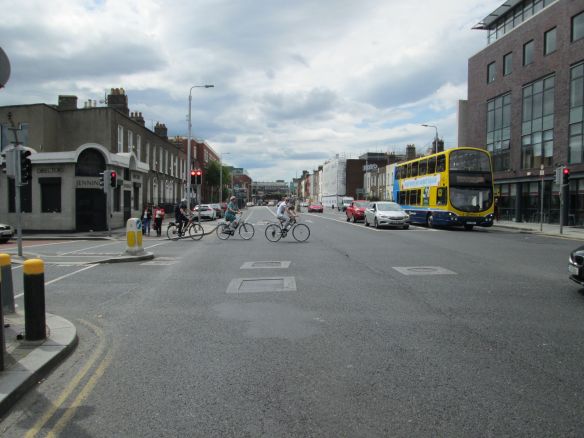
Crossing Amiens Street
When we’ve finished hanging around the Five Lamps we head north by northwest along Portland Row. The route picks up some of that ol’ Georgian charm, much tarnished now by urban grime and shifts in demographic fortune. At Summerhill, we intersect with the well-worn artery connecting the city centre with Ballybough, further out to the north. This is Poor Town in Irish. Some other names in the vicinity are more optimistic: Mountjoy, Summerhill. But the feeling of Poor Town is all pervasive.
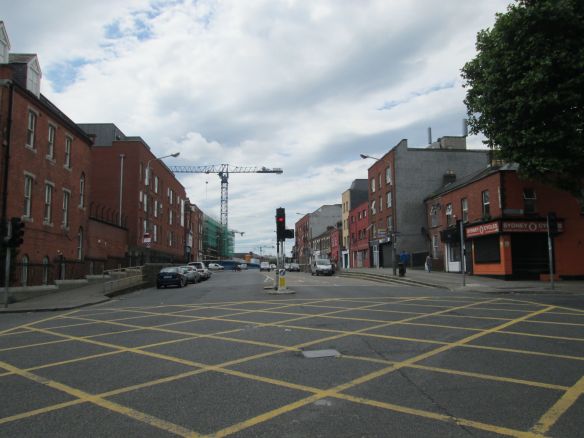
Summerhill
I recall sitting in a car in Ballybough back in the early nineties, waiting for a girl that worked with us. My companion says to me, apropos a dog balanced on three legs by a lamppost: “See that dog? That’s Tony Gregory’s brother’s dog.”
I’m working at Industrial etching on East Wall Road, smoking Players Navy Cut, sweaty and stubbled, jeans and skin stained with acid. Yet, if I were to scratch that mutt behind the ears, that would establish five degrees of separation between me and the apex of power. Me, the dog, Tony Gregory’s Brother, Tony Gregory and Taoiseach Charles J. Haughey. Tony was the eponymous focus of the Gregory deal in 1982, wherein, by guaranteeing support for Haughey’s Fianna Fail government, Ballybough would be guaranteed a tranche of funds. Hey, look at the place now!
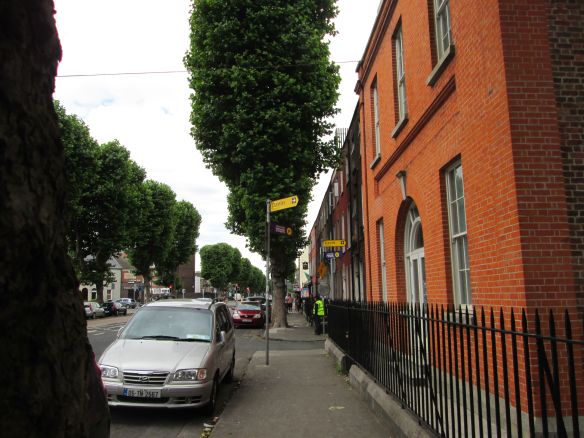 These are the approaches to Croke Park, headquarters of the Gaelic Athletic Association. The GAA, founded in 1884, fostered a notion of Gaelic sport as a distinct entity. The codification of team sports was a recent phenomenon. Gaelic Football codified the traditional line of football as played here. Fielding (catching) was a feature, a high degree of physicality was allowed along with limited ball carrying, though kicking remained paramount. There was no offside, resulting in an allover hectic game.
Hurling is akin to hockey, but more physical and expansive. The ball may be caught and carried and propelled aerially. The Scottish version, Shinty, is more earthbound but offers a slight international angle. Burly Australian Rules gives Gaelic Football an international outlet in Compromise Rules. Its success is debatable, but there are some good punch-ups so we won’t give up on it yet.
On match days approach roads become rivers of humanity in high flood. The huge stadium is masked by red brick houses. It’s an impressive confection when it reveals itself. Madeover at the turn of the century, it holds eighty two thousand and is the third largest sports stadium in Europe. All Ireland finals are hosted in September. The Dubs, at time of writing, have just won their third football title in a row. The Cats of Kilkenny have been lords of hurling for an age, though fading now. Galway are current champs.
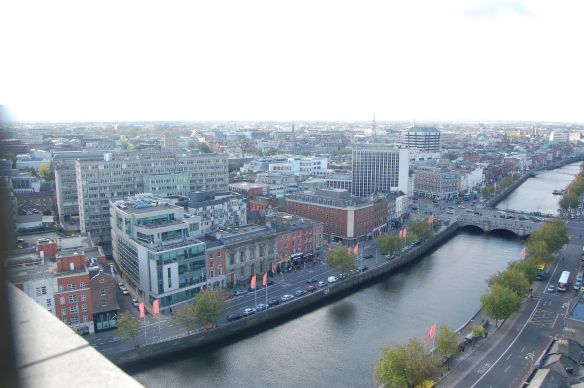
There are tours of the stadium, encompassing the history of the GAA and an impressive sky walk where Dublin is spread at your feet. The history is deeply entwined with the Nation’s. During the War of Independence, Croke Park was the setting for Bloody Sunday, November 1920. Following Michael Collins’s strike against Castle spies, the Cairo Gang, British Auxiliary forces and RIC attacked killing two players and twelve spectators including women and children. Another massacre almost fifty years later would also claim the title Bloody Sunday. The British Army killing of thirteen civilians in Derry in 1969 informed U2’s song. Bono’s intent is stringently non-violent though.
I can’t believe the news today
I can’t close my eyes and make it go away
How long, how long must we sing this song?
I’m more inclined to visit Croke Park for the music. I once walked all the way from Crumlin with several hundred to see Thin Lizzy play a free concert, footing the bill for Dickie Rock. I’ve swam the streets with the rivers of thousands to hear U2, the Red Hot Chili Peppers and Bruce Springsteen pound it out under floodlights and soaring stands.
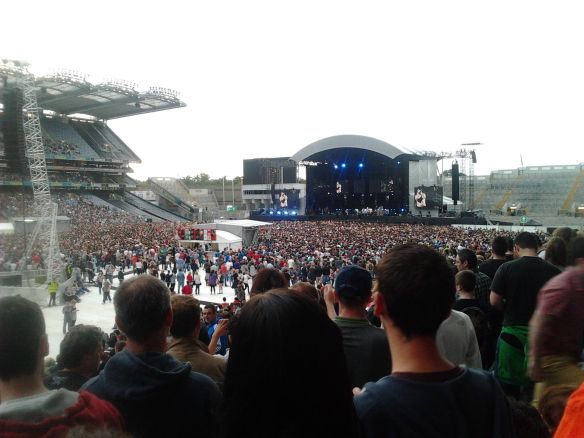
Red Hot Cilli Peppers at Croker
Soft spoken with a broken jaw
step outside but not to brawl
Autumn’s sweet we call it fall
I’ll make it to the moon if I have to crawl
Crossing Summerhill we step onto the North CIrcular Road proper. Despite the occasional rivers of people this is no paradise for winers and diners. Casting around, I notice the Brendan Behan Pub. Once the Sunset, scene of a notorious gangland murder, local family, the Gannons, have given it a once-over and a new name. No chance that Brendan ever popped into his eponymous pub, but it’s pretty certain he would have had it been there in his day. The Hogan Stand is further on, and the BigTree, at the junction of Dorset Street, is a renowned rumbustious meeting spot for Culchie and Jackeen alike.
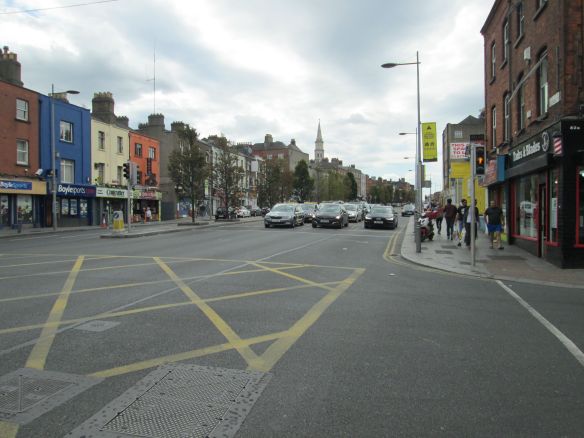
Crossing Dorset Street
Mountjoy gives its name to the surrounding area. You can see the edge of Mountjoy Square from the North Circular. Mountjoy is the only Georgian Square that is actually square. The land was developed in the late eighteenth century by Luke Gardiner, Viscount Mountjoy, a banker, developer and MP (all the things we so admire these days). When completed in around 1818, it was considered the acme of the new suburban style. The great and the good could escape the cramped conditions of the teeming medieval city, for life in a Rationalist paradise. Dublin’s urban development was at the cutting edge for the times: long straight boulevards, rectangular sylvan squares.
By the end of the nineteenth century the district had gone downmarket. Sean O’Casey drew heavily on the atmosphere of Mountjoy in his plays Juno and the Paycock and The Plough and the Stars.
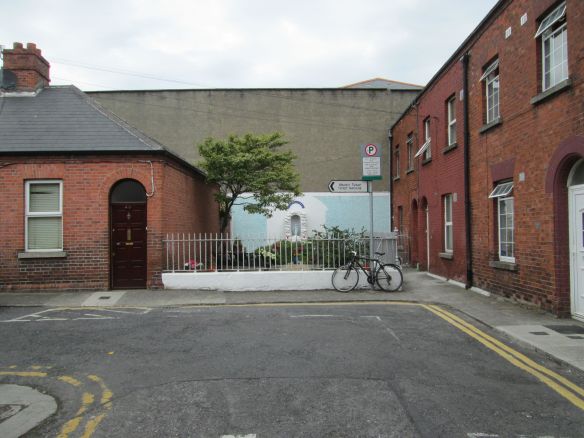
Benedict Gardens
By the twentieth century northside Georgian Dublin was in decline, the fashion for suburban development leeching the life out of the inner city. Mountjoy Square was half demolished by the nineteen sixties. The situation was halted and reversed as Dubliners acquired more appreciation of their architectural heritage. Thanks to the work of the Georgian Society, founded in 1966, and activists like David Norris, Ireland’s stateliest Homo himself, Georgian Dublin reasserted itself as a defining factor of the city. Although there is a danger this is becoming a little too precious, it is a vast improvement on the near bombsite landscape of Dublin’s sixties and seventies development.
A hungry feeling came o’er me stealing
and the mice were squealing
in my prison cell
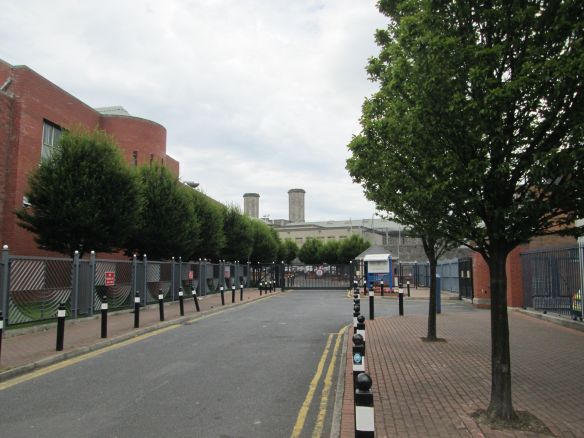
Mountjoy Prison is sandwiched between the North Circular and the Canal. Referred to by residents and potential clients with some irony as ‘The Joy’. Built in 1850, it originally accommodated prisoners bound for Van Dieman’s Land. Such had been the condition of Ireland in the Famine years that they might have been considered the lucky ones. Built in the style of Britain’s Pentonville, it became Ireland’s largest prison, adopting a bleak, isolationist regime. Forty six prisoners were exectued before the abolition of the death penalty. Kevin Barry is perhaps the best known. He was hanged in 1920, aged eighteen, during the Irish War of Independence.
And the Auld Triangle
Goes jingle jangle
All along the banks of the Royal Canal
Famous residents include Brendan Behan, who was born nearby in 1923 and incarcerated during the Troubles as an IRA member. He was released in 1946. His play, The Quare Fellow, from 1954, is set in the prison, taking place on the day leading up to the execution of an inmate. It evokes a strong stance against capital punishment. The last hanging in Ireland happened the same year. Behan himself was overfond of the Drop and his waxing artistic success was offset by declining health. He died aged only forty one in 1964, the year capital punishment was abolished. Still, his ghost can be heard whistling softly hereabouts.
Scar tissue that I wish you saw
sarcastic Mister know it all
close your eyes and I’ll kiss you cause
With the birds I’ll share this lonely view
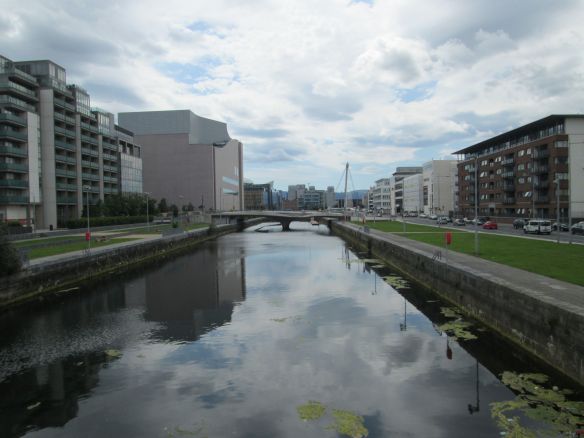 Heading north on Guild Street, the Royal Canal to our right seeps towards the Liffey. A new city, linear and rational is being stamped over the old North Wall docklands. That’s the feeling crossing Mayor Street where the Luas Red Line takes passengers arrow straight from Connolly Station to the Point Village. The Point Depot at the eastern end of the Docks is the major venue for indoor concerts. I saw Bob Dylan there some years back. A man with a hat playing piano. I could have spent the evening out in the real world, where the Liffey melts into the sea. I could have sat contentedly and watched the river flow, the memory of Bob’s music stronger in my blood.
  At Ferryman’s Crossing, a rusty reminder of the old days rises in the form of a decrepit crane. The old docklands peep through, first the palimpsest, then the ancient script itself. It’s still being written. Often the same old story. Sheriff Street runs parallel to the quays but remains remote from the modern narrative there. The area has a rough inner city reputation.
  The Church of St. Laurence O’Toole marks the start of Seville Place. It was built in the Famine years and opened in 1850. Along Seville Place, the grandly named First to Fourth Avenues suggest New York. In fact, these are short, cottage lined cul de sacs. Under the railway bridge we reach Amiens Street.
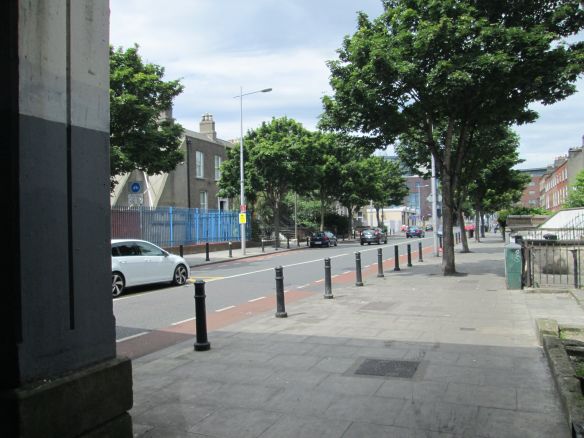 This street provides Dublin’s main transport and communications hubs. Connolly Station, topped by an ornate Italianate tower was opened in 1944 as Dublin station, later named Amiens Street. By 1853 it served the rail link to Belfast. Madigan’s Pub, on the main concourse, was a Mecca for thirsty travelers on long, dry, Good Friday. It is the most central of all bonafide pubs. You would need a train ticket to deserve a pint, of course; a small price to pay. Such quaint customs are now consigned to the slop tray of history, as Ireland’s Good Friday prohibition has been lifted.
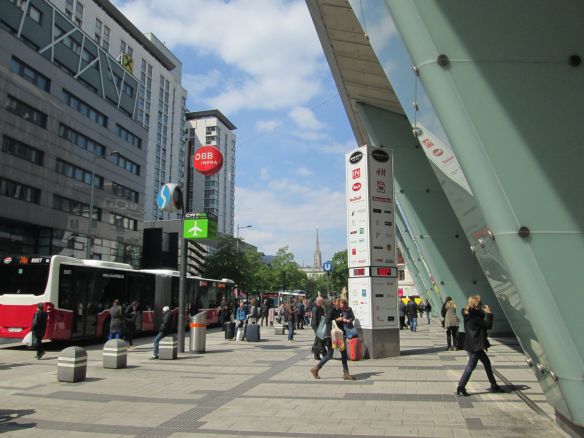
 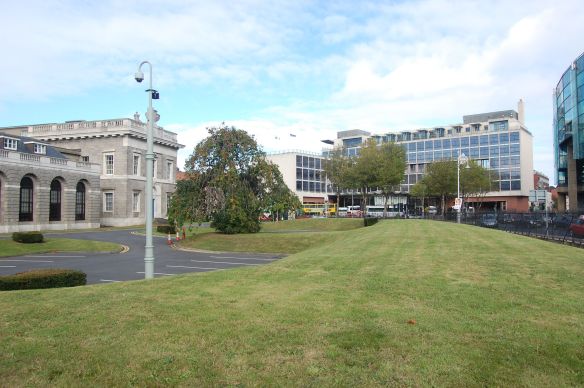 A little further off track, Bus Aras, nearer the river, was an early modernist pile. Designed by Michael Scott and completed in 1955, from here you can take a bus to anywhere in Ireland, or all the way to London. Bus Aras and Connolly combine to form a startling urban portal, full of the contrasts of history and architecture. At just the right spot, the panorama includes Victorian Connolly Station, Georgian Custom House, the International Financial Services Centre and the Ulster Bank HQ across the river.
 At more civilised hours we could repair to Cleary’s pub, beneath the bridge, shuddering under the weight of passing trains. Old style boozer of dark wood, sparse light on glinting glasses being raised at the long bar. One more toast before boarding the Gravy Train. Last wet my whistle here with Davin, on our way with to the Red Hot Chilli Peppers at Croke Park farther north.
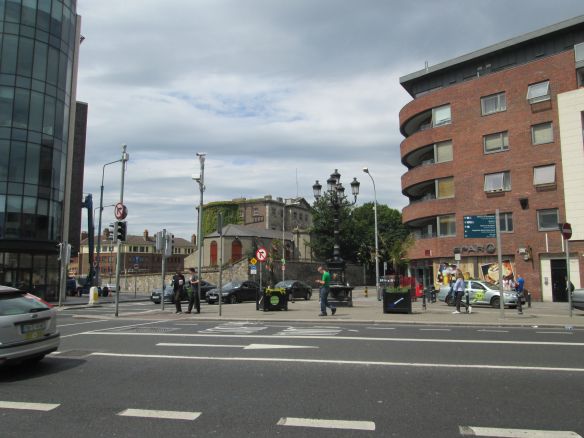 At the junction of Seville Place and Amiens Street, we’re back on track. Heading North by Northwest is Portland Row, leading to the North Circular proper. Amidst the grimy urban bustle sits the landmark of the Five Lamps, delicate and redolent of a bygone age. It sits on a junction of five streets. Again weirdly suggestive of Old New York’s Five Points, notorious focus for Irish gangs in the mid nineteenth century. The eponymous, though fictional, Dublin gang appear in Bob Geldof’s Rat Trap: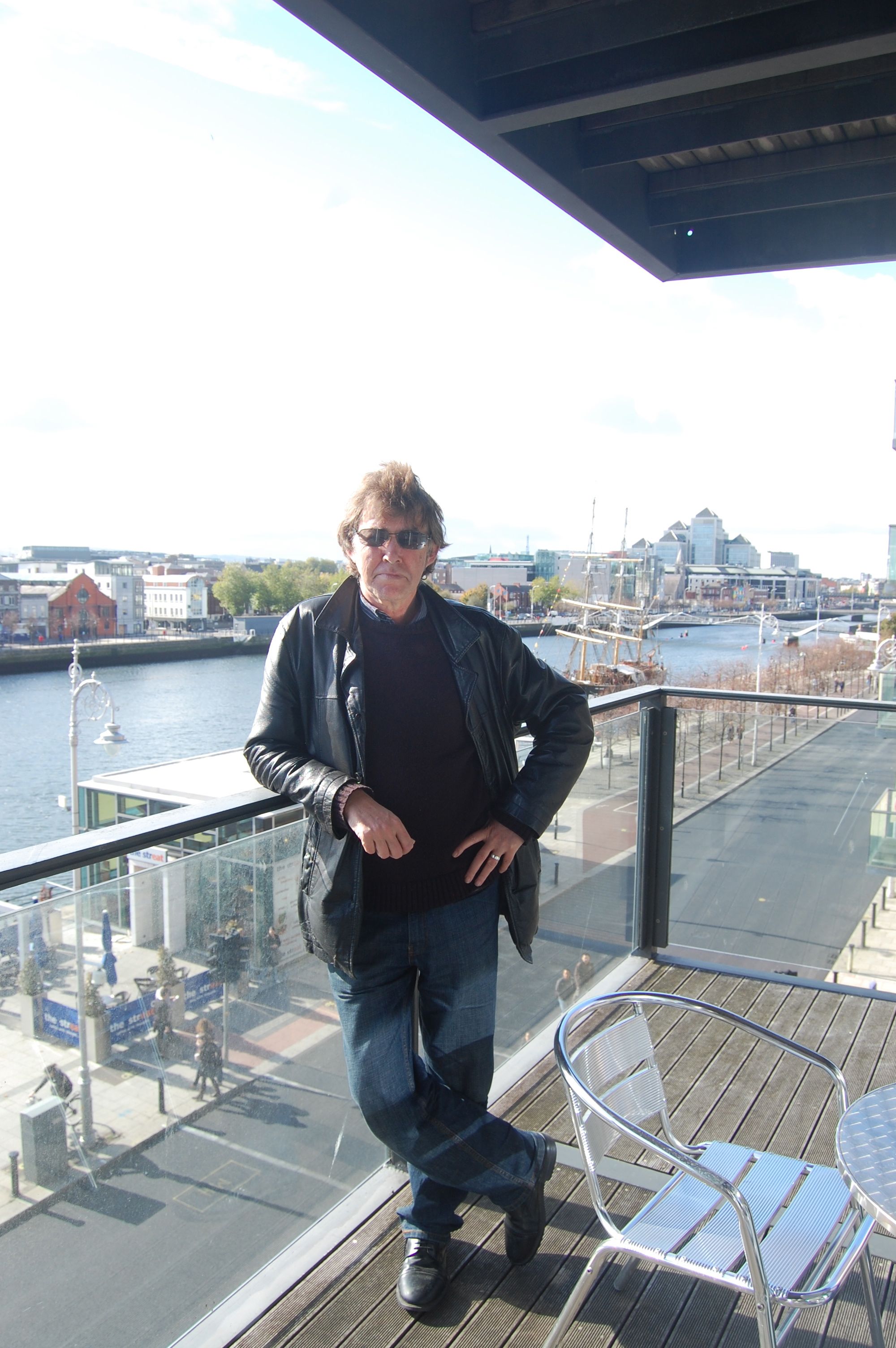

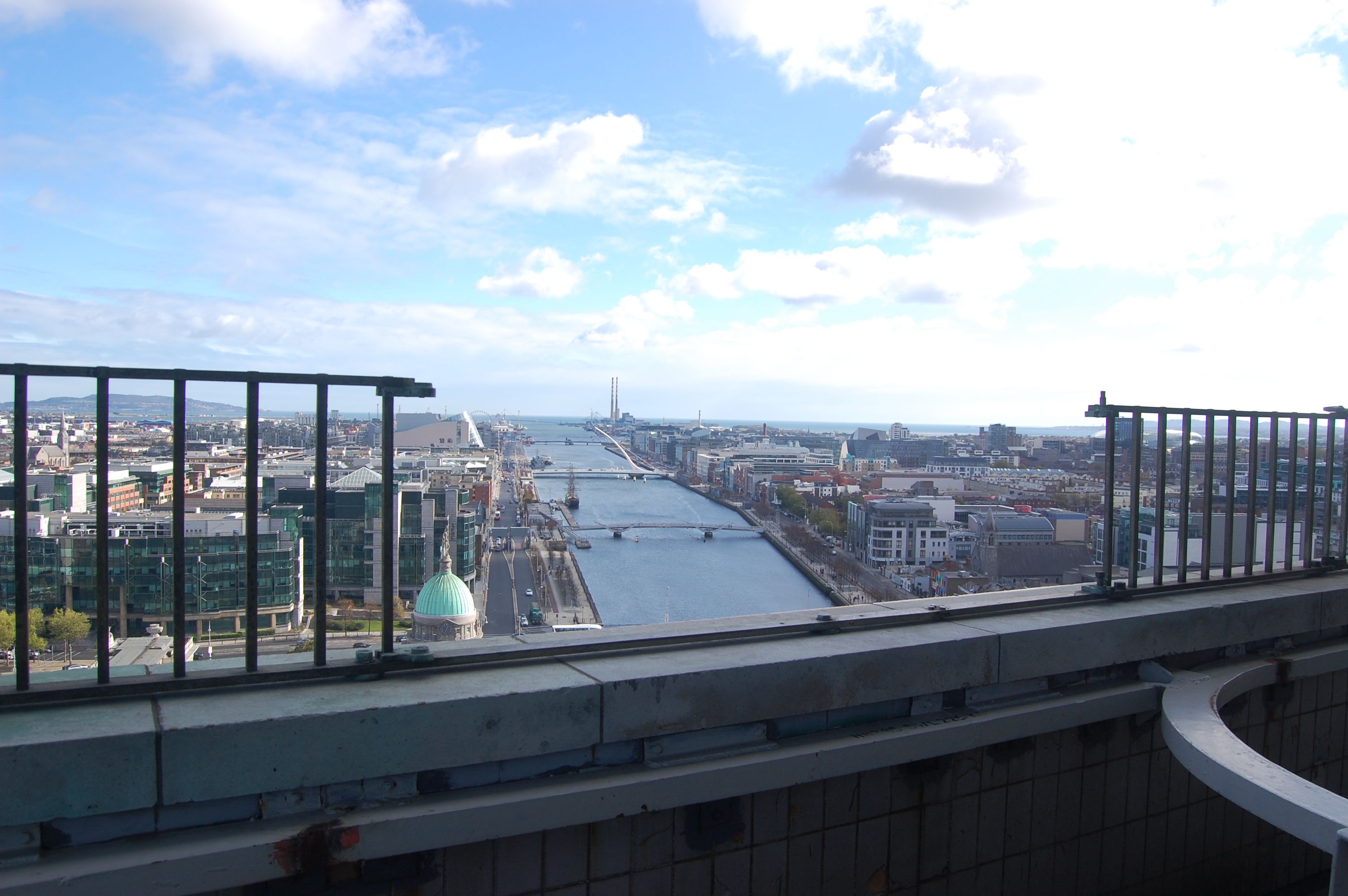
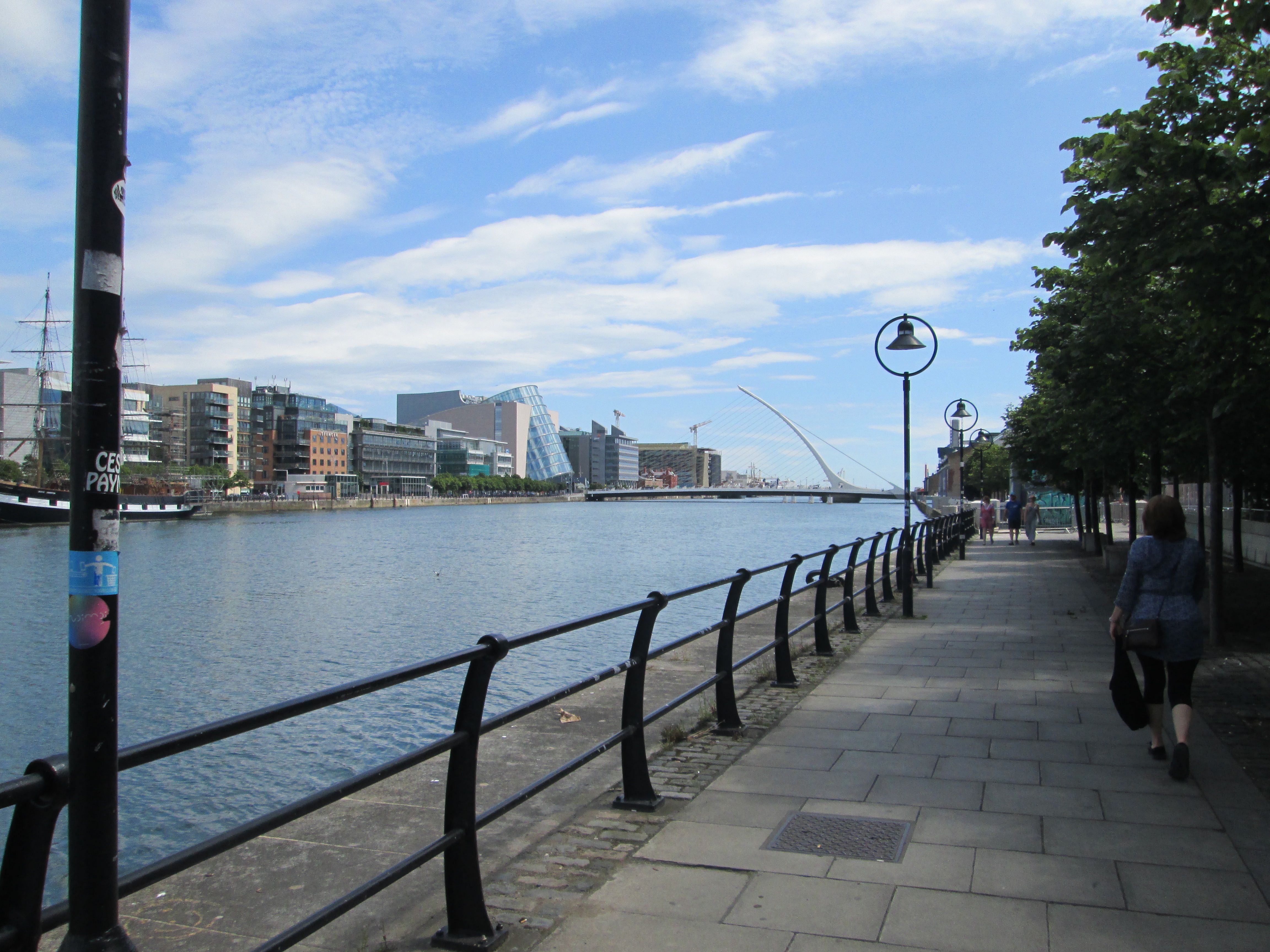



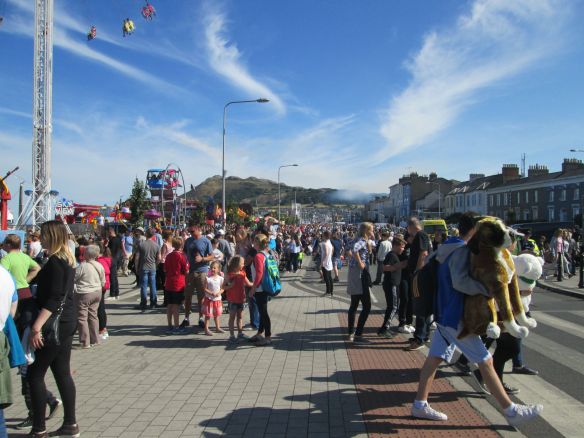
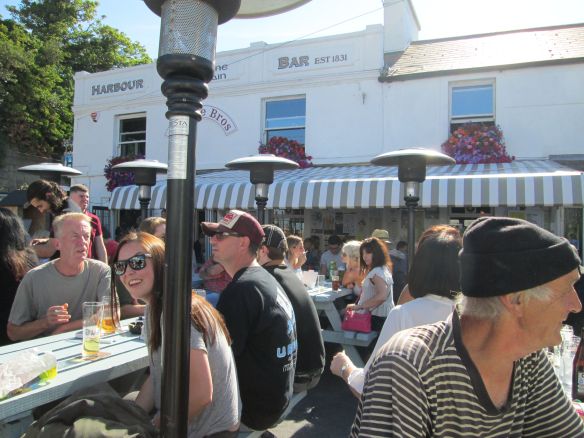
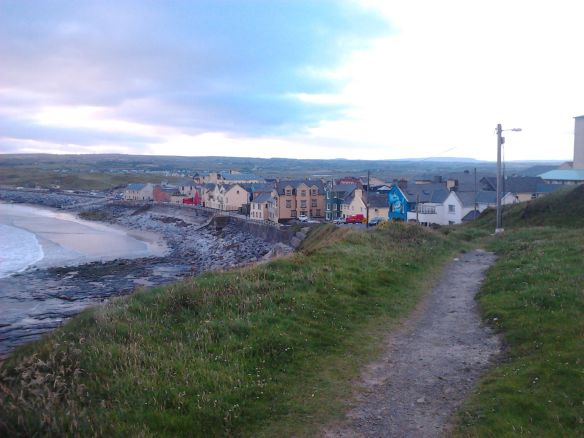 It takes just over three hours from Bray to Lahinch, passing from cool drizzle into warm sunshine. It is a long way from Clare to here. Out to the wild, windy west, to stop at the edge of the world, the Atlantic stretching before us forever.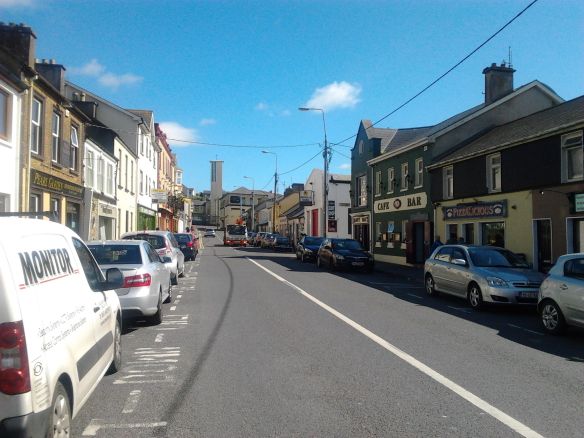
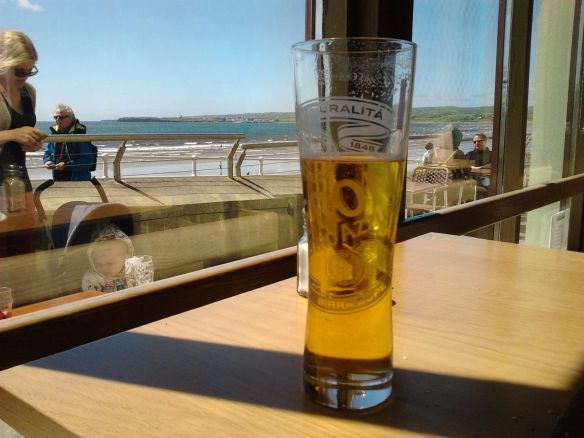
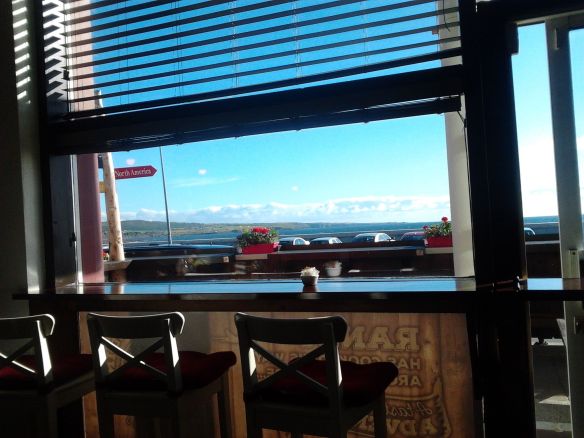
 In Danny Mac’s Cafe Bar, we’re drinking to old times. Man, wherever you go, they pull a fine pint down here. There’s something of a cafe ambience, alright. They do a Legendary Irish breakfast here too. I’m not seeing much night out here. The sun might go down in nearby Galway Bay, but it won’t be long coming up again.
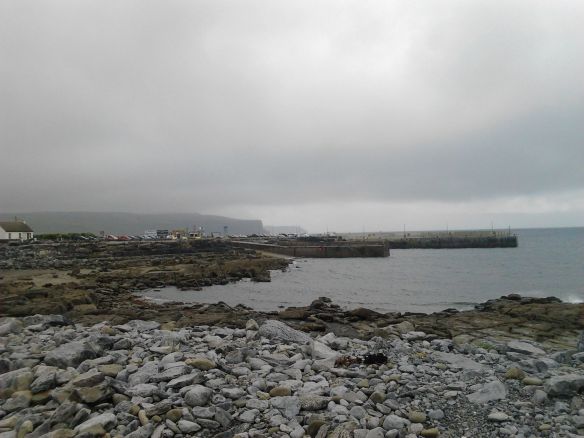

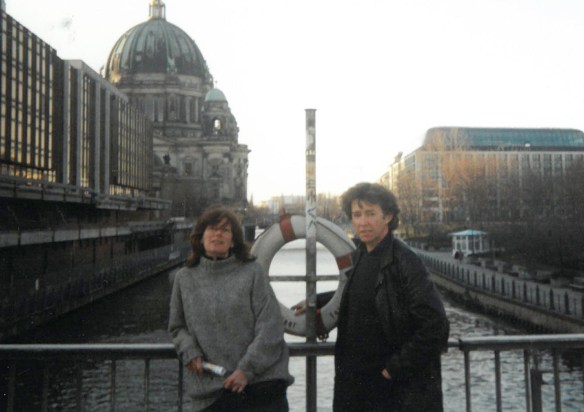

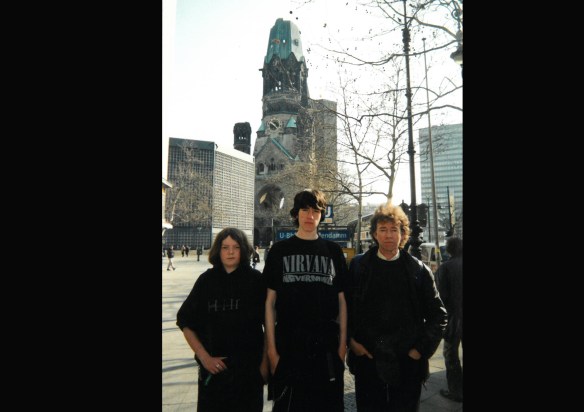
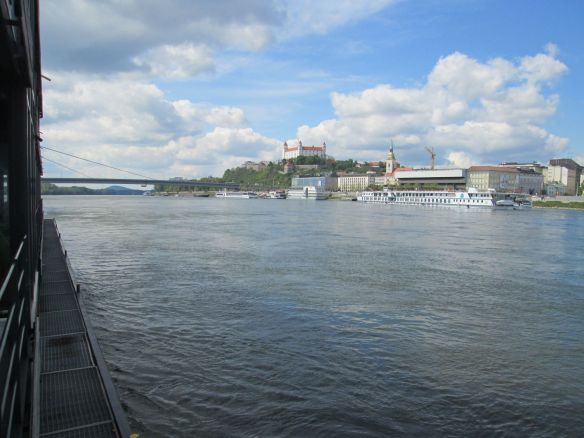

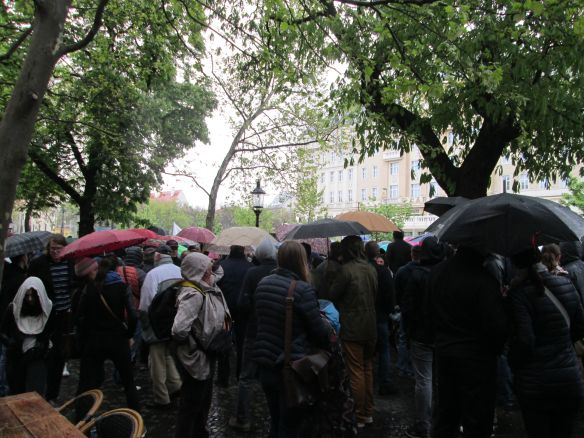
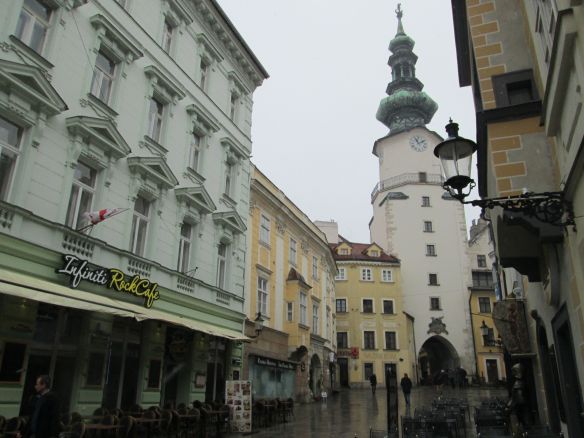
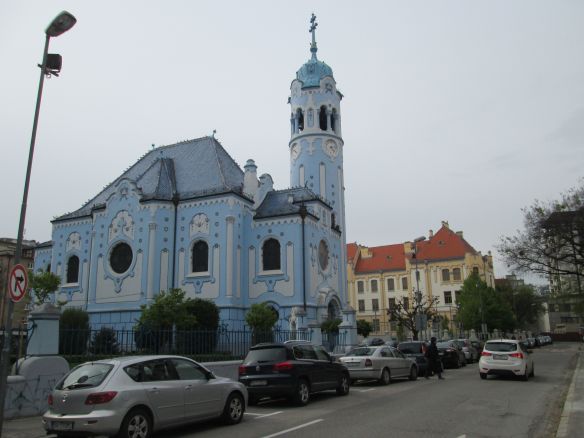
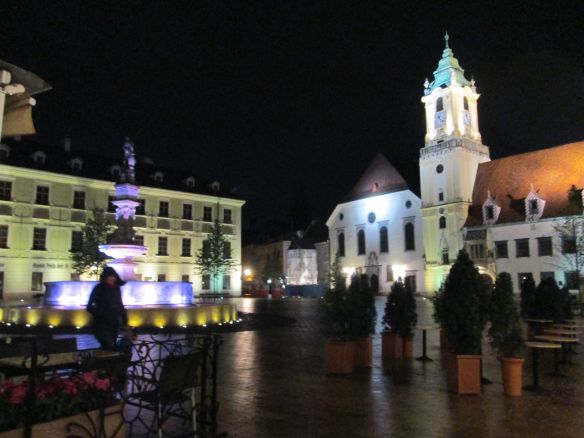
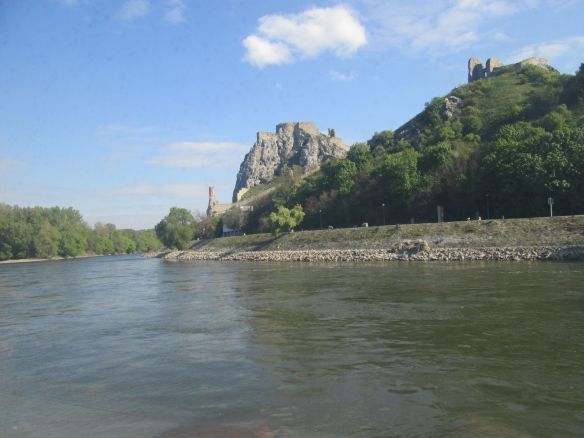
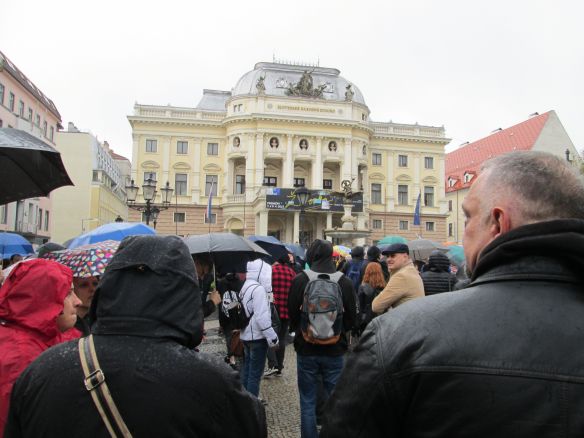 The Danube is the defining river of Western civilisation. The border of empire, dividing Roman from Celt and Goth. Bulwark against the Barbarian, until they crossed in their tens of thousands and ushered in a new age. Highway of Central Europe, carrying art and armies, heroes and villains, east and west. Bratislava was once the focus of Empire, the capital of Hungary from 1536 to 1783. Otherwise, something of a provincial outpost, sandwiched between Budapest, mighty capital of the Magyars, and the Hapsburg megacity Vienna. With a population of half a million, it’s sizeable enough, flowering further in Summer with a tourist influx, the Old Town Square thronged with al fresco diners, or loungers by the fountain. But mid-April is unseasonably cold.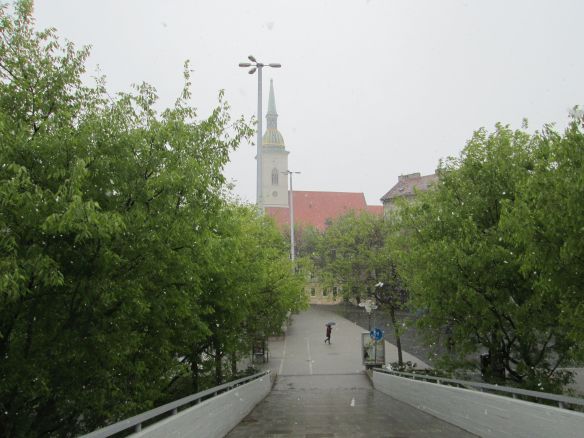
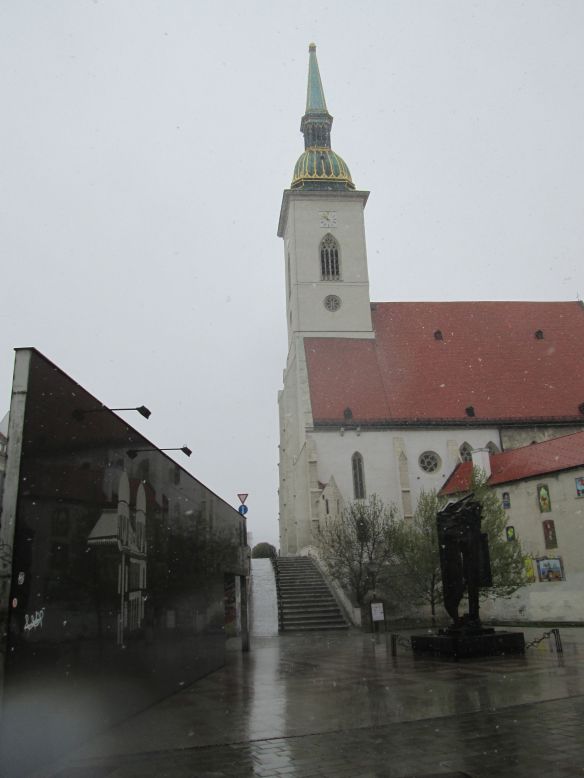
 Further on, a Scottish Bar: The Loch Ness. A rather nebulous concept, I’d have thought. Service and style are more rudimentary, but it’s cosy and quiet. Mind you, the pint costs nearly three euro. Exactly three euro, since I didn’t receive my ten cent back. Half Scottish myself, I blend.
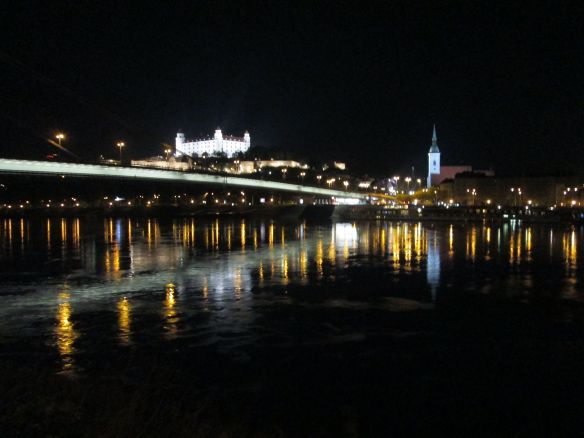
 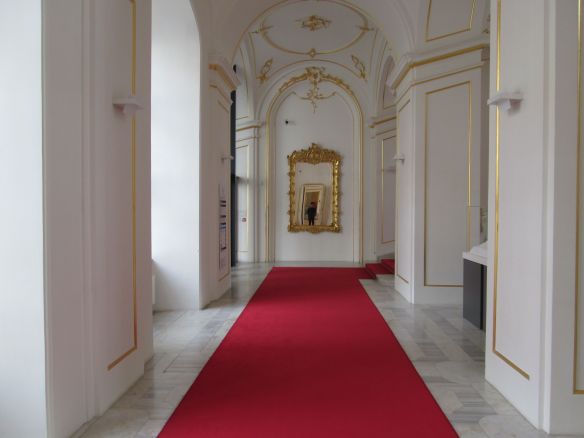 Cold, clear weather on Thursday presents the opportunity to explore Bratislava Castle. High above the city, it dates to the eleventh century, becoming a baroque palace in the reign of Maria Theresa. Extensively renovated in the fifties. Impressive, stark and forbidding, it dares entry.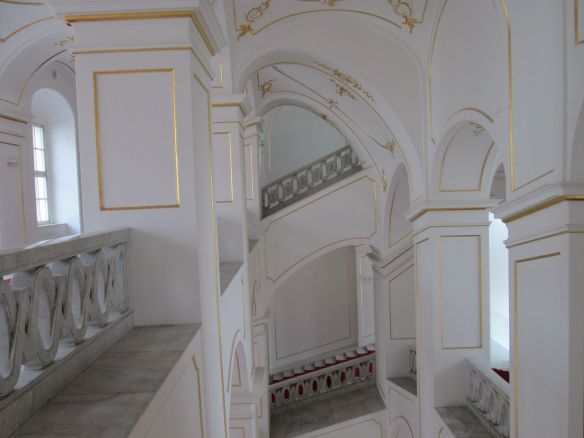


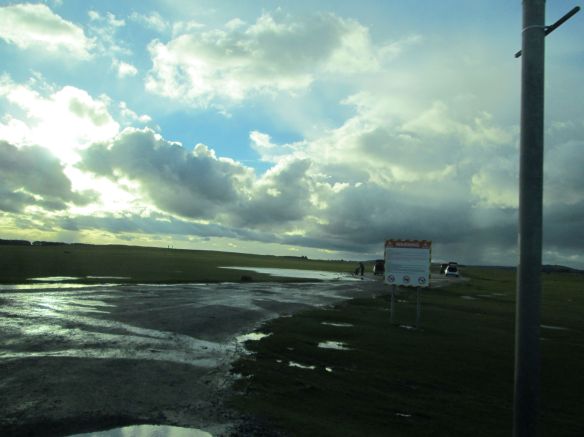
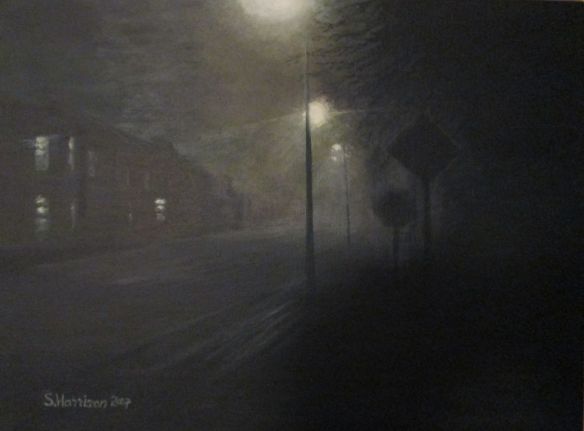
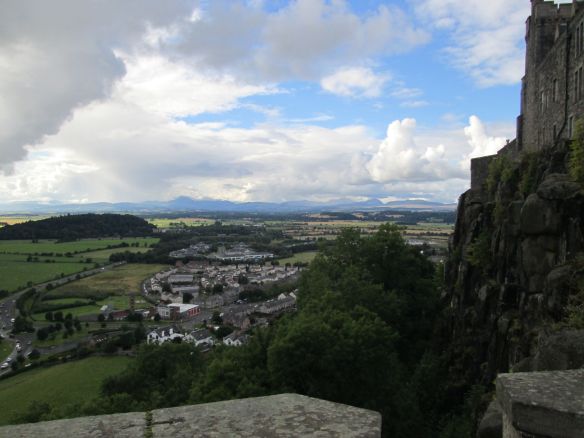

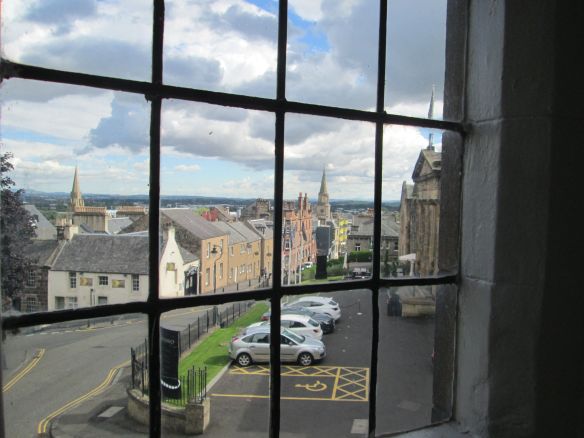
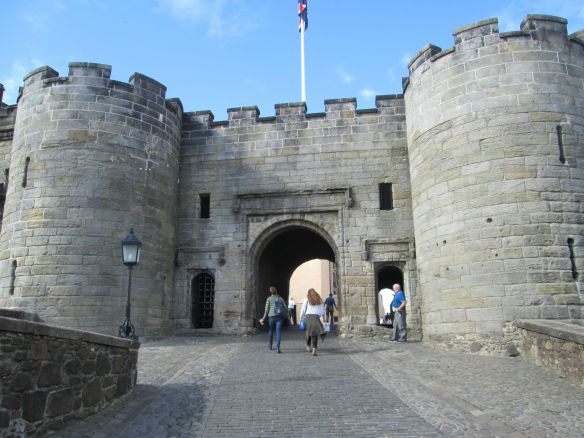
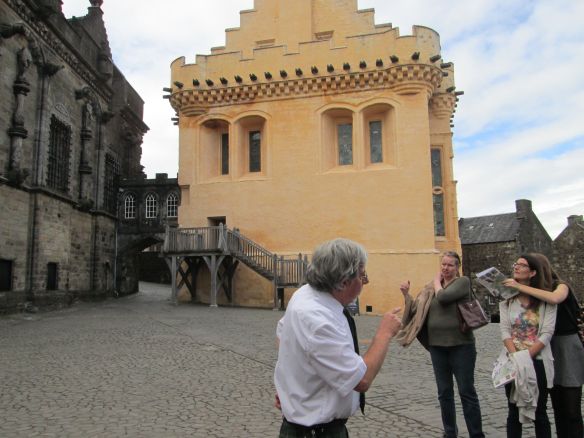
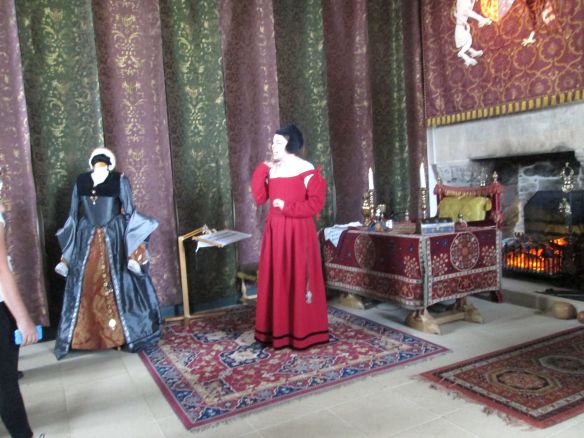
 Time to close our evening in more mundane pursuits. Stirling is lively at night, without much by way of airs and graces, but plenty of good places to eat and drink. All you can eat at Chung’s Chinese is enough by way of temptation – the one thing I can’t resist. Return to the Hotel for a quiet beer in the bar. High windows here as in room. Schoolhouse rules apply. The ambience is pleasant and in solitude we can savour all we’ve experienced on this Scottish tour. It seems like and age, and a wee spark of time. The last day dawns damp and grey. We finish as we started on our first in Glasgow, in Wetherspoons for the best Scottish breakfast in, well, in Scotland.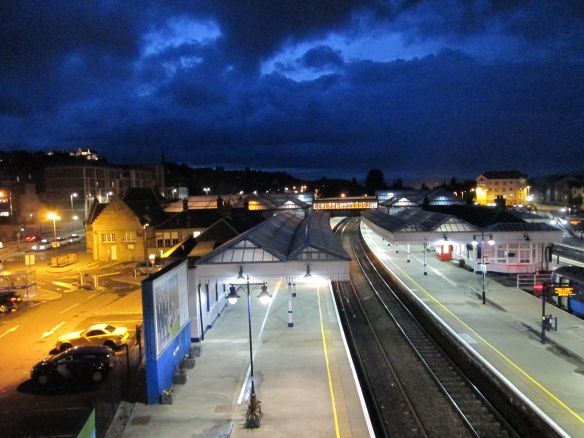
 xxharrison