Kilkenny

KKcanice1

Kilkenny, with a population of twenty six thousand, is Ireland’s smallest city, but packs enough history and spectacle to compensate. St Canice established the name in the 6th century. His monastery was built on a rise by the Breagagh River, near its confluence with the River Nore. By the Norman invasion of the twelfth century, this had become a significant settlement. Kilkenny was granted its city charter by King James I (VI of Scotland) in 1609. The term city is vexed; it has not been administered as a city under local government law since the mid nineteenth century. Locals are touchy on the subject, however, so city it is.

KK Lib

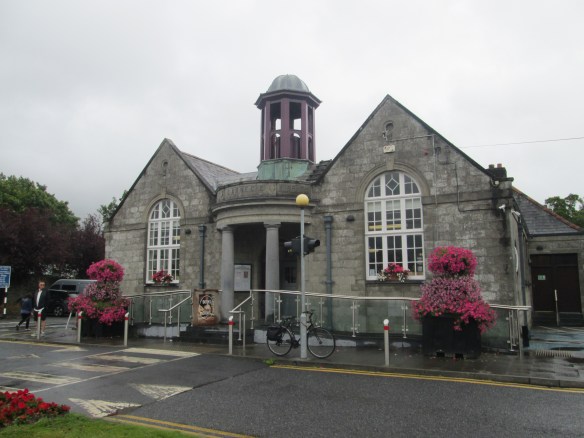
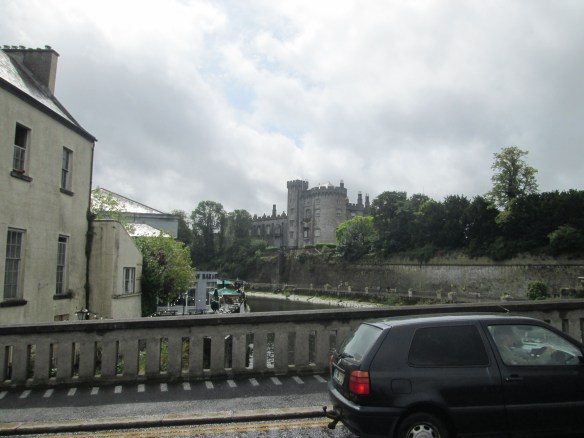
We park on John’s Quay, on the eastern bank of the River Nore, near the library, a quaint compromise of the grand and the dainty. It’s a short walk up the river banks before crossing John’s Bridge, with views of mighty Kilkenny Castle downstream.

In Kilkenny, it is reported

on marble stones there as black as ink,

with gold and silver I will support her,

but i’ll say no more now, till I’ve had a drink.

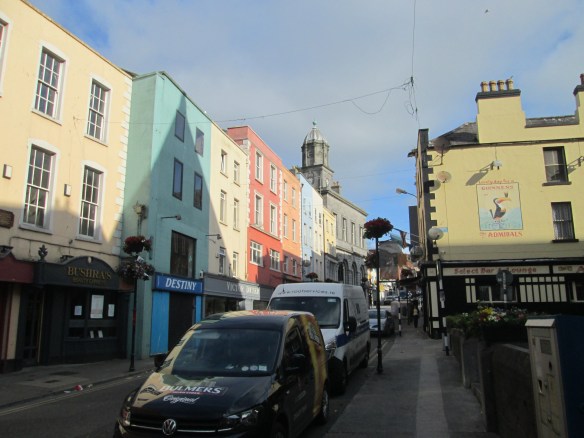
Across the river to the right is Tynan’s Bridge House, one of my favourite watering holes here. Established in 1703 as a grocers and pharmacy, it has concentrated on the licensed trade for the last hundred years. Retaining much of the traditional store paraphernalia, Tynan’s is a richly atmospheric time capsule. In Kilkenny, there’re so many fine pubs to choose from. Just enjoy.

KKcats

More than beer, even more than history, Kilkenny prides itself on its prowess in the most Irish of sports: hurling. Played by wild, skilful men with curved wooden sticks, at its best by men in black and amber striped shirts, a statue to the art of hurling stands at Canal Square nearby. The sculpture by Barry Wrafter, a Clareman, was unveiled by Brian Cody, Kilkenny hurling manager, in 2016.

KK almshs

Rose Inn Street curves up from the river, passing the ancient gable fronted Shee Almshouse. Built in 1582 by powerful merchant, Richard Shee, to accommodate twelve poor people of the city, it operated as an almshouse until the eighteen thirties. It became a hospital, and later a shop. It is now the tourist office for the city.

Topping the rise, the vista opens onto a central square of sorts. The Parade forms the main esplanade leading to the Castle. The original castle was built by Richard De Clare, or Strongbow, in 1173, on the site of the kings of Ossory. The Fitzpatricks. despite the Fitz, were Gaels, not Normans. Fitz was a later affectation, their original name being Mac Giolla Phadraig, servants of St Patrick. The first stone castle was built in 1260, and three of the original towers survive.

KKcastl

The Butler family took control in 1391. James Butler, first Duke of Ormond, inherited the Ormond title in 1634 when the senior line became extinct. He was a Protestant, trumping Catholic claimants. The Duke commanded Royalist forces in Ireland during the Civil Wars of the mid seventeenth century. Butler was caught between Cromwell’s forces on one side, and the Catholic Confederates on the other. These included Butler’s Catholic kinsmen, with whom he would eventually find common cause in opposition to Cromwell. 

Cromwell would prevail. He besieged Kilkenny, the Confederate capital, his forces destroying the east wall and north eastern tower of the Castle. Butler, reinstated after the Restoration, became Lord Lieutenant of Ireland. He was responsible for the modernisation of Dublin, initiating the construction of the Liffey Quays. He remodelled Kilkenny Castle as we see it today. Cromwell’s own remodelling was thus adapted and dismissed, the structure no longer thought of as a fortress but reimagined as a grand chateau.

KKtholsel

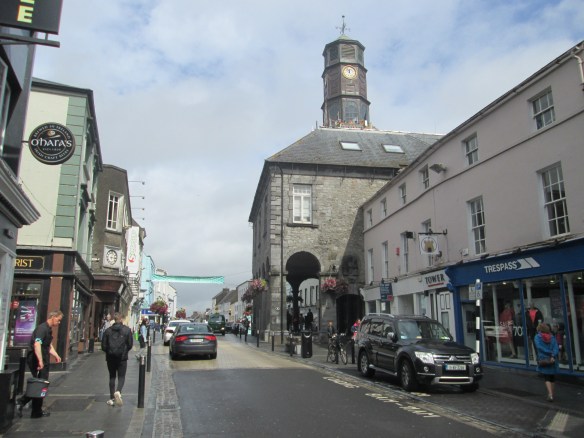
High Street is the main drag. Bustling and hectic, it is visually distinguished by the intrusion of the Tholsel into the thoroughfare. Built in 1761 as a tollhouse, it later became the courthouse. The distinctive arcade straddles the pavement, providing a cover for buskers and traders, lending a European ambience to the place. It functions today as the City Hall.

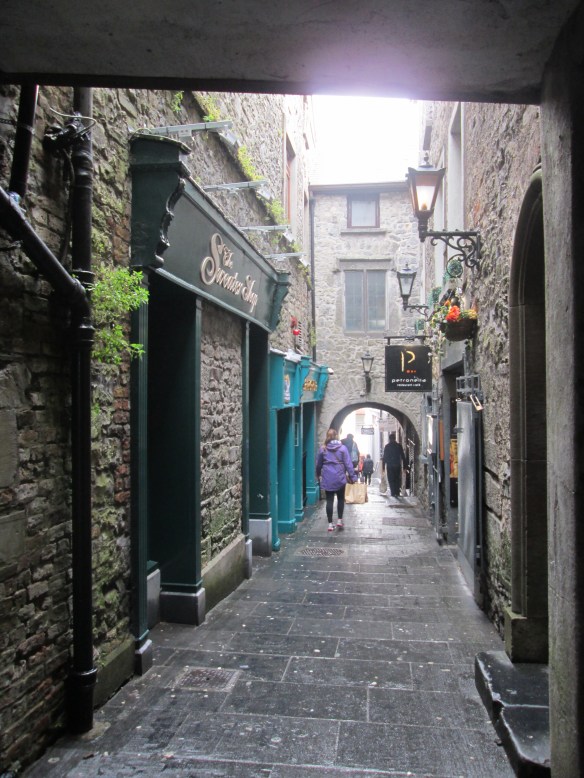
Behind the Tholsel, St Mary’s Lane provides a detour, encircling St Mary’s Church with its medieval museum. We pick our way through to St Kieran’s Street, a narrow laneway lined with trendy boutiques and bistros. Time for a caffeine hit and there’s a good sheltered outdoor perch at the Yard Cafe.

KKlane

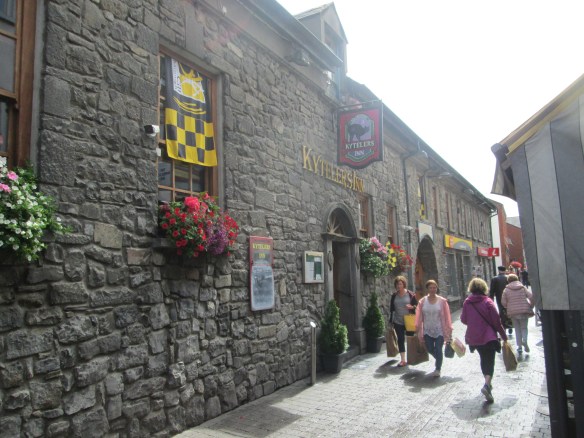
Opposite the Yard is Kyteler’s Inn, with a colourful history dating back to the fourteenth century. Its original proprietor was Alice Kyteler, who amassed a fortune and a foursome of deceased husbands. To misquote Wilde: to lose one husband may be regarded as a misfortune, to lose four looks like carelessness.

Her first husband was the charmingly named William Outlaw. She then married Adam le Blund, a moneylender, and with him was accused of killing Bill. The case failed, though the reputation stuck. Not that it discouraged hubby number three, Richard Valle, a landowner, nor John Poer, who filled the role of number four.for eight years. It was he who expressed the suspicion that he was being poisoned and on his death in 1324 progeny of the Dead Husbands’ Club filed proceedings against Alice for murder and witchcraft. In this they were enthusiastically supported by Richard De Ledrede, Bishop of Ossory.

Ledrede, as the name implies, was no barrel of laughs. In the Red Book of Ossory he advised his priests that: their throats and mouths, sanctified to God, might not be polluted with theatrical, indecent and secular songs. He lived to be a centenarian, Best known through his connection with trials for heresy and witchcraft.

Alice was not without connections. Arnold le Poer, Seneschal of Kilkenny, imprisoned the bishop thus hampering the case. Then, the Lord Chancellor Roger Outlaw, her brother in law, shielded her from Ledrede and she was spirited away.

Her servant Petronella De Meath was less fortunate. She was burned at the stake. Under torture, she claimed to have witnessed Alice have intercourse with a demon, Robin Artisson, following an obscene ritual. WB Yeats alludes to this in his poem, Nineteen Hundred and Nineteen.

Under the shadow of stupid straw pale locks

that insolent fiend Robert Artisson,

to whom the love lorn Lady Kyteler brought

bronzed peacock feathers, red combs of her cocks.


KKkytl

St Kieran’s Street merges with High Street to become Parliament Street. Nearby, the Smithwick’s Experience is the home of Smithwick’s Ale, whose red beer was my first tipple. Take the full tour, or sample the product in a nearby bar. The Marble City Bar and Tearooms makes an appropriate choice. Kilkenny once rejoiced in an annual beer festival and while that’s long gone, the aroma lingers on.

KKcanice2

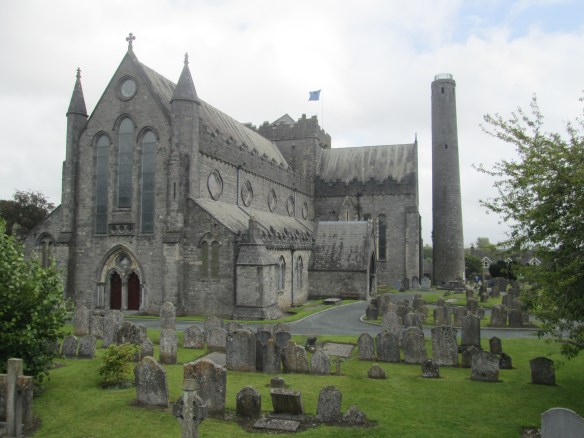
We cross the palimpsest of the old city walls and into the shadow of St Canice’s Cathedral, a thirteenth century gothic fortress of god, with high crenellated walls and a stout central tower resting on black marble columns. All this augmented by a 9th century round tower, a hundred feet tall. The top is accessible by steps, one of only three such in Ireland. We stay earthbound, amongst the graves and greenery at its base, our eyes drawn heavenward.

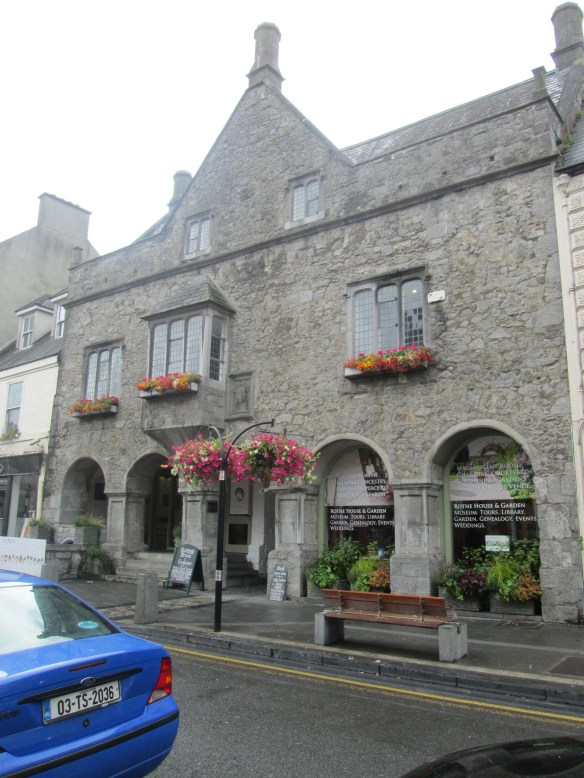
Back in the real world, we zig zag our descent to the Nore. Another ancient landmark, Rothe House, was built in the English Renaissance style by merchant John Rothe Fitz-piers, between 1595 and 1610. It consists of three houses with the city walls forming part of their curtilage. The facade features a recessed arcade and a high gabled central bay. Today it houses a museum.

KKRothe

There’s time for a coffee and a snack before the drive home. We find Kafe Katz as the rains come down. The atmosphere is sublime. Here in Kilkenny, it’s raining cats and dogs.

Well I’m drunk today, I am seldom sober,

A handsome rover from town to town.

Ah but i’m sick now, my days are numbered,

Come all ye young men and lay me down.

The traditional song, Carrickfergus, which mostly concerns Kilkenny, comes to us via Peter O’Toole and Dominic Behan. Bryan Ferry supplies a favourite version on his album: The Bride Stripped Bare.


By her bachelors even?

Drogheda

IMG_4564

Drogheda guards the mouth of the Boyne, just thirty miles north of Dublin city centre. With a population of forty thousand it is Ireland’s largest town, the sixth largest urban centre after the major cities. It is one of Ireland’s most ancient towns. Although myth persists that it developed in Celtic times, there is no solid evidence of this. Nor, unlike other large settlements like Dublin and Waterford, were the Danes prominent. It fell to their cousins the Normans to establish the place.

In Ireland’s ancient east, the Boyne valley has long been a crucial axis. Newgrange is situated just five miles to the west, indicating that the area was well settled by neolithic times, c. 3000BC. The hinterland of County Meath terminates at this coastal appendage. Meath in Gaelic denotes the middle, and this was the centre of Celtic power radiating from Tara. This centrality formed a constant thread in much of the tapestry of Irish history. 

We drive in early of a morning from Dublin airport, under a polished abalone sky. We’re taking the coastal route, via the growing conurbation of Laytown – Bettystown – Mornington.  This is coastal County Meath, an area with a whiff of the ancient art of seaside holidays. The behemoth of the Butlin’s holiday camp at Mosney is nearby. Once the focal point for Irish families relentless pursuit of fun, it is now a centre for asylum seekers.

I am just a poor boy though my story’s seldom told

I have squandered my resistance for a pocketful of mumbles 

such are promises

Drogbridge

A sharp turn at the mouth of the River Boyne takes us barrelling towards Drogheda. The railway viaduct dominates the scene. Designed by Irish engineer, Sir John Benjamin McNeill, using radical new techniques in its construction in1853, on its completion it was regarded as something of an engineering wonder. It is a hundred feet high with twelve soaring stone arches on the southern bank, and three on the northern, linked by three iron truss spans. Prior to completion, passengers on the Dublin Belfast line were required to hike through Drogheda to make their connection.

Drogship2

In the shadow of the southern arches, we pause at Ship Street, a quaint terrace of nineteenth century industrial houses at right angles to the river. All quiet at this hour, but just as obviously occupied. There’s a homely scattering of toys and street furniture, paraphernalia waiting for another day. A rich atmosphere of story and history pervades, emitting its own rugged urban charm.

Drogmlmt

We find a convenient parking space on South Quay. The old town and County Louth lie across the river. Along the once green, grassy slopes of the Boyne, the modern town pushes through. The fording point is dominated by an ancient defense. The motte and bailey castle, Millmount Fort, was built by Hugh De Lacy, the Norman Lord of Meath in 1189 atop a large mound on the southern bank. It has featured in Cromwell’s siege of 1649 and during the Irish Civil War of the 1922. Cromwell’s sacking of the town is one of the most traumatic events in Irish history. Cromwell decimated the garrison but also massacred hundreds of citizens, especially Catholics, in what remains a serious stain on his reputation. Today, Millmount is crowned with a Martello Tower, a link in the coastal defence chain from the Napoleonic Wars. Its appearance means locals oft refer to it as the Cup and Saucer,

DrogShopst

It’s early morning as we wend our way uptown from South Quay. There’s a beguiling mix of smalltown and bigtown, as morning deliverymen trade banter. We are included without demur. I see you’re a visitor, says one. Camera gave it away, did it? People here don’t seem shy of interaction. Topping the rise of Shop Street, another cup and saucer suggests itself with the aromatic beckoning of coffee, courtesy of Cafe Ariosa. We sit at slanted pavement tables on St Laurence Street and charge our batteries on weak sun and strong caffeine.

Drogstpete

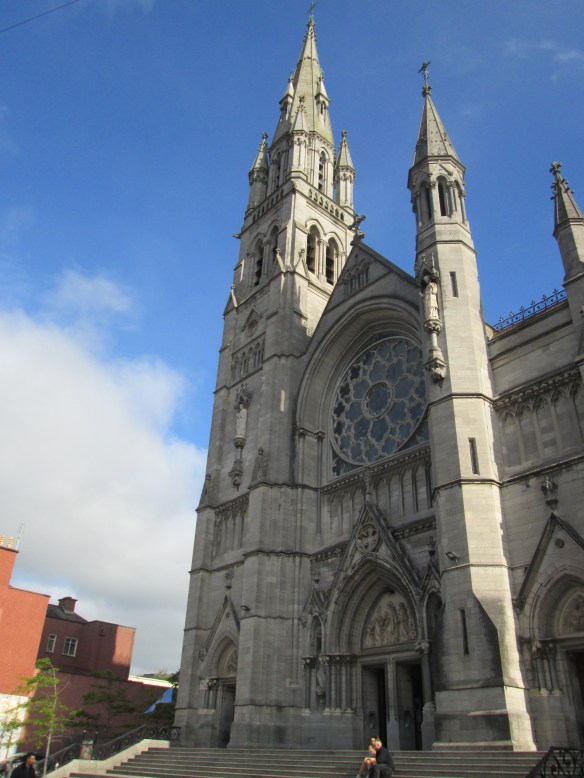
St Peter’s RC church is the towering feature on West Street, which could be described as the town’s Main Street. Designed by J O’Neill and WH Byrne in the French Gothic Revival Style in 1884, it spears the heavens with its dazzling spire. An earlier church of 1793, designed by Francis Johnson, architect of Dublin’s GPO, is incorporated into the new church. St. Peter’s is a renowned repository of relics. It boasts a relic of the True Cross, gifted by Ghent Cathedral on account of their shared connection with Saint Oliver Plunkett. St Peter’s is famously where one can view the head of the Saint. 

Drogtrux

Plunkett was the bishop of Armagh and Primate of Ireland, beatified in 1920 and canonised in 1975, the first Irish saint for seven centuries. He was born in 1625 in Loughcrew, that most ancient of spiritual sites in Meath. In 1681 Plunkett was implicated in intrigue following the Popish Plot of Titus Oats. Attempts to try him for treason in Ireland collapsed and the authorities removed him to England to expedite conviction. Although King Charles II knew him to be innocent, he dared not intervene, out of concern for his own head, one supposes. The accusers had their way, and Plunkett became the last Catholic martyr in England, on his execution at Tyburn in 1681. His remains were exumed and moved to Germany, with the head first taken to Rome , on to Armagh and then to Drogheda in 1921, where it is housed in an ornate shrine at St Peter’s.

Droghead

By implication, West Street is mirrored by East Street across town. Now called St Laurence Street, it culminates in the former East Gate, now St. Laurence Gate. This is a barbican gate from the thirteenth century. Two huge four storey towers are joined by a viewing bridge, giving excellent views of the Boyne estuary. and at street level by a crenellated archway.

Drogate

St. Laurence’s Gate features on the coat of arms with three lions and a ship emerging from each side, illustrating the significance of mercantile trade in the town’s fortunes.The association with England, three lions and all, is also notable. None of which elements saved the town from the wrath of Cromwell. But, it survived and  prospered once more.

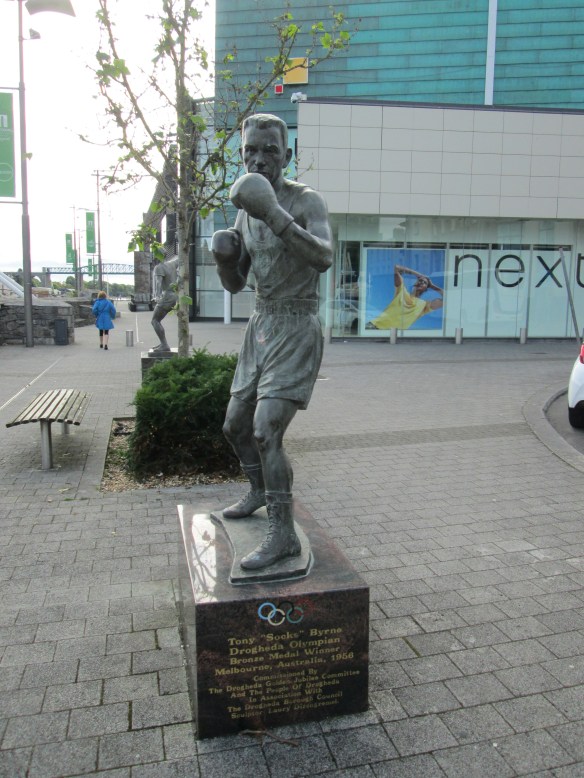
Returning down Constitution Hill, we cross the elegantly modern Hugh De Lacey pedestrian bridge to our car at South Quay. At this crux of the modern town, it is interesting that the featured monument is a lifesize figure of Tony Socks Byrne, who won a boxing bronze at the Melbourne Olympics in 1956. Rendered by French born sculptor Laury Dizengremel, there is something in its quiet realism that embodies the human spirit.

Drogboxr

Outside Ariosa Cafe, teetering on the sidewalk as the growing stain of autumn morning sun seeps into the monochrome. At the adjacent table an amiable gent engages passersby in verbal exchange, familiar and casual. He is, I presume, a notary of sorts, and this high street village rapport has an appropriate touch of the medieval about it. You close your eyes, and open them again. And nothing much changes through the ages. People, in whatever manifestation, in times of plenty or times of interest, are resilient. They are the essence of any place.

In the clearing stands a boxer and a fighter by his trade

and he carries the reminders of every glove that laid him down

or cut him till he cried out in his anger and his shame

I am leaving, I am leaving, but the fighter still remains

(The Boxer/ Paul Simon)

Heroes – at Butlin’s Mosney

Bob Mosney

Mosney, on the narrow tongue of Meath that  licks the Irish sea, was chosen as the site for Butlin’s first holiday camp outside the UK. It was opened in 1948 and operated as a Butlin’s camp for thirty five years. Throughout the eighties and nineties after Butlin’s pulled out it operated as the Mosney Holiday Centre. Since the turn of the century, with the holdliday camp thing becoming a thing of the past, it has been put into use as a centre for asylum seekers.

I holidayed at Mosney a couple of times, first in the seventies with my then girlfriend whose family had been regulars. Later, we took our own family, parking our caravan on site. Even back in the nineties, it was something of a blast from the past. There was a joke poster at the time for Butlitz holiday camp, a pun on Colditz. There were always jokes about forming an escape committee, and tunnelling out. But it was fun. Working class people in chalet accommodation, the swimming pool and underwater viewing saloon, ballroom dancing and music hall entertainment, bars and restaurants, the eversmiling redcoats determinedly dragooning kids and adults in bouts of organised fun. Yeah, we all loved it too. 

I remember on my first visit, in the mid seventies, where we weren’t satisfied with our chalet. We went to the complaints counter and joined the queue. Who should we be queued with only Bernadette McAliskey (nee Devlin). She was complaining too. I kid you not. In truth, she was very pleasant, and no doubt relaxed to be out of the cauldron of Northern Ireland. This was only ten or so years after the eruption of the troubles and her enfant terrible days and the Battle of the Bogside. We had a laugh, and were accommodated in our demands. Would that life were always so simple.

I drink a whiskey drink, I drink a vodka drink, I drink a lager drink, I drink a cider drink.

I sing the songs that reminds me of the good times, I sing the songs that remind me of the best times

(Oh, Danny Boy, Danny Boy …) 

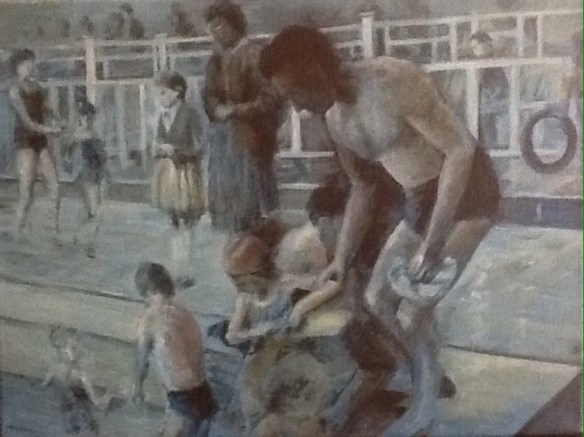
This view in acrylics captures a tableau in the swimming pool. John Hinde made a famous photographic image with the vast interior caught in all its sun-blasted glory. The massive glass wall letting in the light on a feast of visual exuberance, and also conveying the everpresent cacophony of noise and motion.

My source is from a private photographic image and, I hope, captures both the crowded mayhem, and the personal intimacy at its heart. The central figure here is my father-in-law, Robert Osborne. One of life’s gentlemen, he was hewn of the old world granite of Wicklow and the grit and grime of Dublin. A Guinness man, a decent man and a family man. There is something heroic in his pose as he helps his kids into the intimidating world of the swimming pool. We can all be heroes in the most ordinary of moments.

I get knocked down, but I get up again, you’re never going to keep me down

I get knocked down, but I get up again, you’re never going to keep me down

I get knocked down, but I get up again, you’re never going to keep me down

I get knocked down, but I get up again, you’re never going to keep me down

Tubthumping by Chumbawamba. 1997.

Brussels – 1

Brus Bldng

Took the train to Brussels in the morning, a one way ticket costing 14 euro. Bruges station is neat and modern, but again I’m flummoxed by Belgian Rail time and platform postings. A certain amount of questioning and haggling is required before I get the intended train. I nick into the first class carriage and the ticket men don’t seem to mind. Still, arrive in Brussels hot and bothered.

A bag is always heavier on the journey home. And the sun hotter. Sweating out of Brussels Central, I put into the first bar for a healing Stella. Reassuringly expensive. The bar is a rudimentary affair, at the apex of a triangular city block and of a steep climb from the station. I hadn’t thought of there being hills in Belgium, but nonetheless they are there. The capital is riven by a pronounced escarpment. The old town lies on the low level, the new town, in all its quasi imperial grandeur, occupies the higher ground. Literally, at least. Figuratively, the infrastructure of the European capital must always imagine itself on higher ground than its chaotic and oft implacable citizenry. Twas ever thus throughout empire and federation.

With a day to kill, I’ve opted to explore the Musee des Beaux Arts, and that precinct of museums and galleries known as the Hill of Arts. There’s a whole forest of museums and galleries lodged in Neo-Classical palaces up there. To see them all would demand a longer trip.

Brus Sax

A pleasant sloping esplanade leads uphill. At the top, a busker has nabbed a small amphitheatre provided by the topmost flight of steps. To a jazz backing track, he’s blowing out some wonderful saxophone. No better place. This is the hometown of Adolphe Sax, who invented an instrument which allows musicians to leak their soul directly into the air. Sax was born in 1814 to parents who were themselves instrument designers. His innovations were greatly praised by Hector Berlioz. Berlioz composed Symphonie Fantastique under the influence of opium, later claimed to be the first essay in psychedelia, so there is something prescient here considering the future influence of Sax’s instruments. His crowning achievement, the saxophone, was developed in the 1840s. Never popular with orchestras, its use for long was confined to brass bands. The jazz era brought its heydey as a sublime instrument for the soloist. It’s hard to imagine music of the jazz/blues/rock genre without it. He died in 1894, in Paris and in poverty.

Learn to work the saxophone

I play just what I feel

Drink Scotch whisky all night long

And die behind the wheel.

Brus Ol Eng

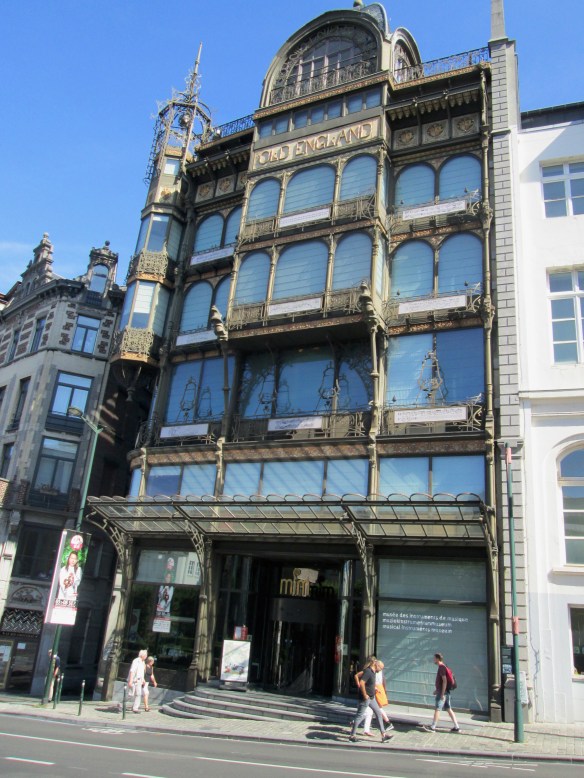
Nearby, as Rue Ravenstein curves into Place Royale, an Art Nouveau masterpiece houses the Museum of Musical Instruments. Old England, was designed by Paul Saintenoy in 1899 to house the eponymous department store. It is a gorgeous confection of swirling metal and glass, but structurally and functionally pragmatic. The use of steel frame allowed curtain walls of glass, flooding the interior with light, indeed dissolving the divide between exterior and interior. Old England exemplifies an architecture that conjures the sinuous art and music, and sociological revolution of its era. Appropriate therefore that it provides a new home for the Museum and its extensive collection of instruments, wind, string and keyboard, from medieval times to the present. There are, of course, several prototypes of the work of Adolphe Sax.

They got a name for the winners in the world

I want a name when I lose

They call Alabama the Crimson Tide

Call me Deacon Blues

(Deacon Blues, Steely Dan)

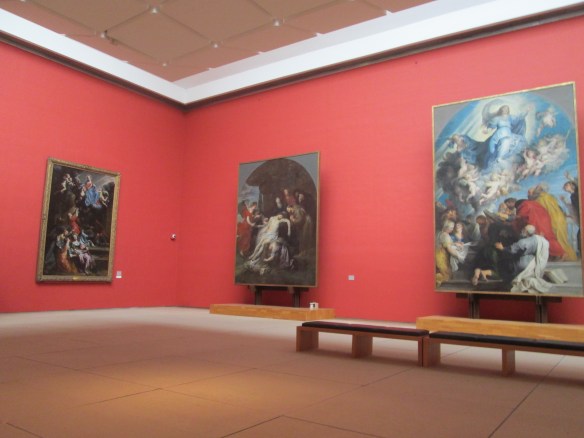
The Musee des Beaux Arts is divided into three parts, with inclusive entrance at 15 euro. Occupying the main Grand Palace are the Old Masters while below stairs you’ll find art from the Fin de Siecle. In a building all to itself, linked by an underground passage, is the life and work of Rene Magritte. I purchase an audio guide for a fiver, but it wasn’t really worth it. Artspeak linked with stating the bleeding obvious, as: here we see a man looking out a window. Well, yes.But the exhibitions are well worth it, and informatively captioned. It’s stocked to the eyeballs with Brueghels, Reubens to the rafters, and every Van the Man you might desire. 

Brus Bru2Brus Bru1

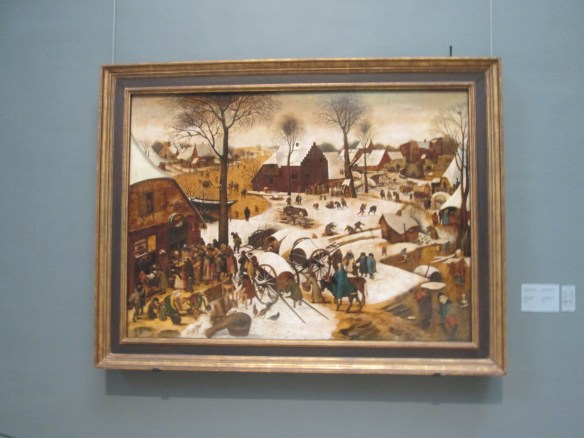
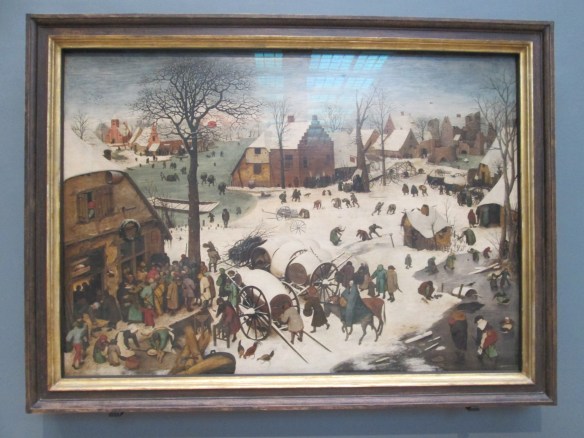
Particularly fascinating are the cover versions of Peter Brueghel the father by his son. Winter Landscape with Bird Trap is lovingly rendered by the son. The Census at Bethlehem is another example of the Younger’s faithful reproduction of the Elder. I play spot the difference to little avail. The palette is slightly different, but they may as well be photographic reproductions. Perhaps, with a few more hours to spare … Hieronymous Bosch is another favourite featured here, and oportunity too, to swim in the paint of titanic Peter Paul Rubens. In the Assumption of the Virgin from 1610, Our Lady in blue sails majestically heavenwards. It’s a fine example of the Baroque, Rubens grafting his Flemish precision with Mediterranean passion.

Brus Rub

Below stairs, the Fin de Siecle collection is housed in pleasantly weird serenity. Ever descending spirals of cool and dark and increasing loneliness. There’s a Sisley amongst several shimmering landscapes and cityscapes as the years fal like leaves towards modernity. I rest for a bit in this ambience, before confronting the eye bombs of Magritte to come. 

There’s a lot of Rene, with a concise chronology of his life and work. A strong focus on his graphic work, which is not surprising for an ex dadaist. A communist too, with many other Surrealists, though I recall he took exception to the public disparagement of his wife Georgette’s Catholicism, which distanced him from the movement.

Brus Mag Emp

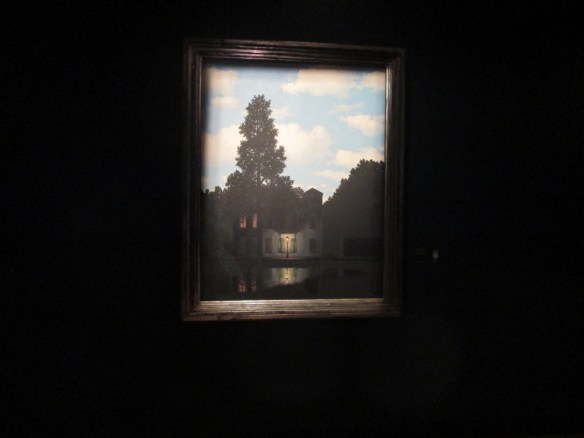
I finish with the Empire of Light. This series of large paintings features a nighttime suburban street beneath a daytime sky. There are a dozen or so versions, each subtly different. The design of the house, the street furniture, the surrounding trees; but the composition is always a flat representation, with one streetlight, a window or two dimly let, all wonderfully serene and deserted. Standing amongst several versions here, gives the feeling of actually inhabiting Magritte’s street, his very imagination. You can relax with a Magritte, though perhaps as one might lie with a sleeping tiger, but soon both will awake. Reluctantly I leave behind a weird and terrible beauty. Interestingly, the Empire of Light was cribbed for a scene and the poster for the sensational 1973 horror film, The Exorcist.

Just walk away Rene

you won’t see me follow you back home

the empty sidewalks on my block are not the same

you’re not to blame.

(A first hit for baroque pop group, Left Banke, and a cover version by the Four Tops.)

Bruges – 4. City of Light

Brug4coup1

The French under Napoleon ruled Bruges from 1795 until 1814 when the area became part of the Kingdom of the Netherlands. That only lasted until Belgium gained its independence in 1830. French was initially the official language, but Flemish was recognised by the start of the twentieth century. It is the principal language of Brugge and northern Belgium. 

Bruges makes a fine character in a novel. The quays, the labyrinth of streets and canals, the Beguinage, churches and belfries, the real and reflected appear simultaneously in the visual and written world. In Rodenbach’s novel, photographs are used to add an extra dimension to this identity.

IMG_4756“Bruges was his dead wife. And his dead wife was Bruges. The two were united in a like destiny. It was Bruges La Morte, the Dead City, entombed in its stone quays, with the arteries of its canals cold once the great pulsing of the sea had ceased beating in them.”
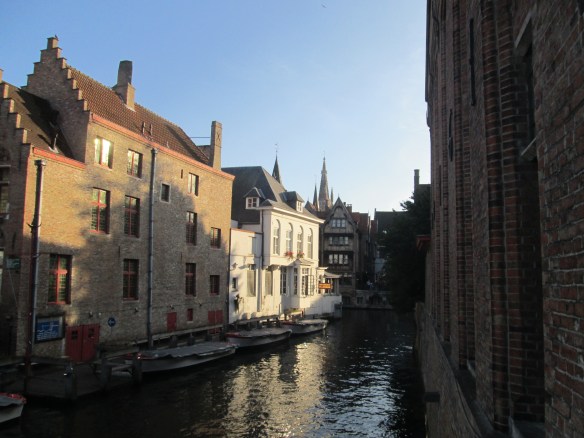
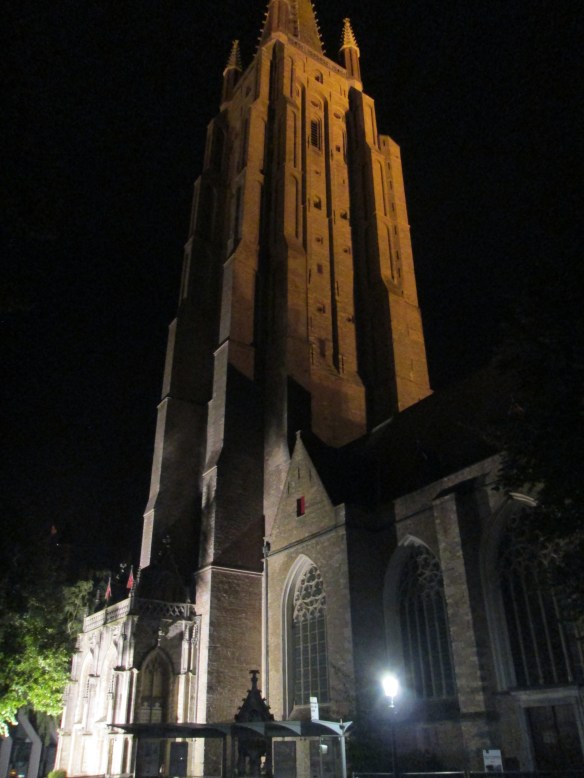
Words, image and mood melt into a form of music. Stand anywhere in Bruges and sense the still water of the canals, search for the distant pulsing of the ocean. Look into the depths, and see them stare brazenly back. Hugue is smitten with Jane, the dancer. who, as in a mirror, is a reflection of his late wife. An actress is but a mirror, fashioning the face of your heart’s desire. You have used that mirror and, when you think of it, everyone loves themselves. Narcissus is portrayed, too ardent by far, mesmerised by his own reflection in a pool. So, when Hugue commutes with his wife through a mirror, with whom is he really talking? And when Hugue strangles Jane, his wife’s reflection, who is it that he kills?

Brug4eve

On the second evening I dine in a place called the Old Bruges. One side looks onto a little square where the canal turns, the other onto the now quiet Vismarkt. I order Flemish Stew which is a goulash equivalent, and a few steins of beer. Beer is expensive, but it’s strong, with a rich variety available throughout the city. And, I suppose, a certain unreliability of narration may ensue, here or there.

Nearby, a young Australian holds court. I overhear most of the conversation, without committing it to memory all that accurately. It was enjoyable more in the manner of an abstract painting, or a drum solo. The story includes a dwarf and a prostitute. The narrator’s acquaintance prompts, jovially, that the line should read: a dwarf and a prostitute walk into a bar. Who knows where this is heading. Who shall give and who receive? Does someone call them a pink lady and a small one? 

IMG_4834

The story merges in my head with McDonagh’s narrative In Bruges, wherein Colin Farrell’s character befriends a vertically challenged actor during a Bacchanalian interlude. The dwarf will intervene with devastating and ironic effect in the film’s denouement. Farrell has, after all, killed a small boy, an altar boy, in his botched assignment. This macabre dance with death circles the dizzying spire of Our Lady’s, where love and sacrifice are given expanded meaning. Farrell, no more enamoured of the city, complains he doesn’t ‘want to die in Bruges’.Or perhaps he’s just curious for more. 

Later, I am in Delaney’s Bar, seated next to a couple from the nearby Dutch town of Breda, a place I know of vaguely. There was a battle there, long, long ago. It features in a book by Carlos Perez Reverte. They have a festival based on the colour orange, which probably dates back to King Billy. As the dry heat of the day wanes to a cooler humidity. It will rain, says the young man. But when? Oh, give it ten minutes. In his hand, the screen on his phone shows a jagged peak within the next ten minutes. We wait, and it comes to pass. These are the days of miracle and wonder, so it is no surprise that people can capture electricity in their hands and with it arrogate the magic power of prediction. Here was a man with the power of rain in his hands. I asked him could he make it stop, as I was about to make my way home. But he laughed and said that no, he could not.

Brug4str

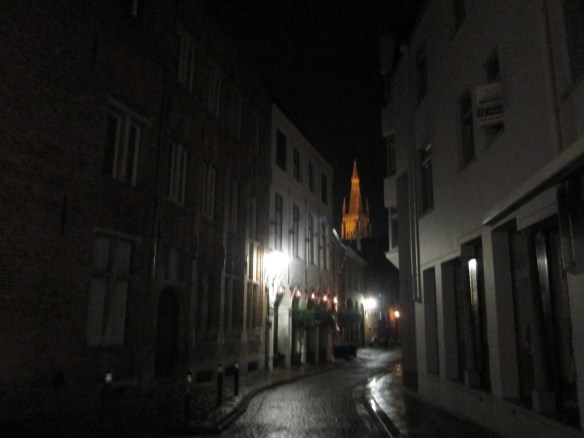
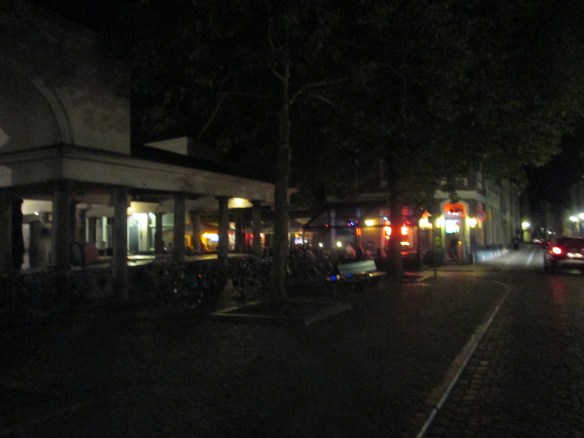
I sloped off by way of colonnades and the shelter of trees, the cobbles slick with rainwater and electric light. That was when I found myself lost, if you catch my drift. In the giddy valley of cathedral spires and teetering turrets, the alleys threw themselves into ever increasing spirals, farther and farther away. I asked directions of a waiter, who had retreated from the heat of the kitchen for the balm of a well earned smoke. He pointed me back the way I had come. Reluctant to accept this defeat, I returned to where I had spied a sliver of canal slip behind some buildings and took what I judged to be a parallel lane. Dark, deserted, and eminently paranoia inducing, it twisted and turned before curving at last onto Rosenhoedkai. I was no longer lost, but not quite found.

Brug4dklane

A love struck Romeo sings the streets a serenade,

laying everybody low, with a love song that he’s made,

finds a convenient streetlight, steps out of the shade,

says something like, you and me babe, how about it ,,,

Stars spring from the canal depths. Along the quays, nighttime beckons. I’ve been whistling past the graveyard so that the melody haunts me still. An opera for our age, terse and tunnelling through our formation. Mark Knopfler singing, as an aria should, of love and an Italian girl.


All I do is miss you, and the way we used to be,

all I do is keep the beat and the bad company,

all I do is kiss you, through the bars of a rhyme,

Julie, I’ll do the stars with you, anytime.

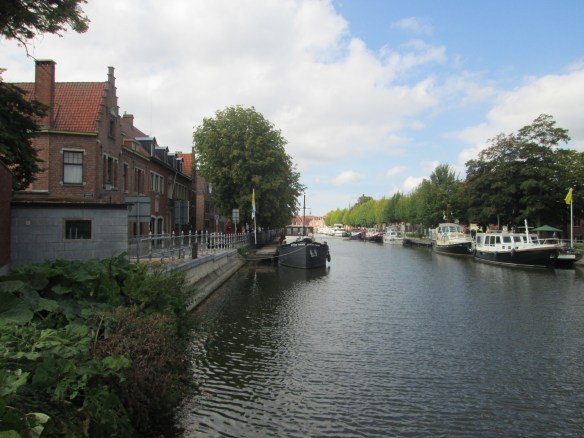
The next day I return to the old city walls to complete my semi-circling of the city. The eastern precinct includes the Coupure and the outer canal. This houses larger and more long haul canal craft. You can book canal tours here but the atmosphere is distinctly local and feels remote from the bustling tourist scene at the centre. My camera battery went kaput at the same time, so I’ve only my soul and memory to call upon, which seems about right.

brug4coup4

I had intended availing of the Breydelhof’s free bicycle, but these boots are made for wandering, and who knows where they’ll take me. Last night I was lost in Bruges, and today I try for a similar state in daylight. With some success. Crossing old tracks I experience the pleasure of recognition, the uncertain traveller’s concept of home.

Mainly, I was distracted by my own meditations. As evening waxed, I had been thinking of the possibility of finding God in a bar, as Joan Osborne might have speculated.

If God was one of us

just a stranger on the bus, just a slob like one of us,

trying to make his way home.

I must find my way back up to heaven all alone. God might be in the next bar, which is pulsing unsteadily across the Vismarkt. Slouched there at the corner peering into the shrinking muniscus of his pint, apart from the crowd and not exactly pleased to see me. Catching him there, I could ply him with drink, insist on answers to those great questions: why are we born to suffer and die, where might I find the Golden Fountainhead. It must be here somewhere, in this city of chocolate, waffles, and fine beers. 

Brug4vismk

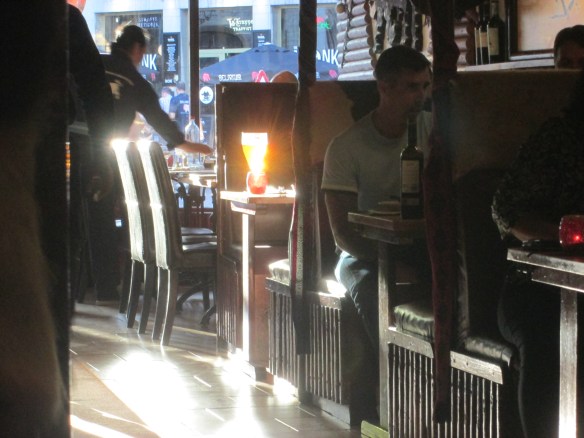
There is an Argentine restaurant on Flammingstraat, north of the Market Square. They serve steak, grilled to perfection. Within the darkwood interior, evening sunlight intrudes in a solid shaft, a slant off the horizontal. We are all reduced to silhouettes. It is the perfect condition for the near slumber of after dinner. My stein of beer still froths. I look down the room towards the window. Other diners dance mellowly in the glare while theatrical gauchos flit in attendance or ennuie. I am briefly blinded by the glare, abruptly occluded by my waiter. We share an acknowledgement, and as he moves aside, I see at last, the Golden Fountainhead.brug4fhead

Bruges – 3, To the Lake of Love.

IMG_4789

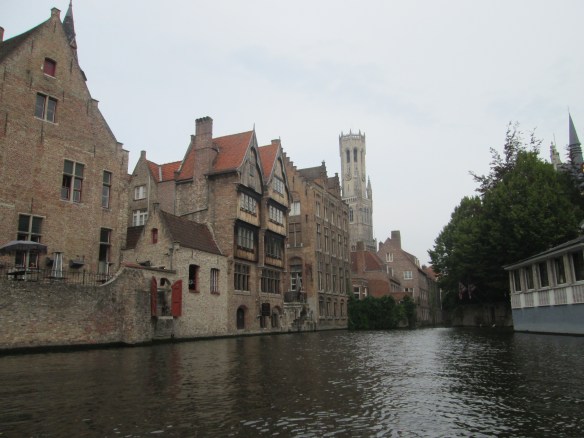
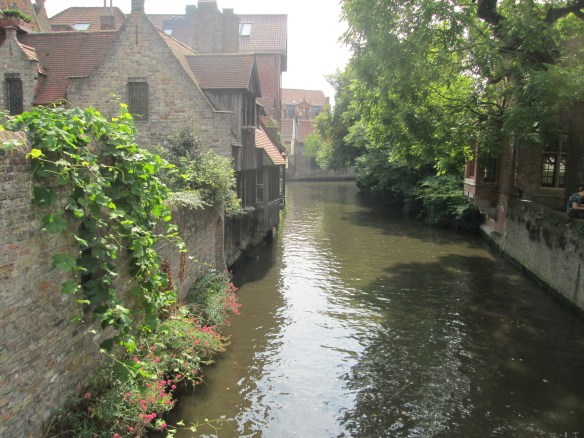
The distinctive Gothic shape of the Boniface Bridge is quietly emblematic of Bruges, the city of reflection. It embodies that melancholy meditation of memory and love, that perfect moment when all time flows through an ostensible cusp, briefly and sharply experienced. Just beyond, the Church of Our Lady soars heavenward. Its one hundred and fifteen metre brick spire is the second tallest in the world. The church dates back to the thirteenth century and took two centuries to complete, encompassing a variety of styles from Gothic to Baroque.In the sixteenth century Our Lady’s acquired a statue by Michelangelo, Madonna and Child, a rare example of the artist’s work travelling beyond his homeland during his lifetime.

IMG_4846

Bruges is a storybook of bridges and towers. After the initial frenzy of photography, the city re-establishes its quiet beauty on the soul. You find yourself within a photograph that is centuries old, enduring and subtly changing, captivating and offering profound release. Beyond the Boniface Bridge, and heading south, the crowds thin somewhat. 

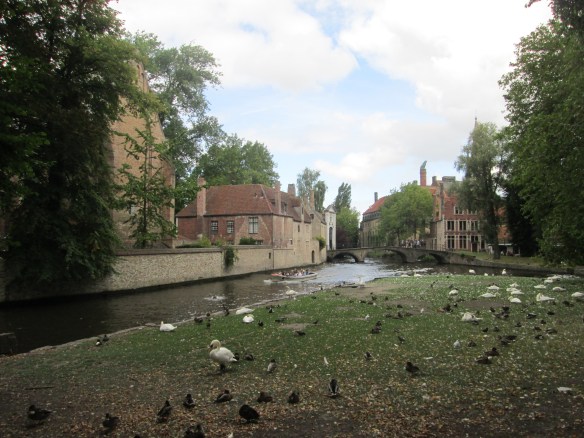
The Canal shimmies away from the quaysides and is bordered by the serene Beguinage. The Beguinage was a walled area within the city which offered a retreat for the Beguines, a lay sisterhood founded in 1245. These lived and dressed as nuns but did not take the vows, so they could return to the real world at any time.This location was crucial in Bruges La Morte. The cover features an illustration of the bridge. Floating on the waters that flow beneath, the figure of Hugue’s late wife is modelled on John Everett Millais’s Ophelia. It was drawn by Fernand Khnopff, whose work Secret Reflection hangs at the Groeninge Museum. Khnopff was a leading Symbolist painter who spent his childhood in Bruges. The mystique of the floating city would inform his later work which influenced the Belgian Surrealists, Rene Magritte and Paul Delveaux.

IMG_4855

The Beguines are suggested in the role played by Jane as she snares Hugue’s desire when he attends a performance of Robert the Devil. Jane dances the lead role in a sequence known as the Ballet of the Nuns. Robert the Devil is an actual Opera by Giacomo Meyerbeer, with a libretto by Eugene Scribe. It was a triumph of the visual power of stagesetting when first performed in Paris in 1831. The story gives a nod to the historical character, Robert the Magnificent of Normandy, father of William the Conqueror, who was known by some as the Son of the Devil. Jane plays the role of Abbess Helena who returns to life with her nuns and arise from the graveyard. They divest themselves of their habits and, shaking off the dust of death, dance a celebration of the physical joys of life. Scandalous, and sensational, the Ballet of the Nuns was a huge influence on the development of dance, transcending its classical constraints to push towards the more sensual artform of modern times.

Rodenbach adapted his novel for the stage and it received a German translation by Siegfried Trebitsch called Die Stille Stadt, the Silent City. Trebitsch was a friend of Julius Korngold and the two discussed the potential of turning the story into an opera. Julius’s son, Erich, in his early twenties was enthusiastic about the project, collaborating with his father on the libretto under the pseudonym Paul Schott. He composed the opera giving it the title Die tote Stadt, the Dead City. In this version, the melodramatic and crazed climax occurs within a dream, softening its impact.

IMG_4856

The original German title brings to my mind Thomas Moore’s melancholy Oft in the Stilly Night. Where Moore’s Vale of Avoca puts friendship at the centre of happiness, conjuring a perfect day in an idyllic landscape, Oft in the Stilly Night is melancholic, a lonesome voice leaking into the darkness.

Oft in the stilly night, ere slumber’s chains have bound me,

fond memory brings the light of other days around me.

Like Hugue, or any solo traveller at that certain moment of reflection, the environment is a multifaceted construct, built of memories and moods as much as its physical components. Within the crowds and chaos of the city there will be an isolated being, channeling the ancient history of the space throughout time, and through the prism of their own memory.

The smiles the tears of boyhood’s years,

the words of love then spoken,

the eyes that shone now dimmed and gone,

the cheerful hearts now broken.

Into these vacuums of darkness and solitude there is a welcoming space for those manifestations of the Muse, for music, poetry and art. For Rodenbach, art was a kind of religion.

Thus in the stilly night ere slumber’s chains hath bound me,

sad memory brings the light of other days around me.

IMG_4795

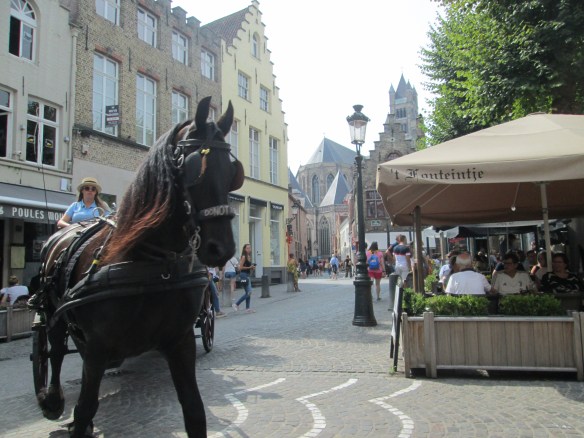
Bruges, being a city of reflections, can quickly shift. From melancholy to gaiety, it’s seldom more than a step away from a changing atmosphere. Ancient and beautiful, but also busy. Visitors cloud its atom like electrons, a dusty swirl by boat or boot or horse and cart. I balance precariously at a sidewalk bar, and the horses turning their carriages pass close enough to touch. The crowded small square is festooned with art and crafts and above it all the teetering spires of the sky.

IMG_4859

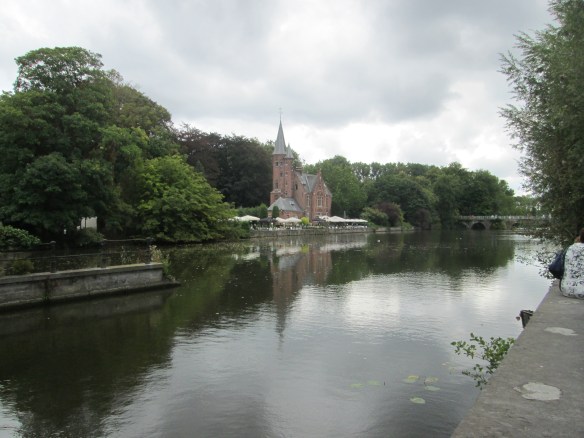
But, you can always find a place to be alone, whatever timeframe you inhabit. Further along, lies the Minnewater, a regular artificial lake where the waters feeding the canal system lie waiting, a few metres above the city waterways. The Minnewater is known as the Lake of Love. Passing the lock gatehouse is to enter a calmer sphere. A quiet park enfolds the lake with a relaxed residential area surrounding that and the adjacent Beguinage. At the far end there is the Lovers Bridge, though all bridges in Bruges are magnets for lovers. This one is named for the doomed lovers of myth, the beautiful young Minna and Stromberg, a warrior of a rival tribe. It is a variant of Romeo and Juliet. Of love and death. Standing guard is the Powder Tower, part of the old city’s outer fortifications. 

IMG_4863

Returning to the park, modern music beckons me to the water where a quartet of hedonists have established their own milieu and are dancing in a sea of ganja mist. In the quiet of the park once more, a hostelry looms out of the trees. In the afternoon heat and the deserted ambience, I feel I may have stumbled on the source of the Golden Fountainhead. The bar is to the rear of the Gothic building, where a matronly woman serves me. I take my beer onto the extensive and deserted terrace and sit a while contemplating the stillness of the waters. Minnewater, my solo pastime, a quiet conversation with an intelligent shade of the colour blue.IMG_4867

The Dart Player of Temple Bar

Dart Player1

Dublin’s Temple Bar is a small enclave bordered by the Liffey, Westmoreland Street and Dame Street. The main drag is a cramped, erratic thoroughfare beginning at Fleet Street in the east, on into Temple Bar and finally as  Essex Street meeting Parliament Street at the western extreme.

Fleet Street, when I first knew it in the sixties, was where you got the bus. It was crammed with waiting busses and passengers, diesel fumes and cigarette smoke, steam rising from raincoats as the sun split the louring clouds. Too narrow and decrepit for its purpose, growing even more narrow as busses shimmied westward through Temple Bar, it was earmarked for development. A great bus terminal would arise to serve the metropolis, and this windy, cobbled backwater would be swallowed in the smog of time. 

Dublin was old and grey, even on a summer day and, like every generation before and since, it was my generation would blow the cobwebs away. Flower power was planted and the Dandelion sprouted by Stephen’s Green. The bees swarming into the hollowed core of the city causing such hives of activity as the Project Arts Centre. I snuck off school many’s the afternoon for the smell of patchouli oil and other exotic substances and a stroll around the Project gallery to gaze in awe at the creations of Fitzpatrick and Ballagh and others. 

The Project would migrate to the neglected quarter of Temple Bar in the early seventies. The Granary, just around the corner, was the early flowering of the Health Food Shop. Not far away was the Alchemist’s Head, a shop for all the comic book guys. In seventies Ireland, such flowers were weeds, but weeds will always proliferate. I used wander the cobbled streets, linger in the music shops, antique shops, the stamp collectors place on Fownes Street, in the shadow of the emerging hulk of Stephenson’s Central Bank, haunt the Project for plays by Sheridan and late night gigs.  

But Temple Bar was doomed, the spaceships of seventies commerce circling ominously. And then it all changed, changed utterly. The growing community of hippies and ne’er-do-wells somehow convinced our esteemed leader, Charles J Haughey, that there was merit in the madness of the crumbling slum. Thoughts of WAAMA no doubt, Flann O’Brien’s Writers, Artists, Actors and Musicians Association, might fit with the denizens, and Charlie was after all a patron of the arts. Thus, reprieve, and the Great Bus Station in the sky went off to orbit another planet. 

Temple Bar has been proposed as many things, principally as Dublin’s cultural quarter, its Left Bank. It is also the night life focus, the funzone for wining, dining and dancing till dawn. And it even has residents to participate or complain about the whole damned thing. Overpriced, overcrowded, noisy and hokey it might be, but it is also real, full of all the variety, quirk and charm you need in a city centre. 

I pass through when I can, hopefully stopping at a watering hole en route. The Palace at Fleet Street is my favourite. A rael olde Dublin pub, narrow, high ceilinged with darkened wood interior and a well established literary theme. It plays host to the Flann O’Brien festival on the first of April. Flann the Man, who also gave us Bloomsday.

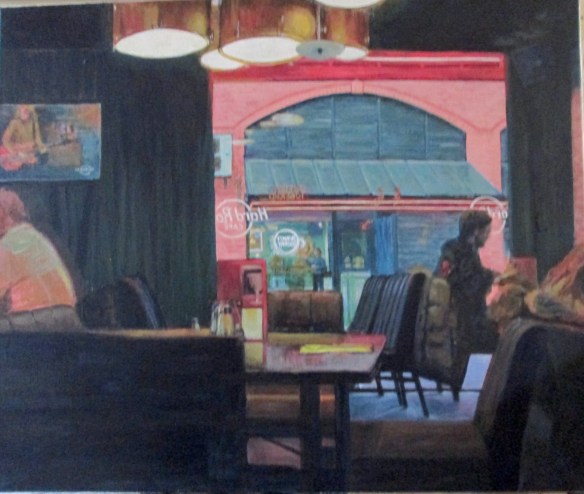
Further in, there’s plenty of boozers and eateries. Take your pick. In this painting, I’ve chosen the Hard Rock Cafe, a good joint for burgers and beer, with a good rock soundtrack to boot, as you would expect. In this painting, I’ve paused between courses, or pints, to gaze out onto Fleet Street. There’s a tattoo parlour across the street, and the tattooist, between customers, is practicing his skills on a dart board. There’s something quite still and serene about that, I think, all going unnoticed in the midst of the madding crowd. I was thinking of calling it The Dart Player.

Walkinstown’s Musical Roads – 5


Shaneposter

A sting for the Alan Ladd western, Shane, from Jack Schaefer’s book, announced my pending arrival. Shane is Coming, Shane is coming, Shane is here! My mother claims this was a signal element in my Christening. My father opts for the more Nationalistically appropriate association with the rebel prince of Tyrone, Shane O’Neill. I will take both. They made a film of the fictional Shane of the Wild West, which I witnessed in the local cinema, an eery experience of identification and dismay at hearing my own name whispered hugely in the crowded, dark auditorium. I was being talked about and not being talked about. I was the hero in buckskins and the outlaw dressed in black. I was the star and I was dying at sunset. Nothing like seeing your life written large on a silver screen. Our metaphysical lives were being told beyond the aural dimensions of old. Images, from distant alien sources were painting new pictures for us. The picture house in question was at the far end of Bunting Road, central to the short stub of Harty Avenue.

2018-08-17 18.10.12 copy

Bunting Road

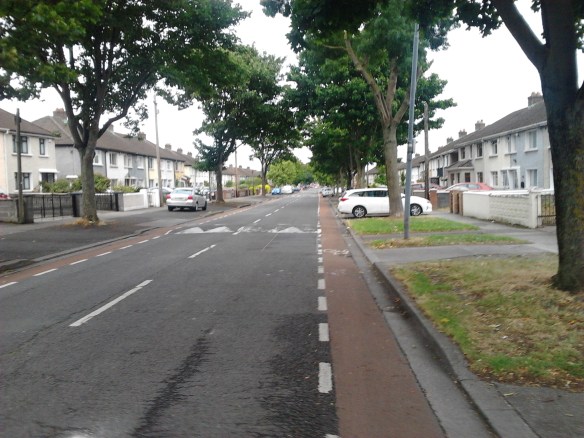
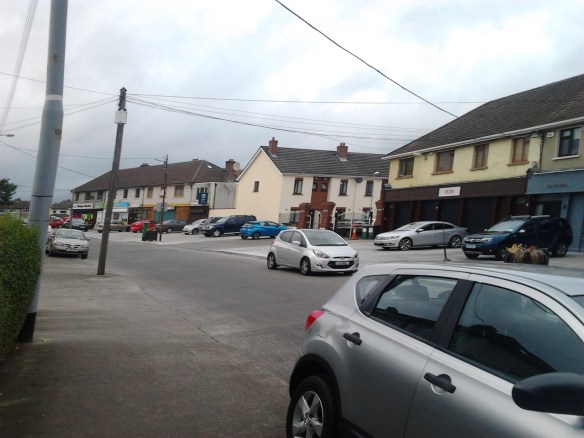
There many venues in Dublin 12 in the fifties. Suburbs are suburbs and have long functioned as dormitories, particularly where, as with Walkinstown, there had been little or no village nucleus prior to development. There was the Moeran Hall and there was the cinema, the Apollo. Since Apollo is the Greek God of music, the name was wisely chosen. He was also leader of the Muses, and God of poetry and light. All one might require of a cinema, so. The Apollo hosted the occasional variety show with bird warblers, yodellers, hypnotists and the like. For the most part though it was Movies, Movies, Movies! The Saturday afternoon matinee was a riot of screaming kids, acting out every action scene on the way home; a swift torrent of noise flowing up Bunting Road towards the Scheme and Greenhills. All those magnificent films: The Searchers, The Magnificent Seven, The Longest Day, The Haunted House, a jumble of Westerns, World War Two drama and British farce. The cartoons kicked off with Bugs Bunny or Woody Woodpecker, romantic interludes were lustfully whistled and booed, there were the folley-n-uppers, and action heroes of such sartorial elegance as Batman and Robin. Action scenes demanded audience participation which often developed independent of the silver screen.

2018-08-17 18.07.40 copy

Harty Avenue, looking towards where the Apollo used to be.

Within the walls was mayhem. Willie the bouncer ran as tight a ship as was possible; a ship of riotous pirates all the same. Willie was The Man. In truth, he was no more than a few years older than us, a wiry youth who modelled himself on Elvis. Elvis had been a cinema usher too, back in Memphis in the early fifties, with long sideburns and oiled back hair. Not a redhead like Willie. Willie did have the occasional horde of girl screamers though. Much famed for breaking up a fight in the girls toilet, his intrusion provoking an exodus of screaming pre teens. In the retelling, his name didn’t prove too helpful to his cause.

More mature fare beckoned as we turned into teenagers towards the later sixties. The Apollo was moving towards the light. There was the weirdly perverse 2001 – A Space Odyssey with its booming opening of Richard Strauss’s Also Sprach Zarathustra, and that  incongruous cosmic dance to Johann Strauss’s Blue Danube. I remember darkening stubble on my upper lip to bluff my way into the Graduate. Then there was Woodstock. I was fourteen or fifteen when the film came to the Apollo. Already, the cordite scented Rock of the late sixties had entered our blood. Our big brothers and sisters had Beatlemania, and the Rolling Stones. The Monkees were our teenybopper treat. Then came Flower Power and Freaks, free festivals of music and love. Drugs were a few steps down the road. These happy, hairy people were powered by more than a cup of Irel and a bottle of stout. They weren’t passing around Woodbines. But, the music was the message, after all.

Screen Shot 2019-08-01 at 18.45.28

Henry McCullough

The only Irish performer at Woodstock was Henry McCullough, guitarist with Joe Cocker’s Grease Band. Cocker was a mover and shaker, literally, in the British Blues Boom. Always a fiery performer, he was renowned for his throaty voice and his unique, spastic air guitar. At Woodstock, he performed the Beatles’ I Get By with a Little Help from My Friends.

What would you do if I sang out of tune?

Would you stand up and walk out on me?

Lend me your ears and I’ll sing you a song,

I will try not to sing out of key.

I get by with a little help from my friends!

Autosave-File vom d-lab2/3 der AgfaPhoto GmbH

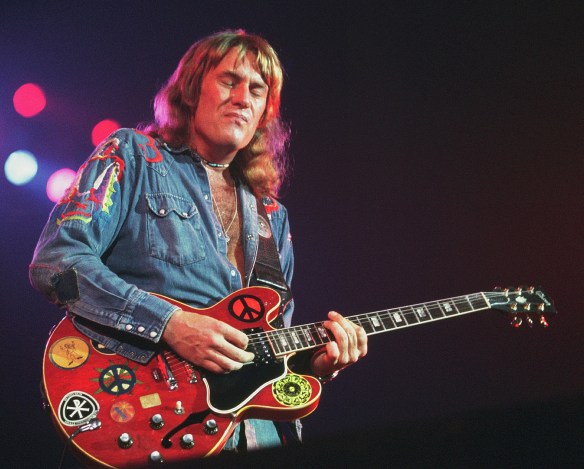
Alvin Lee with his iconic guitar Big Red.

Another Blues Boom light, Alvin Lee of Ten Years After actually had a guitar. In the nighttime climax of the movie, Lee launched into the frenetic finale, I’m Going Home, a headbanging celebration and a trip down the memory lane of good old time Rock n Roll. And then a divine spirit materialised from the Purple Haze to play us out. Jimi Hendrix coaxed magic from his upside down guitar. Excuse me while I kiss the sky! This was a different planet altogether.

All those kids screaming their way home from the Matinee in the fifties were playing Batman or Cowboys ’n’ Indians in their heads; ten years later they were playing air guitar a la Joe Cocker, reliving the solos of Lee and Jimi Hendrix, dreaming of Rock Stars and the seductive release of sound and substance.

For years thereafter, passing down the gloom of Walkinstown Avenue, a regular tableau unfolded. With smog softening buildingd and streetlights, cloaking loitering figures in dangerous mystique, young men walked meaningfully, guitar cases slung across shoulders or held by the handle; Prohibition Era gangsters making for a hit.

The Musical Roads did not, so far as I know, yield more fledgling musicians or music stars than other more prosaically named estates. Amongst my classmates were a Frank(ie) Vaughan, and a John Lennon. Others included traditional musicians Eamon Lane and Sean O’Connell. Dublin 12 has produced an interesting spectrum of talented musicians. Fifties opera singer Dermot Troy, singer of modern folk, Rita Connolly, and that most musical ghost, our very own shadow of Jimi Hendrix, Philip Lynott. I wonder will he merit a road in his capital being named for him anytime soon. I don’t see why not.

Lynott

Statue of Phil Lynott outside Bruxelles in Dublin.

In the later forties

When Diddy Levine lived with Eunice King,

He gave her the ring that she wore.

See Philip Parris Lynott, caught improbably in a sepia snap, walking the streets of Crumlin where he came to live as a child, in the fifties. All those genes jiggling there, just bursting to get out, and delivering something that is eternally the black man’s Blues, and quintessentially Irish too.

Inheritance you see,

Runs through every family,

Who is to say what is to be,

Is any better.

Over and over it goes,

The good winds and the bad winds blow,

Over and over, over and over and over …

Thin Lizzy lit a fire for a generation of Dubliners. As Beat merged with Blues Boom, a new strand of Rock was forming, merging American roots with localised experience. Kids in Dublin’s suburbs in the sixties were well in tune with this. Frank Murray, who grew up on Crotty Avenue, was one, becoming an important contributor to Dublin’s river of sound. Late in the sixties he saw a group called the Black Eagles play the Moeran Hall. Lead Eagle was Phil Lynott. They became friends and Murray went on to manage Thin Lizzy and, later the Pogues. Murray was a main mover behind the recording of Fairytale of New York, that perennial Christmas favourite from the Pogues and Kirsty McCall.

Screen Shot 2019-08-01 at 20.26.11

Frank Murray (right) with friend Declan Collinge on Crotty Avenue.

Christmas in Walkinstown is depicted in Youtube video: The Apollo Gang. Here Murray and friends ham it up, Beatles style, on a snowblown day in 1965 on Harty Avenue, to the refrain of the Animals’s House of the Rising Sun. This song must find a soft spot in the hearts of Walkinstown gangs. Our own crowd, hanging around the Cross, also used it, amending the lyrics to suit. There is a house in Walkinstown … to begin with, and becoming more unprintable thereafter. Yes, it’s been the ruin of many a poor boy, and (thank) God, I know I’m one.

Walkinstown’s Musical Roads – 4

Walkinstown Lib

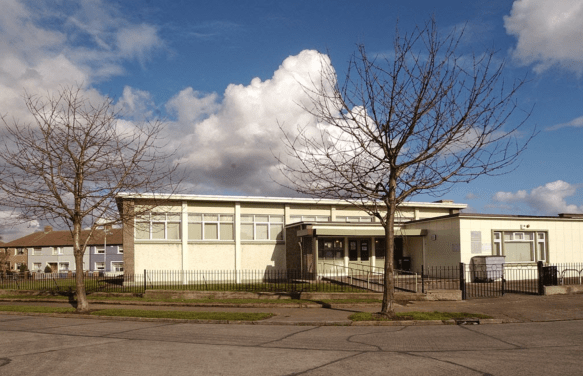
Walkinstown Library

Go far enough east along Cromwellsfort Road and you reach Crumlin. At the junction, the Submarine Bar was seen as Walkinstown’s last outpost, though Crumlin and Kimmage might have said the same. Now defunct, I’ve slurped from silver cups there, the Sam Maguire and the League of Ireland trophy, courtesy of schoolfriends Kevin Moran and Gerry Ryan, of Dubs and Bohemians fame. The road name derives from Oliver Cromwell, who stalked the area between here and Drimnagh Castle back in the mid seventeenth century. Before gaining the art deco joys of the crossroads, one last turn at Moeran Road leads back to the Melodies.

First thing you see is Walkinstown Library, giving its name to this subsection of the area. Lured in by the music, you stay for the words. Situated on a green island on Percy French Road, the library opened in 1961. A third of the stock and premises was devoted to children. My first attempt to borrow was a giant atlas, which I horsed to the desk like a surfer hitting the wave. The librarian kindly, but firmly, pointed out the tag For Reference Only, explaining I could not take it home. Well, feck that for a game of cowboys, I thought. I would, in time, borrow many books, mostly a diet of Blyton, Biggles and Bunter, the very British fare available to children then. Richer veins of storytelling followed, according to the prompts of siblings and peers, teachers, parents or simply whims. From Emily Bronte to Kurt Vonnegut, and a fair few manifestations of Brian O’Nolan, I’d keep on keeping on. One group of stories, set in song, was already well established in my soul, the writer’s name graces the road on which the library stands.

Percy_French

Percy French in Ballyjamesduff, Co. Cavan.

If Moore was seen as the Bard of Ireland, Percy French was more for the plain people. Born in Roscommon in1854, he studied at Trinity College and it was there that he wrote his first major song: Abdulla Bulbul Amir, for a men only event called a smoking concert. Ah, those were the days! As many an artist has found, a work sold cheaply is as good as stolen and French was long denied credit for the song. 

RTE were fond of spinning Brendan O’Dowda’s album of Percy French favourites and Abdulla was a standout for me. For some reason I sided with the Russian, Ivan Stravinsky Stravar. It is he who strode arrogantly into town to tread on the toe of his foe and ignite a colourful duel; although the tale ends tragically for both. A cautionary tale on the excesses of male pride.

They fought all that night neath the pale yellow moon,

The din it was heard from afar,

And great multitudes came, so great was the fame

Of Abdul and Ivan Skivar.

French was in his thirties before going full time as writer and entertainer. His songs, often comic and with a twist of satire were easily taken to heart by the public, but there is a solid and genuine core to his work also. He captures universal human qualities, all the fun and foibles, giving us more than just a picture of a bygone age. He is at his best in the Mountains of Mourne, where there is something of a sadness, and certainly a beauty, in the simplicity of the emigrant’s view of an alien world, and the deep longing for the simpler land, and fairer lass, he’s left behind.

Oh Mary, this London’s a wonderful sight

With the people here working by day and by night,

They don’t sow potatoes, nor barley, nor wheat

But there’s gangs of them digging for gold in the street.

The narrator keeps a promise to his girl back home, informing her of the latest fashions in London. Perhaps he notices the beauty of the girls a bit much, to begin with. The beautiful shapes nature never designed, their lovely complexions “all roses and cream”. But then:

If of those roses you ventured to sip,

The colour might all come away on your lip.

So I’ll wait for the wild rose that’s waiting for me,

Where the Mountains of Mourne sweep down to the sea. 

IMG_0008

Errigal Road, Drimnagh

Drimnagh, with its roads named for mountains, pays tribute to the Mournes. Moeran Road, meanwhile, is named for Ernest Moeran who was London born, though his father was Irish. This connection led him to Ireland in the 1930s. He settled in Kenmare, County Kerry, finding the landscape there a profound influence on his music until his untimely death in 1950, as building continued on the Musical Estate. The Moeran Hall, on the Crumlin Walkinstown border, became the main venue for dances and gigs as the youth population boomed in the sixties. Amongst the talents that burned brightly, if briefly there, were local band The Black Eagles, fronted by a certain Philip Lynott. More of that anon.

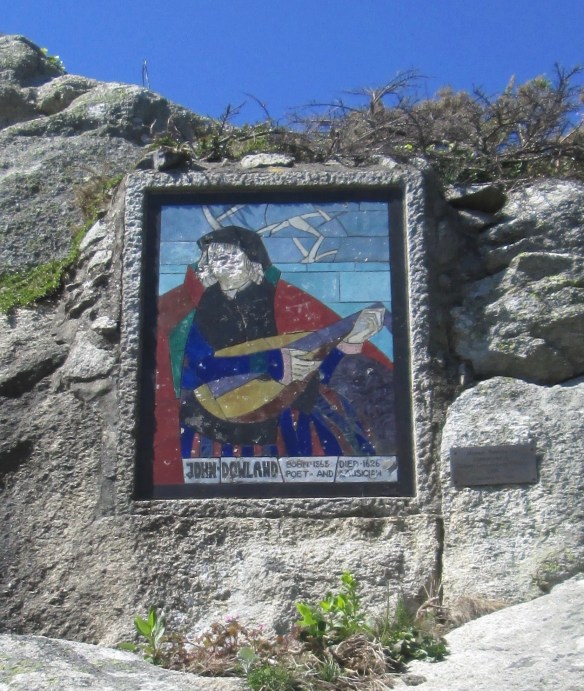
Where Balfe Road ends, a meandering road takes up the journey east. Viewed from the air it vaguely resembles a lute, and is named for John Dowland, top lutenist in Shakespearean days. Dowland’s place of birth is unknown, but it was probably Ireland. He dedicates his work From Silent Night to “My loving countryman Mr John Forster the younger, merchant of Dublin, Ireland.” Dalkey has been claimed, though it’s disputed.

Colliemore

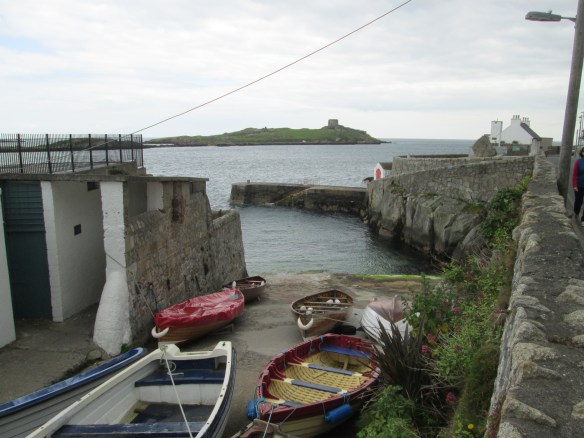
Colliemore Harbour, Dalkey

He studied in Paris from 1580 where he converted to Roman Catholicism, which may have been a factor in him being passed over at Elizabeth’s court. He took his talent elsewhere, travelling in Germany and Italy to great acclaim. He was dubbed the English Orpheus. In 1598 he gained a position as lutenist to the Danish Court of King Christian IV for a fabulous salary. Dowland may have dabbled in espionage. He was tapped up by English Catholics plotting to overthrow the Protestant Elizabeth. Accusations of his spying for the papacy were denied. He wrote to Sir Robert Cecil, the Secretary of State, pledging loyalty to Queen Bess. 

He was a friend and contemporary of Shakespeare, and it is inferred that his knowledge of the Danish Court was used by the Bard in Hamlet. Christian was notoriously fond of the sauce, and at Shakespeare’s Elsinore, the gloom laden prince opines of the courtier’s tendency to “keep wassail”. Some have even found an eerie similarity between Colliemore and Elsinore as described in the play. I’m taken with the giddy scenario of Will setting sail for Colliemore Harbour, there to team up with his good mate John to trade gossip and sink some Carlsberg down at the Queens. In truth, it’s more likely they met in London, where Dowland lived from 1606 having been dismissed by Christian. Then, as with Shakespeare, he gained favour at the court of King James I (James VI of Scotland).

As a formative influence on the guitar, Dowland’s lute playing and compositions have been revived by such as Julian Bream and Sting. Sting’s Songs from the Labyrinth gives a good account of the music of the man, exquisitely lachrymose for the most part, but also of great energy and wit. Sting cites him as the first example of the archetype of the alienated singer songwriter. You might also say Dowland was the first guitar hero, a rock star who left Dalkey to seek fame and fortune, the reverse of the current procedure. There’s a plaque by Sarah Purser at Sorrento Park, at the very edge of my map of Dublin. It has been defaced, further deepening the mystery. But in Dalkey and Walkinstown, this great musician’s name lives on.

Dowland

John Dowland, by Sarah Purser

Flow My Tears was his most famous piece, evoking the bittersweet gloom of the exile. There is perhaps a pre echo of the Beatles, Blackbird, in mood and lyric. 

Flow my tears, fall from your springs,

Exiled forever let me mourn,

Where nights blackbird her sad infamy sings,

There let me live forlorn.

He died in 1626 and is buried in London. 

Walkinstown’s Musical Roads – 3

Castle Horse

Drimnagh Castle CBS  on the Long Mile Rd.

Home is where the heart is. Home is the streets and fields where we played. Out there in the newly named suburban segment of Dublin 12, it was mostly tar and cement. We could make out the gentle curves of the Dublin and Wicklow Mountains way down south past Tallaght, but the idyllic scenery and rollicking country fairs singing from our street signs were more our parents baggage then our own. 

I was born in 1955, in the first flowering of rock and roll. Bill Haley and His Comets had charted with Rock Around the Clock. Elvis was putting the finishing touches to Heartbreak Hotel. Carl Perkins was lacing up his Blue Suede Shoes. It was all very distant from Walkinstown’s Musical Roads. The popular opera of our musical patron saints held sway. 

John McCormack, born in Athlone in 1884, still loomed large in the public consciousness. He was regarded as the Voice of Ireland over the first few decades of the state. He moved from a singer in the Italian Classical tradition to plant a foot in the Irish folk tradition, becoming a peerless interpreter of Moore and French. This was the soundtrack of our youth, as the mortar in the Melodies dried, and the trees first blossomed and sang.

McCormack

Statue of McCormack in the Iveagh Gardens, Dublin.

Perhaps McCormack’s wilful folksiness tarnished his reputation as a classical vocalist, but it fuelled his popularity. And the great artist is as much personality and fame as it is quality and depth.His extraordinary voice and charisma earned him a career as a top selling recording artist and international concert performer. He became a naturalised American citizen in 1917. His success funded a rich lifestyle and he had extensive property in the US, Britain and Ireland. In 1928, in recognition of his charitable work, he was awarded a Papal title by Pope Pius XI. Thus he’s often styled Count John McCormack. His repertoire was well larded with religiosity too. He sang Panis Angelicus at the Eucharistic Congress of 1932 for an estimated half a million people. His last big gig was at the Royal Albert Hall in 1938, though he toured and recorded over the next five years in support of the Allied war effort. Finally retiring to a house in Booterstown, looking out on Dublin Bay, he died in 1945.

His avenue runs parallel to Bunting Road. Running north from a cul de sac, it merges with Balfe Avenue and then into Balfe Road East skirting Crumlin’s border. There are two right turns off John McCormack. The first, Crotty Avenue, is named for Elizabeth Crotty (1885-1960) who is the only woman commemorated. She was an Irish traditional musician from County Clare. Born Elizabeth Markham, she married Miko Crotty and established Crotty’s Pub in Kilrush. Her instrument was the concertina and she achieved some national fame through the programmes of Ciaran MacMathuna on RTE from 1951. This was a couple of years after building commenced on the Walkinstown estate, so she must have been a late addition.

The second is Esposito Road, most exotic sounding of the Musical Roads. Surely the sound of the Samba, of Latin Jazz, must permeate the bricks here, dangerous gauchos posing in the laneways. Well, not quite. Michele Esposito was an Italian composer and pianist who spent much of his life in Ireland, regenerating the neglected classical music system. Esposito founded and directed the Dublin Orchestral Society and was Professor of Composition at the Royal Irish Academy of Music, dominating the musical landscape from his arrival in 1882 until his death in 1929. His career overlapped with the great resurgence of Irish culture and Nationalism. In 1902 he scored the opera, the Tinker and the Fairy, from Douglas Hyde’s play, evoking a mythical Ireland emerging from the Celtic Twilight.

This little warren of roads also includes Bigger Road, O’Dwyer Road and O’Brien Road.

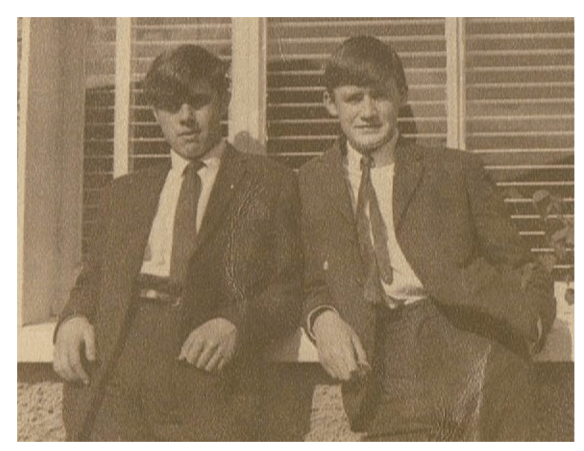
Francis Joseph Bigger (1863-1926) was born in County Antrim, the seventh son of a seventh son. He was a lawyer, antiquarian and Irish language revivalist, imbued with rural, De Valeran ideals. A big wheel in the Irish Cultural Revival, Bigger was a mentor of Herbert Hughes in the compilation of Songs of Uladh and Irish Country Songs. Living the life of a colourful laird, Bigger renovated Jordan’s Tower in County Down, which he renamed Castle Shane. This was in honour of Shane O’Neill, a troublesome Earl of Tyrone in Elizabeth’s reign. Shane occupied the fortress in 1565 in a complicated struggle with the MacDonnells of Scotland and the English. Dubbed Shane the Proud, by his detractors initially, though the name stuck with a positive association, he found himself locked in rebellion against the English and ended up with his head on a spike outside Dublin Castle in 1567. This fact filled everyone in my history class with glee at my expense. Perhaps then I decided to dispense with the O’Neill in my name, and become simply Shane Harrison. Meanwhile, Bigger, no musician, got a road named for him in Walkinstown’s Melodies.

shane3

Shane O’Neill Harrison poses as a Laird

Robert O’Dwyer (1862 – 1949), born to Irish parents in Bristol, moved to Dublin in 1897. He taught music at the Royal University of Ireland, a precursor of the National University and conducted the Gaelic League choir. With the spirit of the times, he turned towards Irish Nationalism which found voice in his composition. His three act opera, Eithne, was published in 1909, and vies for consideration as the first Irish language opera. Muirgheas by Thomas O’Brien Butler was a couple of years earlier, as was Esposito’s and Hyde’s the Tinker and the Fairy, though these were first performed in English. 

Vincent O’Brien (1871-1948) was born in Dublin and gave his first piano recital in 1885. Shortly afterwards, he became organist in Rathmines Church of Mary Immaculate, Refuge of Sinners before graduating to the Pro Cathedral in Marlborough Street. He initiated the Cecilian Movement in reaction to Enlightenment philosophy and founded the Palestrina Choir in 1898. Such devout Catholicism made him an obvious choice as musical director for the Eucharistic Congress of 1932. He was the first musical director of Radio Eireann, holding the office until 1941. His influence transcended narrow religious affiliation. He was a vocal coach for John McCormack, Margaret Burke Sheridan and James Joyce. The first two would achieve great fame with their singing voice, the third would infuse world art with an altogether different type of voice. Dubliners, Portrait of the Artist and Ulysses unite song and story in a way that effected a transformation of literature. 

Revolutionary_Joyce

James Joyce – Writer as Revolutionary

What would Vincent O’Brien make of it all? Perhaps he was misguided by Flann O’Brien’s fabulous assertion in the Dalkey Archive, that Joyce lived on happily in hiding, repairing semmets for the Jesuits in anticipation of their favour. But if he looked up from his road, he would see Walkinstown Library loom, repository of books and all the dangerous ideas they hold.