Wicklow’s Wonderful Coast -5

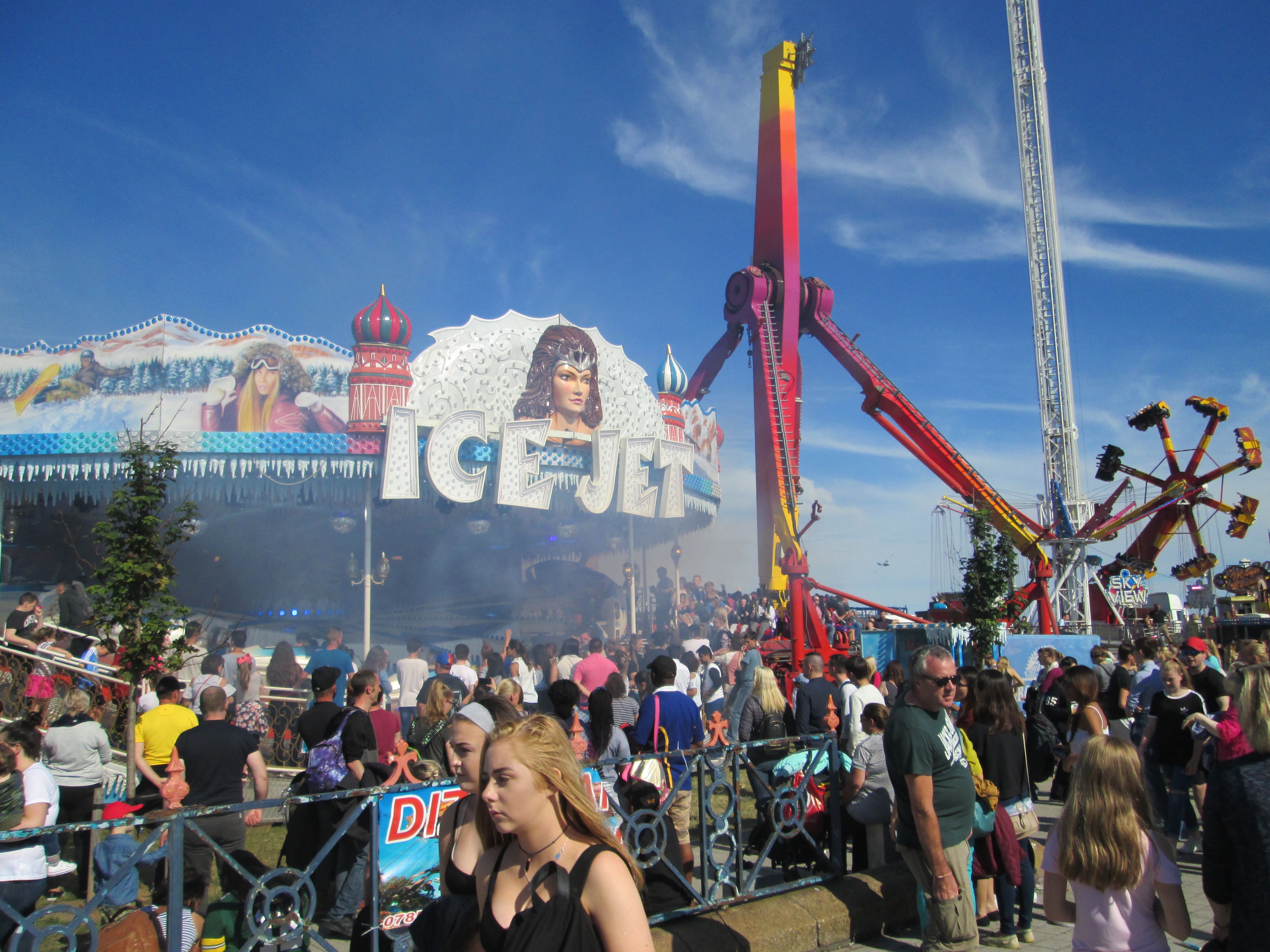
Swingboats are a metaphor for love. You are both in the same boat, swinging together, held close and apart by centrifugal force, sawing between ecstasy and nausea, seeing nothing but your love and a swirling sky. Shortly after moving to Bray, M decided to test this particular equation with a full on swingboat ride. When my head stopped spinning, a half hour or so after touchdown, I realised I had enjoyed it. This proved useful in rearing our children. Children, I soon discovered, like nothing better than being propelled through space at dizzying speeds with clashing trajectories. Helter skelter, ferris wheel, and dodgems, and several infernal modern devices, are magnetic attractions. There is no opting out. The only way to keep nausea at bay is to scream or, and certainly if you’re a man, shout. 

Where better to try it out. Bray was granted its license for market and annual fair by King John in 1213. At the southern extreme of the Pale, it was defended by a couple of castles from the Wilde Irishe, the O’Byrnes and O’Tooles, who had been banished to the mountains. I somehow imagine them in checked shirts, ragged beards and jugs of hooch, with names like Zeke and Zeb, but that might be a later incarnation of the hillbilly tribes overlooking Wicklow’s Wonderful Coast.

By the early nineteenth century Bray had developed from a small manor town into a sizeable industrial town with milling, brewing, distilling and lucrative inland fisheries. The first seeds of the seaside resort were sown in the Romantic era, as poets, painters, writers and philosophers extolled the virtues of the sea air and the spectacle of mountain scenery. Bray is rich in both.

Dargan, having brought the railroad, established the seafront in its current form. The middle classes could make Bray their home and it became the fashionable resort in Victorian times, dubbed the Brighton of Ireland. After the war torn years of the early twentieth century, Bray went more downmarket. But the funfair still buzzed and the masses thrilled to dancehall sweethearts and rock n roll stars, dancing and romancing until the lights finally dimmed. Then, in the eighties, a new wave of migration from Dublin was greased by the coming of electric rail. Where would we be without DART? 
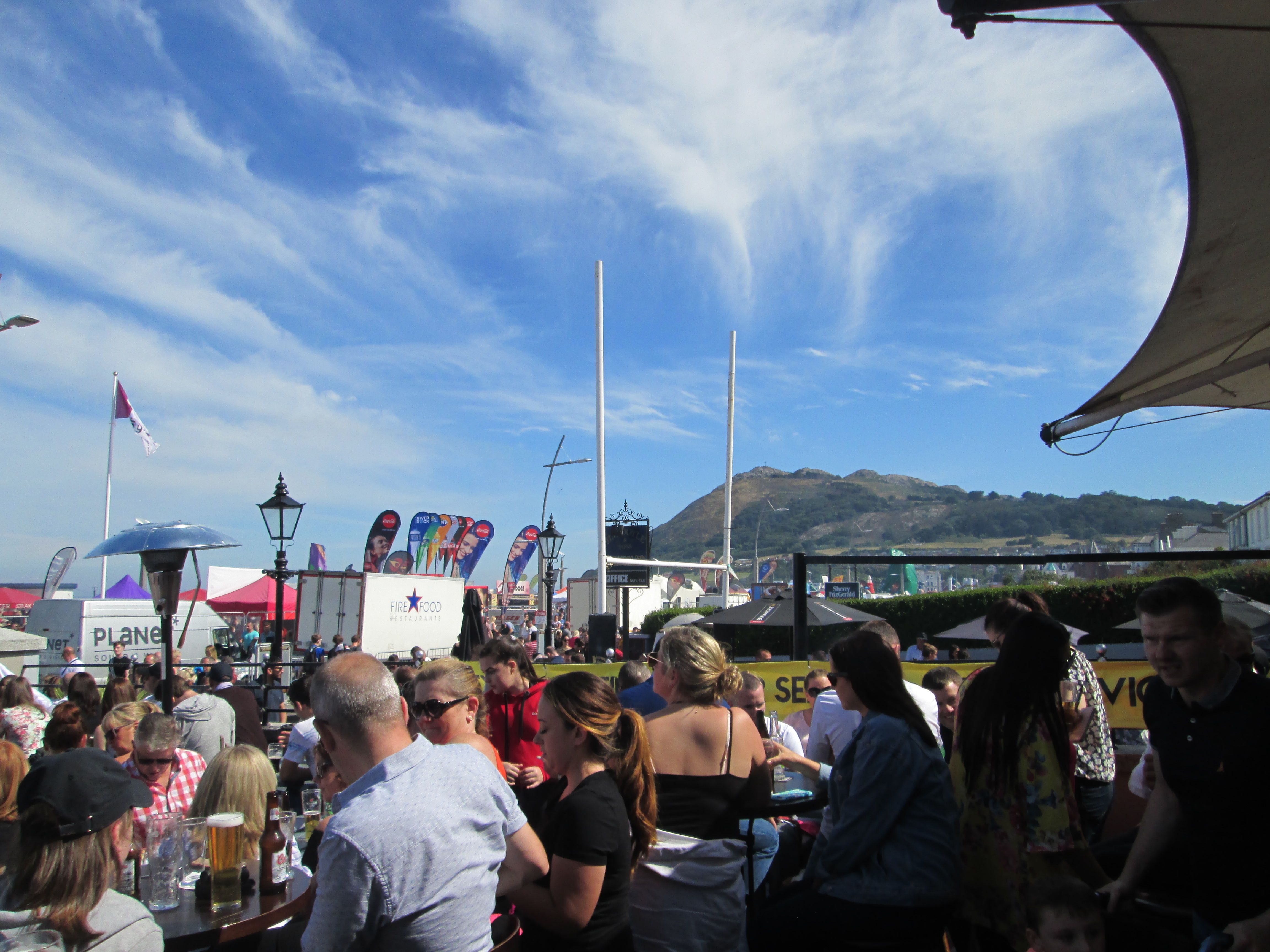
Brays promenade is populated as much by locals as daytrippers and tourists. Bars and eateries with large sea facing terraces abound. Opposite the bandstand, a trio of long established premises are prominent. The Martello is a hotel and venue, home to Bray Arts soirees and music gigs. The original Porterhouse, with branches in Dublin, London and New York was next door, but in recent years changed ownership to become the Anchor. Jim Doyle’s is a renowned rugger pub. with goalposts at the gate and an elegant Jacobean facade. All serve food and segue into the wee small hours as night clubs.
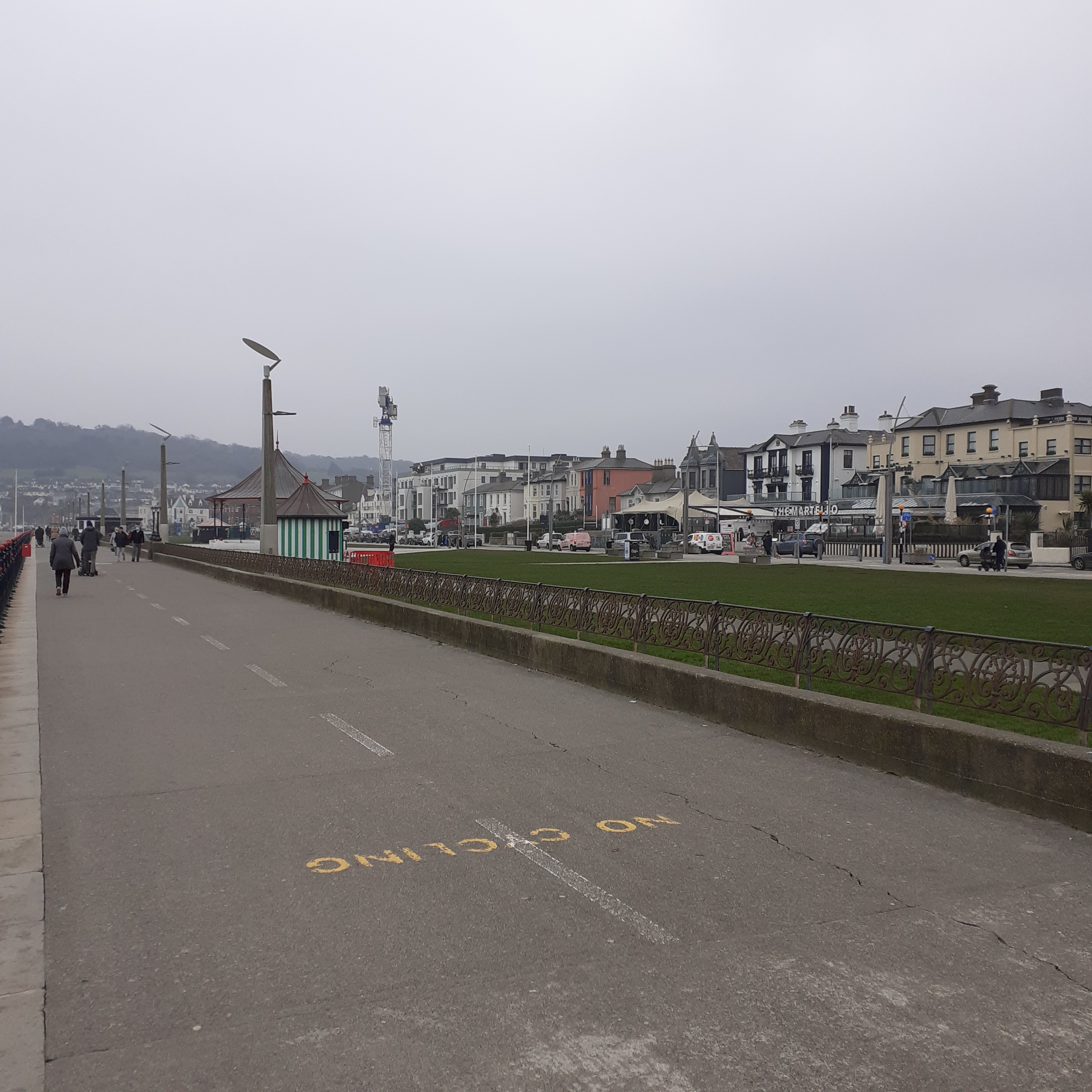
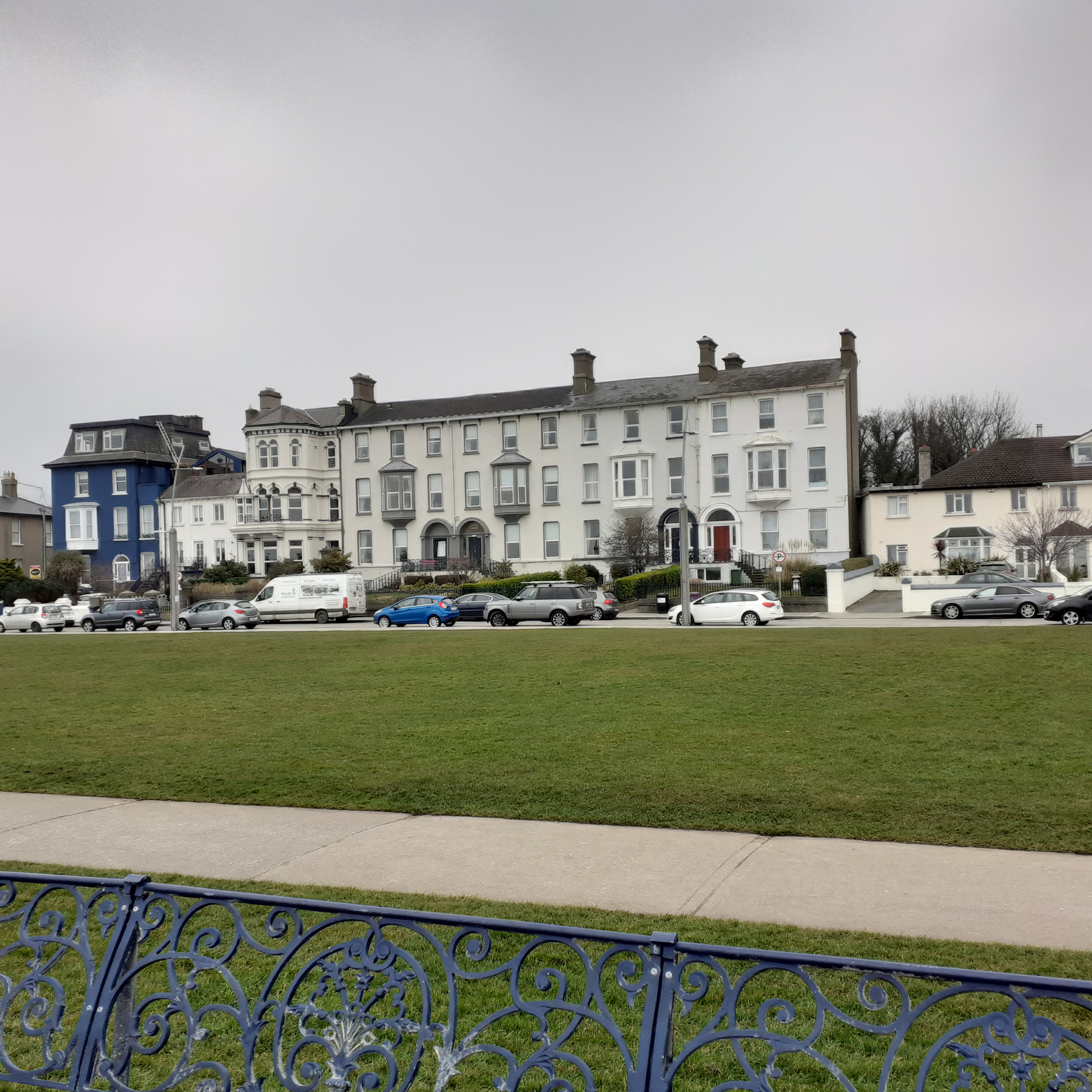
The legacy of grander times endures. Victorian terraces line the seafront, top o the range residential and summer homes for the great and the good migrating from Dublin. Joseph Sheridan le Fanu stayed in the 1860s in a house with the Yeatsian name Innisfree. Lennox Robinson, dramatist, also lived here for a time. Robinson was manager of the Abbey Theatre for almost fifty years until his death in 1958. As Organising Librarian for the Carnegie Trust he was instrumental in founding Ireland’s public library service. Bray’s Carnegie Library, towards the old town, is part of that legacy.
Le Fanu grew up in Chapelizod, west of Dublin’s Phoenix Park, where his father was Church of Ireland rector. The House by the Churchyard is drawn from that environment. Written in the 1860s but set a century earlier, it is full of Le Fanu’s characteristic gloom with a plot that blends mystery and history. Le Fanu was later persuaded to set his stories in a more lucrative and British environment which he did with Uncle Silas. Using an earlier Irish based story Passage in the Secret History of an Irish Countess as template, it became his best known work. Le Fanu fell ill on completing the novel and came to Bray to recuperate. The bracing sea air was thought to be a boon. Le Fanu’s literary mind stayed focussed on darker things. His final collection, In a Glass Darkly, was published in 1872, a year before his death. It includes the novella, Carmilla. Carmilla, like Uncle Silas, has a first person female teenager narrator. She falls under the seductive spell of the eponymous Lesbian vampire. Both concept and execution made for a provocative mix in those days. The story influenced Bram Stoker’s Dracula, and anticipated the more erotic modern depictions of Vampirism. It was said he died of fright, implying that he was a man with a window to the supernatural. In fact, Le Fanu’s narratives were carefully ambivalent about the supernatural, maintaining the possibility of rational explanation. But they would make your hair stand up in fright.

Chanteuse Sinead O’Connor lives nearby. O’Connor was an early protege of U2’s Mother Records, making waves with her first album The Lion and the Cobra. Her version of Prince’s Nothing Compares 2U was a breakthrough hit for her in 1990.

I go out every night and sleep all day

since you took your love away

it’s been so lonely without you here

like a bird without a song

Never without a song, she has courted success, adulation and controversy ever since. A man I met in a bar told me his curiosity was piqued by a note pinned to her porch window. He snook up the drive to read it, squinting to decipher the small writing which demanded: Please do not peer into this window!
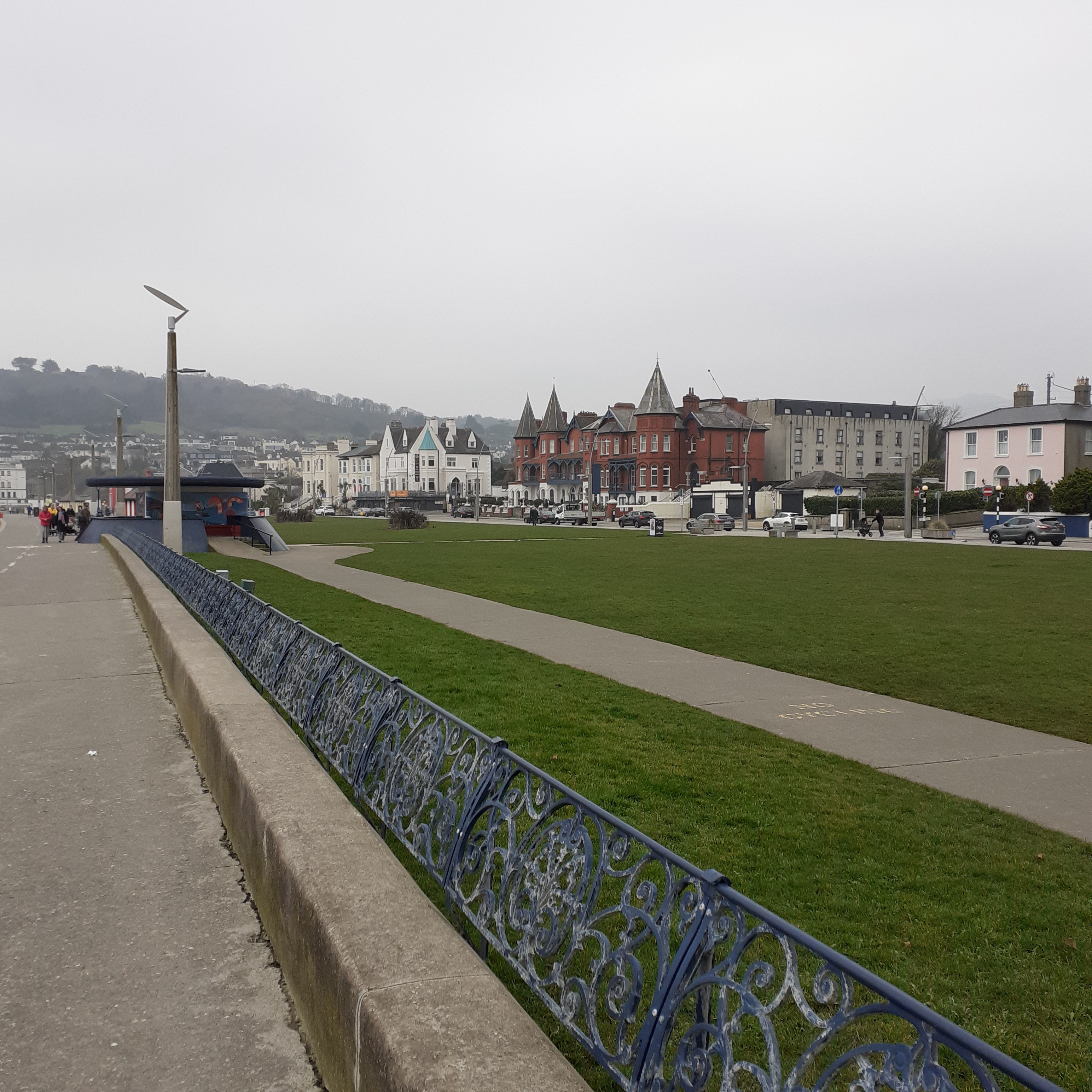
Farther on, the architecture blossoms into the extravaganza of the Esplanade Hotel. Built in the late nineteenth century, it is a three story red brick crowned by three conical turrets giving it the profile of an exotic chateau. Next door, the Strand Hotel, originally Elsinore, was owned by Oscar Wilde’s parents, Sir William, the renowned surgeon and Lady Jane. Jane, wrote under the pen name Speranza, and was a poet, folklorist and passionate advocate for Irish revolution and women’s rights. In the 1860s William was accused of molesting a female patient and Jane, leaping to his defence, became embroiled in a court case which she lost, incurring expenses but, tellingly, damages of only a farthing. When William died bankrupt Jane lived out the remainder of her life in poverty. She was buried in an unmarked grave in London

Oscar’s trials began with his inheritance of the property. Problems with the sale in 1878 resulted in a legal suit which was sorted in his favour, but he was stuck with costs. His more famous trial in the 90s saw him imprisoned for two years for gross indecency with other men. In literary terms it yielded the Ballad of Reading Gaol, which may have been influenced by his mother’s writing. She died while he was in prison.

I never saw a man who looked

With such a wistful eye

Upon that little tent of blue

Which prisoners call the sky,

And at every drifting cloud that went

With sails of silver by.
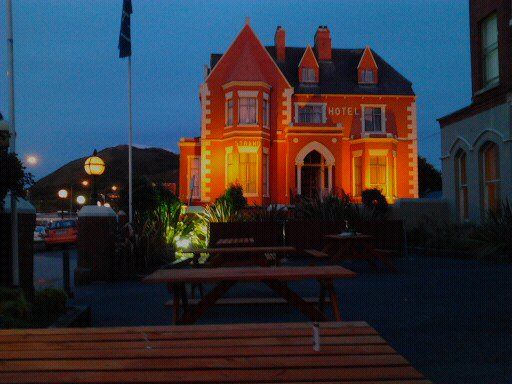
The Strand Hotel for a long time hosted Abraxas writers group, where I honed my skills alongside bridge clubs, poetry slams and Lions gigs, aye, with football on the telly and many’s the pint of beer. The Strand itself suffered unhappy demise some years back. Under new management, it is now known as Wilde’s.
The Snow Tree

In the recent snow, myself and M took a walk through Kilruddery on the Southern outskirts of Bray. The estate is a working farm, with sheep, pigs, cattle and more besides. It’s a popular location for film shoots, with Ardmore studios nearby. Hell and Back is located here, an annual obstacle course event for the fitness fanatic, or for fools and mad. 

Kilruddery, from the Gaelic, means the church of the knight. The knight was Walter De Riddelsford. In 1171 he was granted the lands hereabout by Strongbow, in thanks for killing John the Mad. The Brabazon family gained the estate in the reign of Henry VIII, and the title Earl of Meath was granted in 1623. Formal seventeenth century gardens surround the house, a damaged but grand gothic fantasy in its most recent incarnation. Beyond the garden walls, paths wind up to higher ground. Up in the hills, our hold on reality slackens further. A Brigadoon of sorts emerges, with wilderness, woodland and forest picturesquely arranged, fields loosely patchworked, unpaved paths, rugged outcrops of rocks suggesting a hinterland of wilder flora and fauna, perhaps bandits and other colourful originals. 

The spell is seasoned by the intrusions of commercial farming, the glimmer of the city on the horizon, and Bray hugging the nearby coast. Paraphernalia from Hell and Back intrudes, technological towers poke through trees, there’s a war games enclosure. Times, you enter a clearing where Vikings or Merry Men are taking a smoke break. Once, I paused with M on the outskirts of a post-apocalyptic village as the fury of tribal weapons erupted some centuries from now. The assistant director was filling us in on the shenanigans. He was unusually solicitous. Turned out he thought we were Lord and Lady Meath. Oh I should have prolonged the ruse, but it was hard not to laugh. I know the quality dress down when out and about, but not in a Dublin 12 accent. Still I felt raised up somehow. Exalted.

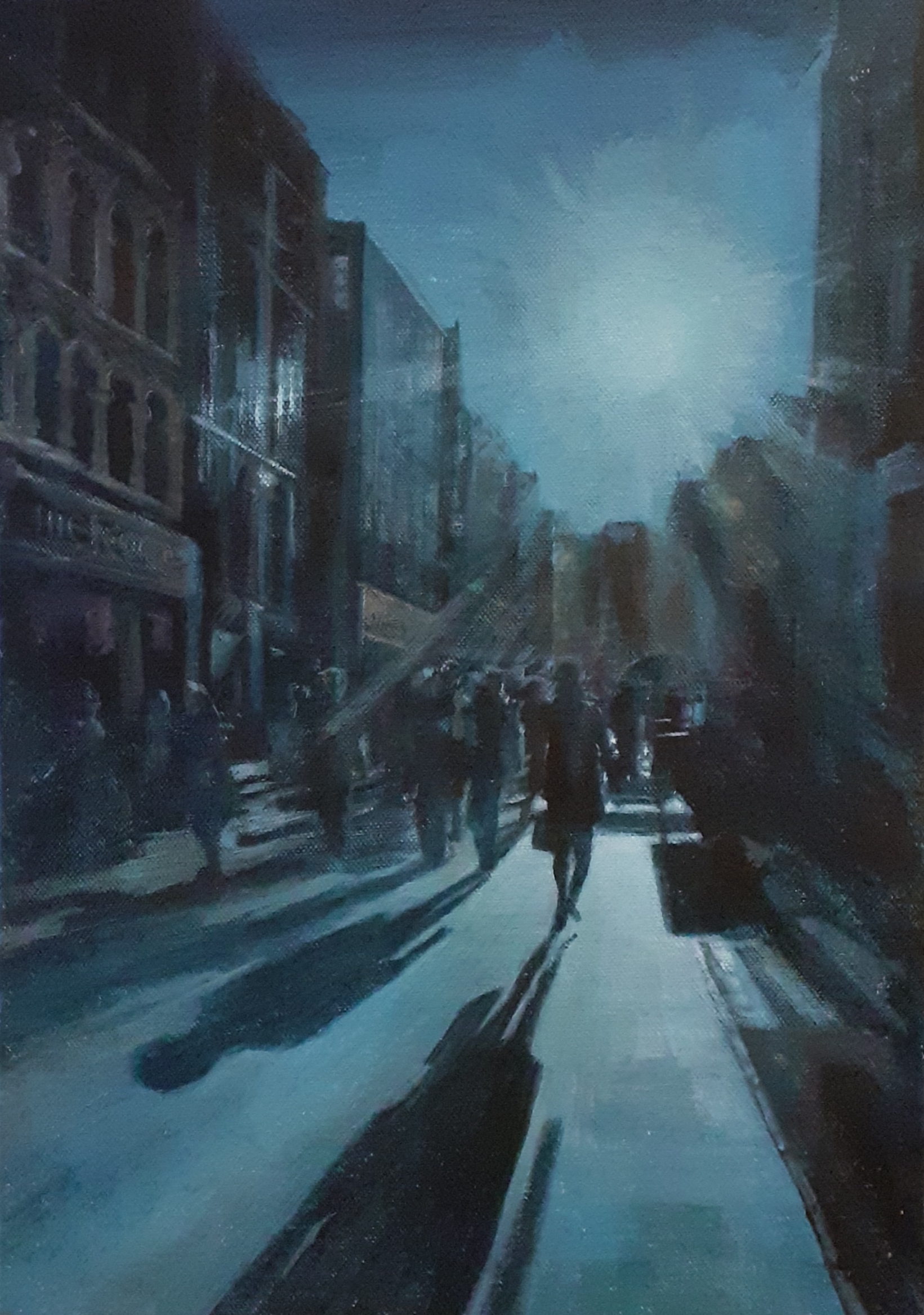
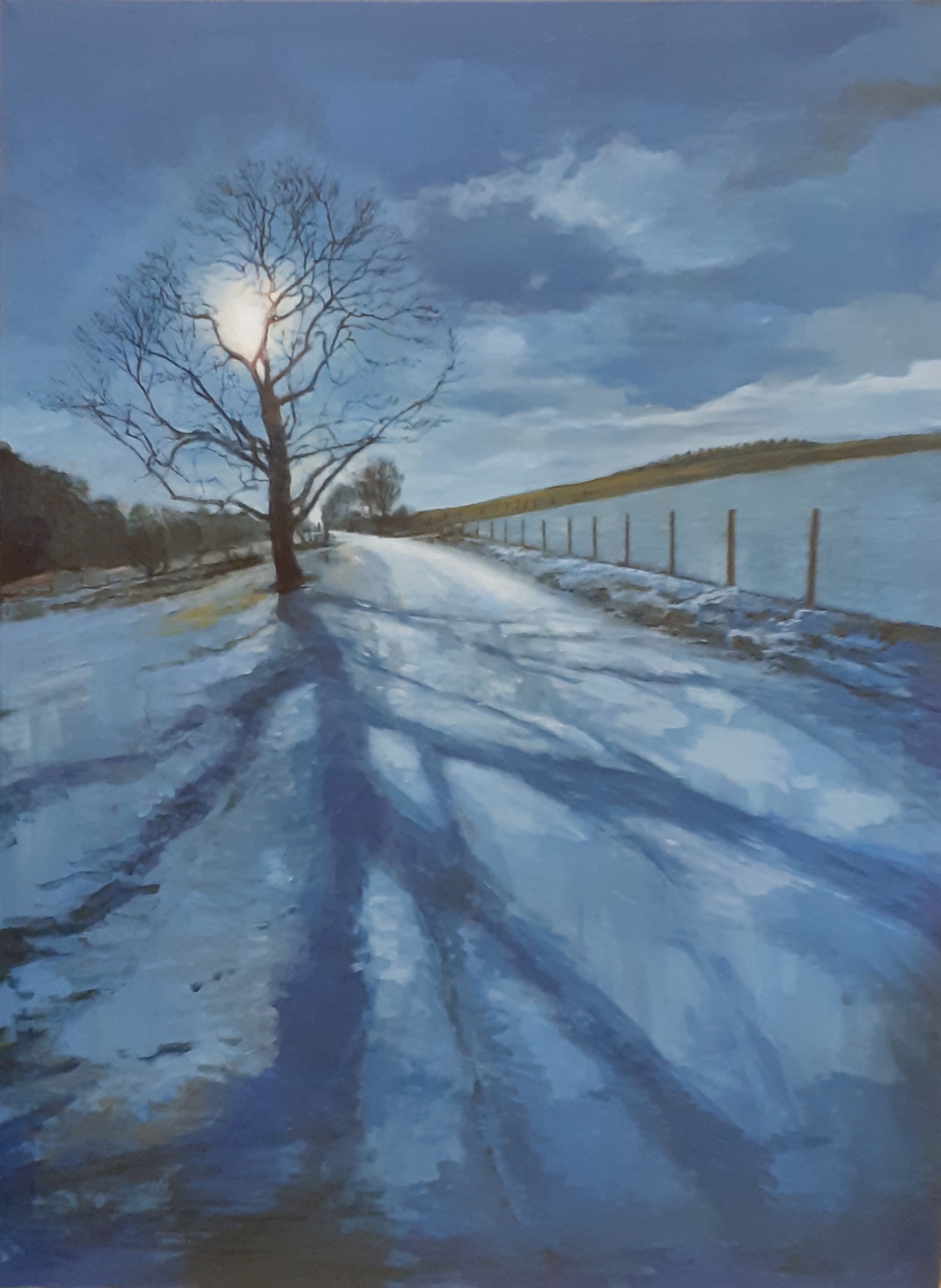
At other times, the ambience is Hardyesque. The modern world folds into the haze and you are lost in time. This acrylic painting is the biggest I’ve ever attempted. A metre tall, its size helps to capture the grandeur of the scene. I hope. Ahead, a magnificent tree spreads its arms to catch the noonday sun. We have stopped between showers of snow, the morning fall barely covering the greenery. The rugged Giltspur, or Little Sugarloaf, rises to our right. Off to the left the ground falls into woodland with the clenched fist of Bray Head off frame. Dublin is behind us on the north horizon. Far ahead, a loan figure gains the southern horizon and gazes over sea and mountain. He is an echo, perhaps, of Caspar David Friedrich’s The Wanderer Above the Sea of Fog. Or my own silhouette, waiting for me to catch up.

Climbing up on Solsbury Hill

I could see the city light

Wind was blowing, time stood still

Eagle flew out of the night

Solsbury Hill was written by Peter Gabriel when he left Genesis in 1977. Solsbury Hill’s in Somerset, England, but any hill will do. Anywhere. To me, the song conjures up that feeling of ecstasy, peculiar to finding yourself face to face within the most sublime scenery. You move from the humdrum to stand within the perfect moment, and everything becomes possible. And all on a day’s walk.

I was feeling part of the scenery

I walked right out of the machinery

My heart going boom boom boom!

Wicklow’s Wonderful Coast – 4

Bray Railway Station is the point of arrival for most visitors. It was renamed Bray Daly in 1966 for Ned Daly from Limerick, commander of the 1st battalion in 1916, and sentenced to death. He was the youngest to be executed at the age of twenty five. The War of Independence features in the station’s murals. One panel proved controversial. Originally the panel showing withdrawing British soldiers had the Union Jack being trailed along the ground. This was replaced with one where a soldier leads a wounded bulldog onto the train.

There’s a direct route from the East platform to the seafront. The main entrance, facing west, leads to the old town, a half mile’s distance via tree lined avenues of Quinsboro and Florence Roads. Heading left, we keep to our route along Wicklow’s Wonderful Coast, returning to the seafront by way of Albert Walk.

There’s a small clock tower and barometer to the right of the entrance. Henry and Rose has occupied the corner for as long as I can recall. This is the go-to place for fish and chips. A must for any day, or night, by the seaside.

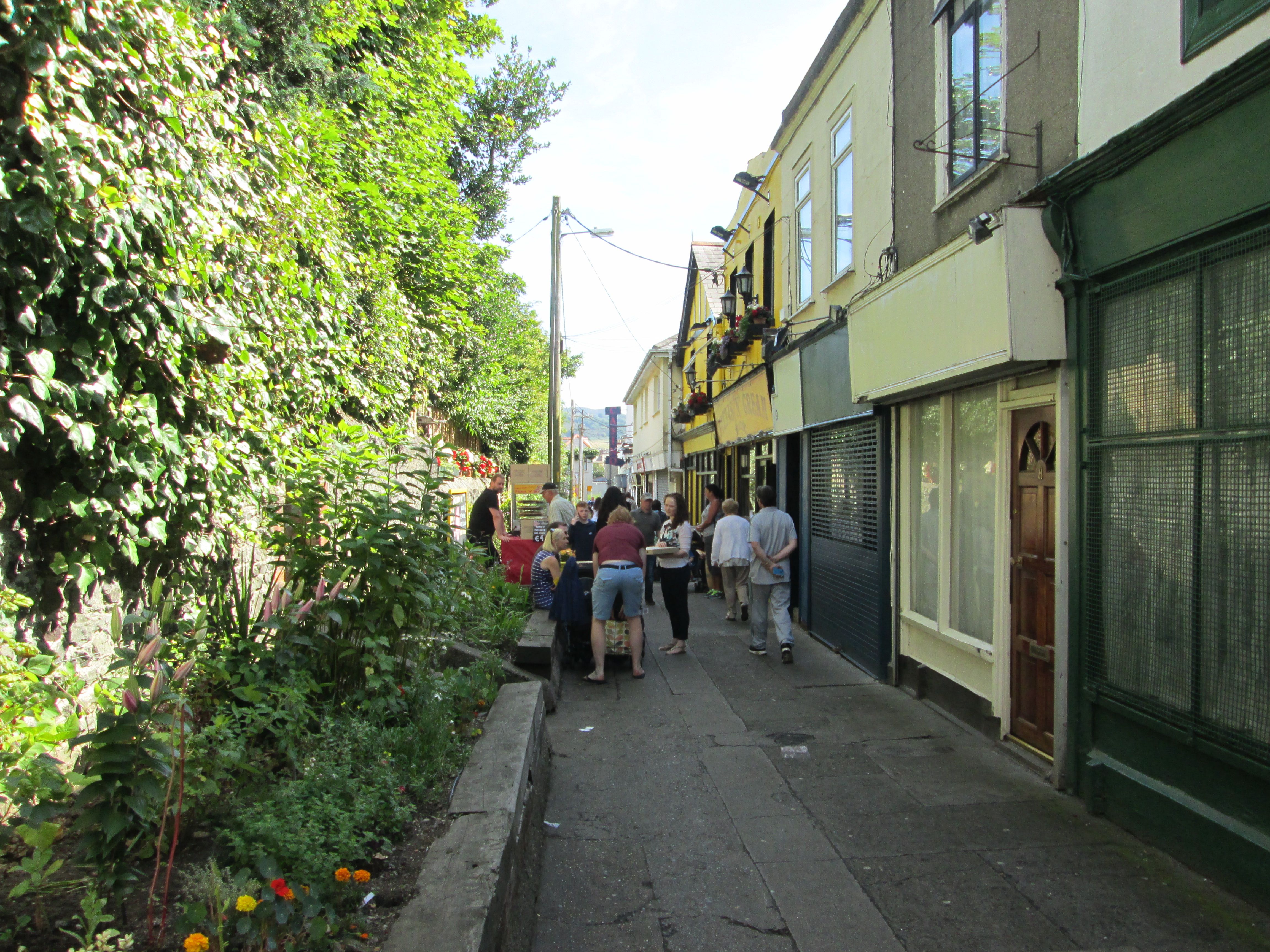
Albert Walk honours either Queen Victoria’s husband, or more likely, their son, Albert Edward, Prince of Wales and later Edward VII who has a number of roads and terraces in Bray named for him. It’s a distinctive facet of Bray and Dun Laoghaire where the nineteenth century naming survives, retaining a patina of British Imperialism despite the return of the native. The Wilde Irishe abide, of course, like the flora and fauna, forever pushing through. Interestingly, along the left hand side, beneath the wall from the Stationmaster’s House, a sloped verge has been colonised by Edible Bray for the growing of herbs. A garden in the city. The buildings house an eclectic mix of shops and cafes. The lane is sometimes jokingly referred to as Bray-jing, because of its concentration of Chinese business, at times acting as base camp for the Chinese New Year parade. The ethnic mix includes Italian and Polish, but all are welcome. Albert Walk and environs may fancifully be imagined as the tiniest miniature of the Big Apple, where Little Italy and Chinatown meet across a network of local legend.

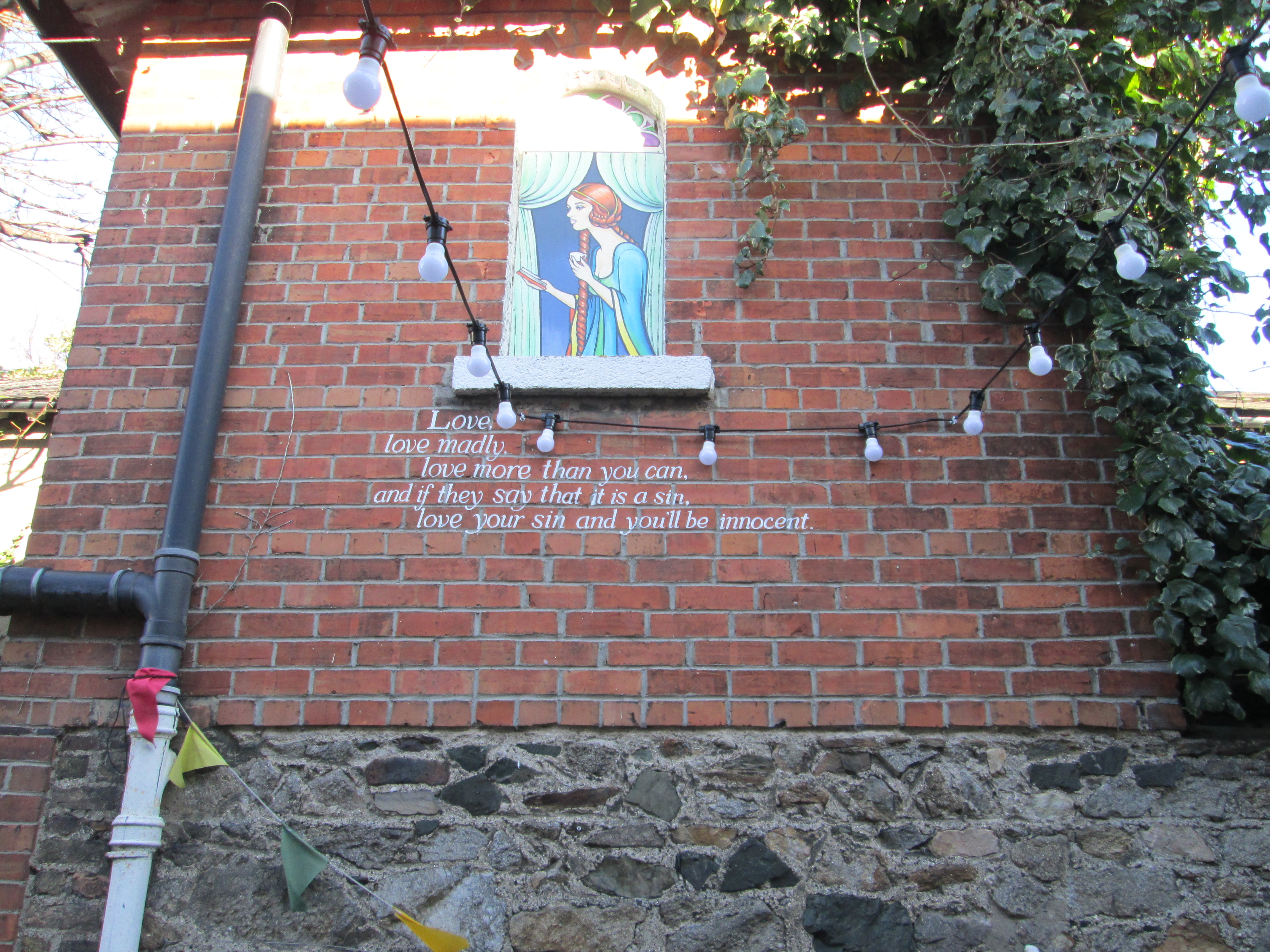
The Cafe Letterario, or the Black Cat, is a miniature Italian osteria, with excellent barista coffee, Italian specialities and wine. There are literary evenings, crowds wedged into what little space there is to listen as the bold launch into poem, song or story. Staff and paraphernalia exude a homely, though sophisticated Italian character. I like to sit in the window, or of a fine day on the outdoor bench. A mural gazes down, speaking of love. Above, one imagines washing lines painted to infinity against a mediterranean sky while Vesuvius rumbles ominously in the mid-distance.

Farther along, Pizzas. and Cream were a fixture on the Walk for thirty years or so. When I set up as a designer and illustrator here in the early eighties they were an early client. My menu illustration became an evergreen. It’s a fanciful evocation of Tuscany, or whatever Italian region happens to be in your thoughts. Design is to trigger desire in the mind of the beholder, and this seemed to work. Pizzas were good, of course, and there was a pleasant patio and garden to the rere to con you further into Mediterranean immersion.

Old favourites may go, but new flavours will take their place. There’s a rich mix of contemporary flux and ancient history in Albert Walk. An Italian name adorns another cafe, but the accents are Eastern European. The hulk of a forgotten cinema nurtures a neon casino and there’s an Asian Supermarket. 

My first published short story, Coda, was set around here. I imagined a late night thoroughfare to the dancehalls and clubs that abounded back in the heyday. And I seasoned it with some murder and rock and roll. The story won a competition in the Bray People, adjudicated by Arthur Flynn, local author and chairman of Irish PEN. Arthur, who has written some fine histories of Bray, thought that the author, myself, must have been a local rather than a blow-in. But then, as a fiction writer, I’m good at making things up. Coda, rather weirdly, is the first story in my debut collection, Blues Before Dawn, published in 1992 by Poolbeg.

Exiting the lane, we take a sharp left and head for the seafront under the railway bridge. The Signal Art gallery is tucked into the railway line. Founded as a working gallery and studios in 1990, Signal was an important step in developing Bray’s art movement. Locals and blow-ins were equally nurtured. Art openings spilled onto the pavements to mingle with daytrippers and nightclubbers. That’s entertainment.

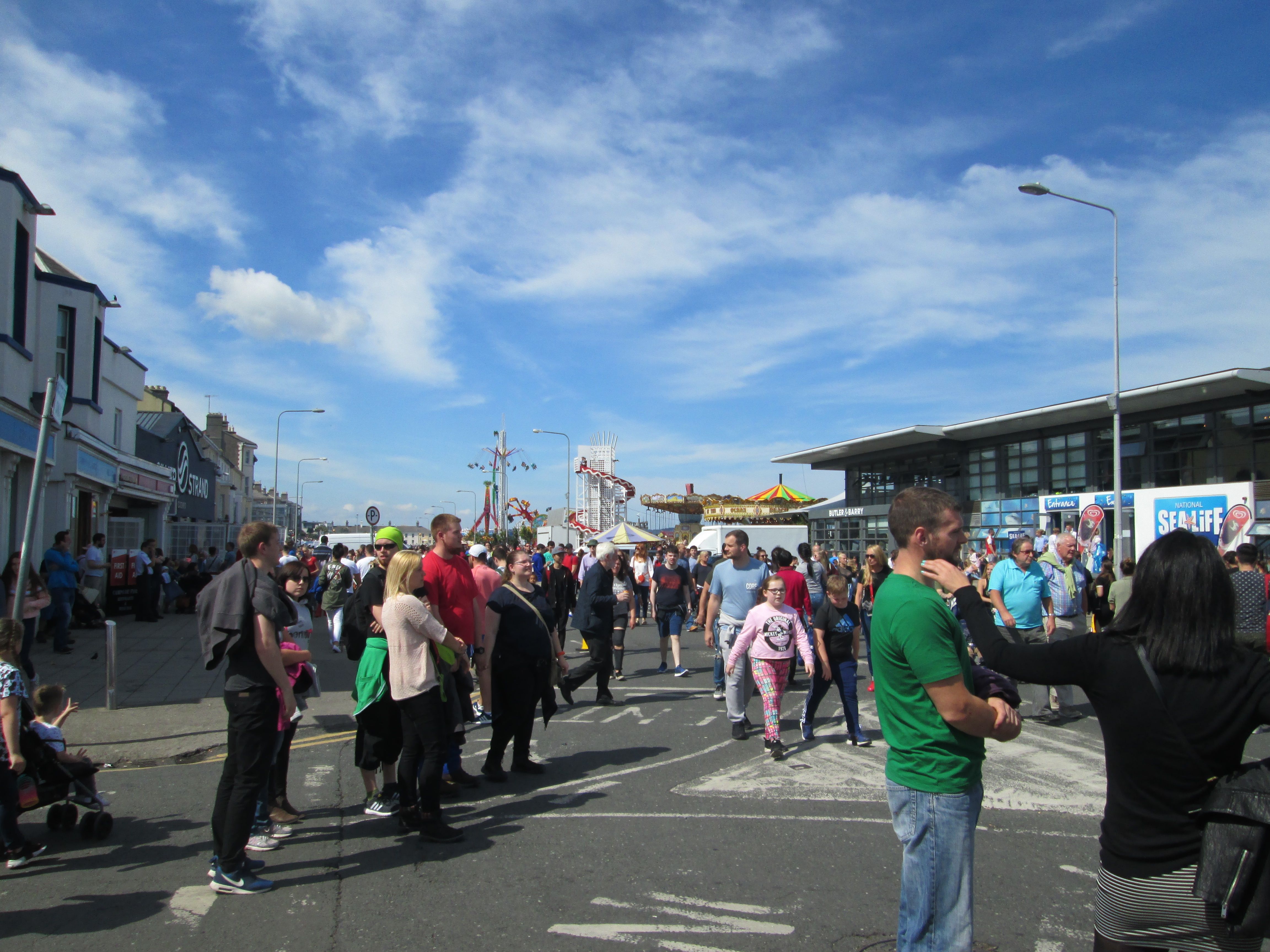
At the corner, we’re back on the seafront. The Sealife centre is the largest building on the Esplanade itself. Established in 1998 it quickly became Bray’s top visitor attraction. Within its ingenious environment a mix of exotic and local sealife circulates. Visitors mingle in inner space with sharks, stingrays, piranhas and the occasional octopus. Admission tickets give all day access, a typical visit taking about ninety minutes.

Asides from the main attraction, there’s a ground floor cafe. Butler and Barry’s Gastro Pub takes up the top floor. Excellent for a late evening meal, when the theatrical effect of the interior is at its peak, with the glass wall filled with rolling blue sea to the Eastern horizon.

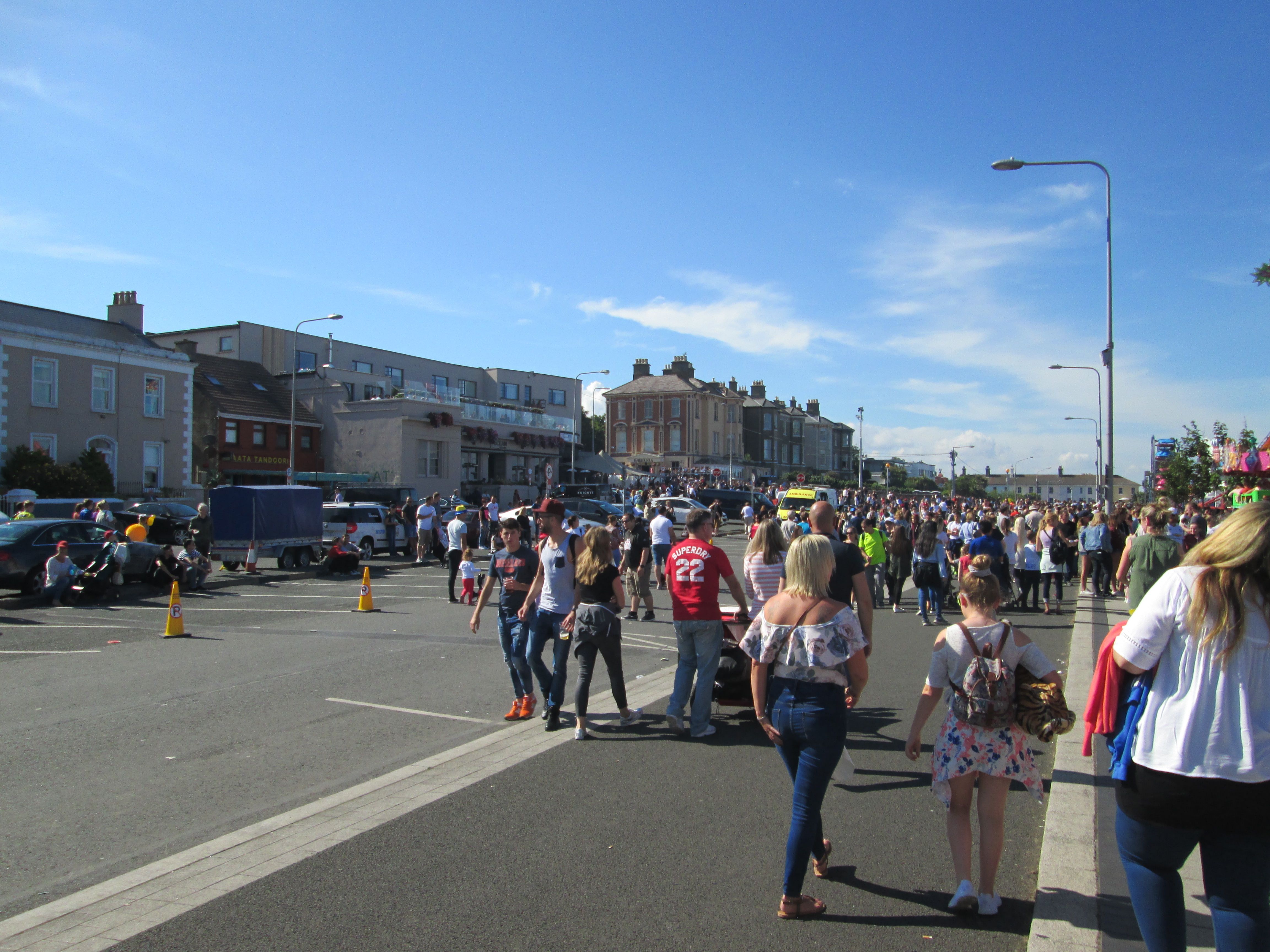
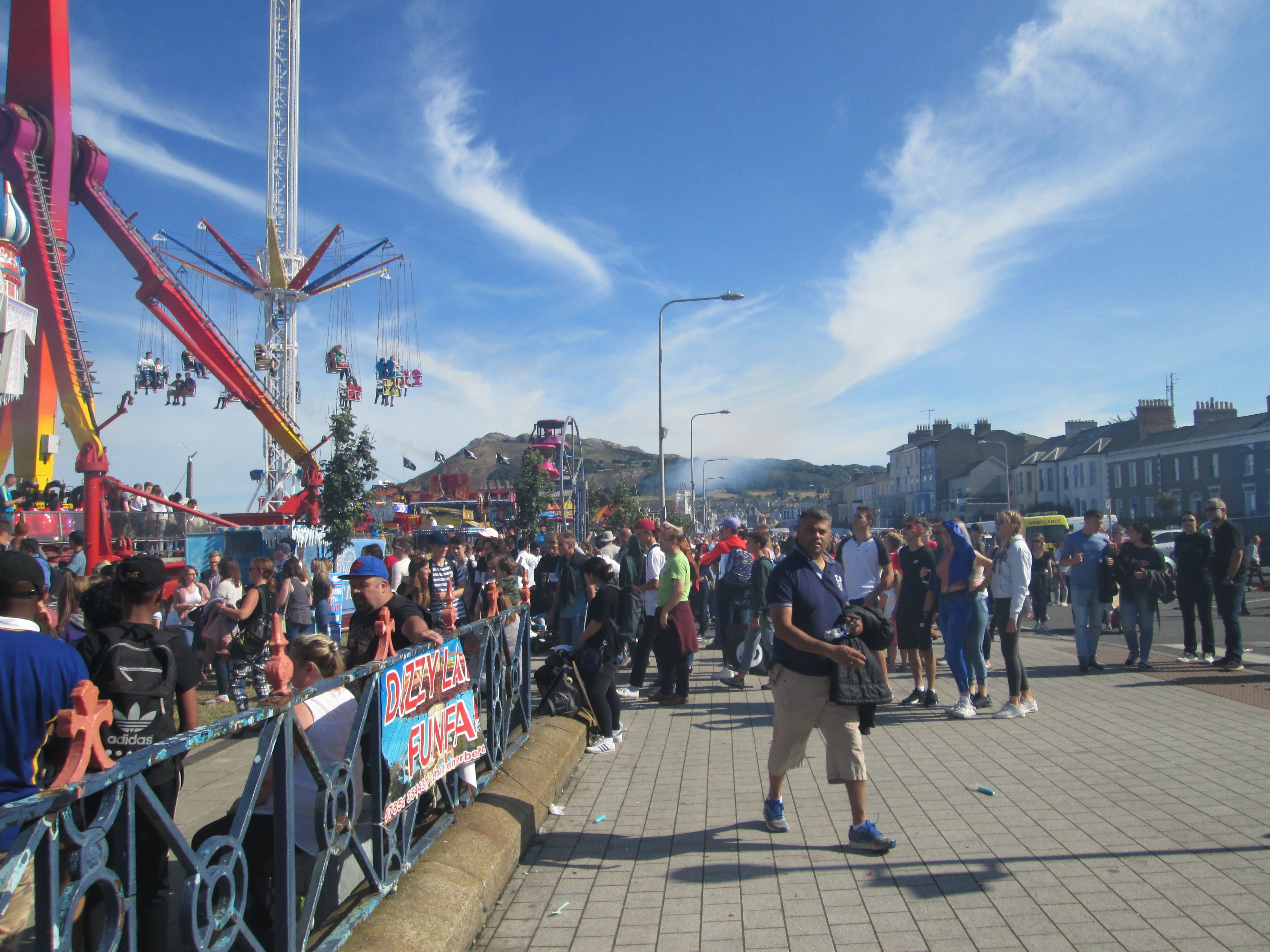
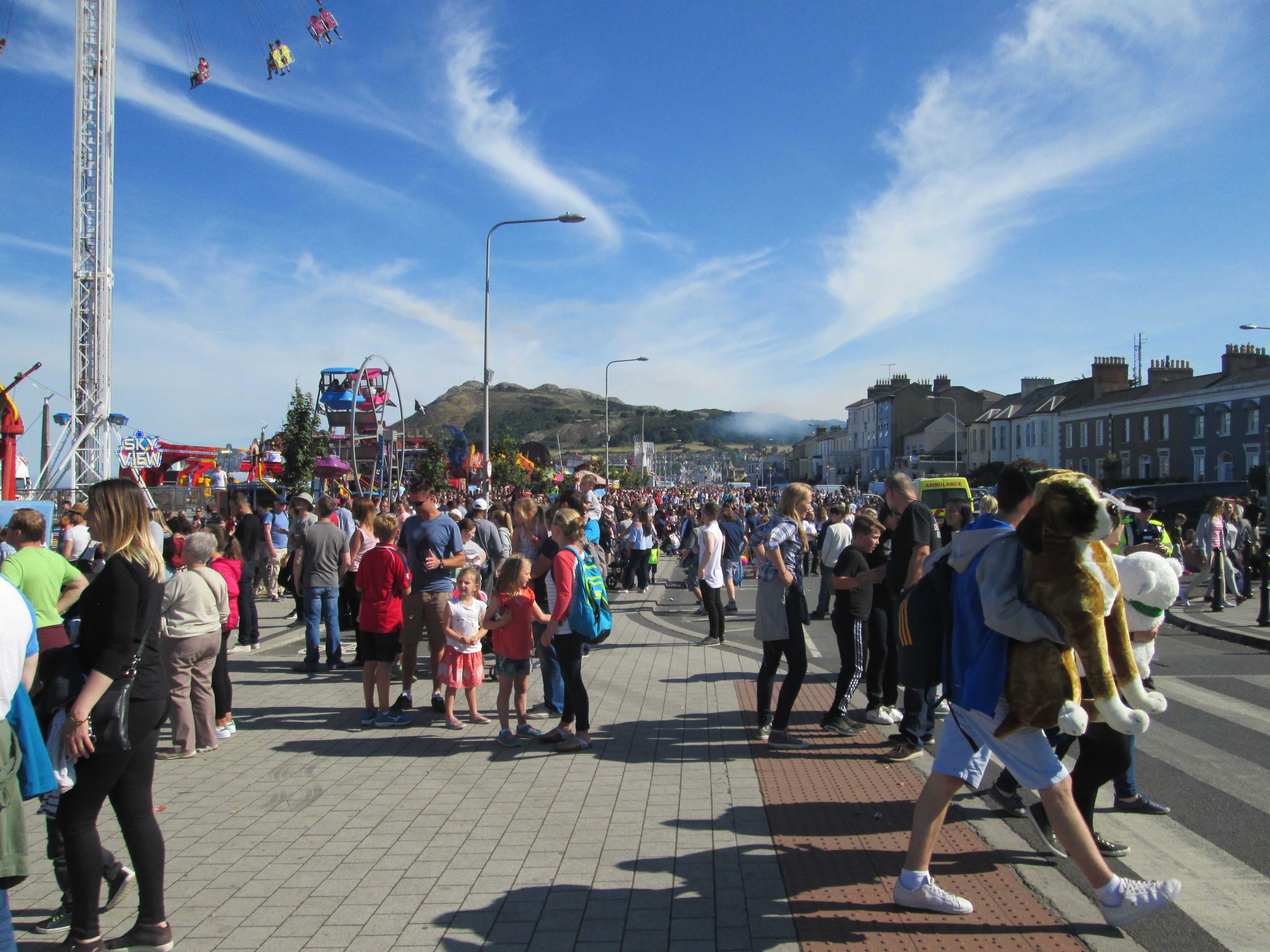
The Carnival occupies much of the northern esplanade in season, and spills farther south during festival. The Bandstand dates from Victorian times, but the focus of crowds on music remains, if the music itself has changed. Resorts like Bray used to conjure up marching bands, all brass and blazers, an audience lounging in deck chairs. That very English oompa oompa had by the sixties merged with the more surreal visions of the Beatles circa Sgt Peppers Lonely Hearts Club Band. The young and the old mix. They always do. Showtime in August sees big attractions on the Bandstand, culminating in the frenzy of fireworks night. The Annual airshow is also a major focus, packing a hundred thousand onto the seafront and the Head.

Amongst those threading the boards there have been ubiquitous tribute bands with a sprinkling of originals. I’ve seen the Undertones, Mary Black and local heroes the Cujo Family. It ain’t always rock and roll, but somebody’s going to like it.There’s always a soundtrack and all the fun of the fair.

Are teenage dreams so hard to beat?

Everytime she walks down the street

Another girl in the neighbourhood

Wish she was mine, she looks so good

Teenage Kicks was the first single of Derry punk rockers The Undertones, released in 1978. It must have been thirty years later when I saw them perform it in Bray. I know, you’re only young once, but sometimes it’s good to remember.

I’m gonna call her on the telephone

Have her over ’cause I’m all alone

I need excitement oh I need it bad

And it’s the best, I’ve ever had

I wanna hold her wanna hold her tight

Get teenage kicks right through the night

Wicklow’s Wonderful Coast – 3

I’m the type of guy that likes to roam around

I’m never in one place I roam from town to town

And when I find myself a-fallin’ for some girl, yeah

I hop right into that car of mine and ride around the world

Yeah I’m the wanderer, yeah the wanderer

I roam around around around

written by Ernie Maresca and originally a hit for Dion in 1961, The Wanderer has been covered by the Beachboys and Bruce Springsteen, amongst others.

There are swans in the harbour, seagulls on the seafront, and starlings just about everywhere. It nearly takes me back to Cornwall, shielding sandwiches from savage gulls on beach picnics all the way from Penzance to Mousehole. There I understood where Daphne Du Maurier got her inspiration for The Birds. Wisely, Irish people are not inclined to throw food away, other than to the odd swan. Outdoor eateries discourage the habit. Bray’s birds are to be enjoyed, and left to their own devices. Seagulls, for their own part, may wander inland, as may we, making our way along Wicklow’s Wonderful coast. Beyond the level crossing, the Carlisle Grounds are home to Bray Wanderers. The soccer team has twice lifted the FAI Cup, in 1990 and 1999. For most of this century they have played in the top division of Irish soccer, but were recently relegated. Small crowds still huddle in its stand, sending up samba beats and the mournful call: Seagulls!

Across from the Carlisle Grounds stands Bray Bowl. Originally this site was occupied by the International Hotel, the largest in Ireland when it was built in 1862, reflecting Dargan’s optimism about Bray’s development as a resort. The Hotel ran into hard times during the Great War and after independence it remained derelict for a while. During the Emergency, it was garrisoned by the Irish Army and returned to the hotel trade afterwards. Although Bray boomed again as a tourist resort in the fifties and sixties, good fortune would not smile on the International. The new tourist boom was more downmarket from Dargan’s day. There were plenty smaller, less expensive hotels in the town. Nearby, the Arcadia rocked to the sounds of Roy Orbison and Brendan Bowyer, but the International was suspended in amber, an album of monochrome photographs of a fading past. On a night in June, in 1974, fire broke out. The few remaining residents escaped but the building was gutted. Development took another fifteen years, before completion of the bowling alley and games arcade.

Bray Railway Station was built in 1854 when the line connecting to Dublin opened. Designed by George Wilkinson, designer of Harcourt Street station, the original Dublin terminus for Bray which closed in 1959. It is a long, single storey Italianate building facing onto a haphazard plaza. To the rear, the original roof sweeps into a huge overhang to shelter passengers. Although the track had pushed on to Greystones by 1855, the East platform was not added until 1928. It is laid out beneath a glass canopy on caste iron supports.

DART, for Dublin Area Rapid Transit, arrived in 1984. DARTs average every fifteen minutes, taking forty minutes to reach central Dublin. The fast and frequent commuter service facilitated a population boom. By the end of the century Bray’s population doubled to over thirty thousand people, including yours truly. Bray station remains a busy hub, perhaps at last fulfilling Dargan’s expectations for the town.      

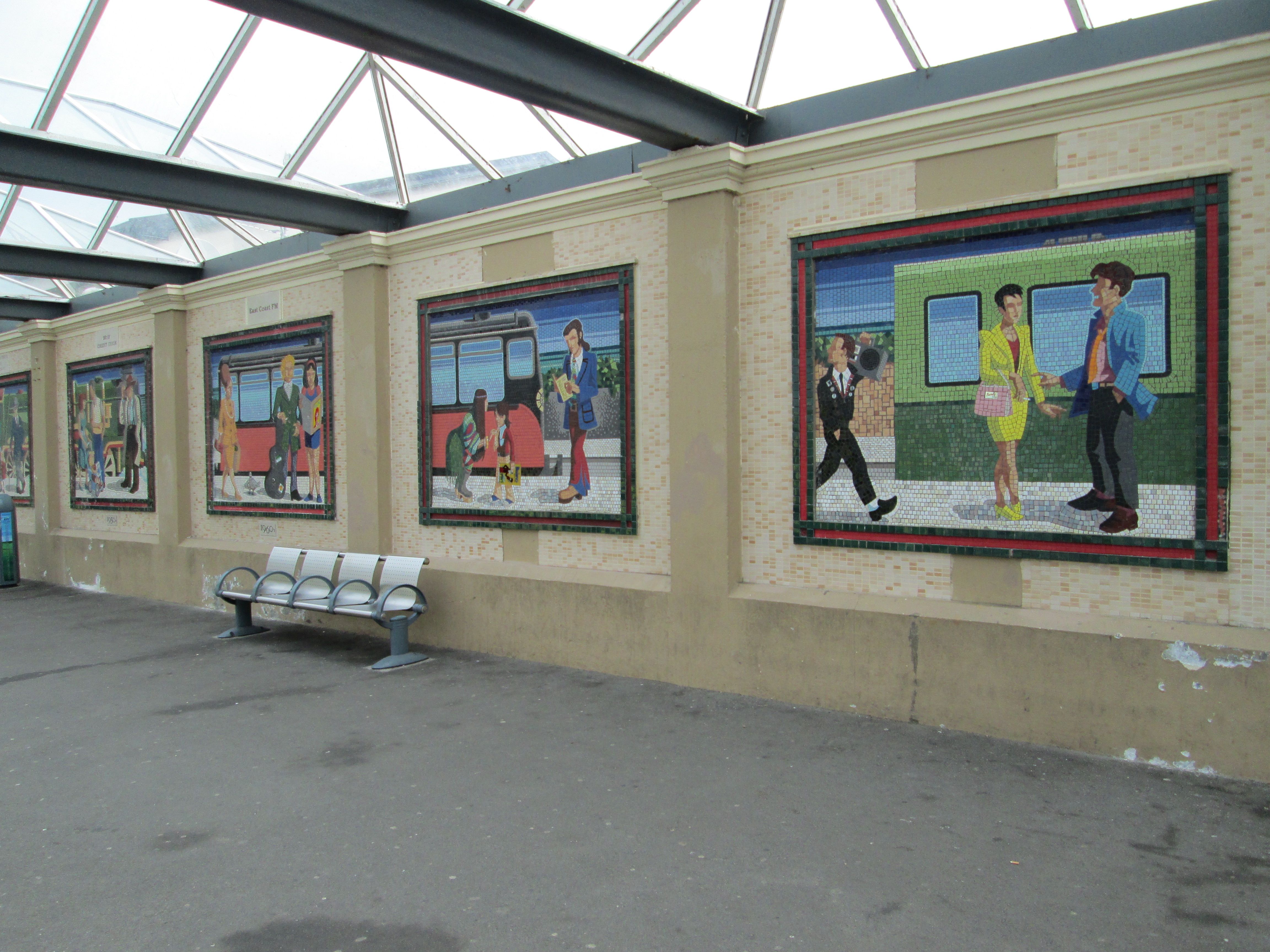
The station is distinguished by a fine mural along the length of the eastern platform. The project was initiated by the Bray Community Arts Group in 1987. The group, formed to foster art activity and push for greater facilities including an arts centre, sponsored the competition to design a mural for the station. Jay Roche and John Carter, then students at Dun Laoghaire College of Art, won the competition by popular vote with their proposal for an illustrative sequence of Bray since the Steam Age. They painted nineteen panels commemorating the history of the station from its foundation in 1854 up until the 1980s. Every picture tells a story, from retreating British soldiers after the War of Independence, to mods, rockers and hippies heading off to Rock Festivals.

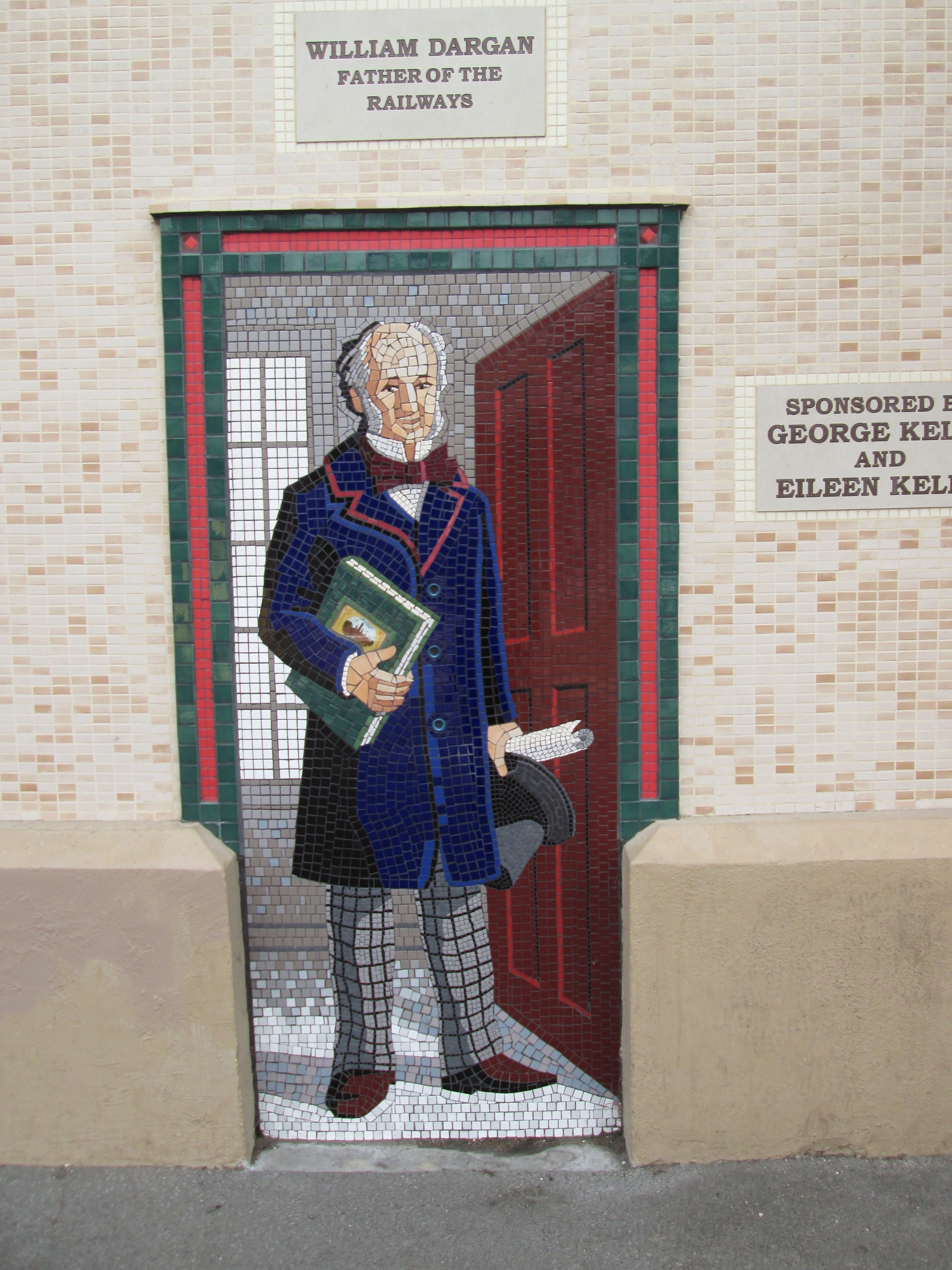
Well known faces include Eamon DeValera, James Joyce and Oscar Wilde. It was Sir William Wilde who owned property at the southern end of the seafront and after his death, caused Oscar to be summoned to Bray Courthouse when dispute arose over his inheritance. That went poorly, but other more ruinous courts awaited him. And, of course, there’s panels devoted to the main men of the railway: Isambard Kingdom Brunel and William Dargan.

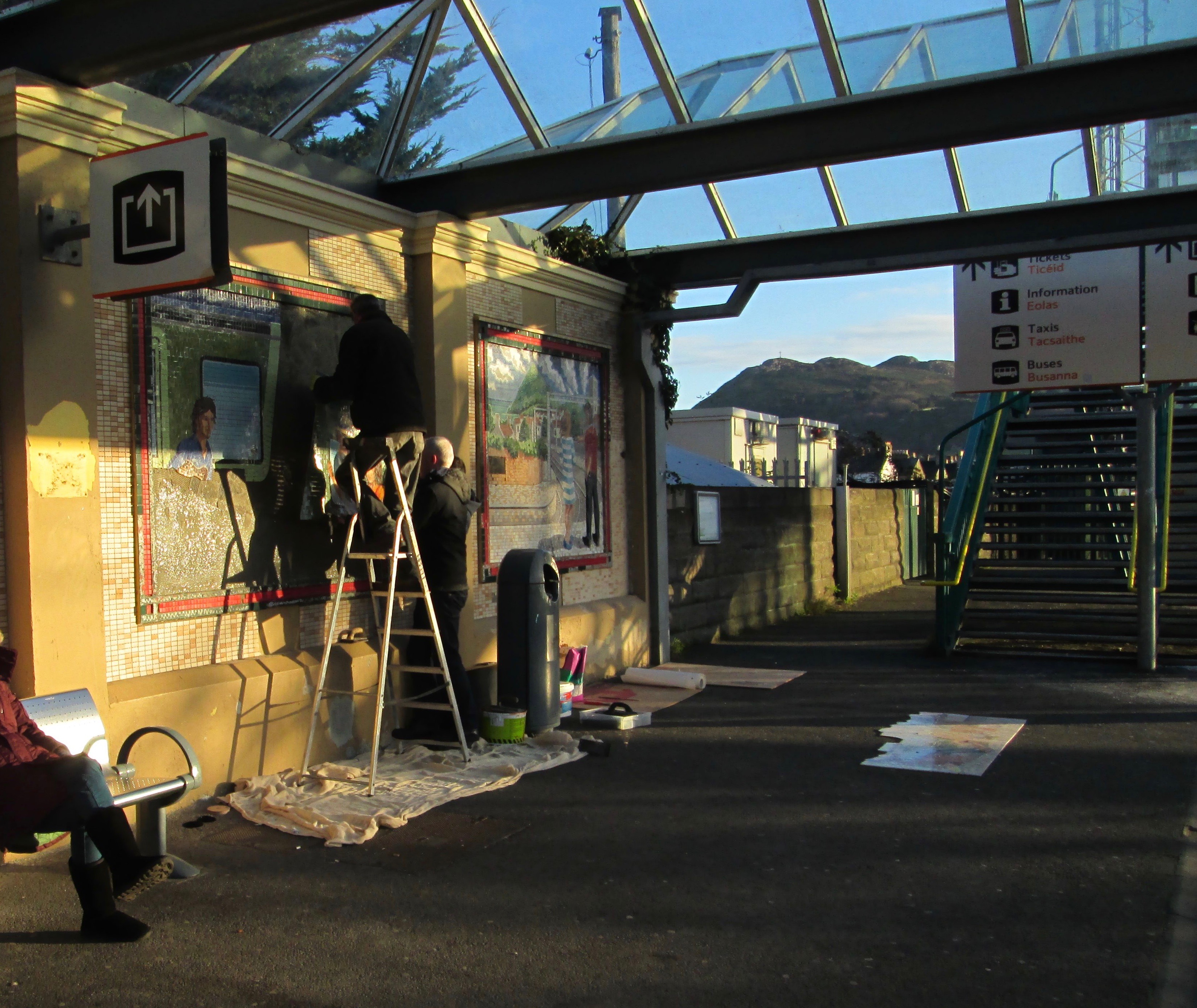
The briny sea air meant that the painted mural had badly deteriorated by 2010. The original artists had formed the company Triskill Design and built up an impressive portfolio of commercial murals and interior design. They took on the Mural to Mosaic project, instating tiled mosaics for the faded originals.

Walk along its length and see the story start with a photograph – how modern can you get! – then move on through the leaves of time to finish, brightly, with a panorama of Bray and its big green mountain. There are battles and love affairs, and many’s the song to sing.

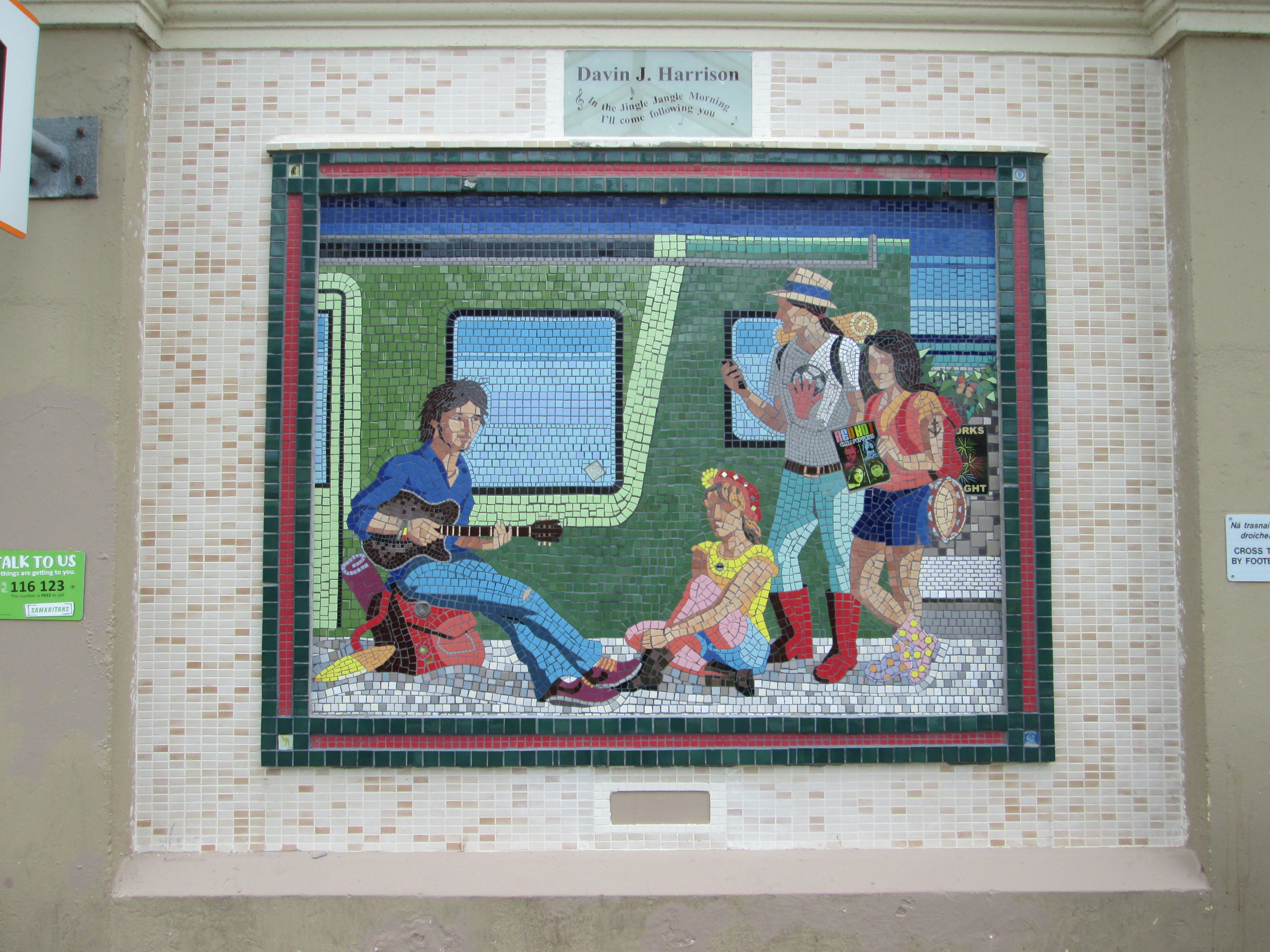
At the southern end, as we step into the future, the mural features the opening lines of Bob Dylan’s Mr Tambourine Man, from the album Bringing it all Back Home, of 1965. A shorter, electrified version was made by The Byrds. It was their debut single and a huge hit, credited with kickstarting the folk rock boom, the very initiator of the term The startling twang of guitar and heavenly choir vocals are echoes of a different time, but are for all time.

Hey, Mr. Tambourine Man, play a song for me

I’m not sleepy and there is no place I’m going to

Hey, Mr. Tambourine Man, play a song for me

In the jingle jangle morning I’ll come following you

If I should be waiting on the platform, this is where I’d be sitting. The Southeasternmost seat, in the rays of the setting, or rising, son. Hat pulled low but eyes wide open. Sparking up a cheroot with the sharp glance of a lucifer to the sole of a western boot, and thinking. Byrds or Dylan, what’s my favourite version? The answer’s right here. The penultimate panel features Davin Harrison, guitar at the ready and friends in tow, heading off from the platform to some festival or whatever awaits in the wild blue yonder. Mr Tambourine Man was the first song he sang, but you’re never going to hear it unless you heard it before. Who knows though? Sometime when you’re alone, isolated on a windy day, and you hear some song singing in the high tension wires. Who knows what it is? Who knows who’s singing? 

Take me on a trip upon your magic swirling ship

My senses have been stripped

My hands can’t feel to grip

My toes too numb to step

Wait only for my boot heels to be wandering

Wicklow’s Wonderful Coast – 2

Much have I travell’d in the realms of gold, 

And many goodly states and kingdoms seen; 

Round many western islands have I been 

Which bards in fealty to Apollo hold. 

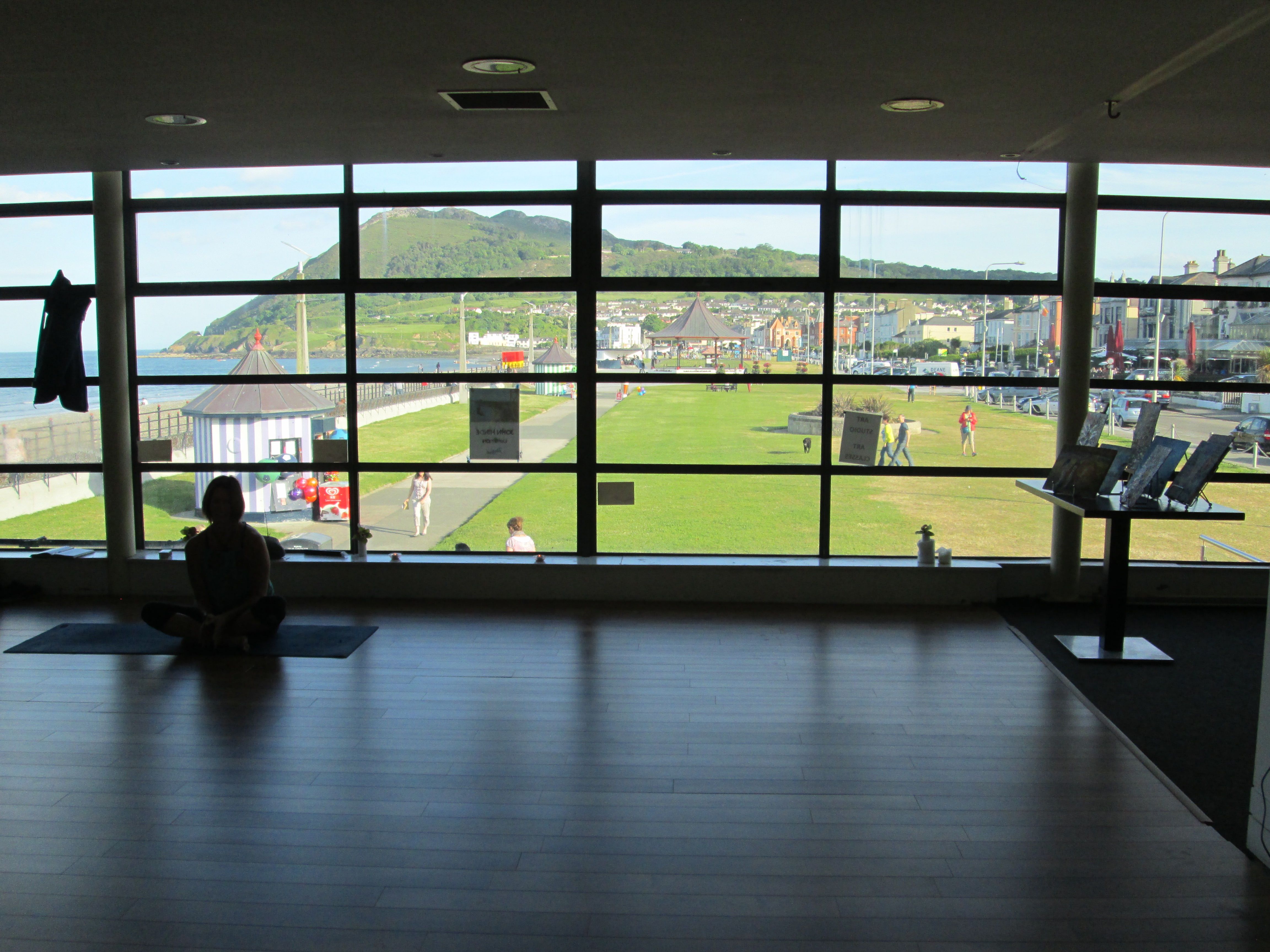
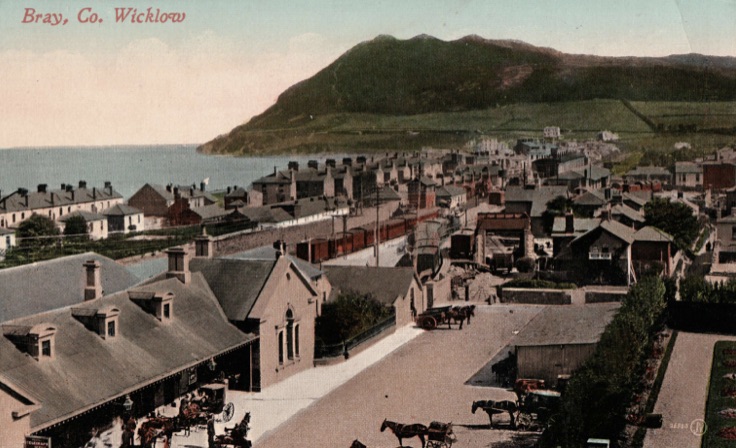
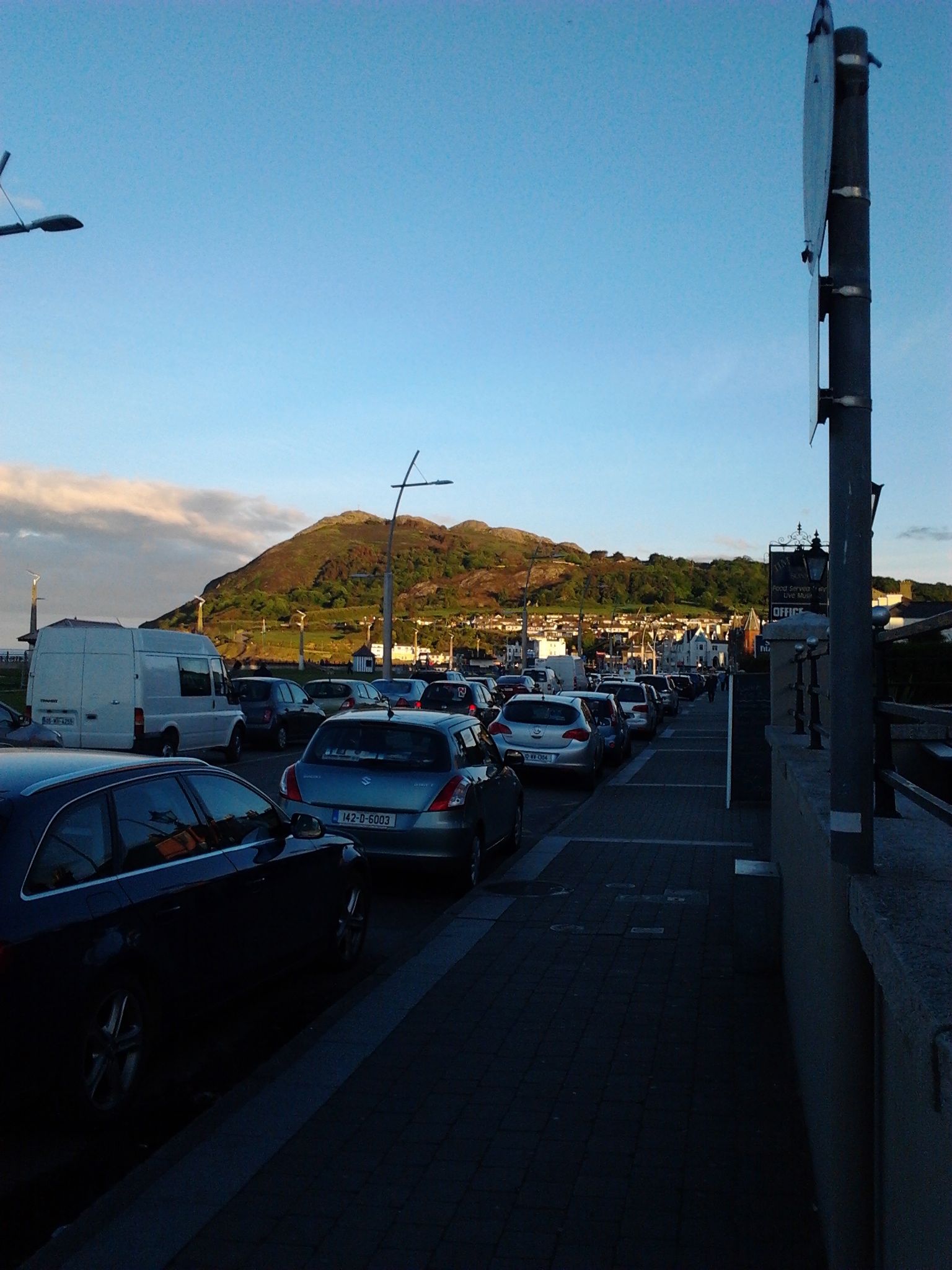
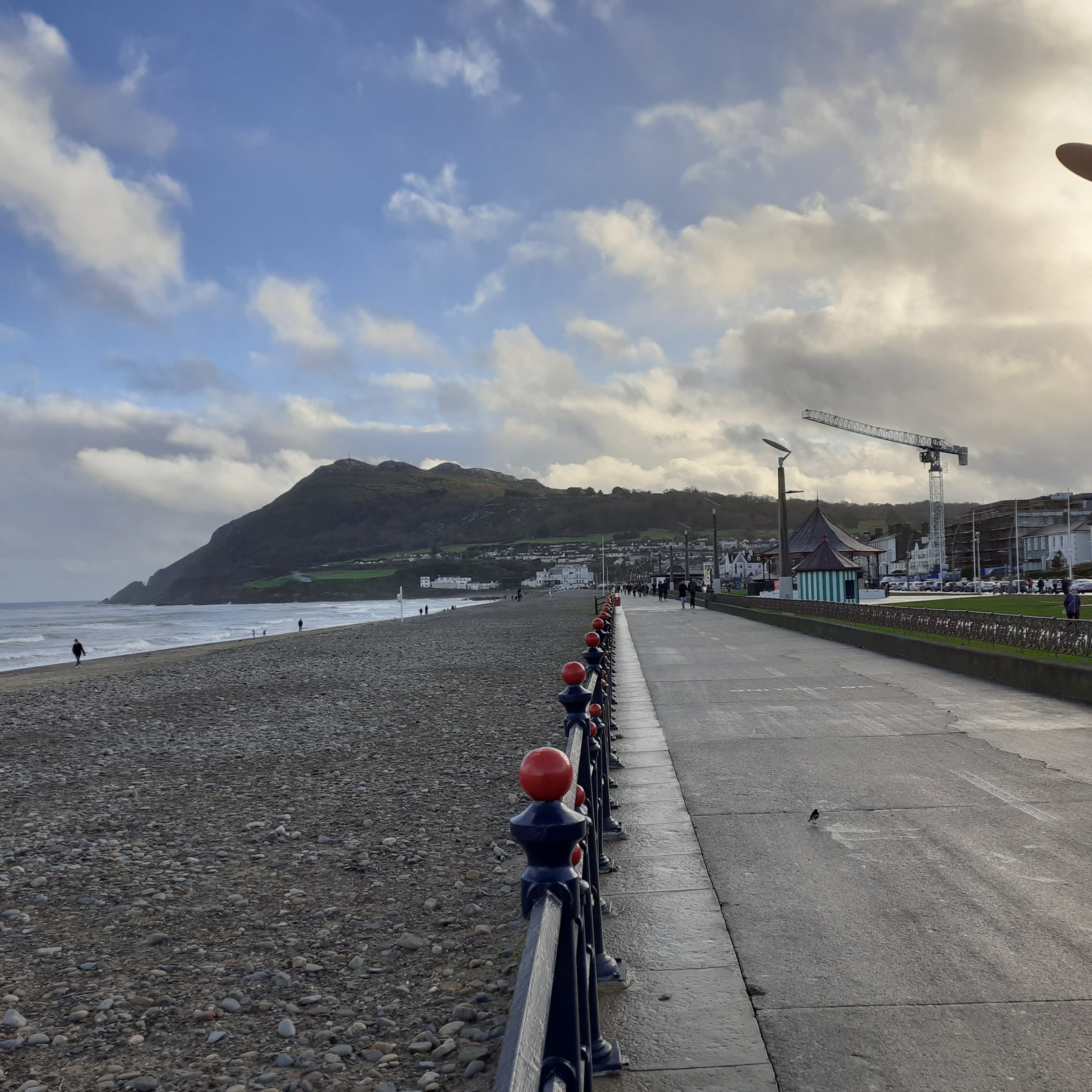
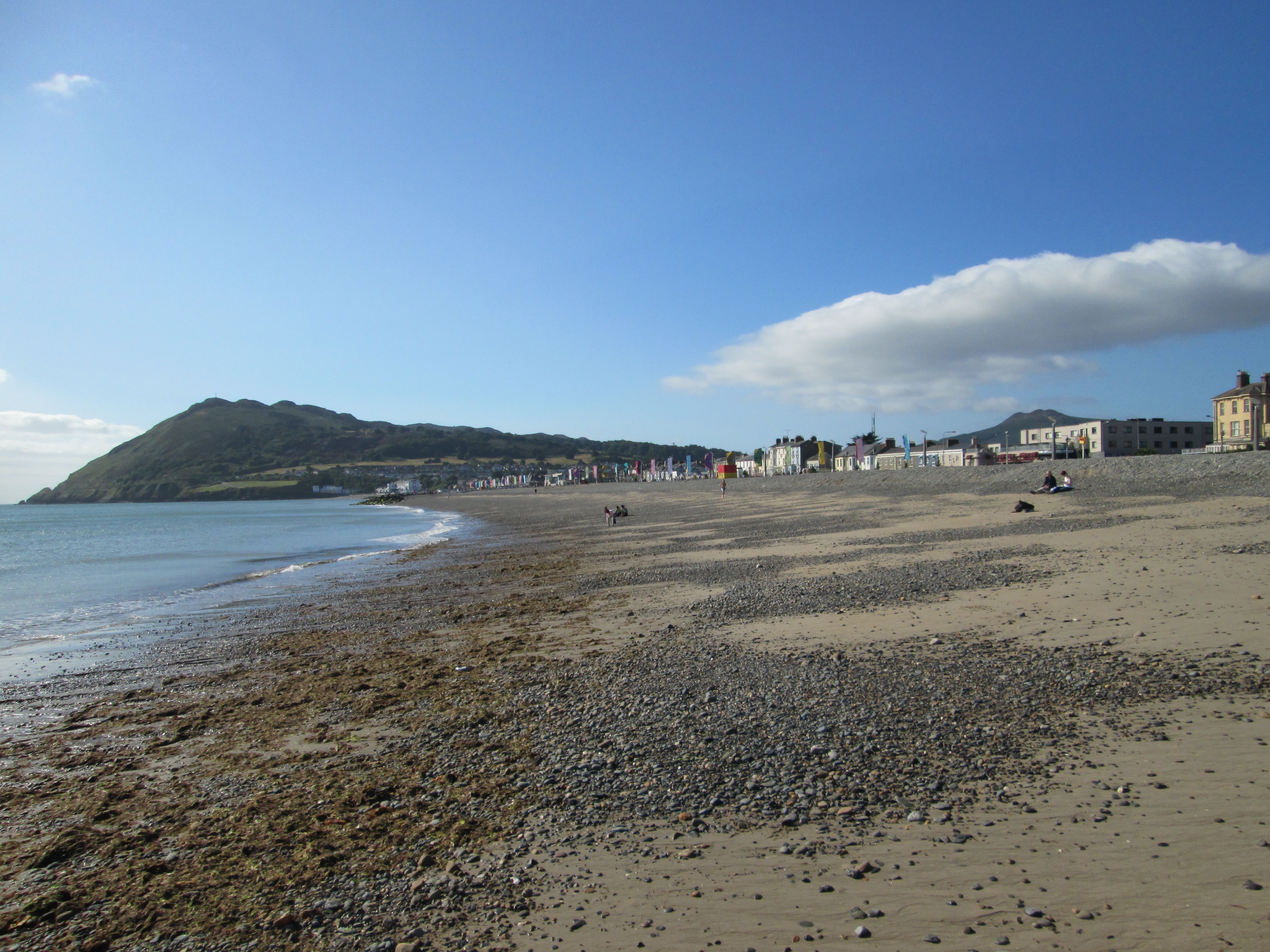
Bray Promenade looking south is Bray’s iconic vista. The waves fall to the stony beach on our left, the green Esplanade is arranged to our right, while the clenched fist of Bray Head rises up before us. Postcards, photos, paintings all convey the same scene, at different points in history. Ladies and Gentlemen in Victorian splendour, the last days of sepia elegance in Edwardian times, more downmarket family fun post Independence, and the technicolour imagery of John Hinde postcards in the fifties and sixties. Still the parade goes on, everchanging, still the same. 

Off to the east, the blue horizon is constant, but even there chimeras lurk. Sometimes Wales leers up from the horizon, its diaphonous mountains and cliffs disrupting the pale blue emptiness. Then it shimmers into nothingness again. This is a rare sight, such that when it does appear it might be considered a mirage, just another trick of the light, and of Bray.

To the landward side, the curved, art deco facade on the corner wraps the vestigial remains of the Royal Marine Hotel. Bray’s first seafront hotel was built in 1855, the year after the railway arrived in its backyard. Sixty years later, as war raged in Europe and revolution simmered in Ireland, the upper floors were destroyed by fire. The site lay derelict for twenty years, when in 1936 the ground floor was recast as the Railway Buffet, with the current facade. This later became the Dug Inn, operated by the Duggan family, who now run several seafront establishments, including the Harbour. They have expanded these premises into The Ocean Bar and Grill, including Platform Pizza and the BoxBurger. To confuse matters, locals often refer to the spot as Katie’s, from the pub’s previous name Katie Gallagher’s. This itself derives from the name of a low rugged peak visible to the northwest, part of the Dublin Mountains in the vicinity of the Scalp.

The level crossing leads up towards the old town a half mile beyond. Some years back on rounding the corner, I ran into a nuclear family of African origin heading seawards, luggage in tow. The young boy was maybe seven or eight. His eyes opened wide with delight as he looked past me to the view. “Oh, look at the big, green, mountain!”

Though I well knew what was there, I had to turn and look. Yes, the Head, rising sheer from the sea, is nothing if not a big green mountain. Well, technically, at just under nine hundred feet, it is a hill, but greatly magnified in its drama. I saw it again with this child’s eyes, as when first  standing at that age before the big green mountain. 

Then felt I like some watcher of the skies 

When a new planet swims into his ken; 

Or like stout Cortez when with eagle eyes 

He star’d at the Pacific—and all his men 

Look’d at each other with a wild surmise— 

Silent, upon a peak in Darien.

On First Looking Into Chapman’s Homer by John Keats

Beneath the big green mountain, there were other wonders to behold: the amusement arcades and the seafront carnival with their dodgems and swingboats, calliopes and candyfloss. In any age, there is something in the seafront resort that reeks of rock and roll and all those seductive scents of fun, food, sex and machinery. All the crazy things to grab a youngster and carry them along like an amusement ride. In the sixties it was Beatlemania, mods and rockers, dancehall days, and holidays in Bray.

I holidayed here with my parents and siblings in 1963, stayed in a BnB by the Carlisle Grounds. I was seven years old. Uptown, the Italian cafe, Mizzoni’s on Quinsboro Road, had a Scopitone, a jukebox with a 16mm film insert. How modern can you get? As kids we were thrilled, though the choice was limited. My big song just then was I Like It by Gerry and the Pacemakers but that wasn’t an option. Telstar by the Tornados was the best bet. The Tornados were Billy Fury’s backing band. But it was they who were the first of the English invasion to hit number one in the US. Telstar might be said to have spawned the sci-fi sound, with such later echoes as the Doctor Who Theme and David Bowie’s Space Oddity.

Telstar itself, was the name of a series of satellites launched from Cape Canaveral in 1962. They were the result of a multi-national project between Europe and North America with the aim of developing transatlantic tv and telephone communications. The world of instant global communication was realised. It’s something we take for granted today but was a wonder sixty years ago.

A Beautiful Day on Bray Promenade

Though the Lord Bono hath decreed that: All is quiet on New Year’s Day, still I couldn’t help but feel the shriek of life on Bray Promenade in early January. Above the waves, below the Head, beside the sweet green icing of the Esplanade and within its neverending parade of people. Life goes on, takes flight, even, into a waiting sun. People have been walking this pavement for a century and a half. Me, for well nigh two score years. I am writing a path from here to the far extreme of the Wicklow coast, somewhere past Arklow. But first, the reality of the now.

Drinking in the morning sun

Blinking in the morning sun

Shaking off a heavy one

Heavy like a loaded gun

This acrylic is taken from that most well known, and well worn, vistas of Bray. The scene is often phrased historically, as if it was only a window on the past. Here, I’m looking forward. The view, taken into the sun, anticipates great things, though the glare itself obscures the details of what they might be. I used gold paint mixed in with the concrete. It’s cold, but there’s warmth. In the shadows of my memory I choose a theme.

What made me behave that way?

Using words I never say

I can only think it must be love

Oh, anyway, it’s looking like a beautiful day

Passing the Sea Life Centre, the bandstand spikes the sky to our right. To the left, waves crash on the stony beach. The Head and cliff walk loom ever larger ahead. I shield my eyes against the low sun. High noon approaches. Things are looking up.

So, throw those curtains wide

One Day Like This a year would see me right

Throw those curtains wide

One Day Like This a year would see me right

Throw those curtains wide

One Day Like This a year would see me right, for life

One Day Like This is written by Guy Garvey and taken from Elbow’s fourth album The Seldom Seen Kid, 2008. When it starts singing inside your head, it’s like the whole world is joining in. Wait for it.

Wicklow’s Wonderful Coast – 1

Bray Harbour and Seafront

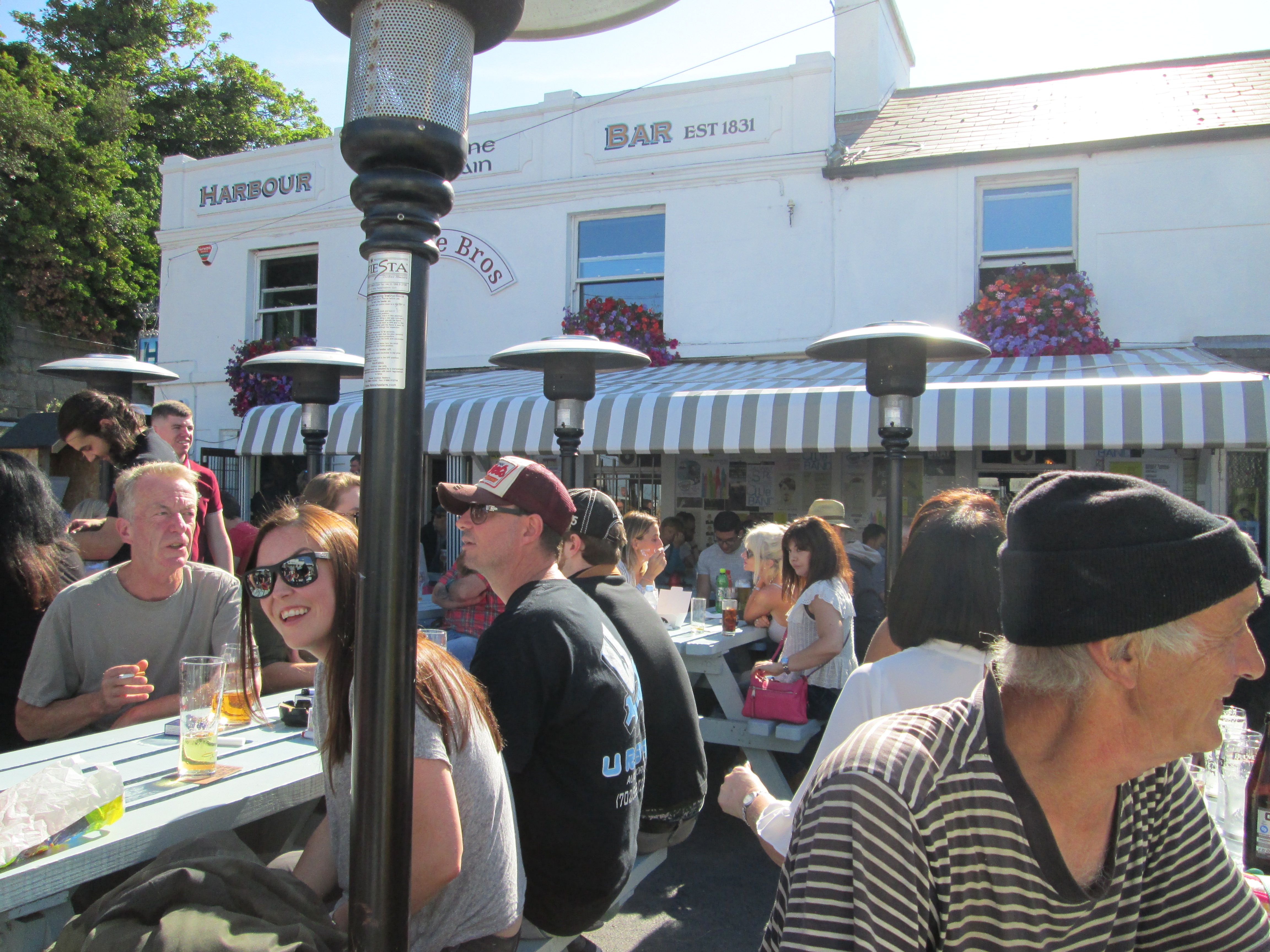
In the beginning, cross the Dargle River at the harbour, tiptoe past the swans, and head south past the Harbour Bar. Well, you don’t have to pass it, but if you want to walk Wicklow’s Wonderful Coast, you will eventually have to leave it behind. The building dates back to 1831, and twenty years later it became a licensed premies. That would be about the time the railway was built. It’s thirsty work. Before that, I’d say it served the odd salty dog sheltering from a storm. They still do a good pint and a decent fish and chips. Sea shanties can oft be heard, ringing in the rafters.

Bray got its harbour in the 1890s. Before that a small dock provided some haven for fishing boats and other small seaborne craft. The harbour had a lighthouse at the end of the South pier, but the fearsome sea hereabouts soon claimed it. The development of the seafront as an urban resort came with William Dargan. Dargan, born in Carlow in 1799, became Ireland’s leading railway entrepreneur in the Age of Steam. A self made man, who worked initially as a road contractor, by 1853 he had built six hundred miles of railway track. He organised and funded the Great Dublin Exhibition of 1853, which spawned the National Gallery. A statue of Dargan stands at the Gallery entrance on Merrion Square, but a greater monument was in embryo. Already responsible for the transformation of Dun Laoghaire, then Kingstown, with Ireland’s first railway connecting to Dublin in 1834, and such grand developments as the Royal Marine Hotel, Dargan determined to develop Bray as a resort for the quality along the lines of Brighton.

Bray, in his eyes, was ‘unsurpassed for beauty in the whole civilised world’. The hand of nature having done so much already, as he put it, he resolved, in typical Victorian style, to further improve on it. Incidentally, Queen Victoria herself had visited Dargan’s home during the Great Exhibition and offered him a title, but as a patriotic Irishman he refused. 

His outline for Bray imposed a rational and elegant urban development between old Bray and the coast. Relatively unique in Ireland, the plan featured straight thoroughfares meeting at right angles. Lined with fine terraces and villas, shaded by plane trees, Dargan created an attractive suburban environment for new residents. Dublin’s middle classes flocked to the town, availing of the railway’s provision of a forty five minute commute to the capital. Bray, already a thriving town of four thousand souls, would double in population by the end of the century. 

The centrepiece was the development of a seafront Esplanade, stretching along Strand Road for about a mile between the harbour and Bray Head. As with the lighthouse, the sea had other ideas. Throughout the sixties, the Esplanade was flooded on three occasions and a remedy was urgently required. The sea wall was built to stand proud before the waves and tall enough to shelter the Esplanade. Atop the wall, the Promenade assumed its commanding position, the definitive, iconic feature of Bray’s seafront. Here, the great and the good of society displayed their plumage, preening and promenading in the bracing sea air.  

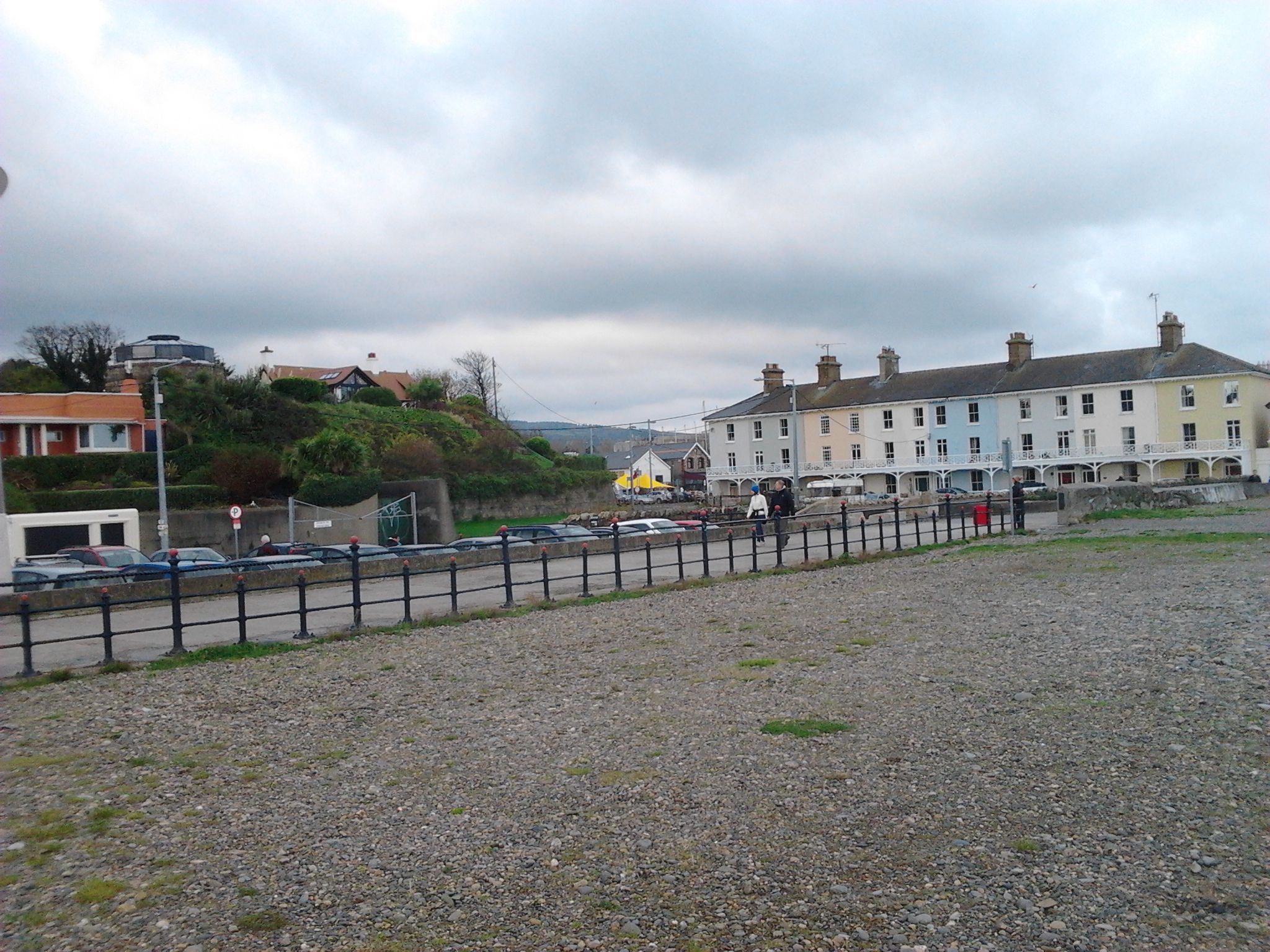
The Prom points arrow straight to the foot of Bray Head. Framing this northern end is Martello Terrace. The attractive terrace of eight three storey houses is set off by distinctive cast-iron veranda with timber fretwork railings and first floor balcony taking full advantage of the fantastic view. It was one of Bray seafront’s earlier terraces, being built around 1860. 

From 1887 for four years, number one was home to the peripatetic Joyce family. John Joyce was a rate collector, though wound up in Stubb’s gazette in the early nineties and was dismissed, sending the family into a tailspin of genteel poverty. Young James’s memories would be mixed. Aged only nine, Joyce wrote a poem on the death of Charles Stewart Parnell which so pleased his father that he had it published. This launched the literary career of Ireland’s Modernist giant. Payback is provided in an early scene from Portrait of the Artist, set in the drawing room at Martello Terrace. It is Christmas 1891, seen through the eyes of Joyce’s alter ego Stephen Dedalus. Over Christmas dinner, talk turns to the death of Parnell, Ireland’s great leader of the previous decade. Stephen’s father is inflamed by the treatment Parnell has received from conservative society, the press and the Catholic hierarchy. The experience is perplexing for Stephen, but carefully rendered by Joyce.

Some effects of Bray’s bracing atmosphere haunted the writer.  The snot green scrotum tightening sea was an expression that perhaps gestated here. Certainly the sea can be a fearsome presence. When first I came to town, the wall confronted the waves directly, storms thumping relentlessly against it, sending marine fireworks skywards in spectacular plumes of foam. Seafront protection has pushed the beach further out, and the walk is now calmer, if less exciting. 

The young Joyce acquired astraphobia, a fear of thunderstorms; induced, it is said, by a pious aunt who told her young charge that thunderstorms were a sign of God’s wrath. I suspect that the thumping of the raging sea against the gable walls of number one can’t have helped either. 

Later resident, writer and politician, Liz McManus often welcomed Joyceans and literary enthusiasts to commemorative soirees, including re-enactments of the famous scene. Liz was also petitioned by all shades of Joyceans with queries and requests. Most were easily obliged. Mind, being Joyceans, there was also a request for details of the plumbing, regarding the toilet facilities experienced by young James. For some learned paper, no doubt. 

Another resident of the terrace was writer and film director, Neil Jordan, who lived next door in number two. Jordan once dressed the seafront in candyfloss pink, with a full circus in tow for his 1991 film The Miracle. The full menagerie was included: lions, horses and elephants. The film is set in contemporary Bray, though since Ardmore Studios, Ireland’s main film studios, is located in the town, Bray and its environs can stand for just about anywhere. Disconcertingly, at the same time as The Miracle, Ardmore were shooting episodes of Angela Lansbury’s Murder She Wrote, dressing adjoining streets as an American winter setting. So, one went from the heat and dust of elephants and lions in a psychedelic Victorian seafront, to twentieth century Maine, knee deep in fake snow. Bray can be anything you want it to be.

Storm clouds gather over the Prom

A more realist project of Jordan’s was the biographical film Michael Collins.Jordan decided that Bray Wanderer’s ground, just across the tracks from the seafront, would make a convenient double for Croke Park in the Bloody Sunday scene. A sizeable mob of townsfolk were dragooned as volunteers, resulting in the biggest crowd ever witnessed at the Carlisle Grounds. Bloody Sunday happened in November 1920 during the War of Independence. The day opened with Collins’s co-ordinated assault on top British intelligence operatives, the Cairo Gang, killing fifteen men. In retaliation, British Black and Tans killed fourteen civilians attending a GAA match. The scene generated some controversy. Jordan did point out that the actuality was probably more harrowing. In truth, film renderings of history are always different to some degree. Michael Collins, despite some glitches, gave a reasonable account of its subject, and was a critical and commercial success. In general, the Carlisle Grounds is a quiet enough spot. Even at home games. Built in 1862, it is the oldest soccer grounds in Ireland, though originally used for archery and athletics. Outside stands a Celtic cross, erected in 1929 as a memorial to those who fought and died with the British Army during the Great War.

When Jordan followed Bono up the coast to Killiney, Mary Coughlan took up residence. The original Galway girl made a huge impact with her debut album, Tired and Emotional. Released in 1985, it sold a colossal hundred thousand in Ireland. It blends blues and barroom balladry to conjure a tinted world of frontier saloons, smoky bars and an interior landscape of the wandering soul. The opening track, Double Cross, can be appropriated as a theme song by anyone in a particular state of mind.

Like my coffee I’ve grown cold

I stay behind and fade into the wall

I’m lost amongst the jostling crowds at lunchtime

I’m hoping you’ll come but I know that you won’t even call

Mary’s whirlwind career eventually deposited her on Bray’s stony shore, a boozy Boticelli babe, down to her last sea shell. But she could still calm the waves from her windows by the sea.  

Every hold that I had on time

Every dream that I thought was mine

Well, it’s all quite forgotten now

Lost without the double cross of you

Wicklow’s Wonderful Coast – Intro

You could, if you chose, walk all the way around Ireland’s coastline, or near enough. There’s six thousand kilometres of it, or four thousand miles. That’s a long way from Clare to here and back, by the circuitous route. But one step at a time. We’ve just explored South Dublin’s Rocky Shore, from Old Dun Laoghaire to Shankill Beach. Just north of Bray, Wicklow’s coast begins. Sitting in the Harbour Bar, the boats jingling in a stiff Winter’s easterly, it was a good time to ponder continuing our coastal adventure. 

Wicklow, the Garden County, is most renowned as a mountainous region. The Wicklow Mountains cover most of the county and make for the largest continuous upland region in Ireland, even spilling into neighbouring counties, Dublin to the north and Carlow to the south. It is a rugged region, wild and beautiful despite its proximity to the Dublin metropolis. However, the Wicklow range is inland, separated from the sea by a narrow coastal plain. Only at Bray is there a high headland with sea cliffs. After that, the coastal route is mostly along the beach, but for a short break at Wicklow Head.

So, over the next few weeks, I we’ll travel together from the ancient town of Bray to the modern town of Greystones, on down through the ‘Southern Pale’ of Kilcoole and Newcastle to Viking Wicklow Town, then via Brittas Bay to Arklow, another Norse settlement until we reach the Wexford border. As usual, there will be plenty of detours, mingling seascapes with townscapes, meeting such figures as Saint Patrick, James Joyce and Hozier, exploring the history and geography along the coast of Ireland’s most beautiful county, its newest, and still perhaps one of its wildest. There’ll be glasses raised and songs sung. Who knows where it will all lead.

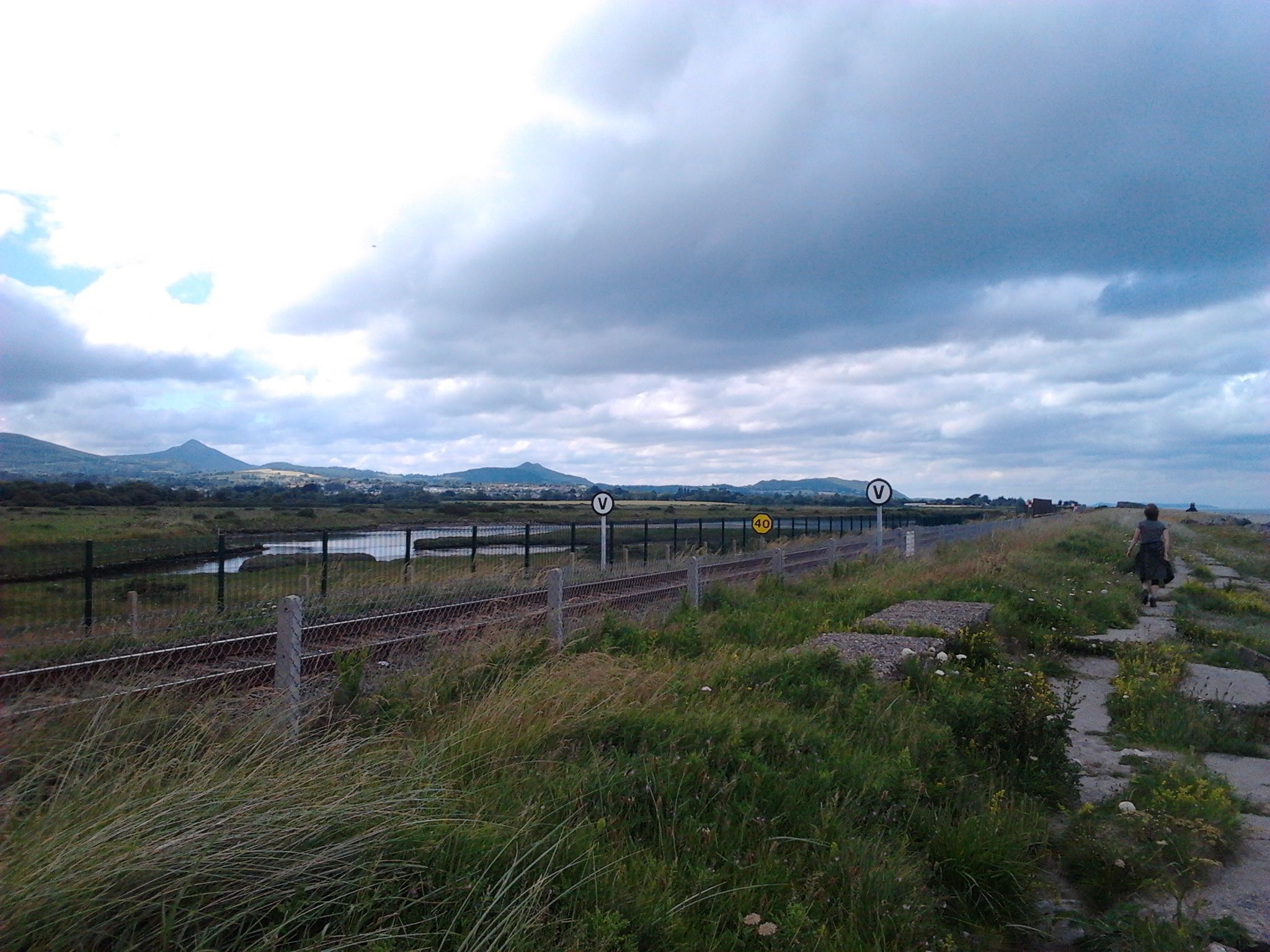
Well, okay, Arklow I suppose. But the path will meander as interst, and refreshments, dictate. The distance from Bray to Arklow, along the coast is about 60km, 40 miles or so, and would take about twelve hours in total. We’ll see. We will, like Alice, begin at the beginning. Standing in Bray’s harbour, the swans and boats beside us, the Dargle River and Dublin behind us, and before us a path along the coast beginning with the Promenade along the Bray sea wall. To be continued …

South Dublin’s Rocky Shore – 9

9. Coliemore Harbour to Sorrento Point

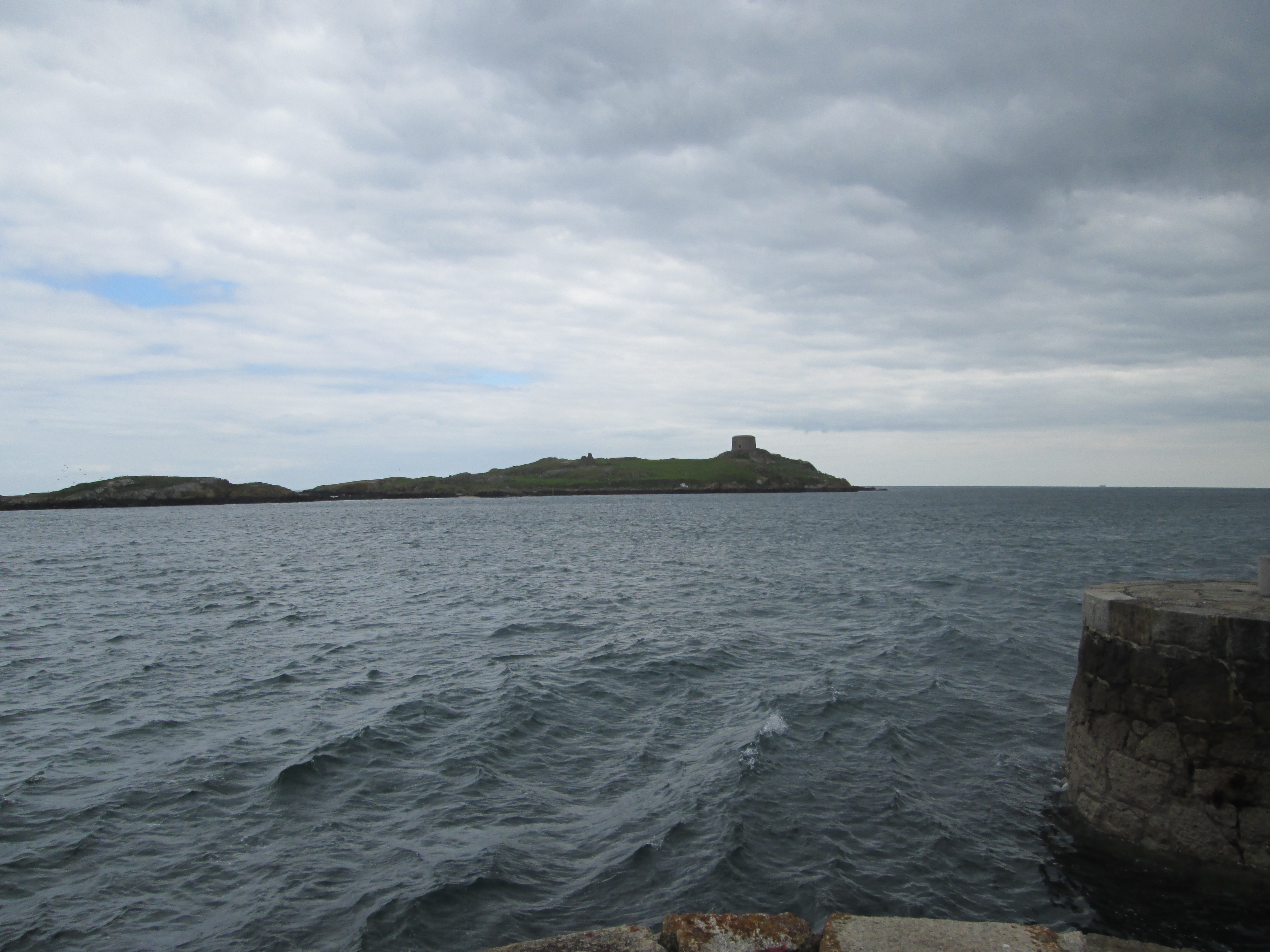
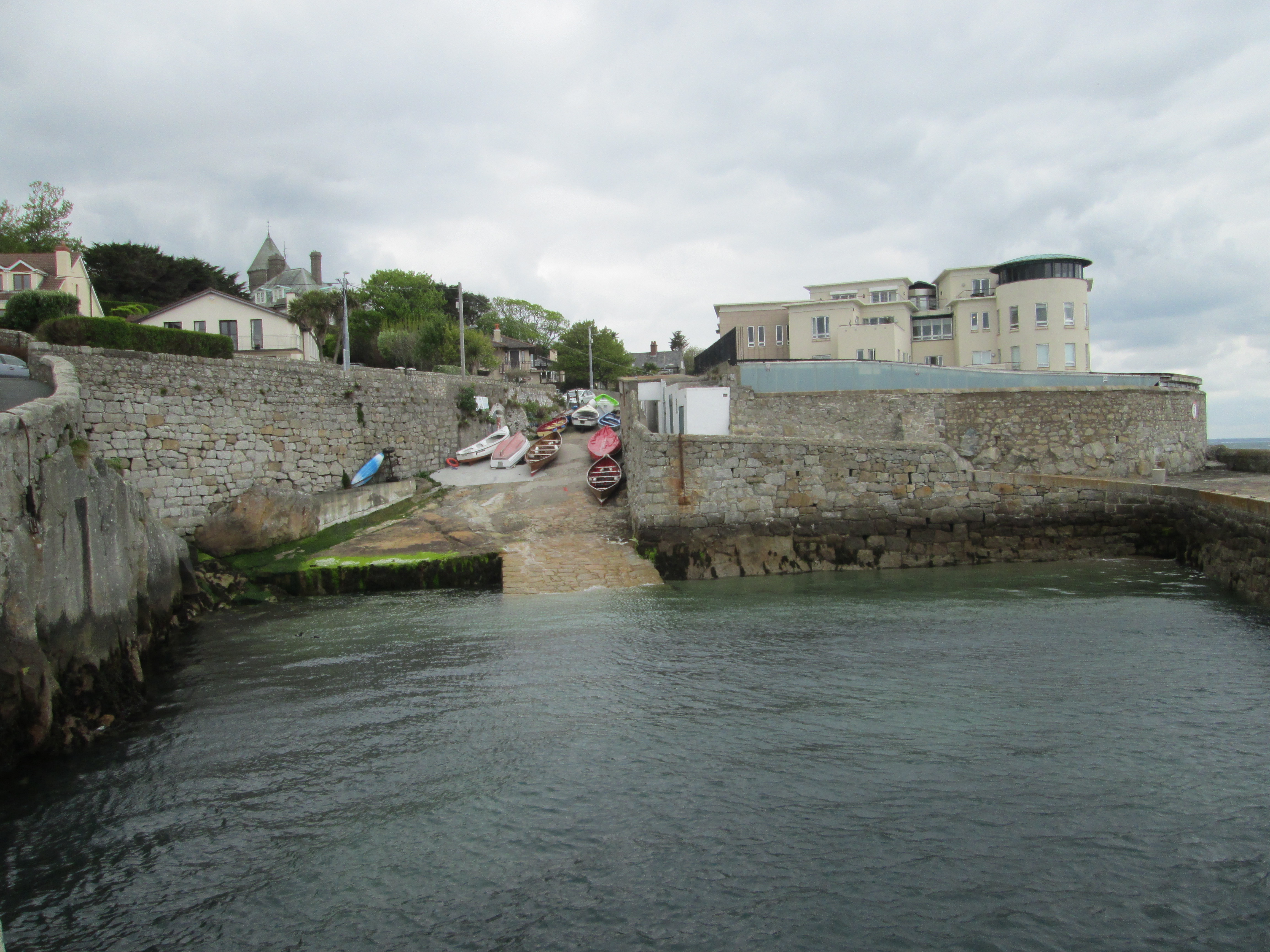
Coliemore, the big harbour in Gaelic, made Dalkey the main port for Dublin in the middle ages, providing a deepwater harbour in contrast to the shallow and silt prone Liffey estuary. From the seventeenth century onwards it went into decline and the town of Dalkey quietened, and along with the hinterland withdrew into the wings. It is interesting now, stepping into the embrace of the harbour, how the trappings of the modern world slip out of view, and the harbour forms a window back to wilder times. Dalkey Island lying just beyond the harbour mouth remains ragged with the ruined profile of its fortifications and places of worship. There’s plenty of history written beneath its cloak of melting green. And what is not written in stone is embossed with myth and legend. 

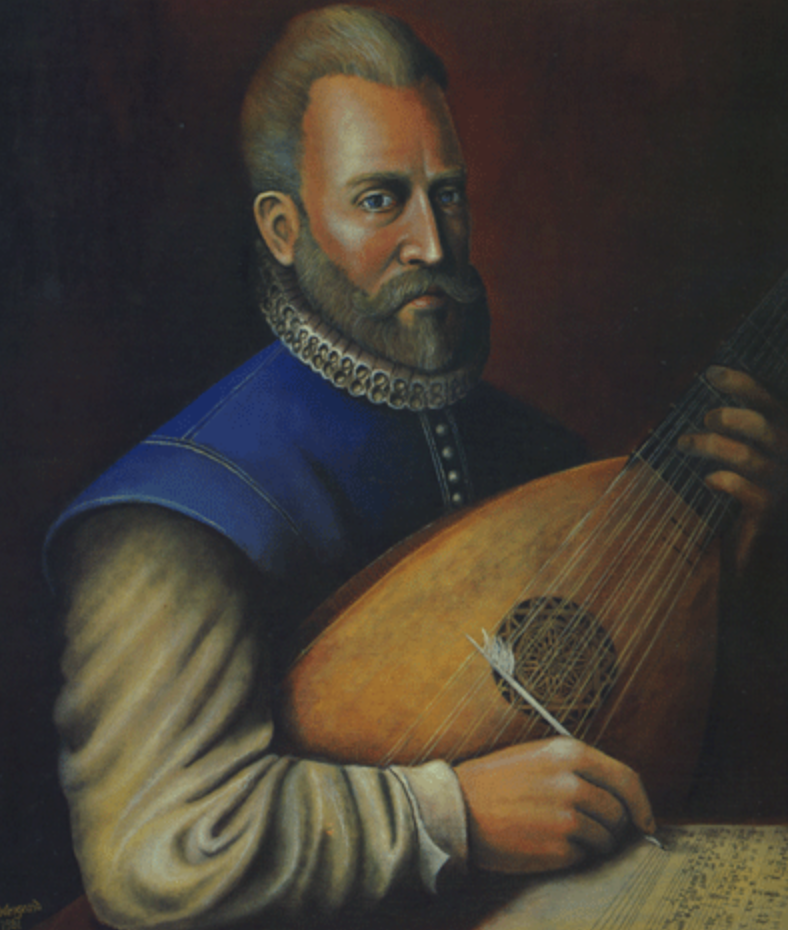
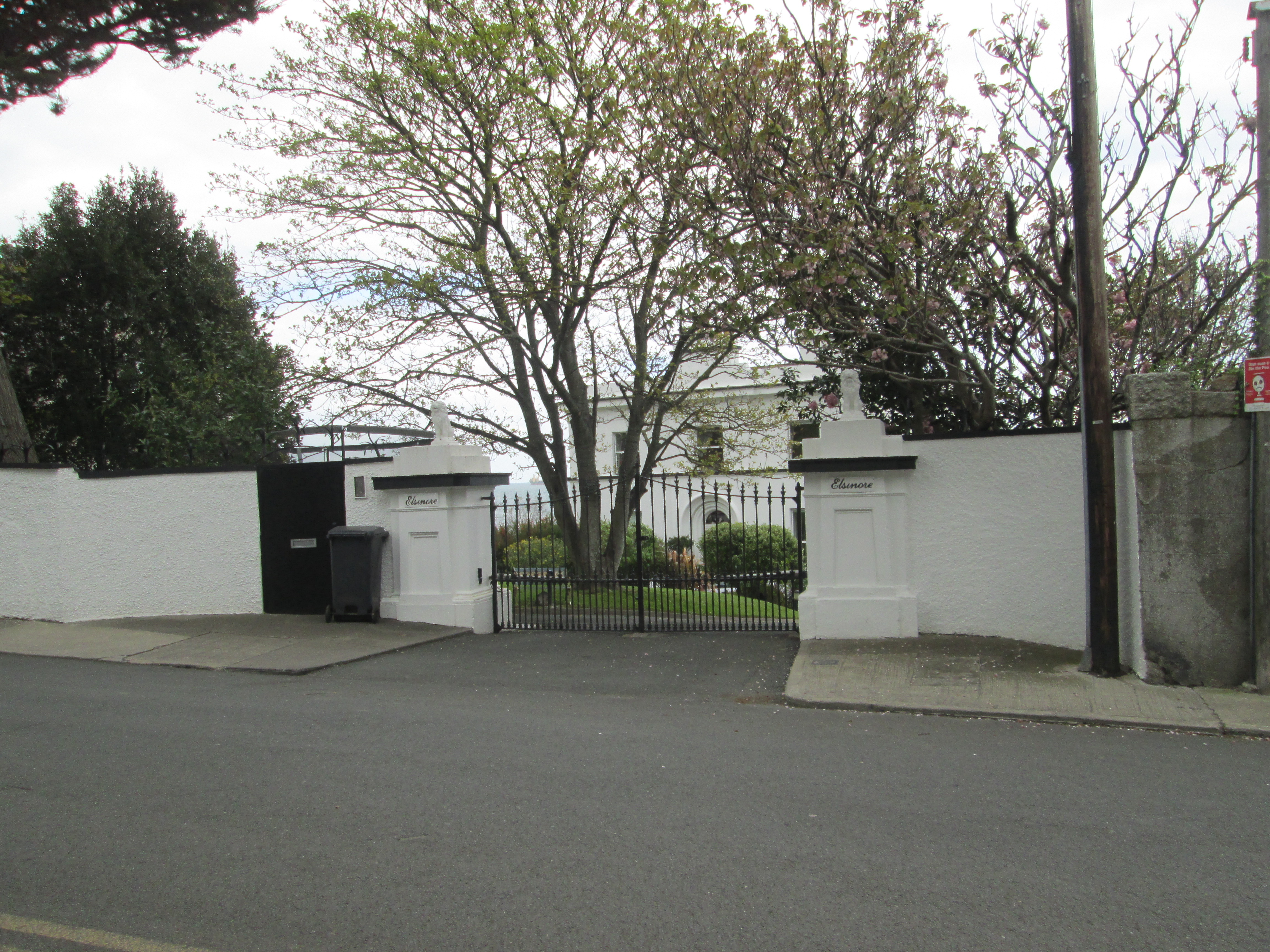
Approaching Coliemore Harbour we passed Elsinore, a grand nineteenth century residence.  It is said that the nearby harbour bore some similarity with the Danish castle as described by Shakespeare in Hamlet. Such comparisons are lost in the mists of time. The connection with Shakespeare comes from friend and contemporary John Dowland. Dowland’s place of birth is unknown, but it was probably Ireland. He dedicates his work From Silent Night to “My loving countryman Mr John Forster the younger, merchant of Dublin, Ireland.” Dalkey has been claimed, by Irish composer and musicologist, W.H. Grattan Flood, though there’s no actual proof.

Dowland, a Catholic, failed to receive favour at Elizabeth’s court but in 1598 gained a position as lutenist to the Danish Court of King Christian IV for a fabulous salary. The eccentric plight of musicians at Christian’s court is well drawn in Rose Tremain’s Music and Silence, set some decades after Dowland’s departure. When Dowland returned to London he, with Shakespeare, gained favour at the court of King James I (James VI of Scotland). Around then, Shakespeare was putting the finishing touches to his epic, Hamlet, and it would seem likely that he plugged his friend Dowland for details of the Danish Court.

Dowland would have described the original, methinks, with Shakespeare more interested in the carry-on of the court than the architecture. The Bard derived the name Elsinore from the Danish town, Helsingor, in the shadow of the mighty Kronborg Castle. I once sailed from Copenhagen past Kronborg, and even on a crowded deck, the view evoked the mythology and romance I had anticipated. So close, and so far out of reach, there is something bittersweet in observing  a famed vista from the viewpoint of the seafarer, poised between port and storm.

Mind, Elizabethan Dalkey, famed for its seven towers, would have cut something of a dash as a fortified landmark on the storm battered rocky shore of south Dublin. The vista must surely have lodged in the musician’s soul, if this is indeed from whence he hailed. His final view from the sea was likely the only one, forever receding until fading into mist or horizon. Dowland’s lute playing and compositions have been revived by such as Julian Bream and Sting. Sting’s Songs from the Labyrinth captures the ancient sounds in amber. So, tinted as it is, we can still discern a facsimile of how it must have been, plucked from the air by the world’s first Rock star.

Dalkey’s Elsinore was home to architect John McCurdy, who designed the Royal Marine Hotel for Dargan. McCurdy was also responsible for the 1867 development of the Shelbourne Hotel in Dublin. He died at Elsinore in 1885, aged sixty. A century later U2 recorded tracks for their album Achtung Baby in the house. Coming home from their initial recording session in Berlin, Elsinore provided a more relaxed surrounding for local residents, Bono and the Edge. The opening track  Zoo Station, along with The Fly and Ultraviolet sprang from this session. With Achtung Baby, U2 traded their more earnest, traditional Rock sound for something more edgy and modern. As Dowland once sang:  My music, hellish jarring sounds, to banish friendly sleep. The album has become their second most successful after Joshua Tree, shifting eighteen million units. Nothing ironic about that.   

From Coliemore, we meander out towards Sorrento Point. Teetering on the edge of the map, the road makes a right angle at an elegant terrace of eight grand white houses. Sorrento Terrace was built in Famine times by William Masterson, who is also responsible for the Royal St George Yacht Club in Dun Laoghaire.

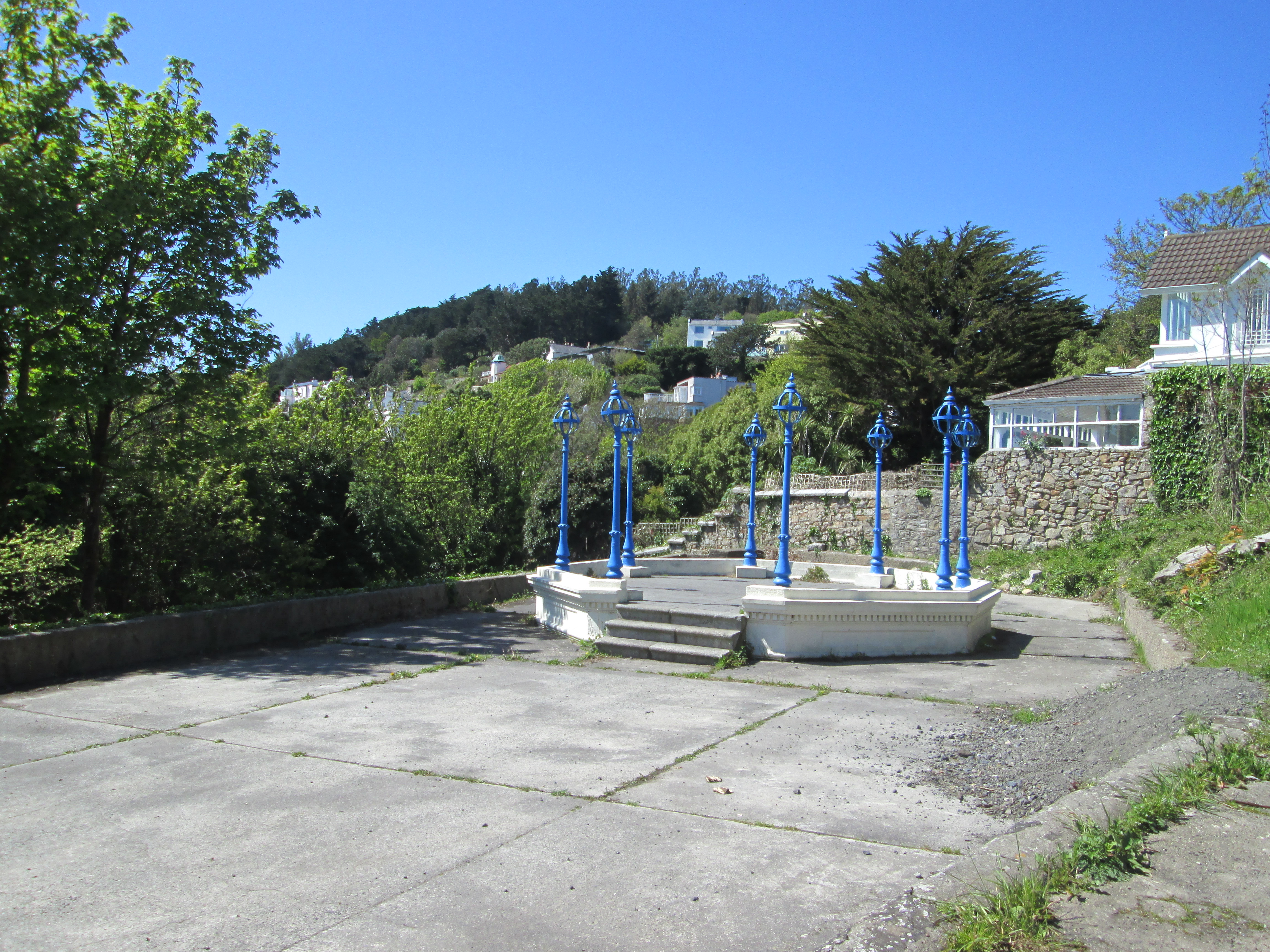
Looking over the terrace is a small park. It wears a neglected air, but shouldn’t be ignored. The rising path coils upward to a ruined bandstand and further on a casual sprinkling of benches allows pause to take in a stunning vista trough all points of the compass. On an elevated rock face to the east there’s a plaque commemorating Dowland. Designed by artist Sarah Purser, the plaque was installed in 1937. The portrait has been deliberately defaced, adding another layer of mystery to the tale.

This place does seem appropriate for Dowland’s memorial, remote enough to hear the sighs of sea and gulls mingle with the singing of ghosts, while all around the modern city throbs, cars go by, trains tunnel beneath and the boiling javelins of aircraft streak across the sky.

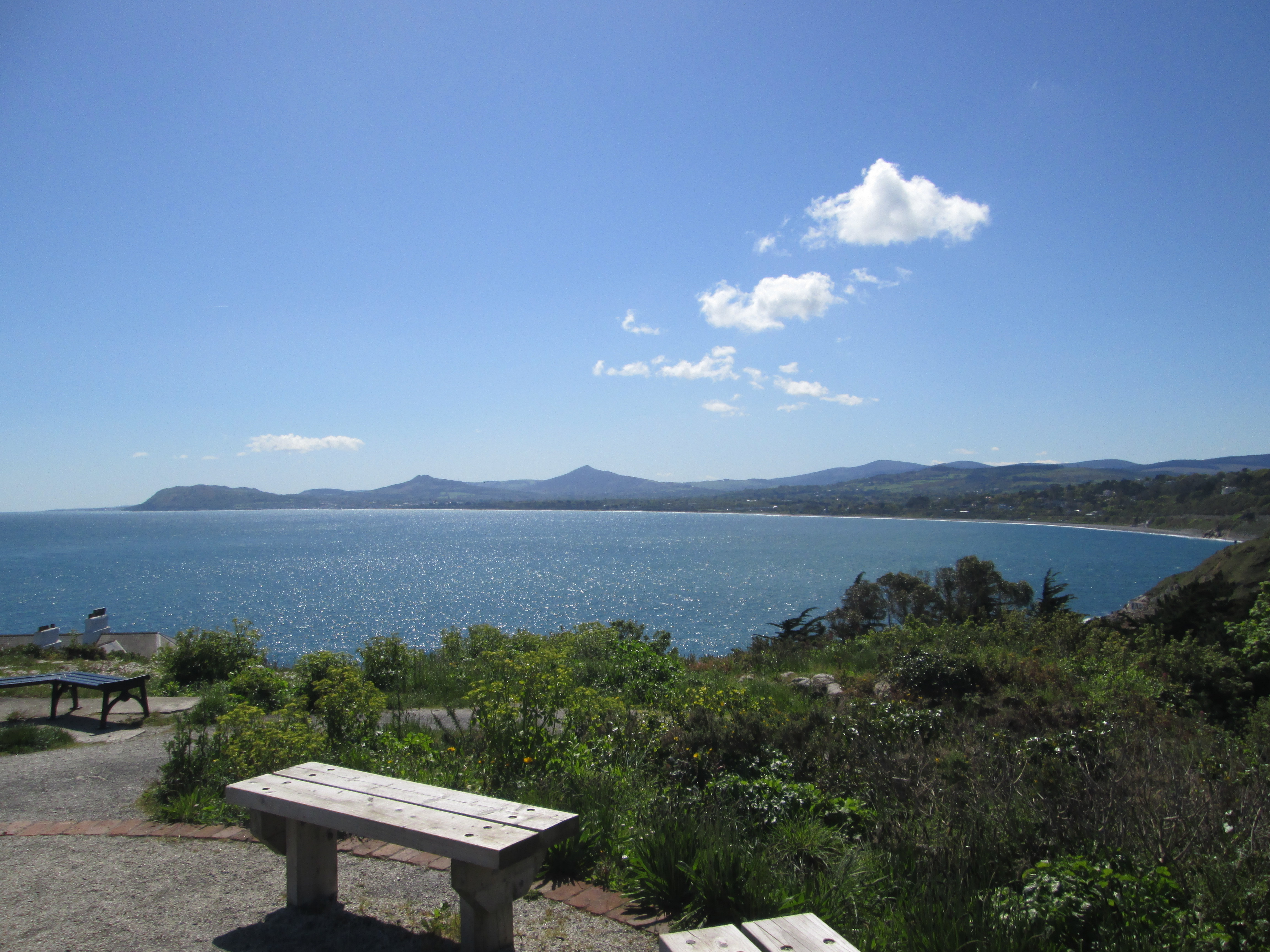
So, we rejoin the Vico Road, rising into the blue along the shoulder of Killiney Hill. Against that most majestic view of the bay, framed by the Sugarloaf Mountains and Bray Head to the south, it is perhaps the perfect time to let the credits roll. Or, you can just keep on walking, and let the songs rise up in your heart.

And I will stroll the merry way and jump the hedges first

And I will drink the clear clean water for to quench my thirst

And I shall watch the ferry-boats and they’ll get high

On a blue ocean, against tomorrow’s sky

And I will walk and talk in gardens all wet with rain

And never ever ever ever ever get so old again

Sweet Thing by Van Morrison is a song anticipating the joys of love, written during an enforced separation from his lover, Janet Planet. It is on the otherwise more reflective album Astral Weeks from 1968. Mike Scott gave the song an interesting twist on the Waterboys’ album Fisherman’s Blues, with an impromptu segue into the Beatles’ Blackbird, reaffirming the positive vibes of the Paul McCartney composition.

Blackbird singing in the dead of night

Take this broken wing and learn to fly

All your life you were just waiting for this moment to arrive

Blackbird singing in the dead of night

Take your sunken eyes, learn to see

All your life you were only waiting for this moment to be free.

Grafton Street’s a Wonderland

Grafton Street winds its way uphill from College Green to St. Stephen’s Green. From where the traffic veers left into Nassau Street, it is pedestrianised. Molly Malone used rest her barrow here, but she has wandered off down Sussex Street to the west. Grafton Street is the main southside axis for quality shopping and cafe society. Trendy, thronged and throbbing with a multitude of buskers, this is the place to see and be seen. Street performers have included the Hothouse Flowers, the Waterboys, Rodrigo y Gabriela and Glen Hansard. The ghost of Phil Lynott might breeze by whistling Old Town.

Grafton Street was named for Henry Fitzroy, the Earl of Grafton and illegitimate son of Charles II who owned the land hereabouts. He died at 27, leading Williamite forces against the Jacobites in Cork in 1790. 

Right here, right now, I emerge from Duke Street with my supply of Nespresso. To my right Bewley’s Oriental Cafe may beckon with its aromas of coffee beans, or I might fade into Johnson’s Court for a hidden prayer in Clarendon Street Church and light a candle for my mother. Grogan’s Castle Inn, the Powerscourt Centre and the Dublin City Markets lie that way. Straight up into the glare, the street opens onto St Stephen’s Green.

Dublin can be heaven with coffee at eleven

And a stroll in Stephen’s Green

There’s no need to hurry, there’s no need to worry

You’re a king and the lady’s a queen

Dublin Saunter as sung by Noel Purcell, actor of stage and screen, has become an anthem for Dublin’s most positive vibrations. It was written for him by friend Leo Maguire who also wrote the Whistling Gypsy. The song evokes summer, but a summer for the soul. It’s yours anytime. I’ll echo its call, and with it send my greetings to all of you, for Christmas and the New Year.

Grafton Street’s a wonderland, there’s magic in the air

There’s diamonds in the lady’s eyes and gold-dust in her hair

And if you don’t believe me, come and meet me there

In Dublin on a sunny Summer morning