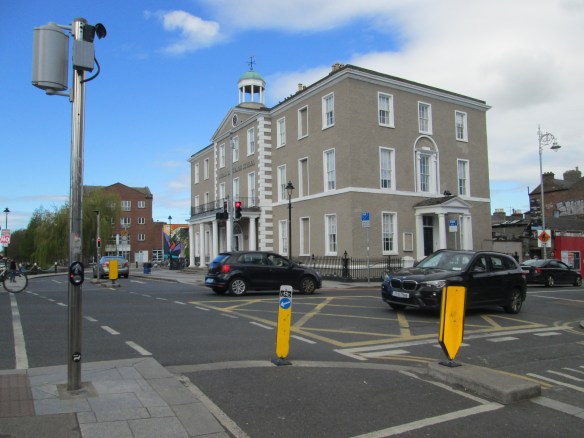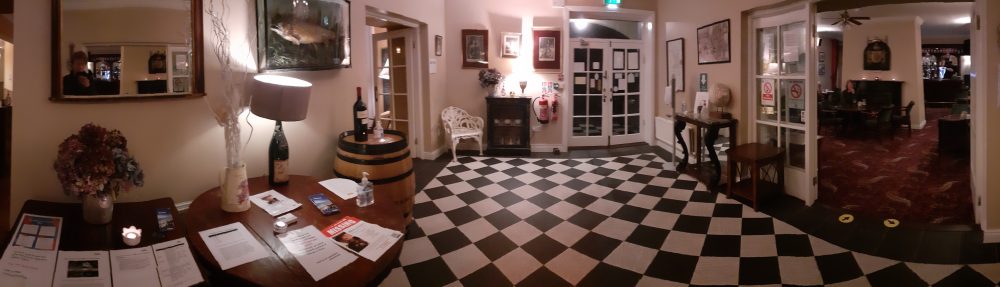
Granada – Sacromonte 1

AL 13 Nazgdn

A place of dreams, where the Lord put the seed of music in my soul.

(Andres Segovia)

Granada is a name so rhythmic it positively strums. Strung beneath the glistening peaks of the high Sierra Nevada, it has long balanced on the fulcrum of Europe and Africa. Here, the stones are alive, the streets and spires straddle the Medieval and the Renaissance, the Gypsy tangos and strums, the poetic knight tilts at shapeshifting windmills.

The fabulous castle overlooking it all, the Alhambra, dates from the Moslem kingdoms of the high Middle Ages. At the start of the Early Modern, the Reconquista returned the city to the Catholic faith. Before, during and after all those upheavals, Granada has been the focal point of travellers who have left their dust of cultural diversity in the stones, in the air, in the rivers of the town.Little wonder that the guitar is said to have been born here.

The weeping of the guitar begins, 

The goblets of dawn are smashed,

Useless to silence it.

(Federico Garcia Lorca)
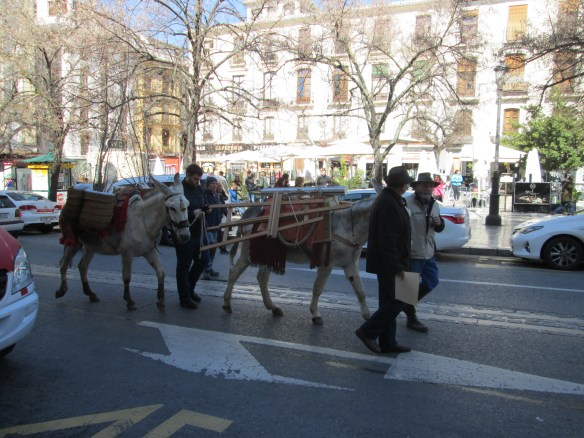
Plaza

Plaza Nueva is my base camp. It merges into the Plaza de Santa Ana. A step beyond the modern city centre, it distends with eerie vagueness into the cramped ravine of the Darro River. The winding way to the Alhambra begins near the Fontana del Toro. A drink from its waters has magical qualities. Drink once and you will return forever. I have had my day there, in the soft redness of the Alhambra, that lasted forever and never and within my formation. This day I will walk along the clefs and staves and the surging river, carried forward note by note to the Sacred Mountain.
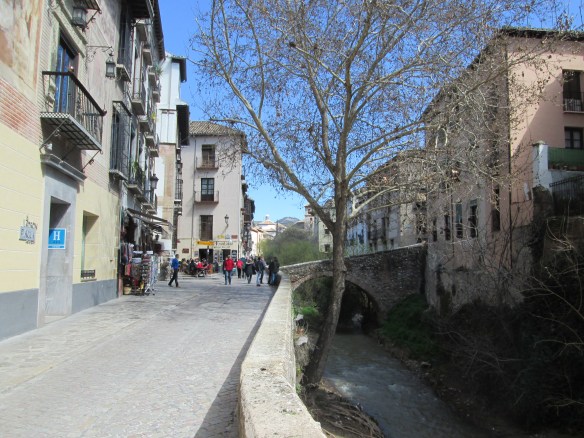
Darro1

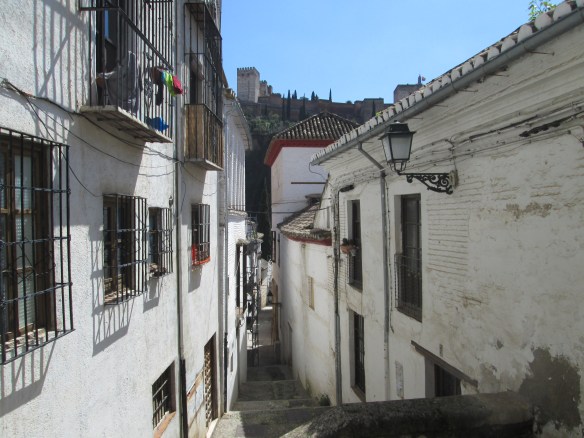
Climbing up from the Darro River, through the bleached alleyways of Alcaibin, the houses melt into an ancient silence. The winding streets flirt with Surrealism, the hush of desertion somehow expectant. I sense the outskirts of paranoia, cross diagonally a deserted square beneath an abandoned church, pause enigmatically with a smouldering Gitanes to notice a slice of the Alhambra between the shuttered Moorish villas. At last the route regains its connection with all other routes. Footfall swells, the whine of mopeds rises and a car is glimpsed. The road meets a t junction, where I turn steeply upwards by way of Cuesta del Chapiz. 
AL 22 Alca

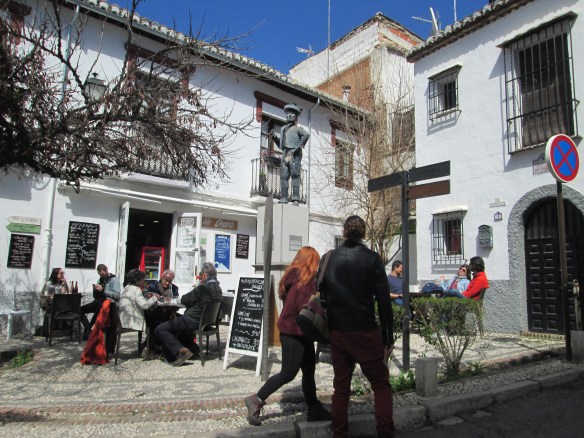
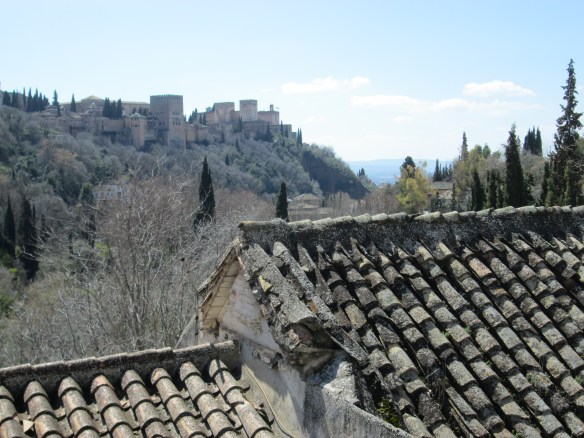
At the apex of a punishing climb, the road veers right at a taverna, El Rincon del Chapiz. A gnarled tree and an eccentric statue preside over the small terrace. Here, the city of Grenada abruptly ends, and morphs into an ancient hilltop village, houses scattered like pearls on the steep hillside. Across the Darro ravine, the Alhambra and Generalife shimmer in the afternoon haze, while ahead the distant Sierra are snowcapped beneath the virgin blue sky. I choose to be lost in this view: red gold palaces set in viridian, purple mountains with their sharp white summits, the blue sphere of the relentless sky. 
El Chapiz

The transition from urban to bucolic is a volte face of all the dialogue transacted this day in the city. The history, the fabric, the setting still run, but parallel, their projections and perspectives distorted. The Sierra Nevada hem the horizon which seems close enough to touch. If you sense a breath descend it may be from the Puerto del Suspiro del Moro where Granada’s last Moslem ruler, Mohammad XII, Boabdil, looked back in anguish at the Alhambra, exhaling that famous final sigh. This was the pinnacle of the Reconquista, in the year 1492, when the Catholic Monarchs, Ferdinand of Aragon and Isabella of Castile took Granada and the modern idea of Spain took shape. 
Sacroalham

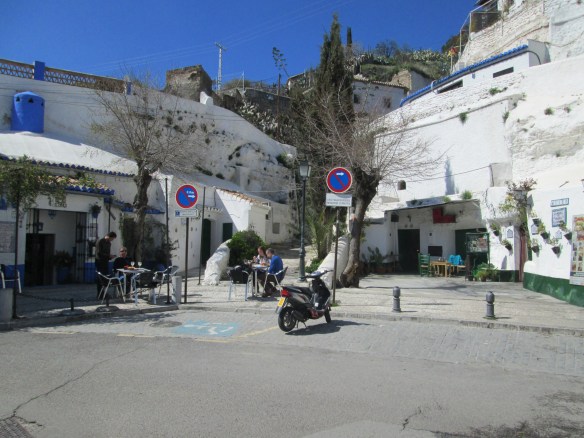
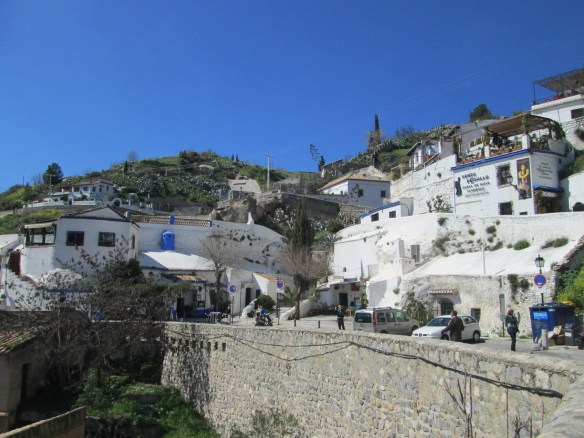
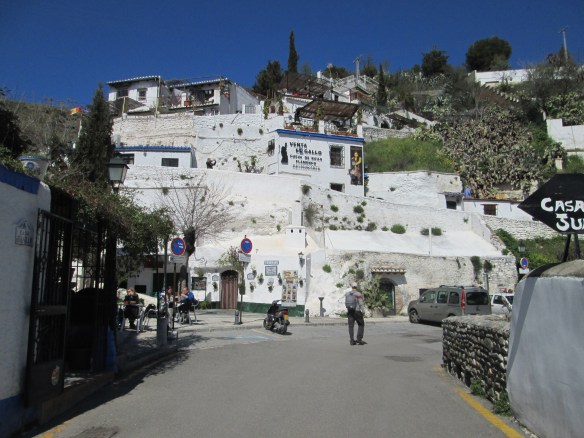
Now I stand on Sacromonte, the sacred mountain. This was the haven of the Gypsy, when first they came to Granada in that same year, 1492. They hollowed caves from the soft rock, out here on the periphery. The culture that flowered fed the rivers of the new Spanish identity, a step beyond the rationalist identities of western Europe. And a stepping stone, also that year, to the American continents across the pond. These first rooted in our consciousness with the expedition of Christopher Columbus, an Italian in the service of the Catholic Monarchs. The popular conception of the world was limited. After Columbus, European isolation would fade. 
Sacro3

The term, Gitanos, is synonymous with Gypsy, derived from Egyptian. According to popular myth, they came from Egypt but are, in fact, Romany, an Indo-Aryan group from northwest India. Romany identity has persisted through half a millennium, with its bloodline and culture, but there is much disparity between their far flung settlements. In Andalusia, Gitanos are particularly immersed in local culture, to the point that they’re seen as embodying quintessential Spanish traditions, with Flamenco to the fore. Flamenco, the form of music and dance, derives from a synthesis of Moorish and Christian influences, Jewish folk music and dance, infused with the Oriental spice of the Gitanos. Itself an illustration of a particular social and emotional stance, from Flamenco springs those rhythms of sex and seduction, sorrow and grieving, suffusing the Latin world from Valparaiso to Valencia
Sacro2

In Andalusia there is little to be gained by dissecting its identity. It is more than the sum of its parts, a rare blossom that could only grow in this red soil, from such scattered seeds. Yet, here is a culture that is not perplexing, not a thing to be admired within a hard carapace. It has travelled well, it is well known. Here is something we all understand, whether or not we have done it yet. Here is something we know of the human condition. We are all Gypsies, spinning like dandelion seeds through the air. I have travelled, dipped a toe in different oceans, felt the heat of the desert, the swell of mountain and the cool air of forests. Through all of that runs the constant soundtrack of the music of Christian, Moslem, Gypsy and Jew.

I heard your voice through a photograph

I thought it up it brought up the past

Once you know you can never go back

I’ve got to take it on the otherside
Sacro1

So I sit on a wall in sunshine cold, amidst glare of white houses and sauntering travellers and do nothing. Inside I’m spinning slowly, breathing every song I’ve ever heard. I feel I should do something, enter a museum, buy a souvenir, take out my sketch book and submerge in the quirky scenery. I think of other things, returning to that bold truth, that here was first fashioned the guitar. 

Antonio de Torres (1817-1892) was a carpenter by trade. In his twenties he came to work in  Granada where he learned the craft of guitar building. He returned to set up shop in Seville and in 1850 began to develop the guitar which we recognise today. Torres’s guitar was symmetrical, larger and lighter than previous instruments. Their distinctive sound and greatly improved volume made de Torres’s guitar the standard from which modern guitars derive.

How long, how long will I slide

Separate my side

I don’t, I don’t believe it’s bad

Slit my throat, it’s all I ever …

(Otherside, Red Hot Chilli Peppers)

In its shape the guitar is a key to unlock the secrets of sound. More suggestive still, the guitar is personified as woman. My Graphics maestro at Rathmines College in the seventies was Martin Collins. One evening our class gathered before a still-life assembled by Martin: a guitar, a wine bottle, a bowl of fruit. As we set about our task, he hovered, waiting to pounce with advice. One unfortunate was having difficulty. Martin’s voice boomed through the hush: “A guitar is like a woman. You cradle her on your lap and stroke her.”

Sacromir

In the Art of Spain it is a signature motif.The paintings of Picasso and Juan Gris pay homage to those curves, sinuously evoking its music and mood. With grapes and fine wine, its shape settling in city and skin, with a knife, a fork, a bottle and a cork. From Andalusia to New York, Troubadours have trooped with guitar slung rakishly over shoulders.

 Lovers, fools, thieves and pretenders, and all you’ve got to do is surrender!

(The Waterboys)

, 

Andres Segovia, Hank Williams, Bo Diddley, Paco de Lucia, Bob Dylan, and Jimi Hendrix towering over the close of Woodstock, a beautiful ghost. The muse has manifested her reflection too: Gabriela Quintero, KT Tunstall, Patti Smith, Chrissie Hynde. Joan Osborne. In cherry red or ebony, sunburst finish or sultry blue, this is the emblem of our time.
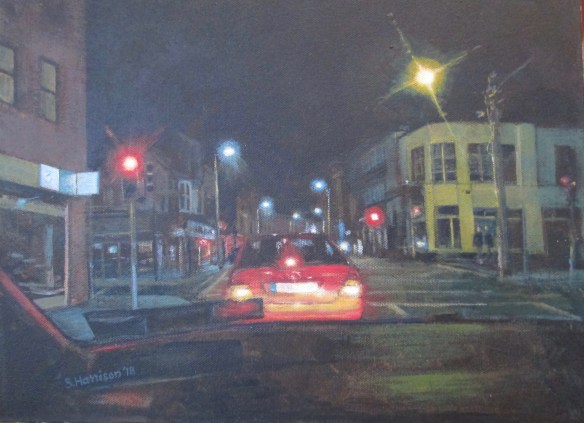
Bray Seafront Evening

Bray Sfront art

At the start of the 19th century, the recreational and romantic potential of the sea was just being discovered. Up till then, such benefits it gave were seen as limited to its harvest of food and its use as a transport route. Mostly it was regarded as an unpredictable menace; a source of storms, piracy and invasion. This is illustrated by the fate of Bray’s two Martello Towers, constructed in 1804 during the Napoleonic Wars. One, positioned at sea level  midway along the seafront, having fulfilled its original purpose was destroyed by storm some eighty years later. The other, atop a mound at the north end of the seafront, repelled Bonaparte but was occupied in the 1990s by another diminutive general, Bono. It survived. 

Meanwhile, the Romantic era recognised other qualities of life by the seaside. Besides health and wellbeing, the spiritual and aesthetic drama of seascape and shore would increasingly inhabit the human perspective.

Bray, remote and battered gatepost at the southern end of the Pale, attracted romantic and prosperous souls to its dramatic combination of mountain and coast. By the mid 19th century, the expanding town was being connected to the city of Dublin to the north by rail. The town’s population grew as did the seasonal tide of visitors. William Dargan, the railway entrepreneur, undertook the ambitious conversion of Bray into the ‘Brighton of Ireland’. Amongst his plans was the development of the seafront. The Esplanade, almost a mile in length, was laid out with a Promenade to the base of Bray Head. Constant flooding resulted in the construction of the sea wall, with the Promenade on top, in the 1890s. The Harbour was completed at the end of the century, separated from the Esplanade by Martello Terrace.

1 Martello Terrace features in James Joyce’s Portrait of the Artist. Joyce lived here as a child. Longtime resident, former Government Minister Liz McManus, reckons it may also have inspired the phrase found in Ulysses: the snot-green, scrotum tightening sea.

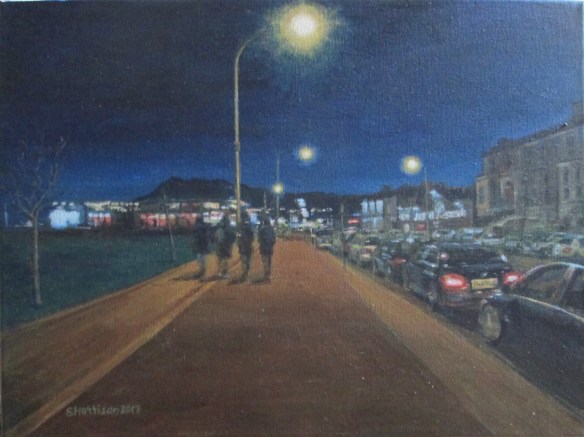
In this view we look south along the length of the Esplanade. The Harbour and Martello Terrace are behind us. A foursome heads out on, or continues, a night out. Just ahead, to the right, is the Silver Strand Amusements, formerly the Fun Palace, setting for my first Bray short story: Coda. To the left is the Sealife Centre, with the lights of Butler and Barry’s Bar and Grill. Further on, the bright lights glow and beckon revellers to the nightspots: The Martello, the Porterhouse and Jim Doyle’s. This is where stories begin, of sex and drink and rock n roll.

Budapest-3


Buda bt1

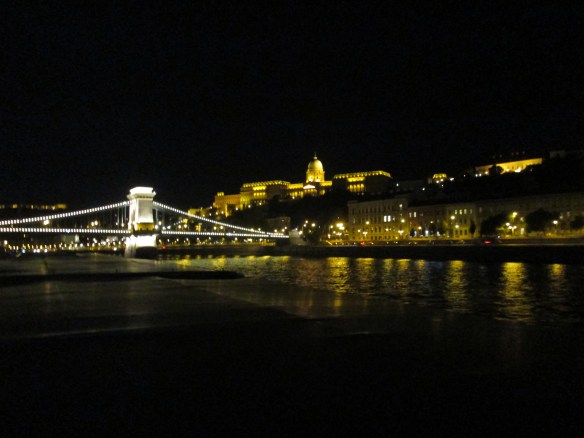
The Danube cruise I’ve booked is a simple no frills trip, ideal for the solo traveller. We do get a shot of vodka, or soft drink for the more sombre. I elbow my way to the aft viewing deck. The soundtrack is good, with enough classic rock zest to enliven the night. We set off down the Danube through a city of light. Yes, I could have stayed on deck forever, float on a river forever and ever. I steeled myself against the unlikelihood of receiving another drink, bathing my eyes in the nocturnal lightshow. Palaces appear to float on air where Buda rises to the West. Bridges, ablaze with light, span the dark honeyed mirror of the river, from the heights of Buda to the flatter land of Pest, just as magically aglow with its swarming boulevards and towering domes. 

Buda bt

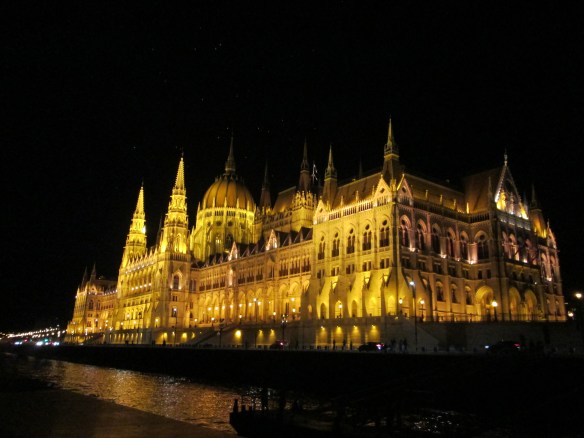
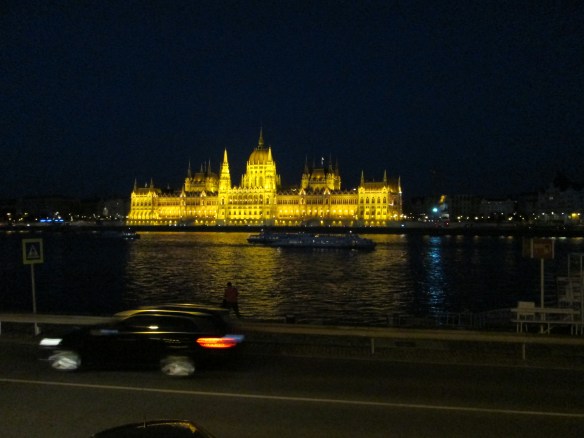
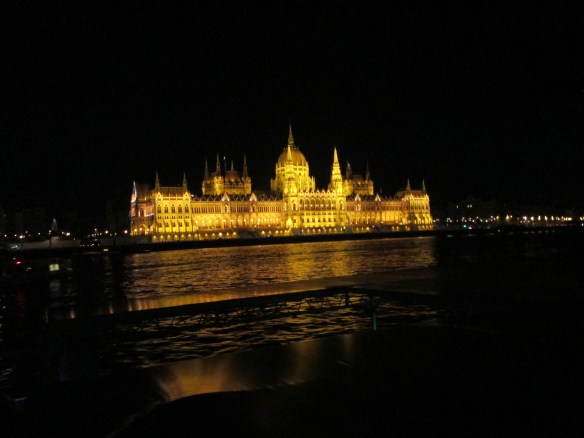
We soon glide past an architectural highlight that tops and tails the tour.The Parliament Building is one of Budapest’s signature landmarks. A sublime confection of spires and facades gathered around an impressive central dome. It was designed by Hungarian architect Imre Steindl in the Neo gothic style. Completed in 1904, Stendl would never see his finished masterpiece; he went blind at the turn of the century and died in 1902. 

Buda Bt3

After that, there’s still more spectacle, and a constant buzz of sublime delight suffuses the deck. It feels like a sightseeing tennis batch, head constantly swivelling to catch the next spectacle. We pass beneath the four main bridges: St. Margaret’s, Chain Bridge, Elizabeth and Liberty. And back again. Returning to our dock after an hour afloat, there was a firework display farther up the river, which somehow seemed less spectacular than it must have been.

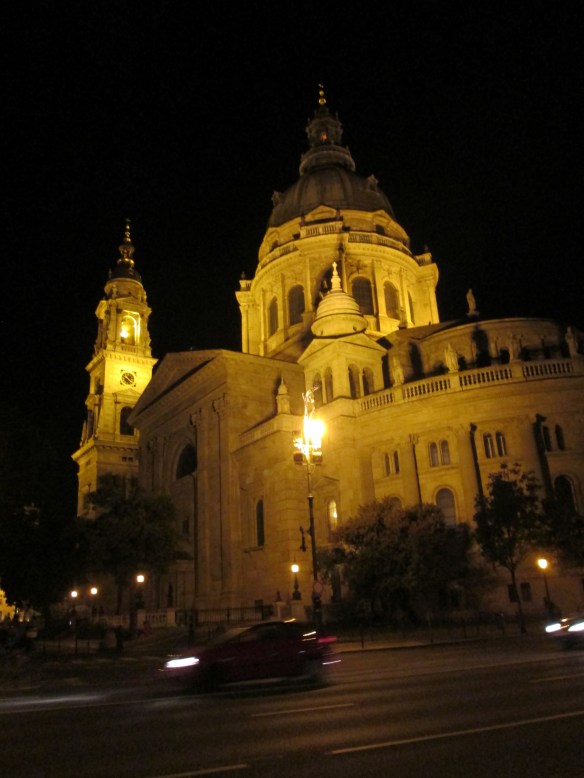
I walk home by Bajcsy Zsilinszky Utca, much easier to pronounce than spell. It’s a long walk on a wide boulevard, terminating in Deak Ter. Saint Stephen’s Basilica is near my destination. Budapest’s twin landmark with the Parliament Buildings, the summits of each reaching the same height of 96metres .

Buda bas

Saint Stephen refers to Hungary’s first king who ruled from the start of the second millennium until 1038. Stephen forged a unified kingdom in the Carpathian Basin that is regarded as the genesis of the modern state. His espousal of Christian doctrine and custom ensured his kingdom was acknowledged throughout Europe where paganism was in terminal decline. While anarchy followed his death, order was eventually restored and Stephen was elevated to sainthood. A cult arose around his relic: the Holy Dexter, or right hand. This has been around, to put it mildly, but after many centuries of sojourn at last came to rest in his eponymous Basilica in 1950. 

Buda Bas1

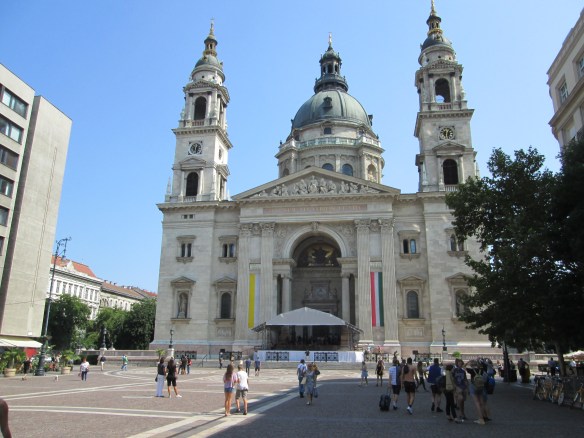
I return to visit the Basilica in the hot glare of noon. The huge Neo-Classical building was begun in 1851 and took over fifty years to complete. It was designed by Miklos Ybl (1814-1891) who was the country’s leading architect, also the designer of the Hungarian State Opera House nearby on the grand avenue Andrassy Utca. The majesty of that particular building was denied me by the curse of scaffolding, to which I was particularly prone on this trip. 

Buda bas2

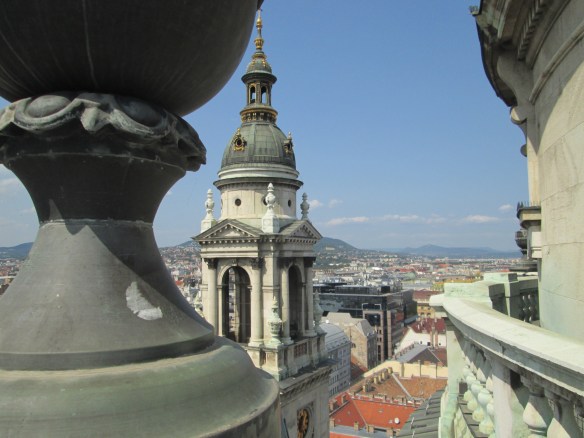
The Basilica awaited in all its sun-blasted glory. The facade is framed by two slender bell towers, with the dome towering impressively over all. This is accessible, either by lift or by stairs. After yesterdays exertions I take the lift, leaving me with a short few steps spiralling within the dome before bursting out into raging air at the cupola. Dizzying views from the top whiten my knuckles; it is the vertigo of paradise.

Budasyn

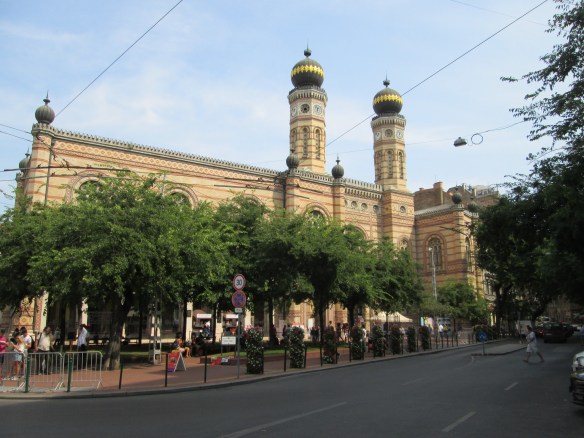
Back on terra firma, I take some time to recover my nerves with a cool beer, or two. Budapest can be just as beautiful from the ground and I stroll aimlessly for a while, which is an essential pleasure in any city. Ever decreasing circles as I find myself back at base camp. The Jewish Quarter is just south of Karoly Utca, cramped and busy with plenty of informal bars. The Jewish community thrived here from the 19th century until the 1940s. Though decimated by Holocaust and Exodus, a small Jewish community survives. They can enjoy the legacy of happier times with the largest Synagogue  in Europe with room for over three thousand souls. Designed in Byzantine style by Ludwig Forster of Vienna in 1851, there is a Jewish museum onsite.

I don’t want to wait anymore

I’m tired of looking for answers

Take me to some place where

There’s music and there’s laughter

Budance

Darkness falls and the carnival is in full flight at Deak Ter. At the arcades off Karoly Utca, the beat pounds on. I’ve found my favourite bar, usually quiet, counter service where I perch at a barrel adrift from the river of life flowing past. They do Italian food here too, good for a light evening bite. Where the two main pedestrian thoroughfares meet, there’s an ad hoc dance floor, where tyro movers and shakers try out their latino steps and the panoply of Ballroom skills. It’s borderline chaos, sex with a smile, fun for all within its ambit, whether participant or passer through. Just watch me now, heel to heel and toe to toe, a few too many on board, just a few steps from home.    

I’ve woken up in a hotel room

My worries as big as the moon

Having no idea who or what or where I am

Show me my silver lining

First Aid Kit My/Silver Lining

Birdhouse With Blossoms

Birdhse2

I took a photo of the Birdhouse, garlanded in flowers, late last summer. You’ve seen the monochrome version, appropriate for the season that was in it. This is the finish I originally intended.

Reviewing the original photo, I noticed for the first time that my two canaries were both in it. Sadly, and weirdly, on completion of the painting there was only one. So, something of a paean to love. Were I to travel through and beyond the birdhouse, and keep on going, I would eventually come to the Canary Islands. It is the point of origin of these distinctive birds, though the name for the archipelago is taken from the Latin for dogs, the canine species.

 I have been to Tenerife and Lanzarote and the Portuguese island of Madeira. They seem somehow fabulous; fabled pinnacles of land in the immensity of the ocean. They are surely the seeds of such myths we fashion; of Atlantis and Tir n nOg and Hy Brasil. Yet, here I am in my own back yard, painting flowers and spinning yarns. Some of our more exotic destinations are right here.

Oh let me go, where the blue flowers grow!

(Where the Blue Flowers Go, by the Cujo Family, is an appropriate themesong for this voyage through Bray and beyond.)

Budapest – 2

Budachain1

Day in Buda and a Night Cruise.

After a seriously long sleep, I have a late morning light breakfast on the balcony. Tuesday is to be a full day with extensive exploration of Buda and a river cruise. First though, a fraught walk to Chain Bridge, running into building works and having to walk back through dusty construction site in 25 degree heat ending up where I began back at Deak Ter. The plaza at Chain Bridge is also difficult to negotiate; but hey, what’s the rush?

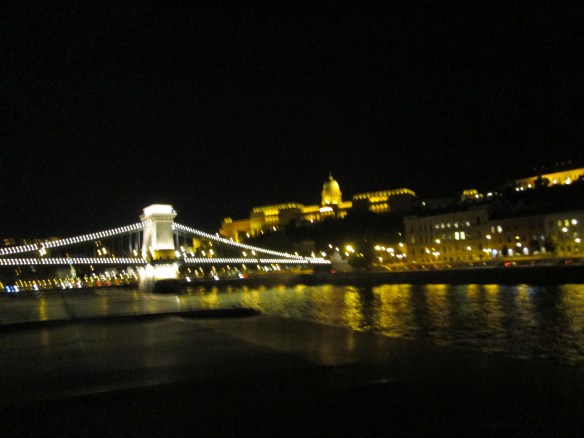
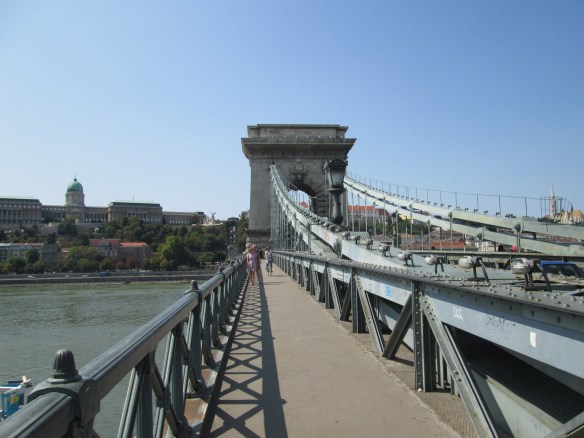
Find path to Chain Bridge at last where I buy my Budapest Card off a garrulous student type. Cross the bridge amidst a throng of excited tourists. The Danube below swarms with traffic, and it’s blue, blue, blue, blue, blue, blue, blue! Chain Bridge was built in 1849 and was the first bridge to link the cities of Buda and Pest, facilitating their unification. Two massive stone towers emphasise the sense of fortification and provide functional support for the suspension chains. The effect is formidable and beautiful, even more emphatic at night with its illumination.

Budafun1

Grab a beer in a self service pavilion beside a tiny park and try to chillax. Not an easy feat in this city. After a queue, I take the funicular up to the castle. This attractive old world transport is a pleasant sidestep from the crowds, and fabulous views of Pest unfold as the wood and brass carriage soars towards the Castle. 

Budafrid

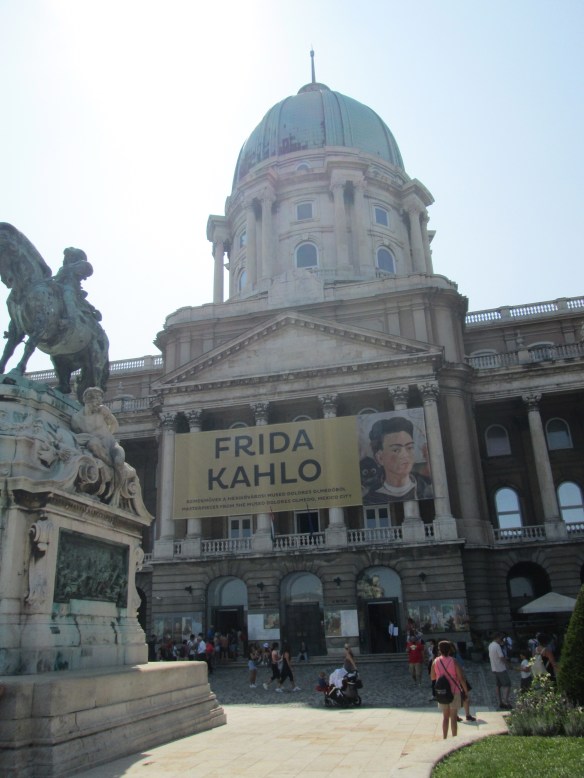
Buda Castle is a complex of Baroque palaces including the National Gallery, the Palace itself, and the History Museum. There are spectacular views of the city from the terrace in front of the National Gallery. I have plenty of time to enjoy it as I settle in for a half hour queue.

Budafrid2

The Gallery has a visiting Frida Kahlo show, and very good it is too. Which is just as well as the Renaissance section was closed. A pity that the art of Budapest was not there for me. The Museum of Fine Arts in Pest had been completely closed for renovation for some years but was scheduled to reopen in late summer. But on the eve of departure I learned that its reopening had been further deferred. The National Gallery is a fine building and I enjoyed what art I did see, an interesting selection of national art from the 19th and 20th centuries.  

Budafoun

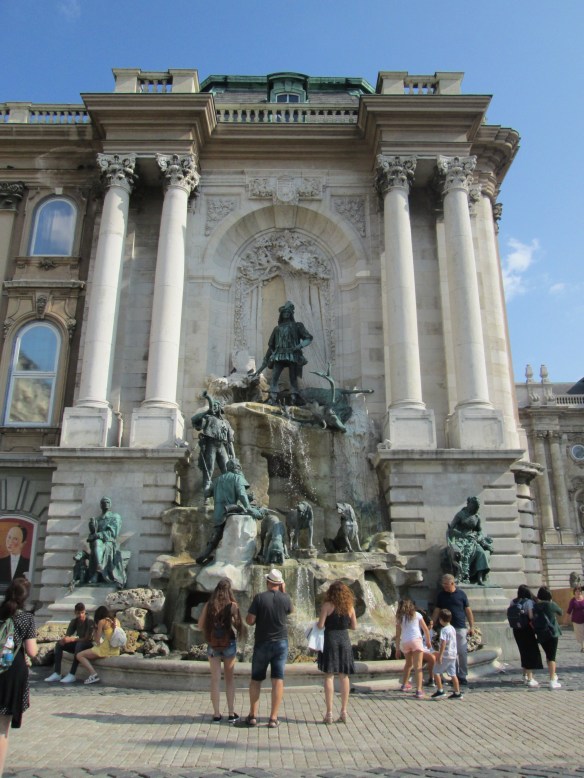
Leaving the Gallery I head west to find the Matthias Fountain. This is named for the 15th Century King Matthias Corvinus who initiated major construction at the Castle. He was an early advocate of the Italian Renaissance, becoming a major patron of the arts and science in Hungary. He became something a folk hero amongst Hungarians, and was said to wander amongst the peasantry in disguise dispensing justice.

Budawall1

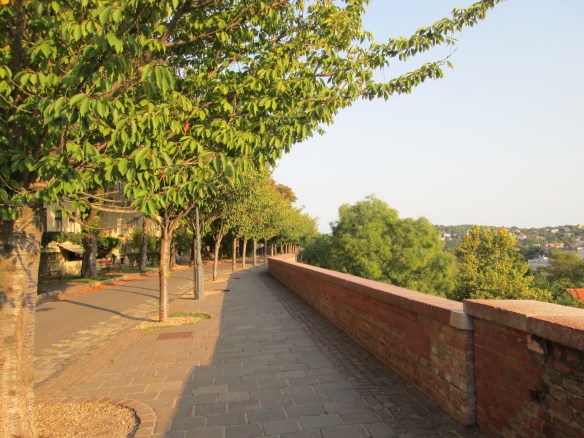
City walls spread out from the Castle to embrace the ancient city of Buda. Looking east over the Danube gives the classic view of teeming Pest, most popularly enjoyed from the pretty Fisherman’s Bastion. The view from the western walls show an entirely different town from Pest.The walk along these ramparts is tree-lined and relaxed with lovely views of populated hills. Dog walkers, strollers, joggers and auld lads on benches (me included) give it an old village atmosphere. 

Lords Street (Uri Utca) is a long winding street of medieval buildings forming the spine of the old walled town. Orszaghaz Utca, running parallel, has a few hostelries and I stop for a meal and drink in one with a sun kissed terrace. Chicken and chips is even less exciting than it sounds, though I spend a pleasant hour in the falling sunshine. Old Buda is very quiet after the tourists depart. Thronged by day, it mellows after five. 

Budatower

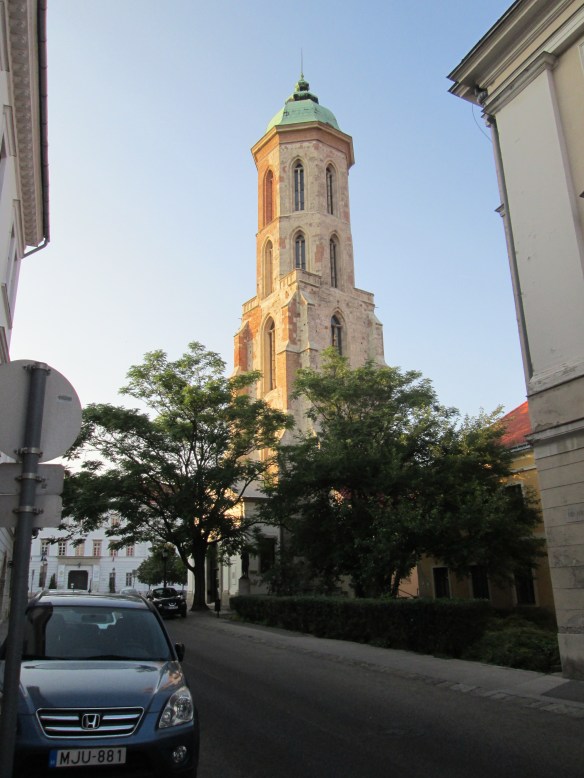
The Church of St Mary Magdalene is at the end of Lords Street in Kapisztran Ter. Dating to the 13th century, it lies in ruins since WWII, but the impressive medieval tower still stands, ancient and adrift of the church that spawned it. Buda Tower, as it’s known, has one hundred and seventy steps to take you to the top. I climb it because it’s there and it takes some notional credit off my Budapest Card. Might have taken some days off my life too. In this heat after a busy day, I am reduced to a crawl to gain the summit. The lurching couple at the top seem oblivious to my arrival. As I collapse in a pool of sweat, they give a lively interpretation of The Meeting on the Turret Stairs, together all alone above the magic city. Hey, get a turret! 

Budagate1

I exit the Old Town by Vienna Gate and the road falls steeply away below the walls. I meander through an urban residential area with little to detain me. Reaching the river near Bethany Square, the metropolis is abuzz again. Trams trundle along the waterfront. Beyond  on the Pest shore, the spectacular Parliament Buildings dominate. The square is busy, its most notable sight being the Baroque Church of St. Anne. I stop at a relaxed outdoor bar, where a local clientele relax over drinks and snacks. I hope to time things right for my Danube trip. It grows dark so time is tight. I grab a tram along the river to Saint Margaret’s Bridge.

Budanite

You’re my river running high

Run deep, run wild

The walk takes me across the tip of St. Margaret’s Island. The bridge is long; the river’s wide; I cannot swim over. It’s a longer walk up to the designated dock, and I’m practically the last on board. I get a spot on the aft deck and we set off promptly. It is one of the best river trips ever.

Budadanchn

I, I follow, I follow you

Deep sea baby, I follow you

I, I follow, I follow you

Dark doom honey, I follow you.

(I Follow Rivers by Lykke Li)

Dublin’s Circular Roads – 12

Baggot Street to Grand Canal Docks

img_4240

The clock winds down. From eleven to twelve marks the last hour of the day, the last month of the year. It’s been a long day spent circling Dublin. It has taken about a year to write, often revisiting, refining the reflections harvested on that first sweep. I stroll the Grand Canal again between Luas Line and Dartline in that long Indian Summer just gone. Things change in a year. New buildings rise, old ones fall. The tallest building along the canal, Fitzwilton House, a thirteen story skeletal tower from the sixties, was demolished in October. Meanwhile, the eastern extreme of the canal sees taller buildings growing taller by the year.

A friend once lent me the quote: to the young man the city is old, but to the old man it is young. If I’m not quite the tattered man upon a stick, the rising city of stone and glass is gleamingly new. But the city is always organic: stone, steel and glass, flesh and blood, individual and somehow collective, creating and devouring itself in time. 
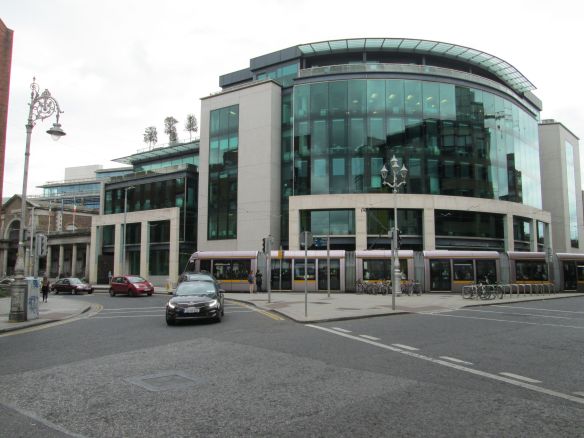
 I am the man walking in impossible slow motion through the surging river of commuters. The song I sing is both aching and exultant.

Look at me standing

Here on my own again

Up straight in the sunshine

And I need a friend, Oh, I need a friend

To make me happy

Not stand here on my own

No need to run and hide

It’s a wonderful, wonderful life

No need to hide and cry

It’s a wonderful, wonderful life

by Black (Colin Vearncombe)

twlv cnal lock

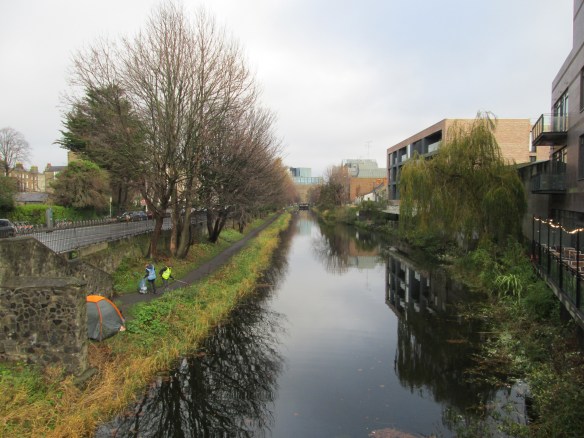
After Baggot Street bridge, the Canal enters a quiet stretch. The main thoroughfare has drifted away from the waterside, off towards Beggar’s Bush. Walkers, joggers and wading birds stroll the towpath, enjoying calm water and the shade of trees. Across the canal modern apartments and restaurants stand close to the waterside. Here, on the north bank, Georgian terraces line the road as far as the Pepper Canister Church. We view it from the back where it seems somehow remote from the city centre. Mount Street Upper flows quietly around the church’s island. As Mount Street Crescent it slips across a modest bridge to exit the city.

twlv georgian

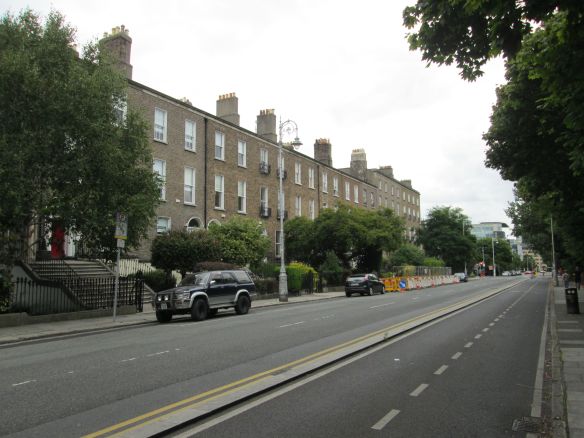
Farther on, Mount Street Lower is a broad city thoroughfare of redbrick Georgian terraces. Broad and somewhat dour with a stern business profile. Modern offices line the route to Grand Canal Street. Beyond, the highrise South Docks is growing again after the hiatus of the economic crash of 2008. 

O commemorate me where there is water,

Canal water preferably, so stilly

Greeny at the heart of summer. Brother

commemorate me thus beautifully

Where by a lock Niagarously roars

The falls for those who sit in the tremendous silence

Of mid July.

(Patrick Kavanagh)

twelve aviva

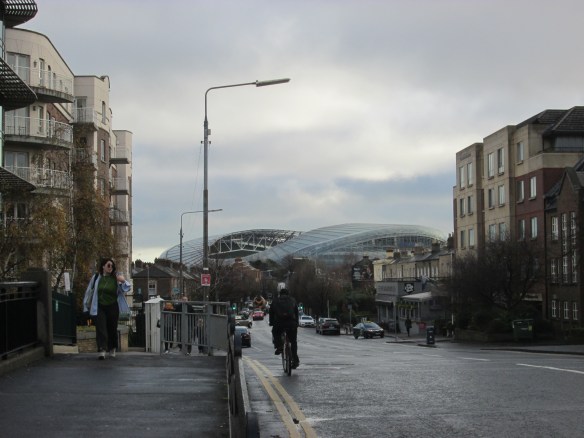
The towpath ends as the canal burrows into the once industrial docklands. To the right, the road heads into Dublin 4. High Temple of this fabled locale is the football stadium at Lansdowne Road. Revamped spectacularly at the turn of the century, it forms a giant glass cake to celebrate the new era. Its northern periphery bows respectfully to Havelock Square as citizens of this city of a million people don’t expect to be overshadowed by tall buildings. The effect is somehow quaint, incongruous as the old Mock-Tudor pitchside clubhouse swept away in the modernisations. 

The home of Irish Rugby is currently witnessing a golden age. My father took me to internationals back when pickings were slim, and players less so. They were the days of Tom Kiernan, Mike Gibson and Willie John McBride. Then there was that enigmatic all rounder, A.N. Other, who somehow could never make it onto the field, despite regular programme promises.

It is soccer’s adoptive home also, hosting internationals from the mid seventies replacing decrepit Dalymount. Nearby the docks gave birth to Shelbourne and Shamrock Rovers. Shelbourne were formed in 1895 and originally played in Havelock Square now in the shadow of the stadium. In 1906 they became the first team outside of Ulster to win the Irish Cup, beating Belfast Celtic in the final. In 1921, during the War of Independence, Shelbourne were refused a home replay having drawn a cup match against Glentoran in Belfast. Along with Bohemians and St. James’s Gate they broke away to form the FAI. The associations have, almost uniquely in Irish sport, remained separate ever since. Neither Shelbourne nor Shamrock Rovers have lingered in these parts. Rovers followed the Dodder River to Tallaght via Milltown. Shelbourne moved North of the river, playing out of Tolka Park in Drumcondra.  

frederic_william_burton_-_hellelil_and_hildebrand_or_the_meeting_on_the_turret_stairs

We hang a left which brings us townwards. A few yards on is Sir Patrick Dun’s Hospital. Patrick Dun was born in Scotland but lived his professional life in Ireland. He accompanied William of Orange to the Battle of the Boyne and was elected to the House of Commons in 1692. When he died in 1714, he left lands in trust to the Royal College of Physicians. The estate proved more prosperous than anticipated and by the end of the eighteenth century the College determined to start a teaching hospital. The hospital was founded and named in his honour a century later. Closing in the 1980s, it is now used for civil marriage ceremonies. A copy of the painting Meeting on the Turret Stairs by Frederic Burton presides over couples being wed. Romantic perhaps, though the last embrace of Hellelil and Hildebrand is something of a cautionary tale of doomed love. The building was designed by Richard Morrison and completed in 1808, Its granite neo classical facade looking rather grand in the utilitarian environs of Grand Canal Street.

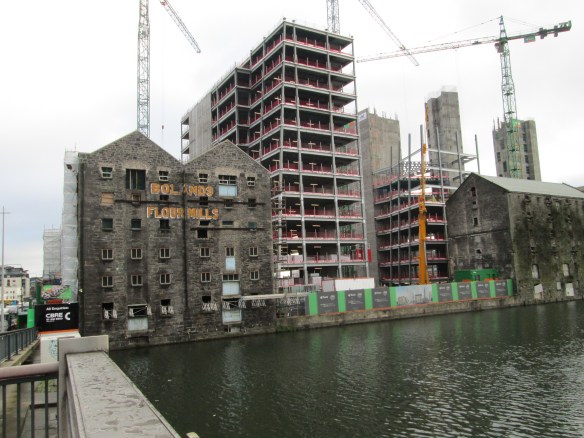
Across the road the Treasury Building is an impressive modern structure on the site of Boland’s Bakery, founded 1874. Boland’s was occupied by a group of rebels led by Eamon De Valera during the 1916 Rising. De Valera was captured and sentenced to death but thanks to his American birth and a global outcry over the previous fifteen executions, he dodged the bullet. Dev was president of the revolutionary parliament, the first Dail. When Fianna Fail secured a majority in the 1932 election, he assumed leadership of the country in a peaceful transition from Ireland’s first independent leader, WT Cosgrave. Architect Sam Stephenson, notorious and controversial modernist, designed a factory on the site in 1951. This in turn was rejigged as the Treasury Building twenty years ago, Stephenson’s skeletal frame clad in more glistening postmodern raiment. It recently housed NAMA, the Bad Bank, with Google poised to pounce.

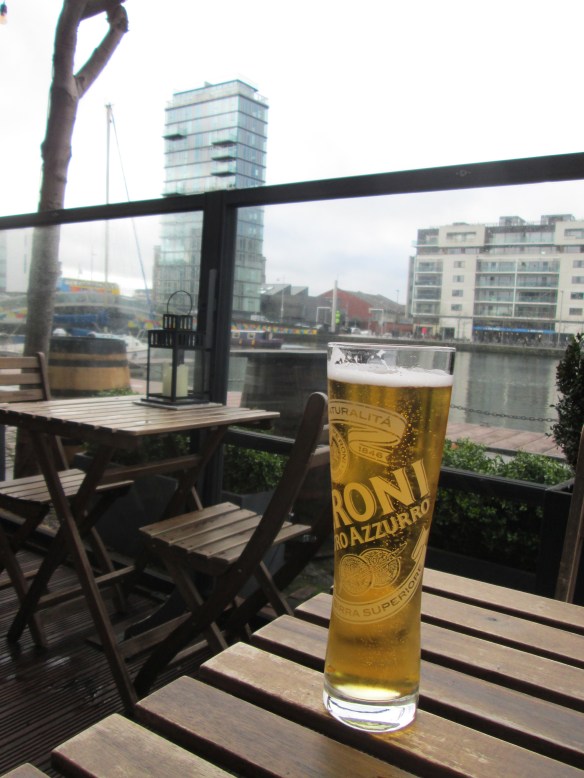
twlv pint

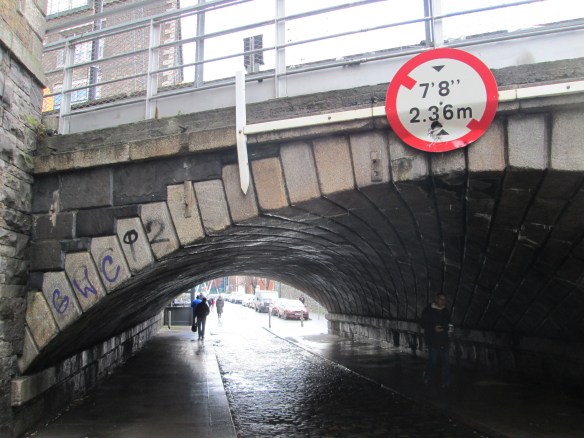
Becky Morgan’s is an attractive watering hole, its cheerful floral exterior a welcome relief from the dour environs; very much the oasis in the desert. The front porch is perfect for a pint and a lungful of robust city air. The pub faces down Macken Street, slicing through an industrial nineteenth century landscape to the city quays. Tall folk like us must crawl beneath the impossibly low railway bridge before the city emerges again in all its towering crystals. At Pearse Street, a right turn leads to Grand Canal Dock where Dublin’s most modern development is concentrated.

twelve brdge

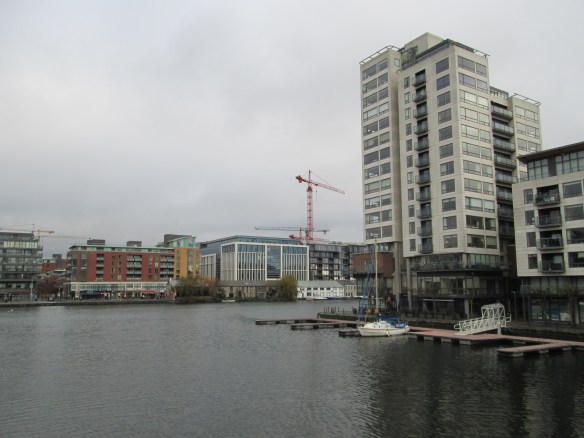
These Docks were first developed in 1796 connecting the sea port with the inland waterways. By the middle of the nineteenth century the immense project had been superseded by the railways. Milling, baking and some other industry persisted, but by the middle of the twentieth century the area was largely derelict and poised for redevelopment in the 1980s. In its heydey, the area was Danteesque: mountains of black coal for the Dublin Gas Company, tar pits and scrap yards. Bottle factories, iron foundries and chemical factories pumping out fumes and noise. The Gasometer rose two hundred and fifty feet (82m) above the inferno, forming Dublin’s major landmark for sixty years from1934. It was constructed in Nazi Germany and stood at the junction of Macken Street and the quays.

This doomed dockland formed the gritty backdrop for many a 1980s rock video. U2 in particular, ensconced in their studios at Windmill Lane, slummed their way into a new rock chique. Regeneration began in earnest in 1990 with a major decontamination project on the old gasworks site. Today the name Silicon Docks has been applied, referring to the concentration of high tech companies such as Google and Facebook.

twelve google

Google occupy the Montevetro Building which at sixty seven metres is Dublin’s tallest building, for now. Its stripey spine nails the southeastern corner of the Dock. To stand on MacMahon Bridge is to stand on the cusp of time. The first bridge here was built in 1791 and known as the Brunswick Bascule. There have been five bridges in all, the first four being drawbridges of one sort or other. The current structure of 2007 is a handsome cantiliver fixed span bridge. Though fixed, I like to imagine it as a drawbridge, each raising like the blink of an eye. The concrete tower of Bolands Mills shimmers one afternoon and a glass tower rises from its own reflection to take its place. The Gasometer tilts and disappears, smoke funnels implode, the red gasometer is stripped to its skeleton to grow new flesh of glass apartments. Against a gale from Irishtown, I cup my hands to protect the flame, and looking up see the world rebuilt anew.
img_4260  

I ain’t happy, I’m feeling glad

I got sunshine in a bag

I’m useless but not for long

The future is coming on

(Gorillaz/Clint Eastwood)

twelve millenium t

I hike the few yards to the foot of the Millenium Tower at Charlotte’s Quay, blow froth from a beer while Viking ships cruise mirthfully by. Tourists aboard the amphibian keep their eyes peeled lest Bono or the Edge take their smokebreak on the quayside. Meanwhile I preside, in poncho and sombrero, squint into the winter sun and exhale. Across the pond, the Bord Gais Theatre crystallises behind a plaza of neon pines. Designed by Daniel Liebeskind the theatre opened in 2010 and is Ireland’s largest with over two thousand fixed seats. It hosts top West End shows such as The Lion King, Miss Saigon and Chitty Chitty Bang Bang. International and local music and dance also feature, most appropriately for this location the like of Swan Lake by the Russian State Ballet and those great Scots; The Waterboys.

The stars are alive and nights like these 

were born to be sanctified by you and me, 

lovers, thieves, fools and pretenders!

img_4266

Sneaking along the side of the Theatre, Misery Hill leads back to Macken Street and the end of our journey. The Beckett Bridge lies lyre-like across the Liffey, suggesting a million tunes to play. The circle is complete. Riverrun, past Eve and Adam’s, from swerve of shore to bend of bay, brings us by a commodious vicus of circulation back to where we began.

I sit down to write on the eve of my birthday. The end of November, the eleventh month, and the end of the eleventh hour. I was born at the top of Dublin’s premier street, O‘Connell Street, in Dublin’s first established maternity hospital, The Rotunda. The name is sympathetic, is it not? To that most essential condition, to our circular journey. And it was there, just before midnight, in front of a blazing turf fire, my mother gave birth to me. So the story goes.

Here I go out to sea again

The sunshine fills my hair

And dreams hang in the air.

No need to run and hide

It’s a wonderful, wonderful life

No need to hide and cry

It’s a wonderful, wonderful life

Bray Main Street

Bray Main Street

Bray, as a definite built location was established by the Normans under Richard de Clare (Strongbow) in 1169 on lands granted to Walter De Riddlesford. It guarded the fording point of the River Dargle where the town bridge now stands. The location marked the southern extent of the Pale, the area of Norman influence around Dublin. As such, Bray was a frontier fortress, sporadically attacked by native clans from the south: the Byrnes and O”Tooles. The castle was built on the high south bank of the river, but little remains beyond its vague footprint. Stone steps cut into the rock descending to the river are still visible. St Paul’s Church was established to the front of the fortification, the current building dating to 1609 is Bray’s oldest. The manorial village grew along Main Street heading south towards the Kilruddery estate of De Riddleford, now owned by the Earl of Meath, head of the Brabazon family.

This view of Bray looks south along the rising Main Street. The Town Hall at the far end is hidden by the bend in the road. The bridge is directly behind us with St Paul’s and the castle behind us to the right. The Royal Hotel, originally Quin’s, one of Ireland’s oldest rural inns and the courthouse of 1841 are just behind us to the left. Ahead, to the left at the traffic lights, Quinsboro Road leads down to the seafront. The white Art Deco building to the right was once the local office of Dublin Gas but is now vacant. On the left a few doors up, the fluorescent lights signal The Florentine, a pub once known as the Olde Bray Inn. And this is indeed the old centre of Bray, dating back to days long before the coming of the railway in the 1850s.

On this spot, almost eight hundred and fifty years ago, you would be leaving the relative security of Bray’s fortifications behind and heading into the untamed lands of the O”Byrnes of Cuala. You would now be “Beyond the Pale”. On a late Autumn night in 2018, I am heading home to my castle, just over a mile due south, near the brow of a hill where an ancient Celtic cross is planted. Sometimes you can blink and the accretions of history fade. Blink again and the security of neon and petrol return, familiar enough to embrace in the dark.

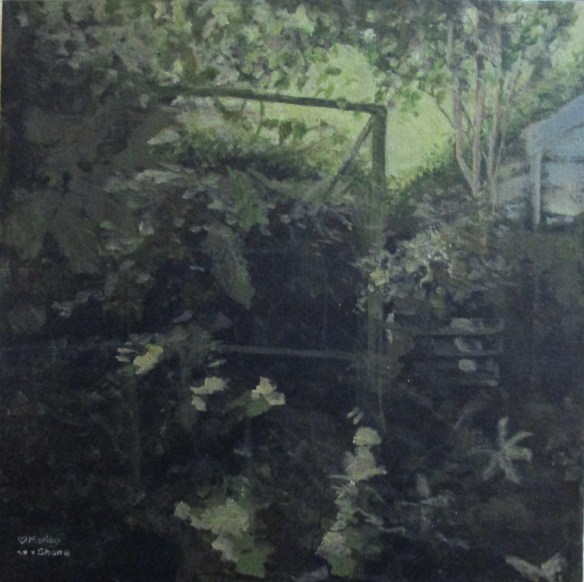
The Birdhouse

IMG_4232

Imagination sets in, pretty soon I’m singing

Doo, doo, doo, lookin’ out my back door.

The last resort of the artist, when inspiration is slow, take a look out the window. This is an easy one and I should know it well. This is our back garden for thirty years, though shorter now and more verdant than ever. The birdhouse and shed stretch along the back wall, overhung by trees, embraced by exuberant clematis and fronted by an explosion of flowers in summer. Here it’s caught in between seasons, in a monochrome fantasy. My muse suggested leaving it as is and so I present it thus. Perhaps when summer comes (it won’t be long till summer comes) I will launch in to a colour version. Meanwhile … 

Giant doin’ cartwheels, statue wearin’ high heels

Look at all the happy creatures dancin’ on the lawn

Bother me tomorrow, today I’ll buy no sorrow

Doo, doo, doo, lookin’ out my back door.

Dublin’s Circular Roads – 11

Kelly’s Corner to Fitzwilliam.

Songs are still rattling around in my head as we leave Portobello behind. The route is now citified and rich in all the variety of the teeming city, the bars, cafes, shops and all the quirks and complexities of the teeming crowds. Alternative routes open like a braided river. Redbrick thoroughfares and sylvan boulevards, the steel and surge of mechanised transport and the otherworld tranquility of the Grand Canal. To saunter or to sprint, well, it depends on your mood.

And the blind man sings in Irish

He get his money in a tin dish

Just a corner serenader

but once he could have made her

(Portobello Belle, DIre Straits)

Kelly’s Corner is the name given to the junction of the South Circular and South Richmond Street. The Kelly’s premises which gave its name to the place has long gone. The junction was for long a complicated warren of narrow streets which was simplified in the 1980s. Old Camden Street was built over so that modern Camden Street could follow a direct line along Richmond Street heading south towards Rathmines. Part of the southern section remains. Even here, the decrepit old redbrick buildings are giving way to shiny modern constructions. 

FitzHarc

Meanwhile, the stretch of SCR east of Kelly’s Corner is named Harcourt Road and connects to the city centre hotspot of Harcourt Street. Back in 1858, the Harcourt Street Railway Line terminated here at the city’s edge. It was ceased a century later, thanks to the short-termism of Todd Andrews, Minister for Transport in the Fianna Fail government. This was the original link between Dublin and Bray and along the coast towards Wexford and Waterford. Much of the old line remained free of obstruction, and provided the basis of the Luas Green Line in 2004. Originally planned to run cross city, it was limited to connecting Sandyford in the South with St. Stephen’s Green; with Fianna Fail, coincidentally back in power, Minister Mary O’Rourke decided it would be too much trouble to push  a tramline through the gridlocked capital. Over a decade later a more enlightened regime pushed on with the original cross-city plan and the line was extended through the city and on past Phibsboro to Broombridge on the Northside.

Harcourt Street Station was completed in 1859. Designed by English architect, George Wilkinson, its frontage features two colonnades each side of a tall central arch. A century later the line was abandoned and the building fell into disuse. The coming of the Luas line brought redemption, and the station has been converted to a bistro, the Odeon. The front colonnade provides an elegant terrace where one can mull over a drink between trams. With a tram every ten minutes there’s little pressure to hurry your drink, there’ll be another along soon enough.

A man walks down the street,

It’s a street in a strange world,

Maybe it’s the third world,

Maybe it’s the first time around.

Harcourt Street itself hosts a number of raucous nightspots. Behind the serene curved Georgian facade beats the hectic heart of Dublin nightlife. Dicey’s, the Jackson Court and Copper Face Jacks are among its well sung spots. The latter club is curiously magnetic for the rural reveller, living something of the ex-pat life in the capital. 

He looks around, around

He sees angels in the architecture,

Spinning in infinity,

He says Amen, and Hallelujah!

(You Can Call Me Al, Paul Simon)

The original Copper-faced Jack was John Scott, 1st Earl Of Clonmel who lived on Harcourt Street. Scott’s nickname was either a direct reference to his unusually dark complexion  or to his aggressive, hard faced argument. He was appointed Attorney General and though a determined reactionary, supported Catholic relief acts. He fell into ridicule in his later years, after a bitter feud with John Magee, proprietor of the Dublin Evening News. Scott lumbered Magee with an astronomical fine in a libel dispute, causing the newspaperman to be jailed. When Parliament found for Magee, he  acquired land adjoining Scott’s property and advertised a monthly pig-hunt, attracting thousands and ruining Scott’s property. He died in 1798 at age sixty.

In 1778, Scott had built the first house on Harcourt Street at No. 17. He was a friend of the notorious Buck Whaley whose house at St Stephen’s Green backed onto Leeson’s Fields, called after the Leeson family who developed property hereabouts in the mid seventeenth century. Scott bought eleven acres for his private gardens of Clonmel House. It required a subterranean passage under Harcourt Street to connect to Clonmel House. In 1817 the lands were made public and named the Coburg Gardens. Fashionable for a number of decades, they featured grand evening shows, commemorating Waterloo and celebrating the coronation of William IV. They fell into ruin later in the century however, and were bought by Benjamin Guinness.

FitzIvy

Guinness determined to develop the site as a recreational garden in the Victorian style incorporating  an exhibition palace and concert hall. Scottish gardener and landscape architect Ninian Niven was employed to design the gardens and Irish architect Alfred Jones the buildings. The complex opened in 1865 as the Dublin Exhibition Palace and Winter Gardens The Great Exhibition of 1865 attracted almost a million people. Public events continued for a number of years, however in 1883 they reverted to the private gardens of the Guinness’s Iveagh House. Annexed to the University in 1941, they came under state care in 1991, and have been restored to some of their original splendour. The Iveagh Gardens are very much Dublin’s hidden gardens, for long ruined and forgotten in the shadow of UCD Earlsfort Terrace. 

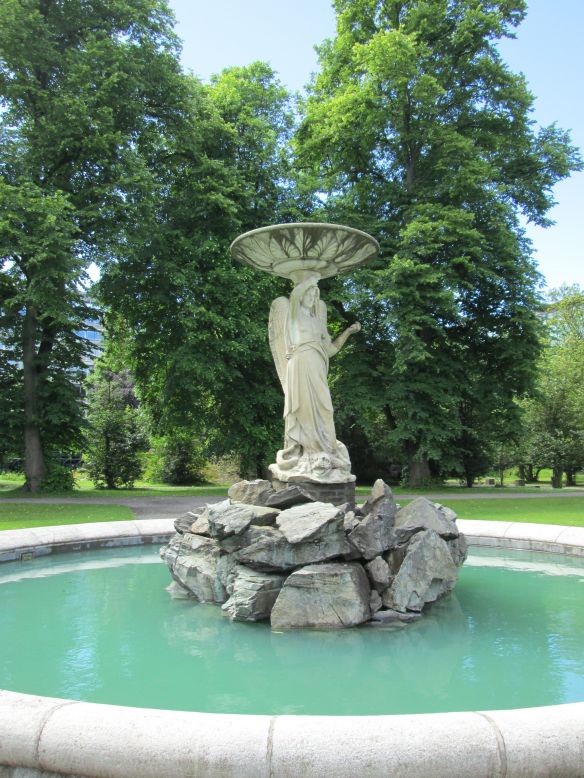
Less forgotten than before, but still off the beaten track, they offer lovers and loners the tranquility of solitude. There are hectic peaks, with rock gigs hosted in high season, though in a quieter corner, John McCormack is permanently poised to sing. The park radiates an eerie, gothic ambience off season. Its central fountains are particularly entrancing, their elegant stone angels holding water-bearing discs aloft. Elegant and ethereal, it’s a place to sit and pray, to whatever deity might hear.

The austere neo-classical building facing Earlsfort Terrace was acquired by University College Dublin as their main building in 1908. UCD had originated as Dublin’s Catholic college, in opposition to Protestant Trinity College. From the early sixties, UCD began relocating to the huge Belfield campus in D4 and Earlsfort Terrace was converted into the National Concert Hall. Dublin never had a dedicated Opera House, so this, I suppose, will do. Classical, Opera and Jazz all feature, with summer outdoor recitals in the Iveagh Gardens. 

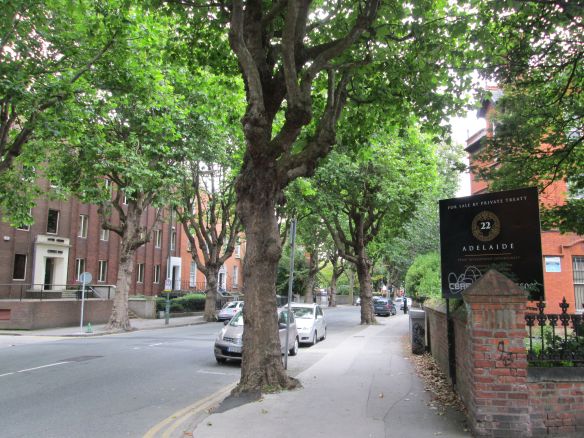
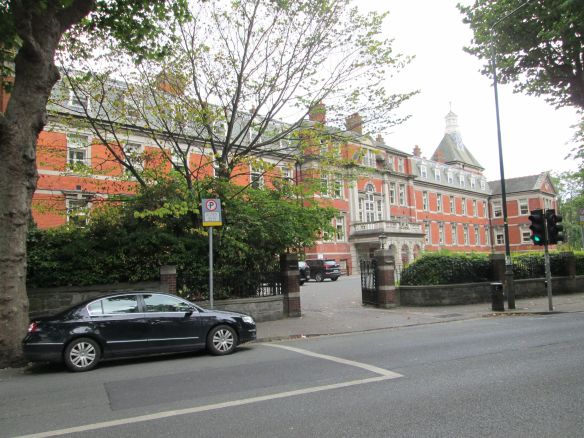
FitzAdAfter Harcourt Road we merge onto tree lined Adelaide Road. On the city side of the street is the Royal Victoria Eye and Ear Hospital. This is a public teaching hospital founded in 1897, amalgamating two hospitals, one of which was founded by SIr William Wilde, Oscar’s father. Designed by Carroll and Batchelor in an English Baroque, or Queen Anne, Revival, style, it has an attractive, extensive, redbrick facade of three storeys capped by a mansard roof. I had to visit once, having been slashed in the eye by a maniac wielding a copy of the Irish Times. It will take too long to explain. The treatment was prompt and good, though a week with an eyepatch soon grows tiresome with wags enquiring, hey, Long John, where’s your parrot?
FitzEyeJust past the hospital, we arrive at the junction with Leeson Street. The Leeson Street Strip was for long the city’s principal clubland, from the city centre on south towards Donnybrook. Its a bit more discreet than Harcourt Street and home to such haunts as the Sugar Club and Leggs. The restaurant Suesey Street namechecks the street’s original name.

FitzfitzFitzwilliam Street is a long expanse of, mostly, intact Georgian architecture. Laid out in the 1760s it descends slowly and arrow straight from Leeson Street to Holles Street, the National Maternity Hospital bracketing its souther end. On the way are two sylvan squares. The small garden square of Fitzwilliam, and the large public gardens of Merrion Square. Irelands Government Buildings, Leinster House, home of the Dail (Parliament) and the National Gallery are on the western side. One of Dublin’s iconic vistas is on the East, the view to the Pepper Canister Church forming the culmination of the vista along Mount Street. This was designed by John Bowden and Joseph Welland, its slim white tower with cupola suggesting its nickname. Officially named St. Stephen’s Church, it has served its Church of Ireland congregation since the 1820s.

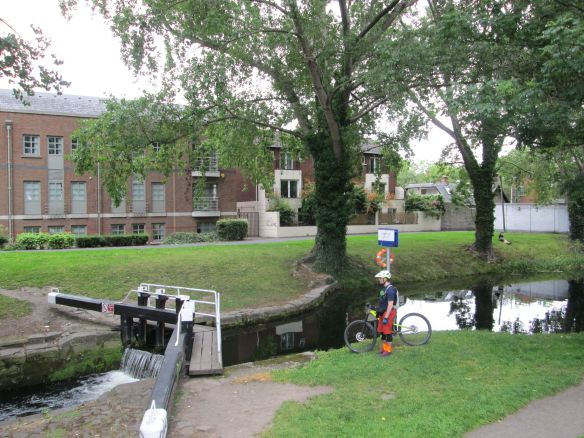
FitzBargeThe Grand Canal, meanwhile, offers a scenic route. From Leeson Street bridge to Baggot Street, Wilton Terrace has high office blocks to the north, hardly noticeable while strolling along the sylvan serenity of this stretch of Canal. The area was much haunted by the poet Patrick Kavanagh. The man from Iniskeen used to lounge on a bench by Baggot Street, absorbing the life and leaf of the canal, emanating poetry. He is commemorated here, not once but twice. The original bench in his honour is situated at the lock, erected by friends shortly after his death in 1968. Another more recent has a fine statue of the poet in gangly repose on one end of the bench. Sit with him and drift, float on the still waters for ever and ever.
On Raglan Road on an Autumn Day,

I saw her first and knew,

That her dark hair would weave a snare

That I may one day rue.

On Raglan Road is a famous evocation of love and loss, located on that road in nearby Ballsbridge. It has been set to music, derived from a seventeenth century air by harpist Thomas Connellan, translated as The Dawning of the Day. It has been much covered by a host of artists, Irish and international. Luke Kelly’s is the most resonant, and he generated the song with Kavanagh, but listen also for Joan Osborne, Van Morrison and DIre Straits.

FitzKav

I saw the danger, yet I walked

Along the enchanted way,

And I said let grief be a falling leaf

At the dawning of the day.

Dublin’s Circular Roads – 10

Portobello

Porto Little Bird

Crossing Clanbrassil Street, we enter Portobello. It is named after the area in West London, commemorating an event in the War of Jenkins’s Ear. Even back then the English were running out of names to give their little wars. Said Jenkins was a seaman much traduced by the Spanish foe before such amputations were glamourised by Van Gogh. In revenge, the English annexed the Spanish harbour stronghold of Portobello in Panama, in 1793.

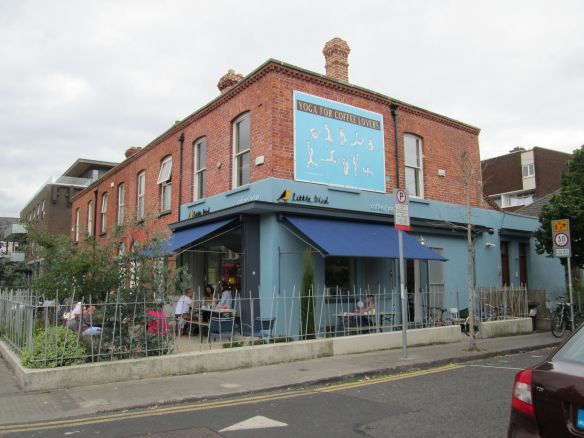
The atmosphere of lower middle class antiquity lingers; intimate, redbrick and tree lined. We are crossing into Dublin’s salubrious Eastside. By way of celebration, first port of call is within a block of Leonard’s Corner at the Little Bird Cafe. Laid back and ladled with a healthy dollop of New Age sensibility, there is a pleasant outdoor apron where we can survey the streetlife. The view east is dominated by St. Kevin’s Church of Ireland at the corner of Bloomfield Avenue. Built in 1883 in a deep shade of red sandstone, its spire forms a serene landmark. It served its congregation a bare century before being converted into apartments. 

Porto St Kevin's

Before the church, the land was occupied by Royal Portobello Gardens. These were established1839 with a music hall and space devoted to daring spectacles. Charles Blondin, who traversed Niagara Falls on a tightrope, had a notorious mishap in Portobello. The far-famed unambolist, posters promised, would perform more of his arduous and daring exploits. Unfortunately the rope snapped and while Blondin escaped with little worse than a bruised ego, two workmen on the site were killed. Blondin turned escapologist as the inquest unfolded and a warrant was issued for his arrest. But all was resolved for him to return once more for his death defying, and thankfully not death causing, performance. 

Another renowned visitor was Mr Pablo Fanque. From Norwich, he was a man of colour when such shades were less usual, and less popular than now. Yet, Mr Fanque bucked the trend, becoming both popular and profitable as a performer, and as a person. Fanque devoted himself to helping those in need in the community, with special generosity to other performers. One particular notice of a benefit performance for a certain Mr. Kite inserted itself into twentieth century popular culture.John Lennon came across a reproduction of the poster whilst rummaging in an antique shop and, putting the printed text to music with some small adjustments, gave us the Beatles’s song, Being for the Benefit of Mr Kite.

For the benefit of Mr Kite

There will be a show tonight on trampoline.

The Hendersons will all be there

Late of Pablo Fanque’s Fair – what a scene!

Over men and horses, hoops and garters

Lastly through a hogshead of real fire!

In this way Mr K will challenge the world!

The Gardens ulltimately pushed their luck too far. Mr Kirby, a pyrotechnician, was joint proprietor of the enterprise. Unfortunately, his fondness for playing with fire was to foreshadow his undoing. Stalked by a mystery arsonist, it is said, his own.house and the Gardens’ music hall burned down in 1862. St Kevin’s would dedicate itself to higher, that is heavenly, pursuits. 

By the end of the nineteenth century Portobello became known as Little Jerusalem. Jewish emigrants, fleeing draconian edicts in Tsarist Russia settled here, leaving an indelible mark on the culture and fabric of the area and beyond. By the 1940s the Jewish community had reached four thousand people. Today , it is less than half that.

Porto Greenville Hall Syn

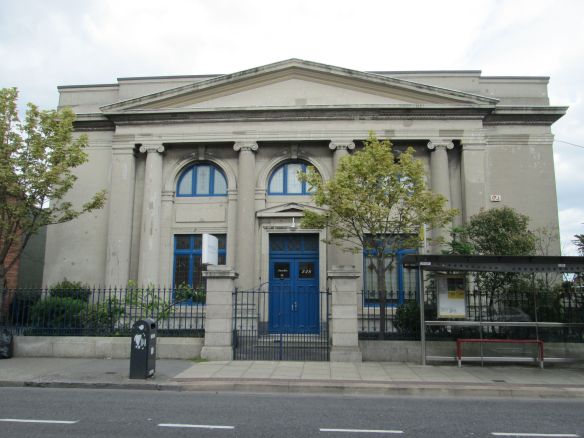
We had passed the Greenville Hall Synagogue on the far side of Leonard’s Corner, in Dolphin’s Barn. Built in 1925, it’s an impressive neo-classical building. As with the other synagogues dotted around the South Circular it has shed its original purpose. The suburbs of Rathgar and Terenure to the South are now the focus for Jewish worship. 

The Jewish influence hasn’t entirely vanished. Between the SCR and the Canal, Lennox Street bisects the heart of Portobello. It is pervaded by the aroma of the Bretzel. The Bretzel is long famed for its bagels and, though now under new management, still casts its alluring smells of kosher bread. The Irish Jewish Museum is located on Walworth Road nearby. The site was once a small synagogue which was dubbed the Rebel Schul as it opposed the appointment of zealous Zionist, Isaac Herzog as Chief Rabbi in the fledgling Irish Free State. In a curious twist of fate, the Museum was opened in 1985 by Chaim Herzog, Isaac’s son, then newly inaugurated President of Israel who grew up in Bloomfield Avenue. Another Irish political dynasty of note was the Briscoes. Robert Briscoe and his son Ben represented the constituency for Fianna Fail for seventy five of the first eighty years of the state.

Your trouser cuffs are dirty,

Your shoes are laced up wrong,

You’d best take off your Homburg,

And your overcoat’s too long.

(Homburg by Procol Harum)

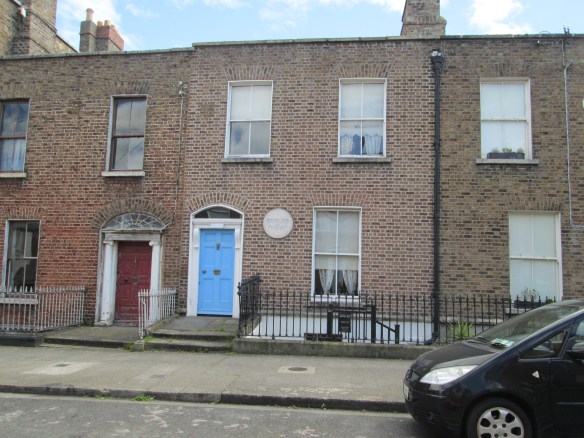
The arts also benefitted from the Jewish invasion. Harry Kernoff, whose studio was in Stamer Street, was born in London but is indelibly associated with the depiction of Dublin’s people and places. His best known paintings captured the colourful camaraderie of Dublin’s street and pub culture. They have become icons of bygone days, though Kernoff only began to be appreciated a couple of years before his death in 1974. Academy Award nominated Film director Lenny Abrahamson grew up on Bloomfield Avenue in the sixties. His  work typifies the view of the outsider who is also an insider, giving an eclectic take on Irish life in such diverse dramas as Adam and Paul, Garage and What Richard Did. Stern Joyceans will be sure to visit 52 Upper Clanbarassil Street, home of Dublin’s most famous Jew. Leopold Bloom was, of course, a figment of James Joyce’s imagination.

Porto Shaw

Another literary giant haunts the neighbourhood. George Bernard Shaw’s birthplace is at the corner of Synge Street.Born in 1856, Shaw emigrated to London as a twenty year old, to establish himself as a leading playwright and commentator. He wrote Pygmalion, setting up that saucy duel of language and class between Eliza Doolittle and Professor Henry Higgins. The Broadway team of Lerner and Loewe, adapting it as My Fair Lady, infused it with that innocent banter and exaggeration that bear the musical aloft like a soap bubble. Shaw was made of sterner stuff, while still alive with wit until his death at  the grand old age of ninety four. He was awarded the Nobel Prize for Literature in 1925 and also bagged an Oscar for the screenplay of Pygmalion.

I have often walked down this street before,

But the pavement always stayed beneath my feet before.

All at once am I several stories high,

To be back on the street where you live!

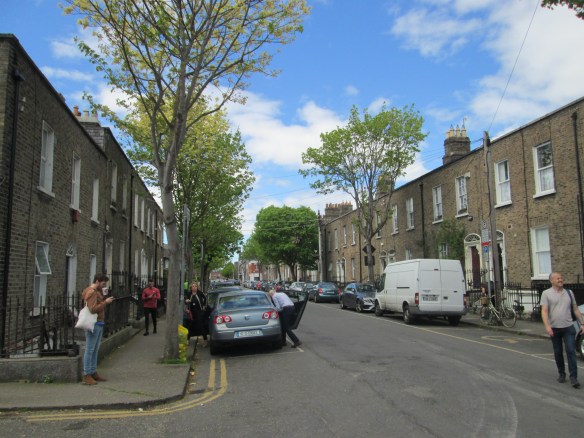
Here, I must pause, and gather the dust of years about me. Through three hundred and sixty degrees, the redbrick is constant and calm. Lennox Street is surrounded by the footfalls of the city. It is serene in a wise and battered way.

Porto Lennox

A long lost lover hails from these parts. Mary Rose was something of a mirror image of Eliza. Known as Professor Plum from her Loretto accent, a bloom amongst the thorny local dialect. I recall walking through empty streets on a sunny summer’s morning, redbrick terraces framing squares of blue sky, and the unexplained snowfall of Spring blossoms. Or maybe there’s other reasons for that.

Are there lilac trees in the heart of town?

Can you hear a lark in any other part of town?

Does enchantment pour out of every door?

No it’s just on the street where you live!

Synge Street leads back to the SCR where the stretch of road leading east is called Harrington Street. The church on the northern side is another St. Kevin’s, this one for the Roman Catholic Community. It was opened in 1872 and the site includes Synge Street CBS. From here to the junction with Kelly’s Corner is a richly atmospheric tree shaded boulevard, albeit a short one. Brother Hubbard’s colonises the pavement with the ambience of cafe society. Bearing left heads into Camden Street’s Golden Mile of music joints and bars, for centuries a raucous and rebellious thoroughfare. 

She thinks she’s tough,

She ain’t no English rose,

But the blind singer, he’e seen enough and he knows,

Sings a song about a long lost Irish girl,

I’ve got one for you, my Portobello Belle.

Portobello Belle (Dire Straits)

Porto Richmond

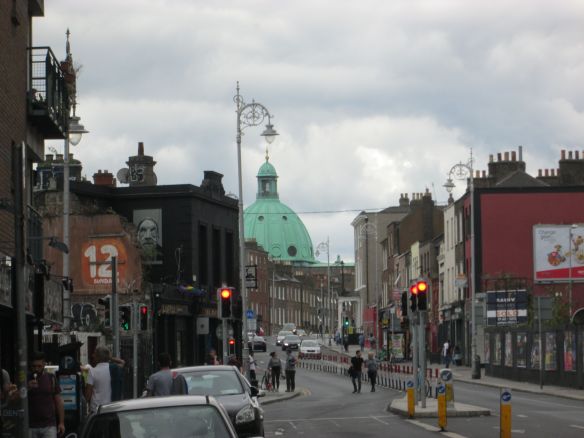
Richmond Street continues the Camden Street thoroughfare, heading south. At the junction, Kelly’s Corner, we experience a sudden connection with the blare of city life. This marks the end of Portobello. There’s a wonderful vista south towards Rathmines. The massive copper dome of the Church of Mary Immaculate, Refuge of Sinners looms above the rooftops.. The church was built in 1854 by architect Patrick Byrne in the Greek style, embellished later with an ornate pediment and portico by WH Byrne. It was destroyed by fire in 1920, but rebuilt in 1922 with the spectacular addition of the dome. This was made in Glasgow and it is said was intended for an Orthodox church in St. Petersburg but abandoned after the Russian Revolution of 1917. The elegant clocktower of Rathmines Town Hall shimmers in the middle distance. With the Grand Canal at your feet, at last it rhymes with its Adriatic promise.

Portobello Harbour was part of the GrandCanal extension in 1801 from the Basin to the Docks. The City Basin Reservoir, further west, was filled in circa 1883. The harbour itself was abandoned some time later, becoming a carpark. The historical function of the place is suggested by the pub frontage, proclaiming The Lower Deck. In the nineteen sixties this became a great ballads venue where bearded men beat a path towards freedom with banjos, fiddles and a rake of pints.

Porto H wide

A large Georgian pile has presided over the spot since 1806. It was designed by James Colbourn as a grand hotel. The calm neo-classical palace gave an impressive welcome for the visitor to Dublin, whether approaching along the canal or from the south by way of Rathmines, a suburb that developed in the mid nineteenth century. Portobello House became a convent in 1859 but returned to being a hotel again a decade later. Through much of the twentieth century it became a nursing home and is now a language school.

Retracing our steps to Kelly’s Corner, we cross to Camden Street in search of refreshments. There’s no need to go far. The Bleeding Horse pub is said to derive its colourful name from the Battle of Rathmines in 1649. The battle took place at the time of the English Civil War. James Butler, then Earl of Ormonde, aligned the Royalists with the Irish Confederacy against Cromwell’s forces, leading an attack on the Parliamentarian stronghold of Dublin. They were routed by the Roundheads at Rathmines. The Earl survived, becoming first Duke of Ormonde and the man responsible for the remaking of Dublin, the Liffey Quays in particular, following the Restoration.

The Bleeding Horse  was licensed in that year. It’s said that an early visitor was a riderless horse which wandered from the battle scene southwards to Camden Street where it poked its head inside the new inn before expiring from its wounds. A bit like me, in fact, though I don’t intend to expire before wrapping myself around a pint. The pub was frequented over time by Sheridan Le Fanu, Olvier St. John Gogarty and James Joyce. It is mentioned in Ulysses, wherein local Jewish gentleman, Leopold Bloom, fulfils an Odyssey in a day long perambulation around Dublin. I’ll drink to that..