Snowy Night in Granada

I heard your voice through a photograph

I thought it up it brought up the past

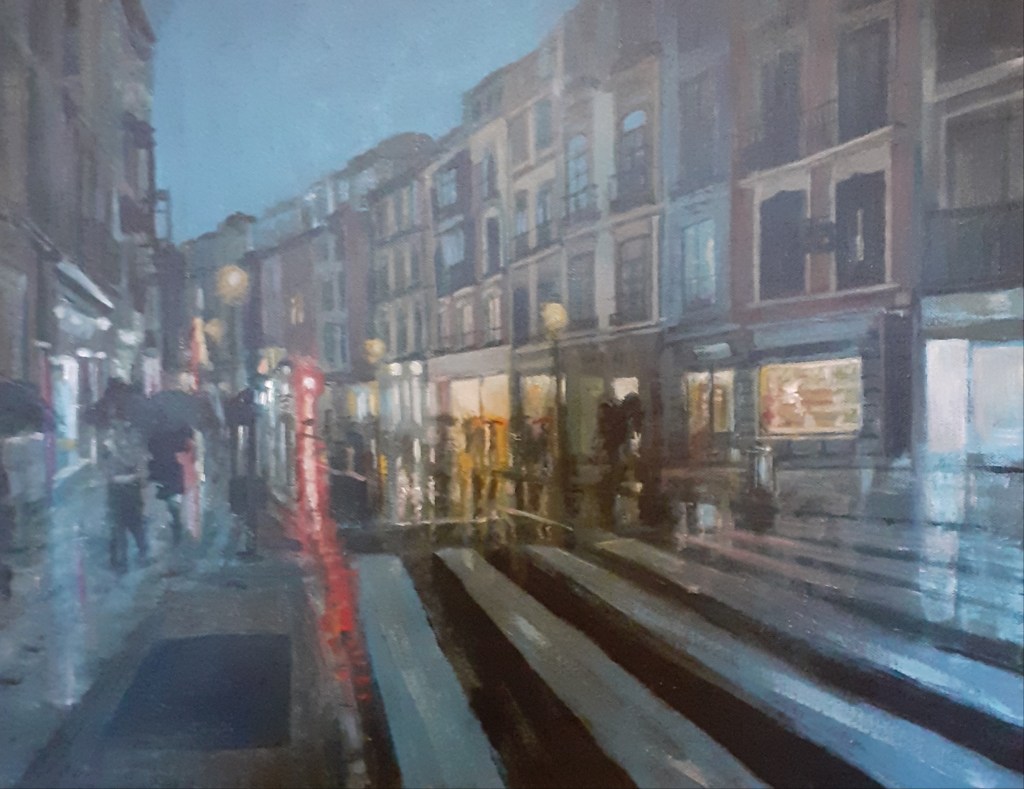
I am in the high city of Granada as Easter blooms and snow falls. The white teeth of the Sierra Nevada gash the underbelly of a dark blue sky. I had planned on a Flamenco evening up in Sacromonte, on an outdoor terrace in the tiled roofscape, looking across a valley of cypress trees to the glowing Alhambra. But rising into the night I meet the snow flakes descending and the brittle beauty is achingly cold. 

I am alone in the city of the guitar as the snow turns to sleet and commuters and revellers do that dance of the umbrellas city people do so well. At the zebra crossing a charge pulses the wet streets and I see this is still the city of the guitar. The zebra pattern turns to strings on a fretboard and rises like a magic carpet into the night connecting to all the cities at night where music throbs and guitarists strum.

I am walking home up Main Street at closing time, I am crossing Republic Square in Belgrade on a secret assignation, I am hearing whispered tales from the top of Grafton Street, I am crossing a rainy street in Soho with M and Davin, flashing tickets for Marcus Bonfanti to the man at the door of Ronnie Scott’s. 

Here I am, on Calle Reyes Catolicos. I am bound for Hannigan’s Irish Bar, where drink flows in the quiet of the night, with a mix tape of all the songs rattling around my head, and a good sprinkling of the Red Hot Chilli Peppers to keep the cold at bay. 

How long, how long will I slide

Separate my side

I don’t, I don’t believe it’s bad

Slit my throat, it’s all I ever …

The song is Otherside, by the Red Hot Chilli Peppers, from their album released in 1999, Californication.

South Dublin’s Rocky Shore – 4

Dun Laoghaire

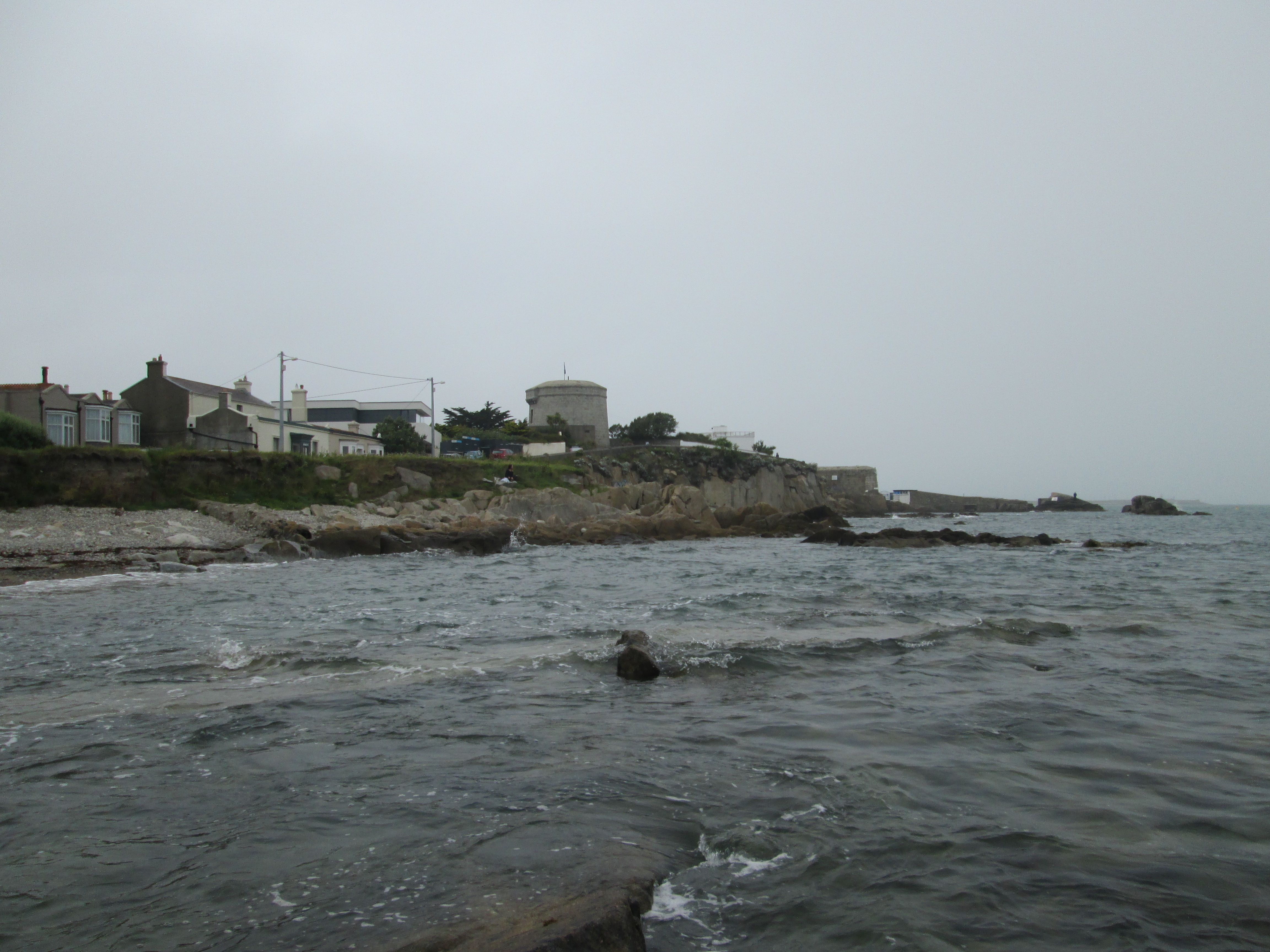
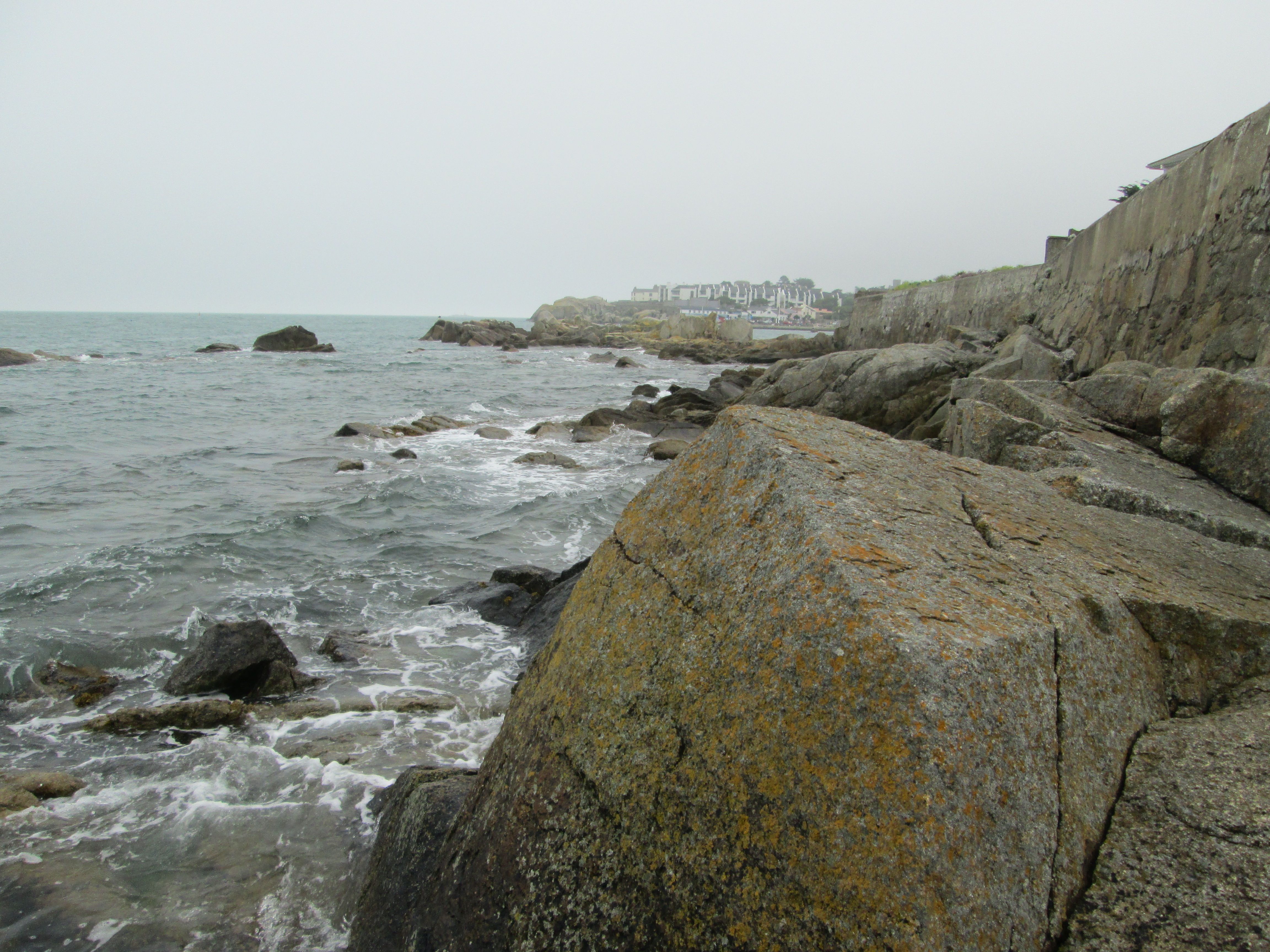
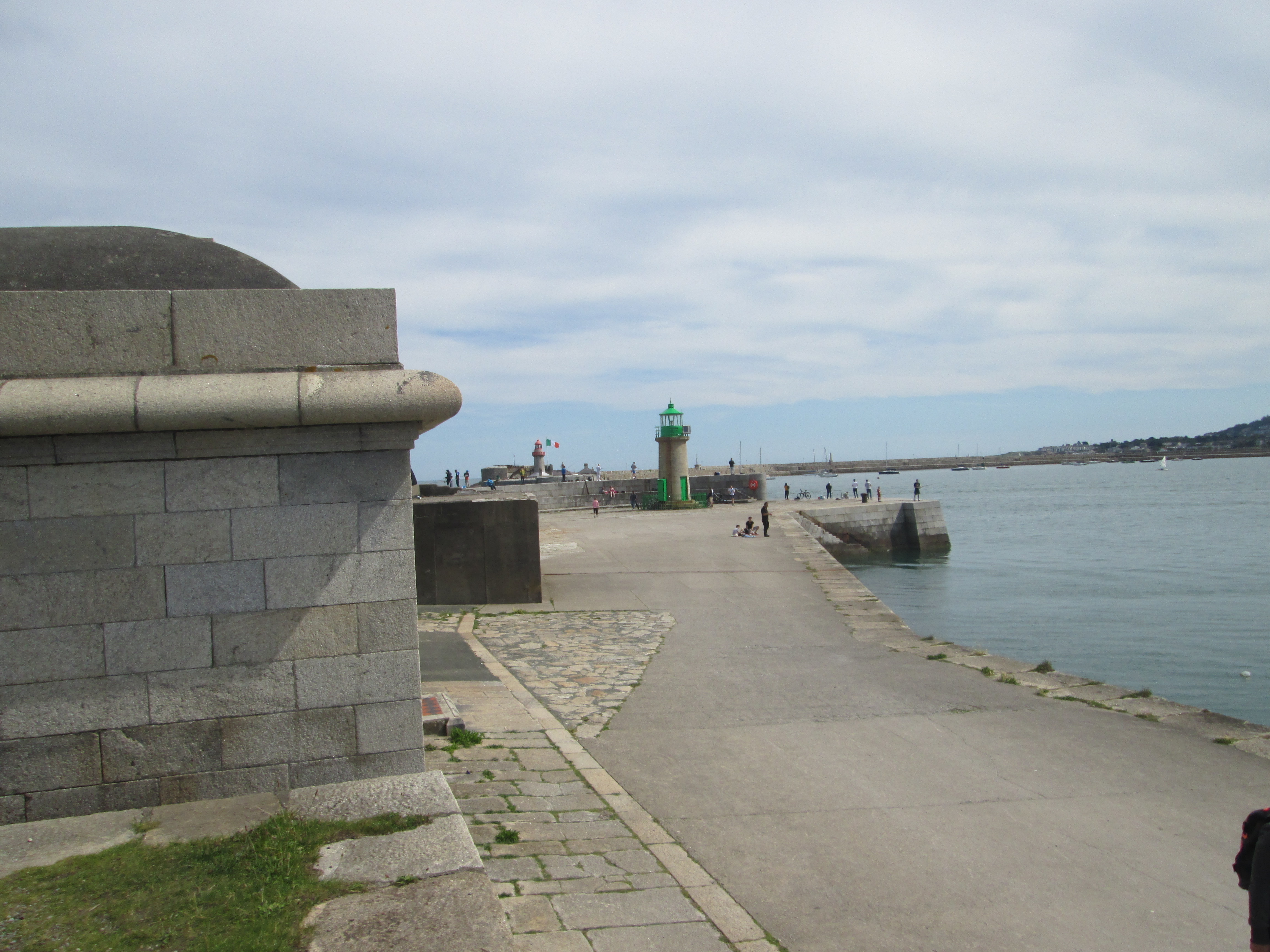
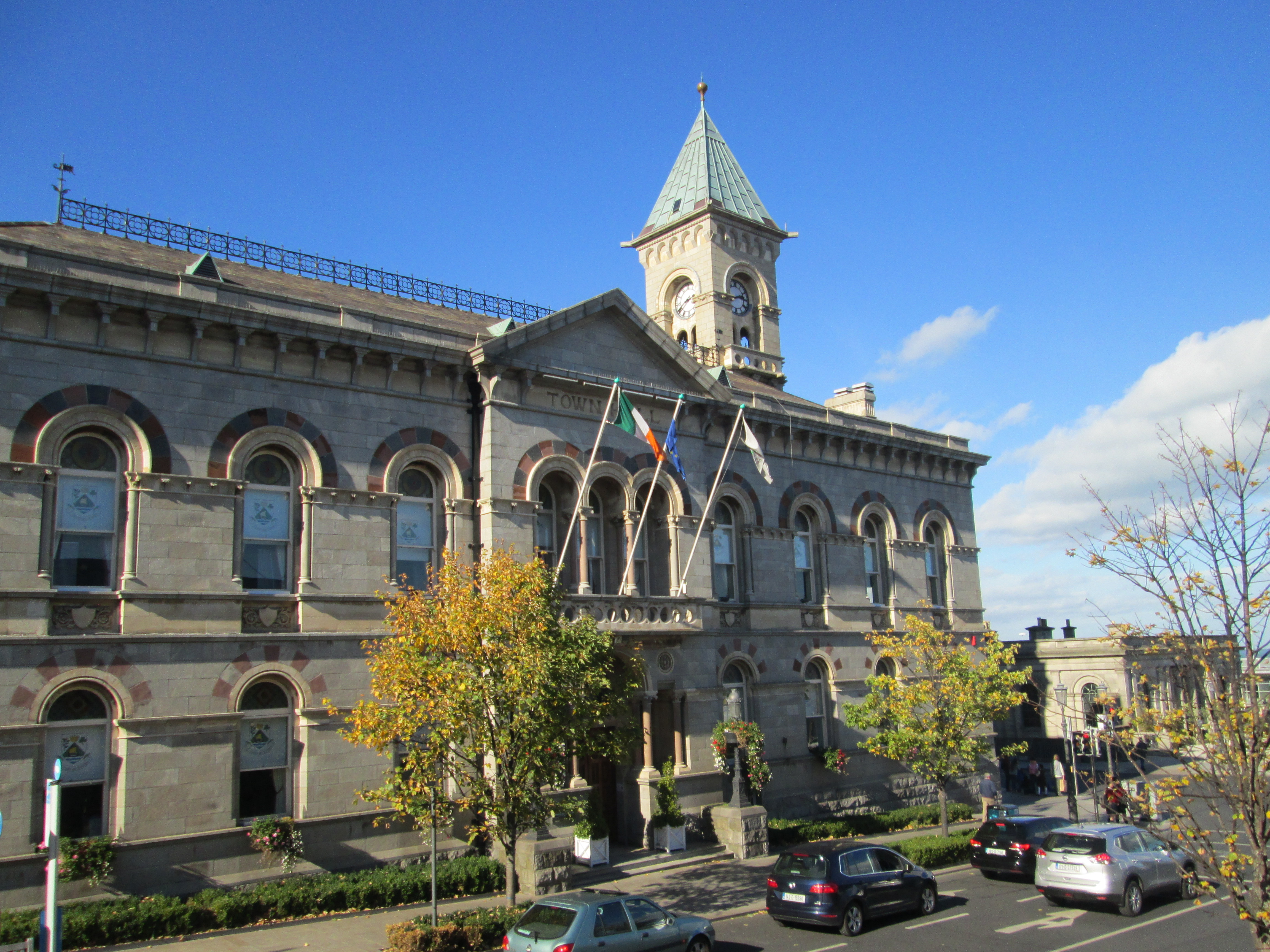
Dun Laoghaire is part of Dublin’s sprawling conurbation, but is a large town in its own right. Capital of the county, Dun Laoghaire Rathdown, it has been Dublin’s main passenger port for two hundred years. Originally named for Laoghaire Mac Neil, sixth century high king, or pirate if you prefer, Laoghaire’s status is somewhat mythological, and his connections with this region rather nebulous. Some reports say he feared the sea, a prophesy foretelling that he would drown in it should he invade Leinster. But, whether ironic or not, the name stuck. Later Anglicised to Dunleary it remained an insignificant fishing village until the early nineteenth century when plans were put in train to establish a safe haven for shipping along what had become a treacherous stretch of coast. 

Construction began in 1817, stimulating the urban development of Dunleary’s hinterland.  The growing modern town’s name was changed to Kingstown when the British King, George IV visited in 1821. George IV was the first British monarch to visit without an army in tow, the first in four centuries or so. An extravagant spendthrift, a serial accumulator of monstrous dept, a drunk, a glutton and a womaniser, there wasn’t always a queue to honour him. His appalling treatment of his wife, Princess Caroline of Brunswick excited public distaste with his attempts to divorce and humiliate her. She was refused entry to his coronation and died, suspiciously, days later. George celebrated with his Irish trip, and taking up with a new mistress, Elisabeth, Lady Conyngham of Slane Castle. For the next decade till his death, Lady Conyngham would suffer the waning charms of the last monarch of the Georgian era. 

His legacy adheres mostly to his Regency, those first two decades when his father had succumbed to madness. Regency style tilted our world towards the recognisably modern. George for all his faults, was a renowned patron of arts and architecture, and an early populariser of the notion of the formal seaside resort, with its pavilions and promenades, its designated bathing, grand hotels and elegant terraces. From Brighton to Dun Laoghaire, and on to Bray, the seaside resort town was the coming thing.

George’s Street is the main drag, while the name Kingstown stuck for a century until Independence, when it reverted to the Gaelic, Dun Laoghaire, pronounced Doon Lair-eh. But everyone uses the anglicised pronunciation that applied in its village days: Dunleary.

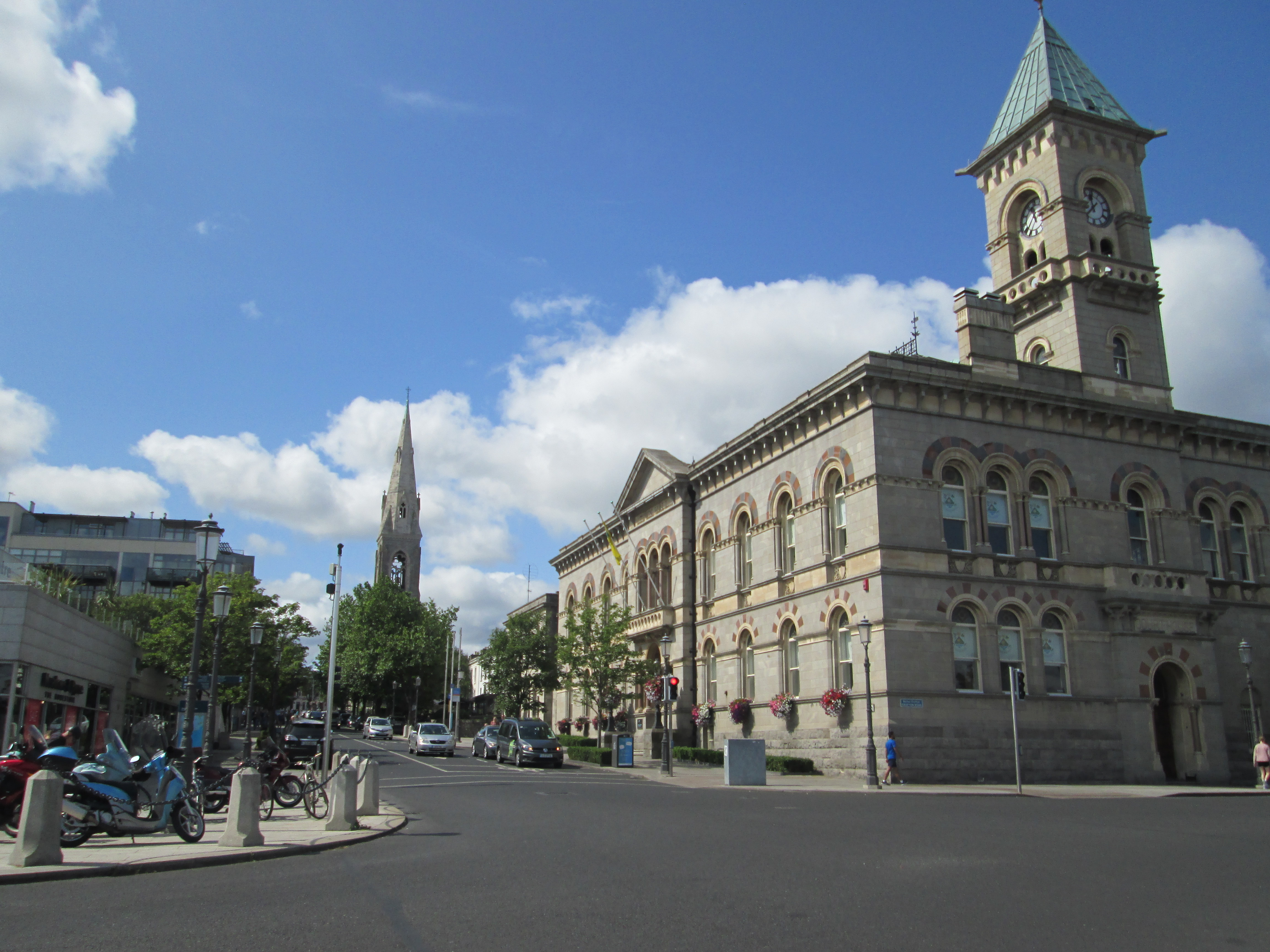
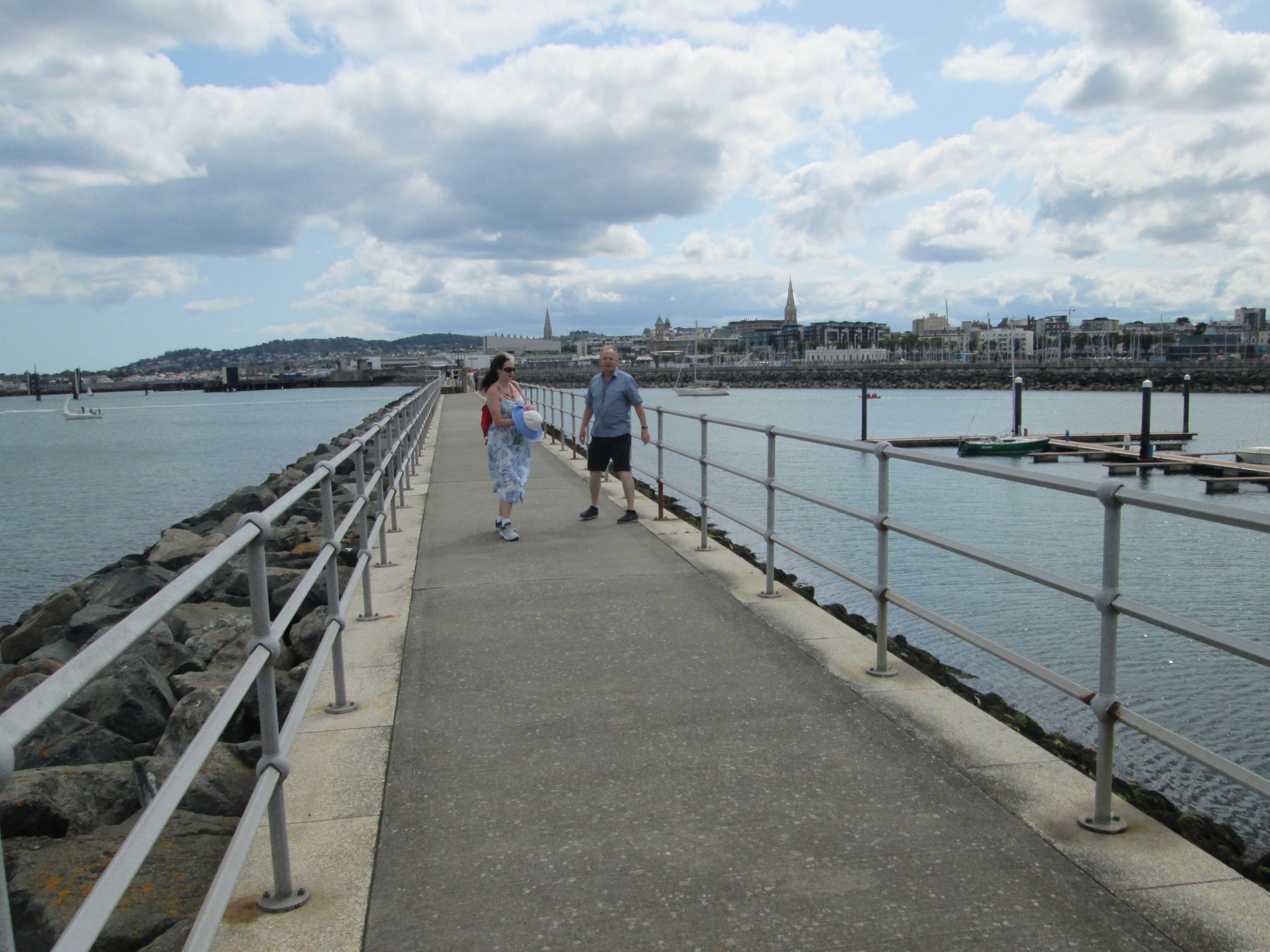
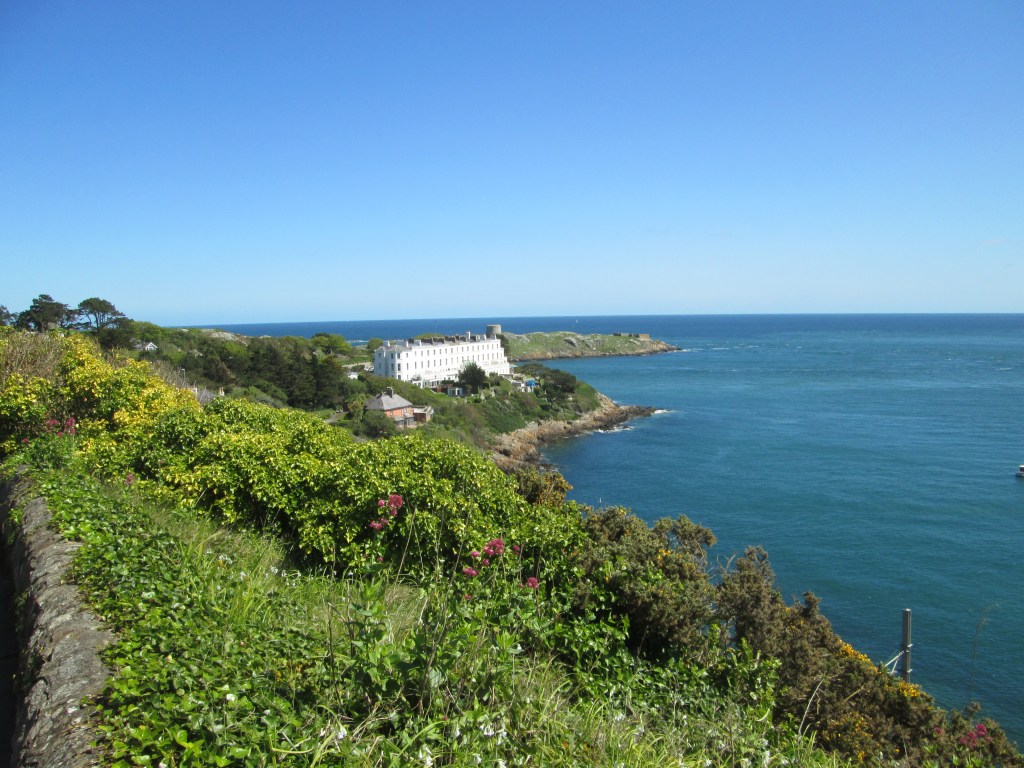
Our journey, following the route of South Dublin’s Rocky Shore, takes us from the People’s Park along the seafront. We will follow the railway past the Harbour to the West Pier, and back again. Queens Road is a busy thoroughfare on the seaward side, Marine Terrace and Haddington Terrace are slightly elevated on the inland side. The railway line itself passes through a cutting below our sightline. The two terraces comprise fine old Victorian houses and hotels. One particular hotel, the Hotel Pierre, is the place where myself and M had our wedding feast in the ringing cold of a December day in 1983. The name Pierre, I believe, is something of an affectation, the place previously known as the Pier Hotel, catering particularly for those who used the Mail Boat, in leaving, or even visiting, Ireland. 

The terrace vista terminates with a startling intrusion. Like a giant ocean liner cast in stone, Dun Laoghaire’s new library, The Lexicon, seems set to sail. The Lexicon excited outrage outrage amongst the guardians of our skyline. Who needs all them books, they cried. Why build a library so large when there’s a perfectly good Carnegie from 1900. A fine thing, the Carnegie Library, but Dun Laoghaire is a lot bigger now than it was then. DLR’s population is over two hundred thousand, about ten times its population at Independence. The expansion of the library service demands a lot of space for a lot of disparate activities. Reading and study areas, public computer access, meeting rooms and children’s library, Space too to retain its core function of book stock for browsing and borrowing. Yes, we do need large modern libraries and we build them because we can. Have a coffee on the lower deck or climb to the top deck to admire the view across the harbour to Howth Head.

Next door is the Maritime Museum, housed in the old C of I Mariner’s Church built in 1837. Exhibits feature Ireland’s lighthouses and Dun Laoghaire’s Mail Boat fleet from the era when the four ships were named for the provinces. Most famed and sorrowful is the fate of the Leinster, sunk by a German UBoat in 1918; Dun Laoghaire harbour and indeed the end of the war in sight, with the loss of 500 souls. A prime exhibit focusses on the Great Eastern, Isambard Kingdom Brunel’s massive folly. The giant steamship was the largest ever built when launched in 1854. Accident prone and a failure as a passenger liner, it left a more telling legacy in the laying of telegraph cables, becoming very much the origin of the information age. Robert Halpin, born in Wicklow, in that most nautical of pubs the Bridge Tavern, was chief engineer when the cable was laid from Valentia Island to Newfoundland. Rising to captain, Halpin would earn his nickname the Cable Man, laying enough cable to girdle the globe. 

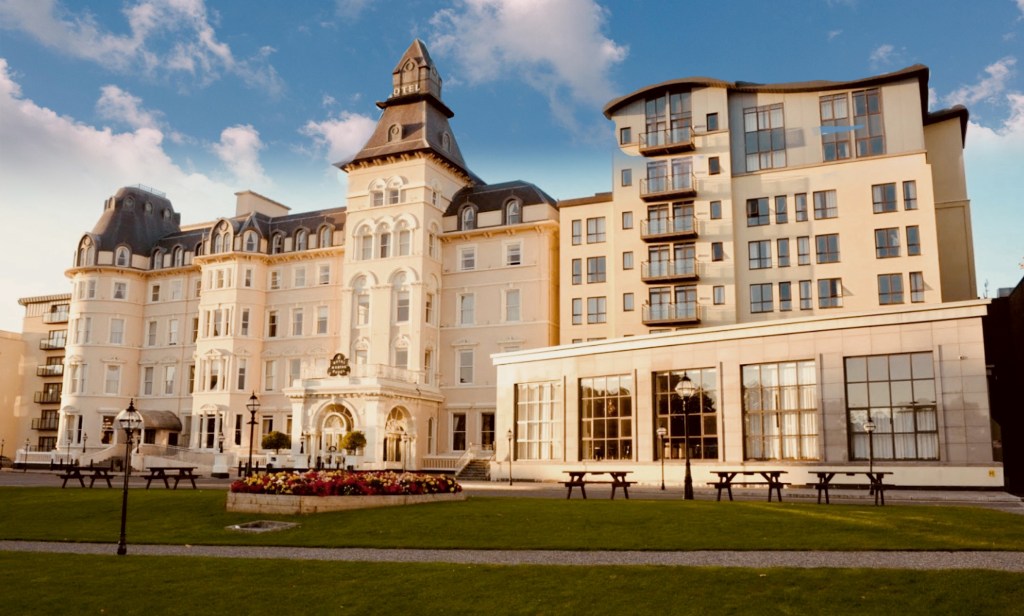
Towards the town centre, holding the high ground, the Royal Marine Hotel embodies what Kingstown was originally about. It was designed in 1860 by John McCurdy for William Dargan, the great railway entrepreneur. McCurdy’s original concept envisioned a stately chateau in the French manner. With its mansard roof and french pavilions surmounted by a tower and dome, this was to be the epitome of the nineteenth century Grand Hotel. Running over budget, the west wing was not completed, with a more modest construction in its place. This asymmetry persists. The building struggled to survive and was forced to shed many of its period features, but its most recent version has restored the mansard roofs and central tower, the traditional east wing forming a curious hybrid with the modern and ultra modern west wing. 

Despite the arbitrary depredations of time, I think you can still gauge the original effect. Squint and you will see The Royal Marine set out its stall in Victorian splendour. Here was the bastion of the civilising project of empire; it still radiates a haughty Britishness. Breeze jauntily into the lobby and make for the bar. Duty bound to look like you own the place, and growl the words to The Captains and the Kings, Brendan Behan’s meditation on the essence of being English.

I stumbled in a nightmare all around the People’s Park

And what do you think I found there as I wandered in the dark?

‘Twas an apple half-bitten, and sweetest of all things

Five baby teeth had written of the Captains and the Kings

Five baby teeth had written of the Captains and the Kings

The Dubliners, with Ronny Drew’s gravelly vocal, provide the classic version of the song. The correct words are ‘all around Great Windsor Park’.

Crossing Morehampton Road

Heading out of Dublin City by way of Leeson Street, we cross the Grand Canal into Dublin 4. This is the main road to Wexford via Donnybrook and the N11. Leeson Street was originally called Suesey Steet, with something of a sleazy reputation. In the early eighteenth century it was renamed for the Leeson family, local brewers and property developers. The Georgian development of the area came towards the end of the century and has come to represent the high watermark of the Neo Classical era. The canal established Dublin city’s southern border a decade or so later. 

Leeson street continues as Upper Leeson Street heading south. The area hereabouts was known as Pembroke, from the estate occupying most of the land. By the middle of the nineteenth century Pembroke had developed into a sizeable middle class suburb. Further on, the village of Donnybrook was famous, or infamous, for its annual fair. First licensed by King John in 1204, the Fair, lasting a full fortnight, came to be regarded as a cauldron of brawling, drunkenness and vice. All the good things in life. As the suburbs seeped into this oasis on the periphery, respectable citizens campaigned against the Fair, and it was finally extinguished in 1855. However, though Donnybrook and environs might have become the home of the great and the good, the pot of Route Eleven continued to simmer.

In this acrylic I am crossing the route where it is known as Morehampton Road. Donnybrook glows in the distance. To the right, the Hampton Hotel was once called Sachs, a name resonating with its notorious nightclub, and weekend jazz sessions. On a Sunday morning, Chris Lamb and the Black Sheep would be doing their thing, when a white Rolls Royce would pull up outside. A heavy set man, black mane and moustache, would alight, steam into the joint and take his place behind the drum kit. Turning the volume up to eleven, he would just as enigmatically depart in a haze of cigar smoke. The Sultan of Rock and Roll. 

The Leeson Strip has never lost its patina of vice. More red brick than red light, but there’s always the whiff of discreet abandon, as notes and aromas waft up from basements. 

Loneliness is a crowded room

Full of open hearts turned to stone

All together, all alone

All at once my whole world had changed

Now I’m in the dark, off the wall

Let the strobe light up the wall

I close my eyes and dance till dawn

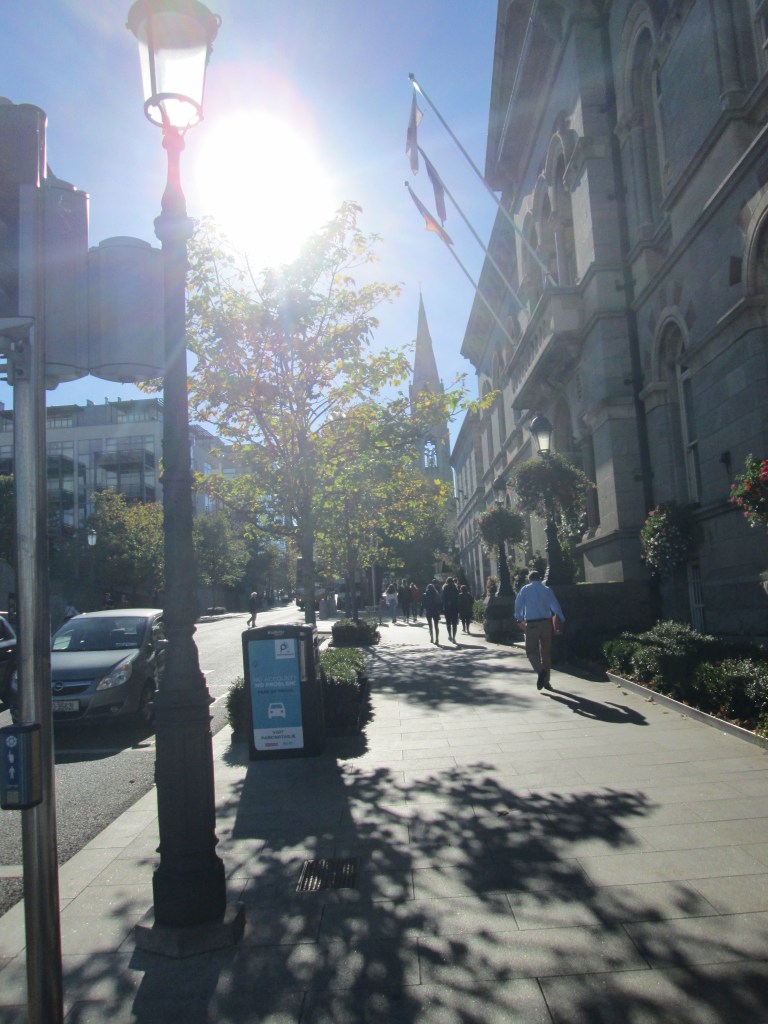
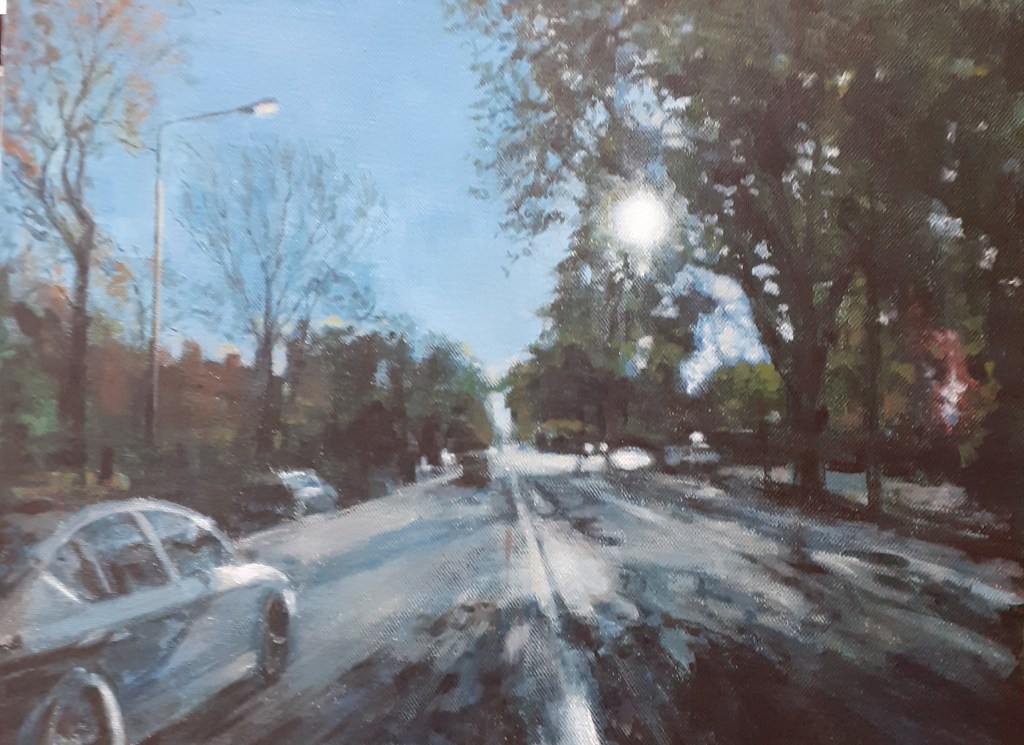
On a sunny morning, beneath the towering trees, life is a dappled mirage, the light above all the better for the shadows below. 

Dance away the heartache

Dance away the tears

Dance away the heartache

Dance away the fear

Dance Away was written by Bryan Ferry in 1977 and was included on Roxy Music’s Manifesto album in 1979. It became one of the band’s biggest singles and reached Number one in the Irish charts, in the wake of Blondie’s Sunday Girl.

South Dublin’s Rocky Shore – 2

Killiney to Dalkey.

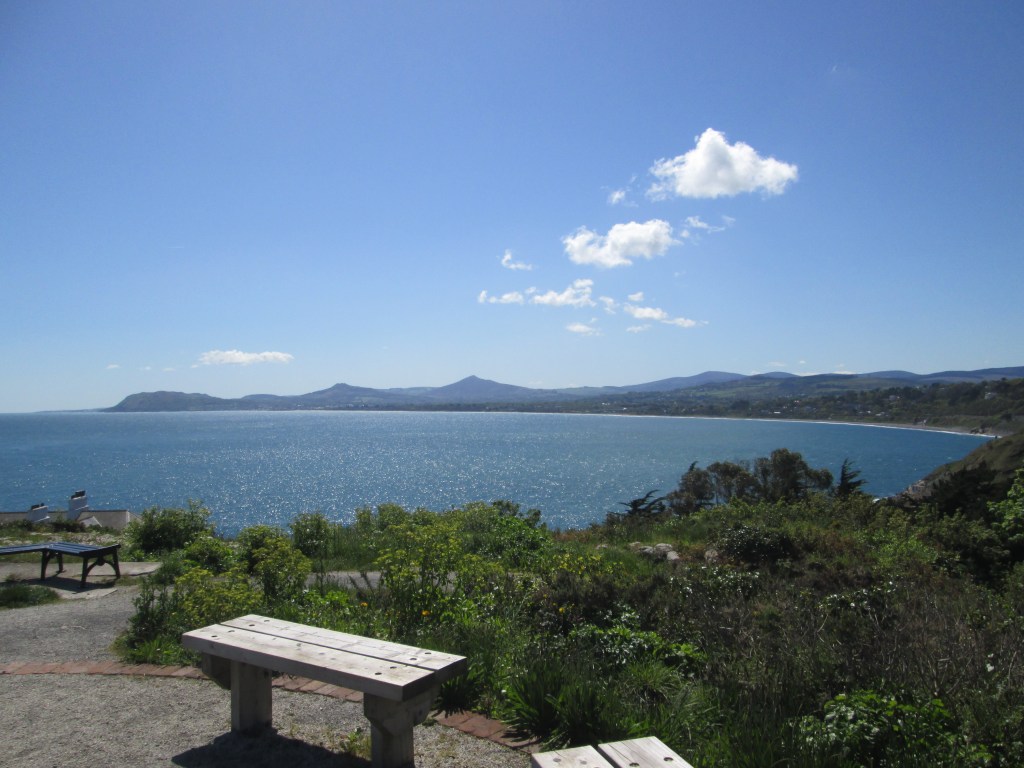
Beyond Killiney Dart station, a tunnel under the track leads from the beach to Strathmore Road, which climbs steeply to join with Vico Road. Alternatively, and depending on the vagaries of the tide, you can follow the strand farther north to the high cliffs of the headland. This fine day, I took the latter option as far as the footbridge across the Dartline, and wound my way up through an overgrown laneway of honeysuckle, honeyed bricks and honey bees.

I emerge onto tarmac that swirls through the high walls and higher trees marking the properties of the topmost echelon of Irish society, and indeed Irish Rock royalty. Van Morrison and Bono Vox have their mansions here, though the prize for princess in her palace must go to Enya, whose residence, Manderley Castle, peeps its high gothic turrets above the walls farther up the hill towards the village of Killiney. The fanciful nineteenth century residence was originally dedicated to Queen Victoria, but Enya, keen fan of Daphne Du Maurier, took Manderley from Rebecca’s memorable opening line.

Last night I dreamt I went to Manderley again…

Eithne Ni Bhraonnain, Anglicised as Enya Brennan, is one of the Brennan family Rock group, Clannad, from Gweedore in County Donegal. Enya embarked on her solo career in the mid eighties, teaming up with producer Nicky Ryan and his wife, lyricist Roma Ryan. Her first, eponymous, album made some waves, but it was her second, Watermark, which made the international commercial breakthrough. Orinoco Flow from the album established Enya’s reputation and her multi layered, ambient New Age sound. 

From the North to the South Ebudae unto Khartoum

From the deep Sea of Clouds to the Islands of the Moon

Carry me on the waves to the land I’ve never been

Carry me on the waves to the lands I’ve never seen

Orinoco Flow/Enya

This is more a sound painting than a poetic lyric, but there’s something in its vision that elevates the soul, and chimes with the landscape hereabouts. Subsequent albums sold by the million. Enya’s best-of collection was titled Paint the Sky with Stars. There are plenty of them around here.

Killiney village developed around an 11th century chapel, marking the footprint for its more modern successor. At the crossroads topping the rise, the village pub, the Druid’s Chair, has a suitably new age moniker for the locale. It is a long established family hostelry which takes its name from an ancient stone oddity in the woods nearby. The artefact is a mystery in itself, variously described as a Mass Rock, an Iron Age altar or a Victorian folly. Make for the bar and mine’s a Carlsberg. Probably.

Besides the lush enclaves and sprawling mansions, much of Killiney Hill consists of parkland. This park was opened in honour of Queen Victoria’s Golden Jubilee in 1887. The Obelisk on the summit dates back much further to1741 and was a famine relief work. The eighteenth century famine being just as severe, proportionately, as its more famous nineteenth century successor. You could spend a day poking about Killiney Park. The views over the coastline are magnificent. Drape yourself on its lawns or obliging monuments, and let the day go by.

On the way back home we sang a song

But our throats were getting dry

Then we saw the man from across the road

With the sunshine in his eyes

Trace your way back by granite walls under shading trees to Vico Road. Bask, briefly, in the dappled luxury of the rich and famous. Bono’s house is nearby. The U2 frontman previously lived in a Martello Tower in Bray, to the South across the bay. His current abode is less obvious. Guitar man, The Edge, is a neighbour. Tetchy ex-Them frontman, Van Morrison is also a person in the neighbourhood. Back in sixties Belfast, Them fashioned the formative artefacts of Irish Rock. Baby Please Don’t Go, Here Comes the Night and Gloria are classics. Since leaving Them, he has ploughed an individual furrow in the music world. Morrison might quibble at his inclusion in the Rock world, preferring R and B as a label, but elements of jazz and soul, funk and folk weave through his repertoire and it’s futile to try and bracket him. 

Morrison, elder bitter lemon in his dealings, is all sweetness and light in his music. And it Stoned Me, from his third solo album, Moondance, embodies the joys of halcyon youth, particularly a young boy’s pursuit of the important things in life: fishin’, swimmin’ and simply playin’ 

Later, as I find myself suspended above the turquoise bathing pools far below on the rocky shore, I realise that its joyful narrative of life in the moment has invaded my own personal narrative, that it has become a tangible memory of something that wasn’t, but, somehow, eternally is.

Oh the water, let it run all over me

And it stoned me to my soul

Stoned me just like going home

And it stoned me

Van Morrison

On the high Vico Road we can shake the stardust off our feat and gaze down at heaven. The day is positively Mediterranean. Villas sprout crystalline from the rock. Cars string like pearls along the kerb and sightseers sit with such photo savvy conceit, they must be auditioning for some Hollywood pastiche, or maybe a retro poster of John Hinde’s graphic delights. The walk is easy, it’s tearing yourself away from the view that’s difficult.

A last lingering look at the bay, and the road descends to the junction of Sorrento and Colliemore. Both roads lead to Dalkey, Colliemore along the coast; but today I’m continuing North, by way of Sorrento Road running parallel to the railway track which eats through the granite twenty feet below. We are bound for Dun Laoghaire via the Metals.

Rainy Night in Ripley Hills

Ripley 1

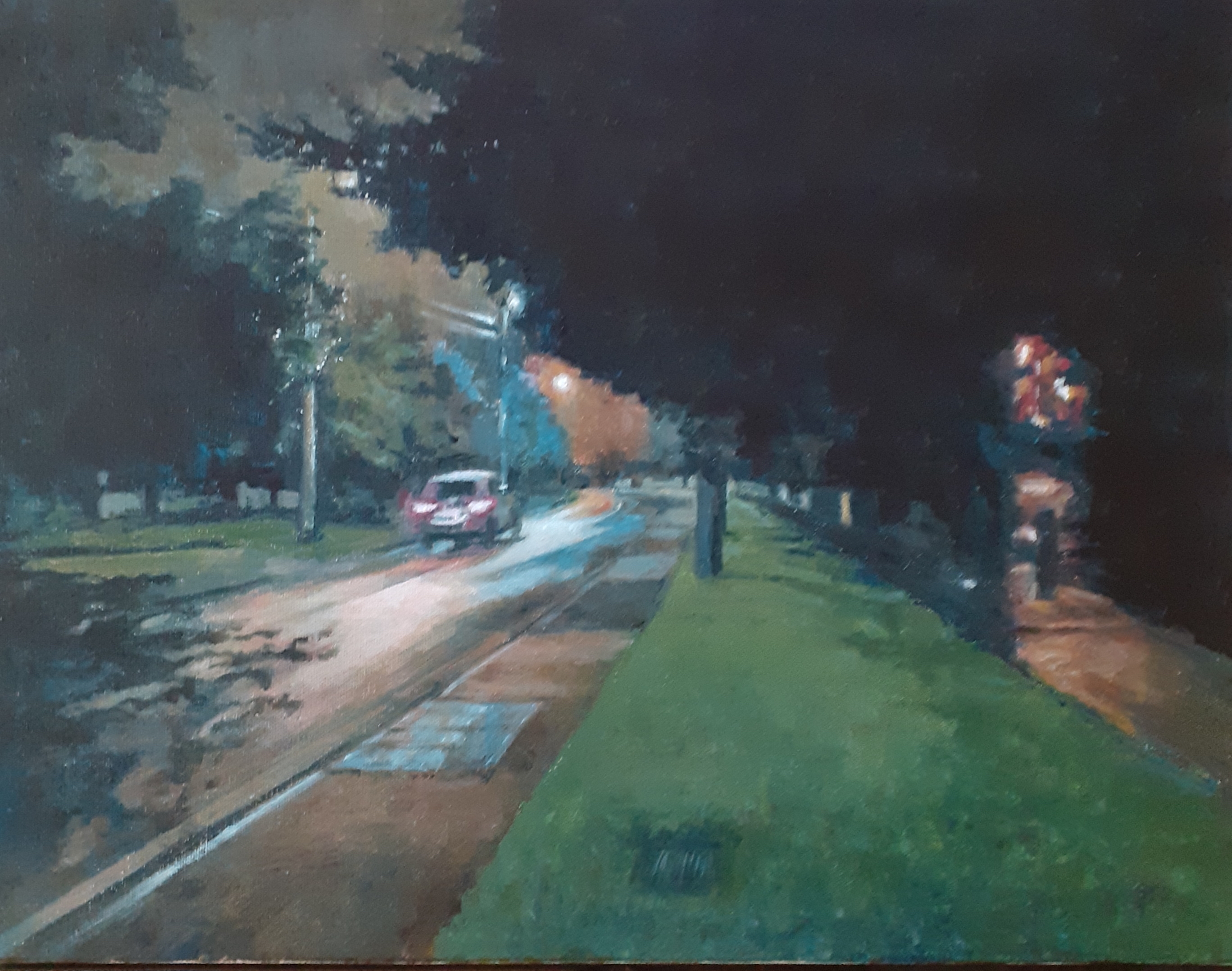
Where Killarney Road reaches its apex, a copse of fir trees guards an ancient stone marker, Saint Saran’s Cross. This mystery-laden oasis atop the hill is surrounded by a modern housing estate called Fairyhill. On the falling eastern slopes is another estate, Ripley Hills, which I call home. It was built in 1983 beside two grand houses of the nineteenth century, which were curiously conjoined: Rahan and St. Helen’s. Rahan House was once the abode of writer Arthur Conan Doyle. During his stay he developed an interest in the supernatural and wrote a book called The Coming of the Fairies.

Rahan and St Helen’s were destroyed by fire shortly after I took up residence nearby and I witnessed the sad event from my rear window.  They took their mysteries with them, and their only vestige is a calm green space in Ripley Court. While the urban environment continues to grow, the landscape continues to give. Fabulous views of Bray Head and the Sugarloaf Mountains are always a reward for a walk around Ripley Hills and environs. The estate itself, sylvan and landscaped is a suburban pleasure too. I have been there long enough to witness it beneath blue skies and blankets of snow. But in the dark of night, with rain falling, it is sometimes more magical still.

Something’s gotten hold of my heart

Keeping my soul and my senses apart

Something’s gotten into my life

Cutting its way through my dreams like a knife

Turning me up and turning me down

Making me smile and making me frown

You know the feeling you get when the rain is falling and falling and you stand to look up into it and feel yourself rising up until you reach that point of equilibrium where the rising spirit and the falling water are as one, poised together in endless stasis. A moment like that, held in the sodium glow of the streetlamps, is what this painting is about. Trying to capture it, I reached for a palette richer and more varied than my dark blues and greys. 

Something’s gotten hold of my hand

Dragging my soul to a beautiful land

Something has invaded my mind

Painting my sleep with a colour so bright

Changing the grey and changing the blue

Scarlet for me and scarlet for you

Something’s Gotten Hold of My Heart, was written by Roger Greenaway and Roger Cook and was a hit for Gene Pitney in 1967. Born in 1940, Pitney was a singer songwriter who first achieved fame in the early sixties with movie theme songs. Perhaps his best known hit was the intense narrative Twenty Four Hours from Tulsa, a Bacharach David song in1963. His songwriting credits include Hello Mary Lou which was a hit for Ricky Nelson. In 1989 Pitney scored again with Something’s Gotten Hold of My Heart in a duet version with Mark Almond. He died in 2006.

In a world that was small

I once lived in a time there was peace with no trouble at all

But then you came my way

And a feeling unknown shook my heart, made me want you to stay

All of my nights and all of my days

Vancouver at Night

Vanite1

Vancouver is on the same latitude as Ireland and suffers nominally the same marine temperate climate. It rains, man, it pours. The city is set on a peninsula against a dramatic backdrop of snow capped peaks. 

Vancouver began to form in the 1860s around a sawmill. Nearby, a bar was established, thirsty work after all, by a certain Jack Deighton. Deighton earned the nickname Gassy Jack for his voluble espousal of any worthy cause in the growing city. He died in 1875 and his body lies in an unmarked grave, but there’s a statue to him on Water Street standing atop a beer barrel. The surrounding area is still known as Gastown.

In 1870 the expanding settlement became known as Granville, honouring Granville Leveson Gower, who was the British Secretary of State for the Colonies. It was incorporated as a city in 1886 with the arrival of the trans continental railway, and named Vancouver. This was for George Vancouver who, a century earlier, had explored the coast from Alaska to Oregon with James Cook.

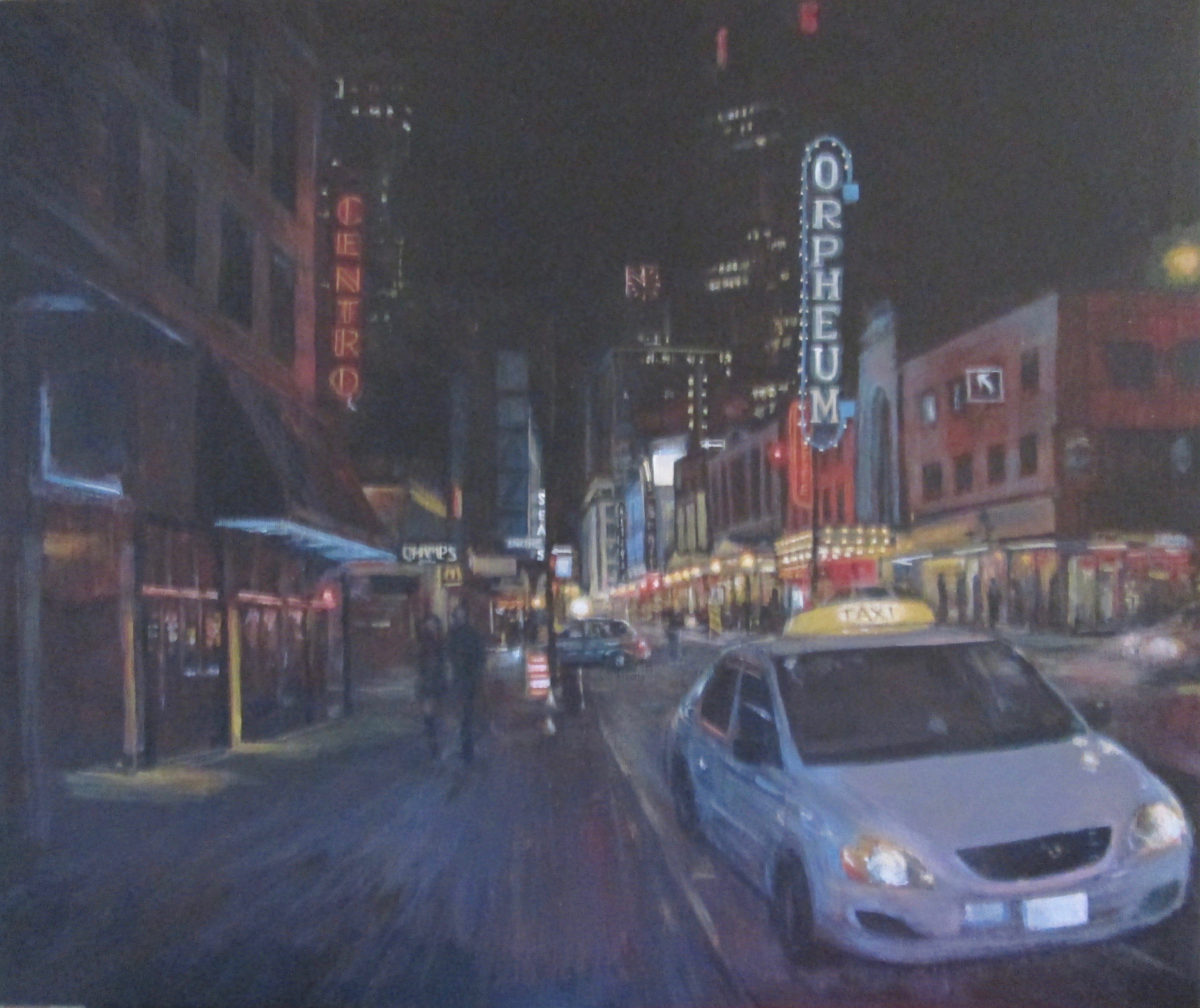
The name Granville persists in one of the city’s main streets. Granville Street has been the centre of the city’s entertainment area for over a century. Theatre Row developed with such major theatres as the Orpheum and Vogue. There were also amusement arcades, pawn stores porn shops and strip joints. Granville Street boasted the world’s largest display of neon signs in the 1950s

While much of Downtown gleams new, Granville Street remains a shabby but seductive slice of fifties Americana. Glorious old film theatres jut into the street which is low-end shopping by day and thronged with rough edged nightlife after dark. And there are bars, bars and more bars. It’s still thirsty work.

It’s ten years back that I visited Vancouver. Granville Street at night is the sort of wonderland I like. Edgy, but never dull. This scene, looking north, features the Orpheum and that neon nirvana for which the area’s famed. Across the road Dublin’s Calling, and I’ve got a thirst that’s raging. Slainte.

In Killruddery Woods

Kilruddery woods

From our last stop, the Bus Stop, Killarney Road makes for the M11 to the southwest. The road to the left is officially known as Oldcourt Park, but known locally as the Soldiers Road.  It runs alongside the ravine carved by the Swan River. Lost amongst the trees, the ancient tower house of Oldcourt Castle looms above, forever beyond reach. The river slithers through Wheatfield, past Swiss Cottage, across the Boghall, up to Southern Cross and on to Killruddery where the brook drains off Giltspur, or the Little Sugarloaf. 

These lands south of Bray were granted to Walter de Riddlesford, one of Strongbow’s loyal adventurers in the invasion of 1169. The large demesne is centred on Killruddery, the Church of the Knight. The Brabazon family came into ownership of the estate in the early 16th century through William Brabazon, Lord Justice of Ireland. The title Earl of Meath was granted to his great-grandson William in 1623. Killruddery House had to be rebuilt following destruction in the Cromwellian wars of the mid century. The current building is largely an 1820s reconstruction in the Tudor revival style. The original gardens remain. Designed by the French gardener Bonet, they are a unique example in Ireland of seventeenth century design, haunted with an exquisite Gothic gloom. Classically inspired additions blossomed in the eighteenth and nineteenth centuries.

The house and gardens are a popular attraction, with coffee shop, farmers market, garden centre and regular music and art events. There’s an adventure playground and Ireland’s largest obstacle course. Best of all are the walks through the estate, beyond the walls where nature wrestles amiably with farmland and forest. I have variously met friends and strangers, no one at all, amiable vikings and post apocalyptic hippies (these later visions being on film set).

I recently took a path less travelled on the borderline between Killruddery and Belmont. In natural woodland on a sunny day there’s a tangible frisson in the air as light and dark dance with uninhibited abandon, together all alone, but for me. This acrylic is unusual for me in the choice of palette, which is very, very green.

But most of all I miss a girl in Tipperary town

and most of all I miss her lips as soft as eiderdown

again I want to see and do the things we’ve done and seen

where the breeze is sweet as shalimar and there’s Forty Shades of Green 

This song became such an iconic evocation of the Emerald Isle that it is presumed to have originated here. In a way it did. Johnny Cash wrote the song when touring Ireland in the late fifties. Once, after performing the song, a fan thanked him for his respect in singing a grand old Irish traditional air.

Bus Stop

Bustop1

Bus stop, wet day, she’s there, I say

Please share my umbrella

Bus stops, bus goes, she stays, love grows

Under my umbrella

All that summer we enjoyed it

Wind and rain and shine

That umbrella we employed it

By August she was mine

From the Swan River, Killarney Road keeps rising until it tops Fairyhill. Small estates line  the road, most dating from the nineteen eighties. The 145 bus route takes an unexpected right turn at Killarney Lane and the stops before the junction are mine. Across the road, the Nurseries lie beyond a triangular green planted with a copse of silver birch and sycamore. On this side, the western, the footpath runs continuously from the town to the M11. The covered bus stop here is a morning refuge for northbound commuters, whether heading for Bray Dart or Dublin. The 145 connects as far as Huston Station via the N11 and Dublin City Quays. I usually hike to the Dart on my northbound excursions, but the bus has its own consolations. More quaint and communal, and the serpentine route gives a scenic tour of south Dublin. There’s an intimacy too in the bus stop mythology. At least, that was the experience of my generation back in the day. The anticipation, the tension, the longing; and that was just for the vehicle. Love might also blossom, in wind and rain or shine. 

That’s the way the whole thing started

Silly but it’s true

Thinking of our sweet romance

Beginning in a queue

In this acrylic, we approach the bus stop after a heavy shower. The sky is clearing and the surface below us glares painfully, but beautifully. At the junction, the Oldcourt is off to our left, and the nearby right turn heads towards the Ardmore Film Studios on Herbert Road. Ahead, the Killarney Road weaves steeply upwards through a portal of oak trees towards Ripley Hills, and the apex at Fairyhill, crowned with its stand of pines.

Every morning I would see her

Waiting at the stop

Sometimes she’d shop

And she would show me what she’d bought

Other people stared

As if we were both quite insane

Someday my name and hers

Are going to be the same

Bus Stop was written by Graham Gouldman who would later form 10cc. He credits his father with starting  the lyrics from Graham’s own idea. Getting started is the thing. “It’s like finding your way onto a road and when you get onto the right route you just follow it.” A bit like Killarney Road, then. Bus Stop was the breakthrough US hit for Mancunian group, The Hollies, in 1966. I heard it on my first long playing album Hollies’ Greatest Hits (Parlophone) which I got for my thirteenth birthday. 

Kings on the Roof

Kings 2020

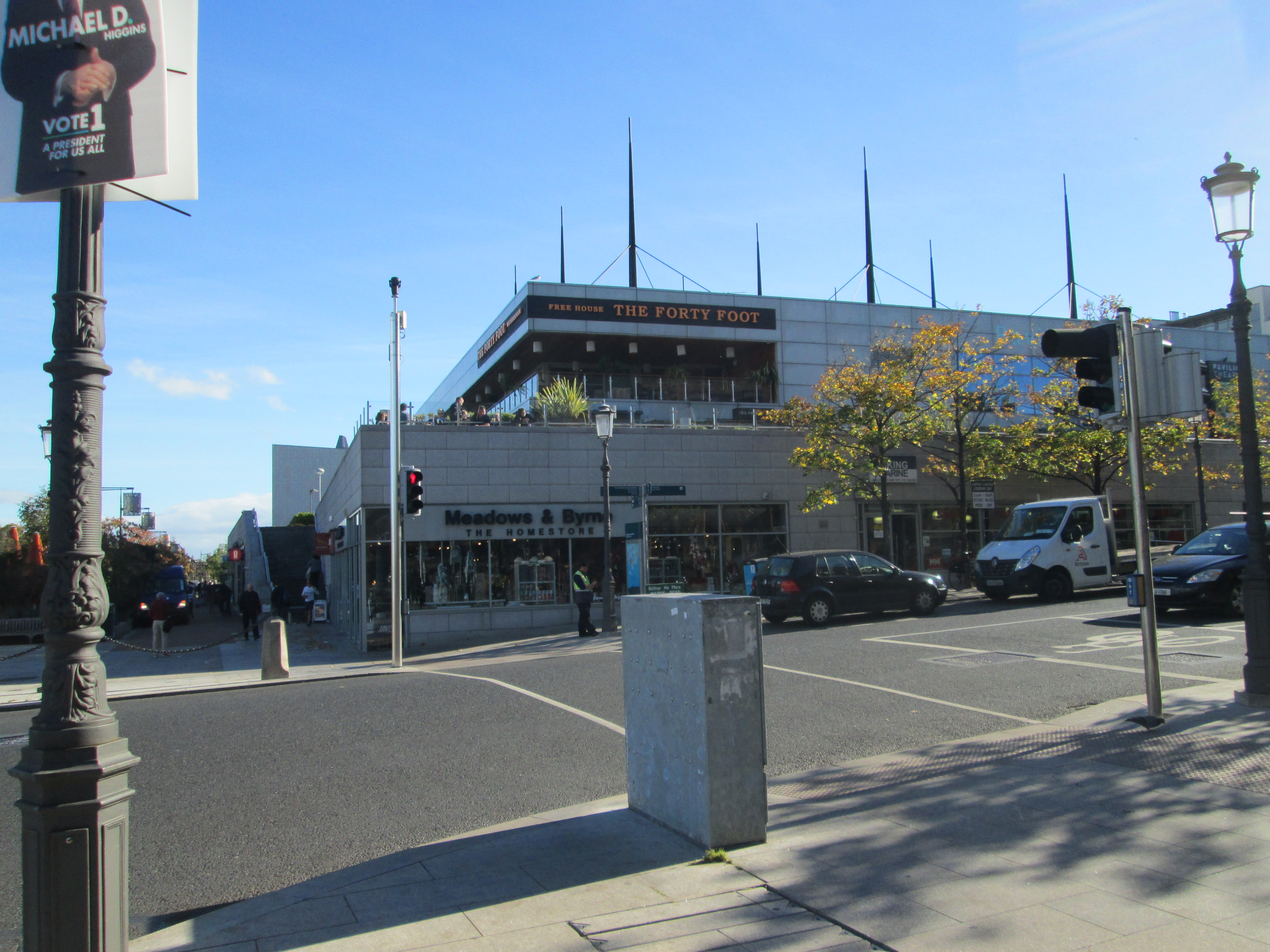
You’ll know me, that I mostly write on travel, posting that topic with photographs and the odd painting. History, art appreciation, personal reflections and music are all part of the mix. But there’s another me that writes fiction. Again, personal reflection and travel are part of the mix, sound and vision too. It’s a different world, but which is real or ideal I can’t say. This is something that happens every seven years or so, and it’s happening again. My latest collection of short stories, Kings on the Roof, is about to go live. Published by Forty Foot Press, it has eleven stories drawn from all across my universe. The title story is set around Dublin’s Amiens Street, with Sheriff Street Sorting Office and Cleary’s Pub beneath the railway bridge featuring. An extract from this story appeared in the second part of my series, Dublin’s Circular Roads. 

… back then when everything seemed possible, even there in the Sorting Office, in the bowels of that clanking beast, amongst the trolls and elves of the workaday world. We’d climb onto the high gantry and up the fixed ladder to the roof, Alex, the Bishop and I. We were kings of the world up there, with Dublin spread out beneath us, above us only a rippling sky.

There’s an autobiographical element to this story, as I worked in Sheriff Street with the P7T in the late seventies. A more mythic Dublin features in The Secret Lover of Captain Raymondo D’Inzeo. Set in the sixties in the Liberties, the narrative includes fanciful versions of Marconi, the Easter Rising, the Theatre Royal and the magnificent Italian showjumping team winning the Aga Khan. There were extracts in part eight of Dublin’s Circular Roads. 

Just past Cassoni’s I see the car, a red Alfa Romeo with the roof rolled down. Graciano is at the wheel, la Contessa Rossi languishing in the passenger seat.

   “You,” she says, “you have set your sight on the Captain. You are good. A young girl with well turned calf. But would he set his cap for you, the Captain? In all probability. He can acquire what he likes.”

   I can’t think what to say. “Will Italy win the Aga Khan?” I stammer.

   La Contessa puts her head to one side, like a bird looking at a worm. When she speaks, it is not by way of a reply. “I see your man there. He is within your reach. Don’t take me wrong for, believe me, we both have love in our hearts. And yes, we will win.”

Meanwhile, a more recognisable Dublin appears in the stories A Man Walks into a Bar and the Black Moon. Both are contemporary but, suspended in their own gothic fog, drift to and fro in time. The cover illustration is realistic enough, based on a photographic time exposure of city traffic at College Green, Dublin’s dizzy fulcrum. Both the acrylics painting and prose featured on this blog about two years ago. 

… this is the beating heart of Dublin. Whenever you stand there, you will experience the rattle and hum of the city. The song it makes is of all the songs that have been sung here, all the words written and spoken, the history of centuries and recent seconds. At night I find it something special, intimate in its inkiness, dangerous and comforting in that non stop firefly display. Stand and watch the lights of passing traffic going everywhere, fast, at the same time. That’s city life.

Kings on the Roof is published by Forty Foot Press, and is available on Amazon.

Venice Remembered – 3

Canaletto_-_The_Grand_Canal_near_the_Ponte_di_Rialto_-_WGA03852

Third time in Venice, we flew in to Marco Polo, arriving by train at the Stazione Santa Lucia late in the evening. We took the Vaporetto down the Grand Canal, sailing beneath Ponte Degli Scalzi to ride the few stops till our pontoon. Darkness fell and a nimbus rose from the water as we approached our rendezvous.

It was one of those meetings which should happen at least once in a person’s life, one which you have seen many times in the movies. Sometimes I dream of Veronica at the Vaporetta stop. As the cool cloak of the canal shaped itself, tangible and ostensible, the Vaporetto stuttered to a halt. there she was, alone amongst the crowd waiting on the pontoon. At last, I was in a movie, about to step into that scene, like Bogey and Bacall, when monochrome celluloid blossomed to a full spectrum. She was perfect; calf length Macintosh a quiet half white, dark felt fedora aslant. I just knew her eyes would glisten softly, the colour of deep water in moonlight.

Well, it was all of sixty five years ago

when the world was the street where she lived

and a young man sailed on a ship in the sea

with a picture of Veronica.

Veronica by Elvis Costello

Veronica is our host for the air b’n’b we have booked. She welcomes us warmly and guides us through the labyrinth to the house where we’ll be staying. Once we’re settled she gives us a brief tour of the quarter, recommending the right places for us to eat and drink. Then she smiles and glides off to her own home on some other island.

We are staying in the Sestiere Santa Croce San Polo, near the fishmarkets whose faint hum guides us home of a night. Nearby is Rialto Bridge. We had our two charges, and a list of things to do. Much of this involved pointing and staring, and Venice offers plenty opportunity for that. We had also earmarked a visit to the Biennale.

VenSteps

The Venice Biennale was established in 1895 as a major exhibition of contemporary art. It is based in a park, the Giardini, established by Napoleon on drained land east of the Arsenale. The exhibition centre is augmented by thirty national pavilions operated by that country’s foreign ministry to showcase their art and culture. An exhibition focussing on architecture is held on alternate, even years. In 2006, the exhibition explored the theme of Cities, Architecture and Society. For myself and O this was right up our alley. We are both lost in our search for the ultimate city.

VeniceSnO

Our brains were as full of cities as they were likely to be. One particular visual endures. Topping a rise in the motorway, the entire panorama of a teeming city and its towers shifts across the skyline. Whether Caraacas or Bogota I can’t be sure. I felt dizzy contemplating it. O was utterly absorbed. He would, a few years later visit that city himself. 

We stopped for lunch along the quayside in sunshine. Riva degli Schiavoni is a hectic waterfront promenade lined with market stalls. The Grand Canal merges with the lagoon, transitioning towards the open sea. There’s an overwhelming sense of movement, the centuries colliding to make a tableau of the city’s maritime history. On that day, the sky a duck egg blue and suspended in a chill miasma, everything was timeless and possible.

Canaletto Salute Venice

Across the waters, a masterpiece of baroque extravagance, the Church of Santa Maria della Salute was built in thanksgiving for deliverance from the plague of 1630. Further on, Andrea Palladio’s San Giorgio Maggiore floats on its own island.The neo-Classical complex of church and monastery was completed at the end of the sixteenth century, with the soaring campanile added in the late eighteenth.

The view has inspired numerous artists, amongst them Giovanni Antonio Canal. The name is too appropriate to be true: Canaletto, the artist who does exactly what it says on the tin. Born in Venice in 1697, his father, also a painter, was indeed a Signor Canal. His son’s monicker denotes junior. In his early paintings he worked to a finish outdoors while his contemporaries retreated to the studio. Hence, he anticipates Impressionism, and the tendency of modern art to capture the moment in all its blurred intensity. This evolution fits with our technological advance. Camera, cinema and video are caught in the moment. Even modern writing mimics the automatic pulse. We see things differently now than before, but this has developed over time. In Canaletto’s day, the Camera Obscure was available for artists to copy the scene before them. Canaletto is reckoned to have used it. Scholars of his work disagree. His uncanny accuracy can be put down to the simple fact that he was just damned good!

Picture 009

There are other islands too, and it was time to visit them. Whistling past the graveyard of San Michele, we take the Vaporetto from Fundamente Nove to Murano and Burano. Murano is a small clump of islands with its own canal system, a miniature of Venice itself. Renowned for its glassblowers, we took a factory tour and wondered at the ridiculous, seemingly casual skill of the glassblower within such an extreme environment. We still have our gorgeous glass horse, hot off the pipes. Outside, Murano is blissfully calm, a long way from the hubbub of Venice across the lagoon. Burano has Its own unique, crazy atmosphere. Life goes placidly on beneath fantastic leaning towers. We dallied and dined in the picturesque main square, eating Lasagne which was  memorably good. The houses are painted individually in bright colours, forming a patchwork canvas to seduce the artist within us all.

VeniceM

Over a few days, myself and M became fond of Veronica’s coffee maker. The Moka Pot is an Italian style icon, new to us at the time, it was developed by Alonso Bialetti in 1933. A study in Futurismo elan, with facetted aluminium and bakelite handles, it made brewing coffee at home accessible to ordinary folk. During a moment when my concentration wandered, the bakelite began to melt picturesquely over the ring. Two remedies suggested themselves: to disguise ourselves with Venetian masks and escape, or to purchase a new one. The neighbourhood seemed full of souvenir shops, but but we quickly found a shop selling coffee makers, identical to the one I had just melted, if a tiny bit bigger.

There were shops with masks and full regalia too. So that option remained. I almost took it. Browsing in a particularly exquisite shop, I found myself draped in full regalia, though I hadn’t asked to be. Apparently they do that if you stay motionless too long; a dream come true for a lifelong poseur. Davin was pleased to follow suit, and made for a more dashing model.

VenDavMask

Such paraphernalia is handed down from the once notorious Venice Carnival. The Carnival is a thousand year old tradition. A pre-Lenten celebration, (the word Carnival derives from the Lenten fast, literally meaning ‘goodbye to meat’) it gave citizens licence to transgress the strictures of society for ten days leading up to Shrove Tuesday. Elaborate disguises were worn so that men, and women, could behave outrageously while preserving anonymity. This spirit of subversion allowed the playing of practical jokes and endless possibilities for intrigue. 

VenMasks1

The Carnival came to represent the excesses of decadent Venetian society. From 1453 when Constantinople fell to the Turks, Venice continued to rule the Mediterranean waves but by the eighteenth century the city’s renown was less to do with mercantile power than gambling, partying and vice. Taken by Napoleon in 1795, Venice was annexed to Austria whose autocratic rule saw the Carnival outlawed. If meant to curb Venetian expression, it backfired. The more sober population were to the fore in the Risorgimento, the push for a united independent Italy, achieved in 1870. A century later, in 1979, the Carnival was revived and has become a hugely important event on the cultural calendar.

VenMasks2

My own personal pilgrimage was made on a grey, drizzly morning, taking the Vaporetto to Ponte dell’Accademia. Nearby the Galleria Dell’Accademia has a great collection of Art: Veronese, Tintoretto, Tiepolo, Titian. But one morning of wonders at a time. I kept to the Dorsodura side to visit the Guggenheim Museum of Modern Art, lodged in the Palazzo Venier dei Leoni, the Unfinished Palace

Peggy Guggenheim moved to Europe in the 1930s. In Paris she befriended Samuel Beckett who urged her to support Modern Art, as it was a living thing. She set out to buy a painting a day from such artists as Ernst, Dali, Magritte, Duchamp and others, outstanding works of surrealism, cubism, futurism and some abstract stuff. She fled France after the Nazi occupation, escaping with her future husband Max Ernst.

Ernst Bride

Ernst is a particular favourite of mine. The Guggenheim has two of his masterpieces: the Robing of the Bride and the Antipope. Both are perplexing, employing the automatic technique of pressing paint onto the canvas, decalcomania, to evolve a scenario that’s apparently realistic but incongruously fantastical. Magritte’s Empire of Light also features. These are paintings I could stand in front of for days.

The_Empire_of_Light_Bel

Coming up for air, I pose by the waterside for a while, with blended injections of lagoon air and aromatic infusions from exotic places, Morocco or Virginia perhaps. Behind me on the patio the disconcerting statue by Marino, Angel of the Citadel, brings a whole new meaning to the term saddle pommel. Before me, a haunting tableau in the making emerges from the canal mists. I thought it was the smoke or the music going round in my head, but I took a photograph and it doesn’t lie.

VenGondo

Here they come, and the fire on their wings doesn’t burn,

here they come and they know everything we must learn.

Here they come, and the stars in their eyes seem to glow,

here they come and the fear in our hearts starts to go.

Here They Come by Ten Years After.