
Mountjoy to Phibsborough

Independence memorial at Phibsborough
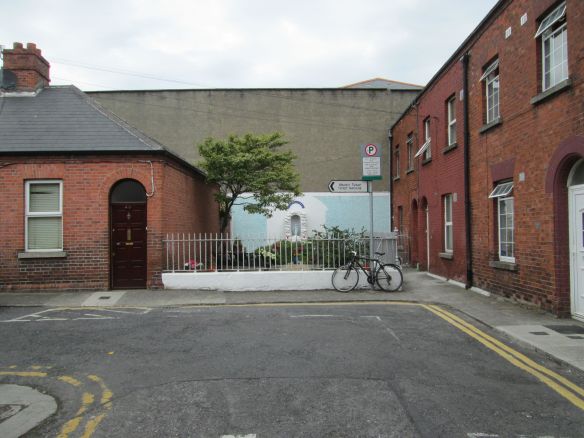
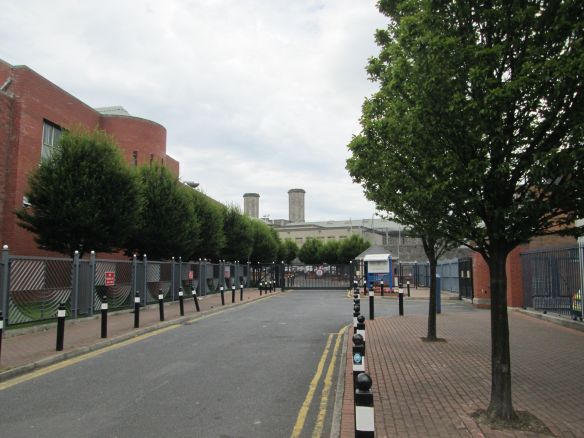
Flying with the jailbirds west from Mountjoy, we approach the top of the clock in Dublin’s circular tour. High noon, do not forsake me now. In the shadow of the jail, there are some small terraces of redbrick cottages. A plaque commemorates local boy, aeronaut Colonel James Fitzmaurice, navigator of the first flight to cross the Atlantic from East to West. Fitzmaurice had enlisted in the Irish Volunteers aged sixteen, but his da, a prison officer, found out and hauled him home. Towards the end of the war, Fitzmaurice joined the RAF. With Irish Independence in 1921, he returned home to join the nascent Irish Air Corps, rising to Commandent by 1927.
With the birds I share this lonely view …
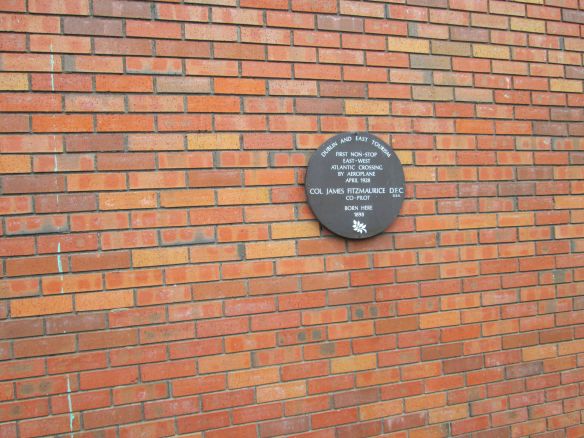
In April 1928, Fitzmaurice was taken on as part of the three man crew of the Bremen, joining two Germans, Captain Herman Kohl and Baron Von Hunefeld. The plane landed on the icebound island of Greenly in Quebec after a flight lasting thirty six hours. The men were hailed as heroes, here and in America, but the fame was transient and Fitzmaurice died, forgotten, in 1965. Seventy years after the event, in 1998, his daughter and granddaughter unveiled a plaque marking his birthplace here on the North Circular Road.
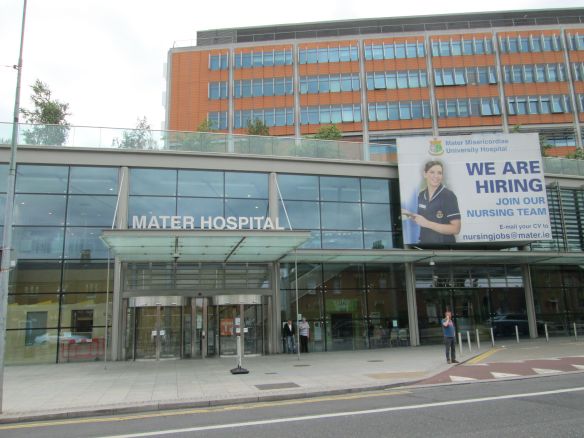
Across the road is the Mater Misericordiae hospital. The Hospital was founded in 1867 and is a major teaching hospital. The name, Mother of Mercy, refers to Our Lady and derives from the hospital founders, The Sisters of Mercy. The Sisters were founded by Catherine McCauley, (1778 – 1841) who determined to use a large inheritance to care for homeless women and children. Originally a lay order, pressure from the Church resulted in it becoming a religious community in 1831.
Oh the Sisters of Mercy they are not departed or gone,
they were waiting for me when I thought that I couldn’t go on,
they brought me their comfort and later they brought me this song,
I hope you run into them, you who’ve been traveling so long.
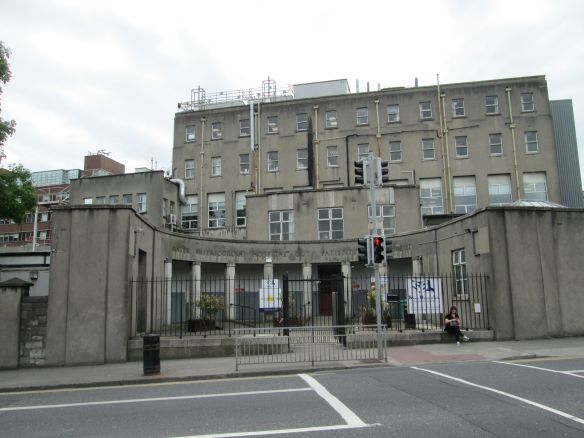
McCauley featured on the last Irish fivers, designed by Robert Ballagh, who lives nearby in Broadstone. The Mater’s main Eccles Street elevation also features on the note which was withdrawn from circulation after ten years in 2000 with the advent of the Euro. Ballagh, asides from his fame as an artist, also had a hand in the saga of Irish rock. A face with the Chessmen beat group, he quit the music scene in the late sixties and sold his bass guitar to a young Crumlin lad by the name of Phil Lynott.
If your life is a leaf that the seasons tear off to condemn,
they will bind you with love that is graceful and green as a stem.
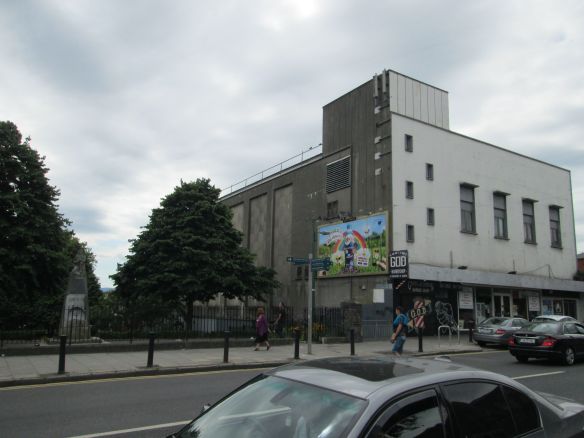
The old State Cinema beside the park.
Entering Phibsborough, the North Circular crosses what was once a lively city artery. In the late eighteenth century, Dublin’s two canals, the Royal to the north and the Grand to the south, were Ireland’s principal national highways. The Royal Canal initially flowed north south here, passing Blessington Street Basin before terminating at Broadstone. The Royal pushed through to the sea in the early nineteenth century and this branch was ultimately abandoned. A linear park has been laid out along the original route. Looking north, you’ll see Phibsborough Library from the 1930s. You can imagine it as an island, it is in a sense; a concise red brick art deco in a river of grass.
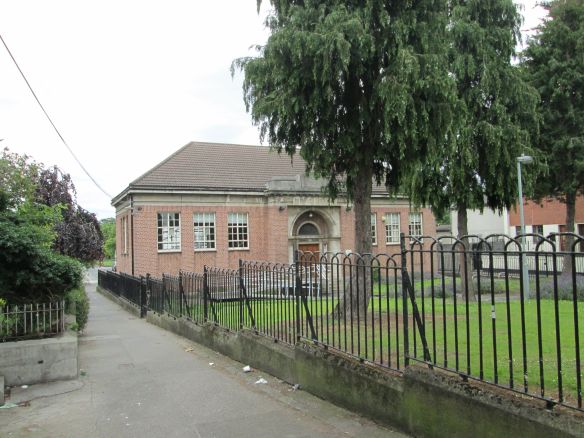
Phibsborough Library
Phibsboro, you can drop the ‘ugh’, has plenty by way of cafes, at least after the semi-desert of Mountjoy. There’s a queue outside Two Boys so it could do with more. I could do with a caffeine or beer hit myself, but feeling Beckettian, I must go on. There’s a few decent pubs. Doyle’s, I remember, used to attract us over to gigs in the mid seventies. The 23 bus was a cross town service and conveniently linked Drimnagh and Phibsboro. In popular parlance the name of this nexus is always Doyle’s Corner.
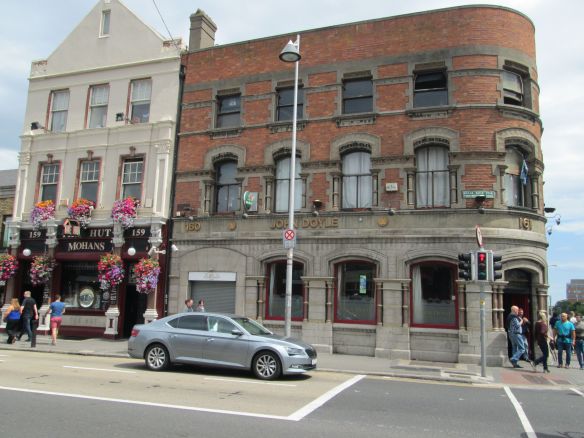
Doyle’s Corner
Phibsboro is a place where universes collide in time and space. Fin de siecle sylvan redbrick terraces intersect with the brutalism of seventies urban excess. The concrete low rise of the shopping centre still endures. The sixties office tower has long made a curious exclamation mark on the vista from inside Dalymount Park.
Dalymount is home to Bohemians Football Club. Once considered the home of Irish soccer, internationals and FA cup finals were played here until the seventies when Landsdowne Road became the venue. I have strong memories of ancient match days at Dalymount, most with my friend Bill and his dad. That was Billy Mulville, a player of renown during the Emergency. He graced the pitch for Bray Unknowns, St. Patrick’s Athletic and Drumcondra. He transferred his love of soccer on to our generation. The walk through the redbricks and into the stadium in the gathering roar is a deeply embedded montage.
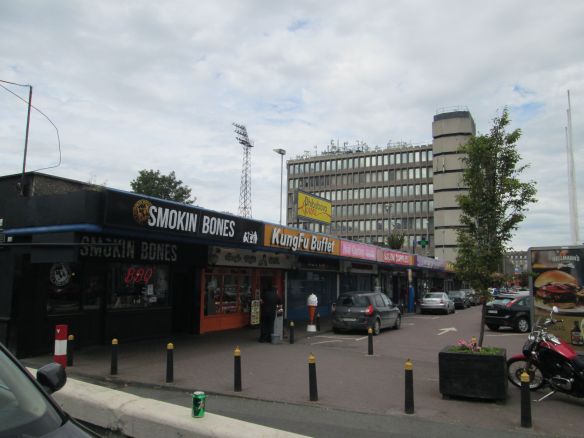
Dalymount Park and the joys of sixties architecture
Bohemians were, along with Shelbourne, the founders of the league of Ireland when, after Independence, it broke away from the northern dominated Irish League. The club is nick-named the Gypses, speaking of earlier unsettlement. They’ve been established here a century, but a sense of desperately hanging on pervades. The stadium looks sadly dilapidated. Bohs supporters are a loyal bunch, and packed houses are assured in Dublin derbies against main rivals Shamrock Rovers, a more peripatetic club who have roved from Ringsend to Tallaght, via Milltown.
Classmates Kevin Moran and Gerry Ryan were league winners here in the seventies. Moran was one of the first players to escape the GAA ban, playing both codes to the pinnacle of national success. With Bohs and Dubs they took the League and Sam Maguire trophies on tour, and I drank from both in the Submarine Bar beyond in Walkinstown.
Guess who just got back today?
Those wild eyed boys that’ve been away
Haven’t changed, haven’t much to say
but man I still think them cats are crazy!
Dalymount began hosting concerts in the late seventies. In 1977, Thin Lizzy had at last hit the big time and headlined here with such varied support as Fairport Convention, Graham Parker, Boomtown Rats, the Radiators and Stagalee. Up the road in Croke Park on that day, Dublin defeated Kerry in a famous semi-final on their way to All Ireland glory in the days of Heffo’s Army. The news brought on the Dalymount roar, and the new wave in the old wave’s arms, got ready for the sundown, and some serious Dancing in the Moonlight.
Friday night they’ll be dressed to kill,
Down at Dino’s Bar and Grill,
The drink will flow and the blood will spill,
And if the Boys want to fight you’d better let them.
This is the image of Philo the ruffian, all leathers and switchblades, freeze-framed under flashing neon. It was the image to which young guns cleaved, that typical rock and roll catharsis giving us license to be heroes, in our dreams at least. But Lynott also waxed poetic, was truly the romantic at heart. He was our king, whichever suit he wore. King of the world that night in Phibsboro, as universes collided in time and space.
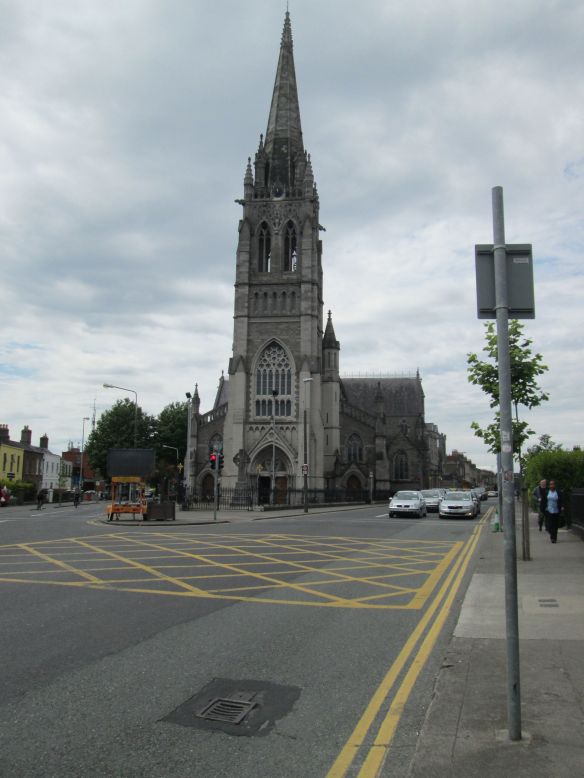
St Peter’s Church
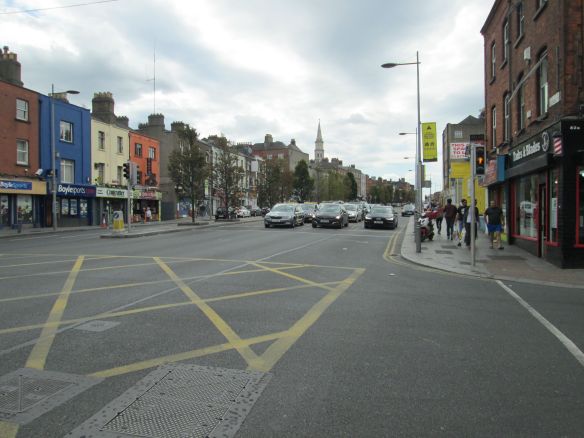
We’re top of the clock here. About a quarter way around our circular tour. The North Circular begins to arc south westward, heading past the imposing Catholic gothic of St. Peter’s Church, into a more sylvan, suburban environ.
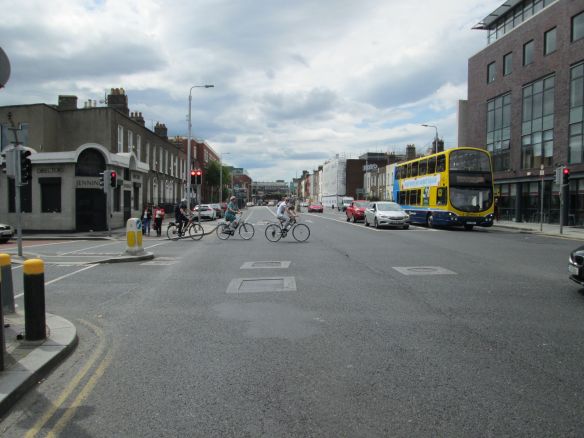
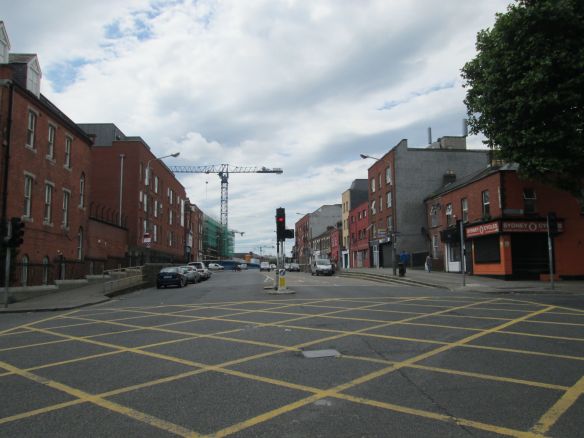
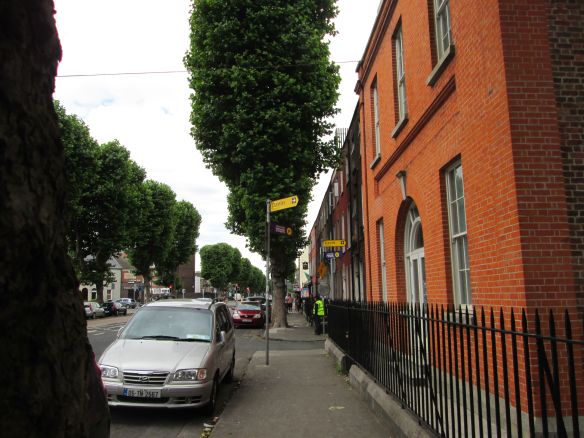
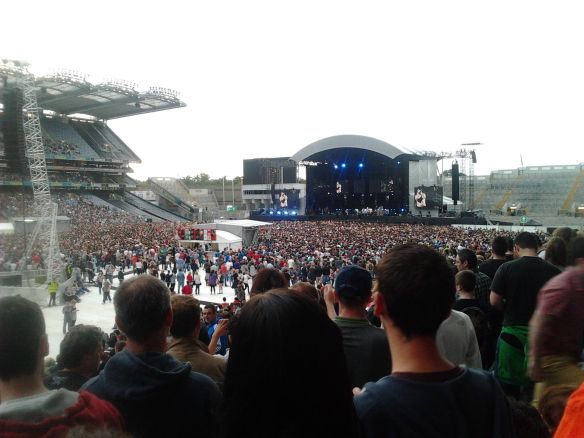
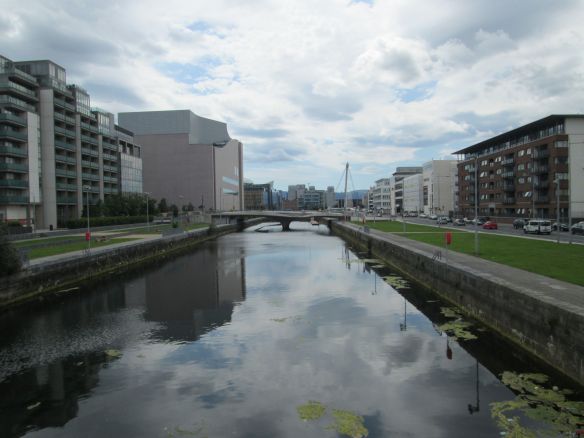 Heading north on Guild Street, the Royal Canal to our right seeps towards the Liffey. A new city, linear and rational is being stamped over the old North Wall docklands. That’s the feeling crossing Mayor Street where the Luas Red Line takes passengers arrow straight from Connolly Station to the Point Village. The Point Depot at the eastern end of the Docks is the major venue for indoor concerts. I saw Bob Dylan there some years back. A man with a hat playing piano. I could have spent the evening out in the real world, where the Liffey melts into the sea. I could have sat contentedly and watched the river flow, the memory of Bob’s music stronger in my blood.
  At Ferryman’s Crossing, a rusty reminder of the old days rises in the form of a decrepit crane. The old docklands peep through, first the palimpsest, then the ancient script itself. It’s still being written. Often the same old story. Sheriff Street runs parallel to the quays but remains remote from the modern narrative there. The area has a rough inner city reputation.
  The Church of St. Laurence O’Toole marks the start of Seville Place. It was built in the Famine years and opened in 1850. Along Seville Place, the grandly named First to Fourth Avenues suggest New York. In fact, these are short, cottage lined cul de sacs. Under the railway bridge we reach Amiens Street.
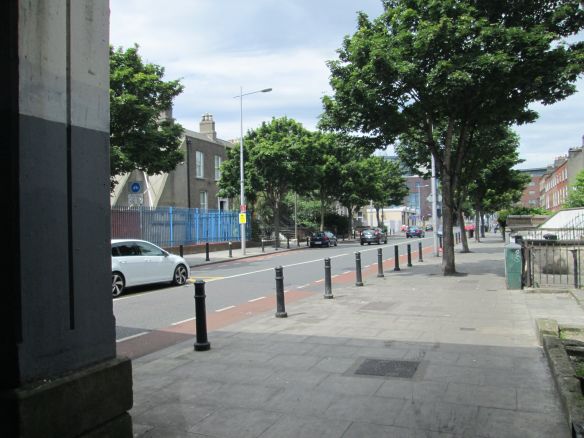 This street provides Dublin’s main transport and communications hubs. Connolly Station, topped by an ornate Italianate tower was opened in 1944 as Dublin station, later named Amiens Street. By 1853 it served the rail link to Belfast. Madigan’s Pub, on the main concourse, was a Mecca for thirsty travelers on long, dry, Good Friday. It is the most central of all bonafide pubs. You would need a train ticket to deserve a pint, of course; a small price to pay. Such quaint customs are now consigned to the slop tray of history, as Ireland’s Good Friday prohibition has been lifted.
 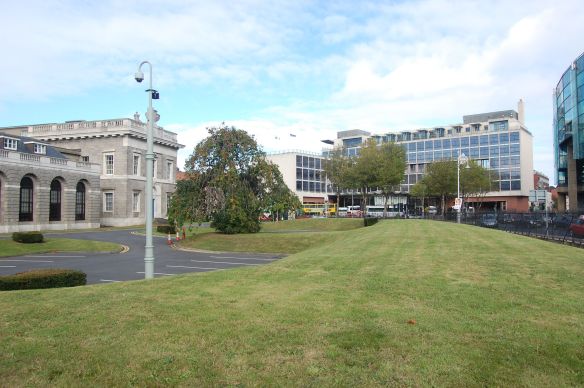 A little further off track, Bus Aras, nearer the river, was an early modernist pile. Designed by Michael Scott and completed in 1955, from here you can take a bus to anywhere in Ireland, or all the way to London. Bus Aras and Connolly combine to form a startling urban portal, full of the contrasts of history and architecture. At just the right spot, the panorama includes Victorian Connolly Station, Georgian Custom House, the International Financial Services Centre and the Ulster Bank HQ across the river.
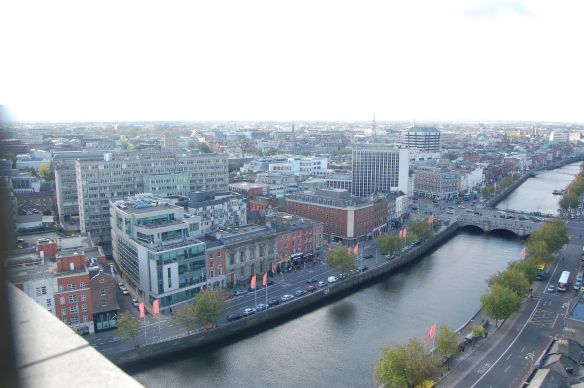 At more civilised hours we could repair to Cleary’s pub, beneath the bridge, shuddering under the weight of passing trains. Old style boozer of dark wood, sparse light on glinting glasses being raised at the long bar. One more toast before boarding the Gravy Train. Last wet my whistle here with Davin, on our way with to the Red Hot Chilli Peppers at Croke Park farther north.
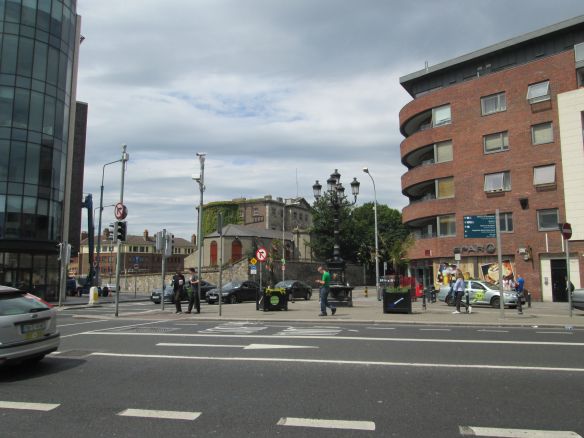 At the junction of Seville Place and Amiens Street, we’re back on track. Heading North by Northwest is Portland Row, leading to the North Circular proper. Amidst the grimy urban bustle sits the landmark of the Five Lamps, delicate and redolent of a bygone age. It sits on a junction of five streets. Again weirdly suggestive of Old New York’s Five Points, notorious focus for Irish gangs in the mid nineteenth century. The eponymous, though fictional, Dublin gang appear in Bob Geldof’s Rat Trap: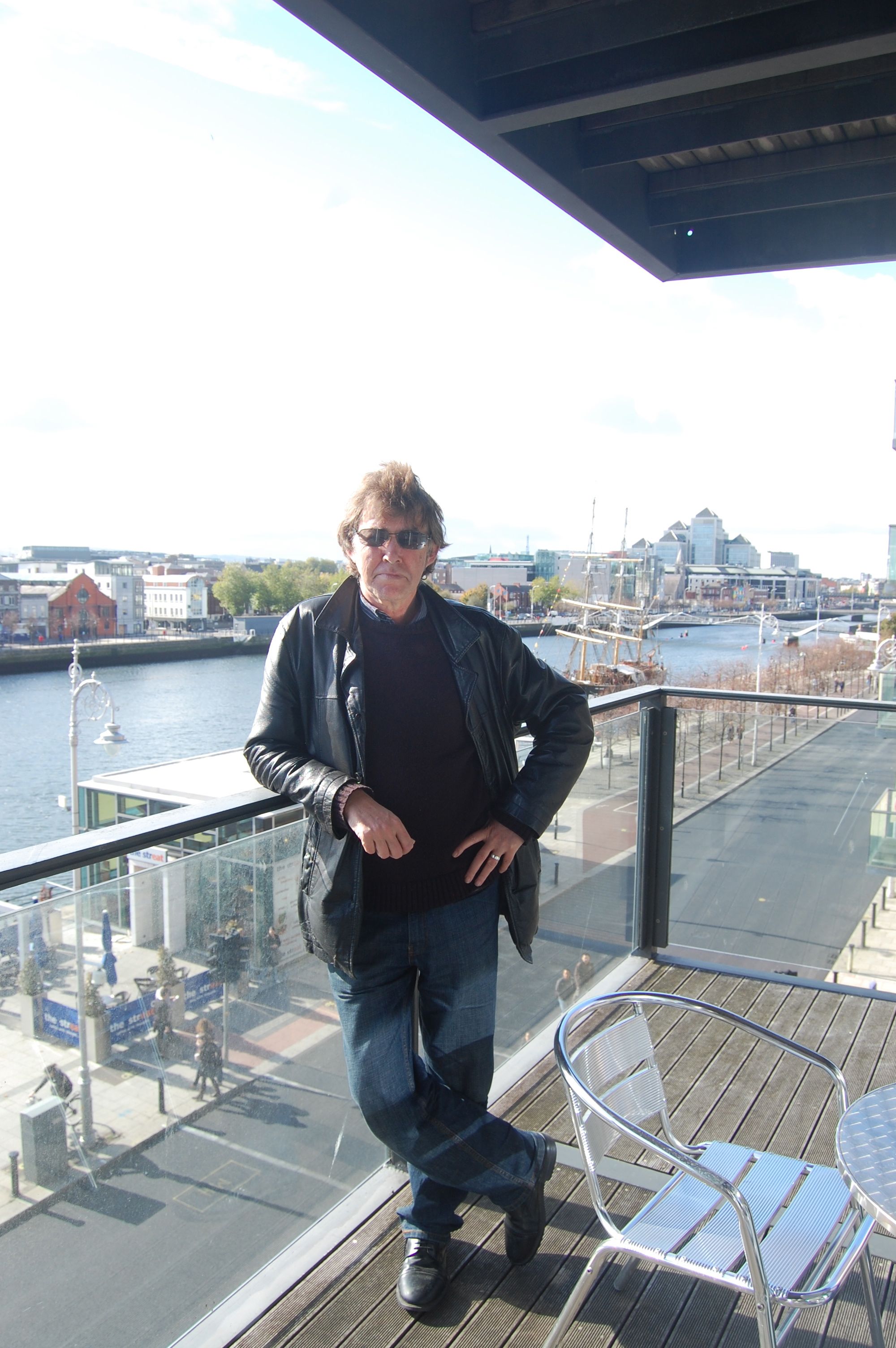

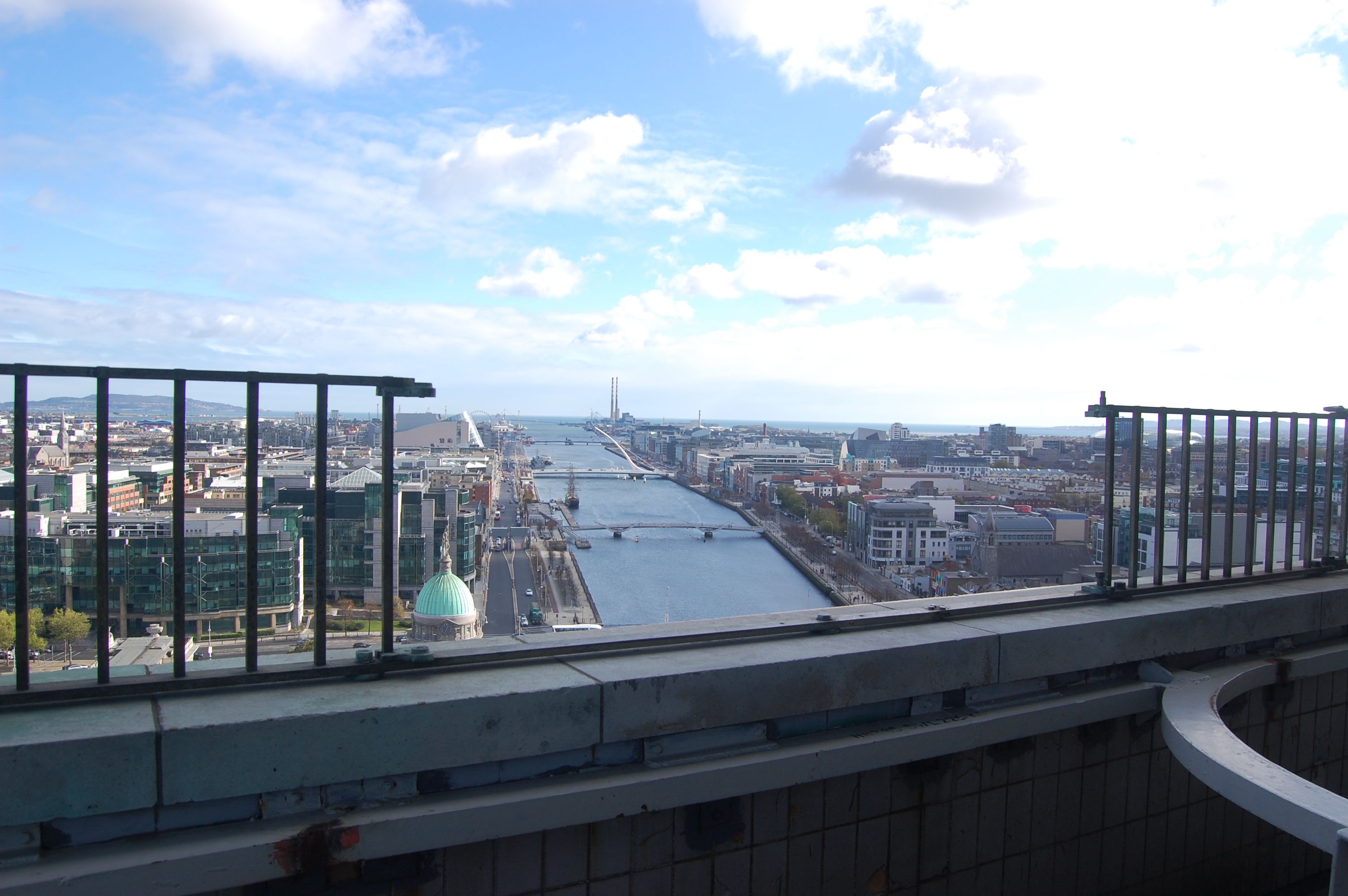
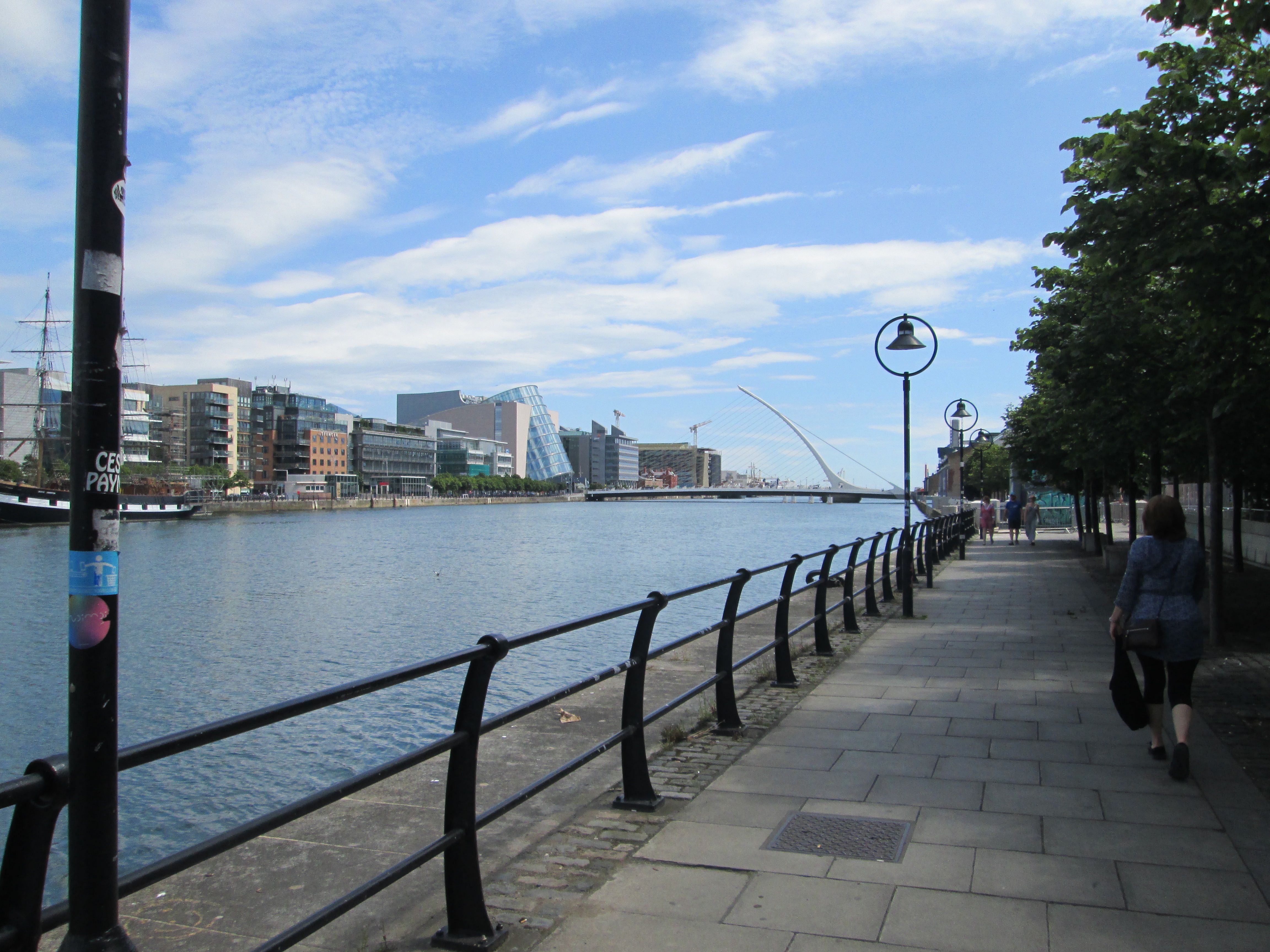



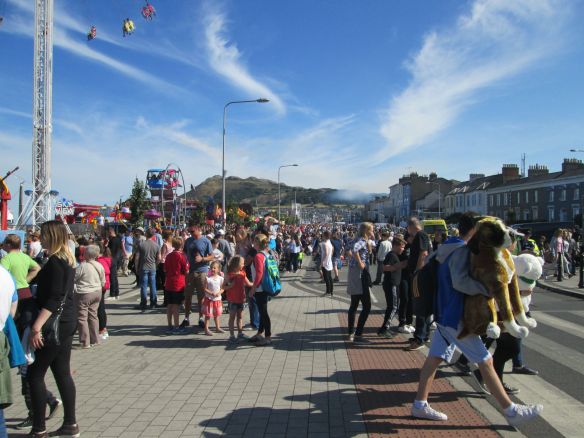
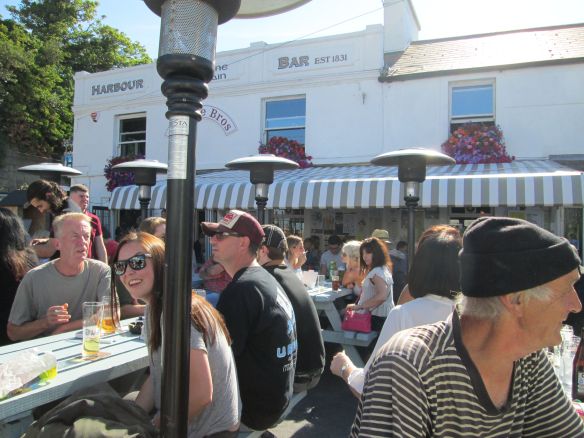
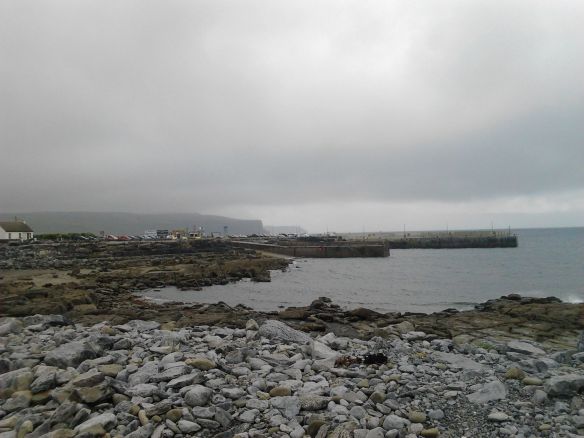
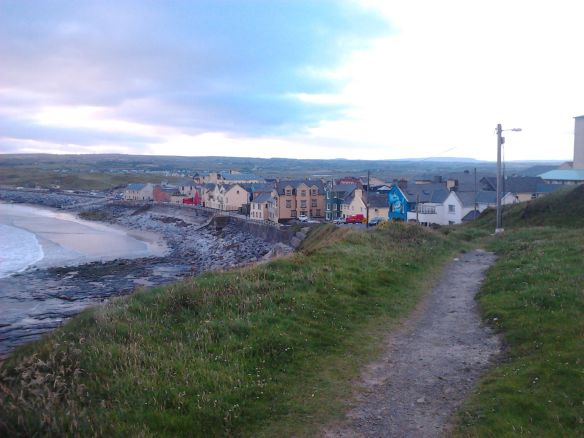 It takes just over three hours from Bray to Lahinch, passing from cool drizzle into warm sunshine. It is a long way from Clare to here. Out to the wild, windy west, to stop at the edge of the world, the Atlantic stretching before us forever.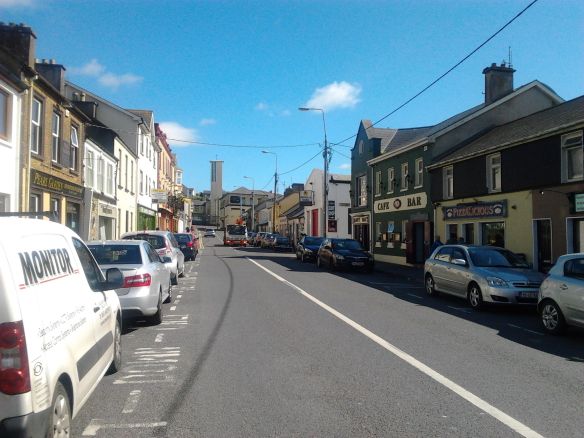
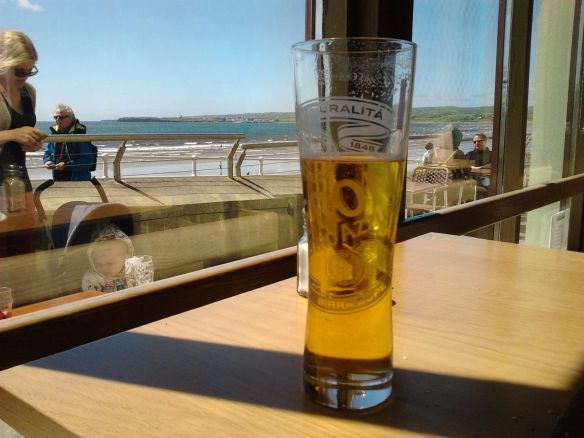
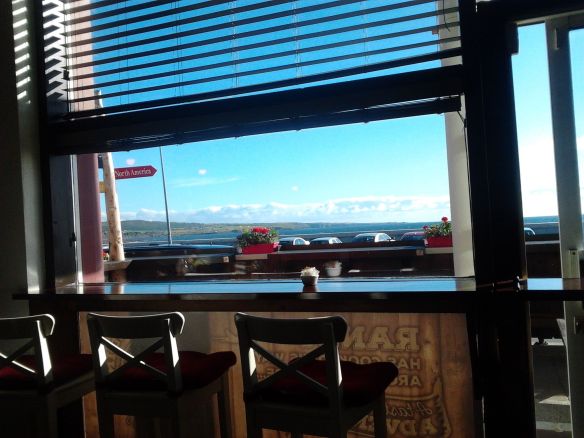
 In Danny Mac’s Cafe Bar, we’re drinking to old times. Man, wherever you go, they pull a fine pint down here. There’s something of a cafe ambience, alright. They do a Legendary Irish breakfast here too. I’m not seeing much night out here. The sun might go down in nearby Galway Bay, but it won’t be long coming up again.


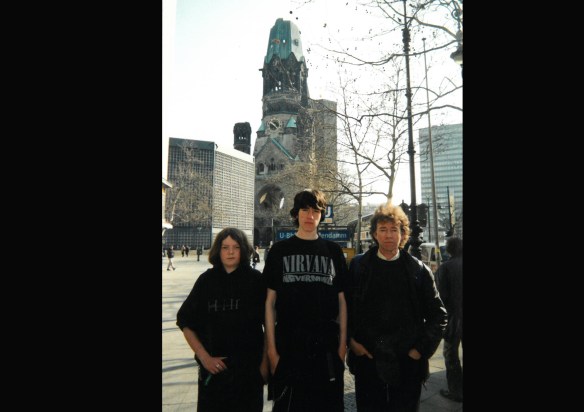
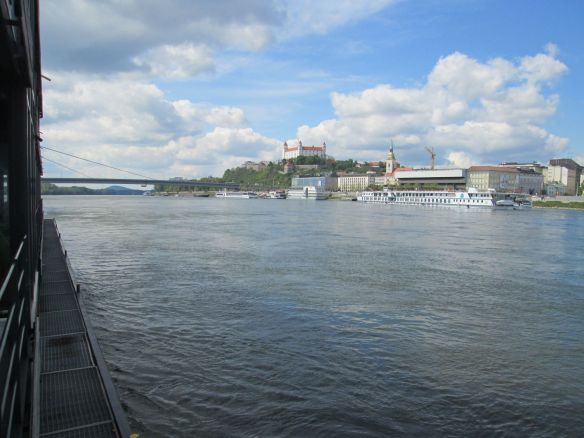

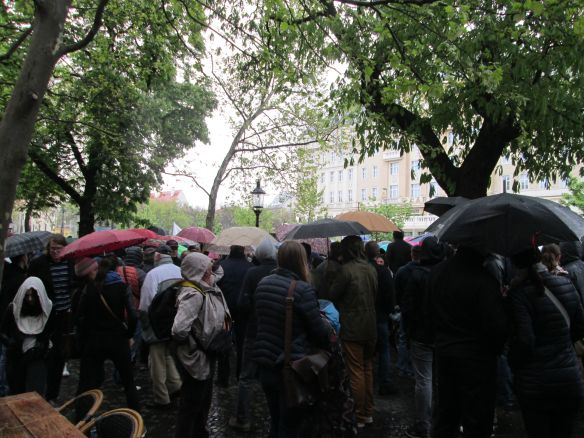
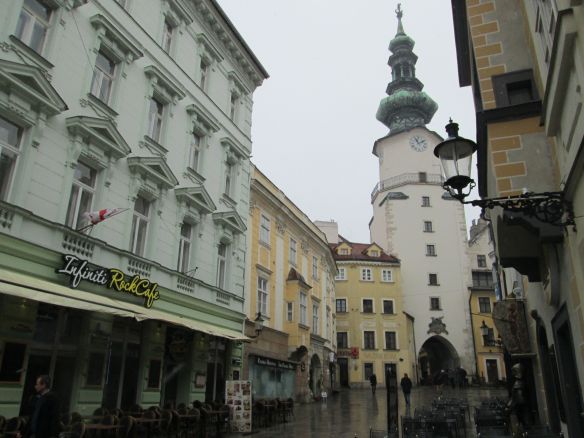
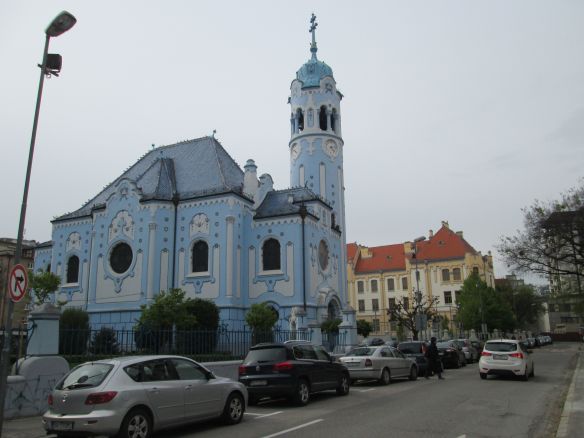
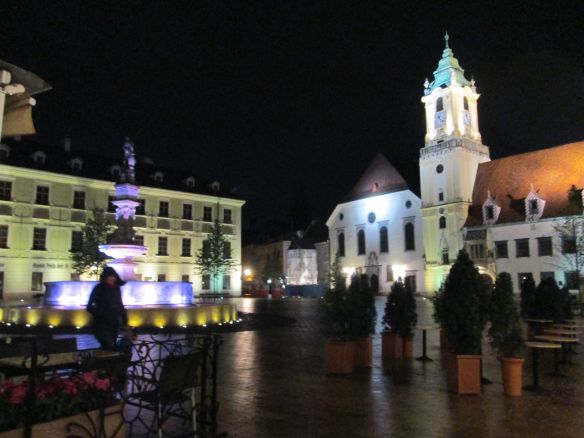
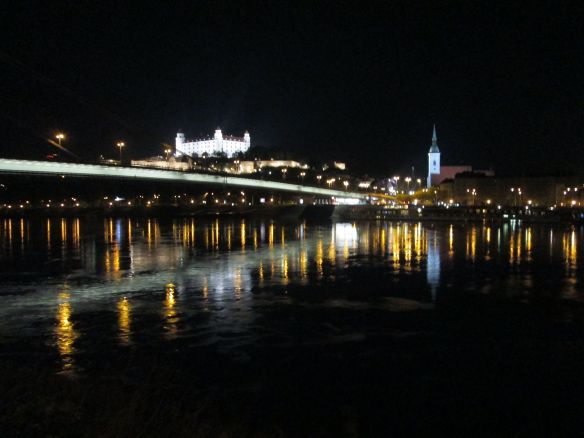
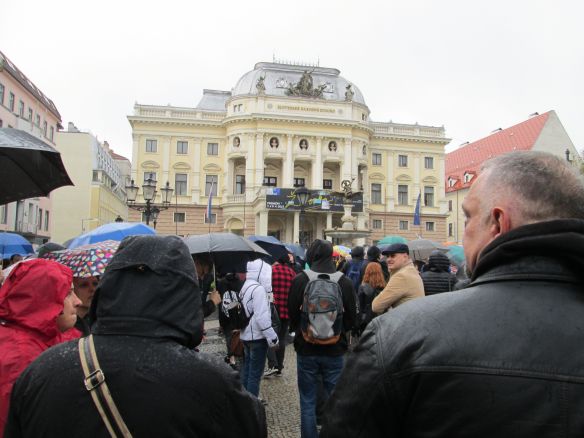 The Danube is the defining river of Western civilisation. The border of empire, dividing Roman from Celt and Goth. Bulwark against the Barbarian, until they crossed in their tens of thousands and ushered in a new age. Highway of Central Europe, carrying art and armies, heroes and villains, east and west. Bratislava was once the focus of Empire, the capital of Hungary from 1536 to 1783. Otherwise, something of a provincial outpost, sandwiched between Budapest, mighty capital of the Magyars, and the Hapsburg megacity Vienna. With a population of half a million, it’s sizeable enough, flowering further in Summer with a tourist influx, the Old Town Square thronged with al fresco diners, or loungers by the fountain. But mid-April is unseasonably cold.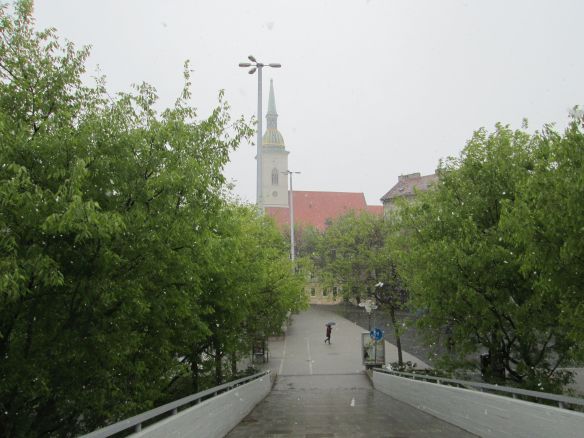
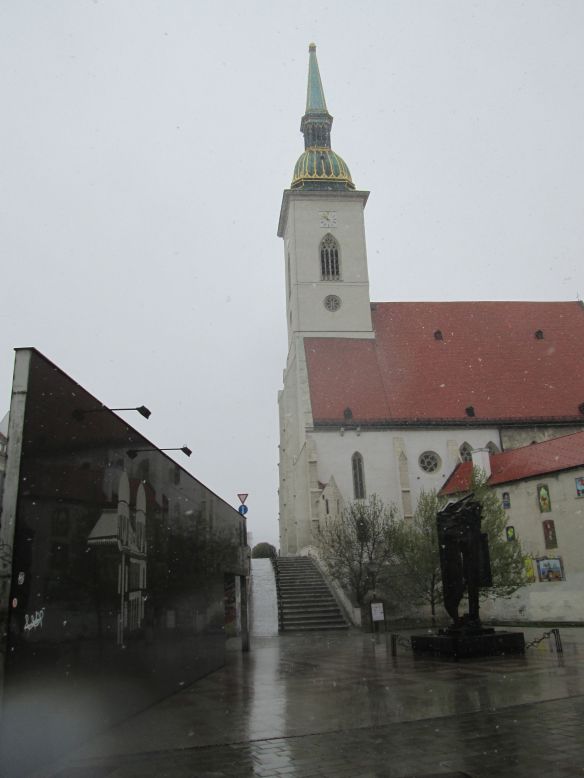
 Further on, a Scottish Bar: The Loch Ness. A rather nebulous concept, I’d have thought. Service and style are more rudimentary, but it’s cosy and quiet. Mind you, the pint costs nearly three euro. Exactly three euro, since I didn’t receive my ten cent back. Half Scottish myself, I blend.
 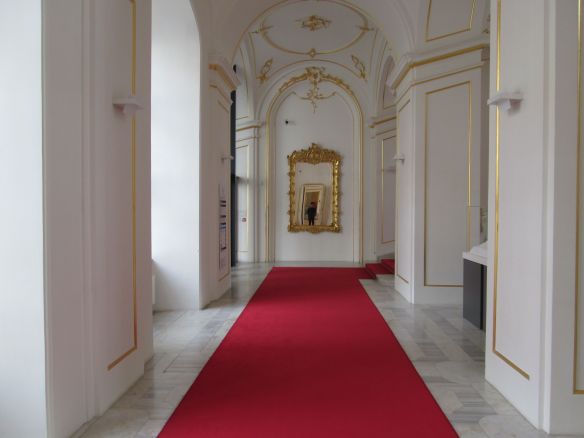 Cold, clear weather on Thursday presents the opportunity to explore Bratislava Castle. High above the city, it dates to the eleventh century, becoming a baroque palace in the reign of Maria Theresa. Extensively renovated in the fifties. Impressive, stark and forbidding, it dares entry.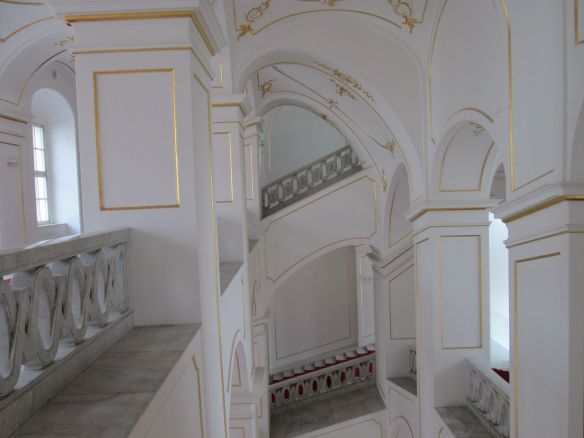


 xxharrison