Nerja by Bus

While inland Andalusia is well served by rail, the coastal region is not. Malaga connects to Fuengirola, but for other destinations you take a bus. Alsa bus service is pretty good. We returned to Malaga from Cordoba by train and walked across the road to the Bus Station to buy tickets from there to Nerja. There’s a regular service, and the fifty mile journey takes an hour and a quarter. The bus passes along Malaga’s seafront, before heading into the rugged rural countryside towards Motril.

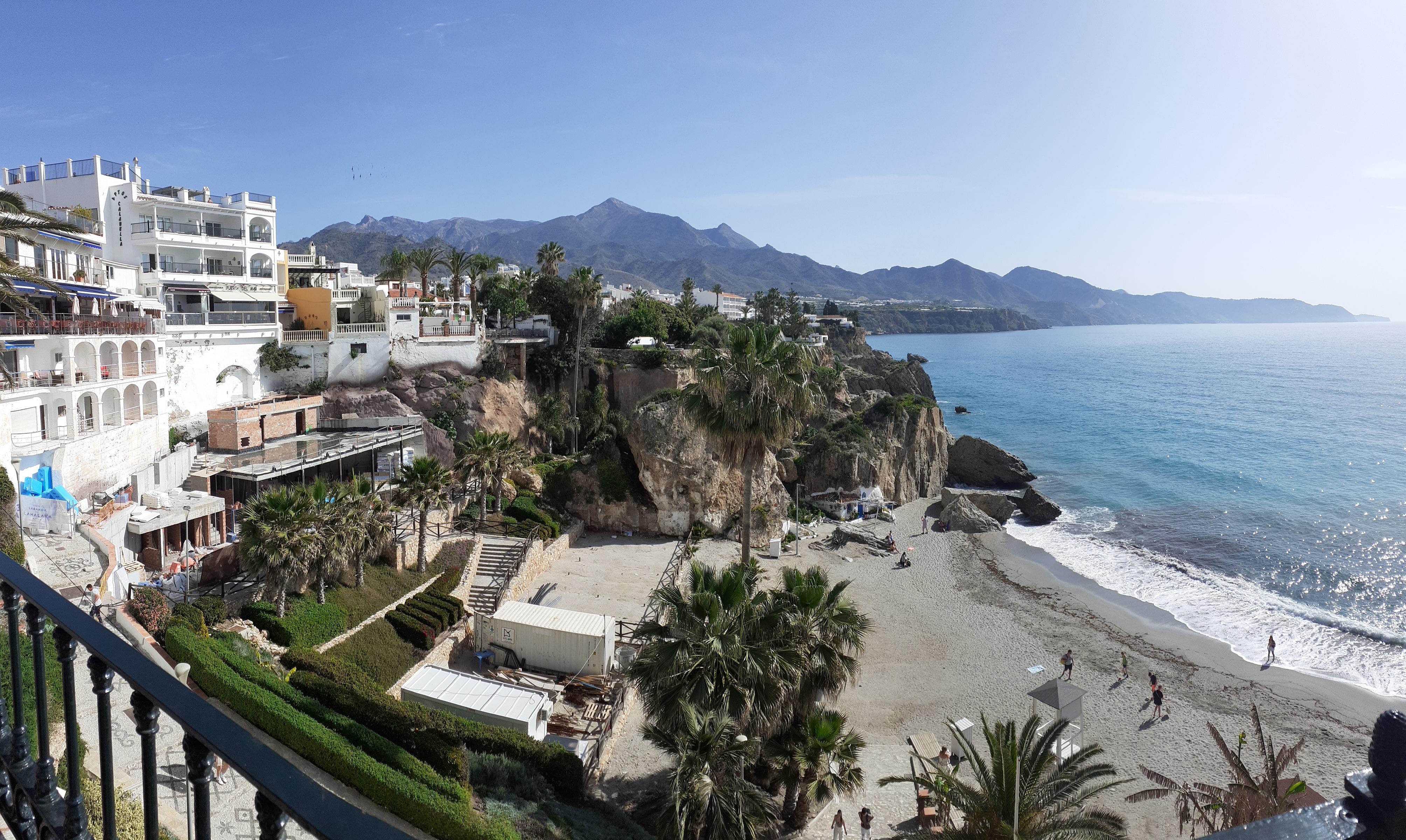
Nerja, lies at the eastern extremity of the Costa Del Sol. It has a population of twenty thousand, though that swells considerably in the summer months. We are deposited on High Street, the main thoroughfare north of the town and take a taxi to our hotel. The Marisol is an online hotel, trading tradition hotel service for tempting low price. But there is a receptionist available until four pm when we arrive. It couldn’t be more central. It faces onto a square with the sea to one side and the narrow pedestrianised streets leading back uphill. There is a picturesque church to one side of the square and sheltering trees dappling the sunshine. The Balcon de Europe, Nerja’s nickname and lure, lies along the southern edge, presiding over an awesome sea view.
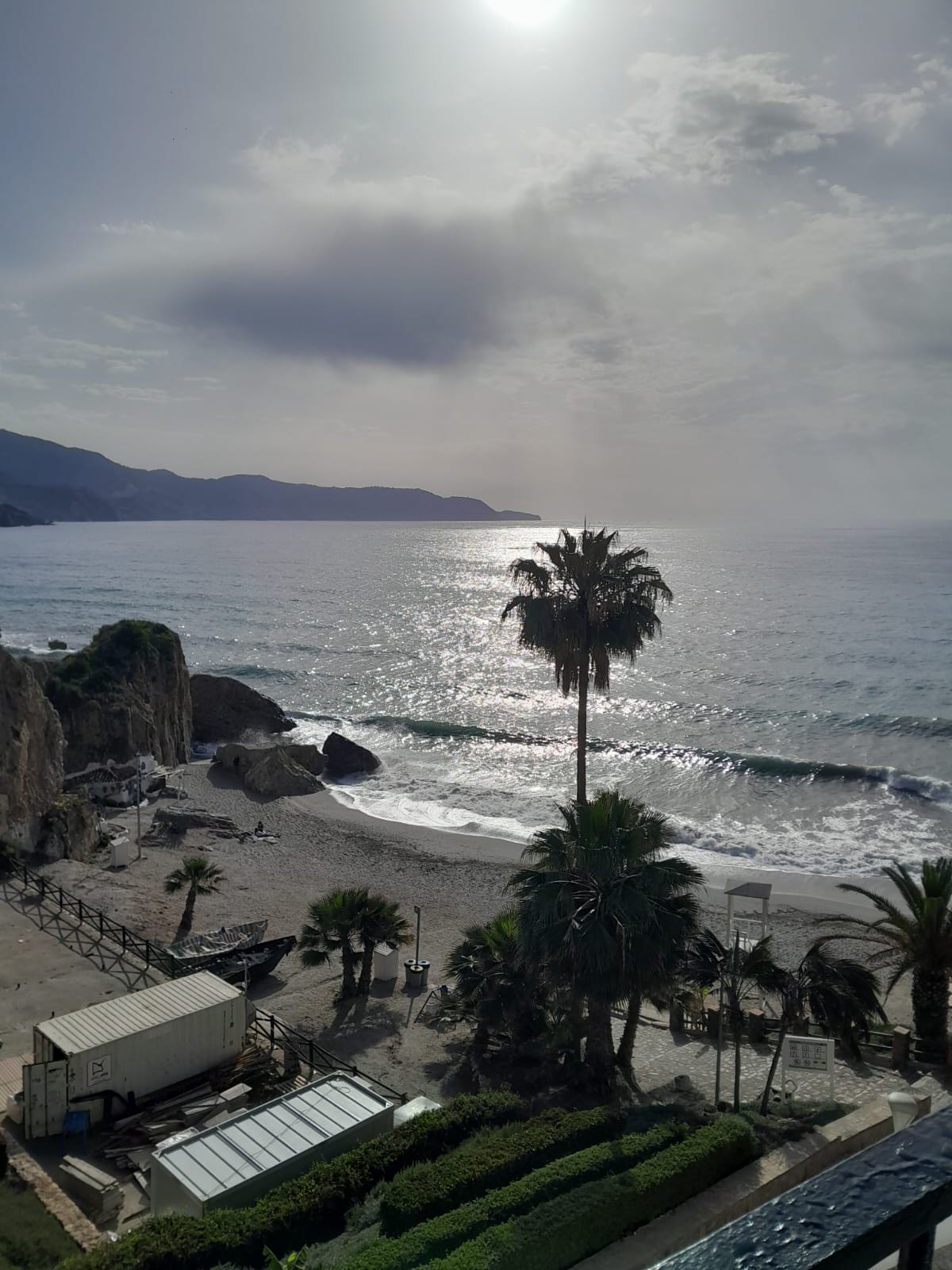
The phrase is attributed to Alfonso XII, King of Spain who visited the village in 1884 after an earthquake had struck the region. Admiring the view, he said “this is the balcony of Europe”. Alonso himself died just a year later, at the age of twenty seven. The area around the Balcon once held an artillery battery and a fort which was destroyed during the Peninsular War in1812. A few guns survive on the Balcony, and remnants of the fort litter the sea below. It is an impressive view. There are beaches to each side of the promintory.
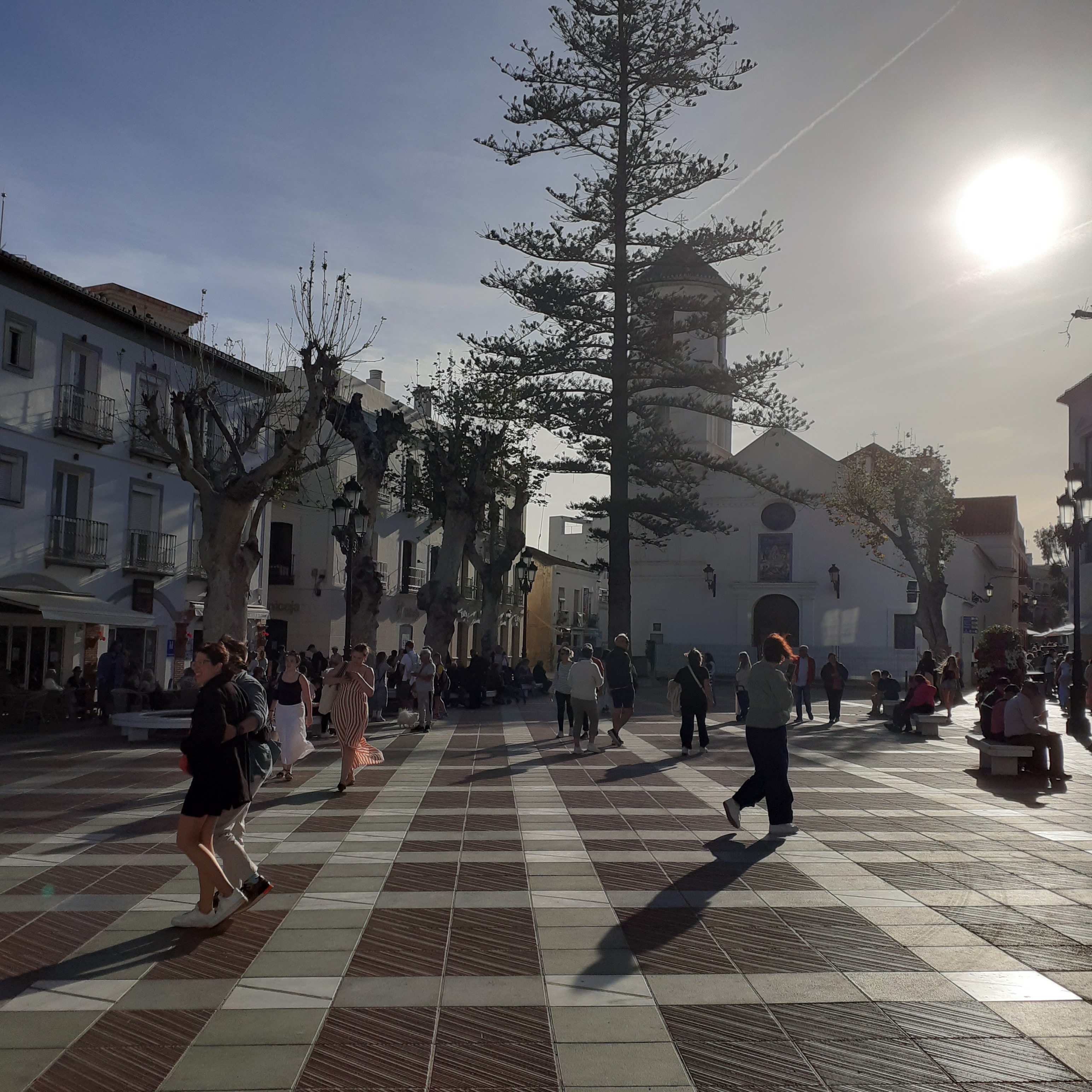
The square is thronged when we arrive. The Marisol’s gelateria is giving out free ice cream, adding to the happy hubbub. I get a long awaited beer at the attached bar, so we are both happy. Evening falls and the square and surrounding narrow streets fill up some more. Towards the west of town, the neighbourhood is known as El Barrio, which has a pleasantly homey feel as the name suggests. We get a good meal there in an unscenic restaurant that is friendly, with affordable and excellent main plates. Lasagne for me. The bars are filling up and we grab stools at the counter to catch the Champions League quarter final where Arsenal stuff Real with two glorious strikes from Declan Rice. M is most impressed, though I’m in two minds myself.
Nerja was settled by the Romans, and the Moors after that; but they were modernist blow ins. The Nerja Caves, a couple of miles east of town, were host to human settlement as far back as thirty thousand years ago. A visit to the caves is a must. A ticket to the caves includes a street train to the site, with admission and virtual visual tour too, plus admission to Nerja’s excellent town centre museum.

We took an early train and the crowds were sparse, giving more time and space to enjoy the experience. We took about two hours exploring, by which time lunchtime crowds were beginning to swell. It’s probably a better idea to do the virtual tour first, but we found ourselves inside the caves and decided to continue. As guidance, we had to download the ap, which worked well for M’s phone, but mine lost it as we descended.

Such idea I have of prehistoric cave dwelling is of a small group of people living in an alcove on a cliff face. They may paint matchstick men, cats and dogs, on the back wall, or huddle back there any time a leopard passes. The Nerja caves paint a different picture. These are vast linked caverns, resembling cathedrals in both space and glorious formations. Stalactites, stalagmites and columns soaring into the inner space.
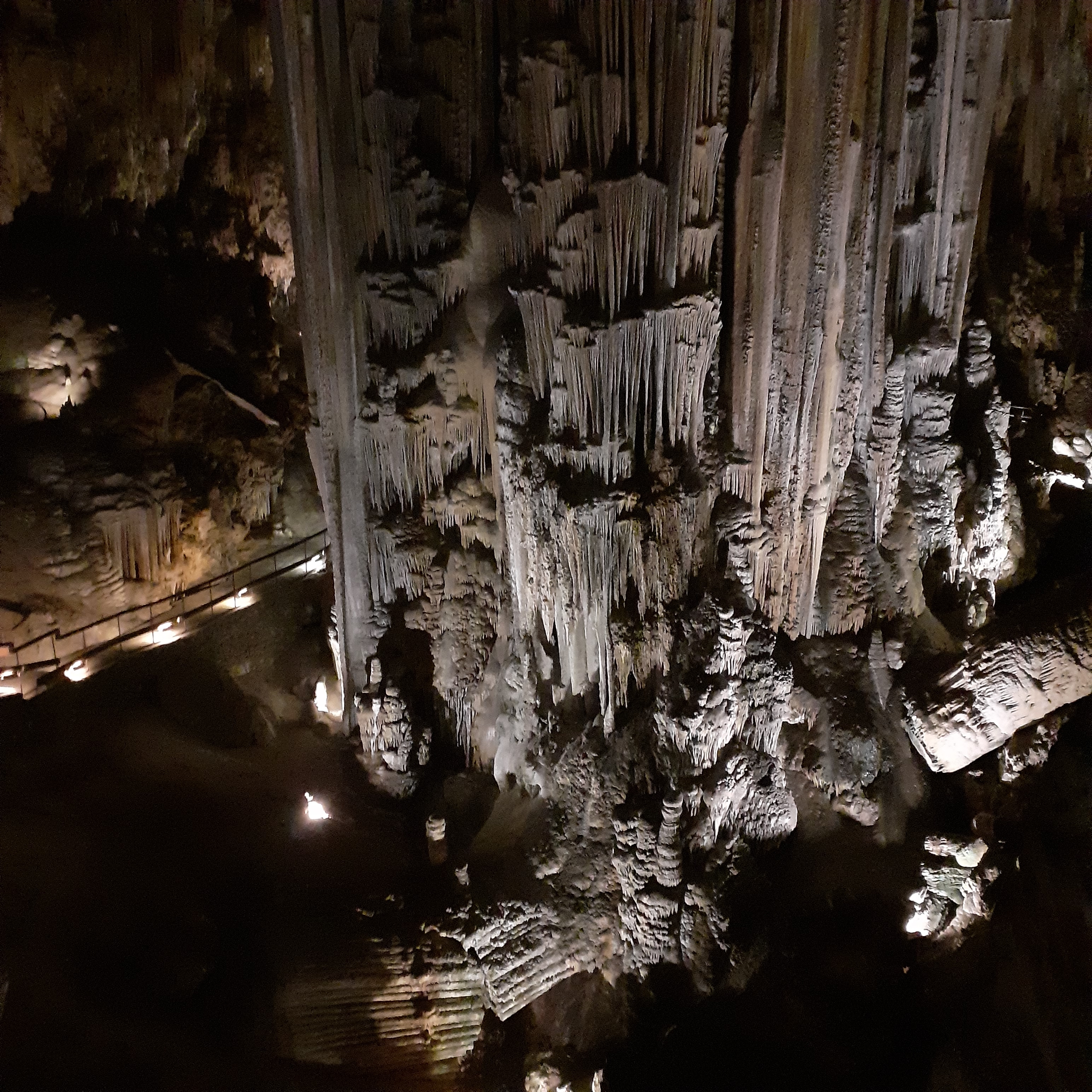
The different areas are given evocative titles: Hall of the the Nativity, Hall of Phanthoms, Hall of Cataclysm, the Hall of the Waterall, also known as the Hall of the Ballet. Cataclysm is named for a major rock fall, wonderfully illustrating the forces of narture at work to build this natural phenomenon. The largest column is nearby, soaring more than thirty metres from floor to ceiling.

The modern discovery of the caves happened in 1959. A group of five local boys, Jose Barbero, Francisco Navas, Jose Torres and brothers Manuel and Migual Munoz, had noticed bats escaping through a gap in the hillside and found their way inside. There they chanced upon a skeleton and believing it to be, like them, a casual explorer who had been trapped, they beat a hasty retreat to avoid his fate. The following day, however, they informed their teacher, whom they took back to the caves. Word spread, photographs in the Malaga Press stirred public interest. and within eighteen months the caves were opened as a visitor attraction, and crucially a centre for archeological research
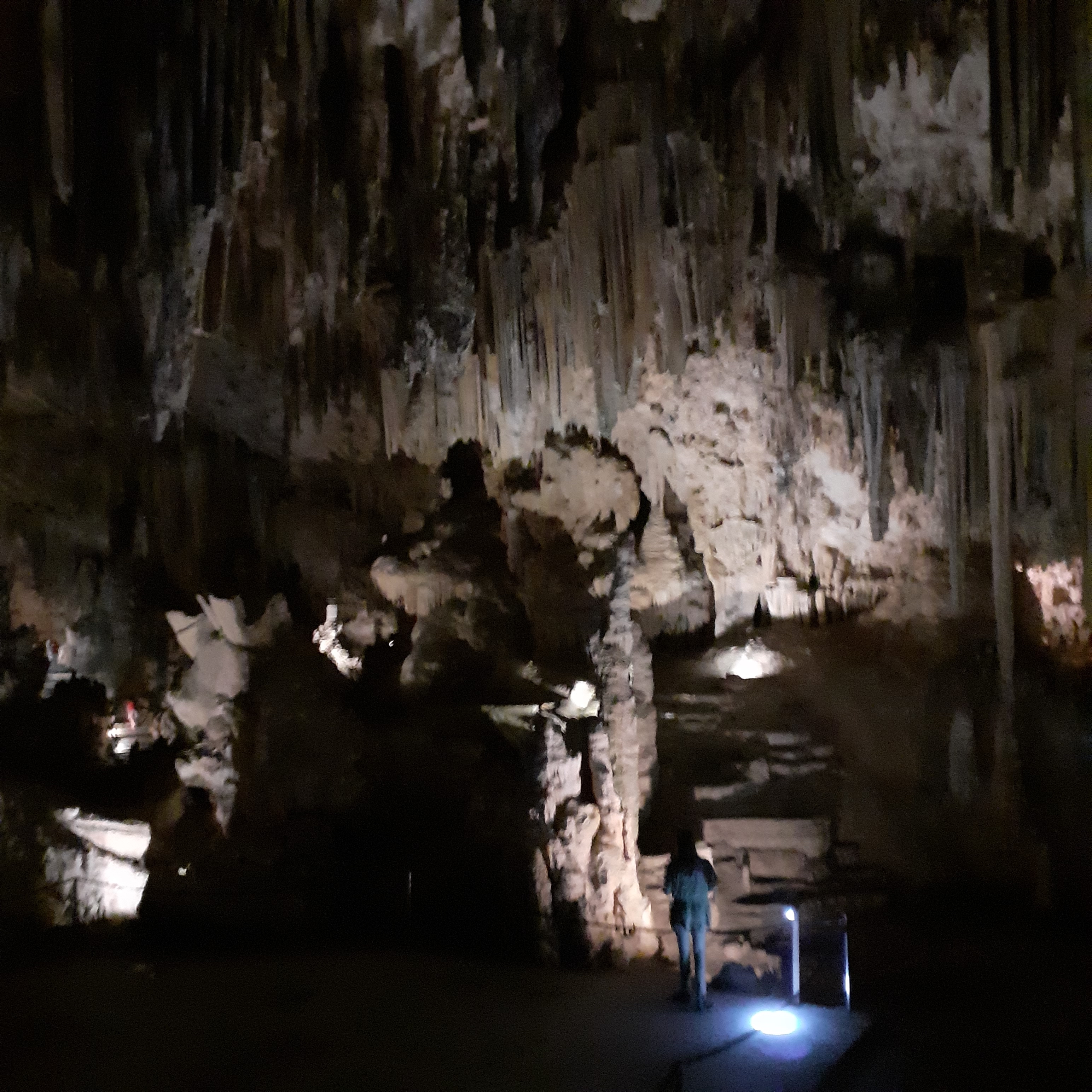
In June 1960 the gala opening featured. a ballet accompanied by the Malaga Symphony Orchestra within the natural theatre underground since dubbed the Hall of Ballet. This started the annual performances of the Nerja Music and Dance Festival. After almost sixty years the caves ceased to be used as a venue and performances have been moved to an outdoor auditorium nearby.

On exit, we discovered the theatre for the virtual tour. We had to queue for half an hour as a bus tour had beaten us to it. Worth the wait. We gathered in an interior room with a few dozen others, put on the headgear and set off for a tour inside our heads. This barrels through the millennia, good on the necessary detail, witty in its use of a Woodyesque guide. Along with the cave itself, and the visit to the Museum next day, we got quite a detailed picture of a fascinating part of European human history; pre-history to be correct.
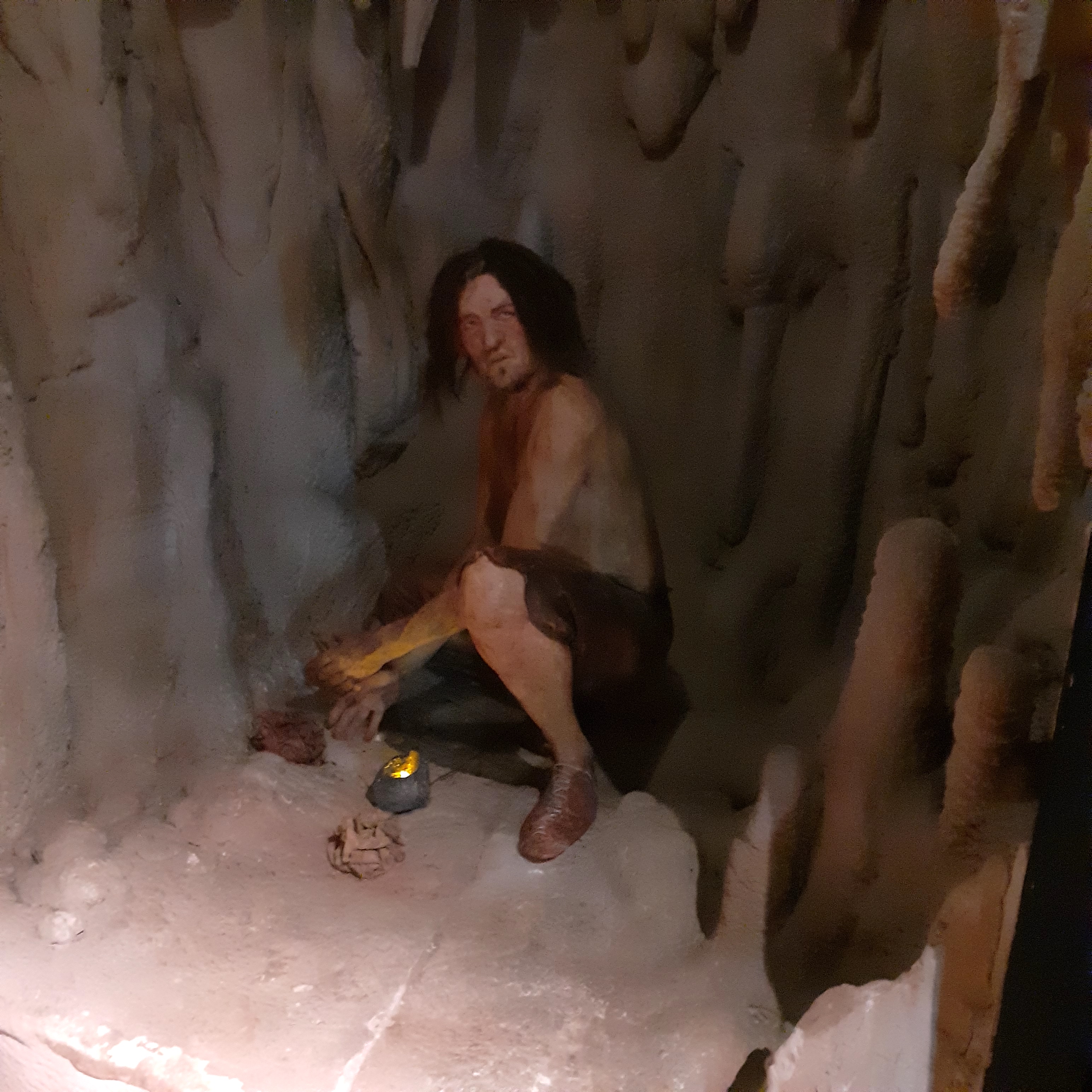
Neanderthals lived in the region until the race died out over thirty thousand years ago, just before the last Ice Age. There is evidence that they lived here, and made cave art dating back forty thousand years. Passing humans and hyenas occupied the caves for five thousand years from about 25,000BC. Though not at the same time, and if so, not for long. After 20,000 BC humans took up permanent residency. As the Ice Age waned, the hunter gatherer culture expanding to animal husbandry and agriculture. Textiles and pottery were developed by the dawn of the Bronze Age. Wandering through the caves you can see how several large groups could be housed. This culture were some of Europe’s earliest artists. Cave paintings were discovered here, which can be understood with representations and explanations in Nerja’s museum. The actual paintings are inaccessible to civilian explorers.

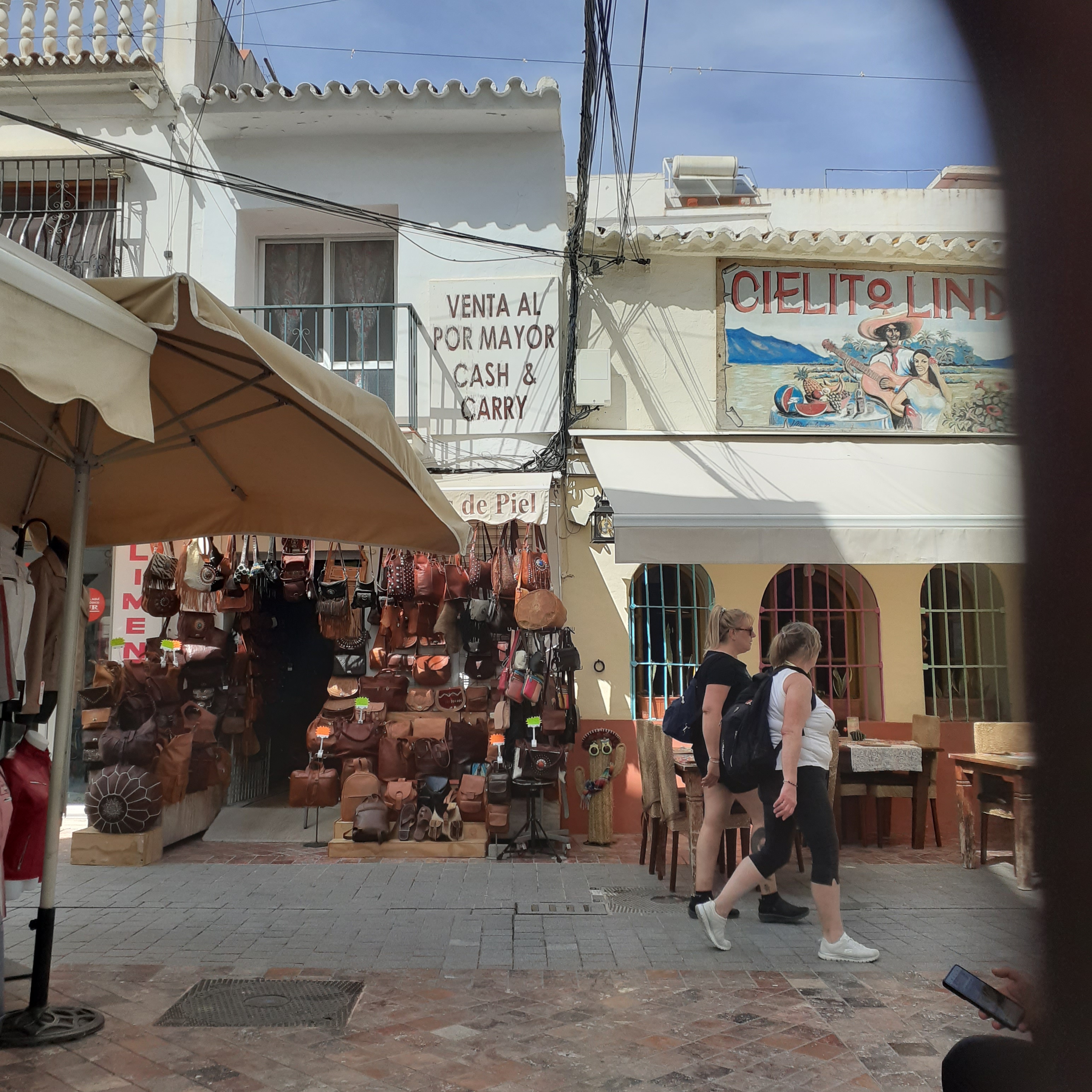
The Museum is located in a modern, quiet square in Nerja, the Plaza de Espana. This gives an excellent account of the town and the region, as well as the Caves. Outside the door, Nerja itself offers much to enjoy. The beaches are small and scenic, and the sea is a vibrant, often spectacular presence. The town is lively with shoppers and strollers all day and continuing into a busy nightlife with a great choice of bars and restaurants. You can eat well and very reasonably here. We had a glorious Thai curry at Asian Ben near the Balcon and there’s a lively Little Italy Restaurant along Calle Carabeo for pizza, pasta, birra; for almost nothing at all. Nerja’s noisy for sure, but good fun, good looking and, of course, the best caves ever. Yabba dabba do!

In the morning we took a bus direct to the airport. There are good breakfast spots near the ‘station’ ( a kiosk in fact). La Nube was our go-to venue. The bus leaves at eleven and takes about ninety minutes.

I recall when I was small

How I spent my days alone

The busy world was not for me

So I went and found my own

I would climb the garden wall

With a candle in my hand

I’d hide inside a hall of rock and sand

The Caves of Altamira is an appropriate song to finish on. Altamira is in northern Spain, the first and formative example of prehistoric cave art discovered. The Nerja caves provide another piece of the jigsaw. The song was written by Steely Dan’s dynamic duo, Walter Becker and Donald Fagen. It is on their 1976 album, The Royal Scam. I relate very strongly to the lyrics here. A hymn to the power of Art. A silent power, free of needless noise. These artists, these Painters, were not being intellectual, they were painting what they saw. Very good they were too. The first masters of realist painting, which is the best type of painting there is. So there.
Cordoba by Train

Cordoba lies just over a hundred miles miles north of Malaga. We took the high speed train from Maria Zambrano station. The station connects with the Malaga metro system from Fuengirola to Almeria in the east, and just fifteen minutes from the airport every twenty minutes or so. The station includes a large shopping centre and there are plenty of places for a drink and snack. The bus station is right next door. We had snacks and coffee at an outdoor kiosk, the sort of atmospheric and affordable feature that’s such a loveable part of Continental cities.

Maria Zambrano gave her name to Malaga’s main station in 2007 when the Malaga to Madrid high speed rail line opened. She was an essayist and philosopher who was born in Velez a couple of miles east of Malaga in 1904. She went into exile after the fall of the Republic at the end of the Spanish Civil War, only returning when Franco died in 1984. She died six years later and is buried in Velez.

The train journey to Cordoba takes just an hour and runs about every hour. It’s a rocket into Spain’s inner space. We climb beyond Malaga city limits, heading ever upward into the coastal mountains. The Montes de Malaga rise to over a thousand metres and are surrounded by a large Natural Park. Jagged peaks form a scenic backdrop to the well cultivated hills and valleys of olive farms.

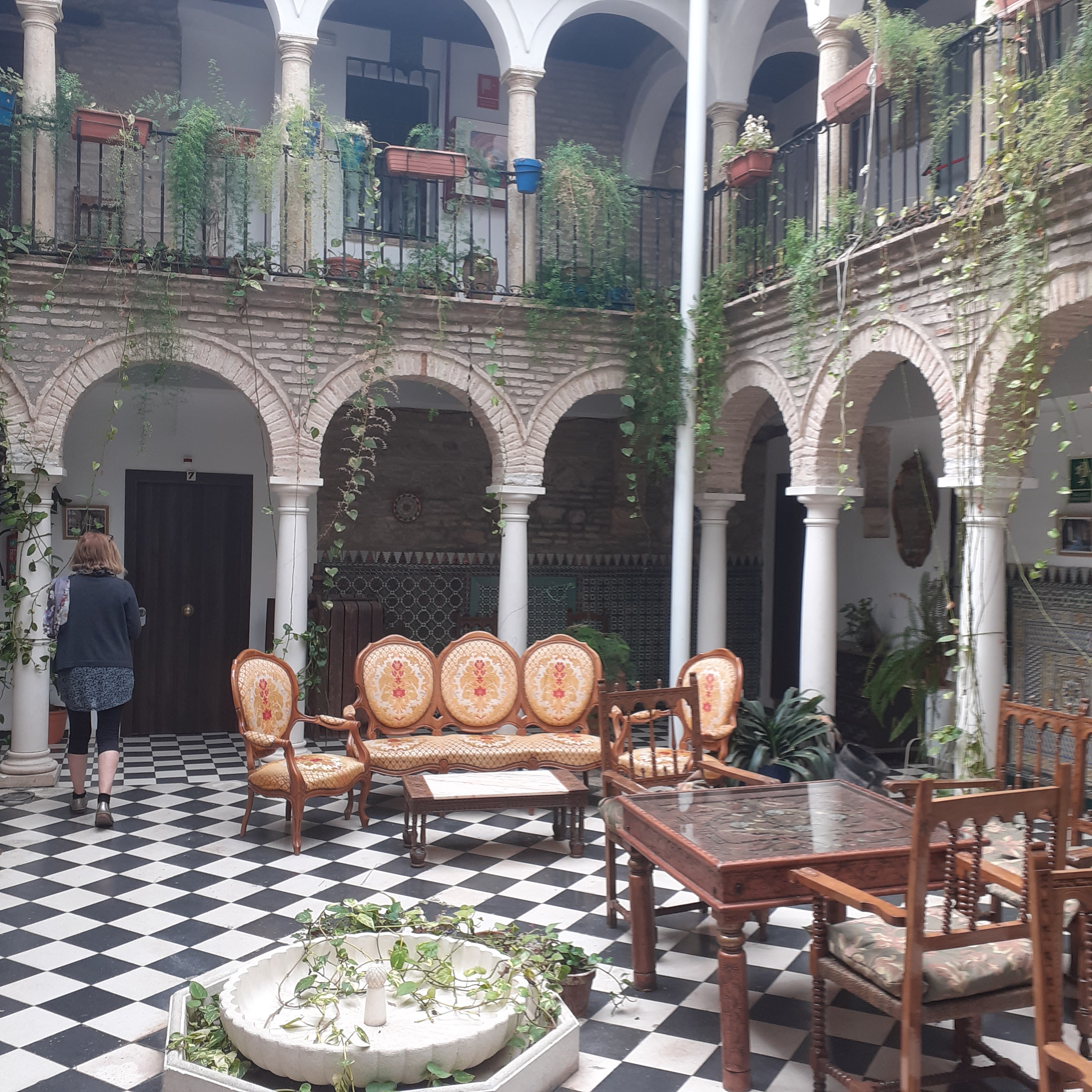
We finally descend into the valley of the Guadalquivir, leaving the train at Cordoba before it heads on to Madrid. Cordoba’s modern station is bright and efficient. We take a taxi into the labyrinthine Old Town. This area is largely pedestrianised, but our driver takes us with dizzying pinball eccentricity through narrow laneways to our destination. Our hotel, Palacio del Corregidor, has a wonderful tiled courtyard echoing the Moorish style knitted into the fabric of the city. 

Nearby is Plaza Corredera, a colourful square built in the 17th century. There is a daily market, and bars and cafes flow from its arcades into the open air. The atmosphere is pleasantly informal and cocooned from the brash modernity of city life. We dine and drink there regularly, afternoons and evening. It’s convenient and inexpensive. The street performers are a varied bunch. One dire performer is clad in cheap tigerskin and you’d pay him to go away. Good juggler though. On another night, with stars and streetlights merging, the glow is enhanced by a guitarist with a modern reportoire including Pink Floyd’s Wish You Were Here; which, of course, read my thoughts.

A maze of lanes ambles south towards the river. Plaza del Potro is a hidden treasure, and just beyond a short avenue is shaded under trees. There are a number of bars and restaurants along here, so relaxed that time stops still, as it often does in the best of Spain. Along the river into the ancient city centre streetlife resumes. The Guadalquivir marks the southern edge of town. Andalusia’s mighty river rises in the Sierra de Cazorla, about two hundred miles to the east. Already mighty by the time it reaches Cordoba, it meanders west towards Seville and then south to meet the Atlantic at Cadiz. It is over four hundred miles long. In Roman times the Guadalquivir was navigable as far upstream as Cordoba and remained so into the Middle Ages. Today, only as far as Seville 

The Romans established Cordoba around 200BC. By the turn of the Millennium it was a major city of Roman Hispania. A few of its remnants survive. The remains of the Roman Temple were unearthed in the 1950s with the expansion of the City Hall on Calle Claudio Marcello, a busy commercial thoroughfare dividing ancient and modern Cordoba. The Temple was built in the reign of Claudius in the first century AD. A magnificent marble structure in its day it stood proud on a high plinth. Its platform and a few columns are preserved; development of the site is ongoing

The Roman Bridge crosses the river at the entrance to the city. Initially built in the 1st Century BC, this was the only city bridge spanning the river until the mid twentieth century. The Moors undertook a major reconstruction in the 8th Century AD. There are sixteen arches spanning the 250 metres to the far bank. The Puerta del Puente on the city side and the Tower of Calahorra on the far side were added in Medieval times as fortified city gates.

The river banks are lined with ruins of ancient watermills dating back to Moorish times. These were used variously for irrigation, to ground flour and as cotton mills. They persisted into medieval and modern times where some saw use in electricity generation. The last were extinguished in the 1940s. The Albolafia Mill is the nearest to the bridge, and there are eleven mills in all.

With Cordoba it is best to let the lanes lead you where they want to go. A vague detour leads us to a courtyard fronting the Church of San Francisco. People are gravitating towards it by some strange magnetism. Groups congregate in the little square, chat and smoke before disappearing within. Inside, excitement mounts. A large group of musicians fills the chancel, facing the body of the church now packed. Then the music begins. It is the week before Semana Santa and the Brotherhood rehearse the music they will play to accompany the Thronos they will carry through the city on the big day. Two thronos are installed along the Nave. The massed brass instruments strike a tone that is sombre but uplifting. I feel united with all here, rising with the intense emotion of the music. When it finishes there is a breath, applause filling its emptiness like thunder. 

We are struck by how lucky we were to chance upon this. Yet it is unremarkable in a way. Throughout Spain local communities have been persistent in their unique commemmoration of Holy Week and Catholic feasts for eight centuries

Cordoba is now a city of 350,000 people. It was once one of the largest cities in Europe, under the Moorish rulers of the Ummayad dynasty. The Caliphate of Cordoba controlled almost all of Iberia from 750 until 1031when it split into several kingdoms. The Reconquista of 1236 brought the city under the crown of Castille. Alcazar de los Reyes Cristianos lies just past the Bridge and served as residence of Ferdinand and Isabell as they pushed towards the final expulsion of the Moor at Granada in 1492. It was built in 1358, by King Alfonso, and though a military fortress initially, it also embraces a more flamboyant Mudejar style in its magnificent gardens, ponds and courtyards. 

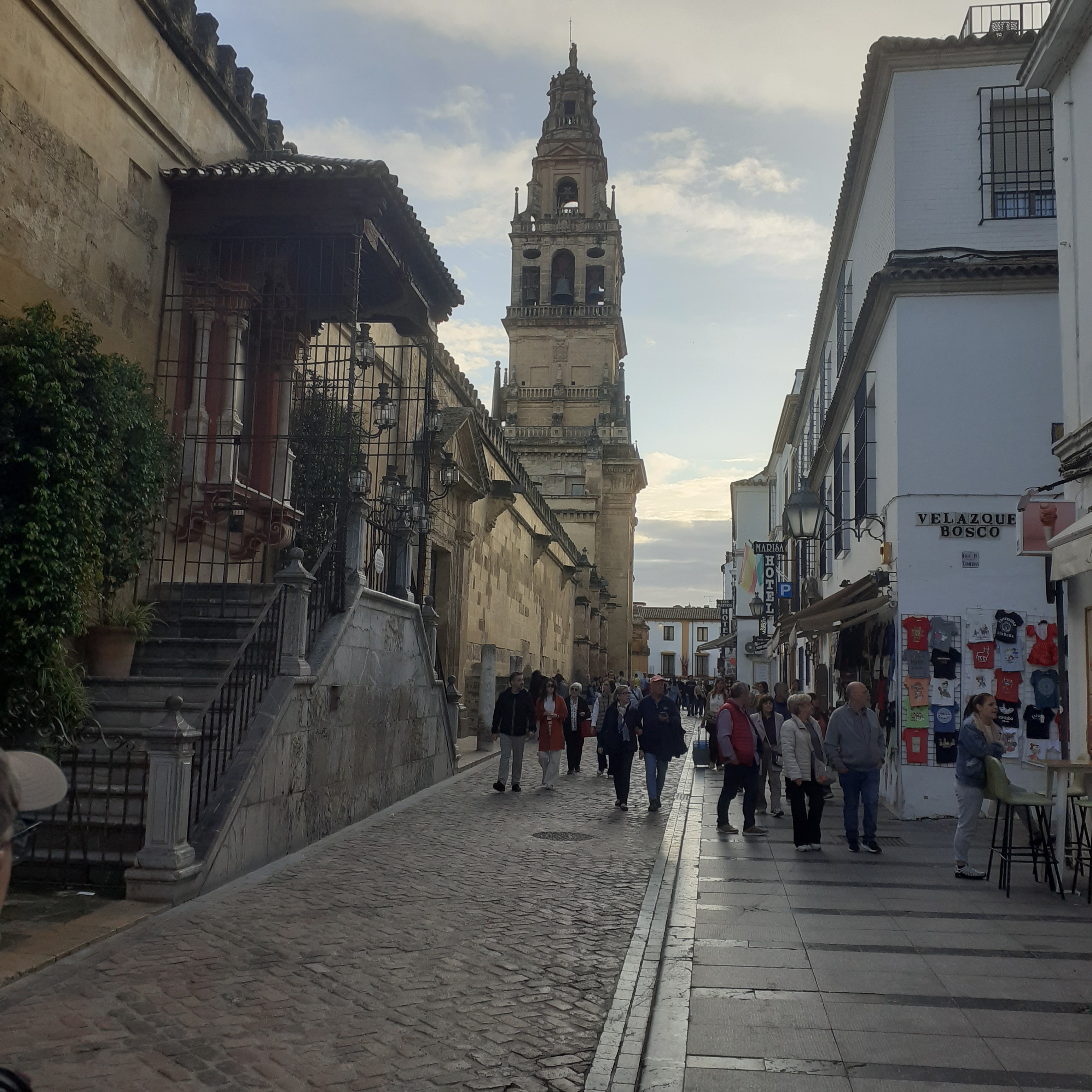
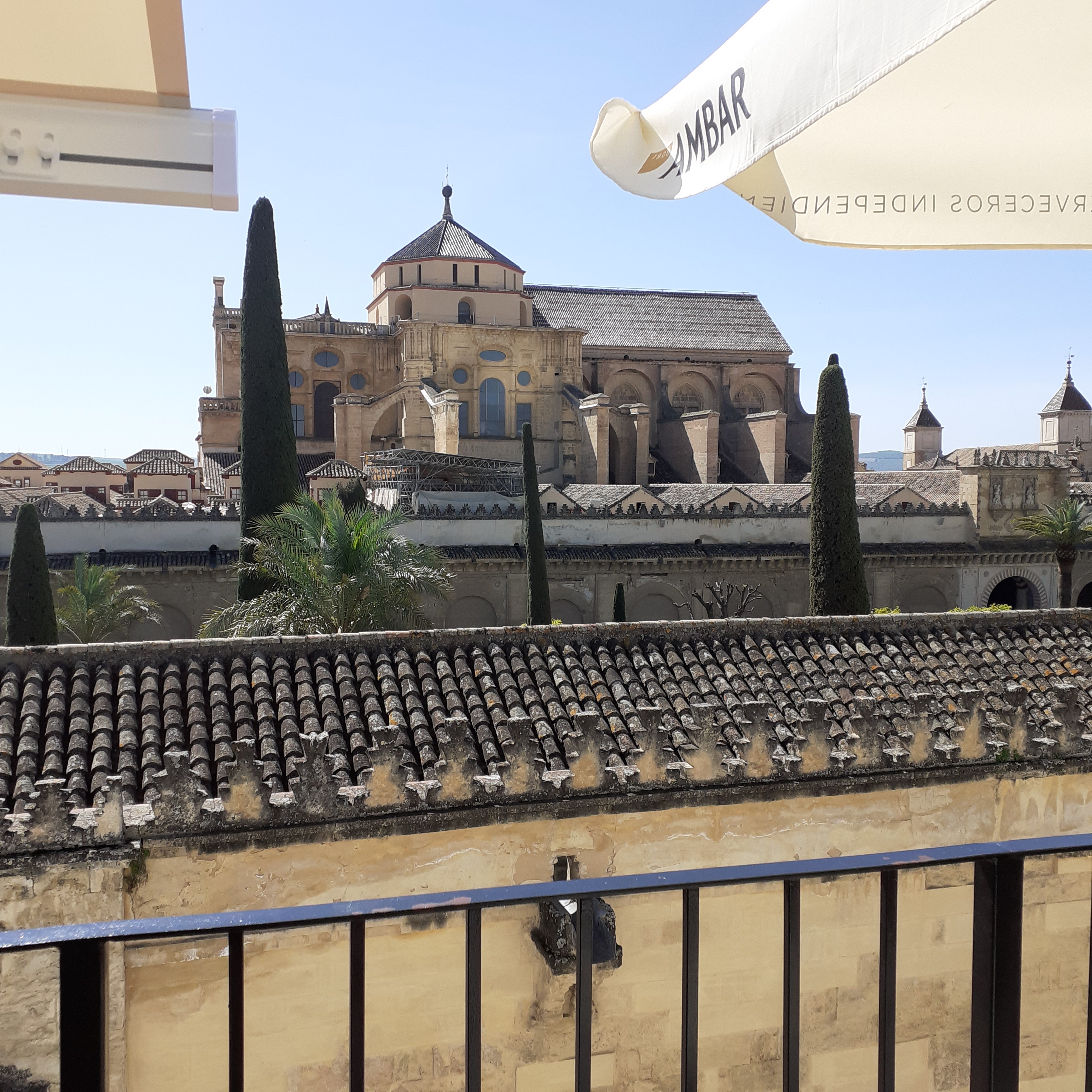
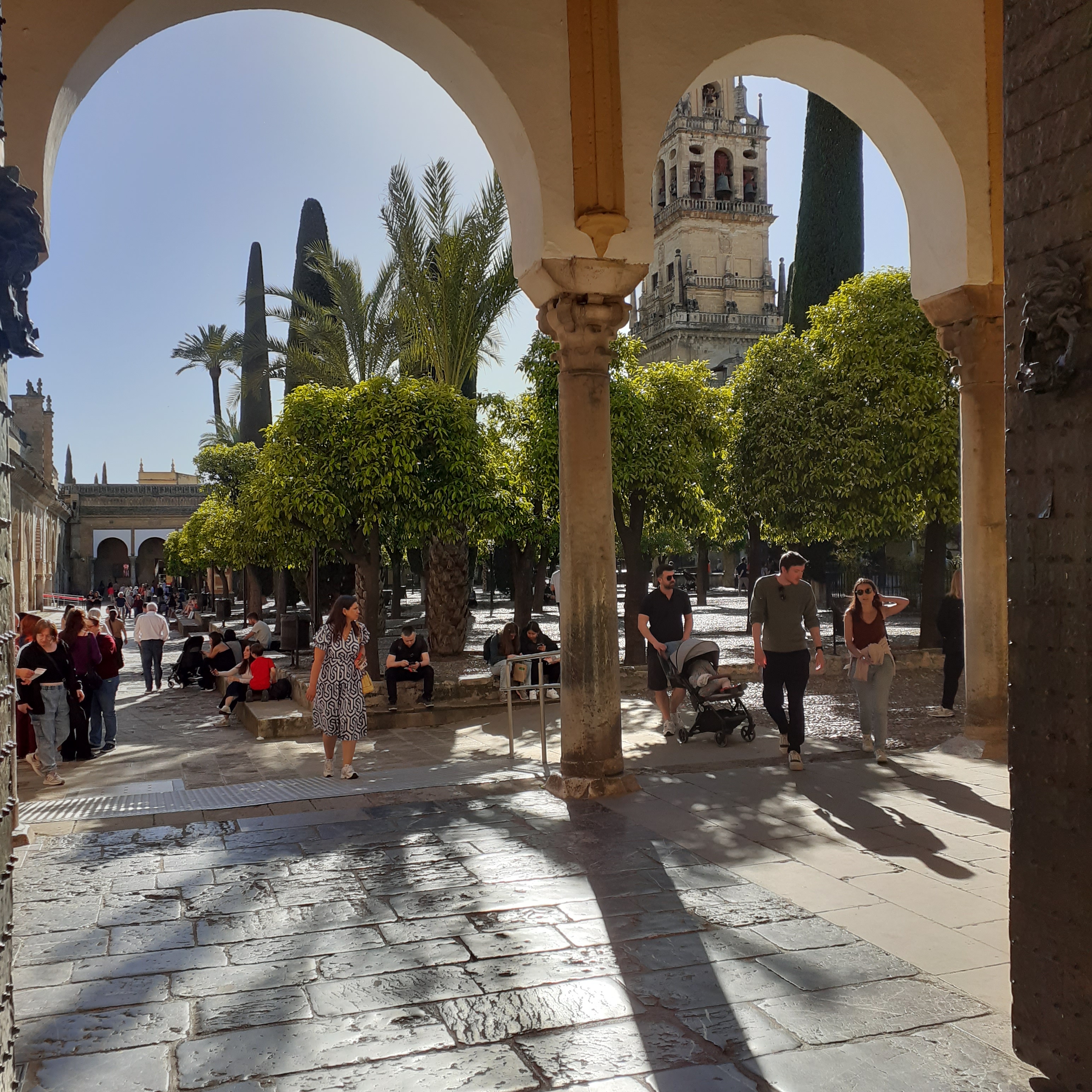
Mudejar refers to the art and design of Islamic craftsmen who remained following the Reconquista. It is a distinctive feature of much that is wonderful in Spanish architecture of the era. The Mezquita Catedral is a shining jewel forged in the collision of two cultures. The Great Mosque was begun in 784 and was for long the largest mosque in the world. After 1236 it was appropriated for Christian use. It is remarkable that so much of the fabric of the ancient building remains. The three hundred foot tall bell tower was developed from the old Minaret with an entrance gate beneath in the Mudejar style. An open square runs the length of the complex, shaded by orange trees with pools and fountains where the Moslem faithful washed before prayer. The single story interior is supported by a forest of ornate columns, eight hundred in all, creating an effect close to infinity; or heaven, I suppose. Around the outer walls many chapels have been added over the centuries, the first in 1371. The Cathedral itself was begun in the early sixteenth century, rising as if organically from the low lying mosque. It is topped by an Italianate dome. 

Asides from being a place of prayer, the Mezquita Catedral is a huge draw for tourists. The crowds gather early, though the space is so large that it was not too hectic during our visit. We got tickets online the day before. Be warned though. Numbers pick up in high season, and even a few days later we noticed the crowds grown bigger.

Another major attraction in Cordoba is the Festival de los Patios held during the first fortnight in May. Private patios are opened for view, and the city is particularly packed. But there are always spaces in Cordoba to allow one step into a different time. The Jewish Quarter is a wonderful maze of white streets west of the Mezquita. There’s a museum and the old synagogue from the fourteenth century survives. Another culture woven into the rich fabric of Andalusia. Muslim, Christian, Jew and Gitano leave their mark not just in the stone and style, but in the music and the mind, and deep in the heart of us all.