London Memories -3

City in Blue

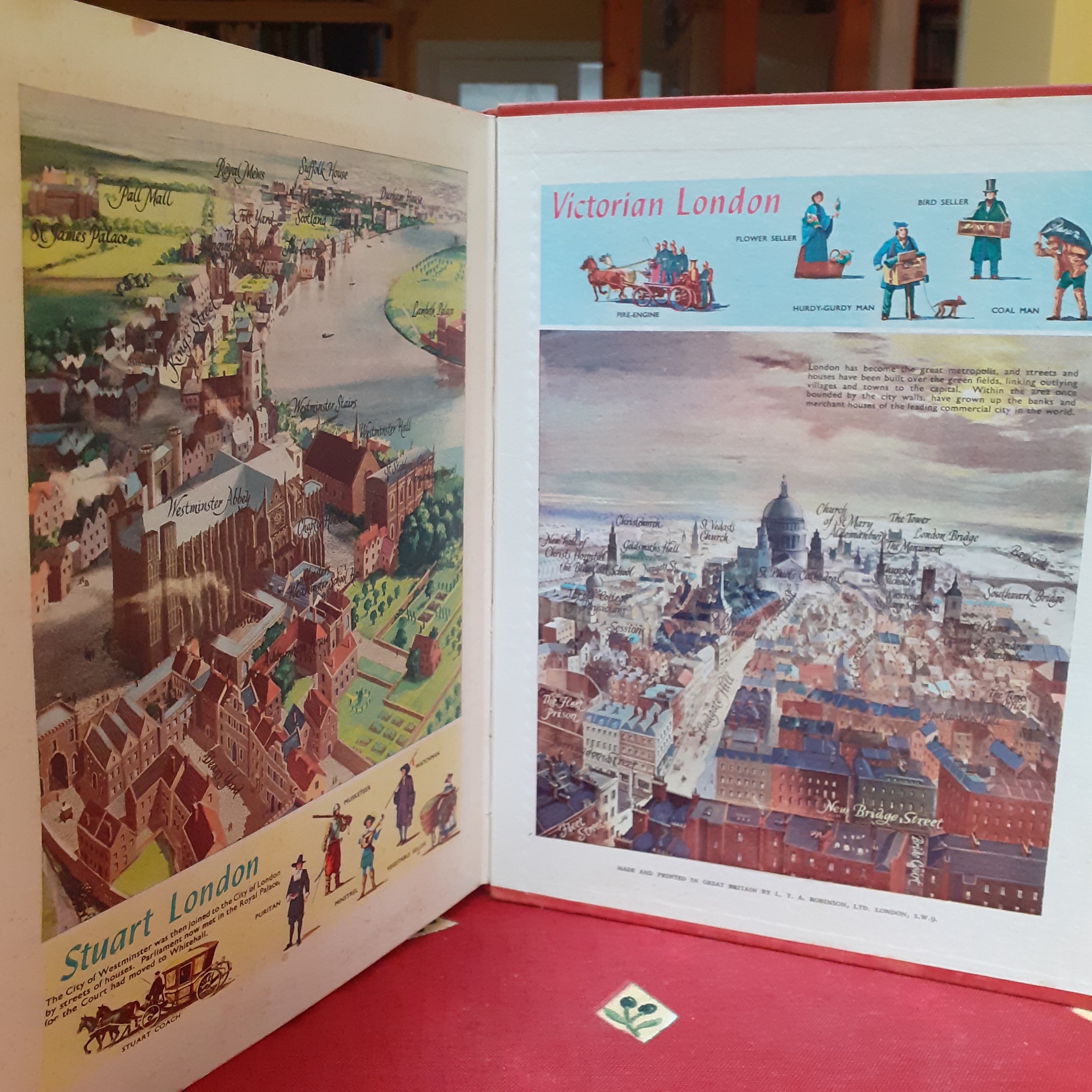
There are a number of arbitrary hooks which snared me as regards London. I loved pictorial history books as a kid and these being Anglocentric featured much on the development of English culture and society, with London at its centre. The Tower of London, St Paul’s and the Thames were familiar to me, as illustrations of their place through history.

Pop music too, of course. In 1968 my soul spun upon hearing Last Night in Soho by Dave Dee, Dozy, Beaky, Mick and Tich. Dave Dee was sometimes known, ominously, as the singing policeman having once been a cadet in the Wiltshire Police; one of those boys in blue. Here, he’s one of the bad boys we love. It was my first single, and also, I’ve just read, Waterboy Mike Scott’s. Great minds, Mike, great minds.

You came into my life like rain upon a barren desert

Just one smile and I was born again

I felt sure it wasn’t too late

I’d find strength to make me go straight

I had love and threw it away

Why did they lead me astray

For last night in Soho

I let my life go

Last Night in Soho was written by Ken Howard and Alan Blaikely and released on the Fontana label, which used attractive deep blue graphics. The song is a cautionary tale, melodramatic but seductive. London is cinematically rendered, in a collage of crime and romance. How dangerous and attractive this place Soho sounded! I had a fondness for maps, and a London street guide was thumbed close to invisibility, as I traced my path through Soho and the wild West End.

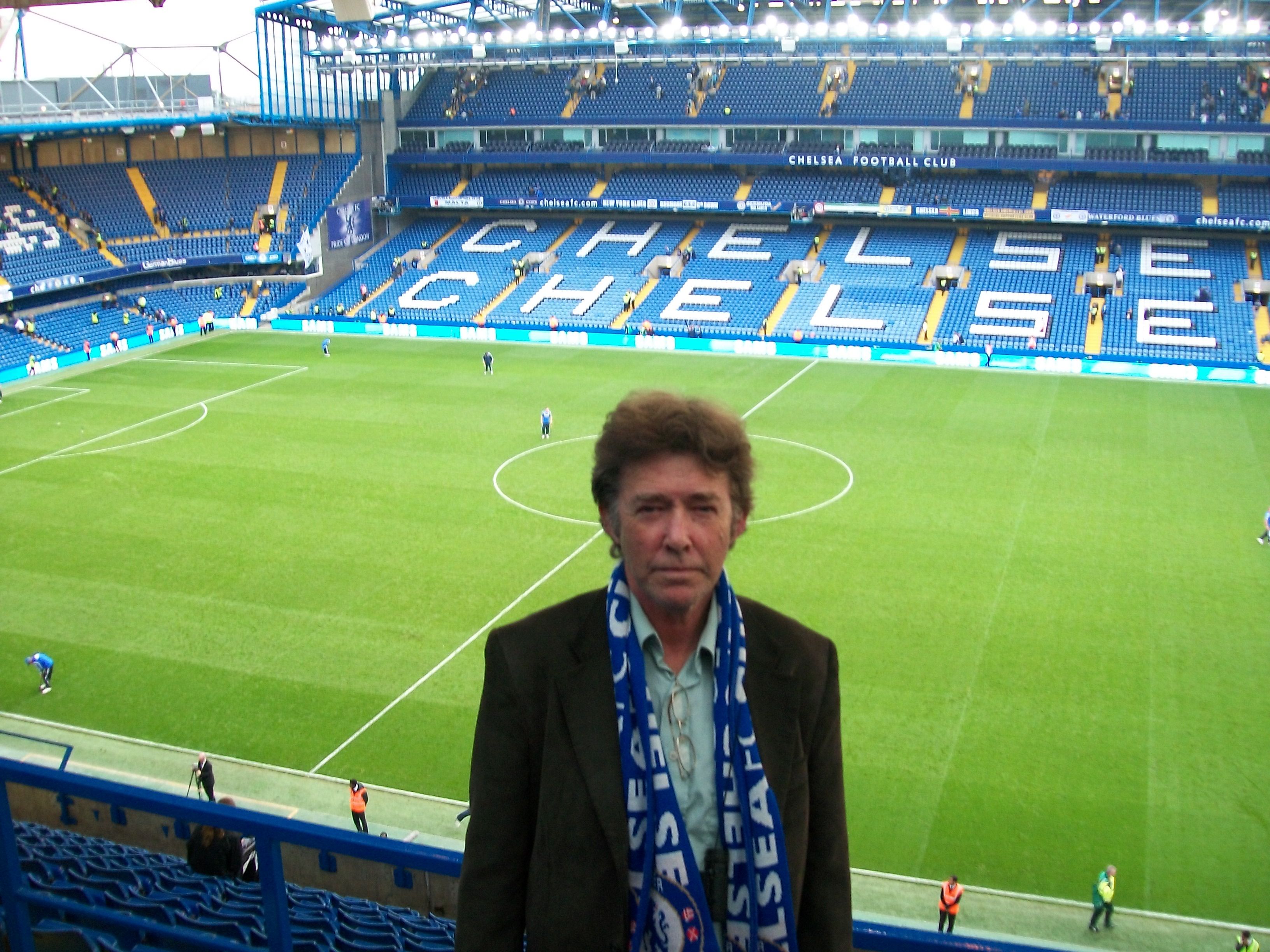
As a football fan, the towers of Wembley loomed large in my youth. FA cup finals provided a rare chance to see a full televised match. My first featured West Ham and Preston North End. But I lost my heart to the boys in blue, Chelsea, although losing the final to Spurs in 1967. I had built many memories of London by the end of the twentieth century, physically stepping onto the streets of London, seeing the sights, the galleries, eating, drinking, going to the movies, music gigs and theatre shows. But it would be 2005 before I actually went to a Chelsea game. As a treat for my fiftieth birthday, M and Sons brought me to the Hotel Chelsea right in their home ground. Chelsea were turned a hundred years old then having been founded in 1905 to occupy Stamford Bridge, an athletics stadium in Fulham. That’s a different Stamford Bridge to the one up near York that hosted King Harold’s semi final victory over the Norwegians in 1066. Harold lost the final to the Normans at Hastings, led by William, since known as the Conqueror.
Chelsea FC were admitted immediately to the Football League, though it would take another fifty years to win it, which they did in the year of my birth, 1955. Another fifty years later at the end of November I saw them play at the Bridge, as defending League Champions, having triumphed again the season before. They played Wigan Athletic, John Terry scoring the only goal of the game. They would go on to win the Premiership that season.
Earlier, with M and the boys, I met star players Peter Bonetti and Bobby Tambling. Tambling was the Blues star striker of the sixties scoring over two hundred goals. Bonetti was their goalkeeper, known as The Cat. I fancied myself as a goalie in my youth, but was known as the Vampire, as I couldn’t deal with crosses. Bonetti had played in Chelsea’s first FA Cup winning team, in 1970, beating Leeds Utd in a glorious mudbath at Wembley. Kicking and a gouging in the mud the blood and the beer, as Johnny Cash ‘sang’.

The Fox and Pheasant is the oasis of choice, out in the beer garden oiling the tonsils for the afternoon ahead. I sank a few with my boys here on an Easter weekend before seeing Chelsea beating Arsenal two nothing with a brace by Didier Drogba, later marching down the Fulham Road singing Didier Drogba, la le la le la. The day after seeing Henry IV at the Globe, Davin and I attended the first game of the season to enjoy Chelsea beating West Brom 6 – 0. Drogba scored a hat trick. Visiting the Chelsea Museum, we got to lift the Premier League trophy and the FA Cup, the benefit of a double winning year. Been there, done that, even bought a souvenir teeshirt.

Woke up, it was a Chelsea Morning 

And the first thing that I heard

Was a song outside my window

And the traffic wrote the words

It came ringing up like Christmas Bells

Rapping up like pipes and drums

Chelsea!

Joni Mitchell’s song from 1969 is a song of joy. Oh, to feel like that of a morning! It appeared on her album Clouds.

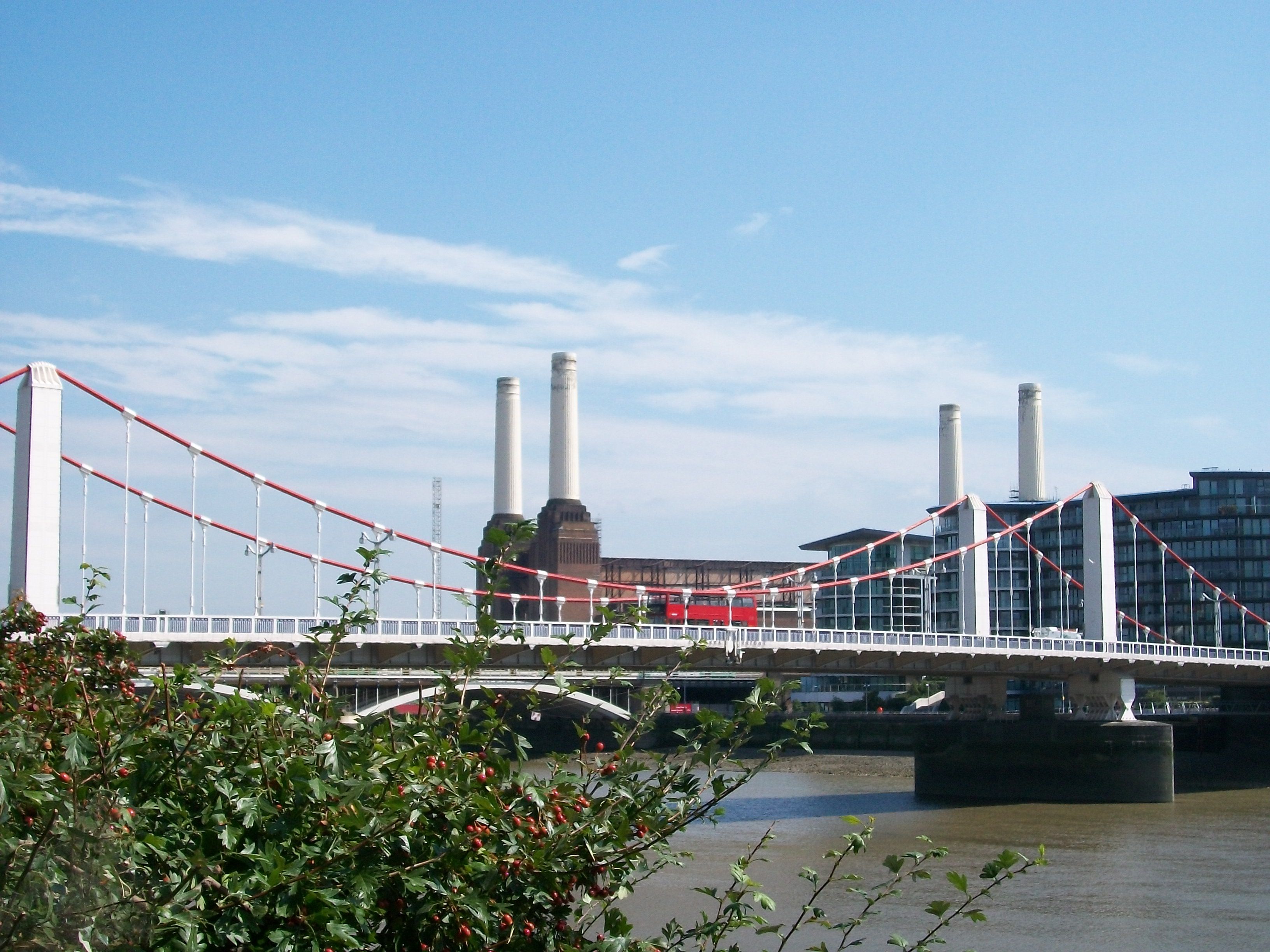
You can head back east to the Borough of Kensington and Chelsea by Fulham Road or King’s Road nearer the River Thames. The crossing is bracketed by World’s End and Brompton Cemetery, which sound more cheerful on a matchday. Along the river I can stroll along Cheyne Walk and think at least something sounds like it’s named after me. Chelsea Bridge is further on. The current structure dates from 1937, replacing an earlier one originally known as Victoria Bridge. Like its predecessor it is a suspension bridge, though much wider, and while plain enough, pleasantly illuminated at night.
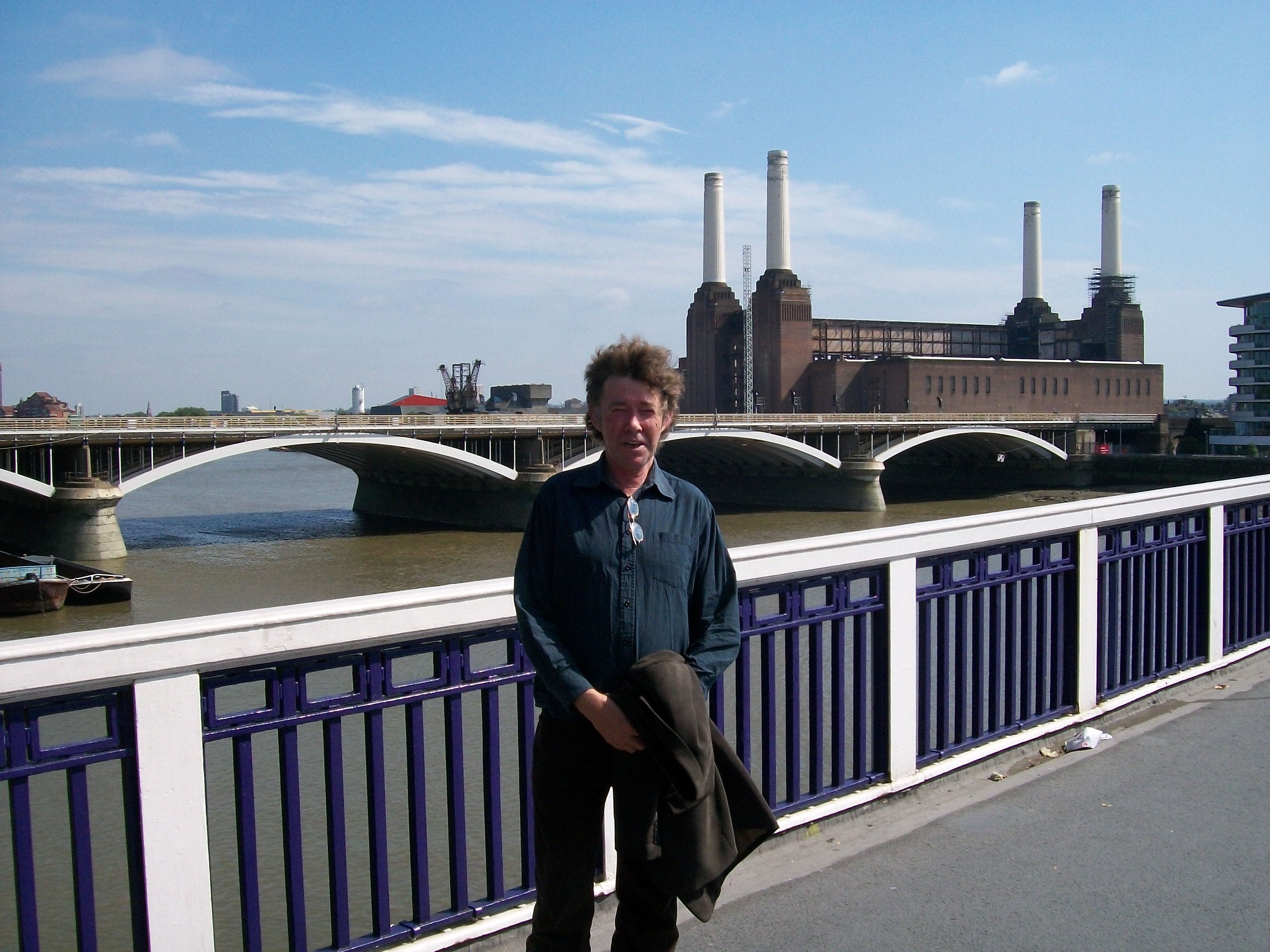
A landmark across Chelsea Bridge is the Battersea Power Station. This massive coal fired power station was designed by engineer Leonard Pearce with architects Giles Gilbert Scott and Theo Halliday. Construction began in 1929. It was paused during the Second World War; the complex ultimately completed in 1955. In the late seventies decommissioning began and the building became derelict for thirty years until redevelopment in 2012. Numerous bids included Chelsea’s plan to convert the station into a football stadium. But that didn’t fly. Frank Gehry and Norman Foster were amongst the leading architects redesigning the forty acre site along with restoring the original buiding on a project incorporating residential, retail, leisure and entertainment. The complex was opened in 2022.

Battersea Power Station is a combination of awe inspiring scale and art deco elegance. One of London’s most iconic buildings, it is also a cultural landmark in its evocation of both utopian and dystopian themes. Pink Floyd fans will know this from the cover of their 1977 album, Animals. The cover photo, by Hipgnosis, was not collaged or manipulated, no Photoshop back then. A giant inflatable pig was hoisted into place for the shoot. Unfortunately, the monster broke free, terrorising the population of West London and Heathrow Airport before landing in Kent. You can’t get more Orwellian than that.

London Memories -2

City of Drama

Leaving London back in ’73, we made our winding way back to Holyhead via Stratford on Avon, hometown of the Bard, William Shakespeare. He was born there in 1564 and the town has become a mecca for Bardolators. Stratford is suitably picturesque, packed with tourists and Tudor style buildings. From our ad hoc camp by the river our trio wondered if we could swim across the Avon and bunk into the rere of the theatre for a show. A Midsummer’s Nights Dream, most likely. We visited Anne Hathaway’s Cottage, a sizeable thatched timber-framed building with a museum. Anne Hathaway was twenty six and with child when she married eighteen year old Will. Daughter Susanna was born six months later, and another year on Anne gave birth to twins Judith and Hamnet.

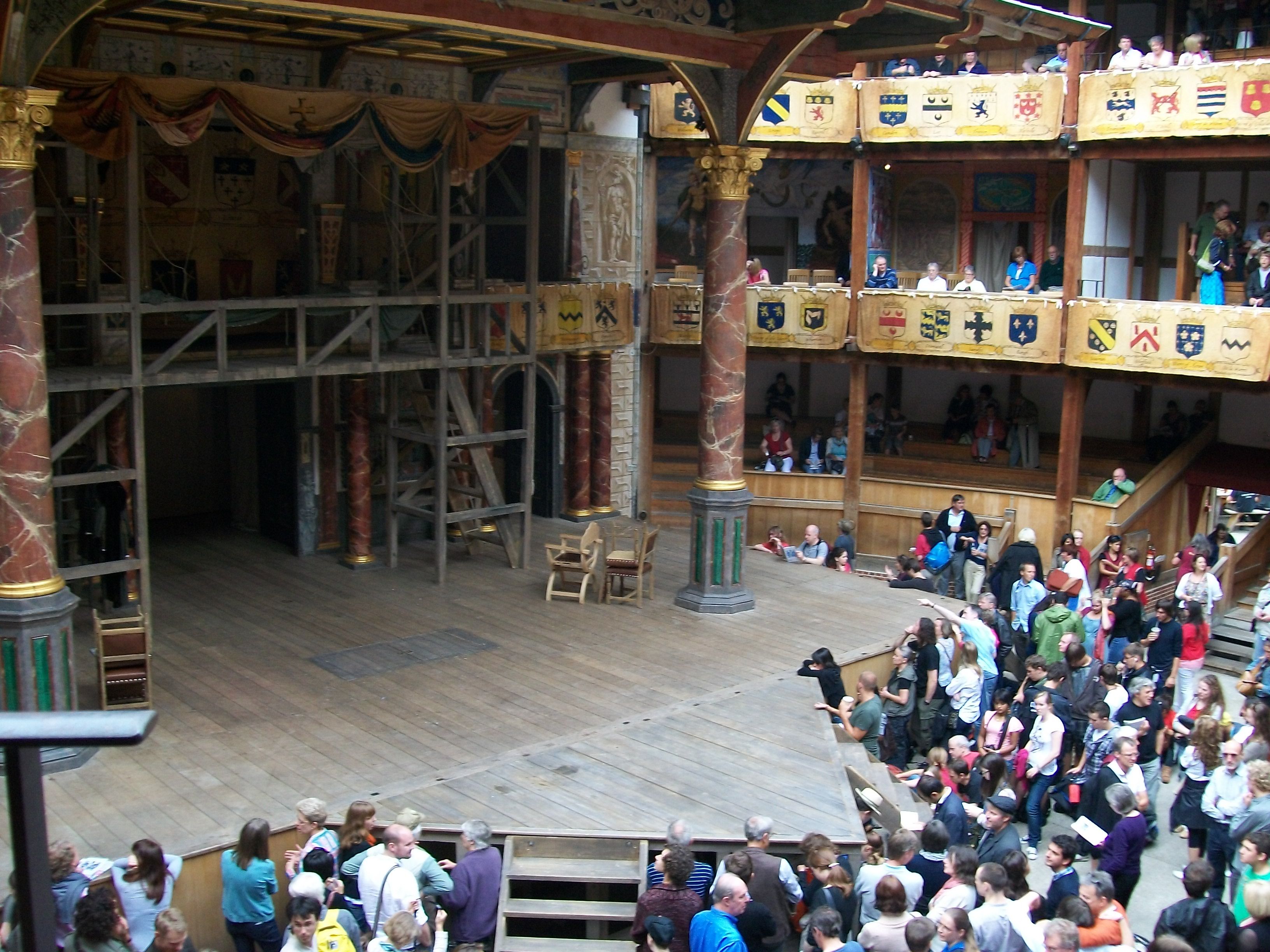
In his early twenties, Shakespeare moved to London and became part of the theatre scene. He acted and wrote with a group called the Lord Chamberlain’s Men and in 1599 they established their hq at the Globe Theatre in Southwark. The first Globe burned down in 1613 during a performance of Shakespeare’s Henry VIII. A pyrotechnic flourish misfired, and sparks ignited the thatched roof. There were no injuries, other than a man whose breeches caught fire which helpful spectators extinguished with their tankards of ale. A rare occasion of a punter being obliged to buy a round for the people who had just drenched his crotch with beer. The theatre was rebuilt but the flame of drama was extinguished during the Civil War period from 1642. The Commonwealth under Oliver Cromwell. were against the brazen licentiousness of the world of theatre. The Globe was ultimately demolished. Although the Restoration saw the return of theatre, staging had changed to a more refined, and subdued form, indoors and viewed through the Proscenium Arch. Actresses, forbidden in Tudor and Jacobean days, were now allowed. Shaskespeare’s popularity was reignited and his plays revived. 

The modern version, Shakespeare’s Globe, was built in 1997, the culmination of a long campaign by Sam Wanamaker, American born actor and director for film and stage. It is located just over two hundred metres from where the original stood, and is a very realistic rendition of how the outdoor Elizabethan theatre would have looked. Daily tours explain its setting and heritage, and what you might have experienced back in the day; theatre in the round, outdoors with a rumbuxtious audience drawn from the broad social spectrum of city life. More rock gig or football crowd than the genteel theatre of today, with plenty of two way rapport; but there was poetry and message in the medium too. Drinking, smoking and heckling were not so much tolerated as encouraged. It was a daytime thing, and not well thought of by the great and the good. Though, of course, many from that sector did attend, and indeed sponsor the enterprise.

Best of all, book seats for a performance. On a family trip in 2010, we booked seats for Henry IV, Part 1. This features the notorious Falstaff, chief amongst the company of the young dissolute Hal, future king, here depicted as dedicated to life on the raz. Young Will perhaps drawing on  memories of his own misspent twentysomething back in the eighties. My son, Davin, was dubious of the joys of an afternoon of Shakespearean theatre. I impressed upon him that the following day, Saturday, we would go to Stamord Bridge to watch Chelsea trounce West Brom by six goals with Didier Drogba scoring a hat-trick; an astonishingly accurate prediction as it turned out. He got fully immersed in the experience. Most cheerful he was relaxing in the bar. afterwards, as he thought, less so on being informed that was merely the intermisssion.

London’s modern theatre district flourishes on the other side of the river. The West End denotes the main commercial centre of London. It stretches north of the river up to Regent Street to the west of the ancient walled city. The areas of Soho and Covent Garden are central to London nightlife, with Leicester Square and Picadilly Circus its focal points.

Leicester Square is the place to go for tickets for silver screen or show. Myself and M got tickets here for the fun dance show Top Hat ten years ago, front row seats which were quite startling. Cinema remains a a draw for us even though films are not so frequently banned in Ireland as before. Myself and M visited back in the mid seventies on our way to Greece, and took in an afternoon showing of the Life of Brian. Monty Python’s satire on zealotry and mass hysteria was set at the time of Christ and caused a muttering of modern zealots to chant: Down with that sort of thing! Still, we emerged into the afternoon sunlight happily singing always look on the bright side of life.

West End, of course, is synonymous with theatre. Alongside New York’s Broadway it is the main theatre zone of the English speaking world. There are about forty venues showing musicals, classic and modern theatre. Other, non commercial theatres, including the Globe, Covent Garden Opera House and the Old Vic feature classic repertoire and the work of contemporary and acclaimed modern playwrights.

The longest running show in West End history is The Mousetrap. Written by Agatha Christie it was first performed in 1952 and is now approaching thirty thousand performances. A whodonit with a twist, it’s a typical scenario for the author. Born Agatha Miller in 1890, by her death in 1976 she had published sixty six novels and over a dozen collections of short stories. Her most famous creation is the fastidious Belgian sleuth Hercule Poirot. The Mousetrap was originally a radio play called Three Blind Mice, and then a short story. The title had to be changed for the stage as another play called Three Blind Mice had been produced in the thirties by Emile Littler. The name the Mousetrap was taken from Shakespeare’s Hamlet, it being Prince Hamlet’s smartarse reply to Polonius concerning the title of the play at court. Hamlet had hijacked the play to let off his own grenade. “The play’s the thing wherein to catch the conscience of the King,” he mused.

On a family visit in the Noughties we took in a performance at St Martin’s Theatre which has hosted the play since 1974. We four at home often enjoyed an elaborate murder mystery on the telly. Theatre, by its nature, brings you into the box itself. You are sharing atoms with these people. The famous twist is a major subversion of the mystery genre. I have often wondered since if anyone has ever thought of suspecting Poirot for causing the puzzles he so brilliantly solves. After all, he is a common thread throughout so many killings. The play was just the thing, so, to be followed by convivial food and drink.

St. Martin’s is on West Street, just off Shaftesbury Avenue and close to the Seven Dials. This is an intersection of seven straight streets, giving the small plaza an incongruous centrality in the great scheme of things. From here, you can go anywhere. Eateries abound, though we took the quaint decision to go for a fish and chips nearby. Well, it was my fiftieth birthday, and the One and One is my favourite food. Why not have it here at the centre of Chipperdom? There was a bench outside and we watched the world go by. Nearby, Shaftesbury Avenue seethes with life. Across the street Soho embraces the divine vices. Musicians strum and dancers strut, and wining, dining and dancing pleasures galore stretch into the wee small hours. In all the darkness and joy, what better time to join the vamps and werewolves of London.

I saw a werewolf with a Chinese menu in his hand

Walking through the streets of SoHo in the rain

He was looking for the place called Lee Ho Fook’s

Gonna get a big dish of beef chow mein

Ah-hoo, werewolves of London

Ah-hoo

Ah-hoo, werewolves of London

Ah-hoo

Werewolves of London was written by Warren Zevon, Waddy Wachtel and Leroy Marinell. It is included on Zevon’s third album, Excitable Boy, from 1978 and was its lead single. Fleetwood Mac provide the rhythm section, in case you wonder why it’s so good. Phil Everly suggested the idea to Zevon having seen the 1930s film Werewolf of London. Lee Ho Fook’s was London’s best known Chinese Restaurant, located on Gerrard Street in Chinatown, at the south end of Soho. The name itself suggests the sort of ribaldry that chimes with the suggestive comedy of the song’s lyrics. The restaurant closed in 2008. Zevon died in 2003, but the music lives on.