With five episodes so far in our tour of Andalusia, a couple of destinations remain. In April I will be going to Seville and Cadiz and I look forward to giving my account of those two fascinating cities. Seville is the capital and largest city in the region and dates back over two thousand years. Cadiz is more ancient still; one of the oldest towns in Europe. I will be travelling by plane, bus and train. Meanwhile, we will be taking a break in our hideaway in Elviria, Marbella. A break, for me, means doing nothing much at all.
We’re going on a holiday now
Gonna take a villa, a small chalet
Costa del Magnifico
Yeah, the cost of living is so low
Scribbling is allowed, in whatever form I decide to record worthwhile memories. Some painting or prose, or both, will emerge. This acrylic is a moment captured last Spring in Elviria, just a few kilometres east of Marbella. That rippling blue rectangle is a familiar motif in Hockney’s Californian paintings and sum up that mood of ecstatic indolence at the heart of swimming pool culture. To be sure. There are a couple of musical equivalents; though less than one might suppose. Kate and Anna McGarrigle’s rendition of Loudon Wainwright’s The Singing Song is one and Nightswimming by REM another, if not quite the right time of day. Closest is Dire Straits, with Mark Knopfler’s Twisting by the Pool. A rare fun rocker from the bluesy Geordies, it is a retro take on the Spanish holiday boom for sun starved Britons in the early sixties. The song doesn’t appear on any of the band’s studio albums, and first surfaced as a single 1983. It was a firm favourite as an encore, as I witnessed at Stadium gig in Dublin the early eighties.
Yeah (yeah), gonna be so neat
Dance (dance) to the Euro beat
Yeah (yeah), gonna be so cool
Twisting by the (twisting by the)
Twisting by the (twisting by the)
By the pool (twisting by the pool)
So, while I hope to be pumping ink with my biro, or painting my next masterpiece for over the mantelpiece; more than anything else I will be
Twisting by the pool (twisting by the pool) twisting by the pool (twisting by the pool)
We’re twisting, twisting by the pool, twisting by the pool, twisting by the pool
Twisting by the pool (twisting by the pool) twisting by the pool (twisting by the pool)
We’re twisting, twisting by the pool, twisting by the pool, twisting by the pool
From Marbella, the town of Ronda is sixty kilometres inland, and uphill. Head west along the AP7 and there’s an early turn off after fifteen kilometres. We shimmy up an endless sequence of hairpins along the A397 towards Ronda. Dense oak and pine woodland clings to perilous cliffs rising to our right, to our left the sylvan border thins now and then to reveal the hot blue of the Mediterranean.
The further we rise, the more the view out to sea broadens. Gibraltar points its finger towards Africa and with each death defying swerve I glimpse, or think I glimpse, both Pillars of Hercules and the far shores of another continent. There are a few observation points where you can stop and take in the view, although it’s hard to pull yourself away from the excitement of this James Bond slalom, battling slow and fast cars amidst the buzz of suicidal motorbikers.
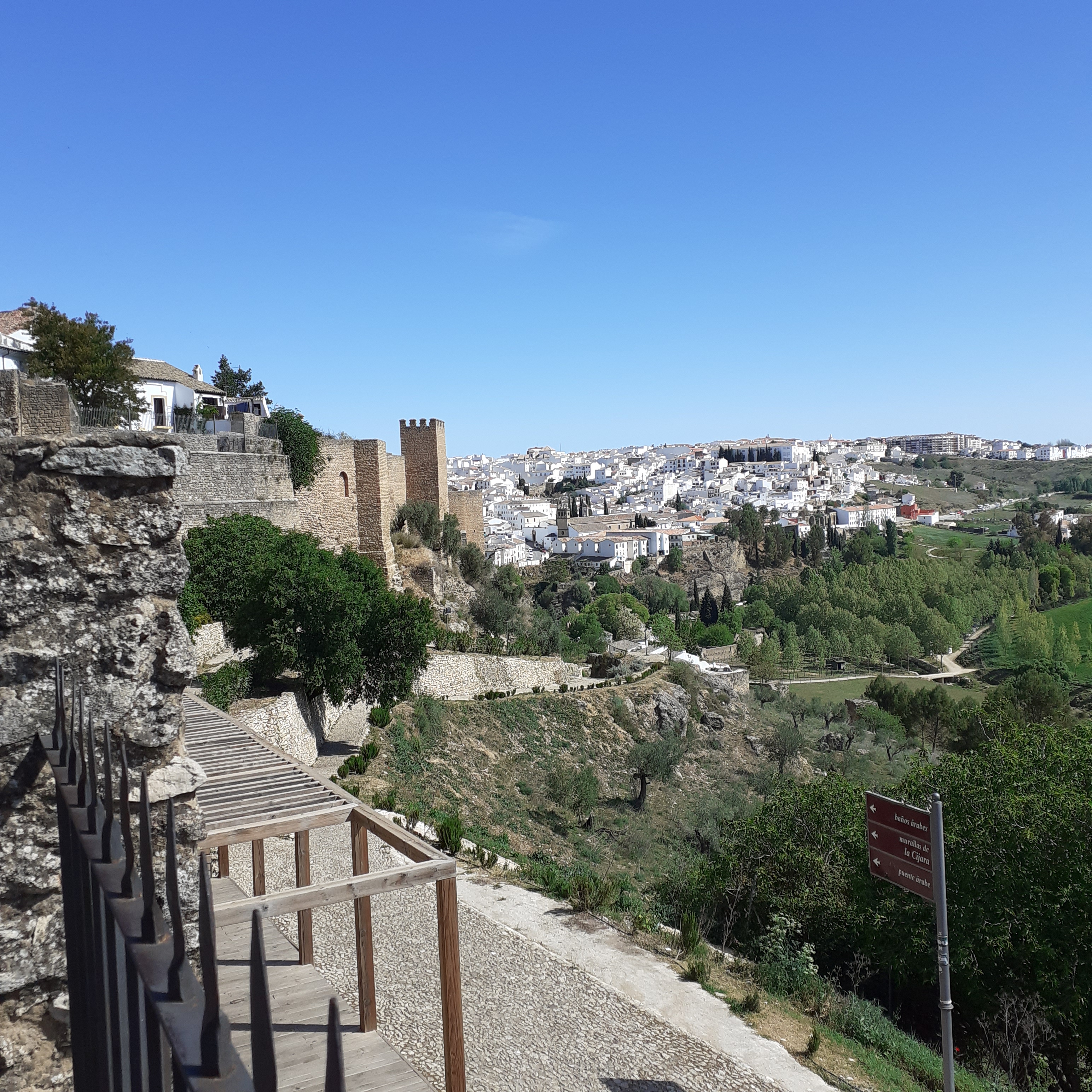
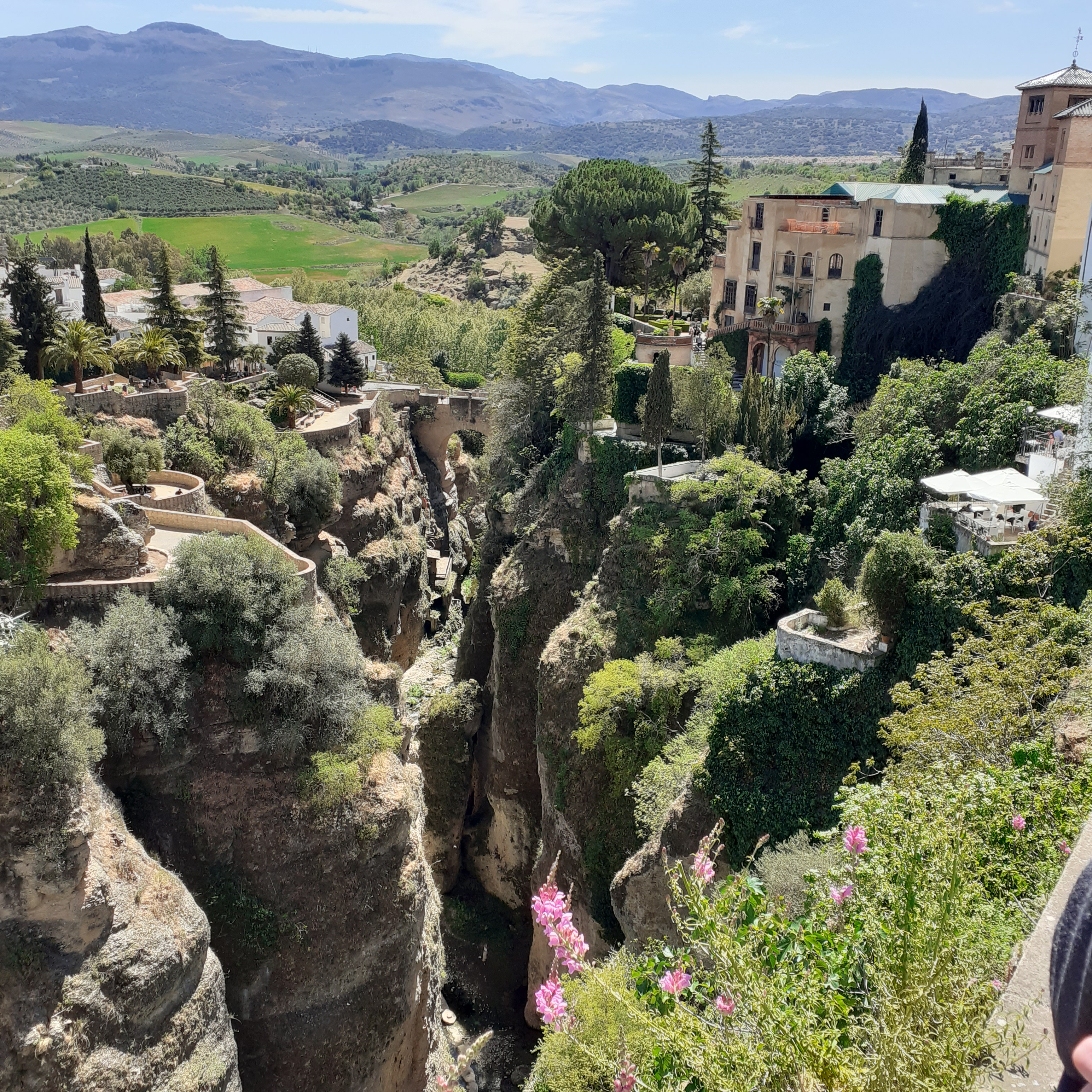
The mountains we climb are the Sierra de las Nieves, the snow mountains, which rise to almost two thousand metres. Out of the forest we reach a parched white karst landscape, harsh and romantic as an arthouse Western, its technicolor bleached with age. The plateau tilts downhill and we fall slowly to the valley of the Guadalevin River. Over the millenia this has carved out the spectacular El Tajo canyon. Atop the twin towers of the canyon, is that most preposterous city in the sky: Ronda. The city of Ronda has a popuation of thirty five thousand people. The Moors were established here by the early eight century, ushering in an Islamic era that would last seven hundred years. Ronda fell to the Catholic monarchs in 1485, seven years before the fall of Grenada, the Moors last stronghold. Although Islam was subject to a determined purge, Moorish influence remains in the architecture and the complex weave of Andalusian cultural fabric
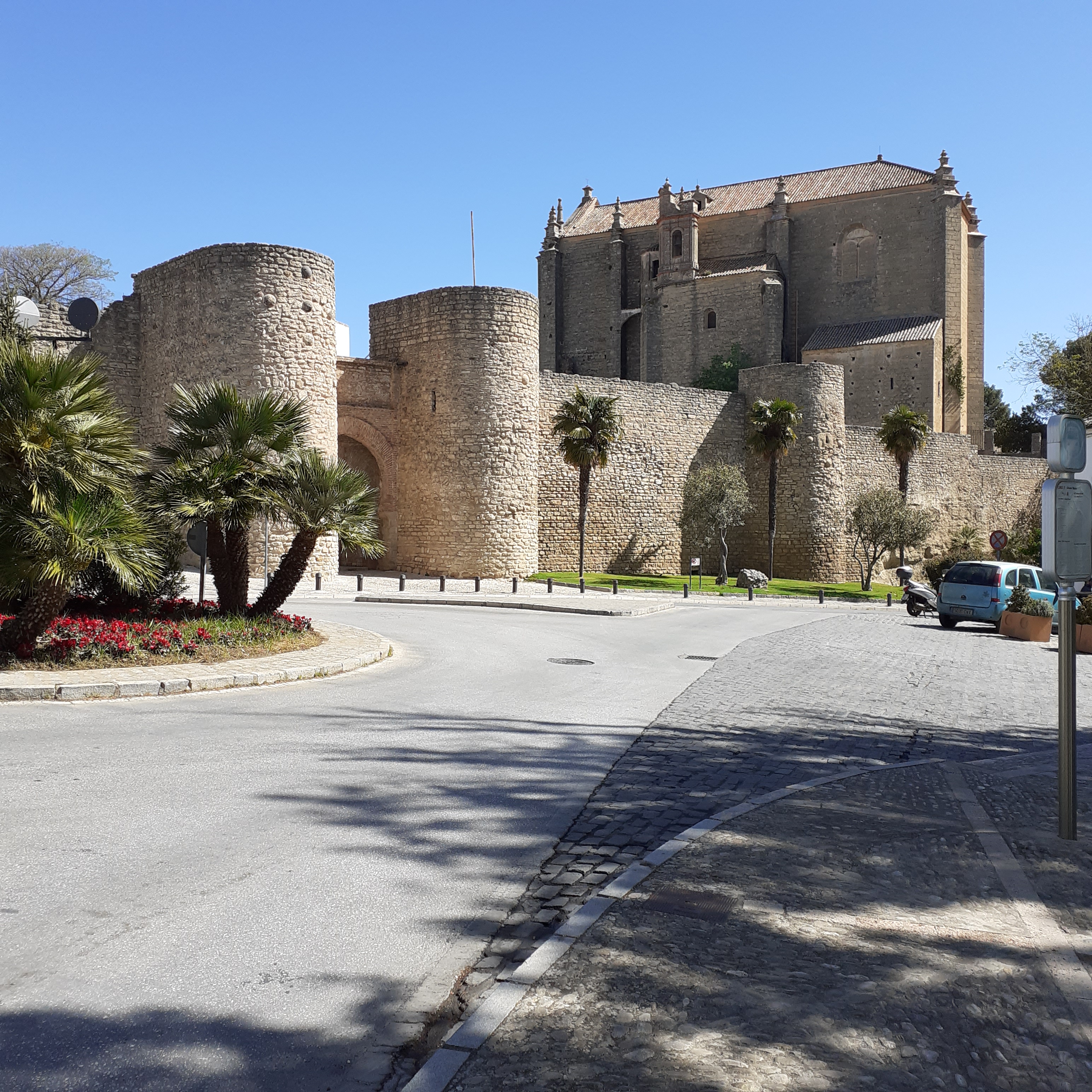
We find ad hoc parking near a shaded square beneath the ancient walled city. The Puerta de Almocabar is the southern entrance gate and dates back to the thirteenth century. The arched gateway is flanked by stern round towers and passing through you get that frisson of stepping back in time. Farther uphill, the Castillo del Laurel, first established in Roman times, was redeveloped by the Moors, and condemned to ruin by various invaders, Joseph Bonaparte especially, earthquakes and the Spanish Civil War.
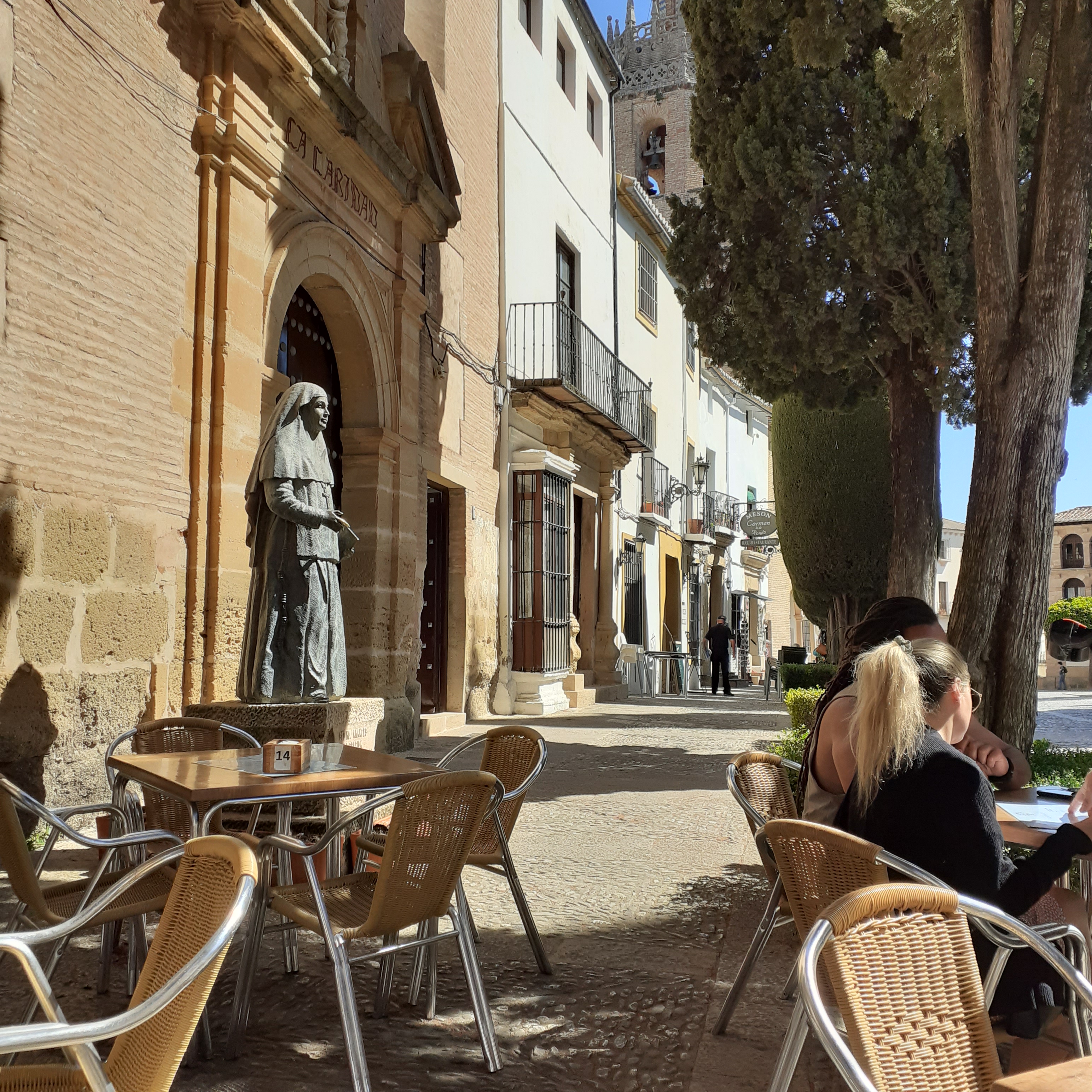
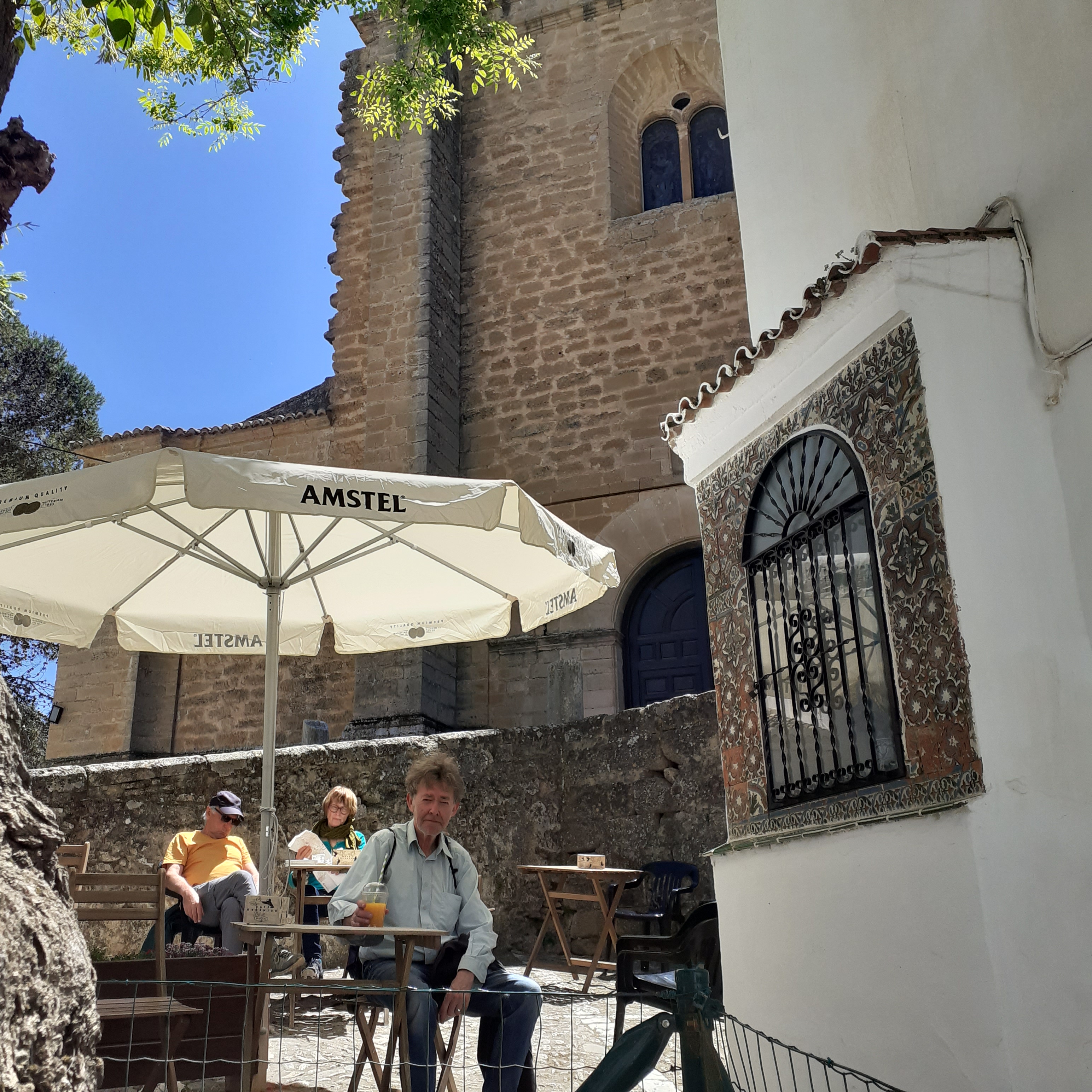
A little further on to the left lies Plaza Duquesa de Parcent which marks the spot of the old Roman forum. The imposing Iglesia de Santa Maria la Mayor and the attractive three story facade of the Town Hall dominate the square which is shaded by trees. We stop for food and refreshment at Cafe Mondragon on the corner. The restaurant is named for the Palace Mondragon nearby. The original palace was built in the early thirteenth century, and taken over by the Nasrid dynasty of Grenada who were the last Moslem rulers before the Reconquest. Such Moorish influence as remains is largely confined to the gardens. The water garden resembles the Alhambra’s in miniature. After Ferdinand and Isabella, the palace itself was given a Renaissance makeover and houses a museum.
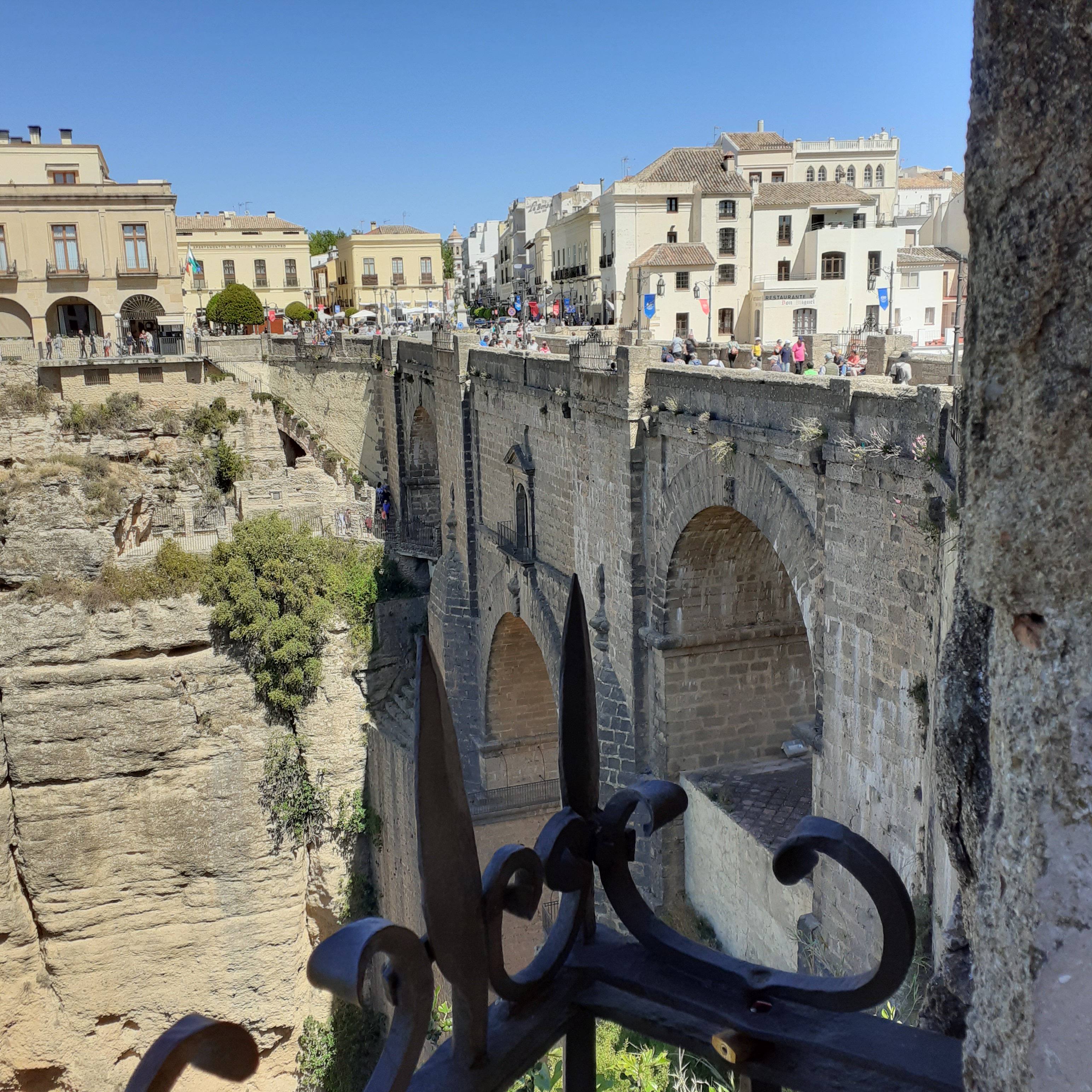
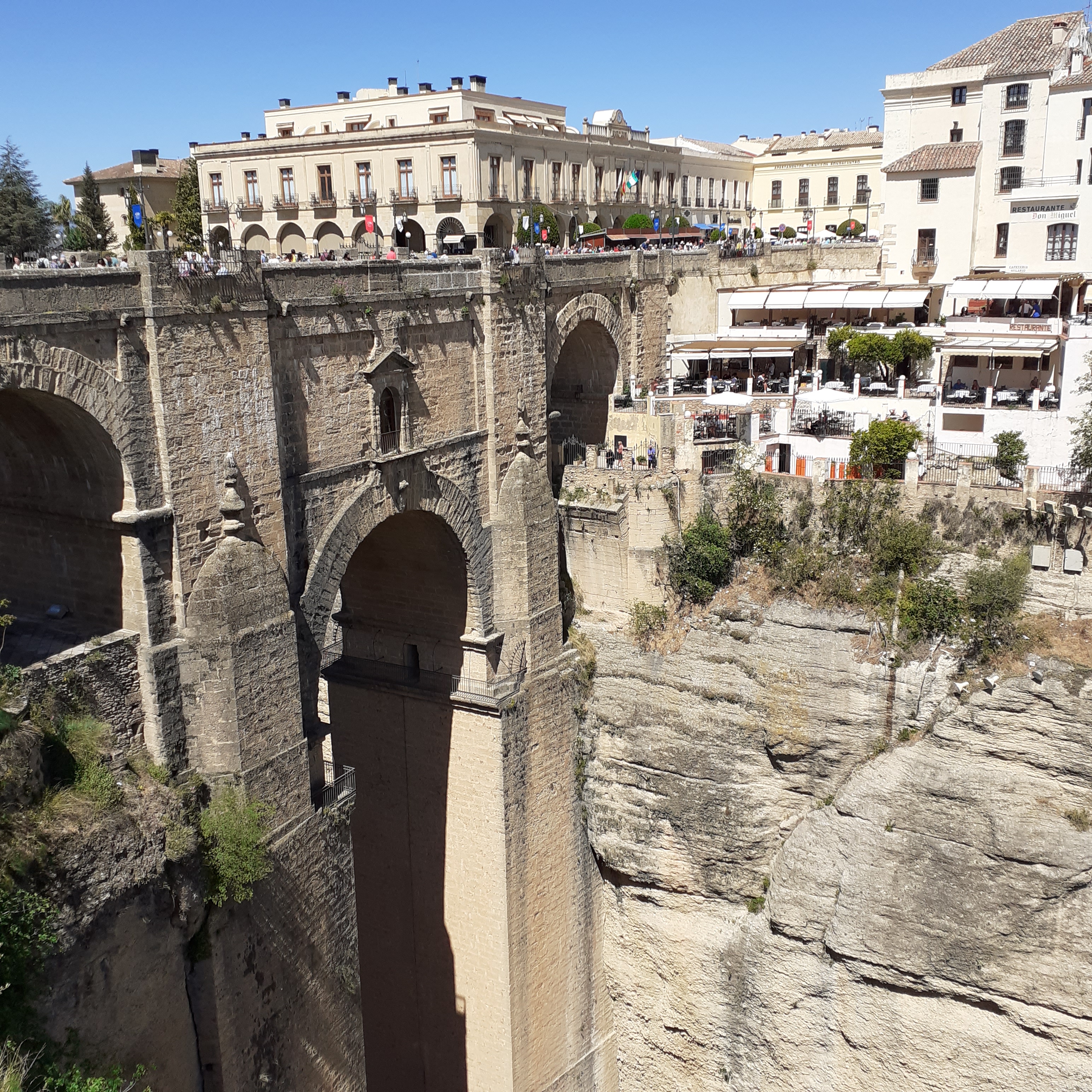
The lower part of the Old Town is pleasantly quaint and quiet. The crowds build as we near the bridge. The Bridge is the signature spectacle of Ronda, connecting the Old Town with the new town, Mercadillo, meaning the little market. Why the residents wanted to expand their town across the vertiginous canyon of El Tajo is a mystery. Perhaps they anticipated Science Fiction and figured they would create the perfect backdrop for film fantasies. There were other bridges spanning the Guadalevin, though much lower down the chasm. The Roman Bridge which was actually built by the Moors, is the oldest and lowest bridge. The Puente Viejo, or Old Bridge, dates from the early seventeenth century.
Towards the mid eighteenth century the Puente Nuevo was proposed. The first attempt lasted less than a decade before collapsing into the abyss and taking fifty unfortunate souls with it. It fell to architect Jose Martin de Aldehuela to design one that would last. Built between 1759 and 1793, it spans the seventy metre gap with three arches and rises a hundred metres above the valley floor. There is a chamber above the central arch which came into use as a prison. There are fearsome tales of prisoners being thrown to their deaths through the small window during the Civil War, and this has become embedded in legend. More happily, the place subsequently became a tavern and now houses a small museum dedicated to the bridge’s history.
There are viewing platforms on each side and many bars and eateries embedded into the top of the cliffs. The Mirador de Aldehuela is a viewpoint to the southeast side, in the Old Town. Adjacent, the small Placa de los Viajeros Romanticos is well named, and illustrated with a panoramic tiled mural. If you are a romantic traveller, surely you will find yourself here.
Crossing the bridge can’t but give you the illusion of being poised on a tightrope above eternity. On the north side there’s the solid, bustling centre of a more modern town. Mercadillo, as the name suggests, is the commercial centre of Ronda. To our left is the Plaza de Toros, one of the most iconic bullrings in Spain. It is amongst the oldest bullrings, built in stone in 1784 and designed by the same architect as the Puente Nuevo, Aldehuela. The ring itself is the largest, although the arena itself is small with only five thousand seats. These are all covered within the two level colonaded stand. The development of bullfighting from ritualised slaughter to cultural artform happened here. The Romero family were the leading bullfighting dynasty of the time. It was grandson, Pedro Romero, who perfected the use of the cape and sword, and the modern dramatic tableau was established.
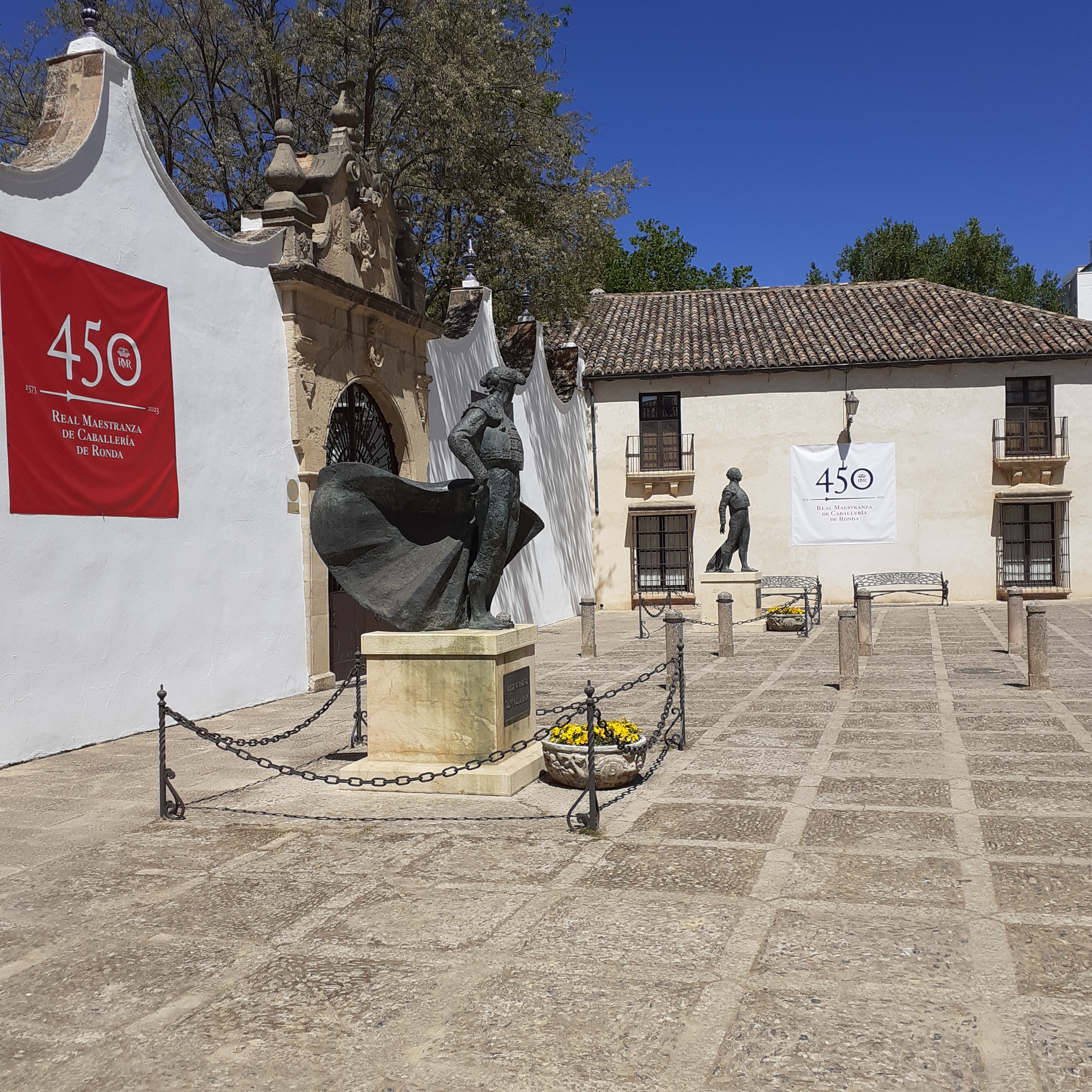
The two statues at the entrance plaza are dedicated to a more recent bullfighting dynasty: Cayetano and his son Antonio Ordonez. Cayetano initiated the Feria Goyesca which takes place in the first week in September in honour of the Romeros. Participants wear costumes of the Romero era as painted by Francisco Goya (1746 – 1828). Born in 1904, Cayetano achieved supersar status with his performances in the 1920s. He met Ernest Hemingway at the famous St Fermin festival in Pamplona. Hemingway, then a journalist, had developed a fascination with bullfighting which was woven into his writing. The Sun Also Rises, his first novel, achieved instant fame when published in 1926. It followed a group of protagonists drawn from Hemingway’s own Paris based coterie, and dubbed the Lost Generation. Their pilgrimage takes them to Pamplona and the notorious Running of the Bulls, in which Hemingway participated. The matador in the Sun Also Rises was named Romero for Pedro Romero. A model for the character was Cayetano Ordonez. By the time he had finished the book, fully smitten with Spain and its culture, Hemingway also became a Catholic. When you think of it, if you want to form identity with a matador, it is a logical progression to take the faith.
While Hemingway’s enthusiasm for bullfighting was infectious, and would surface again in the non fiction Death in the Afternoon, the custom has its detractors. Along with Hemingway, its macho stance has fallen into disfavour; though bullfighting was more open to female participants than most sports. In Childhoods End, a novel by Arthur C Clarke, bullfighting becomes a focus for the struggle between rational progress and romantic tradition. An alien invasion, ostensibly benign, is resisted in one aspect by the Spaniards who defy the dictat to prohibit bullfighting. The aliens transfer the bull’s pain to the spectator thus quelling the protest. Mind, the vicarious enjoyment of pain, or the catharsis provided by the spectacle, is a distinct pull for the bullfighting aficionado. I went with my family to a bullfight in Barcelona about twenty years ago. It was a hair raising experience. Feral, ancient, swaying from mundane to macabre and including some shards of unbelievable drama, you emerge with a less dim understanding of what it means to be alive.
Hemingway, meanwhile, looms large in this city in other respects. A hotel is named for him just south of the Bridge. In chapter ten of For Whom the Bell Tolls, Hemingway outlines a Republican warcrime against Franco’s Nationalists in 1936, wherein leading falangist sympathisers were thrown from the bridge of a fictionalised town. It is said this mirrorred actual events in Ronda, though Hemingway claimed he fabricated them. The book was published in 1940 and is seen as his finest work. Gary Cooper and Ingrid Bergman starred in the subsequent Hollywood film which was released in 1943. It also provided the first full length film soundtrack record.



 xxharrison