From Cork Kent, the train to Limerick takes about an hour and twenty minutes. You change at Limerick Junction with a couple of minutes changeover to a feeder train. Limerick Colbert is on the south eastern rim of the city. It’s about a ten minute walk into the city centre along Parnell Street, or a block over via the more salubrious Catherine Street, as I did.
Limerick’s population is over ninety thousand, making it the third largest city in the country. The original settlement was on King’s Island, north of the present city centre. The Vikings settled here in the ninth century, marking the western extent of their Irish invasion. The Vikings were subjugated by the leading local Gaelic clan, the Dalcassians of County Clare, in 943. The Dalcassians would subsequently come under the leadership of Brian Boru, whose campaigns in the late tenth and early eleventh century signalled the waning of Danish power in Ireland. The Limerick Vikings were enlisted by Brian in his struggle against Leinster Gaels and Dublin Danes. After the Battle of Clontarf Danish power withered outside of Dublin before being completely obliterated by the Normans.
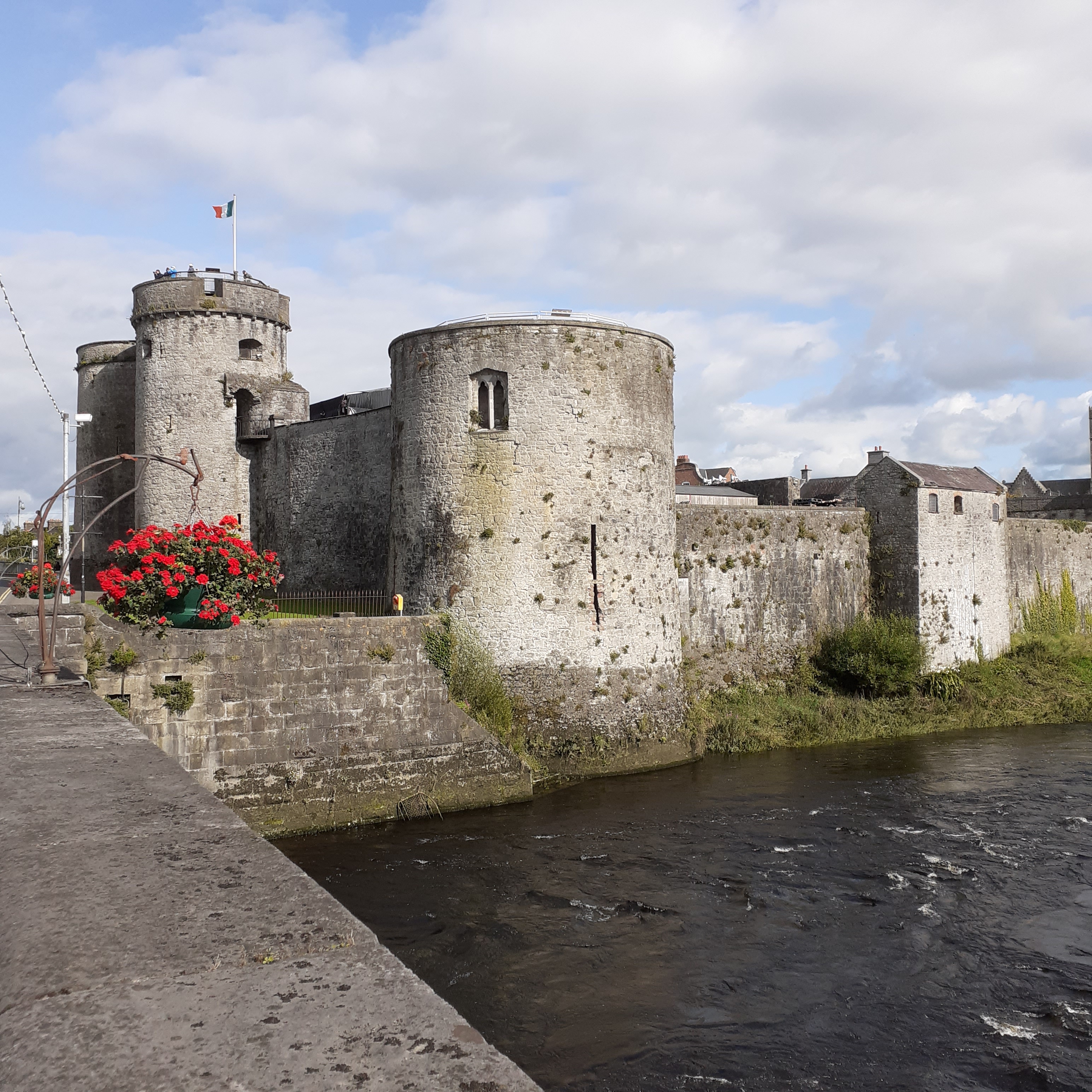
The Normans were keen to establish a power base here. King John’s Castle is one of the many established by that King in Ireland. Dublin was another, Trim and Carlingford also. Begun in 1200, it was completed a dozen years later and is today one of the best preserved Norman castles you’ll see. It is Limerick’s most renowned landmark. The modern reception area makes for an odd introduction to the traditional Norman style castle of a large courtyard surrounded by curtain walls. The massive gate house and three corner towers remain. The eastern wall is missing, occupied by the modernist visitor centre. This offers interactive exhibitions, while the courtyard is haunted by garrolous actors. Visitors can try their hand at ancient pursuits such as archery and fencing, but no, there’s no chance of actually killing anything. Weirdly, there was once a small modern housing estate within the walls until the end of the last century. What a strange address to have. Despite eight hundred years of often violent history, including the violence of unsympathetic urban planning, the castle is in a high state of repair.
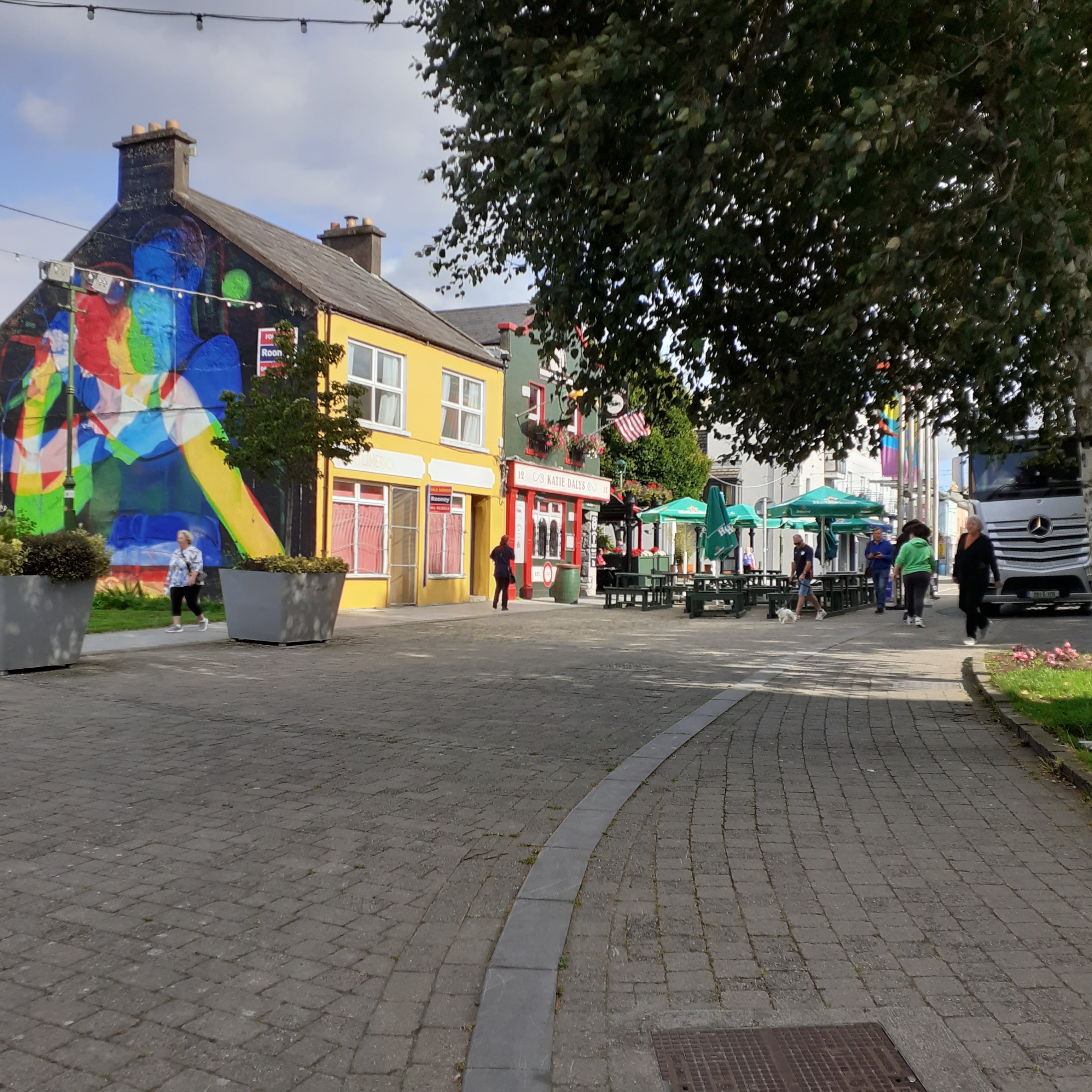
Katy Daly’s is situated across from the Castle entrance, on the Parade, an ancient historic street. A tavern in the old style, it’s ideal for a refreshing pint, or a meal, after the exertions of a castle visit. With sunshine spread over its front of house terrace, I had a pleasant time, accosted in the most friendly fashion by a couple of locals. Daly’s lays claim to being the oldest pub in Limerick. A pub, the Red Lion is recorded here in 1600, while the license can be traced back to the Halpin family in 1789. It takes its name from Prohibition era moonshiner, Katie Daly, born in California of Tipperary immigrants in 1872. Her father Bill was killed in a shootout with Wyatt Earp and his recipe for Poitin would endure thanks to his enterprising daughter. By the Prohibition Era, Katie operated out of Chicago were she fell foul of Al Capone, but escaped to the relative safety of San Francisco. However her enterprise came to the attention of the FBI and ended with her incarceration in Alcatraz, the island prison in the Bay. The only female prisoner there, she died before her fifteen year stretch was out.
King’s Island is Limerick’s fortified core. It is formed by the branching of the River Shannon. The main river delineates its western shore. The eastern branch is referred to as the Abbey River; the two meeting again farther south near the city centre. The walled city of Limerick grew in the shadow of the castle. After the Norman invasion this was referred to as Englishtown. Irishtown grew across the Abbey River in what’s now called the Old Quarter. The medieval city axis was along Nicholas Street, and the area drew comparison with medieval European cities such as Rouen and was greatly renowned for its beauty and prosperity.
Limerick suffered badly in the wars of the 17th century. There were at least four Sieges of Limerick. In the Cromwellian invasion the city was eventually starved into surrender. Fifty years later In 1690 there were further sieges as Jacobites, retreating after the Battle of the Boyne, held out against the Williamites. The Jacobites inflicted a heavy defeat on William’s forces, but were forced to surrender the following year. Patrick Sarsfield, commander of Limerick’s defenders, signed the Treaty of Limerick in 1691. He lead his forces – nineteen thousand troops and about a thousand women and children, into exile in what has become known as the Flight of the Wild Geese. The Treaty Stone stands on the western side of Thomond Bridge, the ancient bridge connecting the Kings Island to the west bank and on to Thomond Park, Munster’s Rugby stadium.
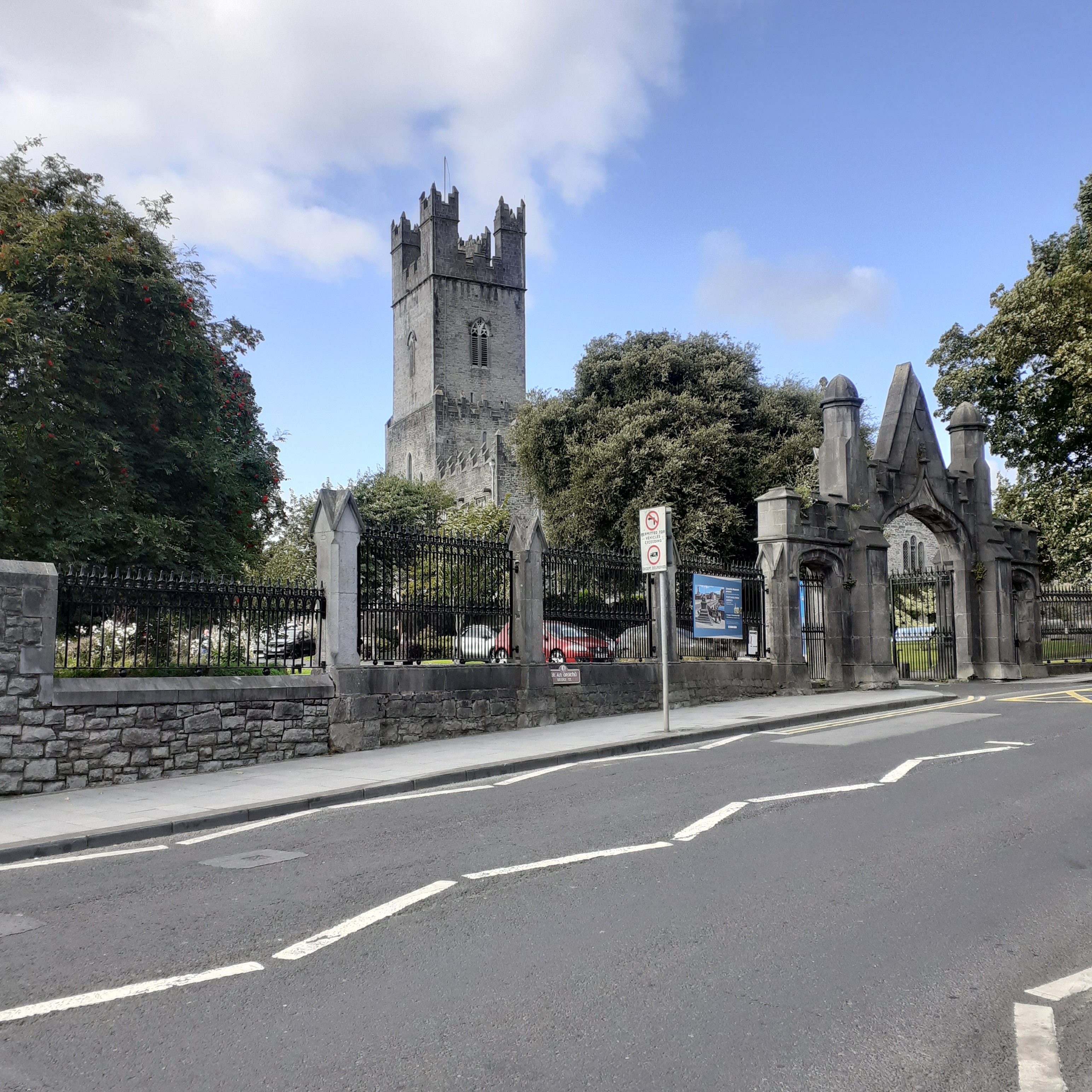
St Mary’s Cathedral, just south of the castle, is the oldest building in Limerick. Dedicated to the Blessed Virgin Mary, it was founded in 1168 by Donal Mor O’Brien, the last King of Munster, and built on the Viking Thingmote, or Parliament. Donal died in 1194 and his tomb lies within the cathedral. The Romanesque building has been much added to over the years with Gothic and Victorian embellishments but retains its stern and ancient air. Its distinctive square tower with turretted corners is from the fourteenth century and soars above the western entrance.
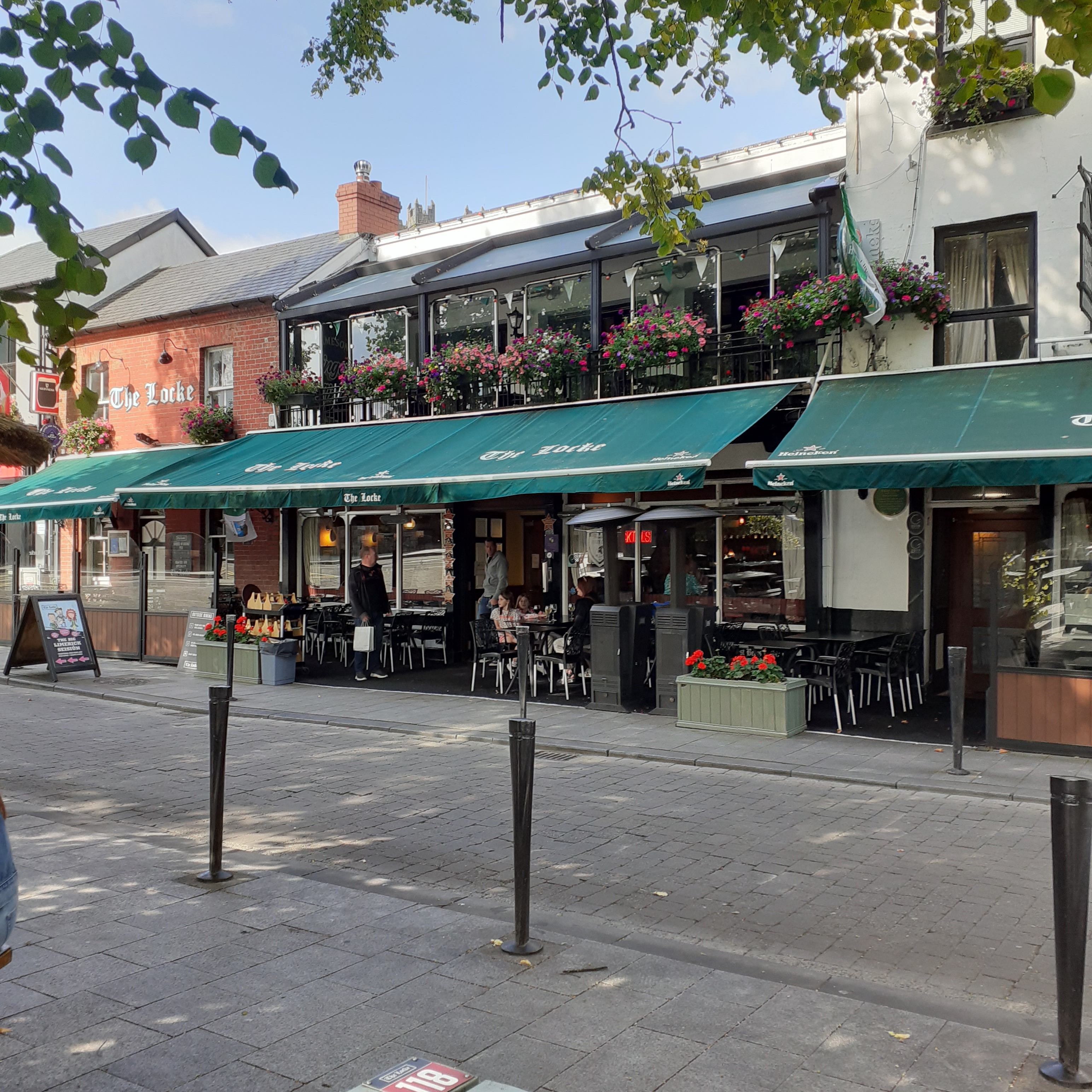
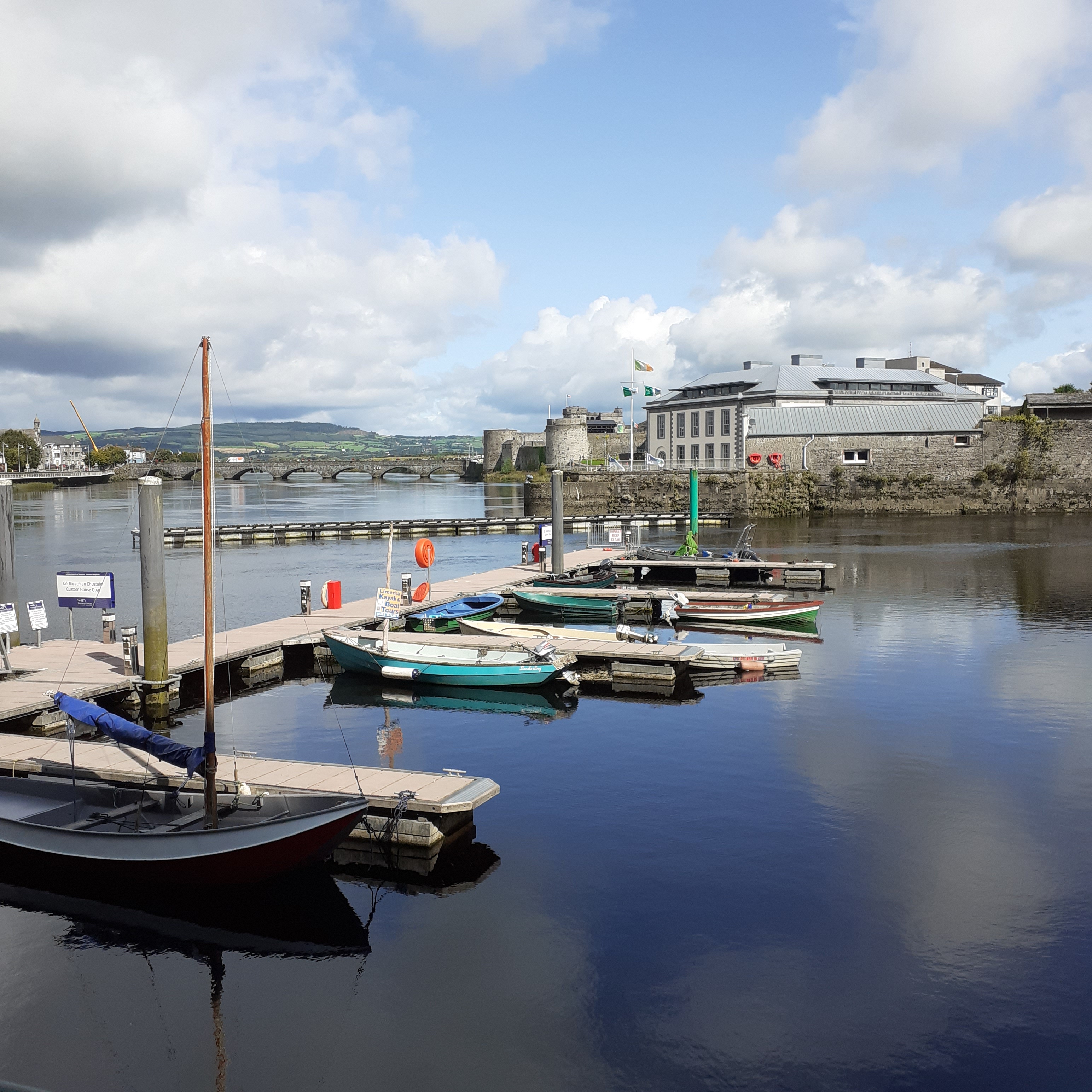
Vestiges of the Walls of Limerick, appear along busy Island Street, though Nicholas Street is more evocative of the ancient city. Left untouched by the modern development in the eighteenth century, the old city was gradually abandoned, and few buildings remain. Near the confluence of the Abbey and Shannon, just below the Cathedral gates, is the end of English Town. George’s Quay hugs the river bank, and here you’ll find the Locke Bar at the Bridge. The original pub site dates back three hundred years. There’s traditional music sessions and dancing every night. The lounge area is large, flooded with the late afternoon light. Outside, there’s a wide beer garden on the tree lined river banks. The garden often features summer barbecues, and good food fare is available throughout, including seafood, burgers and Irish Stew.
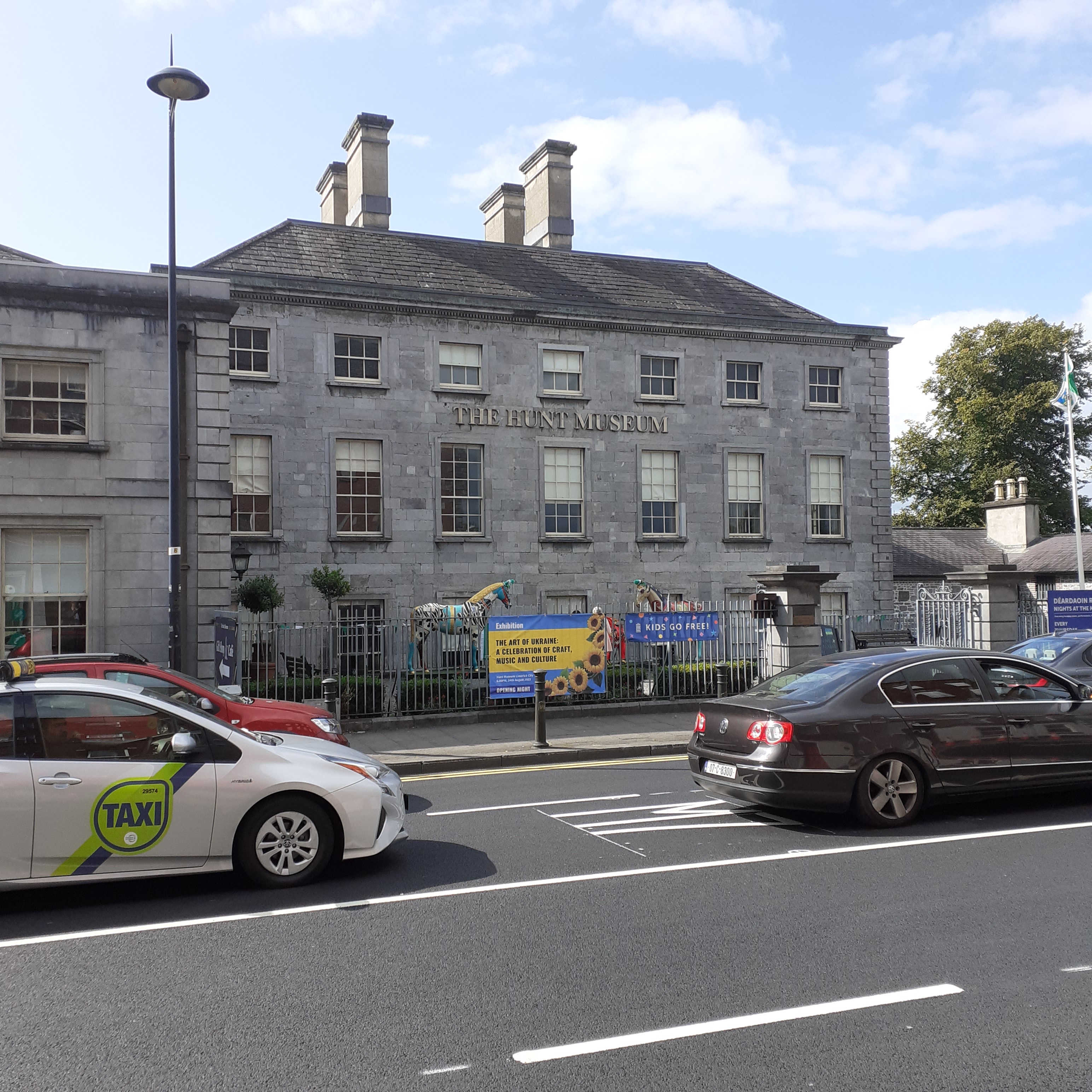
Across the river Irish Town, or the Old Quarter, occupies the south bank to your left. On the right is a pleasant riverside parkland, with the Hunt Museum prominent on the streetfront. The Hunt Museum was originally the Custom House, designed by Italian Davis Ducart. It’s a limestone Palladian building from 1765, three stories tall. The museum features the collection of John and Gertrude Hunt, housed in the current building since 1997. The Hunts collected collected art from neolithic Ireland to ancient Egypt, medieval Christian artefacts from Ireland and Europe. There’s also dresses by Sybil Connolly and work by Picasso, Renoir and Jack B Yeats. The Horse Outside art installation are fibreglass sculptures from 2010, painted by children and inspired by the Rubberbandits hit. They are the local comedy hip hop duo of Mr Chrome and Blindboy Boatclub.

A century after the Treaty, Limerick moved south. Landowner, Edmund Sexton Pery commissioned Irish engineer Christopher Colles to design a new town in 1769. Newtown Pery is an outstanding example of Georgian city planning. Being built on one owners lands allowed for a regular grid system making for an architecturally unified, elegant streetscapes which is very modern, and most unusual in Ireland.
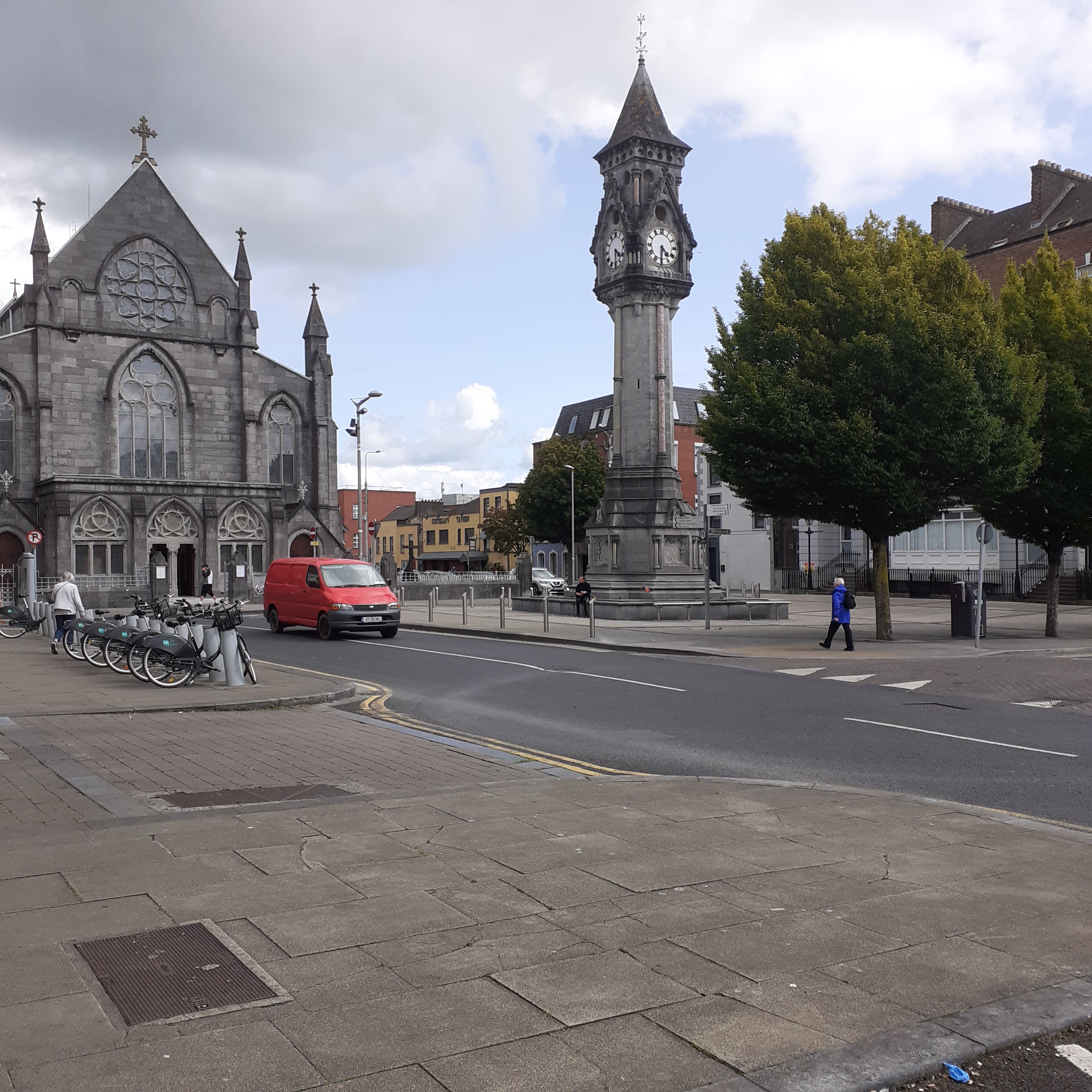
Building came to an abrupt end after the Famine. The expanding city finally ebbed to the shores of Pery Square to the south. Originally intended as a Grand square in the mode of Dublin’s Merrion Square, you can judge the intent along the northern side. The People’s Park is a wonderful green oasis within its embrace. Limerick Art Gallery is at the northern corner quite near the train station. Wonderful landscapes of the nineteenth century comprise the bulk of the collection, with some contemporary work and visiting exhibits. Nearby, you will also find the urban oasis of Baker Place with St Saviour’s Dominican Church church and the picturesque Tait’s Clock Tower.
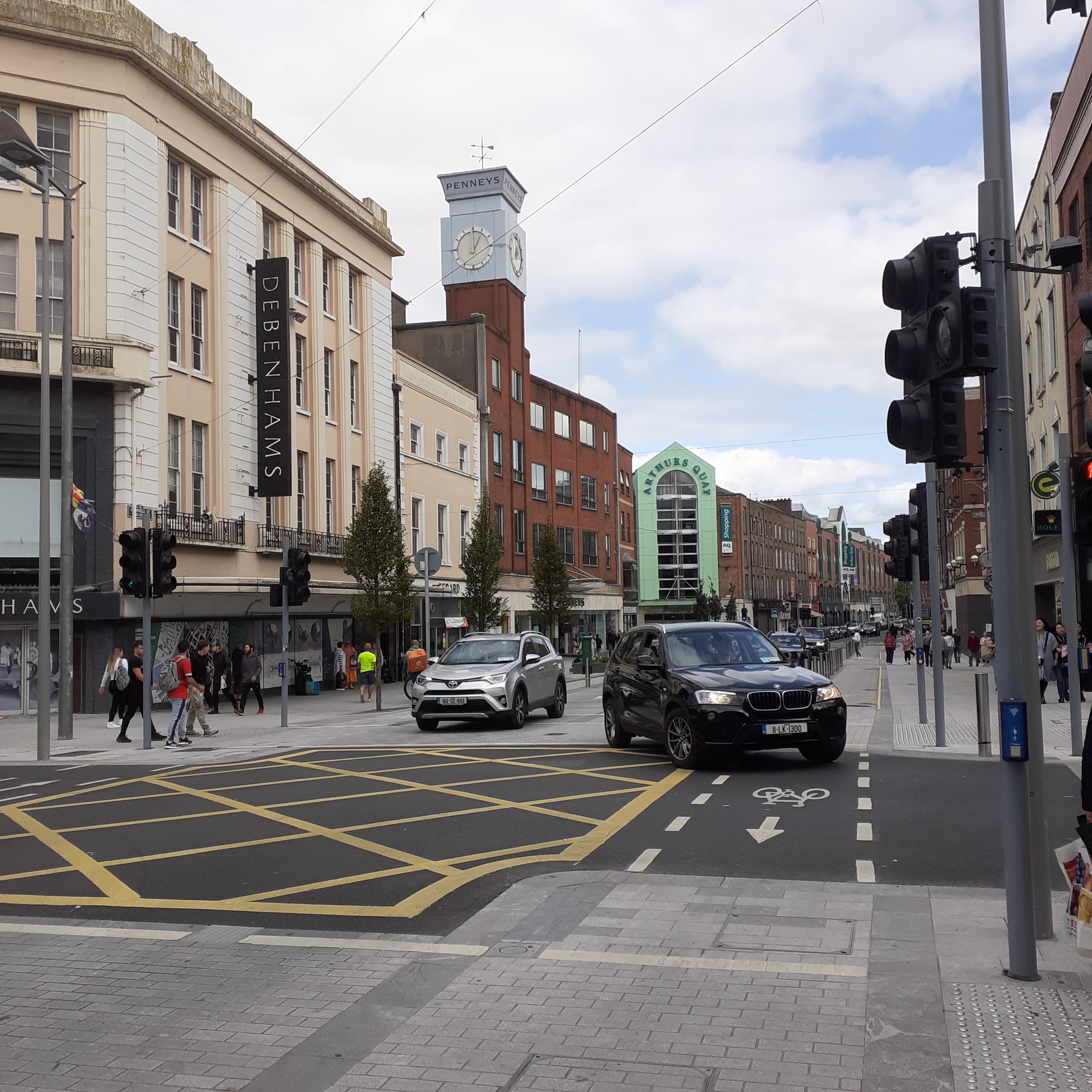
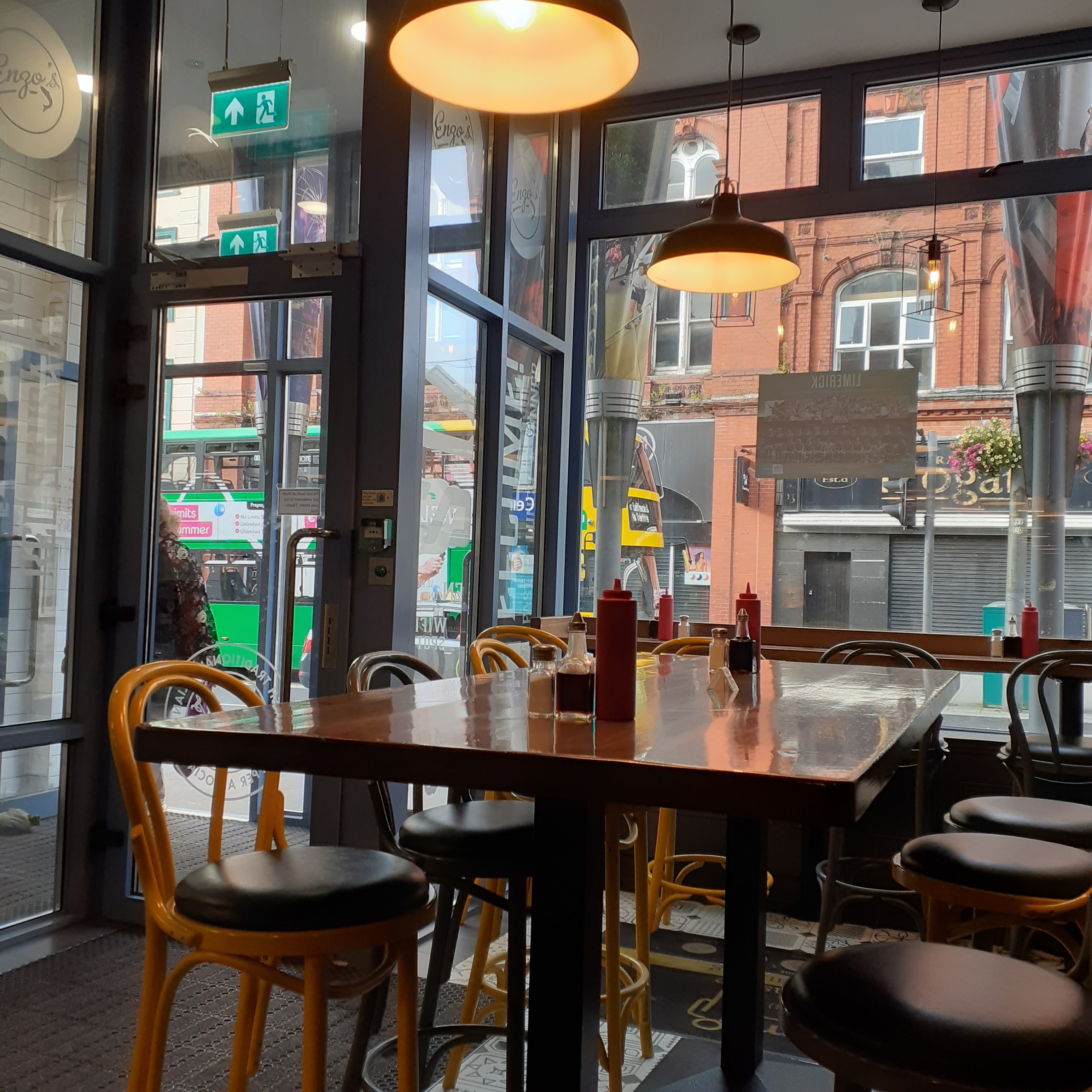
Back to the commercial city centre, William Street aligns with the major Shannon crossing. In 1835 a new bridge called Wellesley Bridge spanned the river. The five arched bridge incorporated an artificial island, home to a club house for the Rowing Club. It was renamed for Patrick Sarsfield in 1882. At right angles is O’Connell Street, originally George’s Street, which is the principal street of the modern city. Along William Street you’ll find a traditional table service fish and chipper, Enzo’s. Enzo Rocca arrived from Italy fifty years ago and set up shop in Newcastle West with his brother Franco in the Golden Grill chipper. The city restaurant he established in 1984 was a seafood restaurant to begin with. Enzo’s has become a much loved institution in Limerick, a time capsule for a halcyon age, with a battered cod and chips to adore. Sadly Enzo passed away on the first of September at the age of seventy seven
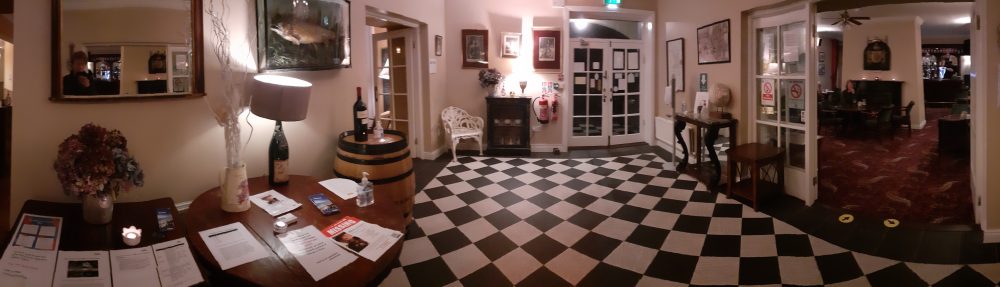
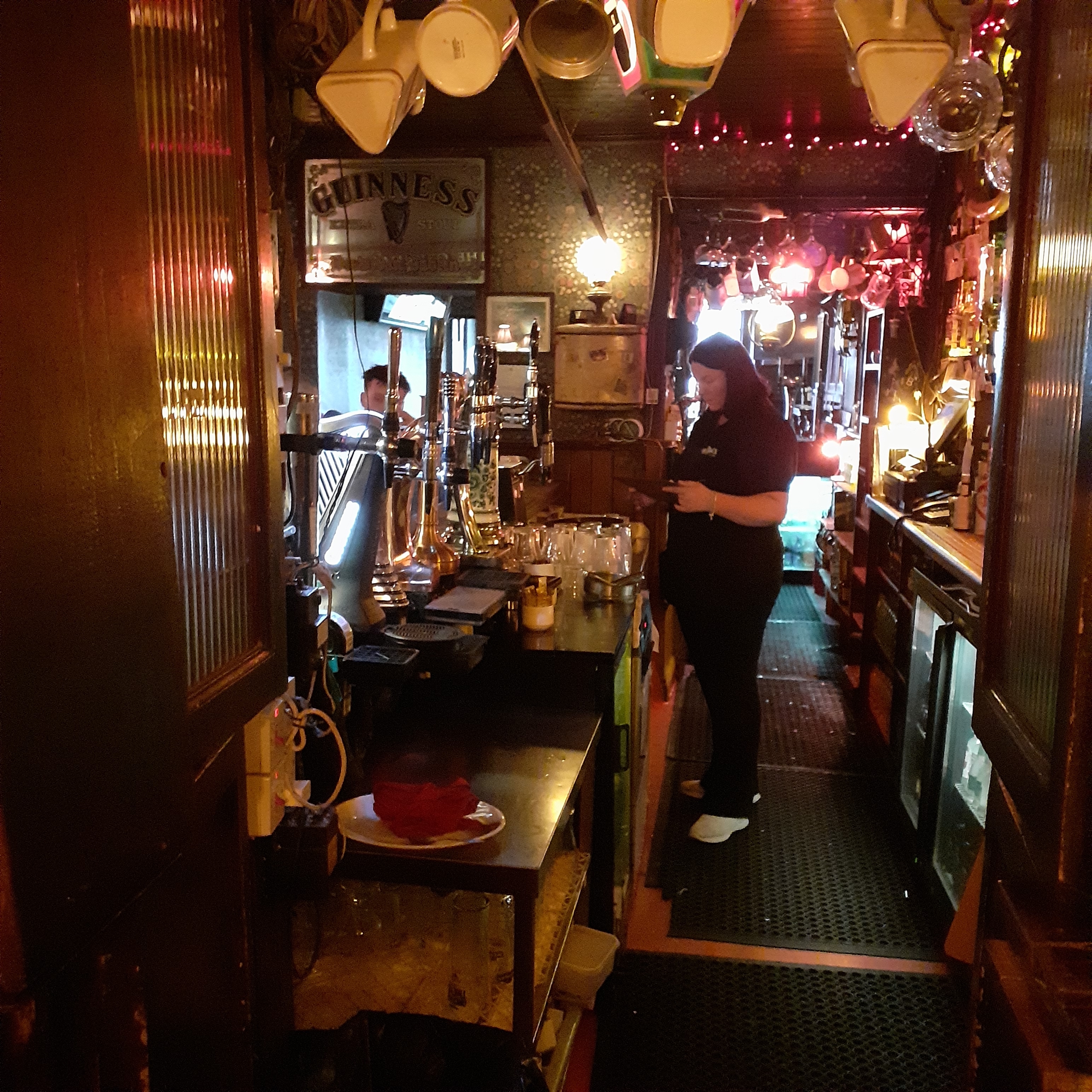
The grid of Newtown Pery merges into the narrow winding streets of the Old Quarter, where I am staying at the eponymous hotel. It’s an interesting warren of streets, merging with cafe society where the city centre shoppers spill over, spent from a hard day at the retail coalface. Nancy Blake’s on Denmark Street is an intimate old style pub with a beer terrace out the back. There’s a late bar and live music five nights a week. I spend some time here on my last night, in the balm of neon and cobblestones, with appropriately classic rock tracks seeping out of the sound system.
It’s a pity I haven’t given myself more time. A day is seldom enough for a city, and certainly not here. Thanks to Niamh Mulville for her itinerary which informed my visit. There are some visits that I did not make. A mecca for rock tourists, Dolan’s Pub in the docklands area is where the Cranberries started on their path to world domination. Their second album No Need to Argue (1994) was a huge iternational hit. The lead single off that , Zombie became a signature number. Writer Dolores O’Riordan was born in Ballybricken, about ten miles south of Limerick in 1971, and died in 2018. I have quoted the song before and recently it has been given a rousing rendition by the supporters of the Irish Rugby team at the World Cup. The Munster contingent are responsible for this and the reasons are obvious. Thomond Park, out past the Treaty Stone is their own particular Mecca and so local heroes the Cranberries might be expected to provide the occasional theme song. All provinces have joined in and of course all of us back home will be wishing the furious wind will fill their sails and bring victory to the men in green. Truly, they are fighting.
 xxharrison