Belfast – 1

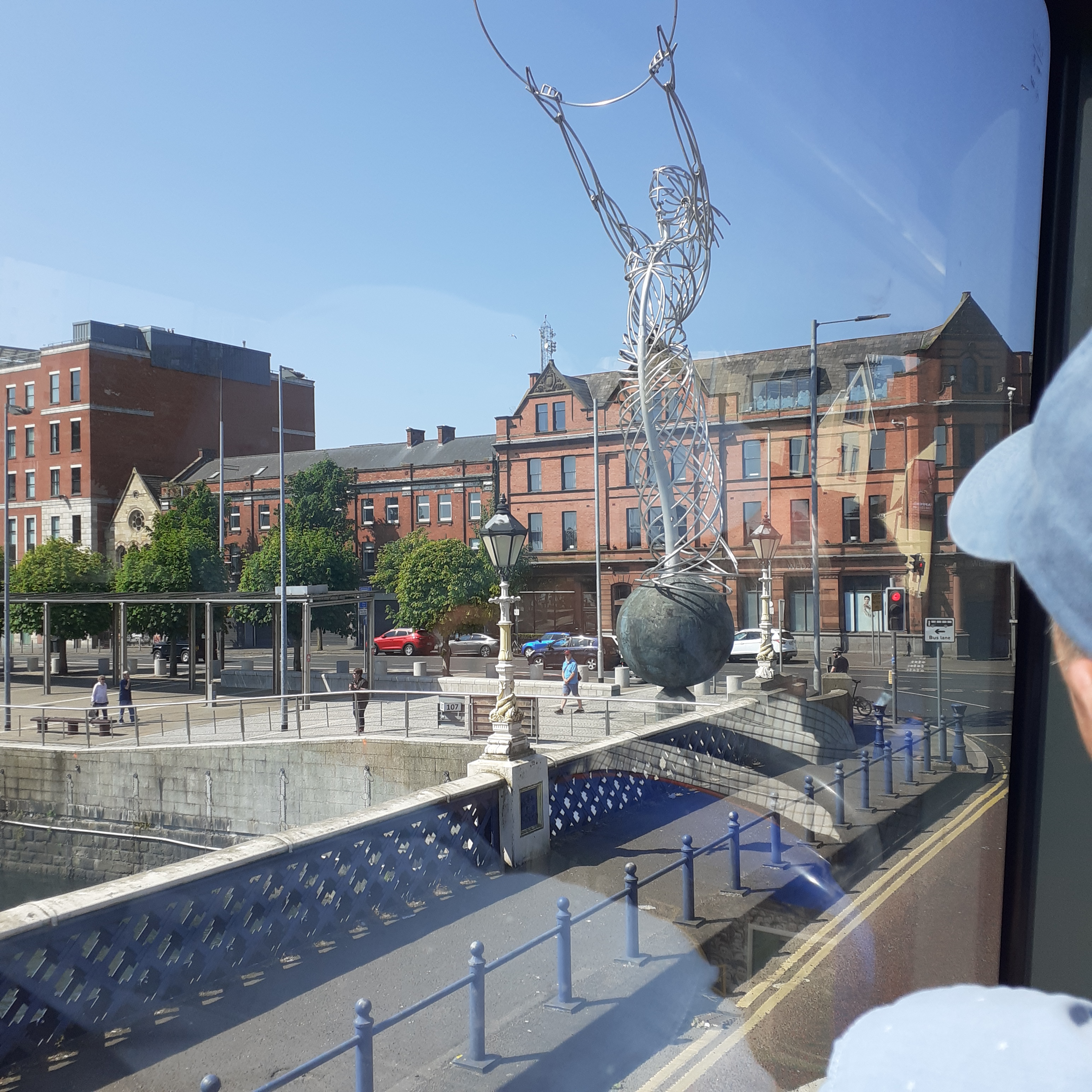
Belfast is Ireland’s second city, and the capital of Northern Ireland. It is a two hour train ride from Dublin Connolly on the Enterprise; all going well. I was last here just over ten years ago, taking another jaunt north with my younger son to see the Belfast Giants ice hockey team at the Odyssey Arena. Images of the frozen north were amplified within the confines of the ice rink, and in truth were not dispelled in the great outdoors; but this time Belfast was caught in the embrace of a big blue sky, and it was sweltering.

I went up with two friends and we booked into the Premier Inn for two nights. It’s just across the Lagan river in the Titanic Quarter, a new development growing around the dockside and the famous shipyards, and adjacent to the Odyssey Complex. Technically, we’re staying in County Down, and this will be the first time I’ve overnighted in that particular county. Most of Belfast is in County Antrim.

As it turned out, the Enterprise didn’t boldly go where it was supposed to, instead depositing us at Lisburn, nine miles short. The rail service put on a few busses to ferry us into the city. It was a cheerful, if cramped half hour, us southern sardines standing and swaying as the cheerful driver kept his foot to the floor and an entertaining patter going with those of us nearby. He delivered us to the terminal on Great Victoria Street on the west side of the city centre.

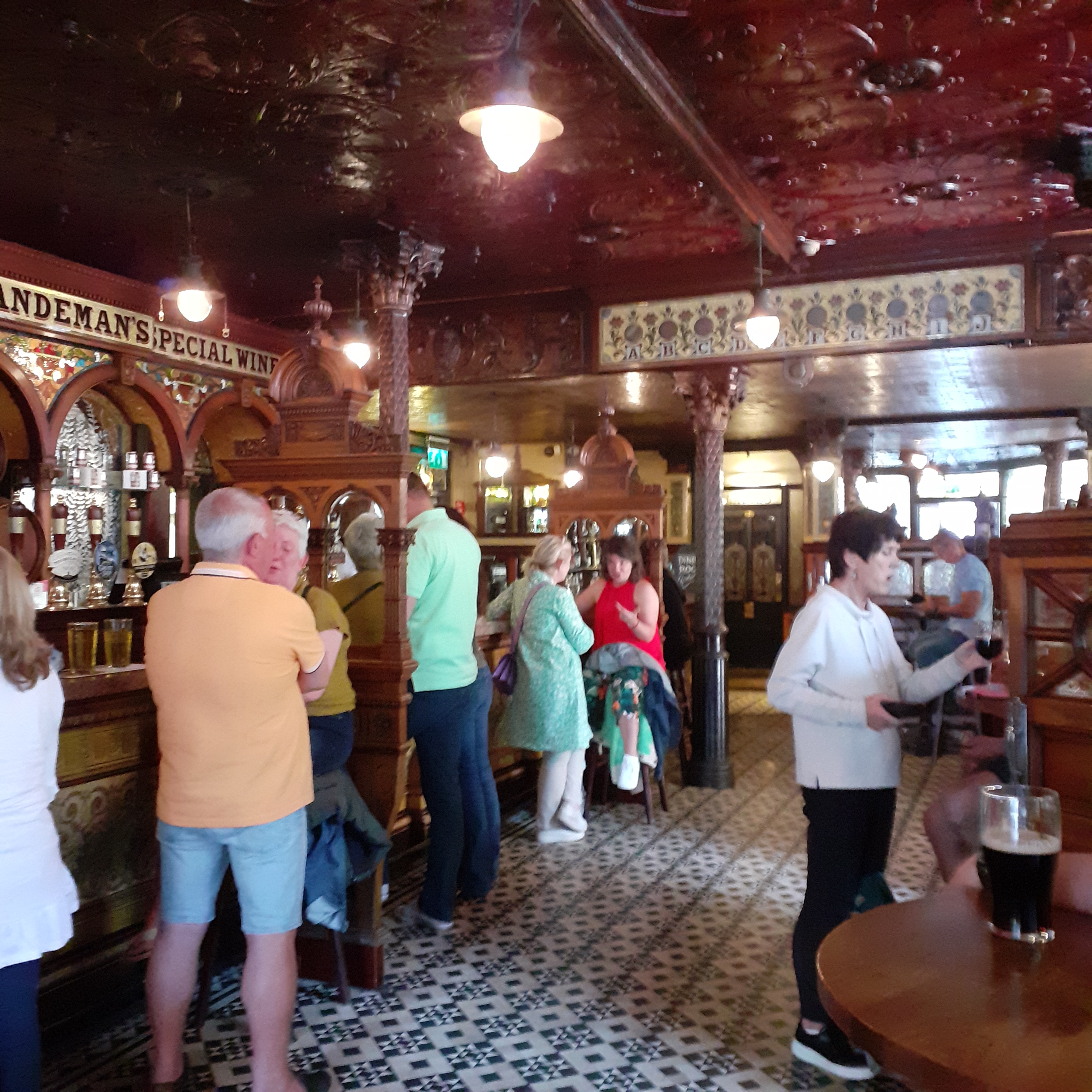
We first put into The Crown Liquor Saloon, it being on our hit list and also being the first pub we saw. Travelling on a hot day is thirsty work. Originally this was called the Railway Tavern for the principal Railway station across the road. The first station was built in 1848 in the first flowering of Irish railroads. Glory days are made to pass and it was closed in 1971, and demolished to make way for a modern block. A new station openend in 1995 adjoining the Great Northern Mall shopping centre. The name Great Northern here alludes to the Great Northern Railway which absorbed the original Ulster Railway of 1838. 

Meanwhile, the pub was renovated and renamed the Crown in 1885. It was conceived as a Victorian gin palace, as the lavishly ornate bars of the era were known. Publican Patrick Flanagan employed Italian craftsmen who were engaged in the construction of Catholic churches, enjoying a boom in Belfast at that time. The Italians certainly stamped the Crown with their exuberance. The colourful tiled exterior is eye catching and the effect continues in the glowing interior, also decorated with tiles and illuminated by gas lamps. Stained glass partitions separate a total of ten snugs with original antique fittings. So it was that we three amigos collapsed into the Crown and took possession of a snug.
Belfast city centre is laid out in grid form indicating its relatively modern conception. Its population stands at 350,000 in the urban area, with 650,000 in the wider metropolitan area. Yet two hundred years ago the city population was barely a tenth of that. It may have had a castle in Norman times, but the largest castle of note in the vicinity was Carrickfergus, still is, ten miles north on the shores of the Lough. Carrickfergus was essentially the capital of Ulster since 1177 when John De Courcy established Norman power there shortly after Strongbow’s invasion and Henry II’s assertion of overlordship. English power was stalled by Edward de Bruce’s campaign in the fourteenth century. Edward was the brother of Robert the Bruce, King of Scotland, and was himself proclaimed King of Ireland in 1315. He captured Carrickfergus but three years later he was defeated and slain by Anglo Irish forces at the Battle of Faughart, near Dundalk. Edward’s reign was brief, and rarely extended past Ulster, but English rule remained stalled for a further three centuries. 

It wasn’t until 1615 that Sir Arthur Chichester founded Belfast as a town. Belfast Castle was established, built on the ruling O’Neill’s tower house and becoming a focal point as the Plantation of Ulster took off. That castle burnt down a century later. The current Belfast Castle is physically remote from the ancient castle which fell into ruin and then oblivion. It was built in 1870 on the Donegall family’s deerpark on the outskirts of Belfast at Cave Hill. It is actually a grand Victorian residence, in the Scots Baronial style, though in the hands of Belfast City Council for the last century and is open to the public and may also be booked for events and weddings. 

English, Manx and Huguentot settlers predominated in the early colonisation of Belfast. It was the Huguenots and Scottish Presbyterians who introduced the linen trade which fuelled the increasing growth of the town. Through the 19th century, Belfast establsihed itself as one of the major linen producers in the world and acquired the nickname Linenopolis. Try saying that after a few jars.
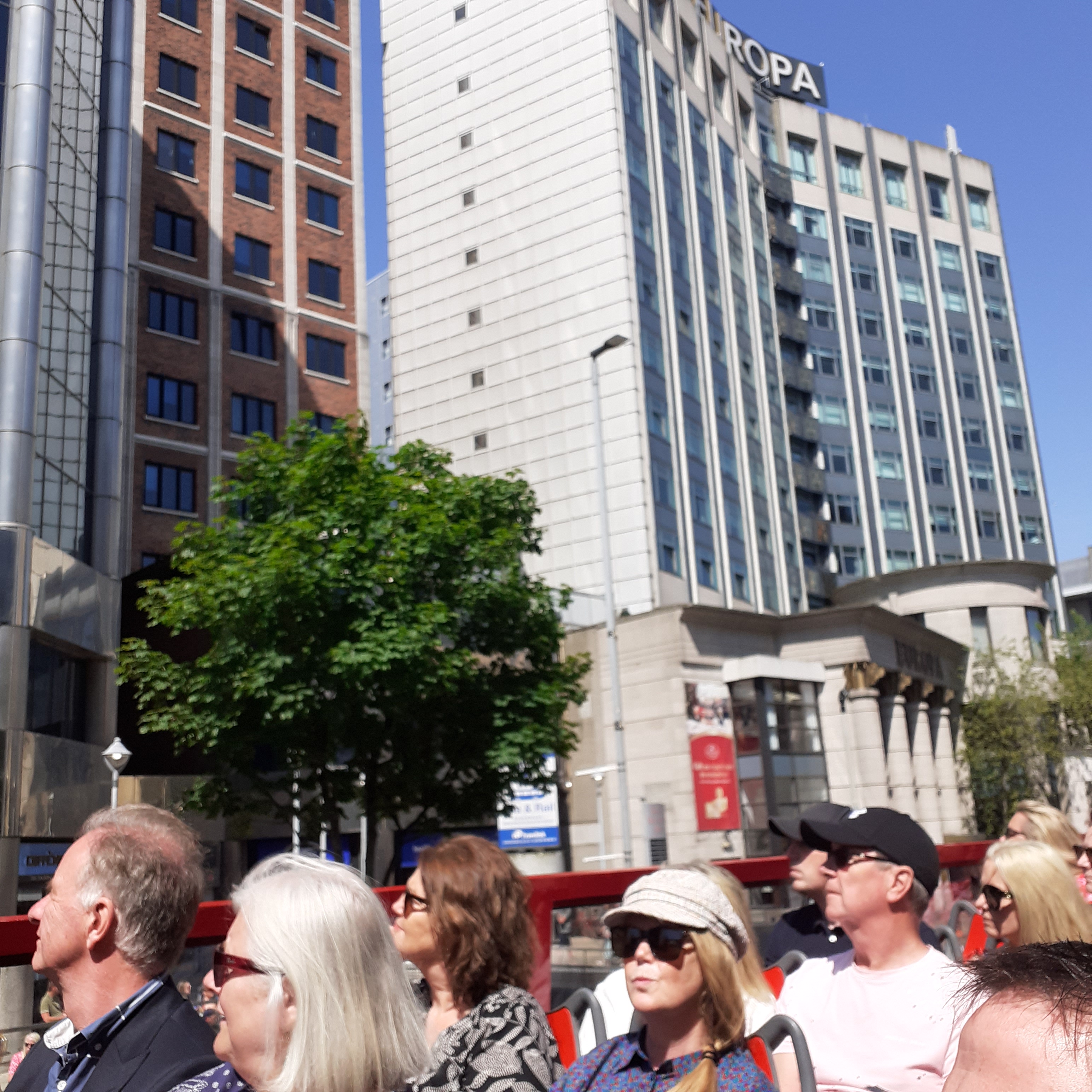
Our cross city navigation was easy enough. Great Victoria Street is a busy thoroughfare lined by tall buildings running north south and defining the western edge of the city centre. Next door to the station is the Europa Hotel, once dubbed the most bombed hotel in world, having suffered  thirty six bomb attacks during the Troubles; being the conflict in Norrthern Ireland that lasted for thirty years until 1998. Yet the Europa endures. It was built on the site of the original railway station and was the popular haunt for journalists in those troubled times. Today the twelve stoey tower is a four star luxury hotel with two hundred and seventy bedrooms, and promises a quiet night’s sleep. 

Adjacent is the Grand Opera House. This opened in 1895 with a thousand seater auditorium hosting variety shows and musicals. Over the years performers have included Sarah Bernhardt, Charlie Chaplin, Laurel and Hardy, Orson Welles and Luciano Pavarotti. The onset of the Troubles saw a decline in fortunes and developers wanted to pull it down. Sense prevailed, and the building was bought by the Arts Council and listed in 1974. A recent refurbishment has restored the plush ambience of its glory days. Theatre tours can be booked and the upcoming programme includes a heady mix of musical entertsinment, with Oliver, the Rocky Horror Show and the Buddy Holly Story on the bill.

At right angles, the parallel avenues of Chichester Street and May Street head due east, reaching the Lagan River and Belfast Lough just beyond another Victoria Street, which must cause some confusion. Mind you, there is something of an obsession with that particular monarch hereabouts, so inextricably is the city linked to the Victorian age.
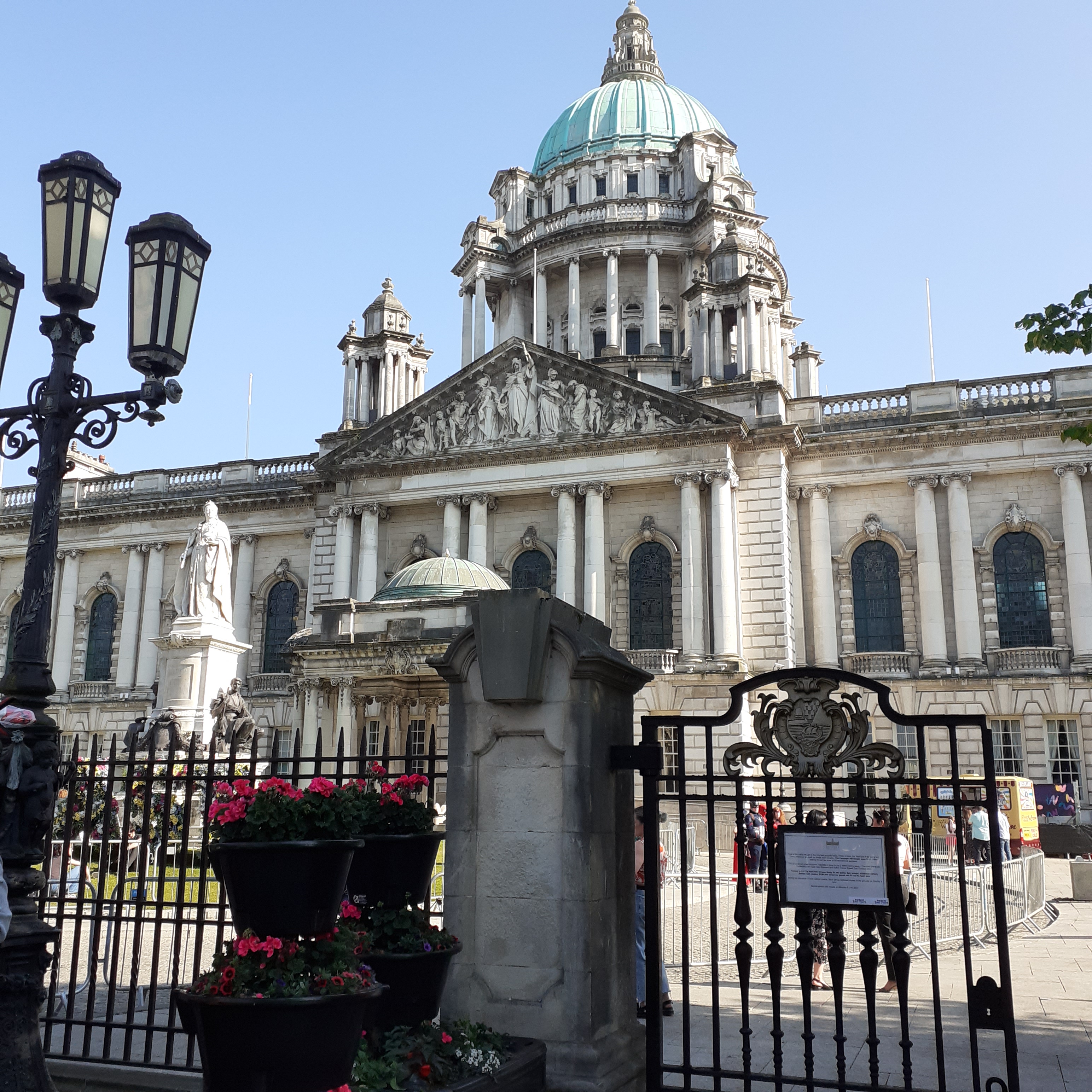
Either route takes us through the busy commercial centre of Belfast, and midway along we find City Hall. Belfast City Hall does what a city hall should, providing the centre point and pivotal landmark for the city it serves. It was conceived in 1888 when Belfast, at last, was granted city status by the Queen, Queen Victoria of course. From a population of only twenty thousand in 1800 it was the largest city in Ireland by then, passing the three hundred thousand mark, so it was not before time that it was recognised as a city. 

The City Hall and grounds occupies Donegall Square, named in honour of the Chichester family, founders of the city. Arthur Chichester was made Earl of Donegall in 1647 and the family castle once stood nearby. The county itself is now spelt with one l: Donegal. The building was designed by Alfred Brumwell Thomas, an English architect. Completed in 1906 it is faced in white Portland stone, a shining palace in Neo Baroque style. There are echoes of the phanthom fortress long gone, with a tower in each corner and a soaring copper dome capping the centrepiece column. The grounds are strewn with monuments to Queen Victoria (again), Edward James Harland of shipyards fame and those who sailed on the Titanic. There is also the Garden of Remembrance and Cenotaph. The extensive lawns accomodate the public. They are out in force on this most glorious of days, but can relax here on any day, to take the sunsine and forget such cares that life, and history can bring.
Edinburgh – The Writers’ City – 4

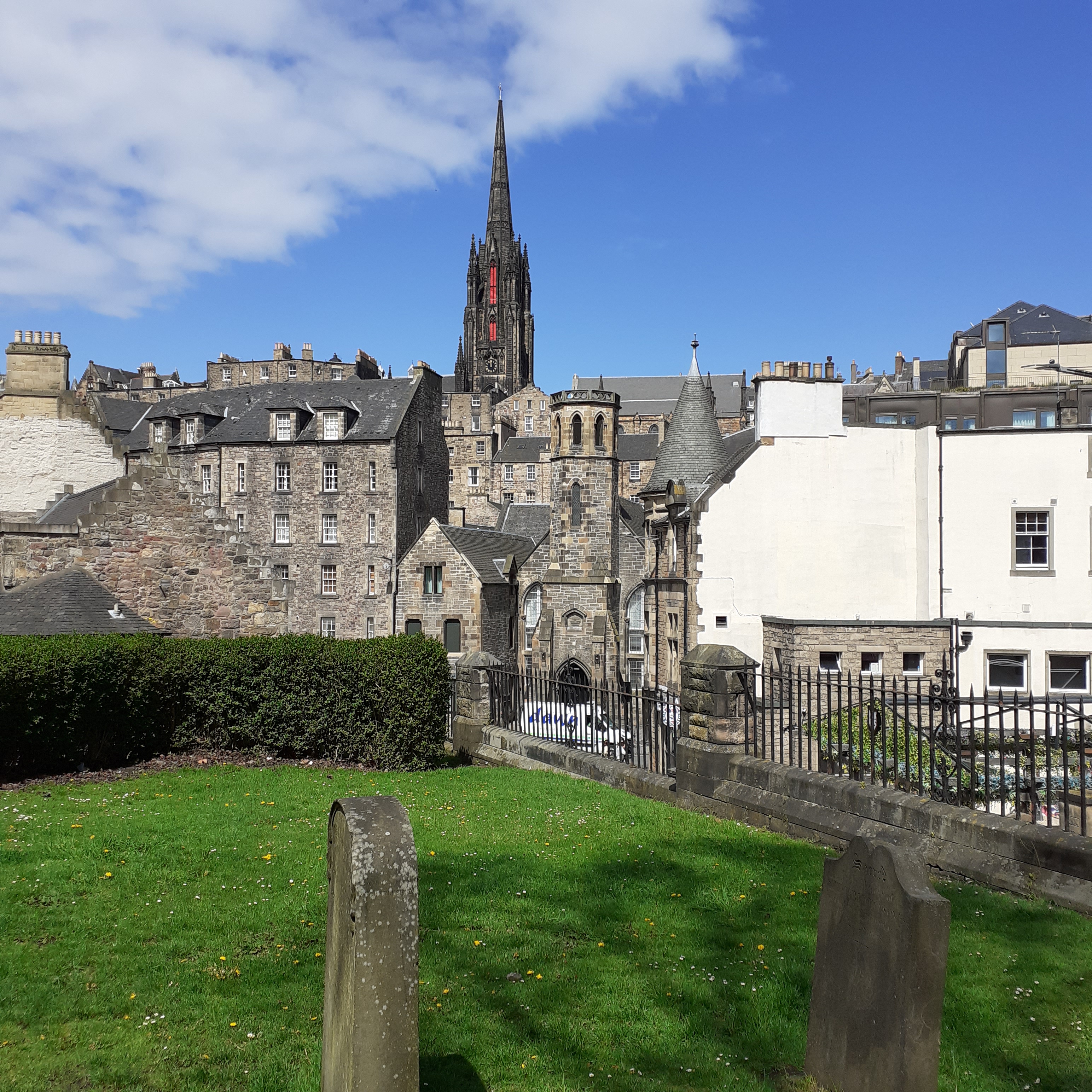
At the end of Grassmarket the road divides. Straight on and you pass under the bridges that buttress the Old Town. Candlemaker Row slopes upward to join George IV Bridge with the wall of Greyfriars Churchyard along one side. The Grey Friars themselves were Franciscans whose monastery was dissolved in 1560 as Scotland was gripped by the Reformation. The cemetery was a replacement for the St Giles Cathedral churchyard up on the Royal Mile. It was a place of free assembly and The Covenanters signed the National Covenant here in 1638. This asserted the primacy of the Scottish Presbyterian Church but their revolt was soon defeated in the Battle of Bothwell Bridge. Following the battle, four hundred prisoners were held in a section of the churchyard, and it became known as the Covenanters Prison.

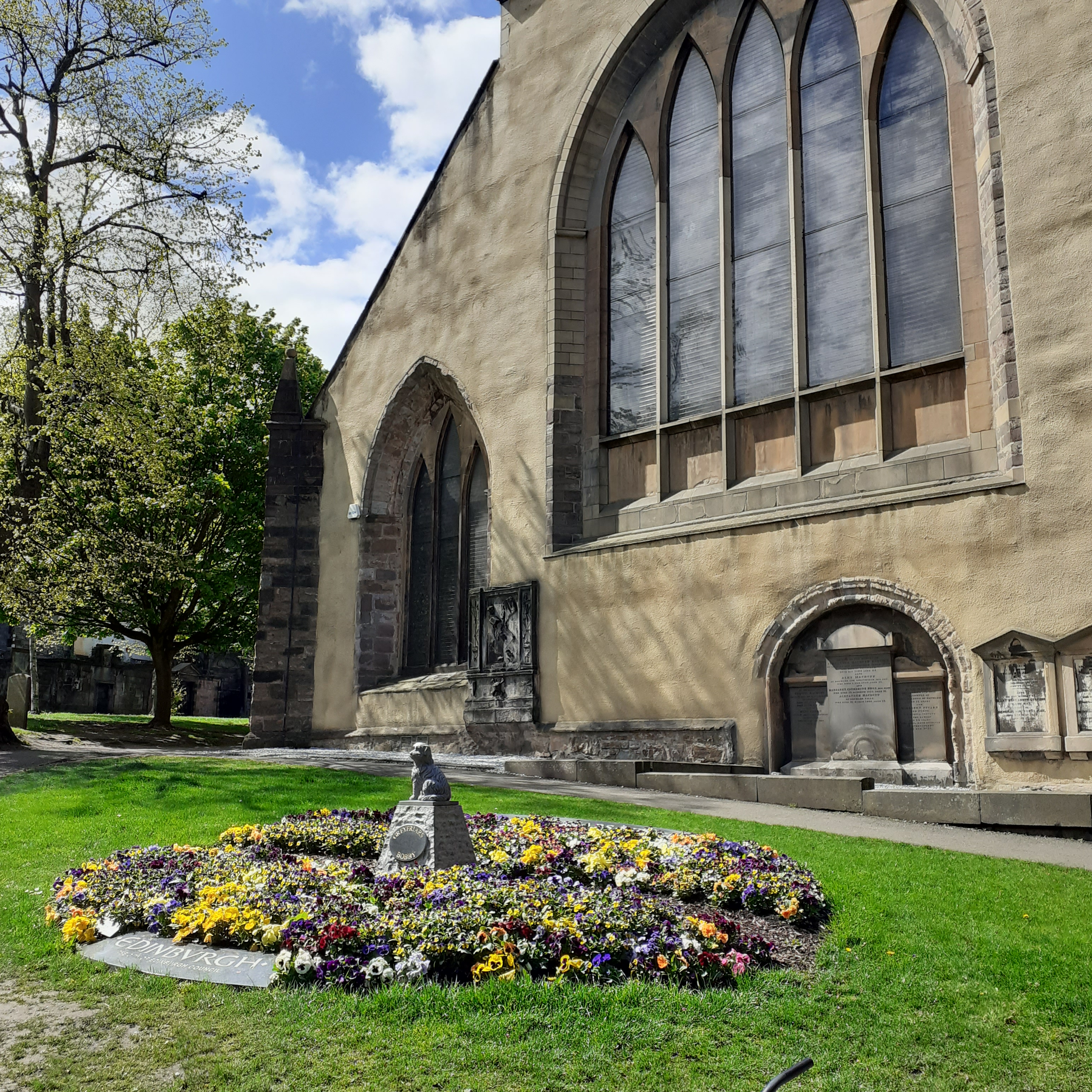
Most famous of the kirkyard’s  former residents is a wee dog. Greyfriars Bobby. A Skye Terrier, he belonged to a nightwatchman with the city police, John Gray. When Gray died in 1858, it is said that Bobby, his watchdog, kept watch at the graveside until its own death fourteen years later. By this time he had become well known, to the extent that Edinburgh’s Lord Provost, William Chambers had the dog licensed and collared. A year after Bobby died, English philanthropist, Lady Angela Burdett-Coutts was so touched by the story that she had a statue erected in is memory. Outside the gates you’ll find the granite fountain surmounted by a lifesize bronze statue of Bobby. 

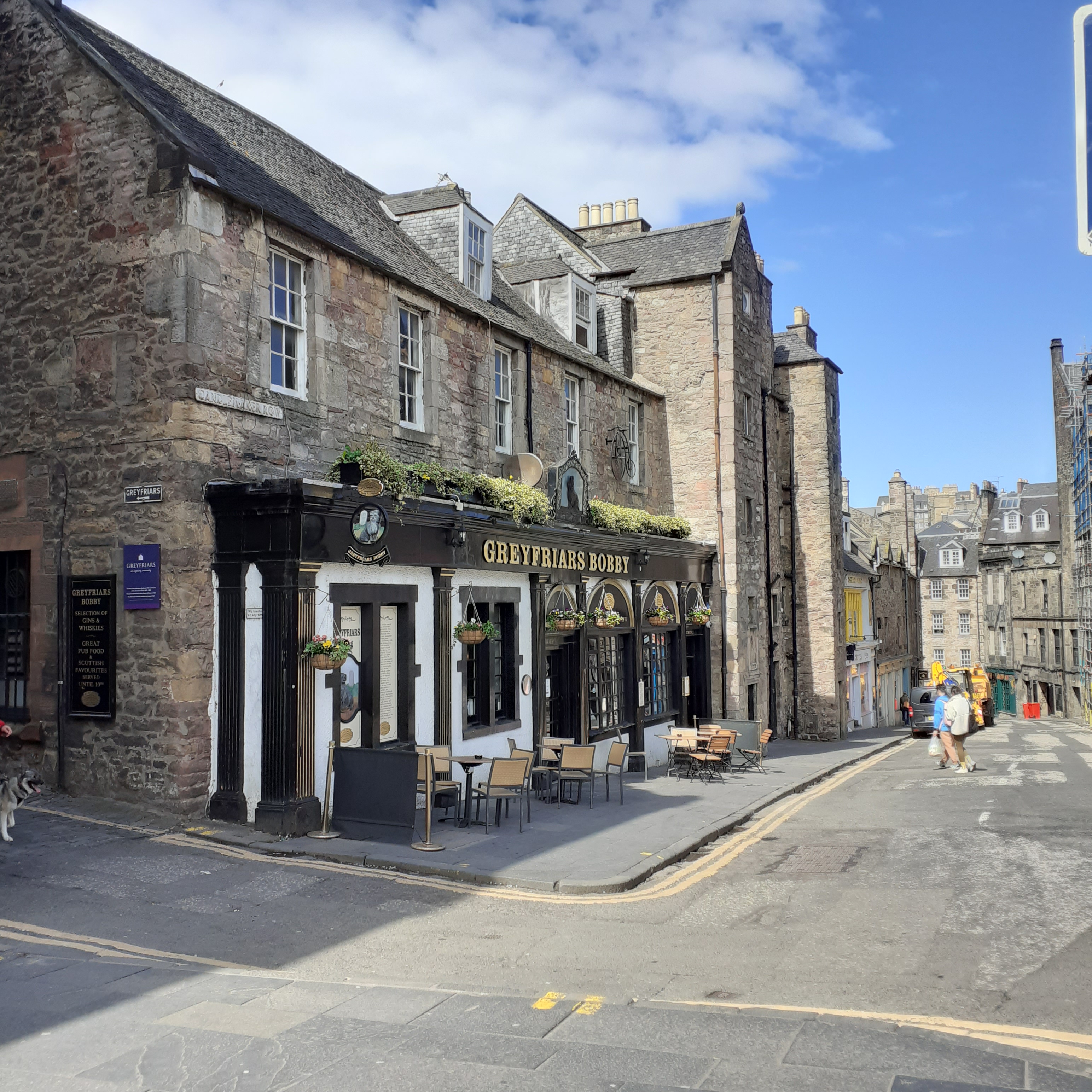
The legend has grown. I saw the Disney film back in the early sixties. This was based on Eleanor Atkinson’s novel of 1912 and has a different version of events. Here, John Gray is a farmer who comes to Edinburgh and dies. A major character is Mr John Traill, of Trail’s Temperance Coffee House, who in real life claimed Jock and Bobby were regular visitors. As the coffee house was opened four years after Gray’s death, it may be something of a shaggy dog story. A more recent film in 2005 controversially starred a West Highland Terrier playing Bobby, an example of cultural appropriation. The Temperance Coffee House was located outside the gates, and is now, thankfully a bar. Greyfriars Bobby’s Bar is an old style pub, with outside tables to catch the midday sun

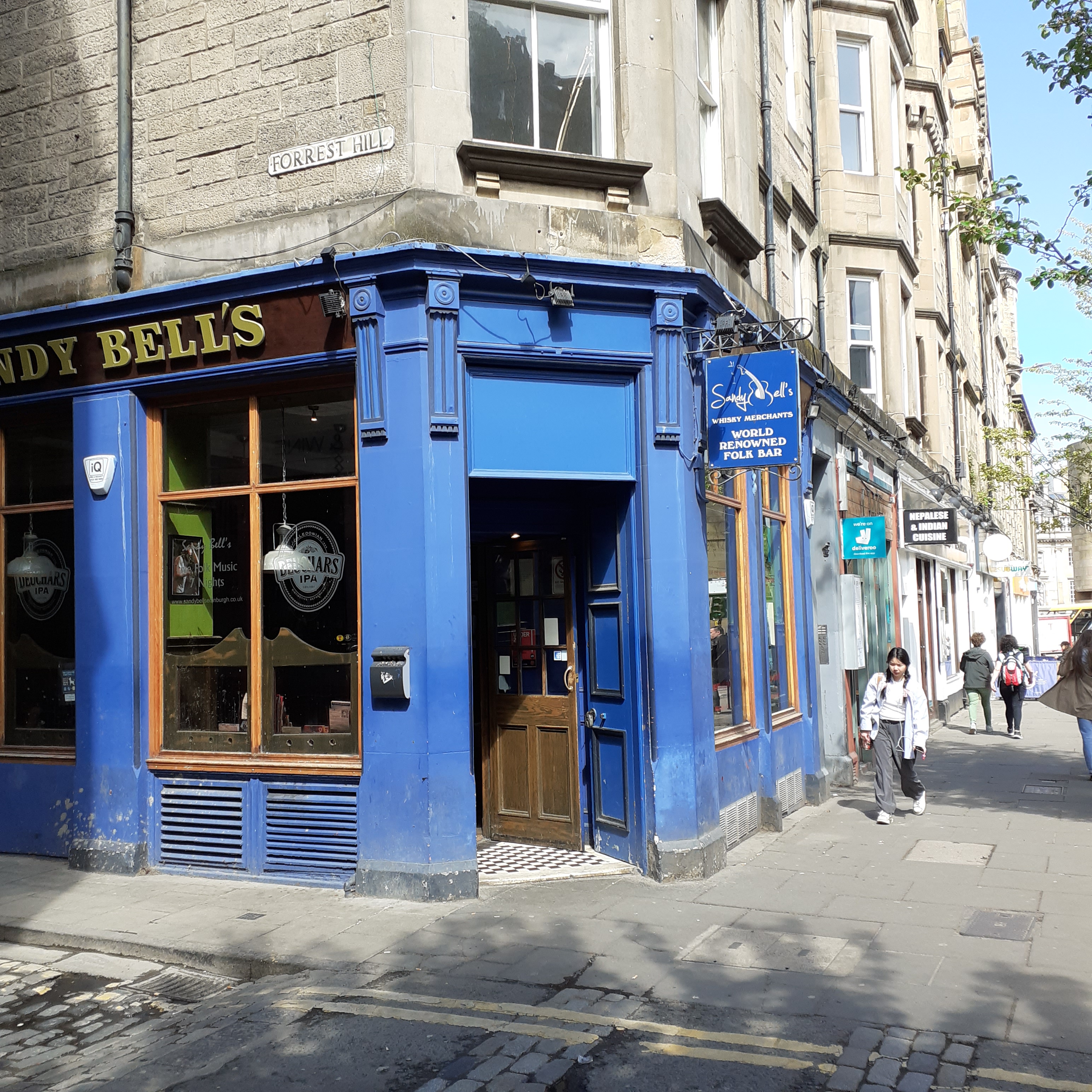
Around the corner on Forrest Road is Sandy Bell’s, another pub on the Rankin Rebus Pub Crawl. This is a folk bar with evening sessions featuring Irish and Scottish traditional music. It’s a century old and was first known as the Forrest Hill. Blossoming in the folk heyday of the sixties, Barbara Dickson, Billy Connolly and Gerry Rafferty are amongst its alumni. In the 80s a landlord installed a puggie or slot machine, bane of British pubs, but the regulars delivered an ultimatum, either it goes or we go, and it lasted all of a day. Sandy Bell’s became the official name in the nineties, as that’s what everyone called it, dating back to the twenties when the pub was owned by a Mrs Bell.

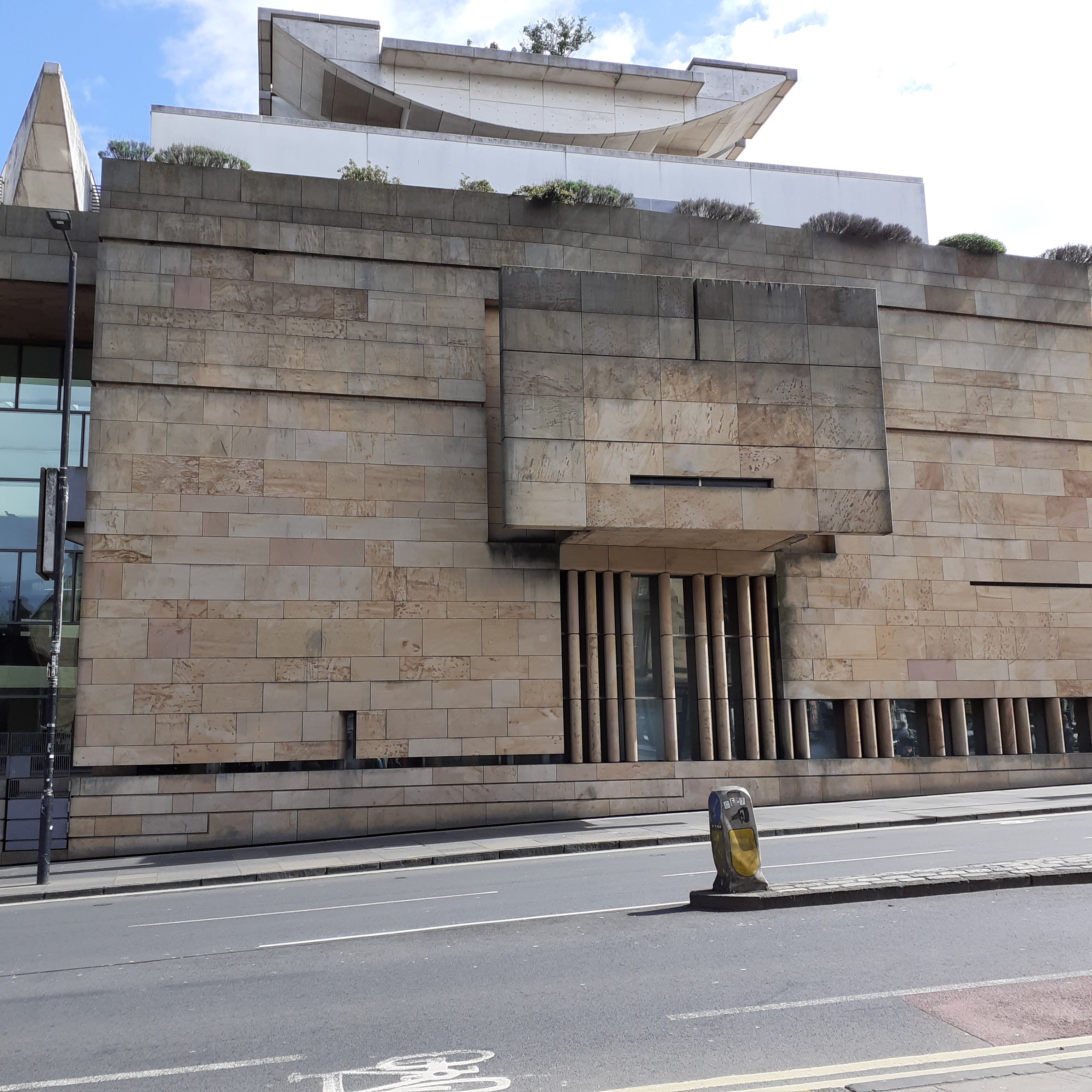
Across the street is the Scottish Museum. This is two buildings. The Royal Museum was built in the 1860s and houses displays of industry, science, technology and natural history. The modern building from 1998 is a formidable and concrete slab in the Le Corbusier style, which paradoxically concentrates on history and antiquities. Admission is free. The old building has that Great Exhibition air to it; the Grand Gallery of cast iron and light was inspired by the Crystal Palace.

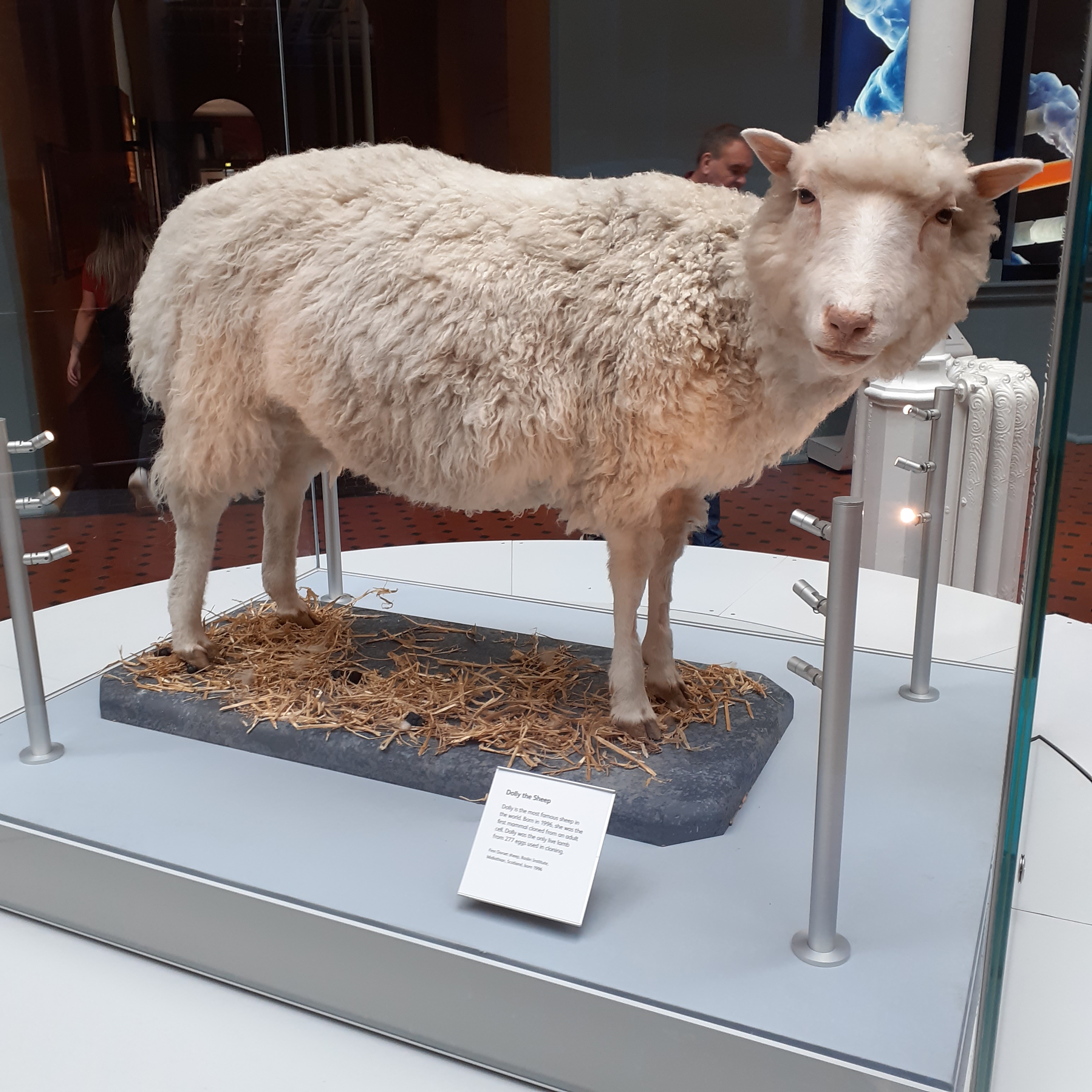
The Discoveries Gallery features the world of adventure and invention.You can meet Dolly the Sheep. Born in 1996, she was the first mammal cloned from an adult cell, and kept at the Roslin Institute for animal research where she died in 2003 from lung cancer. Ian Wilmut leader of the research group derived the name from the fact that Dolly was cloned from a mammary gland cell and, sez he, “There’s no more impressive pair of mammary glands than Dolly Parton’s.”

There’s exhibitions on Ancient Egypt and East Asia, and the arguably more ancient Elton John’s suit is amongst the fashion artefacts on display. In the new building Scotland is investigated through the ages. This is rich in detail but challenging. Some years back I visited Stirling Castle, which had an excellent guided tour, along with permanent displays that clearly mapped the heritage of Scottish Kings and Queens. I didn’t really get that clear a narrative here, perhaps I was tiring. It’s a vast museum, and hard to take in everything in one day. Worth a visit, or two.

The statue guarding the entrance is of William Chambers, who asides from his love of dogs, had a notable career. Born in 1800, he opened his first bookshop at nineteen and established a publishing empire with his younger brother Robert. As Lord Provost of Edinburgh in the 1860s he initiated major street construction projects hereabouts.

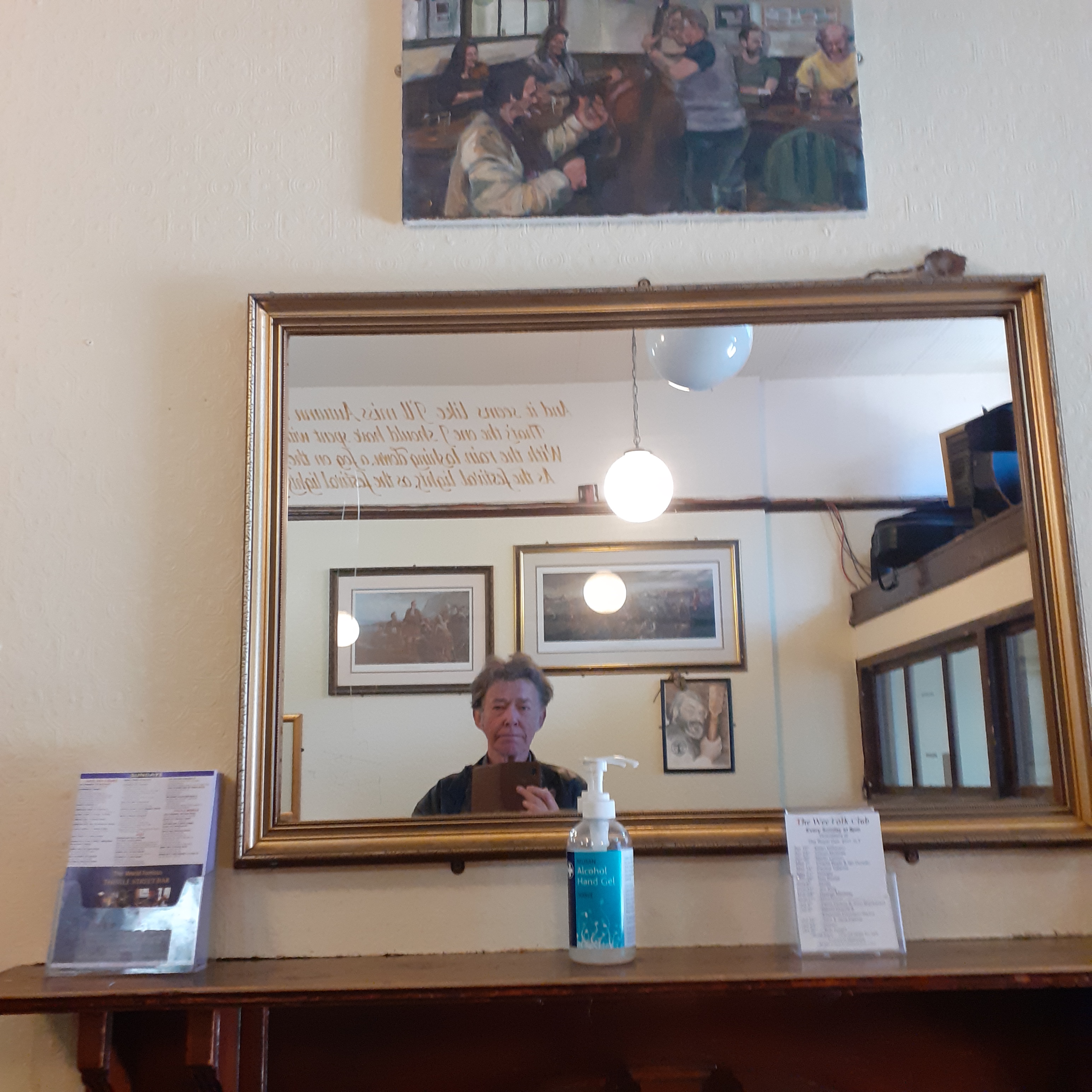
Chambers Street connects to the North and South Bridges joining Old and New Towns and bisected by the Royal Mile. I’m searching for the Royal Oak, another stop on the Rebus Pub Crawl. Hidden down Infirmary Road, its modest entrance leads to a welcoming traditional bar. The pub is two centuries old and is long established as an informal folk music venue. It features in Rankin’s Set in Darkness, eleventh in the Rebus series set during the birth of Scottish devolution. A duo discusses politics at the upstairs bar while I am engaged by the young lady serving. She tells me tales of growing up on Scotland’s east coast and I can thread in vague experiences of my own including Inverness and the shores of Lough Ness. There be monsters and dragons, and bagpipe festivals, and ancient standing stones where you might catch a glimpse of Catriona Balfe flitting through timezones in a diaphanous shift. But I digress. The lady merges the two conversational groups and now we argue over the travails of Mister Trump and his chances of reelection. There’s a  smoke break, and I’m left alone with the mirrors and memories, and haunting lines of musicians who have gone or yet to visit. 

Last on Rankin’s list is Bennetts, another old style pub on the southern approaches. It’s on my route home to Morningside, retracing my steps back to Tollcross and onto Leven Street. Bennetts is next door to the King’s Theatre, currently closed for renovations. There’s been a pub here since 1839, its current incarnation dates to the start of the twentieth century, about the time the theatre first opened. It’s a beautiful Victorian bar with high windows, wood and brass fittings, an open fire and snug. Here I spy the bagpipe busker from outside the Academy, his weaponry laid out on the table on his LGBQT flag. The barman proposes a chocolate flavoured stout which hails, I think, from Skye. Meanwhile, beyond Bennett’s huge windows, the sky above has opened and the deluge pours upon all without. I should stay sheltered I suppose.

Further on, Bruntsfield Place rejoices in the high, neo-gothic architecture typical of the city. Bruntsfield is birthplace of Muriel Spark. Her novel the Prime of Miss Jean Brodie was published in 1961. It was filmed in 1969 starring Maggie Smith. The film depicts Jean living in this area with the school based on nearby Morningside. On one of my all too many days off school I snuck into a Dublin cinema to catch this, becoming lost in a world of Scottish schoolgirls, bohemian art and some challenging social political theory. Maggie Smith won an Oscar. I’m in m’prime!

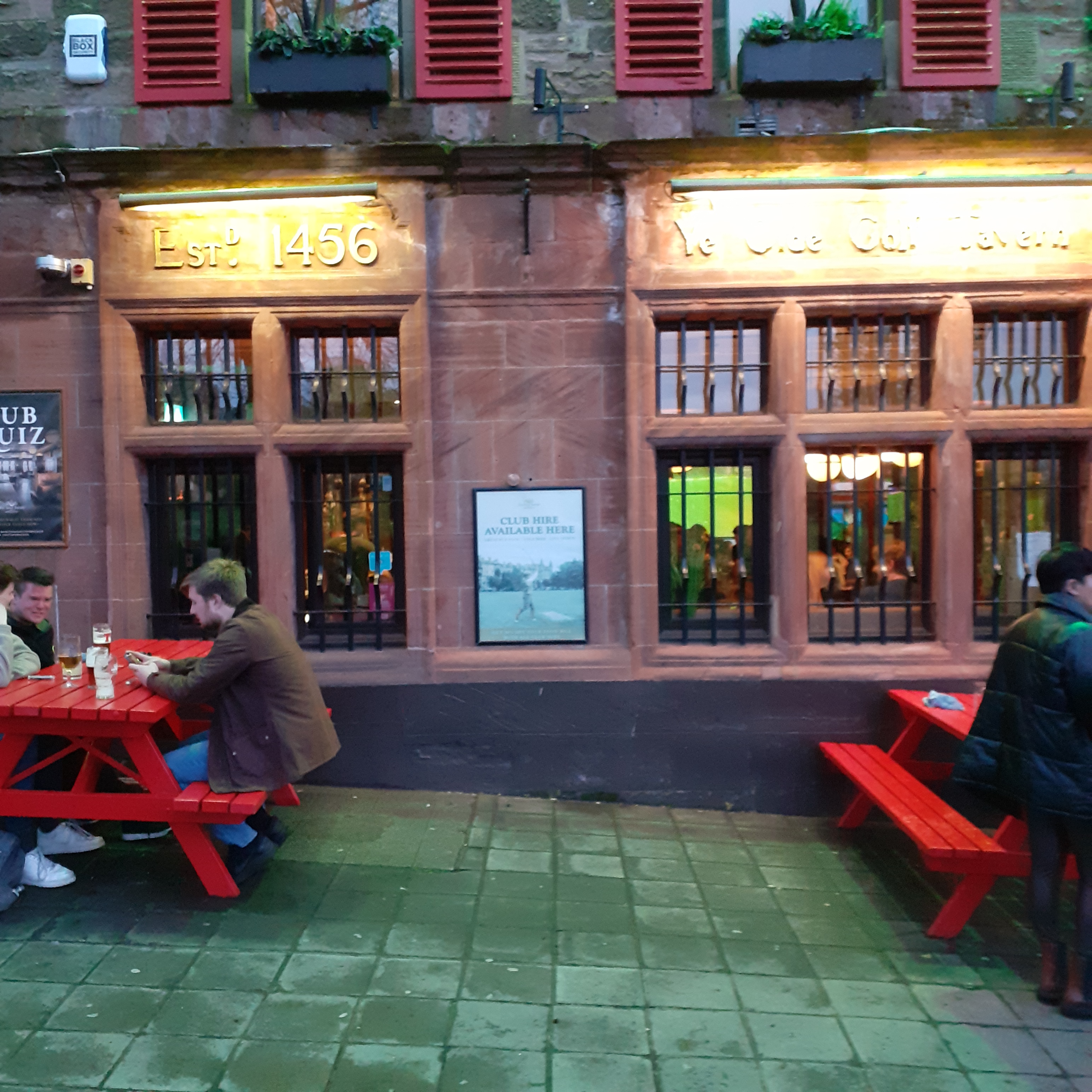
Bruntsfield Links provides a welcome slice of greenery on the city’s edge. It is, perhaps, the founding place for the ancient game of golf. The Golf Tavern boasts of dating back to 1456. Certainly, the Links were the playground of the Edinburgh Burgess Golfing Society, now known as the Royal, which claims to be the oldest golf society in the world, formed in 1735. They became a club and moved to their own course in 1890. There is still a pitch and putt course on the Links, but most is now a public park.

From the seats outside I have a view across the links to Arthur’s Seat. Arthur’s Seat is a remnant of the ancient volcano, along with Calton Hill, and the Castle Crag. It has featured frequently in the city’s literature, with many appearances in the Rebus series. One particularly evocative scene occurs in James Hogg’s fantastical novel the Confessions of a Justified Sinner of 1824. A broken spectre on the misty mountain makes for an eerie culmination in the struggle between the two sibling protagonists, George and Robert. Robert and his evil alter ego, Gil Martin is another inspiration for Jekyll and Hyde.

The Arthur in question is said to be the legendary king of the Britons who halted the AngloSaxon advance in the sixth century. Those events and their people are lost in the mists of time. Rather as Arthur’s Seat is now. A fog, or haar, has swept over the Old Town, so that as I turn to say farewell, the spires and peaks and castle of Auld Reikie float on its murky cushion, slipping off towards the horizon. And are gone.