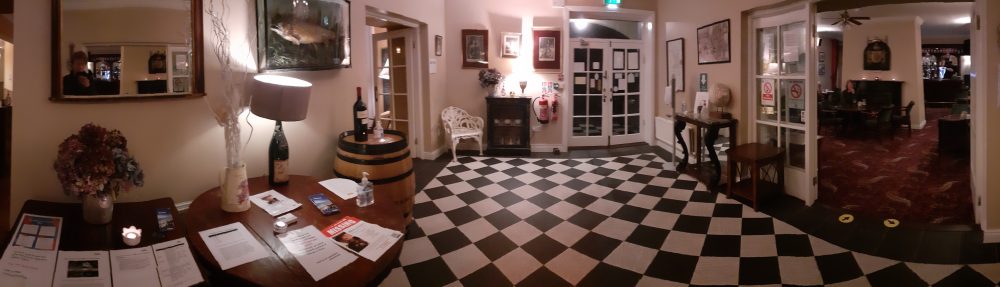

Downtown Douglas
I have never been to the Isle of Man before. It seems a strange omission, as there’s no foreign soil closer to my home than this island cooling in the Irish Sea. It was once a popular holiday destination for people from Britain and Ireland back in the 1960s and beyond. M visited regularly in the late sixties and early seventies so something of a stroll down memory lane for her then. In keeping with the zeitgeist so, we opted to take the ferry from Dublin as most did back in the day. The Isle of Man Steam Packet Company makes weekly sailings between Dublin and Douglas during the summer months. As we were planning a two day stopover, we decided on taking a ferry onward to Liverpool. A voyage of sorts, in the old fashioned way.
The IoM Steam Packet Company was founded almost two hundred years ago (1830) making it the oldest passenger ship company in the world. We booked Manannan, the high speed catamaran which is named for Manannan Mac Lir, sea god of the Gaels. From Connolly Station we took a taxi at the adjacent rank to the ferry port at the end of the East Wall. The Steam Packet shares the terminal with Irish Ferries who operate to Holyhead. There’s a pleasant coffee bar at the top with glorious views over Dublin port on a clear sunny morning. The good vibes have spread to the terminal staff who are friendly and jocular.
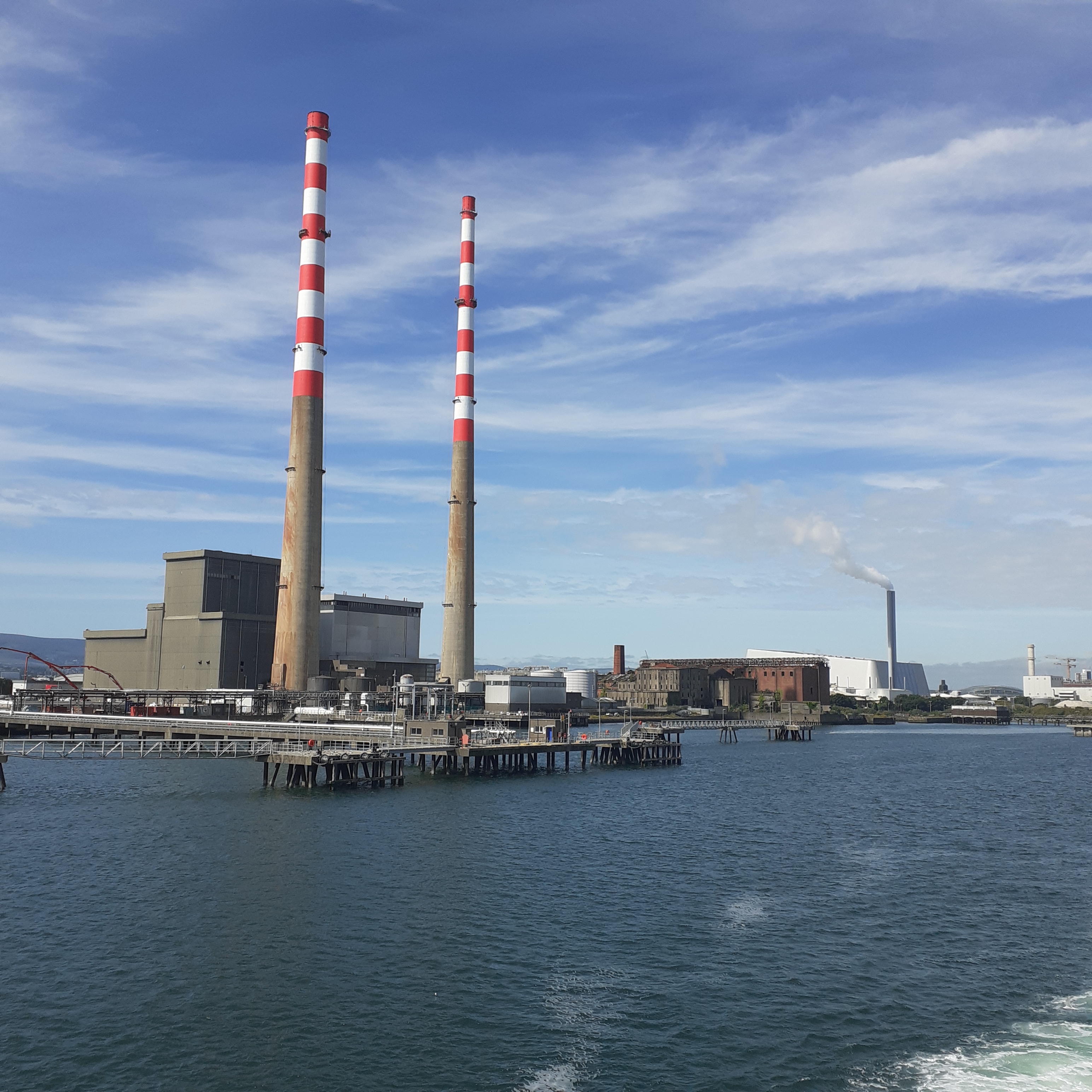
Manannan set sail at half ten. The crossing takes just three hours, with Ireland barely dipping below the horizon as Mannin rises from the blue ocean. The Isle of Man is a British Crown Dependency. Charles III is head of state and the UK looks after defence and foreign affairs, but it is otherwise a self governing independent state. The parliament, the Tynwald, was founded by the Norse in 979 and claims to be the oldest continuously operating parliament in the world. It is bicameral; the House of Keys being the Lower House.
The name Man is thought to be derived from mountainous island in Welsh, or else refers to Manannin Mac Lir. In Manx it is phrased Ellan Vannin (as Oilean Mhannin in Irish Gaelic). The Manx language is Celtic, related to the Gaelic languages of Scotland and Ireland. It is being enthusiastically revived and features prominently on street signs and many businesses. The Manx themselves are longtime English speakers, their speech rhythms and demeanour more closely resembling the North of England. There’s a hint of the Welsh or Cornish about their heritage, Mannin was a haven for pirates and splendid castles, but they are actually Gaelic rather than Britonic.
Manx was spoken until the early twentieth century. The island was Celtic up until the tenth century when Norse invaders took over. The Scottish followed in the thirteenth century when Man was grouped with the Western Isles. Control passed between the English and Scottish for the century up until 1346 when English lordship won out.
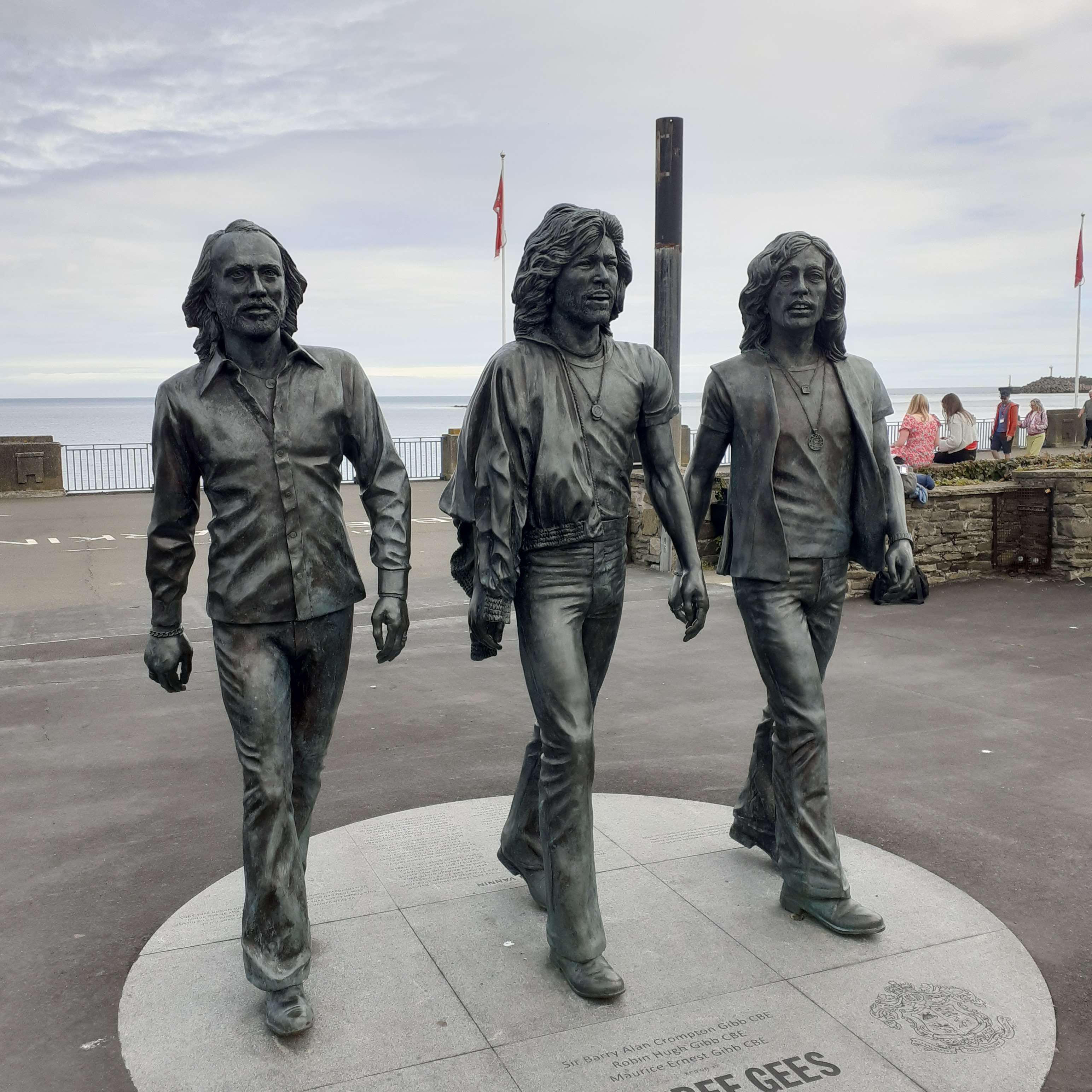
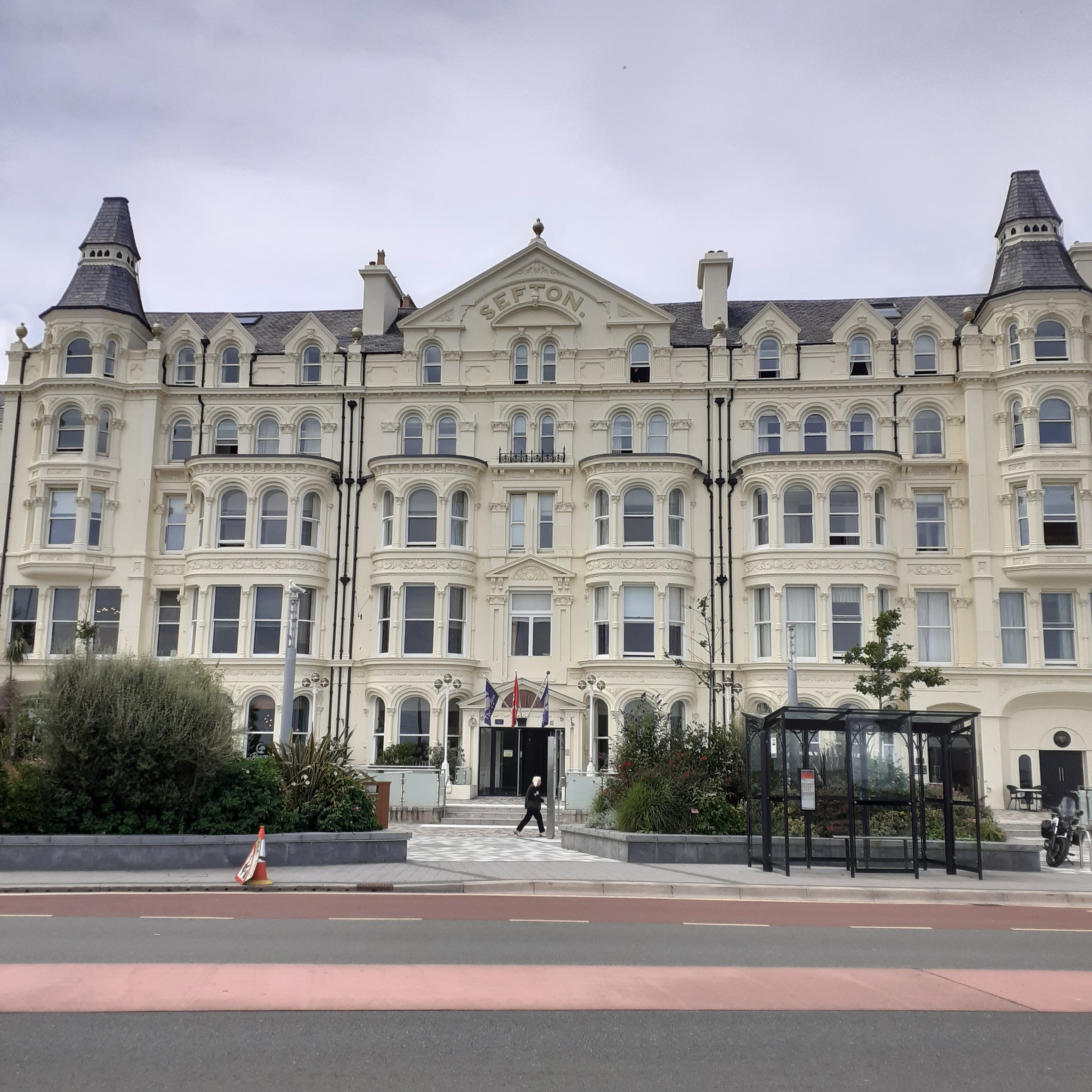
The island is thirty three miles long and about thirteen wide and has a population of eighty five thousand. Douglas, where we land, is the capital. From the terminal, the seafront formas a shallow arc of two miles around much of the bay. It is fronted by an impressive array of tall Victorian terraces and a Promenade. Our hotel, the Sefton was a ten minute walk by way of an attractive sunken park. We come across the Bee Gees walking in the same direction. Set in bronze, the trio are slightly larger than life. The brothers Gibb; Barry, Robin and Maurice, were born here in the 1940s before moving to Manchester and in 1958 to Australia. Ten years later they had a string of hits including Massachussets featuring their plaintive vocal harmonies. While that success soon faded, they reemerged in the late seventies with the soundtrack for Saturday Nite Fever, one of the biggest selling albums ever.
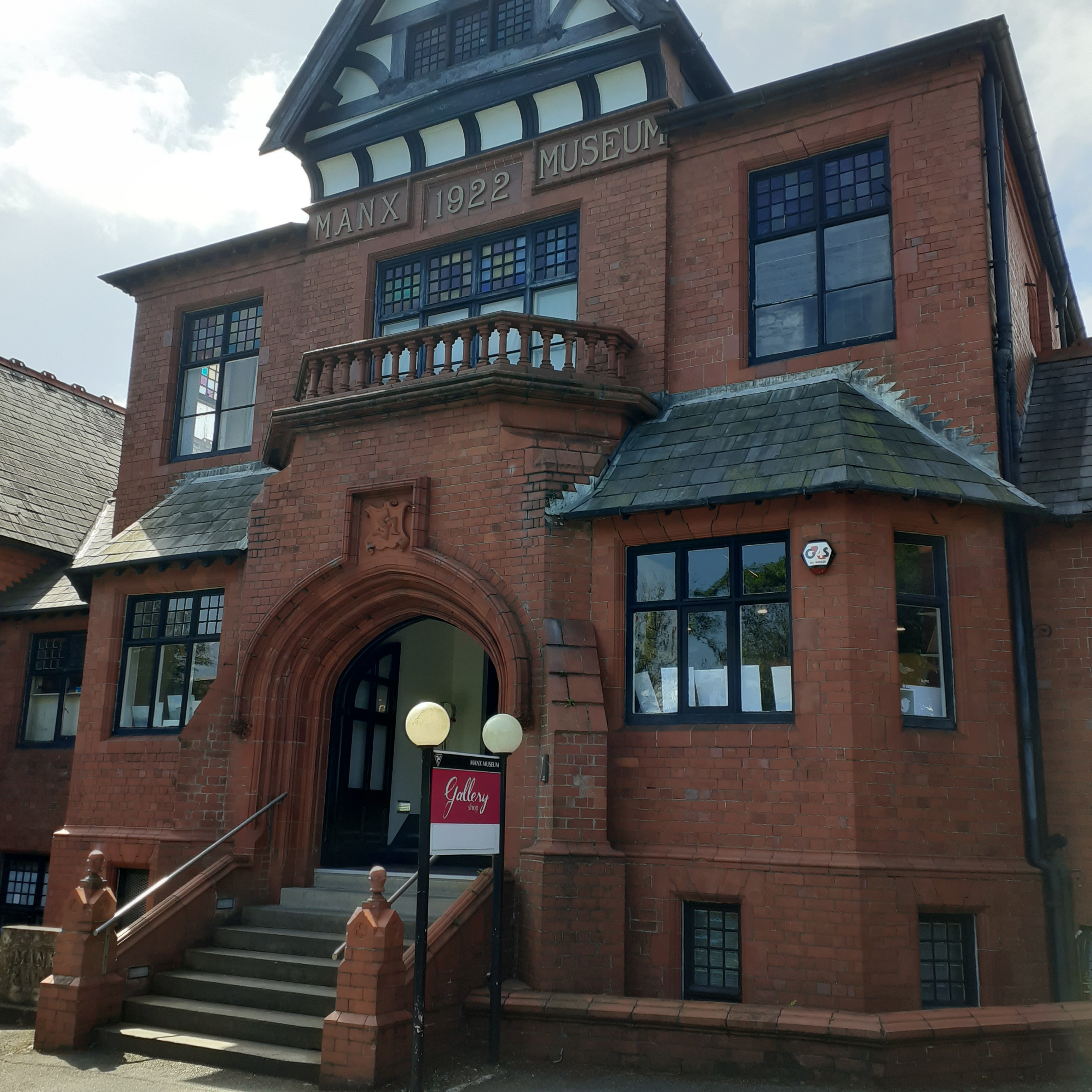
Man’s seafront heyday began in the 1950s. The seafront was the ultimate experience for families and strutting youth. That attraction has gone. The Manx Museum on higher ground above the old town, is the only place you can revisit it. It’s an interesting and eclectic display. Exhibits lead us through ancient history, into the world of Viking and Celt, through the complex political weave of the early modern and on to the often brash commercialism of the twentieth century. One picture shows a thronged seafront evoking those great seaside days of youth, the boardwalks and amusement arcades, candyfloss, rock n roll and Mods and Rockers.
George Formby is included in the mix. Formby’s comedy No Limit from 1935 was his breakthrough hit, based on the TT races. Formby, once a jockey, played a star motorbiker. The film ignited his career as the cheeky chappie, provoking laughter with inuendo laden ditties accompanied on ukelele. His heyday was in the thirties and forties. though a decade later George Harrison noted him as an early influence. There’s a state to Formby near the railway station, at the southern end of Douglas.
The Tourist Trophy was first staged in 1907, the Isle of Man being chosen as Britain’s restrictive speed limit disallowed road racing. It has become an iconic race meet for motorbikers. A high proportion of visitors to Man are from the biking fraternity. The island is a point of pigrimage, or the scene for a last sunset drive. There’s a large section in the Museum devoted to the race, with some fun interactive displays.
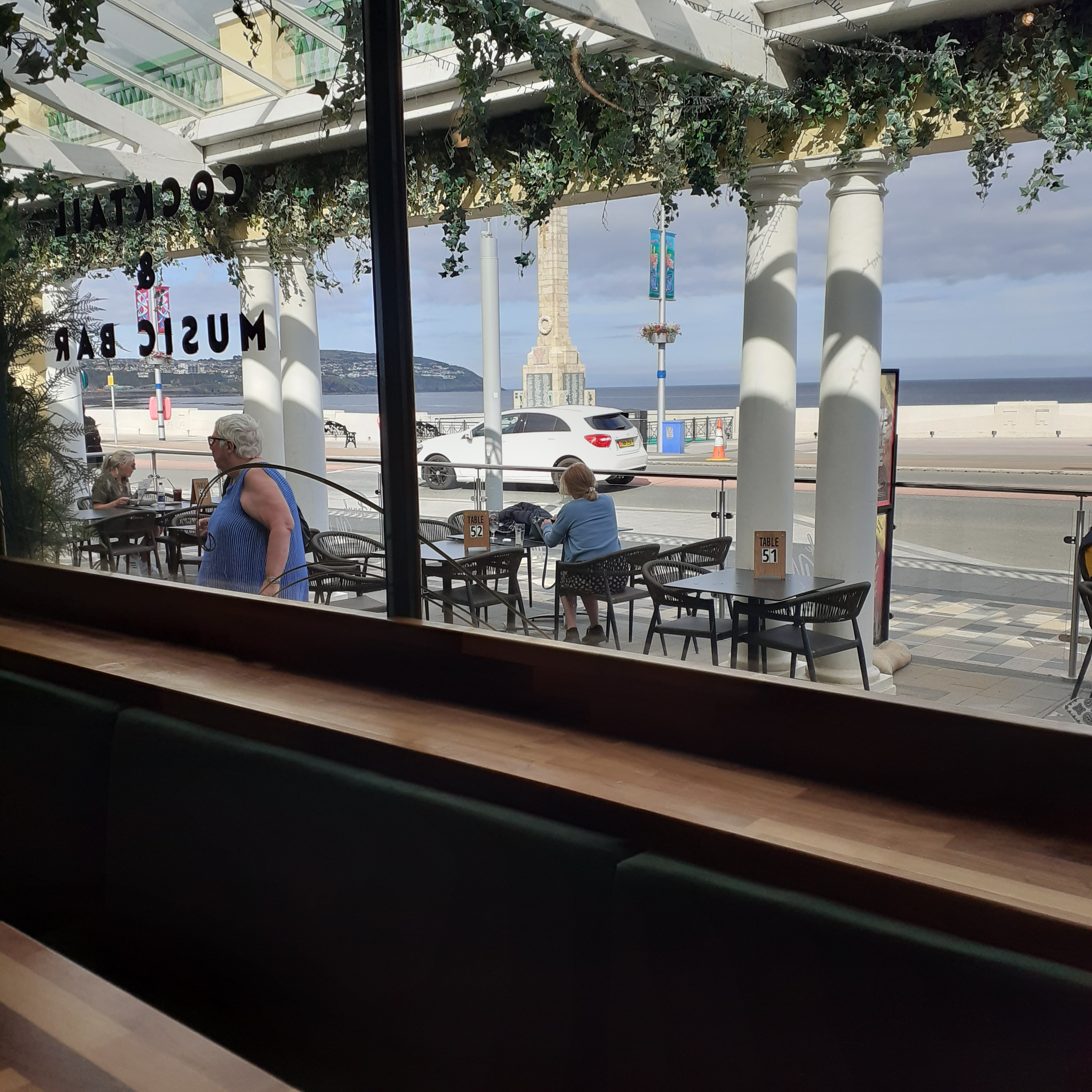
Walking along Dougas’s seafront in a summer heatwave, it was a surprise to find only one bar and a cafe with outdoor seating. The beach was as deserted as a surrealist painting. The tide had gone out in more ways than one. Matcham’s Bar and the cafe next door supplied the only refreshment terrace I could see, against an urban backdrop that was impressively Mediterranean. These hostelries front the Villa Marina, a seafront complex with old world theatre and arcade framing a pleasant public park with a few food outlets. The Sefton supplied chairs and tables outside Sir Norman’s bar which I also enjoyed later in the day. Norman Wisdom is the Norm in question, the comedian’s grinning statue occupying a bench at the door.
Douglas’s main shopping area meanders behind the seafront in the old fashioned way. Pedestrianised Strand Street leads on to Duke Sreet and farther on is the Quay, a picturesque inlet crammed with sailing craft. The south headland rises sharply behind and the quaysides are lined with period buildings housing bars and restaurants. The British Hotel and the Barbary Coast give something of a snapshot of Manx identity conflict. Pirates or patriots? There’s a pizzeria and a Chinese besides, with a selection of places to sit outside and enjoy the view. At last, our place in the setting sun, to raise a glass or two in memory of broken hearted pirates, motorbike heroes and our Celtic islands in the sun.

On an island in the sun
We’ll be playing and having fun
And it makes me feel so fine
I can’t control my brain
Thought I’d share that one. Its memory came back to me recently when it popped up in one week on a travelogue tv soundtrack, on the car radio, as a highlight at Glastonbury. Then, while walking along Nassau Street, I spied Weezer themselves playing live to a sunkissed throng on the TCD campus. Happy days indeed. Appropriate words, too. Island in the Sun was written by Weezer’s singer guitarist Rivers Cuomo and first appeared on their 2001 album, Weezer, aka The Green Album.
We’ll run away together
We’ll spend some time forever
We’ll never feel bad anymore
Hip-hip
Hip-hip
Hip-hip
 xxharrison
I now know a thousand times more about the Isle of Man than I did before. Thanks for an excellent tour!
Glad you enjoyed it, Neil. There’s one more episode to come, concerning our tour on the excellent Manx rail system.
So interesting Shane. I’ve been thinking about a trip to the IOM for awhile now but not managed to get there yet. My parents used to visit frequently in the days when there was a ferry between Fleetwood and IOM as they lived just a long the coast. I think it ceased operating in the 60’s.
I’d say you would really enjoy the IoM, Marion. They have a wonderful narrow guage rail system, electric and steam, which takes you just about anywhere. There are daily sailings from Liverpool.
It’s good to know Shane that we could come over and manage without hiring a car. I think there’s also a ferry from Heysham near Morecambe which could possibly be slightly nearer home so I’ll definitely look into it for next year.