At Heuston Station I flash my ticket for the guard. Where to? Galway, I say. Ceannt? Ah, there’s no call for that now.
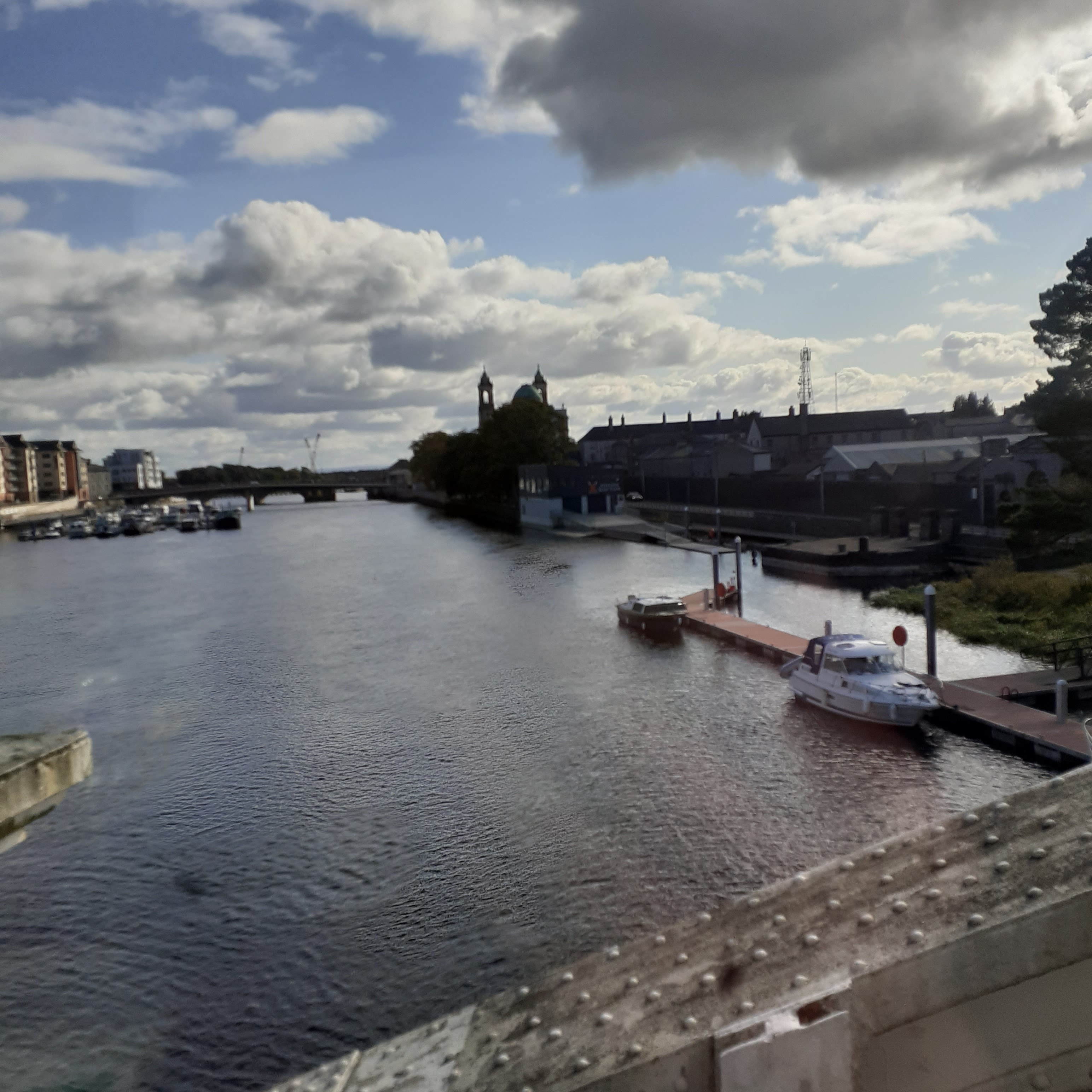
The journey from Dublin to Galway takes about two and a half hours. Passing through the midlands via Athlone, we cross the Shannon into the West, heading on to Galway by way of Ballinasloe and Athenry. Galway Ceannt is under renovation. Trains are operating normally, but otherwise it is a building site. I have a pint at O’Connell’s on Eyre Square, from where it’s just a ten minute walk to my BnB on College Road.
Galway was founded by Norman adventurer Richard de Burgh in the early thirteenth century. It is known as the City of the Tribes. The Tribes in question were not the Wilde Irishe, but Norman merchant families who rose to prominence from the thirteenth century on. Blake, French, Browne, Bodkin, Deane, Font, Joyce, Lynch, Martin, Morris and Skerrit are Norman French in origin. D’Arcy, though it looks French, was an affected spelling of an Irish clan, O Dorchaidhe, dressed up as posh. Kirwan were another tribe of Gaelic ancestry. Their power waned after Cromwell took the city in the seventeenth century; from whence the term tribes was applied, disparagingly, at first.
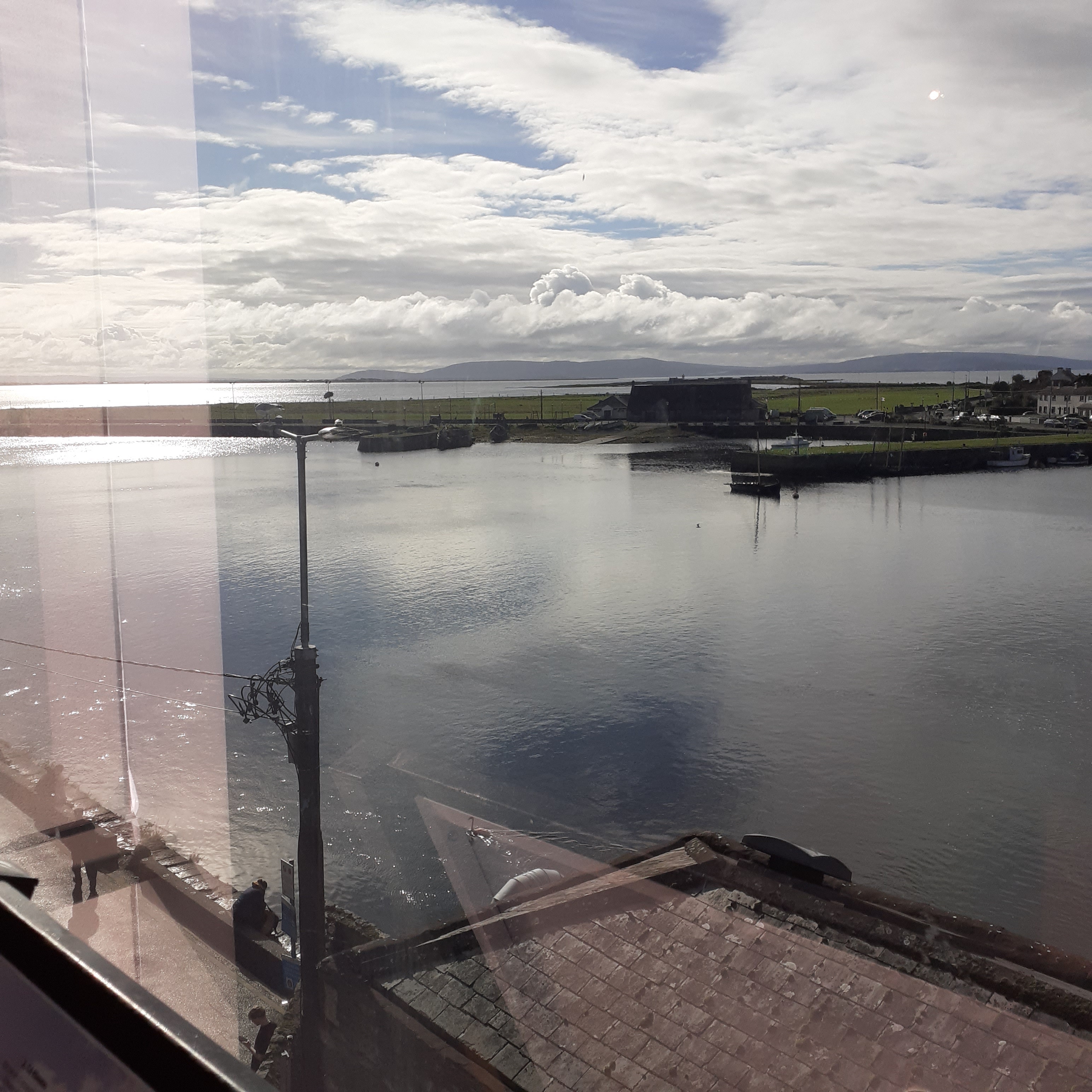
I learned all of this at the Galway City museum, by the Spanish Arch on the quayside. It’s an excellent museum outlining the colourful history of the city, its people and its many idiosyncrasies. It is flooded with light, and upstairs there are panoramic views across the city and bay. A large Galway Hooker dominates the central atrium, and is a constant reminder that you are in a city floating on water. There’s an account of the Claddagh, a history of the Claddagh Ring and a section on the Independence and Civil War era.
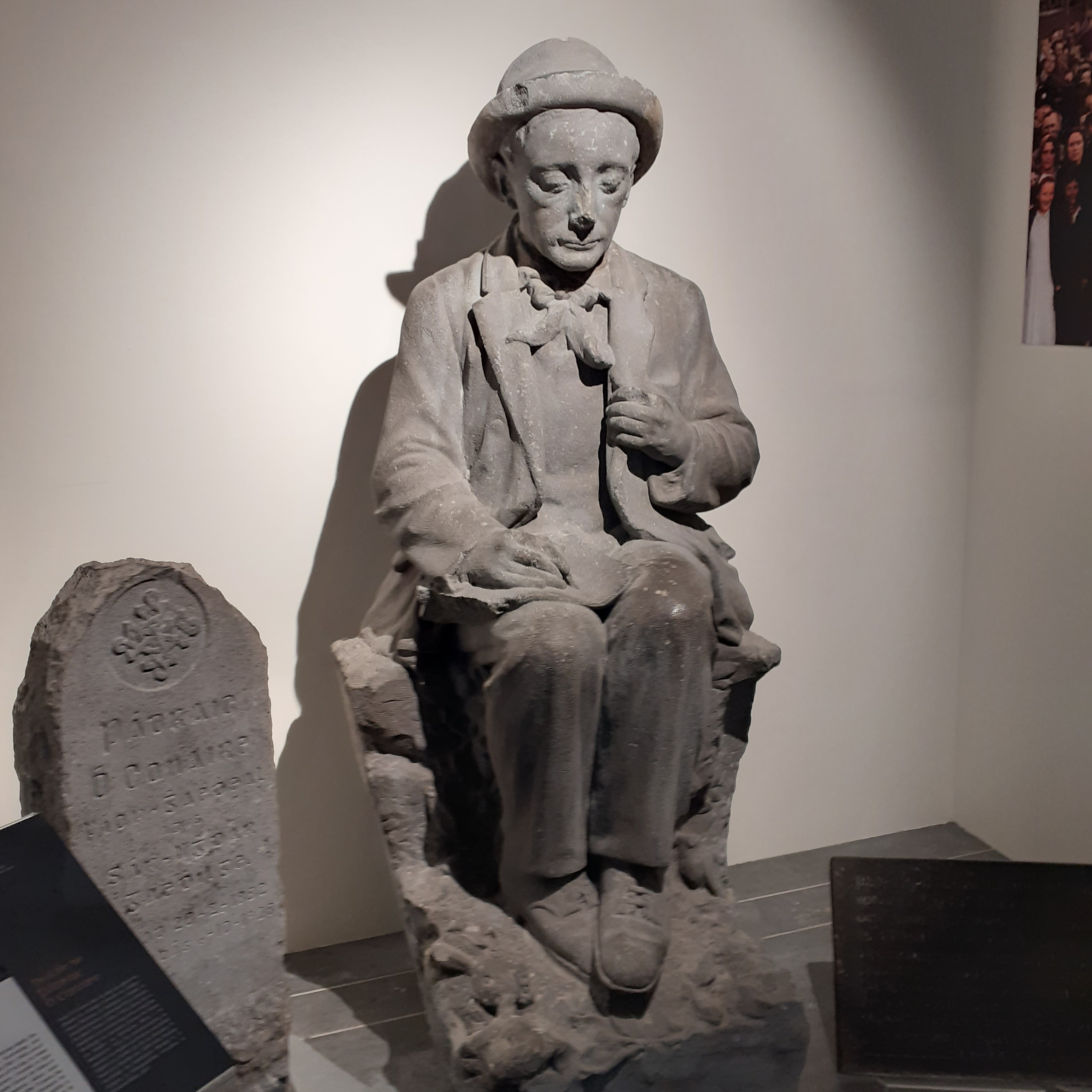
Entrance is free. In the lobby is the Padraic O Conaire statue. This originally stood, or sat, in Eyre Square. Decapitated at the Millennium, it is stored here for safekeeping. A bronze replica now presides over the square. An author and journalist, O Conaire wrote mostly in Irish. He was a figure in the Gaelic League in London before the Great War and then back in Ireland. He was only forty six when he died in 1928, although somehow the statue always seems of an older man to me. His story, M’asal Beag Dubh, concerns a chancer looking for big bucks for his shiftless donkey. It inspired an ornate hoax by Irish journalist Declan Varley. In satirising the soccer transfer market he created Masal Bugduv, a Moldovan prodigy who attracted outrageous bids from top premiership clubs. One imagines the mythical youth telling the bidders, it will take a few dollars more to shift Masal Bugduv.
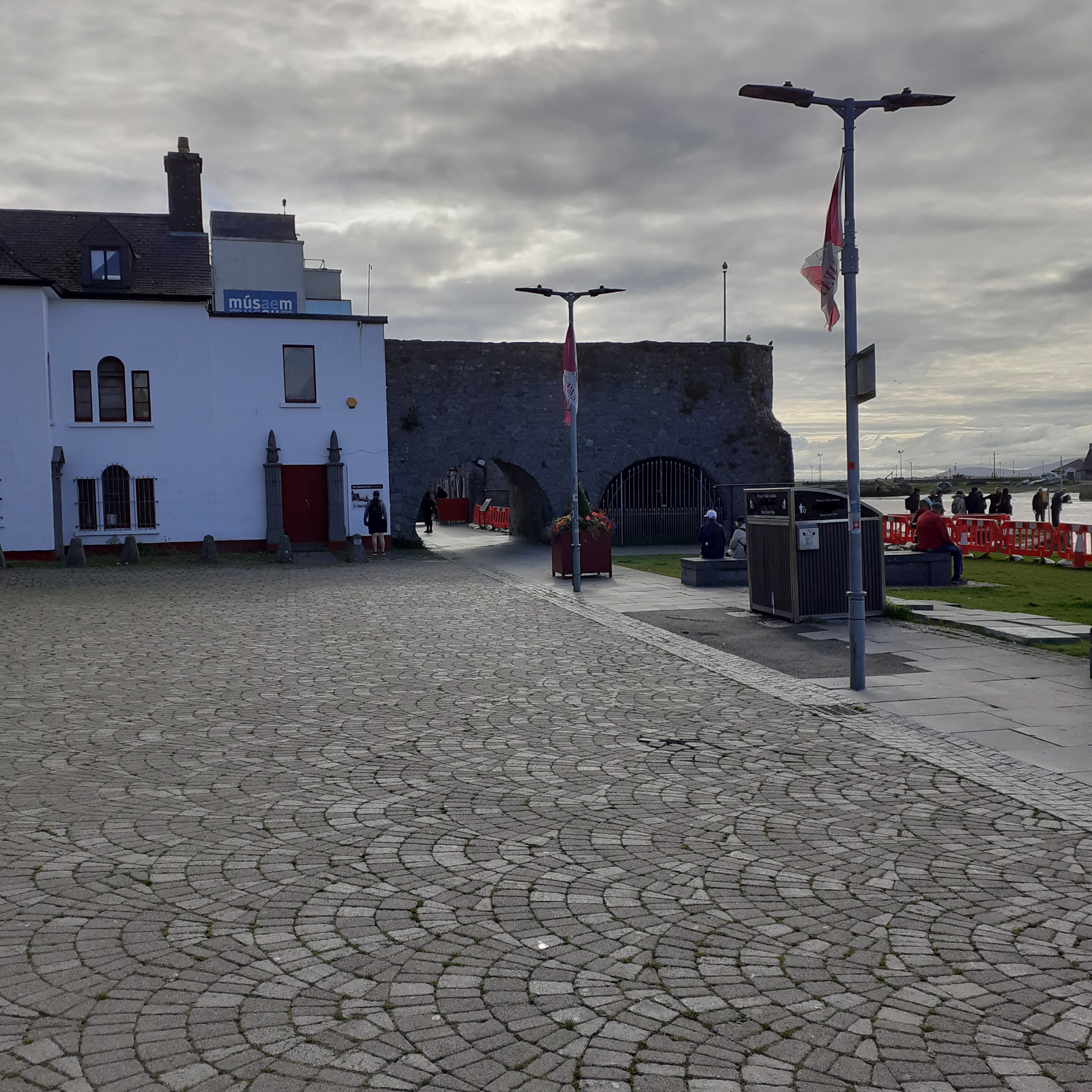
The award winning building was designed by OPW architects, Ciaran O’Connor and Ger Harvey. It’s a bright, three story L-shaped building, forming an attractive, varied plaza with the Arch and Comerford House. Comerford House, a late eighteenth century residence, housed the original city museum from 1976 until the new building thirty years later. The Spanish Arch itself is notoriously underwhelming. There are two arches; the outer one closed, the inner being the Spanish Arch itself. Overall, this is an extension of the city walls built along the old fish market in 1584. The quayside was then extended to form the Long Walk, and the arches were added to give access from the city to the new quays. Originally Eyre’s Arch, it was later named the Spanish Arch to note the extensive contact between Galway and Spain in medieval times.
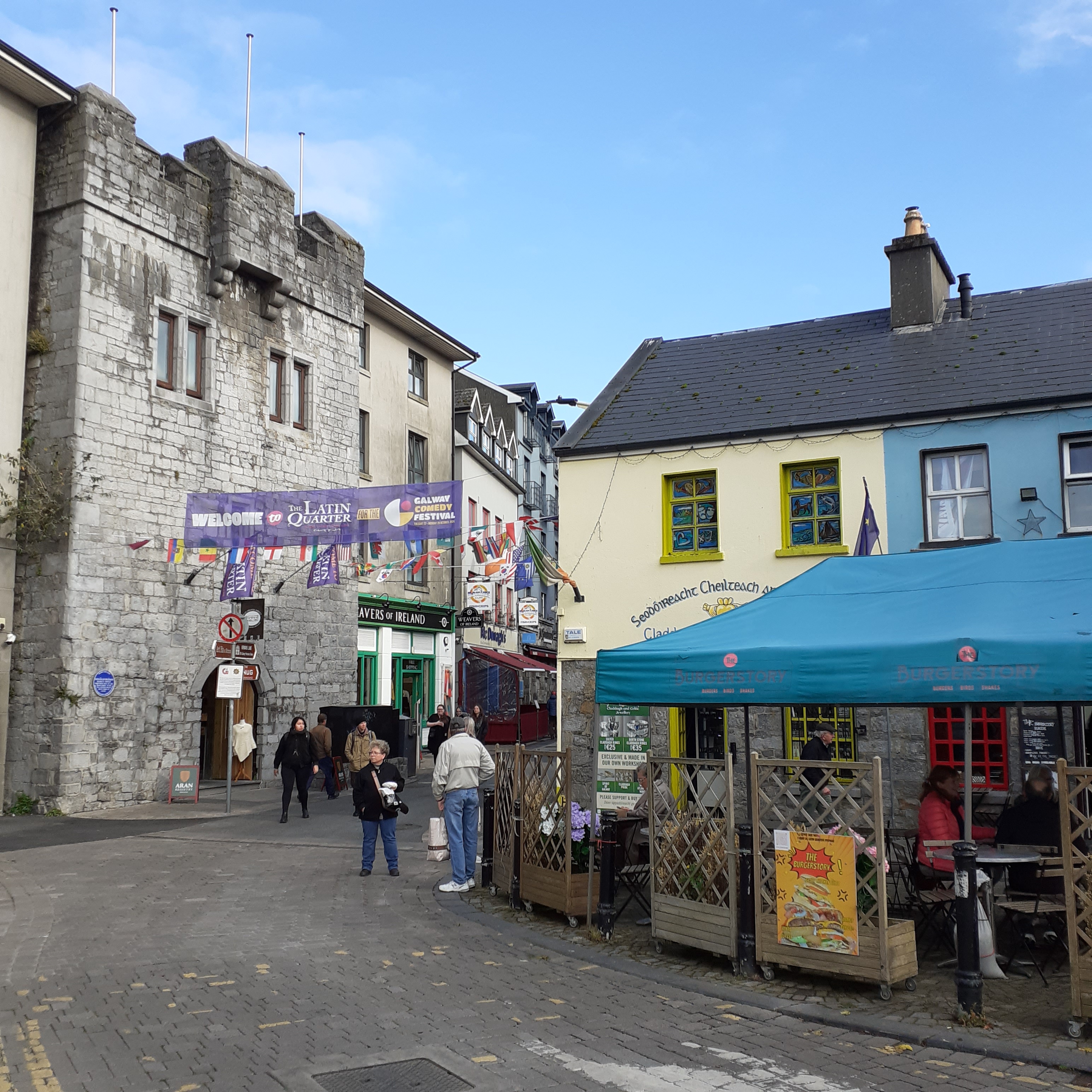
A couple of town castles of the period remain in the city centre. At the foot of Quay Street, Blake’s Castle looks out on the Corrib. Built in 1470 it is a typical medieval tower house. For a time it was used as the city jail, later a grainstore, and then a coffee house. The Blakes descended from Richard Caddell, Sheriff of Galway in 1300. His nickname, Negar, for his dark complexion, was Black in English, from which the Blake name derives.
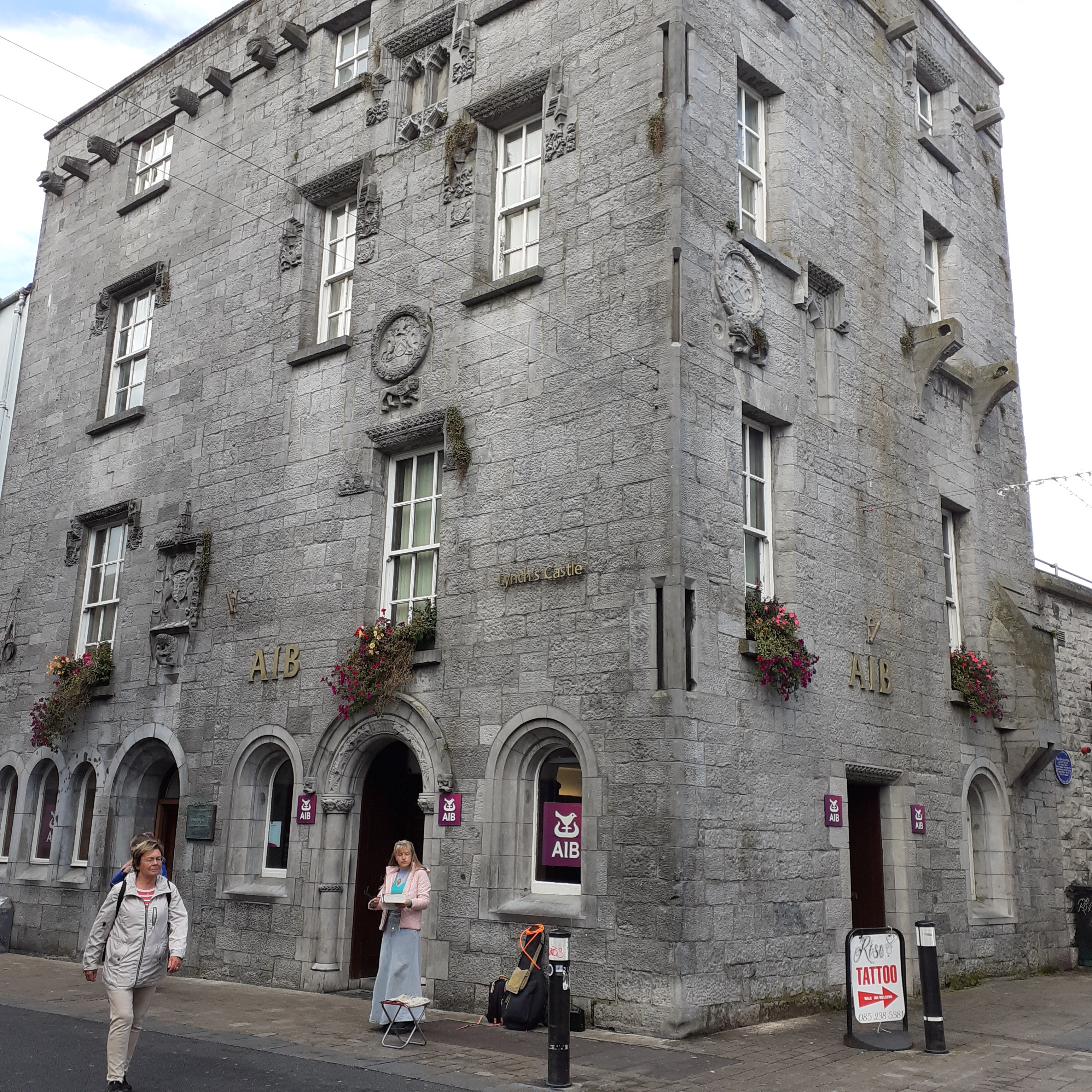
Lynch’s Castle, further on, is another fine remnant of medieval Galway. A four storey Gothic tower from the late fifteenth century, its facade is adorned with ornate stone carvings. It is now a bank. Lynch’s window is nearby, outside St Nicholas Collegiate Church. And thereby hangs a tale, if you pardon the pun. The window commemorates James Lynch Fitzstephen, Galway mayor in 1493. One version has it that Walter his son admitted to killing a Spanish merchant called Gomez in a dispute over the favours of a girl. Failing to find a hangman willing to carry out the sentence, the Mayor carried it out himself from the upstairs window of his own residence. Three and a half centuries later, the window was installed here as a memorial to stern justice showing neither fear nor favour. The word Lynch since became synonymous with ad hoc hanging, though this doesn’t quite tally with the story.
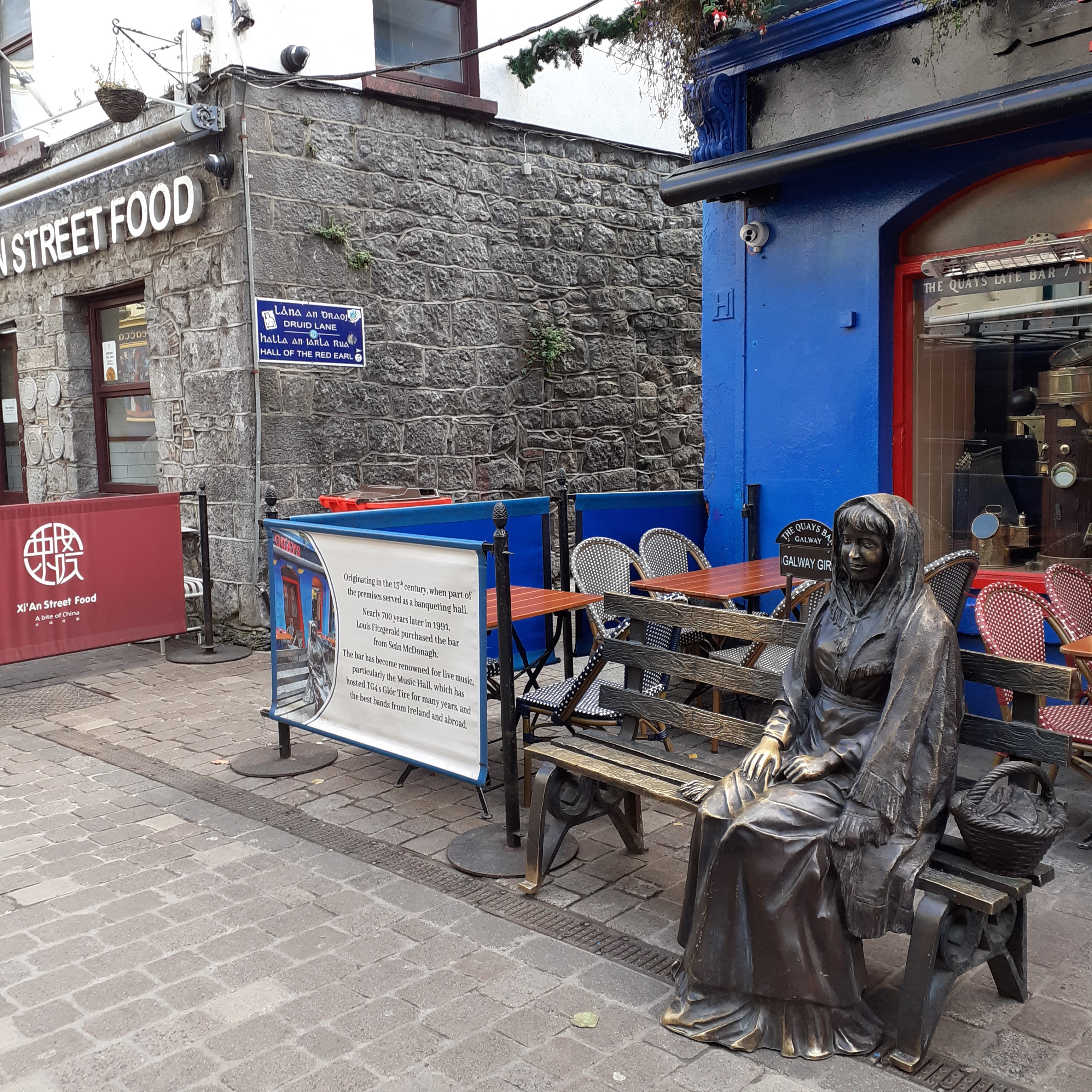
The church dates back to 1320 and is dedicated to St Nicholas of Myra, the patron saint of seafarers. Christopher Columbus is said to have attended mass here in 1477. Whether or no he also called into the Quays Bar, I always do. It traces its history back to the 13th century when it was a banqueting hall. Upstair is the Music Hall, dominated by a raised stage with a piped organ backdrop. On a seat outside sits a bronze statue known as the Galway Girl. The young woman wears traditional Irish garb so is not the same girl of the famed song. Or songs.
I took a stroll down the old Long Walk
Of the day I-ay-I-ay
I met a little girl and we stopped to talk
On a grand soft day I-ay
Written by American Country Rock musician, Steve Earle, the version by Mundy (Edmond Enright) and Sharon Shannon in 2006 became one of the best selling singles of all time in Ireland. In fact, the Galway Girl is Joyce Redmond, from Howth in Dublin, who plays bodhran on Earle’s original version on his 2000 album, Transcendental Blues.
And I ask you friends, whats a fella to do?
Because her hair was black and her eyes were blue
And I knew right then, I’d be takin a whirl
Down the Salthill Prom with a Galway Girl.
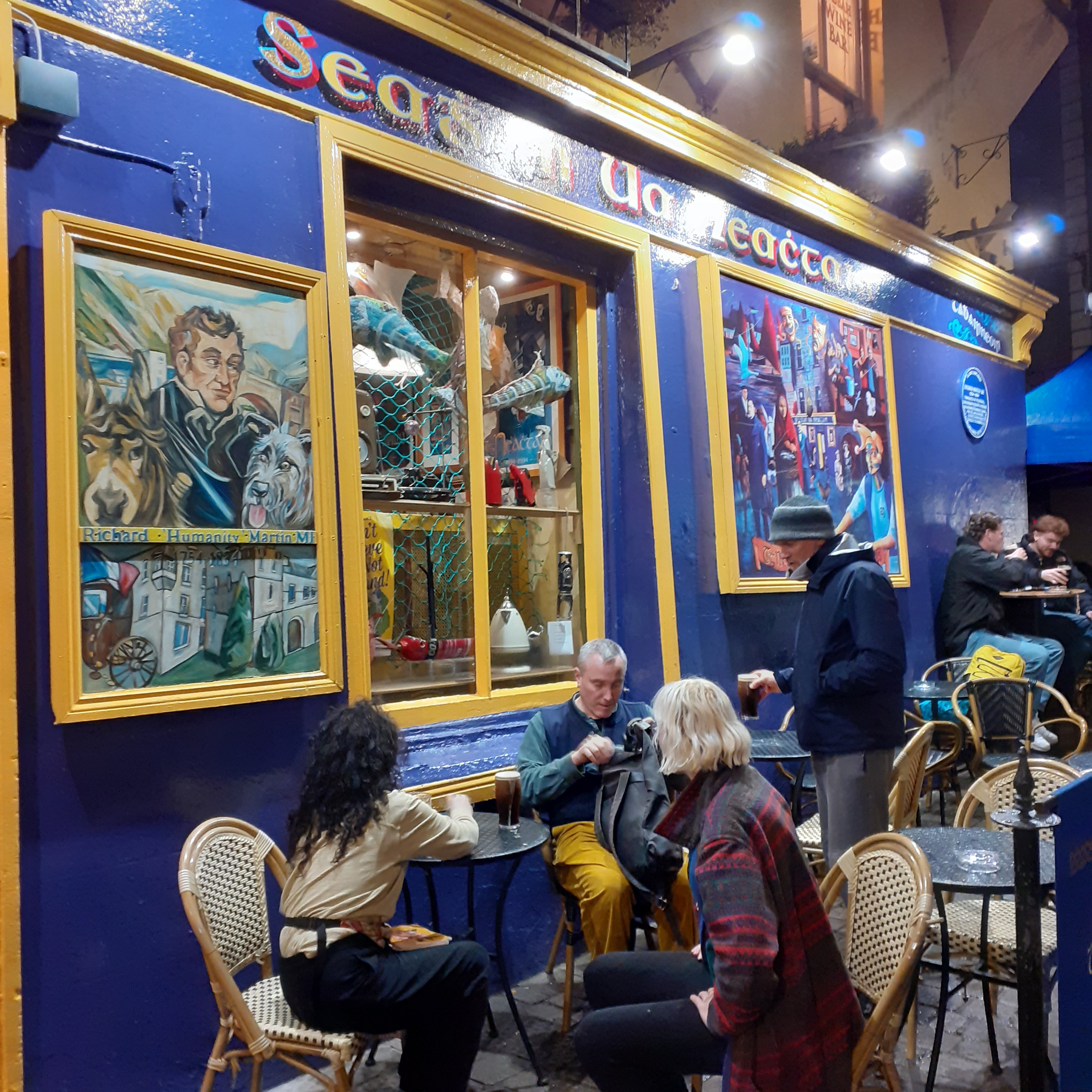
In Ed Sheeran’s song, from his 2017 album +, the Galway Girl is met in Dublin where she plays a fiddle on Grafton Street. Sheeran before his fame had busked the streets of Galway. Across the street is another famed pub, Tigh Neachtain’s, with its traditional interior and terrace seating to front and side. The junction forms a small plaza for a succession of buskers to entertain. Good busking is a notable feature of Galway’s Latin Quarter and the area is thronged with a happy promenade of local and visitor from morning till night.
The fast flowing Corrib marks the edge of the medieval city. It pours down from Lough Corrib, just 6K inland. Besides the powerful main channel, there are other branches winding through the west of the city. Crossing the Wolfe Tone Bridge, the Claddagh and Salthill are off to your left. Further upstream there’s a tangle of riverside walks leading to the open surrounds of the Cathedral and University.
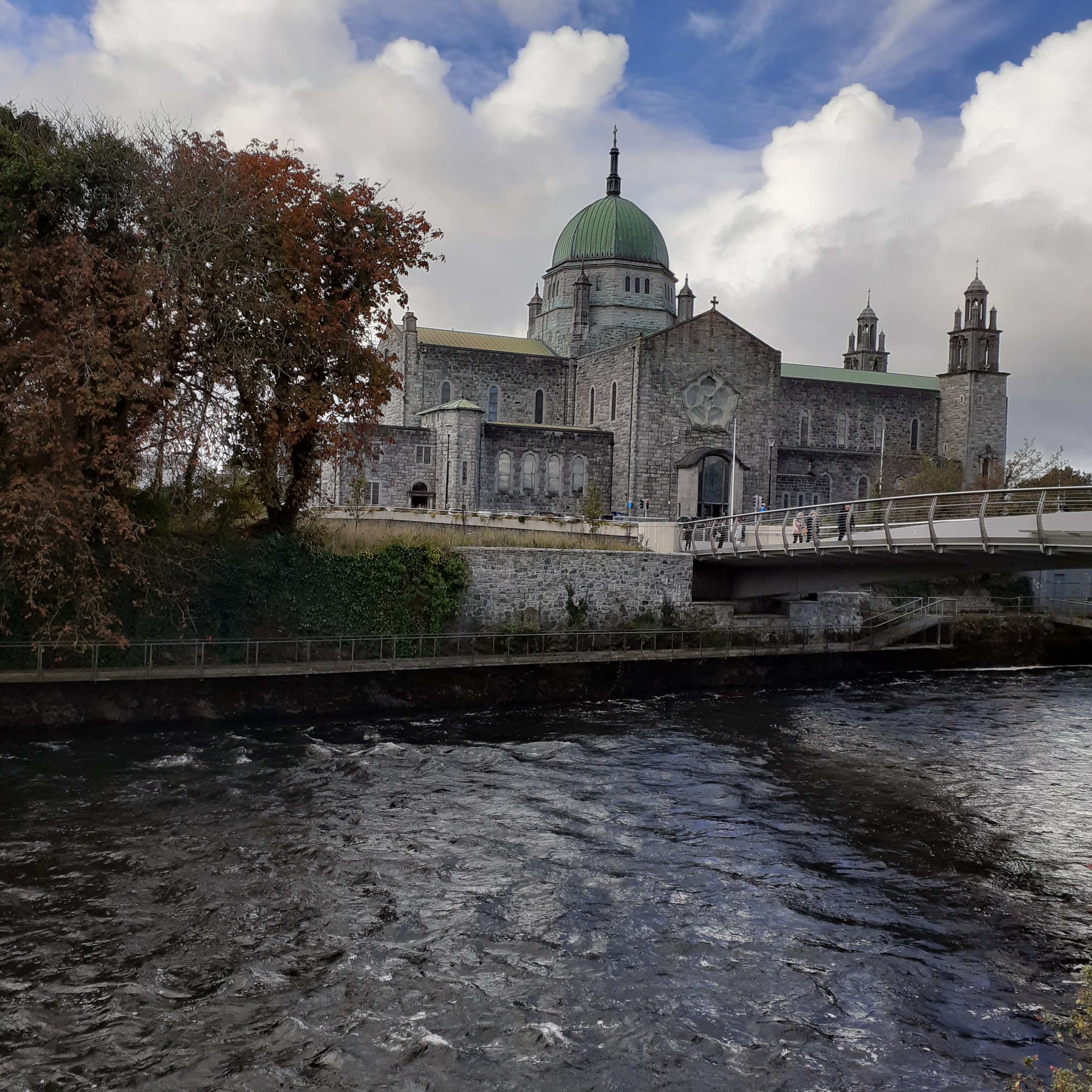
Galway Cathedral, or Our Lady Assumed into Heaven and St Nicholas as it’s officially known, was designed by John J. Robinson. Work began in 1958 and it was completed in 1965. Grimly imposing, the massive structure of limestone blocks attempts to evoke a more ancient age. Its central dome, rising to 145 feet, is its most attractive feature. Within, the bare blocks make for a Stygian atmosphere, encouraging prayers of escape. There is a Marian shrine to the side, and I light a candle there.
Galway University, across from the Cathedral, was founded in 1845. Its original, signature building, the Quadrangle, is a replica of Christ Church College, Oxford in the Tudor Gothic style. The campus expanded in the seventies, with a modern complex designed by Scott Tallon Walker and is growing still. It now has twenty thousand students, almost a quarter of the city’s population. Entering the campus there’s a cluster of building’s from Galway’s industrial past including a disused distillery. A branch of the Corrib here has moorings for river craft and there’s a lively bar along the bank.
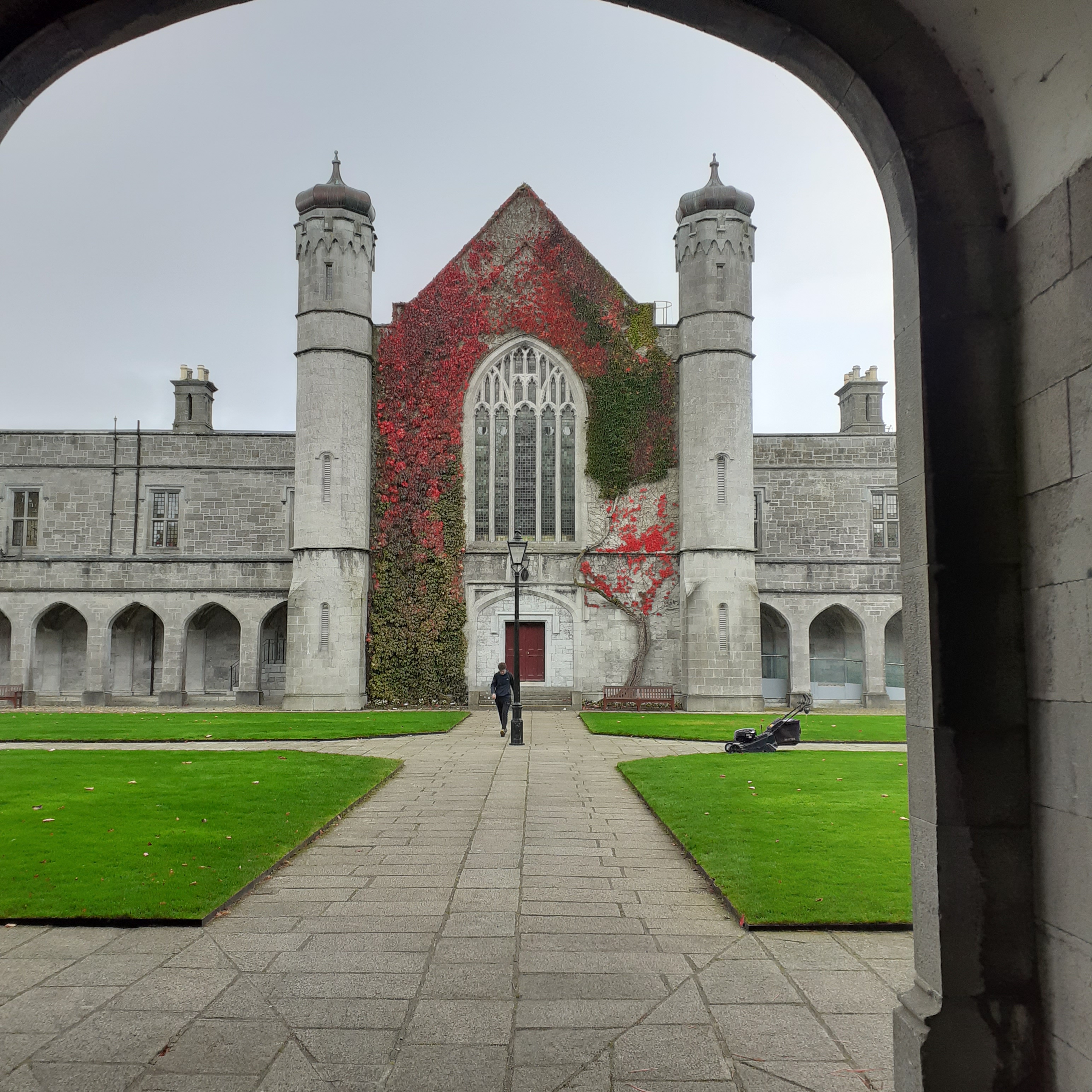
The cloisters are strangely deserted but then the rain is falling and this is something of an island in time. The student population is a vibrant force in the pervasive exuberance of Galway. Also, Irish culture is more pronounced here than in other cities, we are way out West, after all. But, while careful to cultivate and preserve the ancient, even invent it, Galway is also modern and receptive; a true melting pot of cultural heritage, ideas and expression. The perfect place to find your tribe, or form a new one.
 xxharrison
I’d like to have seen more of Galway than we did when my wife and I were in Ireland in 2006. It’s a fine place. We mostly were in County Clare, which we enjoyed a lot.
Exciting journey you did! Well shared with beautiful photos and description.
Thanks Priti. Train travel is always a pleasure. All you have to do is enjoy the trip.
Your journey through Galway is a rich tapestry of history and culture! Makes me want to visit and explore every story-filled corner.
Thanks very much for that comment! A tapestry of History and culture is what I am searching to describe. I would recommend Galway or a visit. Wonderful hinterland to explore too!
Thanks for all your vety fine posts this year Shane.
All the best for the year ahrad.
Thom
Thanks Thom, Just waking up for the New Year and look forward to getting going again.