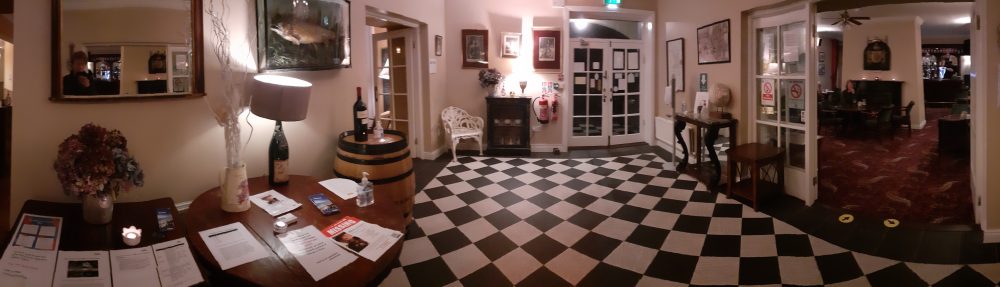

It’s a long way to Tipperary, they say, but the roads are good. We left Bray late morning, arranging to hook up with our travelling companions in Cahir. The simplest route from Bray is to take the M50 through south Dublin, turn southwest along the M7 then veer on to the M8 down to Cahir. It’s a distance of two hundred kilometres which Google reckons can be done in two hours. But what’s the rush?
We’re staying near Bansha, on the N24 along the railway line heading for Tipperary town and Limerick beyond. Bansha is familiar to us from olden days and the area is always worth visiting for its heritage and wonderful scenery. We booked three days in Aherlow Cottage, a three bedroom self catering accommodation adjacent to a farm. All mod cons, and many older ones, with a traditional hearth and a private garden flanked by trees and a river.
Bansha itself is a pleasant village. Nellie’s Bar on Main Street is the place to go, packed when we arrive on a Sunday when crowds gathered to watch the football. Hurling is more the sport of choice about here. Tipperary are the third most successful team in the country, with twenty eight titles, behind Kilkenny and Cork though, like everyone else, trailing in Limerick’s wake right now. Tipp were last All Ireland hurling champions in 2019. Throughout the week the pub’s quiet; plenty of space and time to dwell over a pint or two, and study the photographs and clippings on the wall of the bar.
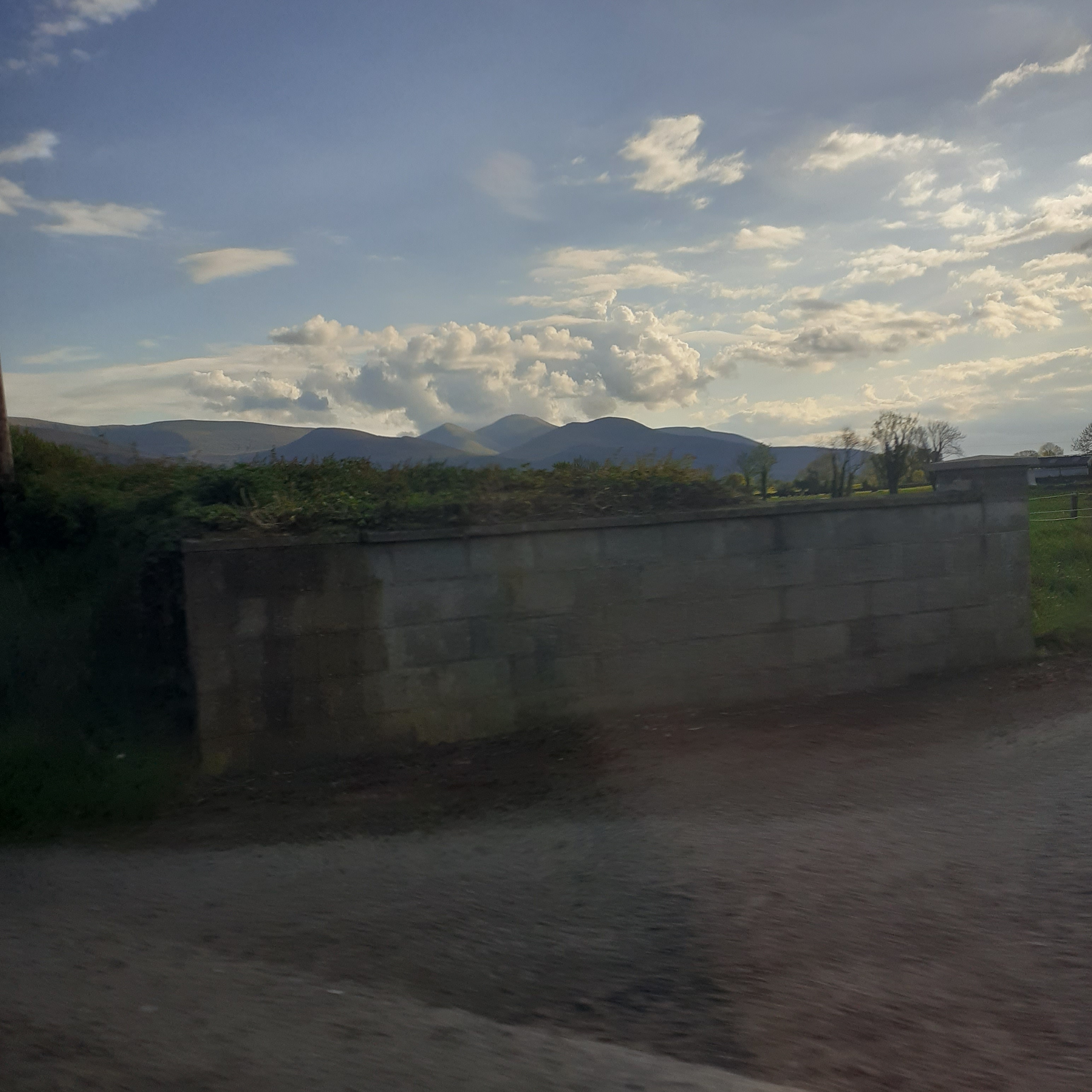
The Glen of Aherlow has a number of marked trails amidst a panorama of wonderful scenery. To the south the Galty Mountains rear into a blue sky and Slievenamuck shelter the valley to the north. The Galty Mountains rise to over three thousand feet and are the highest inland range in Ireland with Galtymore the highest peak outside of Kerry. Slievenamuck means mountain of the pig in Gaelic, referring to a notorious wild boar who once haunted the slopes. He’s long gone and, if you’ll pardon the pun, the place is just as interesting in his absence. The Slievenamuck range features loop walks of varying degrees of difficulty.
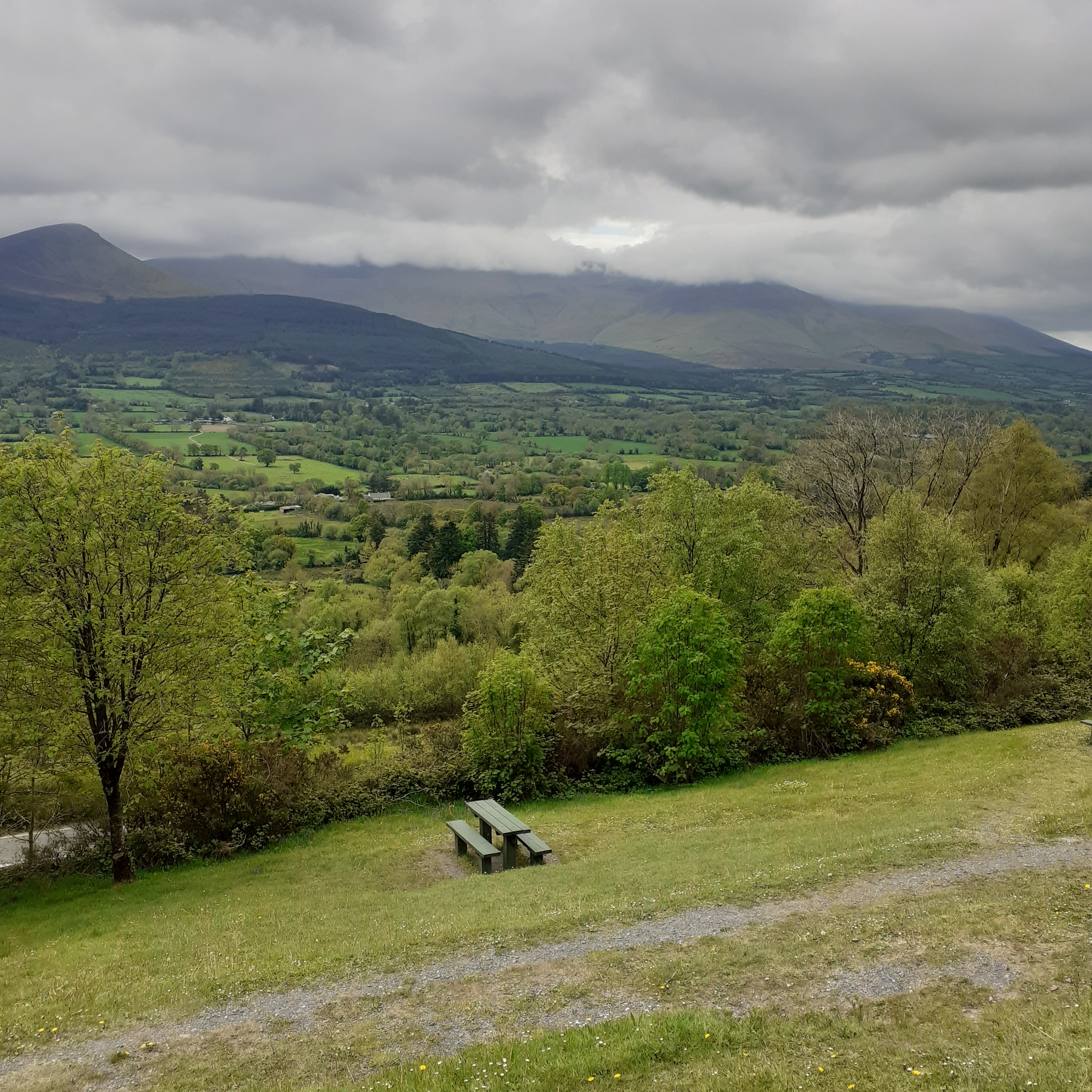
We took the trail from the statue of Christ the King heading uphill through Bansha Woods with fabulous panoramic views across the county rewarding us at the summit. Tipperary town is visible in the middle distance. We make downhill through rushing streams and forest paths. It’s well marked and you won’t go astray. There’s a picnic area near the statue where you can enjoy the scenery in a more leisurely fashion
The main town hereabouts is Cahir on the River Suir. The town has a population of three and a half thousand people. Most of it is built on the south bank of the river, centered on a main square. Such squares are a feature of Protestant plantations in Elizabethan and Jacobean Ireland. Quakers established themselves in Ireland in the mid seventeenth century. Cahir and Clonmel became their main centres in south Tipperary where they were prominent in milling and other businesses. Cahir and Clonmel were the first towns in Ireland to be linked by Charles Bianconi’s coach service in 1815. Up till then, the journey could take six hours or more by river. With the coach it could be done in two hours, though Google might claim even less. Charles Bianconi was born in Italy, near Lake Como, in 1786, and moved to Ireland when he was sixteen, fleeing Napoleon’s invasion. He worked in Dublin as an engraver before moving to Clonmel where he set up his transport business.
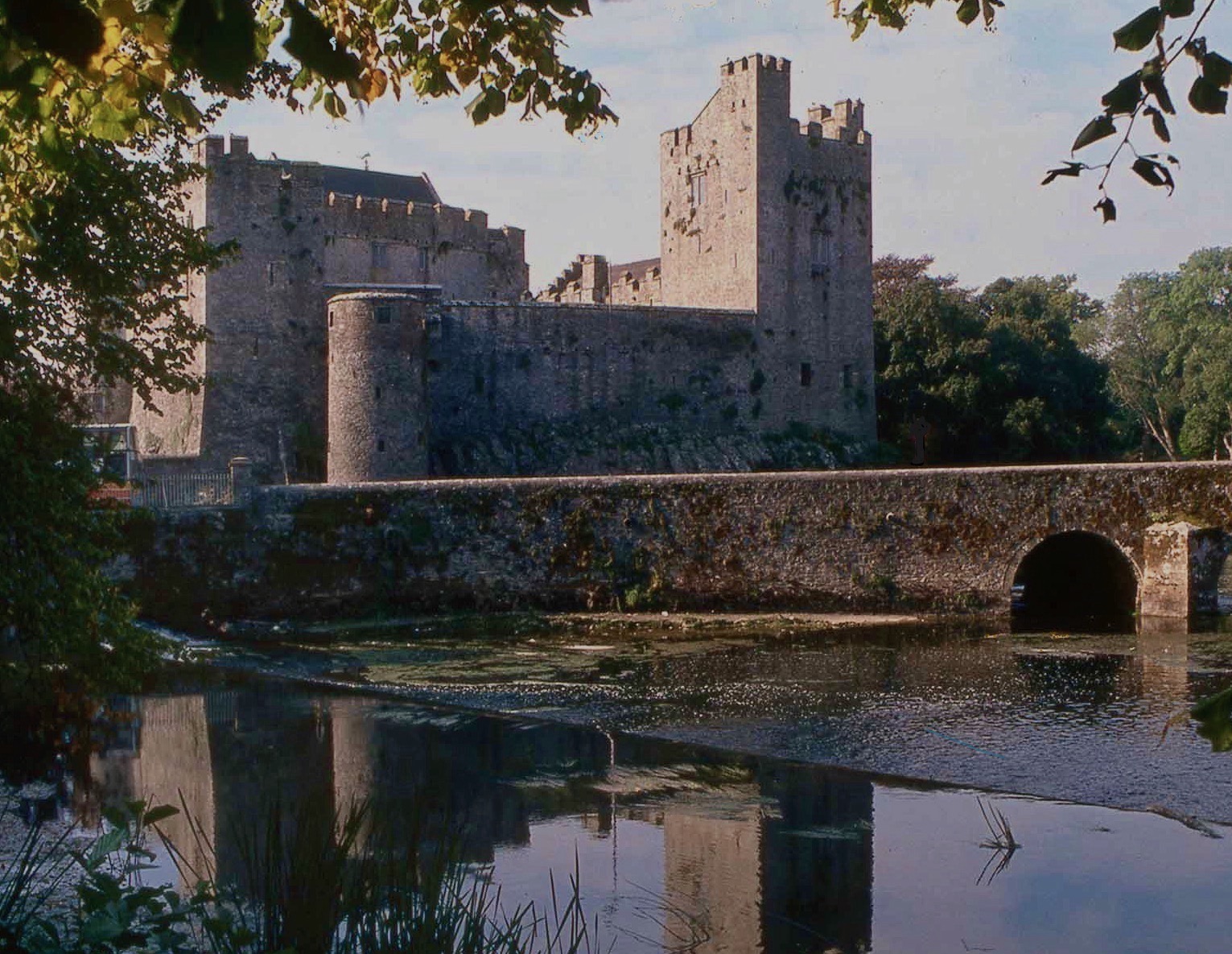
The most spectacular feature of Cahir is its castle. Cahir Castle is built on a small island in the river. It was first built in the mid twelfth century by the King of Thomond (North Munster) Conor O’Brien. This dynasty was established by Brian Boru, of Battle of Clontarf fame. This was the original stone fort, An Cathair, which gave the town its name. The Butlers of Ormond (East Munster) took over when in1375 James Butler was granted the castle estate as reward for his loyalty to Edward III. Munster, Ireland’s southern province, was then divided into three earldoms Ormond, Thomond and Desmond (South Munster). The new Castle had formidable walls rising sheer from the river, with a towering central keep all guarded by an array of sturdy towers. It was considered impregnable but in the three day siege of 1599 during the Nine Years War the Castle was taken by Robert Devereux, the Earl of Essex.and his ally Christopher St Lawrence, Lord Howth. This is the same Howth who, as a boy was kidnapped by pirate queen Grace O’Malley. Eventually released, he grew up to become a renowned warrior, albeit with anger management issues.
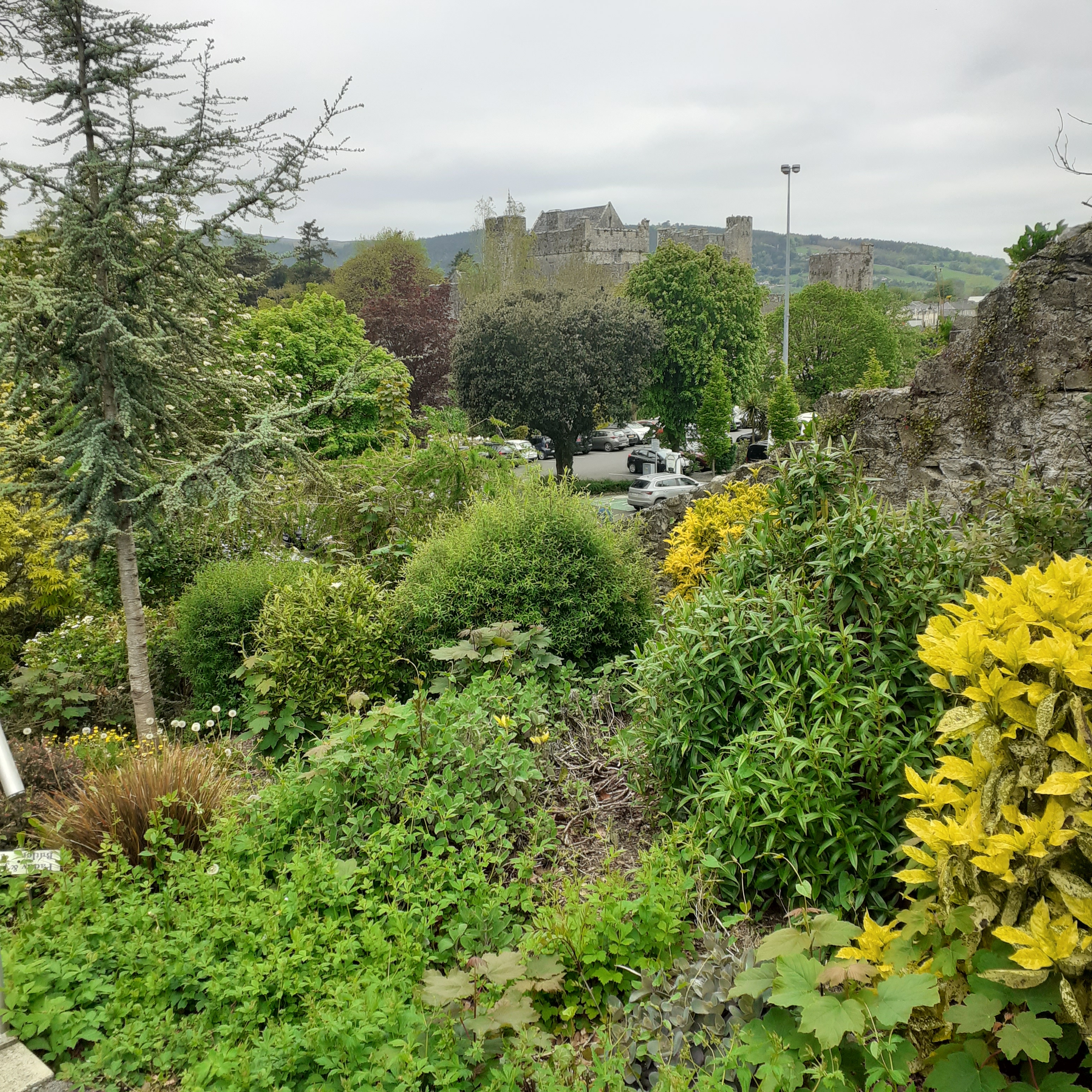
Since the death of the last Lord Cahir in the 1960s, the Castle has been the property of the Irish State. Entrance is €5 and there are guided tours. It is free to walk the Inch Field public park which embraces the castle on three sides. In modern times the Castle is much in demand for period productions in the film and tv business. Famous films are noted on a plaque outside. Amongst the roll call are John Boorman’s Excalibur from 1981, TV drama The Tudors and most recently The Last Duel in 2020. The Last Duel was directed by Ridley Scott and based on a nonfiction work by Eric Jager. Matt Damon is producer, co-writer and took the main lead of Jean de Carrouges fighter of the last Judicial Duel in France in the fourteenth century. Filming was delayed with the outbreak of covid and Damon found himself marooned in Dalkey, south of Dublin. The bould Matt didn’t mind, going for swims and coffee and hobnobbing with the locals. What’s not to like about being marooned in Dalkey, rubbing shoulders with Bono, Enya and Van Morrison?
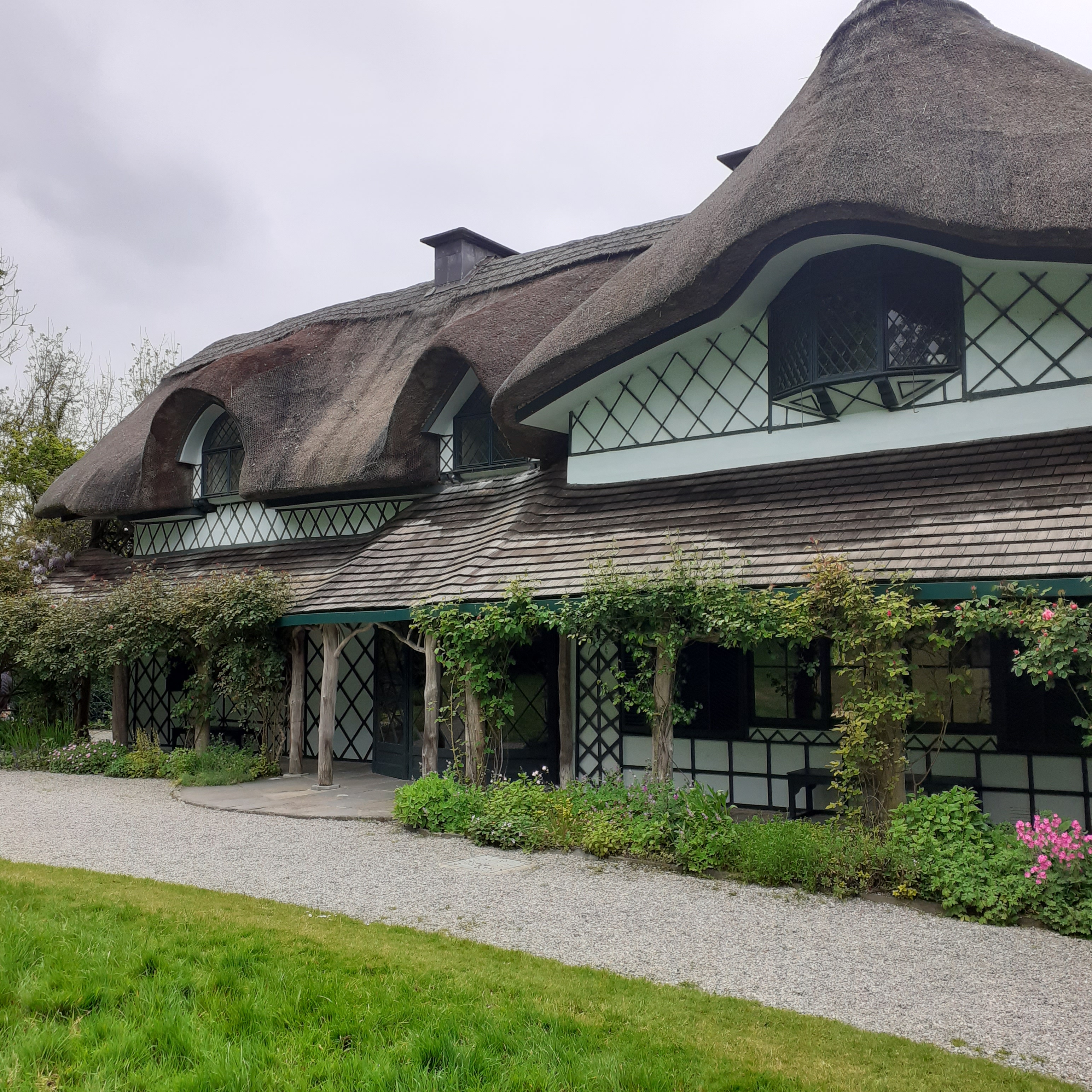
A 2 km riverside walk will take you to the Swiss Cottage. This early nineteenth century ornamental cottage is attributed to John Nash, the Regency architect who also designed the Cahir Parish church in 1817. Thatched and deliberately asymmetrical, it is a fabulous mimicry of what it was assumed an Alpine cottage might be. Such follies were for entertaining guests, who dressed, or even undressed, in rustic gear to let it all hang out, as it were. Downstairs there’s a music room to one side and beyond the central staircase the Dufour Room, named for its startling French Dufour wallpaper. This original wallpaper makes a fantastical backdrop, depicting a pleasure ground surrounding the Bosphorus. There’s an excellent guided tour to bring you around the interior which costs just €5, €4 seniors. Here we learned, amongst other things, Richard Butler’s own story which is itself outrageously romantic. He was an obscure teenager with only distant family connections until an unlikely string of aristocratic deaths meant the Cahir lordship became his inheritance. Grasping relatives abducted him to the continent but the plot was foiled by Arabella Jefferys. She rescued Richard and brought him to her home at Blarney Castle in County Cork, where he came of age and married her daughter, Emily in 1793. It was this happy loving couple that commissioned the Swiss Cottage.
Say you don’t need no diamond rings
And I’ll be satisfied
Tell me that you want the kind of things
That money just can’t buy
I don’t care too much for money
Money can’t buy me love
Ow!
Can’t Buy Me Love is a Lennon McCartney song from the Beatles album, A Hard Day’s Night in 1964. McCartney wrote the song in Paris and later mused if the ’t might be omitted.
 xxharrison